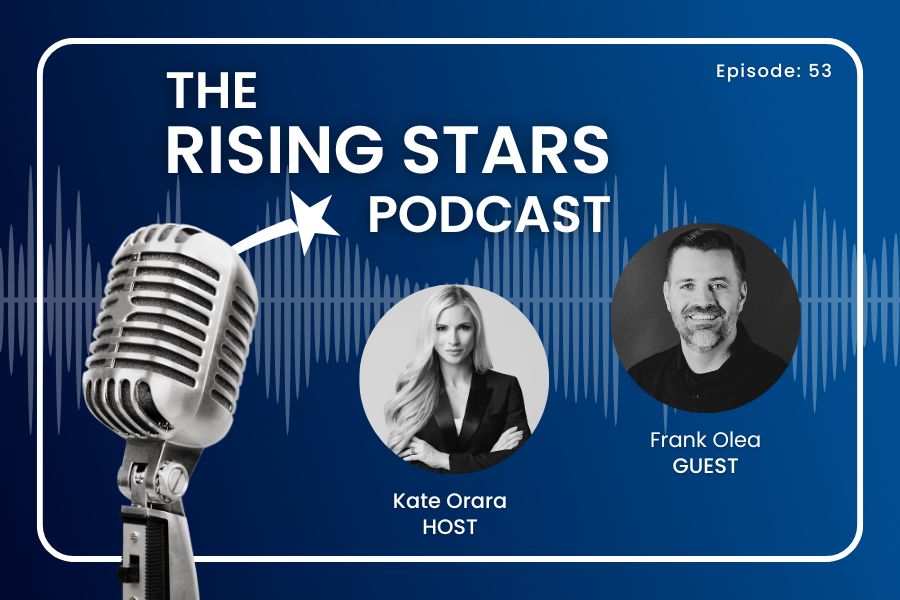
In the latest episode of the Rising Stars Podcast, “Kiosk Solutions and Future-Proofing Technology with Frank Olea,” host Kate Orara takes listeners into the world of self-service kiosks. Frank Olea, CEO of Olea Kiosks, brings his longstanding expertise to the conversation, sharing valuable insights on how businesses can prepare their kiosk solutions for the future while maintaining customer service and engagement.
As an industry leader in kiosk manufacturing and innovation, Frank offers a wealth of knowledge on staying ahead in a quickly changing landscape. This episode covers key topics, including how to transition kiosk systems to new hardware and software platforms, the best practices for minimizing downtime during upgrades, and balancing advanced features with simplicity to ensure a seamless user experience.
Preparing for the Future of Kiosk Technology
Frank highlights the importance of future-proofing kiosk systems, ensuring businesses remain flexible and adaptable to changing technology. He shares actionable strategies for Value-Added Resellers (VARs) and businesses looking to showcase the ROI of self-service kiosks and offers advice on how to handle the inevitable shifts in both hardware and software solutions.
For VARs, ISVs, and entrepreneurs in the kiosk space, this episode provides practical guidance on how to remain competitive and innovative. Tune in to discover how to maximize the potential of your kiosk solutions and prepare for the future of this fast-growing technology.
The Rising Stars Podcast
Immerse yourself in the world of point-of-sale (POS) with the Rising Stars Podcast by Star Micronics, hosted by industry pro, Kate Orara. Twice a month, we explore the fascinating journeys of innovators and businesses navigating the challenges of POS technology’s rapid pace.
In every episode, Kate Orara, Star Micronics’ Partner Development Manager, discusses emerging retail technology trends and strategies with global industry giants. She’s spent her entire career meeting all the right people, and now listeners everywhere can benefit from this vast network of channel gurus.
Always leading and always innovating, Star Micronics, a pioneer in POS and customer experience technology for over 60 years, welcomes you to join us in shaping a brighter future in the retail, hospitality, and cannabis industries.
Episode Transcript:
[Music]
Kate Orara: Hey there, retail tech enthusiasts! Welcome to the Rising Stars podcast, your go-to source for all things retail technology and the ever-evolving world of point-of-sale. I’m your host, Kate Orara, Partner Development Manager at Star Micronics, and I am thrilled to be your guide on this exciting journey.
Here at Rising Stars, we’re not just keeping up with the trends—we’re setting them. We dive deep into the tech landscape with global industry leaders, unpacking strategies and discussing the latest innovations that shape the future of retail IT. Whether you’re a tech aficionado, a business owner, or just curious about the dynamic world of retail, this podcast is your backstage pass to insider knowledge. And hey, it’s not just about the tech—it’s about the community. Join me and the Star Micronics team as we lead and innovate, shaping a brighter future for the retail, hospitality, and cannabis industries, and beyond.
Together, we rise! So hit that subscribe button, stay in the loop, and let’s make waves in the retail tech space. This is the Rising Stars podcast, where innovation meets inspiration. Let’s rise together!
Kate Orara: Alright, welcome back to another episode of the Rising Stars podcast. Y’all know me—I’m Kate Orara—and today, I’m really excited about this episode. I have the pleasure of being joined by Frank Olea from Olea Kiosks. How are you today, Frank?
Frank Olea: Doing good, doing awesome.
Kate Orara: Great! Well, I’d love for you to tell our listeners a little bit about yourself and Olea Kiosks. I’m sure they probably have an idea of what you guys do from the name of your company, but just in case, let’s give them the full picture.
Frank Olea: Alright, sure. I’m the CEO of Olea Kiosks, and as the name implies, we manufacture kiosks. Next year is actually our 50th year in business. My grandfather, father, and uncle founded the company in the mid-70s. Initially, it was a trade show exhibit company, and we transitioned into kiosks in the mid-90s. We design and manufacture kiosks for various industries, including QSR, theme parks, healthcare, travel, and hospitality.
Kate Orara: That’s amazing! So it’s a family business that’s been around for decades. I will say, though, I’ve probably only seen kiosks really take off in the past decade, especially during COVID. I bet business was booming for you guys!
Frank Olea: To be fair, we started in a different industry, as I mentioned, with trade show exhibits. But by the mid-90s, we had fully transitioned into kiosks. Even though kiosks weren’t flying off the shelves in the mid-90s, we had some experience. My family built the first kiosk in 1983, when I was only eight years old. So there was a lot of groundwork laid before kiosks became as widespread as they are now.
Kate Orara: That’s fascinating! Self-service kiosks have definitely shifted from being a “nice-to-have” to a “must-have” for so many businesses. Even small mom-and-pop shops are starting to use them. What do you think has driven that shift?
Frank Olea: We spent a lot of time with early adopters—those cutting-edge companies that wanted to do something different. Over the years, it became more mainstream. For example, healthcare and QSR are two industries where self-service is really making an impact. In fact, we have one healthcare client that just reported 83% of their patients are checking in via kiosks. In another case, California Fish Grill, a fast-casual chain, is seeing 68% of their in-store sales coming through kiosks.
Kate Orara: Wow, those are impressive numbers. I imagine the design of the kiosk plays a big role in that success, right?
Frank Olea: I wish I could say it was all about the design! Of course, a well-designed kiosk helps, but there are a lot of factors at play. Placement is crucial—if the kiosk isn’t in the right spot, people might not even notice it. Employee training is another key piece. At California Fish Grill, they’ve redeployed staff to walk around and help people with the kiosks, which boosts user confidence.
Kate Orara: I can totally see that. I remember the first time I used a kiosk at a fast food place, I wasn’t sure about it. But now, I’m a pro! Speaking of user experiences, how do you balance the need for advanced features with the simplicity required for user-friendly interfaces?
Frank Olea: It can definitely be a challenge. Some kiosks we make have a lot of components, like biometrics, passport readers, or ID scanners. We have to fit all of that into a box that isn’t too big, while also making the interface intuitive. I’m a big fan of simple design, and we always aim to strip things back to what’s essential for the user.
Kate Orara: That makes sense. Do you often find yourself advising clients to scale back their wishlist of features?
Frank Olea: Absolutely. Sometimes, clients want to pack everything into a kiosk, but we often advise them to focus on what really matters for the user experience. The more hardware you add, the more complicated it can become, both in terms of functionality and long-term maintenance.
Kate Orara: Speaking of maintenance, when it comes to resellers explaining the cost of self-service kiosks, how should they communicate the benefits to potential customers who might be hesitant about the investment?
Frank Olea: The key is sharing statistics. For instance, QSRs can expect a 13-15% upsell per ticket with kiosks. Those are hard numbers that show the ROI. Plus, with labor shortages being what they are, kiosks offer a solution that doesn’t get sick, doesn’t need breaks, and helps with labor gaps.
Kate Orara: Definitely. I also imagine that kiosks help with consistency in things like payments and upsells. Any other unexpected benefits?
Frank Olea: Yes! In healthcare, we’ve found that kiosks actually help with collecting outstanding payments. When patients check in, they’re reminded about past-due co-pays, which has led to an 8% increase in collections. That’s something our clients didn’t anticipate but were thrilled to discover.
Kate Orara: Wow, that’s huge! So kiosks are really transforming not just the customer experience, but also helping businesses collect revenue. Are there any emerging trends in self-service technology that resellers should be highlighting to potential customers?
Frank Olea: Biometrics are becoming more popular, like facial recognition or palm vein scanning. We’re even seeing stadiums use facial recognition to speed up entry. These kinds of innovations can streamline operations and improve security.
Kate Orara: I love hearing about that. As technology continues to evolve, how should businesses transition to new hardware or software platforms for their kiosks without too much disruption?
Frank Olea: Testing is crucial. We work closely with clients to ensure everything from new brackets to software updates is thoroughly tested before implementation. When we upgraded kiosks at the Empire State Building, we tested everything in their lab to avoid any disruptions when the changes went live.
Kate Orara: That’s great advice. What’s your best tip for businesses looking to future-proof their kiosk solutions?
Frank Olea: Choose a modular kiosk design. This allows for easy upgrades—whether it’s a new payment device or a different printer. Working with a manufacturer like us, who can custom-fit new components, is key to extending the life of your investment.
Kate Orara: That’s great to know. Well, Frank, I really appreciate your time today. You’ve shared so many valuable insights with our listeners. Is there anything we didn’t cover that you’d like to mention?
Frank Olea: No, I think we covered it all! I enjoyed the conversation.
Kate Orara: Awesome! If any of our listeners want to reach out to you, how can they do that?
Frank Olea: The best way is through our website or LinkedIn. I’m pretty active on LinkedIn, and I love sharing behind-the-scenes looks at what we’re working on.
Kate Orara: Fantastic! We’ll include links to your social media in the show notes. Thanks again, Frank, and thanks to all of our listeners for tuning in. Don’t forget to like, subscribe, and share this episode with others. We’ll see you in the next one!
[Music]
Kate Orara: And that’s a wrap for this episode of the Rising Stars podcast. A huge thanks to our incredible listeners for tuning in and to our phenomenal guests for sharing their insights. Don’t forget to subscribe, rate, and leave us a review. Let us know what you want to hear more about—your feedback fuels our journey to bring you the best in retail technology. Stay connected with us on social media for updates and behind-the-scenes content.
As we sign off, remember: The future of retail technology is in our hands, and together, we’re shaping it. Keep innovating, keep rising, and until next time, this is Kate Orara signing off. Together, we rise.
[Music]
Leave a Reply