Tag: Kiosk Printers

  • Star Micronics Expands Self-Service Portfolio with Fixed-Mount Kiosk Barcode Scanners

    Star Micronics Expands Self-Service Portfolio with Fixed-Mount Kiosk Barcode Scanners

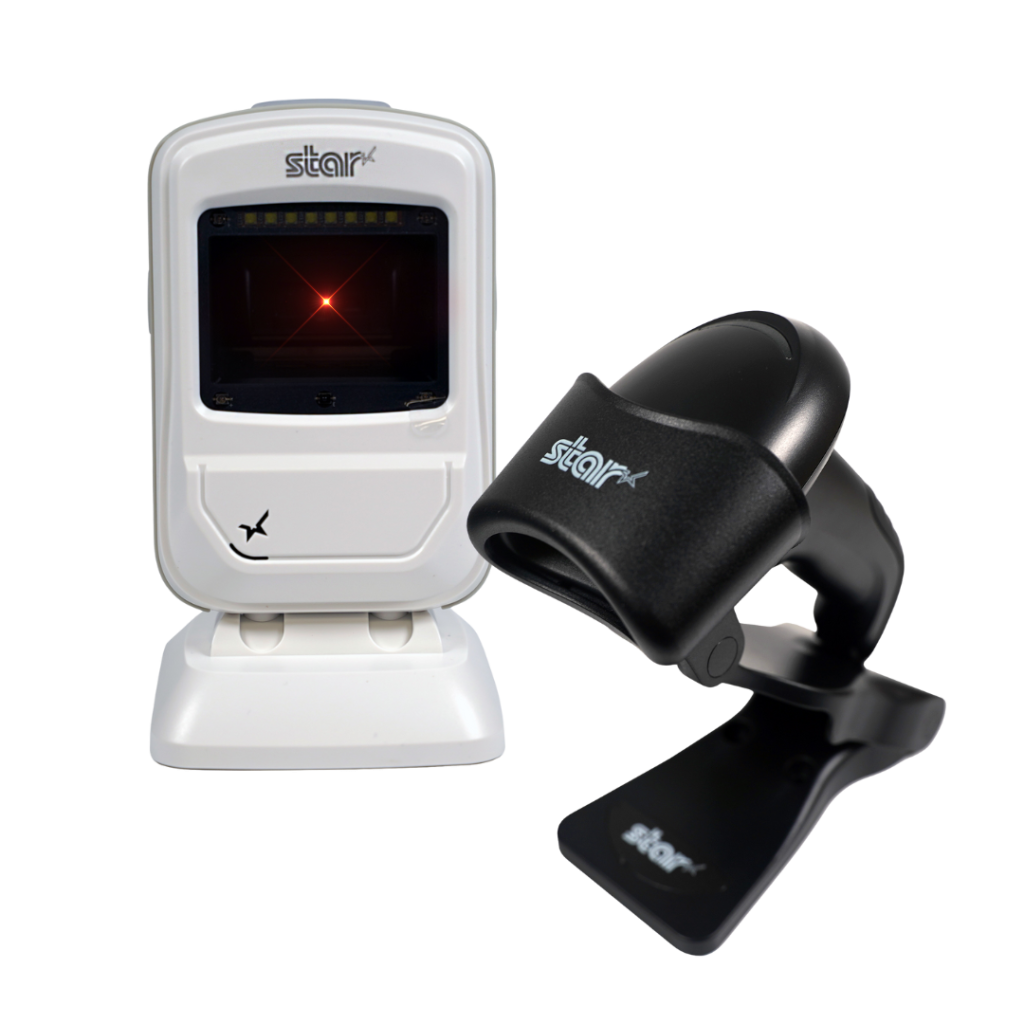
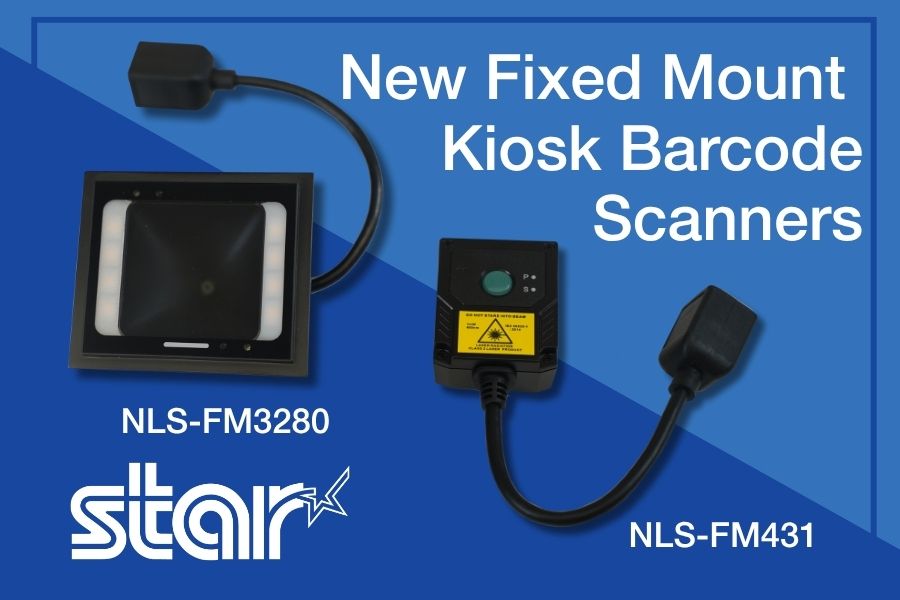
    The addition of the FM3280 and FM431 kiosk barcode scanners expands Star Micronics’ self-service portfolio with embedded scanning solutions designed for customer-facing kiosks, lockers, and high-throughput environments.

    Somerset, NJ – May 28, 2026 – Star Micronics, a global provider of point-of-sale (POS) hardware, cloud printing, and self-service solutions, today announced the addition of the NLS-FM3280 and NLS-FM431 fixed-mount kiosk barcode scanners to its expanding self-service portfolio. Designed for embedded kiosk and terminal applications, the scanners enable fast, hands-free barcode reading across retail, hospitality, logistics, and industrial environments.

    The addition of embedded scanning expands Star’s kiosk infrastructure offerings beyond printing, allowing OEMs, ISVs, and solution providers to deploy more complete self-service systems from a single technology partner.

    Kiosk Scanning Built for Different Self-Service Environments

    While both scanners support 1D and 2D barcode scanning from printed labels and mobile devices, each model is optimized for different kiosk workflows.

    The NLS-FM3280 is designed for customer-facing, close-range scanning applications such as self-checkout, ticketing, and self-service ordering kiosks. Its wide field of view and responsive trigger sensors allow customers to quickly present items, tickets, or mobile barcodes without precise positioning.

    Key capabilities include:

    • Close-range scanning optimized for customer interaction
    • Reliable reading of mobile and high-density barcodes
    • Hands-free operation with automatic trigger activation
    • Soft illumination suitable for front-facing kiosk installation

    The NLS-FM431 is designed for longer-range and higher-throughput scanning environments, including parcel lockers, warehouse kiosks, and industrial automation systems. Powered by advanced decoding technology, it reads damaged, low-contrast, and poorly printed barcodes while maintaining strong motion tolerance for fast-moving workflows.

    Key capabilities include:

    • Long-range scanning for large or hard-to-reach barcodes
    • Enhanced motion tolerance for high-throughput environments
    • Reliable decoding of damaged or low-quality barcodes
    • Dual-aimer targeting system for precise scanning performance

    Both scanners feature compact fixed-mount designs with flexible connectivity options, allowing them to be embedded into kiosks, lockers, and terminals where space is limited.

    Supporting the Growth of Self-Service Infrastructure

    Self-service environments continue to expand across retail, hospitality, transportation, and logistics operations, increasing demand for embedded hardware that can support fast, intuitive user interaction while maintaining reliable performance under continuous use.

    By adding embedded barcode scanning to its kiosk portfolio, Star Micronics enables partners to combine scanning, printing, labeling, and cash management technologies into a more unified self-service infrastructure.

    “Self-service environments only work when interactions happen quickly and consistently. Whether someone is scanning a mobile ticket, picking up an order, or using a parcel locker, the scanner has to respond immediately and reliably. These additions help our partners build kiosk systems that are easier for customers to use and easier for operators to deploy.”

    Designed for Real-World Kiosk Workflows

    The FM3280 and FM431 complement Star’s existing kiosk and self-service technologies, including kiosk printers, cloud-connected printing workflows, and POS peripherals.

    Together, these solutions support a wide range of self-service applications, including:

    • Self-checkout and self-ordering kiosks
    • Ticketing and access control systems
    • Parcel lockers and pickup stations
    • Warehouse and industrial automation terminals
    • Scan, weigh, and print verification workflows

    For more information about Star Micronics solutions, visit starmicronics.com.
    Can’t get enough industry news?

    Star Micronics logo, point-of-sale (POS) hardware and technology company.

    Star Micronics is a global provider of point-of-sale (POS) hardware, cloud printing, and labeling solutions that help businesses connect digital workflows to real-world operations. Serving retail, hospitality, healthcare, and service industries, Star delivers printing, labeling, cash management, self-service, and cloud-based technologies designed to support scalable, connected, and automated environments. Star’s solutions support Android, iOS, Windows, and web-based platforms and extend into the cloud through services such as CloudPRNT Next and StarIO.Online, Star’s fully managed cloud printing service.

    Visit starmicronics.com or follow us on Facebook, X, YouTube, or LinkedIn to learn more.

    Media Contact:

    Christin Dorner
    Star Micronics America, Inc.
    cdorner@starmicronics.com
    848-216-3318

  • Strategies for Adapting to Tariff Policy Changes in Retail Technology

    Strategies for Adapting to Tariff Policy Changes in Retail Technology

    In this episode of the Rising Stars Podcast, “Navigating Tariff Policy Changes in the Retail Technology Industry,” host Kate Orara reveals essential strategies for businesses in the retail technology channel to adapt and thrive amidst evolving tariff regulations. Drawing from her expertise as Star Micronics’ Partner Development Manager, Kate discusses how VARs, ISVs, and distributors can mitigate the impact of tariffs through proactive planning and strategic partnerships.

    This episode provides valuable insights into managing supply chain vulnerabilities, analyzing financial risks, and updating product strategies to maintain competitiveness in an increasingly complex global market.

    Thriving in Uncertain Tariff Policy

    Understanding tariff impacts is vital for today’s retail technology professionals. From sourcing alternatives and stockpiling inventory to implementing tools like CloudPRNT and localized production, Kate highlights practical ways to safeguard your business operations. With additional tips on customer communication and leveraging partnerships, this episode equips listeners with actionable guidance to navigate policy changes effectively.

    Whether you’re a VAR, ISV, or distributor, this episode is a must-listen for anyone seeking to stay informed and ahead in the POS hardware industry.

    Loving the podcast? Subscribe now, and let us know what you think by leaving a review!

    Stay up-to-date on all things Star, don’t forget to follow us on X, LinkedIn, Facebook, Instagram, and YouTube.

    The Rising Stars Podcast

    Immerse yourself in the world of point-of-sale (POS) with the Rising Stars Podcast by Star Micronics, hosted by industry pro, Kate Orara. Twice a month, we explore the fascinating journeys of innovators and businesses navigating the challenges of POS technology’s rapid pace.

    In every episode, Kate Orara, Star Micronics’ Partner Development Manager, discusses emerging retail technology trends and strategies with global industry giants. She’s spent her entire career meeting all the right people, and now listeners everywhere can benefit from this vast network of channel gurus.

    Always leading and always innovating, Star Micronics, a pioneer in POS and customer experience technology for over 60 years, welcomes you to join us in shaping a brighter future in the retail, hospitality, and cannabis industries.

    Want more industry news?

    Episode Transcript

    [Music]

    Kate Orara: Hey there, retail tech enthusiasts! Welcome to the Rising Stars Podcast, your go-to for all things retail tech and point of sale. I’m Kate Orara, Partner Development Manager at Star Micronics, and I’m excited to guide you through this journey. Here, we dive into the latest innovations shaping the retail, hospitality, and cannabis industries. So whether you’re a techie or a business owner, this is your backstage pass to insider knowledge. Join me and the Star Micronics team as we innovate and rise together.

    Today, we’re diving into a topic that’s been on the minds of many resellers, ISVs, distributors, and hardware manufacturers: how can we prepare for potential changes under the new United States administration? Before we get started, I want to emphasize that this discussion will remain non-political. My goal is to provide you with practical strategies and considerations to help your business navigate any upcoming changes, regardless of the political climate.

    Let’s dive in. I want to cover this topic in eight segments: understanding the landscape, staying informed, assessing supply chains, financial impacts, supporting customers, strengthening partnerships, investing in technology, and legal considerations.

    Understanding the Landscape

    As administrations change, so do policies that impact international trade. While specific details about proposed tariffs are still emerging, history tells us that tariffs can directly affect supply chains, pricing, and overall business operations in the retail channel. It’s crucial to stay informed and proactive.

    Staying Informed

    You’re already doing the first step—staying informed. Keep an eye on announcements from government agencies and industry associations. Organizations like the Retail Solutions Providers Association (RSPA), of which Star Micronics is a member, are excellent resources for timely updates. If you’re not a member, let me know—I’m happy to connect you with someone who can help you join.

    Joining groups like RSPA and subscribing to their newsletters can give you a head start on understanding proposed tariffs. Networking with industry peers can also provide insights and opportunities to collaborate on solutions.

    Assessing Supply Chains

    Take a close look at your supply chain. Identify which of your products or components could be affected by tariffs. If you’re sourcing items from regions likely to face new duties, now’s the time to explore alternatives or have those discussions. Consider working with suppliers in unaffected regions or exploring domestic manufacturing options. Additionally, renegotiate contracts with your current suppliers to share or absorb potential cost increases.

    Financial Impacts

    Tariffs can significantly impact your bottom line, so it’s essential to prepare financially. Start by estimating how proposed tariffs might increase costs for your key products. From there, consider strategies to adjust pricing while remaining competitive. You might also explore financial tools like hedging or insurance to protect against cost volatility. For businesses that rely heavily on imports, these tools can provide a much-needed safety net.

    Supporting Customers

    Don’t forget about your customers—communication is key. Be transparent about potential impacts on pricing or product availability. At the same time, offer alternatives. If a product’s cost rises significantly due to tariffs, suggest lower-cost options or locally sourced solutions. Always emphasize the value of your offerings, whether that’s long-term ROI, reliability, or customer support.

    Strengthening Partnerships

    Strong partnerships can make all the difference during times of uncertainty. Collaborate with your manufacturers, distributors, and other partners to develop strategies for mitigating tariff impacts. For example, you might work together to build up inventory before tariffs take effect or share the burden of increased costs. Additionally, consider advocating as a group for tariff exemptions or relief—a collective voice often carries more weight.

    Investing in Technology

    Another way to offset potential tariff impacts is by investing in technology. Automation and efficiency tools can reduce operational costs, helping to balance out higher import expenses. Similarly, exploring localized production can reduce reliance on imports altogether. For some businesses, now might be the time to reevaluate your product strategy entirely. Shifting focus to high-margin products or services can help you absorb cost increases more effectively.

    Legal Considerations

    Finally, don’t overlook legal and compliance aspects. Consult with legal experts to understand how tariffs may impact your contracts and compliance requirements. Review tariff codes for your products to ensure proper classification and avoid unnecessary duties.

    Closing Thoughts

    Preparing for potential tariffs isn’t just about mitigating risks; it’s also about finding opportunities to innovate and strengthen your business. By staying informed, assessing your supply chain, and collaborating with partners, you can navigate these changes with confidence. Remember, change is constant in the retail IT channel, and adapting proactively is what sets successful businesses apart.

    And that’s a wrap for this episode of the Rising Stars Podcast. A huge thanks to our incredible listeners for tuning in. Don’t forget to subscribe, rate, and leave a review—your feedback fuels our journey to bring you the best in retail tech. Stay connected with us on social media for updates and behind-the-scenes content. As you sign off, remember, the future of retail technology is in our hands, and together, we are shaping it. Keep innovating, keep rising, and until next time, this is Kate Orara signing off. Together we rise.

    [Music]

  • Grocery Tech and Takeaways from NRF 2025: How Self-Service and AI Are Shaping the Future

    Grocery Tech and Takeaways from NRF 2025: How Self-Service and AI Are Shaping the Future

    Walking through the head-turning aisles of NRF 2025, it was impossible to ignore the pull of grocery technology. Kiosks. Self-checkout. POS scales. Everywhere you turned, there they were—showing us just how much this retail sector is leaning into innovation. In a major way, grocery tech wasn’t just a theme; it was the star of the show.

    Why? Because it’s where the retail rubber meets the road. This isn’t just about flashy setups or eye-catching displays (although there were plenty of those). It’s about the undeniable shift toward convenience, efficiency, and—most importantly—revenue potential. For VARs and ISVs, this is a moment to seize.

    The Self-Service Revolution: Grocery Edition

    Grocery technology at NRF 2025 didn’t just stand out; it shouted its presence. Self-service kiosks and checkout stations were front and center, and not just for the sake of automation. They’re solving real problems for grocery retailers: long lines, labor shortages, and the skyrocketing customer expectation for speed and ease.

    Kiosks and AI: The Perfect Pairing

    The buzz wasn’t just about kiosks; it was about what’s powering them. AI is no longer just a futuristic idea—it’s here, and it’s delivering ROI for retailers. Picture this: AI-driven self-checkout systems that don’t just weigh produce but predict trends, analyze purchasing patterns, and suggest product placements. As Jim Roddy put it, “Nobody cares if you used AI. They just care about the ROI.”

    For grocery, AI transforms self-checkout from a convenience feature into a data powerhouse. It’s identifying theft with computer vision, optimizing inventory in real-time, and even delivering personalized coupons at the point of sale. For VARs and ISVs, knowing how to leverage these tools can turn their clients’ grocery operations into well-oiled, revenue-generating machines.

    How VARs and ISVs Can Capitalize

    This is where it gets exciting. Self-checkout systems, kiosks, and AI aren’t just shiny new toys; they’re solutions that bring measurable results. VARs and ISVs who understand the potential of this tech can become the heroes of their clients’ grocery businesses.

    Here’s how:

    1. Show Them the ROI: Whether it’s through AI-powered theft prevention or kiosks that reduce labor costs, explain how these solutions save money and boost revenue.
    2. Offer Scalable Systems: Grocery operations aren’t static. Provide hardware and software that can grow with the business, from small neighborhood grocers to big-box chains.
    3. Be the Trusted Advisor: As Jim Roddy pointed out, retailers are drowning in options. Be the guide who cuts through the noise and points them to the right tools.

    Star Micronics: Hardware Built for Grocery Success

    Star Micronics has the tools to help VARs and ISVs make the most of the grocery tech boom. From kiosk printing to POS scales, our hardware is designed to meet the demands of modern grocery environments tenfold.

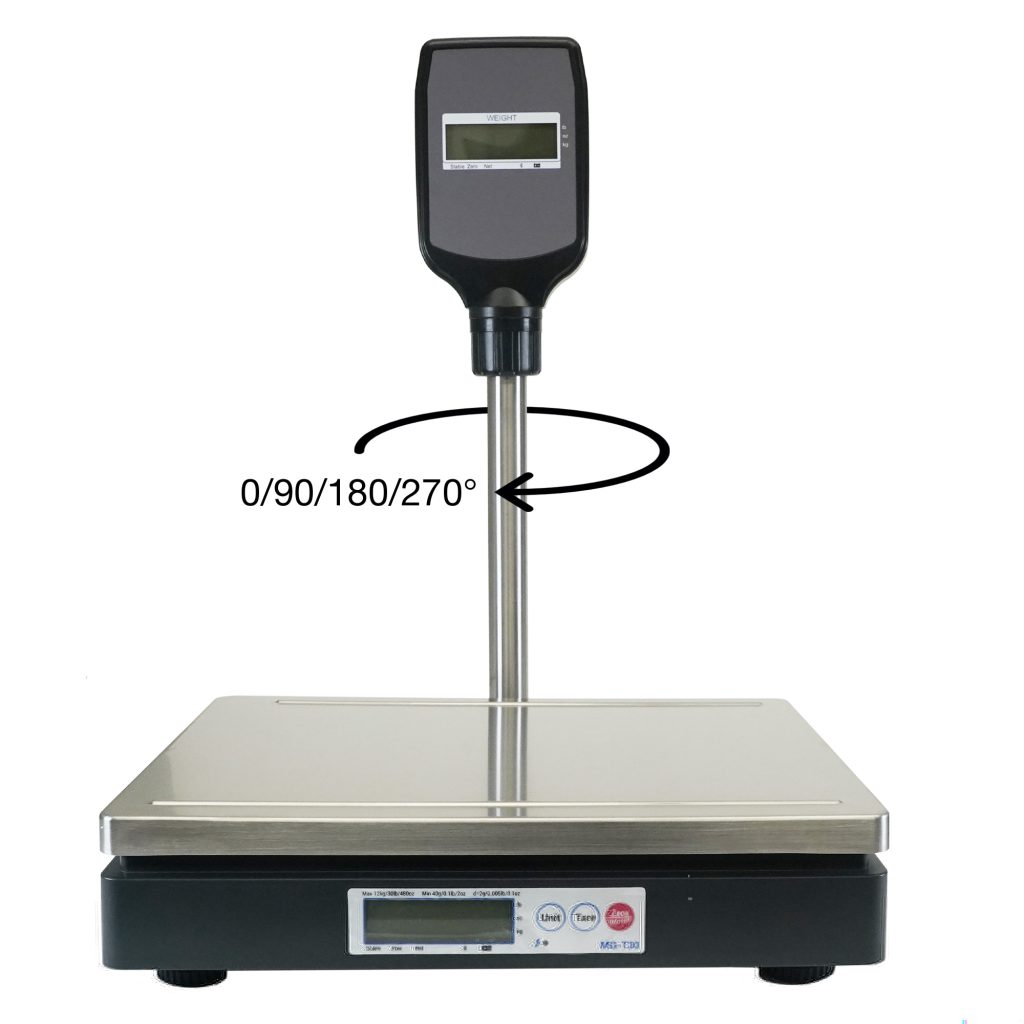
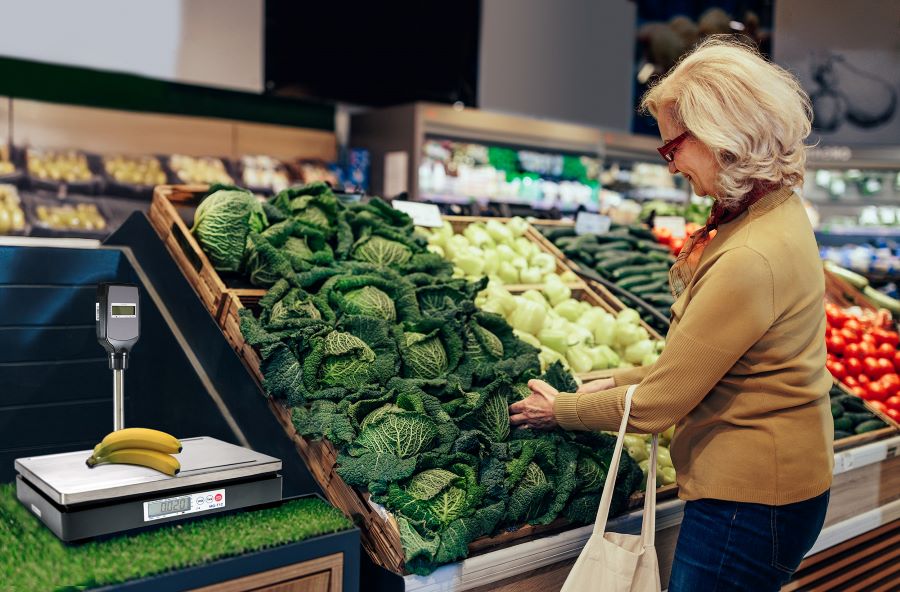
    The latest mG-T POS scales from Star Micronics are perfect for grocery stores and environments.

    Kiosk Printers

    Behind every seamless self-checkout experience is a reliable kiosk printer quietly doing its job. From printing crisp receipts to generating order tickets and labels, kiosk printers are the unsung heroes of modern grocery stores. Star Micronics brings precision and speed to the table, offering solutions built to keep self-service stations efficient and customers happy—even during the busiest rush hours.

    SK5-31 Kiosk Printer

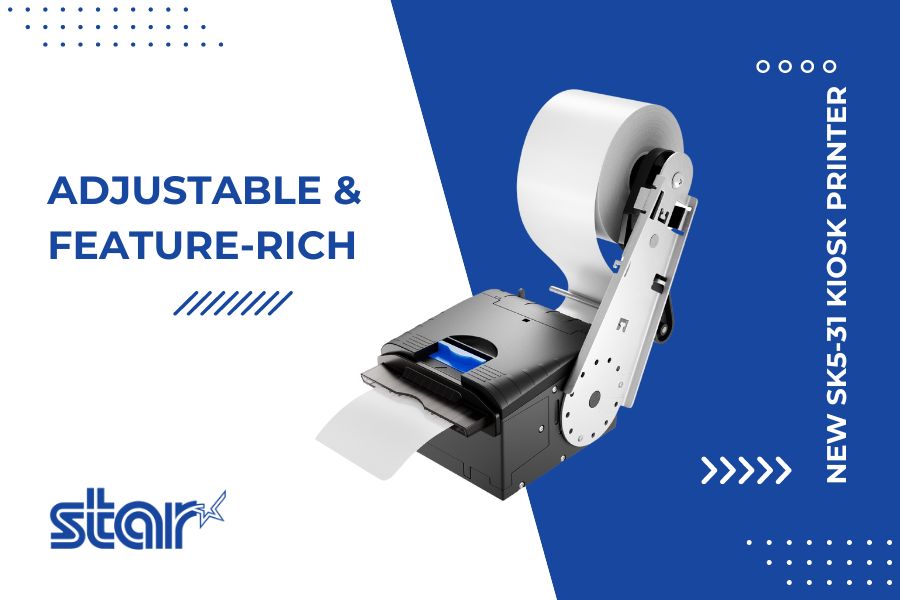
    Designed for high-demand environments, the SK5-31 combines a sleek, fully enclosed design with advanced features like anti-jam technology, paper eject assistance, and an adjustable paper guide with 12 positions. With a print speed of 250mm/s and versatile connectivity options (USB/Serial or USB/LAN), this printer ensures smooth, efficient, and reliable operations.

    Explore the SK5-31 >

    mC-Print3 Receipt Printer

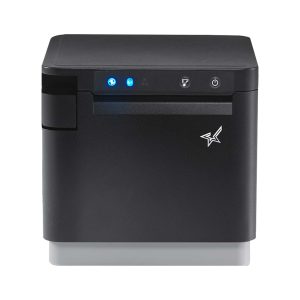
    The Star Micronics mC-Print3 combines high-speed printing with advanced connectivity options like Ultra-C and CloudPRNT Next. Its Ultra-C USB-C port provides seamless power and data transfer with any device, while CloudPRNT Next offers enhanced remote printing using the MQTT protocol, ideal for modern POS environments.

    Discover the mC-Print3 >

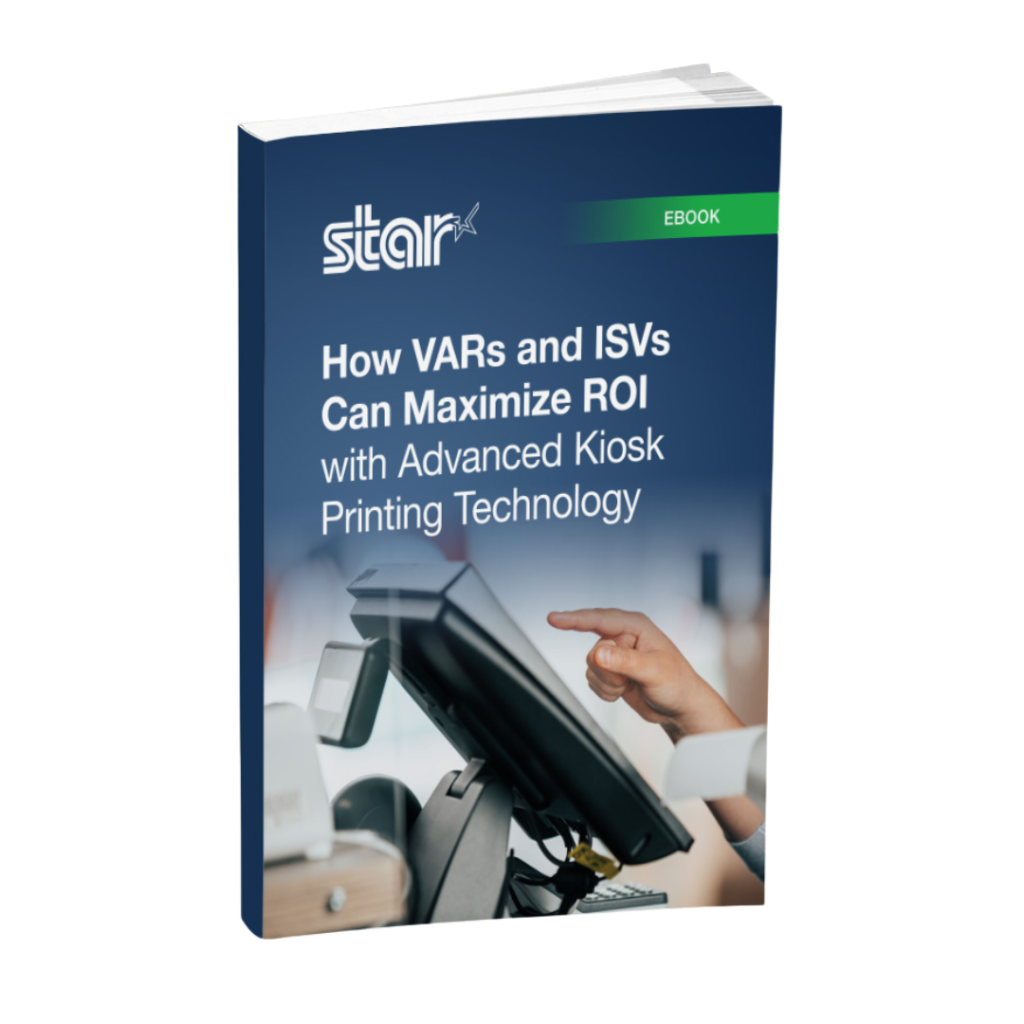
    How VARs and ISVs Can Maximize ROI with Advanced Kiosk Printing Technology

    Find out how ISVs and VARs can harness the transformative potential of kiosk printing technology to maximize ROI for both their clients and their own businesses.

    Precision POS Scales

    mG-TUDB Scales

    Designed for precision and versatility, the mG-TUDB scales are a perfect fit for grocery self-checkout stations, produce sections and bulk item sales. With trade-legal certification for the U.S. and Canada, these scales offer Class III accuracy and seamless connectivity via Bluetooth, serial, or USB-C. Their large platter and optional pole display accessory ensure effortless setup with your POS system, making them ideal for a wide range of applications, from delis to farmer’s markets.

    Find Out More >

    Cash Management

    CD5 Max Series Cash Drawers

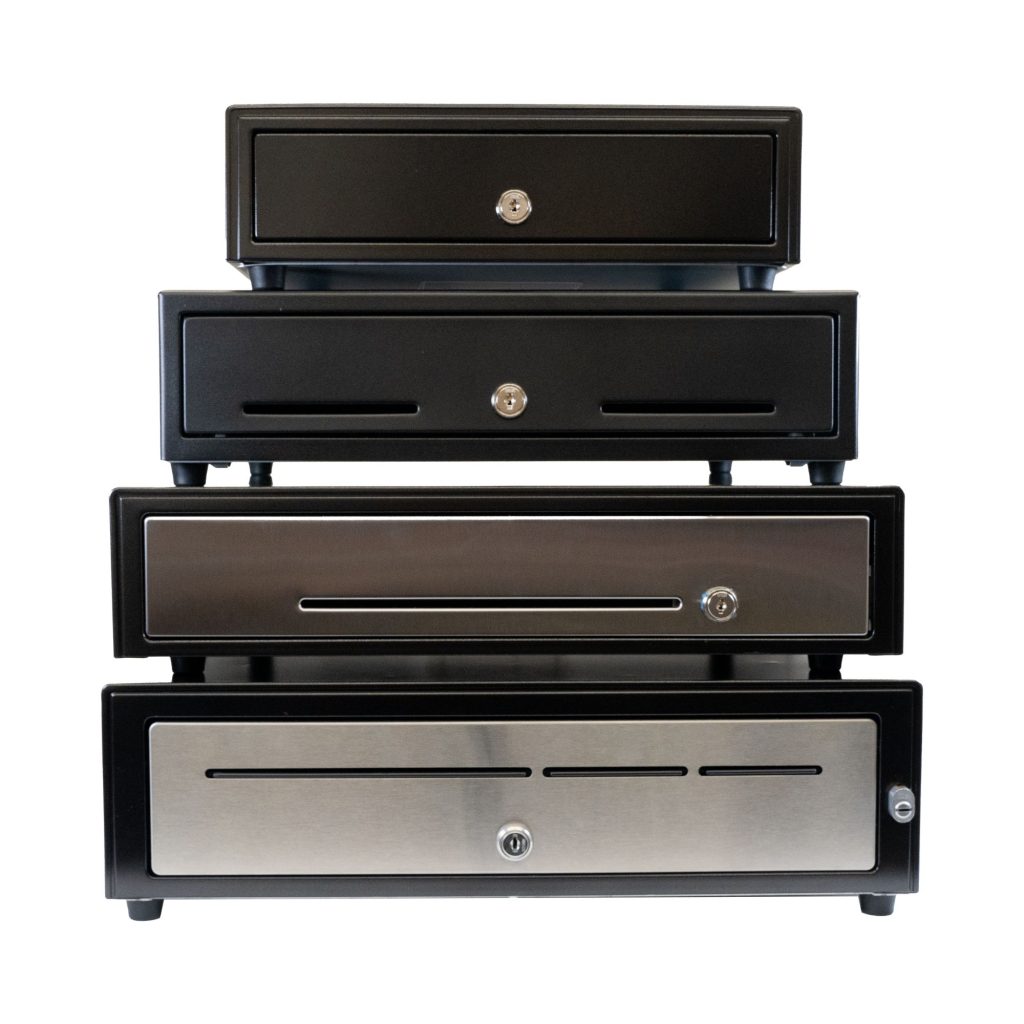
    Designed for high-cash volume businesses, the CD5 Max Series cash drawers deliver durability, security, and sleek design. With all-steel construction, dual lock mechanisms, and under-till compartments for added organization, these drawers are ideal for grocery stores, cannabis dispensaries, and other busy retail settings. Available in multiple sizes and with dual DK and USB interface options, the CD5 Max Series integrates seamlessly into any POS system.

    Explore More >

    Scanning Technology

    Star’s 1D/2D Barcode Scanners

    Star offers a comprehensive range of IP-rated 1D/2D barcode scanners, ideal for diverse business needs. From retail to healthcare, our versatile scanners excel in parsing driver’s license and ID barcodes, ensuring swift and accurate data capture. Choose the perfect fit for your setup—desktophandheld, or wireless Bluetooth options available.

    The Takeaway: Grocery Tech Is a Golden Opportunity

    Grocery retail is truly exploding with possibilities. NRF 2025 made it clear that self-service, kiosks, and AI are here to stay, and they’re revolutionizing how grocers operate. For VARs and ISVs, this is the moment to step in, guide clients toward the right solutions, and build partnerships that drive growth.

    With Star Micronics by your side, you’re equipped to offer the tools grocery retailers need to stay competitive now and into the future.

    Ready for the grocery tech you need?

  • Essential Airport Restaurant Solutions for Modern Hospitality

    Essential Airport Restaurant Solutions for Modern Hospitality

    Restaurants and food service companies with airport locations have an immense opportunity to provide the meals and snacks travelers count on to sustain them before or after flights. However, filling orders and optimizing customer experiences can be a challenge without the right airport restaurant solutions. 

    Airport restaurant and concessions staff have to deal with demand from thousands of people, particularly when large flights land or at traditional mealtimes. Furthermore, travelers are looking for a variety of experiences. Some want quick service before catching a connecting flight and will not be patient if forced to waste time standing in line. Others want to relax in a restaurant during a long day of travel. 

    Regardless of how they engage, travelers want efficient service and food made to order. The complexity of managing multiple restaurants can make meeting those demands even more challenging. Operators may have numerous locations throughout an airport or have locations with different branding and menus. Ensuring smooth operations at each restaurant, counter, and concession stand requires real-time visibility and centralized control.

    Must-Have Airport Restaurant Solutions

    Technology tailored specifically for airport restaurants helps meet high customer expectations for quick, efficient service, even during peak times. Modern airport restaurant and food service operations leverage the following technologies: 

    1. Online Ordering and Cloud-Ready Hardware

    With more travelers opting to order food and beverages from their mobile devices, online ordering has become an essential service for airport restaurants. Allowing customers to browse menus, place orders, and pay directly from their phones not only enhances convenience but also helps reduce wait times at busy counters. Customers can complete an order with a few taps as they move through the terminal, allowing staff to prepare the food before they even approach the restaurant.

    To support this level of convenience, having cloud-ready hardware is ideal. Cloud-print-enabled printers receive orders directly from online ordering platforms, whether from mobile apps or websites, minimizing the need for extra devices or manual input. This technology helps staff stay updated with orders in real time, reducing delays and making sure that all orders—no matter where they come from—are accurately printed and efficiently managed.

    Star Micronics’ CloudPRNT technology makes this process flawless by allowing printers to communicate directly with web-based ordering services. With Star’s CloudPRNT Next, enhanced by the MQTT protocol, airport restaurants benefit from faster, more reliable cloud communication, ensuring orders are printed promptly, even in high-demand environments.

    2. Self-Service Kiosks

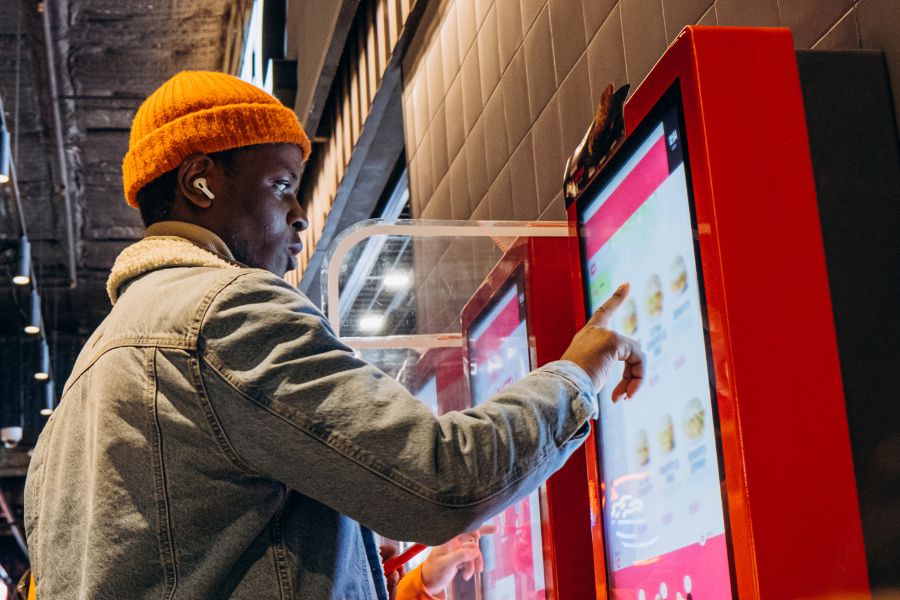
    Deploying kiosks is one of the best ways to keep lines short and minimize errors and waste. Instead of waiting for assistance from an employee, travelers place their orders at a kiosk, using a touchscreen to choose precisely what they want. 

    Self-service “kiosks” can take many forms, from large interactive digital signage to touchscreens embedded in cabinets. However, a tablet in a secure enclosure supported by a tablet stand or display gives airport restaurants a space-saving way to provide self-service options. 

    With self-service kiosks, travelers are free to quickly browse their options and potentially even place orders with different restaurants or vendors near them from the same screen. Kiosk software can make nutrition and allergen information readily available and upsell customers with offers to expand an order into a combo or add a side. 

    After making their selections, travelers can pay at the kiosk using cash, a payment card, or a mobile wallet. A receipt or ticket with an order number is then printed for easy tracking. The receipt can also include an estimated time when the order will be ready so travelers can purchase items for their flights or run other errands before picking up their food.

    Airport Restaurant Solutions Kiosk

    3. Kitchen Printers

    Once travelers place their orders, it’s essential for airport kitchens to receive them quickly and accurately. Kitchen printers ensure each order reaches the back of house promptly, helping staff prepare and serve food efficiently, even during busy times. By improving the order process, these printers contribute to faster service, ultimately creating a smoother experience and happier customers.

    Impact printers are known for their durability and can handle the demands of busy kitchen environments. They reliably produce clear, legible orders, performing well despite the heat and humidity often found in kitchen spaces. These printers also offer fast output, simple paper loading, and a compact design to optimize space.

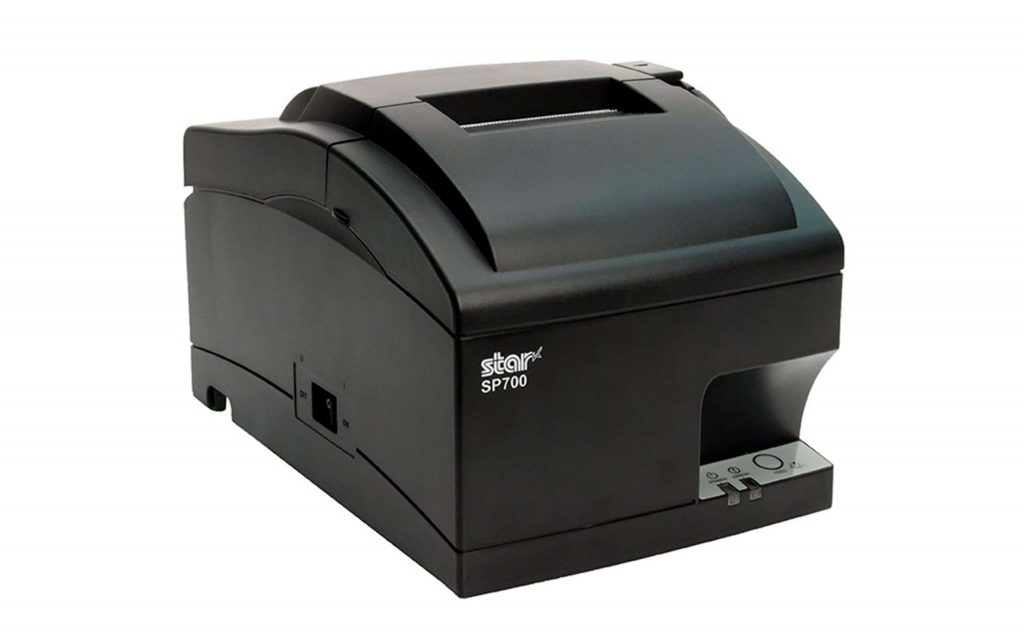
    The SP700 series by Star Micronics supports CloudPRNT technology, which allows kitchen printers to receive online orders directly from cloud-based platforms without additional hardware. This capability makes it easier for staff to keep up with orders and reduces delays, providing a positive experience for both in-house and online customers.

    SP700 Impact Printer

    With its robust design and consistent print quality, the SP700 impact printer enhances both operational efficiency and customer satisfaction by streamlining order management.

    Explore the SP700 >

    As modern kitchens adopt effective heat control, thermal receipt printers are quickly becoming the standard for reliable performance in high-temperature settings. Thermal ticket or chit printers offer faster speeds and enhanced connectivity options, making them ideal for a more streamlined kitchen workflow.

    Learn “Why Thermal Receipt Printers Have a Place in Today’s Modern Kitchens” here >

    4. POS and Receipt Printers

    For airport restaurant operations, POS and receipt printers play a crucial role in ensuring fast and polished customer experiences. High-volume environments require efficient POS systems that can quickly process various payment types, from mobile wallets to contactless cards, meeting the fast-paced demands of airport travelers. Paired with high-speed thermal receipt printers, these systems speed up transactions, minimizing wait times for customers eager to grab a bite before their flights.

    In addition to efficient processing, clear and readable receipts improve order tracking and pickup for customers and staff alike. Thermal receipt printers provide crisp, legible receipts with order numbers and instructions, helping travelers and staff stay organized in the fast-moving airport environment.

    mC-Print3 Receipt Printer

    The Star Micronics mC-Print3 combines high-speed printing with advanced connectivity options like Ultra-C and CloudPRNT Next. Its Ultra-C USB-C port provides seamless power and data transfer with any device, while CloudPRNT Next offers enhanced remote printing using the MQTT protocol, ideal for modern POS environments.

    Discover the mC-Print3 >

    5. Label Printers

    Label printers have become essential in airport restaurants, providing a versatile solution for labeling various items, from grab-and-go meals to fresh ingredients. Clear, easy-to-read labels display product names, nutrition facts, and prices, allowing travelers to make quick purchasing decisions, which is particularly valuable in fast-paced environments. 

    Linerless label printers, in particular, offer substantial benefits for airport restaurants. Unlike traditional labels, linerless labels do not have a silicone backing, which makes them quicker to apply, eliminates unnecessary waste, and keeps workstations cleaner and safer. These printers can use either a repositionable adhesive for temporary labeling or a stronger adhesive for more permanent applications. 

    mC-Label3 Multimedia Printer

    The Star Micronics mC-Label3 is a versatile multimedia printer that prints a wide range of labels and receipts, including both permanent and repositionable sticky linerless. It features cloud connectivity and innovative technologies like SteadyLAN and TetherLAN for enhanced printing convenience.

    Discover the mC-Label3 >

    6. Barcode Scanners

    For restaurants looking to optimize inventory management and simplify workflows, barcodes or QR codes are an ideal addition to labels. Scanning these codes allows staff to quickly verify product details, check inventory levels, and even monitor sales trends for efficient reordering. Barcodes on receipts or QR codes for mobile app ordering also streamline the customer experience by making it easier to retrieve order details or participate in loyalty programs.

    Additionally, barcode scanners, whether handheld or countertop, are invaluable for smooth and accurate order processing, age verification, and stock tracking. From portable devices for stockroom use to fixed scanners for checkout, barcode scanning equipment enhances operational efficiency and accuracy, giving airport restaurant staff reliable tools to improve customer service and maintain organized, well-stocked inventory.

    Star’s 1D/2D Barcode Scanners

    Star offers a comprehensive range of IP-rated 1D/2D barcode scanners, ideal for diverse business needs. From retail to healthcare, our versatile scanners excel in parsing driver’s license and ID barcodes, ensuring swift and accurate data capture. Choose the perfect fit for your setup—desktophandheld, or wireless Bluetooth options available.

    View the Star Catalog

    Discover the full range of Star Micronics airport restaurant solutions in our product catalog, offering the tools you need for efficient, high-performing airport dining operations.

    Think Omnichannel for Airport Restaurant Solutions

    Travelers come from all walks of life, and their preferences for how they interact with businesses vary widely. For instance, non-native speakers may find it easier to use a kiosk with multilingual support, while travelers with mobility issues may prefer browsing menu options on a screen instead of moving from restaurant to restaurant. Some guests may even want the convenience of ordering from multiple airport eateries at once.

    On the other hand, travelers rushing to catch a connecting flight often seek quick grab-and-go options with fast self-checkout. Leveraging an omnichannel approach with airport restaurant solutions makes all types of engagement possible.

    Additionally, these solutions empower airport restaurants to drive greater operational efficiency, improve order accuracy, and minimize waste. By connecting front- and back-of-house processes, operators can ensure control, consistency, and high-quality customer service. With the right technology, airport restaurants can overcome the unique challenges of airport hospitality, creating a frictionless, low-stress experience that benefits both travelers and staff.

    Find Your Airport Restaurant Solutions Today:

  • Future-Proofing Kiosk Solutions with Frank Olea

    Future-Proofing Kiosk Solutions with Frank Olea

    In the latest episode of the Rising Stars Podcast, “Kiosk Solutions and Future-Proofing Technology with Frank Olea,” host Kate Orara takes listeners into the world of self-service kiosks. Frank Olea, CEO of Olea Kiosks, brings his longstanding expertise to the conversation, sharing valuable insights on how businesses can prepare their kiosk solutions for the future while maintaining customer service and engagement.

    As an industry leader in kiosk manufacturing and innovation, Frank offers a wealth of knowledge on staying ahead in a quickly changing landscape. This episode covers key topics, including how to transition kiosk systems to new hardware and software platforms, the best practices for minimizing downtime during upgrades, and balancing advanced features with simplicity to ensure a seamless user experience.

    Preparing for the Future of Kiosk Technology

    Frank highlights the importance of future-proofing kiosk systems, ensuring businesses remain flexible and adaptable to changing technology. He shares actionable strategies for Value-Added Resellers (VARs) and businesses looking to showcase the ROI of self-service kiosks and offers advice on how to handle the inevitable shifts in both hardware and software solutions.

    For VARs, ISVs, and entrepreneurs in the kiosk space, this episode provides practical guidance on how to remain competitive and innovative. Tune in to discover how to maximize the potential of your kiosk solutions and prepare for the future of this fast-growing technology.

    Explore innovative kiosk solutions from Star Micronics >

    Loving the podcast? Subscribe now, and let us know what you think by leaving a review!

    Stay up-to-date on all things Star, don’t forget to follow us on X, LinkedIn, Facebook, Instagram, and YouTube.

    The Rising Stars Podcast

    Immerse yourself in the world of point-of-sale (POS) with the Rising Stars Podcast by Star Micronics, hosted by industry pro, Kate Orara. Twice a month, we explore the fascinating journeys of innovators and businesses navigating the challenges of POS technology’s rapid pace.

    In every episode, Kate Orara, Star Micronics’ Partner Development Manager, discusses emerging retail technology trends and strategies with global industry giants. She’s spent her entire career meeting all the right people, and now listeners everywhere can benefit from this vast network of channel gurus.

    Always leading and always innovating, Star Micronics, a pioneer in POS and customer experience technology for over 60 years, welcomes you to join us in shaping a brighter future in the retail, hospitality, and cannabis industries.

    Want more industry news?

    Episode Transcript:

    [Music]

    Kate Orara: Hey there, retail tech enthusiasts! Welcome to the Rising Stars podcast, your go-to source for all things retail technology and the ever-evolving world of point-of-sale. I’m your host, Kate Orara, Partner Development Manager at Star Micronics, and I am thrilled to be your guide on this exciting journey.

    Here at Rising Stars, we’re not just keeping up with the trends—we’re setting them. We dive deep into the tech landscape with global industry leaders, unpacking strategies and discussing the latest innovations that shape the future of retail IT. Whether you’re a tech aficionado, a business owner, or just curious about the dynamic world of retail, this podcast is your backstage pass to insider knowledge. And hey, it’s not just about the tech—it’s about the community. Join me and the Star Micronics team as we lead and innovate, shaping a brighter future for the retail, hospitality, and cannabis industries, and beyond.

    Together, we rise! So hit that subscribe button, stay in the loop, and let’s make waves in the retail tech space. This is the Rising Stars podcast, where innovation meets inspiration. Let’s rise together!


    Kate Orara: Alright, welcome back to another episode of the Rising Stars podcast. Y’all know me—I’m Kate Orara—and today, I’m really excited about this episode. I have the pleasure of being joined by Frank Olea from Olea Kiosks. How are you today, Frank?

    Frank Olea: Doing good, doing awesome.

    Kate Orara: Great! Well, I’d love for you to tell our listeners a little bit about yourself and Olea Kiosks. I’m sure they probably have an idea of what you guys do from the name of your company, but just in case, let’s give them the full picture.

    Frank Olea: Alright, sure. I’m the CEO of Olea Kiosks, and as the name implies, we manufacture kiosks. Next year is actually our 50th year in business. My grandfather, father, and uncle founded the company in the mid-70s. Initially, it was a trade show exhibit company, and we transitioned into kiosks in the mid-90s. We design and manufacture kiosks for various industries, including QSR, theme parks, healthcare, travel, and hospitality.

    Kate Orara: That’s amazing! So it’s a family business that’s been around for decades. I will say, though, I’ve probably only seen kiosks really take off in the past decade, especially during COVID. I bet business was booming for you guys!

    Frank Olea: To be fair, we started in a different industry, as I mentioned, with trade show exhibits. But by the mid-90s, we had fully transitioned into kiosks. Even though kiosks weren’t flying off the shelves in the mid-90s, we had some experience. My family built the first kiosk in 1983, when I was only eight years old. So there was a lot of groundwork laid before kiosks became as widespread as they are now.

    Kate Orara: That’s fascinating! Self-service kiosks have definitely shifted from being a “nice-to-have” to a “must-have” for so many businesses. Even small mom-and-pop shops are starting to use them. What do you think has driven that shift?

    Frank Olea: We spent a lot of time with early adopters—those cutting-edge companies that wanted to do something different. Over the years, it became more mainstream. For example, healthcare and QSR are two industries where self-service is really making an impact. In fact, we have one healthcare client that just reported 83% of their patients are checking in via kiosks. In another case, California Fish Grill, a fast-casual chain, is seeing 68% of their in-store sales coming through kiosks.

    Kate Orara: Wow, those are impressive numbers. I imagine the design of the kiosk plays a big role in that success, right?

    Frank Olea: I wish I could say it was all about the design! Of course, a well-designed kiosk helps, but there are a lot of factors at play. Placement is crucial—if the kiosk isn’t in the right spot, people might not even notice it. Employee training is another key piece. At California Fish Grill, they’ve redeployed staff to walk around and help people with the kiosks, which boosts user confidence.

    Kate Orara: I can totally see that. I remember the first time I used a kiosk at a fast food place, I wasn’t sure about it. But now, I’m a pro! Speaking of user experiences, how do you balance the need for advanced features with the simplicity required for user-friendly interfaces?

    Frank Olea: It can definitely be a challenge. Some kiosks we make have a lot of components, like biometrics, passport readers, or ID scanners. We have to fit all of that into a box that isn’t too big, while also making the interface intuitive. I’m a big fan of simple design, and we always aim to strip things back to what’s essential for the user.

    Kate Orara: That makes sense. Do you often find yourself advising clients to scale back their wishlist of features?

    Frank Olea: Absolutely. Sometimes, clients want to pack everything into a kiosk, but we often advise them to focus on what really matters for the user experience. The more hardware you add, the more complicated it can become, both in terms of functionality and long-term maintenance.

    Kate Orara: Speaking of maintenance, when it comes to resellers explaining the cost of self-service kiosks, how should they communicate the benefits to potential customers who might be hesitant about the investment?

    Frank Olea: The key is sharing statistics. For instance, QSRs can expect a 13-15% upsell per ticket with kiosks. Those are hard numbers that show the ROI. Plus, with labor shortages being what they are, kiosks offer a solution that doesn’t get sick, doesn’t need breaks, and helps with labor gaps.

    Kate Orara: Definitely. I also imagine that kiosks help with consistency in things like payments and upsells. Any other unexpected benefits?

    Frank Olea: Yes! In healthcare, we’ve found that kiosks actually help with collecting outstanding payments. When patients check in, they’re reminded about past-due co-pays, which has led to an 8% increase in collections. That’s something our clients didn’t anticipate but were thrilled to discover.

    Kate Orara: Wow, that’s huge! So kiosks are really transforming not just the customer experience, but also helping businesses collect revenue. Are there any emerging trends in self-service technology that resellers should be highlighting to potential customers?

    Frank Olea: Biometrics are becoming more popular, like facial recognition or palm vein scanning. We’re even seeing stadiums use facial recognition to speed up entry. These kinds of innovations can streamline operations and improve security.

    Kate Orara: I love hearing about that. As technology continues to evolve, how should businesses transition to new hardware or software platforms for their kiosks without too much disruption?

    Frank Olea: Testing is crucial. We work closely with clients to ensure everything from new brackets to software updates is thoroughly tested before implementation. When we upgraded kiosks at the Empire State Building, we tested everything in their lab to avoid any disruptions when the changes went live.

    Kate Orara: That’s great advice. What’s your best tip for businesses looking to future-proof their kiosk solutions?

    Frank Olea: Choose a modular kiosk design. This allows for easy upgrades—whether it’s a new payment device or a different printer. Working with a manufacturer like us, who can custom-fit new components, is key to extending the life of your investment.

    Kate Orara: That’s great to know. Well, Frank, I really appreciate your time today. You’ve shared so many valuable insights with our listeners. Is there anything we didn’t cover that you’d like to mention?

    Frank Olea: No, I think we covered it all! I enjoyed the conversation.

    Kate Orara: Awesome! If any of our listeners want to reach out to you, how can they do that?

    Frank Olea: The best way is through our website or LinkedIn. I’m pretty active on LinkedIn, and I love sharing behind-the-scenes looks at what we’re working on.

    Kate Orara: Fantastic! We’ll include links to your social media in the show notes. Thanks again, Frank, and thanks to all of our listeners for tuning in. Don’t forget to like, subscribe, and share this episode with others. We’ll see you in the next one!

    [Music]

    Kate Orara: And that’s a wrap for this episode of the Rising Stars podcast. A huge thanks to our incredible listeners for tuning in and to our phenomenal guests for sharing their insights. Don’t forget to subscribe, rate, and leave us a review. Let us know what you want to hear more about—your feedback fuels our journey to bring you the best in retail technology. Stay connected with us on social media for updates and behind-the-scenes content.

    As we sign off, remember: The future of retail technology is in our hands, and together, we’re shaping it. Keep innovating, keep rising, and until next time, this is Kate Orara signing off. Together, we rise.

    [Music]

  • Star Micronics Unveils the SK5-31 Thermal Kiosk Printer

    Star Micronics Unveils the SK5-31 Thermal Kiosk Printer

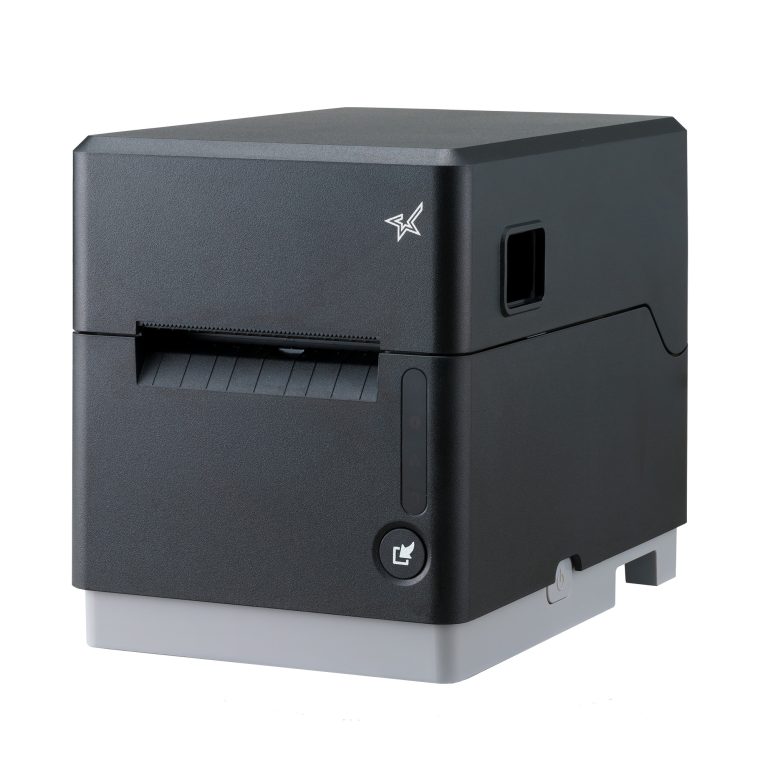
    The SK5-31 kiosk printer redefines speed and efficiency with a multitude of features found nowhere else in the industry.

    Somerset, NJ – July 10, 2024 – Star Micronics, a global industry leader in point-of-sale (POS) solutions, is proud to announce the launch of its highly anticipated SK5-31 Thermal Kiosk Printer. This new offering redefines the standard for kiosk printers, combining speed, flexibility, and convenience with innovative design features.

    The SK5-31 Thermal Kiosk Printer stands out with its easy-to-handle housing, free from the sharp edges typical of metal kiosk printers. It features a stylish design that rivals the aesthetics of desktop printers. This fully-housed, high-speed thermal printer offers unmatched performance and easy maintenance, setting a new standard in the industry.

    Key features of the SK5-31 include:

    • High-Speed Printing: With a maximum print speed of 250mm/s and 600mm/s paper ejection, the SK5-31 ensures fast, high-quality prints.
    • Anti-Paper Jam Function: The printer detects blockages and halts the printing process, resuming automatically once the obstruction is cleared.
    • Paper Eject Assistance: This function allows tickets to be printed in full before ejection, preventing premature paper removal.
    • Innovative Inner Looping Mechanism: Enhances seamless paper feed and supports anti-paper jam and paper eject assistance functions.
    • Extensive Flexibility: An adjustable paper guide and holder accommodate paper widths from 54mm to 82.5mm, with 12 total paper arm positions.
    • Versatile Connectivity: Featuring USB/LAN (Ethernet) or USB/Serial (RS-232) models for easy connection.
    • Extended Cutter Life: The SK5-31’s cutter life expectancy is double that of competitors, ensuring long-term reliability.

    In addition, the SK5-31 is equipped with StarPRNT and optional ESC/POS™ emulation for seamless integration into existing systems. It supports a wide range of media, including receipt printing, traditional black mark labels, and black mark tickets, making it ideal for various applications such as parking, self-payment, self-service, lottery, and gaming.

    With its launch, the SK5-31 Thermal Kiosk Printer solidifies Star Micronics’ position as an industry leader committed to technological advancement and user convenience.

    For more information about the SK5-31, please visit https://starmicronics.com.

    Love Industry News? Explore our Podcast:

    Star Micronics logo, point-of-sale (POS) hardware and technology company.

    Star Micronics, a world leader in point-of-sale (POS), has designated a portfolio of printing, labeling, secure cash management, and customer engagement solutions for any retail or hospitality establishment. Embracing the mPOS wave, Star’s SDKs allow developers to utilize Star printers with Android™, iOS, iPad®, and iPhone® devices to generate receipts, labels, Chit, and tickets. Star Micronics is always leading and always innovating, creating cloud-based printing solutions, including CloudPRNT and Star Cloud Services, with AOA support and MFi connectivity. Star also has a wealth of peripherals, including 2D barcode scanners, scales, tablet display stands, and more. Visit starmicronics.com or follow us on Facebook, Instagram, X, YouTube, or LinkedIn to learn more.
    Media Contact:

    Christin Dorner
    Star Micronics America, Inc.
    cdorner@starmicronics.com
    848-216-3318

  • Optimize Senior Care with Assisted Living Technology

    Optimize Senior Care with Assisted Living Technology

    The senior living landscape is rapidly evolving as technology takes center stage, transforming elder care facilities. This blog post explores the impactful role of innovative point-of-sale (POS) technology in optimizing facility management. We will show how the proper assisted living technology reduces costs and enhances resident care.

    Moreover, we will highlight how Star Micronics healthcare solutions meet the unique needs of the senior care industry.

    Embracing Technology in the Senior Care Industry

    Like many industries, nursing homes and assisted living facilities are embracing technology. Advanced tools are no longer just a convenience – they help to provide senior residents with more efficient and high-quality care.

    As the demand for senior care increases, implementing effective, time-saving technologies becomes crucial. These advancements streamline facility operations and significantly improve the experience of residents.

    According to federal data, the number of people living in the United States who are 65+ represented 17.3% of the population in 2022 and is projected to reach 22% by 2040. An estimated 3,152 new senior care facilities will be required to accommodate the growing demand. Consequently, the urgency for advanced technology to enhance resident care is more critical than ever. 

    Ideally, the POS solutions in senior care facilities should go far beyond payment transactions. They should be pivotal in helping to manage daily operations like visitor check-ins, cafeteria services, and in-house pharmacy applications.

    Assisted Living Technology Makes an Impact

    Technology is used extensively in nursing homes and long-term care facilities. It helps to modernize operations, enhancing resident and visitor experience, while also improving overall workflow. Plus, technology empowers staff to focus on what matters most: providing care to residents.

    Here’s how assisted living technology contributes to cost savings and enriches the caregiving experience:

    1. Self Check-In Operations

    Firstly, assisted living technology is revolutionizing visitor check-in processes, traditionally a task requiring multiple staff members. Now, facilities can implement an automated system using kiosks equipped to print linerless or die-cut labels.

    Alternatively, self-service workstations can be set up with tablets, display stands, mounts, and label printers. This setup offers a versatile and cost-effective approach. 

    In both setups, visitors enter their details at the kiosk or scan their driver’s licenses or IDs, and a name tag is instantly printed for them. This automation not only eases the workload for staff but also enhances visitor monitoring capabilities.

    Notably, white desktop and handheld scanner models by Star Micronics feature antimicrobial housing, which is particularly important in environments with vulnerable residents, enhancing safety and hygiene standards.

    Simplify Guest Check-ins with the mUnite Kiosk Stand

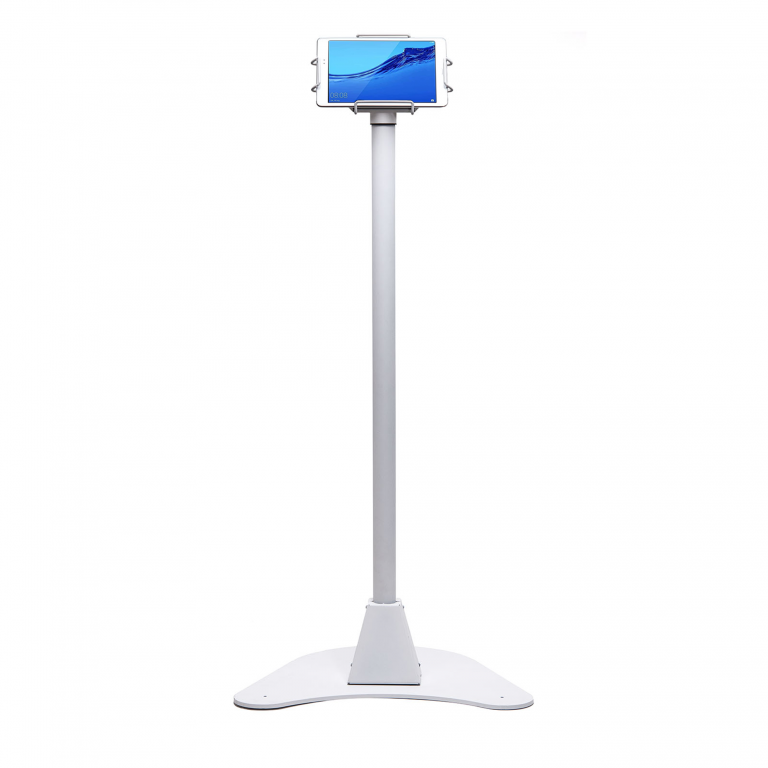
    Star Micronics’ mUnite Kiosk Floor Stand makes self-check-in easy for nursing homes and assisted living facilities. Its stable yet mobile and clean design is also perfect for displaying essential information and welcome messages to guests.

    2. Streamlined Cafeteria Services

    Optimize Senior Care with Advanced Assisted Living Technology

    Now, we all know that cafeterias in senior care facilities are essential for offering nutritious and delicious meals to residents. However, they often are there to serve visitors as well. To streamline the purchasing and checkout processes here, modern POS technology is indispensable.

    Star Micronics provides a comprehensive suite of POS hardware and technology ideally suited for both large and small nursing home cafeterias:

    Innovative Solutions for Small and Large Facilities

    Our range includes high-efficiency receipt printers, robust cash drawers, and versatile tablet POS stands. Each piece of equipment is designed to enhance operational efficiency, ensuring smooth transactions and a better dining experience. With Star Micronics, senior care facilities can equip their cafeterias with the latest in POS technology, ensuring every mealtime is as enjoyable as it is efficient.

    The Star Micronics mPOP® is an all-in-one healthcare technology solution that streamlines transactions and perfectly fits smaller facilities that don’t work with high amounts of cash. It includes an optional 2D handheld barcode scanner with antimicrobial housing in white models, adding extra peace of mind in assisted living facilities.

    Advanced Labeling for Diverse Requirements

    The mC-Label3 multimedia printer is an ideal solution for diverse cafeteria labeling requirements in nursing homes. These range from detailing ingredient lists and item descriptions to preparing labels for food delivered to residents’ rooms. This printer features a convenient One Touch function, enabling users to effortlessly print up to three preset label images with the press of a single button. 

    These labels, which can include important information like allergens and dietary restrictions, are preloaded onto the mC-Label3 through Star Micronics Cloud Services and can be printed without an internet connection.

    Additionally, Star Cloud Services offers a range of free receipt and label image templates tailored to specific dietary needs, ensuring clear and accurate communication of crucial information. This is especially critical in nursing home facilities.

    Multimedia Label Printer for Senior Care Facilities

    The mC-Label3 multimedia printer prints on most media types, including permanent and removable linerless sticky labels, die-cut labels, and receipt paper. This multifunctionality allows for one product for diverse applications.

    Self-Service Solutions for Visitor Convenience

    Furthermore, incorporating self-service kiosks or workstations in the cafeteria offers a cost-effective and versatile approach for visitors. These assisted living technology solutions especially cater to the needs of kitchens offering made-to-order food or self-checkout options. Self-checkout adds efficiency to the entire dining process, particularly helpful in senior care facilities.

    3. In-House Pharmacy Optimization

    In-house pharmacies in assisted living facilities are well-positioned to benefit from the reduced long-term costs due to technology. Multifunctional label printers like the mC-Label3 help with medication labels, resident record folders, and more.

    Star’s TSP847IIRx secure prescription printer is ideal for pharmacies in senior care facilities, with fast print speeds, built-in security features, and modern connectivity options.

    In addition, Bluetooth scanners enhance mobility for employees working at the customer counter and handling inventory.

    Enhanced Software Integration and Compatibility

    The ease of integrating Star Micronics solutions with existing nursing home software and healthcare POS systems is a significant advantage for developers and technology providers. Star also offers a wide range of software development kits (SDKs) that help developers get the most out of our POS hardware and technology. In turn, this aids in allowing their software to function the way it was intended. 

    Compatibility with popular software applications used in healthcare facilities ensures a seamless and interconnected ecosystem that works for everyone.

    Healthcare Goes High-Tech: How Technology is Solving Healthcare’s Operational Challenges

    The proper technology can help businesses in the healthcare industry streamline workflow and make up for employment shortages, helping to prevent costly errors.

    Stay Ahead of the Curve With Assisted Living Technology

    As we progress into the coming decade, the demand for senior care services is set to experience a remarkable rise. Star Micronics is at the forefront of this transformation, providing innovative technology solutions to address the unique challenges of senior living facilities.

    For administrators and caregivers, adopting these technological advancements represents not just a step toward the future but a commitment to elevating the standard of care for our aging population.

    Discover how Star Micronics can help your facility embrace this new era of senior care with innovative, efficient solutions.

    Modernize Your Senior Care Facility Today:

  • Star Micronics Unveils Innovative Solutions at RetailNOW 2023

    Star Micronics Unveils Innovative Solutions at RetailNOW 2023

    Star Micronics is set to make a significant impact at RetailNOW 2023 with the recognition of two of its esteemed employees as it showcases its latest cutting-edge retail technologies.

    Somerset, NJ – July 31, 2023 – Star Micronics, a global leader in mobile, point-of-sale (POS), and customer engagement technologies, is thrilled to announce its participation at RetailNOW 2023, the premier event for the retail technology industry. The event will take place at the Gaylord Palms Hotel in Orlando, FL, on July 31st and August 1st, 2023.

    RetailNOW 2023 promises to be packed with innovation, inspiration, and opportunities to connect with industry leaders and peers in person. Attendees will have the chance to explore Star Micronics’ comprehensive range of top-selling POS and self-service hardware solutions, including exciting innovations that redefine business efficiency.

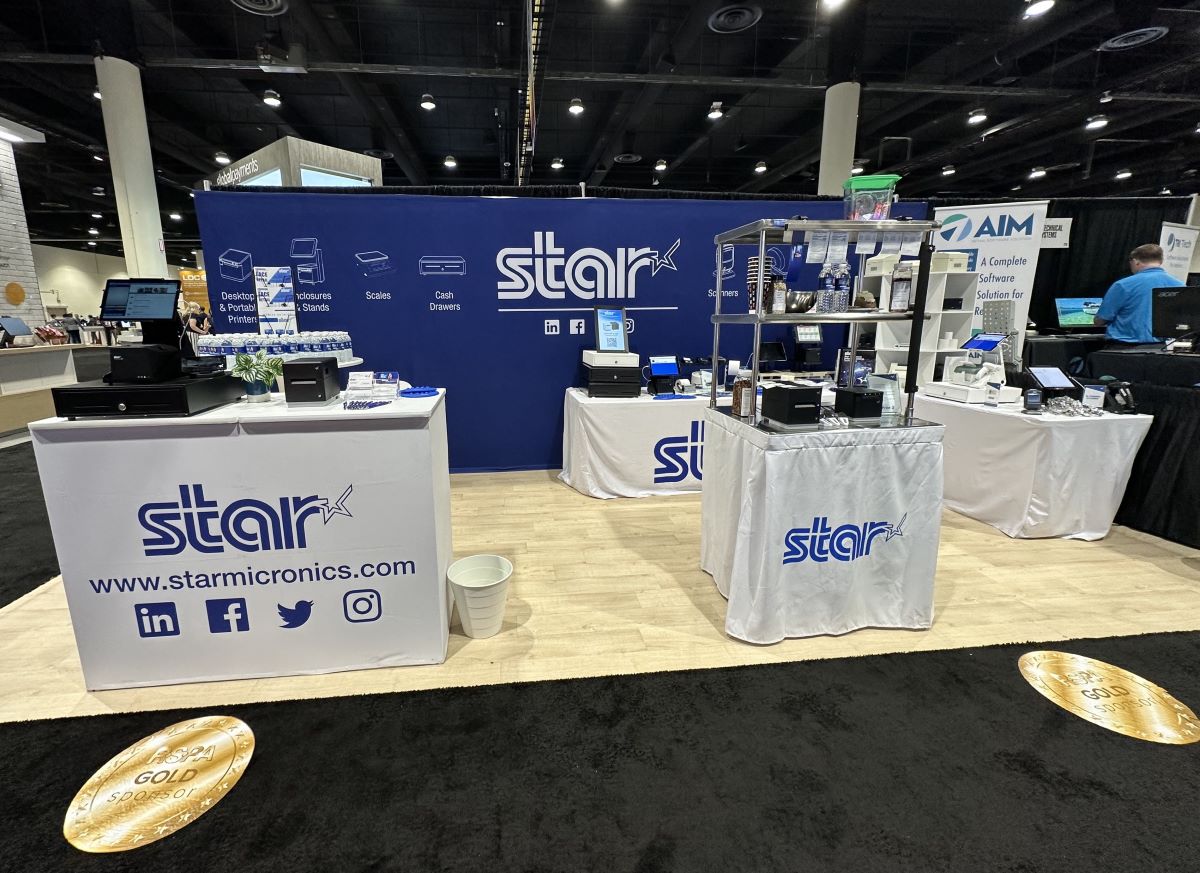
    During RetailNOW 2023, visitors are invited to stop by Booth #716 to meet the Star team and experience firsthand the latest solutions that elevate business operations. Highlights at the booth include:

    The mC-Label3 Multifunctional Printer:
    • Versatile printing on various paper and label media, including linerless sticky labels, permanent linerless labels, die-cut and continuous labels, and traditional receipt paper
    • Maintenance alerts and minimal upkeep for optimal performance
    • Convenient One Touch printing for pre-made receipts and labels


    The Customizable SK5-31 Kiosk Printer:
    • Adjustable single paper arm with 12 positions
    • Fully enclosed design for streamlined maintenance
    • Smooth operation with anti-paper jam and paper eject assistance
    • Adjustable black mark sensor for diverse applications


    High-Resolution 2D Barcode Scanners:
    • Advanced data parsing capabilities for enhanced efficiency
    • Wireless model with charging cradle included for seamless mobility
    • Star-branded for superior quality and reliability

    In addition to our participation at RetailNOW 2023, Star is thrilled to announce that Kate Orara, Partner Development Manager at Star Micronics, is running for the Retail Solutions Providers Association’s (RSPA) Board of Directors. Kate’s candidacy reflects her dedication to advancing the interests of our industry and shaping the future of retail technology.

    “Running for the RSPA Board is an opportunity for me to give back to an industry I’m so passionate about,” Kate said. “I hope to contribute to a future where the RSPA is the go-to resource for all things point-of-sale and a community that fosters innovation, collaboration, and growth.”

    As an extra-special part of the event, Star would like to recognize Christin Dorner, Content & Media Manager at Star, who will be featured as a panelist in the discussion “Marketing Myths, Mistakes & Mastery” on August 1st from 2:30 pm to 3:30 pm.

    Star is also proud to announce that Christin’s added recognition as one of the RSPA’s “40 Under 40” Rising Stars exemplifies her indispensable dedication and expertise in the field.

    To ensure personalized attention at the show, RetailNOW 2023 attendees can schedule private demos with Star representatives by contacting sales@starmicronics.com.

    Take advantage of this opportunity to explore the future of retail technology with Star Micronics at RetailNOW 2023. We look forward to welcoming you to Booth #716!

    Love industry news? Check out our podcast:

    Star Micronics logo, point-of-sale (POS) hardware and technology company.

    Star Micronics, a world leader in point-of-sale (POS), has designated a portfolio of printing, secure cash management, self-service, and customer engagement solutions for any retail or hospitality establishment. Embracing the mPOS wave, Star’s SDKs allow developers to utilize Star printers in tandem with Android™, iOS, iPad®, and iPhone® devices to generate receipts, labels, Chit, and tickets. Star Micronics is always leading and always innovating, creating cloud-based printing solutions, including CloudPRNT and Star Cloud Services, with AOA support and MFi connectivity. Star also has a wealth of peripherals, including 2D barcode scanners, scales, tablet display stands, and more. Visit starmicronics.com or follow us on Facebook, Twitter, YouTube, or LinkedIn to learn more.
    Media Contact:

    Christin Dorner
    Star Micronics America, Inc.
    cdorner@starmicronics.com
    848-216-3318

  • 5 Ways a Self-Service Kiosk Can Boost Retail Sales

    5 Ways a Self-Service Kiosk Can Boost Retail Sales

    In a world where consumer attention spans are shrinking, and store competition has never been more cutthroat, retailers need to find new ways to make their customers want to return to their stores again and again. One way to do this is by introducing a self-service kiosk in stores.

    Many reports have found that customers want more self-service options as they shop, especially as technology improves. Self-service kiosks allow customers to quickly get the information they need and make purchases without waiting on any service staff, but there are more benefits, and they all lead to more sales.

    5 Ways A Self-Service Kiosk Can Boost Retail Sales

    The following five ways a self-service kiosk can boost retail sales will show how these changes can help retailers compete in today’s market.

    1) Help with Labor Shortage

    Self-service kiosks can help retailers bypass much of the pain of the ongoing labor shortage. They reduce the overhead costs of labor and allow shoppers to interact with products without a salesperson’s assistance. This also allows retailers to give better customer service since the kiosks can provide in-depth product knowledge and personalized recommendations.

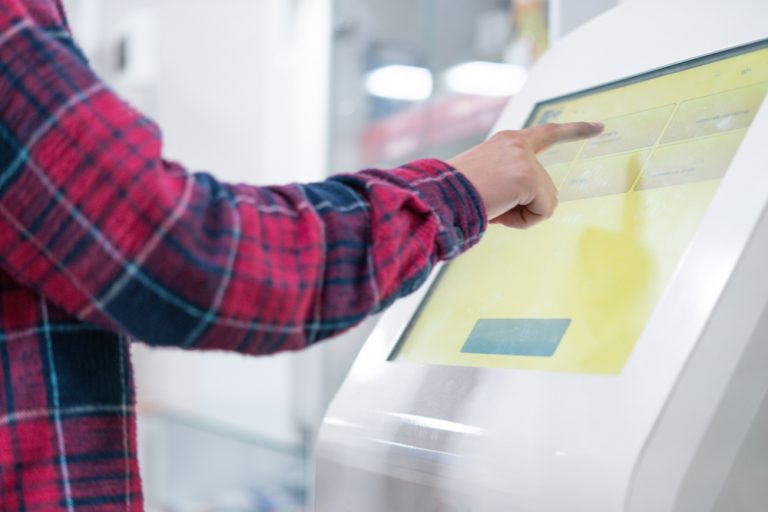
    Young man using a self-service kiosk.

    All items are neatly organized onscreen and show whether they’re in stock, saving employees time and energy going back and forth to check on supply or answer customer questions. Self-service kiosk software can answer most questions right on the spot. Then, in-store employees have more time to help shoppers with other needs.

    2) Decreased Wait Times

    Long wait times are a major reason retailers lose sales, but self-service kiosks can help. By allowing customers to serve themselves, they help shorten the wait time and create an experience where the customer is in control. Some self-service kiosks require a clerk to monitor, but one employee may be all you need to serve many customers at once with multiple kiosks around. An example of this we see every day is at the grocery check-out.

    3) Increased Upselling

    The use of self-service kiosks can also increase upselling. POS software for self-service kiosks can show customers other items they may like as they ring up current selections, often resulting in greater sales. The shopper might have been looking for a sweater, but after viewing more products in the clothing department, they may buy a jacket or pair of pants as well. With the help of self-order kiosks, retailers can track what each customer is looking at so that staff members know to suggest other items that are likely to sell.

    Two young women browsing on a self-service kiosk machine.

    4) Real-time Analytics

    This brings us to our next point: self-service kiosks can track customer behavior in real time. Having up-to-date analyses of your customers is critical in decision-making and marketing. The data from POS software on self-service kiosks can help you make more strategic decisions about your store. For example, email campaigns can be optimized based on customer browsing behavior and buying trends tracked within the software.

    On the other hand, for retail managers, these tools can provide a wealth of insights into customer demographics and a breakdown of how different people browse your store. Inventory is tracked automatically, and merchants can see which items are selling better and at what times. Self-service kiosks can help retailers get to know their customers based on purchases, so knowing what items are popular and what to stock more of is easier than ever. Self-ordering kiosks also allow customers to complete simple tasks like signing up for rewards programs or redeeming coupons on the spot.

    5) Increased Customer Satisfaction

    Self-service kiosks work great because they’re easily accessible to most consumers. Most people are comfortable using a touchscreen to navigate through a platform. The kiosks cut back on lines, getting rid of awful waiting times. They also create a welcoming environment by providing instant gratification, and they offer personalized services to each customer that makes them feel valued.

    Woman using a kiosk machine.

    Customer satisfaction inevitably rises with less waiting time and more personalized shopping experiences. When shoppers are happy with their experience, they are much more likely to return for repeat purchases and recommend the store to friends and family members. All of this leads to increased sales.

    Self-Service Kiosks Boost Sales

    With all the above benefits, it’s easy to see how self-service kiosks can boost retail sales. Using technology to help customers ring themselves up and browse through store selections isn’t going away. Self-service is growing. How are you incorporating it into your own business to stay competitive?

    Star has all you need for self-service kiosk printing and more!

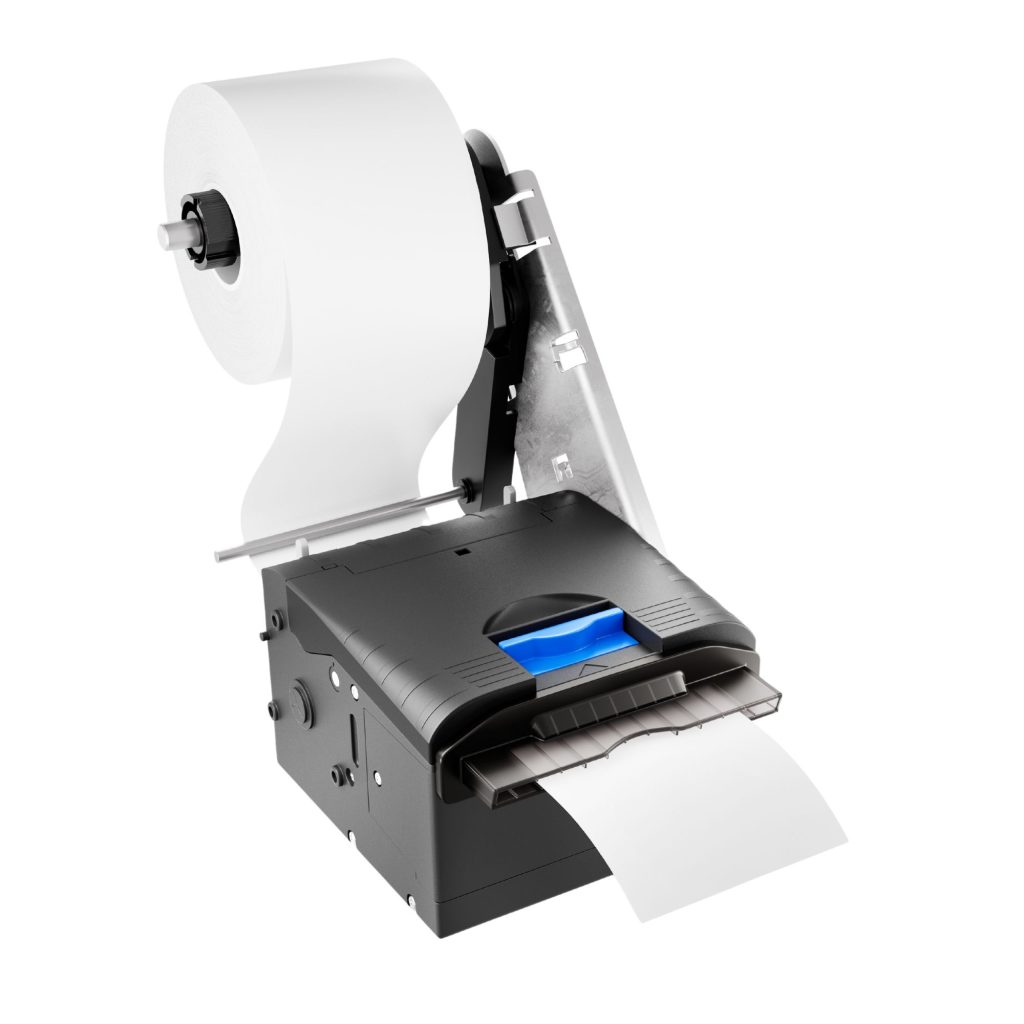
  • New Right-Sided Paper Loader for Star’s SK1-321 Kiosk Printer Aids Paper Changing

    New Right-Sided Paper Loader for Star’s SK1-321 Kiosk Printer Aids Paper Changing

    The limited-edition version of the SK1-321 kiosk printer benefits users who have trouble changing the paper roll with the loader opening to the standard left.

    Somerset, NJ – October 14, 2022 – Star Micronics, a leading manufacturer of mobile, point-of-sale (POS), and customer engagement technologies, is now offering an adapted version of its SK1-321 Star kiosk printer for a limited time. 

    This version of the SK1-321 kiosk printer has all the same features and benefits as the standard version, the only difference being a paper loader that opens toward the right side instead of to the left. A right-sided paper loader is perfect for users with crowded kiosk cabinets who find it hard to change the paper roll with the loader opening to the standard left.

    The SK1-321 is part of Star’s SK1-300 series of 3-inch kiosk printers. This series has high print speeds of 250mm/sec with 203 dpi resolution, demonstrating high reliability with a compact design and easy integration. 

    Available in standard format (horizontal orientation) with or without a presenter, standard format drop-in paper loading with or without a presenter, or vertical format (vertical orientation) without a presenter, the SK1-300 series of kiosk printers can fit many applications. 

    The SK1-321 is compact (low height size: 95mm including paper roll) and lightweight (730g). It’s an optimal solution for applications requiring a small direct thermal kiosk printer with standard 3-inch print width. The SK1-321 also features a drop-in and print paper basket design, compared to the SK1-311, which features a paper roll arm holder. 

    All SK1-300 models come with an RS-232C and USB interface, which integrates with many common kiosk solutions. The SK1-300 series also ships standard with StarPRNT emulation, allowing software developers to take advantage of Star Micronics technology, such as the StarPRNT SDKs and Star’s powerful line of drivers. Software developers that have already integrated Star products can easily swap or extend their applications from a desktop printer to a kiosk printer. ESC/POS is still available for legacy integration. 

    Available options include an LED bezel or presenter, an anti-jam bezel, a large paper roll holder, and more.

    Star Micronics logo, point-of-sale (POS) hardware and technology company.

    Love industry news? Check out our podcast:

    About Star Micronics

    Star Micronics, a world leader in point-of-sale (POS), has designated a portfolio of printing, secure cash management, self-service, and customer engagement solutions for any retail or hospitality establishment. Embracing the mPOS wave, Star’s SDKs allow developers to utilize Star printers in tandem with Android™, iOS, iPad®, and iPhone® devices to generate receipts, labels, Chit, and tickets. Star Micronics is always leading and always innovating, creating cloud-based printing solutions, including CloudPRNT and Star Cloud Services, with AOA support and MFi connectivity. Star also has a wealth of peripherals, including 2D barcode scanners, scales, tablet display stands, and more. Visit www.starmicronics.com or follow us on Facebook, Twitter, YouTube, or LinkedIn to learn more.
    Media Contact:

    Christin Dorner
    Star Micronics America, Inc.
    cdorner@starmicronics.com
    848-216-3318