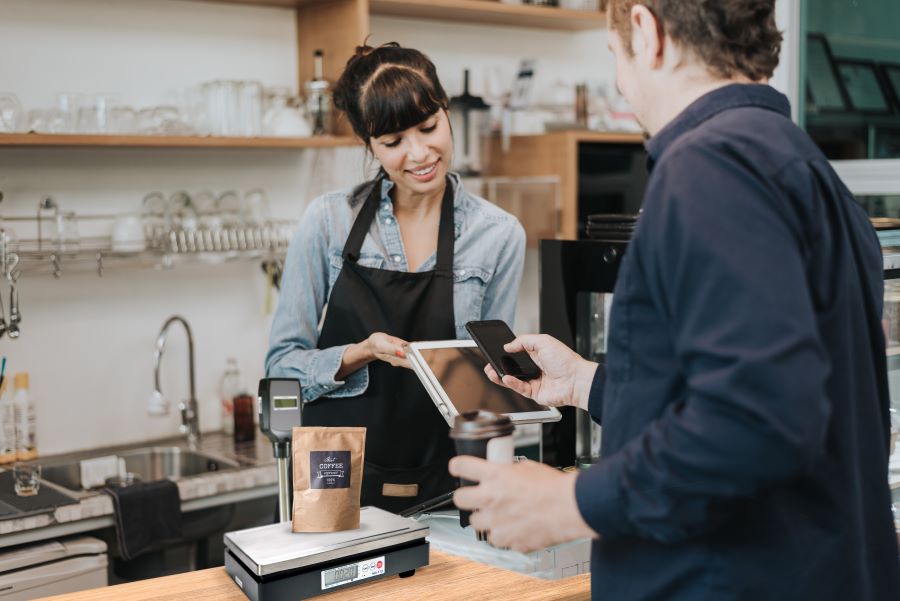
For retailers, grocers, and other businesses using POS scales, compliance is not optional. If a scale is used to determine price based on weight, it must meet legal-for-trade requirements in the region where it is deployed.
That’s where confusion often begins.
Different countries follow different standards, and terms like OIML, NTEP, and Measurement Canada are often used interchangeably when they are not the same. For businesses operating across regions or planning international expansion, understanding these differences is critical.
This guide explains what OIML scales are, how they compare to NTEP and Measurement Canada, and what these standards mean for POS scale deployments in real-world retail and grocery environments.
Table of Contents
What Are OIML Scales?
OIML scales are weighing devices that meet standards set by the International Organization of Legal Metrology (OIML). These standards are designed to ensure accuracy, consistency, and fairness in commercial transactions involving weight.
OIML-certified scales are commonly used in legal-for-trade applications across global markets, particularly in regions outside the United States and Canada.
In practical terms, if a business is selling products by weight in an international market, an OIML-compliant scale is often required to meet local regulations.
What Is OIML Certification?
OIML certification confirms that a scale complies with internationally recognized metrology standards. These standards are defined through a series of technical documents known as OIML recommendations.
These recommendations establish how scales should perform under various conditions, including:
- Accuracy and repeatability
- Environmental stability
- Durability over time
One of the most widely referenced standards is OIML R76, which applies to non-automatic weighing instruments such as retail and grocery POS scales.
For businesses, OIML certification provides confidence that a scale will meet regulatory requirements and deliver consistent, reliable performance in commercial use.
OIML vs NTEP: What’s the Difference?
While both OIML and NTEP relate to legal-for-trade compliance, they apply to different regions and regulatory frameworks.
OIML
- International standard
- Used in many countries worldwide
- Based on global metrology recommendations
NTEP (National Type Evaluation Program)
- United States standard
- Managed by the National Conference on Weights and Measures (NCWM)
- Required for legal-for-trade scales used in the U.S.
The key takeaway is that OIML and NTEP certifications are not interchangeable. A scale approved under one system does not automatically meet the requirements of the other.
For businesses operating globally, this distinction is critical when selecting POS scales for different markets.

OIML vs Measurement Canada: Key Differences
Measurement Canada governs the approval and certification of weighing devices used in commercial transactions within Canada.
While there are similarities between Measurement Canada and OIML standards, they are separate regulatory systems with their own requirements and approval processes.
Measurement Canada
- Applies specifically to Canada
- Requires approval for legal-for-trade use
- Includes inspection and compliance verification
OIML
- Applies internationally
- Provides a framework for global standardization
Some devices may align with both sets of requirements, but approval in one region does not guarantee compliance in another. Businesses must ensure that their POS scales meet the specific certification requirements of each country where they operate.
What Are OIML Recommendations (and Why They Matter)?
OIML recommendations are technical guidelines that define how weighing instruments should perform. These documents serve as the foundation for OIML certification.
They cover areas such as:
- Measurement accuracy
- Tolerance limits
- Environmental testing
- Device classification
For example, OIML R76 outlines the requirements for non-automatic weighing instruments, including most retail POS scales.
These recommendations help ensure consistency across international markets, making it easier for manufacturers and businesses to align with global standards.
What This Means for POS Scales in Retail and Grocery
For businesses using POS scales, compliance directly impacts day-to-day operations.
If a scale does not meet the required certification:
- It cannot legally be used to sell products by weight
- Transactions may be subject to regulatory penalties
- Customer trust can be impacted
This is especially important for:
- Grocery stores
- Delis and fresh food counters
- Specialty retail (including cannabis and bulk goods)
For multi-location or international businesses, the challenge increases. Each location must meet the specific requirements of its region, whether that means OIML, NTEP, or Measurement Canada certification.
Selecting the right POS scale is not just about performance. It is about ensuring compliance across every location where the business operates.
Do you run a restaurant or QSR and find orders going out wrong more often than they should, especially during peak hours? Read up on “Why Leading QSRs Use POS Scales & Labels to Increase Order Accuracy” >
Choosing the Right Certified POS Scale
When selecting a POS scale, businesses need to balance compliance requirements with day-to-day operational performance. The right solution should meet regional regulations while supporting fast, accurate transactions at the point of sale.
For example, a grocery POS scale deployed in Europe may require OIML compliance, while the same deployment in the United States would require NTEP certification. Understanding where and how the scale will be used is the first step in selecting the right device.
Key factors to consider include:
- Required certification (OIML, NTEP, or Measurement Canada)
- Integration with POS systems and retail workflows
- Accuracy and reliability in high-volume environments
- Durability for consistent daily use
A legal-for-trade POS scale that does not integrate well into the POS workflow can still create operational challenges. The goal is to choose a solution that meets regulatory requirements while supporting efficient, scalable transactions across locations.
How Star Micronics Supports Global POS Scale Compliance
Star Micronics provides POS scale solutions designed to meet the needs of modern retail and grocery environments, where compliance and performance must work together.
Star POS scales are built to support:
- Legal-for-trade compliance across multiple regions
- Reliable performance in high-volume environments
- Integration with POS systems and retail workflows
With a focus on accuracy, durability, and ease of use, Star helps businesses deploy POS scale solutions that meet regulatory requirements and real-world operational demands.
Star’s OIML-certified POS scales are available in regions outside the United States, including Europe. To learn more about availability and deployment options, reach out to the Star Micronics team in the UK.
Understanding OIML, NTEP, and Measurement Canada requirements helps businesses avoid compliance issues and confidently deploy POS scale solutions across regions. With the right hardware and approach in place, compliance becomes a built-in advantage, not a barrier to growth.
Learn more about Star Micronics POS scales and compliance-ready solutions for global retail and grocery environments.
Frequently Asked Questions (FAQs) About OIML Scales
What does OIML stand for?
OIML stands for the International Organization of Legal Metrology. It is a global organization that develops standards and recommendations for measuring instruments used in commercial transactions.
What is an OIML scale?
An OIML scale is a weighing device that meets the standards set by the International Organization of Legal Metrology. These scales are typically used in legal-for-trade applications in international markets.
What is the difference between OIML and NTEP certification?
OIML is an international standard, while NTEP applies specifically to the United States. Both ensure accuracy and compliance for legal-for-trade scales, but they are governed by different organizations and are not interchangeable.
Are OIML scales required in the U.S.?
No. In the United States, legal-for-trade scales must be NTEP certified. OIML certification is generally used in international markets outside the U.S.
Can a scale be both OIML and NTEP certified?
Yes. Some manufacturers design scales to meet both OIML and NTEP requirements, allowing them to be used in multiple regions. However, each certification must be obtained separately.
What are OIML recommendations?
OIML recommendations are technical guidelines that define how weighing instruments should perform. They serve as the basis for OIML certification and help ensure consistency across international markets.
What are the classes of OIML scales?
OIML classifies scales based on their level of accuracy. Common classes include:
- Class I: High-precision laboratory scales
- Class II: Precision scales used in laboratories and some retail applications
- Class III: Commercial scales used in retail and grocery environments
- Class IIII: Scales used for less precise applications such as bulk weighing
Most POS scales used in retail fall under Class III.
What are the classes of OIML weights?
OIML weights are also classified by accuracy, ranging from high-precision classes such as E1 and E2 to lower-precision classes like M1, M2, and M3. These weights are used to calibrate and verify the accuracy of scales.
What does legal-for-trade mean for POS scales?
Legal-for-trade means a scale meets the regulatory requirements needed to be used in commercial transactions where price is determined by weight. Certification ensures accuracy, fairness, and compliance with local laws.
Leave a Reply