Category: Solutions & Use Cases

  • WebPRNT vs StarXpand SDK for Web: Choosing the Right Browser-Based Receipt Printing Solution

    WebPRNT vs StarXpand SDK for Web: Choosing the Right Browser-Based Receipt Printing Solution

    Browser-based receipt printing has become a core part of POS applications across retail, restaurants, kiosks, and self-service environments. As cloud POS platforms and online ordering systems continue to grow, software providers need reliable ways to trigger receipts, labels, and kitchen tickets directly from web applications.

    For years, Star Micronics’ WebPRNT has given developers a practical way to handle local USB printing directly from the browser, without requiring desktop software or additional middleware.

    Today, StarXpand SDK for Web builds on that same browser-to-device model with a more unified SDK for printing and peripheral control, while CloudPRNT supports LAN and cloud-managed printing across distributed environments.

    Understanding where each fits can help ISVs reduce integration complexity and choose the right architecture for long-term growth.

    Table of Contents

    How Browser-Based Receipt Printing Has Changed

    When browser-based POS systems became more common, one of the biggest technical challenges was local printer communication. A web application could manage transactions, but connecting directly to a receipt printer from a browser was often difficult without middleware, desktop applications, or custom local services.

    WebPRNT helped solve this by enabling direct browser-to-printer communication over USB. This made browser-based printing practical for:

    For many ISVs, this reduced deployment friction and simplified local printing workflows. But browser-based printing requirements have expanded.

    Today, many deployments include:

    • Multi-location stores
    • Cloud-managed ordering systems
    • Distributed kitchen printing
    • Shared hardware environments
    • Remote print routing

    That shift changes how printers need to communicate. Some environments still depend on local USB printing. Others now require printers to communicate over LAN or directly with cloud services.

    That distinction is what separates WebPRNT, StarXpand SDK for Web, and CloudPRNT.

    What Is WebPRNT?

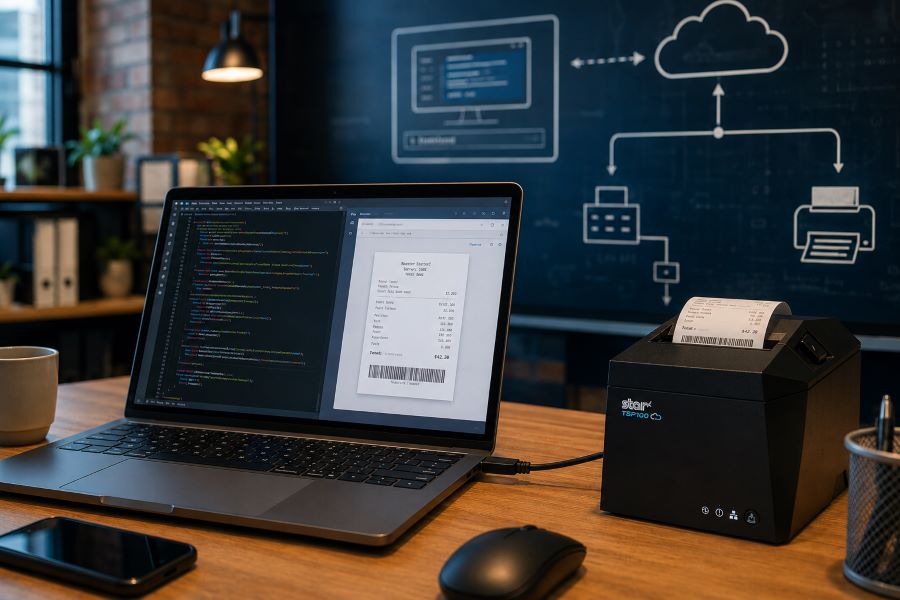
    WebPRNT is Star’s browser-based printing technology designed specifically for browser-based receipt printing over direct USB connections. It allows web applications to send print jobs directly to supported Star printers without requiring a native application layer.

    For developers, this makes WebPRNT useful when:

    • The browser runs locally at the print station
    • The printer is physically connected by USB
    • Printing requirements are focused only on output

    Many ISVs still use WebPRNT successfully in established deployments because it remains stable and predictable for local browser printing. For existing integrations that are already working, WebPRNT remains a practical option.
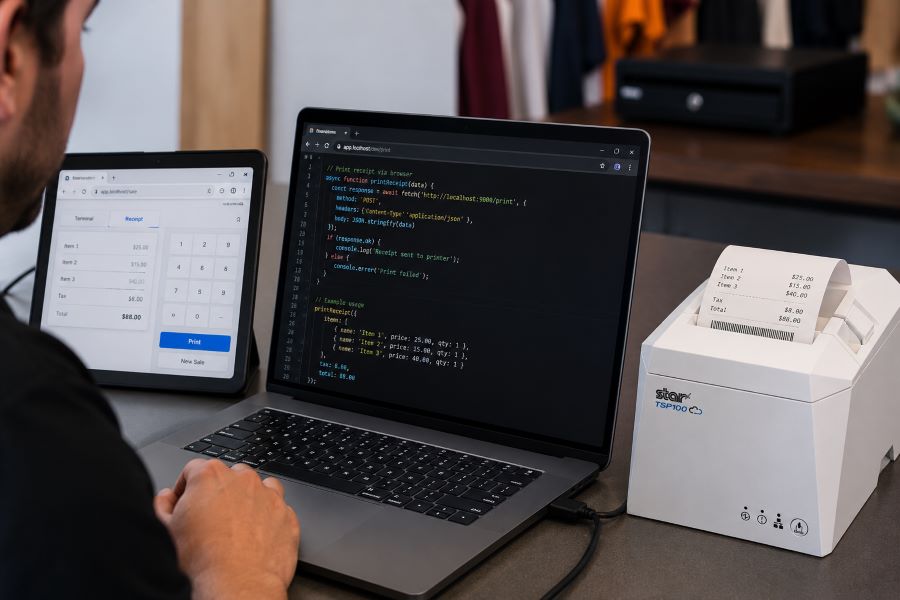
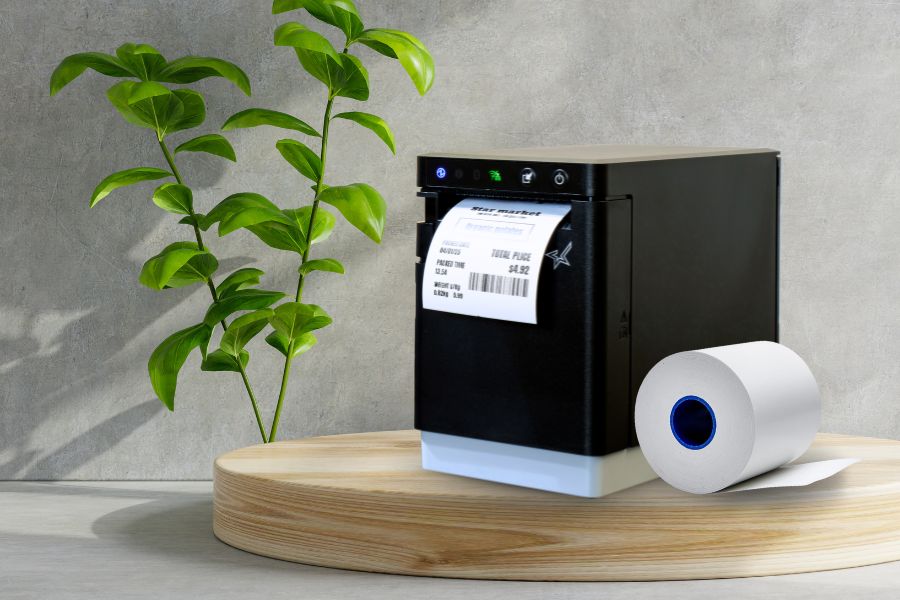
    TSP143IV USB Developer Test

    What Is StarXpand SDK for Web?

    StarXpand SDK for Web is Star’s browser-based SDK for USB-connected printers and supported peripherals. Like WebPRNT, it supports local browser-to-device communication over USB. The difference is in the SDK model.

    Instead of focusing only on print output, StarXpand SDK provides a broader API structure that aligns with Star’s SDK ecosystem across:

    For developers building new browser-based receipt printing workflows, StarXpand SDK for Web provides a broader SDK model that extends beyond print output. This can simplify development when browser applications need to interact with multiple hardware types, not just printers.

    StarXpand SDK for Web supports:

    • Receipt printing
    • Label printing
    • Cash drawer control
    • Barcode scanner integration
    • Peripheral status monitoring

    This makes it useful for browser-based POS environments where printing is only one part of the workflow.

    What Is CloudPRNT?

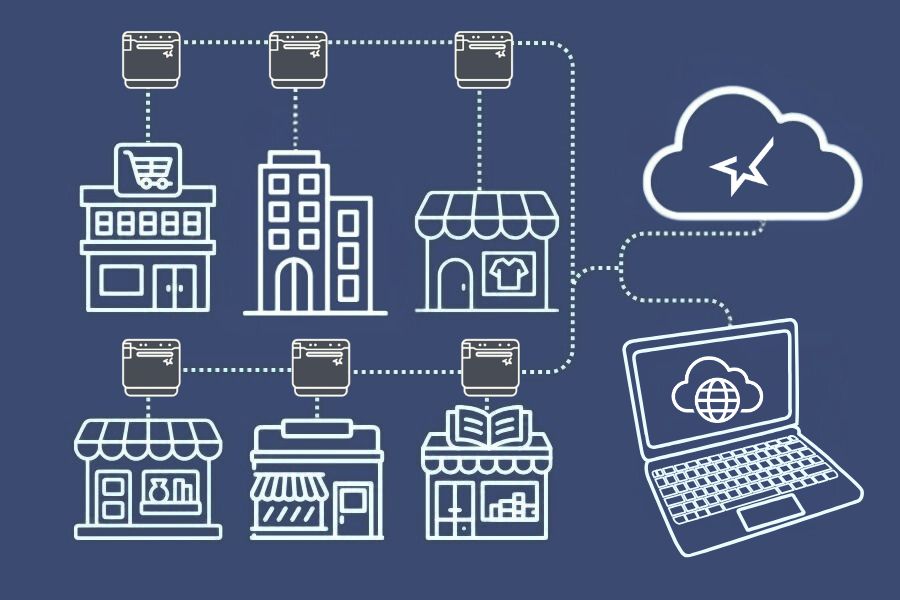
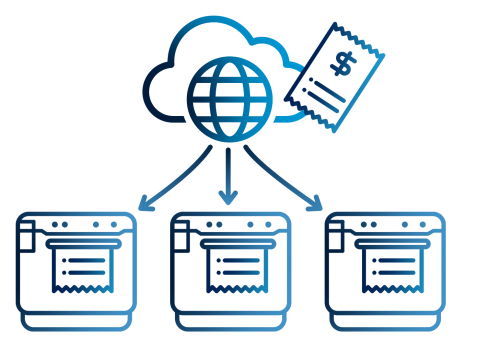
    CloudPRNT is Star’s cloud printing technology for LAN and Wi-Fi connected printers. Unlike WebPRNT and StarXpand SDK for Web, CloudPRNT does not depend on direct USB communication between the browser and printer. Instead, it allows printers to pull print jobs directly from cloud applications over a network.

    Star supports two CloudPRNT communication methods:

    • HTTP polling, where printers regularly check a cloud server for new print jobs
    • MQTT messaging through CloudPRNT Next, a publish-subscribe protocol that enables faster, more efficient real-time print delivery

    For developers, this provides more flexibility depending on the deployment.

    HTTP-based CloudPRNT remains effective for many existing cloud printing environments, while MQTT-based CloudPRNT Next can reduce latency and improve responsiveness for high-volume or multi-location deployments.

    This makes CloudPRNT useful when:

    • Print jobs originate remotely
    • Multiple locations need centralized print routing
    • Online ordering systems send jobs directly to kitchen printers
    • Low-latency print delivery is important
    • Local devices should not manage printer connections

    For distributed environments, this can reduce local infrastructure requirements and simplify cloud-based receipt printing at scale.
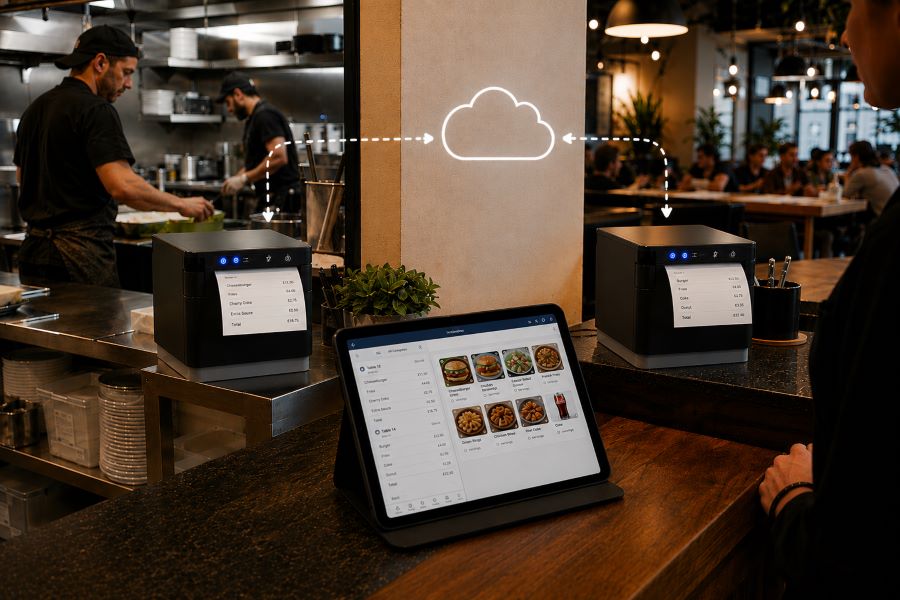
    MC Print3 Cloud POS Restaurant

    Why StarXpand SDK for Web Matters for New Development

    For ISVs building new browser-based POS applications, StarXpand SDK for Web solves a different problem than WebPRNT. It is less about replacing WebPRNT and more about reducing fragmentation between SDKs.

    This matters when development teams need:

    Shared Logic Across Platforms

    If your software runs on browser, tablet, and mobile environments, StarXpand SDK creates more API consistency. This can reduce duplicated hardware logic across teams.

    More Than Print Output

    Many modern POS workflows include:

    • Drawer status checks
    • Scanner-triggered workflows
    • Labeling stations
    • Shared hardware access

    StarXpand SDK can support these through one SDK model.

    Easier Long-Term Maintenance

    Maintaining separate hardware integration layers across web and mobile can increase support costs over time. Using one SDK family can reduce that overhead.

    Migration Considerations for Existing WebPRNT Users

    If you already have a working WebPRNT deployment, there may be no immediate reason to change it.

    WebPRNT remains effective for:

    • Local USB receipt printing
    • Browser-based order ticket printing
    • Fixed workstation POS environments

    Migration becomes more relevant when:

    • Expanding into mobile apps
    • Adding peripheral hardware support
    • Standardizing SDKs across multiple platforms
    • Rebuilding core hardware logic

    For ISVs planning future product updates, this is often the point where StarXpand SDK becomes worth evaluating.

    Key Considerations Before Choosing a Browser Receipt Printing Solution

    Before choosing between WebPRNT, StarXpand SDK for Web, and CloudPRNT, start with the deployment model.

    Where does the print job originate?

    If the print job starts at the local browser and the printer is USB-connected, WebPRNT or StarXpand SDK for Web are often the right fit.

    If the print job originates in the cloud, CloudPRNT is often the better option.

    Is this an existing deployment or new development?

    For existing WebPRNT integrations, staying with the current architecture may be the simplest path.

    For new builds, the StarXpand SDK may offer greater long-term flexibility.

    Do you need to control more than printing?

    If the workflow includes drawers, scanners, or other Star peripherals, StarXpand SDK can simplify communication.

    If printing is the only requirement, WebPRNT may still be sufficient.

    Will this scale across locations?

    If the deployment spans multiple stores, remote kitchens, or distributed print stations, CloudPRNT often provides more flexibility than local USB connections.

    Choosing the right architecture early can reduce future integration changes and simplify deployment support.

    An Independent Software Vendor’s (ISV’s) Guide to Star Printer SDKs

    This guide breaks down Star Micronics’ printer SDKs, APIs, and integration tools to help ISVs choose the right solution for POS systems, cloud printing platforms, and custom software applications.

    Final Thoughts on Browser-Based POS Printing

    Browser-based receipt printing is no longer one-size-fits-all. Some POS environments still rely on direct USB connections at a local workstation. Others now depend on cloud-based routing across multiple locations. That’s why Star offers multiple browser and cloud printing technologies built for different deployment models.

    • WebPRNT remains a proven option for stable local USB printing.
    • StarXpand SDK for Web provides a stronger framework for new browser-based development that needs broader hardware communication.
    • And CloudPRNT remains the best fit for LAN-connected and cloud-managed printing environments.

    For ISVs and developers, the best choice depends less on features and more on architecture: where print jobs originate, how hardware is connected, and how the application will scale over time.

    Interested in browser-based receipt printing with Star?

    Frequently Asked Questions About Browser-Based Receipt Printing

    What is browser-based receipt printing?

    Browser-based receipt printing allows web applications to send print jobs directly to a receipt printer without requiring a traditional desktop application. Depending on the deployment, this can happen through local USB communication or cloud-based network printing.

    When should I use browser-based receipt printing instead of cloud printing?

    Browser-based receipt printing is best when a local device needs to send print jobs directly to a USB-connected printer. Cloud printing is often better for LAN-connected printers, remote print routing, or multi-location deployments.

    What is the difference between WebPRNT and StarXpand SDK for Web?

    WebPRNT focuses on browser-based USB printing. StarXpand SDK for Web also supports USB printing, but adds a broader API structure for printers and peripherals.

    Does StarXpand SDK for Web replace WebPRNT?

    Not directly. Existing WebPRNT integrations can continue to operate. StarXpand SDK for Web is better suited for new browser-based development.

    Can I still use WebPRNT for browser-based receipt printing?

    Yes. WebPRNT remains a supported and effective option for local USB browser printing.

    When should I use CloudPRNT instead of StarXpand SDK for Web?

    Use CloudPRNT when printers need to connect over LAN or Wi-Fi and receive print jobs directly from cloud applications.

    Is StarXpand SDK for Web only for USB printing?

    Yes. For browser deployments, StarXpand SDK for Web is designed for direct USB communication.

    Can StarXpand SDK for Web control devices besides printers?

    Yes. It supports compatible Star peripherals such as cash drawers, POS scales, and barcode scanners.

    What is the best receipt printing method for cloud POS systems?

    For cloud POS systems with remote or multi-location print routing, CloudPRNT is generally the best fit.
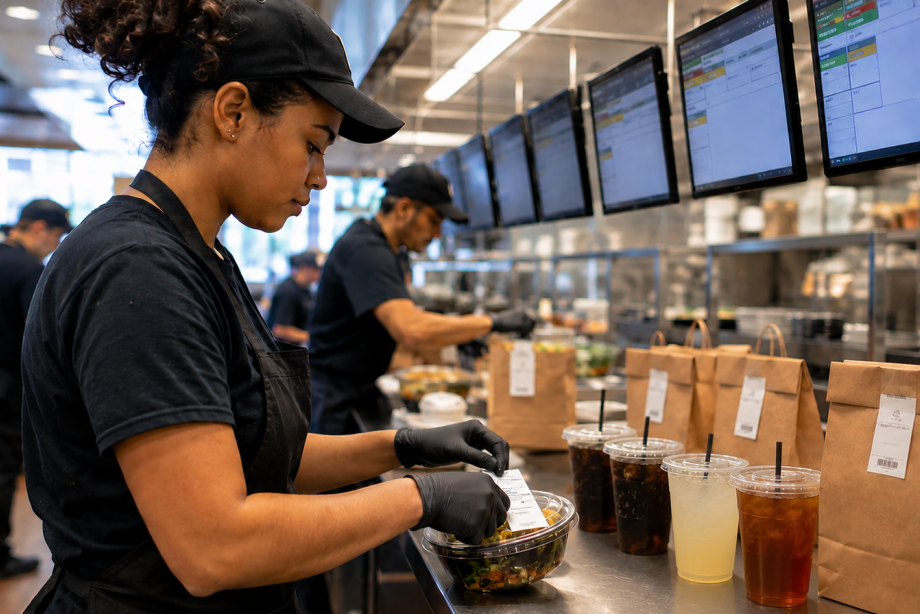
  • 9 Restaurant Labels that Improve KDS Workflows

    9 Restaurant Labels that Improve KDS Workflows

    A kitchen display system (KDS) helps restaurants manage orders digitally by sending information from the point of sale (POS) system directly to food preparation stations. This gives kitchen teams real-time visibility into incoming orders, modifiers, and fulfillment priorities for dine-in, drive-thru, pickup, and delivery channels.

    However, once food preparation begins, orders move through physical workflows. Items are prepared, packaged, staged, picked up, and delivered. Restaurant labels for KDS workflows help carry order information beyond the screen, ensuring important details remain attached to the order throughout preparation, packaging, pickup, and delivery.

    From beverage labels and allergy alerts to catering labels and tamper-evident seals, the right labels help restaurants extend KDS communication throughout the operation.

    Table of Contents

    What Are Restaurant Labels for KDS Workflows?

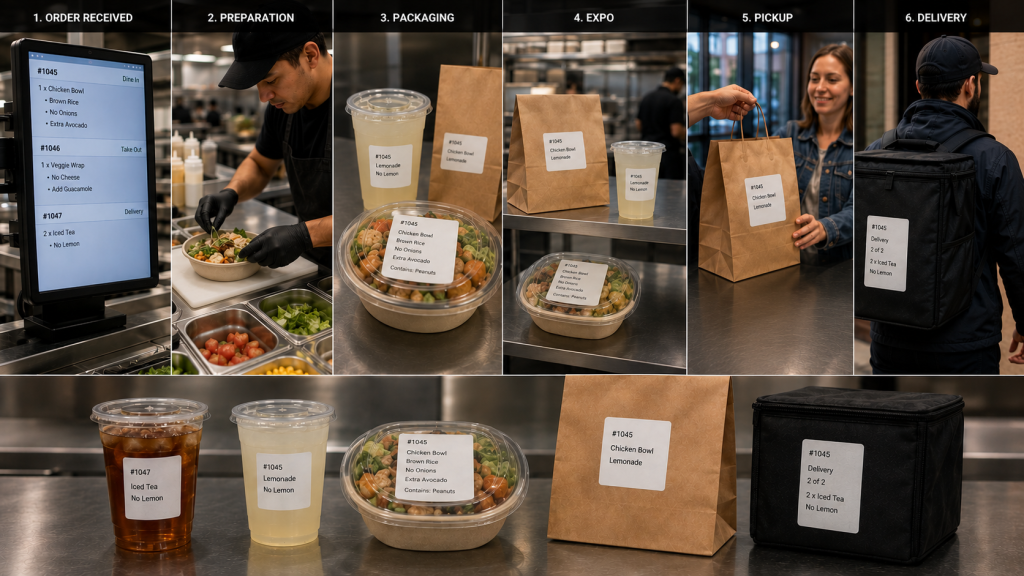
    A kitchen display system (KDS) manages order information digitally, but restaurant operations still depend on physical workflows. Orders move through multiple stages before reaching the customer, including:

    • Food preparation
    • Beverage preparation
    • Packaging
    • Expo
    • Pickup
    • Delivery

    Restaurant labels for KDS workflows help carry order information beyond the screen and keep it attached to the order as it moves through these stages.

    As orders move between stations, labels can communicate customer names, modifiers, allergy information, beverage customizations, pickup instructions, delivery details, and other important information. Keeping these details visible throughout preparation and fulfillment reduces reliance on verbal communication and helps teams coordinate complex dine-in, drive-thru, pickup, and delivery operations.

    Restaurant Label Workflow

    Types of Restaurant Labels for KDS Workflows

    A KDS communicates order information digitally, but labels help carry that information through food preparation, packaging, pickup, and delivery. Different types of restaurant labels support different stages of the workflow, helping employees identify orders, manage modifications, communicate food safety information, and direct completed orders to the correct destination.

    1. Drive-Thru and Takeout Labels

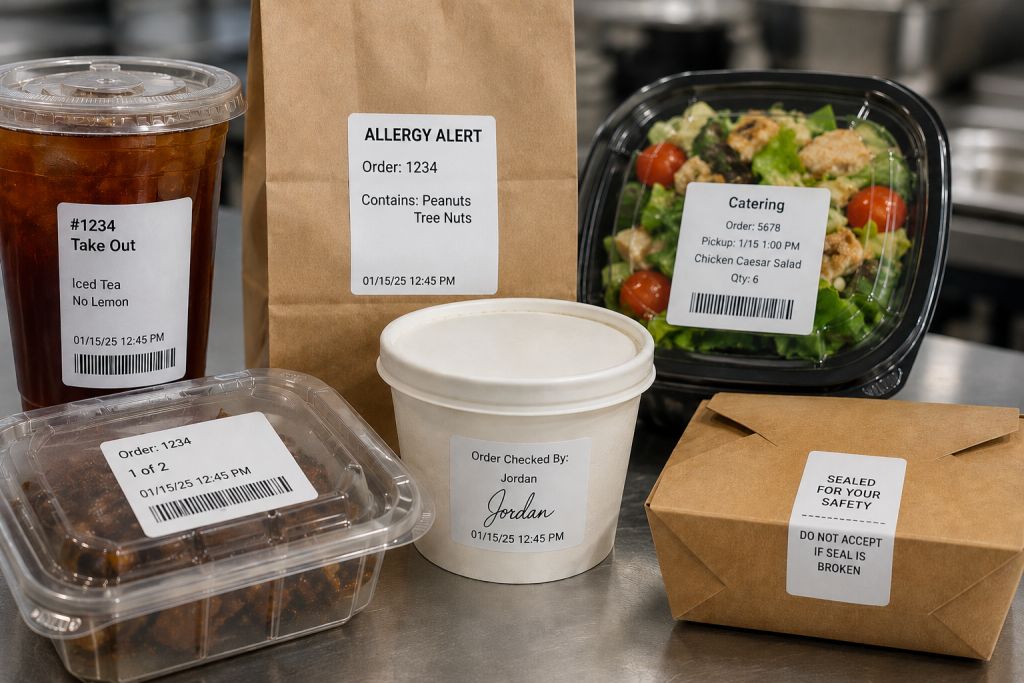
    An integrated system can generate labels along with sending orders to the KDS from the drive-thru, online ordering platform, or self-ordering kiosk. Labels can be applied to trays, containers, cups, or bags so order information remains attached to the order throughout preparation and fulfillment. Labels also ensure the team directs the order to the right place, whether the front counter, the drive-thru, or order pickup.

    2. Allergy and Exception Order Labels

    Allergies and food sensitivities have become more common, requiring special order preparation so diners can safely enjoy their meals. Furthermore, many customers have strong food preferences and request items prepared in specific ways.

    Allergy and exception order labels help ensure modifications remain visible as the order moves between preparation, packaging, and pickup stations. Exception order labels clearly inform food prep of changes to the way they typically prepare menu items. They also flag orders for the expeditor, server, or take-out counter worker that the kitchen prepared the order as the customer requested.

    3. Made-to-Order Food Labels

    Although a KDS has become a standard tool in quick service restaurants (QSRs), this technology offers benefits to the whole range of food service environments. When a store or café sells made-to-order (MTO) items, labels include vital information that helps customers make informed decisions and to keep the business in compliance.

    MTO food labels can include product name, description, ingredients, nutrition information, and allergen or dietary restriction alerts. Businesses can also customize MTO food labels with branding elements such as their name and logo.

    4. Beverage and Barista Labels

    Customers have strong opinions about how they want their coffee, espresso, or tea orders, requesting various types of milk, creamer, sweetener, flavors, and other options. Beverage orders often include customizations such as milk selections, flavors, sweeteners, and preparation instructions.

    Labels help baristas identify these details quickly and keep drinks matched to the correct customer throughout preparation and pickup. Labels with each detail of the order simplify order prep, and repositionable labels can follow orders from the POS system, to order prep, and then to the customer’s cup.

    5. Product ID and Barcode Labels

    Tracking prepared items or MTO foods can help shops manage their inventory, reduce shrinkage, and minimize waste. Barcoded labels generated during KDS workflows allow employees with scanners to capture data as items are placed into coolers or display cases, including their sell-by dates. Clear, reliable barcode labels also give shops a way to track ingredients’ sources in case of a recall and for fast price scanning at the checkout.

    6. Catering Labels

    If a restaurant or store offers catering, labels printed during KDS workflows can flag orders for the items they need for completeness, such as condiments, trays, or utensils. Labels can also include food safety instructions, nutrition information, allergen warnings, and serving instructions.

    7. Nutrition and Calorie Labels

    The FDA requires food service companies to provide nutrition facts to consumers. Although not every dine-in or take-out order has a nutrition label, restaurants must provide calorie counts and ingredient information on request. Restaurants can simplify this process with templated labels that employees print during packaging or order assembly.

    8. Order Verification and QC Labels

    Once an order is packaged, an expeditor or other restaurant employee cannot easily verify that every item is present by looking at the sealed bag alone. Some restaurants add a POS scale to the workflow to help verify order completeness before pickup or delivery.

    A typical order verification workflow may include:

    1. Package the order
    2. Weigh the completed bag
    3. Compare the weight to the expected total shown on the order label
    4. Investigate any significant discrepancies
    5. Release the order for pickup or delivery

    If the actual weight differs from the expected weight, employees can review the order and correct missing or incorrect items before the customer receives it. Combined with restaurant labels for KDS workflows, weight-based verification provides another checkpoint to help restaurants catch errors before orders leave the store.
    9. Tamper-Evident Labels

    When the kitchen team closes a package, they can add a tamper-evident label as the final step. Tamper-evident labels help indicate whether a bag or container has been opened after packaging. They are commonly used for delivery and pickup orders where food safety and package integrity are important.

    Restaurant Label Types

    How to Choose the Right Type of Restaurant Label for KDS Workflow Stages

    The right restaurant label depends on both the media type and adhesive required for the workflow. Some KDS applications benefit from linerless labels for fast application, while others require die-cut labels, repositionable adhesives, or permanent tamper-evident labeling.
    Linerless Labels

    • No liner backing
    • Fast application
    • Reduced waste
    • Great for:
      • beverage labels
      • takeout labels
      • pickup labels
      • food container labels

    Die-Cut Labels

    • Individual label shapes/sizes
    • Consistent placement
    • Useful for:
      • nutrition labels
      • product identification
      • barcode labels
      • made-to-order food labels

    Repositionable Linerless Labels

    • Diamond adhesive (light tack) or full coverage (stronger)
    • Can be removed and reapplied without residue
    • Useful for:
      • beverage workflows
      • food prep trays
      • staging areas
      • internal order tracking

    Permanent Linerless and Tamper-Evident Labels

    • Remain attached
    • Show evidence of removal
    • Useful for:
      • delivery bag seals
      • packaged foods
      • barcode labels
      • food safety workflows

    Features to Look for in Restaurant Label Printers for KDS Workflows

    Choosing the right restaurant label printer is just as important as selecting the right label media. KDS workflows often support food preparation, beverage stations, packaging, pickup, and delivery operations, so label printers should be able to support a variety of applications and deployment environments.

    Multimedia Printing

    Printers that support multiple media types, including linerless labels, die-cut labels, and receipts, allow restaurants to standardize hardware across stations. A multifunction printer can support different workflows without requiring separate printer models for each application.

    Linerless Label Support

    Linerless labels help reduce liner waste and counter clutter while supporting high-volume labeling workflows. Restaurants planning to use linerless labels should choose a printer designed specifically for linerless media.

    Cloud Printing Capabilities

    Cloud-connected printers can receive print jobs directly from KDS software, online ordering platforms, and cloud-based applications without relying on local print servers.

    Support for Multiple Adhesive Types

    Different workflows require different label adhesives. Restaurants may use repositionable labels for beverage preparation and internal workflows, while delivery and packaging applications may require permanent or tamper-evident labels.

    Fast Print Speeds

    High-volume kitchens depend on labels being available when needed. Fast print speeds help prevent delays during peak ordering periods and support continuous order flow.

    KDS and POS Compatibility

    Restaurant label printers should work with KDS software, POS systems, cloud platforms, and the operating systems used throughout the business. Compatibility can simplify deployment, support, and long-term maintenance.

    User-Friendly Maintenance

    Restaurant environments are busy, and printer maintenance is often handled by store-level employees. Features such as tool-free maintenance, easy media loading, user-replaceable components, and guided cleaning procedures can help reduce downtime and keep printers operating reliably.

    Star Micronics Label Printers for KDS Workflows

    Restaurants use a variety of labels throughout KDS workflows, including beverage labels, allergy labels, barcode labels, catering labels, order verification labels, and tamper-evident labels. Supporting these applications requires printers that match the media, adhesive, and workflow requirements of the operation.

    Star Micronics offers several printer options for restaurant labels used with KDS systems, including:

    mC-Label3 Multifunction Printer

    The mC-Label3 supports receipts, die-cut labels, repositionable linerless labels, and permanent linerless labels from a single printer platform. This makes it a good choice for restaurants looking to standardize printing across multiple stations.

    The Star Micronics mC-Label3 is a versatile multifunction printer that prints a wide range of labels and receipts, including both permanent and repositionable sticky linerless. It features cloud connectivity and innovative technologies like SteadyLAN and TetherLAN for enhanced printing convenience.

    Discover the mC-Label3 >

    mC-Label2 Multifunction Printer

    The mC-Label2 provides support for a wide range of label and receipt media in a compact design, making it suitable for food preparation, packaging, pickup, and other labeling applications.

    The mC-Label2 packs powerful features into a compact, front-loading design, including 300 dpi resolution, support for linerless, die-cut, receipt, and continuous media, and connectivity options like USB-C, LAN, WLAN, Bluetooth, and Apple MFi-certified pairing (X4 models only).

    Explore the mC-Label2 >

    TSP143IV SK Sticky Linerless Label Printer

    The TSP143IV SK is designed specifically for sticky linerless label printing and is commonly used for beverage labeling, food container labeling, pickup workflows, and other applications where repositionable labels are beneficial.

    The TSP143IV SK by Star Micronics sets a new standard for compact, eco-friendly thermal linerless label printing, offering advanced connectivity options like Wi-Fi and AOA, and efficient, residue-free labels for diverse business needs.

    Find out more >

    Whether a restaurant is deploying a new KDS or expanding existing workflows, selecting the right label printer helps ensure order information remains visible from preparation through pickup or delivery.

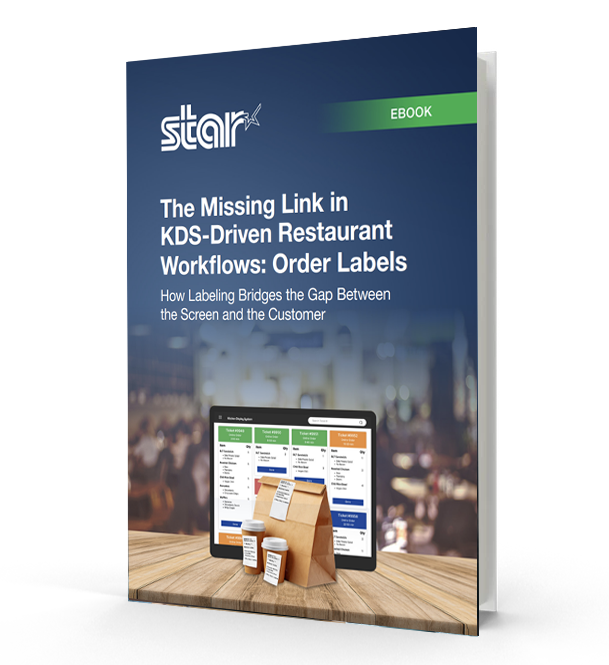
    The Missing Link in KDS-Driven Restaurant Workflows

    This eBook shows how labeling extends KDS accuracy into real-world workflows, helping restaurants and retailers improve fulfillment, accountability, and consistency across all ordering channels.

    Contact Star Micronics to learn more about restaurant label printers for KDS workflows.

    Frequently Asked Questions About Restaurant Labels for KDS Workflows

    What are restaurant labels used for in KDS workflows?

    Restaurant labels help carry order information through physical kitchen workflows after orders appear on a kitchen display system (KDS). They support food prep, packaging, pickup, delivery, catering, and labeling compliance workflows.

    How do restaurant labels support KDS workflows?

    A KDS communicates order information digitally, while labels help keep that information attached to the order itself as it moves through prep stations, expo, packaging, pickup, and delivery.

    What types of restaurant labels are commonly used with KDS systems?

    Restaurants commonly use:

    • Drive-thru and takeout labels
    • Allergy and exception order labels
    • Beverage labels
    • Product ID and barcode labels
    • Catering labels
    • Nutrition labels
    • Tamper-evident labels
    • Order verification and QC labels

    Different labels support different stages of the workflow.

    What is the difference between linerless and die-cut restaurant labels?

    Linerless labels print continuously without backing paper, helping reduce waste and clutter in high-volume kitchens. Die-cut labels are individually separated and are often used for applications requiring specific label sizes or permanent adhesion.

    Why are linerless labels popular in restaurant kitchens?

    Linerless labels help reduce liner waste, improve workflow efficiency, and minimize clutter on prep counters and floors. They are especially useful in fast-paced restaurant and QSR environments.

    What information should restaurant labels include?

    Depending on the workflow, restaurant labels may include:

    • Order details
    • Customer names
    • Allergens or dietary restrictions
    • Beverage customizations
    • Nutrition information
    • Barcodes or QR codes
    • Sell-by dates
    • Pickup or delivery details

    Why are allergy and exception order labels important?

    Allergy and exception order labels help kitchen staff quickly identify orders that require modified preparation. These labels support safer food handling and help reduce communication breakdowns during busy service periods.

    How do tamper-evident labels support delivery workflows?

    Tamper-evident labels help show customers that delivery bags or food containers have not been opened after packaging. They also help restaurants maintain more secure and organized delivery workflows.

    Can restaurant labels be printed automatically from a KDS?

    Yes. Many KDS workflows automatically trigger label printing when orders are received, bumped to another prep stage, packaged, or prepared for pickup or delivery.

    What should restaurants look for in a label printer for KDS workflows?

    Important features include:

    • Multimedia printing support
    • Linerless compatibility
    • Fast print speeds
    • Compact design
    • Cloud printing capabilities
    • Easy KDS integration
    • Support for repositionable and permanent labels

    Why are multimedia label printers useful in restaurants?

    Multimedia label printers can print receipts, linerless labels, and die-cut labels from a single device. This helps restaurants standardize hardware across stations and reduce the number of printer models they manage.

    How do cloud-connected label printers support KDS workflows?

    Cloud-connected printers can receive print jobs directly from KDS software or online ordering platforms without relying on local print servers. This simplifies deployment and supports multi-location restaurant operations more efficiently.

  • Restaurant Personalization Technology Only Works If the Details Reach the Table

    Restaurant Personalization Technology Only Works If the Details Reach the Table

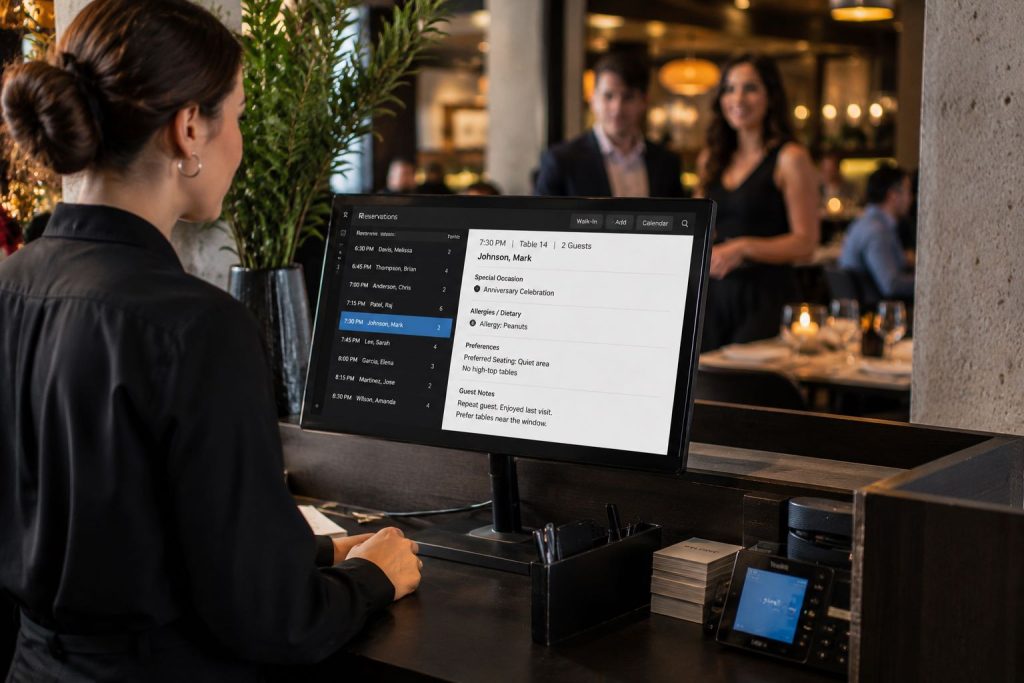
    Restaurants today collect more guest information than ever before. Modern restaurant personalization technology, including reservation platforms like OpenTable, Resy, and SevenRooms, helps restaurants capture birthdays, anniversaries, allergies, seating preferences, favorite menu items, and other details that help personalize service.

    But collecting information is only the first step.

    When a birthday goes unrecognized, a special request is missed, or an allergy note never reaches the server, guests don’t see a workflow breakdown. They see a restaurant that failed to follow through.

    The challenge is making sure important details remain visible once guests are seated and service begins. In many restaurants, printed reservation chits (tickets) help bridge the gap between reservation platforms and front-of-house staff, giving servers and managers quick access to guest information at the table.

    However, traditional paper chits can easily be lost, misplaced, or blown off the table. As restaurants continue investing in personalization, they also need reliable ways to ensure those details reach the people responsible for delivering them.

    Table of Contents

    The Rise of Personalized Dining Experiences

    Restaurant personalization has become a bigger part of modern hospitality operations. Reservation platforms now allow restaurants to collect far more information about guests before they even arrive, from allergies and seating requests to birthdays, anniversaries, and favorite menu items.

    Personalization can include:

    • Birthday and anniversary celebrations
    • Allergy and dietary information
    • Favorite seating areas
    • Preferred drinks or menu items
    • VIP guest recognition
    • Service pacing requests

    For restaurants, these details help staff prepare for service, recognize repeat guests, and accommodate special requests more consistently.

    The challenge is not collecting the information. Modern reservation platforms already do that well. The challenge is making sure those details remain visible and accessible once the guest is seated and service begins.

    Servers and managers move quickly throughout a shift, often handling multiple tables at once. If guest details remain buried inside a reservation platform or are only visible at the host stand, important requests can easily be missed.

    Restaurant Personalization Technology Only Works If the Details Reach the Table

    Why Restaurants Still Print Reservation Chits

    Despite the rise of digital restaurant technology, many restaurants still print reservation chits for one simple reason: physical workflows still matter.

    A printed reservation chit creates a fast, visible handoff between the host stand and the front-of-house staff. Once the guest is seated, the chit can stay at the table and communicate important information directly to the server and managers.

    The printed chit helps restaurant staff quickly understand the table before the first interaction even begins.

    Managers also benefit operationally. A chit left on the table can help indicate whether a server has greeted the guests yet, helping managers monitor service flow during busy shifts.

    In many restaurants, this small workflow plays an important role in delivering consistent hospitality.

    The Problem With Traditional Reservation Chits

    Traditional reservation chits are simple, but they create operational problems.

    Because the receipts are lightweight thermal paper, they can easily:

    • Blow off the table
    • Fall onto the floor
    • Get misplaced during service
    • Become difficult for servers to track

    Once the chit disappears, so does the personalization information tied to the guest experience.

    To solve this problem, some restaurants improvise by stapling reservation chits to cardstock or heavier paper so they stay visible on the table. While functional, this creates additional operational steps, clutter, and waste during already busy service periods.

    A personalization workflow only works if the information remains visible long enough for staff to act on it.

    Restaurant Personalization Technology Only Works If the Details Reach the Table

    Why Sticky Labels Work Better for Restaurant Personalization

    Repositionable sticky labels offer a cleaner, more reliable alternative to traditional reservation chits.

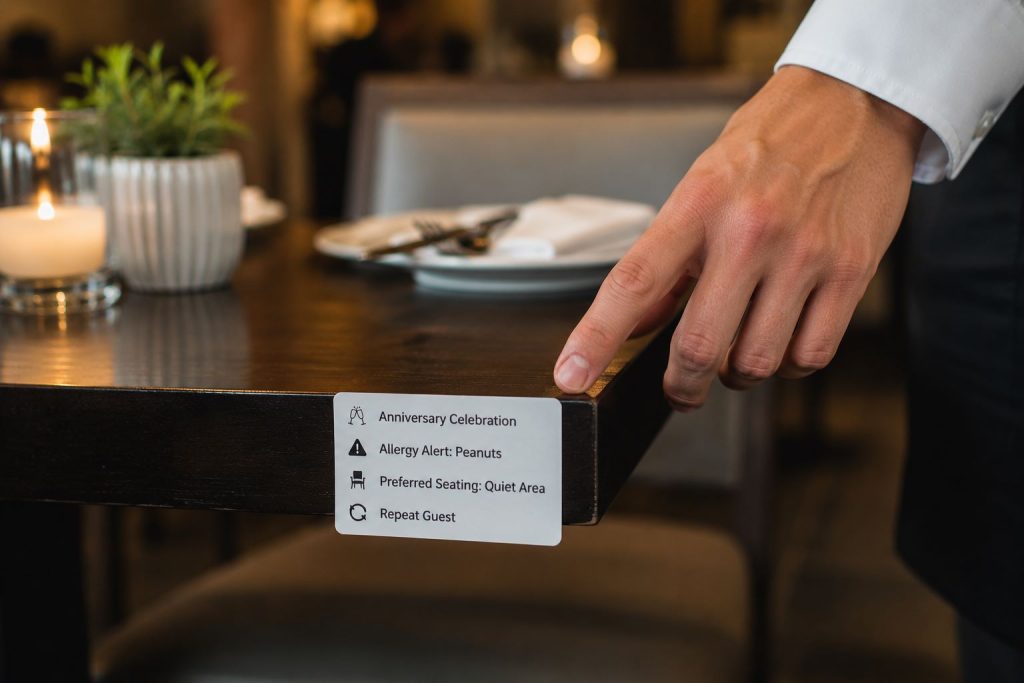
    Instead of loose paper receipts, restaurants can print reservation information on repositionable linerless labels that stay attached to the table throughout service. Servers can easily remove and reposition the label without damaging surfaces or leaving residue behind.

    This creates several operational benefits:

    • Personalization details stay visible
    • Labels do not blow away easily
    • Servers can move labels as needed during service
    • Restaurants eliminate the need for staplers and cardstock
    • Front-of-house workflows become cleaner and more consistent

    Repositionable linerless labels also help reduce waste compared to traditional linered labels because there is no liner backing to discard. Star’s TRK repositionable linerless labels are designed specifically for workflows that require temporary adhesion and clean removal, leaving no residue behind.

    For restaurants focused on consistent guest experience, small operational improvements like these can make personalization easier to execute in real-world service.

    Restaurant Personalization Technology Only Works If the Details Reach the Table

    How the TSP143IV SK Supports Front-of-House Personalization Workflows

    The TSP143IV SK linerless sticky label printer gives restaurants a more operationally efficient way to manage reservation personalization workflows.

    Designed for sticky linerless label printing, the TSP143IV SK allows restaurants to print repositionable labels that can remain attached to tables, trays, food packaging, or other surfaces throughout service.

    This helps restaurants:

    • Keep guest personalization details visible
    • Improve communication between hosts, servers, and managers
    • Reduce workflow disruptions caused by lost paper chits
    • Simplify front-of-house operations
    • Support more consistent hospitality experiences

    TSP143IV SK Sticky Label Printer

    The TSP143IV SK by Star Micronics sets a new standard for compact, eco-friendly thermal linerless label printing, offering advanced connectivity options like Wi-Fi and AOA, and efficient, residue-free labels for diverse business needs.

    Find out more >

    Because the labels are repositionable, servers can remove or relocate them easily during service without leaving residue behind. This creates a cleaner and more professional workflow compared to stapled paper chits or loose thermal receipts.

    The TSP143IV SK also supports cloud-connected restaurant environments and modern hospitality workflows, making it easier for reservation platforms and restaurant systems to integrate sticky label printing directly into existing operations.

    Why Reservation Platforms Should Support Sticky Label Printing

    Reservation platforms continue adding more personalization tools and guest profile features. But restaurants still need reliable ways to communicate that information during service.

    Supporting sticky label printing workflows can help restaurants:

    • Keep guest details visible throughout service
    • Reduce missed requests or forgotten notes
    • Improve communication between hosts, servers, and managers
    • Create more consistent table-side service

    Restaurants already use printed reservation chits because physical workflows still matter in busy dining rooms. Sticky linerless labels simply make those workflows easier to manage and more reliably execute.

    Personalization Creates Expectations

    The moment a guest enters a birthday, anniversary, seating request, allergy, or other preference into a reservation platform, an expectation is created.

    If a birthday candle never arrives, a special request is overlooked, or a preferred table isn’t honored, guests rarely know where the breakdown occurred. They don’t know whether the issue was with the reservation platform, the host stand, a lost chit, or a communication gap during service. They only know the restaurant missed an important detail.

    In many cases, servers end up carrying the blame for information they never received.

    As reservation platforms continue investing in personalization features, helping restaurants consistently deliver on those details may become just as important as collecting them.

    Restaurant Personalization Technology Only Works If the Details Reach the Table

    Personalization Is Only Valuable If Restaurants Can Execute It

    Restaurants often compete on food, service, and atmosphere. Increasingly, they’ll also compete on how well they remember their guests.

    A birthday celebration, allergy note, preferred table, or favorite menu item may seem like a small detail on its own. But those details are often what separate a routine dining experience from one guests talk about, review online, and return to again.

    Reservation platforms have made it easier than ever to capture guest preferences. The next challenge is helping restaurants consistently deliver on them.

    The restaurants that stand out won’t necessarily be the ones that collect the most information. They’ll be the ones that make sure important details never get lost between the reservation and the table.

    Learn More About Star POS & Labeling Solutions

    Frequently Asked Questions About Restaurant Personalization Technology

    What is restaurant personalization technology?

    Restaurant personalization technology includes digital tools and workflows that help restaurants collect, manage, and act on guest preferences, dining history, allergies, celebrations, and other hospitality-related information.

    Why is personalization important in restaurants?

    Personalization helps restaurants create better guest experiences, improve customer loyalty, encourage repeat visits, and differentiate themselves in competitive hospitality markets.

    What information do reservation platforms collect?

    Reservation platforms may collect guest names, birthdays, anniversaries, allergies, seating preferences, favorite menu items, visit history, and other dining preferences.

    Why do restaurants print reservation chits (tickets)?

    Restaurants print reservation chits to provide servers and managers with fast, visible access to guest details during service. Printed chits help bridge communication between digital reservation systems and front-of-house operations.

    What problems do traditional reservation chits create?

    Traditional reservation chits can blow away, fall off tables, become misplaced, or get lost during service. This can lead to missed guest requests and inconsistent hospitality experiences.

    How can restaurants ensure guest preferences are not overlooked?

    Restaurants use a combination of reservation platforms, host stand workflows, reservation chits, labels, and staff communication processes to ensure important guest details remain visible and accessible throughout service. The goal is to make sure information reaches the employees responsible for acting on it.

    How do sticky labels improve restaurant workflows?

    Sticky labels help keep important guest information visible throughout service, improving communication between hosts, servers, managers, and other restaurant staff.

    How can restaurants turn guest data into personalized service?

    Collecting guest information is only the first step. Restaurants must ensure guest preferences, celebrations, allergies, and other requests are communicated clearly and remain visible throughout service so staff can consistently act on them.

    How can restaurants make personalization details more visible during service?

    Restaurants can use reservation chits, sticky labels, and other front-of-house communication tools to keep guest information visible throughout service. Solutions such as the TSP143IV SK linerless sticky label printer by Star Micronics allow restaurants to print repositionable sticky labels that stay with the table and help ensure important details are not overlooked.

  • Bisphenol-Free Thermal Paper: What Businesses Need to Know

    Bisphenol-Free Thermal Paper: What Businesses Need to Know

    Thermal paper has long been a staple in point-of-sale printing, but the conversation around receipt paper and thermal media is evolving quickly. As more businesses evaluate sustainability initiatives, regulatory requirements, and operational standards, many are reassessing the materials used for receipts, labels, tickets, and foodservice workflows.

    For businesses that rely on thermal printing, understanding the differences between BPA-free, BPS-free, and bisphenol-free thermal paper has become increasingly important. From retail and restaurants to healthcare and logistics, operators are looking for thermal media that supports reliable printing performance while aligning with broader compliance and sustainability goals.

    Whether your business prints receipts, barcode labels, linerless labels, or tickets, now is the time to understand how thermal media is changing and what to consider when evaluating paper suppliers and printing solutions.

    Table of Contents

    What Is Bisphenol-Free Thermal Paper?

    Traditional thermal paper uses heat-sensitive coatings that react with the thermal print head to produce printed text and images. For many years, BPA (bisphenol A) was commonly used in thermal paper formulations. As concerns around BPA increased, many manufacturers transitioned to BPS (bisphenol S) or other alternative chemistries.

    Today, many businesses are specifically looking for:

    • BPA-free receipt paper
    • BPS-free receipt paper
    • Bisphenol-free thermal paper
    • Eco-friendly thermal media
    • Prop 65 compliant paper

    Modern thermal media options may use alternative developers and materials designed to support evolving sustainability and compliance initiatives while maintaining the print quality and reliability businesses expect from thermal printing systems.

    Star Eco and Star Blue Eco media are produced using materials with no intentionally added BPA or BPS, supporting more mindful material selection across retail, hospitality, and foodservice operations.

    Why High-Contact Industries Are Paying Attention

    Thermal paper and labels are handled constantly throughout the day in many business environments, especially in industries where receipts, tickets, food labels, and packaging workflows are central to daily operations.

    As conversations around thermal media have evolved, many businesses have started evaluating whether receipt paper and labels contain added bisphenols such as BPA or BPS, particularly in workplaces where employees frequently handle thermal media throughout their shifts.

    This is especially relevant in industries such as:

    In response, many manufacturers now offer thermal paper and label media made without intentionally added BPA or BPS. In thermal media manufacturing, this generally means bisphenol-based developers are not intentionally used in the paper formulation itself, although trace amounts may still be possible due to raw material sourcing, manufacturing processes, or supply chain variables.

    Some media lines also include additional sustainability-focused features such as FSC-certified materials, recyclable paper options, and select products made without added Pergafast.

    Why Businesses Are Reevaluating Thermal Media

    The shift toward more sustainable thermal media is being driven by several factors, including:

    • Evolving state and regional regulations
    • Sustainability initiatives
    • Food safety and traceability programs
    • Procurement standardization
    • Consumer expectations around environmental responsibility
    • Operational consistency across multi-location businesses

    Several states have introduced or discussed restrictions related to thermal paper materials, including BPA and other chemicals commonly associated with receipt paper. Requirements vary by region, and businesses operating nationally are increasingly looking for media options that can support broader compliance readiness.

    For many operators, updating thermal paper and labeling supplies is also part of a larger operational strategy tied to:

    • Sustainable restaurant operations
    • Eco-friendly printing supplies
    • Order accuracy initiatives
    • Food labeling compliance
    • Waste reduction programs
    • Scalable POS hardware and labeling workflows

    Understanding Prop 65 and Thermal Paper Compliance

    California’s Proposition 65, formally known as the Safe Drinking Water and Toxic Enforcement Act, has become one of the most recognized compliance frameworks related to product material disclosures in the United States. Businesses that distribute products in California often evaluate whether materials align with Prop 65 requirements as part of their procurement process.

    For thermal paper and labels, operators may specifically look for:

    • Prop 65 compliant paper
    • No added BPA or BPS
    • Sustainable thermal receipt paper
    • FSC-certified media
    • Recyclable thermal paper options

    Star Eco and Star Blue Eco paper lines are produced using materials with no added BPA or BPS and are designed to support Prop 65 compliant operations.

    Because regulations and material standards continue evolving, many businesses are proactively standardizing compliant thermal media across locations to simplify purchasing and support long-term operational consistency.

    Explore Proposition 65 Business Resources Here >

    How Modern Thermal Paper Works

    Modern thermal paper continues to deliver the fast, reliable printing performance businesses expect while supporting updated material standards and sustainability goals.

    Today’s thermal media can provide:

    • Clear, high-contrast printing
    • Reliable image retention
    • Compatibility with existing thermal receipt printers
    • Support for high-volume POS environments
    • Reduced material concerns compared to legacy thermal media

    Importantly, businesses do not typically need to replace existing thermal printers when transitioning to updated thermal paper or label media. Modern thermal receipt paper and labels are designed to work with standard thermal printing systems, including Star Micronics receipt and label printers.

    Some premium thermal media options also help:

    • Reduce paper dust
    • Maintain print head performance
    • Improve long-term printer reliability
    • Support warranty-compliant printer operation

    Star Blue Eco media is specifically engineered to optimize printer performance and support long-term reliability across demanding POS environments.

    Industries Transitioning to More Sustainable Thermal Media

    Retail & Hospitality

    Retailers and hospitality businesses continue evaluating eco-friendly receipt paper and sustainable labeling solutions as part of broader operational and customer experience initiatives.

    Restaurants & QSRs

    Restaurants increasingly rely on thermal labels for:

    • Grab-and-go labels
    • Catering labels
    • Food rotation labels
    • Order confirmation labels
    • Allergen label information
    • Traceability labels
    • Off-premise dining workflows

    Many QSR operators are also adopting linerless labels to support waste reduction and operational efficiency.

    Healthcare & Pharmacies

    Healthcare organizations often require reliable thermal printing for:

    • Prescription labeling
    • Patient-facing receipts
    • Barcode labels
    • Traceability workflows

    Grocery & Foodservice

    Grocery stores and foodservice operations use thermal labels for:

    • Nutritional information labels
    • Inventory labels
    • Expiration date labels
    • Weight and serving size labels
    • Food identification labels

    What to Look for in Thermal Receipt Paper and Labels

    When evaluating thermal paper suppliers and labeling solutions, businesses should consider:

    Material Standards: Look for media produced using materials with no intentionally added BPA or BPS.

    Print Performance: Consistent thermal imaging and durable print quality help support reliable operations.

    Printer Compatibility: Thermal media should work seamlessly with existing POS printers and label printers.

    Sustainability Features: Some thermal media products offer:

    • FSC-certified materials
    • Recyclable thermal paper
    • Reduced packaging waste
    • No added Pergafast
    • Linerless labeling options

    Operational Reliability: Higher-quality thermal media can help reduce dust buildup and support long-term print head performance.

    Linerless Labels and Sustainable Labeling Workflows

    Linerless labels are becoming increasingly popular across restaurant, retail, and logistics environments because they help reduce liner waste while supporting flexible labeling workflows.

    Common linerless label applications include:

    • Order accuracy labels
    • Delivery bag labels
    • Product rotation labels
    • Barcode labels
    • Shelf labels
    • Grab-and-go labels
    • Catering workflows

    Star supports both linerless and linered label workflows across its media portfolio, including:

    • Repositionable linerless labels
    • Permanent linerless labels
    • Die-cut labels
    • Continuous linered labels

    These labeling solutions support modern restaurant workflows, cloud printing environments, and foodservice traceability initiatives.

    The Star Blue Eco Advantage

    Star Blue Eco is Star’s premium paper and thermal media line, designed to support reliable printing performance while aligning with evolving sustainability and operational standards.

    Key advantages include:

    • Produced using materials with no added BPA or BPS
    • Prop 65 compliant
    • Premium-grade thermal coating for consistent print quality
    • Designed to optimize printer performance
    • Helps support long-term print head reliability
    • Signature blue core for fast identification
    • Select options include FSC-certified materials
    • Select options include recyclable thermal paper
    • No added Pergafast on select SKUs

    Star Blue Eco media is designed for receipt printers, label printers, linerless labeling applications, and scalable POS environments across retail, hospitality, and foodservice industries.

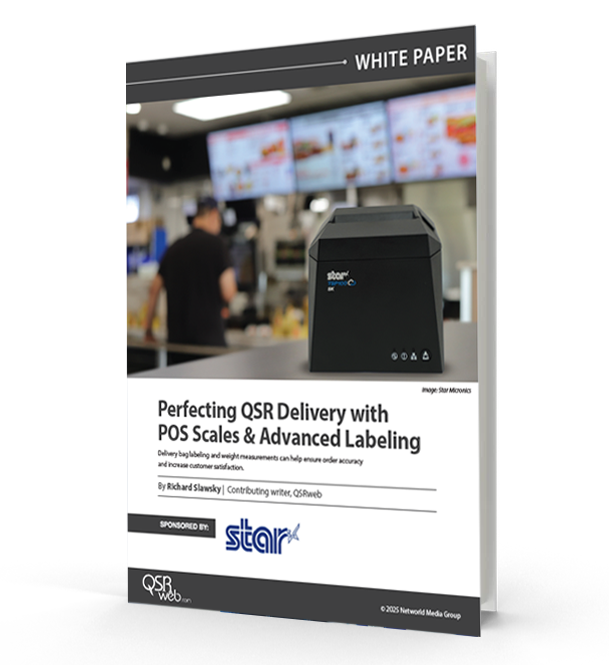
    Perfecting QSR Delivery with POS Scales & Advanced Labeling

    Learn how QSR operators are transforming delivery with weight-based verification and advanced labeling solutions.

    Ready to find out more about Star Blue Eco eco-friendly thermal paper and labels?

    Frequently Asked Questions About Bisphenol-Free Thermal Paper

    What is bisphenol-free thermal paper?

    “Bisphenol-free thermal paper” generally refers to thermal paper formulated without bisphenol-based developers such as BPA or BPS. However, terminology, testing methods, and formulation standards can vary across manufacturers and suppliers.

    In some cases, manufacturers may use phrases such as “no intentionally added BPA or BPS” to describe thermal media formulations. This reflects the fact that trace amounts may still be possible due to manufacturing, raw material, or supply chain variables, even when bisphenols are not intentionally used in the formulation itself.

    Is BPA-free thermal paper the same as BPS-free paper?

    Not necessarily. BPA-free thermal paper simply means BPA was not intentionally used in the formulation, but some products may still use BPS or other alternative developers.

    Because terminology and material standards can vary across suppliers, many businesses now evaluate broader claims around added bisphenols and overall material composition rather than focusing on a single chemical term alone.

    What is Prop 65 compliant thermal paper?

    Prop 65 compliant thermal paper refers to receipt paper or labels designed to align with California Proposition 65 requirements related to listed chemicals and exposure warnings. Many businesses use Prop 65 compliant thermal media to support purchasing consistency across multiple states and locations.

    Can thermal paper be recyclable?

    Some thermal paper products are designed to support recyclability initiatives, though recyclability can depend on the specific paper formulation and local recycling capabilities. Some manufacturers also offer FSC-certified paper and sustainability-focused media options designed to support broader environmental initiatives.

    Star Micronics offers select SKUs of Star Blue Eco thermal receipt paper that are 100% recyclable.

    What is Pergafast in thermal paper?

    Pergafast is a chemical developer that has been used in some thermal paper formulations as an alternative to BPA or BPS. As thermal media standards continue evolving, some manufacturers now offer paper products made without added Pergafast as part of broader sustainability and material selection initiatives.

    Businesses evaluating thermal paper may review whether products contain added BPA, BPS, Pergafast, or other developers depending on their internal standards, sustainability goals, or regulatory considerations.

    What does FSC-certified paper mean?

    FSC-certified paper refers to paper products certified by the Forest Stewardship Council (FSC), an organization that promotes responsible forest management practices.

    FSC-certified thermal paper and labels are sourced from forests and supply chains that meet specific environmental, social, and sustainability standards. Many businesses look for FSC-certified media as part of broader sustainability, sourcing, and ESG initiatives.

    Do eco-friendly thermal paper rolls work with existing POS printers?

    Yes. Most modern thermal paper and label products are designed to work with standard thermal receipt printers and POS systems without requiring hardware changes. Businesses can typically transition to updated thermal media while continuing to use their existing printing equipment.

    What are linerless labels?

    Linerless labels are adhesive labels that do not use a traditional backing liner. They help reduce liner waste, allow for more labels per roll, and support flexible custom-length printing across restaurant, retail, and logistics workflows.

    Why are restaurants using more thermal labels?

    Restaurants increasingly use thermal labels to support:

    • Order accuracy
    • Food traceability
    • Off-premise dining workflows
    • Grab-and-go operations
    • Catering workflows
    • Food rotation and expiration labeling
    • Allergen and compliance labeling

    As delivery and mobile ordering continue growing, labeling has become a more important part of restaurant operations and packaging workflows.

    What should businesses look for in sustainable thermal media?

    Businesses evaluating thermal paper and labels often consider:

    • Material composition and formulation claims
    • Printer compatibility
    • Print quality and durability
    • Prop 65 compliance
    • FSC-certified materials
    • Recyclable paper options
    • Linerless labeling capabilities
    • Long-term media consistency and reliability

    Many businesses are also looking for suppliers that clearly explain how sustainability and material claims are defined across their product lines.

    Originally published on October 17, 2025, by the author.

  • OIML Scales: Understanding Global Compliance for POS Scales

    OIML Scales: Understanding Global Compliance for POS Scales

    For retailers, grocers, and other businesses using POS scales, compliance is not optional. If a scale is used to determine price based on weight, it must meet legal-for-trade requirements in the region where it is deployed.

    That’s where confusion often begins.

    Different countries follow different standards, and terms like OIML, NTEP, and Measurement Canada are often used interchangeably when they are not the same. For businesses operating across regions or planning international expansion, understanding these differences is critical.

    This guide explains what OIML scales are, how they compare to NTEP and Measurement Canada, and what these standards mean for POS scale deployments in real-world retail and grocery environments.

    Table of Contents

    What Are OIML Scales?

    OIML scales are weighing devices that meet standards set by the International Organization of Legal Metrology (OIML). These standards are designed to ensure accuracy, consistency, and fairness in commercial transactions involving weight.

    OIML-certified scales are commonly used in legal-for-trade applications across global markets, particularly in regions outside the United States and Canada.

    In practical terms, if a business is selling products by weight in an international market, an OIML-compliant scale is often required to meet local regulations.

    What Is OIML Certification?

    OIML certification confirms that a scale complies with internationally recognized metrology standards. These standards are defined through a series of technical documents known as OIML recommendations.

    These recommendations establish how scales should perform under various conditions, including:

    • Accuracy and repeatability
    • Environmental stability
    • Durability over time

    One of the most widely referenced standards is OIML R76, which applies to non-automatic weighing instruments such as retail and grocery POS scales.

    For businesses, OIML certification provides confidence that a scale will meet regulatory requirements and deliver consistent, reliable performance in commercial use.

    OIML vs NTEP: What’s the Difference?

    While both OIML and NTEP relate to legal-for-trade compliance, they apply to different regions and regulatory frameworks.

    OIML

    • International standard
    • Used in many countries worldwide
    • Based on global metrology recommendations

    NTEP (National Type Evaluation Program)

    • United States standard
    • Managed by the National Conference on Weights and Measures (NCWM)
    • Required for legal-for-trade scales used in the U.S.

    The key takeaway is that OIML and NTEP certifications are not interchangeable. A scale approved under one system does not automatically meet the requirements of the other.

    For businesses operating globally, this distinction is critical when selecting POS scales for different markets.

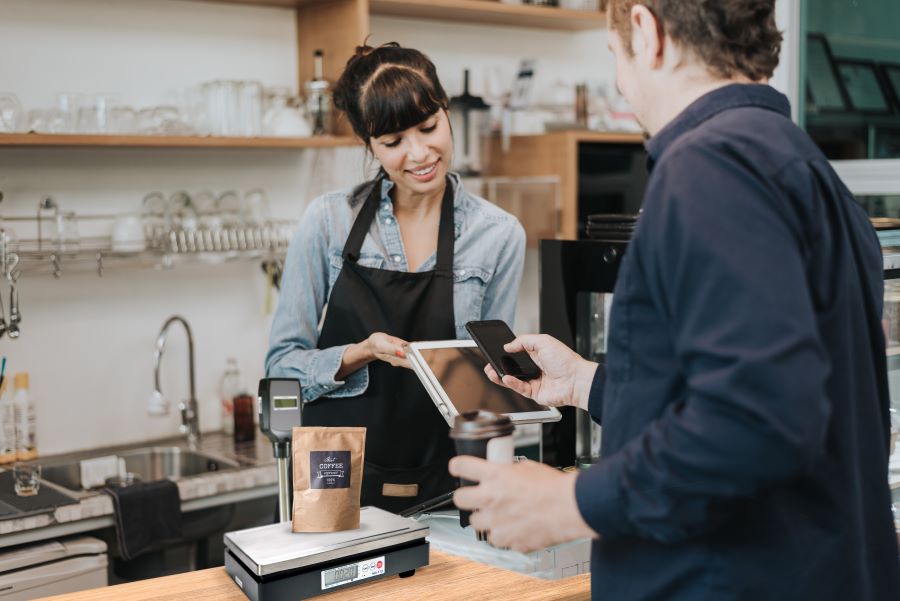
    POS scale and POS setup at a farmer's market food truck.

    OIML vs Measurement Canada: Key Differences

    Measurement Canada governs the approval and certification of weighing devices used in commercial transactions within Canada.

    While there are similarities between Measurement Canada and OIML standards, they are separate regulatory systems with their own requirements and approval processes.

    Measurement Canada

    • Applies specifically to Canada
    • Requires approval for legal-for-trade use
    • Includes inspection and compliance verification

    OIML

    • Applies internationally
    • Provides a framework for global standardization

    Some devices may align with both sets of requirements, but approval in one region does not guarantee compliance in another. Businesses must ensure that their POS scales meet the specific certification requirements of each country where they operate.

    What Are OIML Recommendations (and Why They Matter)?

    OIML recommendations are technical guidelines that define how weighing instruments should perform. These documents serve as the foundation for OIML certification.

    They cover areas such as:

    • Measurement accuracy
    • Tolerance limits
    • Environmental testing
    • Device classification

    For example, OIML R76 outlines the requirements for non-automatic weighing instruments, including most retail POS scales.

    These recommendations help ensure consistency across international markets, making it easier for manufacturers and businesses to align with global standards.

    What This Means for POS Scales in Retail and Grocery

    For businesses using POS scales, compliance directly impacts day-to-day operations.

    If a scale does not meet the required certification:

    • It cannot legally be used to sell products by weight
    • Transactions may be subject to regulatory penalties
    • Customer trust can be impacted

    This is especially important for:

    • Grocery stores
    • Delis and fresh food counters
    • Specialty retail (including cannabis and bulk goods)

    For multi-location or international businesses, the challenge increases. Each location must meet the specific requirements of its region, whether that means OIML, NTEP, or Measurement Canada certification.

    Selecting the right POS scale is not just about performance. It is about ensuring compliance across every location where the business operates.

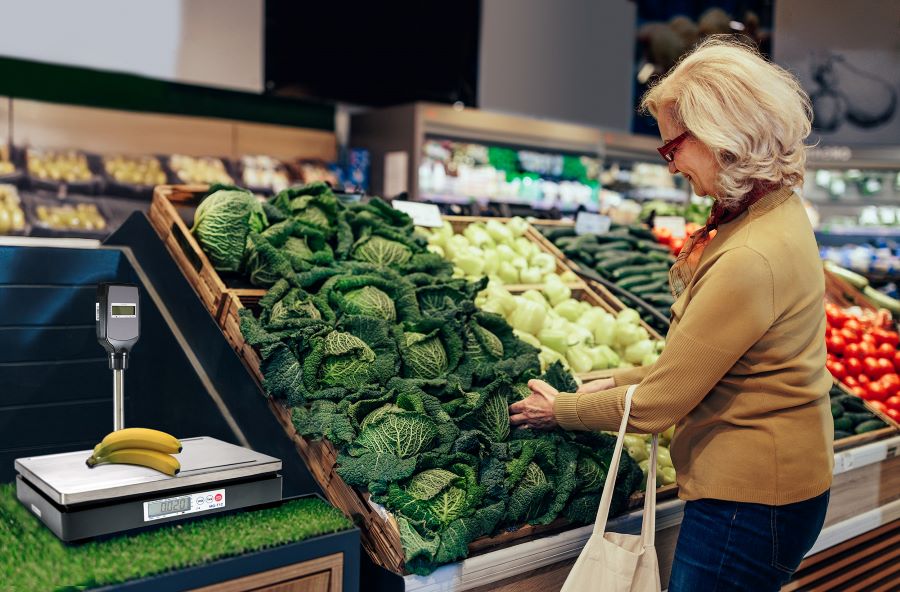
    The latest mG-T POS scales from Star Micronics are perfect for grocery stores and environments.

    Do you run a restaurant or QSR and find orders going out wrong more often than they should, especially during peak hours? Read up on “Why Leading QSRs Use POS Scales & Labels to Increase Order Accuracy” >

    Choosing the Right Certified POS Scale

    When selecting a POS scale, businesses need to balance compliance requirements with day-to-day operational performance. The right solution should meet regional regulations while supporting fast, accurate transactions at the point of sale.

    For example, a grocery POS scale deployed in Europe may require OIML compliance, while the same deployment in the United States would require NTEP certification. Understanding where and how the scale will be used is the first step in selecting the right device.

    Key factors to consider include:

    • Required certification (OIML, NTEP, or Measurement Canada)
    • Integration with POS systems and retail workflows
    • Accuracy and reliability in high-volume environments
    • Durability for consistent daily use

    A legal-for-trade POS scale that does not integrate well into the POS workflow can still create operational challenges. The goal is to choose a solution that meets regulatory requirements while supporting efficient, scalable transactions across locations.

    Want to know more? Read our blog article, “The Ultimate Buyer’s Guide to Choosing the Right POS Scale for Your Business” >

    How Star Micronics Supports Global POS Scale Compliance

    Star Micronics provides POS scale solutions designed to meet the needs of modern retail and grocery environments, where compliance and performance must work together.

    Star POS scales are built to support:

    • Legal-for-trade compliance across multiple regions
    • Reliable performance in high-volume environments
    • Integration with POS systems and retail workflows

    With a focus on accuracy, durability, and ease of use, Star helps businesses deploy POS scale solutions that meet regulatory requirements and real-world operational demands.

    Star’s OIML-certified POS scales are available in regions outside the United States, including Europe. To learn more about availability and deployment options, reach out to the Star Micronics team in the UK.

    Understanding OIML, NTEP, and Measurement Canada requirements helps businesses avoid compliance issues and confidently deploy POS scale solutions across regions. With the right hardware and approach in place, compliance becomes a built-in advantage, not a barrier to growth.

    Learn more about Star Micronics POS scales and compliance-ready solutions for global retail and grocery environments.

    Frequently Asked Questions (FAQs) About OIML Scales

    What does OIML stand for?

    OIML stands for the International Organization of Legal Metrology. It is a global organization that develops standards and recommendations for measuring instruments used in commercial transactions.

    What is an OIML scale?

    An OIML scale is a weighing device that meets the standards set by the International Organization of Legal Metrology. These scales are typically used in legal-for-trade applications in international markets.

    What is the difference between OIML and NTEP certification?

    OIML is an international standard, while NTEP applies specifically to the United States. Both ensure accuracy and compliance for legal-for-trade scales, but they are governed by different organizations and are not interchangeable.

    Are OIML scales required in the U.S.?

    No. In the United States, legal-for-trade scales must be NTEP certified. OIML certification is generally used in international markets outside the U.S.

    Can a scale be both OIML and NTEP certified?

    Yes. Some manufacturers design scales to meet both OIML and NTEP requirements, allowing them to be used in multiple regions. However, each certification must be obtained separately.

    What are OIML recommendations?

    OIML recommendations are technical guidelines that define how weighing instruments should perform. They serve as the basis for OIML certification and help ensure consistency across international markets.

    What are the classes of OIML scales?

    OIML classifies scales based on their level of accuracy. Common classes include:

    • Class I: High-precision laboratory scales
    • Class II: Precision scales used in laboratories and some retail applications
    • Class III: Commercial scales used in retail and grocery environments
    • Class IIII: Scales used for less precise applications such as bulk weighing

    Most POS scales used in retail fall under Class III.

    What are the classes of OIML weights?

    OIML weights are also classified by accuracy, ranging from high-precision classes such as E1 and E2 to lower-precision classes like M1, M2, and M3. These weights are used to calibrate and verify the accuracy of scales.

    What does legal-for-trade mean for POS scales?

    Legal-for-trade means a scale meets the regulatory requirements needed to be used in commercial transactions where price is determined by weight. Certification ensures accuracy, fairness, and compliance with local laws.

  • Star Micronics and OneTablet Help Restaurants Drive More Revenue from Delivery, Backed by Reliable Kitchen Printing

    Star Micronics and OneTablet Help Restaurants Drive More Revenue from Delivery, Backed by Reliable Kitchen Printing

    Star Micronics kitchen printing pairs with OneTablet’s delivery revenue platform to help restaurants increase order volume, improve menu conversion, and fulfill off-premise orders with greater accuracy.

    Somerset, NJ – May 1, 2026 – Star Micronics, a global provider of point-of-sale (POS) hardware, cloud printing, and labeling solutions, today announced its collaboration with OneTablet, a restaurant technology platform that helps independent restaurants and multi-location operators generate more revenue from third-party delivery. Together, the companies give restaurants the tools to improve menu visibility, conversion rates, and average order value across delivery platforms, while ensuring every order prints reliably at the right station.

    Third-party delivery now accounts for 30% or more of a restaurant’s revenue, and that share continues to climb. Restaurants that aren’t actively optimizing their presence on DoorDash, Uber Eats, and Grubhub are leaving money on the table. OneTablet gives operators the tools to win on these platforms: better menu visibility, stronger conversion rates, higher average order values, and the performance data to know what’s working and what isn’t.

    As that order volume grows, kitchens need hardware that can keep up. Star’s TSP100 series delivers the print speed, reliability, and uptime that high-volume delivery operations demand, so every ticket reaches the right station, every time.

    From Delivery Platform to the Kitchen Line

    Aggregating orders is only part of the workflow. Restaurants also need to manage menus, monitor performance across delivery platforms, and maintain control over how orders are prepared and fulfilled.

    OneTablet is the operating system for off-premise restaurant operations, consolidating Uber Eats, DoorDash, and Grubhub into a single, unified platform. Beyond order aggregation, it gives operators centralized control over menus, pricing, and prep timing, while delivering real-time reporting across all channels.

    By surfacing performance data at the item, channel, and store level, OneTablet enables restaurants to continuously optimize their delivery business—adjusting menus, pricing, and availability to increase conversion, improve order volume, and maximize revenue. Through its integration with Star Micronics printers, OneTablet extends that control directly into the kitchen, ensuring orders are automatically routed, organized, and printed at the appropriate prep stations. This creates a seamless connection between digital optimization and in-store execution, reducing errors and improving throughput during peak service.

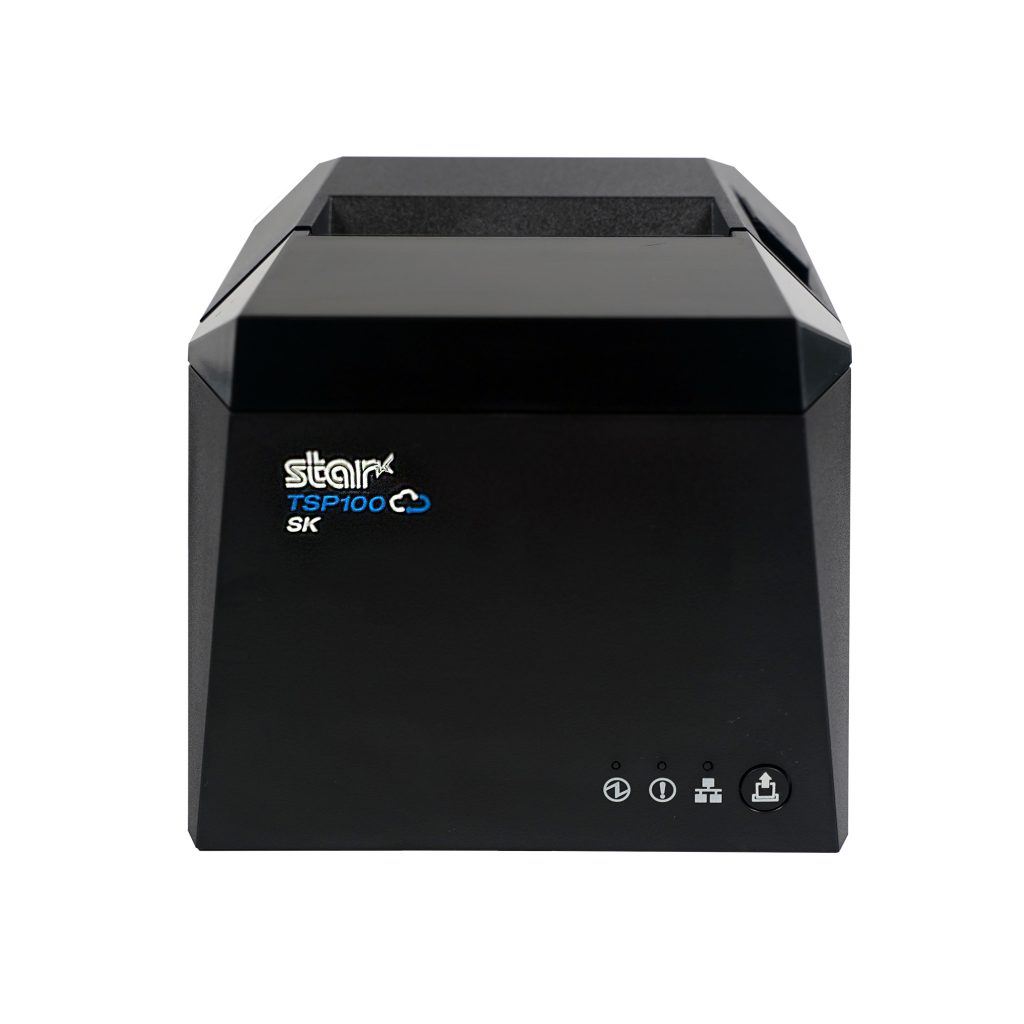
    Star’s TSP100 series thermal ticket printers, including the TSP143III (LAN, USB, and Bluetooth models), as well as the TSP143IV X4 and TSP143IV SK X4 sticky linerless label printers, were tested across OneTablet’s platform and performed reliably in each configuration. This allows restaurants to use the same trusted hardware for both standard ticket printing and sticky labeling workflows, depending on their kitchen setup.

    Supporting High-Volume Delivery Workflows

    Off-premise orders introduce significant pressure during peak hours, where missed tickets, unclear modifications, or delayed prints can quickly lead to errors and slowdowns.

    By combining OneTablet’s order aggregation with Star’s reliable printing, restaurants can:

    • route orders instantly to the correct prep station
    • maintain clear, readable tickets during peak volume
    • reduce missed or duplicated orders
    • kitchens moving at the pace of incoming delivery demand

    “Delivery isn’t linear. Orders hit in waves from multiple platforms at the same time. At OneTablet, we bring structure to that. We organize and route orders so kitchens can actually execute. If tickets are not clear and in the right place immediately, performance drops fast. Star gives us the consistency on the print layer to make sure that does not happen.”

    “As restaurants take in orders from multiple delivery channels, consistency at the kitchen level becomes critical. By working with OneTablet, we’re helping ensure those orders are reliably routed and printed at the right station, so staff can act on them immediately without confusion or delay.”

    Extending Workflows with Labeling

    In addition to ticket printing, labeling can be used to support order identification and quality control for off-premise orders. Applying labels to bags, containers, or drinks helps staff verify items before they leave the kitchen, reducing handoff errors during busy service periods.

    As delivery volume increases, combining order aggregation, printing, and labeling provides a more controlled workflow from order intake to fulfillment.

    For more information about Star Micronics solutions, visit starmicronics.com.

    To learn more about OneTablet, visit onetablet.com.

    Can’t get enough industry news?

    OneTablet Delivery Operations

    OneTablet is a restaurant technology platform designed to help independent restaurants and multi-location operators generate more revenue from third-party delivery. The platform consolidates DoorDash, Uber Eats, and Grubhub into a single dashboard, enabling operators to manage menus, improve visibility, increase conversion rates, and grow average order value across all channels.

    Unlike traditional POS-based integrations, OneTablet operates at the platform layer, giving restaurants direct control over menus, pricing, availability, and store operations within each marketplace. This allows operators to improve key performance drivers such as item availability, prep times, cancellations, and customer ratings—ultimately increasing order volume and revenue.

    Through advanced reporting and menu optimization tools, OneTablet surfaces actionable insights that help restaurants identify opportunities to improve performance, drive more orders, and capture incremental revenue.

    Originally founded as MealCo and relaunched as OneTablet in 2025, the company serves independent restaurants, enterprise brands, and digital-first operators across the United States.

    Star Micronics logo, point-of-sale (POS) hardware and technology company.

    Star Micronics is a global provider of point-of-sale (POS) hardware, cloud printing, and labeling solutions that help businesses connect digital workflows to real-world operations. Serving retail, hospitality, healthcare, and service industries, Star delivers printing, labeling, cash management, self-service, and cloud-based technologies designed to support scalable, connected, and automated environments. Star’s solutions support Android, iOS, Windows, and web-based platforms and extend into the cloud through services such as CloudPRNT Next and StarIO.Online, Star’s fully managed cloud printing service.

    Visit starmicronics.com or follow us on Facebook, X, YouTube, or LinkedIn to learn more.

    Media Contact:

    Christin Dorner
    Star Micronics America, Inc.
    cdorner@starmicronics.com
    848-216-3318

    Media Contact:

     
    Paula Moran
    OneTablet
    paula@onetablet.com

  • Cleaning Printers: How to Prevent Gummed-Up Printer Cutters

    Cleaning Printers: How to Prevent Gummed-Up Printer Cutters

    In a busy kitchen or retail environment, everything runs smoothly until it doesn’t. Orders are coming in, labels should be printing, and suddenly the printer slows down. Labels tear instead of separating cleanly. The cutter jams. Staff stop what they are doing to troubleshoot, and operations stall.

    This is a common issue with many label printers. Adhesive buildup from labels accumulates over time, especially in high-volume environments or when switching between media types. As residue collects on the printer cutter, it can cause jams, miscuts, and inconsistent label output. When maintenance is delayed, performance declines and downtime increases.

    Cleaning printers is a critical part of label printer maintenance for businesses that rely on accurate, consistent labeling. Multifunction printers handle linerless labels, die-cut labels, continuous media, and receipts, but they require regular cleaning to keep cutters operating properly. 

    This guide explains how to clean printer cutters, prevent adhesive buildup, and maintain reliable label printing in high-volume operations.

    Table of Contents

    What Is a Gummed-Up Printer Cutter?

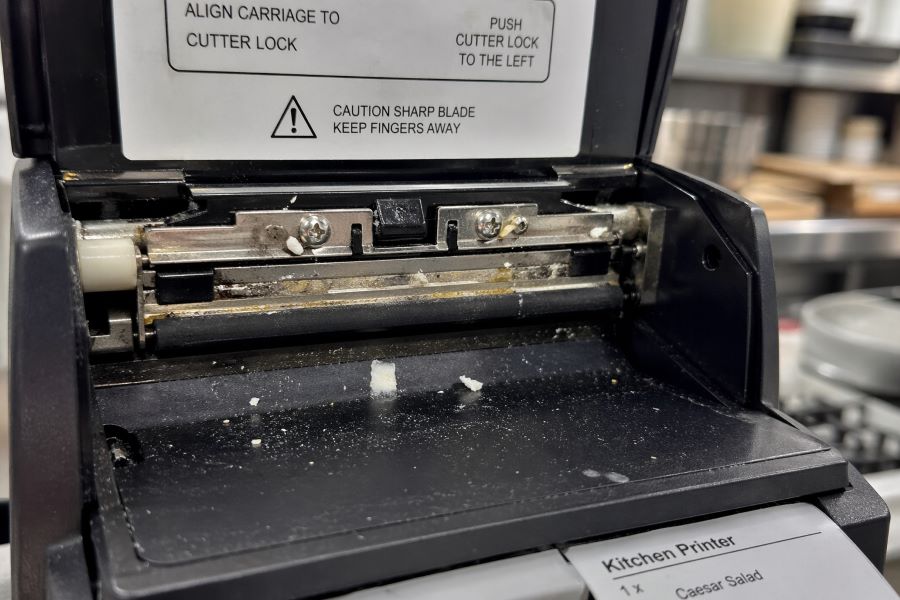
    A gummed-up printer cutter occurs when adhesive residue builds up on the cutter blade. Over time, this residue collects paper dust and label debris.

    As buildup increases, the cutter can become sticky, misaligned, or unable to cut cleanly. This leads to poor performance, inconsistent output, and eventual printer issues if left unaddressed.

    Gummed Up Printer Cutter
    A gummed-up printer cutter leads to poor performance and eventual printer issues if unaddressed.

    How Often Should You Clean a Label Printer Cutter?

    Cleaning frequency depends on print volume, media type, and overall label printer usage.

    High-volume environments and linerless label usage typically require more frequent cleaning due to increased adhesive exposure. Linerless labels, in particular, apply adhesive across the entire label surface, which makes buildup more likely.

    Rather than relying only on a fixed schedule, maintenance alerts are often a better approach. Alerts help ensure cleaning happens when it is actually needed, not too early and not too late.

    The Risks of Not Regularly Cleaning Printers

    Failing to clean printer cutters regularly can lead to a range of operational and mechanical issues:

    • Incomplete cuts, where labels tear instead of separating cleanly
    • Cutter jams that cause print queues to back up
    • Increased strain on the cutter motor, leading to long-term wear
    • Unexpected downtime that interrupts workflows and delays orders
    • Reactive maintenance that pulls staff away from their primary tasks
    • Workarounds that bypass labeling altogether, increasing the risk of errors, missing allergen information, or incorrect orders
    • Damage to brand perception when operations appear inconsistent or unreliable

    Over time, these issues compound. What starts as minor buildup can lead to more serious printer performance problems if not addressed early.

    How to Clean a Label Printer Cutter

    Keeping printer cutters clean is a simple process when done regularly. With the right approach, staff can remove adhesive buildup quickly and keep printers running without interruption.

    1. Power Off and Open the Printer

    • Turn off the printer before performing any maintenance.
    • Open the printer cover to access the cutter area.
    • Ensure the printer is stable and safe to handle before proceeding.

    2. Locate the Cutter Blade and Surrounding Area

    • Identify the cutter blade where labels or receipts are cut.
    • Check for visible adhesive buildup, dust, or debris.
    • Pay attention to edges where residue tends to collect.

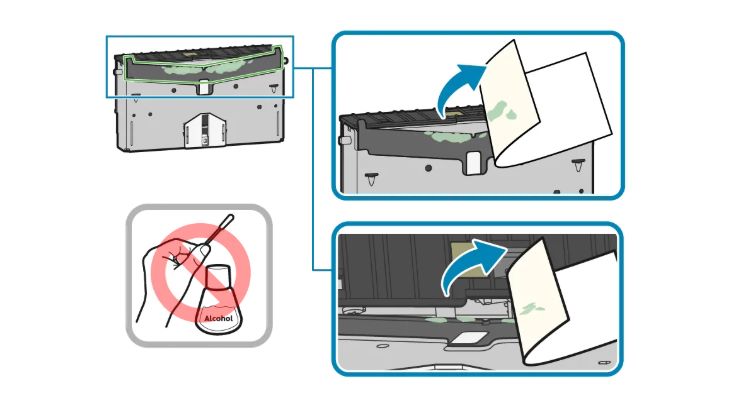
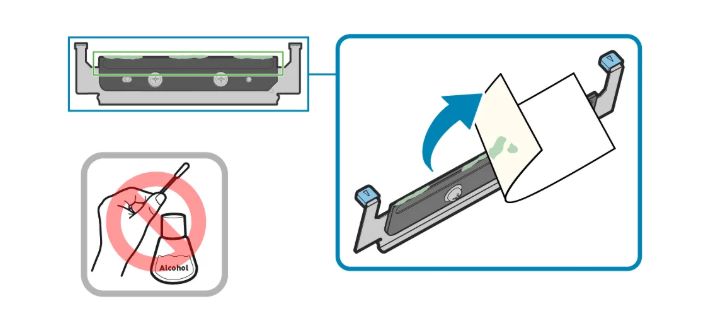
    3. Remove Adhesive Buildup

    • Use the adhesive side of an unused label to lift gum and residue.
    • Gently press and pull to remove buildup from the cutter surface.
    • Avoid using sharp objects or abrasive materials.

    Cleaning Printer Cutter Illustration

    4. Clear Loose Debris

    • Remove any remaining paper dust or label fragments.
    • Ensure the cutter area is free of obstructions.
    • Keep the cleaning process controlled and precise.

    Bottom Cutter Blade

    5. Close the Printer and Test

    • Close the printer securely after cleaning.
    • Power the printer back on.
    • Run a test print to confirm smooth, clean cuts.

    Printer Cleaning Do’s and Don’ts

    Do

    • Follow manufacturer guidelines for cleaning and maintenance
    • Clean printer cutters regularly, especially in high-volume or linerless environments
    • Use approved methods, such as the adhesive side of a label, to remove buildup
    • Perform cleaning in a controlled, well-lit area to ensure accuracy

    Don’t

    • Use sharp tools or abrasive materials that can damage the cutter
    • Apply harsh chemicals that may affect printer components
    • Attempt to clean the printer while it is powered on
    • Ignore early signs of buildup, such as uneven cuts or minor jams

    The mC-Label3 Multifunction Printer by Star Micronics great for delivery take out online ordering and QSRs.
    Keep your label printers working by following best practices for cleaning printer cutters.

    Best Practices for Cleaning Printer Cutters

    Keeping printer cutters clean comes down to a few practical maintenance habits.

    • Follow Maintenance Alerts, Not Just Schedules: Print volume can vary significantly. Built-in maintenance alerts help ensure cleaning happens at the right time, before performance issues begin.
    • Make Cleaning Instructions Easy to Access: When cleaning is required, staff need clear, immediate guidance. Printers that provide quick access to step-by-step instructions make maintenance easier and more consistent.
    • Simplify the Cleaning Process: If maintenance is complicated, it will be delayed. Tool-free access and clearly designed components allow staff to clean printers quickly without relying on IT support.
    • Replace Worn Parts Before They Fail: Even with regular cleaning, cutters and platens wear over time. Replacing these components proactively helps prevent jams and keeps printers performing reliably.

    Printer Cleaning and Maintenance Made Easy with Star Micronics

    Keeping label printers clean should not require specialized training or disrupt daily operations. In high-volume environments, printer cleaning and maintenance need to be simple, repeatable, and built into normal workflows. Star printers are designed so routine label printer maintenance can be performed by staff in minutes, without tools, service calls, or operational delays.

    The mC-Label2 and mC-Label3 multifunction label printers are built to support routine cleaning without technical expertise. Built-in maintenance alerts notify staff when attention is needed, helping prevent adhesive buildup before it impacts performance. When it’s time to clean, QR code-driven instructions provide immediate access to step-by-step guidance, so employees can act quickly and confidently.

    Cleaning the printer cutter is straightforward. In many cases, staff can use the adhesive side of an unused label to remove gum and debris from the cutter. Tool-free, color-coded components make it easy to access, clean, and reassemble parts without delays or IT support.

    With the right maintenance approach and tools, cleaning label printers becomes a quick, routine task instead of a source of downtime.

    Want to learn more about how the mC-Label series helps reduce printer downtime? Read our blog, “Reduce Label Printer Downtime with Smarter Maintenance Tools.”

    The mC-Label2 multimedia printer by Star Micronics features user-friendly, tool-free maintenance.
    The mC-Label series uses tool-free, color-coded components for easy printer maintenance.

    Contact us for a demonstration to see how easy printer cleaning and maintenance can be.

    Frequently Asked Questions About Cleaning Printers

    How often should you clean a printer cutter?

    A printer cutter should be cleaned based on print volume and media type. High-volume environments and linerless label printing require more frequent cleaning due to adhesive buildup. Maintenance alerts help ensure cleaning happens at the right time.

    What causes a label printer cutter to become gummed up?

    A label printer cutter becomes gummed up when adhesive residue builds up on the cutter blade. This residue collects paper dust and debris, causing the cutter to become sticky, misaligned, or unable to cut cleanly.

    What happens if you do not clean a printer cutter?

    A dirty printer cutter causes incomplete cuts, label tearing, and frequent jams. Over time, this increases wear on the cutter mechanism and leads to downtime that disrupts labeling workflows.

    How do you clean a label printer cutter?

    To clean a label printer cutter, use the adhesive side of an unused label to remove buildup from the cutter blade. Always follow manufacturer instructions and ensure the printer is powered off before cleaning.

    Do linerless labels require more printer maintenance?

    Yes. Linerless labels apply adhesive across the entire label surface, increasing the likelihood of buildup on the printer cutter. More frequent printer cutter cleaning is required in these environments.

    Can employees clean printer cutters without technical training?

    Yes. Printers designed with tool-free access and guided instructions allow staff to perform printer cutter cleaning without technical training or IT support.

    When should you replace a printer cutter or platen?

    Replace a printer cutter or platen when cleaning no longer resolves cutting issues, or when consistent jams and uneven cuts occur.

    How can businesses reduce printer downtime caused by cutter issues?

    Businesses can reduce printer downtime by performing regular printer cutter cleaning, following maintenance alerts, and replacing worn parts proactively. Using printers designed for easy maintenance improves consistency and reliability.

  • Cash Drawer Security: Protecting Cash in a Digital Payments Era

    Cash Drawer Security: Protecting Cash in a Digital Payments Era

    Cash drawer security remains essential as consumers continue to use cash. Secure cash drawers feature robust access control and connectivity to the point-of-sale (POS) system, enabling greater oversight and employee accountability. Secure cash drawers also help to reduce human error and losses by keeping cash organized. Cash drawer construction also plays an important role in preventing jams and failures that lead to workarounds and put cash at risk. 

    Table of Contents

    Cash Is Still Common — and It Still Needs to Be Secured

    Although digital transactions account for an increasing share of payments, merchants still need to maintain focus on cash drawer security. Statistics from the Federal Reserve confirm that U.S. consumers use cash for about 14% of payments, and that rate has stayed steady for the past five years. Furthermore, the Fed reports that 90% of U.S. consumers intend to use cash to store value in the future. Older consumers are more likely to have cash in their wallets, but Empower reports that 24% of Gen Z carry cash daily. 

    The staying power of cash transactions can benefit merchants. With cash, merchants instantly have funds, and there are no processing fees or chargebacks when customers pay with cash. On the other hand, keeping cash secure and ensuring there aren’t any errors in till cash balances are long-term challenges.

    Pros of Accepting Cash Cons of Accepting Cash
    Immediate access to funds Risk of shrinkage
    No payment processing fees Manual counting and reconciliation required
    No chargebacks or payment disputes Risk of employee theft
    Works during internet or network outages Greater need for secure storage and procedures
    Accessible for all customers Human error when making change

    So, as long as consumers use cash, merchants need more than just a drawer for bills and change. They need a secure cash drawer designed for accountability and durability. 

    What is a Secure Cash Drawer?

    A secure cash drawer is a cash drawer that combines physical durability with controlled access through POS system integration. In most modern POS environments, the cash drawer opens only when triggered by the receipt printer or POS terminal, ensuring that every drawer open is tied to a transaction or authorized action. This creates a record of drawer activity and limits unauthorized access to cash.

    Secure cash drawers also include durable steel construction, secure bill clips, multiple till configurations, and lock mechanisms that prevent forced entry or accidental opening.

    How Cash Drawer Security Works

    Cash drawer security features help businesses control access to cash, reduce internal theft, prevent cash handling errors, and ensure the drawer can withstand high transaction volumes without failure.

    1. Cash Drawers Give Merchants Access Control

    The most important rule of cash handling is simple: when the drawer is not in use for a transaction, it should be locked. Secure cash drawers are typically connected to the POS terminal or receipt printer and open only when triggered by a transaction or authorized function. This ensures that employees must be logged into the system to access till cash and creates a record of each drawer open, improving accountability and reducing opportunities for unauthorized access.

    2. Insider Threat Mitigation with Cash Drawer Security

    Lax cash drawer security can tempt employees. A&M Consumer Retail Group reports that it’s a threat merchants must acknowledge, with over 50% of shrinkage coming from internal factors like employee theft. Cash drawers that interface with the POS system allow merchants to set policies for when the drawer can open and when manager authorization is required, for example, for voids, returns, or “no sales.” 

    Secure cash drawers help enforce cash handling policies. For example, the POS system can require manager authorization for voids, returns, or “no sale” drawer opens. Drawers that support multiple removable tills allow businesses to assign one till per cashier, making it clear who is responsible for the cash in that drawer during each shift and simplifying reconciliation.

    3. Reducing Human Error with Secure Cash Drawers

    The till design is also a factor in cash drawer security. Having the right number and size of compartments can help prevent cashiers from making mistakes, such as giving a $20 bill in change when $10 was due.

    Secure cash drawer design supports cash balancing best practices

    • Counting at the beginning of the shift
    • Depositing cash throughout the shift
    • Pulling the POS report at the end of the shift
    • Counting in a secure location 
    • Solve any discrepancies immediately

    An organized till reduces mistakes during transactions and makes end-of-shift reconciliation faster and more accurate. Proper till configuration is often an overlooked aspect of cash drawer security because disorganized drawers lead directly to cash-handling errors.

    4. Cash Drawers Need Strong Physical Security Features

    Cash drawers must be built to withstand daily use. In high-volume environments like grocery, cannabis, QSR, and large retail stores, drawers may open hundreds of times per day. All-steel construction, reinforced rails, metal bill clips, and dual-lock systems help prevent forced entry and reduce failures that can lead to security workarounds.

    The CD5-1918 cash drawer by Star Micronics sets the standard for high-cash volume, big-box, and enterprise-level cash management.
    The CD5-1918 Max Series Cash Drawer by Star Micronics

    Quick Cash Handling Security Checklist

    Businesses can improve cash drawer security by following these best practices:

    • Use POS-triggered drawers instead of manual key-only drawers
    • Assign one till per cashier
    • Require manager approval for no-sale drawer opens
    • Store large bills under the till
    • Perform till counts at the beginning and end of each shift
    • Reconcile cash in a secure back-office location
    • Use steel cash drawers in high-volume environments

    Additional Cash Drawer Security Accessories

    In addition to the cash drawer itself, several accessories can improve cash handling security and prevent unauthorized access.

    Locking Till Covers

    Locking till covers allow tills to be securely stored in a safe or back office during shift changes or when the drawer is not in use. This prevents loose cash from being transported in bags or left unsecured.

    Under-Counter Mounting Brackets

    Under-counter mounting brackets secure the cash drawer to the counter, preventing the drawer from being removed from the POS station. This is commonly used in retail and hospitality environments where the risk of theft is higher.

    Dual Drawer Secure Cable

    In dual drawer environments, traditional “Y” cables allow two drawers to connect to one printer, but they can create a security risk because drawers can be swapped at the printer. Secure dual drawer cables prevent drawer swapping by creating a fixed connection between the printer and both drawers, making it much more difficult for an employee to access a second drawer without authorization.

    These accessories are often used in high-volume retail, grocery, cannabis, and hospitality environments where multiple employees share POS stations and cash handling controls are especially important.

    How to Choose a Secure Cash Drawer

    Choosing a secure cash drawer is not just about size or price. The right drawer should match your transaction volume, integrate with your POS system, and support your cash handling procedures. In high-volume environments like retail, grocery, cannabis, and QSR, drawers must withstand constant use while maintaining controlled access to cash. In lower-volume environments, compact drawers with reliable POS integration and basic locking features may be sufficient.

    When evaluating cash drawer security, businesses should consider:

    • Steel construction and durability for high open/close environments
    • POS or receipt printer interface compatibility for controlled drawer opening
    • Till configuration and removable tills for shift-level accountability
    • Locking mechanisms and key options for controlled access
    • Mounting options such as under-counter brackets to prevent drawer removal
    • Support for dual drawer installations to prevent drawer swapping

    A secure cash drawer should support your cash handling procedures, not work against them. The goal is simple: limit access, create accountability, and make cash handling as controlled and traceable as possible.

    Cash Drawer Security by Industry

    Cash drawer security requirements vary by industry:

    • Retail: High transaction volume requires heavy-duty steel drawers and removable tills for multiple cashiers.
    • Grocery: Drawers open frequently and require reinforced rails and high-capacity tills.
    • Quick-Service Restaurants: Compact POS cash drawers are common, often connected to receipt printers.
    • Cannabis: Secure cash handling is critical due to cash-heavy operations and compliance requirements.
    • Hospitality: Bars and cafés often use compact drawers with under-counter mounting for security.

    Star Micronics Cash Drawer Security Solutions

    Star Micronics offers cash drawers and cash handling accessories designed for retail, grocery, hospitality, cannabis, and other environments where secure cash management is important.

    CD5 Max Series Cash Drawers: The CD5 Max Series is designed for cash-heavy environments where durability and cash handling control are critical. These heavy-duty steel cash drawers are commonly used in grocery stores, large retail, QSRs, and cannabis environments where drawers open frequently throughout the day.

    Key security features include:

    • Heavy-duty all-steel construction in every popular size
    • Dual interface (DK and USB) for POS or printer-driven operation
    • Reinforced drawer rails for high open/close cycles (millions of operations)
    • Dual or multiple media slot options for checks and large bills
    • Multiple till configurations to support different environments
    • Dual-locking mechanisms on select models

    These features help businesses maintain drawer reliability, control access to cash, and support consistent cash handling procedures in high-volume environments.

    CD5 Max Series Cash Drawers

    Designed for high-cash-volume environments, the CD5 Max Series features heavy-duty steel construction, dual lock options, and under-till storage for added organization. Multiple sizes and DK/USB interface options allow easy connectivity with virtually any POS system.

    Explore More >

    CD4 Choice Series Cash Drawers: The CD4 Choice Series is a standard-duty cash drawer designed for general retail, hospitality, and point-of-sale environments that need reliable cash handling with essential security features. These POS cash drawers are commonly used in retail stores, cafés, bars, and service counters where a compact drawer and dependable operation are required.

    Key security features include:

    • Durable steel construction with reinforced steel top
    • Multiple lockset options for key control and drawer access management
    • Dual media slots for storing checks or large bills without opening the drawer
    • Secure bill clips to keep cash organized and in place
    • Multiple till configurations to support different cash handling needs

    Standard-duty cash drawers like the CD4 are used in environments with moderate transaction volumes, but secure cash handling and POS-controlled drawer opening remain important.

    Star Cash Drawer Accessories and Tills

    In addition to cash drawers, Star offers cash handling accessories that help businesses improve security and cash control procedures:

    Using removable tills and locking till covers helps businesses assign responsibility for cash to individual cashiers and transport tills securely to the back office for reconciliation. Mounting brackets help prevent the drawer from being removed from the POS station, and secure dual drawer cables help prevent unauthorized access in dual-drawer POS setups.

    These accessories are commonly used in multi-employee environments where multiple cashiers share POS stations and cash control procedures are important for loss prevention and accurate reconciliation.

    Frequently Asked Questions About Cash Drawer Security

    What makes a cash drawer secure?

    A cash drawer is considered secure when it has durable steel construction, a reliable locking mechanism, and controlled opening through the POS system or receipt printer. Security also depends on proper till organization, removable tills to support cashier accountability, and consistent cash-handling procedures, such as shift counts and reconciliation.

    How do cash drawers prevent employee theft?

    Secure cash drawers give employees access to cash only when necessary and authorized, i.e., when accepting cash payments or making change. A secure cash drawer will also communicate with the POS system to track when an employee opens the drawer for any reason, and keep a record for reconciliation and accountability. 

    How does a cash drawer connect to a POS system?

    Most modern cash drawers connect to the POS system through the receipt printer or directly to the POS terminal. In many setups, the cash drawer is connected to the receipt printer using a drawer cable, and the printer sends a signal to open the drawer when a cash transaction is completed. This is often called a printer-driven cash drawer.

    This setup allows the POS system to control when the drawer opens and helps ensure that the drawer only opens for recorded transactions or authorized functions such as returns or no-sale opens with manager approval. Some basic cash drawers operate manually using only a key, but POS-controlled drawers provide much better security and accountability.

    Why is the removable till important for cash handling?

    One till per cashier has numerous benefits for secure cash handling. It enables secure transport of till cash when the cashier begins the shift and when carrying cash from the shift to the back office for reconciliation. Tills can be stored in a safe rather than in the drawer when not in use. Cash is never stored less securely, for example, in a bank bag or loose, and cashiers are each accountable for the cash in the tills they’re using.

    What is the most durable cash drawer for high-volume retail?

    The most durable cash drawers for high-volume environments are made of all-steel construction and are tested for durability and performance over millions of opens/closes. Star’s CD5 Max Series has all the features a high-volume retailer needs, including reinforced drawer rails and industry-leading lock strength. CD5 cash drawer models include several options, giving merchants the choice of the correct till configuration for the bills and change they accept. 

    Bartender Checking ID

    Where to Learn More About Cash Drawer Security

    Choosing the right cash drawer is an important part of cash handling and loss prevention. Star Micronics offers secure cash drawers designed for retail, grocery, hospitality, and cannabis environments, including heavy-duty and compact models with multiple till configurations and POS interface options.

    Contact us to learn more about Star Micronics CD5 and CD4 cash drawer solutions.

  • 4 Features to Look for in the Ultimate Restaurant Kitchen Printer

    4 Features to Look for in the Ultimate Restaurant Kitchen Printer

    A restaurant kitchen printer is one of the most important tools for maintaining order accuracy and speed in a busy kitchen environment. By printing clear, durable tickets instantly, kitchen staff can prepare orders efficiently and reduce costly mistakes.

    In modern restaurants—whether quick service, fast casual, or full service—kitchen printers connect the point-of-sale (POS) system directly to the back-of-house team. Instead of relying on handwritten tickets that can be misread or misplaced, orders are printed clearly and delivered immediately to the stations preparing them.

    Choosing the right printer matters. Commercial kitchens often expose equipment to heat, grease, steam, and constant activity, so not every printer is built to perform reliably under these conditions.

    Table of Contents

    What Is a Restaurant Kitchen Printer?

    A restaurant kitchen printer is a specialized printer used in commercial kitchens to print order tickets directly from a restaurant point-of-sale (POS) system. These printers ensure kitchen staff receive accurate order details immediately so food preparation can begin without delays or confusion.

    Unlike standard receipt printers used at checkout counters, kitchen printers are built to operate in demanding environments and are typically installed at prep stations, grill stations, expo lines, or beverage areas where orders are fulfilled.

    Restaurant kitchen printers generally use either impact printing for high-heat kitchen environments or thermal printing in modern, temperature-controlled kitchens. The best restaurant kitchen printer depends on the kitchen environment, order volume, and how the restaurant’s POS system sends orders to the back of house.

    If you’re evaluating a restaurant kitchen printer, here are four features that can make the biggest difference in kitchen performance and reliability:

    1. Durable Impact Printing for Harsh Kitchen Environments

    A restaurant kitchen printer must be built to withstand the realities of a commercial kitchen. Heat, grease, and airborne food particles can quickly damage equipment not designed for such environments.

    Impact printers, like the SP742 from Star, are widely used in restaurant kitchens because they are extremely durable and reliable. They work by striking an ink ribbon against impact paper, producing clear, legible tickets that remain readable even in high heat.

    Unlike thermal paper, which can darken when exposed to high temperatures, impact paper maintains readability in hot kitchen environments. This makes impact printing particularly useful near grills, fryers, and other high-heat stations.

    For these reasons, many restaurants rely on impact printers for high-heat kitchen environments.

    Impact vs. Thermal Kitchen Printers: Choosing the Right Technology

    While impact printers are widely used in traditional kitchen environments, some restaurants operate in modern, climate-controlled kitchens where thermal printing can also perform reliably.

    Thermal kitchen printers use heat to create images on specially coated paper, eliminating the need for ink ribbons and reducing maintenance. In controlled environments where excessive heat, grease, or steam are less of a concern, thermal printers can offer fast, quiet, and efficient ticket printing.

    For example, the Star mC‑Print3 thermal ticket printer is often used in modern restaurant kitchens, cafes, and quick-service environments where operators want the speed and simplicity of thermal printing.

    However, for kitchens exposed to high heat, oil, or heavy airborne particles, impact printers remain a dependable choice due to their rugged design and heat-resistant paper.

    Choosing between impact and thermal ultimately depends on the conditions of the kitchen and the restaurant’s operational needs.

    The mC-Print3 thermal kitchen printer in a modern heat-controlled environment.

    2. Internal Power Supply for Flexible Kitchen Layouts

    Kitchen space is often limited, and equipment placement can directly affect workflow efficiency.

    A restaurant kitchen printer with an internal power supply simplifies installation and helps reduce cable clutter. Instead of managing bulky external power adapters, staff can install printers directly at prep stations, expo stations, or beverage areas.

    Benefits of internal power supplies include:

    • Cleaner workstation setups
    • Easier installation in tight spaces
    • Fewer exposed cables in high-traffic areas
    • More flexibility when arranging kitchen equipment

    In environments such as food trucks, kiosks, or compact restaurant kitchens, these small, space-saving features can make a significant difference.

    3. Fast Print Speed to Keep Kitchens Moving

    During peak service hours, kitchens operate at high speed. A restaurant kitchen printer must keep up with order volume without slowing down the workflow.

    High-speed printers can produce 13 or more receipts per minute, allowing orders to move quickly from the POS system to the kitchen staff.

    Fast printing provides several operational benefits:

    • Orders reach the kitchen instantly
    • Staff can begin preparation sooner
    • Order queues stay organized during busy periods
    • Restaurants can handle higher order volumes efficiently

    Fast, clearly printed tickets help kitchens maintain speed and accuracy even during the busiest service periods.

    4. Easy Paper Loading to Minimize Downtime

    Even the most reliable kitchen printer will eventually need a paper refill. When that moment comes during a busy shift, the process should be quick and simple.

    A restaurant kitchen printer with drop-in paper loading allows staff to replace paper rolls in seconds. This feature reduces downtime and helps kitchen operations continue smoothly during peak service periods.

    Look for printers designed with:

    • Drop-in paper loading
    • Jam-resistant mechanisms
    • Clear paper guides

    These design features allow kitchen staff to reload paper quickly and return their attention to preparing orders.

    Why Kitchen Printers Matter for Restaurant Operations

    A reliable restaurant kitchen printer helps restaurants maintain fast service and accurate order fulfillment. By delivering clear, durable tickets directly to kitchen stations, these printers reduce communication errors and improve overall workflow efficiency.

    Restaurants that invest in the right kitchen printing technology often see improvements in:

    • Order accuracy
    • Kitchen speed and efficiency
    • Staff productivity
    • Customer satisfaction

    In a fast-paced restaurant environment, even small improvements in communication and efficiency can lead to better service and stronger profitability.

    Choosing the Right Restaurant Kitchen Printer

    When selecting a restaurant kitchen printer, prioritize durability, speed, ease of use, and compatibility with your POS system.

    A well-designed printer helps kitchen staff stay organized, reduces order errors, and ensures food reaches customers quickly and correctly every time.

    The Smart QSR Delivery Playbook: Labeling, Accuracy & Efficiency Done Right

    This ebook explores how labeling, verification tools, and flexible POS technology can help restaurants manage QSR delivery workflows more effectively—from the kitchen to the handoff point.

    Kitchen Printer FAQs for Restaurants

    What is a restaurant kitchen printer?

    A restaurant kitchen printer is a specialized printer that prints order tickets directly from a point-of-sale (POS) system to kitchen stations. These printers ensure staff receive orders immediately so food can be prepared quickly and accurately.

    What printer do restaurants use in kitchens?

    Many restaurants use impact printers in kitchens because they are durable and can withstand heat, grease, and steam. In modern, temperature-controlled kitchens, thermal printers may also be used for their speed and low maintenance.

    When should you use an impact vs. a thermal kitchen printer?

    Impact printers are typically best for:

    • high-heat kitchens
    • heavy grease environments
    • grill or fryer stations

    Thermal printers are often used in:

    • temperature-controlled kitchens
    • cafes and quick-service restaurants
    • modern POS workflows

    Why do restaurants use kitchen printers instead of handwritten tickets?

    Kitchen printers improve order accuracy, speed, and communication between front-of-house staff and kitchen teams. Printed tickets are easier to read than handwritten orders and help reduce mistakes during busy service periods.

    Ready to learn more about how the ultimate restaurant kitchen printer can impact your business?

  • How ISVs Can Deliver Cloud Printing with Less Risk and Faster Scale

    How ISVs Can Deliver Cloud Printing with Less Risk and Faster Scale

    Cloud printing has moved from a value-add feature to core infrastructure for modern software platforms. As ISVs support multi-location customers, omnichannel ordering, kiosks, and mobile workflows, printing must scale reliably, remain visible, and work consistently across environments.

    Hosted cloud printing shifts the responsibility for print infrastructure, monitoring, and ongoing maintenance from the software vendor to a dedicated provider. This model allows ISVs to deliver cloud-enabled printing without building or managing their own server environments. Developers can put all their focus into making the best product for their customers.

    In the past, offering cloud printing required ISVs to host print servers in-house, absorb infrastructure costs, and carry long-term operational risk. StarIO.Online, a fully managed cloud printing service from Star Micronics, removes that burden by handling hosting, monitoring, and connectivity at the infrastructure level. This allows ISVs to deliver enterprise-ready printing while staying focused on core product development.

    Table of Contents

    Who StarIO.Online Is Designed For

    StarIO.Online is designed for independent software vendors (ISVs) building cloud-based, web-based, or multi-location platforms that require reliable receipt and label printing. It is particularly well-suited for ISVs supporting enterprise retail, hospitality, quick-service restaurants, kiosks, and distributed operations where printing must function consistently across locations and devices.

    Developers Love Fully Managed Cloud Printing Services Like StarIO.Online

    What You’ll Learn in This Blog

    • Why cloud printing has become table stakes for competitive ISVs
    • How device visibility strengthens cloud printing reliability
    • What hosted cloud printing changes for ISVs and their customers
    • How cloud printing and device management together drive measurable ROI

    Why Cloud Printing Has Become Table Stakes for ISVs

    For years, ISVs have worked to meet customer demand for cloud-enabled printing. In 2026, that demand is no longer emerging. It is expected. As organizations adopt cloud POS platforms, mobile devices, self-service kiosks, and remote management models, printing must function seamlessly across locations, devices, and workflows.

    What has changed is the scope of that responsibility. Cloud printing now needs to support:

    • Multi-location and multi-device environments
    • High-volume, always-on workflows
    • Remote visibility and centralized control

    StarIO.Online is a fully managed cloud printing service by Star Micronics.

    Historically, bringing cloud printing to market required ISVs to host and maintain their own managed print services. That meant investing in servers, security, uptime monitoring, and ongoing maintenance. Over time, those responsibilities pulled resources away from core product development and introduced risk as customer footprints expanded.

    Market adoption makes this challenge impossible to ignore. Quocirca research found that 69% of organizations used some form of cloud-based printing in 2024, up from 55% in 2023. According to Grand View Research, the cloud printing market is projected to exceed $3.1 billion by 2030. ISVs that cannot scale cloud printing efficiently risk falling behind competitors who can.

    Partnering with a hosted cloud printing provider offers a practical path forward. It allows ISVs to meet growing demand for cloud-enabled printing while avoiding the infrastructure burden and long-term complexity of legacy approaches.

    The Benefits of Cloud Print Solutions for ISVs and their Users

    Cloud printing enables ISVs to extend the value of their platforms by centralizing how organizations manage and standardize printing. Templates for receipts, labels, and documents can be created once and shared across locations, ensuring brand consistency and operational alignment.

    From an administrative standpoint, cloud printing provides greater control over user permissions, job routing and queuing, policy enforcement, and audit and compliance reporting.

    For end users, cloud printing introduces flexibility. Employees can print from tablets, mobile devices, kiosks, and countertop terminals without being tethered to a specific workstation. New locations or devices can be added quickly, connecting to existing printers via the cloud without complex configuration. The result is improved productivity, faster rollouts, and more resilient operations.

    Why Device Visibility Is the Missing Piece in Cloud Printing

    While cloud printing solves distribution and accessibility, device visibility solves reliability. Without insight into printer status, even cloud-connected environments remain vulnerable to downtime, missed jobs, and service interruptions.

    By pairing cloud printing with device management, ISVs can give customers the ability to monitor printer health and connectivity remotely, identify issues before they cause downtime, and resolve certain problems without dispatching on-site support.

    Proactive monitoring improves uptime, protects service-level agreements, and reduces support costs. For ISVs, it also minimizes reactive troubleshooting that pulls engineering resources away from product innovation. For customers, it means more consistent performance and higher satisfaction across locations.

    Software Developers Use StarIO.Online Cloud Printing Service By Star Micronics

    What Hosted Cloud Printing Really Changes for ISVs

    Unlike self-hosted cloud printing, hosted cloud printing removes the need for ISVs to manage servers, security updates, and uptime monitoring internally. Infrastructure responsibilities shift to a dedicated provider, reducing operational risk and long-term maintenance costs.

    Recognizing the growing complexity of cloud printing, Star Micronics developed StarIO.Online, a hosted cloud printing service designed specifically for ISVs building modern, scalable platforms.

    With StarIO.Online, ISVs no longer need to deploy or maintain their own print servers. Star manages the infrastructure layer so software teams can stay focused on product innovation rather than printing back ends.

    StarIO.Online helps ISVs:

    • Eliminate the need to host and maintain print servers
    • Reduce infrastructure, security, and uptime management overhead
    • Support CloudPRNT-compatible printers across distributed environments
    • Scale printing reliably as customer footprints grow

    Integration is streamlined through REST APIs, allowing developers to send print jobs and receive printer status updates with minimal code. Webhooks enable real-time printer event notifications, supporting automated workflows and faster issue resolution.

    In addition, StarIO.Online provides:

    • A unified dashboard to manage, monitor, and configure printers across all customer locations
    • Centralized visibility into printer status and connectivity
    • The ability to extend offerings using Star Micronics Cloud Services, such as Label Builder or PromoPRNT

    These capabilities allow ISVs to tailor managed services to specific markets and create bundled, recurring-revenue offerings without increasing operational complexity.

    Built on scalable architecture, StarIO.Online grows alongside ISVs and their customers, whether onboarding new clients or supporting expanding enterprise deployments.

    How Cloud Printing and Device Management Drive Measurable ROI

    When cloud-enabled printing and device visibility come together, the impact extends beyond operational efficiency. ISVs gain a scalable foundation that lowers the cost of delivering managed printing while improving margins and accelerating time to market.

    Customers benefit from reliable, consistent printing experiences across devices and locations. ISVs benefit from reduced infrastructure costs, fewer support escalations, and stronger platform stickiness. Over time, these advantages contribute to increased customer retention, higher lifetime value, and a clearer path to sustainable growth.

    POS Printing Technologies Built for Modern Software Platforms

    This brochure shows how Star helps ISVs extend their platforms with dependable printing and device control while minimizing integration effort and long-term maintenance.

    Frequently Asked Questions About Hosted Cloud Printing

    What is hosted cloud printing?

    Hosted cloud printing is a printing model where servers, infrastructure, monitoring, and maintenance are managed by a third-party provider, allowing software vendors to offer cloud-enabled printing without hosting their own print servers.

    How is hosted cloud printing different from self-hosted cloud printing?

    Self-hosted cloud printing requires ISVs to build, secure, and maintain their own server environments. Hosted cloud printing shifts those responsibilities to a dedicated provider, reducing operational risk and infrastructure overhead.

    Who benefits most from StarIO.Online?

    StarIO.Online is ideal for ISVs supporting multi-location retail, hospitality, quick-service restaurants, kiosks, and enterprise environments that require reliable, scalable printing across distributed operations.

    How does managed cloud printing support AI-driven restaurant operations?

    AI-driven ordering, forecasting, and labor tools rely on fast, consistent execution at the edge. Managed cloud printing ensures that receipts, labels, and order tickets print reliably as AI systems dynamically route orders, adjust prep timing, or optimize fulfillment across channels. By centralizing print logic in the cloud and pairing it with device visibility, operators can trust that automated decisions are carried out accurately at every location without adding operational risk.

    Is hosted cloud printing secure enough for enterprise and multi-location environments?

    Yes. Hosted cloud printing platforms are designed with enterprise security and scalability in mind. Print jobs are transmitted using secure protocols, and device access can be centrally controlled by role, location, or application. For ISVs and MSPs, this model reduces exposure by eliminating on-premise servers while still providing auditability, monitoring, and compliance support across distributed restaurant and retail environments.

    Learn More About StarIO.Online

    To learn how StarIO.Online can help you deliver reliable, scalable cloud printing without the infrastructure burden: