Category: Solutions & Use Cases

  • A Comprehensive Guide to Cannabis POS & Accessories

    A Comprehensive Guide to Cannabis POS & Accessories

    The cannabis industry is in full swing. With marijuana fully legal in several U.S. states and medical use being legal in almost every state, cannabis is here to stay. While this is great news for business owners looking to break into this budding industry, the tech you choose will dictate the success of your business. Without a powerful point of sale (POS) system at the foundation of your dispensary, you could lose out on critical functionality, sales, and even be subject to noncompliance issues.

    The reality is, when it comes to cannabis, not just any POS setup will do. In this guide, you will discover the complete list of technology solutions that dispensaries need to compete in today’s booming market, including solutions for in-store, e-Commerce, delivery, and more.

    Download the full guide >

    Why an Innovative POS is Critical for the Cannabis Industry

    As the cannabis industry flourishes, so does the ferocity of the competition. There are many routes businesses can take in order to stand out from other dispensaries, but choosing the right POS system is among the most important. Whether you are opening a brand new business or looking to upgrade an existing one, your POS is a foundational factor to consider.

    Bottom line: you’ll need innovative tech that maximizes the efficiency of your operations, allowing you to operate smoothly and give customers an exceptional experience. By accomplishing this, you’ll be on your way to higher profits and bigger business. Here’s what to look for in a POS system and why it matters:

    Cannabis POS Seed-to-Sale Software

    Behind every great piece of hardware is an equally high-quality software. The right POS software should be easy to set up and save your employees time on a daily basis by making their jobs simple. It’s also essential that your cannabis dispensary POS software integrates with any seed-to-sale tracking systems required by your respective state, as well as with your accounting, payroll, marketing, and other software you use to run your business. Other important features to look for in your software include:

    • Compliance
    • Sales and inventory data
    • Security
    • Offline mode
    • Online ordering/e-Commerce
    NTEP-Certified Scales

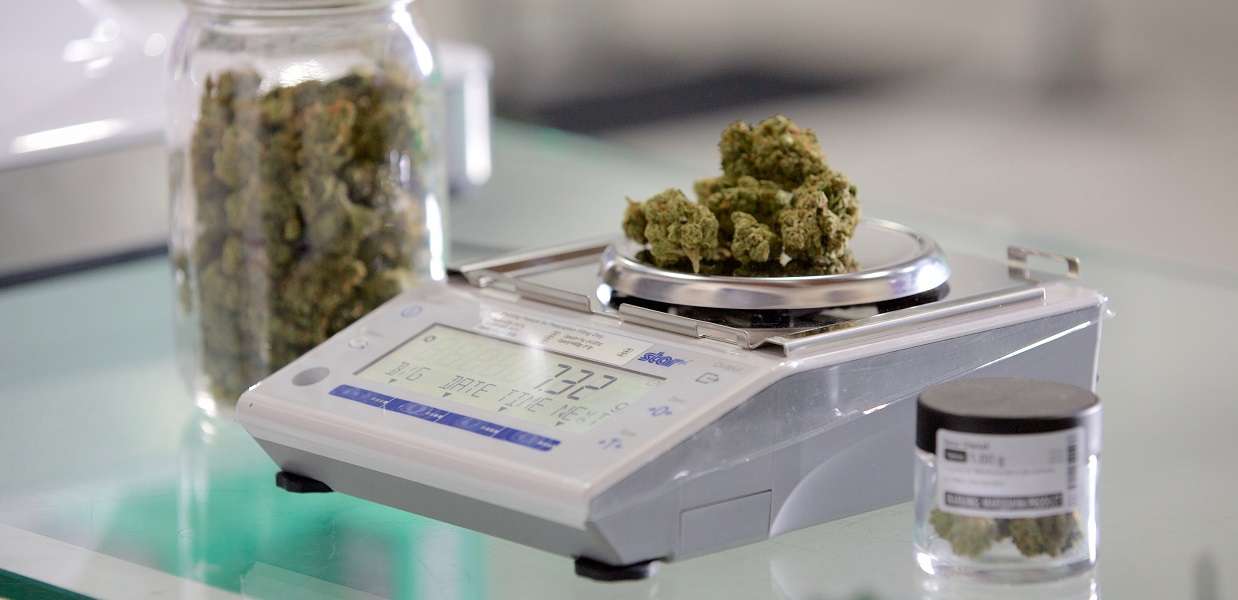
    In the cannabis industry, compliance is everything, and one of the most important elements of cannabis retail compliance is accurately selling products by weight. Whether your dispensary offers packages of marijuana buds or flowers, edibles, vaping supplies, containers of shutter, topicals, or extracts, having scales ensures that you are not over- or under-charging customers as well as keeping inventory records accurate.

    Ensure your scales are National Type Evaluation Program (NTEP) certified. A local weights and measures official will use NIST standards when inspecting your scale and sealing/certifying it for legal use. You’ll also want to be sure you purchase a highly accurate scale system. While it’s commonly thought that an ounce is 28 grams, it’s actually 28.349 grams; weigh to one-hundredth of a gram to ensure you don’t short your customers or miss out on any profits.

    Running a business that sells products by weight is impossible without the proper scale. Look for options that are designed for the cannabis industry and have the certification and protective measures in place to ensure accuracy, like a windshield and dust-proof/waterproof cover.

    Our Scale Recommendation: mG-Scales
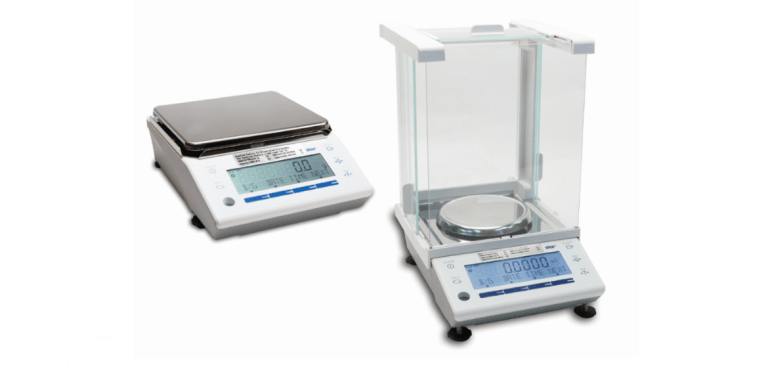
    mG-Scales

    mG-S322: Meets all requirements in the legalized states.
    mG-S1501: Certified in WA and AK for weighing less than 28.4g and in CA, OR, and CO for weighing between 10g-100g.

    POS Printers

    Cannabis may be becoming more widely accepted and available, but there are still strict laws that must be followed. One such law is that consumers must be able to prove their cannabis was legally obtained. That’s where printers come in. Dispensaries can provide online ordering printing or high-performance in-store printing to display proof of legal purchase.

    Needless to say, proof of purchase is critical, and dispensary owners can easily provide it with receipt printers that display the sale. Mobile printers can also be used for a more modern, flexible in-store experience. In addition to proving cannabis was legally obtained, receipts can be leveraged to deliver effective cannabis advertisements.

    Some ideas of what to promote on your cannabis receipt include:

    • Featured strains/strain of the week
    • Strains that are coming soon
    • Discounts or sales
    • Links to social media accounts
    • Customer testimonials
    • Now hiring messaging

    Our Printer Recommendations:
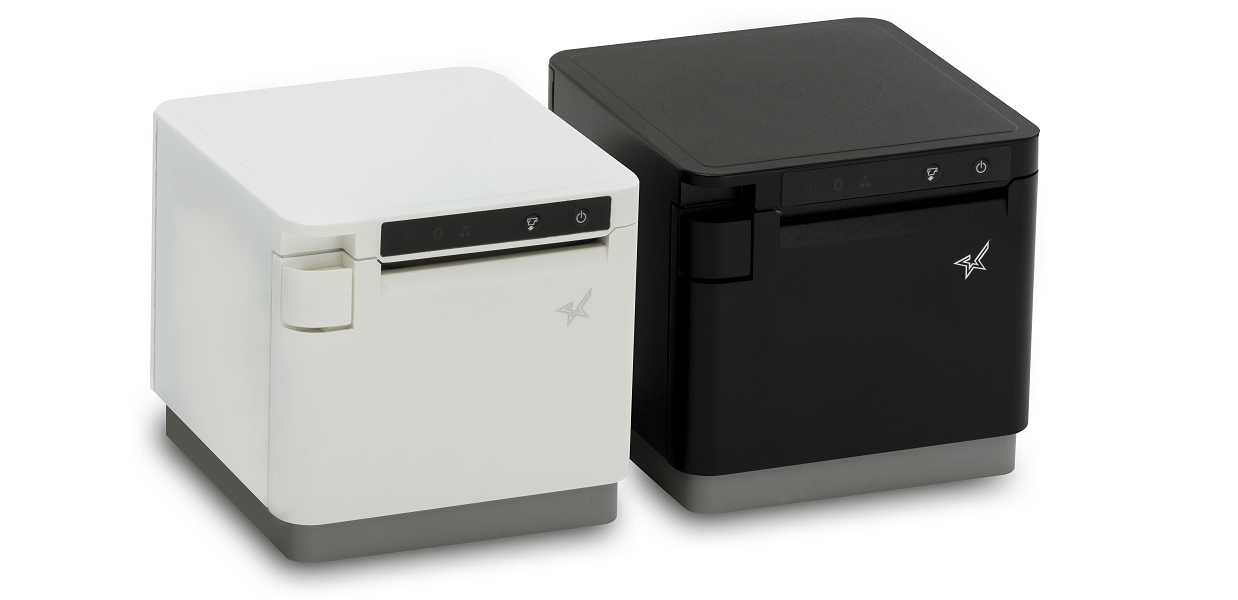
    mC-Print3

    mC-Print3With CloudPRNT for online ordering, SteadyLAN®, and USB-C connectivity.
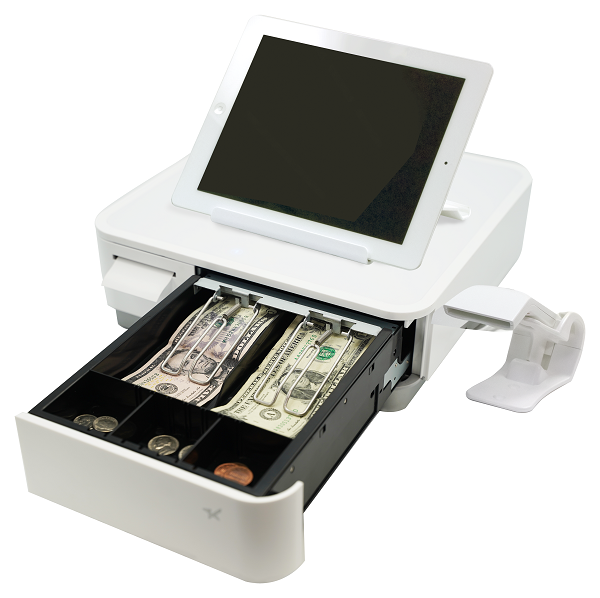
    mPOP All in One

    mPOP®: All-in-one printer and cash drawer solution.

    Proper Product Labeling

    How you package and label supplies and products is an important part of remaining compliant and staying out of trouble. With cannabis now being added to food, beverages, pharmaceuticals, and beauty products, there are a variety of forms your product may come in, and not all of them will be suited for a bag, bottle, or vial. Different products will require different packaging and labels that display unique product information.

    Ensuring your labels are accurate is a critical first step; with the right information on your labels, your product will be ready for seed-to-sale tracking if necessary. Additionally, your labels should be tamper-proof to ensure the security seal has not been broken. You may want to consider a linerless label printer for easy-to-reposition labels, as well as review your state-specific cannabis label requirements to ensure that your labels are compliant.

    Our Label Recommendations:
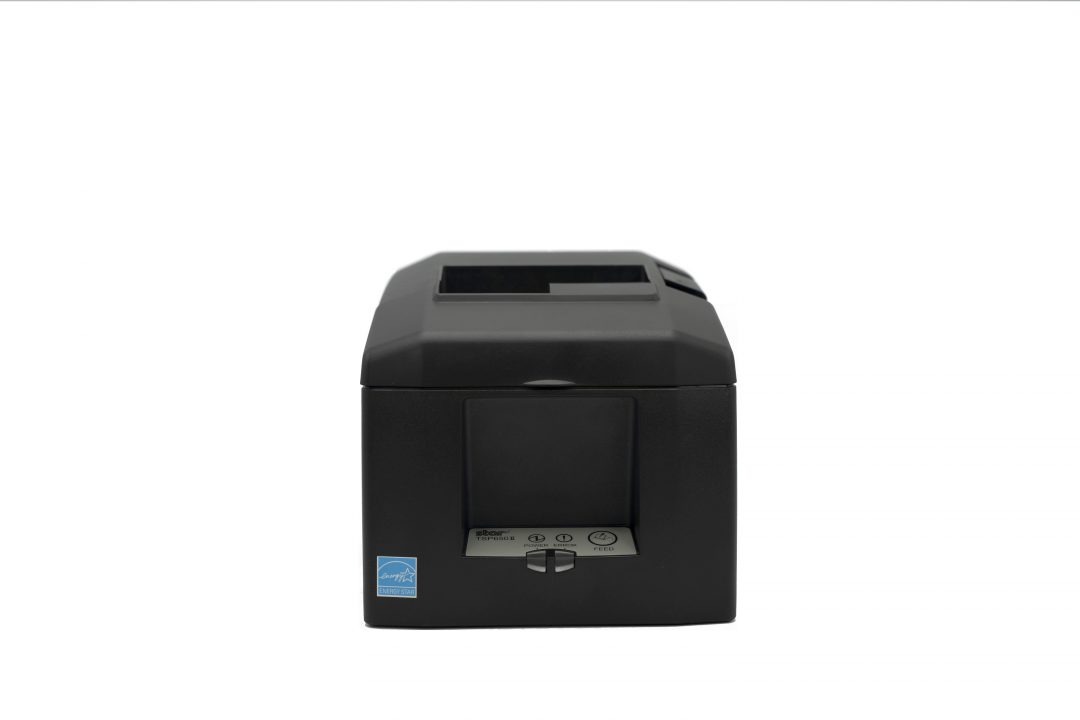
    TSP654IISK Product Image

    TSP654IISK: Liner-free label printing.

    Tamper-Proof Labels

    Tamper-Proof Labels: Securely seal products and packaging.

    Successful Software Needs Successful Hardware

    That’s where Star comes in. CDG proudly integrates its software tools with a variety of Star hardware including the all-in-one mPOP®, TSP654IISK linerless label printer, Value Series Cash Drawers, and more.

    Cannabis Cash Drawers

    The cannabis industry is a cash-heavy market for many. For this reason, having proper cash management is crucial. Your dispensary cash drawers should support error-free cash management and top-notch security. Don’t go too old-school, however; as regulators tighten down on cash business, it’s important to ensure you have a high-quality drawer solution. Look for something secure and reliable while also sleek and efficient to meet your individual business needs and government regulations.

    Our Cash Drawer Recommendation:
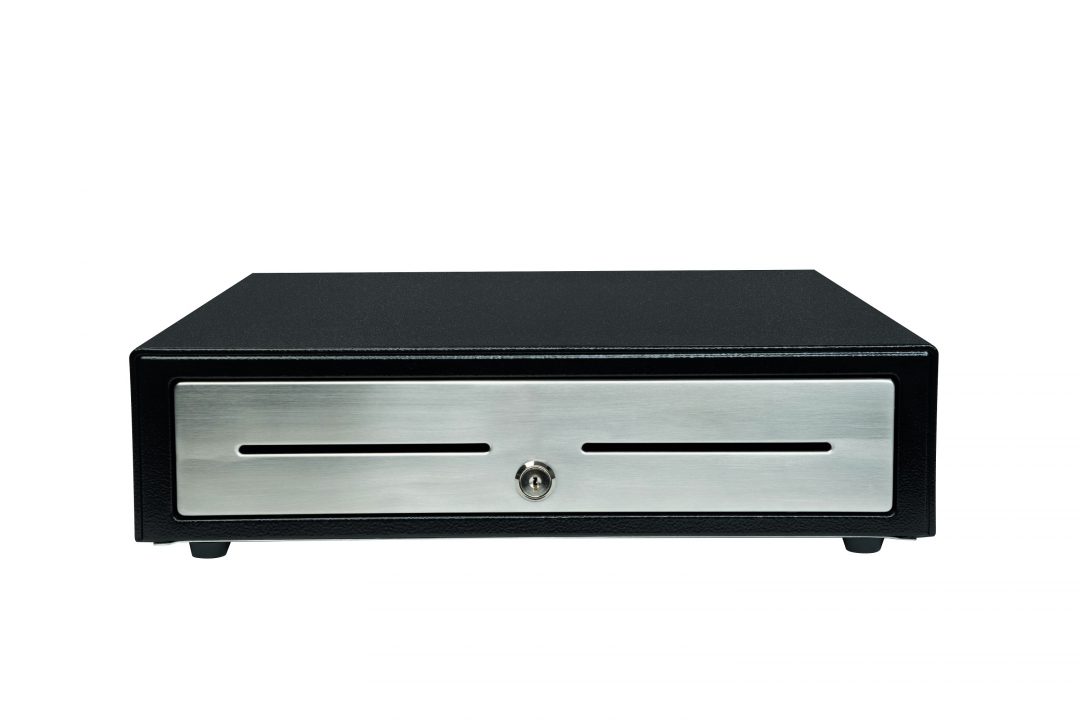
    CD4-1616

    Choice Series Cash Drawers: Extra-strength and packed with extra features.

    Additional Accessories That Make All the Difference
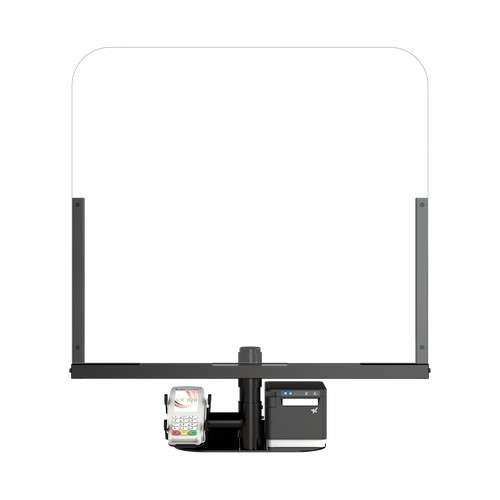
    POSShield

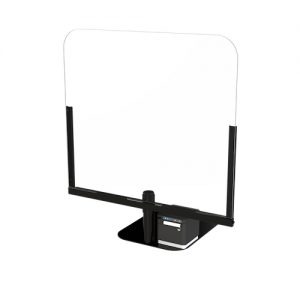
    Sneeze Guard: Sneeze guards used at the checkout counter help protect employees and customers by reducing the spread of harmful pathogens.
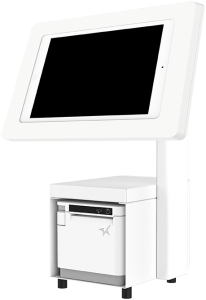
    mUnite-3-W-206x300

    Tablet Stand: A tablet stand will tie together your POS and contribute to a modern, professional atmosphere and an improved customer experience.

    Antimicrobial covers

    Antimicrobial Covers*: Easy-to-use antimicrobial covers will reduce germ transfer on high-touch dispensary surfaces.

    Choosing the Right Cannabis POS Hardware Supplier

    Choosing a one-stop shop POS hardware supplier with industry-leading software integration capabilities means an easier workflow for you and your staff:

    • Before the sale: Easy setup and configuration
    • During the sale: Intuitive controls and features
    • After the sale: Seamless maintenance and support

    Discover even more tips and tricks for implementing a complete cannabis POS by downloading the full guide.


    Disclaimer: NeverGerms® makes no claims regarding the safety or health of the general public or those interacting with its products. “NeverGerms®” and “Touch Less Germs®” are registered trademarks and not intended to have literal interpretation. NeverGerms products are manufactured by NeverGerms and distributed by Star Micronics. Although these products are designed to reduce microbe populations on commonly-utilized surfaces and have been tested by the manufacturer for their antimicrobial properties, Star Micronics cannot guarantee that they will eliminate all risk of germ, including virus, transfer from such surfaces. Star Micronics, as distributor, relies entirely upon claims made by manufacturer as supported by prior research. For further information, please visit www.nevergerms.com.


  • 5 Features to Look for in Cannabis POS Software

    5 Features to Look for in Cannabis POS Software

    Cannabis point-of-sale (POS) systems have unique components that you will not find in any other industry.  With legalization being closer to reality than ever, it is key to have a software system that can be flexible to adapt to the different rules set by the regulatory bodies.  It is customary for providers to have a cloud-based framework that will be able to connect to all the track-and-trace providers seamlessly and adapt to these new changes. Below are five key components to look for in cannabis POS software.

    1. Compliancy

    Compliancy is a key component for dispensaries to maintain legitimacy with the reporting of every transaction to the regulatory body. Why? The government, depending on the state, requires the dispensary to report information directly to them. This information usually includes dispensary, inventory, customer, package, and product data. The four different American track-and-trace government software providers are as follows: Metrc, Helix, Leaf Data Systems, and Agrisoft. The largest player is Metrc with 16 states and one territory (Washington D.C) under current contract.

    Law enforcement agencies use data irregularities in the track-and-trace software to detect any illegal marijuana activities. On the off chance that these irregularities are adequately extreme, an examination could be triggered that could prompt closing-down activities and heavy fines.  It is critical to use a cannabis POS software that has a controlled API push after each transaction so that you can ensure all data is transmitted accurately. Keep in mind, if the track-and-trace state-mandated software is not maintaining uptime, this can cause non-compliancy issues.

    2. eCommerce

    Prior to the pandemic online ordering was more of a luxury than a necessity for dispensaries. According to a poll of 840 people made by Ganja Goddess, “Only 6.4% of consumers say retail shops are now their primary purchasing method, compared to 63.3% pre-COVID, representing a roughly 57% decrease.” You can associate these numbers with pandemic-influenced buying trends.

    Cannabis POS software providers have different strategies when it comes to online ordering. Some decide to use a third-party eCommerce provider and others have eCommerce built into their service offering. In general, many new cannabis companies have shifted their focus to an online-first business, and the industry is seeing more online ordering systems and dispensary-branded app models pop up.  Because of these trends, dispensaries must have their POS operating synchronously with the online ordering platform, meaning whatever is available to shop for online must be in-stock at the dispensary.  Many e-commerce solutions can make that possible by enabling delivery, digital payments, and curbside pickup. 

    3. Cashless Transactions

    Since cannabis remains illegal at the federal level, cannabis banking remains a finicky topic. However, cannabis banking on the state level has been enabled and because of that there are extra layers of cannabis compliancy that local banks and credit unions must adhere to.  As of today, the federal government has not issued an MCC (Merchant Category Code) for cannabis dispensaries, so the different cashless payment models that exist today are as follows:

    ACH/Bank-to-Bank Transfers (Similar to PayPal)
    • Compliant so it can convert into an actual merchant account when legal
    • Payment transfers occur across the ACH payment network
    • Completely transparent – with every party involved
    • Actual business representation on merchant and consumer account statements
     Cashless ATMs
    • Rounds up to the nearest $5 and/or $20
    • Masks transactions as an ATM transaction
    • Merchants can be shut off without notice
    • Not sustainable
    Debit and Credit Cards
    • Miscoded accounts
    • High risk of being shut off
    • High fees with offshore settlements
    • Not endorsed by the card brands
     Cryptocurrencies
    • Very small number of dispensaries are using this as an option
    • Blockchain technology
    • Real-time settlements
    • Bitcoin and other various digital currencies

    As you can see above, the most sustainable solution until the federal government enacts new rules is the ACH/bank-to-bank transfers. By working with a payment solution provider like Hypur, AeroPay, or CanPay, dispensary owners can be confident that their payment processing will not damage their business with any unannounced issues.

    Successful Software Needs Successful Hardware

    That’s where Star comes in. CDG proudly integrates its software tools with a variety of Star hardware including the all-in-one mPOP®, TSP654IISK linerless label printer, Value Series Cash Drawers, and more.

    4. Reward/Loyalty Program

    Building customer retention via a reward or loyalty program is critical, especially in cannabis. As legalization becomes widespread, creating more access, the cost of cannabis to consumers will continue to decline. At the same time, the number of dispensaries is inclining at a rapid velocity and under these circumstances profit margins will naturally decline.

    A highly engaging reward program will create a continuous flow of returning clients for your dispensary. Running daily specials that are sent through text messages and emails not only help retain the dispensary’s current clients, but also contributes to maintaining the strength of the dispensary’s margins. When sending out promotional messages, it is prudent that the message includes a link directly to the dispensary’s eCommerce platform and that the special being offered is highly visible after clicking the link.  A successful reward or loyalty system acts like a mini-bank account for loyal customers and is a win-win; they will spend more as they strive to achieve larger discounts, and your business will thrive.

    5. Inventory Management

    Cannabis is unique in comparison to other businesses when it comes to inventory. If you are ordering delivery from a restaurant, most likely they will have the ingredients to fulfill your request. This is simply not the case with cannabis.

    It is vital for dispensaries to know what is in stock and what needs to be re-ordered from their distributors. If a dispensary’s inventory is inaccurate, they will have unhappy customers who have ordered online and will not be able to get what they ordered.

    When bulk packages arrive from distributors, it is a smart business practice to scan each package using an inventory scanner that is directly integrated into your POS. Adding inventory manually into the system can create a massive headache, and also allows for a higher possibility of human error. According to Cannabis Industry Journal, “Cannabis businesses need more sophisticated solutions to track sales, monitor supplies, oversee shipments and remain informed on where products originate from and how frequently to re-order. Native functionalities too often do not provide such robust features.” Having a consistent, standard operating procedure in your dispensary is so valuable.

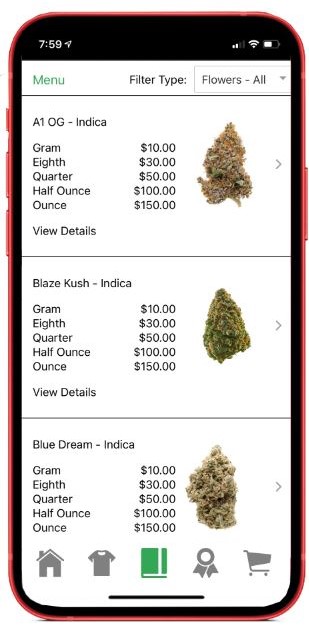
     Appspensary Cannabis POS SoftwareAppspensary Software on Smartphone

    If you’re looking for a robust cannabis POS software solution, Appspensary has what you need. Appspensary is an online ordering platform and cloud-based POS system that is tailored and branded for marijuana-related businesses. Appspensary includes features like:

    • Online store
    • Cashless payments
    • Delivery optimization
    • Curbside pickup
    • Text message marketing
    • Loyalty program
    • Custom development

  • 4 Contactless Payment Trends to Take Advantage Of

    4 Contactless Payment Trends to Take Advantage Of

    As the economy reopens, things have changed. The pandemic was a catalyst of retail innovation and will have a lasting effect on consumers’ payment preferences. Read on to learn more about what exactly contactless payments are, some key contactless payment trends, and how you can leverage them.

    What is a Contactless Payment?

    The term “contactless payments” is an umbrella phrase describing multiple payment methods. According to Investopedia,

    “Contactless payment is a secure method for consumers to purchase products or services using a debit, credit, or smartcard—also known as a chip card—by using RFID technology or near-field communication (NFC).

    To make a contactless payment, tap your card near a point-of-sale terminal that is equipped with the contactless payment technology. Since contactless payments do not require a signature or a personal identification number (PIN), transaction sizes on cards are limited. The allowable amount for a contactless transaction varies by country and by the bank.

    Contactless payment is also referred to as tap-and-go by some banks and retailers. Examples of non-credit or debit card contactless payments include transit cards, Apple Pay, Android Pay, and Google Wallet.”

    4 Important Contactless Payment Trends

    1. Not Just an Option, a Preference

    While the adoption of contactless payments in the United States was initially slow-moving, the pandemic has sparked rapid growth and this payment method is now a preference, not simply just an option.

    According to Visa’s Back to Business Study, “If all other factors were equal (price, selection and location), nearly two-thirds (63%) of consumers would switch to a new business that installed contactless payment options.”

    The study also discovered that safety influenced how 78% of global consumers pay and that 46% of consumers believe using contactless payment methods is among the most important retail safety measures.

    Additionally, American Express recently reported that 70% U.S. merchants are experiencing customers requesting the option of contactless tap-and-go or mobile app payments (American Express 2020).

    Needless to say, contactless payments are here, and they are here to stay. Instead of simply being a futuristic option, they are now a present-day necessity.

    2. An Ageless Trend …

    While you might assume that the desire for contactless payments is strongest with younger generations, the numbers might surprise you. According to Dynata’s recent report, “A Breakthrough for Contactless Payments,”

    “Generationally, the largest growth in both contactless preference and adoption occurred among Baby Boomers – preference jumped from 45% pre-COVID-19 to 55% today, and adoption of a contactless card or app increased from 67% to 71%. This is followed by Gen Z, Gen X and Millennials.”

    Star Micronics Payment Solutions

    By providing sleek, easy-to-integrate POS hardware, Star Micronics merges the priorities of business owners, software providers, and payments companies, while offering an easy, reliable, and compliant solution.

    3. … and a Lasting Trend

    A substantial amount of contactless payment adoption occurred during the pandemic – however this adoption is slated to remain relevant for years to come.

    According to Mastercard, 74% of consumers state they will continue to use contactless payment methods post-pandemic. Additionally, roughly half of respondents had already swapped out their top-of-wallet card for one that offers contactless payments.

    4. Listen to Your Customers … Literally

    Most contactless payments today happen via contactless cards, mobile wallets, and smart watches. However, that will likely change, and soon. Enter, voice assistants.

    Voice assistants, also known as home assistants and smart speakers, allow people to give voice commands and receive a vocal response in return. Users can give commands for many things like the weather forecast, traffic updates, booking a rideshare – and of course, buying items. Some examples of popular voice assistants are Amazon Alexa, Google Home, and Apple HomePod.

    These voice assistants are making a splash in the industry and are a worthwhile contactless medium to pay attention to. According to Statista, by 2024 the number of digital voice assistants in use worldwide is expected to hit 8.4 billion by 2024, and 35% of smart speaker users buy products like home care, groceries, and clothing from the speaker.

    How to Take Advantage of Contactless Payments

    Ready or not, contactless payments are the future of commerce. Here are three simple ways to take advantage.

    mC-Print3
    The Star mC-Print3 with CloudPRNT technology is ideal for printing online orders.
    • Update Your Point of Sale. First and foremost, businesses should deploy contactless payment terminals, so they are able to accept payments from contactless credit and debit cards, smartphones, and smart watches. For contactless online ordering orders, it’s crucial to have a connected receipt printer that can effortlessly accept orders no matter where they come from (whether it’s from a mobile app, a website, or a home speaker).
    • Spread the Word. Accepting contactless payments can improve the customer experience and aid in creating repeat business. Let customers know that you accept contactless payments by communicating with them – in the right channels. Because a variety of generations are leveraging contactless payments, be sure your messaging reaches them where they’re at. In addition to sharing your news on your website, app, and through your emails, this might look like communicating to Gen Z on TikTok, Baby Boomers on Facebook, and Millennials on Instagram.
    • Consider Voice Shopping. Digital voice assistants are the next big thing. If possible, consider starting voice retailing. For more information on how to sell products to customers through voice via Amazon Alexa, click here. And to learn more about Google for retailers, click here.

    Star Micronics offers one design, one integration, and one provider … for all payment peripherals.

  • Cannabis Delivery Technology: What You Need

    Cannabis Delivery Technology: What You Need

    We all know that the cannabis industry is growing at a rapid pace – but did you know that cannabis delivery in particular is one of the hottest revenue streams in the market? While COVID-19 certainly acted as a catalyst in the growth of cannabis delivery, it’s a trend that’s here to stay. Read on to explore what cannabis delivery technology you need to succeed.

    Cannabis Delivery Technology #1: Online Ordering Platform

    One thing is for sure: to succeed at cannabis delivery, you need a robust online ordering platform to not only manage orders but to help you facilitate all of the logistics involved in delivering product to your customers, too.

    Some key features to look for in an online ordering platform for cannabis delivery are:

    • The ability to facilitate order placement and documentation
    • Deciphering which counties and cities allow or don’t allow cannabis delivery
    • Dispatching and tracking cannabis deliveries
    • Analyzing deliveries and optimizing them to increase delivery speed and lower delivery costs
    • Customer ID verification
    • The ability to dynamically calculate sales tax per region
    • Detailed, real-time inventory tracking
    • Integrated loyalty program and marketing tools

    Cannabis Delivery Technology #2: Point of Sale

    Related to your cannabis delivery online ordering platform is your point of sale (POS). Without a complete, integrated POS, your online ordering strategy will not live up to its full potential. So, what do you need?

    • Online ordering printer: When a customer places an online order for cannabis delivery, they trust that your dispensary is immediately receiving and preparing their order. Meet those expectations by choosing an online ordering printer with cloud printing technology. An added bonus of some online ordering printers like Star’s mC-Print3 is that it communicates directly to the cloud server, meaning you do not need an extra tablet – customers simply place their order, and it prints immediately at your POS.
    • NTEP-certified scale: When it comes to selling cannabis, accuracy is everything, and an NTEP-certified precision POS scale is non-negotiable. Further enhance your measuring by choosing a scale that features Bluetooth, USB, and serial connectivity.
    • Linerless label printer: Linerless labels are repositionable thermal labels that stick to nearly any surface and can be removed and reapplied without leaving any residue behind. These labels can be very helpful in preparing online orders and cannabis packaging, and a linerless label printer can be a great addition to your POS.
    • Integrations with aforementioned software: The POS and the online ordering software should ideally work hand-in-hand to create a seamless, headache-free sales cycle. Be sure to choose POS hardware that is integrated with the industry’s most popular software applications.

    Successful Software Needs Successful Hardware

    That’s where Star comes in. CDG proudly integrates its software tools with a variety of Star hardware including the all-in-one mPOP®, TSP654IISK linerless label printer, Value Series Cash Drawers, and more.

    Cannabis Delivery Technology #3: Delivery Service

    When it comes to managing your own cannabis delivery service, there are several legalities to keep in mind. Per IndicaOnline,

    “If you’re a storefront dispensary and you want to implement a marijuana delivery service, you must apply for the regular Retailer business license. It is extremely important to remember that once your delivery service has been approved for a license, every driver must carry a copy in their authorized vehicle. For a complete list of all the necessary documentation that must be submitted, please visit the Bureau of Cannabis Control website.”

    In addition to documentation, other rules apply to cannabis delivery. For example, in California, the below rules are in place:

    • Deliveries must be made in unmarked, enclosed vehicles with security boxes attached to the vehicle
    • GPS units track each delivery route and drivers may not deviate from the route or make extra stops
    • Drivers can only carry $5,000 of product and that amount is reduced to $3,000 if the driver is carrying products to fill tentative orders that have not yet been placed
    • Only the driver is allowed to be in the vehicle
    • Drivers must carry and update an inventory ledger that includes in following information about all of the products in their possession: brand, weight, value, track-and-trace identifier, and price.

    Please refer to your local authorities to determine your cannabis-related laws.

    If you are looking to manage your own deliveries, it is also worthwhile to invest in the proper security technology, like surveillance cameras for delivery vehicles that monitor product pickups and drop-offs, activity around vehicles, and more. You will also want to make sure you have software that records when product moves and gives you real-time access to that data.

    If all of that sounds overwhelming, it is okay. You can also choose a third-party delivery service like Eaze, which is often called “the Uber of marijuana” and delivers cannabis products in California. Eaze and other similar companies offer delivery service to licensed retailers and dispensaries. The services often automatically confirm delivery addresses are legal for delivery, and can deliver various products like flower, vapes, edibles, concentrates, and accessories.

    Star’s Cannabis POS Hardware LineupCannabis-Brochure-Graphic

    Cannabis stores and dispensaries need technology solutions to match unique industry requirements and regulations. Star has developed a POS product line tailored for use in cannabis stores and dispensaries, The Cannabis POS Collection.

    Download our cannabis brochure to discover:

    • NTEP-approved cannabis scales
    • POS printers and cash drawers
    • Mobile printers
    • Star Micronics Cloud Services

  • Star Micronics Introduces Loyalty Program to Existing Empower Partner Program

    Star Micronics Introduces Loyalty Program to Existing Empower Partner Program

    Benefits include marketing promotion, tradeshow sponsorship, priority access to new products, and more

    Somerset, NJ – May 24, 2021 – Star Micronics, a leading manufacturer of mobile, point of sale (POS), and customer engagement technologies, is excited to announce the introduction of a new Loyalty Program, designed to improve its existing Empower Partner Program.

    The Loyalty Program is an extension of the Empower Program that allows Services and Technology partners to engage in marketing and business development opportunities with Star. The Loyalty Program will help partners increase brand exposure, market to a wider channel, and increase sales through marketing support. The Loyalty Program has four levels – Bronze, Silver, Gold, and Platinum – and benefits include access to Star’s network of Software Developers and Value Added Resellers, joint marketing activities, lead referrals, tradeshow sponsorship, MDF incentives, priority access to new products, and more.

    Existing Services and Technology Empower Program members may log in to the Partner Portal to register for the Loyalty Program. Partners who are interested in the Loyalty Program but are not yet a member of the Empower Program must first sign up for the Empower Program by visiting the Partner Portal.

    “The Star team is thrilled to be launching the Loyalty Program to ignite our customers’ success,” said Brianna Moriarty, Partner Development Manager at Star Micronics. “By providing additional marketing support we hope to help our partners increase their sales and grow their channel relationships, which in turn will help them create even more revenue and unlock further benefits. If our partners win, we also win.”

  • The Definitive Guide to Accessorizing the Point of Sale

    The Definitive Guide to Accessorizing the Point of Sale

    Helping your customers accessorize their point of sale and business management systems can be fraught with complications. Whether you are a reseller equipping customers with bundled, out-of-the-box solutions or an ISV striving to integrate your software with the right accessories in order to gear business owners with every tool they need to be successful, point of sale accessories aren’t a walk in the park.

    Good news: it doesn’t have to be this way. With the right vendor partner, navigating point of sale accessories can be nearly effortless.

    Read on to explore four things to look for in a POS vendor partner – or download the full eBook to discover all six.

    One Point of Contact for Support and Maintenance

    Organized communication is key to a successful vendor partnership; communication with a partner without a primary contact can lead to confusion and endless headaches as there may be different contacts for support and maintenance. With the right partner, you can have a single point of contact, meaning a single call for support and maintenance as well as integration support. This will streamline and expedite support and maintenance efforts, as well as keep your inbox clutter-free.

    Having a single point of contact can also help strengthen the relationship between you and your vendor partner. When communication is tangled with multiple points of contact, it can cause frustration on both ends. One point of contact will simplify communication, making it a more pleasant experience that both you and your vendor partner will look forward to instead of dread.

    Ready to learn more about the antimicrobial covers offered by Star?

    Seamless and Reliable Integration

    Much like a single point of contact, ISVs should look for a vendor partner who provides one-time integration. Why? Because multiple integrations and limited peripherals will make integration an inefficient and tiresome process, leading to issues such as:

    • Indefinite downtime
    • Unproductive employees
    • Dissatisfied customers

    Seamless and reliable integration with the right vendor partner will ensure obstacle-free business operations. In fact, the best vendor partnership allows one-time integration with your software and grants you access to their entire line of hardware and peripherals. By doing this, ISVs can reduce the headache of managing multiple integration partners for hardware and accessories, making the process simple and easy.

    Woman-at-POS

    Thorough Product Testing and Competitive Pricing

    Needless to say, it’s not a good idea to choose a vendor partner who hasn’t thoroughly tested their products. Thorough product testing ensures that all products perform well under high-volume use. Without this assurance, you risk integrating technology that won’t perform for your customers, which would reflect negatively on your business. Thorough testing results in impactful features like cloud
    printing, and insect- and water-proof designs that will be more worthwhile than untested products.

    Having multiple pricing options from your vendor partner is also crucial so that you can offer the best value to all of your customers. Every customer has unique needs and a specific budget, so it’s important that you can provide the tech solutions they’re looking for at the right price. With various competitive pricing options from your partner, you will:

    • Increase customer satisfaction
    • Stay competitive in the market
    • Attract more customers

    Star Restaurant POS Solutions

    From online ordering printers to kitchen buzzers, Star is proud to offer POS solutions for restaurants, QSRs, food stands, and more.

    The Flexibility to Purchase Accessories Bundled or Unbundled

    Each customer you serve will be in a different stage of their business; some will need more accessories while others may only need a few.

    For ISVs and resellers, offering your customers the option to purchase accessories now or later is crucial; customers not ready for certain accessories may become unhappy when they’re forced to purchase them in a bundle instead of separately as they need them.

    Choosing a vendor partner that offers both bundled or unbundled options lends versatility to your own business that you can then offer your customers. Bundled accessories may result in a onetime purchase; with unbundled capability, you can work with customers longer. This will allow you to optimize revenue streams with new customers and sell deeper into existing customer accounts.

    Want to discover the final two things to look for in a POS vendor partner?

  • Health and Safety Checklist for Retail Stores

    Health and Safety Checklist for Retail Stores

    In many parts of the world, the time is here, and a full retail reopening is upon us. But even as business returns to (almost) usual, health and safety concerns are likely to remain a priority to shoppers, and rightfully so. Read on to discover a complete list of health and safety considerations that retailers should keep in mind as they fully reopen the doors at their brick-and-mortar locations.

    Health and Safety Checklist for Retail Stores: 6 Key Considerations

    1. Antimicrobial Covers

    A lot of seemingly minor behaviors that people used to commonly do have become uncomfortable during the COVID-19 pandemic – and they will continue to be behaviors that people avoid. Examples of this include touching dirty door handles, bathroom surfaces, payment terminal pin pads, and more.

    Antimicrobial covers

    As a retailer, you can put your customers at ease and help them avoid uncomfortable and potentially unsanitary situations by installing antimicrobial covers*. These covers reduce the transfer of germs, are easy to apply, and are available in precut shapes as well as custom application rolls. Certain antimicrobial covers last up to six months and are designed to complement a standard cleaning schedule.

    2. Employee Handwashing

    Handwashing protocols are nothing new, but it’s important to revisit and reiterate the importance of handwashing as your retail store reopens.

    Some handwashing tips and considerations include:

    • Are your employees are aware of handwashing standards and CDC best practices, like washing for at least 20 seconds before and after eating, after using the toilet, after blowing their nose, coughing, or sneezing, and after handling garbage?
    • Have you posted your handwashing policy by all sinks?
    • Are your sinks and restrooms supplied with soap, hand sanitizer, and clean towels?
    • Are employees aware they should avoid touching their face?
    3. Store Sanitization

    Just like handwashing, sanitizing your store is something that has always been important but has  become even more critical in the past year. Store sanitization considerations include:

    Star Micronics POSShield Sneeze Guard

    • Do you have gloves, masks, and other necessary personal protective equipment (PPE) on hand?
    • Are your employees trained on how to properly use sanitizing chemicals and equipment?
    • Are your store’s most recent cleaning protocols prominently posted in employee areas?
    • Are all public areas frequently cleaned (door handles, checkout counters, restrooms, dressing rooms, payment pin pads, self-service kiosk screens, etc.?)
    • Have you installed plexiglass sneeze guards at the point of sale (POS)?
    • Are all employee areas frequently cleaned (POS terminals, cash drawers, scanners, break rooms, inventory rooms, etc.?)
    • Is all shared employee equipment regularly cleaned (keys, tablets, headsets, etc.?)
    • Are sanitization practices and restocking of cleaning supplies assigned to specific employees and regularly scheduled?

    Star Restaurant POS Solutions

    From online ordering printers to kitchen buzzers, Star is proud to offer POS solutions for restaurants, QSRs, food stands, and more.

    4. Store Interior

    In addition to sanitization, there are other important considerations inside your store to prioritize, like:

    • Is there ample lighting?
    • Are all emergency exits clearly marked?
    • Is the store free of tripping and slipping hazards? Are safety mats used near entrances and exits during snowy or icy weather?
    • Are all ladders in good condition?
    • Do you have an abundance of child-friendly carts available?
    • Have you installed wall guards and corner guards?
    5. Store Exterior

    The outside of your store is as important as the inside when it comes to safety. Some things to keep in mind include:

    • Is there ample lighting?
    • Are all walkways clear of leaves, snow, and holes?
    • Are all railings secure and in good condition?
    • Are any obstructions well marked?
    • Are any parking areas or traffic lanes marked?
    • Are emergency areas (that don’t allow parking) labeled?
    • Are all carts being collected on a regular basis?
    6. First Aid and Fire Safety

    It’s no question that first aid and fire safety are critical for any retail store. Below is a (partial) list of considerations to keep in mind:

    • Is your store’s first aid kit fully stocked and free of any expired items?
    • Does all staff know where the first aid kit is located and trained in basic first aid?
    • Does staff know what to do if they are injured on the job? Does management know what they should do?
    • Sprinklers
      • Valves are locked in their open position
      • Stock is kept at least 18” from sprinkler heads and heater units
    • Smoking
      • No smoking signs are visible
      • Any smoking areas are clearly designated
    • Extinguishers
      • Fire extinguishers are mounted and accessible to employees, and are regularly inspected and tagged
      • Employees are trained to use extinguishers
      • Extinguisher records are adequately maintained
    • Electrical
      • Electrical panels are accessible and properly labeled
      • All electrical wiring is installed in accordance with city codes
      • Compressor room is free of combustibles
    • Flammables
      • Garbage cans are made of noncombustible material and have suitable covers
      • Any flammable liquids are kept in approved containers
      • Areas that experience heat buildup (heaters, appliances, etc.) are clear of combustibles

    As you begin the journey of reopening your business’s doors and entering the “next normal,” we hope that this health and safety checklist for retail stores is helpful to you. Please note that this health and safety checklist for retail stores is not intended to be an all-inclusive list. Please consult your local authorities and resources with any specific health and safety questions or concerns that you may have.

    Star Micronics proudly provides antimicrobial covers, the POSShield sneeze guard, and more.

    Disclaimer: NeverGerms® makes no claims regarding the safety or health of the general public or those interacting with its products. “NeverGerms®” and “Touch Less Germs®” are registered trademarks and not intended to have literal interpretation. NeverGerms products are manufactured by NeverGerms and distributed by Star Micronics. Although these products are designed to reduce microbe populations on commonly-utilized surfaces and have been tested by the manufacturer for their antimicrobial properties, Star Micronics cannot guarantee that they will eliminate all risk of germ, including virus, transfer from such surfaces. Star Micronics, as distributor, relies entirely upon claims made by manufacturer as supported by prior research. For further information, please visit www.nevergerms.com.

  • sVang Teams Up with Star Micronics to Provide Online Ordering Solution for Universities

    sVang Teams Up with Star Micronics to Provide Online Ordering Solution for Universities

    Paired with Star’s mC-Print3, sVang offers an affordable, seamless way for university students to place online food orders

    Somerset, NJ – May 17, 2021 – Star Micronics, a leading manufacturer of mobile, point of sale (POS), and customer engagement technologies, is proud to announce that sVang has added support for the Star mC-Print3. sVang offers affordable food services to university students and helps restaurants near universities grow their business by solving day-to-day front office and kitchen operations difficulties.

    By eliminating extra fees and commissions, sVang makes ordering food online from participating restaurants or on-campus vendors less costly for students. Additionally, sVang’s comprehensive platform allows students to easily pay online using their integrated meal plan card (for participating restaurants).

    By providing an automated solution, sVang makes it easy for restaurants and vendors to provide affordable menu options and automate order processing. Once an order is placed, Star’s mC-Print3 with CloudPRNT technology automatically retrieves orders, saving time and increasing order accuracy. The mC-Print3 also features a splash-proof design with USB hub functionality to connect additional peripherals, making it ideal for kitchen printing in dining halls and restaurant environments.

     “sVang realizes how costly online ordering can be for students and we’re proud to provide them with an affordable solution that also benefits local businesses,” says Sudesh Mukhami, Co-Founder of sVang. “Star’s mC-Print3 with CloudPRNT is at the heart of that by making it easy for restaurants to receive and manage online orders, resulting in happy, repeat customers.”

  • How Contactless Dining Technology Will Impact Restaurants

    How Contactless Dining Technology Will Impact Restaurants

    The effects of the COVID-19 pandemic have impacted the restaurant and food service industry dramatically. The pandemic has forced restaurant owners and operators to adapt, pivot, and move quickly to keep up with government regulations and consumer expectations. One of the ways business owners have done this is through embracing contactless dining technology.

    What is Contactless Dining Technology?

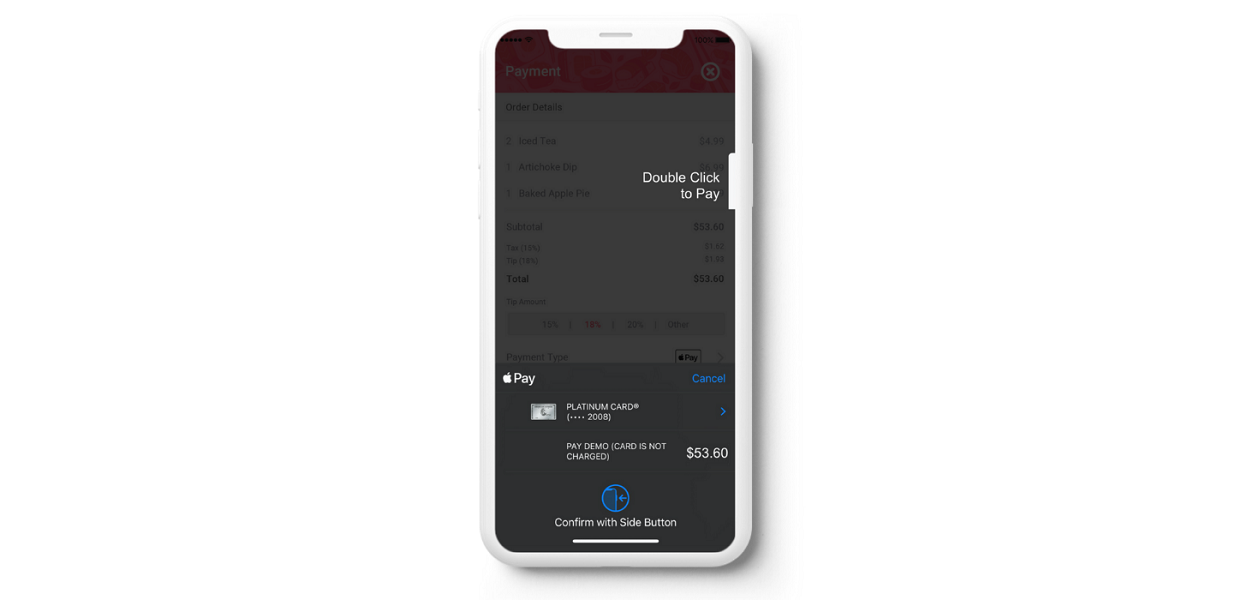
    Contactless dining technology refers to a dining experience that limits physical contact with the restaurant’s staff, surfaces, menus, and so on. This means that diners can view a menu, and order and pay for a meal directly from their smartphones.

    A contactless experience has become a necessity as research shows that 57% of consumers say they are more likely to do business with those who offer a contactless payment option. Not only is this a faster way to order and pay, but limiting physical contact is also a genuine desire of diners.

    With restaurants jumping on the bandwagon of contactless dining technology, it doesn’t appear to be going away anytime soon. In fact, Gartner predicts that 80% of all ordering, payment, and checkout services will be contactless by 2024. So beyond safety in a post-pandemic recovery, what are the benefits of adopting a contactless dining solution for restaurants? Here are 5 proven outcomes of using contactless dining technology:

    1.   Increase Operational Efficiency

    By definition, operational efficiency is the metric that measures the efficiency of profit earned as a function of operational costs. For restaurants, there tend to be three main operating costs:

    • Labor costs
    • Food costs
    • Rent/lease costs

    So, when we talk about operational efficiency, it’s a matter of how efficiently costs are producing profit, and the relationship between those costs and profits.

    Arguably one of the most important restaurant metrics is table turnover, which is directly correlated to operating costs and efficiency. The faster you can turn tables, the more tables you can seat, and the more products you can sell. Contactless dining technology can greatly increase table turnover times through increased staff and labor efficiency.

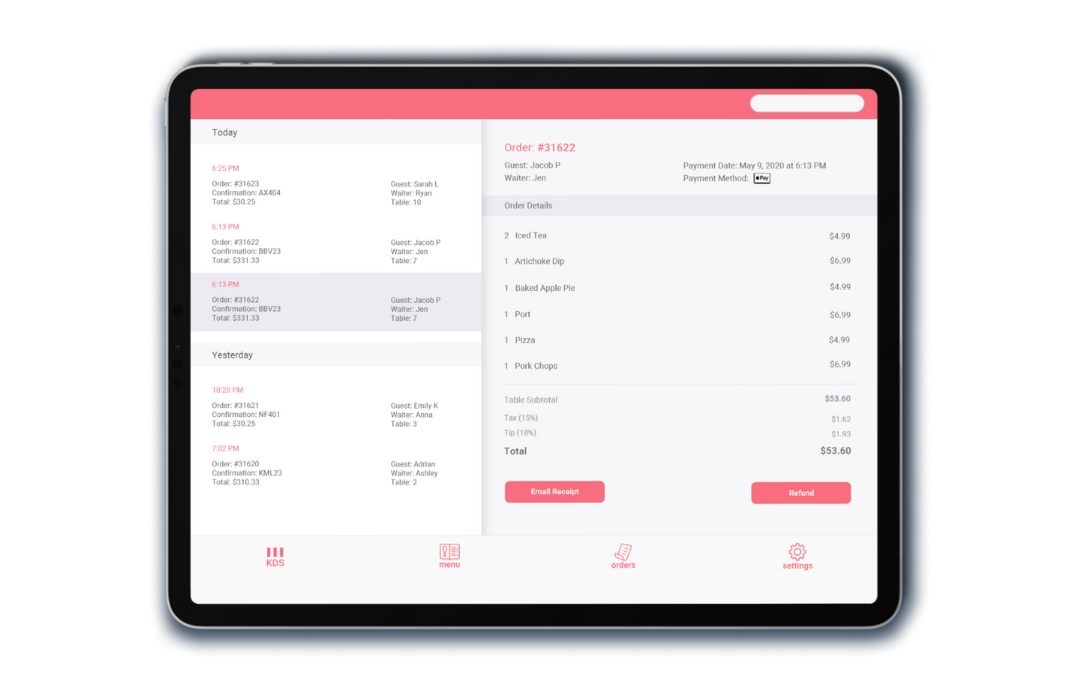
    Some of the most time-consuming aspects of an employee’s shift are collecting orders, punching them into a POS, and then splitting the bill manually. With a contactless dining solution, guests can send orders directly to a chit printer or kitchen display system (KDS), then split the bill amongst the table whenever they’re ready to settle up. This entire process eliminates some low value steps for staff and is almost guaranteed to shave off a few minutes per table – which adds up.

    OrderUp Contactless Dining Technology on Laptop

    2.   Increased Customer Satisfaction

    One myth about contactless dining technology is that it will take away from the hospitality and service aspect of dining at a restaurant. This is false! In fact, in the State of The Industry Webinar led by the National Restaurant Association revealed that, “52% of Americans want restaurants to use technology to make ordering and payment easier.”

    Contactless dining leads to increased customer satisfaction because it speeds up the entire process of ordering and payment, while giving the customer more control and autonomy over their orders. With contactless ordering, the diner can be confident that exactly what they ordered is exactly what the back-of-the-house prepares. This can include special instructions, add-ons, dietary preferences, or allergies.

    The end result? A better, faster service that leaves guests satisfied and happy with their experience.

    Star Micronics Restaurant Solutions

    Star proudly provides a variety of POS hardware for the modern restaurateur, including receipt and label printers for online ordering, cash drawers, tablet stands, and more.

    3. Increased Average Check Size

    Although contactless ordering and payment for restaurants is relatively new, the concept and logic behind it makes sense. Take e-commerce for example; about 35% of Amazon’s e-commerce revenue comes from “suggested for you” items and add-ons. The same is true for restaurants. Restaurants that adopt contactless technology will be able to leverage the same trend and capitalize on this type of buying behavior. While it may not be to the tune of 35%, initial modeling from contactless dining providers have noted an an increase in average check size by about 12%.

    For example, a $10 cheeseburger can easily become a $14 cheeseburger when given the option to add bacon and sauteed mushrooms, at $2 apiece.

    This is just the beginning of how complex and smart digital menus can be. It’s even possible to have suggested food and drink pairings. While this can again drive revenue, it also supports the diner’s positive experience by guiding their decision-making process with the best possible outcome.

    4. Environmental Impact, Opportunities, and Saved Costs

    Not only does contactless dining technology help drive sales and increase efficiency, it’s also extremely environmentally friendly. Especially with the onset of COVID-19 and the increased usage of single-use menus, a digital menu can save thousands of dollars a year on printing costs while saving the trees. Generally, one tree produces about 8,333 pieces of generic A4 paper – when you think of all the single-use paper menus, that’s a lot of trees!

    On the other hand, consumers are looking for ways to be more environmentally friendly and support businesses that are environmentally conscious. One study showed that Americans are willing to pay up to 36% more for ethically sourced and produced foods. Using a digital menu makes it very easy to highlight your food sources and maybe even justify a higher price tag. At the very least, restaurants can test this, without spending money on re-printing menus.

    5. Menu Optimization Opportunities

    Perhaps the most exciting opportunity of a contactless dining experience is the ability to continually test and optimize your menu in real time. No more spending hundreds (or thousands) of dollars on reprinting menus, changing prices, and adding and removing items.

    By using a contactless digital menu and ordering system, restaurant owners can make changes and run tests in real time, meaning they can finetune a menu for maximum revenue on the fly. Some examples are:

    • Finding the price elasticity of demand for your items: Find out exactly how much the average diner is willing to pay for a specific item, drink, or add-on. Having the ability to adjust prices in real time based on time of day, weather, and other factors presents a huge opportunity for restaurants to drive revenue.
    • Test images: Items with images next to them on a digital or mobile menu have been shown to sell 5% more than items without an image. Understanding this gives restaurant operators the ability to test different imagery for items and conclude which type of image results in the most purchases. Of course, this can be done in tandem with testing prices, naming conventions, item descriptions, and add-ons.
    • Testing item placement: In general, restaurants should have one high-margin, high sales volume item per section on their menu. On a traditional menu, these items should be highlighted at the top-center of any given page. But on a digital menu, restaurateurs can adjust and test where items appear on the menu. One advantage of this is testing where high-margin but low sales volume items appear. Perhaps your restaurant has a dish that’s highly profitable, but just doesn’t sell that often. Restaurants are now able to experiment with the price, imagery, and placement of these items to try to increase the sales volume.

    The opportunities are truly endless, and restaurant operators can get as granular or as broad as they see fit.

    OrderUp Contactless Dining Technology KDS

    OrderUp Contactless Dining Technology

    Contactless dining is here to stay. Restaurants who choose to invest the time into developing a contactless dining experience put themselves in a position to impact revenue, customer satisfaction, and operational efficiency, all while making an effort to be more environmentally conscious. Even if your restaurant likes to do things “the old-fashioned way,” it’s always a good idea to have a contactless option for guests who have safety concerns or demographics that are more accustomed to contactless ordering and payment.

    There are several services that provide contactless dining solutions such as OrderUp. OrderUp is a completely free platform that provides digital menus, and contactless order and pay, among other services such as email collection. They have an easy-to-use menu builder that allows restaurants to make changes in real time, all while reaping the many other benefits of contactless dining.

  • Star Micronics and Rhombus POS Provide Free, Flexible Point of Sale Solution

    Star Micronics and Rhombus POS Provide Free, Flexible Point of Sale Solution

    Rhombus POS’ and Star Micronics’ end-to-end solution is designed for cost-conscious restaurants and retailers

    Somerset, NJ – May 6, 2021 – Star Micronics, a leading manufacturer of mobile, point of sale (POS), and customer engagement technologies is excited to announce that Rhombus POS has added support for Star’s mPOP®, TSP143III, mUnite tablet stand, and mG-S8200 scale. Rhombus POS provides free, flexible software for restaurants and retailers that is designed for use on Apple iOS and Android devices, and PAX terminals.

    Rhombus POS includes a robust set of features like advanced reporting, multi-store support, sophisticated item categorization, inventory tracking, and employee timekeeping. Designed for intuitive and functional operation, Rhombus POS gives customers the ability to apply order modifiers, put orders on hold, split payments, use multiple printers or a second screen for the kitchen, integrate scales, perform extensive reporting, send customer text notifications, and more. Additionally, Rhombus POS is a cloud-based continuity, meaning that all platforms work together under the same account.

    To print receipts, Rhombus POS can communicate with virtually any Star printer, including the popular TSP143III model and the all-in-one mPOP. Customers can also take advantage of integrated scaling with support for the entire line of NTEP-certified Star mG-S series scales, and further streamline customer and merchant experiences with the Star mUnite tablet stand featuring clean cable management.

    “We are proud to have an affordable solution for businesses of all types,” said Michael P. Hogan, CEO, at Rhombus POS. “From a restaurant chain to a boutique retailer, Rhombus POS provides an agile yet complete solution for any company looking to leverage the latest technology without breaking the bank.”