Tag: Mobile POS (mPOS)

  • Star Micronics Reveals the New mUnite mPOS Solution Stands

    Star Micronics Reveals the New mUnite mPOS Solution Stands

    Take back your counter space with the sleek mUnite Stands and mCollection devices from Star

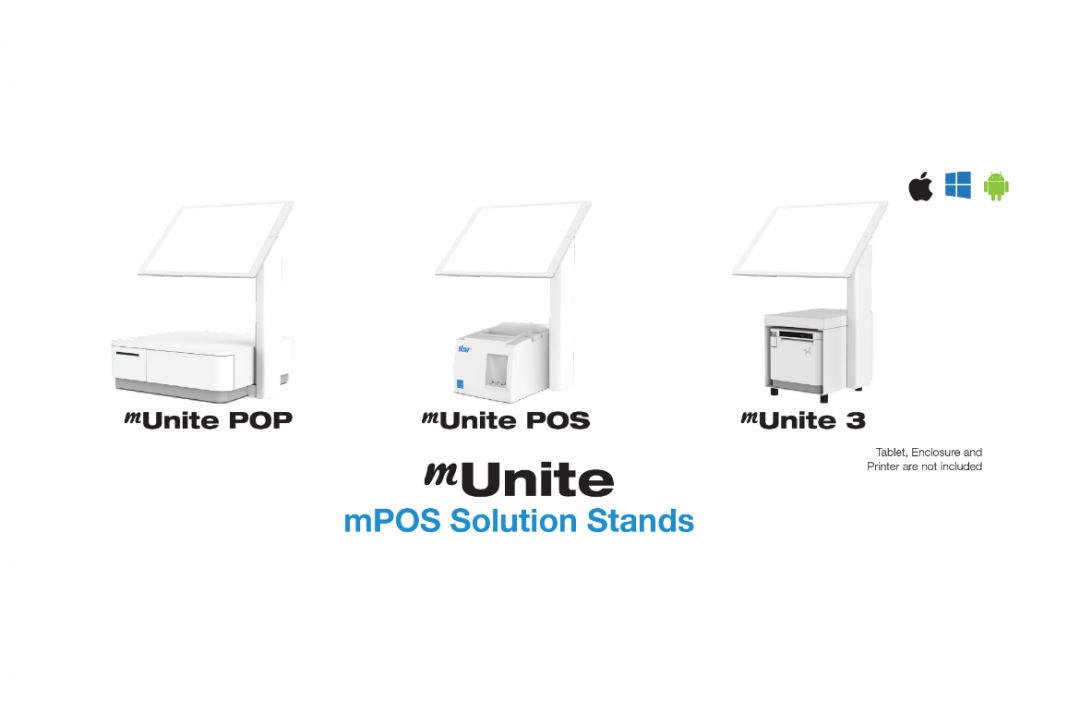
    Somerset, NJ – July 9, 2019 – Star Micronics, a leading global manufacturer of mobile, point of sale (POS), and customer engagement technologies, is pleased to announce the addition of the mUnite solution stand series to its mCollection lineup. The mUnite stands are designed to deliver a space-saving cable management solution with a clean aesthetic, bundling all point of sale devices into one visually cohesive solution.

    The mUnite stands offer retailers, restaurateurs, and hospitality providers a way to optimize counter space, while modernizing the aesthetic of the point of sale. The definition of function and style, mUnite POS solution stands are built to accompany the mCollection line of mPOS printers, cash drawers, scales, and peripherals. With three models available, mUnite 3 for the mC-Print3, mUnite POP for the mPOP, and the mUnite POS for the TSP143III/TSP654II, business owners can choose which stand best suits their new or existing point of sale hardware.

    Featuring a cable-free construction, the stands are cleverly designed to hide all of the cables that keep devices connected and route power supplies under the counter, increasing available counter space and decreasing clutter. Star’s new stands allow users to merge individual peripherals into one frame in a quick, easy, and clean setup.

    Constructed from durable steel, the mUnite stands are compatible with any tablet enclosure featuring a 75- or 100-millimeter VESA mount, and are available in black or white. Customers may use their own tablet enclosure or purchase an optional enclosure from Star Micronics. A range of the most common tablet enclosures will be offered by Star Micronics, including enclosures for various generations of iPad, Samsung Tab, Microsoft Surface Go, and Microsoft Surface Pro. Please contact the Star Micronics sales team for more information.

    Two additional accessories can be purchased separately, in a black or white finish that matches the mUnite stand. The first is a customer-facing VESA mount (75-millimeter or 100-millimeter) that accommodates a tablet that can be used in addition to the standard point of sale tablet. The second accessory is a blank customer-facing branding plate, which can display a brand logo at the point of sale.

    “We are providing a flexible solution stand that can accommodate any tablet and is seamless in both form and function,” said Michael Hanson, the Executive Vice President at Star Micronics. “The mUnite POS solution stands provide the versatile, modern, and practical cable management that the industry needs.”


  • The Faster Payments Council: What You Need to Know

    The Faster Payments Council: What You Need to Know

    The payments industry is changing – fast. According to Statista, digital payments (including any payment made over the internet and payments made via mobile device at the point of sale) are expected to grow 12.7% year over year, and will account for over $6.5 trillion worldwide by 2023.

    With the rapid growth of faster payments – or “payments in which the transmission of the payment message and the availability of final funds to the payee occur in real time or near-real time, and on as near to a 24-hour and 7-day basis as possible” – comes a variety of concerns, from accessibility to security. Not surprisingly, the industry’s leaders want a say in the path that’s being paved.

    That’s where the U.S. Faster Payments Council (FPC) comes in. Lead by some of the payment industry’s key players, the FPC aims to enable all Americans to “safely and securely pay anyone, anywhere, at any time, and with near-immediate funds availability.” Let’s take a deeper dive into the FPC and its goals.

    Discover how mobile point of sale (mPOS) is revolutionizing payments.

    When Was the FPC Formed?

    The FPC was created in November 2018 by the Faster Payments Task Force, a group of hundreds of stakeholders that came together – with Federal Reserve support – to form the Governance Framework Formation Team (GFFT). The GFFT was tasked with developing and implementing a governance framework that was inclusive of all of its stakeholders and facilitated faster payments in America, which is the FPC.

    Who is a Part of the FPC?

    The FPC is open to all stakeholders in the U.S. payment system, and it welcomes everyone from corporations to small businesses to individuals. Founding sponsors of the FPC include:

    • Bankers’ Bank
    • Ceridian
    • Corporate One
    • Early Warning
    • ICBA Bancard
    • Mastercard
    • NEACH
    • North American Banking Company
    • Open Payment Network
    • SHAZAM
    • Target
    • TD Bank
    • The Bankers’ Bank
    • The Clearing House
    • Visa Inc.
    • The Bank of New York Mellon
    • First Data
    • Goldman Sachs Bank USA
    • JPMorgan Chase Bank & Co.
    • Walmart

    What is the FPC’s Mission?

    Simply put, the FPC’s mission is to enable ubiquitous faster payments in the U.S. According to its website, the FPC has three pillars of guiding principles: inclusiveness and fairness; flexibility and responsibility; and transparency. More specifically, some goals the FPC has are:

    • Addressing issues that inhibit the adoption of faster payments
    • Enhancing the safety and security for service providers and users of faster payments
    • Developing guidelines to address opportunities and issues
    • Creating an education and awareness program to foster a better understanding of faster payments

    Click here to view the FPC’s full framework.

    What Comes Next

    The FPC is planning to hold its first in-person meeting at the end of May 2019, so we expect to hear an update on its next steps shortly after. The council is also currently searching for its permanent Executive Director. During a time when payments are changing faster than ever, we’re interested to see how the FPC will affect the industry!

  • MBTA Introduces Mobile Credit Card Payment Option

    MBTA Introduces Mobile Credit Card Payment Option

    Keolis Commuter Service (Keolis) operates the Massachusetts Bay Transportation Authority’s (MBTA) rail system, the fifth largest in North America. The MBTA and Keolis recently expanded their partnership to align through incentives and global best practices increases to revenue and ridership. As a component of this directive, the rail operator recognized a need for better insight into ticket and revenue numbers than what the MBTA’s paper ticket system provided. The paper tickets were tallied once a month, making limited data available only once every 30 days. In order to create a new marketing and promotional campaign that would boost ridership and optimize schedules, Keolis needed readily available, in-depth data that could form the basis of its new growth initiative.

    The Challenge

    MBTA-Case-Study-Mobile-Payment-1-e1574803507383

    In addition to addressing the lack of data, Keolis wanted to tackle another problem: a top complaint from passengers was the inability to pay onboard with a credit or debit card. MBTA’s Greater Boston area commuter rail moves an estimated 127,000 riders a day, but its onboard ticketing options were limited. Passengers could purchase tickets with cards from a kiosk at the station or in-person at a ticket window. However, if riders boarded the train without tickets, they would have to pay cash, or download the MBTA’s Commuter Rail mobile ticketing app.

    Boston is a large tourism destination, so visitors or occasional users on board who didn’t have cash had two choices: download the app to pay or be issued a post-ride payment form to mail in later. Additionally, this cash-only option onboard was a security issue for conductors who had to carry large sums of money. Since fares are determined by departure and arrival zones, for non-ticket holders onboard, conductors had to memorize zone pricing to calculate the fare of a ticket, accept payment, then calculate the change to return to the passenger, or issue a non-payment form before moving on to the next rider. There could be up to 188 travelers in each car, so waiting for people to download the app or issuing them a post-ride payment form made each conductor’s job take longer than it should. In addition, riders who accepted the post-payment form were on the honor system to mail it in, so MBTA would risk loss of revenue on riders who didn’t carry cash.

    The Solution

    Conductors already carried Mobile Computing Devices (MCD) to receive notifications and train information, so Keolis sought a solution that would integrate with the hardware that was already in use. The rail operator partnered with the software company e-Nabler Corp, developers of eMobilePOS suite of point-of-sale applications for their unique mobile solutions expertise, who developed RailSales mPOS, which supports onboard ticket purchases with various tender types such as credit or debit cards. e-Nabler’s system runs on the Apple iPhone 6S (MCD) with an Infinite Peripherals Linea Pro 6 scanner and a Star Micronics SM-S230i handheld printer. Star’s SM-S230i is a 2” portable Bluetooth and USB printer that is compact and lightweight, so it can be worn on the conductors’ belts. The printer is MFi certified and easily connects to and pairs with the MCD.

    MBTA-Case-Study-Mobile-Payment-e1574803526716

    This setup allows conductors to use the same interface they were already familiar with, which eliminated the need to carry a second mobile device and train on a new mobile operating system. The RailSales ticketing application’s new dynamic scheduling interface gives conductors up-to-the-minute train, zone and station selections for fare calculations and makes the end-of-day shift reconciliation accurate and much more convenient. RailSales mPOS also gives passengers the ability to pay on the train with a credit or debit card, or cash and get a receipt that can be validated visually or by scanning the receipt’s QR code.

    The new fully operational integrated mobile RailSales solution was successfully rolled out in record time to approximately 400 conductors over four months after a successful 10-conductor pilot.

    Click here to download the full success story.

  • How to Create an Amazing Return Policy

    How to Create an Amazing Return Policy

    No matter what kind of business you operate, having a rock-solid return policy is of utmost importance. Whether you operate an online business or a brick-and-mortar – or both – having a strong return policy can save you a lot of headache (and money). Did you know that:

    • At least 30% of products ordered online are returned,
    • Nearly 9% of products purchased in a brick-and-mortar are returned,
    • And in one year alone, Americans returned $260 billion worth of merchandise to retailers!

    The product is damaged. The wrong item was purchased. The merchandise is no longer wanted. The reasons customers request a return can be endless – but you can develop a return policy to handle it all. Here are some tips and guidelines to help you create an amazing return policy for your business:

    What to Define in Your Policy

    • Receipt: You must define whether or not customers need a receipt in order to make a return. While this is optional, it is beneficial to require a receipt for myriad reasons: they enable you to verify the purchase came from your business, they help you accurately record the return in your books, and much more. Some different variations to include receipts in your policy include no returns without receipts, no exchanges without receipts, no-receipt returns will result in store credit, and more.
    • Identification: Next, decide whether you want to require customers to present ID upon returning products. Variations of identification policy could include ID is required with receipts, ID is required without a receipt, or ID is not required.
    • Payment type: When customers return an item, how will you refund them? Some choices include an exchange (return an item for a new item), cash refund, credit/debit card refund, or store credit.
    • Timing: Next up, it’s time to decide the required timing of the return. Can customers return items 14, 30, 60, or 90 days out? The choice is yours. Some businesses choose to vary the time range depending on product type (for example, clothing may be returned within 90 days, but makeup must be returned within 30 days).
    • Restrictions: Last but not least, what is the fine print of your policy? What items are not allowed to be returned, or “all sales final”? For example, sometimes businesses restrict returns on heavily discounted items and customized products.

    Why Paper Receipts are Key

    • Easy for customers to retain: A digital receipt has its advantages, but when it comes to returns, nothing beats a good, old-fashioned paper receipt. Paper receipts can easily be kept in customers’ wallets, and avoids the frustrating, time-consuming process of sifting through emails looking for a receipt.
    • Can include more than just return information: Did you know you can include more on your receipt than just transaction and return information? With Star’s value-add PromoPRNT tool, you can easily include custom promotions directly on the bottom of receipts – and all from one central location!
    • Cut down on fraud: Here’s a shocking statistic for you: according to the National Retail Federation, a whopping 5% of returns are cases of return fraud (which costs U.S. retailers $9-17 billion per year)! Printing paper receipts – and requiring them for a return – is a sure-fire way to cut down on instances of return fraud in your store.

    How to Manage Your Return Policy

    • Be consistent: To establish your policy, be sure to apply it to each and every customer. Also, to avoid surprises, it can be helpful to inform customers about your policy at the time of purchase.
    • Train your staff: Properly training your staff to handle different return scenarios can make the entire process smoother for both your business and your customers.
    • Display the policy: Be sure to prominently display your return policy near your register and on your receipts so that it’s constantly visible to both customers and employees.
    • E-commerce tips: If you operate an e-commerce store, check out these tips for an online return policy.

    Star can help with more than just return policies – learn more now about how we provide simple mobile point of sale (mPOS) management.

  • 5 Reasons Why Shoppers Still Prefer Brick-and-Mortar

    5 Reasons Why Shoppers Still Prefer Brick-and-Mortar

    The constant evolution of e-commerce provides a hybrid of digital and physical purchasing possibilities to customers. While the appeal of an online market is steadily increasing, consumers still cannot resist the social experiences and certain advantages that brick-and-mortar is able to provide. Among the many irreplaceable elements of the in-store shopping experience that cannot be replicated online, here are the top five reasons why shoppers still rely on – and prefer – brick-and-mortar retailers.

    1. Personalized Shopping Experience

    With all of the advancements that online shopping provides, it still cannot compete with the personalized in-store shopping experience that’s found at brick-and-mortar stores – and that customers crave. Walking up and down the aisles, listening to the music, taking the time to browse and linger; there’s just no way the web can parallel such an immersive experience.

    It’s this sort of engagement and excitement that continuously attracts shoppers to brick-and-mortar stores. In fact, according to Retail Touch Points, during the 2018 holiday season 96% of consumers did at least some of their shopping in-store, thanks to the ambiance and festive decor found in physical stores.

    In addition to a store’s ambiance, physical stores also attract (and retain) customers through hosting events and classes – something an online store just can’t do. Some examples of events held in retail stores are product launch parties, book signings, holiday parties, charity events, and various classes for cooking, crafting, DIY home projects, and more. And don’t be mistaken, just because events are held in person doesn’t mean they can’t feature the convenience of the digital world. It’s easy for customers to securely pay registration fees and obtain event tickets online, using tools like Star Micronics’ partner Authorize.Net to provide a simplified payment process.

    Simply put, brick-and-mortar stores offer a level of customer service and personalized experience that online shopping simply can’t duplicate, making one thing clear: the need for physical stores is here to stay.

    2. Ability to Preview Products In-Person – Before Purchase Commitmentshopper-previewing-product-e1574803072351

    One of the biggest advantages that brick-and-mortar stores have is the ability for consumers to inspect products before buying them. Getting a feel for the material, verifying the quality, and testing the product before committing to it is a surefire way to avoid surprises that can be caused by misleading online information and pictures. A recent TimeTrade report showed that as many as 87% of modern consumers want to see and experience a product prior to “taking the plunge.”

    Who can blame them? Shoppers value seeing goods in person because it helps avoid inaccurate sizing, malfunctioning equipment, and product scams. Even with an abundance of high-quality photos and videos available online, there’s still nothing like seeing a product with your own eyes and touching it with your own hands, which is why consumers still travel to physical stores to get the most bang for their buck.

    Star Restaurant POS Solutions

    From online ordering printers to kitchen buzzers, Star is proud to offer POS solutions for restaurants, QSRs, food stands, and more.

    3. Quick, Hassle-Free Returns

    Even with the alluring ability to inspect products before purchasing, there’s always a possibility that customers may need to return an item. But there’s no question about it, the return policies available at brick-and-mortar stores offer a more simplistic and engaging process than their online counterparts. With just one quick stop, shoppers are able to verbally discuss their returns, ask questions, learn about new deals, and possibly even negotiate the return policy terms.

    Brick-and-mortar returns are a clear winner for customers seeking an urgent solution – they can replace the item right then and there, with no shipping costs, no deadline stress, and certainly no waiting. While online platforms consistently update return policies to better enhance customer service, brick-and-mortar stores continue to have benefits up their sleeves that makes in-store returns simply irresistible.

    4. Easy, Quick and Detailed Customer Service

    It’s undeniable that face-to-face customer service continues to reign supreme, even with the rise of modern online customer service tools. The interactive service offered at brick-and-mortar stores helps shoppers locate products in the store, get second opinions, and more. This sort of personalized expertise and knowledge is highly favored because it provides consumers with a level of interaction that can only happen in-person, as well as answers that even the web might not have (yes, that skirt matches that blouse).

    A recent Retail CX Trends study showed that 30% of consumers claim that personalized treatment is what elevates an experience and makes them feel special. The ability for brick-and-mortar stores to offer consistent service that is tailored to the customers’ specific needs and situations ultimately saves the consumer time and improves their overall shopping experience. You just can’t find that level of customized, instant attention online.

    5. Ability to Take Items Home Immediatelyshopper-taking-purchase-home-e1574803087845

    Even if an online store offers two-day or same-day delivery, no form of expedited shipping can compare to the delivery speed experienced at physical stores. When consumers choose a brick-and-mortar store, they don’t need to worry about waiting, handling fees, or damaged and lost packages. Only physical stores are able to offer the satisfaction of immediately bringing an item (that you know is correct and in satisfactory shape) home.

    Today’s shoppers have spoken and they want their purchases now. A recent Retail Dive survey shows that 49% of consumers choose brick-and-mortar stores over the web because they like to take home items immediately. Just one swipe of a credit card unlocks the instant use of your latest buy – the perfect option for the impulse buyer or last-minute shopper in all of us.

    Looking to empower your retail staff, save space, reduce your checkout lines, and enable fast and secure transactions? Download our free eBook to discover how the right mPOS technology can help you do just that.

  • What to Look for in a Retail Space

    What to Look for in a Retail Space

    When you operate a retail brand, your storefront is everything. And when you consider that the average real estate lease term length is 3-5 years, it’s important to choose your space wisely. That’s why we’re here to discuss the three key things to look for in a retail space – before you sign your next lease. Read on!

    A Prime Location

    Location, location, location! One of the most important features to look for in a retail space is its location. The area’s foot traffic and demographic makeup should be two of your top considerations. What sort of shoppers stroll the area, and do they align with your target customer?

    Another important thing to consider is the climate of the local business community. Are the businessowners supportive of each other? Do they collaborate? A supportive group of entrepreneurs will help you succeed – and an ultra-competitive environment most likely will not.

    In addition to your customers and fellow businesses, you also need to keep your employees and contractors in the forefront of your mind. What local amenities will be available to your staff? From nearby restaurants to convenience stores, the more you accommodate for a healthy work-life balance, the better talent you’ll attract. You must also keep in mind the parking and public transportation availability – for your staff, contractors, delivery trucks and more.

    The Right Price

    The price should absolutely be right in your new space. Ideally, your lease payment should amount to 3-8% of your gross revenue, depending on your industry. For example, a store with lots of big-ticket sales (like an electronics store) usually has rent that is about 2% of its gross revenue. On the contrary, clothing stores typically average rent that’s approximately 8% of their gross revenue. Curious what your target rent is? Below are sample amounts by industry:

    Industry Percentage of Sales Allocated for Rent
    Clothing and Apparel 7.66%
    General Merchandise Stores 3.86%
    Furniture and Furnishing Stores 5.98%
    Food and Drink Establishments 5.81%
    Electronics and Appliance Stores 2.09%
    Books, Hobby, Music, Sporting Goods Stores 3.30%
    Health & Personal Care Stores 3.37%

    Source: fitsmallbusiness.com

    And don’t forget about your down payment, and other expenses like utilities, property taxes, insurance, and common area maintenance (CAM)!

    Properly Sized and Equipped

    Once you’ve found a space that’s in a location that fits your target demographic – and your budget – it’s time to take a deeper look at the store’s features.

    First, you need to make sure the space is the right size for your business. To calculate your target square footage, add together the sizes of the different areas in your store: for example, your sales floor, inventory storage, office, kitchen, bathrooms, and dressing rooms. Not sure how big your sales floor should be? Here’s a handy formula: Planned sales volume / average sales per square foot in your industry = sales floor space

    If you’re just starting out, consider a pop-up shop, or a “store within a store.” These are more affordable than standalone shops, can help familiarize your target market with your brand, and helps the storeowner offset the high cost of rent. When your goal is to grow your baseline brand awareness, it’s worth doing some research and finding a complementary store in your target area to partner with!

    Next, make sure the space has the features you need to make your store shine. Here are some factors to consider:

    • Lighting: Can the lights be dimmed? Can alternative lights be brought in?
    • Loss Prevention: Are there cameras (or other tactics) to prevent theft?
    • Emergencies: Is there adequate fire and police presence in the area?
    • Sales Restrictions: For example, are there restrictions on Sunday sales (blue laws)?
    • Wi-Fi: What’s the Wi-Fi availability like? This is extremely important so that you can process credit card transactions on your mPOS system.

    Last but not least, don’t forget to keep in mind your target shopper – what do they look like? What is their occupation? Where do they live and what do they do for fun? When you boil it down, you need your retail space to match your target audience. For example, if your customers typically have small children, make sure you build in extra aisle space to accommodate strollers. And if you are selling trendy items, you’ll need a clean, modern, easy-to-manage space to match.

    We hope these tips are helpful while navigating retail space leases.

  • NRF 2019 Recap: The Point of Sale of the Future

    NRF 2019 Recap: The Point of Sale of the Future

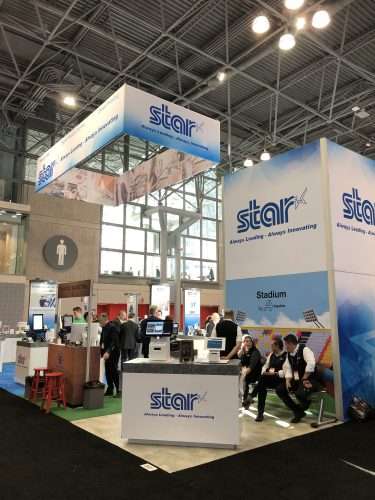
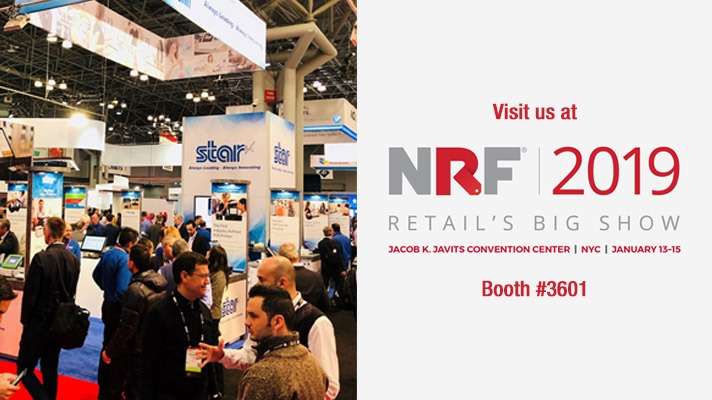
    Last week, we had the pleasure of attending and exhibiting at NRF 2019 at the Jacob K. Javits Convention Center in New York City. The Star family was set up at booth #3601, and also took some time to explore the show floor and learn even more about the latest trends in retail. Here’s a look back at what we demonstrated in our booth, as well as some of the key trends we noticed around the show.

    The Star Booth

    Our booth this year was one of our best yet! We chose to create a mock shopping mall, complete with a candy store, apparel boutique, and even a sports stadium. In our “mall,” we demonstrated:

    The mCollection:

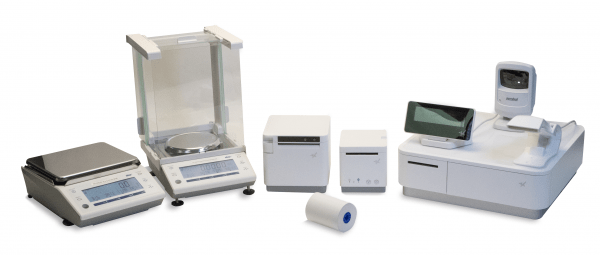
    One highlight of our NRF booth this year was our latest line of mPOS products, the mCollection. Built with the latest technology, the mCollection features sleek and modern printers, scales, and peripherals to offer the full hardware solution, for a variety of industries. The mCollection now also features its very own stand that unifies all of the peripherals and even hides all clunky cables. The lineup’s clean, sophisticated look (and high-end scales) lends itself perfectly to cannabis and confectionery markets, so that’s what we demonstrated this year at NRF!

    PromoPRNT:

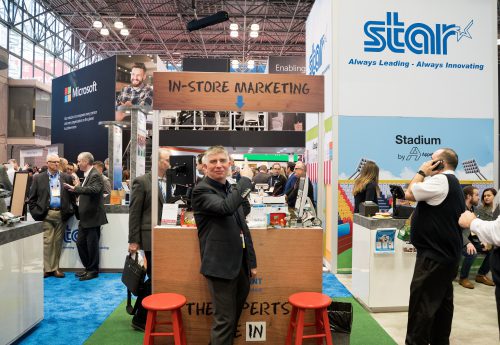
    In-store marketing and customer retention are always hot topics that retail brands want to improve upon. To assist, Star created PromoPRNT, a value-added tool that allows retailers to engage and reengage customers where it matters the most – in the store! By offering printed promotions and information, you can encourage loyalty among customers, with the printer you already use. To educate NRF visitors on PromoPRNT, we set up an “In-Store Marketing” booth, and it was a hit.

    PP03-e1574802510776
    The pioneer of PromoPRNT, David Salisbury.
    Our Partners:

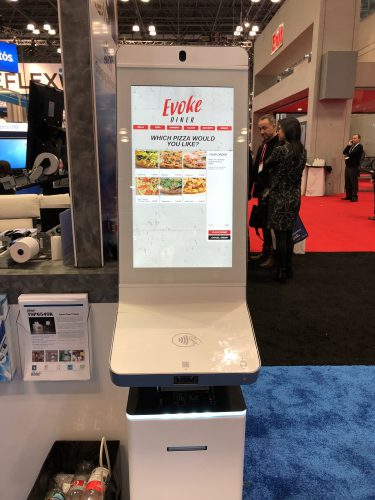
    We were very happy to host some of our best partners in our booth this year. On the software/point of sale side, we demonstrated with Appetize, Apptizer, Evoke, Mad Mobile, SuiteRetail, Vend, and Veras Retail. And when it comes to hardware, we proudly displayed ArmorActive, BOX IT, Elo, Heckler Design, Innovative, Mimo Monitors, nClose, and SpacePole.

    IMG_3671-e1574802546974
    A kiosk example from our partner, Evoke.

    Trends from Around the Show

    Self-Service Kiosks:

    Self-service kiosk technology was everywhere at NRF! The need for kiosk printers is quickly expanding as consumers prefer a more fast-paced experience. Star offers printing solutions to fit any kiosk – whether it be for ATMs, lottery, self-ordering, or retail.

    Smart Displays:

    Smart displays that incorporate dynamic data were another trend we spotted at NRF. An interesting example of this was a demo featuring electronic grocery shelf labels that displayed featured recipes, country of origin, competitors’ prices, and more.

    Experiential Retail:

    From a bar demo where you created your own drink, to a session focused on architecting an immersive customer environment, experiential retail was a hot NRF topic. Today’s consumers are looking for an authentic, hands-on shopping experience, and that trend was very clear this year at the show.

    We had a blast at NRF 2019 and can’t wait for NRF 2020!

  • Dale Carnegie Training Recap: Our Top 3 Takeaways

    Dale Carnegie Training Recap: Our Top 3 Takeaways

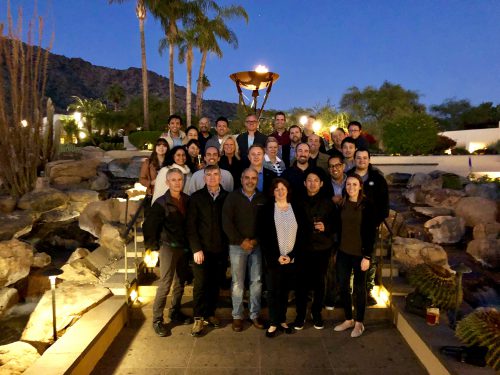
    Star Micronics family.
    A part of the Star family who visited Arizona.

    Last month, we had the pleasure of visiting sunny Scottsdale, Arizona to attend a Dale Carnegie training that taught us some of the best tips and tricks to sell mPOS in today’s market. As we all know, technologies are always changing, and it’s a good idea to refresh your skillset in order to do your best and offer your best to your customers. Although we manufacture POS solutions, there were three key takeaways we received from the Dale Carnegie training that are also relevant for ISVs, resellers, and SMBs alike. Read on to get some good business tips, no matter what industry you’re in.

    1. Don’t Just Hear – Listen

    Our first takeaway sounds easy, but is often overlooked. When engaging with colleagues and customers (and friends and loved ones, too) don’t just hear what they’re saying – truly listen. Paying attention and really listening to what the other person is saying will not only improve your relationship, but also help you remember the conversation more fully.

    The beautiful landscaping at the JW Marriott Scottsdale Camelback Inn Resort and Spa.
    The beautiful landscaping at the JW Marriott Scottsdale Camelback Inn Resort & Spa.

    2. Mix It Up

    It’s easy to get overwhelmed when you have a lot on your plate. To avoid things slipping through the cracks, mix up your tasks! Categorize your to-do list by things that already happened that you need to work on (responding to older emails), items that pop up in the present (a report that is due today), and things you need to deliver on in the future (writing a draft that’s due next week). Then, choose a task to begin with, and work one-by-one and alternate the type of task as you go. This will help you keep a variety of tasks in the foreground of your mind.

    Dale Carnegie training.
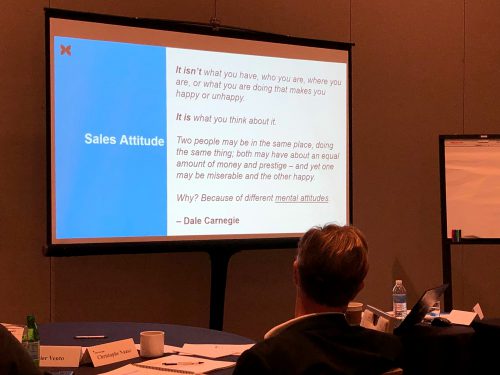
    Learning about the importance of mental attitudes.

    3. Choose the Right Attitude

    Last but not least, is a good lesson in developing a healthy, productive perspective. Per Dale Carnegie:

    “It isn’t what you have, who you are, where you are, or what you are doing that makes you happy or unhappy. It is what you think about it. Two people may be in the same place, doing the same thing; both may have about an equal amount of money and prestige – and yet one may be miserable and the other happy. Why? Because of different mental attitudes.”

    Thanks again, Dale Carnegie of Arizona, for having us and teaching us your ways!

  • Looking Ahead: What to Expect from Star at NRF 2019

    Looking Ahead: What to Expect from Star at NRF 2019

    It’s that time of year again – it’s the final countdown to NRF 2019! Commonly referred to as Retail’s Big Show, NRF attracts thousands of retail professionals from across the globe. Built on the idea that retail should be an experience, not just an establishment, the show will highlight the latest and greatest retail trends and technologies.

    So what does Star have in store for NRF 2019? A lot! We’ll be setting up an emulated shopping mall in booth #3601, where we’ll demonstrate our latest mobile point of sale (mPOS) product line, the mCollection, which includes printers, scales, and more. We’ll also be showing off our value-add promotional tool, PromoPRNT. Need more incentive to stop by? We’ll be raffling off Apple AirPods, and we’re hosting a champagne and dessert-themed networking party!

    Here’s a closer look at what we’ll be displaying at our booth:

    The mCollection

    m-collection_white.png-e1574800754945

    When you look around our booth at NRF 2019, you will certainly see our mCollection! Our latest mPOS series is designed to be sleek, compact in size, and the easiest to set up in the industry. The mCollection features a reliable and remarkable user experience, and multiple connectivity options (Bluetooth, CloudPRNT, Ethernet, and Lightning USB and traditional USB). Stop by our booth to discover the ways the mCollection is transforming industries like retail, hospitality, cannabis, and more.

    PromoPRNT

    The fun doesn’t stop there. We’ll also be demonstrating PromoPRNT, our value-add promotional tool, in our booth. PromoPRNT allows retailers of all sizes to create and manage custom printed receipt promotions from anywhere, increasing customer retention and personalizing the shopping experience. Learn more about PromoPRNT in this video:

    Our Partners

    Our partners make Star shine. Here are the ones we’ll be highlighting in our booth this year:

    Appetize-Logo-e1574800775826

    Appetize is a POS, inventory and analytics company transforming how enterprises manage and process guest transactions at scale. With an omni-channel approach, Appetize makes front of house transactions more intuitive through fixed, self-serve and handheld form factors, while providing robust kitchen and back office tools. Appetize will be demonstrated on Star’s TSP654IIBTi and SM-230i.


    Apptizer-Logo-e1574800793577

    With Apptizer, any merchant can create the mobile storefront their business truly deserves in minutes, with no coding or technical knowledge needed. Apptizer also can be integrated with payment gateways, POS and e-commerce platforms as a mobile storefront, giving more agility and accessibility to bring in a mobile-first experience to retailers and SMBs. Apptizer will be demonstrated on Star’s TSP100IIIUSB.


    2019-01-10_16-59-12-e1574800809531Evoke helps brands engage with their customers in creative, innovative, dynamic and rewarding ways. They look after the entire process from start to finish and work closely with clients to understand their brand and their customers. Evoke will be demonstrated on Star’s TSP700IIU.


    Mad-Mobile-Logo-e1574800836783

    Mad Mobile is a mobile technology leader with a strong reputation for innovation and delivery. They are enabling major retailers to re-invent the store experience, where 90% of sales still occur, and bridge the digital gap between online and in-store. Mad Mobile will be demonstrated on Star’s SM-L300.


    PD00408-SR-Logo-e1574800861771

    SuiteRetail enables retailers to better serve their customers. With SuitePOS, they have successfully made the in-store experience for employees and customers simple and efficient. In addition, payment transactions flow seamlessly, out-of-the-box, to sophisticated back-office ERP solutions such as NetSuite and Salesforce. SuiteRetail will be demonstrated on Star’s mC-Print3.


    Vend-Logo-e1574800878579

    Vend is cloud-based POS and retail management software that lets retailers run their business in-store, online, and via mobile. Vend’s solution includes POS software, inventory management, e-commerce, customer loyalty, and reporting analytics. Vend will be demonstrated on Star’s mC-Print2 / mC-Print3.


    Veras-Retail-Logo-e1574800894134

    Veras Retail creates in-store interactions between customers and retailers that are engaging, fun, profitable, and repeatable. They feel that a consumer’s relationship with a retailer (and thus their long-term impact to the retailer’s bottom line) is primarily forged in the in-store interactions with the products, the store staff, and the store’s physical environment. Veras Retail will be demonstrated on Star’s mC-Print3.


    See you soon at NRF 2019!

  • Star Micronics to Highlight Latest mPOS and Customer Engagement Solutions at NRF 2019

    Star Micronics to Highlight Latest mPOS and Customer Engagement Solutions at NRF 2019

    The mCollection – an mPOS line featuring printers, scales and a variety of peripherals – will be demonstrated in a simulated shopping mall

    Somerset, NJ – January 07, 2019 – Star Micronics, a leading manufacturer of mobile, point of sale (POS), and customer engagement technologies, is excited to attend NRF 2019, where it will demonstrate its new mCollection in a mock shopping mall located at booth #3601.

    The mCollection includes a variety of mPOS technologies, including Star’s newest printers, the mC-Print2 and mC-Print3, as well as scales, mPOP accessories, and peripherals including barcode scanners and customer displays. Featuring a sleek, unified design and easily integrated with the most modern ISVs, the mCollection is geared towards cannabis, grocery/deli, jewelry, pharmaceutical, restaurant and retail industries. PromoPRNT, Star’s value-add in-store marketing tool, will also be demonstrated at the show.

    In its booth, Star will also feature several of its partners’ technologies, including Appetize, Apptizer, Evoke, Mad Mobile, SuiteRetail, and Veras Retail. A variety of giveaways will be available to booth visitors, including candy, T-shirts, and tote bags. Additionally, a grand prize will be raffled off to an attendee who visits each simulated shop.

    “Star is looking forward to returning to NRF this year,” said Christophe Naasz, Director of Business Development at Star. “We believe that in our mock shopping mall, we will demonstrate the strong value our mCollection has for many of today’s – and tomorrow’s – hottest markets.”