Tag: Mobile POS (mPOS)

  • 6 Top Retail Trends Coming in 2019

    6 Top Retail Trends Coming in 2019

    It’s December, which means a new year is right around the corner. Along with the big ball drop and lots of confetti, the New Year is also bringing a slew of retail trends. From multi-channel nurturing to the continuing growth of artificial intelligence, let’s take a deeper dive into the top 5 retail trends coming in 2019.

    1. Experiential Retail

    This first retail trend probably comes as no surprise: today’s consumers want to feel more engaged. Simply remodeling your store isn’t enough – you need to create an experience. Some examples of this include “pop-ups” that feature your best products (even if they aren’t for sale), in-store classes and workshops, incorporating your brand’s apps in brick and mortar stores, and more.

    Speaking of apps, there are many types to choose from. Some features of today’s retail apps include:

    • Showing product aisle location, price, current stock, specs, reviews, etc.
    • Shopping list creation and coupon access
    • Augmented reality (AR) functionality, enabling customers to try on clothes virtually, see what products would look like in their home, visit “invisible” pop-up shops, etc.

    Using apps will not only make your store (and brand) more fun – it will benefit your customers, too. According to a recent study, over 60% of consumers say AR could improve their daily lives, including how they shop. By implementing AR into your retail marketing strategy, you’ll stay on top of the trend that’s predicted to attract 1 billion users by 2020 – and grow to $90 billion in size.

    2. Multi-Channel Selling

    Don’t let the changing retail environment scare you – there’s certainly still a place for brick and mortar. But the key to your success involves more than just the physical storefront: you must appeal to customers online, as well.

    It’s not just speculation – it’s been shown that consumers embracing multi-channel shopping is a true retail trend. For example, on Black Friday this year, 54% of shoppers reported shopping both online and in physical stores. The time to funnel effort into your e-commerce approach (from your website to your social media strategy) is now.

    3. Innovative mPOS Systems

    Next year, point of sale (POS) systems will continue expanding further into businesses’ marketing and customer engagement strategies. Mobile point of sale (mPOS) systems are a perfect example of that transition. Because mPOS systems are deployed on mobile devices, they enable employees to bring the transaction to the customer, decreasing wait times and greatly improving the
    Star-mCollection-e1574800629417
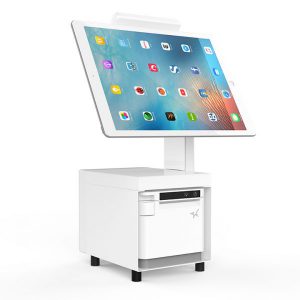
    Star’s mCollection can help you bring the transaction to the customer.

    shopping experience. mPOS (and some traditional POS) can also enhance your brand’s marketing by allowing you to communicate and schedule coupons, promotions, job openings, and more via your receipt printers – all from one centralized device.

    4. Corporate Social Responsibility

    In this day and age, consumers don’t want to shop just anywhere – they want to purchase high-quality products from companies that care. Topics such as food waste and plastic pollution are making headlines left and right, and it’s more important than ever to practice what you preach. From sourcing locally to encouraging volunteerism, there are many ways to embrace corporate social responsibility (CSR) that can better the world – and align with your business objectives. Some examples of the business benefits of implementing CSR initiatives include improved brand reputation, operational cost savings, increased employee productivity, and a greater ability to attract and retain talent.

    5. Data Driven Workflows

    Data is king. If you build strategic data collection into your business model, you can then leverage it to improve everything from sales and marketing, to operations and customer service.

    What does this look like? Big box retailers such as Walmart are using machine learning to optimize home delivery routes, and the technology could also be used for stocking and inventory, marketing and product placement, theft monitoring and more.

    6. Artificial Intelligence

    While the peak of artificial intelligence (AI) usage may still be a couple of years out, there’s no denying that AI is a growing trend – and a quickly growing trend, at that. Siri, Cortana, and Alexa are being utilized more and more, and it’s predicted that AI will follow a path similar to mobile shopping (starting off slow, then becoming a major channel for purchasing). This year consumers might just ask their virtual assistant for the forecast, but next year they could be asking to buy your product.

    Is modernizing and optimizing your retail store on your list of New Year’s Resolutions? Discover how mPOS solutions can help you increase sales and improve customer satisfaction in our e-book!


  • The Latest POS Technology to Modernize Retail Tech

    The Latest POS Technology to Modernize Retail Tech

    If you’re looking for a good reason to upgrade to the latest POS technology, consider this: it’s designed to be more effective at customer engagement.  Forget the middleman — traditional engagement strategies are going out the window as retailers opt for technologies that do two things: reach shoppers at critical touch points, and give them the opportunity to collect customers’ contact information for future use.

    Here are six examples of the latest POS technology and how they can benefit your business and create great shopping experiences for your customers:

    1. Digital Signage

    Digital signage takes the guesswork out of advertising. Will people see your messaging? With digital signage, the answer is YES. Digital signage is a virtual guarantee that customers will see important messages about new products or promotions while they are in-store browsing or deciding whether to make a purchase. This foolproof method of communicating with customers translates into higher sales numbers almost immediately, because it encourages upselling, cross-selling, and impulse buys.

    2. Mobile Payments

    Your customers will appreciate the ability to use their preferred payment methods — including giving them the option to use mobile payments.  The latest POS technology allows your customers to pay in a variety of ways:

    • Mobile at the POS: Paying via smartphone or mobile device at the register using near-field communication (NFC) technology
    • Mobile as the POS: Accepting a payment card on a retailer’s mobile device
    • Mobile Payment Platforms: Sending money to a merchant using a mobile device, such as using a mobile wallets

    3. mPOS and Tablet POS + High Speed, Ergonomic Thermal Receipt Printers

    No one wants to finish a shopping trip, only to be faced with a long line that’s not moving. mPOS or tablet POS and thermal printers allow employees to process transactions, complete with a receipt, anywhere in the store. The latest POS technology, used on a mobile device and coupled with quiet and reliable thermal receipt printers, provides an engaging shopping experience that gets shoppers out the door faster and gives you the flexibility to add more checkouts when needed.

    4. Digital Receipts

    Keeping track of receipts can be frustrating for customers, because these elusive slips of paper seem to get lost so easily. Offering digital receipts allows customers to keep, sort and locate their proof of purchase easily — even days or weeks later. The ability to make hassle-free returns with digital receipts moves customer service lines faster and may increase the chance that people will shop at your store again.

    5. Printed Promotions

    Don’t overlook the value of printed promotions within the increasingly digital world.  The “2K17 Valassis Coupon Intelligence Report” revealed that 84% of shoppers surveyed said that coupons influence what products they buy, while 86% of people said that they were persuaded to purchase a new product because they had a coupon for it.

    6. Customer Satisfaction Survey

    A customer satisfaction survey is a direct line of communication with customers to get their feedback on how your business and products are performing. These surveys, which are typically offered at checkout, help you understand your customers’ needs, evaluate employees, and remedy issues in a timely manner.

    The latest POS technology will give you the ability to engage with your customers like never before and provide them with the types of shopping experiences that they want and expect. Consider incorporating the latest POS technology into your business to generate more sales, more repeat customers, and better in-store experiences.

    Can mPOS increase your sales and boost your customer satisfaction? Find out now.

  • 4 Elements of a Valuable ISV-Hardware Integration Partnership

    4 Elements of a Valuable ISV-Hardware Integration Partnership

    You design software to provide the best possible user experience. It’s impossible, however, to reach that goal without the proper hardware for your system. In the point of sale (POS) space, that can include POS terminals, mobile devices, and rugged tablets as well as receipt printers, cash drawers, kiosks, scales, barcode scanners, and other POS peripherals. Integrating with the right hardware is critical to the user experience your customers will have and ultimately, it will impact your brand image.

    Your partnership with a hardware vendor can also have a direct impact on the success of your business. Whether you are a startup or a legacy ISV, selecting a hardware solution integration partner is a critical business decision for positioning your software solution in the POS industry.

    With so many hardware vendors to choose from—and many vying for you as an integration partner—it may not be clear which direction to take. Forming a successful partnership with a hardware vendor follows the same principles as any other type of beneficial business partnership. It depends on agreement in four areas:

    1. Goal Alignment
    2. Growth Potential for Both Parties
    3. Shared Resources
    4. Unified Marketing Strategy

    Business Goal Alignment

    The first thing you need to determine about a potential hardware integration partner is whether your business goals and theirs align. That makes it necessary for you to have a clear vision of what you want to achieve. That makes it necessary for you to have a clear vision of what you want to achieve. Once you have established the direction you want to take, you can evaluate hardware vendors as potential partners to help you reach your goals.

    Potential for Growth

    Do you clearly see the hardware vendor’s value proposition or are you concerned that the benefits of the partnership may be one-sided? Will your solution simply be added to a list the hardware vendor can use to their advantage with little return for your ISV? A more attractive option is a hardware partner with the experience, innovative solutions, and resources to help your business grow. If you can’t see how the partnership would help you advance your business, keep looking until you find a partner that will.

    Hardware Partner Integration Resources

    The breadth and quality of resources the hardware partner has dedicated to developing software integration relationships is a good indicator of how committed they will be to your partnership. For example, find out if they make software development kits (SDKs) and APIs available to ISVs. Thoroughly vet the hardware vendor’s integration process to learn whether or not the hardware vendor has developers on staff that can assist with integration and help you troubleshoot. If possible, speak to other ISVs who partner with the vendor to gauge their impression of how committed the vendor is to assisting with integrations and how easy their team is to work with.

    Unified Marketing Strategy

    Make sure you and your potential partner agree on a go-to-market strategy, including distributor and reseller support. Also agree on marketing down to the methods and frequency of marketing activities to adequately promote your partnership and the integration. Some examples include:

    • Issuing a joint press release to announce your partnership and include it in each company’s newsletter
    • Creating a campaign around your joint solution and promoting it on social media
    • Building a microsite or webpages devoted to the hardware-software solution
    • Taking advantage of success stories to produce case studies
    • Producing videos to demonstrate the solution
    • Participating in tradeshows to demonstrate the hardware-software solution

    How marketing will be managed and funded is also an important decision. The division of labor and investment should be equitable and acceptable to both partners.

    Download our full e-book here.

  • The Ultimate Guide to Payment Data Security

    The Ultimate Guide to Payment Data Security

    Point of sale systems make every merchants’ day-to-day activities run more smoothly, so keeping technology up to date and secure is important. It’s not just your business that relies on your system; your customers put their trust in it to keep their data secure as well. Every time shoppers complete a transaction at the terminal, their personal information is sent across public networks. If your business is not PCI compliant for maximum payment data security,  you are putting customers and your business at risk.

    Breaches are like a perfect storm: they can happen when the system is vulnerable and cybercriminals are looking for ways to steal your data. However, you have some control to stop the storm. It’s a given that hackers and thieves want your data, but you can control whether your POS system is vulnerable. A good place to start is making sure your POS and payment technology meets PCI-DSS standards.

    What is PCI Compliance?

    PCI compliance refers to meeting Payment Card Industry DataSecurity Standards (PCI-DSS), which outline how credit card data should be secured and stored. The credit card industry’s big four, Visa, MasterCard, American Express and Discover, founded the PCI Security Standards Council which regulates the standards. To ensure a high level of payment data security across the industry, PCI security standards include requirements about firewalls, passwords, encryption, employee ID numbers, system access, and data storage and transmission.

    Does this matter for my business?

    If your business accepts credit cards in-store or online, then PCI compliance pertains to you. There are no varying degrees of compliance, you either are or you’re not. Non-compliance puts you at risk for financial attacks and breaches. Aside from bad publicity and loss of business, these events can hurt your wallet and end your relationship with your financial institution. Fines for non-PCI compliance can run upwards of $100,000 a month from the PCI council.

    What do I need for maximum payment data security?

    There are three technologies that work together to optimize a payment data security environment:

    EMV: EMV technology makes card-present transactions more secure. The changeover to EMV not only changed how people pay with a credit card (inserting chip cards into the terminal, rather than swiping), it also shifted responsibility for fraudulent transactions from the banks to the merchants if the merchants aren’t using EMV-ready technology. That means businesses no longer have the credit card companies’ protection if someone makes a fraudulent transaction; they’re on the hook for those losses. The result of non-compliance can be an expensive lesson.

    Tokenization: This technology helps merchants keep payment card data out of PCI scope. Tokenization refers to swapping sensitive data like credit card numbers or personal information with a “token” that is used to complete a specific transaction. Since the data has been converted to a token before being sent over the networks and it isn’t an actual account number, tokenized information doesn’t have any value to hackers and data thieves.

    Encryption: Whenever cardholder information is saved or sent over open networks, this data must be encrypted. Encryption is when sensitive information is converted into a code that can only be deciphered with a cryptographic key — which hackers don’t have. Full credit and debit card numbers and other personal information should never be stored or sent over open networks.

    Payment data security technologies and PCI compliance help protect your business from security breaches. These events are front-page news that have long-lasting consequences for businesses, including negative publicity, loss of revenue, and liability associated with the breach. Don’t allow your POS system to be a victim, stay informed and keep your technology up to date.

    Discover How mPOS is Revolutionizing Payments

  • How to Choose a POS System for Salons and Boutiques

    How to Choose a POS System for Salons and Boutiques

    Retailers that make a living helping clients look and feel gorgeous need to look amazing themselves, so electronic clutter and outdated technology doesn’t fit the bill.  Choosing a point of sale (POS) system for salons requires extra attention to style, whether it’s hardware design or an installation that needs an added level of detail.

    However, don’t choose a POS system based on looks alone. Think carefully about the software: do you need inventory management, customer relationship management (CRM), reports, or time keeping? It seems like common sense, but don’t paint yourself into a corner by selecting a package that leaves out important features.

    Once you’ve made a list of what you need, it’s time to shop around. Choose a POS system for salons that includes these six necessities.

    1. Functionality: POS systems for salons should be easy to learn and use and allow employees to complete a transaction in as few clicks as possible. If you cater to repeat clients, select software with an integrated CRM. This allows you to track customers’ buying habits and preferences. You can use this information to make recommendations based on past purchases or send clients coupons and incentives to make a purchase or schedule an appointment.

    2. Employee management: Employee management is an important, multifaceted function of a POS system for salons and boutiques. Labor schedulers make it simple to schedule employees for work, swap shifts or duplicate a previous week’s schedule. They also help you make informed decisions about scheduling, so you are not caught under or overstaffed. Depending on the software, employee management functions give you a bird’s eye view of how many employees are working and what jobs they are performing that day.

    3. Printed promotions: Very few receipt printers come with cloud software that allows you to create and schedule printed promotions for free. Choosing a Star Micronics printer for your salon POS system will grant you access to a full suite of Star Cloud Services, including PromoPRNT. PromoPRNT will empower salon owners to create custom promotions, manage them remotely, and schedule them to run at a pre-determined time. Increase customer retention with a limited time 20% off brow wax offer. Boost customer retention with a monthly 15% off of a cut and color.

    4. Sales and inventory reporting: Many POS systems for salons allow you to see sales and inventory information in real time, so you can keep tabs on business throughout the day. These systems also include a variety of reporting options that give you the opportunity to see sales by the shift, hour, day, week, month, or year. Running sales reports help salon and boutique owners identify which styles and product lines customers can’t get enough of and which ones are ready for markdown. Knowing what the top selling items are helps ensure they’re always in stock and in prime position on the sales floor.

    5. Inventory control: Knowing which items are hot helps you manage inventory levels so you aren’t overloaded with unsold products while running out of the ones customers want. POS systems for salons and boutiques can greatly reduce the amount of time you spend searching for items that are in stock, so choose one with the proper inventory control functions. A multilocation business can use its POS system to determine which locations have the items available and arrange for shipping.

    6. Aesthetics: When it’s your business to make people look beautiful, you need to keep up appearances. Choose a stylish POS system for salons that fits with your business’ reputation. Appearances matter, so you can’t afford to have wires hanging around or dated hardware. The checkout is a customer’s last stop before they leave, so a fast transaction on beautifully designed hardware leaves a positive, lasting impression as clients depart.

    The term “salon quality” has come to mean top of the line. Insist on the same standard for the technology you choose for your business. A purpose-built POS system for salons and boutiques will give you the features that meet your unique business needs, allow you to provide great customer service, and equip your business to operate successfully.

  • 4 Indicators That It’s Time to Upgrade Your Salon POS System

    4 Indicators That It’s Time to Upgrade Your Salon POS System

    Salons and spas require special point of sale (POS) features like walk-in management, appointment schedulers, customer relationship management (CRM), loyalty functions, reminders, online booking, payment processing and more. It doesn’t matter if you own a hair or nail salon, blow-out bar or a full-service spa, salon POS systems aren’t a “one and done” investment—they require upgrades to keep up with your industry and new client demands and expectations.

    Do you have a fast salon POS system that engages clients at checkout, tracks clients via CRM, accepts any form of payment, facilitates loyalty programs and accepts appointments online? If they can’t do these things and extra seconds are adding up to longer wait times, then it’s time for an upgrade. Here are four signs it’s time for a refresh:

    1. Hardware is outdated and no longer compatible with new software

    New functionalities designed to enhance customer service become available regularly, so your hardware needs to support these platforms. Watch for the signs that a hardware failure is imminent:  crashing, inexplicable component malfunctions, or software running slowly. Don’t wait until the system is offline, which means work slowdowns, data loss and longer wait times. Obviously, if your hardware is so old it can’t run new software, it’s time for a replacement. Set a regular schedule for evaluating salon POS system hardware to make sure all components are running well.

    2. Your existing system is not scalable

    If growth and additional locations is your goal, it’s important to have a scalable system that allows you to easily add terminals and locations to your network. Scalability is also important if you need more checkouts temporarily, because once the terminal is added to the network, the device will be running the same solution with the same data accessibility. If your current solution isn’t scalable or you’ve been putting it off because it’s a hassle, it’s time for an upgrade.

    3. Your POS system doesn’t provide actionable data and analytics

    A salon POS system should be a workhorse that makes your life easier. A few clicks should give you comprehensive reports that allow you to view sales, customer information, appointments and inventory data in real time. These systems also include a variety of reporting options that give you comprehensive intelligence by the shift, hour, day, week, month or year. Without this information, it’s impossible to optimize employee scheduling, see what products are in stock, what’s selling out and what’s ready for markdown. Without actionable data and analytics, you can’t make changes that will improve your business or maximize efficiency.

    4. Customer service is less than stellar

    Constantly apologizing to customers because “the system is slow today” or making them wait to checkout is a poor finish to a relaxing massage, exciting new haircut or a fresh manicure. Your salon POS system should empower you to give each client personalized attention by tracking customer purchases and preferences and offering coupons, based on their buying habits. It should also facilitate loyalty programs, marketing initiatives and engage the customer during their final moments in the salon. However, if a fast (or slow, depending on your hardware) checkout is all you have to offer before your clients leave, then it’s time for an upgrade.

    Even though there are other business changes you’d probably prefer to finance, your salon POS system needs regular TLC. In fact, not keeping your POS system current will cost you money and time and customer service will suffer. Don’t get caught off guard—monitor your salon POS system for signs of failure and address them right away.

  • Finding the Right Mobile Application and Printer for Your Restaurant

    Finding the Right Mobile Application and Printer for Your Restaurant

    When owning and operating a restaurant or food service business, it’s important that your customers are always left satisfied, whether that be by the food, wait service, or speed. What many restaurateurs do not realize is that this often goes beyond serving a good plate of food and having an attentive staff, but it all connects to your backend operations. Food service and restaurant businesses need to make sure that they have a solid point of sale system that keeps everything running smoothly and efficiently.

    fourleaf-drawing-e1574798579744

    Fourleaf and Star Micronics offer restaurant solutions for businesses of all sizes with top performance. Fourleaf is a restaurant point of sale (POS) application that allows management and staff to manage orders from start to finish using an iPad. Restaurant and food service business choose Fourleaf and Star for its mobility, always-on functionality, and outstanding user and customer experience.

    Mobility

    Smaller restaurants, cafes, and food trucks need mobility options that will allow them to take an order and accept payment from anywhere, at any time. With mobile ordering and payment becoming more popular options when it comes to food service, it is important for business owners to accommodate to the new generation of consumers by offering more mobile options. Fourleaf allows restaurants to seamlessly accept mobile orders and payments. Operating on iPads, Fourleaf’s POS solution enables food service businesses to go completely mobile using one of Star’s mPOS hardware options including the SM-L200 portable printer, mPOP, or mC-Print3.

    Always-On Connectivity

    With Fourleaf and Star Micronics, restaurateurs never have to worry about devices being disconnected, or losing payment or transaction information. The benefit of Fourleaf’s real-time sales and inventory updates is that business owners and managers are always connected and able to see updates whether they are in the restaurant or relaxing at home. And with Star Micronics’ new mC-Print3, they never have to worry about losing connectivity with the printer’s HUB interface with Bluetooth, USB, lightning USB, and Ethernet options. Not only does the mC-Print3 offer multiple connectivity options, but it also allows restaurants to connect multiple devices to be used all at the same time while boasting both spill- and insect-proof technology, making it ideal for kitchen and restaurant environments. For mid-size and large-scale restaurants, always-on and always-connected functionality is a must.

    User and Customer Experience

    The most important aspect of running a successful restaurant business is providing an exceptional customer experience. In order to do this, staff must be knowledgeable of the menu and the back-of-house operations including how food is prepared, wait times in the kitchen, and most importantly, the point of sale. Providing your staff with a user-friendly POS system helps set-up them—and your business—up for success, especially in a large-scale and busy restaurant environment. Fourleaf POS offers an easy-to-use and intuitive system that makes it easy for staff to take orders, print receipts, and track loyalty. This is also great for the customer experience because they receive excellent service and rewards for frequenting your business. Star’s TSP143III printer helps staff to quickly print receipts and credit card slips and offers an aesthetically pleasing printing solution for your business.

    The bottom line is that no matter what size or type of restaurant or food service business you run, it is important to have modern and functional technology to help your staff get the job done and provide your customers with a 5-star experience every time. Whether you own a food truck or a steakhouse, Fourleaf and Star Micronics have the solutions to help you succeed.

  • 3 Things to Consider When Selecting a Scale for Cannabis Retail

    3 Things to Consider When Selecting a Scale for Cannabis Retail

    One of the most important elements of cannabis retail compliance is accurately selling products by weight. A dispensary’s inventory may include a variety of cannabis offerings, including packages of marijuana buds or flowers, edibles, vaping supplies, or containers of shatter (cannabis concentrate), topicals (ointments and creams) and marijuana extracts. Scales for cannabis ensure you are not over- or under-charging customers and assist in inventory tracking at a medical marijuana dispensary or cannabis retail outlet, regardless of the product you sell. Running a business that sells products by weight is impossible without the proper scale, so make sure you choose the one that addresses your business needs and adheres to local and state cannabis laws.

    Download for Free: Scale Buyer’s Guide.

    The standards and regulations for cannabis scales vary by state, so choose the scale that will keep you in compliance and accurately serve your customers. Here are three main features you should look for when shopping for a scale for cannabis:

    1. Weigh to One-Hundredth of a Gram

    Anyone shopping for a scale for cannabis should brush up on the metric system. Metric isn’t standard in the U.S., but scales for cannabis measure in grams. Although it’s commonly thought that an ounce of is 28 grams, it’s actually 28.349 grams—so don’t short your customers by rounding. Most scales will weigh to the tenth of a gram, but it’s recommended that scales for cannabis weight to the one-hundredth of a gram (0.01) for a higher degree of accuracy. This is important because it tells the customer they are receiving the exact amount of product they’re paying for, it ensures the cannabis retailer is receiving the correct payment, and it maintains accurate inventory records.

    2. NTEP Certification

    The National Type Evaluation Program (NTEP), overseen by the National Conference on Weights and Measures, covers every aspect of a scale’s use, including capacity, accuracy and the effects of temperature fluctuations on the scale’s operation. The standards are developed by the National Institute of Standards and Technology (NIST). A local weights and measures official will use NIST standards when inspecting your scale and sealing/certifying it for legal use. Every NTEP approved scale will have a NTEP certificate of conformance (CoC) number that an inspector can use to verify the scale has been certified. However, a CoC doesn’t mean plug and play—call your local regulatory agency for the proper procedure before using the scale.

    3. Class II NTEP Balance

    A NTEP CoC means the scale is legal for trade and able to be used to sell product by weight. However, there are different classes of accuracy. Class II is a higher accuracy scale that applies to lab scales as opposed to industrial or retail equipment. This higher class of scale can be used in medical or scientific uses such as pharmacy, laboratory, and compounding, which require precise measurements. Most states require cannabis retail stores to have a Class II digital scale.

    Medical marijuana and cannabis retailers are legal in more than half of the U.S., but requirements for how you run your business will vary depending on your location.  With products sold by weight and strict regulatory requirements, investing in the right scale will be vital to your profitability and compliance. Carefully evaluate your options and make the right choice for your business.

    Star’s mG-Scales are ideal for the cannabis industry!

  • How to Choose the Right POS Scale for Your Application and Industry

    How to Choose the Right POS Scale for Your Application and Industry

    If you’re in the market for a new POS scale, consider these points to help you make a smart choice for your business.

    POS scales are used in different types of businesses that charge for items by weight, including supermarkets, self-service restaurants and buffets, butcher shops, candy stores, health food markets with bulk bins, cannabis dispensaries, and more. From a pound of cold cuts to a cup of frozen yogurt, scales measure the weight of a customer’s purchase and calculate the price accurately.

    Scales ensure you are not over- or under-charging customers and assist with inventory tracking at your store or restaurant. Running a business that charges based on weight is impossible without a properly calibrated scale, so make sure you choose the one that best takes care of your needs.

    If you’re in the market for a new point of sale (POS) scale, consider these points to help you make a smart choice for your business.

    • Application: Why do you need the scale? Before you purchase POS scales, identify how they’re going to be used and what you need to weigh. Is it fresh produce in a supermarket, bulk candy, and meat or items like mail and packages? Are most of your products heavy or light? Large or small? Identify the types of items you need to weigh and use that as a starting point.
    • Accuracy: How accurate do you need the measurements to be? Scale accuracy is important because it tells the customer they are receiving the exact amount of product they’re paying for. An accurate scale also ensures that the retailer is receiving the correct payment. Across the U.S., every state has its own agencies and departments that regulate scales and inspect them for accuracy. Some states may require a yearly inspection, while others are inspected less frequently. Make sure the scales you purchase will meet requirements for accuracy.
    • Capacity: What is the largest possible load you need the scales to handle? If you own a candy store or a supermarket, would anyone ever purchase 500 pounds of candy? It seems unlikely, so if you’re a purveyor of sweet treats, the scale’s capacity can be lower. For a butcher weighing large pieces of meat, or a UPS shipping store, however, a scale with a higher capacity would be in order.
    • Environment: Where will this scale be used? Choose a scale that’s durable enough for your business. If it is meant for high-volume use weighing food products, choose a hygienic scale designed for easy cleaning. Also, consider where the POS scales will be used. Are there extreme temperature variations? Are there disruptive vibrations, interference from other electronics, or even air currents that could affect the scale’s accuracy? Choose the type of scale with the right features for the environment.
    • Installation and calibration: Choose the location for your POS scales carefully, because you shouldn’t move them around once they’ve been installed. Connect the scale to your POS system so it can be set up and calibrated properly. Scales that are used daily will need frequent calibration to maintain accuracy and stay in compliance with local weights and measures laws.

    Business owners who sell items by weight need an accurate scale to protect their customers and their business. If you’re looking for a new scale for your store or restaurant, be honest about your needs, how accurate it needs to be, where it will be set up and how often it should be calibrated. Taking time to understand your business’ requirements for POS scales and the options available to you will result in a greater ability to provide excellent customer service and to manage inventory down to the ounce—or less.

    Available for Free: Scale Buyer’s Guide

  • Star Micronics and CardFlight Team Up to Offer A Simple, Bring Your Own Tablet Countertop Point of Sale Solution

    Star Micronics and CardFlight Team Up to Offer A Simple, Bring Your Own Tablet Countertop Point of Sale Solution

    SwipeSimple Register, the new simple countertop POS solution from CardFlight featuring the Star Micronics mPOP, will be demoed for the first time at ETA TRANSACT in Las Vegas

    SOMERSET, NJ — April 13 2018 — Star Micronics, the global industry leader in POS printing solutions, announces it has teamed up with CardFlight, the leader in payment technology and mobile POS solutions, to deliver a bundled cash register and payment terminal solution for the modern merchant’s needs, combining SwipeSimple hardware and software with Star Micronics’ mPOP and the portable receipt printer SM-L200.

    SwipeSimple Register works on virtually any iOS or Android tablet, and lets merchant acquirers provide merchants with a modern and intuitive hardware and software setup for their payment needs. The SwipeSimple solution supports payments with EMV Quick Chip  and NFC contactless for all types of mobile wallets, and cash. By partnering with Star Micronics, CardFlight can now offer merchants the convenience of issuing paper receipts for both countertop and mobile needs.

    “We are excited to partner with Star Micronics,” said Derek Webster, Founder and CEO of CardFlight. “As our company continues to build payment acceptance solutions for a broad range of small businesses, the partnership helps us expand the SwipeSimple product suite to serve even more merchants.”

    SwipeSimple Register for countertop merchants features Star Micronics mPOP™ that combines cash drawer and receipt printer in a sleek and compact design, making it easy to fit into even the smallest retail spaces. Bluetooth connectivity and smart cable management keep the counter clutter free. Mobile merchants also have the option to use SwipeSimple Register on a smartphone or tablet and print receipts on Star Micronics’ portable receipt printer SM-L200. The SM-L200 is the first portable printer with the ability to connect to any Apple iOS BLE-compatible device without having to pair with it.

    “Our mPOP and mobile printing solution paired with SwipeSimple are both easy to set up and use, which is perfect for the modern small merchant,” said Jon Levin, Star Micronics’ product integration manager. “We look forward to working with CardFlight to expand into new markets.”

    Star Micronics will be exhibiting at booth #838 and SwipeSimple Register paired with Star Micronics’s mPOP will be demonstrated at CardFlight’s booth #618 at ETA TRANSACT, April 17-19 in Las Vegas.