Category: Solutions & Use Cases

  • 5 Ways Ergonomic mPOS Solutions for Large Retailers Increase Sales and Boost Customer Satisfaction

    5 Ways Ergonomic mPOS Solutions for Large Retailers Increase Sales and Boost Customer Satisfaction

    Consumers, increasingly accustomed to online and mobile shopping experiences, have developed new expectations when shopping in physical stores. They expect sales associates to be able to access their purchase histories and other information so offers and services can be tailored specifically for them, making their shopping experiences more personalized and convenient. Smart retailers are looking for ways to meet these expectations, and go above and beyond to delight customers with in-store customer experiences unlike anything that online shopping could provide. For large retailers, mobile point of sale (mPOS) technology is a key enabler in providing these experiences.

    Tablets used in mPOS applications should have a stylish, sleek design that demonstrates a modern and relevant brand. It’s more than just about appearance, however; mPOS solutions need to be ergonomic so sales associates can carry and use them throughout a shift without fatigue. Tablet solutions should also be versatile, empowering your staff with the information and applications they need to engage customers who are using smartphones in-store to research products or comparison shop.

    There are five basic ways ergonomic mPOS solutions can help large retailers increase sales as well as customer satisfaction:

    • Line busting
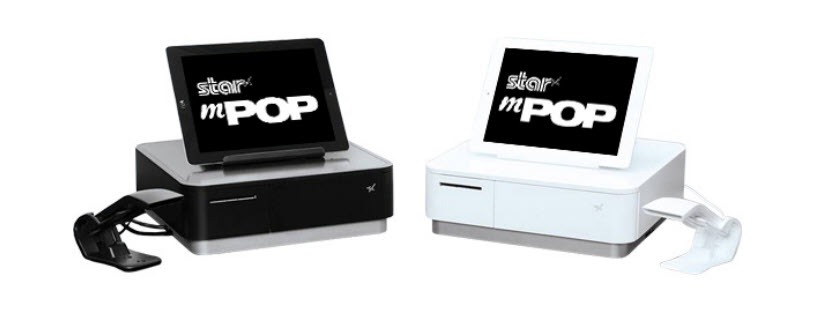
      mPOP Black and White
      The Star Micronics mPOP all-in-one is an ideal ergonomic mPOS solution.
    • Staff empowerment
    • Space saving design
    • Fast and secure transactions
    • Improved customer experience

    Line Busting

    Today’s consumers want what they want, when they want it — including a checkout process that is as easy in the store as it is online. Some shoppers will abandon their intended purchases rather than waiting on long lines. Furthermore, a study by Omnico Group revealed more than 77 percent of consumers say they are less likely to return to a store where they encountered long lines.

    Mobile point of sale solutions help retailers better manage store traffic and shorten lines at stationary checkout counters. With mPOS, employees can use tablets to complete sales and process payments anywhere in the store, and will also have the ability to provide customer service outdoors at sidewalk sales or pop-up shops. Service on the spot, with less of a wait, makes the shopping experience more convenient and pleasant, and decreases the potential for customer dissatisfaction and lost sales.

    Moreover, when mPOS gives customers the option to pay for merchandise at the point of decision, they are less likely to change their mind about purchasing your product — which can mean more revenue. Line busting supported by mPOS technology also simplifies another process that can negatively impact the shopping experience — merchandise returns. With mPOS solutions, retailers can accept returns in store aisles or use an mPOS solution to set up a temporary additional lane for returns at the customer service counter. This is an especially useful option during a period of high volume returns such as after the holidays. This also helps create a positive experience for customers, and perhaps, make them more likely to replace unwanted items with new merchandise and return to the store in the future.

    Download the full eBook, “5 Ways Ergonomic mPOS Solutions for Large Retailers Increase Sales and Boost Customer Satisfaction.”

    Staff Empowerment

    Female Retail Clerk

    Customers have high expectations about sales associates who assist them in brick-and-mortar stores. After all, if shoppers can go online to access their purchase histories, a list of items that they browsed, updates on their loyalty rewards, order status, and shipping information, why can’t in-store staff? Consumers also expect sales associates to have in-depth product knowledge, or at least be able to access information. If a shopper can look up information on his smartphone, the sales associate should be able to do the same.

    mPOS technology puts all of this information at sales associates’ fingertips. Using their tablets, the sales staff is empowered to respond quickly to customers’ needs. They can provide immediate answers to questions about product prices and availability by utilizing mPOS devices to tap into the POS and inventory management systems. If the items they are looking for are out of stock, a sales associate can check availability at other stores or warehouses and have it shipped, saving the sale.

    Equipping sales associates with mPOS means the best of both worlds for customers shopping in-store: they have access to the information they need to make their purchasing decisions as well as face-to-face service and interaction with friendly sales associates.

    Reduced Footprint

    In addition to better, faster, more customer-centric service, ergonomic mPOS solutions have another advantage: a small footprint. Unlike traditional POS hardware, these solutions can be used anywhere and, when set up as a stationary POS terminal, they are much smaller. Since they require less space on the counter, there is typically room to display impulse items or signage in an organized, aesthetically pleasing manner. An ergonomic mPOS configuration also will eliminate the need for multiple cables, which can detract from a store’s overall aesthetic appeal, as well as make it more difficult for employees to maneuver their way around the POS station.

    Increased employee comfort and the potential for improved employee performance is another practical advantage of mPOS technology. For store associates, operating large or bulky POS equipment in a cramped area can be uncomfortable and may lead to mistakes or damaged merchandise.

    Fast, Secure Transactions

    A more organized checkout area, thanks to mPOS, can help sales associates total sales and serve customers more quickly. That’s just the tip of the iceberg of mPOS advantages when it comes to payments. Advanced mPOS solutions support a variety of payment types including quick, secure, contactless payments powered by near field communications (NFC) used in mobile wallets like Apple Pay, Android Pay, and Google Pay. mPOS tablets and other devices can also accept EMV chip card payments that help protect against fraudulent payment card transactions.

    An mPOS tablet can also include a scanner that enables sales associates to scan barcodes or QR codes from a paper or digital coupon, so discounts can be applied. When loyalty rewards programs are integrated with your POS system, this information will also be available to sales associates via mPOS devices, so they can communicate points totals or help customers redeem their points for rewards. mPOS solutions can also include mobile printers so customers can still receive a paper receipt — even a receipt imprinted with coupons, surveys or other messaging — from anywhere the transaction takes place on the sales floor.

    Improved Customer Experience

    Man Holding Shopping BagAlthough there is competition from e-commerce and other channels, shoppers still primarily choose physical stores to make their purchases. The latest U.S. Census Bureau e-commerce sales statistics show e-commerce is less than 10 percent of total retail sales. The competition is primarily with other brick-and-mortar retailers who are also trying to provide an “online” experience to shoppers in their stores.

    Using data collected from all channels, sales associates can engage customers with relevant suggestions based on past purchases, asking if they’ve seen a designer’s new line or if it’s time to upgrade an electronic device purchased at their store. Sales associates can also upsell or cross-sell, suggesting additional items that can complete a purchase, helping shoppers feel more pleased with their new merchandise — and increasing revenue for the retailer.

    mPOS also helps retailers continue to fill their customer databases or customer relationship management (CRM) solution with information that helps them better understand their markets. This helps with merchandise replenishment and demand forecasting, which means customers are rarely disappointed because they can’t find what they’re looking for.


    Discover the full multitude of benefits that ergonomic POS solutions provide large retailers.

  • Star Micronics and Worldnet Payments Partner to Provide a Contactless Payment Solution to Merchants

    Star Micronics and Worldnet Payments Partner to Provide a Contactless Payment Solution to Merchants

    Worldnet’s GoChip software, paired with Star’s printing technology makes it easy for merchants to adopt contactless payments amid COVID-19 outbreak

    Somerset, NJ – April 30, 2020 – Star Micronics, a leading manufacturer of mobile, point of sale (POS), and customer engagement technologies, is proud to announce that Worldnet Payments has added support for Star’s mC-Print3 receipt printer. Worldnet Payments delivers frictionless end-to-end payments – from advice on architecture, to support in rollout and merchant migration – helping to ensure a truly frictionless integration experience for customers.

    Worldnet’s GoChip SDK is EMV® certified with major processors and provides Integrated Contactless/NFC and EMV® options. The Cardholder-Not-Present suite covers eCommerce, in-app payments, Virtual Terminal and Tokenization solutions, allowing merchants to accept any payment, anywhere, with all major credit and debit cards as well as digital wallets.

    The technology has been designed from the ground up to deliver seamlessly integrated omni-channel payments. Many businesses are finding it hard to manage all their payments touch points — multiple gateways, hardware providers, merchant accounts, and so on. By partnering with Star Micronics, the joint venture can deliver integrated solutions that help your customers advance and grow their business. The Star mC-Print3 offers a sleek and connected receipt printing solution with high-speed printing, a splash-proof design, and peripheral HUB.

    “Commerce is changing faster than ever before and this change in consumer payment behaviour has given us an opportunity to deliver a truly differentiated customer experience by innovating the payments experience” said Conn Byrne, Worldnet Payments’ Senior Vice President of Sales. “We are excited to partner with Star Micronics for a one-stop hardware and software payments solution.”

  • The Best Way to Clean Star Micronics Printers

    The Best Way to Clean Star Micronics Printers

    Across the globe, cleaning policies have been released to combat the spread of COVID-19 (coronavirus). These cleaning policies apply to every inch of a business or office – from tabletops to, of course, the point of sale (POS). There has never been a more important time to pay attention to the proper way to clean your POS station, and that includes the receipt printer. In today’s blog, explore some common cleaning and social distancing policies, as well as the proper way to clean Star Micronics printers.

    The Best Way to Clean Star Micronics Printers: Download the free guide.

    Cleaning and Social Distancing Policies During COVID-19

    Cleaning and social distancing policies vary by region, but a common thread among policies is the need for frequent sanitization of common areas and maintaining a healthy distance in between individuals.

    For an example of some policies that are in place, see below protocols that are active in New Jersey*, where the Star Micronics America headquarters is located, for businesses deemed essential. Please consult your local government to learn about the policies that apply to your region.

    • Requirements for All Businesses Continuing to Operate
      • Owners of buildings used for commercial, industrial, or other enterprises, and of residential buildings with at least 50 units, must implement the following policies at minimum:
        • Clean and disinfect high-touch areas routinely in accordance with CDC guidelines, particularly in spaces accessible to staff, customers, tenants, or other individuals, particularly following a known or potential exposure;
        • Maintain current cleaning procedures in all other areas of the facility;
        • Ensure that the facility has a sufficient number of workers to perform the above protocols effectively.
      • Additional Requirements for Restaurants, Cafeterias, Food Courts, Bars, etc. That are Still Permitted to Operate
        • Limit occupancy to 10% of stated maximum capacity;
        • Ensure 6 feet of distance between workers and customers except at the moment of payment or exchange of goods;
        • Arrange for contactless pay options, pickup, or delivery wherever possible;
        • Provide hand sanitizer and wipes to staff and customers;
        • Frequently sanitize high-touch areas like credit card machines, keypads, and counters;
        • Require infection control practices such as regular hand washing, coughing and sneezing etiquette, and proper tissue usage;
        • Place conspicuous signage at entrances and throughout the food business alerting staff and customers to the required 6 feet of distance;
        • Require workers and customers to wear cloth face coverings, and require workers to wear gloves. A business must provide, at its own expense, these face coverings and gloves for employees. Customers may be exempted if it would inhibit their health, or if under two years of age. If a customer refuses, they must be denied entry, but another method of pickup should be provided.
      • Additional Requirements for Essential Retail
        • Limit occupancy to 50% of maximum store capacity at one time;
        • Establish hours of operation specifically for the exclusive use of high-risk individuals;
        • Install a physical barrier, such as a shield guard, between customers and cashiers/baggers where possible and anywhere you cannot maintain 6 feet of distance;
        • Require regular hand washing, coughing and sneezing etiquette, and proper tissue usage and disposal;
        • Provide employees break time for regular hand washing;
        • Arrange for contactless pay options, pickup, or delivery of goods wherever possible;
        • Provide hand sanitizer and wipes to staff and customers;
        • Frequently sanitize high-touch areas like restrooms, credit card machines, keypads, counters and shopping carts;
        • Require infection control practices such as regular hand washing, coughing and sneezing etiquette, and proper tissue usage;
        • Place conspicuous signage at entrances and throughout the store alerting staff and customers to the required 6 feet of distance;
        • Demarcate 6 feet of spacing in check-out lines to demonstrate appropriate social distancing;
        • Require workers and customers to wear cloth face coverings, and require workers to wear gloves. A business must provide, at its own expense, these face coverings and gloves for employees. Customers may be exempted if it would inhibit their health, or if under two years of age. If a customer refuses, they must be denied entry, unless the business is providing medication, medical supplies, or food, in which case another method of pickup should be provided.

    How to Clean Star Micronics Printers

    Cleaning-Guide-Screenshot

    Clean and safeguard your Star POS printer – quickly, easily, and effectively. Here are some basic tips on cleaning your Star printer:

    • Clean with 70% isopropyl alcohol
    • Clean the exterior and print head only
    • Spray solution into a microfiber or cloth towel first and then wipe
    • Do not soak/submerge equipment or spray directly into product
    • For additional security, it’s recommended to always have the device powered down when cleaning
    • Correctly cleaning the printer should not affect its performance or life
    • If you have any questions about cleaning your Star printer, please contact us

    Click here to download the complete cleaning guide.

    Free Resources During COVID-19 & Beyond

    Now more than ever, safety is a priority in retail and hospitality environments. Star Micronics is proud to offer a line of solutions and resources for businesses during this challenging time, designed to keep consumers and employees safe, as well as mitigate business impact caused by COVID-19.

    At Star Micronics, our hearts go out to anyone impacted by COVID-19, either directly or indirectly, especially to those who are sick, to whom we extend our heartfelt wishes for a full recovery. To learn more about what we are doing as an organization to reduce the global impact of COVID-19, in terms of health and business, please click here.
    To browse all of our blog posts covering tips for small businesses during COVID-19, please visit our #StarForSmallBiz blog collection.

    *Source: https://faq.business.nj.gov/en/articles/3839687-what-mitigation-protocols-are-required-for-businesses-continuing-to-operate

    Discover the Best Way to Clean Star Printers

  • Contactless Payments: A Safer, More Efficient Payment Alternative

    Contactless Payments: A Safer, More Efficient Payment Alternative

    Social distancing and minimizing human contact are topics that are on everyone’s mind these days, and for good reason. Consumers and businesses alike are leveraging strategies to limit any possible exposure to outside germs – and one of those strategies is contactless payments.

    Contactless payments – or processing transactions via the tap of a credit/debit card, smartphone, or smart watch – are undoubtedly an effective way to keep business flowing while keeping your employees and your customers safe. But an added bonus is that contactless payments are growing in popularity around the world and are sure to serve you well into the future. Read on to learn more about contactless payments, how to get started accepting these modern transactions, and additional tips on how to keep safe during this challenging time.

    What are Contactless Payments?

    Contactless payments can take many forms. According to Investopedia,

    “Contactless payment is a secure method for consumers to purchase products or services using a debit, credit, or smartcard—also known as a chip card—by using RFID technology or near-field communication (NFC).

    To make a contactless payment, tap your card near a point-of-sale terminal that is equipped with the contactless payment technology. Since contactless payments do not require a signature or a personal identification number (PIN), transaction sizes on cards are limited. The allowable amount for a contactless transaction varies by country and by the bank.

    Contactless payment is also referred to as tap-and-go by some banks and retailers. Examples of non-credit or debit card contactless payments include transit cards, Apple Pay, Android Pay, and Google Wallet.”

    While these payments may seem like a recent trend, the technology has been in existence since the 1990s – however, at that time, only a small number of merchants used this payment method.

    Benefits of Contactless Payments

    • Hygienic: Contactless payments are a cleaner alternative to paying with cash or using a pin pad on a credit/debit card terminal. Simply put, there’s less opportunity for contamination.
    • Fast: A major benefit of contactless payments is how speedy they are because no PIN is required, and your employees don’t need to manage cash transactions. By speeding up transactions, you can successfully line-bust and keep your customers happy.
    • Improved customer experience: Like we just mentioned, contactless payments create a streamlined, easy, and quick experience – something consumers are sure to love.
    • Secure: While some people are under the impression that contactless payments are not as secure as a chip card transaction, contactless payments provide the same EMV security provided by chip cards.

    How Popular are Contactless Payments?

    According to a 2018 report, in the US 26% of all consumer transactions (that’s 50 billion purchases!) are made with cash, but contactless payments are building in popularity around the world and the US is bound to follow the global trend. For example, contactless payments account for approximately 20% of all transactions in Australia, Canada, South Korea, and the United Kingdom.

    It seems the US is already on that path – TD Bank has seen a surge in contactless transactions following the coronavirus outbreak, and it’s likely that consumers will continue paying for their purchases in this quick and easy way well after the pandemic has ended.

    Star Micronics has the POS hardware you need to enable modern payments including contactless, pay-at-the-table, and more.

    How to Implement Contactless Payments

    Are you ready to get started with contactless payments, if you haven’t already? Here’s what you need to know.

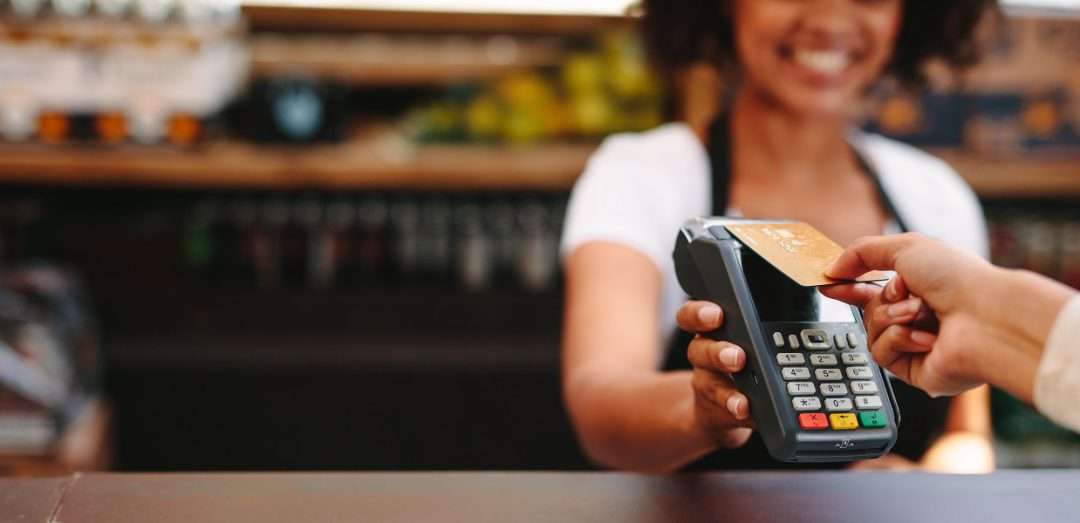
    Contactless Payment SymbolMost banks offer contactless credit and debit cards, as well as the terminals that are required for, and equipped for, processing contactless transactions. These terminals have a contactless payment symbol to show customers that contactless payment methods are accepted, but you may also communicate to your customers that you accept these payments in person, through social media or email, by placing a sign at the point of sale, or via receipt marketing.
    Some retailers set a low limit for contactless systems to prevent fraud, but some do still allow large transactions, with a required signature.

    When it’s time to pay, customers hold their card, smartphone, or smart watch 1” to 2” from the contactless symbol on the terminal. When the payment has been accepted, the terminal will alert the customer with a beep, green light, or checkmark.

    Free Resources During COVID-19 & Beyond

    Now more than ever, safety is a priority in retail and hospitality environments. Star Micronics is proud to offer a line of solutions and resources for businesses during this challenging time, designed to keep consumers and employees safe, as well as mitigate business impact caused by COVID-19.

    More Ways to Stay Safe

    At Star Micronics, our hearts go out to anyone impacted by COVID-19, either directly or indirectly, especially to those who are sick, to whom we extend our heartfelt wishes for a full recovery. To learn more about what we are doing as an organization to reduce the global impact of COVID-19, in terms of health and business, please click here.
    To browse all of our blog posts covering tips for small businesses during COVID-19, please visit our #StarForSmallBiz blog collection.

    What can Worldnet’s Omnichannel Integrated Payments do for you?

    Worldnet is proud to offer a simple omnichannel integration that brings your eCommerce, Back Office and Cardholder Present payment solutions together, and presents all that data directly into your software solution, ERP, or CRM system.

  • 4 Challenges in Restaurant Technology for the Next Decade

    4 Challenges in Restaurant Technology for the Next Decade

    People are constantly seeking new and delicious ways to feed themselves and their families without spending the time and effort shopping, preparing, and cleaning up after a meal. It seems like no one has time for that anymore, so restaurant entrepreneurs are filling the void with creative solutions.

    “Ghost” restaurants that are only kitchens and a pickup counter are serving up delicious takeout dinners for families of two, four, or more. There are more delivery options in smaller markets, and convenience and grocery stores have been expanding their foodservice offerings with more prepared foods and heat-and-serve meals. The desire for ease and speed, combined with the expansion of take-out only options means that off-premises traffic will post stronger gains than on-premises dining. Consolidation in food manufacturing and distribution will intensify.

    SMB restaurant owners can prepare for these shifts in the industry by deploying the right technology. According to The National Restaurant Association, technology will take over by 2030, so here’s what you should expect.

    Person Ordering Food Online

    1. Customer Use of Mobile Payment Technology Will Become More Widespread

    Mobile payments are catching on—quickly. From 2015 to 2018, the percentage of customers placing orders and paying through a smartphone app increased from 11% to 39%. Mobile represents 60% of all digital restaurant orders today.

    Currently, 60% of Americans order delivery or takeout once a week, and this number is expected to climb, as the popularity of off-premises dining outpaces dine-in. Restaurant owners and managers should prepare for this increase by deploying an online ordering system or mobile app and delivery solution.

    Online ordering engages the customer and gives them control over the ordering process, so they can place an order and securely process payments anytime, from anywhere. It is a win for both the customer and the restaurant: the average order placed via mobile app or online system is 20% higher, so restaurants boost their earnings while customers satisfy their cravings as quickly and easily as possible.

    2. Customers Will Expect Pay-at-the-Table Solutions

    Pay-at-the table solutions streamline the guest experience at the end of the meal. They eliminate the time spent after the check is brought. The diner puts his card on the table, the server takes it, processes the payment, and then brings it back. Most customers don’t give a second thought to handing their credit card to a restaurant employee so the payment can be processed, but when the server leaves with the card to swipe it at the POS terminal, it’s an opportunity for theft. Restaurant staff can run cards through a skimmer to steal the number before swiping it at the terminal to process the payment.

    Mobile/tablet POS solutions that process payments tableside are a more secure and convenient alternative for employees and diners. These solutions process payments in front of patrons, so their credit card never leaves their sight. Mobile POS solutions include several enhancements for tableside payments, including on-screen signature capture using a finger or stylus for an added layer of security. Tablets secured to the table are another option that eliminates the need for the server to visit the table, so diners can pay their check and the table can be turned immediately. More table turns means more meals served, which is invaluable for a small restaurant that requires multiple table turns to make a profit.

    Woman Picking Up Takeout Food

    3. 30% of Customers Say They Would Prefer to Order from a Kiosk

    The self-service kiosk market will reach an estimated $30.8 billion by 2024, according to market research compiled by the National Restaurant Association, and it’s easy to see why. The average ticket size for orders placed via kiosk are larger than those taken by employees because they upsell or cross-sell on every screen and every transaction, without needing reminders or incentives.

    Self-service technology engages with customers digitally, which is what people prefer. Although some people may feel better about placing their order with a live employee, most people are comfortable with, and will even seek out, self-service kiosks, which send orders to the kitchen as soon as they are entered.

    The National Restaurant Association conducted a survey of 2,000 quick-service and fast casual restaurant visitors, which revealed more about how long people are willing to wait for a counterperson. If the line for an employee and kiosk were of equal length, 30% of people would choose the kiosk. The same survey noted that if the line is more than four people long, most customers would prefer to use the kiosk.

    Free Self-Service Kiosk Resources

    The future of many industries lies with self-service solutions. That’s why Star Micronics is offering free online ordering resources for resellers and software developers who are helping customers future-proof their businesses with self-service solutions.

    4. Point of Sale Hardware is Constantly Evolving to Keep Up with Software Innovation

    POS hardware isn’t a one-time purchase; it’s constantly evolving because there’s so much innovation in restaurant software due to changing customer preferences and the demand for convenience. Choosing hardware based on appearance or price instead of functionality and flexibility stunts your opportunity for growth and future success. Don’t limit yourself by choosing hardware that doesn’t accommodate critical modern applications.

    For example, cloud-based POS solutions have gone from optional to mainstream, but this technology requires “always on” connectivity. Downtime is damaging for a small restaurant because it costs you money and can drastically reduce the likelihood that guests will return in the future.

    Future-proof your hardware by choosing POS components and software offered by a company that is known for innovative and reliable hardware solutions with a record of long-term success.

    Want to upgrade from a locally hosted POS setup to the cloud, but worried about connection reliability? Leveraging a solution like Star Micronics’ mC-Print3 receipt printer, with SteadyLAN®, ensures that downtime due to a poor or interrupted Wi-Fi connection is eliminated, so you can modernize your operation without worry.

    Ready to Learn More about How to Prepare?

  • Star Micronics and Joe Coffee to Provide Mobile Ordering Solution for Coffee Shops

    Star Micronics and Joe Coffee to Provide Mobile Ordering Solution for Coffee Shops

    Joe Coffee, paired with Star Micronics printers, helps local coffee shops to offer mobile ordering and loyalty programs to customers

    Somerset, NJ – April 14, 2020 – Star Micronics, a leading manufacturer of mobile, point of sale (POS), and customer engagement technologies, is proud to announce that Joe Coffee has added support for Star’s TSP143III and TSP654II printers for mobile ordering in coffee shops. Making it easier for customers to get their beverages from their favorite local coffee shop, Joe Coffee uses Star printers to allow coffee shop owners to accept and print mobile orders.

    Joe is the largest and fastest-growing mobile order ahead network for indie coffee shops in the U.S. With the Joe Coffee app, customers can order and pay ahead and have their coffee ready to pick up when they arrive. The app also makes it easy for customers to receive promotions and earn loyalty points at their favorite local coffee shop. With Joe Coffee, any coffee shop – big or small – can go digital, sell more coffee, and earn more customer loyalty.

    Star Micronics TSP143III and TSP654II both offer reliable and high-quality receipt printing. Available with both Bluetooth or USB connectivity, the TSP143III and TSP654II are easy to set-up and connect so coffee shops never have to worry about missing an order. They are also both compatible with iOS or Android, and come equipped with Star’s PromoPRNT Cloud Service. PromoPRNT allows coffee shop owners to add promotions to their receipts at no additional cost.

    “It’s imperative that Joe can integrate seamlessly into any coffee shop or cafe workflow,” says Nick Martin, Co-Founder and CEO of Joe Coffee. “Our partnership with Star Micronics empowers us to configure ticket printing for coffee shops of all shapes and sizes including cafes with full-service kitchens. Star is the only manufacturer capable of fulfilling the high volume of orders we generate for shops in our network with the speed and reliability we require.”

  • How to Plan for an Effortless POS Deployment

    How to Plan for an Effortless POS Deployment

    These days, while the state of business and the world at large comes with a lot of uncertainty, one thing that is sure to be a constant in the future is mobile point of sale (mPOS). Many business owners may have some downtime on their hands and it’s natural for them to plan for when their doors reopen. A modern POS that’s ready for the future may be a part of those plans.

    You can help your customers hit the ground running by having a healthy knowledge of what it takes to plan for an effortless POS deployment. Every business has specifics needs, and POS is certainly not “one size fits all,” but in today’s blog post we’ll explore the fundamentals of how to offer your customers a solution that will work for them well into the future.

    POS Deployment Step 1: The Meat and Potatoes

    First, you must consider the “meat and potatoes” of the POS deployment. What does this include, you might wonder? Hardware, software, and scalability are all good concerns to keep in the front and center of your mind as you help customers plan POS deployments.

    • Hardware Considerations:
      • Printer: A good starting point is to make note of which kind of POS printer(s) your customer needs. Is a desktop thermal receipt printer required? Or maybe an impact kitchen printer? Or mobile printers, for on-the-go transactions? From there, you can assess and compare printer options, keeping in mind connectivity, reliability, print speed, aesthetics, and more.
      • Cash Drawer: All cash drawers might seem similar, but they’re not. An important question to ask yourself is what size of cash drawer your customer needs – do they experience a lot of cash transactions, or mostly credit card and mobile payments? From there, it’s important to consider how many bills and coins they’d like to store in their till, as well as if they need to store checks/coupons, which would require a cash drawer with media slots, and if they plan on supporting a POS terminal or tablet POS on top of the drawer, which would require a drawer with added built-in strength. Design should also be on your list of considerations – your goal is to have your customer’s cash drawer seamlessly and cohesively fit in with the rest of the POS.
      • Peripherals/Accessories: Once the printer and cash drawer are squared away, it’s time to plan for peripherals and accessories. If your client is opting for a tablet POS, be sure to offer a stand that has both a clean design and useful features like universal VESA mounting so it can accommodate any tablet and the ability to rotate to capture customer signatures. For many businesses, a customer display is also important to prominently display an order’s total price and scanners are a must for ringing up products. If your customer is a cannabis dispensary, jeweler, grocery/deli, frozen yogurt shop, or even a farmer’s market stall, it’s important to offer POS scales that are legal for trade, easy to connect with other POS components, and portable.
    • Software Considerations: Do a deep dive into your customer’s daily functions and goals for what they want to do in the future. For example, while a good place to start is modernizing a retailer’s main POS terminal, does the customer also want to complete transactions and look up inventory while on the sales floor? Or if your client is a restaurant, in addition to a POS and kitchen printer, would they like to incorporate online ordering or self-service kiosk technology into their establishment? Make sure you offer software that can handle it all and provide an easy, one-source solution for the customer.
    • Scalability: An important factor to consider when planning both POS hardware and software initiatives is scalability. Does your customer operate just one store? Or perhaps a handful of stores? Or maybe even an entire franchise? Be sure to select hardware and software that is easily scalable, no matter what size business you’re assisting.

    POS Deployment Step 2: Affordability

    An inevitably important factor in your customer’s POS deployment considerations is price – and who can blame them?

    It’s important as a solution provider to offer products that can accommodate a variety of budgets, but one thing to keep in mind is that the cheapest option may not be the most affordable in the long run. It’s also smart to research the warranties and reliability of products, as replacing cheap but unreliable products will likely end up being considerably more expensive than investing upfront in a quality solution backed by a strong warranty.

    POS Deployment Step 3: Select a Dependable Supplier

    Your suppliers matter! Choose a supplier with attentive, solution-focused sales and integration teams that will help you not only find the right solution but ensure it will work for your customer’s specific business needs. Some factors to look for when choosing a hardware or software supplier are:

    • Robust Support: Choose a supplier that has a live support team, online resources, frequent and useful software/firmware updates, and more.
    • Industry Knowledge: Another must-have is a supplier who has a healthy amount of industry knowledge as well as the ability to act as a trusted advisor, not a product-pusher.
    • Multiple Integrations: Choose a supplier that is integrated with industry-leading hardware/software manufacturers so you know that your customer’s solution of choice will work with the tech you offer.

    POS Deployment Step 4: Look to the Future

    If your customer could look into a crystal ball and see five years into the future, we’d bet that they’d like to see themselves keeping up with the latest trends in the most affordable way possible. Do that by choosing a future-proof POS deployment in the present!

    While choosing a future-proof solution today might mean a higher price tag up-front, it will serve your customers over time and they can rest assured it will be integrated with any future solutions that they choose to deploy.

    As we mentioned above, reliability is also a critical consideration for the future. Don’t roll out a POS deployment that will leave your customers with unexpected downtime, maintenance expenses, and replacement costs.

    Last but not least, we understand the POS is just one part of a business. Marketing is also surely a priority to your customers – and did you know that the POS can play a part in that? Some receipt printers, like Star’s, feature value-added receipt marketing software which means your clients can grow their sales and customer base by simply using the tools they already have.

    We hope that these POS deployment tips are helpful as you help some of your customers plan for the future during this time of uncertainty. Our hearts and thoughts are with everyone affected by COVID-19.

    Free Resources During COVID-19 & Beyond

    Now more than ever, safety is a priority in retail and hospitality environments. Star Micronics is proud to offer a line of solutions and resources for businesses during this challenging time, designed to keep consumers and employees safe, as well as mitigate business impact caused by COVID-19.

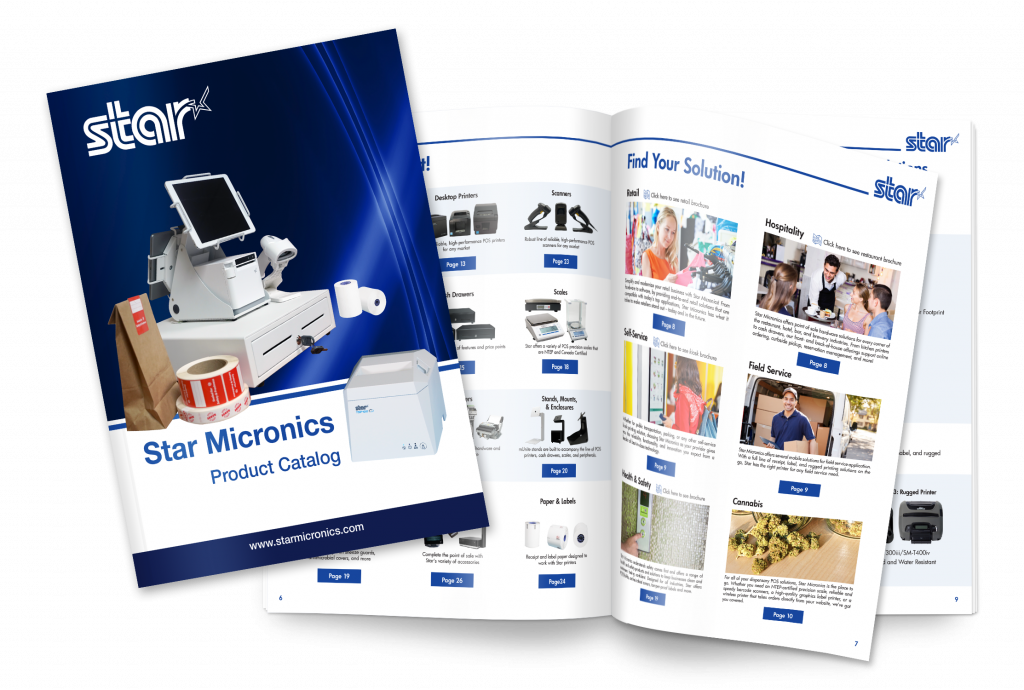
    Full 2022 Product Catalog by Star Micronics.

    Star Micronics Product Catalog

    Explore POS printers, label printers, kiosk solutions, and accessories for retail, restaurant, self-service, and more.

  • Retail During COVID-19: How to Safely Succeed

    Retail During COVID-19: How to Safely Succeed

    We are all very aware of the impact COVID-19 (coronavirus) is having globally and on countless business and personal levels. With retailers forced to close (physical) shop, what’s the best plan of action to succeed while maintaining public safety?

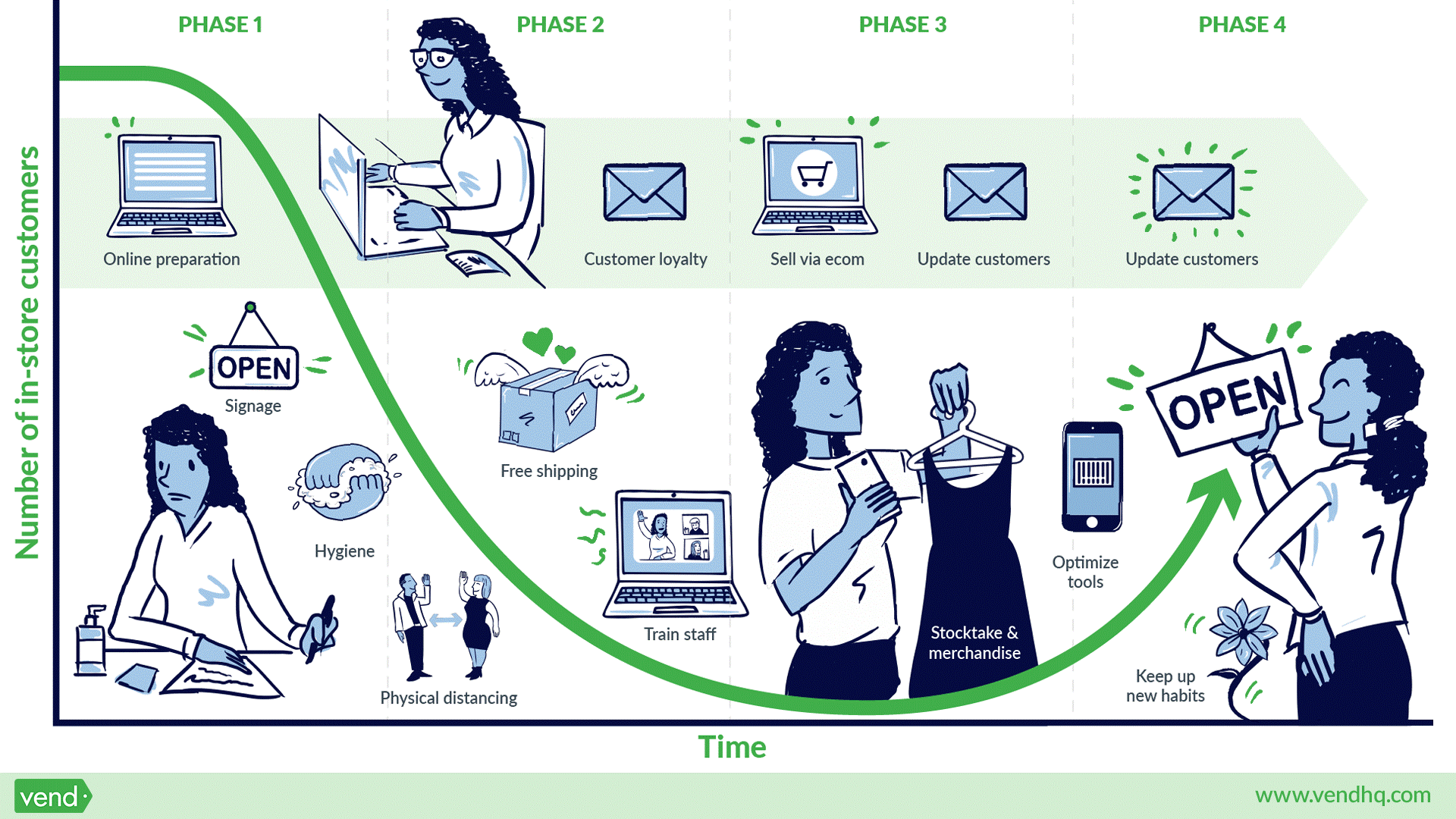
    In this blog post, we will discuss how the COVID-19 situation is multi-phase, and which steps you can take during each stage to ensure business survival – while keeping everyone involved safe and healthy. Star is proud to partner with Vend, a cloud-based point of sale and retail management software provider that enables small businesses to do business in-store, online, and via mobile devices. As a thought leader in the retail space, Vend has created a multi-phase action plan for retailers, which you can find below:

    Vend COVID-19 Retail Plan

    As you can see, this plan includes what business impact to expect during each stage of the COVID-19 crisis, as well as preparation tips for the stage you are in to ensure the best possible outcome for your business.

    While phase 1 (being cautiously open for business) and phase 2 (preparing for social distancing) have passed, today’s blog post will focus on how retailers can safely succeed during the peak of COVID-19, and best practices for opening shop back up when the crisis has passed. Read on to get ideas for your own action plan.

    What Retailers Can Do During the Peak of COVID-19

    The peak of COVID-19 is undoubtedly nerve-racking, both personally and professionally. However, it’s important to try to stay positive and keep your eyes on the future. There are several things you can do to better your business right now, and to prepare for when it’s time to open your brick-and-mortar location back up.

    • Optimize Your Online Store: Right now, your store ideally is fully online. It’s a good time to take a deep look at your e-commerce strategy and make any necessary tweaks to your website. Click here to learn some online selling tips.
    • Thoughtful Promotions: The key to navigating the current situation is being thoughtful and tasteful. You can still promote items from your store but be sure to do so in a compassionate way that shows your awareness to the current crisis. One idea is to promote gift cards to excite your customers for when they can safely return to the store and give them something to look forward to during what can be bleak times. Another idea is to hold an online flash sale containing items that could give your customers some joy at home.
    • Always be Communicating: During the peak of the pandemic, be sure to maintain a strong digital presence, not just through your website and online store but through social media and email marketing, too. Your customers cannot visit your store in-person, but appropriate regular communication can provide some relief and distraction during a hard time for many people. This is also a good way to keep customers updated on your current business situation and let them know what you’re doing to not only survive this crisis, but perhaps give back to the community as well.
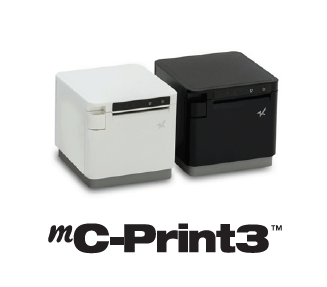
    • mC-Print3Housekeeping: There’s no better time for housekeeping and catching up on all those ideas you’ve had for months (or years) than when your doors are closed. Keep busy by taking care of your stocktaking, merchandising, and sanitizing. If you have been considering upgrading your POS, now is the time to do your research and choose a system that has all the features your business needs – now and in the future.One upgrade to consider is switching to the Star mC-Print3 thermal receipt printer, which is not only sleek in design but features brick-and-mortar, e-commerce, and promotional capabilities. The mC-Print3 can print custom on-receipt promotions, and includes Bluetooth, USB, Lightning, LAN, and CloudPRNT online ordering connectivity. Built for modern tablet POS solutions, the mC-Print3 also features SteadyLAN® technology, which provides wired Ethernet service and power to iOS, Android, and Windows devices, eliminating the worry of unstable Wi-Fi connections. The best part? The mC-Print3 works with the industry’s leading retail POS software providers, including Vend, who is offering a limited-time deal to retailers including two free months of software, as well as three free months of e-commerce and advanced loyalty program tools. Click here to learn more.

    Free Resources During COVID-19 & Beyond

    Now more than ever, safety is a priority in retail and hospitality environments. Star Micronics is proud to offer a line of solutions and resources for businesses during this challenging time, designed to keep consumers and employees safe, as well as mitigate business impact caused by COVID-19.

    How to Prepare to Open Back Up for Business

    While it’s an unquestionably difficult time for retail during COVID-19, it will pass. Preparing for opening your physical store back up can provide you with some optimism and positivity, as well an action plan for future success. Some preparation ideas for opening back up include:

    • Have Your In-Store Tools Ready to Go: If you did any upgrading while your brick-and-mortar store was closed, be sure those new solutions are set up, ready to go, and have been thoroughly tested. Contact your POS software and/or hardware technical support teams if you have any issues during testing, so that you can get the kinks worked out ahead of time and hit the ground running when you reopen your doors.
    • Maintain New Practices: You’ve likely adopted lots of good hygiene, e-commerce, marketing, and staff training habits during COVID-19. When your store reopens and life gets busier, don’t let those great habits fall to the wayside.
    • Announce Your Reopening Far and Wide: It’s the moment every retailer is looking forward to: announcing to your customers that you are reopening! On top of communicating to your customers via website, social media, and email that you are opening back up for business, consider having a “welcome back” sale. And most importantly, remember to thank your valuable customers for standing by you during the difficult time.

    More Tools from Vend

    We hope that these tips help you navigate the ongoing situation regarding retail during COVID-19. While there is undoubtedly an element of uncertainty to the crisis, it can and will pass, and we are proud to support you during this time.

    At Star Micronics, our hearts go out to anyone impacted by COVID-19, either directly or indirectly, especially to those who are sick, to whom we extend our heartfelt wishes for a full recovery. To learn more about what we are doing as an organization to reduce the global impact of COVID-19, in terms of health and business, please click here.
    To browse all of our blog posts covering tips for small businesses during COVID-19, please visit our #StarForSmallBiz blog collection.

    Looking for Some Retail Inspiration? Browse Star’s Retail POS Solutions Brochure

  • How Your Restaurant Can Implement Curbside Pickup During the COVID-19 Crisis

    How Your Restaurant Can Implement Curbside Pickup During the COVID-19 Crisis

    While many businesses are struggling to keep their doors open due to the current COVID-19 situation, it’s possible that restaurants have a much better chance to sustain their revenue and reduce operating costs. Why? Because people everywhere still have the need to eat and would love to continue to order from their favorite restaurants if they are provided with a safe opportunity to do so. To meet this need, restaurateurs can introduce methods of takeout with minimal human interaction for their customers, such as curbside pickup.

    So how exactly can you do this? The first step is to choose an online ordering provider that provides a website and mobile-responsive app which allows you to quickly roll out curbside pickup services. What exactly does that mean? Customers will be able to order their favorite meal remotely through a mobile-responsive website or app, pay online through a secure payment processor, and select a delivery method (to-go, delivery, or curbside pickup). When the curbside pickup option is selected, the customer can drive to the restaurant’s parking spot and have the restaurant’s staff deliver their meal to their vehicle.

    Sounds nifty doesn’t it? By offering curbside pickup, you offer many benefits to your customers. Here are three main reasons your customers will love curbside pickup:

    1. No Human Interaction During the COVID-19 Pandemic

    Many governors have warned the public about how human interaction is a key reason why the COVID-19 virus spreads. Therefore, customers will likely avoid walking into your restaurant and ordering over the counter. Instead, consider providing them the convenient, appealing option of mobile ordering and curbside pickup. Put yourself in the shoes of the customer for a second: Wouldn’t you like the option to drive up to a restaurant and not even have to get out of the car while the food is being prepared, and then have the meal delivered right to you? Of course, you would!

    2. Simple Pickup and Drive-Off

    Not only will your customers find it convenient to have a curbside pickup option during times of crisis, but they will enjoy it long-term, as well. Think about it – who wouldn’t love the convenience of only having to drive and park near your restaurant to receive food and not have to do anything else?

    3. Guaranteed Line-Buster

    Long lines are something that burden the minds of customers and employees alike. For customers, a long waiting time can be frustrating and for employees, long lines mean extra stress and pressure to place every order correctly in a timely fashion. With online ordering and curbside pickup however, you can stop worrying about having long lines because customers will likely naturally prefer a convenient method of ordering as opposed to standing in line for a long period of time.

    Curbside Pickup Tips

    A few tips you can remember when rolling out curbside pickup are:

    • Ensure that your customers have a convenient location to park in while waiting for their order which is also easy for your staff to find.
    • Enable online payments to make the entire process convenient for your customers.
    • Use appropriate packaging for your food to ensure hot items stay hot, cold items stay cold, and liquids don’t spill about anywhere. Also, make sure the packaging is covered properly with no air contamination.
    • Ensure that pickup happens with as little human interaction as possible. One idea to consider is delivering the items to the backseat so that there is minimal interaction.

    Features to Look for in an Online Ordering and Curbside Solution

    • Custom-Branded Mobile App: A mobile app can be a great marketing tool for your restaurant in addition to being a golden ticket in terms of convenient remote ordering for your customers. With the presence of your mobile application in Google Play and the Apple App Store, more customers will become aware of your restaurant and be tempted to try it. Couple that with other benefits such as being able to offer exclusive promotions to customers, send push notifications featuring special deals, and advertise your entire menu online, and a custom-branded mobile app is clearly a smart business decision.
    • Fully Functional and Seamless Ordering Website: A website serves as a great tool for your customers to order their favorite food from any location, and it can also help to increase customer engagement and publicity. You can also add special offers to your online ordering website, including the latest deals, discount codes, and other rewards. A smooth and convenient ordering option will certainly be something that both you and your customers love and benefit from.
    • Easy and Secure Payment Options: Security is priority when it comes to online ordering. Ensure you choose an online ordering and curbside pickup solution that allows your customers to make their payments in a convenient way, but also through a safe and secure gateway.

    Applova Curbside Pickup

    Applova’s curbside pickup solutions can help you do all the above – and more.  Click here to discover how Applova can help your restaurant stay afloat during these challenging times, while also eliminating wait times, boosting loyalty and customer engagement, and more.

    Curbside Pickup to Sustain Business During COVID-19

    With the slowdown in business due to the outbreak, online ordering solutions provide a great way to sustain your restaurant by providing your customers with the smoothest, safest, and most efficient remote ordering solutions. By providing your customers with the option of obtaining their meals through curbside pickup by ordering via your restaurants’ mobile app or website, you can greatly reduce or remove the need for your customer to spend time physically at your restaurant. It’s truly a win-win for both your business and the customer (and the public at large).

    The COVID-19 outbreak has adversely affected many businesses worldwide, and it’s extremely important that we all play a part in minimizing the impact caused by this virus by using the best measures to offset the reduction in revenue and protect the public’s safety

    Free Resources During COVID-19 & Beyond

    Now more than ever, safety is a priority in retail and hospitality environments. Star Micronics is proud to offer a line of solutions and resources for businesses during this challenging time, designed to keep consumers and employees safe, as well as mitigate business impact caused by COVID-19.

    At Star Micronics, our hearts go out to anyone impacted by COVID-19, either directly or indirectly, especially to those who are sick, to whom we extend our heartfelt wishes for a full recovery. To learn more about what we are doing as an organization to reduce the global impact of COVID-19, in terms of health and business, please click here.
    To browse all of our blog posts covering tips for small businesses during COVID-19, please visit our #StarForSmallBiz blog collection.

    Is Your Restaurant Ready for the Growing Online Ordering Trend?

  • 3 Reasons Why ISOs Must Transform Into More Than Merchant Service Providers

    3 Reasons Why ISOs Must Transform Into More Than Merchant Service Providers

    Independent sales organizations (ISOs) and member service providers (MSPs) are companies that have developed partnerships with certain financial institutions to provide services to merchants. In the past, this was enough. The market wasn’t as competitive, and business models were simple and effective.

    That has all changed, however. ISOs can no longer survive in the current market just selling merchant services. In order to survive and thrive in an ever-changing industry, ISOs must provide comprehensive market solutions, for example bundling point of sale (POS) systems and add-on services like mobile and online ordering.

    Partnering with an independent software vendor (ISV) allows an organization to bundle merchant services with other critical software solutions and hardware systems and sell them as a package deal to customers. This newer, more flexible business model is necessary in order to get ahead.

    Credit-Card-in-Hand

    Here’s Why: The Market is Growing Too Competitive

    In the past, it was common for ISOs and MSPs to reduce their rates in order to get more business. This was a smart move, as it allowed them to beat out the competition. Now, however, the market is much more competitive, oversaturated with ISOs and MSPs competing with one another for a limited pool of clients. Low rates, if that’s all you can offer, aren’t enough on their own to win out against the competition—it’s no longer a realistic option. If rates continue to get lower and lower, the market won’t be sustainable.

    A better option would be to provide additional software and services that are highly-coveted by your clients. Technology solutions like POS or add-on services with integrated payments offer major benefits to your clients. The ability to stay with one provider for both technology solutions and merchant services is appealing to business owners, who often find it difficult to manage so many separate accounts with multiple providers.

    ISOs are Getting Sold Around—Credit Card Companies and VARs

    New payment providers are bundling their software solutions with integrated payments and selling directly to end-users. To compete with this, ISOs must do the same. Rather than letting this drive them out, ISOs can capitalize on this by partnering with software integrators or ISVs that have already partnered with their payment service of choice.

    By partnering with an ISV, you can integrate payments and solutions and sell them as a bundled solution. What’s more is that you can have your merchant services bundled and sold through the ISV’s network of dealers, and you can act as a dealer within the ISV’s network. Whether you sell the bundled solutions yourself, or they are sold through a dealer, you will be reaping profits.

    You Must Remain Agile or You Will Become Obsolete

    The landscape of the industry is consistently changing. ISOs that are locked into the same business model they’ve used for years will end up being edged out by more agile organizations that are able to adapt to the changing needs and growing demands of clients. In essence, ISOs must provide more value to survive.

    Because you can no longer remain competitive just by reducing rates, you need to provide additional value beyond payments, and extend your offerings into a portfolio of solutions that are designed to help your clients overcome other business challenges. Not only will this allow you to bring on new clients, but it also unlocks the potential to sell deeper into existing accounts.

    Financial-Solutions

    To Do This:

    • Take a consulting role: Your clients look to you for guidance and expertise. Discuss their individual business needs and the
      challenges they face, and guide them towards solutions that help them overcome these challenges.
    • Offer solutions and services: Provide payment-embedded POS systems, online ordering solutions, and other consultative services. This can include assistance and guidance on things like marketing, or solutions for loyalty and gift card
      program management.
    • Consider support services: Many don’t have the time to manage, update, and troubleshoot technology on their own. Often, they don’t have the in-house resources necessary to solve issues quickly enough to prevent significant downtime and profit loss. Offer comprehensive support and services, which will increase uptime for your clients and help them stay productive. These services can be offered by your ISV or payment partner.

    To learn more about each tactic, download our full eBook, “3 Reasons why ISOs Must Become More than Merchant Service Providers.”

    Person-Using-Tablet

    How Star Can Help

    Star Micronics maintains a vast array of partnerships with ISVs. This allows ISVs and all the dealers in their channel to include Star Micronics hardware in their bundled solutions. Our hardware integrates with 90% of all POS software in the marketplace, as well as the latest cutting-edge technology to keep customers ahead of the competition.

    Our experts have extensive knowledge in the following markets:

    Leverage our expertise to determine the technology solutions your clients are looking for, and we can help you offer the right products and services to meet their needs. Star Micronics provides bundled peripherals and accessories with a sleek, modern aesthetic for POS, as well as marketing and consultation support. By partnering with Star Micronics, you can increase your portfolio, your customer satisfaction, and your profits.

    To discover the rest of our tips and take your ISO business to the next level, download the full eBook, “3 Reasons why ISOs Must Become More than Merchant Service Providers.”