Category: Solutions & Use Cases

  • 5 Ways a Self-Service Kiosk Can Boost Retail Sales

    5 Ways a Self-Service Kiosk Can Boost Retail Sales

    In a world where consumer attention spans are shrinking, and store competition has never been more cutthroat, retailers need to find new ways to make their customers want to return to their stores again and again. One way to do this is by introducing a self-service kiosk in stores.

    Many reports have found that customers want more self-service options as they shop, especially as technology improves. Self-service kiosks allow customers to quickly get the information they need and make purchases without waiting on any service staff, but there are more benefits, and they all lead to more sales.

    5 Ways A Self-Service Kiosk Can Boost Retail Sales

    The following five ways a self-service kiosk can boost retail sales will show how these changes can help retailers compete in today’s market.

    1) Help with Labor Shortage

    Self-service kiosks can help retailers bypass much of the pain of the ongoing labor shortage. They reduce the overhead costs of labor and allow shoppers to interact with products without a salesperson’s assistance. This also allows retailers to give better customer service since the kiosks can provide in-depth product knowledge and personalized recommendations.
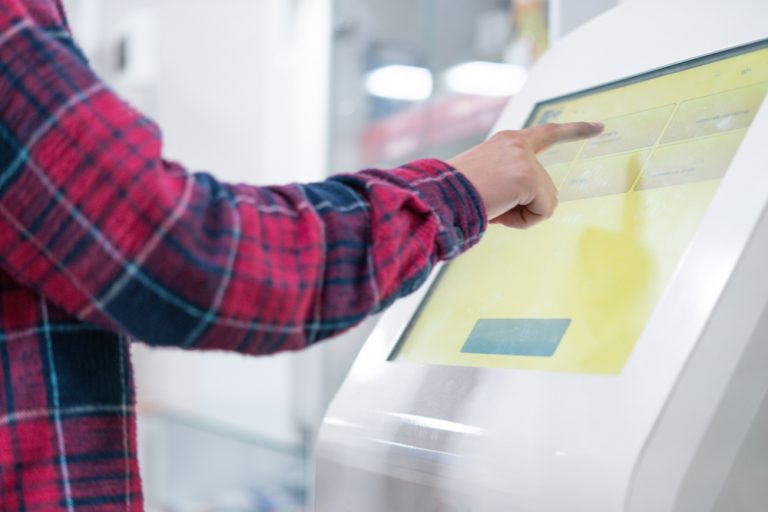
    Young man using a self-service kiosk.

    All items are neatly organized onscreen and show whether they’re in stock, saving employees time and energy going back and forth to check on supply or answer customer questions. Self-service kiosk software can answer most questions right on the spot. Then, in-store employees have more time to help shoppers with other needs.

    2) Decreased Wait Times

    Long wait times are a major reason retailers lose sales, but self-service kiosks can help. By allowing customers to serve themselves, they help shorten the wait time and create an experience where the customer is in control. Some self-service kiosks require a clerk to monitor, but one employee may be all you need to serve many customers at once with multiple kiosks around. An example of this we see every day is at the grocery check-out.

    3) Increased Upselling

    The use of self-service kiosks can also increase upselling. POS software for self-service kiosks can show customers other items they may like as they ring up current selections, often resulting in greater sales. The shopper might have been looking for a sweater, but after viewing more products in the clothing department, they may buy a jacket or pair of pants as well. With the help of self-order kiosks, retailers can track what each customer is looking at so that staff members know to suggest other items that are likely to sell.
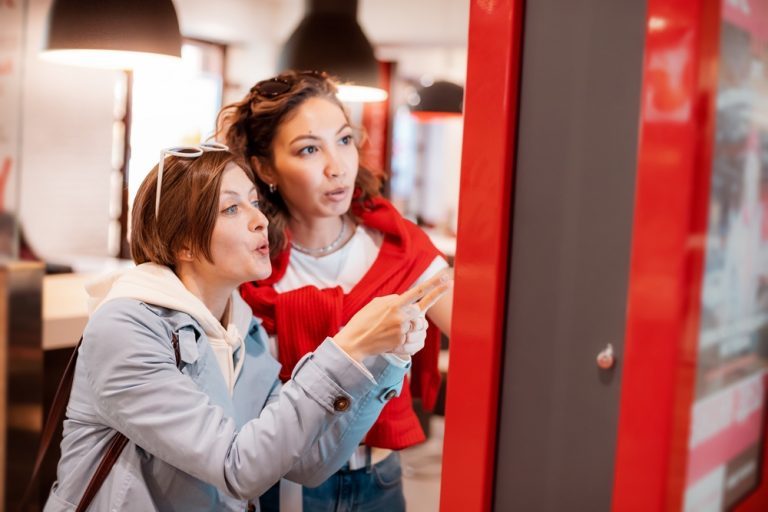
    Two young women browsing on a self-service kiosk machine.

    4) Real-time Analytics

    This brings us to our next point: self-service kiosks can track customer behavior in real time. Having up-to-date analyses of your customers is critical in decision-making and marketing. The data from POS software on self-service kiosks can help you make more strategic decisions about your store. For example, email campaigns can be optimized based on customer browsing behavior and buying trends tracked within the software.

    On the other hand, for retail managers, these tools can provide a wealth of insights into customer demographics and a breakdown of how different people browse your store. Inventory is tracked automatically, and merchants can see which items are selling better and at what times. Self-service kiosks can help retailers get to know their customers based on purchases, so knowing what items are popular and what to stock more of is easier than ever. Self-ordering kiosks also allow customers to complete simple tasks like signing up for rewards programs or redeeming coupons on the spot.

    5) Increased Customer Satisfaction

    Self-service kiosks work great because they’re easily accessible to most consumers. Most people are comfortable using a touchscreen to navigate through a platform. The kiosks cut back on lines, getting rid of awful waiting times. They also create a welcoming environment by providing instant gratification, and they offer personalized services to each customer that makes them feel valued.
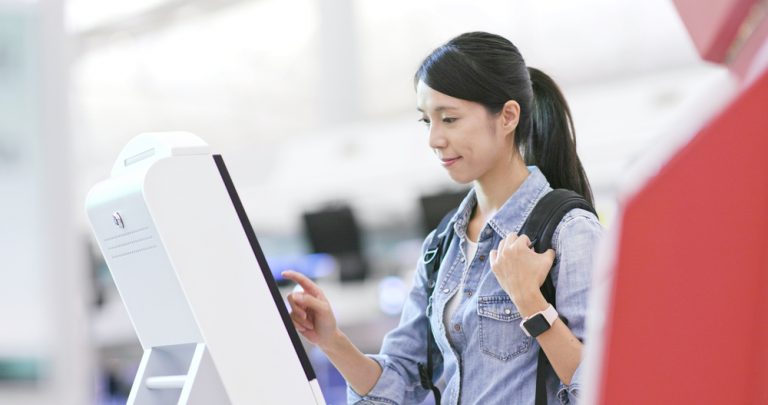
    Woman using a kiosk machine.

    Customer satisfaction inevitably rises with less waiting time and more personalized shopping experiences. When shoppers are happy with their experience, they are much more likely to return for repeat purchases and recommend the store to friends and family members. All of this leads to increased sales.

    Self-Service Kiosks Boost Sales

    With all the above benefits, it’s easy to see how self-service kiosks can boost retail sales. Using technology to help customers ring themselves up and browse through store selections isn’t going away. Self-service is growing. How are you incorporating it into your own business to stay competitive?

    Star has all you need for self-service kiosk printing and more!

  • SaaS & More: Different Business Models For Software Developers

    SaaS & More: Different Business Models For Software Developers

    SaaS, HaaS, and On-Premises: Different Go-to-Market Models for Software Developers and ISVs

    Independent software vendors (ISVs) and developers devote time, attention, and resources to developing applications that address their markets’ challenges and pain points. An ISV’s success depends on achieving those objectives. However, it’s equally important to determine the best way to deliver software to consumers and take it to market. 

    The Software as a Service (SaaS) model is an increasingly popular choice. Grand View Research predicts the SaaS market, valued at $165.9 billion in 2021, will grow at an 11% compound annual growth rate (CAGR) through 2028 to reach more than $382 billion, while overall software growth predicts a 4% CAGR in the same timeframe. 

    The benefits to users, developers, ISVs, and their partner channels are driving SaaS growth faster.

    The Benefits of SaaS vs. On-Premises

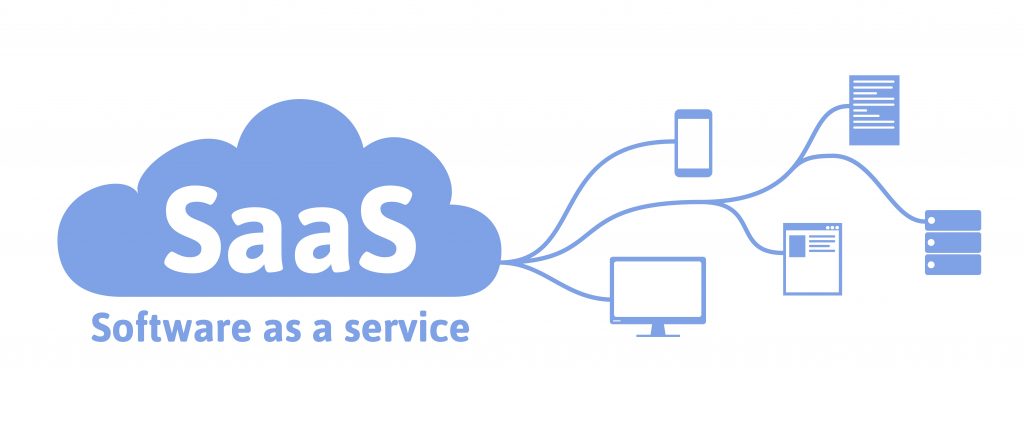
    SaaS software as a service displayed in cloud connected to other devices.

    SaaS has several advantages over on-premises software delivery for users. Compare the two options, point-by-point:

    • Maintenance: When a business buys a software license and uploads an application onto an on-premises server, that business is responsible for software maintenance, patches, and updates. With SaaS, the vendor typically handles software maintenance at no added cost, making it easier on customers.
    • Upfront costs: SaaS usually offers users more flexibility with lower upfront costs. It’s perfect for businesses just starting, or those looking to reallocate funds to other focuses like R&D. Users often pay for the first month to begin using the software, plus a one-time integration or onboarding fee. SaaS pricing models often enable lower costs than paying for the software outright. 
    • Free trials: One SaaS business model example allows ISVs to use a product-led marketing strategy. Users can try the software risk-free to ensure it meets their needs and provides value – and when it does, they can subscribe with just a few clicks. This option isn’t possible with on-premises software. 
    • Flexibility: Technology is advancing at a fast pace. So much so that it’s hard for some on-premises software users to get their money’s worth from a license before the application is outdated. SaaS software vendors can add features and update their software with the times, allowing users to take advantage of the latest and greatest tech.
    • Remote access: SaaS products usually reside in the cloud, allowing users to log in and use them from internet-connected devices. On-premises software requires a VPN or other means of securely connecting to the server to use it remotely.

    SaaS Business Model Benefits ISVs & Channels

    The SaaS business model also has benefits for ISVs and their channels. SaaS solutions are already provisioned. In many cases, users can install them on their own and get up and running in minutes, saving your team time.  

    SaaS products also typically reside in a multitenant, cloud environment, helping keep your costs low and allowing you to scale up or down easily. Developing via microservices architecture in the cloud also makes it simple for you to create and test new features. You can have multiple instances and migrate incrementally to minimize risk and disruption.

    Software as a service (SaaS)

    Additionally, ISVs and their channel can benefit financially by the ability to build a steady, monthly recurring revenue stream (MRR) from SaaS subscriptions. With a solution customers love, MRR will build as sales reps close additional deals. It’s a much easier path toward growth than making one-time sales, and it helps level out cash flow. 

    Keep in mind, however, that some markets prefer on-premises software. Examples include embedded point-of-sale (POS) software, MedTech solutions that must be installed in healthcare facilities, and railroad or intermodal transportation signaling. The key is to know your market and the delivery method they require.

    SaaS with HaaS: Bundle Software and Hardware

    Another option ISVs should consider, particularly for complex business applications, is to take your software to market by bundling it with hardware. Users appreciate simplicity. Bundling eliminates the need for them to find hardware certified with your solution that provides them with the necessary functionality. They also have the assurance that everything works together the way it’s supposed to out of the box.

    Moreover, depending on the business model you choose, you may be able to offer users Hardware as a Service (HaaS) as well as SaaS. This may be even more attractive to customers as they “lease” your software and your integrated hardware, sparing them the hassles of seeking out and buying any hardware. Bundling HaaS and SaaS can bring you considerable revenue you can rely on.

    tech-software-user-black-woman

    If the bundle is relatively easy to deploy and set up, you could consider selling directly. However, if it requires IT expertise, you may benefit from selling the bundle through a channel that can provide the end user with the proper service and support. Another option is to work with a value-added distributor that bundles solutions for ISV and hardware partners. In either case, partnerships are vital to raising brand visibility and increasing SaaS or on-premises software sales. Make sure you and your partners are on the same page with sales goals, responsibilities, pricing, and margin to build a mutually beneficial relationship.

    How Does Inflation Factor in Your Decision?

    If you’re about to launch a new solution in an uncertain economy, it’s wise to factor that into your launch strategy. An economic downturn may make pricing models for SaaS or HaaS solutions more attractive to end users because it allows them to upgrade or refresh their technology without significant capital expenditure. It can enable them to make IT a manageable monthly operating expense, which can have tax benefits.

    global-thinker-man-tech

    Suppose your application is designed to save money, such as offering automated processes that help decrease labor hours, incorporate self-service, or solve other pain points in your market. In that case, more businesses could choose your solution because of an economic downturn based on the ROI.

    Also, remember the software delivery cost to your organization, whether SaaS, a HaaS bundle, or on-premises, and choose to take your application to market most cost-effectively and successfully. 

    As always, making an informed choice that’s best for your business and market makes all the difference.

    Thinking about bundling with Star?

  • The Many Benefits of the Star Empower Program

    The Many Benefits of the Star Empower Program

    The Star Empower Program helps channel partners boost profit while offering top-of-the-line POS solutions for today’s market.

    Star Micronics began its widely successful Star Empower Program to better serve its resellers and distributors after the Covid-19 pandemic put a wrench in global commerce. The groundbreaking program helps channel partners keep their competitive edge without sacrificing the high-end point-of-sale (POS) solutions they deserve.

    Program benefits at a glance: 

    • Steep discounts
    • Marketing and integration support
    • Priority access to new products
    • Read on for more!

    The Empower Program benefits partners according to their business models and helps businesses increase margins and boost growth. Partners are also provided access to the Star Partner Portal, where they can:

    • Register special projects
    • Request demo units
    • Review purchases & sales history
    • Access marketing collateral
    • And more

    The Loyalty Program

    The Loyalty Program, an extension of the Star Empower Program, allows partners to engage in exclusive marketing and business development assistance, furthering their bottom line. With marketing support from Star, these benefits can increase partners’ brand visibility and overall revenue.

    Perks include lead referrals, tradeshow sponsorship, MDF incentives, priority access to new products, and more. Members also enjoy access to Star’s vast network of Independent Software Vendors (ISVs) and Value-Added Resellers (VARs).

    The Star Empower Partner Program offers the following benefits:

    • Product discounts and priority access
    • Sales and marketing support
    • Sponsorship at tradeshows
    • Development resources from Star’s dedicated Integration Team
    • Deal Registration
    • Star Micronics Partner Portal access with a custom dashboard

    Star believes community empowerment is the best way to create win-win outcomes and stay competitive.

    “The program captures our ‘Always Leading, Always Innovating’ spirit and increases synergy with our channel partners, enhancing product value and restoring channel integrity while rewarding our loyal partners’ commitment to our success.”

    Benefit from the Star Empower Program today:

  • Star Micronics to Showcase Their Latest Solutions at VARTECH 2022

    Star Micronics to Showcase Their Latest Solutions at VARTECH 2022

    Star will feature its extensive line of innovations at VARTECH 2022 in Orlando, FL, including the latest mPOP® & TSP143IV solutions.

    Somerset, NJ – August 31, 2022 – Star Micronics, a leading manufacturer of mobile, point-of-sale (POS), and customer engagement technologies, is excited to show off its latest technology at BlueStar’s VARTECH 2022 show, held in Orlando, Florida, September 12-13, at the Rosen Shingle Creek.

    The VARTECH conference is the prime opportunity for value-added resellers to cultivate thriving and rewarding business relationships with hardware manufacturers and software solution providers. Despite current supply-chain issues, Star Micronics has worked hard to meet market demand, assist channel partners, and provide innovative benefits to many retail verticals.

    Star has launched a variety of modern POS and self-service solutions since the last VARTECH conference and will be showcasing:

    • The return of the mPOP® with new direct iOS connectivity for all-day use.
    • The acclaimed TSP143IV in two models; the TSP143IVUE with Android Open Accessory (AOA) support and a USB/LAN dual interface, and the TSP143IVUW with USB-C and dual-band WiFi connectivity.
    • A kiosk printing solution that uses repositionable linerless label paper, the SK1-311 SK.
    • Three models within the mG-T series of POS scales, the mG-T12, mG-T30, & mG-T60; ideal for shops, grocery stores, and farmer’s markets.
    • The extensive new line of mUnite modern tablet display stands and mounts.
    • New WiFi-loving models of the popular mC-Print2 & mC-Print3 series; two thermal printing solutions from the state-of-the-art mCollection®.
    • A wide variety of popular accessories, consumables, and portable thermal printers.


    Want to see Star outside of the tradeshow floor? Star will host a Sunday night reception from 6 – 9 pm with a Star Patio Soiree under the beautiful Floridian stars! They’ll also participate in Monday’s International Food Fest by the Ice Wall with light-up cornhole. On the final night, Star will be jammin’ in the Bob Marley VIP section upstairs during the Universal City Walk Block Party. The fun will be had by all!

    “Star Micronics has been investing in several areas to help channel partners succeed. Following our ‘Always Leading, Always Innovating’ decree, this includes diversifying and expanding our product offerings and bolstering our supply chain operations and sourcing. Globally, Star has been strategic, expanding manufacturing capacity aggressively… Star is dedicated to providing our channel partners with a full solution suite.”

    Love industry news? Check out our podcast:

    About Star Micronics

    Star Micronics, a world’s leader in point of sale, has designated a portfolio of printing, secure cash management, scanners, scales, stands, and customer engagement solutions for any retail or hospitality establishment in POS and mPOS environments. Embracing the mobility wave, Star’s complementary SDKs allow users to utilize Star in tandem with Android™, iOS, iPad®, and iPhone® devices to generate receipts, Chit, and labels for its printers. In addition, Star Micronics is always leading and innovating, enabling web-based printing solutions, including remote cloud printing, wireless cash drawer solutions, proximity-based printing, and secure cash management. For more information, visit www.starmicronics.com or follow us on Facebook, Twitter, YouTube, or LinkedIn.

    Media Contact:

    Christin Dorner

    Star Micronics America, Inc.

    cdorner@starmicronics.com

    848-216-3318

  • Can Printed Receipts Help Brick-and-Mortar Merchants Avoid Chargebacks?

    Can Printed Receipts Help Brick-and-Mortar Merchants Avoid Chargebacks?

    During the Covid lockdown, a lot of retail spending moved online. This was good for both merchants and consumers, but it ultimately led to a surge in chargebacks and friendly fraud.

    As things slowly return to normal, buyers are making their way back into physical stores. Unfortunately, chargebacks are coming with them.

    Merchants have the right to contest invalid chargebacks, but proving a claim is bogus requires evidence. Brick-and-mortar merchants may have an advantage when it comes to collecting compelling transaction proof: printed receipts.

    How a Consumer Protection Became Friendly Fraud

    First, let’s examine how this problem developed in the first place.

    A chargeback occurs when a customer requests their bank to reverse a transaction. An important safeguard for cardholders, chargebacks were only intended for cases involving criminal fraud or merchant abuse, such as deliberate overcharging.

    Chargebacks give cardholders a last resort in situations where the merchant cannot—or will not—provide a refund. The system works well enough under those conditions, but these days, the process is more commonly used to commit friendly fraud.

    Friendly fraud occurs when customers leverage the chargeback system to obtain an undeserved refund. This may be unintentional; when a cardholder sees an unrecognized charge on their statement, the automatic reaction is often to call the bank, not the merchant.

    On the other hand, the cardholder could be deliberately trying to obtain free merchandise. This is a practice called “cyber shoplifting.” The scam works like this: a cardholder makes a purchase at a brick-and-mortar store, then calls the bank. They’ll say they cannot resolve the issue with the merchant and ask to have the charge reversed. The buyer then keeps the merchandise, but gets their money back.

    Ironically, what began as a consumer protection mechanism has become a tool consumers use to steal from merchants.

    “Friendly Fraud Doesn’t Happen in Physical Stores!”

    Historically, friendly fraud has been more of an issue for eCommerce; most of the claims still happen in the card-not-present space. That doesn’t mean, however, that brick-and-mortar merchants can ignore the threat.

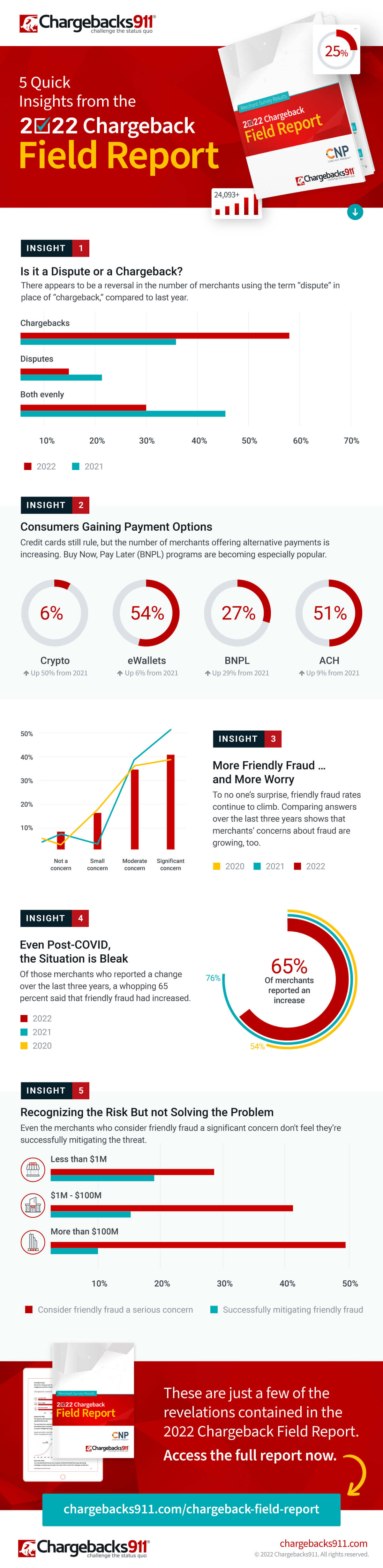
    The reality is that friendly fraud has become a growing menace to merchants as a whole, according to findings from the recently published 2022 Chargeback Field Report.

    The study, a joint endeavor between Chargebacks911 and Card Not Present, is based on survey results drawn from over 300 retail merchants across all verticals. Of the respondents, nearly two-thirds said that chargeback abuse—friendly fraud—had increased over the last three years.

    As mentioned earlier, merchants have the right to contest unwarranted chargebacks. To have an illegitimate chargeback overturned, however, the retailer must demonstrate that the customer’s claim is false. For in-store sales, this is where printed receipts come into play.

    How Receipts Work in the Merchant’s Favor

    To understand the role receipts can play in fighting friendly fraud, it’s important to know how the process is supposed to work.

    When a cardholder calls their bank to dispute a charge, the bank will usually tell the cardholder to try resolving the issue directly with the merchant. If the customer says they have already tried, the dispute will likely advance to a chargeback. Transaction funds are removed from the merchant’s account and returned to the cardholder. The merchant may not be informed about this until days later.

    This may seem unfair, but again, merchants can contest the claim through the process of representment, which involves providing the bank with compelling evidence showing the transaction was valid.

    Sometimes, a copy of the transaction details will be all that’s needed. Some point-of-sale solutions at physical stores will record and store copies of receipts, and can send them in response to the bank’s request.

    That sounds convenient, but it may not be the best choice. While digital files work in the majority of cases, electronic files are more susceptible to manipulation. That means the bank may require more evidence.

    Online retailers don’t really have another option, but for in-person sales, a scanned copy of a printed paper receipt can be more efficient and cost-effective. It’s hard to argue against a printed receipt. The specifics are literally all there in black and white.

    If the bank sees that the customer’s claim is unwarranted, it may overturn the chargeback. Not representing the chargeback, however, means the fraudster may end up with both the product and a refund.

    Physical Receipts Can Also Boost Prevention Efforts

    Unfortunately, the merchant will get hit with a non-refundable chargeback fee whether the chargeback is reversed or not. That means preventing chargebacks is usually more efficient than challenging them.

    There are numerous steps merchants can take to prevent chargebacks stemming from errors or criminal activity. However, the friendly fraud we’ve been talking about is post-transactional; it’s hard to prevent something you won’t even see until days or weeks after the fact. Fraudsters know this and have learned how to play the system.

    It’s possible that the merchant will be able to produce an electronic receipt that contains enough information to invalidate the cardholder’s claim. The fraudster is betting against it, though.

    A printed receipt is a different story. For a cyber shoplifter, a receipt printed with names, dates, prices, and truncated card data is like seeing a record of the crime before it’s even committed. One look makes it obvious that the merchant has too much evidence for the scam to work. The receipt signals that it’s time to move on to an easier target.

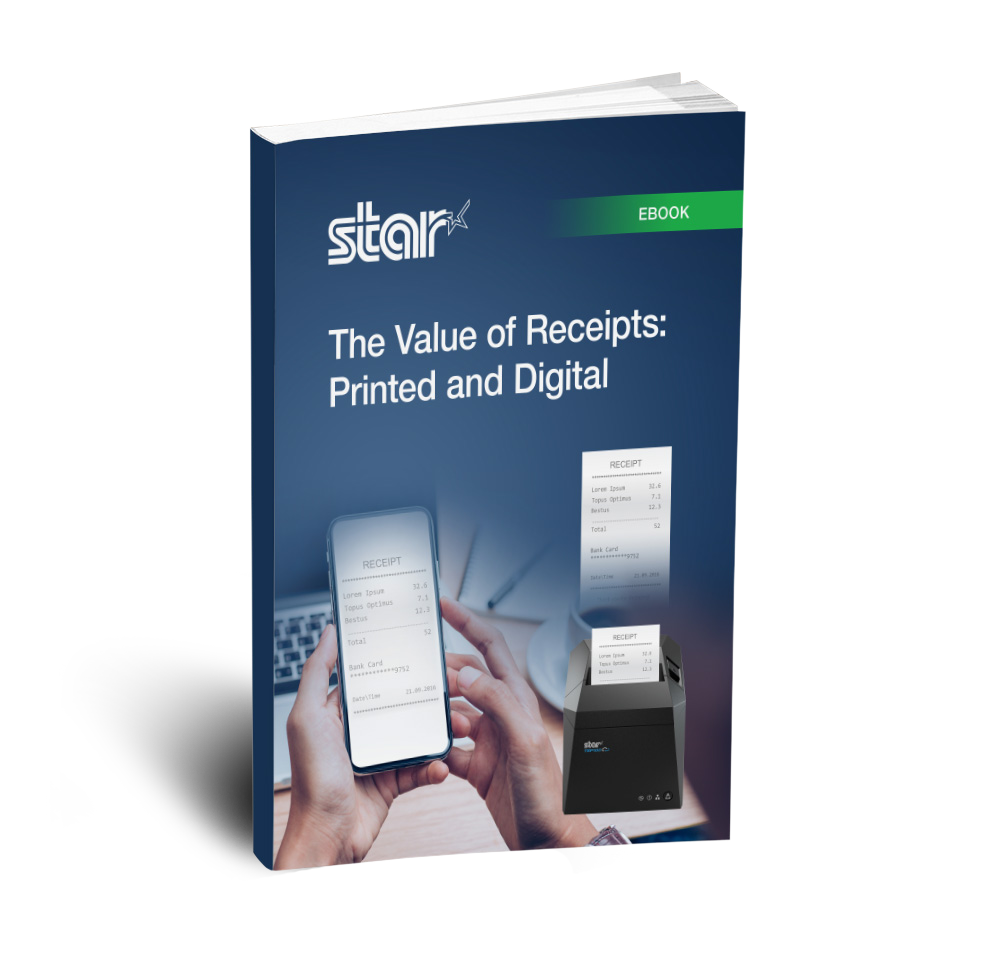
    The Value of Receipts: Printed and Digital

    There’s no getting away from it: receipts hold great value and are an irrefutable part of everyday life. 

    The Bottom Line

    Electronic transaction receipts are useful, but technology can be exploited, and systems can be hacked. Printed receipts can benefit merchants in many ways, including chargeback management and prevention.

    Having a hard record of transactions can simplify representment and increase the odds of success. At the same time, a printed receipt may encourage would-be friendly fraudsters to take their scams elsewhere. For brick-and-mortar merchants, it’s a win-win.

    Guest Post Written by Monica Eaton-Cardone, COO and Co-Founder of Chargebacks911

  • 5 Essential Pieces of Kitchen Technology for a Successful Restaurant

    5 Essential Pieces of Kitchen Technology for a Successful Restaurant

    Restaurants are adding new technology like never before, especially in light of the buzz around exciting innovations like AI-enabled ordering, drone deliveries, and ghost kitchens

    Investing in the right restaurant technologies can be the key to success for many restaurants, especially multi-location chains. In fact, 71% of food service companies surveyed in North America believe digital transformation is the most important factor towards agility.

    But one area that is often overlooked is kitchen technology. And it shouldn’t be.

    If you want to run an efficient and profitable operation, your kitchen needs tools in place to help you keep up with the high volume of orders coming in. Getting the right tech in place will make your chefs’ and line cooks’ lives a whole lot easier. 

    Every piece of your tech stack needs to speak the same language and integrate seamlessly for efficient operations and a consistent customer experience. These five essential pieces of kitchen technology will help you build that consistency and improve every area of your restaurant.

    5 Pieces of Must-Have Kitchen Technology

    The kitchen is the beating heart of any restaurant. It’s where the magic happens and it produces the product your customers have come for. As a result, your kitchen needs the latest restaurant technology solutions to make operations more efficient and to connect this area with the rest of the restaurant.

    Here are the vital pieces of kitchen technology to get in place to keep the life-blood pumping around your restaurant.

    1. Point-of-Sale System (POS)

    A point-of-sale system is the hub of your restaurant’s data and operations. It processes orders, transactions, and other restaurant data and often serves as the liaison between your front- and back-of-house restaurant technology solutions. 

    Having the right POS in place is vital to keep communication between the front-of-house and your kitchen smooth and efficient, with minimal errors. When it comes to technology for restaurants, the POS serves as your central data hub.

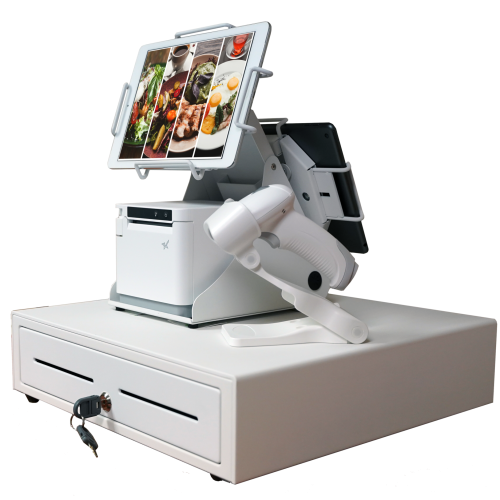
    An all-white point-of-sale system consisting of a cash drawer, an mC-Print3 printer, a wireless scanner, and tablets affixed on top.

    What is a POS?

    A restaurant POS is traditionally the system of networked hardware and software that takes orders and processes payments. But a modern POS can do a whole lot more, including managing inventory, accepting orders from third-party platforms, generating reports from analytics, and pretty much any other restaurant management task you can think of.

    These days a POS stores data in the cloud and can encompass ordering tablets, self-service kiosks, traditional tills with touchscreens, contactless payment terminals, and other restaurant POS hardware.

    Benefits of a POS

    • Streamline restaurant operations – the POS links your systems together, making operations more efficient in every department, from ordering, to payments, to production in the kitchen. 
    • Stores all your data in one place – your POS acts as the data hub for your restaurant, ensuring all your data is accurate, consistent, and accessible.
    • Reduces ordering errors – a smart POS with the latest ordering hardware and key integrations will greatly reduce the risk of costly ordering errors occurring.

    2. Kitchen Display System (KDS)

    Kitchen display systems are becoming essential pieces of technology for restaurants, especially in high-volume settings like fast-casual and quick-service restaurants, ghost kitchens, and other takeout joints where efficiency is the name of the game. 

    The KDS keeps all your orders flowing through the kitchen and makes sure all the cooks are on the same page, making it one of the most vital restaurant technology solutions on the market.


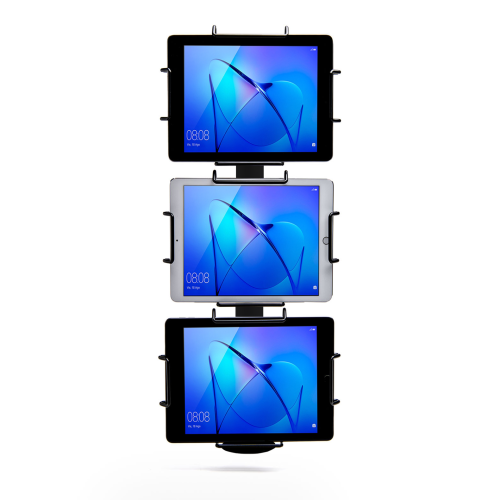
    Black Tri-Mount, which holds three tablets vertically. Tablets and tablet enclosures not included. Pole mount.
    Star Micronics’ Tri-Mount Tablet Display Stand

    What is a KDS?

    A KDS uses one or more screens in the kitchen to give the cooks a clear view of orders being processed. Typically, a screen at each station helps the cooks keep track of orders and even tells them when to fire different parts of an order for maximum efficiency.

    Traditionally, cooks keep track of orders with printed tickets that are spiked when the order is complete. A KDS can be used instead of, or in addition to, printed tickets. The real-time information provided by the system can improve efficiency and reduce the risk of costly mistakes.

    Benefits of a KDS

    • Streamline kitchen operations – a KDS keeps your kitchen production line organized and streamlined by making sure everyone knows what they need to do and when.
    • Speed up service – more efficient production helps your kitchen produce orders faster, meaning you can serve more customers at peak times.
    • Minimize errors – with a clearer picture of the orders in preparation, cooks are less likely to make mistakes that lead to food having to be remade.
    • Reduce food waste a more efficient kitchen making fewer mistakes helps reduce wasted food from sloppy portioning, over-production, and re-fires.

    3. Printers

    Although the trend is moving toward digital solutions, printers still play a vital role in the modern restaurant in the front and back-of-house. And they are getting just as smart as the rest of the tech in the restaurant.

    Many customers want a physical receipt, whether it’s just a preference or for record-keeping, and many kitchens still use printed receipts whether or not they also use a KDS to organize orders. 

    Let’s take a look at the different types of restaurant printers.

    The SP742 impact kitchen printer is great for online ordering.

    What are Restaurant Printers?

    Restaurant printers are found at the front desk, at wait stations, behind the bar, and in the kitchen – perhaps at each production station. Front-of-house printers print checks and customer receipts. Bar and kitchen printers print order tickets, so bartenders and chefs know what to prepare.

    There are two types of printers commonly used: impact printers and thermal printers. Each has its own features making each one suitable for different environments.

    Impact printers, or dot-matrix printers, physically impact the paper with ink. They can typically print in black and red, have more moving parts, and are noisier than thermal printers. 

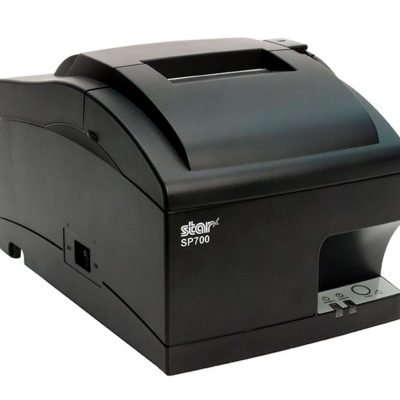
    The SP742 Impact Printer is built specifically to work in hot and humid environments, connects via Bluetooth, and can print 13 tickets per minute.

    The SP742 impact kitchen printer is great for online ordering.
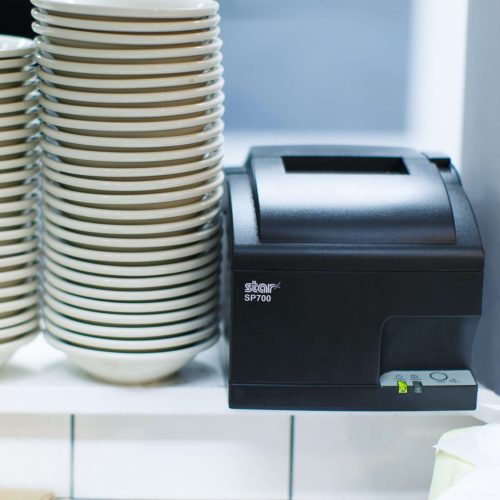
    The SP700 series impact printers from Star Micronics are one of the most popular kitchen printers.

    Thermal printers directly mark heat-sensitive paper using a heated element. Thermal printers tend to be more expensive, but they could save you money over time as you don’t have to buy more ink. They are sensitive to temperature, so they would only work in a climate-controlled kitchen but can print much faster than impact printers.

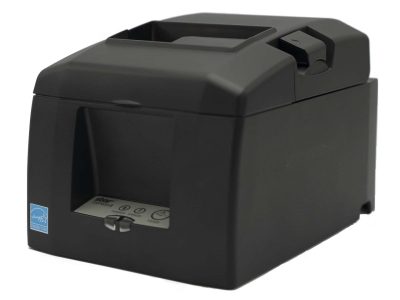
    The TSP654II Thermal Printer can print 60 receipts per minute, comes with easy drop-in paper loading, and connects to a number of peripheral devices.

    The TSP654II thermal receipt printer and the Resto for Quebec, and the TSP654IISK Thermal Sticky Label Printer by Star Micronics
    The TSP654II thermal receipt printer by Star Micronics makes an excellent kitchen printer.

    Benefits of Printers

    • Offer a physical receipt – many customers want to keep a physical credit card receipt or check for their records and for tax purposes.
    • Redundancy in the kitchen – a printer receipt in addition to the KDS allows cooks to double-check orders and some chefs prefer to have a physical order ticket as well as the KDS.

    The Growing Industry of Ghost Kitchens: The Tech You Need to Get Started

    Learn the essentials of starting a ghost kitchen and the technology restaurateurs will need to get started.

    4. Cash Drawers

    Even with a modern POS, you still need a way to process cash payments. Today, most modern cash drawers can be synced with your POS terminals via USB or Bluetooth, offering the ultimate convenience without compromising security. 

    Look for cash drawers with physical and electronic locking functions that are robust and technologically enabled.

    What is a Cash Drawer?

    A cash drawer is a secured box with a sliding drawer that protects your cash. It is linked to your POS, so it opens when a cash payment is made and change is required. 

    Cash drawers typically have multiple locking functions for security, including a manual lock when not in use and automatic locking when in use during service.

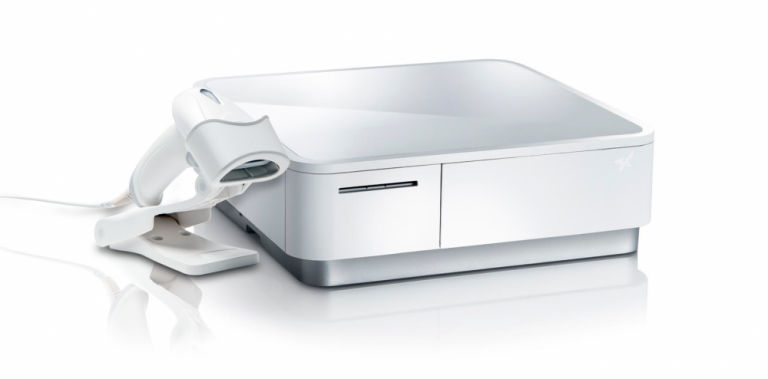
    The mPOP® Multifunction System is a cash drawer and printer in one smart device. Compatible with Windows, Android, and iOS, it offers direct iOS connectivity, which allows your iOS device to be charged while data is transferring. There is also the optional handheld 2D USB barcode scanner included with some models. The mPOP® is truly an ideal device for mobile POS (mPOS) systems.


    White mPOP and 2D barcode scanner by Star Micronics.
    White mPOP® with optional 2D barcode scanner

    5. Contactless Payment Terminals

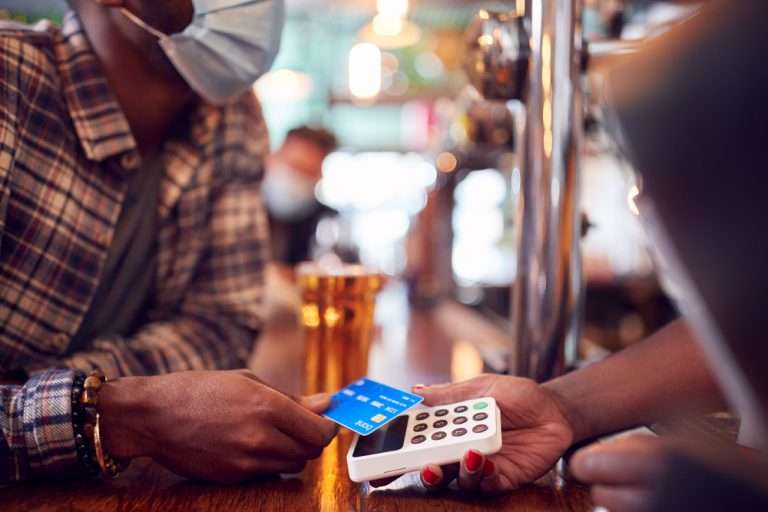
    Contactless payments are becoming the norm as customers increasingly appreciate the convenience of not having to enter a PIN or even remove their card from their wallet. It’s worth upgrading to terminals equipped with near-field communication (NFC), so you can accept payments with a phone or card tap.

    What are Contactless Payment Terminals?

    Contactless payment terminals allow guests to pay with the tap of a card anywhere in the restaurant. They are connected to the WiFi network to communicate with the POS, so they allow customers to pay at the table, at the curb, or at the drive-thru window.

    The terminals use NFC to take contactless payments from smartphones or credit cards and have keypads and card slots if the customer needs to insert the card and enter their PIN.

    contactless-payment-terminal

    Benefits of Contactless Payment Terminals

    • Faster and more convenient – contactless wireless terminals make it quicker and easier to make payments, leading to a better customer experience and more efficient service.
    • More secure – Contactless payments eliminate the need for the customer to hand over the card or reveal their signature. Card information is sent via a secure cryptographic method to ensure information can’t be stolen.

    Boost efficiency, customer satisfaction, and revenue with better kitchen tech.

    From the POS flawlessly processing orders and contactless terminals taking payments anywhere to kitchen display systems and printers keeping your service organized, kitchen technology is vital to the success of your restaurant. 

    As we’ve seen, there are exciting products on the market that help to make transactions easier and more secure, make kitchen operations more efficient, and improve the customer experience, among many other benefits. 

    It’s not just software that counts–getting the proper hardware in place, like smarter cash drawers and the right kind of kitchen printers, can help offer better service and make your kitchen more efficient. 

    Overall, investing in the latest kitchen tech will streamline your operations, improve customer satisfaction and increase restaurant profits.

    Sam-cropped

    Guest Post Written By Sam Sinha

    Sam is a restaurant tech content writer building authority for food industry pioneers like TouchBistro. After cooking and writing his way around London and Hong Kong, he now writes and grows vegetables in the Cambridgeshire countryside.

    Love industry news? Explore our podcast:

  • Star’s Christophe Naasz On The TEConnect Podcast: Cloud-Based Solution Selling

    Star’s Christophe Naasz On The TEConnect Podcast: Cloud-Based Solution Selling

    Christophe Naasz, Director of Global Business Development here at Star Micronics America, spent some time with Dean and John from BlueStar’s TEConnect Podcast to discuss cloud-based technology and solutions. The three lay out how VARs can approach customers about utilizing the cloud for their businesses to stay competitive and relevant.

    Consumers are moving forward with the latest technologies available, and cloud-based services are no longer an option for businesses. From online and omnichannel ordering to remote updates and secure data storage, the cloud offers business owners advantages that cannot be garnered elsewhere.

    From TEConnect:

    We all know that cloud computing is where it’s at, but not all businesses, especially retail & hospitality, are on board just yet. This week, Star Micronics’ Christophe Naasz is here to help VARs explain the benefits of cloud-based solutions.

    • How do cloud-based solutions improve customer experience?
    • What are the best talking points and questions to ask your customers?
    • How do cloud solutions benefit management and back-of-the-house insights?
    • Finally, what’s Star’s philosophy on the cloud?

    It’s the episode laying in the grass saying, “Hey, that cloud looks like recurring revenue!”

    Have a listen:

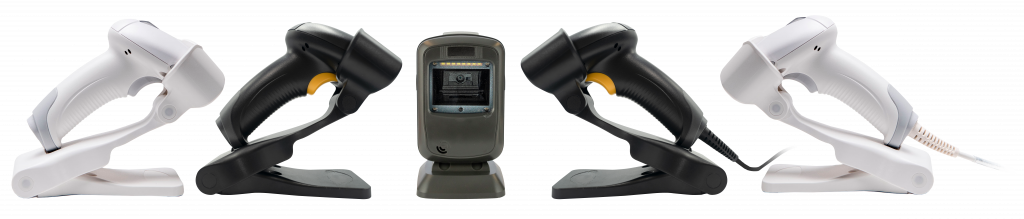
    Cloud-Approved: Star’s 2D Precision Barcode Scanners

    Having quality barcode scanners and imagers are must-haves for businesses working in the cloud! As a complete POS solution provider, Star Micronics offers a line of sturdy and reliable 1D/2D barcode and QR code scanners to complete your cloud-based solution. Whether swiftly ringing up your customers or taking in a wide variety of inventory, Star’s scanners are precise, drop-resistant, and work as quickly as you do.

    We offer a desktop, handheld usb, and Bluetooth wireless handheld for your convenience, with our wireless model holding up to 12 hours of battery life.

    • More Comfort, More Productivity
    • Fast, Reliable, & Drop-Resistant
    • 12-Hour Battery Life for Mobile
    • Scan on Paper or Screen
    • Protection from dust and water

    Captures high-density, high-volume, and distorted barcodes on paper or screen.
    Plus, all work seamlessly with our line of trademark printers!

  • 2.4GHz or 5GHz: Which Do I Need For My Small Business?

    2.4GHz or 5GHz: Which Do I Need For My Small Business?

    If you’re a small business owner, understanding the difference between traditional 2.4GHz wireless bandwidth and the newer 5GHz might save you time, money, and future headaches. 

    Many consumers assume the higher number must be better, so they choose to use that for their devices. However, neither bandwidth is actually “better” than the other. They’re simply different, with each having pros and cons. Whether you want to use 2.4GHz or 5GHz bandwidth all boils down to what you need.

    First, let’s find out what the difference is between the two:

    The Differences Between 2.4GHz & 5GHz WiFi

    2.4GHz

    When it comes to wireless internet, 2.4GHz has been the standard used in various devices, including WiFi routers, microwave ovens, cordless phones, Bluetooth devices, and wireless cameras. It allows devices to connect over a longer range and penetrates better through solid objects such as walls. It’s a perfectly high-functioning bandwidth but falters when it comes to how much data can be exchanged (uploaded or downloaded) within a particular length of time. Plus, it’s prone to disturbance and interference from other devices on the network because of overcrowding.

    5GHz

    As mentioned above, many devices use the 2.4GHz band. As the signal becomes overcrowded and causes a lot of interference, it slows down the network considerably. In this scenario, 5GHz appears to be the rescuer, having little to no interference. Many devices still don’t use it, so it’s less clogged. It relieves internet consumers from slow network speed and facilitates a higher data range. Its only drawback is that it doesn’t cover large areas or easily penetrate through solid objects.

    Connected city of the future.

    Is 2.4GHz or 5GHz WiFi Best For My Business Environment?

    After learning the pros and cons of both frequencies, the most frequent question consumers ask is which band is preferable. Both certainly have perks, but you must consider some critical factors as a small business owner. 

    Start with determining the size of your workplace. Although the coverage area is decent and the bandwidth is more robust, 5GHz won’t be able to cover an extensive area. With larger spaces, 2.4GHz may be best suited for you. If your workplace has multiple devices using 2.4GHz wireless, it may cause interference and slow down your connection. In that case, perhaps 5GHz would be better for you.

    What devices are you using?

    Also, consider the devices you are using. How many only need a 2.4GHz network? Bluetooth devices and microwave ovens will only be using 2.4GHz, so if your business uses many, you may need 5GHz for other devices, like smartphones. Microwave ovens are staples in professional kitchens, so if you own a restaurant or food delivery service, you may also want to look into 5GHz.

    Remember that 2.4GHz uses long transmission waves that easily penetrate through solid walls and objects. It’s ideal for internet browsing, but 5GHz is the go-to for streaming or playing online games.

    Whether in retail or the restaurant industry, your answer depends on your business needs. Choosing which wireless bandwidth to employ is all about what best suits the environment of your workplace. Some businesses may get by using only 2.4GHz bandwidth, while others may need the extra power of 5GHz to make it work. The key is having the correct information and knowing what you need.


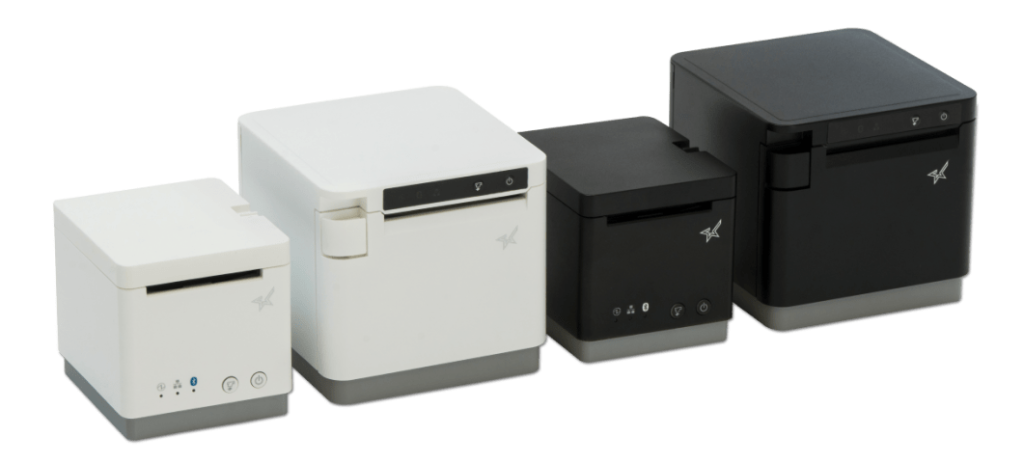
    Black and white mC-Print2 and mC-Print3 thermal receipt printers by Star Micronics.
    mC-Print21W & mC-Print31W

    With the mC-Print21W, the mC-Print31W, or the TSP143IVUW thermal receipt printers from Star, you get printing solutions that work on either bandwidth.

    Whichever bandwidth you need, Star Micronics has your printing solution. The mC-Print21W, mC-Print31W, and TSP143IVUW all support dual-band (2.4GHz / 5GHz) WiFi. Networks that need long-distance coverage can use 2.4GHz. The more powerful 5GHz is best for reducing lag and interference, especially in busy kitchens with microwaves and hardware that compete for bandwidth on a 2.4Ghz network. By offering a choice to use one of the two frequencies, 2.4GHz or 5GHz, these Star printers provide maximum flexibility when connecting to any network.


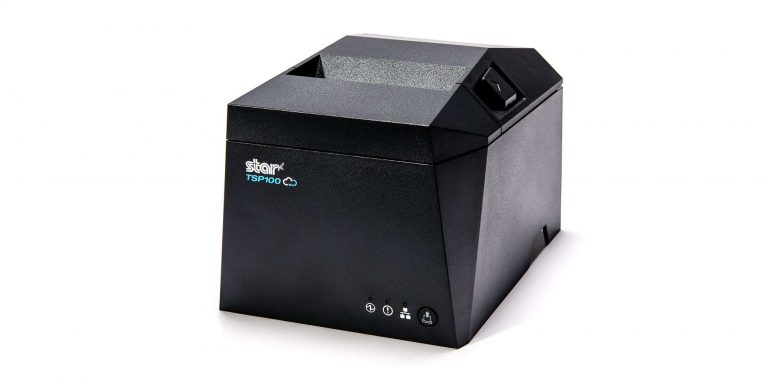
    TSP143IV thermal receipt printer by Star Micronics
    TSP143IVUW

    These thermal printers are also Cloud Ready, able to connect to any cloud application that supports Star’s CloudPRNT technology. With the addition of Star Micronics Cloud Services, including Digital Journal, cloud promotion print management, and device monitoring. They offer retailers and restaurateurs the next generation of POS printing, enabling marketing and receipt tools for the omnichannel world.

    Love industry news? Check out our podcast:

  • Why Thermal Printers Have A Place In Today’s Modern Kitchens

    Why Thermal Printers Have A Place In Today’s Modern Kitchens

    Last week, I spoke with John Maieli, Channel Partner Executive at Star Micronics America. Over the course of our conversation, he shared some thoughtful perspectives on modern kitchens and the technology that supports them. Having spent nearly two decades working in professional kitchens, John understands the environment well—the pace, the pressure, and the skepticism that often comes with introducing new equipment.

    As Content Specialist, I serve as the bridge between Star Micronics and the worldwide web (even beyond), translating ideas and innovations into stories that resonate with operators and partners. People usually come to my team when they have a message to share. John, however, came with something more: a vision of thermal printers playing a larger role in professional kitchens across the country.

    As we spoke, he tried to keep his enthusiasm contained, but I still caught the twinkle in his eye. It was clear there was more to explore. I asked if he could spare an hour for a deeper conversation. He agreed. Below is our conversation.

    What has your experience been in a professional kitchen?

    I have over 16 years experience in professional kitchens. I started at age 14 working in a wedding cake bakery owned by a family friend. It turned into a passion, so I attended Johnson & Wales University, where I received a BS in the science of baking & pastry. I went on to work in a chocolate and sugar school, a 5-star, 5-diamond hotel and resort, a Michelin star restaurant, fine dining restaurants, a platinum country club, fast-casual dining, and a bakery.

    The mC-Print3 thermal kitchen printer in a modern heat-controlled environment.

    So you know professional kitchens well. Impact printers are common there, while thermal is often frowned upon. Why do you think thermal printers still have a place in commercial kitchens?

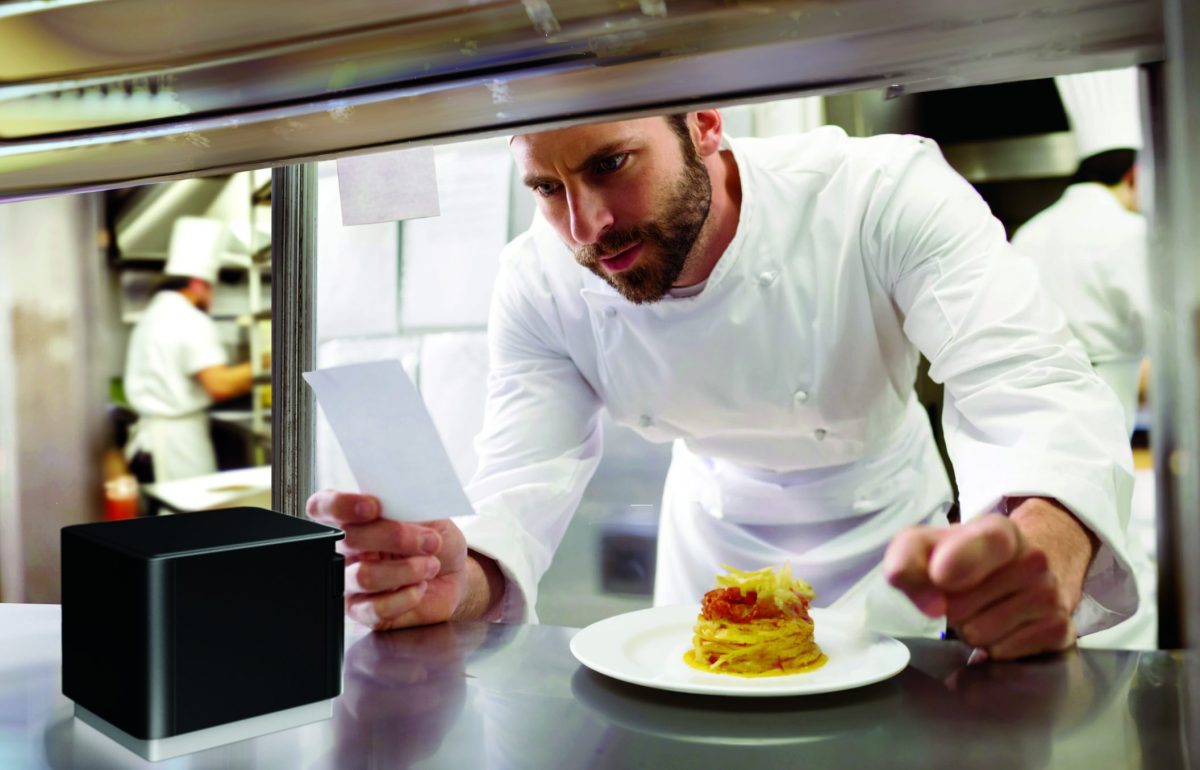
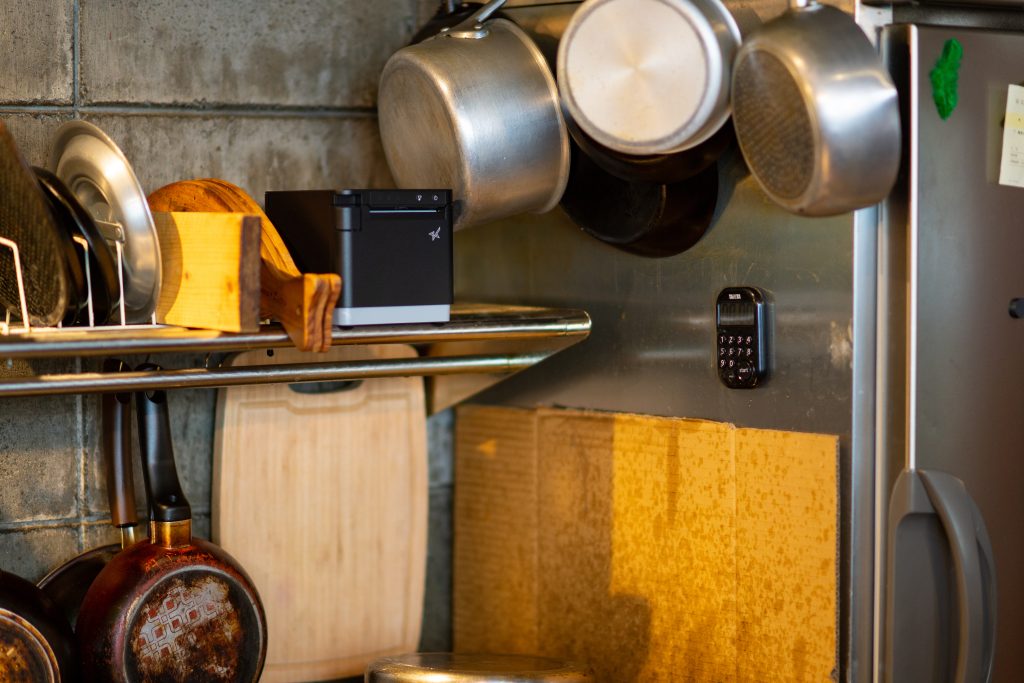
    Kitchens have come a long way over the years. Many are very modern, with electronic gadgets everywhere, including kitchen display systems (KDS) on computer screens. In today’s modern kitchens, where heat and grease are kept under control, there is a place for thermal printing. I see thermal printers like the mC-Print3 as essential peripherals to the modern kitchen KDS.

    I see what you mean. If there are computer screens in a kitchen, then thermal printers can also be there.

    Honestly, even in a kitchen without a display system, this printer would shine. The mC-Print3 is seriously the ultimate printer. It has so much that any modern kitchen would benefit from.

    So, you know all about Star’s printing solutions. What are some of the advantages the mC-Print3 thermal printer would have over impact printers in the kitchen?

    • Speed – thermal printers are faster than dot-matrix printers resulting in faster ticket times. Some on-the-fly needs for printed tickets (last-minute changes, birthdays, allergies, seat changes, etc.) can be made quickly without staff waiting for the tickets to print.
    • No ribbons – no changing of ink ribbons needed. Thermal heads don’t need to be changed as regularly as ink ribbons. Who wants to mess with that in a kitchen?
    • Less noise – thermal printers are quiet, which can be significant in suitable environments. If sound is necessary, a buzzer can be added so that there’s a ding or a buzz every time a ticket prints.
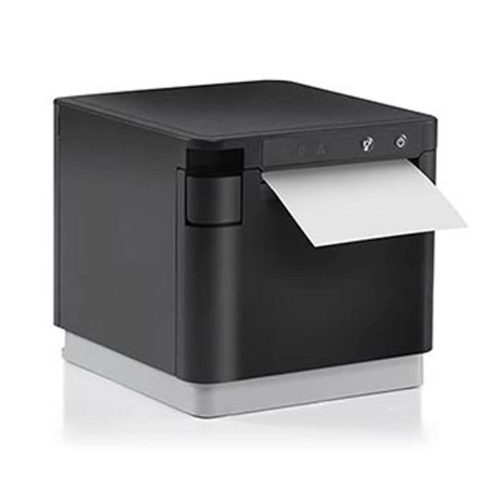
    • Print Flat Technology – tickets that come out of the mC-Print3 are flat, and they remain that way. No curling is excellent for longer tickets as you can see everything easily.
    • Wireless capability – there’s also an mC-Print3 with wireless capability, which is a great option to have. It doesn’t have to be stuck near the router. It can go wherever there’s a nearby outlet and it will still be connected.
    • Splash-proof/Insect-proof – critters and crud can’t get into the mC-Print3 and ruin the print head. Plus, its compact size makes cleaning a breeze. You can lift the printer with one hand – I know about cleaning restaurant kitchens… you only have one hand available to move things around!


    The mC-Print3 thermal receipt printer by Star Micronics.
    The mC-Print3 thermal receipt printer by Star Micronics

    What are some concerns you’ve heard about thermal printers in the kitchen, and how can they be avoided?

    The biggest concerns I hear are heat, humidity, and not having multiple copies of tickets for different food prep stations. Yet heat & humidity are better controlled now more than ever. Modern kitchens are full of equipment with the same limitations as thermal printers. Would a tablet be installed under the heat lamp or on top of a fryer?

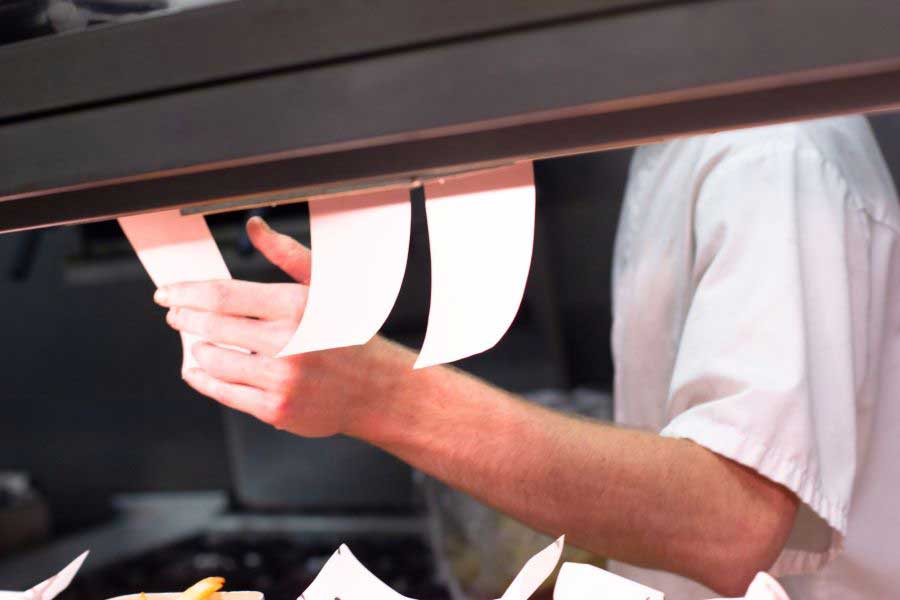
    Software dictates coursing now, with a new ticket printed each time a course fires instead of the old ways. Chefs may be used to seeing black and red ink, but dish modifications are highlighted in other ways with thermal. At the end of the day, an order ticket is meant to be read.

    As for not having carbon copies of tickets, most modern prep stations either are or should be equipped with individual printers if two or more stations need to come together on a single dish. Kitchen display systems simplify each process. The server sends tickets that go to either the hot or cold kitchen (salad station, for example) or the ticket fires to the pastry station for dessert.

    It’s the same way tickets go to the bar instead of the kitchen. No more having to hand a blurred yellow carbon copy of an order to another station.

    Hear John talk more in-depth about modern kitchen hardware:

    Restaurant-Kitchen-Order-Tickets

    That’s all very true. So, with all this talk of the “modern kitchen,” what kind of establishments would you recommend the mC-Print3 thermal printer to?

    I see the mC-Print3 as a benefit to any restaurant utilizing a KDS (kitchen display system). Paper tickets are essential in restaurants – that won’t be going away anytime soon – and any modern food station with an mC-Print3 installed would significantly upgrade functionality, speed, noise level, and overall look and feel.

    Restaurants and resorts wanting to deliver a fresh, elegant dining experience, elevating the customer experience would do well to switch to thermal. I’m particular to the mC-Print3.

    It certainly has an attractive design. Any further comments?

    Yeah, I’d like to mention that Dot Matrix technology (for impact printers) started in the 1970s. It wasn’t at the point-of-sale (POS) then, and it wasn’t until the 80s that Star began manufacturing dot matrix for POS, but the SP700 series, the gold standard in kitchens today, is about 15 years old now.

    This is just something to consider when making your next purchase with all the changes the industry is going through today. The mC-Print3 is future-proof, meaning you can change your KDS, your connectivity, and you won’t have to change your printer. It’s truly the ultimate printing solution.


    The mC-Print3 thermal receipt printer by Star Micronics.
    The mC-Print3 receipt printer is where thermal excels in the kitchen

    Have questions about upgrading your restaurant operations with modern thermal kitchen printers?

  • Budge Technology: A Contactless POS Solution For Restaurants

    Budge Technology: A Contactless POS Solution For Restaurants

    Complemented with Star’s TSP654II and SP742, Budge Technology helps restaurants manage their operations efficiently and take orders from anywhere.

    Somerset, NJ – May 11, 2022 – Star Micronics, a leading manufacturer of mobile, point of sale (POS), and customer engagement technologies, is proud to announce that Budge Technology supports Star’s TSP654II thermal printer and SP742 impact printer. Budge Technology offers restaurants a dine-In mobile ordering solution to increase the speed and efficiency of customer waiting lines.

    Budge Technology offers restaurants a dine-in contactless solution to help customers view a live waitlist and order tracking, and the solution helps restaurants to build customer loyalty based on frequency. The solution also helps restaurants save money by eliminating third-party delivery fees, maximizing efficiency by allowing customers to order for themselves, and freeing up time for waitstaff.

    With the integration of Star’s TSP654II, Budge Technology offers restaurants a high-speed thermal receipt printer with CloudPRNT, allowing the printer to retrieve and print mobile online orders. By using Star’s SP742 impact printer, Budge Technology offers restaurants a reliable kitchen printer with two-color printing providing restaurants with the ability to identify order exceptions easily, and is perfect for hot and humid environments.

    “Budge Technology is thrilled to partner with Star Micronics to offer restaurants a mobile dine-in ordering solution. Star’s hardware paired with our software offers restaurants a reliable and fast solution, allowing restaurants to receive mobile online orders to speed up waiting lines.”

    Love industry news? Check out our podcast:

    About Star Micronics

    Star Micronics, a world’s leader in point of sale, has designated a portfolio of printing, secure cash management, scanners, scales, stands, and customer engagement solutions for any retail or hospitality establishment in POS and mPOS environments. Embracing the mobility wave, Star’s complementary SDKs allow users to utilize Star in tandem with Android™, iOS, iPad®, and iPhone® devices to generate receipts, Chit, and labels for its printers. In addition, Star Micronics is always leading and innovating, enabling web-based printing solutions, including remote cloud printing, wireless cash drawer solutions, proximity-based printing, and secure cash management. For more information, visit www.starmicronics.com or follow us on Facebook, Twitter, YouTube, or LinkedIn.

    About Budge Technology

    Budge Technology is a Philadelphia based tech startup focused on creating solutions for the restaurant industry that you may have never seen before. We are hopeful trying to alleviate the stresses forced on to a restaurant by creating a browser-based software built directly by restauranteurs with the flexibility to deploy new ordering concepts into your operation. Free point of sale and integrated ordering technology for all restaurants.

    Media Contacts:

    Christin Dorner

    Star Micronics America, Inc.

    cdorner@starmicronics.com

    (848) 216-3318

    Max Weiner

    Budge Technology

    max@budge.tech

    (215) 627-6910