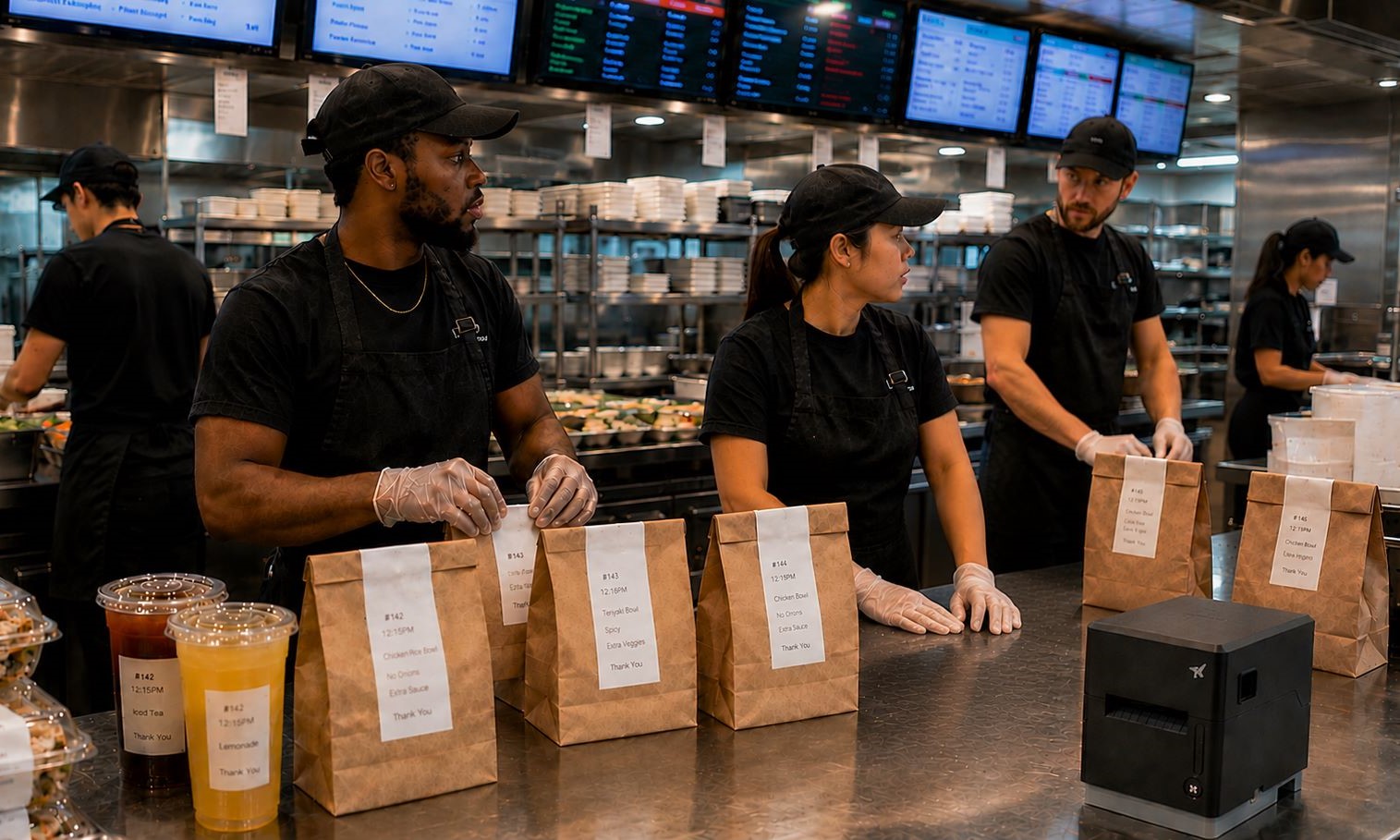
The market is filled with label media options for quick service restaurant (QSR) labeling. However, all labels are not created equal, and neither are their adhesives. While your focus may be on label size and finish, you must also select labels based on their ability to stay in place or allow for repositioning when necessary. The right choice will support operational speed, order accuracy, and food safety in any food service labeling workflow.
QSR labeling plays a critical role in modern restaurant operations. Labels help communicate modifiers and allergy information in food prep areas, identify pickup and drive-thru orders, support delivery workflows, and create tamper-evident seals for customer confidence.
However, all labels are not created equal, and neither are their adhesives. Choosing the right adhesive for each QSR labeling application helps improve workflow efficiency, food safety, order accuracy, and customer satisfaction.
Table of Contents
Understanding Linerless Label Adhesives for QSR Applications
Linerless labeling is gaining major traction in QSR and fast casual environments—and for good reason. These labels print without a paper or silicone liner, allowing staff to peel and apply in one quick step. That means faster workflows, less clutter, and fewer disruptions during high-volume service hours.
Without the waste backing, linerless labels also help reduce slip hazards, keep prep areas cleaner, and minimize landfill waste. More labels per roll means fewer roll changes, less storage space required, and more uptime at every station.
But the benefits go beyond logistics. Linerless labels also:
- Improve order accuracy with clearer item- and bag-level labeling
- Create a more professional, branded presentation—no staples, no handwritten notes
- Support sustainability goals while lowering supply costs
- Provide more labels per roll, increasing uptime and boosting ROI
- Simplify employee training with an intuitive, one-step labeling process
From prep to packing, linerless labeling offers a smarter, more scalable approach to QSR operations.
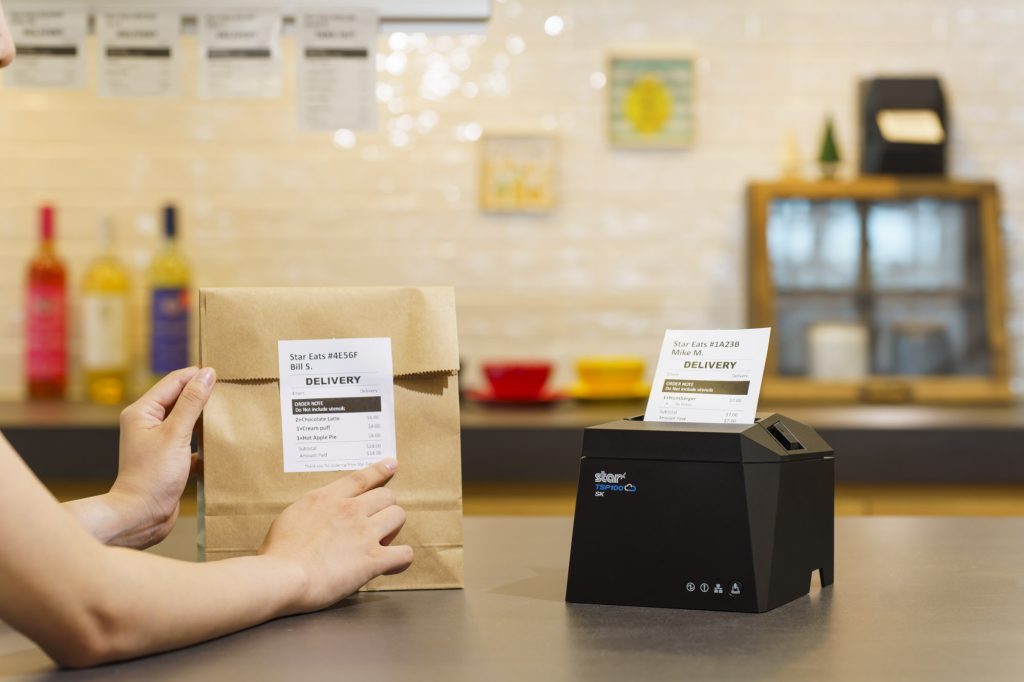
Why Adhesive Strength Matters in Food Service Labeling
The benefits of linerless labels are clear. However, to maximize the value you get from them, you need to choose labels with the right adhesive strength. Everyone has experienced the frustration of not being able to remove a permanent label in the wrong place, or labels that don’t stay fixed where you need them.
QSR labeling often requires labels to be applied to different surfaces like paper or plastic, making adhesive choice even more important. Ensuring labels for each quick service label printing application have the right adhesive will lead to greater efficiency, productivity, and customer satisfaction.
In general, QSRs can choose from labels with three types of linerless label adhesives: diamond-pattern, full, or permanent.
1. Diamond-Pattern Label Adhesives: The Repositionable Option
Diamond-pattern adhesive allows you to place a label and reposition or move it. Repositionable linerless labels with diamond-pattern adhesive also have the advantage of not leaving sticky residue behind, keeping work surfaces, shelves, food containers, and packaging clean. They also help reduce waste due to mislabeling.
- Can be repositioned after application
- Leaves little to no residue
- Helps reduce waste from mislabeling
- Ideal when information needs to move with the workflow
2. Full-Coverage Label Adhesives: Strong Temporary Adhesion
You can also choose full adhesive coverage for QSR labeling. These repositionable linerless labels stay in place reliably for a short time, for example, when labeling a package with a breakdown of contents or for customer pickup. Customers can remove the labels with little effort if they choose.
- Provides greater surface coverage
- Holds securely for short-term applications
- Can still be removed when needed
- Useful when labels need to stay attached through handoff
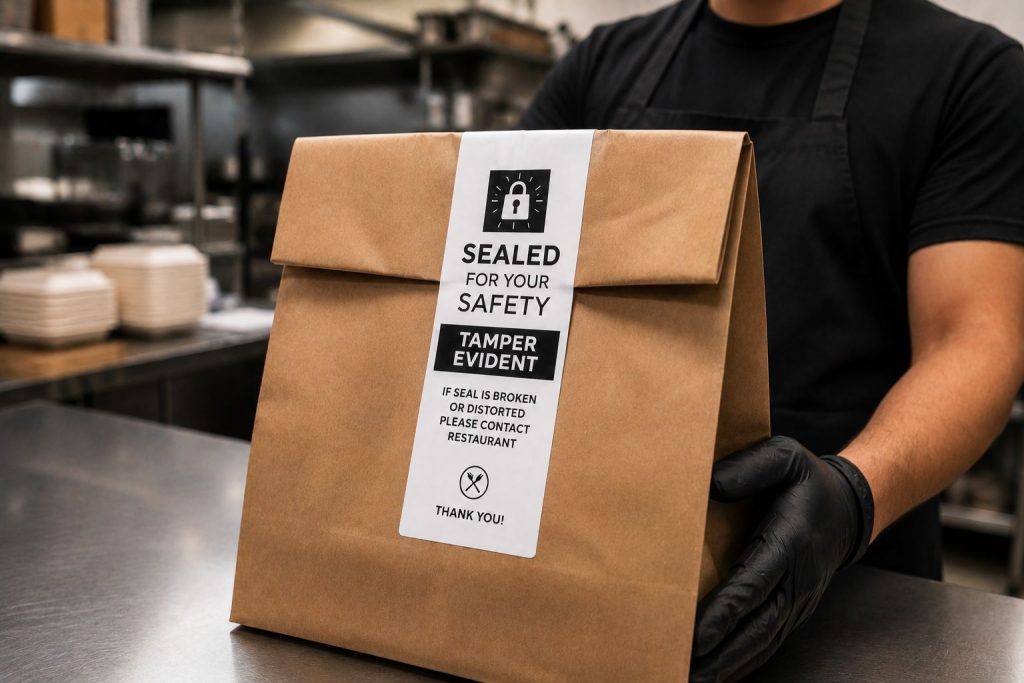
3. Permanent Linerless Label Adhesives: Tamper-Evident and Secure
Permanent linerless label adhesive doesn’t budge. Once applied, these labels will not budge easily, giving QSRs a solution to generate tamper-evident labels. Permanent linerless labels help QSRs build trust in their delivery processes, showing that once employees package an order, no one opens or touches it.
- Designed for long-term adhesion
- Difficult to remove once applied
- Supports tamper-evident applications
- Helps build confidence in delivery workflows
Matching Adhesives to Common QSR Labeling Applications
Choosing the right adhesive for each QSR labeling application helps improve communication, food safety, order accuracy, and workflow efficiency. Different stations and processes require different levels of adhesion, repositionability, and durability.
Food Prep Labels
Recommended Adhesive: Diamond-Pattern
Diamond-pattern adhesive is ideal for food preparation workflows because labels can be repositioned without leaving residue behind.
Common applications include:
- Order modifiers
- Allergy and dietary alerts
- Special preparation instructions
- Routing orders between prep stations
- Ingredient tracking
- Internal kitchen communication
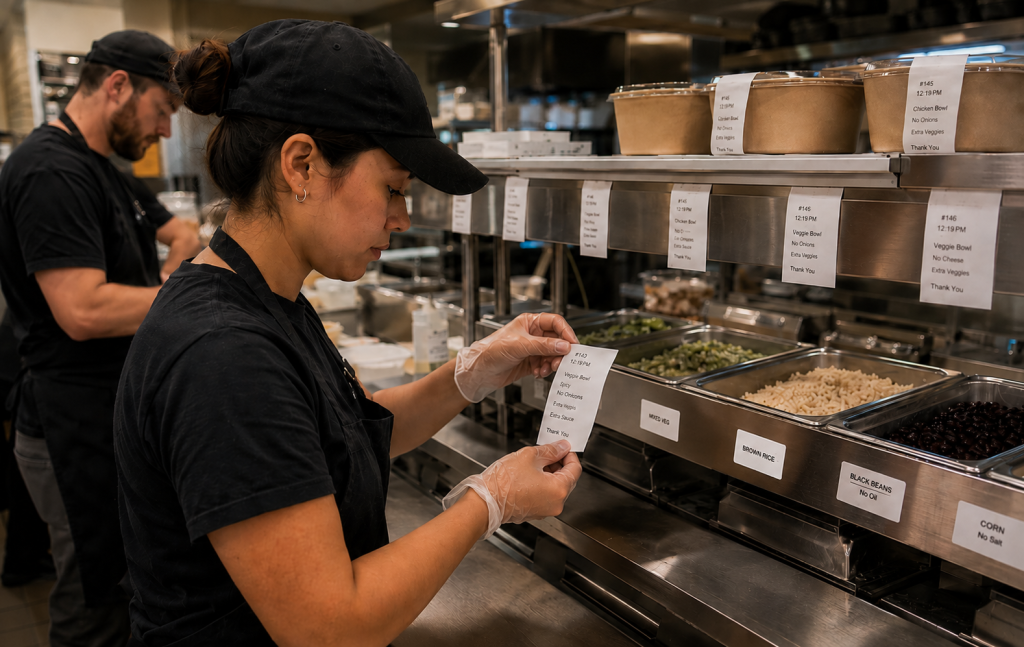
Expeditor and Order Verification Labels
Recommended Adhesive: Diamond-Pattern or Full Coverage
At the expeditor station, labels help verify that orders are complete and ready for handoff.
Common applications include:
- Order identification
- Customer pickup information
- Drive-thru order tracking
- Online order verification
- Order accuracy workflows using POS scales
- Handoff communication between kitchen and fulfillment staff
Pickup and Takeout Labels
Recommended Adhesive: Full Coverage
Full-coverage adhesive provides reliable short-term adhesion while still allowing customers to remove labels easily if desired.
Common applications include:
- Takeout bags
- Pickup orders
- Food containers
- Customer identification labels
- Order contents labels
- Curbside pickup workflows
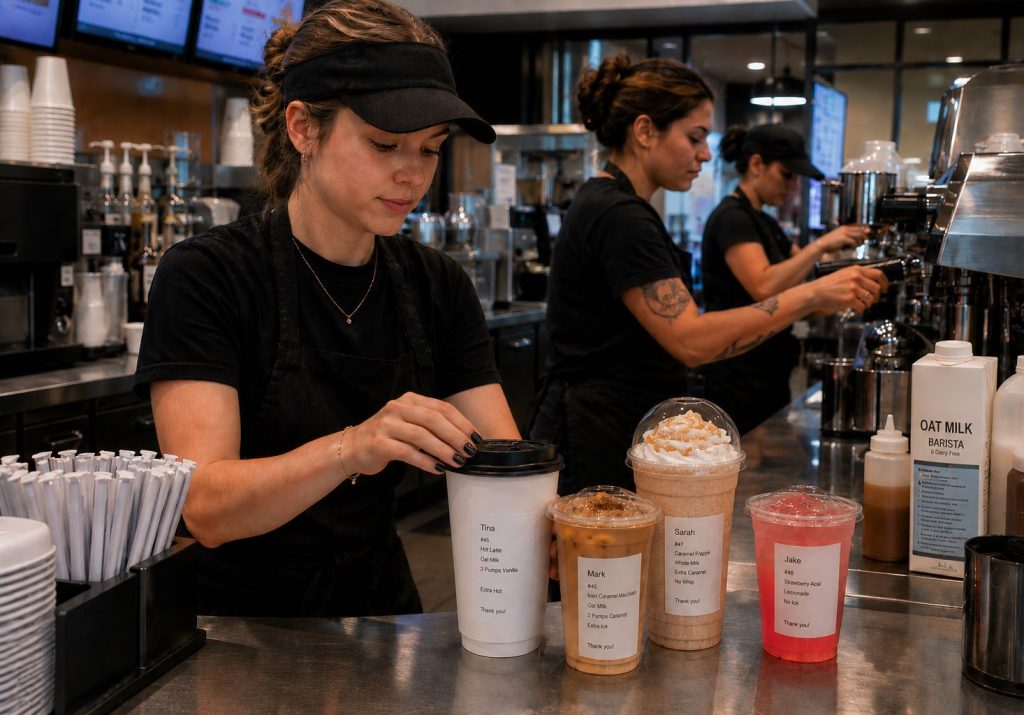
Beverage Labels
Recommended Adhesive: Full Coverage
Drink orders often require labels that remain attached during preparation and customer handoff.
Common applications include:
- Coffee orders
- Specialty beverages
- Smoothies
- Tea and espresso drinks
- Customized drink orders
- Customer name labels
Delivery and Tamper-Evident Labels
Recommended Adhesive: Permanent
Permanent adhesive helps create tamper-evident seals that remain attached throughout delivery.
Common applications include:
- Delivery bags
- Tamper-evident package seals
- Third-party delivery orders
- Food safety labeling
- Long-distance delivery packaging
- Security seals
Grab-and-Go and Pre-Packaged Food Labels
Recommended Adhesive: Permanent
Permanent labels are ideal when information must remain attached throughout storage, display, and sale.
Common applications include:
- Grab-and-go foods
- Pre-packaged meals
- Made-on and use-by dates
- Nutrition information
- Product identification
- Retail food labeling
Star’s mC-Label Series Can Handle It All
Although different quick service label printing use cases require different labels for the best results, QSR labeling only requires one printer. A flexible multi-function printer can print labels with diamond-pattern adhesive, linerless labels with full adhesive, or permanent, tamper-evident labels. QSRs have the option of printing standard or die-cut labels and can even use these printers for receipt printing. Leading printers also make it easy for employees to switch label rolls for each use case.
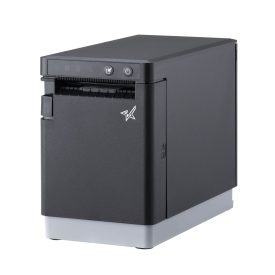
mC-Label2 Multifunction Printer
The mC-Label2 packs powerful features into a compact, front-loading design, including 300 dpi resolution, support for linerless, die-cut, receipt, and continuous media, and connectivity options like USB-C, LAN, WLAN, Bluetooth, and Apple MFi-certified pairing (X4 models only).
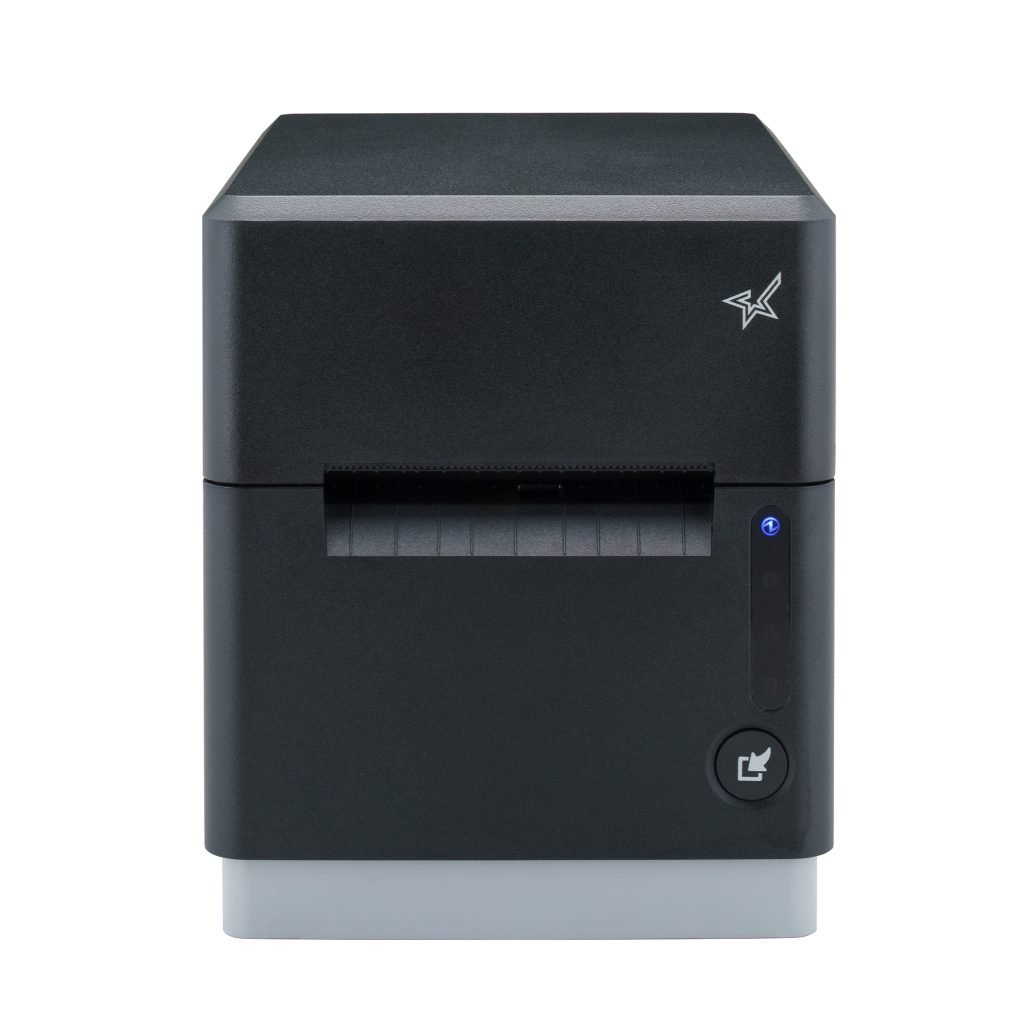
mC-Label3 Multifunction Printer
The Star Micronics mC-Label3 is a versatile multimedia printer that prints a wide range of labels and receipts, including both permanent and repositionable sticky linerless. It features cloud connectivity and innovative technologies like SteadyLAN and TetherLAN for enhanced printing convenience.
The Right Adhesive Supports Better QSR Labeling
Effective QSR labeling depends on more than choosing the right printer or label size. The adhesive behind the label plays a major role in how information moves through food prep, packaging, pickup, and delivery workflows.
Whether you need repositionable labels for food preparation, full-coverage labels for pickup orders, or permanent labels for tamper-evident delivery packaging, matching the adhesive to the application helps improve consistency, reduce errors, and support smoother restaurant operations.
Choosing the right adhesive for each labeling task ensures your labels work as hard as your team.
Explore Star’s Labeling Media and Printers for QSRs
Star Micronics offers a wide range of label media designed to support QSR labeling applications, from food prep and pickup workflows to delivery and tamper-evident packaging. The Star Blue Eco portfolio includes label, thermal, and bond paper solutions made without bisphenols, helping businesses align with evolving industry expectations and regulatory requirements.
Combined with Star’s multifunction and linerless label printers, businesses can implement labeling solutions designed for modern restaurant workflows:
- mC-Label2 & mC-Label3 multifunction label printers, which print on a wide range of media for quick service label printing and paper widths and features One Touch Label printing
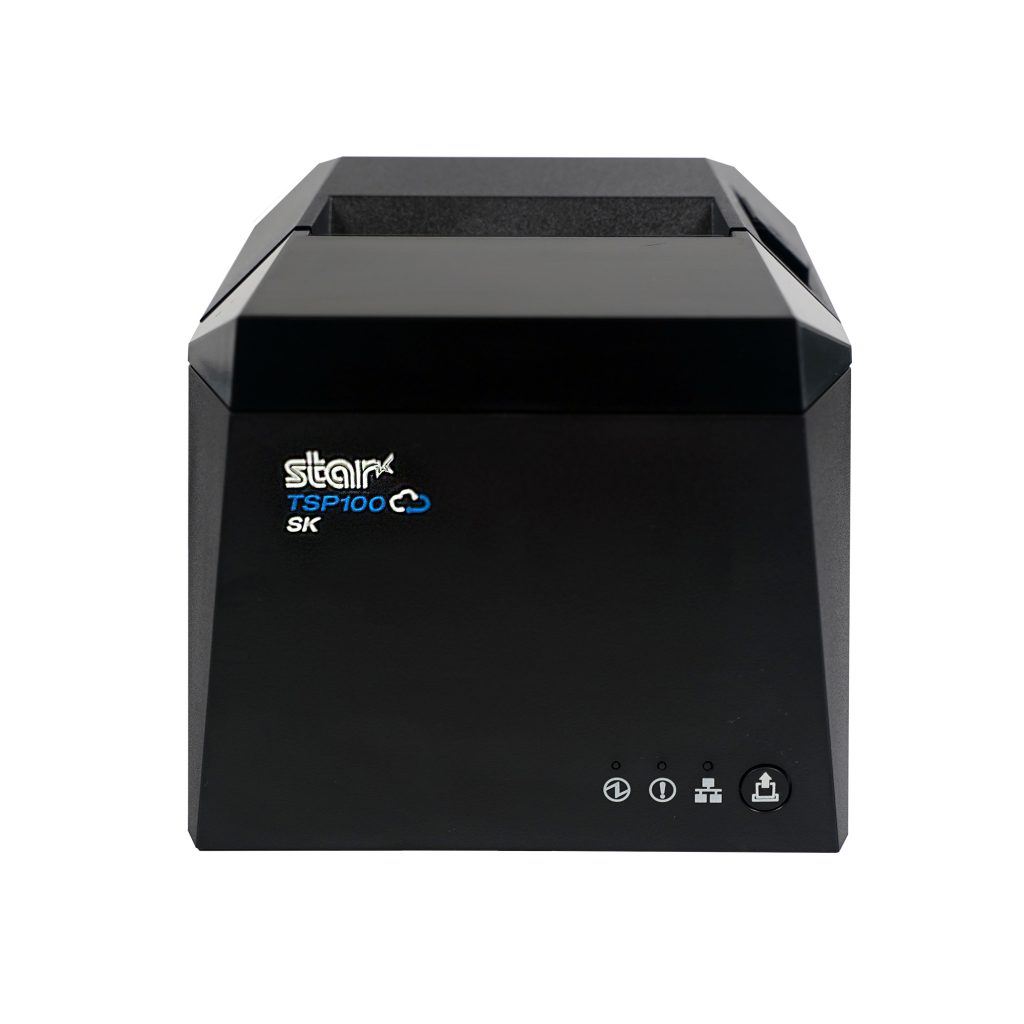
- TSP143IV SK linerless sticky label printer, a smart, compact, cloud-ready sticky label printer with multiple connectivity options for food service labeling wherever necessary
TSP143IV SK Sticky Label Printer
The TSP143IV SK by Star Micronics sets a new standard for compact, eco-friendly thermal linerless label printing, offering advanced connectivity options like Wi-Fi and AOA, and efficient, residue-free labels for diverse business needs.
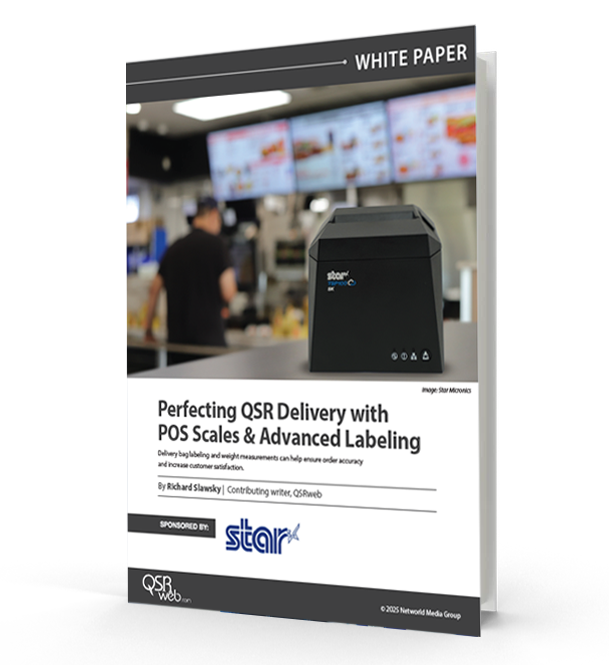
Perfecting QSR Delivery with POS Scales & Advanced Labeling
Delivery bag labeling and weight measurements can help ensure order accuracy and increase customer satisfaction.
Frequently Asked Questions About QSR Labeling
What is QSR labeling?
QSR labeling refers to the use of labels throughout quick service restaurant operations to communicate order details, modifiers, allergen information, pickup instructions, delivery information, food safety data, and more.
Why is QSR labeling important?
QSR labeling helps improve communication, increase order accuracy, support food safety, and streamline workflows across food prep, packaging, pickup, and delivery operations.
What is the difference between diamond-pattern, full, and permanent adhesive labels?
Diamond-pattern labels are repositionable and leave no residue. Full adhesive labels provide stronger temporary adhesion. Permanent adhesive labels are designed to remain attached and can support tamper-evident applications.
Which adhesive is best for food prep labels?
Diamond-pattern adhesive is often ideal because labels can be repositioned as orders move through food preparation workflows.
Which adhesive is best for food delivery labels?
Permanent adhesive is often preferred because it supports tamper-evident labeling and helps keep packaging sealed during transit.
What are tamper-evident labels?
Tamper-evident labels show visible signs if a package has been opened after sealing, helping restaurants build customer confidence in delivery orders.
What are the benefits of linerless labels for QSRs?
Linerless labels reduce waste, provide more labels per roll, minimize storage requirements, reduce roll changes, and help support faster workflows.
How do restaurants choose the right adhesive for different labeling applications?
Restaurants should match adhesive strength to the workflow. Repositionable labels work well for food prep, while stronger adhesives may be better for pickup, delivery, or tamper-evident packaging.
Leave a Reply