Author: Brianna Moriarty

  • Star Micronics Introduces the New and Improved mPOP for SMB Retail

    Star Micronics Introduces the New and Improved mPOP for SMB Retail

    The new mPOP by Star Micronics offers improved functionality with easier cash management for retailers

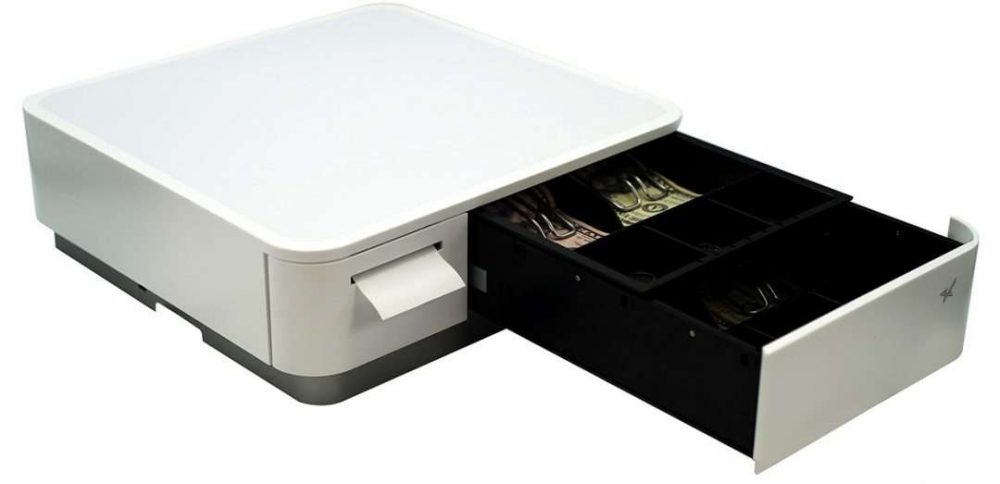
    Somerset, NJ – February 18, 2020 – Star Micronics, a leading global manufacturer of mobile, point of sale (POS), and customer engagement technologies, is proud to introduce the upgraded mPOP™ (mobile point of purchase). The Star Micronics mPOP offers a hybrid solution for tablet POS that combines a cash drawer and printer peripheral, offering an ideal hardware solution for small- to medium-sized retail businesses. Star’s most recent update to the mPOP makes it even easier for merchants to manage their cash payments with a small cash drawer footprint.

    The new mPOP with Flat Bill cash management stacks the till, providing a total of 4 slots for bills, and 4 or 6 adjustable spaces for coins. The individual tills will offer 2Bill-2Coin slots, with the top till easily sliding back to expose the bottom till section. This allows for US retailers to store and manage their cash in a more natural way and keep their cash payment organized, compared to the previous vertical-slot version of the mPOP.

    The mPOP also offers convenient Bluetooth and USB connectivity, and is compatible with any iOS, Android, or Windows device. With easy “drop-in and print” paper loading, and cable management, the mPOP offers an easy-to-use solution for any SMB retailer. The mPOP is also compatible with a number of Star peripherals including a 1D barcode scanner, 2D imager, and digital customer-facing display. Star Micronics also provides the mUnite POP solution stand for a sleek POS enclosure option.

    “Star Micronics is proud to have answered the request of many of our partners to introduce a Flat Bill solution for the mPOP,” said Michael Hanson, Executive Vice President of Star Micronics. “The new and improved Flat Bill solution keeps the small footprint of the mPOP that SMB retailers enjoyed, while integrating a more simple and familiar way to manage cash payments.”

    To learn more about the new Flat Bill mPOP, please visit https://starmicronics.com/mPOP.

  • Star Micronics and eatOS Partner to an All-In-One Restaurant Management Suite

    Star Micronics and eatOS Partner to an All-In-One Restaurant Management Suite

    eatOS and Star Micronics work to bring self-service, online ordering, and more to restaurants of all sizes

    Somerset, NJ – February 6, 2020 – Star Micronics, a leading manufacturer of mobile, point of sale (POS), and customer engagement technologies, is proud to announce that eatOS has added support for Star’s restaurant printing solutions. eatOS brings a seamless experience to restaurants by offering a platform that manages point of sale, kitchen displays, self-service kiosks, pay-at-table, loyalty, and online ordering all in one application. eatOS supports the Star Micronics SP742 for back-of-house kitchen printing, and the TSP654II for point of sale receipts and self-service orders.

    The demand for self-services in restaurants is increasing rapidly. eatOS helps restaurants of any size add self-service kiosks to their workflow to reduce wait times, increase the average check size, and reduce operational costs. eatOS’s self-service kiosk is intuitive, easy-to-use, and integrates into the Point of Sale and Kitchen Display Screen seamlessly.

    Built to withstand heat and humidity, Star’s SP742 provides the ideal robust printing solution for back-of-house kitchen orders. eatOS has selected the Star TSP654II to be paired with Elo’s i-Series and Wallaby stand for their self-service kiosk solution. The TSP654II offers high print speeds and is simple to use. The self-service kiosk allows restaurant customers to skip waiting in long lines, and place their order using a touchscreen device, and pick up their order with the printed receipt.

    “We’re thrilled to be partnering with Star Micronics,” says Nicholas Brunner, COO and Co-Founder of eatOS. “Star has always been a leader in the POS space and with their highly innovative printers and Cloud technology, eatOS is continuing to bring next-generation solutions to the restaurant market.”

  • Star Micronics Launches the Reliable, Stylish, and Cost-Effective mCP30 POS Printer

    Star Micronics Launches the Reliable, Stylish, and Cost-Effective mCP30 POS Printer

    Affordable and equipped with must-have features

    Somerset, NJ – Oct 21, 2019 – Star Micronics, a leading global manufacturer of mobile, point of sale (POS), and customer engagement technologies, is excited to announce the debut of the mCP30 POS printer, the latest addition to the mC-Print3 family.

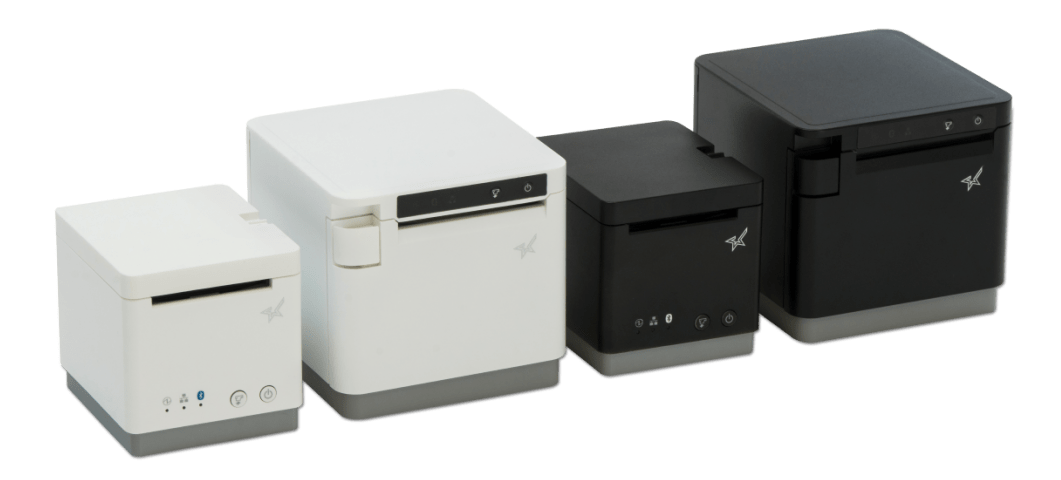
    This high-quality and cost-effective printer features the reliability Star Micronics products are known for, and is a simpler edition to the mC-Print3 family. With the removal of the USB hub which other mC-Print models include, the mCP30 simplifies the user experience for small- to medium-sized restaurant and retail operations without compromising on power, speed, or sophistication.

    The mCP30 is still equipped with a stylish, front-loading design, Print Flat Technology, and a variety of connectivity options, including USB, LAN, and CloudPRNT/WebPRNT, making the printer perfect for any application.

    With a compact design, the mCP30 works well in any environment where space is limited. It is easy to integrate through the StarPRNT SDK, and is compatible with Star Micronics Cloud Services.

    “When designing the mCP30, we leveraged feedback from our end user customers and ISV partners to create an affordable printer,” says Jon Levin, Product Integration Manager at Star Micronics. “This new, well-appointed printer features the connectivity options businesses need – at an affordable price.”

  • Star Micronics and Innowi ChecOut Provide Reliable, Compact mPOS Solution

    Star Micronics and Innowi ChecOut Provide Reliable, Compact mPOS Solution

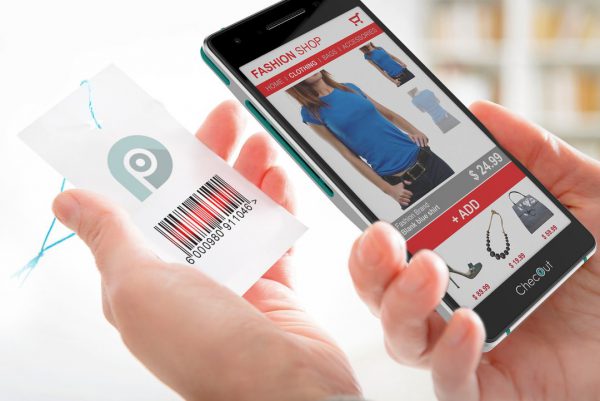
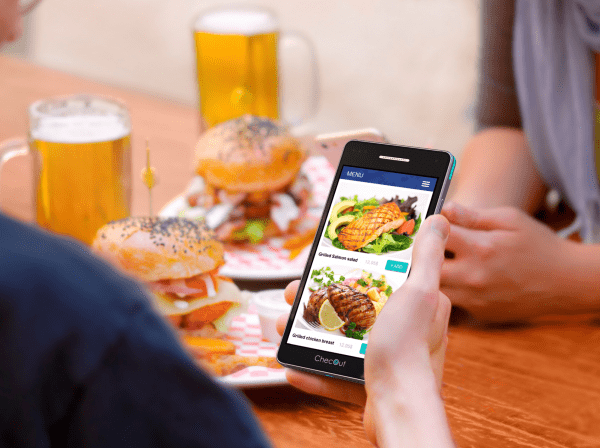
    Somerset, NJ – August 20, 2019 – Star Micronics, a leading manufacturer of mobile, point of sale (POS), and customer engagement technologies, is proud to announce that ChecOut has added support for Star portable printers with their new mobile payment technology. ChecOut makes a thin, lightweight mobile point of sale that pairs with Star’s reliable and compact SM-L200 and SM-L300 mobile printers.ChecOut-PR-3-e1574805661735

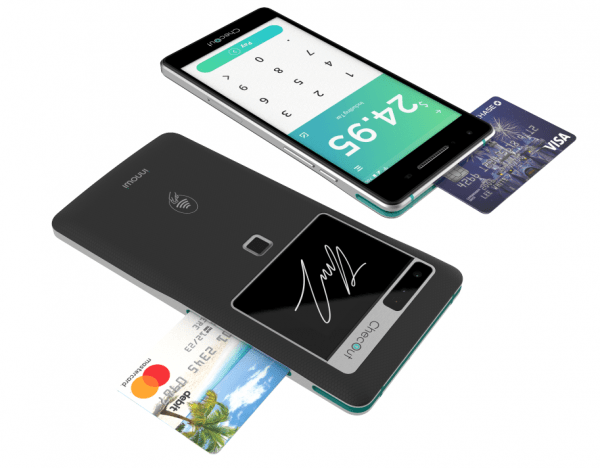
    ChecOut offers an all-in-one mobile point of sale device that allows business owners to accept payments anywhere, at any time, with no WiFi needed to complete transactions.  Available in Android or Windows OS, the ChecOut device has a built-in barcode scanner, fingerprint reader, PCI-certified pin pad and much more.  The ChecOut device is currently live in restaurants as well as over 4,000 stores with the world’s largest retailer.

    ChecOut-PR-1-e1574805682280

    Star Micronics SM-L200 is Star’s 2-inch BLE portable printer and makes the perfect solution for any mPOS retail environment, or pay-at-the-table solutions. The SM-L300 is the larger, 3-inch BLE portable printer with label printing options, making it ideal for online ordering, cafes, and quick service applications. Both printers are compatible with Windows, Android, and iOS.

    “We are excited to partner with Star to offer customer experiences, like pay at the table for restaurants and line busting for retail,” says Joel Larson, VP of Innovation for ChecOut by Innowi.

    ChecOut-PR-2-e1574805705622

  • Star Micronics Teams Up with Square to Offer Scale Solution for Square Point of Sale

    Star Micronics Teams Up with Square to Offer Scale Solution for Square Point of Sale

    Square adds support for Star Micronics mG-Scale series to add more functionality to their POS solution for retailers

    Somerset, NJ – August 13, 2019 – Star Micronics, a leading manufacturer of mobile, point of sale (POS), and customer engagement technologies, is proud to announce that Square has added support for Star’s mG-S8200 scale. Square continues to offer their customers a sleek, unified look in their point of sale with the latest functionality of an integrated scale for sell-by-weight items.

    Square Point of Sale is the trusted solution that business owners rely on to help them run their entire business and never miss a sale. With Square’s recent launch of decimal quantity support and the new integration of Star’s new mG-S8200 Scale, Square is now able to offer a weighing solution that communicates directly with the point of sale. This integration will help to eliminate the risk of human error when calculating weight and cost amounts and speed up the checkout process, resulting in shorter lines for the buyers. This solution will provide benefit to yogurt shops, candy stores, delis, and much more.

    Star Micronics mG-S8200 is the new large-capacity scale from Star’s mCollection, measuring up to 18 pounds. The scale is NTEP certified, making it legal for trade and offers USB, Bluetooth, or Serial connectivity. The mG-S8200 also offers both wired, or battery-powered options making it perfect for portable use such as farmer’s markets or pop-up shops.

    “Star Micronics is very excited to see Square adding support for our new mG-S8200 scale,” says Christophe Naasz, Director of Business Development at Star Micronics. “This will provide retailers with a simplified solution for weighing and selling items, and streamlined operations.”

    Coming soon, Square will also support Star Micronics mC-Print3!

  • The Top 7 Ways Retail Stores Can Grow Repeat Customers

    The Top 7 Ways Retail Stores Can Grow Repeat Customers

    Why Customer Retention Matters

    For brick and mortar stores and small businesses, driving repeat business means everything. With increased competition for less traffic and reduced consumer attention, small businesses too need to learn how to stand out and be memorable. Increasing customer lifetime value is part art and all science—data and marketing.

    The right customer retention tactics for your independent business could mean success or failure in the critical window; here you need to grow and increase ROI and focus in on your most valuable customers to drive sales.

    1. Serve the authenticity motive.

    Consumers need to feel a connection to your staff, your store, and your products to keep coming back. This requires great customer service, competitive prices, exquisite products, and building trust with authenticity. At the end of the day, your best customers will want to support you and see your establishment do well if they feel a connection. By being genuine, transparent, generous, and focused on giving to the community, your local business can do great things and drive people to care, and shop more!

    2. Adopt a loyalty program.

    The surest way to re-target customers and drive repeat sales is to choose and implement the best loyalty program that works for you, and generates higher sales on the top 20% of your customers that are the most profitable. With a solution like thirdshelf, small businesses and boutiques can quickly develop a loyalty program and easily on-board their customers to enjoy the benefits.

    3. Drive visual and mobile attention.

    Adopting tech at your small business does not have to be expensive, and it can help increase repeat sales and pair products most commonly bought together. This is fairly intuitive with the implementation of digital signage via Sophatar. The impact of digital influence on customer engagement is increasing; contextually based dynamic content that’s highly visual can increase basket size and augment the customer experience.

    4. Have the very best customer service.

    The key to having great customer service is in well trained and motivated sales associates and store clerks. Investing in employee engagement tools and staff training programs such as those offered by Myagi can help keep employees on top of their game. Customer fulfillment in physical retail really is very based on the human experience with staff, and if their training was skill-based, they will have all the tools to deliver truly memorable service.

    5. Acquire and utilize customer data for personalization.

    Even the smallest retailers should be obsessed with their customers and this also means gathering customer data. This is the genius of loyalty programs in that they benefit the entire business by understanding customer and product analytics at a deeper level. To increase customer retention, engagement, and repeat business, it’s therefore essential to gather customer information. Re-targeting with email marketing and personalized offers is the bread and butter of any customer retention program.

    6. Elevate the customer experience that matters to your key customer segment.

    Every business will have a sweet-spot of what the ideal customer journey looks like and the most common points of friction. By providing more of the best and minimizing the usual rough spots, independent stores can constantly improve the experiences they provide. Offering educational opportunities, events, and even appointments with an expert can provide added incentives for loyalty customers to convert. A tool like Booxi can drive traffic via online appointment booking while simplifying the journey.

    7. Optimize and quantify your physical retail success.

    For loyalty marketing that’s data-based, you will be able to create marketing campaigns that are customer-centric. This means having the right data your fingertips, both in terms of customer segments and actual foot-traffic, and for this, we recommend getting Dor. Dor can help you measure marketing outcomes as it’s an actual foot traffic solution that’s affordable and easy to install at your retail location.

    One of the key takeaways is that growing repeat customers takes data, it takes hard work, and it takes a lot of testing via loyalty and marketing campaigns. The savvy retail entrepreneurs, who understand their customer the best, can implement the right solution to drive additional revenue and increase sales. Setting these priorities firmly in mind can enable you to grow your business with proactive growth mentality that is constantly in tune with your customers that are always in search of adding more value to their experience.

    • Do more with less; try new tools and software.
    • Eliminate pain points and friction.
    • Zero in on providing add-on value for your best customers.
    • Create fresh campaigns that truly differentiates your retail brand as an experience provider.
    • Incentivize repeat business will well-crafted and personalized offers.
  • 3 Ways PromoPRNT is More Than Just a Coupon Creator

    3 Ways PromoPRNT is More Than Just a Coupon Creator

    Customers love to feel like they got a great deal or a deep discount on their purchases. Mailing lists and email promotions are common ways to distribute coupons, but not the most direct and cost-effective way to hand the coupon right to the patron.

    SMBs can use PromoPRNT, a new service added to the Star Micronics Cloud Service platform to generate coupons right at the point of sale.  PromoPRNT allows retail stores and small businesses to advertise their promotions in the most simple and effective way—printing coupons and promotional materials right onto the receipt. Delivering discounts directly to shoppers’ hands means engaging them at checkout and driving repeat business.

    But did you know that PromoPRNT is so much more than just a coupon creator? Here are three additional benefits of using PromoPRNT.

    1. Promotion Planning and Scheduling Tool

    PromoPRNT is provided through two services on the Star Micronics Cloud Services dashboard: Promotion Builder and Promotion Scheduler.

    Promotion Builder is a seamless, simple tool that designs promotions for receipts. Forget trying to manage design software or outsourcing receipt customization to a third-party vendor–the Promotion Builder library includes templates that make it easy to add logos, text, and icons to your receipts.

    Promotion Scheduler is used to schedule the duration of a coupon campaign by selecting a time, date, and printer for each coupon/promotion, even from a remote site. Campaigns can be scheduled based on the day or time, and each promotion is given a priority, which determines in what order they are printed on the receipt. With Promotion Scheduler, retailers have access to analytics that provide insight into promotional campaigns, so you can track which ones are resonating.

    2. Customer Engagement and Retention Tool

    SMBs have already started using PromoPRNT to make each customer visit unique by delivering promotions using nothing but their Star Micronics cloud-connected thermal printers. Printing coupons on customer receipts allows you to reach a higher percentage of shoppers for a fraction of the cost of a print or digital campaign, and compliments the marketing campaign you already have in place. But PromoPRNT can also be a part of your overall customer engagement and retention strategy. Encourage employees to engage customers by talking about the coupon/promotion while they are processing the transaction. Boosting customer retention and encouraging a repeat purchase can be as easy as circling or highlighting a promotional offer on the receipt so the customer doesn’t forget.

    3. A Cost-Effective Service

    Issuing coupons and promotional materials can be costly and even heavy investments in digital coupon campaigns can’t guarantee coupons will ever reach your audience. Instead, merchants can use the PromoPRNT coupon creator and scheduler to generate offers and deliver them for no additional charge.

    The checkout is the last touchpoint before your customers leave the store. Make it a good experience by thanking them for their purchases with coupons for a future shopping trips, delivered by sales associates who can emphasize how much you value their business. This strategy is more effective than just sending a coupon in the mail or via email — it’s an in-person invitation to return and it can help differentiate you in a competitive market place.

    Is it time for you to upgrade your checkout process to include coupons and promotions? For more information about the benefits coupons can provide for your business, download our e-book, “Why You Shouldn’t Underestimate Coupons as a Promotional Tool.”

    Download eBook

  • The Latest POS Technology to Modernize Retail Tech

    The Latest POS Technology to Modernize Retail Tech

    If you’re looking for a good reason to upgrade to the latest POS technology, consider this: it’s designed to be more effective at customer engagement.  Forget the middleman — traditional engagement strategies are going out the window as retailers opt for technologies that do two things: reach shoppers at critical touch points, and give them the opportunity to collect customers’ contact information for future use.

    Here are six examples of the latest POS technology and how they can benefit your business and create great shopping experiences for your customers:

    1. Digital Signage

    Digital signage takes the guesswork out of advertising. Will people see your messaging? With digital signage, the answer is YES. Digital signage is a virtual guarantee that customers will see important messages about new products or promotions while they are in-store browsing or deciding whether to make a purchase. This foolproof method of communicating with customers translates into higher sales numbers almost immediately, because it encourages upselling, cross-selling, and impulse buys.

    2. Mobile Payments

    Your customers will appreciate the ability to use their preferred payment methods — including giving them the option to use mobile payments.  The latest POS technology allows your customers to pay in a variety of ways:

    • Mobile at the POS: Paying via smartphone or mobile device at the register using near-field communication (NFC) technology
    • Mobile as the POS: Accepting a payment card on a retailer’s mobile device
    • Mobile Payment Platforms: Sending money to a merchant using a mobile device, such as using a mobile wallets

    3. mPOS and Tablet POS + High Speed, Ergonomic Thermal Receipt Printers

    No one wants to finish a shopping trip, only to be faced with a long line that’s not moving. mPOS or tablet POS and thermal printers allow employees to process transactions, complete with a receipt, anywhere in the store. The latest POS technology, used on a mobile device and coupled with quiet and reliable thermal receipt printers, provides an engaging shopping experience that gets shoppers out the door faster and gives you the flexibility to add more checkouts when needed.

    4. Digital Receipts

    Keeping track of receipts can be frustrating for customers, because these elusive slips of paper seem to get lost so easily. Offering digital receipts allows customers to keep, sort and locate their proof of purchase easily — even days or weeks later. The ability to make hassle-free returns with digital receipts moves customer service lines faster and may increase the chance that people will shop at your store again.

    5. Printed Promotions

    Don’t overlook the value of printed promotions within the increasingly digital world.  The “2K17 Valassis Coupon Intelligence Report” revealed that 84% of shoppers surveyed said that coupons influence what products they buy, while 86% of people said that they were persuaded to purchase a new product because they had a coupon for it.

    6. Customer Satisfaction Survey

    A customer satisfaction survey is a direct line of communication with customers to get their feedback on how your business and products are performing. These surveys, which are typically offered at checkout, help you understand your customers’ needs, evaluate employees, and remedy issues in a timely manner.

    The latest POS technology will give you the ability to engage with your customers like never before and provide them with the types of shopping experiences that they want and expect. Consider incorporating the latest POS technology into your business to generate more sales, more repeat customers, and better in-store experiences.

    Can mPOS increase your sales and boost your customer satisfaction? Find out now.

    Download mPOS eBook

  • How Resellers Can Cash in on Cannabis Point of Sale

    How Resellers Can Cash in on Cannabis Point of Sale

    It’s like a dream come true for point of sale (POS) VARs. There’s a new consumer market with a product that people are clamoring for to the tune of $10 billion per year and anticipated growth of 28% over the next three years: Cannabis.

    If you haven’t considered expanding into the cannabis point of sale market, you could be missing out on one of the biggest opportunities your business will ever encounter.

    A Snapshot of a Rising Industry

    The legal cannabis industry is growing fast. Currently, cannabis is legal for recreational use in nine states and the District of Columbia, and medical marijuana is legal in 30 states. A report from cannabis industry analysts at Arcview Market Research and BDS Analytics estimated 2017 legal sales to reach $9.7 billion, a whopping 33% increase over 2016. Moreover, their report estimates the market will reach $24.5 billion by 2021.

    The product line is more diverse than you may think. Dispensaries sell oil, hash, shatter, and rosin that can be smoked or vaped. They may also offer bakes goods and candy, as well as the traditional flower. Medical dispensaries sell products including CBD (cannabidiol) usually in the form of oil or candy, which is used to treat epilepsy or pain.

    There are 9,397 active licenses for marijuana businesses in the U.S.—and all of them need a POS system to help manage their business.

    What’s Different About Cannabis POS?

    There are some aspects of selling cannabis retail or through a dispensary that make it different from other business operations and that require different features than other retail POS systems. Here are five examples:

    1. It’s a cash business.

    At least for now, cannabis businesses primarily deal in cash. There are still federal laws that define it as illegal, and banks, caught in the middle in states that have made it legal, are reluctant to open accounts for these businesses. Politics and legal battles aside, this presents unique challenges to cannabis businesses—which could really use trusted advisors well versed in retail and POS technology as well as strict cannabis regulations to help them solve business challenges such as this.

    2. Scales need to be sensitive.

    You may have sold scales for deli, grocery, or bulk items. But cannabis scales have to be more accurate than a hundredth of a pound. The sensitivity of a cannabis sale must be accurate to a fraction of a gram—both to comply with regulations and to ensure maximum profits.

    3. Labels are strictly regulated.

    Cannabis customers are limited to a specific quantity they can purchase per day. That may seem straightforward, but considering a customer may be purchasing baked goods, candies, or oil, the quantity of controlled substance won’t be immediately obvious without a label. Some states also require labels to include information about testing that has been done on the products and traceability information back to the source of the cannabis flower.

    4. Receipts are more than proof of purchase.

    The information that needs to be included on a receipt provided by cannabis businesses are different depending on the regulations in each state. In Oregon, for example, receipts need to include store name and address, product category, something that identifies the products that are taxed, a breakdown of state and local tax, and a disclaimer that receipts are required for tax disputes. In California, for example, it’s important to instruct your customers to save all copies of receipts from each day’s sales for a minimum of three years in the event that the cannabis store is subject to an audit. Advice your customers to check on their individual state’s regulations regarding cannabis receipts.

    5. Stores need heightened security.

    With an all-cash business, a desirable product, and tough regulatory scrutiny, cannabis stores and dispensaries will need a robust security solution. Today’s state-of-the-art solutions enable business owners to track inventory with GPS, monitor facilities inside and out with high-resolution IP camera systems, guard blind spots in the store with hidden cameras, and protect their businesses with sensitive alarm systems that send alerts in the event of a break-in or fire. Integrating security with the POS system can provide information that helps business owners identify people responsible if theft occurs and give law enforcements the details it needs to act.

    The cannabis industry is in its earliest stages, so it will be important for you to establish partnerships that will help you develop this part of your business as you expand your VAR into a new market, stay on top of regulatory developments, and search the market for solutions that will provide your customers with the greatest value.

    Click here to download our full eBook.
  • 4 Elements of a Valuable ISV-Hardware Integration Partnership

    4 Elements of a Valuable ISV-Hardware Integration Partnership

    You design software to provide the best possible user experience. It’s impossible, however, to reach that goal without the proper hardware for your system. In the point of sale (POS) space, that can include POS terminals, mobile devices, and rugged tablets as well as receipt printers, cash drawers, kiosks, scales, barcode scanners, and other POS peripherals. Integrating with the right hardware is critical to the user experience your customers will have and ultimately, it will impact your brand image.

    Your partnership with a hardware vendor can also have a direct impact on the success of your business. Whether you are a startup or a legacy ISV, selecting a hardware solution integration partner is a critical business decision for positioning your software solution in the POS industry.

    With so many hardware vendors to choose from—and many vying for you as an integration partner—it may not be clear which direction to take. Forming a successful partnership with a hardware vendor follows the same principles as any other type of beneficial business partnership. It depends on agreement in four areas:

    1. Goal Alignment
    2. Growth Potential for Both Parties
    3. Shared Resources
    4. Unified Marketing Strategy

    Business Goal Alignment

    The first thing you need to determine about a potential hardware integration partner is whether your business goals and theirs align. That makes it necessary for you to have a clear vision of what you want to achieve. That makes it necessary for you to have a clear vision of what you want to achieve. Once you have established the direction you want to take, you can evaluate hardware vendors as potential partners to help you reach your goals.

    Potential for Growth

    Do you clearly see the hardware vendor’s value proposition or are you concerned that the benefits of the partnership may be one-sided? Will your solution simply be added to a list the hardware vendor can use to their advantage with little return for your ISV? A more attractive option is a hardware partner with the experience, innovative solutions, and resources to help your business grow. If you can’t see how the partnership would help you advance your business, keep looking until you find a partner that will.

    Hardware Partner Integration Resources

    The breadth and quality of resources the hardware partner has dedicated to developing software integration relationships is a good indicator of how committed they will be to your partnership. For example, find out if they make software development kits (SDKs) and APIs available to ISVs. Thoroughly vet the hardware vendor’s integration process to learn whether or not the hardware vendor has developers on staff that can assist with integration and help you troubleshoot. If possible, speak to other ISVs who partner with the vendor to gauge their impression of how committed the vendor is to assisting with integrations and how easy their team is to work with.

    Unified Marketing Strategy

    Make sure you and your potential partner agree on a go-to-market strategy, including distributor and reseller support. Also agree on marketing down to the methods and frequency of marketing activities to adequately promote your partnership and the integration. Some examples include:

    • Issuing a joint press release to announce your partnership and include it in each company’s newsletter
    • Creating a campaign around your joint solution and promoting it on social media
    • Building a microsite or webpages devoted to the hardware-software solution
    • Taking advantage of success stories to produce case studies
    • Producing videos to demonstrate the solution
    • Participating in tradeshows to demonstrate the hardware-software solution

    How marketing will be managed and funded is also an important decision. The division of labor and investment should be equitable and acceptable to both partners.

    Download our full e-book here.