In many parts of the world, the time is here, and a full retail reopening is upon us. But even as business returns to (almost) usual, health and safety concerns are likely to remain a priority to shoppers, and rightfully so. Read on to discover a complete list of health and safety considerations that retailers should keep in mind as they fully reopen the doors at their brick-and-mortar locations.
Health and Safety Checklist for Retail Stores: 6 Key Considerations
1. Antimicrobial Covers
A lot of seemingly minor behaviors that people used to commonly do have become uncomfortable during the COVID-19 pandemic – and they will continue to be behaviors that people avoid. Examples of this include touching dirty door handles, bathroom surfaces, payment terminal pin pads, and more.
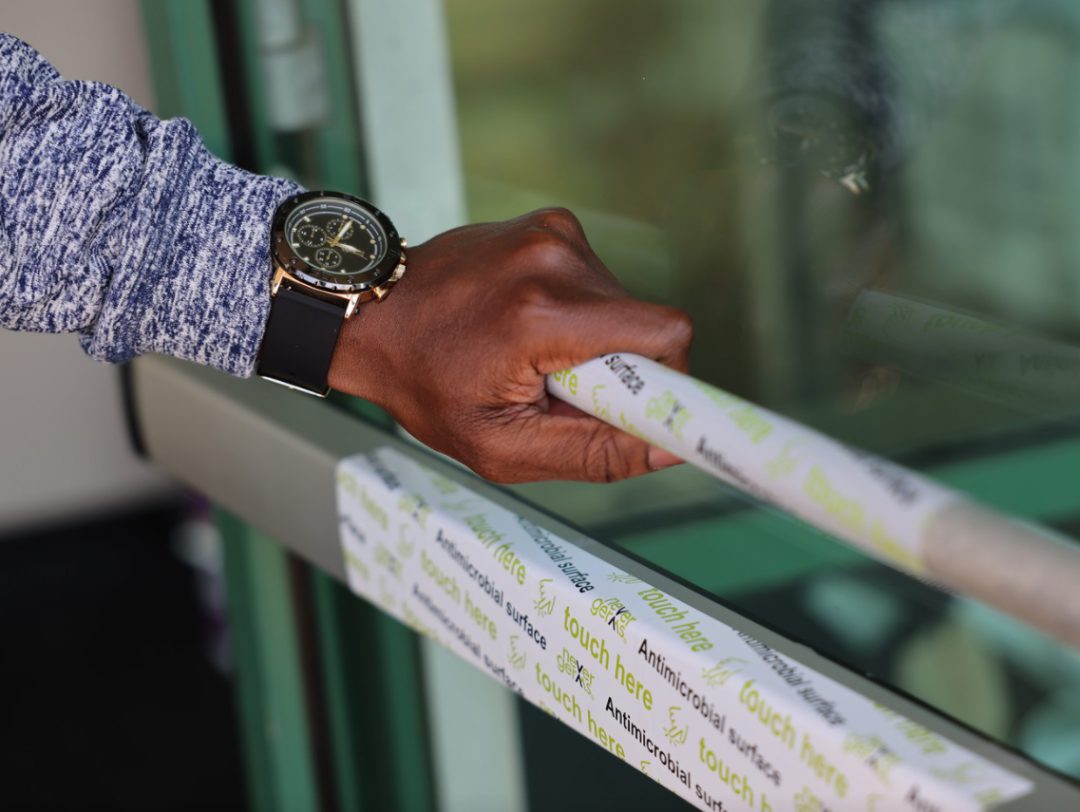
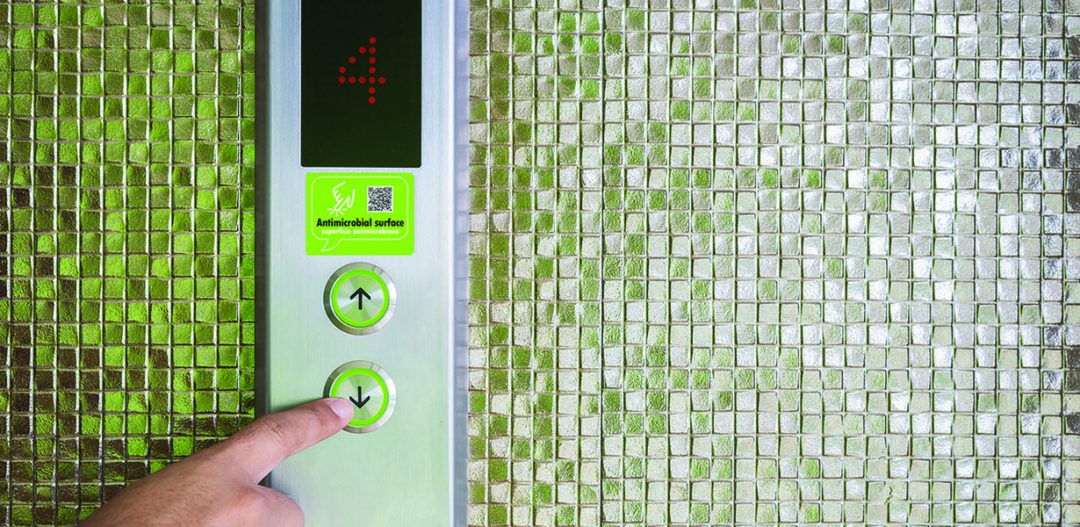
As a retailer, you can put your customers at ease and help them avoid uncomfortable and potentially unsanitary situations by installing antimicrobial covers*. These covers reduce the transfer of germs, are easy to apply, and are available in precut shapes as well as custom application rolls. Certain antimicrobial covers last up to six months and are designed to complement a standard cleaning schedule.
2. Employee Handwashing
Handwashing protocols are nothing new, but it’s important to revisit and reiterate the importance of handwashing as your retail store reopens.
Some handwashing tips and considerations include:
Are your employees are aware of handwashing standards and CDC best practices, like washing for at least 20 seconds before and after eating, after using the toilet, after blowing their nose, coughing, or sneezing, and after handling garbage?
Have you posted your handwashing policy by all sinks?
Are your sinks and restrooms supplied with soap, hand sanitizer, and clean towels?
Are employees aware they should avoid touching their face?
3. Store Sanitization
Just like handwashing, sanitizing your store is something that has always been important but has become even more critical in the past year. Store sanitization considerations include:
Do you have gloves, masks, and other necessary personal protective equipment (PPE) on hand?
Are your employees trained on how to properly use sanitizing chemicals and equipment?
Are your store’s most recent cleaning protocols prominently posted in employee areas?
Are all public areas frequently cleaned (door handles, checkout counters, restrooms, dressing rooms, payment pin pads, self-service kiosk screens, etc.?)
In addition to sanitization, there are other important considerations inside your store to prioritize, like:
Is there ample lighting?
Are all emergency exits clearly marked?
Is the store free of tripping and slipping hazards? Are safety mats used near entrances and exits during snowy or icy weather?
Are all ladders in good condition?
Do you have an abundance of child-friendly carts available?
Have you installed wall guards and corner guards?
5. Store Exterior
The outside of your store is as important as the inside when it comes to safety. Some things to keep in mind include:
Is there ample lighting?
Are all walkways clear of leaves, snow, and holes?
Are all railings secure and in good condition?
Are any obstructions well marked?
Are any parking areas or traffic lanes marked?
Are emergency areas (that don’t allow parking) labeled?
Are all carts being collected on a regular basis?
6. First Aid and Fire Safety
It’s no question that first aid and fire safety are critical for any retail store. Below is a (partial) list of considerations to keep in mind:
Is your store’s first aid kit fully stocked and free of any expired items?
Does all staff know where the first aid kit is located and trained in basic first aid?
Does staff know what to do if they are injured on the job? Does management know what they should do?
Sprinklers
Valves are locked in their open position
Stock is kept at least 18” from sprinkler heads and heater units
Smoking
No smoking signs are visible
Any smoking areas are clearly designated
Extinguishers
Fire extinguishers are mounted and accessible to employees, and are regularly inspected and tagged
Employees are trained to use extinguishers
Extinguisher records are adequately maintained
Electrical
Electrical panels are accessible and properly labeled
All electrical wiring is installed in accordance with city codes
Compressor room is free of combustibles
Flammables
Garbage cans are made of noncombustible material and have suitable covers
Any flammable liquids are kept in approved containers
Areas that experience heat buildup (heaters, appliances, etc.) are clear of combustibles
As you begin the journey of reopening your business’s doors and entering the “next normal,” we hope that this health and safety checklist for retail stores is helpful to you. Please note that this health and safety checklist for retail stores is not intended to be an all-inclusive list. Please consult your local authorities and resources with any specific health and safety questions or concerns that you may have.
Star Micronics proudly provides antimicrobial covers, the POSShield sneeze guard, and more.
Disclaimer: NeverGerms® makes no claims regarding the safety or health of the general public or those interacting with its products. “NeverGerms®” and “Touch Less Germs®” are registered trademarks and not intended to have literal interpretation. NeverGerms products are manufactured by NeverGerms and distributed by Star Micronics. Although these products are designed to reduce microbe populations on commonly-utilized surfaces and have been tested by the manufacturer for their antimicrobial properties, Star Micronics cannot guarantee that they will eliminate all risk of germ, including virus, transfer from such surfaces. Star Micronics, as distributor, relies entirely upon claims made by manufacturer as supported by prior research. For further information, please visit www.nevergerms.com.
As the world begins to recover from COVID-19, business owners everywhere like yourself may be wondering how to move forward. Reopening retail stores is not as straightforward as simply returning to business as usual; the pandemic has forever changed consumers’ shopping habits, as well as their sanitation standards. Read on to discover some key considerations to keep in mind as you plan reopening your retail store.
Reopening Retail Stores: 4 Tips
1. Create a Long-Term Health and Safety Plan
Even as many people become vaccinated against COVID-19, health and safety is a topic that is sure to stay on shoppers’ minds in the future. It’s likely that consumers will be more concerned with how they can to avoid the common cold, the flu, and more, even as COVID-19 becomes less prevalent.
To plan for the changing priorities of your consumers, it’s important to develop a long-term cleaning plan, including which areas will be cleaned, how often, with which supplies, by whom, and how the cleaning procedures will be logged. It’s also important to develop a set of safety protocols for your shoppers and employees, including things like if and when masks should be worn, social distancing guidelines, when sneeze guards should be used, and more.
Certain easy-to-use health and safety products – like the Star Micronics POSShield sneeze guard and antimicrobial covers – are more-or-less “set it and forget it” solutions that can assist you as you prioritize health and safety in the long run.
Health & Safety Solutions Brochure
Discover which solutions can keep your business squeaky clean and help customers feel confident at your brick-and-mortar location.
The pandemic acted as a catalyst in the growth of many tech-centric retail trends including online ordering, curbside pickup, and contactless payments. Not only did these digital trends blow up during the lockdown, but people will likely continue to use and prefer these technologies. For example, did you know that 58% of people in the United States are more likely to use contactless payment methods than they were before the pandemic?
If you haven’t already, it’s time to consider what technology your store needs to adapt to the ongoing digital transformation. A receipt printer that has the capability to automatically print online orders, like the mC-Print3, is key, as well as a label printer like the TSP654IISK which can print liner-free labels to be used for labeling buy-online-pickup-in-store (BOPIS) and curbside pickup orders.
Does a large chunk of your clientele still shop in-store? You may still need a tech refresh. An all-in-one point-of-purchase that combines a receipt printer, cash drawer, device stand, and scanner can be helpful for businesses that are experiencing more contactless payments now as retail stores reopen. And cash-heavy businesses, such as cannabis dispensaries, can consider upgrading to the latest cash drawers which feature added strength and security.
3. Evaluate and Adjust Store Setup
As the digital transformation continues to permeate the retail industry, you may find that your store’s inventory needs adjusted. For example, if you are experiencing more online orders than you previously did, you may need to adjust the ratio of your back-of-store and front-of-store inventory to support that need.
In a similar vein, if your store experiences a large volume of BOPIS orders, that will likely continue, and it is wise to establish a permanent space within the store to be used for storing and delivering those orders.
4. Communicate
Once you’ve updated your health and safety procedures, your point of sale technology, and your store setup, there’s one very important thing left to do: communicate all of these changes to your loyal customers!
They say communication is the most important element of a relationship, and the same applies to business-customer relationships. Be sure to make your shoppers aware of your new hours, online ordering/delivery options, and safety protocols, if applicable.
Some marketing ideas to help deliver your news include:
Email marketing: Put that email database to use and send some updates to your shoppers letting them know about your news and updates.
Social media: Adults in the US spend an average of 2 hours and 6 minutes on social media each day. Take advantage of that and be sure to post your latest updates for your loyal followers to see (and share).
In-store signage: Want to let in-store shoppers know about your “endless aisle” or the measures you’re taking to keep them safe? In-store signs placed near the store entrance and point of sale can drive the message home.
Receipt marketing: One place that customers are sure to look? Their receipt! Consider using your Star printer to print custom promotions on the bottoms of your receipts (for free).
Star Micronics Solutions for Reopening Retail Stores
Star Micronics has what it takes to make retailers stand out – today and in the future. We proudly provide end-to-end retail POS solutions that are compatible with today’s top applications. Star’s wide variety of retail POS hardware and systems solutions for the modern retailer include:
Receipt printers
Ticket/label printers
Portable printers for mobile sales, curbside payments, and line-busting
Reduce the transfer of germs on high-touch surfaces Designed for use on door handles, checkout counters, and more Thoroughly tested, EPA-registered, latex-free
Buy online, pickup in store (BOPIS) is a hot retail trend that’s here to stay. In fact, according to a Signifyd study of 250 decision makers at retail companies with more than $100 million in annual revenue, 44% viewed BOPIS as a competitive necessity. Another 38% said BOPIS was key to bringing shoppers into the store, where they tend to make additional purchases. BOPIS is appealing to many consumers, too – 63% of shoppers say they would like to be able to use curbside pickup and 56% want merchandise delivered to the trunk of their cars, according to NRF.
More BOPIS benefits to retailers include:
Extra purchases from customers: As mentioned above, when shoppers come to your store to pick up their order, they are likely to browse the store and purchase additional items, or remember something they forgot to place in their order and buy it at your brick-and-mortar location.
Lower shipping costs: Simply put, it’s cheaper for you to operate a BOPIS strategy than to ship products directly to a customer’s door – plus it’s a fast and free option for the customer, too!
Better inventory management: With BOPIS, you don’t need separate online and in-store inventory systems. Orders can be fulfilled from both your distribution center or your store shelves – whichever is faster – giving you access to more inventory at any given time. By combining both systems, you can have better insight into your business’s real-time stock.
Now that we’ve discussed why BOPIS is worthwhile, let’s dive into some tips for your buy online, pickup in store strategy. These tips are helpful whether your business is new to BOPIS or looking for ways to improve your current BOPIS strategy.
5 Tips for a Buy Online, Pickup in Store (BOPIS) Strategy
Tip 1: Prep Your Website and/or Mobile App
Your website and mobile app should be the hub for your buy online, pickup in store strategy. Make sure your BOPIS offering is clear and easy to find for website and app visitors. On your website and app, be sure to explain how your store’s BOPIS strategy works, and include detailed instructions for both the online order placement process as well as the pickup process at your store.
Once you have that landing page created for your BOPIS offering, be sure to link to it from any other relevant pages and feature it front-and-center with special seasonal promotions (for example, save 5% on back-to-school or holiday BOPIS orders).
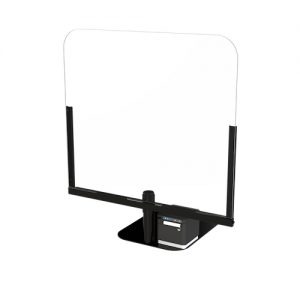
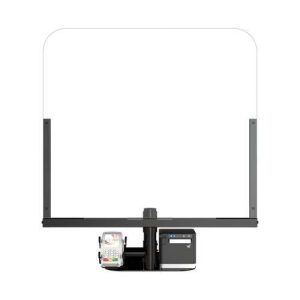
The Star Micronics POSShield is an effective and portable sneeze guard for retailers.
Tip 2: Plan and Announce Your Health and Safety Precautions
Safety is at the top of everyone’s minds these days. On your online materials and in-store via signs make sure you communicate your health and safety considerations, such as how your store is minimizing exposure for both its customers and its employees.
Curbside health and safety measures could include tactics like employees directly placing orders in customers’ trunks. For the shoppers who pick up their orders in-store, you should consider implementing a sneeze guard and antimicrobial covers for surfaces like door handles, checkout counters, and bathroom surfaces.
Tip 3: Communicate, Communicate, Communicate
Communication every step of the way is key for a successful buy online, pickup in store strategy.
When an order is placed, send an immediate confirmation email, text, and push notification to shoppers including clear directions to the store, an estimated pickup time, where to pick up the order whether it’s designated parking spots or a pickup counter inside the store, and what forms of identification may be needed.
Looking to strengthen awareness of your BOPIS offering? Consider promoting it to your in-store shoppers on the bottom of your receipts. You may have in-store shoppers that are unaware that you offer BOPIS, and what better place to advertise it than on the bottom of the receipt that goes directly into every shopper’s hand? With Star Micronics PromoPRNT, you can even create custom promotions on your Star printer, for free.
Tip 4: Have a Top-Notch Inventory System
Having a seamless, real-time look at your inventory is important. If customers place BOPIS orders only to find out that their items are actually out of stock and unable to be picked up, they will not be satisfied and are unlikely to try to use your service again. Avoid this potential issue with a high-quality inventory system. Look for a tool that allows you real-time inventory and analytics on order statuses and workflows, what is needed and where, and how quickly an item can get to the store where it is needed.
Tip 5: Leverage Cross-Selling Opportunities
As we discussed above, offering BOPIS to your customers creates a fantastic opportunity for cross-selling. Many customers will browse your store when they come into pick up their order, and be sure to take advantage of that!
Consider using online purchasing data from your BOPIS orders to successfully cross-sell when shoppers are visiting your brick-and-mortar location. One example of this is offering personalized coupons for customers to use in-store for products that may be of interest to them according to their online shopping history.
Star Micronics Retail Solutions
From liner-free label printers for BOPIS orders to sneeze guards and receipt printers for in-store shoppers, Star has the wide variety of solutions you need to compete in today’s retail landscape.
Examples of Buy Online, Pickup in Store Strategy Successes
Looking for some buy online, pickup in store strategy inspiration? Check out a couple of sample successes below:
Home Depot
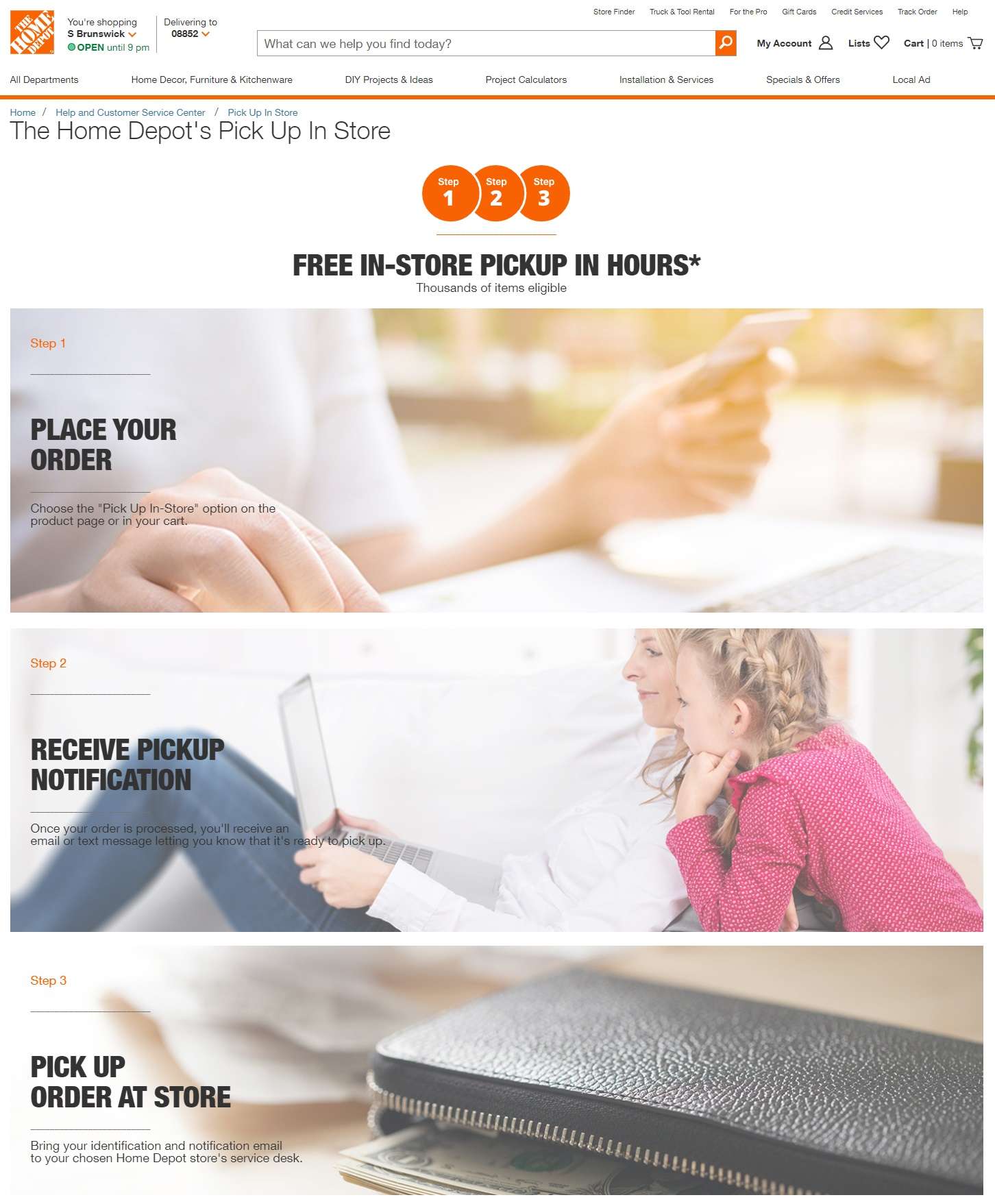
Home Depot has a great landing page for its BOPIS offering that clearly explains its BOPIS process – and according to CEO Craig Menear, the store’s online customers choose to pick up orders in-store more than half the time!
Petco
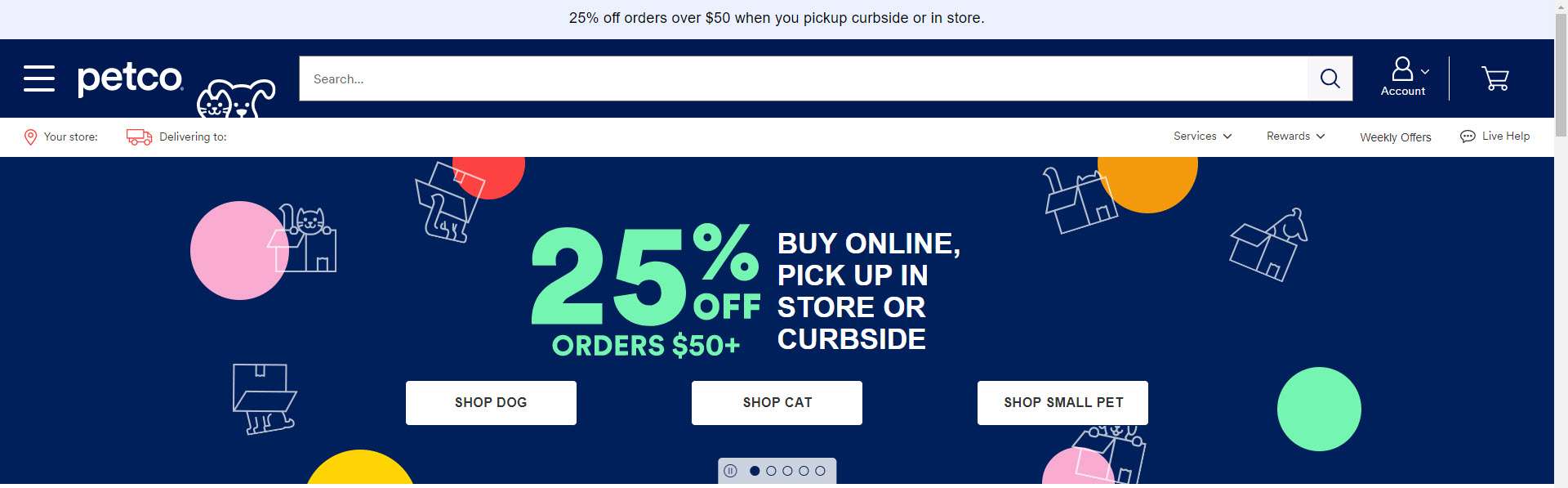
When it comes to enticing customers to take advantage of your buy online, pickup in store strategy, Petco is very successful. The first thing you see when you visit their website (both on the homepage hero image and in a text banner at the top of the page) is a BOPIS promotion.
Star Micronics has the POS solutions it takes to make retailers stand out – online, brick-and-mortar, and everywhere in between.
Download our Retail Brochure to browse our receipt and label printers, online ordering technology, health & safety solutions, and more.
Needless to say, the retail industry faced monumental changes during 2020. Many brick-and-mortar locations closed their doors, and omnichannel retailing and health and safety quickly became the focus of the industry. As we enter 2021 and the world continues to slowly reopen and move further into the “new normal,” what technology for retail stores can be expected to make a splash in the industry? Read on to find out.
Online Ordering / eCommerce
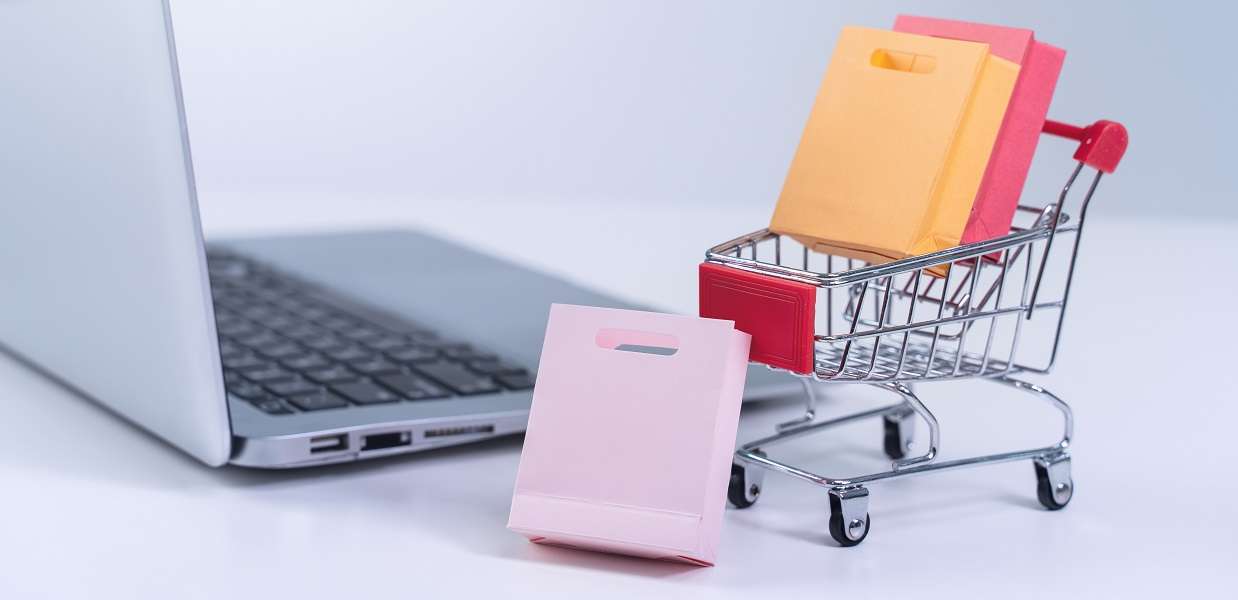
It comes as no surprise that online ordering will continue to be pivotal to retailers around the globe. In fact, 69% of Americans have shopped online and that percentage is expected to hit 91% by 2023. And did you know that shopping app downloads reached 2.8 million on Black Friday 2020, a new single-day record?
As shoppers everywhere continue to enjoy the convenience and extra level of safety that comes with placing their orders online, it’s more critical than ever for online ordering software to be an important piece of technology for retail stores. Some online ordering features retailers should look for in a POS application include:
Customer account creation and customer profile abilities
Inventory management
Sales analytics
Web and mobile applications
Professional, attractive online store layouts that are easy-to-brand
Marketing tools like social media integration and search engine optimization
And more
Equally important to having the right eCommerce software is having the right eCommerce hardware. Using a POS printer like the mC-Print3 with CloudPRNT technology can greatly streamline omnichannel retail operations. CloudPRNT technology enables printing directly through a cloud service by working with the online ordering service to store and create print jobs and communicate status with the printer. This seamless online order fetching makes it so that retailers can automatically receive online orders without the need for an additional tablet, software, or SSL certificate. And better yet, the mC-Print3 features USB hub functionality, allowing for connecting peripherals like cash drawers, customer displays, scanners, and more. There’s no reason for omnichannel retailing to cause complicated logistics for business owners!
Buy-Online-Pickup-in-Store (BOPIS)
Another retail trend related to eCommerce is buy-online-pickup-in-store (BOPIS). While the same POS software mentioned above can likely field BOPIS orders, the technology that retail stores may need for BOPIS may be slightly different.
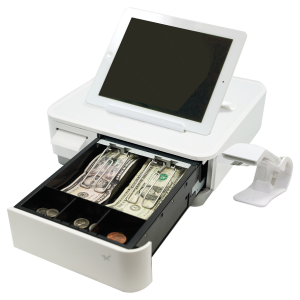
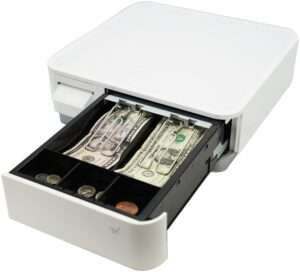
While many online orders are paid for by credit card, retailers may still experience some shoppers who wish to pay with cash. In that case, a space-saving, all-in-one POS featuring a small cash drawer – like the Star Micronics mPOP™ – may be ideal. A thermal printer (like the Star Micronics TSP654IISK) capable of printing linerless labels – which are repositionable, residue-free, and can improve order accuracy up to 99% – may also be helpful in preparing BOPIS orders for customer pickup. Last but not least, if a store is offering curbside payments, portable receipt printers with magnetic stripe readers (MSR) can allow employees to complete transactions at the customer’s car, eliminating the need to run back inside and ultimately saving the business time and money.
Did you know that 85% of shoppers said they have made additional in-store purchases while visiting stores to pick up their BOPIS orders, and 15% of them say they make those additional purchases “somewhat frequently?” Because of that, it is worth noting that if a retailer experiences a high volume of BOPIS orders, it may be useful to invest in a higher-volume cash management solution. Star Micronics proudly offers three lines of cash drawers with a variety of features, sizes, and price points, to meet any retailer’s cash management needs.
Health and Safety Products
While recent events have undoubtedly expanded the eCommerce market, brick-and-mortar is here to stay. In fact, according to Tinuiti,
“Last year, real estate experts predicted that digitally native brands would open 850 brick-and-mortar stores in the next 5 years, with New York being the most popular destination. And while the COVID-19 pandemic has undoubtedly slowed the openings of new brick-and-mortar stores, we’re still seeing offline experiences from previously online-only brands, and will continue to in 2021.”
Star Micronics POSShield Sneeze Guard
While physical retail locations will remain, so will health concerns. Businesses can put their employees’ and customers’ minds at ease by deploying the right health- and safety-focused technology for retail stores. One tool is a sneeze guard, or a plexiglass divider placed at the point of sale to limit the spread of germs. Not all sneeze guards are the same, and retailers may find a lightweight, portable guard (like the Star Micronics POSShield) that doesn’t require any drilling or mounting is a more convenient choice for both their short-term and long-term needs.
Another simple yet effective health and safety tool is antimicrobial covers. This film, which is safe to use and easy to apply, reduces germ transfer on high-touch surfaces like door handles and push bars, checkout counters, restroom surfaces, elevator buttons, and more. Antimicrobial covers can help build consumer confidence in a retailer, as the film is printed with an eye-catching message conveying that it limits the spread of germs. This message lets customers know the store is doing what it can to protect the public health.
Augmented Reality (AR)
Purchasing products online isn’t the only web-based tool making a splash in the retail industry. A Nielsen survey has revealed that consumers listed augmented and virtual reality as the top technologies they’re seeking to assist them in their daily lives, with 51% saying they would be willing to use AR to evaluate products.
And AR isn’t just for big name brands. In 2020, Shopify launched Shopify AR, a toolkit for small- and medium-sized businesses to create immersive AR experiences showcasing realistic and interactive versions of products to shoppers. AR helps shoppers get a better understanding of a product’s size, scale, and details, and apparently digitally “trying it on” works – Shopify reported that interactions with products having AR content experienced a 94% higher conversion rate than products without AR.
For eCommerce, brick-and-mortar, and everything in between, Star Micronics proudly offers a complete range of POS technology for retail stores.
Nearly one year ago, no one was sure how the new COVID-19 pandemic would impact retail. Seemingly quickly, shops closed their physical doors and the country began to stay at home. Over the months to follow trends emerged and the market changed in ways that now make it an enticing time to start a business. There are four major reasons why it’s a great time to open a retail store. Read on to discover how 2021 provides great opportunities to open a retail store, and create a strong business plan withstrongtechnology you need both during the remainder of the pandemic, and for post-pandemic retail.
1. Low-Interest Loans
If you are considering opening a retail store and purchasing a commercial space, now might be the perfect time to do so. Why? One result of the pandemic is that real estate loan interest rates have dropped significantly. According to ValuePenguin.com,
“Currently, the average interest rate on a commercial real estate loan is about 3% to 12%. The actual interest rate you secure on a loan depends on the type of loan you choose, your qualifications as a borrower, and the type of building or project you’re financing.”
Additionally, according to investment management firm Colliers International Group Inc., in 2021 investors expect to see pricing discounts of over 20% on retail and hospitality real estate, presenting a valuable, cost-efficient opportunity to repurpose these vacant storefronts.
Securing a commercial real estate loan comes with many benefits, including the ability to build equity and make the most of additional tax benefits. But what kind of loan is best for your needs? The various commercial loans available today offer different terms, rates, and uses. Click here to read more about different commercial loan options on the market.
2. Affordable Leases
Looking to lease, not buy, a retail space? It’s still a great time to open a store.
Due to the pandemic, commercial landlords have been providing rent relief in many ways to its retail tenants. Some examples of this include granting concessions on lease payments, lengthening payment terms, extending or shortening leases, permanently lowering rents, and forgiving past-due payments, according to The Wall Street Journal.
Another alternative some commercial landlords have been offering a turnover rent model to its tenants. According to Retail Gazette,
“Turnover rent is calculated by reference to the income and other receivables generated at the leased property – usually it’s an agreed percentage of turnover. Because turnover-based rents are closely aligned to individual stores’ performance, it arguably creates a symbiotic relationship between landlord and retail tenant. During a successful sales period, both parties benefit, but less favorable times can create an incentive to seek improvements.”
It’s important to commercial landlords to agree to providing rent relief so that they can avoid their occupancy rates from decreasing during the pandemic. While making concessions is not ideal to landlords, it is better than their tenants leaving all together. Because of that, it can be an affordable time to open a store, whether you are expanding an existing retail franchise or starting a new brick-and-mortar business.
3. Business-Boosting Omnichannel Technology
So, you may be wondering how to open a retail store and survive in the current market. One essential way to boost your business is to leverage omnichannel retailing, or the seamless merging of physical and digital storefronts.
Incorporating e-commerce into your business plan was important before COVID-19 rattled the world, but due to lockdown requirements and the hesitancy some currently have to shop in physical stores, it’s simply a must in the current retail landscape. By embracing both brick-and-mortar and e-commerce, you can increase your store’s visibility. Some other benefits of omnichannel retail include:
Improving sales
Higher margins
Building brands
Better data collection
Increased staff productivity
Taking advantage of all that omnichannel retail has to offer requires the right technology. First, you must be sure that you use POS software that facilitates both in-person and online shoppers. Some features to look for in a POS software include a white-labeled online shopping platform, curbside pickup and buy-online-pickup-in-store (BOPIS) functionality, multi-store inventory management, detailed reporting, and marketing capabilities.
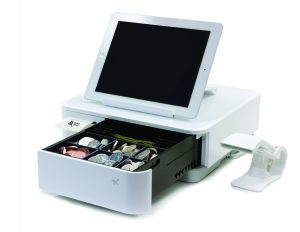
The Star Micronics all-in-one mPOP™ is built for modern retail.
Equally important is choosing POS hardware that works with your chosen modern POS software. It’s a good idea to confirm that all of your POS hardware – including your receipt and label printers, cash drawers, and more – are compatible with your software. An easy way to ensure that is to choose a POS hardware manufacturer that is a one-stop shop that can provide a full retail POS hardware solution and is integrated with the industry’s top retail POS applications. Another must-have is online order printing capabilities.
While e-commerce is important, the aesthetics of your brick-and-mortar location is still crucial. Choose POS hardware that is sleek and compact, like the Star Micronics all-in-one mPOP™ that combines a printer, cash drawer, scanner, and tablet stand. It’s also essential to protect both your staff and customers, so don’t forget to install sneeze guards and antimicrobial film on commonly touched surfaces.
Case Study
Dry cleaner leverages Sudzy POS software and Star Micronics printers for a spotless, cloud-based operation.
Yes, really. The pandemic has shown people do indeed value going out and visiting brick-and-mortar retail locations. According to The New York Times, consumers still like to shop in person, even if that only entails picking up their orders curbside. Furthermore,
“The popularity of curbside pickup reveals that the future of retail is not just more packages piling up on people’s doorsteps. Beyond satisfying the need for contactless shopping in the pandemic, it taps into Americans’ desire to drive to a store, a pull that can be just as strong as, or even stronger than, the convenience of home delivery.
‘Americans are used to their cars and actually do like stores, so this is kind of a hybrid where you’re getting the best of both worlds,’ said Oliver Chen, a retail analyst at Cowen.”
For those shoppers that do enter the store to browse or pick up their BOPIS orders, it’s important to keep your store safe by social distancing, wearing masks, and using equipment like sneeze guards and antimicrobial film covers, and embrace omnichannel retail technologies.
While the retail landscape certainly looks different now, it’s still a great time to open a store and with the right technology, you have a great chance for success.
Is it time for you to open a retail store?
Discover Star Micronics’ full POS solution for retailers like you.
If you could summarize the hottest retail technology trends from 2020, contactless solutions would undoubtedly make the list. Between the fact that retail technology is constantly advancing, and the COVID-19 pandemic that rocked the world earlier this year, contactless solutions will simply be indispensable for retailers in 2021. Read on to learn more about what exactly contactless solutions are, the importance of going contactless, and how to get started with contactless solutions so that you can not only keep up, but stand out, from your competition in the new year and beyond.
What are Contactless Solutions?
Simply put, contactless solutions are retail solutions that don’t require shoppers to come in contact with other people or any public surfaces, where viruses and germs can lurk. Two popular contactless solutions – especially in the new normal – are contactless payments and contactless fulfillment.
Contactless Payments
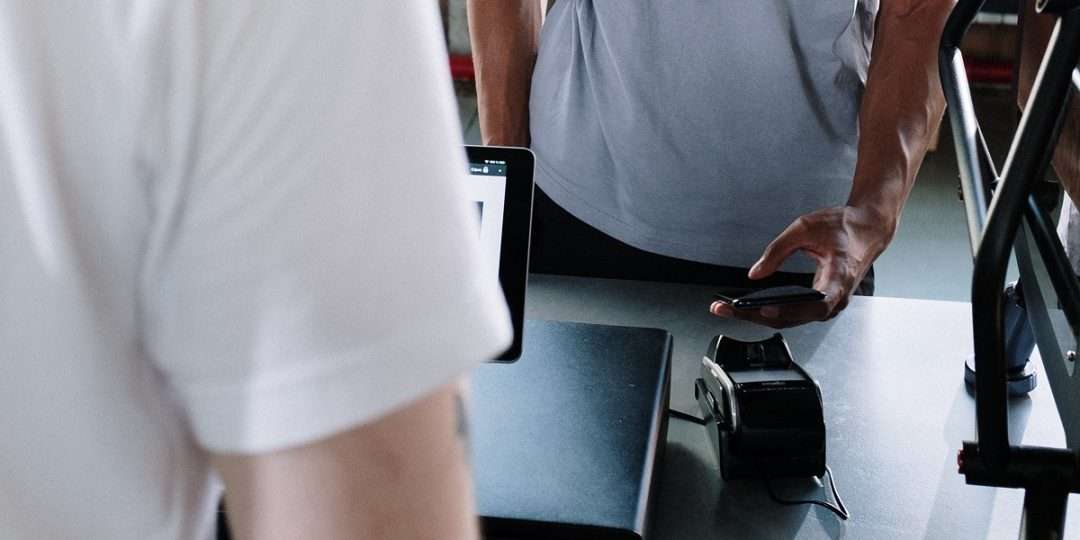
Contactless payments, which as a retailer you have surely seen, are payments that are made through EMV cards or smart devices like smartphones and smartwatches.
Contactless payment is a secure method for consumers to purchase products or services using a debit, credit, or smartcard—also known as a chip card—by using RFID technology or near-field communication (NFC).
To make a contactless payment, tap your card near a point-of-sale terminal that is equipped with the contactless payment technology. Since contactless payments do not require a signature or a personal identification number (PIN), transaction sizes on cards are limited. The allowable amount for a contactless transaction varies by country and by the bank.
Contactless payment is also referred to as tap-and-go by some banks and retailers. Examples of non-credit or debit card contactless payments include transit cards, Apple Pay, Android Pay, and Google Wallet.
When it comes time for customers to pay, they simply hold their card, smartphone, or smartwatch one to two inches from the contactless symbol on the payment terminal. When the payment has been accepted, the terminal will alert the customer with a beep, green light, or checkmark.
Contactless Fulfillment
Another common contactless solution is contactless fulfillment. For shoppers that would rather not shop in a brick-and-mortar location, contactless fulfillment solutions include curbside pickup and several online ordering options like traditional delivery and BOPIS (buy online, pick up in store). These solutions allow customers to safely receive their orders when and where they want, something that became highly demanded during COVID-19 and will likely continue to remain popular.
The Importance of Going Contactless
Maybe you already implemented some contactless solutions in 2020 or previous years, but in 2021 it will be crucial for you as a retailer to fully leverage these technologies and processes. As the world moves even further into its new normal, consumers will continue to seek shopping methods that minimize how much contact they have with other people and mitigate their risk of contamination.
Contactless payments have been around for some time and are already very popular globally – approximately 20% of all transactions in Australia, Canada, South Korea, and the United Kingdom are completed with contactless technology. The contactless payment trend is present in the United States, too. TD Bank saw a surge in contactless payments following the onset of COVID-19, and it’s likely that shoppers will continue to pay for their orders in this quick and easy way well after the pandemic ends.
Contactless fulfillment methods like delivery and curbside pickup/BOPIS, are also going to be a critical retail offering in 2021. According to Retail TouchPoints,
While the surge in contact-free pickup and delivery offerings has been tied to the current pandemic, it’s likely that their popularity will remain even after the crisis passes. Many retailers will need to figure out ways to incorporate these offerings on a regular basis while still keeping a tight rein on additional labor, operational and systems integration costs.
How to Get Started
Contactless payments can be surprisingly easy to roll out. Many banks offer contactless credit and debit cards, as well as the payment terminals that process contactless transactions. These terminals have a contactless payment symbol to show shoppers that contactless payment methods are accepted. To better communicate to your clientele that they may now make contactless payments, you may have your staff inform customers in person, communicate the update via social media or email marketing, place a sign at the point of sale, or promote the news on your receipts by using free receipt marketing software, like Star Micronics PromoPRNT.
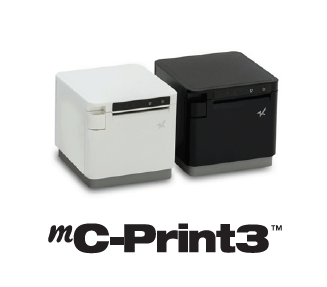
When it comes to contactless order fulfillment, check in with your POS software provider to see if they offer online ordering and curbside pickup/BOPIS functionalities. To successfully roll these methods out, your POS hardware also matters. Be sure to use a receipt printer that comes with built-in online ordering technology, like the Star Micronics mC-Print3 that includes CloudPRNT technology which enables the printer to automatically fetch and print online orders without the need for an additional tablet in your store. Star Micronics printers are also integrated with many industry-leading retail POS software programs, meaning they are a truly an easy, one-stop shop solution for your retail store.
To wrap up, contactless solutions are already popular, and all signs indicate they will continue to be in 2021. While it may sound intimidating, it can be easy for retailers like you to adopt these solutions if you are working with the right, one-stop shop POS software and hardware companies. Keep your customers happy and safe, and stand out from competition for years to come, by adopting contactless solutions like contactless payments and contactless order fulfillment methods in the new year.
Star Micronics has full technology solutions to help prepare your retail store for 2021.
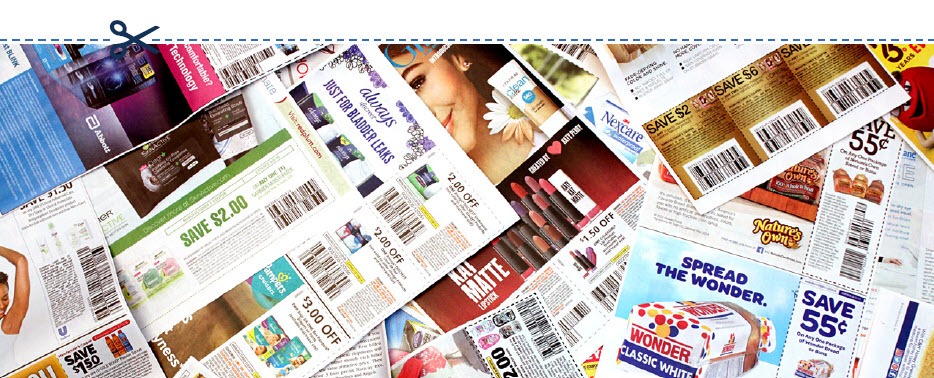
Yes, really. Coupons have been around for more than 100 years and they’re just as effective today as they were in 1887, when a hand-written coupon for a free glass of Coke was issued by the Coca-Cola Company. According to TIME Magazine, the coupon campaign was so successful that more than eight million free drinks were served between 1894 and 1913. By the 1900s, cereal companies jumped on the savings bandwagon and began issuing coupons.
Coupons as a Promotional Tool
More than a century after Coca-Cola first introduced coupons to consumers, they are still a win-win, making these discount offers the top-performing marketing and promotional tools for businesses. Your customers love saving money and receiving free items or services, and coupons give them an incentive to make repeat purchases. In fact, the “2K17 Valassis Coupon Intelligence Report” revealed that 84% of shoppers surveyed said that coupons influence what products they buy, while 86% of people said that they were persuaded to purchase a new product because they had a coupon for it. And once people try something at a discount and like it, they are more willing to pay full price in the future.
Digital vs. Print
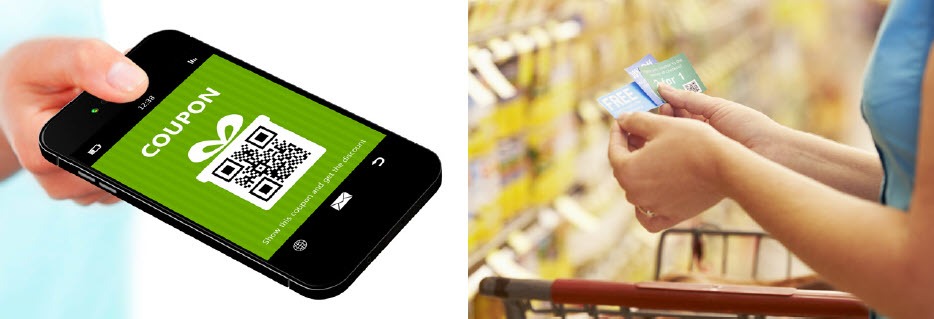
More than 289 billion printed coupons were distributed in 2015, compared with six billion digital ones, according to statistics released by Kantar Media. And even though digital coupons and offers are growing in popularity, paper coupons are still dominating the savings landscape.
If you want to issue a coupon, are paper or digital more effective? If you are looking to get the most bang for your promotional buck, printed coupons provide a higher return on investment (ROI).
Although the redemption rate of digital coupons is a whopping 77%, which also means an increase in the number of sales and heightened brand awareness, these benefits come at a cost. Issuing digital coupons costs more than issuing paper coupons. You’ll shell out more money to mine data, collect email addresses, coordinate social media and develop an electronic marketing campaign. The higher redemption rate of digital coupons balances the costs, but the average ROI is still about 18% lower than the ROI from printed coupons.
On the other hand, print coupons make up 44% of coupon usage, according to Knowledge Network. And even though the popularity and ease-of-use of digital coupons for consumers make them an attractive option, research shows that 70% of shoppers still look for coupons in printed media and mailers.
A smart strategy may be to create a coupon campaign that integrates both the digital and print universes. A campaign that seamlessly marries the two solutions together will generate the highest return on investment since you’ll be increasing your reach and reaping the benefits of each method.
Who Wants Coupons?
The answer is: everyone. But you should pay especially close attention to the buying habits of millennials — customers born between the years 1980 and 2000. This generation, now the biggest in the U.S. wields tremendous buying power. This doesn’t mean consumers in this age group are big spenders — research shows they are cost-conscious and tech-savvy. Good branding or budget pricing isn’t enough to attract their business — millennial consumers love a good deal. According to research released by PPRI, 87% of shoppers in this age group used coupons last year. Of the people surveyed, 91% reported they used paper coupons, 85% used coupons that arrived in the mail and 48% took advantage of digital offers.
Why does this matter? Now that many millennials are established in the workforce and have disposable income, their buying habits have started to reshape the shopping landscape as we know it. Thanks to the buying power of this generation, off-price retailers like Nordstrom Rack and TJ Maxx are thriving as they provide millennials with the thrill of the (bargain) hunt, smart marketing and the right price points.
Yes, really.
Coupons are still the top-performing marketing and promotional tools for businesses. Learn more in our free eBook.
Although it seems like a minor detail, the receipt is the last thing a customer receives before leaving your store. It’s your final chance to make a great impression — so make sure your receipt is a personalized take-away that is an extension of your brand. Every receipt should be customized with your store’s logo, brand messaging, website and tag line so people can easily identify where it came from.
The receipt is also another vehicle to engage your customer. Including a customer service survey is a direct channel of communication that gives you an inside look at how your business and products are performing. Typically, customers are offered an incentive like a discount coupon, free item or a chance to be entered into a contest for completing the survey. These surveys help you understand your customers’ needs, evaluate employee performance and remedy any issues before they become a larger problem. Receipts can also be used to announce upcoming sales, promotions or special in-store events.
Finally, receipts can help you gauge the effectiveness of a promotion because they connect the promotion directly to a purchase. If a printed coupon for a new product is issued in a magazine and sales of that product jump as a result, you’ll know it’s a successful way to draw in new business, and it’s a strategy you should repeat. This is especially important when trying new promotional vehicles. if you want to try a digital promotion via Facebook or Twitter and the desired effect doesn’t materialize, you’ll know to allocate your marketing dollars elsewhere in the future.
There is a way that SMBs can reduce the cost of printed coupons: by using the receipts they already issue. Star Micronics’ Cloud Services has added a new solution, PromoPRNT, to its service lineup. Star’s Cloud Services was created to bring next generation customer engagement solutions to retailers by transforming their receipt printers into cloud-connected devices. Its newest offering, PromoPRNT, allows retail stores and small business locations to advertise their promotions in the most simple and effective way — printing coupons and promotional materials right onto the receipt that is issued to a customer.
What is PromoPRNT?
PromoPRNT is the newest tool merchants can use to raise product or service awareness, create unique discounts and monetize in-store traffic in an effective way. Thousands of SMBs have already started using PromoPRNT, which allows them to deliver promotions using nothing but their Star Micronics cloud-connected thermal printers. Printing coupons on customer receipts allows you to reach a higher percentage of shoppers for a fraction of the cost of a print or digital campaign and compliments the marketing campaign you already have in place.
Merchants can reduce the cost of printing coupons and digital campaigns through external services and engaging customers at the POS terminal. Retailers can choose from the templates of coupons, store offers and messages to customize their receipts, giving them ability to advertise and run promotions at their POS system. You also have the option to integrate barcodes of discount codes and include validation dates. The coupons or promotional messages can be deployed to every store printer from the comfort of your desk.
Printing a coupon on the receipt takes the guesswork and cost out of delivery–you can be sure the customer receives it. And as an added bonus, employees can talk about the coupon/promotion while they are processing the transaction and circle or highlight the promotional offer on the receipt so the customer doesn’t forget.
The features businesses know and love – with added strength and benefits
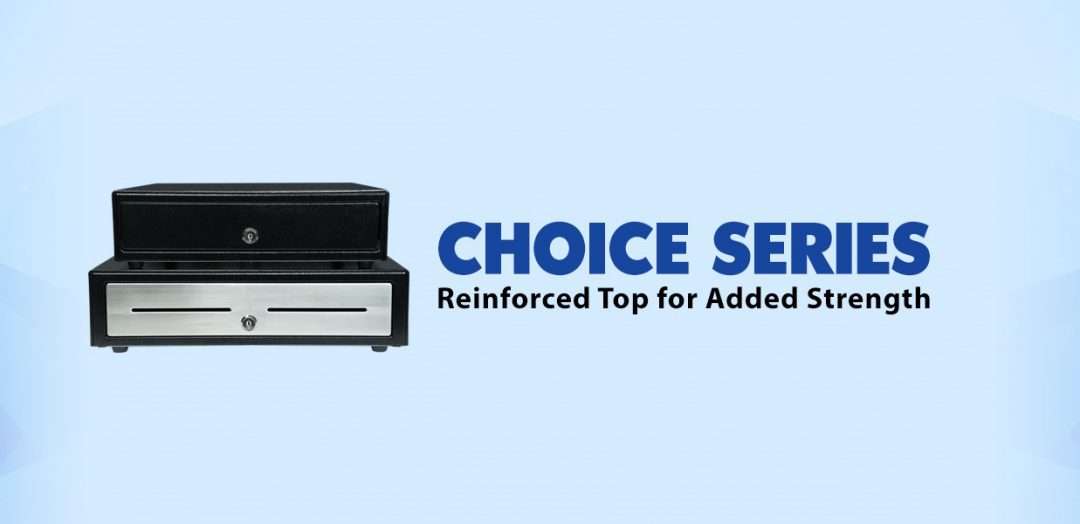
Somerset, NJ – July 21, 2020 – Star Micronics, a leading manufacturer of mobile, point of sale (POS), and customer engagement technologies, is excited to introduce the Choice Series cash drawers to its line of cash management solutions.
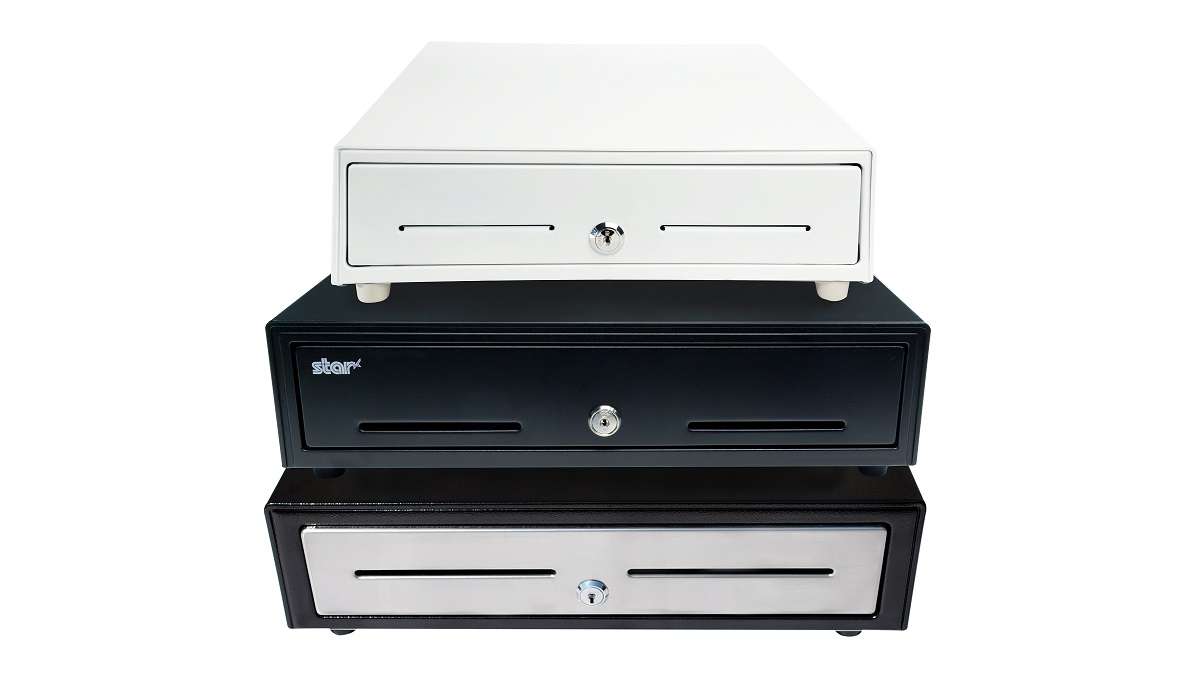
Available in 14” x 16” and 16” x 16” sizes and glossy black and matte white finishes, with an optional stainless-steel front design, the Choice Series cash drawers are available in the sizes and styles businesses demand. Equipped with standard till sizes, the 14” x 16” cash drawer features a 4 Bill-5 Coin till and the 16” x 16” model includes a 5 Bill-5 Coin till, with additional sizes available to fit a business’ specific needs.
Stronger than their competition, Choice Series cash drawers feature a reinforced top creating added strength to eliminate bounce from touch tablets and securely support POS terminals. The Choice Series is a one-key cash management solution enabling both the cash drawer and locking till cover to be operated by a single hinged key. Managers will love the convenience of a single hinged key that will not break off in the lock.
Simply connect the cable included with your Choice Series cash drawer to the drawer kick of your POS printer and enjoy years of reliable operation tested to over 1 million cycles and backed by a three-year warranty. Available options for the Choice Series include under-counter mounts, locking till covers, over 10 different lock set options, and a secure dual-cash cable to enable the Choice Series to work as either cash drawer 1 or cash drawer 2.
The Choice Series complements two other Star Micronics cash drawer lines: The Value Series of affordable, standard cash drawers, and the Max Series of premium cash drawers with added security and design features.
“The combination of simple setup and operation, reliable and secure steel construction, and compatibility makes the Choice Series right for your business,” said Michael Hanson, Executive Vice President at Star Micronics. “Make your next sale a Star Bundle by adding a Choice Series cash drawer to Star’s expanding portfolio of customer solutions.”
Direct store delivery (DSD), selling or distributing products directly to the point of sale (POS) or point of consumption (POC), is especially popular for food, drink, and other high-volume goods. Eliminating the “middlemen” in the supply chain is most efficient, especially when products have a short shelf life or are in high demand. Manufacturers ranging from Coca-Cola® and Budweiser® to Entenmann’s® and Hallmark Cards use DSD to get products right to the store — and to shoppers faster.
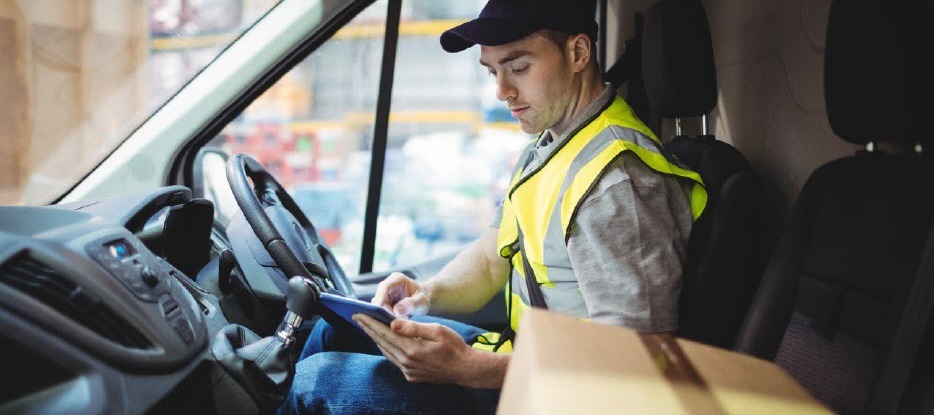
One of the elements essential to a successful DSD process is to add a mobile automation solution that supports receipt and label printing. Mobile DSD solutions give drivers more time to spend on merchandising, information gathering, campaign management, and other value-adding DSD-related services, instead of having to manually create invoices and receipts.
The ability to print on-demand is also extremely helpful. For example, a driver may find that an individual store’s needs have changed, and mobile printing can quickly and easily produce accurate, up-to-date invoices, orders, pick lists, receipts, labels, and more.
Your customers rely on you for solutions that enable their mobile sales teams to work most efficiently and maximize profits. Providing reliable on-demand printing in the field, however, hasn’t always been easy. Smart solution providers are offering their customers Bluetooth Low Energy (BLE) mobile thermal printers, an ideal choice for DSD applications.
What Makes BLE Printers Different?
BLE printers support a communication range similar to “classic” Bluetooth of at least 330 feet, with significantly reduced power consumption. This feature offers operational cost savings and prolongs battery life. But perhaps an even greater advantage is that BLE printers can work with any compatible iOS device (iPhone®, iPad®, iPod Touch®) without the need for pairing. With standard Bluetooth, only one printer can be paired with an iOS device, and each user must use that specific mobile printer every day. However, BLE allows any employee to use any mobile receipt printer since no pairing is required. This feature makes BLE printers perfect for bring your own device (BYOD) environments.
Benefits of BLE
There are several benefits your clients can expect when you provide a BLE mobile thermal receipt printer for their DSD applications:
Easy to use: Because BLE mobile printers are shareable between multiple iOS devices, drivers can simply grab a printer and go without worrying about matching a particular printer to their devices. No pairing also means that drivers who aren’t tech savvy don’t have to go into their iOS settings and deal with configuring. Connections between the printer and mobile device are handled automatically by applications, so the user can just open an app and print from there. Ease of use also extends to fast and simple paper loading, with printers offering “drop in and print” roll changes.
Smaller, Portable Footprint: A mobile printer needs to be compact and lightweight. Drivers use these printers all day, so they need something small and easy to carry. There are BLE mobile printers that fit easily in the palm of one’s hand and can be worn comfortably on a belt clip. Some weigh about 1 ounce or less, including the battery.
Reliability: Productivity depends upon consistent device performance. BLE printers deliver high-quality print resolution, ensuring your driver has a clean and readable receipt every time. BLE printers also have high mean cycles between failure (MCBF) rates, with the ability to print millions of lines before requiring maintenance beyond paper changes. In addition, durable print heads can last for 30+ miles of printing.
Battery Life: Related to reliability, don’t under estimate the importance of battery life. DSD drivers’ long shifts mean that printer batteries need to last. Look for BLE printers that offer at least 10+ hours of battery life. A good BLE printer will also have a USB port and cable for convenient charging with any mobile device USB power adapter or PC USB port.
Must-Have Features
When you are looking for the best BLE mobile printer for your customers, make sure it has the right features to meet the greatest variety of printing needs.
Direct Thermal Printing: With thermal transfer or impact printing, the print head comes into contact with an ink ribbon to produce text. Direct thermal printing eliminates the need for a ribbon, as the print head contacts the thermal paper and produces text through a heat reaction. There are several reasons why direct thermal printing is the best choice for mobile printing and in particular for the fast-paced environment of DSD. The only consumable is the paper, which saves time and maintenance (no worries about having to change ribbons) and is more economical, providing significant cost savings. Direct thermal printing also produces a higher resolution than thermal transfer, creating crisp, legible receipts. They print faster as well, with some printers offering speeds of 1 to 2.5 inches per second. In addition, they operate quietly, which is a necessity when working in a customer’s store.
Connectivity: Besides BLE 4.0 for use with any iOS devices, it’s helpful to also have standard Bluetooth 3.0 for use with Android and Windows devices as well as iOS. In BYOD environments, some users may not have an iOS device to take advantage of BLE, so having a backup means of connectivity is wise.
Backlit Display: These printers may be used in bright sunlight conditions, and a backlit LCD is easier to read.
Versatility: A good BLE printer should offer 1D and 2D barcode support to suit a range of printing needs. There are also BLE printers that offer adjustable paper width for greater flexibility. Some printers also provide special capabilities such as a “de-curl” feature for smooth and flat receipts.
Durability: Mobile printers need to be able to withstand tough working conditions and various environments. An ingress protection (IP) rating will tell you about the level of the printer’s resistance to dust and moisture. The first digit refers to dust protection, and the second digit refers to protection against liquids (everything from raindrops to soda spills). The higher the digits, the greater the resistance. Also look for printers that have a drop test rating of 3 to 4 feet to see whether they can withstand a fall to pavement or a store floor.
And of course, it’s good to look for a product backed by a warranty that will help you maximize your profits as a value-added reseller.
Other Industries that Benefit from BLE Printing
BLE mobile thermal printing isn’t just for DSD applications. It will benefit any of your customers within an industry or corporation where employees use devices of their choice for BYOD environments. Any workplace that uses a pool of printers for a fleet of mobile workers will appreciate the “grab and go” convenience of not having to pair specific devices. A great example of this type of workplace is a taxi, limo, or rideshare service. BLE mobile printers can also be an economical choice for linebusting in retail stores or faster service in restaurants.
Give Your Customers the Best Choice
A BLE thermal receipt printer for DSD applications is the most sensible option for your manufacturer customers. Set their DSD drivers up for success with a printer such as the Star Micronics SM-L200 and the new Star Micronics SM-L300.
Providing solutions that address your clients’ pain points and increase their efficiency will help cement your role as a trusted business advisor. They need your guidance when it comes to technology — helping them find the very best solutions for their applications will establish you as a true partner that has their business’ best interests in mind, not just someone who sells technology.
Partnering with an industry leader in mobile printing technology can help you stay on the cutting edge of technology and provide your clients with state-of-the-art solutions that can give them new operational efficiencies and a competitive advantage.
About the SM-L200 and SM-L300
SM-L200
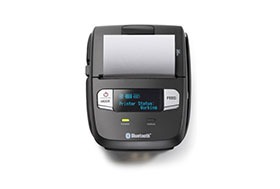
The SM-L200 supports Bluetooth low energy (BLE 4.0) technology for all iOS mobile devices such as the Apple iPad®, iPhone® and iPod touch®. Its compact and lightweight design make this two-inch portable printer perfect for a wide range of applications from queue busting in retail and hospitality to home delivery 58mm wide invoicing.
The SM-L200 is the first portable printer currently on the market which offers the ability to connect any Apple, iOS BLE compatible device without having to pair to it. With no limitation on the number of devices connected, BLE is the perfect solution for BYOD (bring your own device) environments that does not require any certification or prior authorization from your iOS operating system. In addition to the BLE feature for iOS, the SM-L200 is Bluetooth (3.0/ 4.0) compatible with all operating systems (Windows, Android, and iOS).
SM-L300
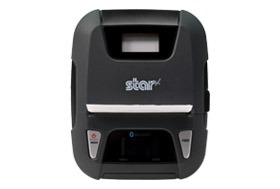
Always leading – always innovating, Star Micronics is proud to introduce the SM-L300, 3-inch portable printer. This addition to the SM-L series of Bluetooth low evergy portable printers allows users to connect to any Apple iPad®, iPhone®, or iPod touch®, iOS BLE compatible device without having to pair to it. With no limitation on the number of devices connected, BLE is the perfect solution for any environment using multiple devices for mPOS printing. In addition, it requires no certification or prior authorization from your iOS application. The SM-L300 is Bluetooth (3.0/4.0) compatible with all operating systems including Windows, Android™, and iOS.
Ready to learn more about BLE thermal printing? Get your copy of our free eBook, “Why BLE Thermal Printers are Ideal for DSD Applications” now!
To some, a cash drawer might just look like, well, a cash drawer. But when it comes to choosing a cash drawer as a business owner, cash drawers become a bit more complex. How will it fit in your space? Is it big enough to accommodate your day-to-day transactions? What kind of till do you need? The list of considerations goes on and on.
Star is here to make the cash drawer selection process a bit more transparent and easier for you. Let’s explore the five key things to consider when purchasing a cash drawer:
1. Connectivity
First, let’s discuss connectivity options when it comes to cash drawers.
The most common type of connectivity for cash drawers is a printer driven interface, which means the cash drawer is controlled through the printer’s DK port. The DK port, which stands for Drawer Kick, sends a 24V DC signal to open the cash drawer and is used in the majority of cash drawers.
Another way to open a cash drawer is quite obvious: manually with a key. Most cash drawers have both DK port connectivity, and manual key access.
Lastly, there are also wireless cash functions controlled by Wi-Fi and Bluetooth. These cash drawers are not as common, and tend to be more expensive.
2. Size and Style
The next topic to consider is one of the most important: how big of a cash drawer do you need, and what kind of cash drawer should you choose to match the look and feel of your counterspace and other POS components?
On the market, there are normally two different sizes for cash drawers: a smaller option (typical 13” x 13”) and a larger option (typically 16” x 16” and larger). When choosing a cash drawer size, be sure to keep in mind considerations such as if you have items (like a keyboard) that needs to fit on top of the drawer, or if the drawer needs to be a specific height to fit under a counter.
You may also choose a cash drawer color to match the other parts of your POS. For example, if you have a white receipt printer and white tablet-based POS/stand, choosing a white cash drawer will help provide a sleek look to your counter.
How Star Can Help
Even though each store is unique, balancing cash drawers is one thing every store has in common. Star Micronics offers the tools you need to make balancing your cash drawer as simple and painless as possible. For more information on the solutions we offer, contact Star Micronics today!
Next on your list of considerations is cash flow. What kind of currency do you accept? Do you accept a lot of physical coupons? What about checks?
Cash drawer tills (the part of the cash drawer that holds the money) come in several different sizes and bill/coin layouts. Some tils have room for the US standard (five bill and four coins). Other tills come with room for more coins or more bills depending on if larger, higher value bills, such as $50 and $100, are accepted. There are also available tills for Canadian and Latin American currencies.
Handle a lot of coupons, checks, and higher value bills? Be sure to choose a cash drawer with media slots, or slots on the front that feed into a hidden space underneath the till, to securely store these items.
4. Durability
Next on the list of considerations (and something that is very important) is durability.
What type of material is the drawer made of? Is it made of steel, or a different material? Cash drawers like Star’s, which are made of steel, are highly durable which not only makes your investment more worthwhile, but is also a security feature.
Another thing to consider is how many cash drawer opens is included in the product’s warranty? Be sure to choose a warranty that includes at least 1 million opens.
5. Security
Last but certainly not least on your list of considerations should be security. There are a few different security options to look for:
An additional lock that secures the drawer itself to the counter.
A locking till cover, so when you need to take the till to the back office at closing time, cash can’t be stolen during transport.
A universal key, so that cash drawers are easier to open in a rush and during an emergency there is no need to look through a huge key ring for the correct key.
A manual release options, so you can open the cash drawer no matter what. Manual release is quicker than waiting for a Bluetooth signal and even faster than some DK port signals.
Meet Star’s Cash Drawers
With three lines of cash drawers with a variety of features and price points, Star Micronics is proud to offer cash drawers for any budget or application. Learn more about each series below:
Value Series: The Value Series includes cost-effective cash drawers that integrate seamlessly into any retail or hospitality environment with a standard printer communication interface and bottom exit cable, hidden from the customer’s view. The cash drawers also feature four lock functions: locked, closed, online (opens electronically), manual open, and locked open.
Choice Series: Choice Series cash drawers include features businesses already know and love, but with added features such as extra strength to support touch tablets and POS terminals, a secure dual-drawer cable to enable the Choice Series to work as either cash drawer 1 or cash drawer 2, a foldable hinged key which minimizes the possibility of breaking off in the lock, and over 10 different lock set options for added security.
Max Series: Max Series cash drawers are the premier choice for retailers. Featuring durable, high quality drawers with Kensington lock compatibility and sleek Star branding, the cash drawers are designed to securely manage cash while delivering professional looks. The cash drawers also feature four lock functions: locked, closed, online (opens electronically), manual open, and locked open.



 While many online orders are paid for by credit card, retailers may still experience some shoppers who wish to pay with cash. In that case, a space-saving, all-in-one POS featuring a small cash drawer – like the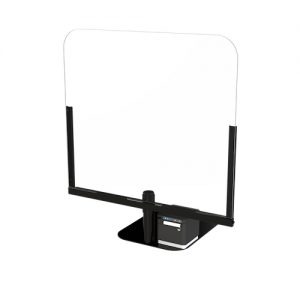

 When it comes to contactless order fulfillment, check in with your POS software provider to see if they offer online ordering and curbside pickup/BOPIS functionalities. To successfully roll these methods out, your POS hardware also matters. Be sure to use a receipt printer that comes with built-in online ordering technology, like the