The COVID-19 pandemic has sparked many unexpected changes in the economy and the way we live our lives. At the beginning of the pandemic, jobs were lost – in April 2020, as a result of the lockdown, the unemployment rate peaked at 14.8%. But now small businesses are facing a similar yet entirely different challenge: there are millions of job openings but a shortage of workers. Read on to learn more about the labor shortage and how the right technology can help businesses not just survive but thrive.
The Labor Shortage: Facts and Figures
The current labor shortage is a historic one. According to CNBC, as of August 2021 there were 4.3 million people leaving their jobs, the highest level on records dating back to 2000. Additionally, per the most recent U.S. Labor Department Job Openings and Labor Turnover Survey, there were 10.4 million job openings as of August 2021.
Service-heavy industries that traditionally required abundant manual labor, like accommodation and food services, are being majorly affected by the labor shortage. That puts you, a small business owner, under pressure to pivot your operations to keep up with consumers’ needs. Read on to explore how the right technology can help your business succeed during the labor shortage and beyond.
Labor Shortage Solutions
Self-Service Kiosks
Self-service kiosks can be extremely beneficial when your business is short-handed. A kiosk can enable your customers to take matters into their own hands (literally), avoiding potential long lines and bottlenecks.
Kiosks allow customers to order their own meal at a restaurant, check themselves in to an appointment, and check prices or pay for their own purchase at a retail shop. All the while, kiosks allow precious available staff to dedicate themselves to improving the customer experience in more worthwhile ways, like providing more personal customer service, restocking shelves, preparing online and curbside orders, and more.
Mobile Checkouts
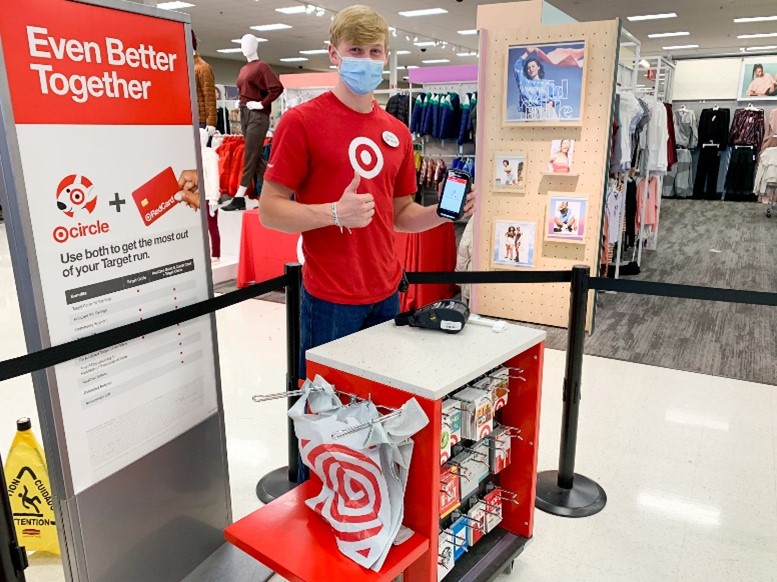
A mobile checkout at Target (source: thekrazycouponlady.com)
In the retail and QSR space, long lines are a serious danger. According to a study conducted by payment platform Ayden, retailers lose a collective $37.7 billion in potential sales due to long checkout lines (and that figure is surely even higher now during the labor shortage).
The answer? Mobile checkouts. Instead of requiring customers to queue up at a traditional point of sale, mobile checkouts enable staff to process payments anywhere in the store or restaurant as long as they have a mobile point of sale device and a mobile receipt printer. Implementing mobile checkouts not only help your business with line-busting, but they offer a more convenient method of payment for your customers and allow staff to be out and about in the building completing other tasks while also being able to ring up sales along the way.
Reopening Toolbox
Now more than ever, safety and convenience are priorities in retail and hospitality environments. As businesses reopen their doors, Star is proud to offer a line of solutions and resources designed to keep consumers and employees safe and satisfied.
If there’s ever been a time to upgrade your POS software and become a part of the online ordering scene, the pandemic is it. If you’re considering upgrading, be sure to choose a POS software that includes features like:
Online and brick-and-mortar selling capabilities
Mobile checkouts and mobile payment acceptance
Inventory management and menu management
Employee reporting, management, and payroll
Customer management and loyalty programs
Stock transfers
Detailed reporting
Online ordering is not only widely sought after by consumers but can help you optimize your in-store and in-restaurant labor by having customers pay online and simply drop by to pick up their item or meal (or have it delivered to them). This can help keep your remaining brick-and-mortar business flowing, while allowing staff to package orders in-between ringing up customers or providing other customer support.
Antimicrobial Film Covers
Between the Delta variant and the upcoming flu season, avoiding germs is a priority for all shoppers and diners, whether they’re browsing your brick-and-mortar establishment or simply dropping by to pick up a curbside order.
Help protect your customers and staff alike by applying antimicrobial film covers (like the ones from Star) to various surfaces in your store. Antimicrobial covers take seconds to apply, last up to 6 months, and can be placed on anything from door handles and checkout counters to restaurant tables and bathroom surfaces. Additionally, the covers provided by Star are thoroughly tested, EPA-compliant, and latex-free.
The Labor Shortage: A Trying Time, but Also a Time to Improve
The labor shortage is without a doubt one of the most stressful times the retail and restaurant industries have endured in recent years. However, the technology needed to help businesses through this challenge should be considering an investment in long-term success. Solutions like self-service kiosks, mobile checkouts, top-of-the-line POS software, and antimicrobial covers help you survive the now – and thrive in the tomorrow.
From antimicrobial film covers to mobile receipt printers, Star has the right POS technology to boost your business – whether you’re fully staffed or short-handed.
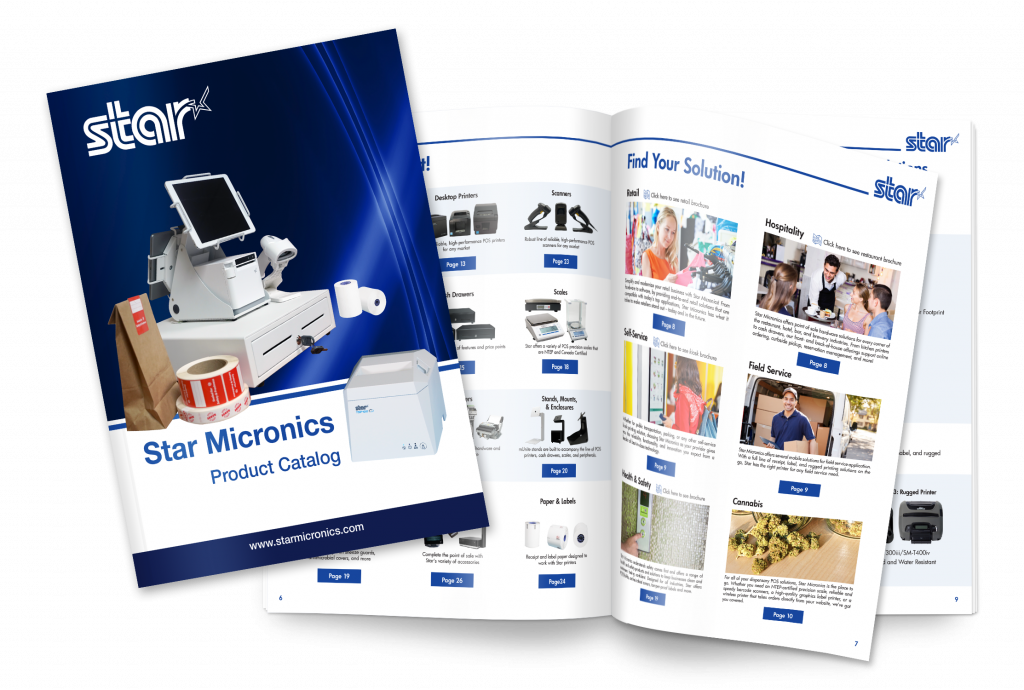
Star Micronics Product Catalog
Explore POS printers, label printers, kiosk solutions, and accessories for retail, restaurant, self-service, and more.
Disclaimer: NeverGerms® makes no claims regarding the safety or health of the general public or those interacting with its products. “NeverGerms®” and “Touch Less Germs®” are registered trademarks and not intended to have literal interpretation. NeverGerms products are manufactured by NeverGerms and distributed by Star Micronics. Although these products are designed to reduce microbe populations on commonly-utilized surfaces and have been tested by the manufacturer for their antimicrobial properties, Star Micronics cannot guarantee that they will eliminate all risk of germ, including virus, transfer from such surfaces. Star Micronics, as distributor, relies entirely upon claims made by manufacturer as supported by prior research. For further information, please visit www.nevergerms.com.
As the owner or manager of a small restaurant, it can be intimidating to think about all of the point of sale (POS) components that you need. With so many options on the market, what’s the best POS system for a restaurant? Read on to explore the must-have POS system features, from online ordering to front-of-house management.
1. Online Ordering Capabilities
Online ordering went from a “nice-to-have” option to a “must -have” in just a couple of short years. In fact, online food delivery sales are estimated to grow up to $220 billion by 2023 (and comprise 40% of total restaurant sales). And let’s not forget about online orders for in-store pickup, too. Either way you cut it, online ordering isn’t just for the chains; it’s for small businesses like yours.
Be sure to look for a POS system that includes online ordering capabilities. Some POS software may include this feature, or you may be able to simply use a printer equipped with cloud printing technology (like Star’s) to print third-party online orders from services like DoorDash, GrubHub, Uber Eats, and more.
2. Mobile Payment Acceptance
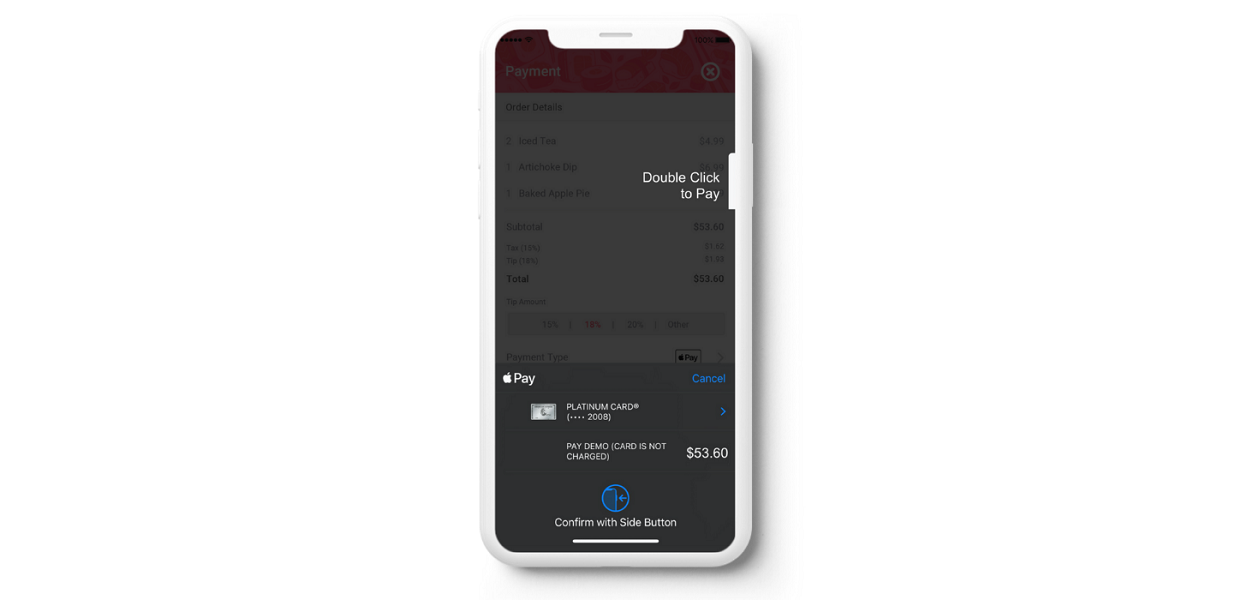
Just like online orders are booming, so are mobile payments. Simply put, mobile payments are those made on mobile devices like smartphones and smart watches. Instead of paying with cash or a credit/debit cards, consumers use their digital wallet to pay for their goods.
To be able to accept mobile payments, your POS system must be equipped to handle NFC (or, near field communication) payments, which are made by a mobile device (or contactless card) being two inches or less from the NFC-equipped card reader. Examples of mobile payment providers are Apple Pay, Google Pay, and select credit/debit cards.
3. Back-of-House Communication
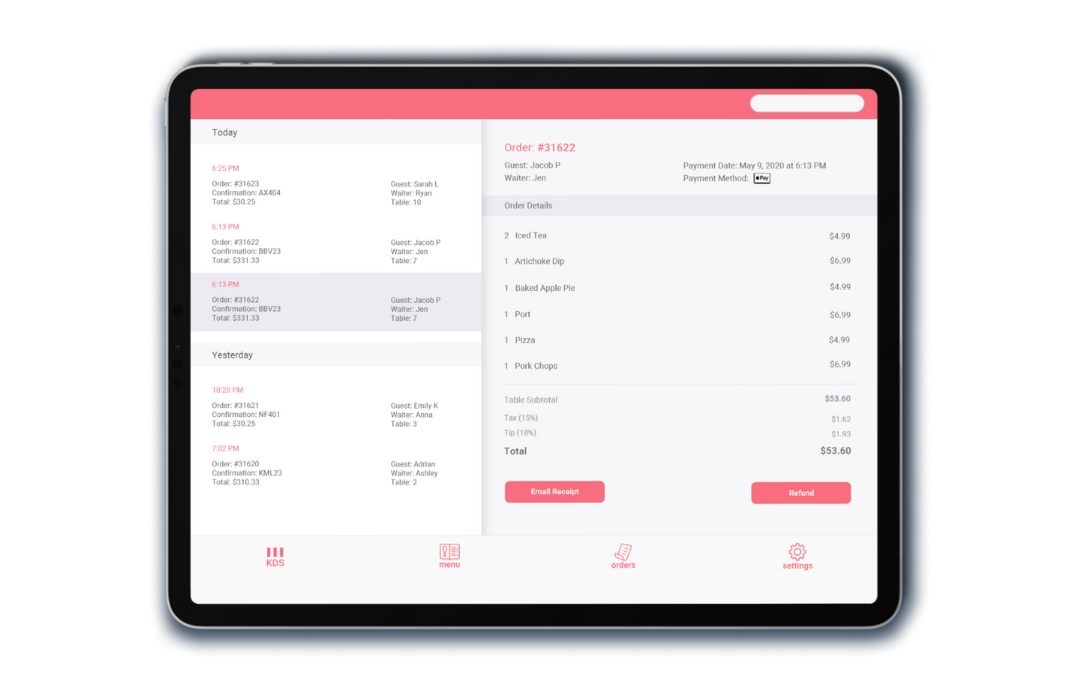
We’ve all been there: you find a restaurant that serves up delicious food but has a clunky workflow that leaves you hungrily waiting for your meal. Avoid being this restaurant by choosing a POS system that features top-of-the-line communication between the front-of-house and back-of-house. What does this look like? It looks like a POS terminal (or online ordering service) that seamlessly communicates to the restaurant kitchen KDS (kitchen display device) and kitchen ticket printer via technology like CloudPRNT. As orders are placed, they’re immediately sent to the cook in full detail. Say goodbye to long wait times and inaccurate orders with the right communication!
4. Front-of-House Management
Efficiently turning tables means higher revenue. Successfully navigating a large party means happy, repeat customers. Clearly, front-of-house management is key, and the right POS system for a small restaurant can help those efforts. Look for a POS system that features click-and-drag layout builders and the ability to see table times and when tables are about to turn.
5. Menu and Order Management
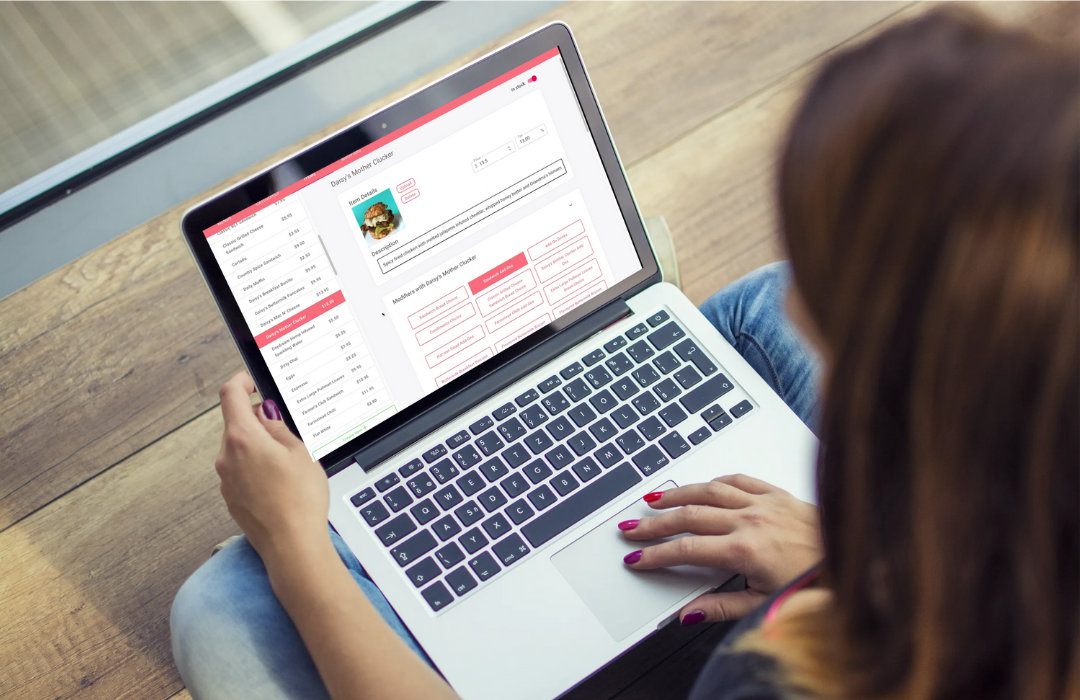
Menus change, and customers’ tastes vary. Your POS can help you navigate that. The right POS system can help you arrange your menu in a way that makes the checkout process faster, as well as let you make real-time updates from anywhere and apply them to every one of your locations.
When it comes to order-taking, restaurant POS systems can help you quickly modify your customer’s order to their exact taste. Have a special discount idea in mind? POS systems can also allow you to create happy hours and more in mere seconds.
Star Restaurant POS Solutions
From online ordering printers to kitchen buzzers, Star is proud to offer POS solutions for restaurants, QSRs, food stands, and more.
One of the reasons people love small restaurants is for their personal touch. Leverage POS technology to take that personal touch to a new level! POS systems for small restaurants can include marketing capabilities including:
Detailed customer profiles so you can send customized offers
Loyalty/reward programs
White-labeled websites and apps that feature your restaurant’s branding
Custom receipt marketing (available on select receipt printers, like Star’s)
7. Detailed Reporting
If there’s one thing that POS systems have, it’s data, and you can put that to use by choosing a POS system that offers detailed reporting.
Reporting can include:
Live data and daily statistics
Sales by category
Sales by item
Sales by payment type
Sales in different shifts
And more
8. Integrations
Right about now you may be thinking there’s a lot of different technologies involved in the best POS system for a restaurant. There’s the software, the hardware, and third-party services like food delivery. That leads us into the next (and possibly most important) aspect of a POS system: it’s integrations.
Save valuable time (and avoid headaches) but choosing a POS system that is integrated with either the software and hardware you already have, or the software and hardware you want to have. For example, if you already have Star printers, choose a POS software that is integrated with Star (hint: there are many). Or, if you know you want to use a certain POS software, be sure that your hardware is integrated with it so that you can set up your system out-of-the-box.
9. Technical support
Support is important – and not just when something breaks! Be sure to choose a POS system and vendors that offer pre-sale support (helping you identify the right solution for your needs), installation support and training, and easily accessible post-sales support (like an online help center and live chat).
Star’s Affordable Small Restaurant POS Bundle
mCP30 with mC-Sound
If you’re looking for an affordable kitchen printing setup, look no further than the mCP30 paired with an mC-Sound kitchen buzzer.
mCP30 Highlights: Everything you love about the mC-Print3, with an even lower price tag.
Technology has been evolving with the food industry for a long time, to the point where a restaurant can no longer stay competitive without it. In the past, a restaurant’s success depended on word of mouth, but today it relies on online reviews and social posts which give the business the opportunity to become globally renowned. Did you know that in addition to fueling notoriety, technology can also greatly improve restaurant operations?
Technology in Restaurants
Technology has revolutionized restaurant operations.
For example, mobile point of sale (POS) systems like Square, delivery applications like Uber Eats, and kiosks like those from Curbngo are user-friendly and built to improve both the user experience and operational efficiency. Not only do these tools enable restaurants to offer better, faster services but they also allow them to provide new services that they may not have been able to offer on their own. For instance, prior to delivery apps not many restaurants were able to offer delivery. Now with the help of this technology, they all can deliver and even expand to new areas outside of their neighborhoods. They share customers and drivers with all other restaurants, and they don’t have to worry about how to find those customers, or how to manage the drivers.
An unexpected additional benefit of these technologies is that they have helped the industry survive the COVID-19 pandemic. Just imagine if these technologies weren’t available when the pandemic started; the impact to restaurant businesses and the food industry caused by lockdowns would have been much greater.
Single Flow: The Restaurant Operations Answer to Technology-Related Growing Pains
This evolution of technology has also brought challenges to some restaurant owners. To serve more customers restaurants are signing up for more delivery platforms, but this can come with a high price tag during busy hours when multiple orders arrive at the same time through multiple online platforms. It makes it even more difficult when, at the same time, customers are ordering at the restaurant through the POS. Staff may have a hard time writing down and manually tracking orders, something that will impact performance and, as a result, the restaurant’s reviews.
In reality, this commotion is not a result of using the technology, but rather a mismanagement of the technology. With proper planning and the right approach, multiple ordering channels can easily be managed. One such approach is by creating a proper workflow, known as a “Single Flow,” in which all orders from all platforms seamlessly flow to the kitchen and back to the customer.
Single Flow Basics
Operational efficiency is the key to remaining competitive in any industry. This can only be achieved by establishing an efficient workflow that can easily be followed by all employees. The specifics of the flow differ from business-to-business, but its supporting principle is the same across all businesses: to operate as efficiently as possible by maintaining the desired cost and quality.
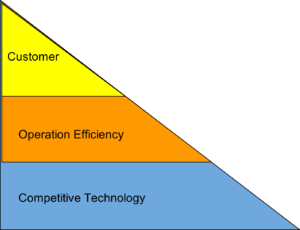
You can think of a single flow like the triangle diagram below. You can only provide the best customer experience when you are operating efficiently, maintaining product quality, and operating efficiently by utilizing the right technology.
What Does Single Flow Look Like for Restaurants?
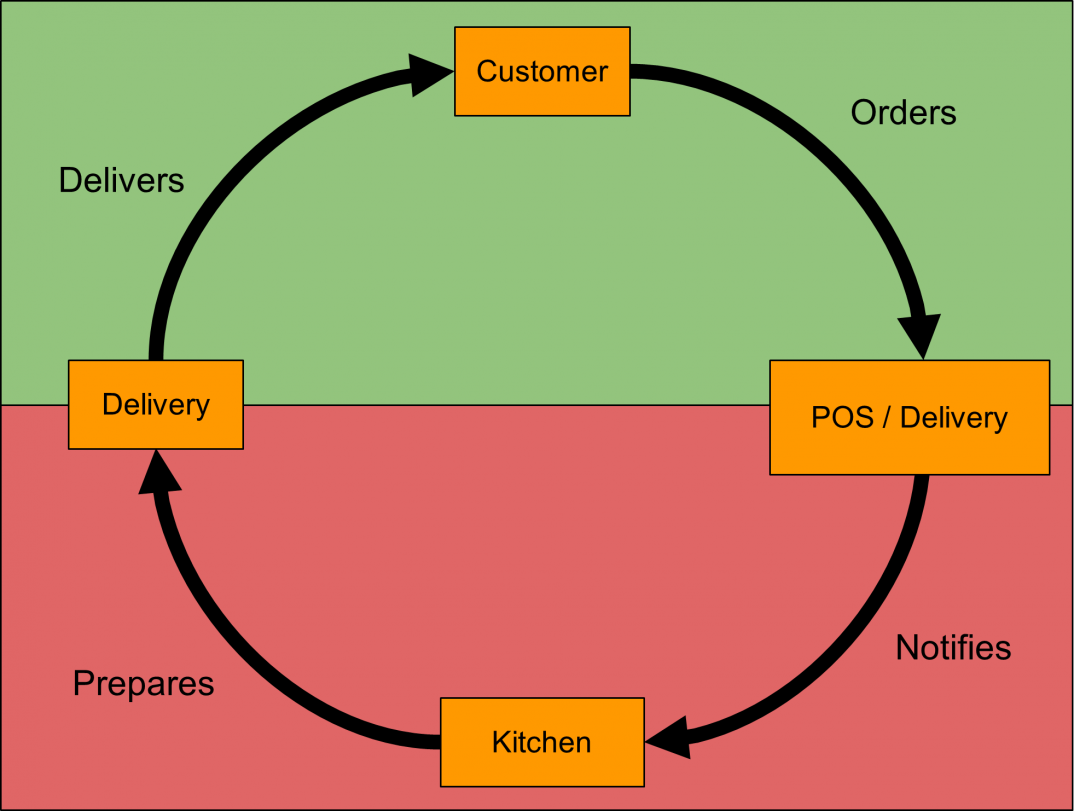
A restaurant’s single flow looks like the circle below. It’s simple, streamlined, and starts and ends at the customer, with the focus being on the efficiency of the operation. The customer orders the food through a delivery platform like Uber Eats, on the restaurant’s website, or at the restaurant (dine-in or takeout). The ordering platform notifies the kitchen of the new order, then kitchen staff prepare and package the food, and hand it over to the person who delivers the food to the customer. This can be a food delivery driver or staff handing it to the customer in the restaurant.
The top portion of the graph (in green) requires less of the restaurant’s energy because the delivery platforms and their associated technologies are already providing the required efficiency for this phase.
The bottom portion of the graph is the operational center of a restaurant and where the efficiency focus should be, from streamlining order notifications reaching the kitchen staff to food preparation and packaging.
There are two ways to tackle conquering this portion of the Single Flow:
Using an aggregator platform that combines all the delivery platforms and the POS into one single platform.
Using one, or multiple, Star Micronics thermal printers.
Both options come with their own pros and cons but what’s common between the two is the need for a reliable and compatible printer.
A 3-inch wide, high-resolution (200+ dpi) order has to be available to the kitchen staff as soon as it’s made by the customer on a platform, whether the order originates on a delivery app or the restaurant’s POS. Once the restaurant gets busy, orders can get mixed up and even missed, making negative, damaging customer reviews more likely to occur. A Star Micronics thermal printer, like the TSP143III or a TSP654II equipped with CloudPRNT technology, can make a huge difference.
Option 1: Aggregators
There are many aggregators available in the market. They all offer different features, settings, and benefits, but one advantage they all have in common is the streamlining of order notifications to the kitchen. This is a huge plus for a high-traffic takeout restaurant.
These aggregators also offer their disadvantages. The most common disadvantage is their monthly fees. Depending on the features and technologies being offered, this can vary from $50 per month to $250 per month. Please note that if you choose to use an aggregator, you will still need to purchase a thermal printer to deliver orders to the kitchen.
Option 2: Thermal Printers
A simple, affordable single flow solution is the use of thermal printers. Some thermal printers, like those from Star Micronics, offer a variety of benefits like:
High-quality and high-performance
Integrations with virtually all well-known delivery platforms and POS software in North America
A reliable Ethernet (LAN) interface which allows one Star Micronics printer to support unlimited applications/platforms as long as those applications/platforms support the LAN interface and the printer APIs. (For example, Shopify, Uber Eats, and Ritual support the TSP143IIILAN, so a restaurant with Shopify as its POS, and Ritual and Uber Eats as its ordering apps, would only need one TSP143IIILAN printer in its kitchen to print all orders from all these platforms without a need for an aggregator)
Cloud printing technology, like CloudPRNT, enabling users to print directly through a cloud service
Order Preparation and Packaging
The two options mentioned above will take care of the notification portion of the single flow, but order preparation and packaging are also very important. If one of the two options above is implemented, then this part can easily be resolved by utilizing a printed receipt or label. For example, a liner-free label printed by the TSP654IISK printer can be used to adhere order information and modifications to the food from the prep line to the pickup counter. Better yet, it can be removed and reapplied without leaving any residue behind, further streamlining the process.
Using Technology to Boost Business
In conclusion, the right technology can make a huge difference in improving a business’s operational efficiency. The two options above (an aggregator or the use of thermal printers) are equally effective at delivering order notifications to a kitchen, but one might carry more weight compared to other based on a business’s needs. For instance, an aggregator offering menu management for a restaurant with multiple menus would likely be the most efficient option. Vice versa, a high-traffic, single-menu restaurant would likely benefit from multiple high-speed thermal printers more than anything else.
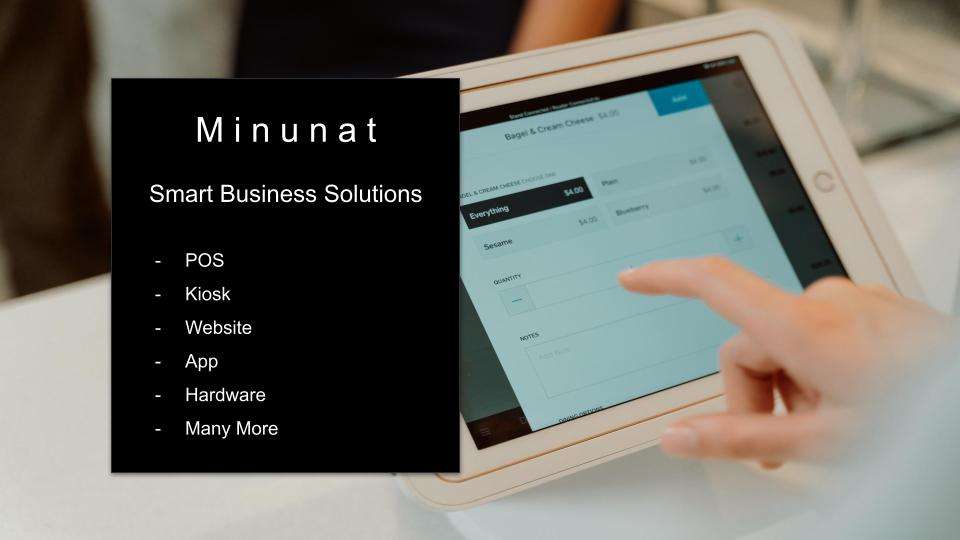
Minunat’s Smart Business Solutions
Looking for a solution provider to help you streamline your restaurant’s operations? Minunat can help. They are a business IT solution providers focused and specialized in POS and kiosk solutions for bars, restaurants, and cafes. Check out the Minunat website to find the right hardware for your application or contact them now for a free consultation for your business.
C&H Hawaiian Grill was a long-time passion project, founded by Hensan and Cora Timo. They have been in business for 16 years, starting in Killeen, TX, serving hearty island BBQ. The Timo family wanted to share the “Aloha” spirit with their community combining the essence of vibrant Hawaiian experiences with a laid-back atmosphere. They recently opened their Austin, TX location and plan to open in San Antonio, TX in May, 2021.
Like many other independent restaurants, C&H Hawaiian Grill felt the impact of the COVID-19 pandemic and were forced to shift their business model. Prior to the pandemic, C&H used third-party delivery services such as Uber Eats and DoorDash, and hired someone full-time to handle delivery and pickup orders via phone. When the global pandemic hit, the amount of delivery and pickup orders coming in via phone quickly became too much to handle manually.
The Solution
Since their current third-party ordering services did not have a solution for curbside pickup, and many of their orders were still call-ins, C&H knew they needed another solution. That’s where UBMe and Star Micronics come in.
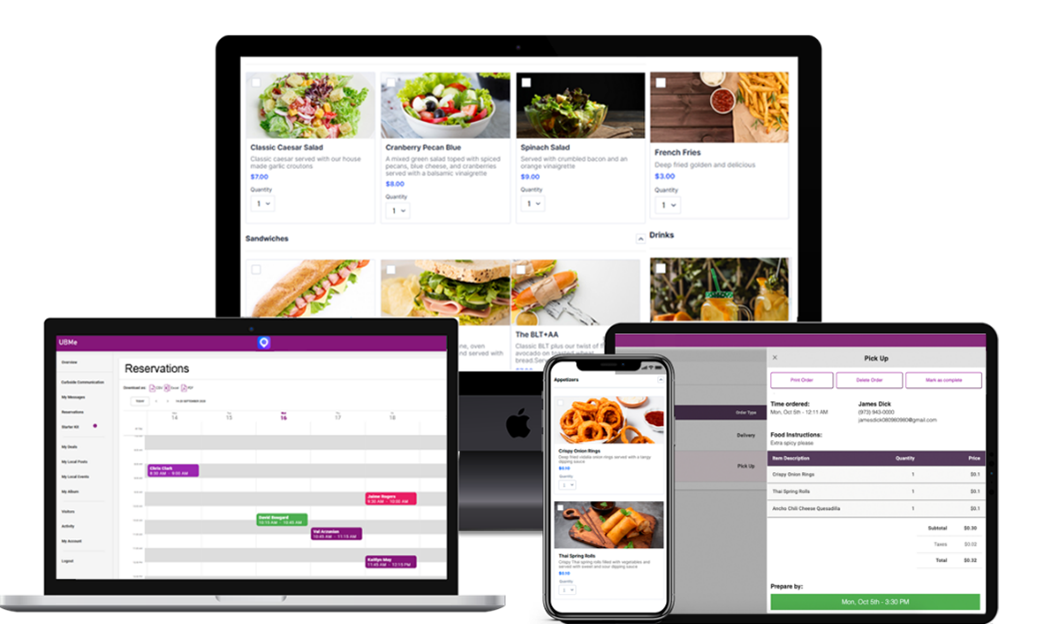
UBMe offers a social, mobile technology that is built to help local businesses connect with their customers. UBMe’s seamless technology allowed C&H customers to search and order food directly through the app for curbside pick up. Even more, the app allowed C&H to communicate with these customers when they arrived to pick up their orders with specific safety instructions and procedures.
C&H started by installing the UBMe platform without the Star printer, but quickly realized it was too difficult to track the orders coming to their tablet or phone. Once they installed Star’s mC-Print3 with CloudPRNT technology, online ordering became a breeze. Orders placed through the UBMe app would print directly to the kitchen so they could begin food prep right away.
“UBMe and Star helped solve an issue that we never expected to arise,” says Hensan Timo, Owner of C&H Hawaiian Grill. “Curbside pickup seemed to grow overnight, and many of the existing online ordering apps did not have an easy solution for this transition. With UBMe and Star, online ordering has never been easier.”
After seeing success with UBMe and Star in their Killeen location, they installed the solution in their Austin location as well.
The Results
From the time that C&H installed the UBMe and Star solution, they nearly doubled their profits from online orders. C&H has printed hundreds of curbside pickup orders at their Killeen location. The system has been easy to use for both employees and customers, and the customers love being able to communicate directly with the restaurant through the UBMe app.
With UBMe’s 5% flat commission per order, the solution is maintainable and affordable for C&H Hawaiian Grill.
As we reach the midway point of 2021, one thing is certain: this year is monumental to the point of sale (POS) industry as the economy rushes into recovery. Read on to explore some of the top POS trends to expect in the second half of the year and beyond.
POS Trend #1: Ongoing Online Ordering Boom
In the return to normalcy, and in many regions, restaurants are reopening, and brick-and-mortar retailers are trying to resume their activities as close as possible to their pre-pandemic levels. But no matter where businesses are on their recovery journey, online ordering is here to stay, and not just because of it being the primary method available to consumers during the pandemic. In fact, consumers worldwide have discovered the convenience and benefits of online ordering and have decided to stick with that method of purchasing, even as physical businesses reopen.
Interestingly, businesses have also found additional benefits in using online ordering platforms. Advantages include an additional revenue stream flowing into their businesses, as well as the opportunity to utilize more robust loyalty programs in a less intrusive, nearly seamless way. This improved loyalty strategy can improve the customer experience and in turn create sticky customers.
Most of the initial challenges many online ordering systems and digital transactions faced have been mitigated, making them an even more appealing option for businesses everywhere. For example, new security measures like multi-factor authentication are becoming standard, allowing a business to offer promotions, discounts, and payments that are less susceptible to fraud.
POS Trend #2: Faster Technology Adoption
Complete solutions and intuitive user experiences (UX) have become essential, and although price will most definitely always be an important consideration in any technological deployment, now value and having the right solution have risen to the top of the priority list.
In a rapidly changing market, solution integrators have no time to spare to try new things that they are not sure will work or test products from uncertain vendors. Instead, they are opting to go directly to what is already working in the market and are selecting the brands with the technologies that are being adopted massively by market leaders.
POS Trend #3: An Emphasis on Health and Safety
Even after the COVID-19 pandemic passes, health and safety will remain a priority to people worldwide. To put employees and customers at ease, a new POS trend has accelerated and retail and hospitality businesses that are reopening must offer a tangible sense of safety to their customers.
Popular health and safety POS products include sneeze guards placed at the point of sale, antimicrobial covers which reduce germ transfer on high-touch surfaces, and tamper-proof labels to securely seal delivery and takeout orders.
Health & Safety Solutions Brochure
Discover which solutions can keep your business squeaky clean and help customers feel confident at your brick-and-mortar location.
POS Trend #4: Affordable and Simplified Development
The development side of the industry is also experiencing changing POS trends. Development phases are accelerating, and software providers are developing using cross-platform tools (like the StarXpand™ SDK) on the React Native platform, cutting development time and cost in half.
As most digital interactions and virtual communications are happening in the cloud, POS transactions, especially for online ordering, are not an exception. Technologies, like CloudPRNT, are allowing the seamless connection of thermal printers to the cloud. These technologies are not only cost-effective but also shorten integration and development times and are becoming the go-to solution in the market.
POS Trend #5: The Continued Rise of Self-Service Kiosks
Did you know that more than 65% of customers said they would be more willing to visit a restaurant if self-service kiosks were offered?
Clearly, self-service kiosks are a rising POS trend and as they are more widely used, consumers will hold them to a higher standard and expect them to be reliable, intuitive, and safe to use. Because of this, self-service kiosks are particularly sensitive to the quality of the components they are integrated with, so it is essential that those components are selected carefully.
Some POS hardware manufacturers, like Star, offer a vast portfolio of kiosk printers with receipt and labeling capabilities with features that can help ensure customer satisfaction. For example, a kiosk printer with a bezel allows for jam-free kiosk operations, and large-capacity paper rolls allow for extended paper autonomy.
For businesses and integrators with tight budgetary constraints, there are still options for assembling a highly sophisticated self-service kiosk solution. For example, businesses can pair a desktop printer, with the right technology built-in, with a universal tablet enclosure, a tablet, and a tablet stand. This is when finding the right one-stop shop POS manufacturer to work with that can provide all of those components becomes key.
Recommended Solution
For an affordable yet high-quality kiosk, connect the Star Micronics mCP31L multi-interface thermal printer to an iPad via the Lightning port. Next, place the iPad in a Universal mEnclosure (which locks for security purposes), attached firmly to an mUnite stand. Pairing these Star products together can turn a potentially complicated and costly kiosk project into a functional, cost-effective, and simple one.
As a one-stop shop, Star is proud to provide a complete range of POS hardware solutions for retailers, restaurants, and more.
Paired with Star’s mC-Print3, OrderUp allows customers to place dine-in orders from their mobile device
Somerset, NJ – June 8, 2021 – Star Micronics, a leading manufacturer of mobile, point of sale (POS), and customer engagement technologies, is proud to announce that OrderUp has added support for the Star mC-Print3 printer. OrderUp offers contactless ordering and payment solutions to empower restaurants, hotels, and stadiums to provide five-star service while increasing revenues and cutting costs.
OrderUp’s digital menu and ordering platform helps restaurants benefit from 16% faster table turns and 10% larger basket sizes, with 98% of diners who used OrderUp indicating they prefer this new ordering and payment experience over traditional service.
Star’s mC-Print3 offers a splash-proof design with USB hub functionality to connect additional peripherals, making it ideal for kitchen printing in restaurants. With Star’s mC-Print3 with CloudPRNT printer support, guest orders get sent immediately to the kitchen, eliminating order-running and allowing staff to focus on service instead of busywork.
“OrderUp understands safety has become a long-term priority to restaurant employees and diners,” said Chris Gilpin, CEO of OrderUp. “Our application paired with Star’s CloudPRNT technology allows our restaurants to provide a safer and more convenient environment for their customers by offering a truly contactless solution.”
The effects of the COVID-19 pandemic have impacted the restaurant and food service industry dramatically. The pandemic has forced restaurant owners and operators to adapt, pivot, and move quickly to keep up with government regulations and consumer expectations. One of the ways business owners have done this is through embracing contactless dining technology.
What is Contactless Dining Technology?
Contactless dining technology refers to a dining experience that limits physical contact with the restaurant’s staff, surfaces, menus, and so on. This means that diners can view a menu, and order and pay for a meal directly from their smartphones.
A contactless experience has become a necessity as research shows that 57% of consumers say they are more likely to do business with those who offer a contactless payment option. Not only is this a faster way to order and pay, but limiting physical contact is also a genuine desire of diners.
With restaurants jumping on the bandwagon of contactless dining technology, it doesn’t appear to be going away anytime soon. In fact, Gartner predicts that 80% of all ordering, payment, and checkout services will be contactless by 2024. So beyond safety in a post-pandemic recovery, what are the benefits of adopting a contactless dining solution for restaurants? Here are 5 proven outcomes of using contactless dining technology:
1. Increase Operational Efficiency
By definition, operational efficiency is the metric that measures the efficiency of profit earned as a function of operational costs. For restaurants, there tend to be three main operating costs:
Labor costs
Food costs
Rent/lease costs
So, when we talk about operational efficiency, it’s a matter of how efficiently costs are producing profit, and the relationship between those costs and profits.
Arguably one of the most important restaurant metrics is table turnover, which is directly correlated to operating costs and efficiency. The faster you can turn tables, the more tables you can seat, and the more products you can sell. Contactless dining technology can greatly increase table turnover times through increased staff and labor efficiency.
Some of the most time-consuming aspects of an employee’s shift are collecting orders, punching them into a POS, and then splitting the bill manually. With a contactless dining solution, guests can send orders directly to a chit printer or kitchen display system (KDS), then split the bill amongst the table whenever they’re ready to settle up. This entire process eliminates some low value steps for staff and is almost guaranteed to shave off a few minutes per table – which adds up.
2. Increased Customer Satisfaction
One myth about contactless dining technology is that it will take away from the hospitality and service aspect of dining at a restaurant. This is false! In fact, in the State of The Industry Webinar led by the National Restaurant Association revealed that, “52% of Americans want restaurants to use technology to make ordering and payment easier.”
Contactless dining leads to increased customer satisfaction because it speeds up the entire process of ordering and payment, while giving the customer more control and autonomy over their orders. With contactless ordering, the diner can be confident that exactly what they ordered is exactly what the back-of-the-house prepares. This can include special instructions, add-ons, dietary preferences, or allergies.
The end result? A better, faster service that leaves guests satisfied and happy with their experience.
Star Micronics Restaurant Solutions
Star proudly provides a variety of POS hardware for the modern restaurateur, including receipt and label printers for online ordering, cash drawers, tablet stands, and more.
Although contactless ordering and payment for restaurants is relatively new, the concept and logic behind it makes sense. Take e-commerce for example; about 35% of Amazon’s e-commerce revenue comes from “suggested for you” items and add-ons. The same is true for restaurants. Restaurants that adopt contactless technology will be able to leverage the same trend and capitalize on this type of buying behavior. While it may not be to the tune of 35%, initial modeling from contactless dining providers have noted an an increase in average check size by about 12%.
For example, a $10 cheeseburger can easily become a $14 cheeseburger when given the option to add bacon and sauteed mushrooms, at $2 apiece.
This is just the beginning of how complex and smart digital menus can be. It’s even possible to have suggested food and drink pairings. While this can again drive revenue, it also supports the diner’s positive experience by guiding their decision-making process with the best possible outcome.
4. Environmental Impact, Opportunities, and Saved Costs
Not only does contactless dining technology help drive sales and increase efficiency, it’s also extremely environmentally friendly. Especially with the onset of COVID-19 and the increased usage of single-use menus, a digital menu can save thousands of dollars a year on printing costs while saving the trees. Generally, one tree produces about 8,333 pieces of generic A4 paper – when you think of all the single-use paper menus, that’s a lot of trees!
On the other hand, consumers are looking for ways to be more environmentally friendly and support businesses that are environmentally conscious. One study showed that Americans are willing to pay up to 36% more for ethically sourced and produced foods. Using a digital menu makes it very easy to highlight your food sources and maybe even justify a higher price tag. At the very least, restaurants can test this, without spending money on re-printing menus.
5. Menu Optimization Opportunities
Perhaps the most exciting opportunity of a contactless dining experience is the ability to continually test and optimize your menu in real time. No more spending hundreds (or thousands) of dollars on reprinting menus, changing prices, and adding and removing items.
By using a contactless digital menu and ordering system, restaurant owners can make changes and run tests in real time, meaning they can finetune a menu for maximum revenue on the fly. Some examples are:
Finding the price elasticity of demand for your items: Find out exactly how much the average diner is willing to pay for a specific item, drink, or add-on. Having the ability to adjust prices in real time based on time of day, weather, and other factors presents a huge opportunity for restaurants to drive revenue.
Test images: Items with images next to them on a digital or mobile menu have been shown to sell 5% more than items without an image. Understanding this gives restaurant operators the ability to test different imagery for items and conclude which type of image results in the most purchases. Of course, this can be done in tandem with testing prices, naming conventions, item descriptions, and add-ons.
Testing item placement: In general, restaurants should have one high-margin, high sales volume item per section on their menu. On a traditional menu, these items should be highlighted at the top-center of any given page. But on a digital menu, restaurateurs can adjust and test where items appear on the menu. One advantage of this is testing where high-margin but low sales volume items appear. Perhaps your restaurant has a dish that’s highly profitable, but just doesn’t sell that often. Restaurants are now able to experiment with the price, imagery, and placement of these items to try to increase the sales volume.
The opportunities are truly endless, and restaurant operators can get as granular or as broad as they see fit.
OrderUp Contactless Dining Technology
Contactless dining is here to stay. Restaurants who choose to invest the time into developing a contactless dining experience put themselves in a position to impact revenue, customer satisfaction, and operational efficiency, all while making an effort to be more environmentally conscious. Even if your restaurant likes to do things “the old-fashioned way,” it’s always a good idea to have a contactless option for guests who have safety concerns or demographics that are more accustomed to contactless ordering and payment.
There are several services that provide contactless dining solutions such as OrderUp. OrderUp is a completely free platform that provides digital menus, and contactless order and pay, among other services such as email collection. They have an easy-to-use menu builder that allows restaurants to make changes in real time, all while reaping the many other benefits of contactless dining.
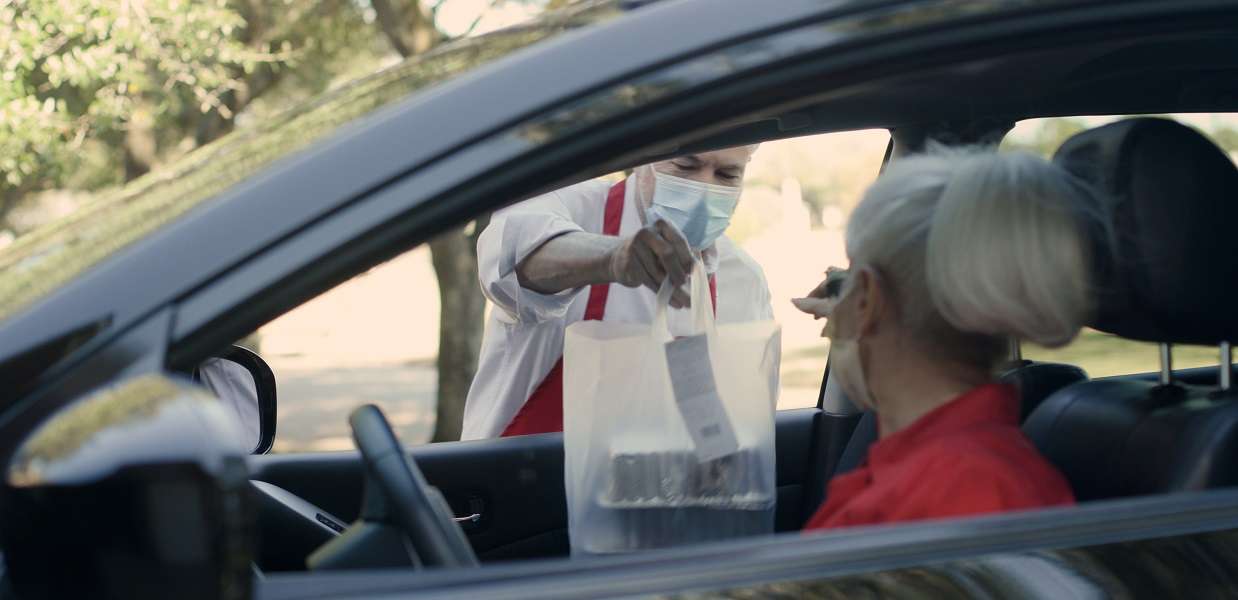
Curbside pickup is here, and it is here to stay. In fact, according to Technomic’s 2020 Delivery and Takeout Consumer Trend Report, 66% of consumers anticipate continuing to use curbside pickup after dine-in services resume. Simply put, if you haven’t started offering curbside pickup, now is the time to do so, and we’re here to help. Read on to explore our guide on how to offer curbside pickup.
Why Offer Curbside Pickup?
Needless to say, the restaurant industry has been hit very hard during the COVID-19 pandemic. There was a lot of emphasis specifically on restaurants in terms of the spread of the virus. To protect the public, restaurants worldwide faced multiple shutdowns, reduced hours of operation, and regulations on when alcohol can be served (which was especially hard on restaurant revenue, since alcohol makes up a significant amount of restaurant sales). Unfortunately, as of the end of 2020, 17% of restaurants have closed due to the pandemic.
One solution to help both existing restaurants trying to maintain or increase sales, and new restaurants opening during the pandemic, is curbside pickup. For a part of 2020, because so many restaurants had to close dine-in service, takeout and delivery where the only options, and both offer different benefits to businesses. While delivery can increase a restaurant’s visibility and is a very convenient option for customers, curbside pickup and takeout services can potentially help restaurants boost profits and help customers save money by avoiding additional fees and tips.
6 Crucial Technologies for Successful Curbside Service
Ignite your curbside service’s full potential with these six crucial technologies.
How to Offer Curbside Pickup: What Technology is Involved?
Rest assured that with the right tools, curbside pickup is an easy solution to provide. Read on to learn more about what online ordering technology is beneficial to a curbside pickup strategy, as well as other useful curbside pickup tools and tips including mobile printing for curbside receipts, tamper-proof labels, and marketing suggestions.
Online Ordering Technology
The right technology can take a restaurant’s curbside pickup strategy from blah to whoa. While of course customers can still call in their orders, online ordering makes the process more convenient and cuts down on any inaccuracies during order-taking, which in turn makes customers happy and restaurants more profitable.
As online ordering booms, so do the number of services available for it. One rule of thumb to keep in mind is that you will need both an online ordering software application and printers within the restaurant that are integrated with your software and can print kitchen tickets, labels, and receipts.
Implementing a curbside pickup strategy that runs like a well-oiled machine likely means you’ll achieve repeat customers and increased revenue. Some key features to look for in your online ordering software and hardware are:
Accurate Pickup Time Estimations: The time required to prepare an order often varies. Sometimes there are not as many orders being placed and meals can be prepared quickly, but other times like during peak times of the day, there can be a delay between when an order is placed and when the kitchen staff can prepare it. Boost customer satisfaction by choosing a service that prioritizes accurate pickup time estimations.
Customizable Digital Menu: Be sure to choose an online ordering application that allows you to easily create a customized, user-friendly online menu landing page.
Automatic and Robust Printing: Automatic printing is key to a successful online ordering and curbside pickup strategy. Online ordering printers, like Star Micronics printers, automatically print an order in the kitchen once it is placed, avoiding unintentionally skipped orders or orders completed out of sequence. Printer manufacturers like Star Micronics can also provide a robust lineup of printing solutions for all of your restaurant’s needs, including impact kitchen printers that produce kitchen tickets which remain intact even in the heat, and linerless label printers that print labels which are repositionable and boost order accuracy up to 99%.
Easy Installation: Implementing your curbside strategy doesn’t need to be complicated. Be sure to choose a software provider that helps you get up and running quickly, and printers that work out of the box with your chosen software. Also be sure that each provider offers top-notch customer service and technical support should you need assistance at any point.
Affordability: At a time when profitability can make or break a restaurant, it’s important to choose an affordable online ordering/curbside pickup solution. For example, UBMe software is available with an affordable monthly rate and a Star Micronics online ordering printer is a simple one-time fee. The best part is that when combined, these technologies can help restaurants see large increases in revenue by providing a seamless, customer-friendly online ordering and curbside pickup solution.
The UBMe online ordering platform is affordable, intuitive, and allows for restaurant customization.
Other Useful Curbside Pickup Tools and Tips
Curbside Receipt Printing: While most online orders are paid online with a credit card, sometimes customers want to pay curbside. In that case, it’s important to be prepared with a reliable portable receipt printer that is compatible with Bluetooth, iOS, and Android, and includes a magnetic stripe reader (MSR).
Tamper-Proof Labels: Take your curbside pickup game to the next level and put your customers’ minds at ease with tamper-proof labels that seal food bags and drinks, and provide visual evidence of tampering.
Marketing: Be sure to spread the word far and wide that your restaurant offers curbside pickup. You can post about it on your social media accounts, send emails to your existing customer base, and even promote it for free on your dine-in and delivery receipts with Star Micronics PromoPRNT.
UBMe and Star Micronics: Making Curbside Pickup Easy
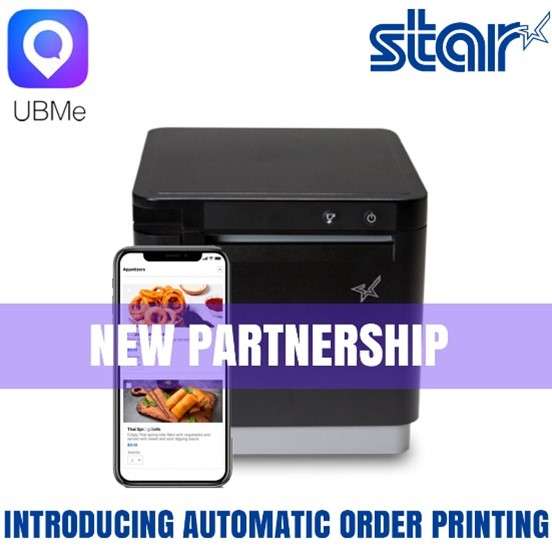
Recently, UBMe and Star Micronics partnered up to provide restaurant owners online ordering and automatic printing of orders.
UBMe’s powerful online ordering and curbside communication platform for restaurants allows restaurant owners to increase their sales and revenue. With advanced patented technology, exceptional customer service, and expert marketing strategy, we help increase restaurant profits. What makes UBMe’s technology special: Upon arriving at the restaurant, customers can “check-in” using the free UBMe app to privately message staff. The customer can let staff know they arrived, chat with other customers, leave comments, pay for additional items, all while practicing social distancing.
As the new year begins, restaurateurs and their loyal customers wonder what the restaurant of the future will look like as the industry continues to adapt to changes brought on by the ongoing pandemic. Shifting consumer trends and attitudes have changed the trajectory of the industry in mere months.
The world is in the middle of digital transformation and many restaurants have recognized that. The shift toward online services won’t pass with the pandemic – from QR codes to digital marketing campaigns, future success depends on how well restaurants adapt to changing consumer trends. Read on to discover how and why digital, self-service, and contactless technology will be a part of the successful restaurant of the future.
Self-Service
One technology that is sure to be found in the restaurant of the future is the self-service kiosk. Although self-service kiosks used to mainly be found in large restaurant chains, in recent years the technology has become accessible to small business owners as well. Self-service kiosks offer the ability to shorten lines and free up staff to provide an even better customer experience and handle more pressing tasks that can’t be done by machine.
Kiosks, tableside tablets, and other self-ordering point of sale (POS) devices allow customers to personalize their orders and forced modifiers prompt them to add side dishes or increase their drink size. While these additions cost only cents to customers, that profit adds up over time for the business.
Self-service can create sticky business, as well. Easily being able to customize meals encourages diners to come back again and again, allowing restaurants to improve loyalty while addressing the needs of the modern guest.
The benefits of self-service extend to health and safety, too. Social distancing is made simple when customers complete their transaction at a kiosk or by themselves at their table. An added bonus is improved order turn times, as orders get submitted straight to the kitchen versus having to go through the added step of being submitted by a waitstaff member.
The benefits of the customization that self-service allows for continue. Many self-ordering solutions include the ability to build customer profiles to help staff predict their needs and tailor every experience like they’re a welcome friend. With the right online ordering platform, guests can quickly log in to reorder favorites and this information gives restaurants valuable access to data they can incorporate into targeted marketing campaigns to increase revenue (or contact trace, if needed).
Online Ordering: Delivery and Curbside Pickup
With dine-in services being limited around the world, many people are turning their focus to off-premises ordering channels instead. Delivery and takeout systems are growing; they helped restaurants survive the past year and recent additions like drive-throughs and curbside pickup are likely to stick around now that restaurants have recognized the resulting ROI. According to Restaurant Business Magazine, 60% of business owners report that opening up delivery channels produced incremental sales.
To make the most of the online ordering trend, restaurants should optimize their online ordering platform and streamline operations so they’re ready to handle the influx of business that will flock to the new off-premises channels. Advanced restaurant technology can do just that, improving communication between the front- and back-of-the-house but also from customer to employee. In fact, the best POS systems submit orders directly to the kitchen display system (KDS) and improve order accuracy for enhanced guest satisfaction. Linerless labels, which contain order details and can be easily applied to (and repositioned on) online orders, can also greatly improve order accuracy.
In the restaurant of the future, technology and manual labor work together to create a streamlined ecosystem of shared responsibilities. Restaurants may assign available waitstaff to direct traffic for a new curbside service or reorganize the seating area to become a zone for socially distanced takeout orders. Advanced POS systems incorporate seamlessly into operations to make life easier, customers happier, and staff more productive.
6 Crucial Technologies for Successful Curbside Service
Ignite your curbside service’s full potential with these six crucial technologies.
Contactless technologies will likely remain a pillar of restaurant businesses when dine-in services open again at full capacity. Over half of U.S. restaurants already use QR-code menus (Beaconstac, 2020) to provide patrons convenience, personalization, and enhanced safety along with the comforts of sitting down at a restaurant. Meanwhile, servers can use their time to improve the customer experience by chatting with patrons, cleaning and sanitizing, and more.
So, how do QR code menus work? First, place the QR code on each table, the host stand, storefront windows, or as part of the décor – anywhere that is accessible to guests from their seats so they can easily review the menu and enter their orders from their smartphones. Patrons can also complete their transactions at their tables, with faster, secure payment methods that work via mobile menu. By providing in-house, EMV-enabled devices that can take NFC, mobile wallet, tap and swipe payment method, every customer will be satisfied.
How is all of this possible? With eatOS or similar technologies, you get a POS device that can handle all of these new sales channels and extra traffic without any added effort from your team. Get all of the convenience of cutting-edge digital solutions to common industry problems and see the benefits of implementing online ordering, QR codes and other contactless service options in your restaurant.
Future of Food Service
The restaurant of the future is digital. Long after the threat of COVID-19 has passed, these trends will likely continue to evolve along a similar trajectory with technology unburdening manual labor, cutting costs, and improving profits, all in one fell swoop. As customers come to rely more and more on a touch-free experience, their favorite businesses will have to adapt to become more efficient. In 2021, that means shifting services to the digital world.
POS systems are getting faster, more accurate, more capable, and more profitable as consumers come to prefer self-service and automation. As the new year unfolds, the restaurant industry will continue to digitize with the aid of contactless technology that puts them online and launches them toward greater success. Self-service technologies, like kiosks, combined with online ordering platforms, QR codes, and other contactless technology solutions are bringing restaurants all over the world into the future.
Looking for a cloud-based restaurant management and payment processing ecosystem?
Looking for a cloud-based restaurant management and payment processing ecosystem?
At eatOS, we build cloud-based technology solutions exclusively for restaurants.
Our experience in the restaurant industry and specialized teams help us understand the complexity of running a restaurant. These tools allow us to build a customizable solution to help restaurants adapt to the industry’s needs.
Our cloud-based platform works on both iOS & Android, giving restaurants flexibility. Our management solutions simplify operations regardless of restaurant size. Guest engagement features improve the overall guest experience and reduce friction in the operations for staff.
Our technology gives restaurants the ability to engage with their community in new and innovative ways and automate operations from payroll to inventory management. eatOS point of sale handles all the busywork and allows restaurants to focus on their customers.
At eatOS our main priority is helping restaurateurs succeed. We strongly believe in giving our clients the ability to simplify management, exceed customer expectations, and provide a true cloud-based POS solution. Using these three values at the core of our focus to bridge the gap between the community and technology.
With the rise of ghost kitchens, some companies are tackling the ghost kitchen model’s challenges head-on for restaurateurs who are struggling to stay profitable in the current business climate.
As these companies purchase facilities and outfit them with the essential commercial grade appliances, they must also give careful thought to the restaurant POS technology chosen. The restaurant management software and hardware selected must streamline ghost kitchen operations as much as possible.
The ghost kitchen company is responsible for choosing technology to address tenets’ pain points as much as possible. Pain points like:
Dual or multiple operations per kitchen
No face-to-face payment processing
And more
Discover eight must-have features for cloud kitchen point of sale.
Online Ordering and Delivery Management Software
Whether third-party or custom, a ghost kitchen needs a seamless online ordering solution for desktop and mobile. Choose a technology provider with the flexibility to integrate with third-party apps and accommodate custom solutions for delivery management. Using a third-party option like DoorDash or Uber Eats ensures access to a large market. It’s also simple to install and doesn’t require a large initial investment.
Forward-thinking companies should also explore custom solutions that integrate with digital display and barcode scanners to complete a full, delivery-only kitchen solution.
Proper Printers
Besides online ordering and delivery management software, ghost kitchens need a reliable impact printer for kitchen use that produces heat and humidity resistant, easy-to-read tickets fast. The SP742 Impact Printer from Star Micronics is explicitly built to work in environments where heat and humidity can erode the type on the kitchen orders, making it the perfect addition to any kitchen, ghost or non. For kitchens where heat and moisture aren’t an issue, consider our reliable mC-Print3 receipt printer.
Ghost kitchens also require a reliable sticky label printer and tamper-proof labels to go with their delivery-only operations. Star Micronics’s TSP654IISK thermal printer for sticky paper works with liner-free labeling applications, producing labels that stick to virtually any surface and that can be easily reapplied. Our tamper-proof labels are also a must-have to keep to-go bags and boxes properly sealed and secure.
Scalability, Reliability, and Flexibility
Scalability, reliability, and flexibility are crucial. For startup delivery operation, a simple tablet is often all that is necessary. From this host, the kitchen can receive the order and define preparation time and order delivery. However, once the operation is functional, many accessories are necessary for a smooth process. Tablets do not have ports to support the connectivity, and therefore a technology connecting hub is needed. The mC-Print supports a USB hub where many operation-streamlining peripherals, such as those listed below, can be connected.
Additionally, Bluetooth connectivity and hardwired tethered Ethernet connections, such as Star Micronics’ SteadyLAN® provide ultra-reliable internet connectivity.
Scanner
Provide your restaurateur tenants with scanners so they can better monitor their meal preparation process. Restaurateurs simply scan the order at every stage of order prep. Armed with this data, restaurateurs can give more accurate delivery time estimates to customers. More precise delivery estimates mean happier customers and a more efficient cloud kitchen operation.
Digital Display
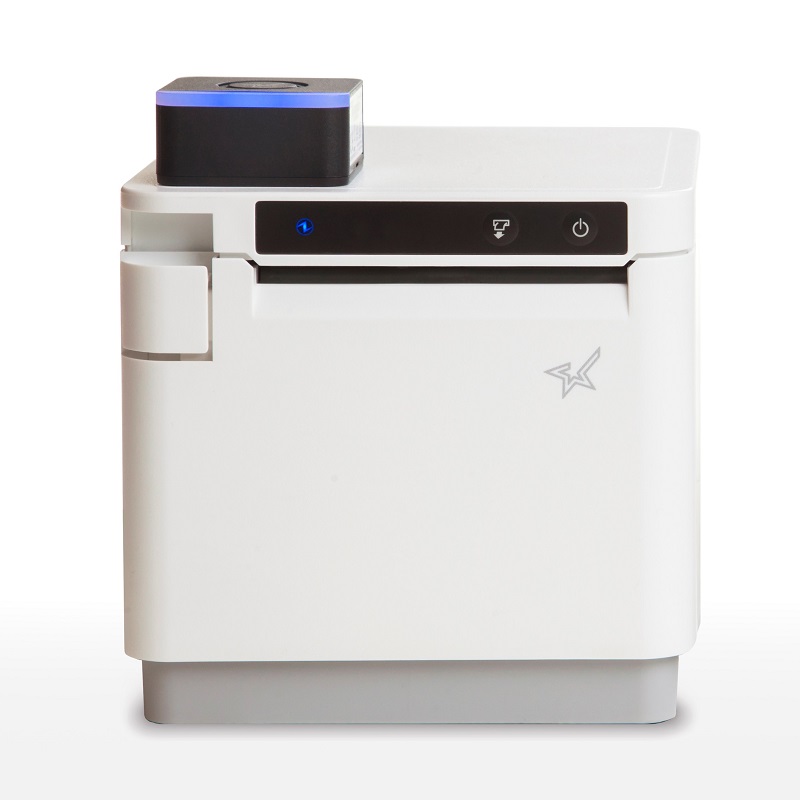
Digital display is an excellent way for tenets to understand better what action must be taken with commands like accept, cancel, and delay order. It also provides next steps, such as Press #1 for the next step, or press #2 for order ready. Star’s digital display fits perfectly on top of the printer for a smaller footprint.
Buzzer
A buzzer will ensure that chefs know precisely when a new order comes into their kitchen. An ideal buzzer will enhance printer functionality by offering a better way to alert the tenet of incoming orders and more information about order type, source, and urgency. Choose a buzzer with high sound quality and speech recording capability for full understanding. A buzzer needs to be compatible with Windows, iOS, and Android SDKs for future flexibility. Users can choose from various sound types and volumes, and ISVs can assign individual custom sounds to different order types and playback sounds sent from a host device.
Bump Bar Connectivity
Bump bars are a crucial part of kitchen operations, bringing convenience and flexibility to the commercial kitchen. A small keyboard allows kitchen staffers to see and shift orders in the queue if necessary, bump bars work to decrease service times and efficiency, order accuracy and improve communication between staff. Any hardware and software you choose should have the ability to integrate with bumper technology so that operations are organized and visible.
Printed Promotions
Since many ghost kitchen operations are opening as a virtual restaurant, the entire customer experience is centered around delivery service. The to-go bag or box delivered to the customer’s door is the only tangible representation of the business; they can’t rely on their physical storefront to enforce their brand. Offering each cloud kitchen tenet the opportunity to create custom printed promotions that can be dropped into each to-go box is crucial to building their brand.
Printed promotions can include special offers or coupons for the next meal, customer service surveys with QR codes, samples of other dishes, or even links to the full menu. With PromoPRNT, tenets can create printed promotions that will drive customer experience and build loyalty.
It is crucial to choose restaurant management solutions that will help your tenets optimize their business. Ghost kitchens operate slightly differently from traditional ones and therefore require specific solutions to ensure their success.
Star Micronics’s hardware is perfect for ghost kitchen operations. We provide solutions that solve every day IT challenges to every day delivery-only kitchen challenges. If you’re ready to entice tenets to your facility with top-of-the-line technology that will meet their day-to-day business needs, connect with one of our distributor partners today.


 The Situation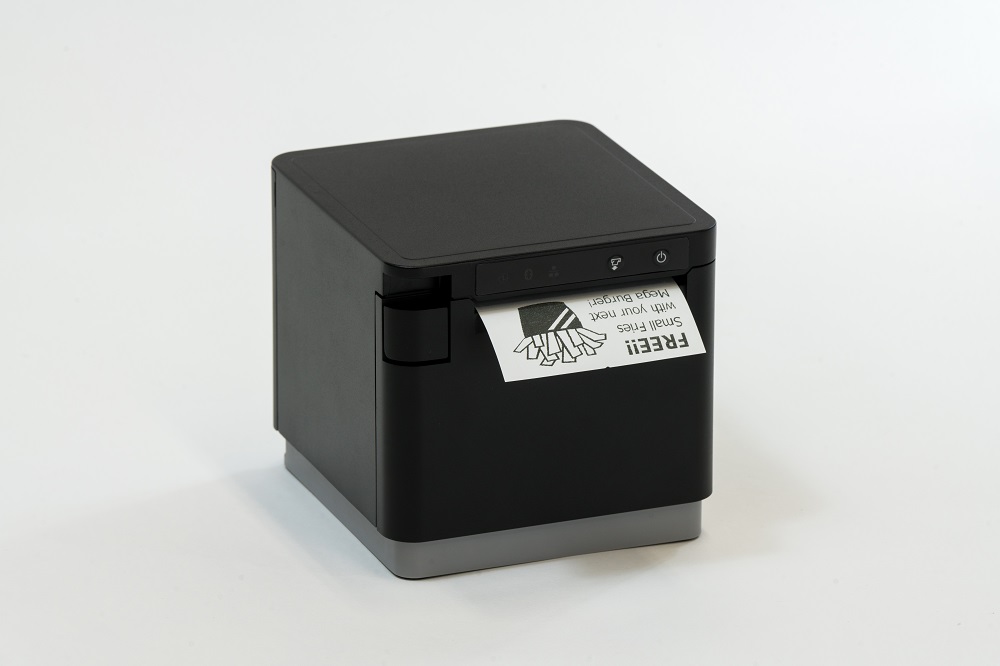

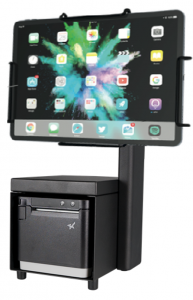 For businesses and integrators with tight budgetary constraints, there are still options for assembling a highly sophisticated self-service kiosk solution. For example, businesses can pair a desktop printer, with the right technology built-in, with a universal tablet enclosure, a tablet, and a tablet stand. This is when finding the right one-stop shop POS manufacturer to work with that can provide all of those components becomes key.