Tag: Restaurant & Hospitality

  • 3 Must-Have Restaurant Back-of-House Technologies

    3 Must-Have Restaurant Back-of-House Technologies

    A restaurant’s “back-of-house” generally refers to three parts: kitchen (the largest component), offices, and staff break room/rest area. A restaurant with a well-run back-of-house operation increases customer satisfaction, empowers staff to provide a higher level of customer service, and prepares the consistent, quality meals your customers expect at every visit.

    Essential restaurant back-of-house technologies like a kitchen display system, durable receipt printers, and an all-in-one point of sale system help your kitchen run more smoothly so the front-of-house doesn’t suffer from long waits for a table, poorly timed service or incorrect orders.

    Here are three restaurant back-of-house technologies that your eatery should implement right now:

    1. Kitchen display system (KDS)

    A kitchen display system streamlines food preparation. This critical restaurant back-of-house technology helps manage customer expectations by preventing kitchen backups, monitoring prep times and alerting staff when things start to go awry. The KDS also lists out cooking directions/ingredients to ensure that diners have the same delicious experience every time they visit your restaurant.

    A kitchen display system connects to the point of sale terminal and consists of software, a monitor that can resist moisture and heat, controller, and a bump bar to scroll through the orders. When the customer is finished ordering, data is sent through the kitchen controller to the appropriate location, either to a single screen or multiple ones at different food prep stations.

    Selections are time stamped, labeled with the customer’s name and sent to the appropriate prep area at different times to ensure everything will be finished and served to the proper person simultaneously. This means diners will never have to wait for their friends to be served while their meal gets cold or receive their appetizer with their dinner being served immediately after.

    1. Fast, tough receipt printer for orders

    Receipt printers are an integral part of your restaurant back-of-house technologies. However, an immaculately well-run kitchen is full of hazards for electronic components. Overuse, heat, spills, particles and steam can harm a restaurant kitchen printer, causing expensive work slowdowns, bottlenecks, and mistakes.

    Restaurant owners looking for a quality printer for their kitchen should consider a durable receipt printer that can withstand this harsh environment. To guarantee a healthy ROI, the receipt printer chosen should be spill-proof and insect-proof. Additionally, consider a compact model that won’t take up much valuable back-of-the-house counter space. Ensure that the printer you choose is flexible and able to connect with future hardware by selecting one with a multi-interface. For example, the mC-Print3 fills all of these requirements, plus grants access to a suite of free value-added Star Cloud Services.

    1. All-in-one point of sale systems

    All-in-one point of sale (POS) systems are exactly what the name implies: POS systems that include all the important components in space-saving configurations. The best all-in-one POS systems will give end-users the ability to add peripherals, upgrades, and new options as they come to market.

    All-in-ones typically include a touchscreen, printer, cash drawer, and magnetic stripe reader, with the option of adding other peripherals such as a scale, bar code scanner, additional security options, and displays. In addition to the mC printers, Star’s mCollection includes 1D scanners, 2D imagers, customer display, and three NTEP-certified scales.

    All-in-one POS systems can save a business money, time, and counter space. These systems have a much smaller footprint then a stationary terminal which frees up space for taking orders and impulse purchases. Purchasing an all in one POS means the components are equally rugged and designed for the environment you’re working in. This will also eliminate any headaches and runaround from different vendors when it’s time to make repairs to the system.

    Take a Wholistic View of Your Operation

    Restaurant back-of-house technologies can be just as important to profitability and customer service as solutions your restaurant uses in the front of the house. Evaluate your entire operation for areas that can operate more efficiently and find solutions that can address those issues, helping you save time and money.


  • 3 Reasons Why Restaurants Should Allow Customers to Order Online

    3 Reasons Why Restaurants Should Allow Customers to Order Online

    Online ordering and delivery are so convenient that more and more people are going online and, in a few clicks, having meals delivered to their door. According to banking analysts Cowen, delivery will grow to a $76 billion industry by 2022. CNBC reports that online orders comprise half of all deliveries, with millennials and the 35-44 age group leading the pack among diners who are taking advantage of online ordering apps and services.

    Online Ordering Makes Sense for Your Restaurant

    Although most restaurants take phone orders, it’s a good idea to have an alternate ordering method so people won’t get a busy signal or wait on hold for too long. Online ordering also means the phone won’t be ringing as often, taking staff away from other tasks and making the atmosphere more pleasant for dine-in customers.

    Online ordering allows diners to enter their orders online through the restaurant’s website or app and designate whether it’s for pickup, delivery, or dine-in. Online ordering solutions also enable the customer to pay with a credit card before the order is prepared, and it streamlines workflows by sending orders directly to the kitchen. Implementing an online ordering system means a better customer service experience for patrons and allows you to gather their contact information for future marketing efforts.

    Online ordering is a great way to boost revenue and attract new customers. The addition of Amazon Eats and Seamless are making it easier than ever for restaurants to introduce online ordering. If you haven’t already, here are three reasons why your customers should be able to point, click, and eat:

    1. Increased sales and larger orders

    Restaurants that introduce online ordering increase their takeout revenue, on average, by 30%. For small restaurants or ones with limited hours, adding online ordering and delivery generates an additional revenue stream without impacting your dine-in customers.

    Online ordering encourages larger orders by giving customers extra time to look through the menu and discover new items they would like to try. Diners are in control of the ordering process and they can take their time reading the menu without feeling rushed, securely process their payments, and never get a busy signal.

    2. Improved order accuracy

    Taking phone orders means an employee must be able to clearly hear the customer on the phone, accurately and legibly write down an order, and then input it into the point of sale (POS) system. Sometimes the employee may not hear the order correctly or make mistakes while entering it into the POS terminal. Removing these steps means less opportunity for errors and a reduction in the amount of time and resources wasted remaking orders prepared incorrectly.

    3. Expand your customer base

    More of your customers will seek out restaurants with online ordering, so it’s important to have every option available—phone, online and ordering app. According to a survey by the National Restaurant Association, 61% of people said they consider delivery and takeout options important for table service restaurants.  The experts at QSR Web reported that online ordering is outpacing dine-in patrons by 300%. If reservations at your restaurant are hard to get, or there are only a few tables, online ordering makes it easy for people to satisfy their craving or try it for the first time quickly and easily.

    Restaurants are preparing more meals for take-out than they are serving to on-premises customers, so make sure they can place their orders using the technology they want. Online ordering is the key to drawing in new customers and increasing revenue.

  • How to Choose the Right POS Scale for Your Application and Industry

    How to Choose the Right POS Scale for Your Application and Industry

    If you’re in the market for a new POS scale, consider these points to help you make a smart choice for your business.

    POS scales are used in different types of businesses that charge for items by weight, including supermarkets, self-service restaurants and buffets, butcher shops, candy stores, health food markets with bulk bins, cannabis dispensaries, and more. From a pound of cold cuts to a cup of frozen yogurt, scales measure the weight of a customer’s purchase and calculate the price accurately.

    Scales ensure you are not over- or under-charging customers and assist with inventory tracking at your store or restaurant. Running a business that charges based on weight is impossible without a properly calibrated scale, so make sure you choose the one that best takes care of your needs.

    If you’re in the market for a new point of sale (POS) scale, consider these points to help you make a smart choice for your business.

    • Application: Why do you need the scale? Before you purchase POS scales, identify how they’re going to be used and what you need to weigh. Is it fresh produce in a supermarket, bulk candy, and meat or items like mail and packages? Are most of your products heavy or light? Large or small? Identify the types of items you need to weigh and use that as a starting point.
    • Accuracy: How accurate do you need the measurements to be? Scale accuracy is important because it tells the customer they are receiving the exact amount of product they’re paying for. An accurate scale also ensures that the retailer is receiving the correct payment. Across the U.S., every state has its own agencies and departments that regulate scales and inspect them for accuracy. Some states may require a yearly inspection, while others are inspected less frequently. Make sure the scales you purchase will meet requirements for accuracy.
    • Capacity: What is the largest possible load you need the scales to handle? If you own a candy store or a supermarket, would anyone ever purchase 500 pounds of candy? It seems unlikely, so if you’re a purveyor of sweet treats, the scale’s capacity can be lower. For a butcher weighing large pieces of meat, or a UPS shipping store, however, a scale with a higher capacity would be in order.
    • Environment: Where will this scale be used? Choose a scale that’s durable enough for your business. If it is meant for high-volume use weighing food products, choose a hygienic scale designed for easy cleaning. Also, consider where the POS scales will be used. Are there extreme temperature variations? Are there disruptive vibrations, interference from other electronics, or even air currents that could affect the scale’s accuracy? Choose the type of scale with the right features for the environment.
    • Installation and calibration: Choose the location for your POS scales carefully, because you shouldn’t move them around once they’ve been installed. Connect the scale to your POS system so it can be set up and calibrated properly. Scales that are used daily will need frequent calibration to maintain accuracy and stay in compliance with local weights and measures laws.

    Business owners who sell items by weight need an accurate scale to protect their customers and their business. If you’re looking for a new scale for your store or restaurant, be honest about your needs, how accurate it needs to be, where it will be set up and how often it should be calibrated. Taking time to understand your business’ requirements for POS scales and the options available to you will result in a greater ability to provide excellent customer service and to manage inventory down to the ounce—or less.

    Available for Free: Scale Buyer’s Guide

  • How Cloud-Based Software is Changing the POS Game

    How Cloud-Based Software is Changing the POS Game

    SCS-certified-e1574795386768

    Cloud-based point of sale (POS) packages are comprehensive solutions that are easy on your wallet. These affordable, powerful platforms reduce downtime and increase mobility, provide in-depth reports and securely store your important data. “Software as a Service” (SaaS) solutions are easy to install and update automatically, so you are always running the most recent version of the software. But how can a cloud-based POS solution help your restaurant up its game?

    1. Reduced downtime

    Today’s cloud-based POS solutions keep functioning, even in the event of an internet outage. Solutions are available that secure your data in the cloud but that store data locally on restaurant hardware. When connectivity returns, data is synced to the cloud automatically. This allows your restaurant to operate without disruption.

    A cloud-based solution also provides the benefit of keeping your data secure in the event of a power outage, theft or accident, so you are assured of business continuity and nothing is at risk for permanent loss.

    2. Cost-effective

    Cloud-based software providers charge a budget-friendly monthly fee for software and data storage. This service is perfect for businesses that don’t have thousands of dollars in upfront fees to make an outright software purchase. There are no upgrade costs or unexpected charges — the monthly fee includes everything you need.

    Using cloud-based software, there is also less of a burden on your IT staff. Updating POS terminals can be done quickly and easily. You are no longer required to update each terminal individually and restart the computer several times. Instead, owners of multiple restaurants or small chains can manage all their locations from one computer or mobile device saving you time and resources.

    3. Mobility

    Cloud-based software makes it easy to add more terminals, mobile POS or additional checkouts — you just configure new sites and equipment for the software, sync them and you’re good to go. They automatically run the same solution, with the same data accessibility, as the other terminals in your restaurant. And once your network is established, you can manage every location from one computer or mobile device, whether it’s an on-site terminal in a back office or your home computer.

    4. Remote data access

    With cloud-based POS, you can login in from any location at any time to view sales and inventory information, allowing you to keep track of your business throughout the day. Cloud-based POS systems include a variety of reporting options that give you an in-depth look into every shift, hour, day, week, month or year. Running sales reports also help restaurant owners and managers identify the most popular menu items so they can make sure top-selling selections are always available, maximizing profitability and increasing customer satisfaction.

    If you are considering upgrading a legacy POS system for your restaurant, learn more about the features of cloud-based software and how these solutions could benefit your business. With their business continuity, mobility, and scalability features — as well as anytime, anywhere access to your POS system and data — cloud-based software can be a smart choice for your next POS system.

  • 4 Reasons Why Integrated Online Ordering is a Must-Have for Restaurants

    4 Reasons Why Integrated Online Ordering is a Must-Have for Restaurants

    If you haven’t integrated online ordering with your point of sale system yet, it’s time to add this valuable feature and start operating more efficiently.

    Every take-out or delivery meal starts with an order. Although phone orders are universally accepted at restaurants, integrated online ordering is a must-have alternative to phone calls. If you haven’t integrated online ordering with your point of sale system yet, it’s time to add this valuable feature and start operating more efficiently.

    Free Online Ordering Resources

    Social distancing has deeply affected our customers in the restaurant industry. That’s why Star Micronics is offering free online ordering resources for VARs and ISVs helping restaurants navigate the implementation of online ordering.

    What is integrated online ordering?

    Integrated online ordering allows diners to enter their orders online through the restaurant’s website or app, designate whether it’s pickup or dine-in, pay with a credit card and send the orders automatically to the kitchen. This functionality is a crowd-pleaser that, depending on the integration, updates the customer on their order’s progress and gives an ETA for delivery or pick-up.  In turn, restaurant owners and managers can increase revenues by accurately processing more orders with less staff.

    Here are four ways online ordering will positively impact your restaurant:

    1. Restaurants gain a new revenue stream with online ordering.

    For smaller restaurants with only a few tables, it can be difficult to increase profits without adding capacity, turning tables faster, or extending the hours your eatery is open. All these options add overhead in the form of higher rent, more employees and additional costs related to a longer work day. Adding online ordering and delivery generates an additional revenue stream without impacting the on-premises operations.

    People are looking for eateries with the technology that allows them to order in the way they feel most comfortable in the least amount of time. On average, restaurants that implemented online ordering increased their takeout revenue by 30%.

    2. Order accuracy will improve and customer satisfaction will increase.

    More people are logging on to place their orders for everything from doughnuts to Thanksgiving dinners. Customers want to be able to place their orders online —in fact, a National Restaurant Association survey shows that 63% of respondents said that they would use online ordering if it were offered.

    Without online ordering, an employee must reenter orders received via phone or non-integrated application into the restaurant POS, which creates double work and opens the door for mistakes to be made keying orders into the workstation. ­Removing these steps means more confident staff at the POS, less errors and a reduction in the amount of time and resources wasted on remaking orders prepared incorrectly.

    3. Integrated online ordering is more cost effective.

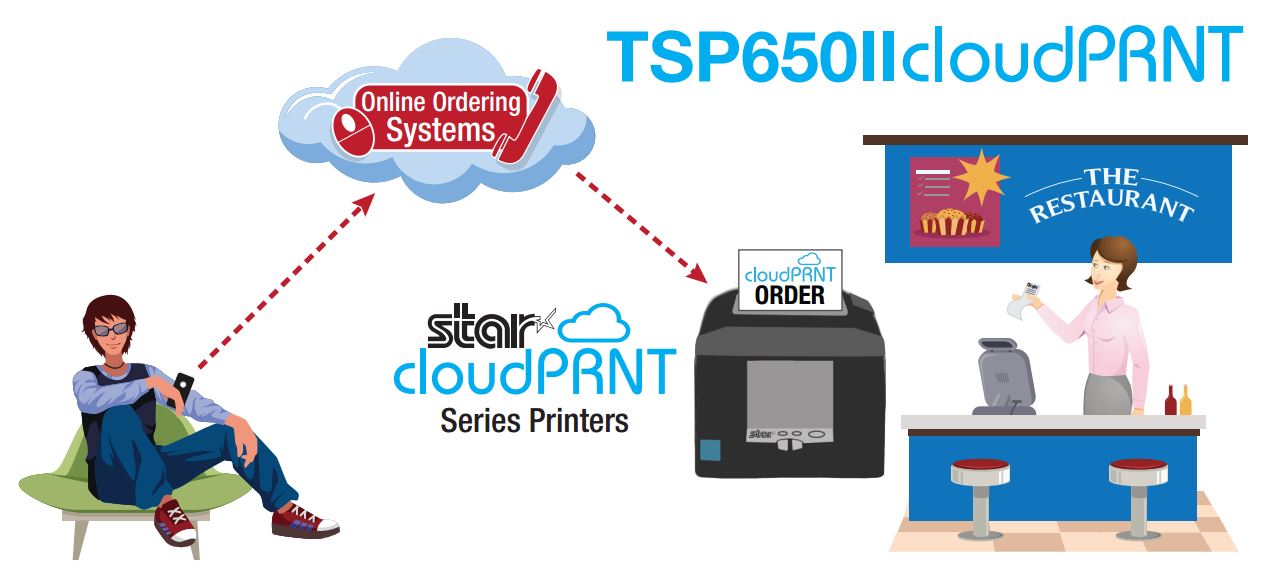
    If you currently offer menu items for delivery or take out, but do not have online ordering, your staff needs to spend time answering the phone. This means they are interrupted from another task, need to stop and place the order, and then return to their original task. This translates to a decrease in productivity — and an increase in labor costs. Paring with a POS system that uses Star’s CloudPRNT solution offers the option to have orders print automatically when received. Online orders that are directly transmitted to the kitchen save time and money.

    4. It helps you compete — your competition has already implemented it.

    Patrons expect your restaurant to have the technology that allows them to order online or with a mobile app. Online ordering is booming — it’s projected to be a $38 billion industry in the U.S. by 2020.  The restaurant industry is extremely competitive and has a high failure rate, so restaurateurs simply cannot afford a “wait-and-see” attitude.

    Online ordering delivers hot, fresh food quickly and correctly, so it’s time to integrate if haven’t already. Integrated online ordering will allow people to order their meals the way they want and when they want. This functionality will help you reduce human error while inputting orders and cut down on payroll cost and wasted resources. The restaurant business is fierce, so you can’t afford not to offer this cutting edge technology.

    Is Your Restaurant Ready for the Growing Online Ordering Trend?

  • Star Micronics to Showcase New mPOS Solutions at 2017 RSPA RetailNOW

    Star Micronics to Showcase New mPOS Solutions at 2017 RSPA RetailNOW

    Somerset, NJ – July 31, 2017 – Star Micronics, leading provider of point of sale and proof of transaction technology, will be exhibiting new solutions at the 2017 RSPA RetailNOW expo at booth #707.

    The show will be held from August 6th through August 8th at the Paris Hotel in Las Vegas, NV. RetailNOW® is one of RSPA’s signature events, billed as “the place where the industry meets” with over 170 exhibitors.

    Star Micronics will be showcasing a number of our newest mPOS peripherals and solutions including the mPOP™ with new peripheral options, TSP100IIIU, and SM-L300 portable printer, all compatible with Star Cloud Services digital receipt and customer engagement solutions.

    mPOP™

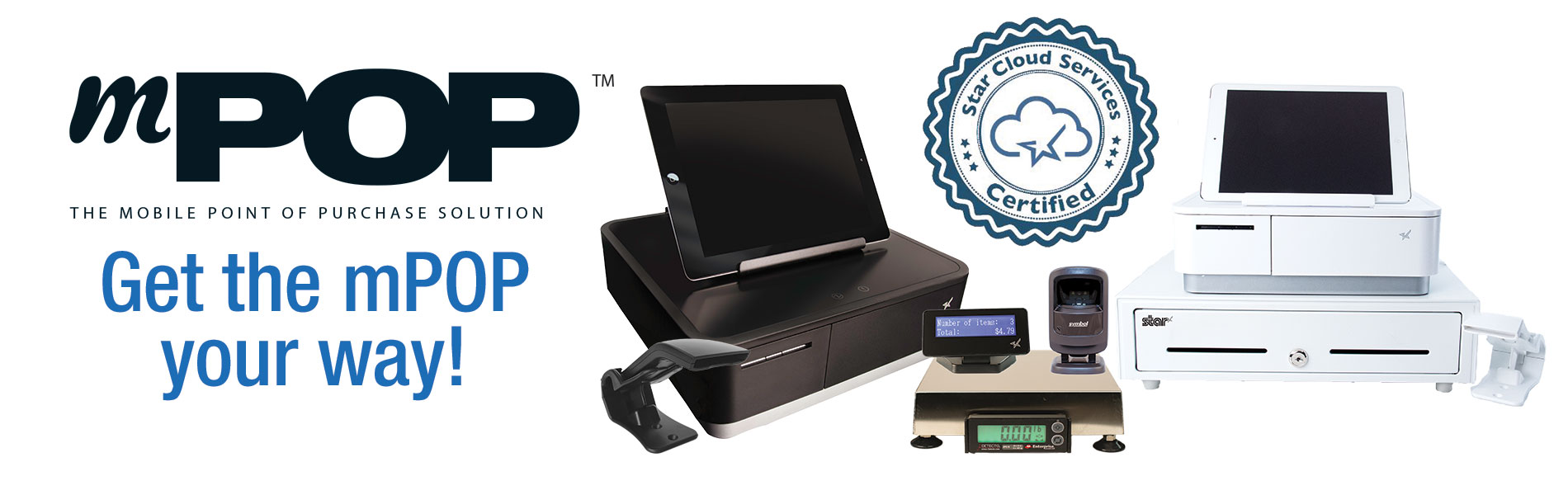
    Star Micronics has upgraded our popular all-in-one mPOP to add even more functionality. Now the mPOP will support a number of peripheral options including a 1D or 2D bar code reader, a customer-facing line display, three NTEP legal-for-trade point of sale scales, and an additional cash drawer. Users can now transform their mPOP into a complete point of sale hub, while still saving space.

    TSP100IIIU

    Star Micronics will be introducing the latest version to the TSP100III series, the TSP100IIIU at RetailNOW 2017. Now offered with a simple “plug and play” USB connection, users will be able to enjoy the upgrades of the TSP100III series including faster print speed and a paper de-curl mechanism that provides a flat receipt, even when the receipt paper is at the end of its roll. The TSP100III also facilitates data communication and device charging using only one lightning cable for iOS users.

    SM-L300

    The brand new SM-L300 is Star’s first Bluetooth low energy receipt, label, and MAXStick® portable printer. The SM-L300 is Bluetooth (3.0/4.0) compatible with all operating systems including Windows, Android™, and iOS, and is equipped with a receipt de-curl function and easy “drop-in and print” paper loading.

    Star Micronics is also proud to host our partners: CAP Software, Weigh & Pay Solutions, TouchBistro, GreenBits, AppSuite, Appetize, eMobilePOS, and Vend. Visit booth #707 for demonstrations of our partners’ POS software solutions with Star POS and mPOS peripherals.

  • Star Micronics adds CloudPRNT Support for TSP700II, TSP800II, and SP700 Printers

    Star Micronics adds CloudPRNT Support for TSP700II, TSP800II, and SP700 Printers

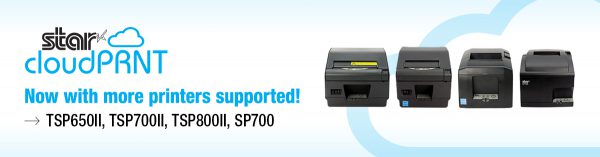
    Somerset, NJ – June 26, 2017 – Star Micronics, leading provider of point of sale and proof of transaction technology, is proud to announce that they have added CloudPRNT support for their TSP700II and TSP800II thermal printers and SP700 impact printer. These Star printers will retrieve and print orders from any online ordering service integrating Star’s communication protocol.Cloud-PRNT-TSP700-e1574794772508

    Star’s CloudPRNT technology provides benefits to both restaurants and retail stores alike by eliminating the need for an extra tablet to send an online order to the printer. Instead, the ordering service will be able to communicate directly to the printer.

    Star’s TSP700II label and receipt printer will allow pizzerias or coffee shops to accept and print an online order receipt or label to stick directly on the pizza box or coffee cup for take-out or delivery orders. For industries outside of food service, the TSP800II wide-format (4” wide) thermal printer will allow delivery services to print labels on the go directly through the cloud from a smartphone or mobile device.

    Finally, the SP700 is Star’s most durable printing solution for kitchens. It is designed specifically to work in environments where heat and humidity can erode the type on the kitchen order. Paired with Star’s CloudPRNT communication protocol, restaurants can receive and print online orders directly to the SP700 kitchen printer to be prepared for pick-up or delivery.

    These CloudPRNT supported printers also offer an intelligent interface to support POS functionality along with the online order system. The TSP700IIcloudPRNT and TSP800IIcloudPRNT are also compatible with Star Cloud Services, allowing users to offer their customers digital receipts through the AllReceipts™ app, and to engage with their customers for free.

  • Star Micronics Releases Peripheral Support with the mPOP™ Mobile Point of Purchase

    Star Micronics Releases Peripheral Support with the mPOP™ Mobile Point of Purchase

    Somerset, NJ – June 1, 2017 – Star Micronics, leading provider of point of sale and proof of transaction technology, presents the mPOP™ with added peripheral options. Star’s mPOP now supports an optional scale, 2D bar code scanner, customer display, and external cash drawer. With these added peripherals, retailers and restaurateurs can now transform their mPOP into a complete point of sale hub to accept more versatile transactions in higher volume.

    mPOP-Press-Release-June-2017

    Star Micronics has integrated support for three Detecto APS scales. The APS scales supported are offered for varied use cases. The APS10 (max. 15 kg) is ideal for candy shops, delis, frozen yogurt shops, etc., where the APS20 (max. 15 kg) is better for larger items like bags of fruit and vegetables at a farmer’s market or grocery store. The APS12 (max. 160 oz.) is best in similar environments as the APS10, or any other location than prefers to measure in ounces.

    Star has integrated a 2D bar code scanner for the mPOP. Now, users have the option of choosing between the Star 1D scanner and the new 2D scanner. The 2D bar code reader will be beneficial to accept coupons in the form of QR code, or access item information. In addition to 2D bar code scanner support, Star has designed a two-line, blue backlit customer display with up to 20 characters per line. With this support, the retailer can not only show the customer their transaction price, but they can also add advertising messages for when the mPOP is not being used.

    Lastly, Star added a cash drawer connection port (DK port) to the mPOP™ to support an extra cash drawer. This is ideal for users who need a point of sale system with a small footprint, but still have a higher cash flow, such as a bar or deli.

  • Star Micronics Introduces the TSP100IIIU Thermal Receipt Printer

    Star Micronics Introduces the TSP100IIIU Thermal Receipt Printer

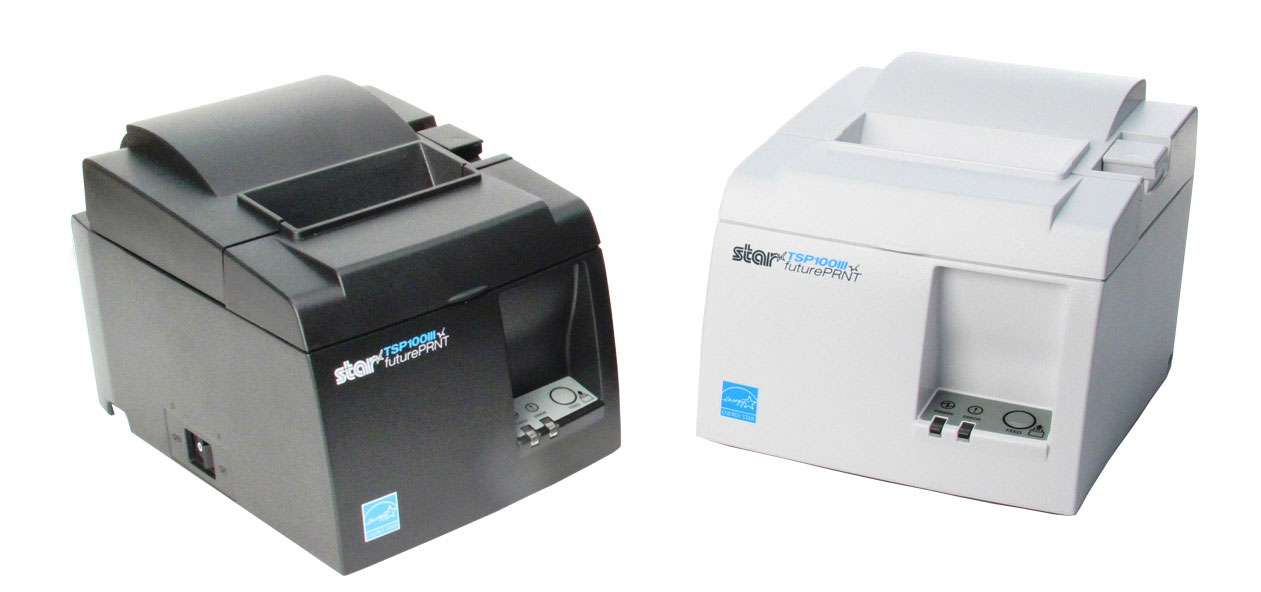
    Somerset, NJ – May 15, 2017 – Star Micronics, leading provider of point of sale and proof of transaction technology, is proud to introduce the newest addition to the TSP100III series, the TSP100IIIU. Already offered with LAN, WLAN, or Bluetooth interface, Star Micronics is now offering the TSP100III with simple USB connectivity for intuitive use and easy integration.


    TSP100IIIU-hero-image-e1574793879725

    Users will be able to enjoy the upgrades of the TSP100III series including faster print speed and a paper de-curl mechanism that provides a flat receipt, even when the receipt paper is at the end of its roll. Star Micronics has also brought back the power switch on this upgraded version of the TSP100IIIU, so business owners can shut down their printer and save power when closing shop. With its simple “plug and play” connectivity, and its new USB serial number feature, the PC will detect the TSP100IIIU on its Windows platform using any USB port. Star Micronics has also added product serial numbers to all of our TSP100IIIU printers for easy asset management.

    With included internal power supply, power cables, complete mounting kits, and paper roll, the TSP100IIIU is the perfect printer for any mPOS bundle. As an upgrade of Star’s TSP100ECO printer, the TSP100IIIU can seamlessly replace your old printer to offer faster speed and increased reliability. It offers a small form factor and prints up to 43 receipts per minute (RPM) with “drop-in & print” paper loading for thin paper support and a guillotine auto-cutter. The TSP100IIIU is also compatible with Star Cloud Services, allowing users to offer their customers digital receipts through the AllReceipts app, and to engage with their customers for free.

  • Star Micronics and Elo Partner to Provide a Modernized All-In-One POS Solution

    Star Micronics and Elo Partner to Provide a Modernized All-In-One POS Solution

    Somerset, NJ – May 8, 2017 –Star Micronics, leading provider of point of sale and proof of transaction technology, has announced their partnership with Elo, a global supplier of touchscreen solutions, to provide a new all-in-one POS hardware bundle for point of sale. This solution combines the Elo I-Series for Android and Windows tablets with a flip stand that houses a Star Micronics TSP100III, TSP650II, or TSP700II thermal printer. This bundle provides a perfect solution for hospitality, enterprise stadiums, and other environments where space saving and durability are essential. The flip stand is designed to seamlessly transform your point of sale into a self-service kiosk solution or a customer-facing display, and is ideal for small counter spaces with integrated cable management.

    “Elo and Star recognize that demand is growing for POS solutions with mobile architecture combined with the configurability of traditional POS systems,” said Sonal Apte, Senior Director of Product Management at Elo. “With this new mPOS platform, customers can instantly transform a traditional POS station into a self-service countertop kiosk that integrates a best-in-class Star printer, an EMV payment device, and a barcode scanner into one seamless design.”

    The all-in-one POS bundle allows users to print receipts using their choice of WLAN, LAN, Bluetooth, and USB connectivity with Star’s TSP100III or TSP650II thermal receipt printers. In addition, Star’s TSP700II offers a solution for receipt and label printing with the I-Series tablet and stand. With high-speed printing, “drop-in and print” paper loading, and a receipt de-curl mechanism that allows receipts to print smooth and flat, Star Micronics’ printers are easy to use in fast-paced environments.

    “Star Micronics is very excited about this new partnership and can expect this bundle to gain a lot of popularity in the hospitality and retail markets,” says Christophe Naasz, Business Development Director of Star Micronics. “There has been a major increase in the use of tablets in these markets over the past few years. Star Micronics and Elo have worked together to create a POS bundle that still has a sleek and compact look, but provides a durable solution for high-volume point of sale environments.”