Tag: QSR & Fast Casual

  • How Restaurants Use Thermal Printers for Online Ordering with DoorDash, Uber Eats & More

    How Restaurants Use Thermal Printers for Online Ordering with DoorDash, Uber Eats & More

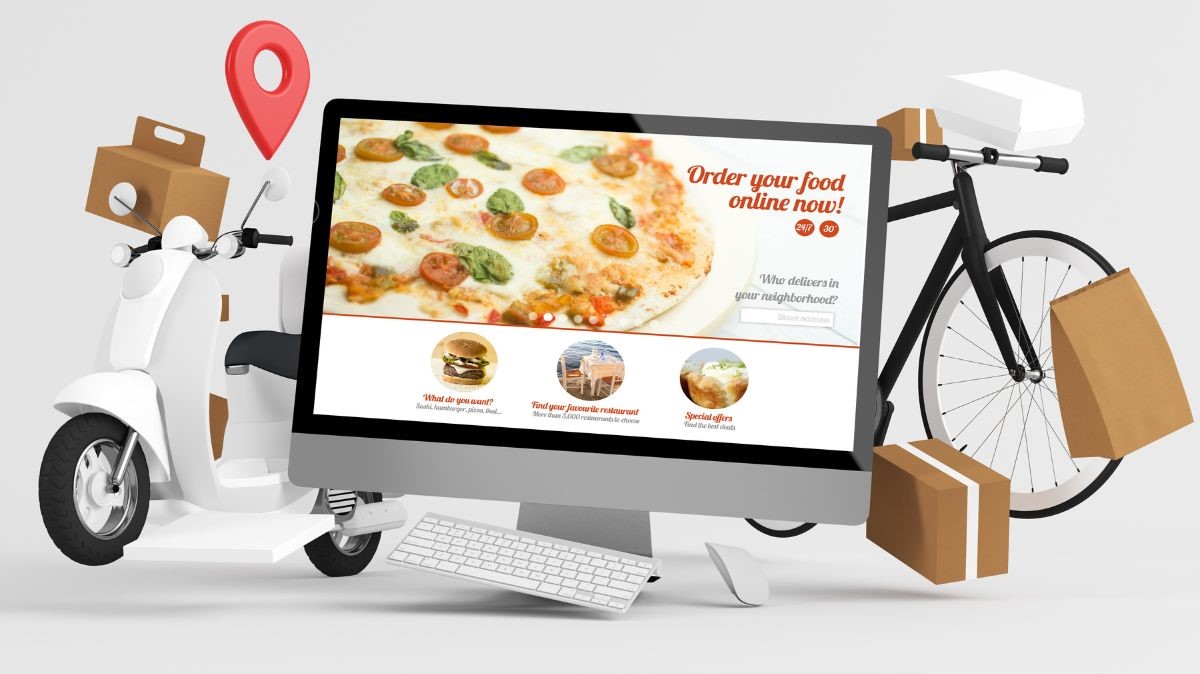
    In today’s digital age, online ordering is more popular than ever, especially in the restaurant industry. DoorDash, Grubhub, and Uber Eats are just a few of the most popular online ordering platforms, and many restaurants are now using these services to reach a wider audience and increase sales.

    But with the influx of online orders on top of in-person customers, managing things can become overwhelming.

    That’s where proper thermal receipt printers come in.

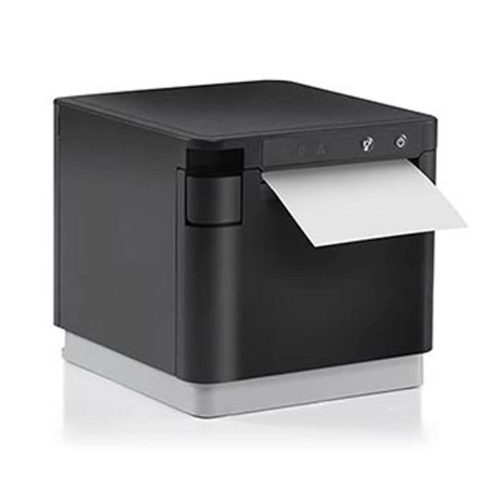
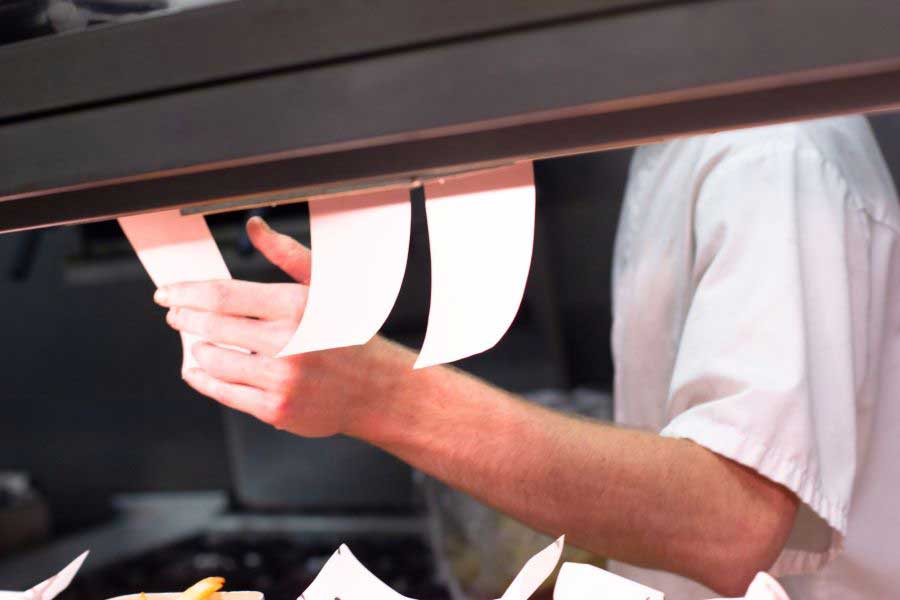
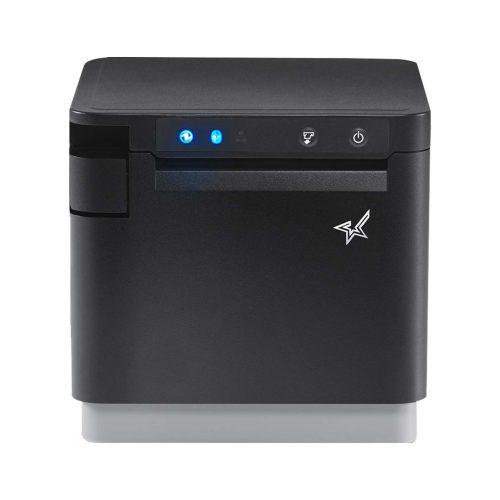
    Some thermal receipt printers are better for printing online orders than others because they connect to cloud- and web-based POS systems directly. They’re faster, more efficient, and easy to use. They print out orders as soon as they arrive, allowing the kitchen staff to fulfill them immediately.

    Many of these printers are designed to work with a wide range of devices, including mobile phones and tablets, making them an ideal choice for online ordering.
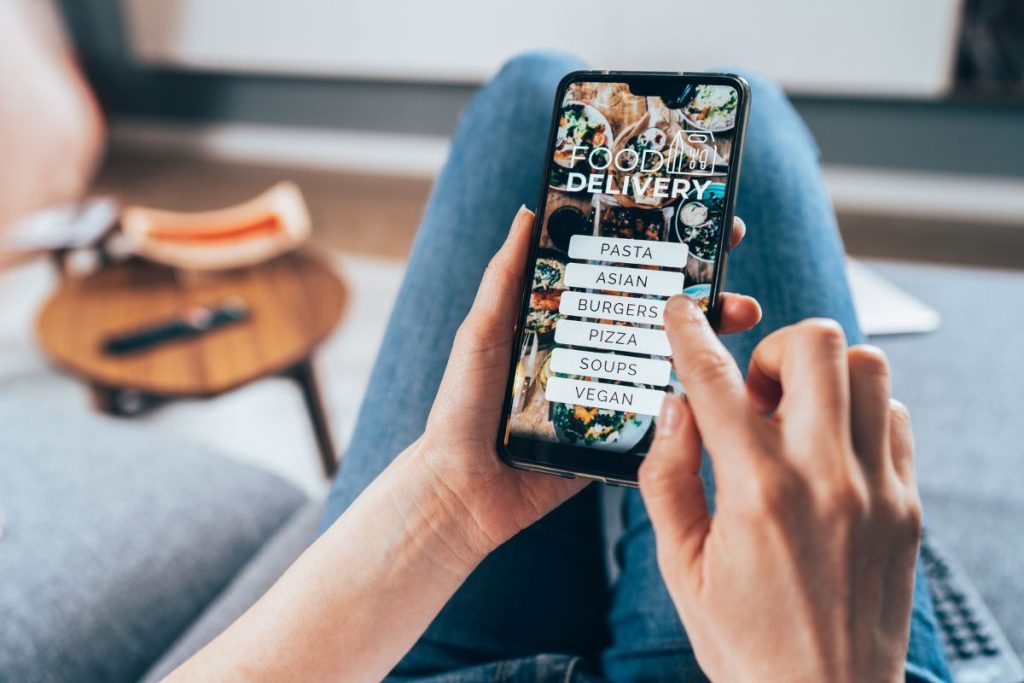
    Find your Android-compatible Star solutions here >

    Ordering food online on phone.

    How Do Restaurants Use Thermal Receipt Printers?

    So, how can restaurants use thermal printers with online ordering applications like DoorDash and Uber Eats? Usually, online ordering applications will suggest certain printers to use, or their software also comes with hardware. However, some people may need to purchase a thermal receipt printer on their own. 

    In any case, here are some tips on how to get started with the proper receipt printer to use with online ordering applications like DoorDash and Uber Eats:

    1. Choose a Compatible Thermal Printer

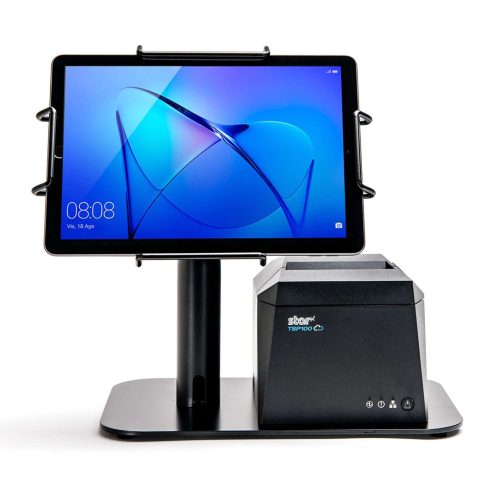
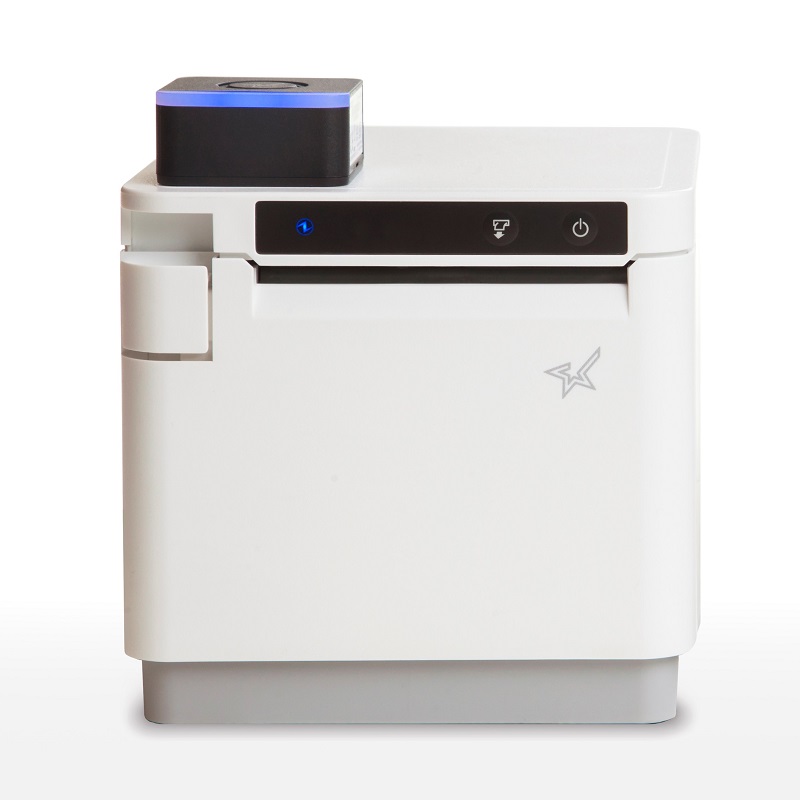
    To start, it’s important to choose a thermal printer that is compatible with the online ordering platform you are using. DoorDash and Uber Eats have guidelines for compatible printers, and it’s essential to make sure that the printer you choose meets these requirements. Some of the most popular printers used for online ordering include Star’s TSP100 and mC-Print3 series.

    2. Connect the Printer and Set it Up

    Once you’ve chosen a compatible printer, you’ll need to connect it to the online ordering application. This typically involves pairing the printer to the tablet or connecting it to the router of your restaurant. The application provider will provide instructions on how to do this. Still, if you have complications, you may also want to consult a professional to ensure the setup is done correctly.

    3. Customize the Printer Settings

    Finally, you can customize the printer settings to meet your specific needs. For example, you can adjust the font size, add your restaurant’s logo to the printout, and customize the order layout to make it easier for your kitchen staff to read and fulfill the orders.
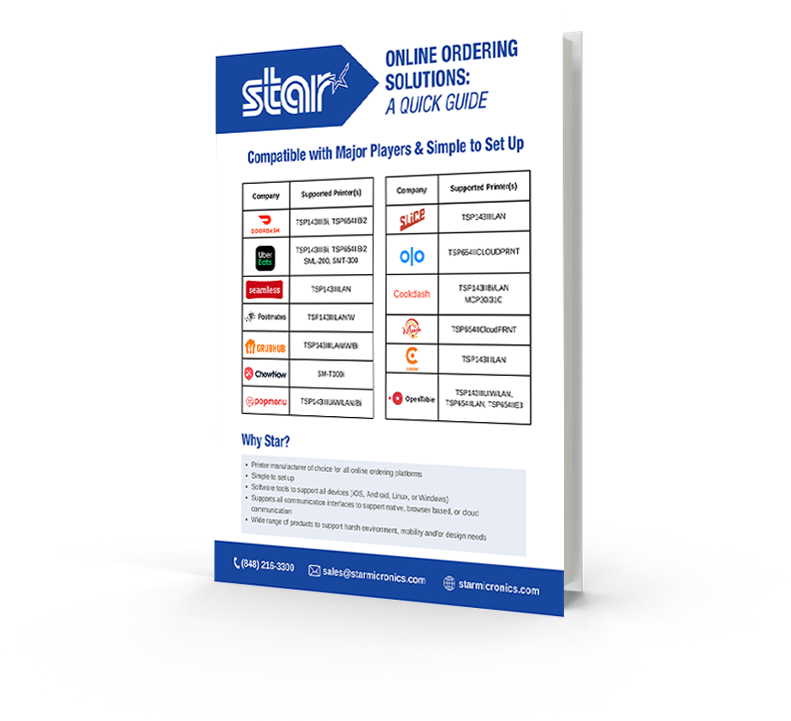
    Find out which online ordering platform works with which Star Micronics printer with our Online Ordering Guide for restaurant and QSR owners.

    Online Ordering Solutions:
    A Quick Guide

    Want to know which Star printers are compatible with some of the most popular online ordering applications?

    Streamline Business with the Correct Printer

    By using thermal printers like Star’s TSP100 series for online ordering apps like DoorDash, Grubhub, and Uber Eats, restaurants can streamline operations and improve efficiency. Orders will arrive faster, print in real-time, and be sent directly to the kitchen.

    This lets kitchen staff start orders immediately and ensures customers receive their food quickly. Plus, the improved accuracy and organization of online orders with the proper printers can help reduce errors and improve the overall customer experience.

    If you are a restaurant owner and want to start using online ordering applications like DoorDash or Uber Eats, purchasing the correct thermal printer for what you need can streamline operations and help boost revenue.

    With the right printer and a little setup, start taking orders from popular online apps and expand your restaurant’s clientele. Just keep in mind you’ll be busy!
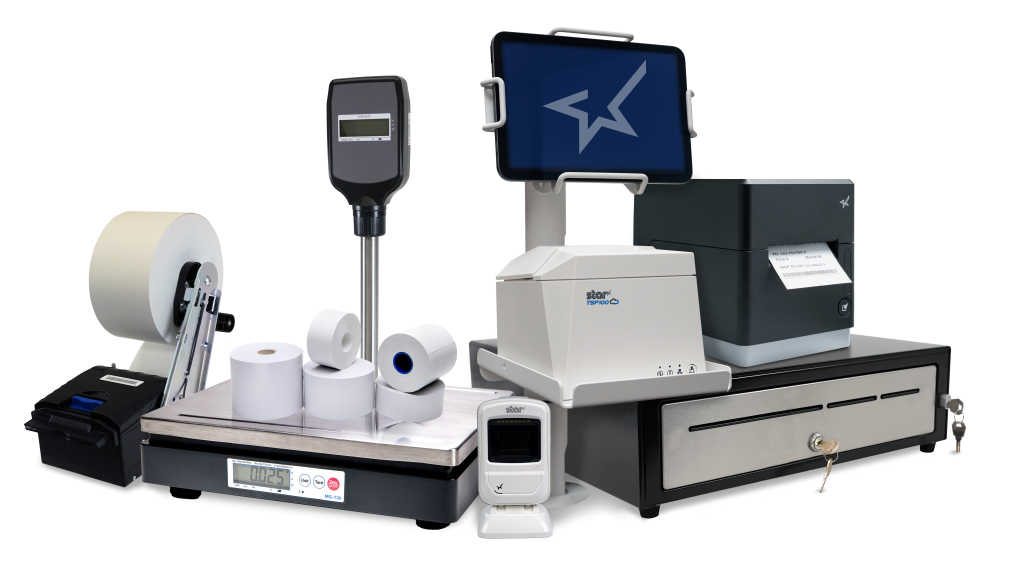
    Get the complete POS solutions from Star Micronics.
    Star Micronics has the POS hardware and technology to help keep your business ahead.

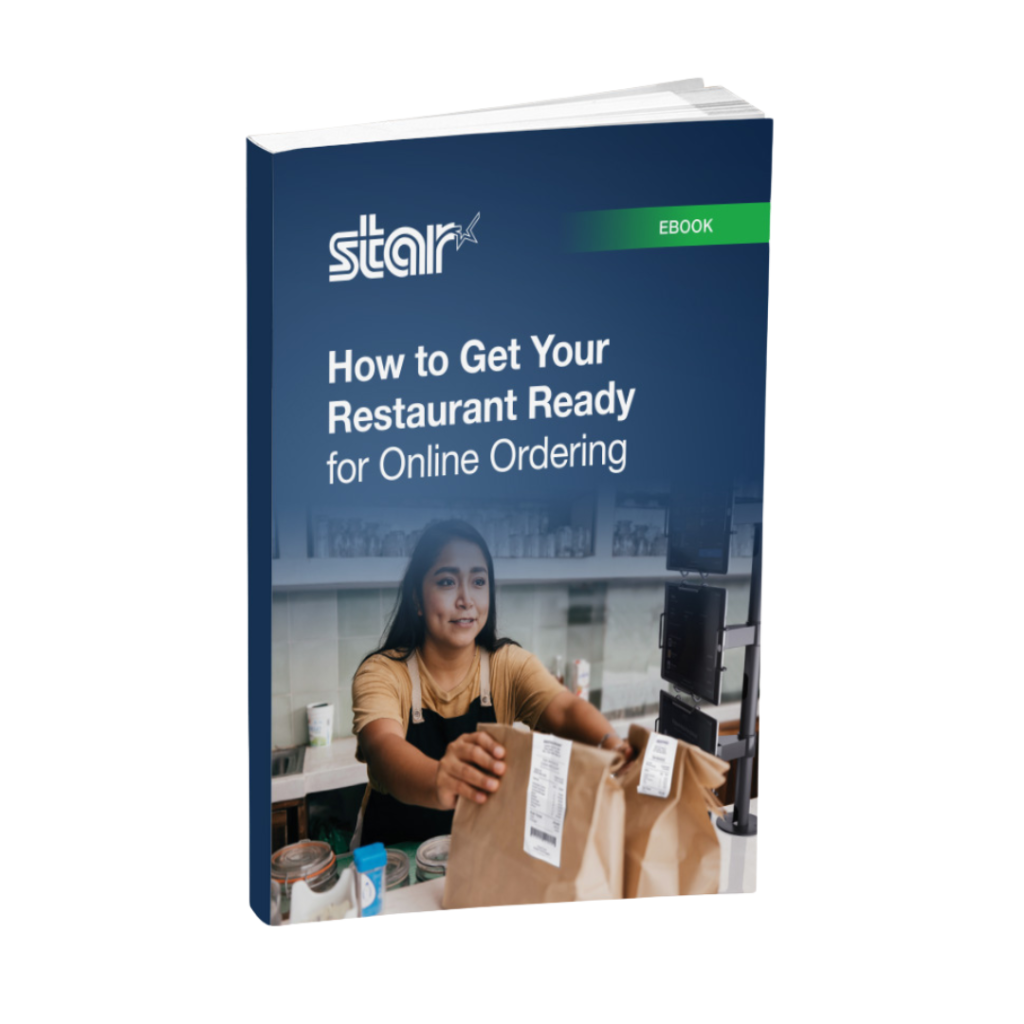
    How to Get Your Restaurant Ready for Online Ordering

    Are you looking for a new way to grow your restaurant business? Accepting online orders keeps you relevant and competitive.

    Wondering where you can buy Star?

  • 5 Essential Pieces of Kitchen Technology for a Successful Restaurant

    5 Essential Pieces of Kitchen Technology for a Successful Restaurant

    Restaurants are adding new technology like never before, especially in light of the buzz around exciting innovations like AI-enabled ordering, drone deliveries, and ghost kitchens

    Investing in the right restaurant technologies can be the key to success for many restaurants, especially multi-location chains. In fact, 71% of food service companies surveyed in North America believe digital transformation is the most important factor towards agility.

    But one area that is often overlooked is kitchen technology. And it shouldn’t be.

    If you want to run an efficient and profitable operation, your kitchen needs tools in place to help you keep up with the high volume of orders coming in. Getting the right tech in place will make your chefs’ and line cooks’ lives a whole lot easier. 

    Every piece of your tech stack needs to speak the same language and integrate seamlessly for efficient operations and a consistent customer experience. These five essential pieces of kitchen technology will help you build that consistency and improve every area of your restaurant.

    5 Pieces of Must-Have Kitchen Technology

    The kitchen is the beating heart of any restaurant. It’s where the magic happens and it produces the product your customers have come for. As a result, your kitchen needs the latest restaurant technology solutions to make operations more efficient and to connect this area with the rest of the restaurant.

    Here are the vital pieces of kitchen technology to get in place to keep the life-blood pumping around your restaurant.

    1. Point-of-Sale System (POS)

    A point-of-sale system is the hub of your restaurant’s data and operations. It processes orders, transactions, and other restaurant data and often serves as the liaison between your front- and back-of-house restaurant technology solutions. 

    Having the right POS in place is vital to keep communication between the front-of-house and your kitchen smooth and efficient, with minimal errors. When it comes to technology for restaurants, the POS serves as your central data hub.

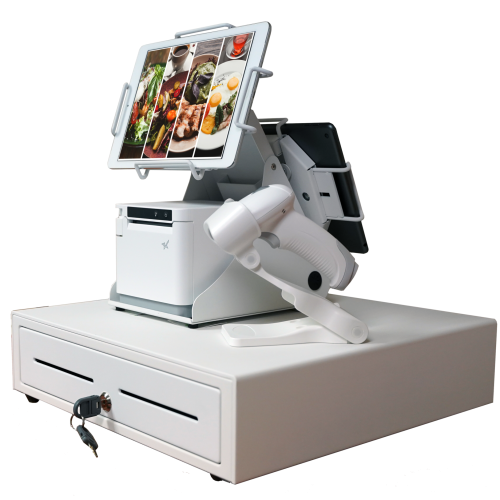
    An all-white point-of-sale system consisting of a cash drawer, an mC-Print3 printer, a wireless scanner, and tablets affixed on top.

    What is a POS?

    A restaurant POS is traditionally the system of networked hardware and software that takes orders and processes payments. But a modern POS can do a whole lot more, including managing inventory, accepting orders from third-party platforms, generating reports from analytics, and pretty much any other restaurant management task you can think of.

    These days a POS stores data in the cloud and can encompass ordering tablets, self-service kiosks, traditional tills with touchscreens, contactless payment terminals, and other restaurant POS hardware.

    Benefits of a POS

    • Streamline restaurant operations – the POS links your systems together, making operations more efficient in every department, from ordering, to payments, to production in the kitchen. 
    • Stores all your data in one place – your POS acts as the data hub for your restaurant, ensuring all your data is accurate, consistent, and accessible.
    • Reduces ordering errors – a smart POS with the latest ordering hardware and key integrations will greatly reduce the risk of costly ordering errors occurring.

    2. Kitchen Display System (KDS)

    Kitchen display systems are becoming essential pieces of technology for restaurants, especially in high-volume settings like fast-casual and quick-service restaurants, ghost kitchens, and other takeout joints where efficiency is the name of the game. 

    The KDS keeps all your orders flowing through the kitchen and makes sure all the cooks are on the same page, making it one of the most vital restaurant technology solutions on the market.


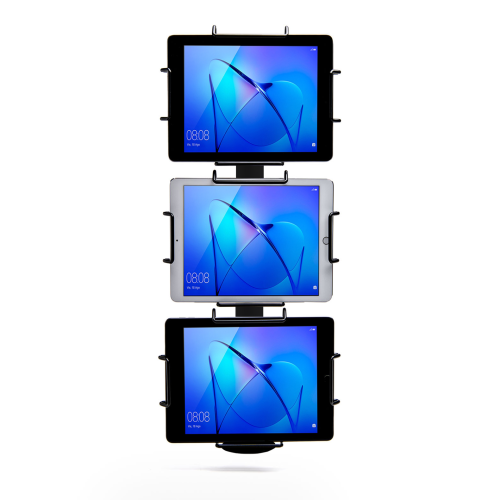
    Black Tri-Mount, which holds three tablets vertically. Tablets and tablet enclosures not included. Pole mount.
    Star Micronics’ Tri-Mount Tablet Display Stand

    What is a KDS?

    A KDS uses one or more screens in the kitchen to give the cooks a clear view of orders being processed. Typically, a screen at each station helps the cooks keep track of orders and even tells them when to fire different parts of an order for maximum efficiency.

    Traditionally, cooks keep track of orders with printed tickets that are spiked when the order is complete. A KDS can be used instead of, or in addition to, printed tickets. The real-time information provided by the system can improve efficiency and reduce the risk of costly mistakes.

    Benefits of a KDS

    • Streamline kitchen operations – a KDS keeps your kitchen production line organized and streamlined by making sure everyone knows what they need to do and when.
    • Speed up service – more efficient production helps your kitchen produce orders faster, meaning you can serve more customers at peak times.
    • Minimize errors – with a clearer picture of the orders in preparation, cooks are less likely to make mistakes that lead to food having to be remade.
    • Reduce food waste a more efficient kitchen making fewer mistakes helps reduce wasted food from sloppy portioning, over-production, and re-fires.

    3. Printers

    Although the trend is moving toward digital solutions, printers still play a vital role in the modern restaurant in the front and back-of-house. And they are getting just as smart as the rest of the tech in the restaurant.

    Many customers want a physical receipt, whether it’s just a preference or for record-keeping, and many kitchens still use printed receipts whether or not they also use a KDS to organize orders. 

    Let’s take a look at the different types of restaurant printers.

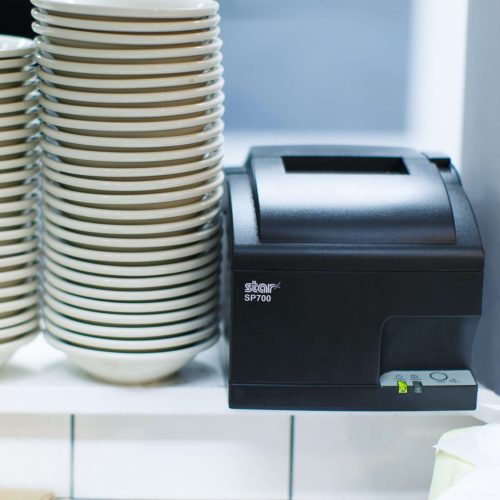
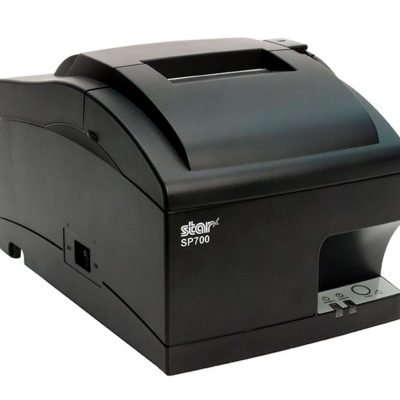
    The SP742 impact kitchen printer is great for online ordering.

    What are Restaurant Printers?

    Restaurant printers are found at the front desk, at wait stations, behind the bar, and in the kitchen – perhaps at each production station. Front-of-house printers print checks and customer receipts. Bar and kitchen printers print order tickets, so bartenders and chefs know what to prepare.

    There are two types of printers commonly used: impact printers and thermal printers. Each has its own features making each one suitable for different environments.

    Impact printers, or dot-matrix printers, physically impact the paper with ink. They can typically print in black and red, have more moving parts, and are noisier than thermal printers. 

    The SP742 Impact Printer is built specifically to work in hot and humid environments, connects via Bluetooth, and can print 13 tickets per minute.

    The SP742 impact kitchen printer is great for online ordering.
    The SP700 series impact printers from Star Micronics are one of the most popular kitchen printers.

    Thermal printers directly mark heat-sensitive paper using a heated element. Thermal printers tend to be more expensive, but they could save you money over time as you don’t have to buy more ink. They are sensitive to temperature, so they would only work in a climate-controlled kitchen but can print much faster than impact printers.

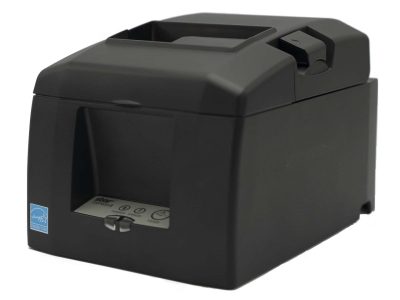
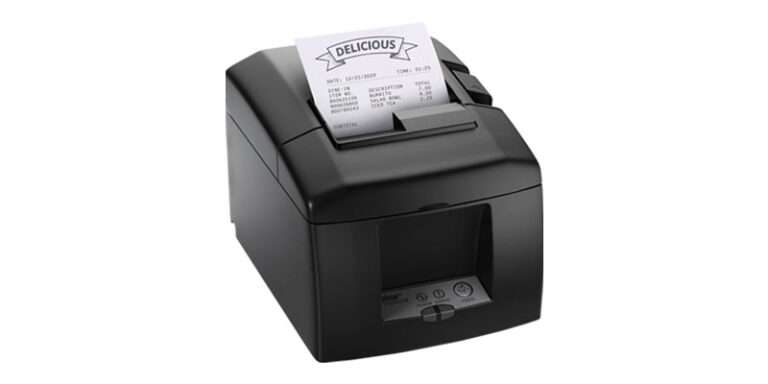
    The TSP654II Thermal Printer can print 60 receipts per minute, comes with easy drop-in paper loading, and connects to a number of peripheral devices.

    The TSP654II thermal receipt printer and the Resto for Quebec, and the TSP654IISK Thermal Sticky Label Printer by Star Micronics
    The TSP654II thermal receipt printer by Star Micronics makes an excellent kitchen printer.

    Benefits of Printers

    • Offer a physical receipt – many customers want to keep a physical credit card receipt or check for their records and for tax purposes.
    • Redundancy in the kitchen – a printer receipt in addition to the KDS allows cooks to double-check orders and some chefs prefer to have a physical order ticket as well as the KDS.

    The Growing Industry of Ghost Kitchens: The Tech You Need to Get Started

    Learn the essentials of starting a ghost kitchen and the technology restaurateurs will need to get started.

    4. Cash Drawers

    Even with a modern POS, you still need a way to process cash payments. Today, most modern cash drawers can be synced with your POS terminals via USB or Bluetooth, offering the ultimate convenience without compromising security. 

    Look for cash drawers with physical and electronic locking functions that are robust and technologically enabled.

    What is a Cash Drawer?

    A cash drawer is a secured box with a sliding drawer that protects your cash. It is linked to your POS, so it opens when a cash payment is made and change is required. 

    Cash drawers typically have multiple locking functions for security, including a manual lock when not in use and automatic locking when in use during service.

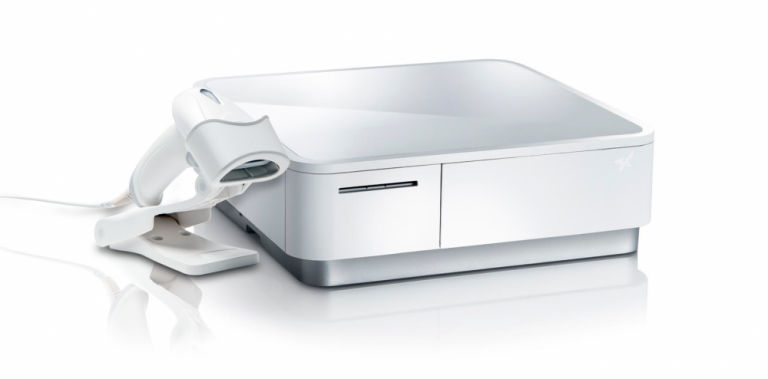
    The mPOP® Multifunction System is a cash drawer and printer in one smart device. Compatible with Windows, Android, and iOS, it offers direct iOS connectivity, which allows your iOS device to be charged while data is transferring. There is also the optional handheld 2D USB barcode scanner included with some models. The mPOP® is truly an ideal device for mobile POS (mPOS) systems.


    White mPOP and 2D barcode scanner by Star Micronics.
    White mPOP® with optional 2D barcode scanner

    5. Contactless Payment Terminals

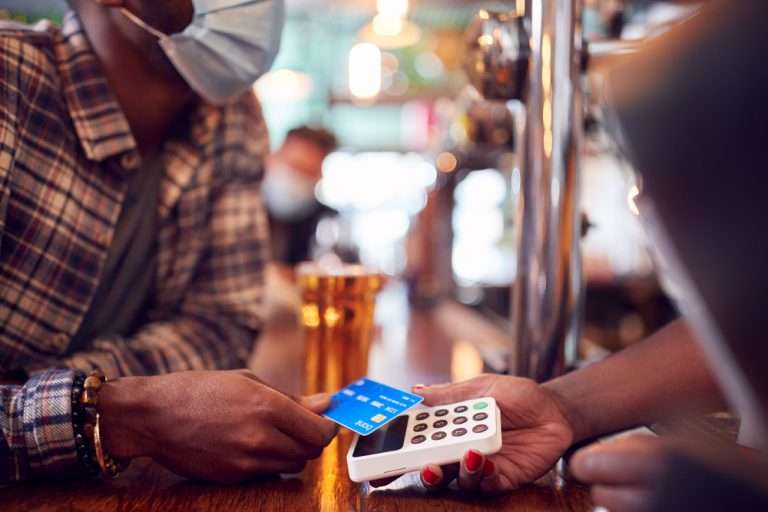
    Contactless payments are becoming the norm as customers increasingly appreciate the convenience of not having to enter a PIN or even remove their card from their wallet. It’s worth upgrading to terminals equipped with near-field communication (NFC), so you can accept payments with a phone or card tap.

    What are Contactless Payment Terminals?

    Contactless payment terminals allow guests to pay with the tap of a card anywhere in the restaurant. They are connected to the WiFi network to communicate with the POS, so they allow customers to pay at the table, at the curb, or at the drive-thru window.

    The terminals use NFC to take contactless payments from smartphones or credit cards and have keypads and card slots if the customer needs to insert the card and enter their PIN.

    contactless-payment-terminal

    Benefits of Contactless Payment Terminals

    • Faster and more convenient – contactless wireless terminals make it quicker and easier to make payments, leading to a better customer experience and more efficient service.
    • More secure – Contactless payments eliminate the need for the customer to hand over the card or reveal their signature. Card information is sent via a secure cryptographic method to ensure information can’t be stolen.

    Boost efficiency, customer satisfaction, and revenue with better kitchen tech.

    From the POS flawlessly processing orders and contactless terminals taking payments anywhere to kitchen display systems and printers keeping your service organized, kitchen technology is vital to the success of your restaurant. 

    As we’ve seen, there are exciting products on the market that help to make transactions easier and more secure, make kitchen operations more efficient, and improve the customer experience, among many other benefits. 

    It’s not just software that counts–getting the proper hardware in place, like smarter cash drawers and the right kind of kitchen printers, can help offer better service and make your kitchen more efficient. 

    Overall, investing in the latest kitchen tech will streamline your operations, improve customer satisfaction and increase restaurant profits.

    Sam-cropped

    Guest Post Written By Sam Sinha

    Sam is a restaurant tech content writer building authority for food industry pioneers like TouchBistro. After cooking and writing his way around London and Hong Kong, he now writes and grows vegetables in the Cambridgeshire countryside.

    Love industry news? Explore our podcast:

  • Why Thermal Printers Have A Place In Today’s Modern Kitchens

    Why Thermal Printers Have A Place In Today’s Modern Kitchens

    Last week, I spoke with John Maieli, Channel Partner Executive at Star Micronics America. Over the course of our conversation, he shared some thoughtful perspectives on modern kitchens and the technology that supports them. Having spent nearly two decades working in professional kitchens, John understands the environment well—the pace, the pressure, and the skepticism that often comes with introducing new equipment.

    As Content Specialist, I serve as the bridge between Star Micronics and the worldwide web (even beyond), translating ideas and innovations into stories that resonate with operators and partners. People usually come to my team when they have a message to share. John, however, came with something more: a vision of thermal printers playing a larger role in professional kitchens across the country.

    As we spoke, he tried to keep his enthusiasm contained, but I still caught the twinkle in his eye. It was clear there was more to explore. I asked if he could spare an hour for a deeper conversation. He agreed. Below is our conversation.

    What has your experience been in a professional kitchen?

    I have over 16 years experience in professional kitchens. I started at age 14 working in a wedding cake bakery owned by a family friend. It turned into a passion, so I attended Johnson & Wales University, where I received a BS in the science of baking & pastry. I went on to work in a chocolate and sugar school, a 5-star, 5-diamond hotel and resort, a Michelin star restaurant, fine dining restaurants, a platinum country club, fast-casual dining, and a bakery.

    The mC-Print3 thermal kitchen printer in a modern heat-controlled environment.

    So you know professional kitchens well. Impact printers are common there, while thermal is often frowned upon. Why do you think thermal printers still have a place in commercial kitchens?

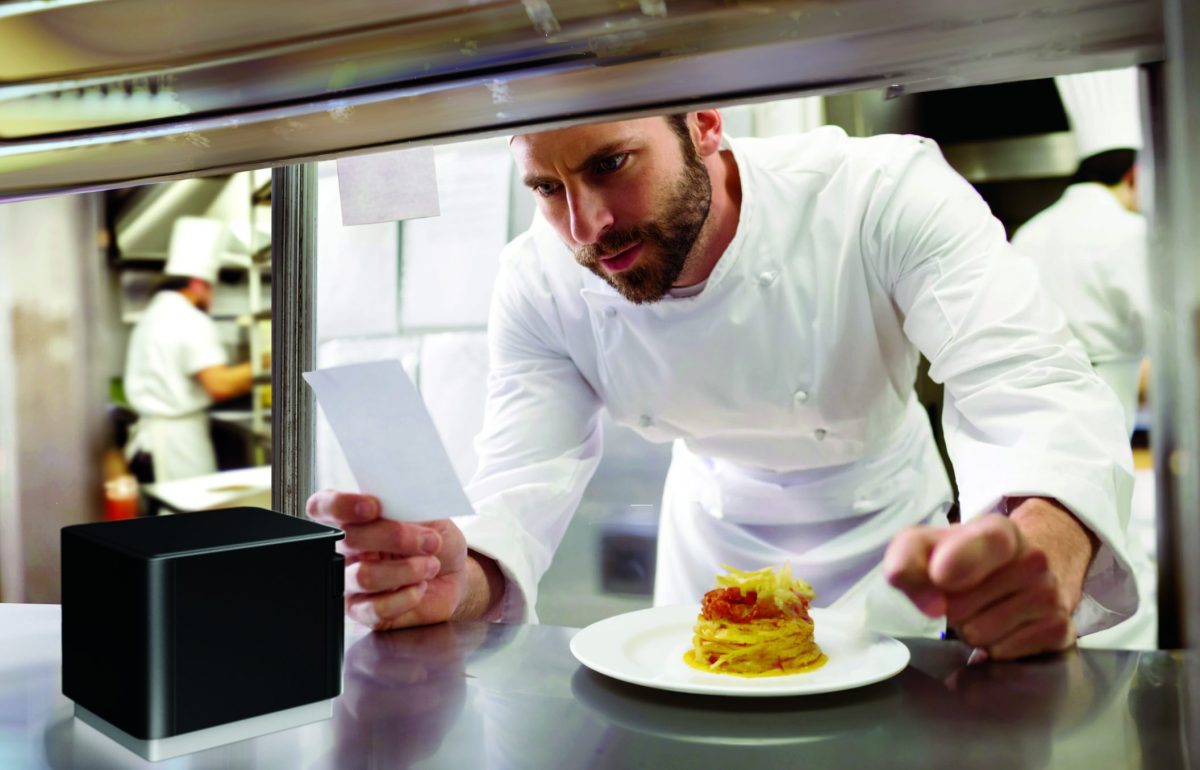
    Kitchens have come a long way over the years. Many are very modern, with electronic gadgets everywhere, including kitchen display systems (KDS) on computer screens. In today’s modern kitchens, where heat and grease are kept under control, there is a place for thermal printing. I see thermal printers like the mC-Print3 as essential peripherals to the modern kitchen KDS.

    I see what you mean. If there are computer screens in a kitchen, then thermal printers can also be there.

    Honestly, even in a kitchen without a display system, this printer would shine. The mC-Print3 is seriously the ultimate printer. It has so much that any modern kitchen would benefit from.

    So, you know all about Star’s printing solutions. What are some of the advantages the mC-Print3 thermal printer would have over impact printers in the kitchen?

    • Speed – thermal printers are faster than dot-matrix printers resulting in faster ticket times. Some on-the-fly needs for printed tickets (last-minute changes, birthdays, allergies, seat changes, etc.) can be made quickly without staff waiting for the tickets to print.
    • No ribbons – no changing of ink ribbons needed. Thermal heads don’t need to be changed as regularly as ink ribbons. Who wants to mess with that in a kitchen?
    • Less noise – thermal printers are quiet, which can be significant in suitable environments. If sound is necessary, a buzzer can be added so that there’s a ding or a buzz every time a ticket prints.
    • Print Flat Technology – tickets that come out of the mC-Print3 are flat, and they remain that way. No curling is excellent for longer tickets as you can see everything easily.
    • Wireless capability – there’s also an mC-Print3 with wireless capability, which is a great option to have. It doesn’t have to be stuck near the router. It can go wherever there’s a nearby outlet and it will still be connected.
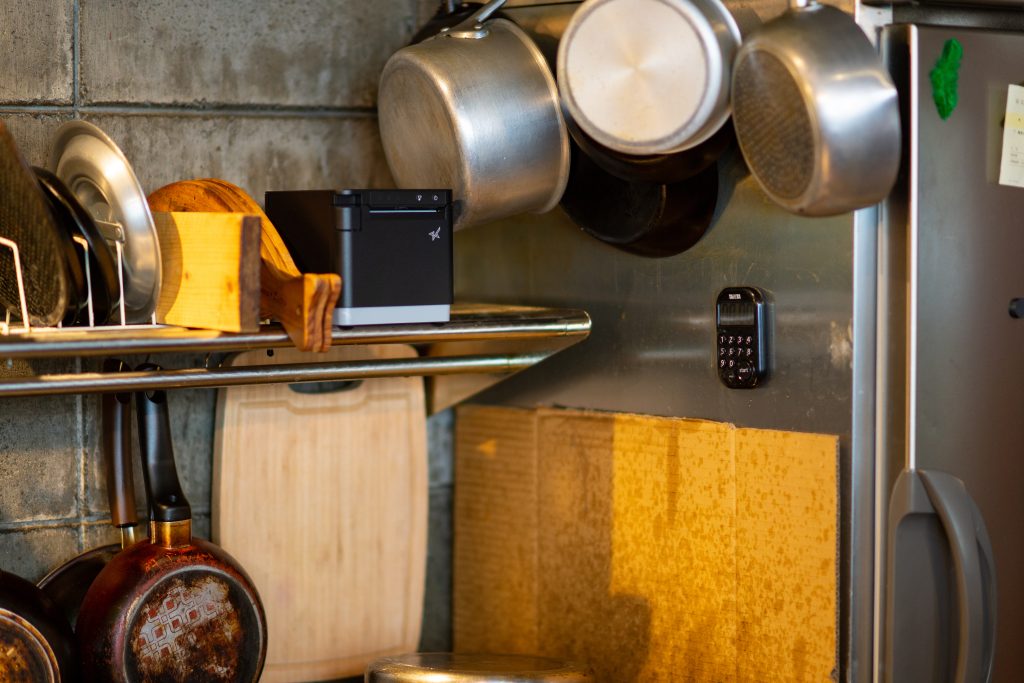
    • Splash-proof/Insect-proof – critters and crud can’t get into the mC-Print3 and ruin the print head. Plus, its compact size makes cleaning a breeze. You can lift the printer with one hand – I know about cleaning restaurant kitchens… you only have one hand available to move things around!


    The mC-Print3 thermal receipt printer by Star Micronics.
    The mC-Print3 thermal receipt printer by Star Micronics

    What are some concerns you’ve heard about thermal printers in the kitchen, and how can they be avoided?

    The biggest concerns I hear are heat, humidity, and not having multiple copies of tickets for different food prep stations. Yet heat & humidity are better controlled now more than ever. Modern kitchens are full of equipment with the same limitations as thermal printers. Would a tablet be installed under the heat lamp or on top of a fryer?

    Software dictates coursing now, with a new ticket printed each time a course fires instead of the old ways. Chefs may be used to seeing black and red ink, but dish modifications are highlighted in other ways with thermal. At the end of the day, an order ticket is meant to be read.

    As for not having carbon copies of tickets, most modern prep stations either are or should be equipped with individual printers if two or more stations need to come together on a single dish. Kitchen display systems simplify each process. The server sends tickets that go to either the hot or cold kitchen (salad station, for example) or the ticket fires to the pastry station for dessert.

    It’s the same way tickets go to the bar instead of the kitchen. No more having to hand a blurred yellow carbon copy of an order to another station.

    Hear John talk more in-depth about modern kitchen hardware:

    Restaurant-Kitchen-Order-Tickets

    That’s all very true. So, with all this talk of the “modern kitchen,” what kind of establishments would you recommend the mC-Print3 thermal printer to?

    I see the mC-Print3 as a benefit to any restaurant utilizing a KDS (kitchen display system). Paper tickets are essential in restaurants – that won’t be going away anytime soon – and any modern food station with an mC-Print3 installed would significantly upgrade functionality, speed, noise level, and overall look and feel.

    Restaurants and resorts wanting to deliver a fresh, elegant dining experience, elevating the customer experience would do well to switch to thermal. I’m particular to the mC-Print3.

    It certainly has an attractive design. Any further comments?

    Yeah, I’d like to mention that Dot Matrix technology (for impact printers) started in the 1970s. It wasn’t at the point-of-sale (POS) then, and it wasn’t until the 80s that Star began manufacturing dot matrix for POS, but the SP700 series, the gold standard in kitchens today, is about 15 years old now.

    This is just something to consider when making your next purchase with all the changes the industry is going through today. The mC-Print3 is future-proof, meaning you can change your KDS, your connectivity, and you won’t have to change your printer. It’s truly the ultimate printing solution.


    The mC-Print3 thermal receipt printer by Star Micronics.
    The mC-Print3 receipt printer is where thermal excels in the kitchen

    Have questions about upgrading your restaurant operations with modern thermal kitchen printers?

  • Espressly Works With Star Micronics to Offer Coffee Shops an Online Ordering Solution

    Espressly Works With Star Micronics to Offer Coffee Shops an Online Ordering Solution

    Complemented with Star’s TSP654IISK and mC-Print3, Espressly offers coffee shops an easy re-ordering solution with Square POS integration and a menu builder to help make online ordering easier.

    Somerset, NJ – April 12, 2022Star Micronics, a leading manufacturer of mobile, point-of-sale (POS), and customer engagement technologies, is proud to announce that Espressly supports Star’s TSP654IISK sticky label printer and mC-Print3 thermal receipt printer. Espressly provides coffee shops a way to speed up checkout, modernize web and mobile technologies, and improve end-to-end customer experience.

    Espressly offers coffee shops a central command portal with total control of their online ordering process, showing insights for mobile app sales and other key metrics. The software helps customers easily find prior orders and has an in-app loyalty program. It allows shops using Square to manage their mobile app from their existing POS system.

    By integrating with Star’s TSP654IISK, Espressly offers coffee shops a liner-free thermal label solution with high reliability and performance at a low cost, making it ideal for creating coffee labels and improving order accuracy by up to 99%.

    Along with Star’s mC-Print3 thermal printer, Espressly offers coffee shops a sleek, compact, connected, and unique thermal printing solution with print-flat technology and CloudPRNT to help connect to their mobile apps.

    “Espressly is excited to partner with Star Micronics to offer coffee shops a seamless and effortless ordering process for our customers. Their high-quality products help to fulfill the critical need for coffee shops to have a printed receipt for all their mobile app orders.”

    Love industry news? Check out our podcast:

    About Star Micronics

    Star Micronics, one of the world’s largest POS providers, has designated a portfolio of printing, secure cash management, and customer engagement solutions for any retail or hospitality establishment in POS and mPOS environments. Embracing the mobility wave, Star’s complementary SDKs allow users to utilize Star printers in tandem with Android™, and iOS iPad® and iPhone® devices to generate receipts for all its printers. Always leading, and always innovating, Star Micronics enables web-based printing solutions including remote cloud printing, wireless cash drawer solutions, proximity-based printing, and secure cash management. For more information, visit https://starmicronics.com/ or follow us on Facebook, Twitter, YouTube, or LinkedIn.

    About Espressly

    Espressly is democratizing mobile ordering and contactless payment technology. We build beautiful apps for cafes that are white-labeled to each brand, highly affordable, and relentlessly focused on user happiness. Our goal is simple: Double our cafe partners’ revenue with their own incredible mobile ordering & loyalty apps. Drive thru and curbside pickup could become the majority of cafe sales for the foreseeable future. The biggest cafe chains built excellent mobile apps for easy repeat ordering and rewards that keep customers coming back. With Espressly, any cafe can have an app on par with the major chains.

    Media Contacts

    Christin Dorner

    Star Micronics America, Inc.

    cdorner@starmicronics.com

    (848) 216-3318

    Joe Capone

    Espressly

    joe@espressly.co

    (888) 312-2208

  • Star Micronics Introduces A New Line of POS Scales, the mG-T Series

    Star Micronics Introduces A New Line of POS Scales, the mG-T Series

    Star Micronics releases the mG-T12, mG-T30, and mG-T60 point-of-sale scales built for accuracy.

    Somerset, NJ – March 28, 2022 – Continuing its “Always Leading – Always Innovating” philosophy, Star Micronics presents its new line of point-of-sale (POS) scales, the mG-T Series. Star, an industry leader in POS and online ordering solutions, has expanded its offerings to include these versatile, easily-to-integrate scales.

    The mG-T Series of scales are ideal for many applications, from grocery to eCommerce, and come ready to use. They connect to POS systems effortlessly with Bluetooth or Serial connectivity and easily integrate on Windows, Android, or iOS operating systems. Built with the point-of-sale space in mind, these scales are NTEP and Measurement Canada Certified with Class III accuracy.

    The mG-T line has three different models, the mG-T12, mG-T30, and mG-T60, with maximum capacities of 12lbs(5.4kg), 30lbs(13.6kg), and 60lbs(27.2kg) respectively. With a trio of capacities available, these scales are perfect for grocery, shipping, retail, frozen yogurt and ice cream shops, or bulk sales of any kind. Even cannabis operations requiring larger weights of flower can use the mG-T scales.

    With the ability to connect to your POS checkout system, these scales are ideal for grocers looking to weigh:

    • Produce
    • Deli products
    • Butcher shops
    • Salad bars
    • Bulk items such as grains, nuts, dried fruit, candy, coffee or tea, etc.
    • Ice cream & frozen yogurt shops
    • Wash-and-fold laundry services
    • Farmer’s markets
    • And more!


    Having a simple, user-friendly interface, backlit LCD Screen, and auto power-off settings, their ease of use helps streamline POS operations, enhancing the customer experience with a hassle-free checkout.

    If you are ready to get scales that benefit your operations and can be integrated with your POS easily, please get in touch with Star Micronics.

    Love industry news? Check out our podcast:

    About Star Micronics

    Star Micronics, a world’s leader in point of sale, has designated a portfolio of printing, secure cash management, scanners, scales, stands and customer engagement solutions for any retail or hospitality establishment in POS and mPOS environments. Embracing the mobility wave, Star’s complementary SDKs allow users to utilize Star in tandem with Android™, iOS iPad®, and iPhone® devices to generate receipts, Chit and label for its printers. In addition, Star Micronics is always leading and innovating, enabling web-based printing solutions, including remote cloud printing, wireless cash drawer solutions, proximity-based printing, and secure cash management. For more information, visit starmicronics.com or follow us on Facebook, Twitter, YouTube, or LinkedIn.

    Media Contact:

    Christin Dorner

    Star Micronics America, Inc.

    cdorner@starmicronics.com

    848-216-3318

  • Star Micronics Introduces the Newest Line of the Wireless mC-Print Family

    Star Micronics Introduces the Newest Line of the Wireless mC-Print Family

    Star Micronics releases the newest mC-Print2 and mC-Print3 wireless printers featuring dual-band WiFi connection capability.

    Somerset, NJ – March 15, 2022 – Continuing its “Always Leading – Always Innovating philosophy,” Star Micronics is pleased to announce the launch of new wireless models in the mC-Print Series.

    Star Micronics, an industry leader in POS and online ordering solutions, has created new models within the mC-Print family to offer the ultimate WLAN solution. With dual-band wireless technology, these printing solutions are perfect for any business needing a wireless printing environment.

    Other devices can also become wireless using the additional ethernet port of the mC-Print31W or 21W. This erases the need to connect the additional device directly to the router, which may be far away or in an inconvenient location.

    The innovative mC-Print21W and mC-Print31W become the hubs that bring wireless connections to other needed peripherals such as payment terminals or other printers.

    These innovative printing solutions support dual-band wireless connections (2.4GHz / 5GHz). Networks that need long-distance coverage can use 2.4GHz. The more powerful 5GHz is best for reducing lag and interference, especially in busy kitchens with microwaves and hardware that compete for bandwidth on a 2.4 GHz network.

    By offering a choice to use one of the two frequencies, 2.4 GHz or 5 GHz, these Star printers provide maximum flexibility when connecting to an existing or new network.

    With the addition of Star Micronics Cloud Services, which includes a digital journal, cloud promotion print management, and device monitoring, the mC-Print21W and mC-Print31W offer retailers and restaurateurs the next generation of POS printing, enabling marketing and receipt tools for the omnichannel world.

    Featuring a wide range of OS support, including Windows, iOS, Android, web- and cloud-based applications, these new high-speed printers boast multiple connectivity options such as USB, Bluetooth, Ethernet, iOS Lightning, CloudPRNT, and WLAN. Setup is also effortless with the easy-to-use app, “Star Quick Setup Utility.”

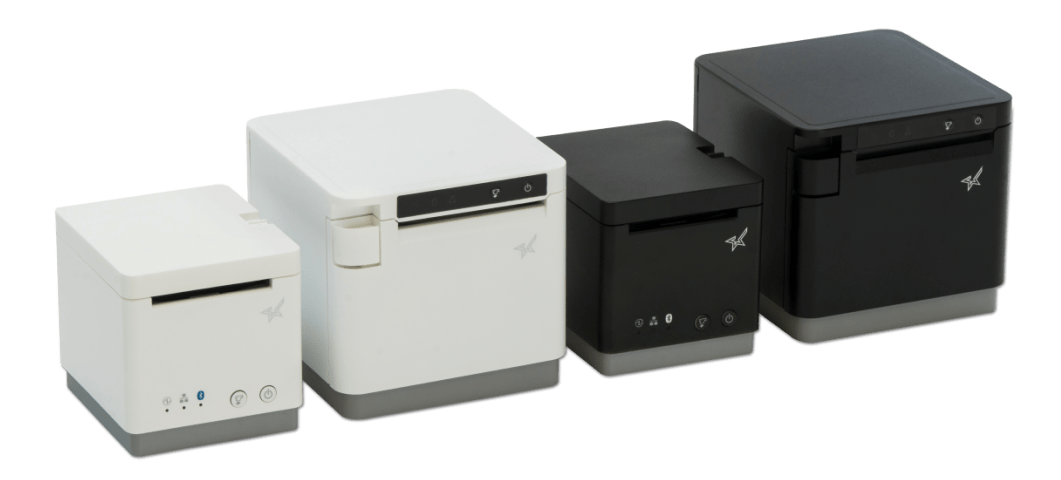
    With their flat-top, space-saving design, these printers are not only stylish but splash- and insect-proof as well. The mC-Print21W and mC-Print31W are genuinely the ultimate printing solutions.

    Future-proof and able to satisfy an array of needs, whether you’re a technology provider or in a retail, hospitality, or any other environment, the mC-Print21W and mC-Print31W take printing to a higher level.

    Love industry news? Check out our podcast:

    About Star Micronics

    Star Micronics, one of the world’s largest POS providers, has designated a portfolio of printing, secure cash management, and customer engagement solutions for any retail or hospitality establishment in POS and mPOS environments. Embracing the mobility wave, Star’s complementary SDKs allow users to utilize Star printers in tandem with Android™, iOS, iPad®, and iPhone® devices to generate receipts for all printers. In addition, Star Micronics is always leading and innovating, enabling web-based printing solutions, including remote cloud printing, wireless cash drawer solutions, proximity-based printing, and secure cash management. For more information, visit www.starmicronics.com or follow us on Facebook, Twitter, YouTube, or LinkedIn.

    Media Contact

    Christin Dorner

    Star Micronics America, Inc.

    cdorner@starmicronics.com

    848-216-3318

  • Tech That Helps The Restaurant Labor Shortage: A Quick Guide

    Tech That Helps The Restaurant Labor Shortage: A Quick Guide

    When dining rooms abruptly shut down during the pandemic, restaurants quickly adapted. By either establishing new processes or shifting to new business models entirely, once-elegant spaces gave way to outdoor dining. Indoors were reconfigured for social distancing or managing delivery and curbside pickup. Plexiglass dividers became standard. But, after all of the effort and investment, restaurants are still operating below 2019 levels. The only constant seems to be change.

    The pandemic is partly to blame for the slow recovery. Customers have been hesitant to return to in-person dining. But it isn’t the only challenge restaurants must overcome — the labor shortage is arguably an even bigger issue. Though the leisure and hospitality sector added 2.6 million jobs in 2021, employment in food services is still 653,000 below where it was before the pandemic really hit. On top of that, many employers are now dealing with high turnover, losing and taking on workers at a greater pace than usual.

    shutterstock_1983755087-e1656373761469

    Restaurant Labor Shortages

    The ongoing labor shortage is impacting the entire range of restaurant segments, forcing operators to make changes to stay in business. From an operations perspective, this may mean offering in-person dining at fewer hours per day or fewer days per week and seating fewer patrons. Businesses may also abbreviate menus to make food prep workloads more manageable with a smaller staff. These measures may help keep the doors open, but they add up to fewer table turns and less revenue.

    Employees are also feeling the pinch. They may be working longer hours and taking on more responsibility. Employees have options, however. They don’t necessarily have to stay in their current jobs. Some will leave, enticed by competitive offers and attractive signing bonuses. Others may opt to explore careers in different industries altogether, ones that offer stable hours and better benefits. In any case, departing employees make the situation even worse for the co-workers and restaurants they leave behind.

    Point-of-Sale-System-Tablet-2

    Furthermore, customers have quickly realized that eating out just isn’t the same as it was. The waits are longer. Favorite foods are no longer on the menu. The staff seems rushed and maybe even less friendly. At a time when restaurants need to rebuild, they can’t afford negative customer experiences. They can’t afford to keep hiring new people just to watch them leave. They can’t afford fewer tables turned and lower revenues. 

    So, how can restaurateurs take their power back?

    Tech That Helps Overcome Labor Shortage Challenges

    In the face of all of these problems, perhaps investing in new restaurant tech can help. Here are five technologies that can ease the burden of operating short-staffed in a constantly changing environment. What’s even better is that this tech can improve the customer experience while future-proofing your restaurant at the same time.

    Self-Service Kiosks

    Freestanding and table-top kiosks allow guests to place their own orders when ready.  As an added advantage, self-service kiosks have been shown to increase customer spending by an average of 20 percent, according to recent studies. Researchers attribute higher average tickets to customers’ ability to scroll through menu choices at their own pace, giving them privacy and control of their ordering experience. These unattended solutions are programmed to optimize the customer experience with smart displays and upselling suggestions, increasing the potential for impulse menu selections. 

    From an operational standpoint, kiosks cover the relatively simple task of entering orders into the restaurant’s system, freeing managers to reassign employees to higher-value activities, such as food prep or curbside pickup management. Additionally, kiosks with advanced capabilities can automatically update menus when items are 86ed, or even tailor selections to returning customers, personalizing their experience.

    Kitchen Display System (KDS)

    Modern KDS technology is designed to help fewer people manage more orders. An effective KDS routes information to specific food prep stations automatically, eliminating service interruptions and paper trails, keeping kitchens and food prep areas organized and efficient. 

    KDS makes real-time data accessible to busy staff, further balancing workloads and boosting productivity. When part of an integrated system, staff can also print to-go box labels as part of the workflow, keeping orders organized, reducing excess waste, and optimizing back-of-house operations.


    TSP654SKII-Bl-Re
    The TSP654IISK thermal receipt, label, and linerless sticky paper printer by Star Micronics is capable of printing orders directly from the cloud, compatible with many popular POS and kitchen display systems.

    Online and Mobile Ordering

    When a restaurant implements online and mobile ordering solutions, employees no longer have to step away from other important tasks to take orders. Online and mobile ordering also minimizes human error from staff reducing waste and losses due to misinterpreted orders. 

    Additionally, when the online ordering solutions are integrated with the point of sale (POS) system and kitchen display system (KDS), work is immediately prioritized and scheduled, ensuring all food prep occurs at the right time. Fewer items are missed, and orders are ready for the customer efficiently and on time.

    Furthermore, online and mobile ordering solutions drive repeat business and customer loyalty by providing customers with an easy, convenient way to order. It also gives restaurants valuable data they can use to personalize future orders on any channel.

    Woman-Using-Smartphone-Featured-Image

    Contactless Pay at the Table

    Pay-at-the-table solutions increase table turns by eliminating the back and forth to stationary POS terminals, including the time it takes to wait in line to use them. Instead, wait staff can accept credit, debit, and touchless payment methods on the spot, allowing guests to check out with a tap or a swipe of a card on contactless-enabled devices. Portable receipt printers complete pay-at-the-table transactions, with staff providing receipts immediately after payment. 

    Another option for creating a quick, touchless payment experience is to print a QR code on the customer’s receipt, allowing guests to pay privately, securely, and conveniently from personal devices. Like contactless pay-at-the-table, QR code payments make settling the check a one-step process, saving time and helping staff provide service to more customers.

    Antimicrobial Covers


    Antimicrobial_Covers_40119_37950620_DH-416-BRS
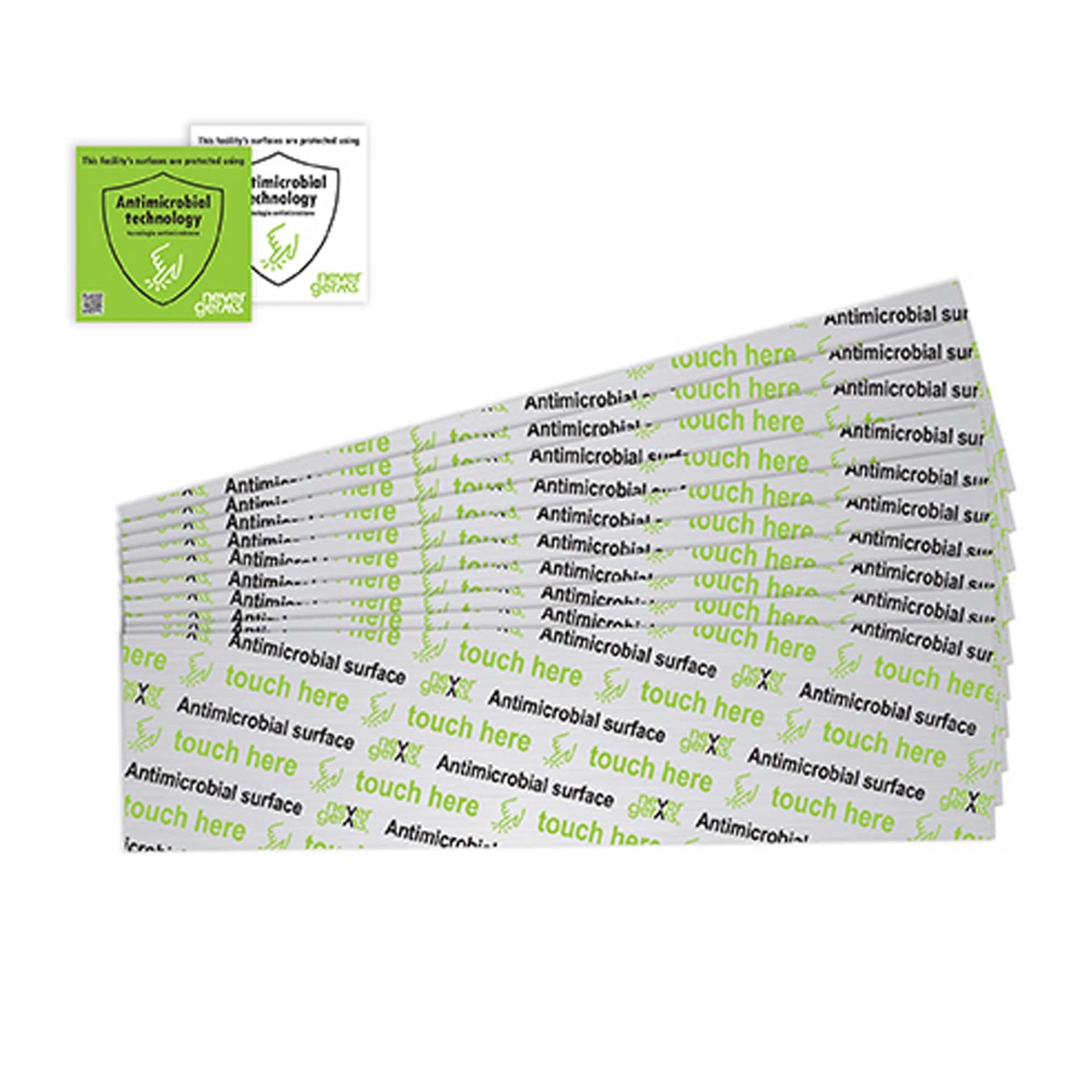
    Antimicrobial covers are sold by Star Micronics to help keep germs off high-traffic surfaces.

    With ongoing health and safety concerns, antimicrobial covers add another layer of confidence, not only for staff but for customers as well. This helps people feel safer in your establishment. Available in multiple shapes and sizes, protective covers are easy to affix and remove, leaving zero residue. Once applied, anything from door handles and panels to elevator buttons are less likely to harbor and spread bacteria and germs. Antimicrobial covers protect workers and customers without needing constant staff attention and supplies.

    In businesses where there’s a shortage of staff, antimicrobial covers can help keep workers healthy and on the job, too.

    Smart Investments Deliver Value Now & In The Future

    As the restaurant industry continues its slow yet steady road to recovery, it’s vital to make smart investments. Restauranteurs want to ensure survival through this labor crisis, but they also need to think long-term. By automating mundane tasks, technology can help restaurants increase operational efficiency, greatly improving customer experience. Plus, they’ll be able to function whether fully staffed or not. 

    When restaurants settle into the new normal, the technology used during the crisis will only continue to bolster customer dining experiences, proving strong ROI. 

    Those who last are the ones who act. Which technology will you be looking into?

    Find Out More About Star’s Future-Proof POS Solutions:

  • How to Start a Ghost Kitchen

    How to Start a Ghost Kitchen

    Launching a business in the restaurant space carries a lot of risks. The nationwide restaurant failure rate is challenging to track, but the National Restaurant Association estimates a 30% failure rate in the restaurant industry. With high failure-to-thrive rates, rent, and other overhead costs, plus difficulty filling dining rooms, it’s easy to see why entering the industry is so daunting. However, many restaurateurs have found a way around these challenges: ghost kitchens.

    A ghost kitchen is a professional food preparation and cooking facility set up to prepare delivery or takeout meals without the dining room. This solution has made entering the market more manageable, allowing for flexible working space, eliminating the costs of setting up and running a larger front-of-house operation. For these reasons, many restaurateurs and other entrepreneurs are looking into how to start a ghost kitchen, including what kind of point of sale (POS) technology they will need to get started. 

    Planning a Ghost Kitchen

    Ghost kitchens lower the barrier of entry to the restaurant industry. However, there is still a significant amount of planning that goes into opening a ghost kitchen. For instance, you will still need to find a kitchen space to buy or rent from. The good news is, without a dining room, you can select from a workspace that may have lower foot traffic, which means cheaper rent. 

    It may still take you a while to design a menu, however, and you will have to decide between in-house delivery services or outsourcing with partnerships from UberEats, DoorDash, or other sources. And, of course, you will still have to invest in the usual kitchen essentials: food, utensils, and technology.

    POS Technology To Invest In

    As a ghost kitchen owner, your operations will be very different from traditional restaurant operations and will require a more comprehensive digital solution. To keep up with these unique demands, you will need specific technology designed for your kitchen.

    First, you will need an ordering and payment solution that will allow customers to order and pay for their meals online or via a mobile app. Next, you’ll need a kitchen display system (KDS) to get those online orders directly in front of your kitchen staff, keeping your line moving fast and efficiently.

    Also, you can keep your kitchen moving by sending orders to a mobile printer using linerless labels and sticking them directly onto the to-go packages. This minimizes confusion, shortens delivery and pick-up time, keeping the orders moving (be sure to use tamper-proof labels to assure food order safety as well). In addition, as a digitally advanced kitchen, you’ll need a POS system that integrates all of these solutions, making it easy and seamless to manage your operations on a day-to-day basis.


    The EZ POS tablet stand by Star Micronics. Shown in black with TSP143IV receipt printer.
    The EZPOS tablet display stand by Star Micronics

    If you use multiple delivery services and want to keep your POS system flexible by using a mobile tablet, it’s also a smart idea to invest in a tablet stand. It may quickly become one of your kitchen’s most essential tools, providing a home base for your point of sale and making it easier for staff to match up orders with corresponding delivery service providers. A proper stand should also help to protect your tablet, including any receipt or order printer you may have alongside it.

    Your go-to For Ghost Kitchen POS Technology

    Star Micronics provides flexible, futureproof POS technology designed to connect front and back-of-house operations with ease, keeping ghost kitchens operating at their peak. Star provides everything from portable printers, regular and sticky thermal receipt paper, durable tablet stands, and much more. Through one of our certified partners, you can get all of the hardware your ghost kitchen needs. 

    If you’re ready to find the best step up for your ghost kitchen and get ahead of your competition, contact Star today. Discover what our industry-leading technology can do for you and your restaurant business goals.

    The Growing Industry of Ghost Kitchens: The Tech You Need To Get Started

    Learn the essentials of starting a ghost kitchen and the technology restaurateurs will need to get started. 

    Love industry news? Check out our podcast:

  • What to Look for in a POS System for a Small Restaurant

    What to Look for in a POS System for a Small Restaurant

    As the owner or manager of a small restaurant, it can be intimidating to think about all of the point of sale (POS) components that you need. With so many options on the market, what’s the best POS system for a restaurant? Read on to explore the must-have POS system features, from online ordering to front-of-house management.

    1. Online Ordering Capabilities

    Online ordering went from a “nice-to-have” option to a “must -have” in just a couple of short years. In fact, online food delivery sales are estimated to grow up to $220 billion by 2023 (and comprise 40% of total restaurant sales). And let’s not forget about online orders for in-store pickup, too. Either way you cut it, online ordering isn’t just for the chains; it’s for small businesses like yours.

    Be sure to look for a POS system that includes online ordering capabilities. Some POS software may include this feature, or you may be able to simply use a printer equipped with cloud printing technology (like Star’s) to print third-party online orders from services like DoorDash, GrubHub, Uber Eats, and more.

    2. Mobile Payment Acceptance

    Just like online orders are booming, so are mobile payments. Simply put, mobile payments are those made on mobile devices like smartphones and smart watches. Instead of paying with cash or a credit/debit cards, consumers use their digital wallet to pay for their goods.

    To be able to accept mobile payments, your POS system must be equipped to handle NFC (or, near field communication) payments, which are made by a mobile device (or contactless card) being two inches or less from the NFC-equipped card reader. Examples of mobile payment providers are Apple Pay, Google Pay, and select credit/debit cards.

    3. Back-of-House Communication

    We’ve all been there: you find a restaurant that serves up delicious food but has a clunky workflow that leaves you hungrily waiting for your meal. Avoid being this restaurant by choosing a POS system that features top-of-the-line communication between the front-of-house and back-of-house. What does this look like? It looks like a POS terminal (or online ordering service) that seamlessly communicates to the restaurant kitchen KDS (kitchen display device) and kitchen ticket printer via technology like CloudPRNT. As orders are placed, they’re immediately sent to the cook in full detail. Say goodbye to long wait times and inaccurate orders with the right communication!

    4. Front-of-House Management

    Efficiently turning tables means higher revenue. Successfully navigating a large party means happy, repeat customers. Clearly, front-of-house management is key, and the right POS system for a small restaurant can help those efforts. Look for a POS system that features click-and-drag layout builders and the ability to see table times and when tables are about to turn.

    5. Menu and Order Management

    Menus change, and customers’ tastes vary. Your POS can help you navigate that. The right POS system can help you arrange your menu in a way that makes the checkout process faster, as well as let you make real-time updates from anywhere and apply them to every one of your locations.

    When it comes to order-taking, restaurant POS systems can help you quickly modify your customer’s order to their exact taste. Have a special discount idea in mind? POS systems can also allow you to create happy hours and more in mere seconds.

    Star Restaurant POS Solutions

    From online ordering printers to kitchen buzzers, Star is proud to offer POS solutions for restaurants, QSRs, food stands, and more.

    6. Marketing Capabilities

    One of the reasons people love small restaurants is for their personal touch. Leverage POS technology to take that personal touch to a new level! POS systems for small restaurants can include marketing capabilities including:

    • Detailed customer profiles so you can send customized offers
    • Loyalty/reward programs
    • White-labeled websites and apps that feature your restaurant’s branding
    • Custom receipt marketing (available on select receipt printers, like Star’s)

    7. Detailed Reporting

    If there’s one thing that POS systems have, it’s data, and you can put that to use by choosing a POS system that offers detailed reporting.

    Reporting can include:

    • Live data and daily statistics
    • Sales by category
    • Sales by item
    • Sales by payment type
    • Sales in different shifts
    • And more

    8. Integrations

    Right about now you may be thinking there’s a lot of different technologies involved in the best POS system for a restaurant. There’s the software, the hardware, and third-party services like food delivery. That leads us into the next (and possibly most important) aspect of a POS system: it’s integrations.

    Save valuable time (and avoid headaches) but choosing a POS system that is integrated with either the software and hardware you already have, or the software and hardware you want to have. For example, if you already have Star printers, choose a POS software that is integrated with Star (hint: there are many). Or, if you know you want to use a certain POS software, be sure that your hardware is integrated with it so that you can set up your system out-of-the-box.

    9. Technical support

    Support is important – and not just when something breaks! Be sure to choose a POS system and vendors that offer pre-sale support (helping you identify the right solution for your needs), installation support and training, and easily accessible post-sales support (like an online help center and live chat).

    Star’s Affordable Small Restaurant POS Bundle

    mCP30 with mC-Sound

    mCP30 with mC-Sound

    If you’re looking for an affordable kitchen printing setup, look no further than the mCP30 paired with an mC-Sound kitchen buzzer.


    mCP30 Highlights:
    Everything you love about the mC-Print3, with an even lower price tag.

    • Ethernet
    • USB
    • CloudPRNT for online ordering

    Learn More >


    mC-Sound Highlights:
    A modern take on the kitchen buzzer.

    • Discreetly fits inside the mCP30
    • High quality sound (89dB)
    • 16 pre-recorded melodies
    • Records custom user speech

    Learn More >

    Explore all of Star’s restaurant POS solutions now.

  • 4 Self-Service Market Predictions in 2021

    4 Self-Service Market Predictions in 2021

    As businesses and consumers become more aware of and more familiar with what is needed to continue doing business in the new normal, a brighter light is emerging at the end of the tunnel in terms of the coronavirus pandemic – vaccines are becoming more available and the processes needed to get them into people’s arms more efficient. From a technology perspective, you may wonder which solutions that picked up steam during the past year will continue to gain momentum in the future.

    One technology that has taken flight during the pandemic – and has immense potential for years to come – is the self-service market. As the economy reopens and shutdowns become less restrictive, early adopters of self-service kiosks are coming back with revamped versions of their previous kiosk’s solutions, while new adopters are considering the latest trends in the self-service market.

    Read on to explore which industries are experiencing self-service market solution changes and key self-service technology predictions.

    Which Industries are Experiencing Self-Service Market Changes?

    Let’s take a closer look at which industries and solutions have been affected and needed some fine-tuning during the pandemic, and which were introduced as brand-new alternatives to existing technology.

    • Healthcare and Service Providers: In the healthcare and service provider sectors, a few self-service trends have emerged. These industries have begun to require a more powerful queue management system, as well as additional features such as temperature screening, AI-powered engines, and expanded access control solutions like printing name badge labels for visitors who were cleared during the screening process.
    • Banking: ATMs have recently gotten a facelift by providing additional human interaction. While ATMs are of course still a self-service solution, intelligent ATMs are pairing their automation power with a human touch by providing teller-customer communication through a speaker. The teller can answer questions, print full transactions, account details, and more.
    • Retail and Hospitality: With the proliferation of online ordering, the buy-online-pickup-in store (BOPIS) model has become more popular than ever for restaurants and retailers. In some cases, it has even helped to keep businesses afloat that would not have delivery options otherwise. One popular update to the BOPIS model is the introduction of virtual lockers to pick up small-sized orders. The virtual lockers offer many options including the ability for consumers to obtain printed receipts at the locker (or virtually) instead of having to go inside the store.

    Self-Service Market Technology Predictions

    When we look into the future of the self-service market, many of the trends we expect to see revolve around creating fully contactless processes and transactions, improving on user experience, expectations, and their perception of feeling safe. These trends include:

    1. QR Barcode Scanning / Cell Phone-Mirroring Screens

    With QR barcode scanning and cell phone-mirroring kiosk screens, customers can turn their own smartphones into a remote kiosk navigation tool and can even complete payments on their own devices.

    2. Touchless Touch Screens

    These screens are quickly becoming part of the new standard for self-service kiosks. By using infrared (IR) and even sonar-based technologies, touchless touch screens allow users to interact without touching them, and in some cases they even allow gesture interactions.

    3. New Biometric Tools

    Biometric tools have been on the market for years but are experiencing updates. For example, Amazon One, available at select Amazon Go stores, uses the latest biometric technologies to allow users to pay with just a wave of their hand. Replacing fingerprint scanners that required direct contact with contactless palm scanners is something we expect to see more of in the self-service market.

    4. Self-Cleaning Technologies

    When touching is unavoidable, what could be better than a self-cleaning kiosk? Ultraviolet C (UVC) technology, which uses ultraviolet light to kill or inactivate germs, allows this to become a reality by ensuring the touchable areas of a kiosk are cleaned and ready for the next customer after each use. As more users become aware of the benefits that UVC technology offers, it may become something they expect in all self-service kiosks which will in turn encourage a stronger adoption of it within the self-service market.

    The possibilities for the self-service kiosk market are truly endless, as the need for self-service has become more relevant and diverse than ever before. We’re excited to watch the market evolve.

    Star Micronics Self-Service Solutions

    Looking to expand your self-service offering? Star Micronics is proud to offer a wide variety of thermal kiosk printers capable of printing receipts, labels, tickets, and more. Ideal for virtually any self-service application, the printers include features like:

    • A variety of paper sizes (2”, 3”, and 4”)
    • Compact or modular footprints
    • Multiple optional accessories like bezels, presenters, large paper roll holders, and more
    • Interfaces like serial, USB, parallel, and Ethernet
    • Operating system support for Windows, Linux, Android, Mac, and iOS
    • StarPRNT emulation, allowing software developers to take advantage of all of Star Micronics’ technology like StarPRNT SDKs and its powerful line of drivers
    • A dedicated integration team ready to help you build the right solution for your needs

    Kiosk Printer Wizard

    Star Micronics offers a full variety of self-service kiosk printers – but deciding which one fits your needs can be easy. This wizard will help you select the right printer for your specific use case, based on desired paper size, interface, footprint, operating system, accessories, and more factors.

    Featured Kiosk Printers

    SK1-211

    Star Micronics SK1-211 Kiosk Printer

    2” Kiosk Printer
    Compact and Lightweight
    Supports Receipt, Ticket, or Label Media

    SK1-311

    Star Micronics SK1-311 Kiosk Printer

    3” Kiosk Printer
    For Banking, ATMs, and More
    Supports Receipt, Ticket, or Label Media

    TUP900

    Star Micronics TUP900 Kiosk Printer

    4” Wide Format Kiosk Printer
    Looping Presenter
    Easy Paper Width Adjustments

    Want to learn more about Star’s self-service kiosk printing solutions?