IndicaOnline, with Star Micronics mG-S322 scale, offers a simple, streamlined solution for cannabis point of sale
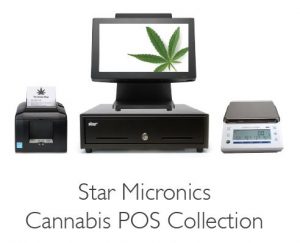
Somerset, NJ – August 9, 2019 – Star Micronics, a leading manufacturer of mobile, point of sale (POS), and customer engagement technologies, is proud to announce that IndicaOnline has added support for the new mG-S322 scale. Already supporting many of Star’s other printing peripherals, IndicaOnline can now offer a full solution for the point of sale at cannabis dispensaries.
IndicaOnline is a marijuana point of sale and delivery app for dispensaries. The platform allows dispensaries to streamline their business with inventory, sales, staff management, and e-commerce, along with digital signage displays for pricing and the patient queue. The IndicaOnline platform also offers an electronic medical record (EMR) system for medical marijuana physicians.
Star Micronics mG-S322 scale is a part of the new mCollection, including a unified and connected line of hardware for retail point of sale. The scale is NTEP-certified, making it legal for trade in the U.S., with Class II Accuracy for the cannabis industry. With multi-interface support (BLE, USB, and Serial) and the ability to operate with iOS, Android, and Windows, the mG-S322 provides the ideal solution for cannabis dispensaries.
“Integrating with the Star Micronics mG-S322 scale is going to provide a hassle-free way for our dispensary clients to precisely weigh and price their inventory,” says Steven Lynn, Director of Marketing for IndicaOnline.
This is the second part of “The Benefits of Self-Service Kiosks,” a three-part blog series about the many ways self-service kiosk technology is improving businesses, communities, the customer experience, and more.
Sometimes when you think about technology, it’s easy to assume the latest advancements are reserved for a select, more fortunate portion of the community. After all, who can afford each new updated smartphone? And if we’re being honest, the learning curve of keeping up with new technology can be daunting.
However, technology is improving quality of life for all people, not just the wealthy and early adopters. Take, for example, kiosks. Thanks to self-service touchscreen technology, kiosks are able to provide a truly unifying experience, and don’t discriminate user experience based on any criteria.
The benefits of kiosks extend well beyond increased profits and helping businesses compete in the modern world. From making communication easier to enabling payments of all types, let’s explore how kiosks are benefiting all corners of the community.
Free Self-Service Kiosk Resources
The future of many industries lies with self-service solutions. That’s why Star Micronics is offering free online ordering resources for resellers and software developers who are helping customers future-proof their businesses with self-service solutions.
A huge group of people that benefits from kiosks is those who do not speak the native language of the area they are in.
Thanks to their dynamic experience, kiosks allow users to customize their experience depending on their language (i.e. language selection). In the United States, ESL (English as a Second Language) customers can order confidently without the burden of having to try to communicate with front-of-house workers, and kiosks make it easier for global travelers to order meals, tickets, and more, as well.
The benefits of offering kiosk technology to ESL customers is huge: not only is there an instant transactional benefit, but in the long run kiosks can create a new level of equality and provide emotional benefits to all involved parties.
Kiosks Serve the Underserved and Less Fortunate
On top of their many other benefits, kiosks also do a great job at serving the underserved and accommodating the less fortunate. Kiosks can easily be placed in marginalized communities, helping to serve the underserved in an inclusive, go-at-your-own-pace way.
It’s important to note that implementing kiosk technology doesn’t mean businesses have to go cashless. In fact, a proper kiosk implementation will allow cash transactions at both the counter and the kiosk. Cash acceptance is important because while some businesses choose to go cashless, according to Wakefield Research, 83% of small business owners in the U.S. say they will never stop accepting cash. Why’s that? Doing so can leave out people who are unbanked or underbanked – and that’s a lot of folks: 6.5% of Americans are unbanked, and nearly 19% are underbanked.
How to Start Better Serving Your Customers (and Community)
Are you ready to reap all of the benefits that kiosks have to offer? Star can help! By partnering with industry-leading kiosk solution providers, we help spread the technology’s many benefits across various industries, from retailers to restaurants, and everything in between.
And kiosks aren’t just for large establishments. Star works with kiosk solution providers, like Flash Order, that are uniquely positioned to help small businesses adopt the latest kiosk technology … because when all businesses can adopt kiosks, all businesses can give back to their community.
Do you build kiosks? Curious about integrating with Star’s kiosk printing solutions? Download our free Guide to Selecting the Right Kiosk Printer.
This is the first part of “The Benefits of Self-Service Kiosks,” a three-part blog series about the many ways self-service kiosk technology is improving businesses, communities, the customer experience, and more.
Operating a small business can be tough. In a world where online and big box retailers permeate the market, small businesses need to work even harder to differentiate themselves, stay profitable, and create a customer experience that has shoppers coming back for more.
Designated holidays like National Small Business Week and Small Business Saturday certainly help small businesses stand out, but how can business owners make a lasting impression on a daily basis? The answer lies at the customer’s fingertips: self-service kiosks!
Self-service kiosks are attractive, highly visible, and user-friendly. But on top of that, they can help small businesses boost profits, optimize efficiency, and more. Let’s take a dive into the many ways self-service kiosks help small businesses not just survive, but thrive.
1. Kiosks Make Money
Let’s be real: when it comes to staying afloat in the world of small business, money is key. Implementing a self-service kiosk (or two, or three) can cause small businesses to reap big rewards: when ordering through kiosks, consumers spend 30% more! One big reason for this is that it’s easier for customers to customize their orders using a kiosk, and it’s also an intuitive, private way for them to browse other products. Long story short, kiosks are proven to drive increased revenue per transaction which can make or break a small business.
2. Kiosks Boost Efficiency
Shoppers expect businesses to run like a well-oiled machine, and if they don’t, they are likely to choose a different place to spend their money next time. Kiosks can help you avoid this pitfall by boosting the efficiency of every order. By providing a flexible way to maximize throughput, kiosks shift the bottleneck from the front-of the house (i.e. how fast to get orders into the system) to the back of the house (i.e. how much food can be made). Hello, line-busting!
3. Kiosks Enhance Loyalty Program Onboarding
Simply put, customers love loyalty programs – and small businesses should, too. In fact, it’s estimated that loyalty program members spend 12-18% more per year than non-loyalty members. Small businesses can have their self-service kiosk ask customers at the time of purchase to sign up for a loyalty program, and may feel more comfortable providing personal information on a kiosk versus out loud to another person. Additionally, if the loyalty program lives in a mobile wallet application, customers may be able to seamlessly provide sign-up information by transferring it from their smart device to the kiosk.
And why not promote that loyalty program on the receipt that prints out of the kiosk? With Star Micronics PromoPRNT, small businesses can create custom promotions from templates that are delivered in the most valuable place: on the receipt, in the customer’s hand.
4. Kiosks Optimize Operations
On top of making money, kiosks also help you save it by positively impacting operational costs. It’s expensive to run a small business: in the restaurant world alone, labor costs can reach 30-40%. Self-service kiosks can help soften this expense by providing an easy way for business owners to efficiently manage headcount costs and reduce unnecessary operational costs.
In a Nutshell: Kiosks Increase Return on Investment
At the end of the day, return on investment (ROI) is the most important factor when it comes to self-service kiosks. Due to upside from increased revenue, throughput, and reduced costs, ROI on self-service kiosk implementation is unmatched. And the proof is in the numbers: when shopping for a kiosk solution, many providers are able to deliver examples from businesses similar to yours that show the dramatic ROI impact kiosks can make.
Free Self-Service Kiosk Resources
The future of many industries lies with self-service solutions. That’s why Star Micronics is offering free online ordering resources for resellers and software developers who are helping customers future-proof their businesses with self-service solutions.
Any way you slice it, self-service kiosks are huge: food and beverage revenue generated from kiosks alone is expected to top $310 million by 2021. But, of course, to be adopted by a small business, price and ease-of-implementation is critical.
Fortunately, inexpensive, easy-to-use kiosk solutions exist on the market. Take, for example, Star Micronics’ partner, Flash Order. Flash Order provides all of the benefits associated with kiosks, while being very affordable and easy for small businesses to implement. With a reasonably priced, easy-to-use kiosk implementation, it’s never been easier for small businesses to positively impact their ROI – and prosper.
Are you a kiosk manufacturer looking to find the right kiosk printer to fit your solution? Download Star’s free eBook, ” 8 Features Kiosk Manufacturers Should Look for When Choosing Kiosk Printing Mechanisms.”
People love dining out… and people love summer! But most of all, people love dining out in summer: almost half of all U.S. diners report they eat out the most during the sunny, warm season. Are you curious about this summer’s (and year’s) hottest restaurant trends? We have the know-how!
With more than 1 million restaurant locations in the country, and annual sales of $799 billion, the restaurant industry is booming – and constantly changing. We read the “What’s Hot” forecast from the National Restaurant Association, which surveys American Culinary Federation (ACF) chefs, and will save you some time by sharing some of the top trends – check them out below.
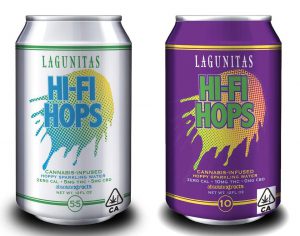
Even mainstream breweries, like Lagunitas, are incorporating cannabis into their beverages.
1. Cannabis-Infused Food & Beverages
A whopping 76% and 77% of chefs ranked cannabis-infused food and drinks as the first and second most popular trends this year, respectively. Why? They say the infused goods have the potential to create unique cuisine opportunities and new markets for experiential dining experiences.
This number-one trend comes as the cannabis industry overall is growing rapidly – it’s predicted that the global legal cannabis market will be worth $63.5 billion by 2024. (If you’re looking to cash in on the cannabis industry, be sure to download our free guide).
2. Zero-Waste Meals
Waste not, want not: 70% of surveyed chefs reported zero-waste meals as the third biggest trend this year. In general, eco-friendly products are thriving, and this carries over into the culinary world, as well.
So, what exactly is zero-waste? It’s food that’s focused on using food scraps, damaged produce, and leftovers to create delicious dishes. These foods, like coffee grind-flavored ice cream and cabbage butt stir fries, take what chefs used to throw away and make them into crave-worthy, guilt-free crowd-pleasers. Plant-based menu items are also a current hot trend (veggie “meat” products, we’re looking at you).
International menu items are having a moment right now, like “gazoz,” or Israeli soda. Source: www.fromthegrapevine.com
3. Globally Inspired Dishes for the Whole Family
It probably comes as no surprise that global foods are popular right now – but what might surprise you is which cultures’ cuisines are having a moment, and who the meals are for.
According to the report, the most popular cuisines right now are from North, West, and East Africa, as well as foods such as Israeli soda (gazoz), Thai-rolled ice cream, and shakshuka. And if you think American kids only like chicken nuggets and macaroni and cheese, think again: the number-one trend for kids’ meals this year is global flavors!
4. Hyper-Local Items
Next up on the list of hot restaurant trends is hyper-locally sourced items, or items that are essentially cultivated by the restaurant itself. You may notice this is similar to #2 in that it seems today’s consumers care more about where their foods come from, and how they are sourced. Hyper-local items that are popular now include locally-sourced produce, meat, seafood, and spirits/wine/beer. In particular, on-site barrel-aged drinks are the second most popular trend in the Alcoholic Beverages category.
Which Trends are Fading?
According to surveyed chefs, overnight oats, anise-flavored cocktails, novel cuts of meat, and desserts that feature pretzels are all not-so-hip anymore.
Download the full report now to learn about top restaurant trends by category (produce, dishes, condiments, kids’ meals, snacks/sweets, and more).
Food robots might sound futuristic, but believe it or not, they’re already showing up in restaurants across the world. Offering both front- and back-of-house services, food robots work in a variety of roles, from cooking and cleaning up to bartending and bussing tables. Let’s take a look at some of the most popular food robots on the market today, and how restaurants can get their very own robot.
Cooking
Flippy: Meet Flippy, a robot that works at Caliburger in Pasadena, California. Flippy is capable of (impressively) frying 80 baskets of food per hour and serving 300 burgers a day. And Flippy can do more than just cook – it can even monitor food and clean up. Flippy helps the burger joint minimize headcount costs, as many short-order cooks were leaving the kitchen due to high temperatures (it’s worth noting that not one Caliburger employee has lost their job due to Flippy; in fact, Flippy requires humans to operate).
Vincenzo: Vincenzo is a pizza-making robot at Zume Pizza in Mountain View, California. Capable of creating 370 pizzas an hour, Vincenzo can press dough, dispense and spread sauce, and lift pizzas in and out of the oven, reducing delivery times to 5-20 minutes. Interestingly, there is no storefront for Zume Pizza; all pizzas are delivered via mobile kitchen food trucks.
Café X Barista Bot: Café X, a San Francisco coffeeshop, utilizes a one-armed assembly line-style robot that can create two drinks in under a minute. The café’s robot helps ensure complicated orders come out correctly, and apparently the drinks even taste good, too; according to Wired, “This robot barista makes a dang good latte.”
Bartending
Cyberdog Bartender Bot: When you step inside Prague’s Cyberdog, a two-level futuristic wine bar, you’ll soon realize it’s home to a robotic bartender that serves up drinks ordered via a smartphone app. The red robotic arm can pour up to four drinks simultaneously before they are placed on a tray and delivered via a mechanical system housed in the ceiling. Humorously, the robot can put on a show, too; if business is slow and the robot doesn’t have any orders to make, it gets “bored” and performs dances.
Serving
Penny: Created by Bear Robotics, Penny is a robot created to help complete tedious restaurant tasks. Penny serves food to diners tables in a fun and futuristic way, and can even bus the tables. Bear Robotics CEO Jon Ha said that waitstaff appreciate not having to lift heavy trays, and have experience higher tips because they now have more time and energy to dedicate to customer service.
Delivery Robots: In addition to serving customers in restaurants, fleets of delivery robots are hitting the streets to also deliver food (and other items) to consumers’ homes and offices. In 2018, the delivery robot market was worth $11.9 billion, and it’s predicted to be worth a whopping $34 billion by 2024. It makes sense, when you realize that more than 60% of a merchant’s customers live within three miles of one of their stores!
How Do Restaurants Get Their Hands on Food Robots?
Not surprisingly, robots can come with a hefty price tag. However, renting one (versus buying one) makes them surprisingly affordable. According to one robotics company, a robot can be leased, and that lease is reported to offer immediate return. The estimated price range for a lease is $15K-$50K (USD) per year, depending on the complexity of the duties wished to be performed. It still might feel futuristic, but quick-service restaurants where customers order and pay on kiosks, and eat food that is cooked and delivered by robots, is entirely possible.
It’s hard to believe that 2019 is almost halfway complete. Time is flying, and if one thing is true, it’s this: the cannabis industry is budding.
It seems like there’s a major cannabis legalization update with each week that passes. With that legalization (and cultural acceptance) comes dollar signs: it’s predicted that the global legal cannabis market will be worth $63.5 billion by 2024. Whether or not you’ve dipped your toes into the cannabis market, it’s important to stay informed, which is why we’ve compiled a mid-year cannabis legalization check-in. Discover what’s new in cannabis legalization in the U.S. and beyond below.
Cannabis Legalization: Where the U.S. Stands
At the time this blog post was written, the medical use of cannabis is legal in 33 states, four out of five permanently inhabited U.S. territories, and the District of Columbia. Meanwhile, the recreational usage of cannabis is legal in 10 states (Alaska, California, Colorado, Maine, Massachusetts, Michigan, Nevada, Oregon, Vermont, and Washington). And interestingly, a 2018 Gallup poll found that two-thirds of Americans feel marijuana should be made legal.
Bill(s): SB 98; would legalize less than two ounces of cannabis, but does not include a regulated system
Connecticut
Bill(s): HB 7371, SB 1085, HB 5595, HB 6863, SB 496, SB 690 SB 744; on March 25, HB 7371 passed out of the General Law Committee
Florida
Bill(s): S. 1298; proposes a constitutional amendment that would go to voters for adults to grow, possess, and use cannabis
Hawaii
Bill(s): HB 1515, HB 1581, HB 708, SB 606, SB 686, SB 702; these bills did not advance out of committee before a deadline
Illinois
Bill(s): SB 7, HB 902, HB 2477
Indiana
Bill(s): SB 213; did not advance out of committee before a deadline
Iowa
Bill(s): SF 469; did not advance before a legislative deadline
Kentucky
Bill(s): SB 80; the legislature adjourned without voting on the bill
Louisiana
Bill(s): HB 509, HB 564, HB 462; HB 462 would create a constitutional amendment to allow cities to call elections to legalize and regulate adult use of cannabis
Maryland
Bill(s): SB 771 and SB 656; HB 632 proposes a constitutional amendment that would go to voters in 2020
Minnesota
Bill(s): SF 619 and HF 420; HF 265 and HF 465 propose a constitutional amendment that would go to voters in 2020; the Senate bills were voted down in committee in a 6-3 vote
Mississippi
Bill(s): SB 2349 died in committee
Missouri
Bill(s): HB 157, HB 551
Montana
Bill(s): HB 770
NewHampshire
Bill(s): HB 481, which the House voted 200-163 to pass on April 4, 2019, sending the bill to the Senate
New Jersey
Bill(s): S 830, A 1348, A 3819; the Senate Budget and Appropriations Committee and the Assembly Appropriations Committee voted on November 26, 2018 to advance S2703 and A4497; both bills carried over to 2019; the Senate Judiciary Committee reported a revised bill out on March 18, 2019
New Mexico
Bill(s): HR 356, SB 577; the House approved HR 356 in a 36-34 vote, then the bill died in the Senate Finance committee; the legislature has adjourned
New York
Bill(s): A. 1617, S. 1527, and S. 1509 and A. 2009, which are budget bills that include taxing and regulating cannabis for adult use
North Carolina
Bill(s): SB 58
Pennsylvania
Bill(s): HB 50
Rhode Island
Bill(s): H 5828 and H 5151; H 5151 is a budget bill that includes taxing and regulating cannabis for adult use
Texas
Bill(s): SB 460, SJR, 8, proposes a constitutional amendment that would go to voters in 2020
Virginia
Bill(s): HB 2371, HB 2373, both of which died in committee
WestVirginia
Bill(s): SB 143, HB 2331, HB 2376, HB 3108; these bills did not advance before the legislature adjourned
Adult-use legalization bills are predicted in Delaware and Wisconsin, as well.
Here’s something you probably already know: the online ordering industry is booming. Here are some things you may not have known, though: 86% of consumers use off-premise services at least monthly, and food delivery in particular is expected to grow 12% year-over-year in the next five years. And last but not least, digital ordering and delivery has grown 300% faster than dine-in traffic!
If you’re looking to learn more about the online ordering industry as a whole, you’re at the right place. The below online ordering infographic explores the history of online ordering, industry key players and revenues, customer demographics, and more – including what point of sale features restaurants looking to jump into the growing industry should look for. Enjoy!
Free Online Ordering Resources
Social distancing has deeply affected our customers in the restaurant industry. That’s why Star Micronics is offering free online ordering resources for VARs and ISVs helping restaurants navigate the implementation of online ordering.
One of the biggest segments of online ordering is food delivery, which is expected to grow 12% each year, for the next five years (and beyond, we’re sure). In such a booming industry (online food delivery alone is expected to be a $137 billion market by 2023), it comes as no surprise that new ways to order on the web are popping up left and right. Let’s explore five futuristic ways to order online – that are already happening.
Free Online Ordering Resources
Social distancing has deeply affected our customers in the restaurant industry. That’s why Star Micronics is offering free online ordering resources for VARs and ISVs helping restaurants navigate the implementation of online ordering.
Did you know that on top of catching up on your daily news and memes, you can also order a pizza on Twitter? Domino’s Pizza allows customers to make a “pizza profile” on its online delivery service, create an “Easy Order” (which is like a pizza speed dial), link the pizza profile to their Twitter account, and order simply by tweeting a pizza emoji to Dominos’ Twitter account. Dominos also allows customers to order via Google Home, Alexa, Slack, Facebook Messenger, and more. Ordering via social networks is an interesting thing, and there is certainly already a market for social media-driven online ordering.
2. Order Through Virtual Assistant
You can ask Alexa for the forecast, to play your favorite song … or to order your lunch. Companies such as Just Eat, which has 24 million customers across the globe, are using virtual assistant technology to further modernize and personalize the food ordering process.
Per Storm Fagan, head of product at Just Eat, “It’s as simple as having a conversation with your partner and you’re talking about what takeaway to order of an evening and, as natural as that conversation is, a voice assistant like Amazon Alexa will join in with your conversation. It will know how many people are in your home and what sort of food you like, and they can start recommending food options to you. Rather than us having to go to a website, it’s almost as if Just Eat will exist in your home with you.”
3. Order via Smartwatch
Smartwatches are no longer just for early adopters: in 2018 alone, 141 million of them were sold. With such a big adoption comes another wave of innovation and new features. One example of this is OrderUp/GrubHub, which allows a customer to place an order, track delivery status, and check estimated time of arrival, all through their watch. Expect to hear more about smartwatch functionality in the near future – the market is expected to grow to $73 billion by 2022.
4. Order from Car
Cars aren’t just for driving you to places where you can buy things – now you can buy things directly through your car! Take General Motors, for example. The automaker has launched GM Marketplace in millions of its cars, providing car owners the option to order food and beverages from Starbucks, Dunkin’ Donuts, Wingstop and more – all through the press of a button. Because the vehicles that feature GM Marketplace also have Wi-Fi connectivity, when drivers place an order through their car, it automatically will locate the nearest store and direct the driver how to get there. Although the service is predominantly foodservice-based, GM says there’s a huge potential for retailers to cash in on orders placed through cars.
5. Order with Eyes
Perhaps the most far fetched-sounding method of them all, believe it or not, you can order with your eyeballs. In conjunction with Tobii Technology, Pizza Hut developed Subconscious Menu, which tracks customer eye movement, and suggests pizza ingredients based on what a customer’s eyes focused on. Creepy? A little bit. Efficient? You betcha: the menu can suggest just the right pie for you, out of nearly 5,000 combinations, in 2.5 seconds.
Is Your Restaurant Ready for the Online Ordering Trend?
If there’s one generation that makes headlines, it’s millennials. According to the 2015 U.S. Census, there are 75.4 million millennials living in the country, officially making them the largest generation in the States. If you operate a restaurant, it’s worth paying attention to what millennials do and want – especially when you consider that they spend more dining out than they save for retirement. Here are the top four things millennials are seeking when it comes to dining out – and how these changes are affecting the food industry.
That’s just one example of the importance convenience has to millennials. Other popular (and booming) examples are grocery delivery services, food trucks, heat-and-eat options available at grocery stores, and online ordering (millennials are the most likely to get home delivery from restaurants). In fact, according to the 2017 Food and Health Survey by the International Food Information Council, 55% of millennials say convenience is a top driver when buying food.
They Want Transparency (And Responsibility)
Don’t be mistaken: just because millennials value convenience doesn’t mean they don’t also take healthiness and sustainability seriously. The trend is just the opposite, actually.
Avocado toast, a trendy meal popular among millennials. Source: pexels.com
They Want Trendiness
Gone are the days of steak and potatoes – instead, unique, customizable items are making a splash with millennials. “Build-your-own” quick service restaurants (like Chipotle) are growing steadily, and for a good reason: 72% of consumers expect customization! Some examples of recent unique trends are food bowls, food mashups/hybrids (hello, cronuts), and avocado toast.
So, are unique meals actually popular with millennials, or do they just make headlines? The former is true: 40% of millennials report they like to order different things every time they eat in the same restaurant, and they don’t shy away from vegan and cultural cuisines. They’re also described as open-minded and curious. Besides adopting a creative menu, it’s a good idea to also create a unique, modern vibe in your restaurant – from your light fixtures to your point of sale.
To help make your restaurant “Instagram-worthy,” consider adopting a modern and aesthetically pleasing menu design, ambiance, and décor – and don’t forget to create social media accounts for your restaurant if you haven’t already!
Download sales receipt images and obtain sales insights, with a brand new sale receipt viewer service from Sophatar for retailers using Star printers!
Are you a retailer looking for an easy web-based sales receipt re-print solution?
Or find out at which time of day, or day of the week you consistently generate more sales so you can plan employee shifts effectively?
Or find out when your first and last sales of the day happen?
And be able to do this from anywhere, not just while at your store, without extra software to install or change your POS?
Then we have THE solution for you!
Sophatar is improving the sales IQ of retail locations with a Sales Receipt Viewer and Analytics dashboard that is targeted to customers of Star Micronics.
No software to install. No need to change your point-of-sale software.
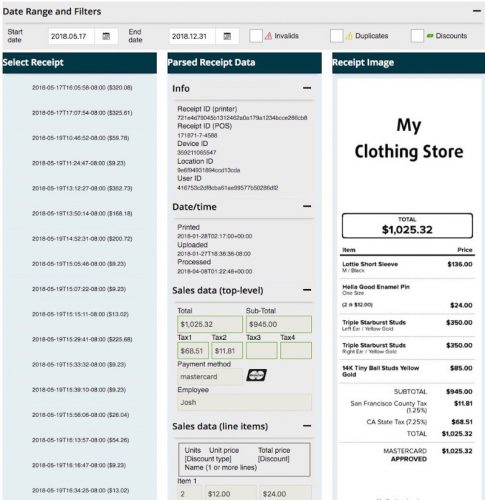
It is a web-based service with downloadable images of your sales receipts showing in a browser and downloadable for re-print or email.
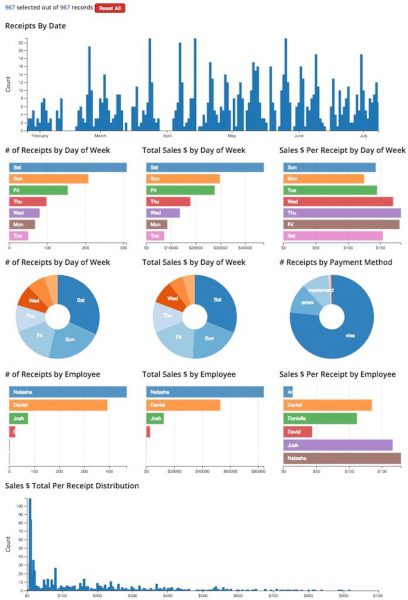
The service also includes extracting the data from your sales receipt images and turning that into actionable information via an interactive graphical sales analytics tool so you can explore sales trends.
It only costs $20 USD per month after an initial free 3-month period. No credit card is required during the trial period. This extended-time trial period is only offered for a limited time, during the introduction of this brand new service.
What Do I Need for This to Work?
Most Star Micronics printer installations have the unique capability that they can upload receipt images from your printer to the Star Micronics Cloud Dashboard each time a receipt prints. Check with your Star sales rep to find out if your install can. Once your image is uploaded and you sign up for this service, your receipt images will automatically be parsed in the cloud, and both the receipt images and parsed data is made available to you via a web dashboard and an interactive sales exploration graphics tool.
Multi-Dimensional Sales Analytics in the Cloud
Explore your sales receipts to uncover trends and actionable insights in a variety of ways. Simply click on the interactive graph in the browser and select one or more dimensions to turn your sales data into insights. Graphs update automatically to filter and analyze your data:
by calendar date range
by day of week
by time of day
by payment method
by employee
by sales receipt total $
etc.
Furthermore, you can filter to only see those receipts with discounts applied, or detect duplicate receipts. Use this to uncover ‘sweat-hearting’ by employees (discounts given to friends) or print receipt fraud (multiple prints of same receipt given to different customers from a single transaction on the POS, mostly seen in environments with a limited number of SKUs, such as QSR).
As retail stores must compete in today’s world with e-commerce and online shopping, physical retailers are increasingly in need of more data and analytics. Sophatar’s partnership with Star Micronics means receipt data at the POS can deliver new insights for retailers to improve their marketing strategy to boost sales at key times.
Besides this receipt viewer and analytics tool, Sophatar also offers other services based on sales receipt data from Star printers, such as its POS-transaction driven digital signage.
How Do I Sign Up?
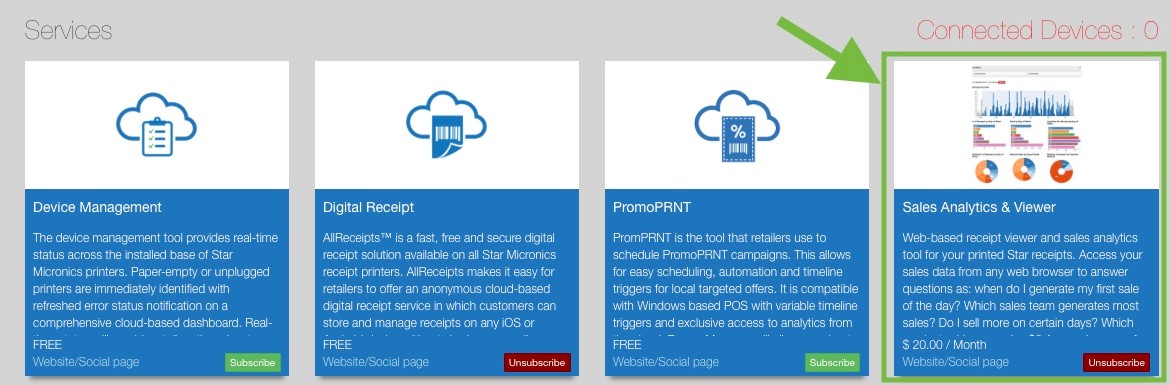
The service is offered by Sophatar but fully integrated with Star Micronics. Star customers can login to their account at https://starmicronicscloud.com/ and subscribe to the ‘sales receipt analytics & viewer service’ in the Star Marketplace. We will then reach out to you to complete setup and activate your subscription.
Now any retailer can keep an eye on their business, even from a remote location.
Check out our 2-minute video demo and sign up today to take advantage of this no-risk limited-time no credit-card required introductory offer of $0 for the first 3 months!