Tag: Printing Technology

  • Reliable Connections and Cellular Printing in POS Technology

    Reliable Connections and Cellular Printing in POS Technology

    In this highly informative episode of the Rising Stars Podcast, “Reliable Connections and Cellular Printing in POS Technology,” host Kate Orara wants to know more about advancements in POS connectivity. With Star Micronics experts Joshua Ventocilla and Oreoluwa Akeredolu, the discussion centers on the innovative technologies of SteadyLAN and TetherLAN.

    The episode highlights the different ways these technologies provide stable and reliable network connections in various POS environments, ensuring seamless transactions and continuous service. It explores the importance of stable Ethernet and efficient cellular printing in maintaining operational efficiency.

    Insights into Enhanced POS Technology

    Listeners will gain valuable insights into how SteadyLAN and TetherLAN can significantly enhance the functionalities of their POS systems and applications. This episode offers key guidance for independent software vendors (ISVs) and business owners alike on optimizing POS operations through improved connectivity solutions.

    Don’t miss this opportunity to understand how leveraging advanced network technologies can transform your POS setup and contribute to smoother, more reliable business operations.
    Subscribe and listen now!

    Read the blog post, “How to Choose Between SteadyLAN and TetherLAN for Your POS Printer” here >

    Loving the podcast? Subscribe now, and let us know what you think by leaving a review!

    Stay up-to-date on all things Star, don’t forget to follow us on X, LinkedIn, Facebook, Instagram, and YouTube.

    The Rising Stars Podcast

    Immerse yourself in the world of point-of-sale (POS) with the Rising Stars Podcast by Star Micronics, hosted by industry pro, Kate Orara. Twice a month, we explore the fascinating journeys of innovators and businesses navigating the challenges of POS technology’s rapid pace.

    In every episode, Kate Orara, Star Micronics’ Partner Development Manager, discusses emerging retail technology trends and strategies with global industry giants. She’s spent her entire career meeting all the right people, and now listeners everywhere can benefit from this vast network of channel gurus.

    Always leading and always innovating, Star Micronics, a pioneer in POS and customer experience technology for over 60 years, welcomes you to join us in shaping a brighter future in the retail, hospitality, and cannabis industries.
    Want more industry news?

  • Why ISVs Prefer CloudPRNT Over WebPRNT for Superior Connectivity

    Why ISVs Prefer CloudPRNT Over WebPRNT for Superior Connectivity

    As businesses continue to navigate the challenges of a fast-moving marketplace, the efficiency of online order processing has become crucial. Developed by Star Micronics, CloudPRNT and WebPRNT are two pivotal technologies designed to enhance modern printing with improved connectivity and efficiency. CloudPRNT communicates directly to the specified cloud server, while WebPRNT connects through the local network, enabling printing via a web browser.

    Both technologies lead the way in modernizing printing solutions to meet the demands of today’s businesses. However, for Independent Software Vendors (ISVs) seeking superior connectivity and efficiency, CloudPRNT is the standout choice. Let’s explore the reasons behind this.

    Understanding CloudPRNT and WebPRNT

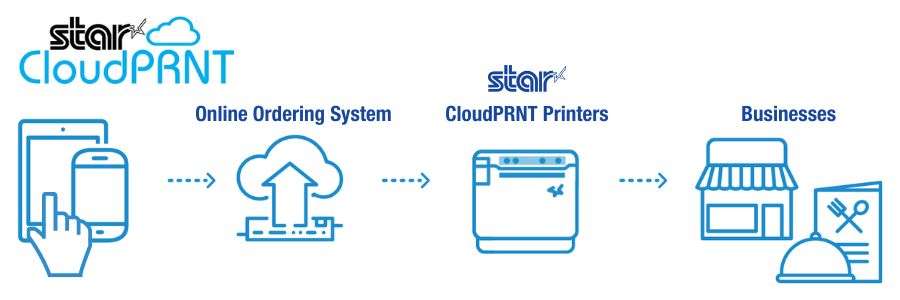
    CloudPRNT and WebPRNT serve the fundamental purpose of enabling remote printing capabilities, but they approach the task differently. CloudPRNT facilitates direct communication between the server and the printer, bypassing the need for an intermediate device. This direct server connection simplifies the hardware setup for businesses and streamlines the process of managing online orders.

    CloudPRNT by Star Micronics is ideal for cloud-based printing and preferred by ISVs.

    The Case for CloudPRNT: Benefits for ISVs

    Software Developer or Independent Software Vendor (ISV)

    1. Direct Cloud Integration

    CloudPRNT’s ability to allow direct communication between the server and the printer significantly simplifies the hardware setup for businesses. This integration not only reduces complexity but also cuts down on costs associated with traditional local network configurations, making it an attractive and cost-effective option for ISVs looking to offer simplified solutions to their clients.

    2. Enhanced Order Management

    CloudPRNT, with its streamlined process for managing online orders, significantly reduces the likelihood of missed or delayed prints. This efficiency reassures businesses that they can maintain a high level of service, contributing to a better overall customer experience.

    3. Broad Application Support

    CloudPRNT’s compatibility with a wide range of applications and services allows ISVs to integrate their software with a variety of solutions. This compatibility ensures that ISVs can cater to the diverse needs of their clients, making CloudPRNT a versatile choice for integrating printing solutions.

    4. Scalability and Reliability

    As businesses evolve, so do their needs. CloudPRNT’s scalable nature accommodates business growth without significant additional investment. Furthermore, CloudPRNT’s reliability in maintaining constant communication with cloud servers ensures streamlined printing, vital for businesses that rely on timely order fulfillment.

    Why CloudPRNT Over WebPRNT for ISVs?

    CloudPRNT technology by Star Micronics enables Star printers to print from cloud-based software.

    Ease of Integration

    CloudPRNT offers a straightforward integration process with various cloud-based services, simplifying the task for ISVs. This ease of integration allows ISVs to quickly implement CloudPRNT into their solutions, providing a seamless experience for their clients.

    Integrate with Star today >

    Future-Ready with Cloud Computing

    With the ongoing shift toward cloud computing, CloudPRNT ensures that ISVs and their clients are well-prepared for future technological trends. By choosing CloudPRNT, ISVs position their solutions at the forefront of innovation, ready to meet the demands of the digital age. CloudPRNT ensures their solutions remain relevant and competitive in a quickly changing market.

    Elevating the Customer Experience

    The direct benefits of CloudPRNT’s efficiency—faster service and reduced wait times—translate into an enhanced customer experience. For ISVs, integrating CloudPRNT means offering solutions that meet and exceed customer expectations, driving loyalty and satisfaction.

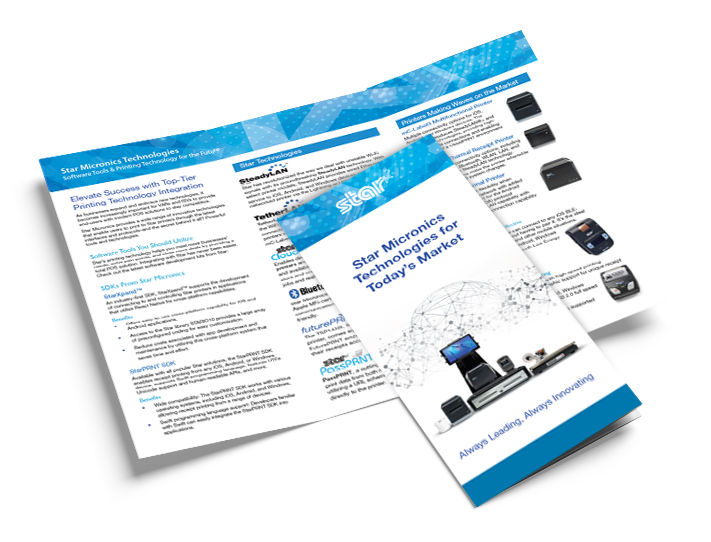
    Star Micronics Technologies for Today’s Market

    Your POS software deserves hardware that enhances its capabilities – not limits it. Star Micronics ensures your application stands out, helping you address customer demands, mitigate challenges, and drive sales by offering comprehensive POS solutions.

    CloudPRNT as the Optimal Choice

    For ISVs focused on delivering top-tier connectivity and operational efficiency, CloudPRNT is the clear choice. Its advantages in streamlining operations and ensuring scalability make it an invaluable asset in the competitive landscape of technology-driven markets. ISVs are encouraged to leverage CloudPRNT to elevate their offerings, ensuring they remain relevant and competitive.

    Discover CloudPRNT’s full potential and how it can revolutionize your software solutions.

    Learn More About Integrating CloudPRNT Today:

  • Why Food Packaging Labels Are Essential to Online Order Fulfillment

    Why Food Packaging Labels Are Essential to Online Order Fulfillment

    Consumers are sold on the convenience of food delivery. Statista reports that online food delivery orders worldwide are projected to reach $1.22 trillion in 2024 and will continue to grow at a 10.06% CAGR through 2028 to reach $1.79 trillion

    Both restaurant and grocery food delivery will see greater demand. Statista analysts estimate that 27.4% of the world’s population, about 2 billion people, takes advantage of meal delivery, and they expect the market to grow to 2.5 billion users by 2028. Analysts also expect the grocery delivery market, now about $257.5 billion, to grow to $422.9 billion by 2028.

    Due to this growing demand, restaurants and grocery stores have had to adapt their processes. Restaurants must fulfill orders placed online through their websites or apps and third-party delivery services in addition to orders at the table, counter, drive-thru, or self-service kiosks. Grocers have repurposed space and reallocated labor to manage online orders. However, expanding operations has created challenges to efficiency and controlling waste and losses.

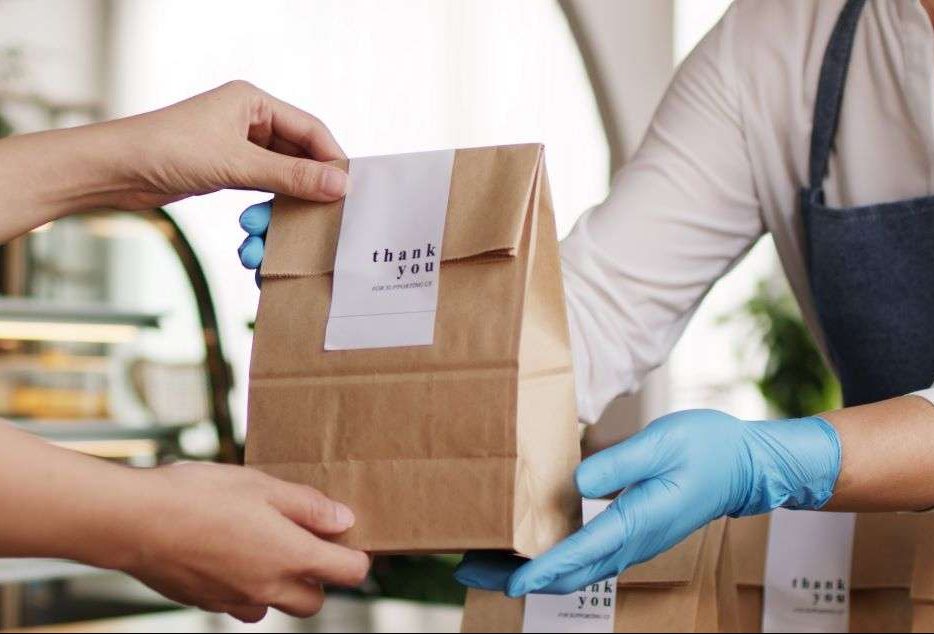
    Labeling solutions have become essential to streamlined, accurate order fulfillment. Labels help teams organize food and order prep, and food packaging labels ensure customers receive the correct orders securely and on time.

    The Labels Necessary for Efficient Food Delivery

    Why Food Packaging Labels Are Essential to Online Order Fulfillment

    Communication is crucial throughout fulfillment processes, and labels are the most efficient way to bring digital information from online ordering to employees tasked with food prep and packaging.

    For example, follow an online order placed with a quick-service restaurant until it reaches the customer:

    Repositionable linerless labels:

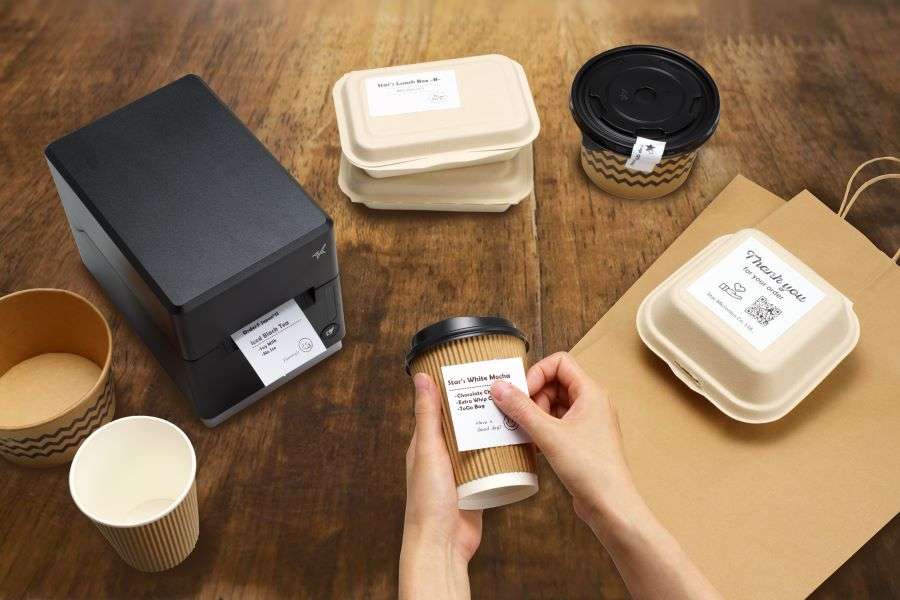
    The online ordering platform communicates the order to the QSR’s point-of-sale (POS) system and generates repositionable labels. These labels, applied to trays in food prep areas, communicate the customers’ menu choices and modifiers to the kitchen staff. Employees can reapply the labels to packaging down the line to ensure precision, eliminate errors, and decrease waste.

    Die-cut labels:

    When the order is complete, the restaurant can print die-cut labels on demand, adding its brand logo or a thank you message. Labels, whether traditional liner-backed or linerless, can also include promotional messaging or QR codes that customers can scan to join the loyalty program, check their rewards balance, or save a coupon code for future orders. These food packaging labels can contribute to a positive customer experience.

    Permanent linerless labels:

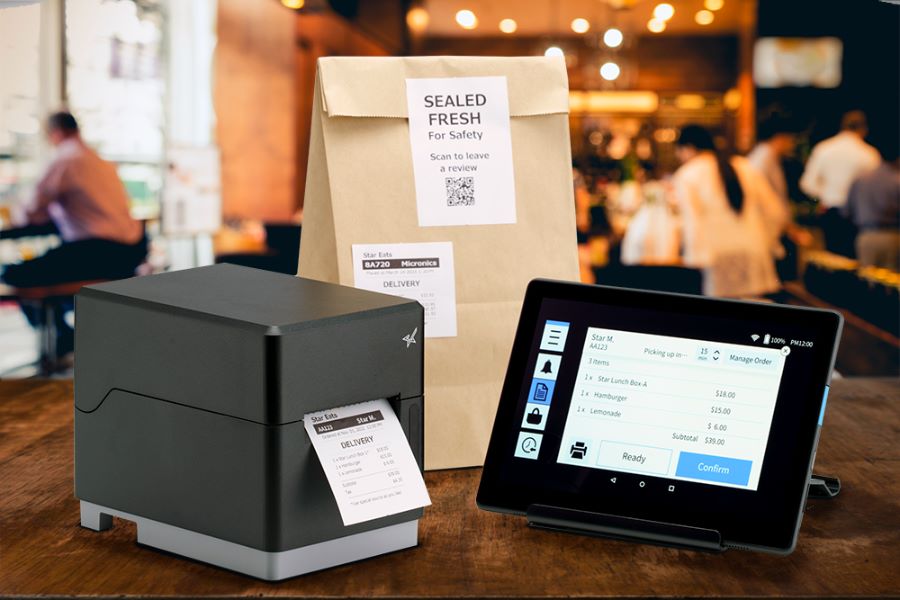
    Permanent labels direct the order to curbside or in-store pickup, in-house delivery drivers, or third-party delivery. These labels ensure orders go to the proper place, enhancing operational efficiency. Food packaging labels with delivery information can also include barcodes that allow the restaurant to track the order and confirm the correct delivery.

    Permanent labels that close containers or bags ensure the order is tamper-proof. If the label is intact, it signals to the customers that their orders are in the same condition when they receive them as when the restaurant packed them.

    Learn the importance of permanent linerless labeling in today’s businesses >

    How Labeling Solutions Overcome Food Delivery Challenges


    The mC-Label3 Multifunction Printer by Star Micronics great for delivery take out online ordering and QSRs.
    The mC-Label3 Multimedia Printer by Star Micronics is great for online ordering, takeout, and delivery.

    Adding food prep and food packaging labels to online order fulfillment processes results in a range of benefits for restaurants and grocery stores, even beyond ensuring accurate delivery. The return on investment (ROI) of labeling solutions includes:

    • Cost control: Clearly labeled containers and bags allow the kitchen staff or grocery pickers to see exactly what to pack. Therefore, businesses generate less waste and expense from inaccurate orders.
    • Greater productivity: With labels communicating what each online order fulfillment team member must do, employees will have fewer questions that slow processes. Employees will work more quickly and can complete more orders per shift.
    • Increased customer satisfaction: Consumers expect accurate, on-time orders that are neatly and securely packaged. Labels help restaurants and grocery stores deliver what their customers want and help build loyalty.

    Key Features of Food Delivery Labeling Solutions

    To achieve greater accuracy, productivity, and customer satisfaction, restaurants and grocery stores need printers capable of producing the types of labels they need as they require. Star Micronics has developed printers with features that benefit online food order fulfillment, including the mC-Label3 Multifunction Printer and the TSP143IV SK Sticky Linerless Label Printer.

    Both have CloudPRNT connectivity for cloud-based printing and are Cloud Ready for Star Cloud Services. They allow restaurant and grocery store managers to build labels on Star’s Label Builder. The mC-Label3 enables users to store up to three images on the printer so that employees can print them on demand with the One Touch button–no internet required.

    Linerless Labels

    Linerless labels are an increasingly popular choice among restaurants and grocery stores because they decrease paper waste, require fewer roll changes, and streamline workflows by allowing employees to print and apply labels with one hand.

    The best printers for online order fulfillment and food packaging labels will also be easy for employees to use and maintain. Downtime isn’t an option when preparing orders accurately and on time. Both the mC-Label3 and TSP143IV SK are designed with user-friendly features. The mC-Label3 even sends maintenance alerts and QR codes with easy-to-follow instructions to keep it operating in top condition.

    Exceed Expectations with Labeling

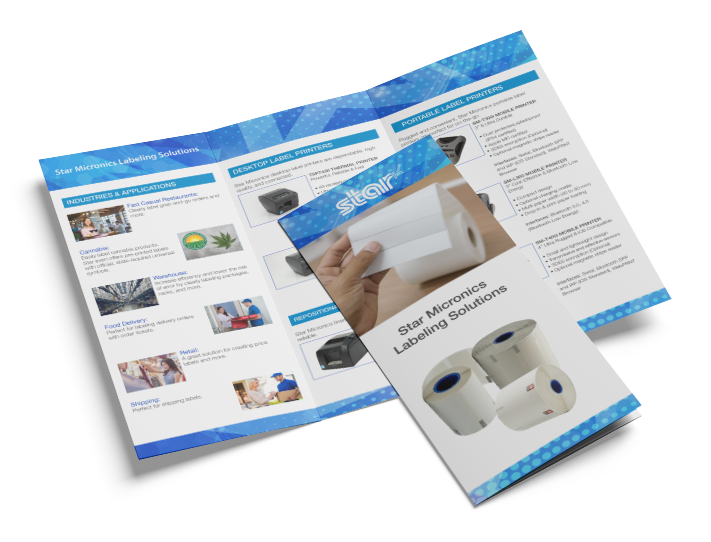
    Star Micronics Labeling Solutions Brochure

    Star’s advanced labeling solutions cater to a variety of unique needs and applications, ensuring seamless and efficient operations in any industry.

    Online food ordering is a relatively new part of many consumers’ routines; however, when they engage with restaurants or grocery stores, they expect accuracy, fast fulfillment, and excellent service. Labeling enables online order fulfillment teams to meet those expectations while keeping operational costs low. 

    Furthermore, innovative restaurants and grocery stores can use labeling creatively to elevate their brand image, keep their businesses at the top of consumers’ minds, and increase customer loyalty.

    A printing solution with features developed for online order fulfillment and food packaging labels makes it possible.

    Explore the range of solutions offered by Star Micronics.

  • Restaurant Printer Solutions: Back-of-House vs. Front-of-House Essentials

    Restaurant Printer Solutions: Back-of-House vs. Front-of-House Essentials

    In today’s rapid-paced dining environment, coupled with high employee turnover, the efficiency and reliability of restaurant operations are more critical than ever. Leveraging the right printer technology can significantly streamline workflows, from the kitchen to the counter, enhancing both the staff and customer experience.

    This guide explores the essential types of restaurant printers, covering back-of-house, front-of-house, and label printers to ensure seamless service and operation.

    Kitchen Printers for Efficient Back-of-House Operations

    In the heart of any bustling restaurant, the kitchen demands resilient and adaptable tools to match its vigorous pace. While impact printers have long been the stalwarts of back-of-house operations, modern advancements have made thermal printers equally indispensable. Engineered to endure the challenging kitchen environment, both types of printers ensure clear, quick order communication.

    Thermal printers, with their specific features like splash resistance and insect-proof design, alongside traditional impact printers, which use bond paper known for its durability under heat and humidity, collectively offer comprehensive solutions that cater to the diverse needs of professional kitchens, enhancing efficiency and reducing order preparation errors.

    Impact Printers: The Backbone of Kitchen Printing

    Impact printers stand as the traditional choice for kitchens, where the physical impact of a printhead against an ink ribbon ensures orders are printed in a durable, dual-color format. Using bond paper, these printers produce orders that can withstand the harsh heat and humidity conditions in busy kitchens. Also, bond paper is typically multi-ply, a favorite in the industry, providing a practical solution for orders shared across multiple stations.

    The distinct advantage of using two colors—black for the main order and red for modifiers—alongside the audible printout delivery on 2-ply bond paper makes impact printers invaluable for maintaining clear communication with kitchen staff. It all helps to minimize preparation errors, ensuring coordinated efforts and flawless dish preparation.

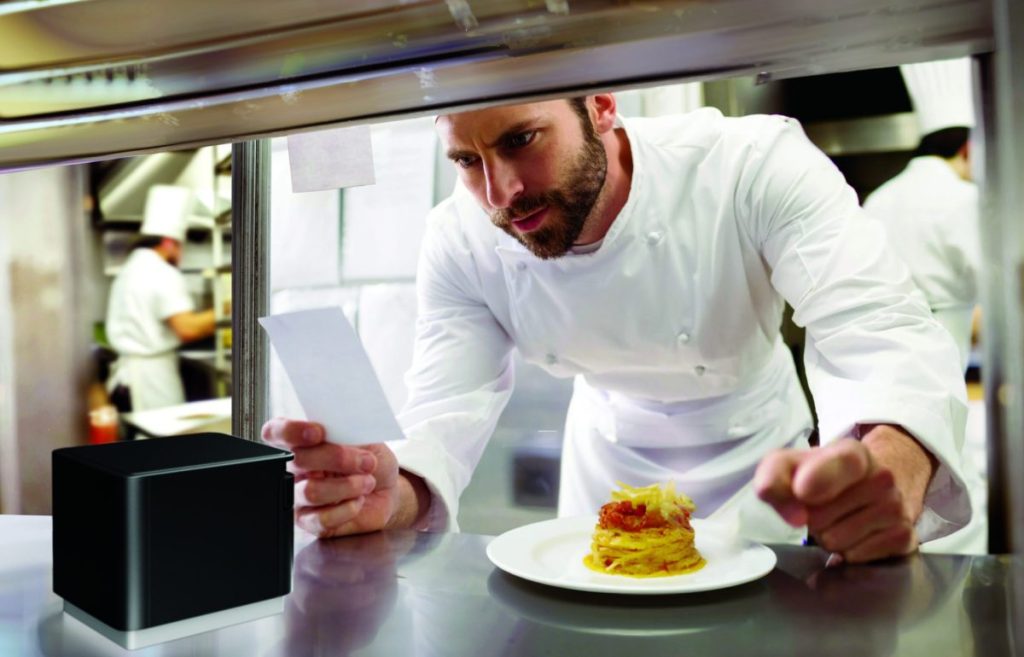
    Chef in modern, professional kitchen looking at ticket from mC-Print3 thermal receipt and restaurant printer by Star Micronics.

    Thermal Printers: Embrace the Modern Kitchen

    Thermal printers, with their advanced features tailored for modern professional kitchens, offer a compelling alternative to impact printers. These printers thrive in environments where direct heat and grease are minimized, providing high-quality printouts without the need for ink or ribbons. Attributes such as splash resistance, warning buzzers for incoming orders, and an insect-proof design make thermal printers irreplaceable in today’s kitchen setups.

    As for having multiple tickets for the same order, thermal printers can print back-to-back copies of the same order at a rapid pace. This guarantees that every workstation receives its required orders for timely food preparation. In fact, many modern kitchens equip each station with a thermal printer, streamlining the entire process to ensure appetizers precede entrees and orders are sent out just as guests expect.

    Coupled with electronic kitchen display systems (KDS), thermal printers integrate seamlessly into digital workflows, offering a cleaner, more efficient alternative to traditional printing methods and supporting the dynamic nature of back-of-house operations.

    Here are Star’s recommendations for kitchen and back-of-house printers:

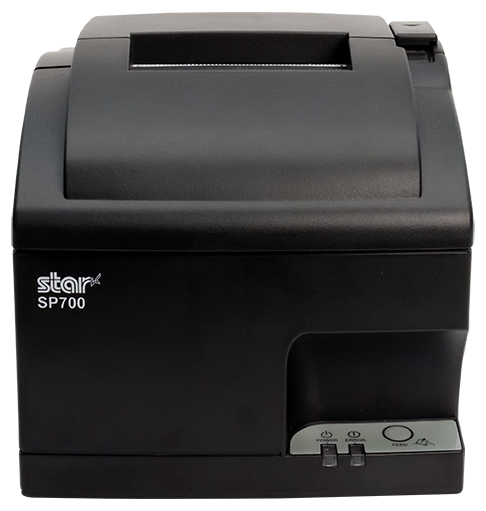
    SP742 Impact Printer

    The SP742 Impact Printer from Star Micronics offers a durable, efficient solution for kitchens, combining high-speed, two-color printing with seamless CloudPRNT and Bluetooth integration for streamlined online order processing.

    Explore the SP742 >

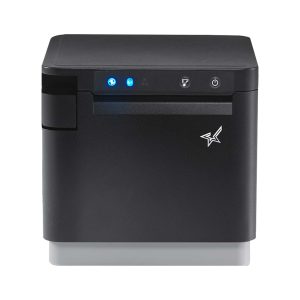
    mC-Print3 Thermal Printer

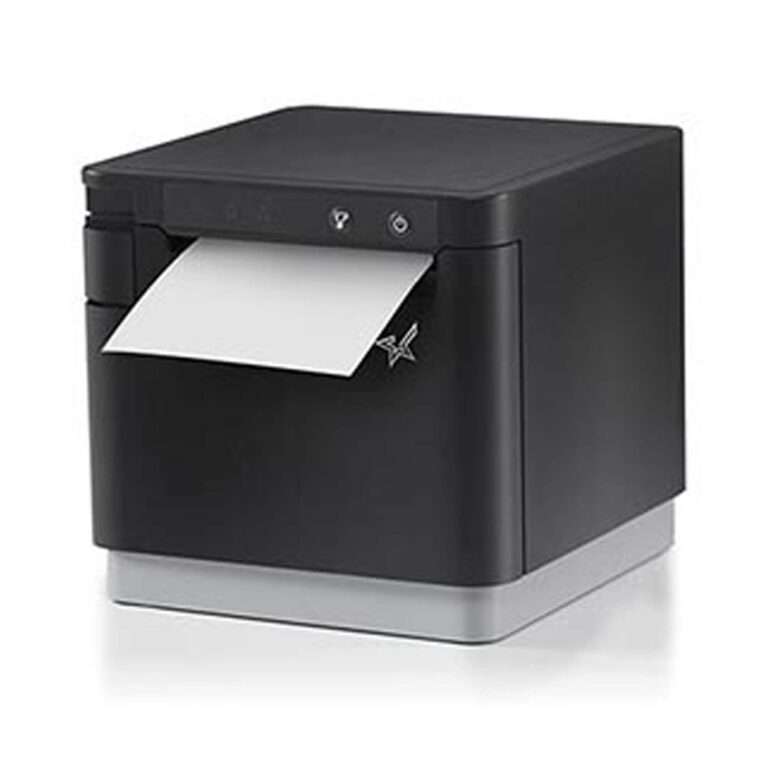
    The mC-Print3 stands out as a versatile and sleek POS receipt printer, ideal for both front- and back-of-house environments that are heat controlled. Thanks to its compact size, splash-proof design, and robust connectivity options, like CloudPRNT Next and enhanced Bluetooth, this future-proof printer is adaptable to any POS system changes.

    Learn more >

    POS Receipt Printers for Front-of-House Excellence

    In the front-of-house areas of restaurants, the selection of a POS receipt printer is crucial to creating lasting impressions and facilitating quick transactions. Thermal printers stand out as the preferred choice, offering rapid, high-quality printouts essential for fast-paced service environments. Equipped with features like wireless connectivity and cloud-based printing, these printers integrate seamlessly with various POS systems, catering to the evolving demands of restaurant operations.

    The design of front-of-house printers plays a significant role in maintaining the aesthetic and functional harmony of restaurant settings. Thermal printers boast a sleek, compact design that minimizes space usage and operates quietly, preventing disruption in bustling dining areas.

    Furthermore, these printers deliver exceptional resolution, enabling the production of detailed receipts, branded coupons, and promotional materials. This capability not only meets the essential requirement for clarity in customer receipts but also contributes to enhancing the dining experience and building customer loyalty through personalized touches.

    mC-Print3 Thermal Printer

    The Star Micronics mC-Print3 wins again. This compact and versatile 3-inch thermal printer excels in both front- and back-of-house settings. Its splash-proof design and multiple connectivity options, including CloudPRNT Next, make it an adaptable choice for any restaurant environment.

    Find out about the mC-Print3 >

    TSP143IV Thermal Printer

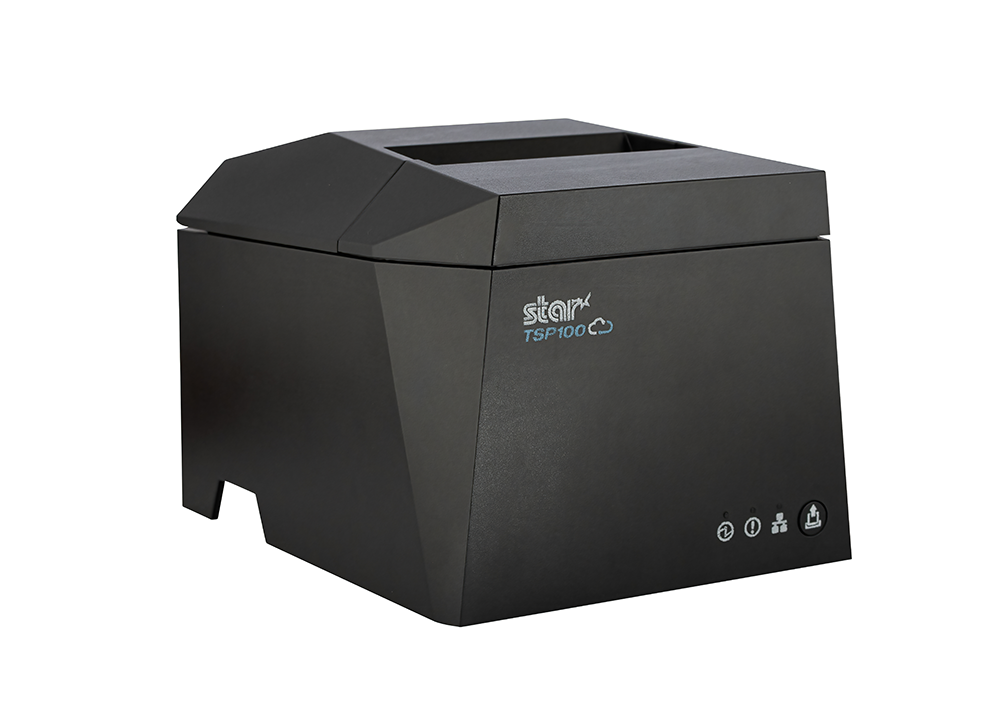
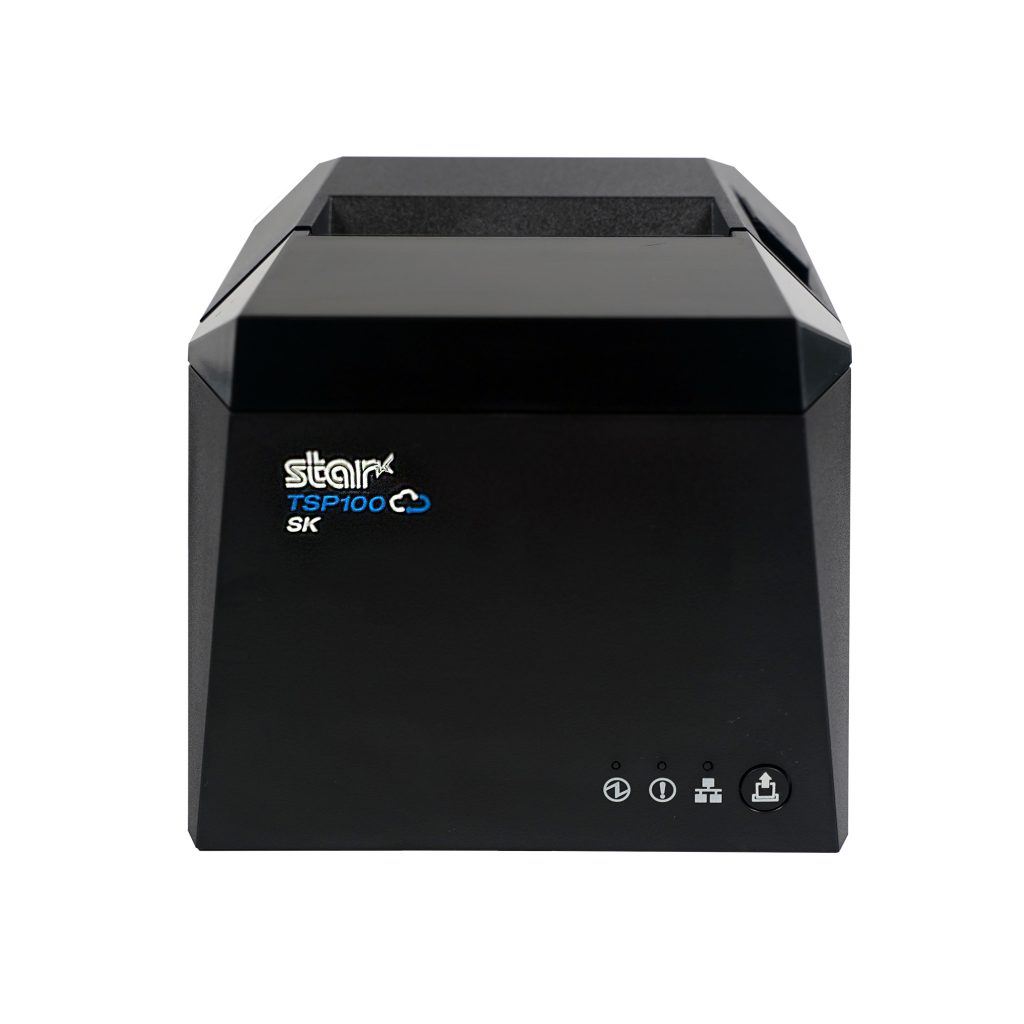
    The TSP143IV series thermal printer offers a compact, future-proof solution with enhanced connectivity options like Android Open Accessory (AOA). It’s Cloud Ready for Star Cloud Services and has easy installation, ideal for modern mPOS or POS systems.

    Discover more >

    TSP143III Thermal Printer

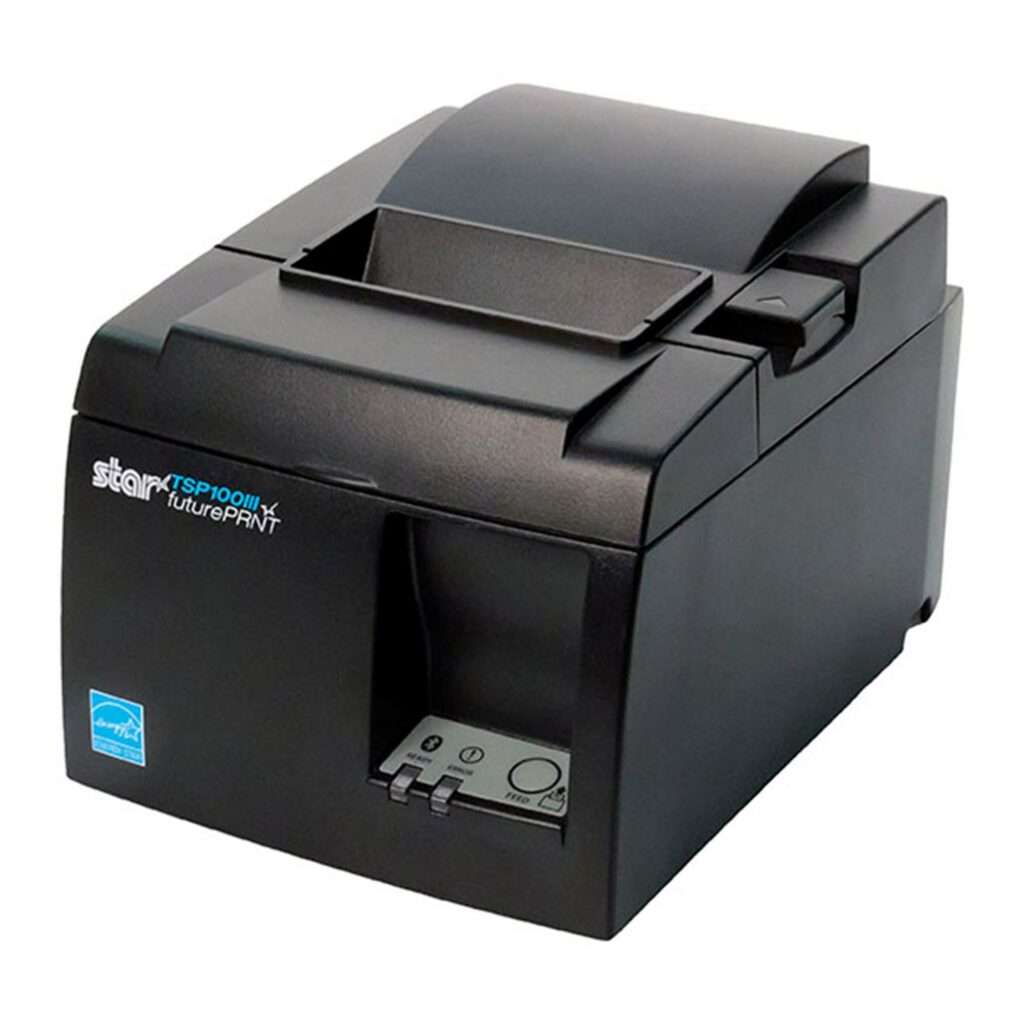
    The TSP143III sets the standard for thermal receipt printing, offering versatile connectivity options, easy setup, and customization capabilities, making it an all-in-one solution for retail, hospitality, and cannabis sectors.

    Learn about the TSP143III >

    mPOP® Multifunction System

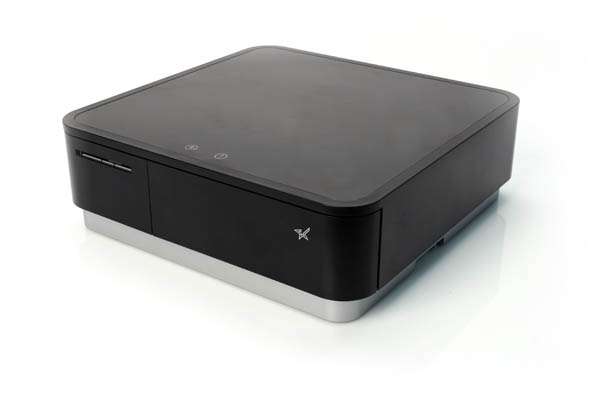
    The Star Micronics mPOP combines a cash drawer and printer into a sleek, hybrid POS solution. Now with direct iOS connectivity, supporting Windows and Android, it’s an ideal choice for versatile mPOS systems.

    Explore the mPOP >

    Label Printers for Streamlined Order and Inventory Management

    Accuracy and organization are paramount in a restaurant’s service, making label printing solutions invaluable. These printers facilitate the production of custom labels for food items, identifying special orders, allergy information, or takeout packages, thus ensuring correct order fulfillment.

    Versatile label printers can handle a range of media types, from sticky labels for food packaging to die-cut labels for shelf labeling, enhancing the efficiency and accuracy of both kitchen and front-of-house operations.

    TSP143IV SK Sticky Label Printer

    The TSP143IV SK by Star Micronics sets a new standard for compact, eco-friendly thermal linerless label printing, offering advanced connectivity options like Wi-Fi and AOA, and efficient, residue-free labels for diverse business needs.

    Find out more >

    mC-Label3 Multimedia Label Printer

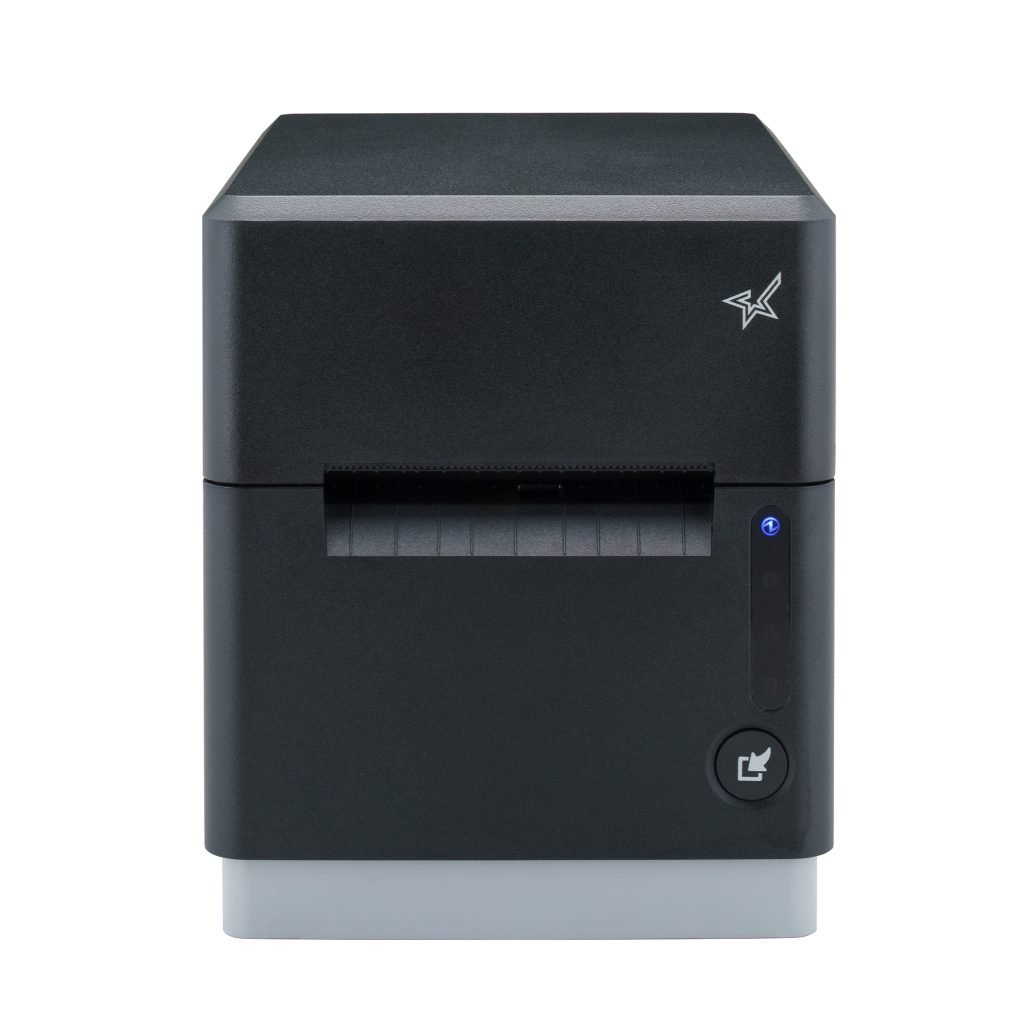
    The Star Micronics mC-Label3 is a versatile multimedia label printer that prints a wide range of labels and receipts, including both permanent and repositionable sticky linerless. It features cloud connectivity and innovative technologies like SteadyLAN and TetherLAN for enhanced printing convenience.

    Discover the mC-Label3 >

    mC-Label2 Multimedia Label Printer

    The mC-Label2 packs powerful features into a compact, front-loading design, including 300 dpi resolution, support for linerless, die-cut, receipt, and continuous media, and connectivity options like USB-C, LAN, WLAN, Bluetooth, and Apple MFi-certified pairing (X4 models only).

    Explore the mC-Label2 >

    POS Printers for Restaurant Success

    The choice of printing solutions within a restaurant significantly influences operational efficiency, accuracy, and customer satisfaction. Integrating the right mix of back-of-house, front-of-house, and label printers into your restaurant’s operations can lead to smoother service, better food management, and an overall enhanced dining experience.

    As technology evolves, staying informed about the latest printing solutions and how they can benefit your restaurant is essential for staying competitive and meeting the high expectations of today’s diners.

    4 Restaurant Technology Challenges for the Next Decade

    The wants and needs of the consumer are constantly evolving and changing. SMB restaurant owners can prepare for the shifts in the restaurant industry by deploying the right technology.

    Find Your Restaurant Printer Solution Today:

    Original article written by Brianna Moriarty and published September 6, 2018.

  • Insights From NRF 2024 and Retail’s Inflection Point on the Rising Stars Podcast

    Insights From NRF 2024 and Retail’s Inflection Point on the Rising Stars Podcast

    The retail industry stands at a pivotal crossroads, with digital innovation and customer expectations evolving faster than ever before. For retailers aiming to excel in this dynamic environment, understanding and leveraging the latest trends and technologies is essential.

    In this compelling episode of the Rising Stars Podcast titled “NRF 2024 Insights: Retail’s Digital Inflection Point,” host Kate Orara engages in a thought-provoking discussion with two of Star’s brightest: Jon Levin, Director of Product Management, and Christophe Naasz, Global Director of Business Development. Together, they explore insights gleaned from NRF 2024: Retail’s Big Show, offering a comprehensive look at what they learned about the future of retail in the digital age.

    Embracing Technological Synergy

    This episode holds a wealth of industry experience and expert analysis on how cutting-edge technologies like AI are used in retail strategies to meet and exceed market demands. Levin and Naasz share their unique perspectives on the importance of finding the right balance between innovative tech solutions and the genuine needs of the market, a balance crucial for the retail industry’s sustained growth and relevance.

    Listeners are treated to an in-depth exploration of the rise of labeling in e-commerce and omnichannel retailing, underscoring the episode’s focus on practical, technology-driven solutions for enhancing operational efficiency and customer satisfaction.

    What Listeners Will Discover

    By tuning into this episode, listeners will gain invaluable insights into:

    • The ongoing adoption of AI and other emerging technologies in retail.
    • The critical role of labeling in e-commerce and omnichannel strategies.
    • Practical advice on aligning technological investments with real market needs.
    • The art of listening to customers to shape future-proof retail solutions.
    • Collaborative approaches to innovation that benefit all stakeholders in the retail ecosystem.

    Essential Listening for Forward-Thinking Retail Professionals

    “NRF 2024 Insights: Retail’s Digital Inflection Point” is a must-listen for anyone invested in the retail industry’s future, from business leaders and innovators to frontline managers and tech enthusiasts. Through engaging discussions and expert analysis, Orara, Levin, and Naasz offer a unique roadmap for navigating the complexities of digital transformation in retail, highlighting the opportunities that lie ahead for those ready to embrace change.

    Don’t miss this opportunity to arm yourself with the knowledge and insights needed to be a leader in the industry. Subscribe and listen now!

    Loving the podcast? Subscribe now, and let us know what you think by leaving a review!

    Stay up-to-date on all things Star, don’t forget to follow us on Twitter, LinkedIn, Facebook, Instagram, and YouTube.

    The Rising Stars Podcast

    Immerse yourself in the ever-evolving world of point-of-sale (POS) with the Rising Stars Podcast by Star Micronics, hosted by industry pro, Kate Orara. Twice a month, we dive into the fascinating journeys of innovators and businesses navigating the challenges of technology’s rapid pace.

    In every episode, Kate Orara, Star Micronics’ Partner Development Manager, takes listeners on an exploration of emerging retail technology trends and strategies with global industry giants. She’s spent her entire career meeting all the right people, and now listeners everywhere can benefit from this vast network of channel gurus.

    Always leading and always innovating, Star Micronics, a pioneer in POS and customer experience technology for over 60 years, welcomes you to join us in shaping a brighter future in the retail, hospitality, and cannabis industries.

    Want more industry news?

  • How to Choose Between SteadyLAN & TetherLAN for Your POS Printer

    How to Choose Between SteadyLAN & TetherLAN for Your POS Printer

    Staying connected and maintaining efficiency is essential for doing business, regardless of industry. Whether you run a retail store, restaurant, or mobile food truck, you need reliable and seamless printing technology for smooth operations. However, choosing the most suitable solution for your needs can be challenging.

    Star Micronics, a leader in point-of-sale (POS) printers and hardware, provides TetherLAN and SteadyLAN® technology in select POS receipt and label printer models, like the mC-Label3 multimedia printer, ensuring reliable tethered tablet network connections. But how do you know which technology you need?

    In this guide, we’ll take a deep dive into these products. We’re here to help you understand the defining features, advantages, and essential considerations when choosing between these options.

    SteadyLAN vs. TetherLAN: What’s the Difference?

    What POS printer technology is right for your business? Here are the details so that you can make an informed decision:

    Understanding SteadyLAN

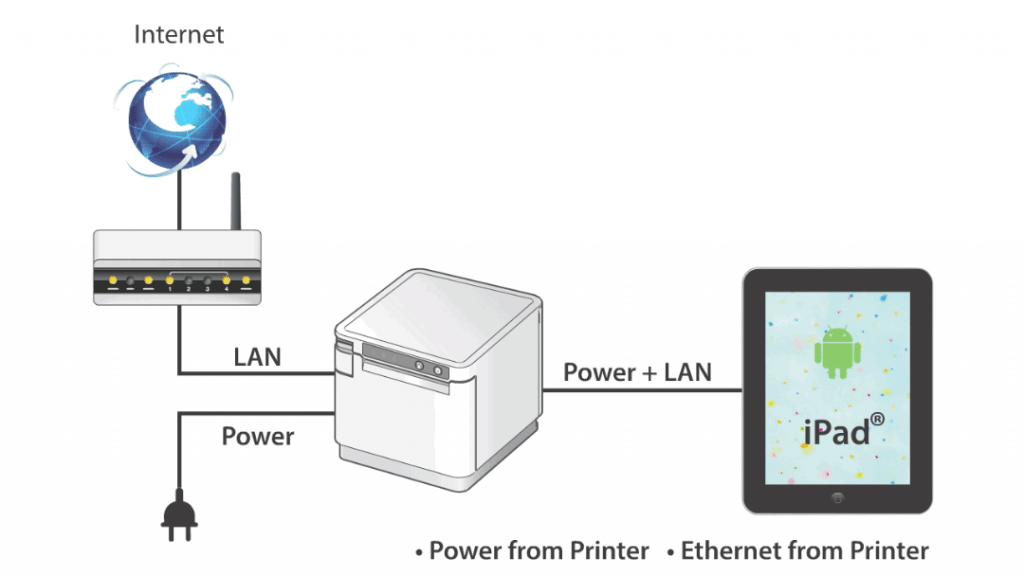
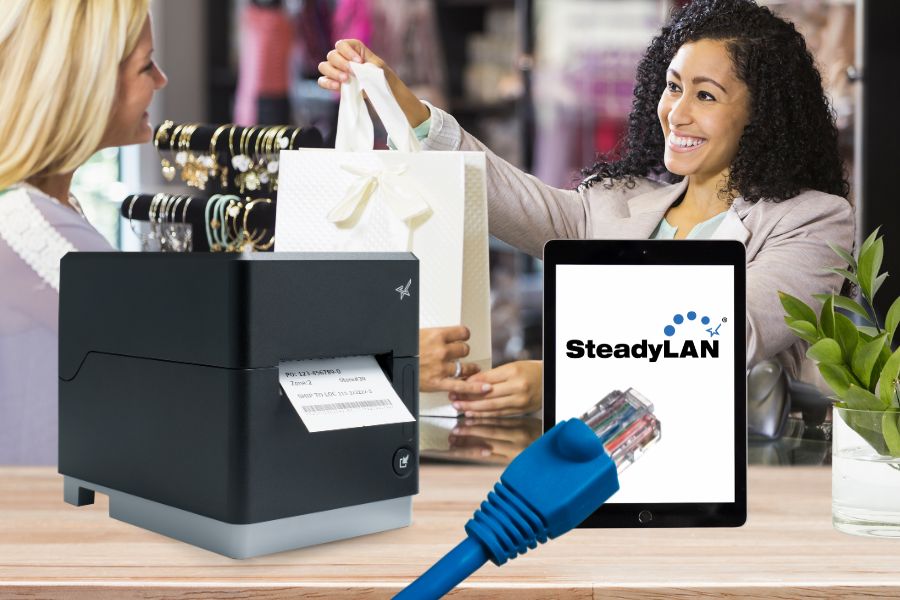
    Are you ready to leave unstable Wi-Fi behind and embrace consistent, high-speed connectivity? SteadyLAN, designed primarily for iOS devices, revolutionizes POS printing with its direct power and internet connection from a supported Star printer to your tablet or device. Through a Lightning or USB-C® cable, the mobile device secures a network connection from the Star POS printer, even if Wi-Fi signals are too unstable.

    This innovation translates to reliable and uninterrupted network connectivity with the added convenience of charging your connected tablet or device directly from the printer. SteadyLAN technology keeps your device powered up, even during the busiest hours.

    SteadyLAN’s direct connection from your POS printer provides a seamless link to your tablet and peripherals, significantly minimizing downtime and enhancing overall system performance.

    SteadyLAN by Star Micronics allows a networked printer to share internet service with your tablet or device.

    Key Benefits of SteadyLAN

    • Reliable Connectivity: A steady network link for iPad & Android POS systems ensures continuous operations without Wi-Fi dependency.
    • Constant Device Charging: The tablet is kept fully charged, eliminating the worry of battery drain during peak business hours.
    • Streamlined POS System: SteadyLAN creates a cohesive POS environment where all activities are centrally managed and cabled to the printer for increased efficiency and control.

    Understanding TetherLAN

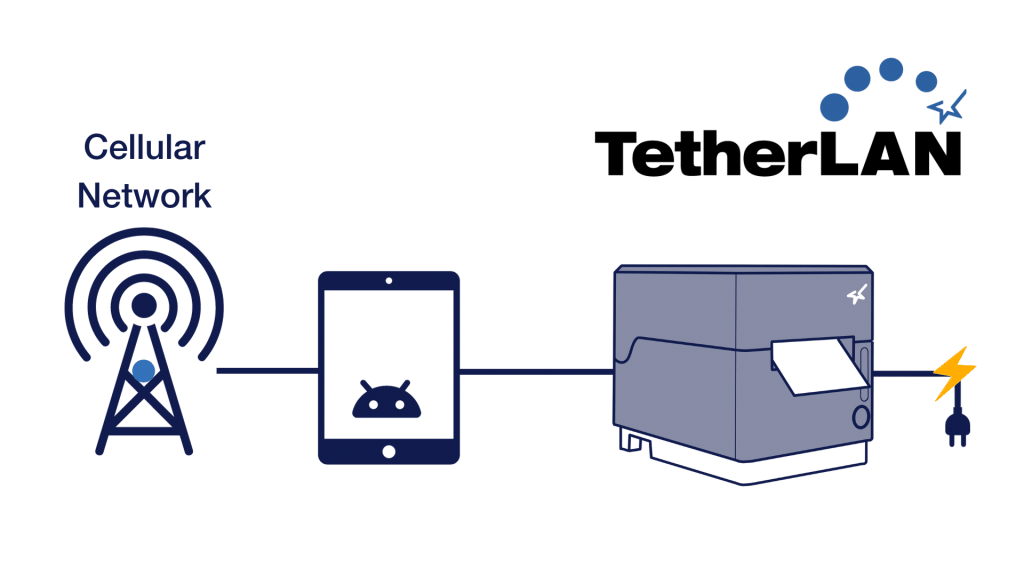
    TetherLAN is designed for mobile devices with cellular connections, such as 4G or 5G tablets, smartphones, and hotspots. The technology allows these devices to share their Wi-Fi service with select Star Micronics printers via USB. This ensures a seamless and high-quality printing experience without needing LAN cables. Compatible with Android and Windows devices, TetherLAN is currently featured in the mC-Label3 multimedia printer by Star Micronics.

    By establishing a cloud-based printing environment, this technology shines in scenarios where conventional internet setups are challenging. In addition to sharing a tablet’s cellular connection, TetherLAN also provides USB-powered connectivity, keeping devices charged for continuous operation. Moreover, it provides access to the Star Micronics Cloud Services platform, allowing users to monitor their devices in real-time and create customized receipts and labels.

    TetherLAN mC Label3 Technology GIF

    Key Benefits of TetherLAN

    • Cloud-Based Printing Environment: Facilitates cloud-based printing using active cellular connections, ideal for places lacking standard internet services.
    • No LAN Cables Needed: Get efficient and reliable printing without requiring any LAN cables.
    • Continuous Device Charging: With the mC-Label3, Android and Windows devices stay charged for extended use, enhancing usability in various settings.
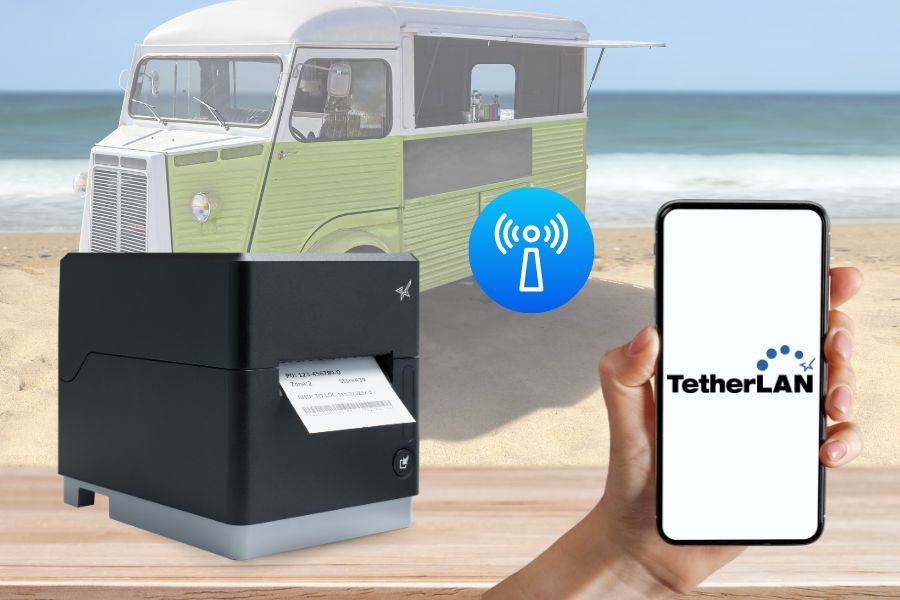
    • Ideal for Outdoor and Mobile Settings: Excellently suited for outdoor events or mobile operations where cabled internet access is scarce, offering versatility and ease of use.

    Choosing Between SteadyLAN and TetherLAN

    As the global printer market continues to evolve, with projections to surpass $43 billion by 2028 (Mordor Intelligence), staying informed about the latest features is crucial for making an educated decision. When it comes to selecting between SteadyLAN and TetherLAN for your POS printer, consider these key factors:

    1. Business Needs and Objectives

    Evaluate your business’s specific needs and objectives. If your environment lacks stable Wi-Fi and requires consistent internet connectivity, SteadyLAN is ideal. It ensures a reliable Ethernet connection directly from the tethered printer to your device.

    Conversely, if your business operates in dynamic settings with limited access to traditional internet setups, TetherLAN is more suitable. It leverages the cellular network on your device to maintain connectivity, making it perfect for mobile or outdoor operations.

    2. Existing Infrastructure

    Consider the existing technological infrastructure of your business. SteadyLAN is an excellent fit for setups already equipped with Ethernet infrastructure and is particularly beneficial in environments with weak Wi-Fi signals. TetherLAN, on the other hand, is ideal for businesses with no access to Ethernet ports that can rely on cellular networks to connect to their POS systems instead.

    TetherLAN technology in the mC-Label3 allows the tablet or device to share internet service with the printer.

    3. Budget Constraints

    When considering budget, it’s essential to recognize that different Star Micronics printer models have varying technologies, impacting their costs. Some models are equipped with both TetherLAN and SteadyLAN, which can influence their price. It’s important to note that not all Star printers currently have TetherLAN capability, though more models are expected to include this technology in the future.

    This variation in features means a range in pricing, allowing you to choose a printer that fits both your technological needs and budget. Evaluating the cost-effectiveness of each printer model, its capabilities, and your business requirements is crucial. For instance, investing in a printer with TetherLAN might be more cost-effective for a mobile or outdoor business environment where having the technology could enable more sales.

    Also, consider other long-term operational costs, including potential data usage fees with TetherLAN and the costs of infrastructure upkeep with SteadyLAN.

    4. Future Growth

    When planning for future growth and scalability, the choice between SteadyLAN and TetherLAN hinges on your business’s anticipated trajectory. SteadyLAN is an ideal solution for companies aiming for growth within a stable, fixed location, particularly those not planning to engage in outdoor or mobile events. Its reliable wired connection suits environments where the business infrastructure is stationary and consistent.

    On the other hand, TetherLAN offers flexibility and mobility, making it a strategic choice for businesses that foresee expansion into new areas, including outdoor events or pop-up shops. Its reliance on mobile networks makes it adaptable for scenarios where traditional, wired internet connectivity is not feasible.

    Moreover, for businesses that transition from mobile or temporary setups to permanent locations, TetherLAN presents a versatile option. It supports operations in both contexts, provided the devices used with the POS systems are compatible with cellular networks. This adaptability makes TetherLAN a future-proof investment for businesses evolving from outdoor events to fixed retail or hospitality settings.

    Real-World Use Cases

    We’ve discussed the key features, benefits, and considerations related to SteadyLAN and TetherLAN. Here are some ways that businesses use them in the real world:

    SteadyLAN

    SteadyLAN technology has become a game-changer for businesses grappling with connectivity issues. In scenarios like a café with weak Wi-Fi or a small business owner without a data plan, SteadyLAN offers a reliable solution.

    SteadyLAN by Star Micronics allows a networked printer to share internet service with your tablet or device.

    For instance, connecting an iPad POS system to a tethered Star printer with SteadyLAN allows the business owner to access a steady internet connection through the printer’s Ethernet port, circumventing the need for additional data services.

    Similarly, in environments like cafes or restaurants where Wi-Fi strength is inconsistent or physical limitations prevent network expansion, SteadyLAN-equipped printers serve as stable network hubs, ensuring uninterrupted operations and enhancing customer service without needing complex infrastructure changes.

    TetherLAN

    TetherLAN technology is revolutionizing operations in dynamic and mobile environments like outdoor events. At a music festival, where traditional internet setups are impractical, TetherLAN enables vendors to share a tablet’s cellular connection with a Star printer, thus facilitating efficient and automated order processing.

    This innovation allows for streamlined ‘order ahead’ options, reducing wait times and enhancing customer experiences. The technology’s operational flexibility and integration with CloudPRNT make it an ideal solution for vendors in mobile settings, ensuring they can manage online orders and payments seamlessly without the constraints of traditional connectivity methods.

    These real-world applications demonstrate the transformative impact of SteadyLAN and TetherLAN technologies in various business contexts, offering practical and innovative solutions to connectivity challenges.

    An Independent Software Vendor’s (ISV’s) Guide to Star Printer SDKs

    For ISVs navigating the complexities of printer integration, the path forward is often strewn with challenges. Get to know Star Micronics’ range of software development kits (SDKs), each uniquely crafted to address these challenges and enhance your integration prowess.

    All The POS Printer Options You Need for Success

    Choosing a POS printer with the right technology can significantly impact your business. SteadyLAN and TetherLAN provide innovative connectivity options for businesses of all shapes and sizes. By evaluating your business requirements, existing infrastructure, budget constraints, and future growth plans, you can make an informed decision that enhances your operations and ensures efficient printing in a sometimes inefficient world.

    Are you ready to harness flexible, durable printing solutions? Touch base with one of our experts to see how modern POS printer technology can move your business forward.

  • 5 Technologies Shaping the Future of Labeling

    5 Technologies Shaping the Future of Labeling

    The landscape of labeling technology is in a constant state of evolution. The days of labels simply serving as identifiers for products have passed. Today, labels are interactive, data-rich tools that enable unprecedented levels of communication between merchants, products, and consumers. This transformation is mainly due to advancements in technology that have broadened the potential applications of labels.

    In this post, we will look at five key technologies that are significantly shaping the future of labeling. Furthermore, we’ll uncover how Star Micronics, an industry leader, contributes to this exciting future.

    1. Internet of Things (IoT) Integration

    One of the most significant trends influencing the future of labeling is the integration of Internet of Things (IoT) technology. Labels embedded with IoT capabilities can transform ordinary products into smart, connected items. This integration allows real-time tracking, enhanced supply chain visibility, and even consumer interaction.

    For instance, labels with embedded sensors can provide data to restaurant managers about the storage conditions of perishable goods or help retailers authenticate products to combat counterfeiting. IoT integration in labeling is not just a futuristic concept; it’s becoming essential to inventory management and customer engagement strategies.

    The future of labeling brings exciting new technologies.
    The future of labeling revolves around the latest technologies.

    In this evolving 5G IoT landscape, Star’s upcoming CloudPRNT Next technology emerges as a timely innovation. CloudPRNT Next, an advanced version of Star’s existing CloudPRNT technology, offers more efficient, secure, and faster cloud-based printing capabilities. It represents a significant advancement in IoT device communication, greatly enhancing printing across various commercial environments.

    This technology is poised to play a crucial role in supporting the dynamic needs of modern labeling and IoT applications in commerce.

    2. QR Codes and Augmented Reality

    QR codes and augmented reality (AR) are revolutionizing how consumers interact with products. Labels with QR codes can link to digital content, such as product information, user manuals, or promotional videos. Augmented reality takes this a step further by offering immersive experiences.

    For example, a wine label could use AR to tell the story of its vineyard or provide food pairing suggestions. These technologies enhance the customer experience, making labels a powerful marketing tool beyond mere identification.

    3. Sustainable and Eco-Friendly Materials

    Sustainability is a growing concern, and the labeling industry is responding with eco-friendly materials and processes. Though more of an advancement than a technology, biodegradable labels, linerless labels, and labels made from recycled materials are gaining traction.

    This shift meets consumer demand for sustainable products and helps companies reduce their environmental footprint. Labels that use less material or that can be easily recycled contribute significantly to the eco-conscious goals of businesses.

    Permanent Linerless Labels

    And, within the linerless label trend, permanent linerless labels are further marking their territory, presenting businesses with a durable and sustainable alternative that resonates with modern needs. In fact, several reasons underscore the growing preference for permanent linerless labels:

    • Eco-friendly
    • Versatility and increased production
    • Reduced inventory space
    • Top-quality strong adhesion
    • Enhanced safety and reduced downtime

    4. RFID and NFC Technologies

    Radio-frequency identification (RFID) and near-field communication (NFC) technologies are elevating labels to new heights. Labels equipped with RFID or NFC chips can store and transmit data wirelessly. This technology is ideal for inventory management, as it enables quick scanning and tracking of products.

    NFC labels also open up possibilities for interactive customer experiences; for example, tapping a smartphone to an NFC-enabled label could trigger a loyalty program or offer product information.

    Read this blog article to learn about 5 Technologies Shaping the Future of Labeling.

    5. Advanced Printing Techniques and Customization

    Advancements in printing technology have made customized and on-demand labeling more accessible and cost-effective. Digital printing allows for greater flexibility in label design, enabling short runs and variable data printing. This means labels can be personalized for specific batches, locations, or even individual customers. These advanced printing techniques empower businesses to create more targeted and engaging labels, enhancing brand recognition and customer loyalty.

    Star has also created a label image customization tool for developers and merchants. Label Builder on Star Micronics Cloud Services enables users to design custom labels from scratch or use pre-made templates effortlessly. It offers the convenience of storing up to three designs on the mC-Label3 Multimedia Printer, which can easily be printed using the One Touch multifunctional button, even without an internet connection.

    Labeling the Future with Star Micronics

    As we look toward the future, it’s clear that these technologies will continue to play a significant role in shaping the labeling industry. Star Micronics is committed to staying at the forefront of these developments, providing businesses with the labeling technology they need to succeed in such a dynamic market.

    The latest mC-Label3 multimedia printer by Star is a breakthrough in this space. Whether you’re printing linerless sticky labels, permanent linerless labels, traditional labels, die-cut labels, or standard receipt paper, the mC-Label3 caters to all your needs.


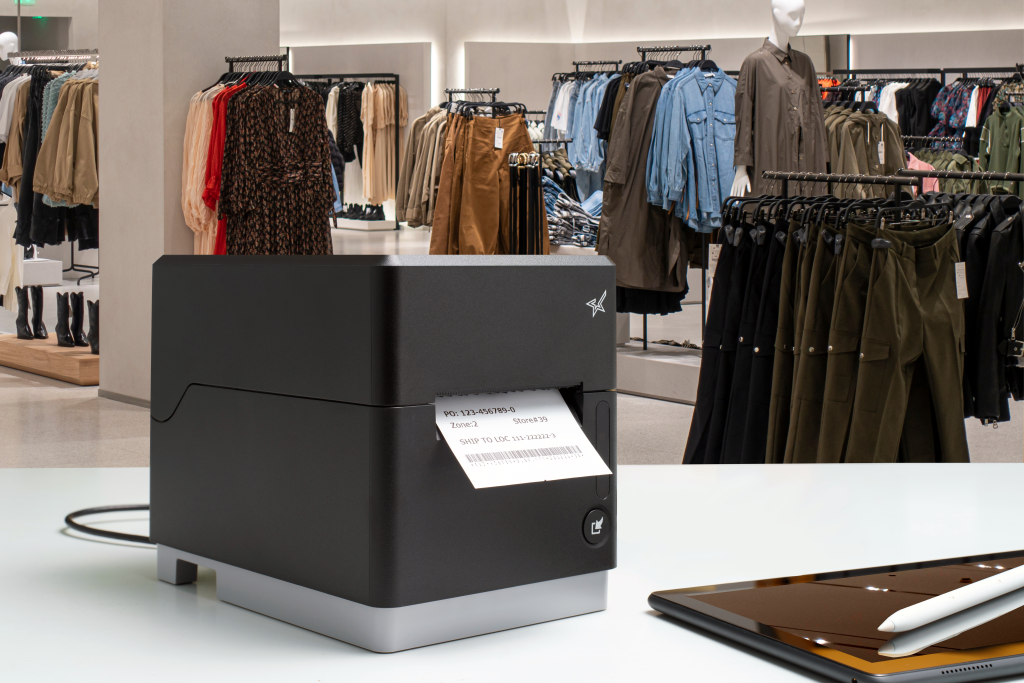
    The mC-Label3 multifunction label and receipt printer from Star Micronics is great for retail, BOPIS, and online ordering.
    The mC-Label3 multimedia printer from Star Micronics.

    It’s also Cloud Ready, able to connect to Star Micronics Cloud Services and Label Builder for customized labels. With Star’s Cloud Services, the mC-Label3 also offers the flexibility to build, store, and later print multiple static receipt/label images at the touch of a button with One Touch Label.

    Able to connect to iOS, Android, and Windows devices, it’s equipped with faster SteadyLAN® and introduces the latest technology – TetherLAN. With Star Micronics, you can be confident that your labeling solutions are not just meeting current demands but are also geared for future advancements.

    Labeling’s Future: Interactive, Efficient, Sustainable

    The future of labeling technology is rich with possibilities. From IoT and AR to sustainable practices and advanced printing techniques, these innovations are transforming labels from simple identifiers to dynamic, interactive tools.

    As we move into 2024 and beyond, it’s clear that these technologies will continue to shape the way businesses and consumers interact with products, offering opportunities for enhanced communication, improved operational efficiency, and a deeper commitment to sustainability.

    The world of labeling is evolving, and Star Micronics is proud to be a part of this transformation.

    Ready for Labeling Excellence?

  • It’s That Time of Year: Is Your Retail POS Technology Ready for Holiday Pop-Up Shops?

    It’s That Time of Year: Is Your Retail POS Technology Ready for Holiday Pop-Up Shops?

    With the holiday season upon us, retailers are actively preparing to make the most of the upcoming customer rush. A rising trend in this arena is the concept of holiday pop-up shops, which are becoming part of the broader movement toward temporary retail spaces. These pop-up shops, varying from expansive holiday markets to cozy storefronts, are transient retail events tailored for the winter holiday season.

    Taking part in this growing trend is crucial to accelerating your business, especially considering the competitive landscape. Data from Capital One Shopping reveals that pop-up shops contribute up to $80 billion in annual revenue, a figure expected to climb to an impressive $95 billion by 2025. Notably, 80% of retailers who have ventured into the pop-up shop domain report significant success (Capital One Shopping Research).

    This article will explore why embracing the holiday pop-up shop could be a game-changer for your brand’s visibility and engagement. Additionally, we’ll highlight the crucial role of advanced retail point-of-sale (POS) technology in ensuring the smooth operation and success of your pop-up, allowing you to concentrate on what matters most – making sales and delighting customers.

    Why Participate in Holiday Markets or Pop-Up Shops?

    Choosing a holiday pop-up shop to showcase your products this season offers numerous benefits, particularly in the realm of customer engagement. Despite the surge in online shopping, many consumers worldwide still cherish the in-store experience. 

    According to the Klarna Shopping Pulse global survey, a striking 80% of shoppers believe that social interaction is more rewarding in physical stores, and 70% favor the customer service they receive in-store over online. Holiday pop-up shops create an ideal environment for these valuable face-to-face interactions, enhancing the connection between customers and your product offerings.

    Is Your Retail POS Technology Ready for Holiday Pop-Up Shops?

    The temporary nature of pop-ups themselves is also great for driving consumer demand. The “get-it-before-it’s-gone” feeling creates a sense of urgency amongst shoppers. Holiday markets also offer a low-cost yet effective opportunity to put your marketing and promotions to the test. 

    Getting your name out there provides an opportunity to significantly boost your brand visibility during the holiday season.

    Retail POS Technology for Holiday Market Success

    Distinguishing your booth in the bustling holiday market scene demands more than just eye-catching products; it calls for leveraging advanced POS technology to elevate the customer experience. For retailers aiming to streamline their operations in a pop-up or market setting, sophisticated retail POS technology solutions are not just beneficial—they’re essential. 

    These tools simplify transactions and help to make your brand stand out, all while amplifying overall business efficiency. This ensures every customer interaction is seamless and engaging.

    Customized Receipts and Labels

    On top of decorating your booth to have a festive and distinct look, having customized receipts and labels imprinted with your logo and business details will elevate your brand’s visibility. Incorporating your social media handles on these materials can significantly boost your digital presence and foster customer engagement. Adorn your labels with unique, holiday-themed designs, adding a touch of seasonal charm to each purchase. 

    Moreover, design your receipts to be more than transaction records; transform them into valuable marketing tools featuring exclusive coupons, your website URL, store hours, and other relevant information.

    To truly stand out this holiday season, having a multifunctional printer that can create these receipts and labels becomes crucial. Opt for models with versatility in printing on various media types, ranging from linerless sticky labels and permanent linerless options to traditional labels and standard receipt paper. Tailor your choice of labels to suit your specific requirements, whether you need repositionable or permanent adhesives.


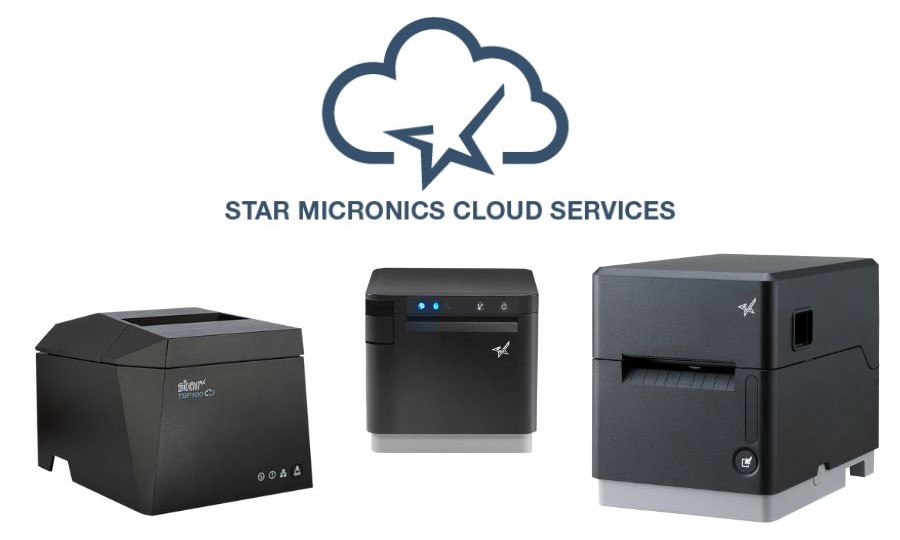
    Star Micronics Cloud Services provides receipt and label customization.
    Star Micronics Cloud Services provides receipt and label customization.

    Buy Online, Pick Up In-Store (BOPIS)

    Technology has added flexibility to the holiday shopping process. Buy online, pick up in-store (BOPIS) allows customers to shop on their devices and pick up their items in person. BOPIS can speed up transactions and minimize crowds at holiday pop-up shops. And if you operate a brick-and-mortar store, it can streamline your processes there, too. To offer this functionality, you must have printers and other POS hardware that help facilitate online ordering.

    Keep POS Printers Connected

    During the critical holiday season, the last thing your business needs is disruption due to network issues. Fortunately, with the right printers and technology, your tablet or device can effectively share its network connection with the printer and vice versa. 

    Imagine a scenario where your mobile device, equipped with a 4G or 5G cellular connection, can extend this network to your printer. This innovative setup – TetherLAN – creates a cloud-based printing environment virtually anywhere, ensuring uninterrupted printing operations, even in the often unpredictable settings of pop-up shops or markets.

    Moreover, some advanced printers offer the ability to share their Ethernet (LAN) network connection with the connected tablet or device. SteadyLAN® by Star Micronics provides a stable and reliable internet connection from the printer to the device, ensuring smoother business operations. 

    By leveraging these smart printers and technologies, you can significantly enhance the efficiency and reliability of your holiday pop-up POS systems, assuring a productive selling experience during this bustling time of year.

    Easy Setup and Breakdown With Compact Hardware

    Holiday pop-up shops present a fantastic opportunity to engage with new customers, but they often pose unique challenges from a technological perspective. In the confined spaces of these booths, every inch counts for showcasing your products and promotional materials.

    Additionally, the frequent need to set up and break down your booth at these markets can become cumbersome with most equipment. However, this process becomes effortlessly manageable by choosing compact printers and accessories designed specifically for mobile point-of-sale (mPOS) systems. mPOS hardware is space-efficient, ensuring a minimal footprint, and has modern connectivity options to get your system up and running without hassle.


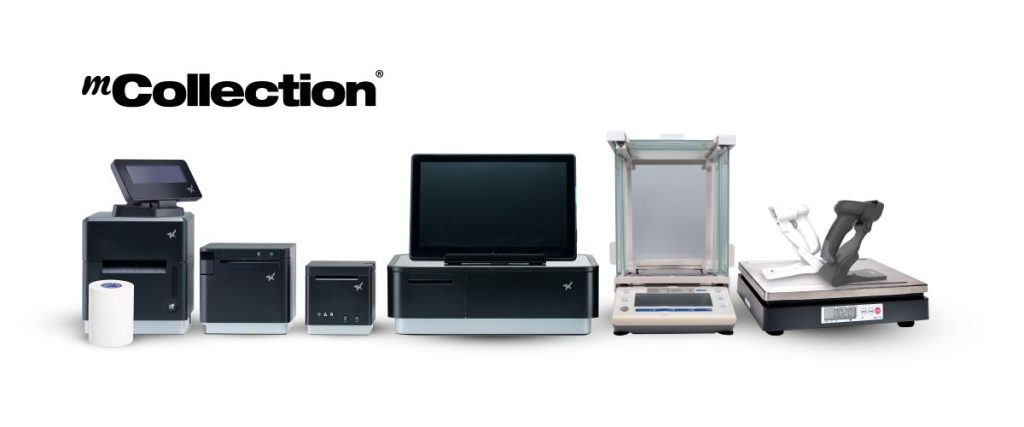
    The sleek, versatile mCollection by Star Micronics. A line of modern POS and mPOS products.
    Star Micronics mCollection® is designed to optimize mobile point-of-sale (mPOS).

    Connected Peripherals for Optimal Performance

    Achieving success in a holiday pop-up shop hinges significantly on employing the proper POS hardware. An ideal technology suite should provide hub functionality, facilitating seamless USB connectivity for multiple peripherals.

    Your POS solution should effortlessly support connections with essential hardware, including:

    With this cohesive setup, your holiday pop-up shop is well-equipped to handle high-volume transactions with ease and precision, enhancing the overall customer experience.

    Embrace Next-Gen Retail POS Technology for a Successful Holiday Pop-Up Shop

    In the fiercely competitive landscape of the holiday season, the combination of standout products and proper pricing remains crucial. However, incorporating modern POS technology can be the catalyst for maximizing the potential of holiday markets and pop-up shops. 

    This season, transform your business approach by opting for a POS printer that not only offers customizable receipts and BOPIS capabilities but also ensures seamless connectivity and boasts a compact, space-efficient design. 

    Embrace the advancements in retail POS technology and hardware to navigate this holiday season with greater efficiency, enhanced customer experience, and boosted sales.

    Is Your Retail POS Technology Ready for Holiday Pop-Up Shops?

    Make This Holiday Memorable:

  • Rising Stars Podcast: Behind the Tech Curtain of Star’s Integration Success

    Rising Stars Podcast: Behind the Tech Curtain of Star’s Integration Success

    The point-of-sale (POS) landscape always presents a unique set of challenges and opportunities for software developers. Technology is advancing at a remarkable rate, and striking the right balance between innovation and practicality is key.

    What developers need is a powerful ally in this journey—an effective partner who ensures their cutting-edge applications will work with the latest hardware and still provide a smooth user experience.

    What software developers need is the Star Integration Team!

    In the latest episode of the Rising Stars Podcast, “Behind the Tech Curtain: Star’s Integration Success,” host Kate Orara has an eye-opening conversation with Mark Rasho, the seasoned Manager of Star Micronics’ world-class Integration Team. With his extensive background in electronic manufacturing, consulting, and business development, Mark sheds light on the critical role integration plays in harmonizing hardware and software to create POS systems that wow customers.

    What you will learn in this episode:

    • The integral role of Star’s Integration Team in supporting software developers.
    • Innovative technologies in the POS industry, including the mC-Label3, TetherLAN, and Android Open Accessory.
    • The importance of seamless integration between hardware and software in POS systems.
    • The evolving role of software vendors in the POS industry and the expansion into niche markets.
    • How Star empowers software developers in the fast-paced world of POS.

    Take advantage of this informative and insightful episode – tune in today and discover the secrets of POS integration success.

    Loving the podcast? Subscribe now, and let us know what you think by leaving a review!

    Stay up-to-date on all things Star, don’t forget to follow us on Twitter, LinkedIn, Facebook, Instagram, and YouTube.

    The Rising Stars Podcast

    Immerse yourself in the ever-evolving world of point-of-sale (POS) with the Rising Stars Podcast by Star Micronics, hosted by industry pro, Kate Orara. Twice a month, we dive into the fascinating journeys of innovators and businesses navigating the challenges of technology’s rapid pace.

    In every episode, Kate Orara, Star Micronics’ Partner Development Manager, takes listeners on an exploration of emerging retail technology trends and strategies with global industry giants. She’s spent her entire career meeting all the right people, and now listeners everywhere can benefit from this vast network of channel gurus.

    Always leading and always innovating, Star Micronics, a pioneer in POS and customer experience technology for over 60 years, welcomes you to join us in shaping a brighter future in the retail, hospitality, and cannabis industries.
  • Tax Law Shifts in Quebec: A Guide for Bars and Restaurants

    Tax Law Shifts in Quebec: A Guide for Bars and Restaurants

    In Quebec’s bustling culinary scene, where flavors evolve and trends change, a new transformation is taking place—not in the kitchen, but in the ledger. A shift in tax laws is underway, one that will affect bars and restaurants across the province. From the established MEV model to the innovative Web-SRM system, these changes carry significant implications for the way businesses record sales and comply with tax regulations.

    This blog post is your essential guide to understanding these changes, equipping your business with the knowledge and tools needed to seamlessly adapt and stay ahead. Whether you’re a restaurateur, a bar owner, or an industry professional, these insights will empower you to navigate Quebec’s new tax landscape with confidence.

    Restaurant owner smiling because he has Star Micronics.

    From MEV to Web-SRM: What’s Changing?

    For years, bars and restaurants in Quebec operated under the MEV (Module d’Enregistrement des Ventes) model. The MEV system mandated every restaurant and bar to record all transactions using a sales recording module, thereby ensuring transparency and adherence to tax norms.

    However, the recent shift to the Web-SRM system marks a significant departure from this traditional model. The new Web-based Sales Recording Module aims to make the tax recording process more efficient and transparent, leveraging digital infrastructure to its fullest.

    The most noteworthy features of the Web-SRM system include:

    • Real-time Tracking: Sales can be recorded and monitored in real-time, allowing for more accurate and immediate insights into transactions.
    • Enhanced Security: Digital encryption ensures that data remains secure, mitigating risks associated with potential breaches.

    • Ease of Integration: The new system seamlessly integrates with various POS systems, reducing the hassles of migration.

    Navigating the Change: The Importance of Compatible Equipment

    With the Web-SRM system in place, the spotlight shines on having POS equipment that’s not just efficient but also compliant. Non-compliance can lead to hefty fines and potential legal ramifications. Therefore, businesses must assess and update their POS equipment.


    With the spotlight now on efficient and compliant point-of-sale systems in Quebec, the need for updated, top-notch printers has never been more critical. Star Micronics understands this need and recommends a range of printers designed for excellence and adaptability.

    Here’s a breakdown:

    The TSP143III Thermal Receipt Printer: Trusted Reliability


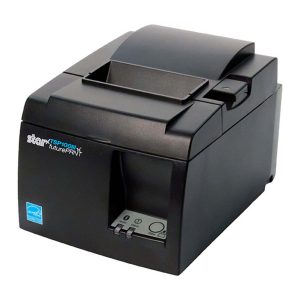
    The TSP143III thermal receipt printer by Star Micronics.
    The TSP143III thermal receipt printer by Star Micronics

    Over the years, the TSP143III has become more than just a printer—it’s become a trusted partner in enhancing business operations. Reliable, efficient, and designed for diverse industries, it promises outstanding performance, making it an excellent choice for your POS hardware needs.

    Key Features:

    • Compatible with iOS, Android, and Windows
    • High-speed printing at 250mm/s
    • Hassle-free setup across all models
    • Simultaneous charging and data transfer with Lightning connection
    • Unique Print Flat technology
    • Access to futurePRNT technology for receipt customization
    • Extensive range of optional accessories for tailored usability

    The TSP143IV Thermal Printer: Compact, Modern, & Cloud-Ready


    The TSP143IV thermal receipt printer by Star Micronics comes in black or white.
    The TSP143IV thermal receipt printer by Star Micronics

    In the world of thermal printers, the TSP143IV stands out with its cutting-edge design, advanced features, and future-proof connectivity. Whether you’re in the retail, hospitality, or cannabis industries, the latest model in Star’s TSP100 series keeps you flexible and ahead of the competition.

    Key Features:

    • Sleek and sharp with a 20% smaller footprint than its predecessor
    • Compatible with iOS, Android, and Windows
    • CloudPRNT technology for cloud-based operations
    • Versatile connectivity to suit modern POS setups
    • User-friendly for effortless installation
    • Backward and forward compatibility with previous versions, ensuring continuity
    • Lightning-fast printing at 250mm/s
    • Standard two-year warranty with options for extended coverage

    The mC-Print3 Thermal Receipt Printer: Premier & Powerful


    The mC-Print3 thermal receipt printer by Star Micronics.
    The mC-Print3 thermal receipt printer by Star Micronics

    The mC-Print3 from the mCollection® is your go-to solution for top-tier POS receipt printing. Compact, sleek, and boasting countless features, this printer is all about blending form with functionality.

    Key Features:

    • Compact design, delivering big performance
    • Compatible with iOS, Android, and Windows
    • A myriad of connectivity options, including Bluetooth, USB, and Wi-Fi
    • Splash-proof with an IPX2 rating, ensuring longevity
    • SteadyLAN® technology for uninterrupted connection
    • A hub of peripheral connectivity options
    • Quick charge and efficient communication with the USB-C power delivery port (select models only)

    Staying Ahead in a Changing Landscape

    Quebec’s new tax laws for bars and restaurants reflect a broader global trend of integrating technology into governance and tax administration. It’s an exciting era, albeit filled with potential challenges. By understanding these changes, ensuring compliance, and leveraging tools like Star Micronics high-performance printers, businesses can adapt and thrive in this evolving environment.

    Remember, staying informed and equipped is half the battle won.

    The Ultimate Guide to Barcode Scanner Types and Applications

    Navigate the world of barcodes with clarity and confidence, ensuring the right fit for your business needs.

    Have questions for us about POS hardware in Canada?