Category: Industry Insights

  • The Rising Stars Podcast: Retail Technology Trends For 2022

    The Rising Stars Podcast: Retail Technology Trends For 2022

    Episode 22 – Retail Technology Trends For 2022

    In this episode of the Rising Stars podcast, join us for an exciting talk about the coming trends for retail technology in 2022 and beyond. Host Brianna Moriarty interviews Nicole Leinbach Reyhle, the Founder of Retail Minded, an internationally recognized industry blog and publication that delivers news and education to independent retailers.

    Together, Brianna and Nicole discuss:

    • Consumer behaviors and retail tech trends coming down the pipeline
    • Tech for inventory control
    • Payment technology options
    • Social and augmented reality shopping
    • Facial recognition technology and how it can greatly impact the space

    Enjoy the show!

    Click here to connect with Nicole on LinkedIn. And as always, to stay up-to-date on all things Star, don’t forget to follow us on Twitter, LinkedIn, Facebook, Instagram, and YouTube.

    Loving the podcast? Subscribe now to never miss a beat, and be sure to let us know what you think by leaving a review!

    Step into the future of market tech with the Rising Stars Podcast, a bi-weekly show covering emerging and innovative market trends and technology in the retail, cannabis, and hospitality space. Join Brianna Moriarty, Partner Development Manager at Star Micronics, as she tackles eye-opening subject matter with some of the best minds in retail technology across the globe.

    Always leading, always innovating, Star Micronics has been an industry pioneer in point-of-sale and customer experience technology for over 40 years. Let’s share our ideas and partner together as we head toward a bright future full of rising stars.

    Head on over to Retail Minded for more!

  • How QR Codes Can Benefit Your Business

    How QR Codes Can Benefit Your Business

    In the Information Age, technological advancements are changing every aspect of life as we know it, especially due to the global COVID-19 pandemic. QR codes have become more widespread than ever, making the hectic information-sharing process easier for us. It might not come as a surprise, but more and more businesses are adopting this technology to make shopping easier for their customers.

    QR codes, also known as quick response codes, are two-dimensional images that can provide a function or store large amounts of data. QR codes can show whoever scans them all about a business or they can be used to facilitate payment transactions. To read the details of a QR code, all you’ll need is a smartphone.

    QR codes are a huge technological advancement in the field of retail and have made product details and other information easily accessible for both customers and employees. They have enhanced the customer experience.

    This is why QR codes aren’t going anywhere.

    QR Codes are the Future of the Customer Experience

    shutterstock_607588487

    QR codes are becoming increasingly essential tools in today’s society, which is why you’ll see them everywhere. The QR code was developed for business needs but was slow to catch on. The booming cannabis industry has been using them for a specific purpose by law, but it wasn’t until the pandemic that QR codes became widely utilized in the retail and hospitality industries. Here are some of their uses:

    Advertising A Product

    A QR code can be used to run advertisements for products. Consumers can now open a website faster by simply scanning a QR code rather than inputting the URL into their browser. The unique codes can also be used to transport the scanner to a landing page displaying products for sale. This makes the purchase decision easier and quicker for the customer, helping save time.

    Informative

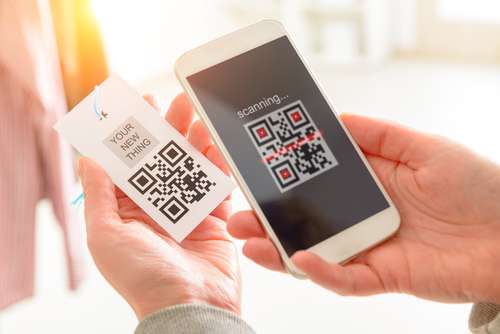
    QR codes are made up of hyperlinks and can be found on business cards, product labels, magazines, websites, email newsletters, and any other items where words and images can be displayed. Users can scan QR codes to acquire information on a specific subject with ease.

    Payment

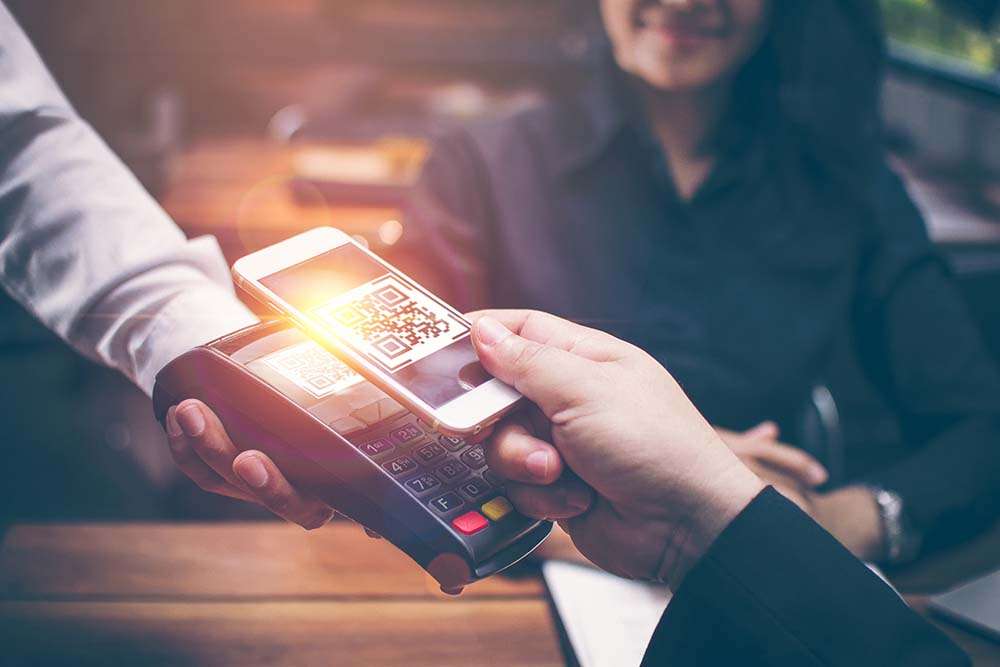
    QR codes can securely hold information about bank accounts, credit/debit cards, and other credentials. By connecting the store’s website to an account or card, the customer can pay simply by scanning the QR code with their smartphones.

    Various payment options can even be incorporated into a QR code, enabling customers to select the most convenient payment option for them. Customers can even show stores their own unique QR code, which the cashier or attendant then scans, taking payment that way.

    Many companies, like PayPal, use QR codes all the time but anyone can use them.

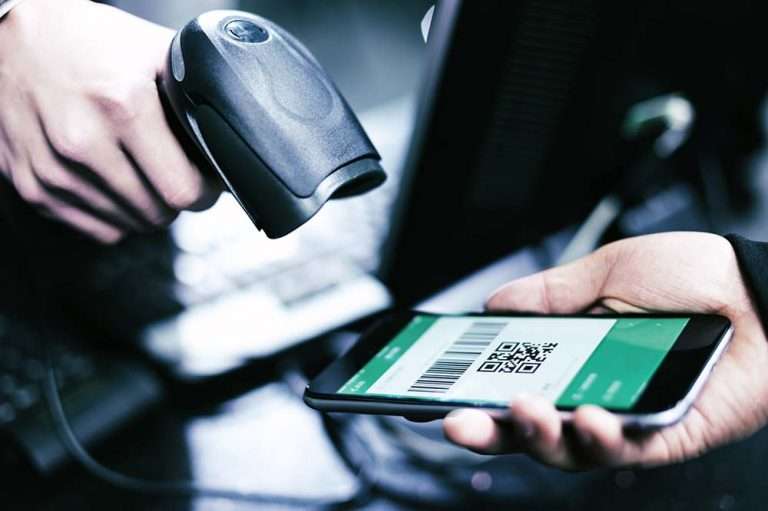
    Check out Star’s QR code scanners: desktop, handheld, and wireless handheld

    The Advantages of QR Codes

    There are seemingly an unlimited number of advantages that QR codes can have for any business. From marketing to inventory control, below are just a handful of examples:

    Ideal For Marketing

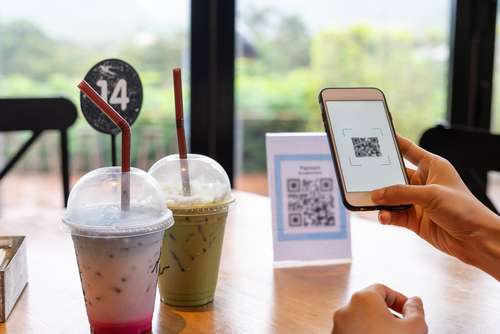
    QR codes are often used as marketing tools that can direct customers to a company’s Facebook, Twitter, Instagram, and other social media sites. Getting your customers to interact with you on social media means increased engagement, promoting brand recognition and driving sales.

    Increased Chances Of Sales

    QR codes make it easy for customers to explore more of what your company has to offer. All they have to do is point their smartphone camera and they’re instantly taken to wherever you as the business owner want to take them. Everyone knows that the more traffic a store has, the more opportunities they have of making a sale. Making it easier for the customer to see and buy your product is just smart business practice.

    Improves Customer Experience

    QR codes are popular with customers for a variety of reasons. To begin with, they are simple to use. The customers only have to scan the QR code to be directed to your company’s webpage or email. They don’t have to memorize anything.

    Moreover, only a tiny percentage of consumers remember to return to your website afterward. QR codes make it much easier for your clients to visit your website by enabling them to scan the code. Again, there’s a significant possibility your customers will buy if you make it easier for them to access the latest offerings and engage with your business.

    shutterstock_1867131817

    Versatility

    One of the advantages of QR codes is that they may be used in a variety of ways. Social media marketing, online purchases, landing pages, special announcements–the possibilities are nearly endless. This is why they are so useful and, dare I say, fun? People like the excitement of seeing where a QR code will take them, so make it memorable!

    To add to this, companies can make their QR codes different shapes, having uniquely-designed codes that set them apart from their competitors, potentially attracting a larger audience.

    Digitalize Your Business

    Businesses can save time and money on traditional advertising campaigns by going digital, and that includes using QR codes. These days, going digital is a necessity. You don’t have to buy banners, flyers, or other printed materials to market your business anymore. A QR code is a one-time investment that can potentially provide a lifetime of marketing efforts.

    Check out Star’s QR code scanners: desktop, handheld, and wireless handheld

    QR Codes in the Cannabis Industry

    In many states where cannabis retail is legal, it is the law that dispensaries use QR codes on their products linking to verified licenses and testing results. This way, customers can immediately determine whether or not their cannabis purchase has passed state-mandated regulatory testing.

    Not only that but these QR codes can also be integrated with point-of-sale systems to keep track of inventory. 

    QR codes can display all the relevant information about the cannabis product for sale, both for customer satisfaction and for dispensary needs. This can be done in any industry.

    How to Get QR Codes for Your Business

    Getting QR codes for your business is easy. Simply find a website that offers a code generator, fill in the required information, click to generate your code, and then stylize it. After downloading the image, you can display it on whatever you want.

    Since their creation, QR codes have gained widespread use, but their popularity is just beginning. Get in on the action before it’s too late and start using this wonderful technology today!

    Love industry news? Explore our podcast:

  • How to Start a Ghost Kitchen

    How to Start a Ghost Kitchen

    Launching a business in the restaurant space carries a lot of risks. The nationwide restaurant failure rate is challenging to track, but the National Restaurant Association estimates a 30% failure rate in the restaurant industry. With high failure-to-thrive rates, rent, and other overhead costs, plus difficulty filling dining rooms, it’s easy to see why entering the industry is so daunting. However, many restaurateurs have found a way around these challenges: ghost kitchens.

    A ghost kitchen is a professional food preparation and cooking facility set up to prepare delivery or takeout meals without the dining room. This solution has made entering the market more manageable, allowing for flexible working space, eliminating the costs of setting up and running a larger front-of-house operation. For these reasons, many restaurateurs and other entrepreneurs are looking into how to start a ghost kitchen, including what kind of point of sale (POS) technology they will need to get started. 

    Planning a Ghost Kitchen

    Ghost kitchens lower the barrier of entry to the restaurant industry. However, there is still a significant amount of planning that goes into opening a ghost kitchen. For instance, you will still need to find a kitchen space to buy or rent from. The good news is, without a dining room, you can select from a workspace that may have lower foot traffic, which means cheaper rent. 

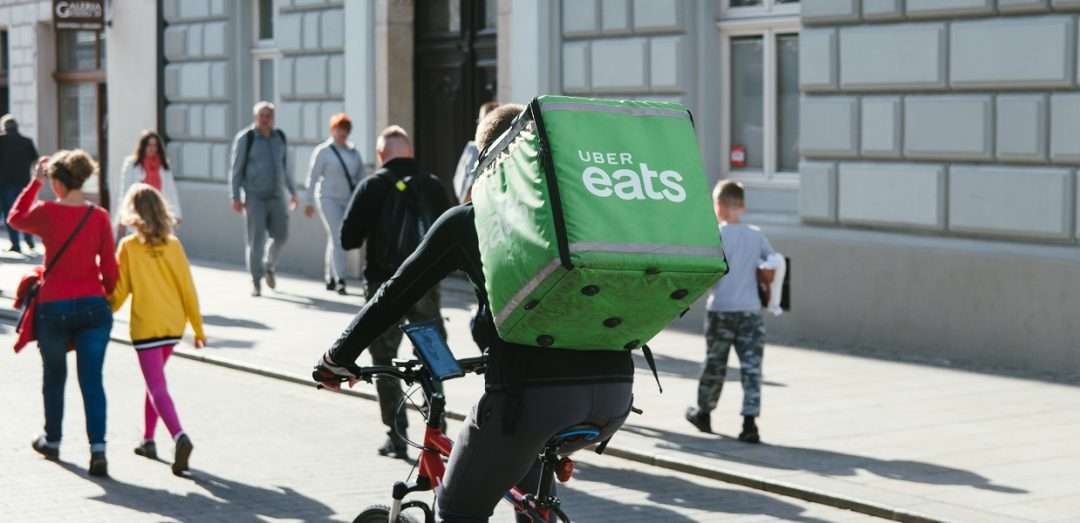
    It may still take you a while to design a menu, however, and you will have to decide between in-house delivery services or outsourcing with partnerships from UberEats, DoorDash, or other sources. And, of course, you will still have to invest in the usual kitchen essentials: food, utensils, and technology.

    POS Technology To Invest In

    As a ghost kitchen owner, your operations will be very different from traditional restaurant operations and will require a more comprehensive digital solution. To keep up with these unique demands, you will need specific technology designed for your kitchen.

    First, you will need an ordering and payment solution that will allow customers to order and pay for their meals online or via a mobile app. Next, you’ll need a kitchen display system (KDS) to get those online orders directly in front of your kitchen staff, keeping your line moving fast and efficiently.

    Also, you can keep your kitchen moving by sending orders to a mobile printer using linerless labels and sticking them directly onto the to-go packages. This minimizes confusion, shortens delivery and pick-up time, keeping the orders moving (be sure to use tamper-proof labels to assure food order safety as well). In addition, as a digitally advanced kitchen, you’ll need a POS system that integrates all of these solutions, making it easy and seamless to manage your operations on a day-to-day basis.


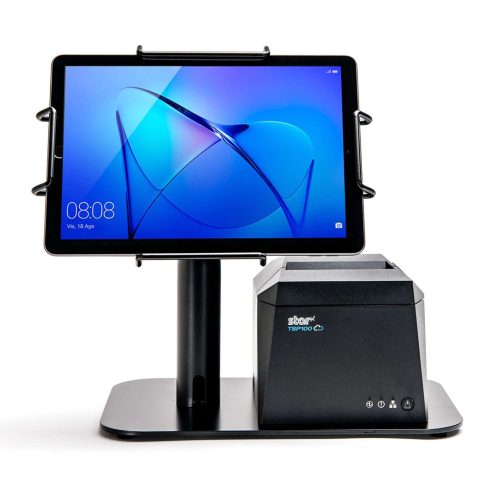
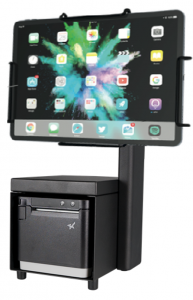
    The EZ POS tablet stand by Star Micronics. Shown in black with TSP143IV receipt printer.
    The EZPOS tablet display stand by Star Micronics

    If you use multiple delivery services and want to keep your POS system flexible by using a mobile tablet, it’s also a smart idea to invest in a tablet stand. It may quickly become one of your kitchen’s most essential tools, providing a home base for your point of sale and making it easier for staff to match up orders with corresponding delivery service providers. A proper stand should also help to protect your tablet, including any receipt or order printer you may have alongside it.

    Your go-to For Ghost Kitchen POS Technology

    Star Micronics provides flexible, futureproof POS technology designed to connect front and back-of-house operations with ease, keeping ghost kitchens operating at their peak. Star provides everything from portable printers, regular and sticky thermal receipt paper, durable tablet stands, and much more. Through one of our certified partners, you can get all of the hardware your ghost kitchen needs. 

    If you’re ready to find the best step up for your ghost kitchen and get ahead of your competition, contact Star today. Discover what our industry-leading technology can do for you and your restaurant business goals.

    The Growing Industry of Ghost Kitchens: The Tech You Need To Get Started

    Learn the essentials of starting a ghost kitchen and the technology restaurateurs will need to get started. 

    Love industry news? Check out our podcast:

  • Retail Rebound: 5 Expected Post-COVID-19 Consumer Trends

    Retail Rebound: 5 Expected Post-COVID-19 Consumer Trends

    The retail industry has seen some interesting times in the past couple of years, to say the least. Pre-pandemic, the industry was dappling in omnichannel capabilities. When the pandemic hit in early 2020, after a brief shutdown and calibration period, the Retail Rebound emerged. Contactless payments, QR code technology, online ordering, and more have blossomed – but what is here to stay? In today’s blog post, explore some of the top solutions that have grown during the pandemic and which are predicted to remain in the Retail Rebound and beyond.

    1. Contactless Payments

    Payments are changing as we know it, and contactless payments are on the rise. In fact, according to Forbes, over 35% of consumers claim they use contactless payments for at least 75% of their retail purchases.

    Contactless payments can take several forms but the most popular are mobile wallets like Apple Pay and Google Pay that are available on smartphones and smart watches, and NFC credit and debit cards. These technologies allow customers to simply hold their device or card over a compatible payment terminal instead of having to use cash or swipe or insert their card. While these payment methods first gained traction as a way to avoid germs, their speed, convenience, and security make them liable to remain popular for the foreseeable future.

    2. BOPIS (Buy Online, Pick Up in Store)

    Buy online, pick up in store (commonly called “BOPIS”) is a prime example of a retail offering that was slowly emerging before COVID-19, but exponentially grew in popularity during the pandemic and continues to do so during the Retail Rebound.

    According to research by Kibo Commerce, BOPIS orders grew over 500% by the height of the pandemic in 2020. However, while many shoppers turned to BOPIS as a way to stay safe, it’s been found that over half of them actually favor it for its convenience, meaning we can expect for it to stay around for good. Who would want to turn back the dial to more inconvenient methods of shopping?

    3. Omnichannel Shopping

    As the pandemic began to unfold, one thing was true for retailers: if you aren’t online yet, you need to be now. The safety and convenience offered by providing customers an omnichannel shopping experience quickly went from a “nice to have” to a “must have.” It appears shoppers continue to consider online shopping a necessity – according to GWI, as of spring 2021, 76% of consumers in the US and UK said they’re still doing more online shopping compared to before the pandemic.

    BOPIS, which we mentioned above, is part of an omnichannel strategy, as is having an informative and functional website, real-time inventory management, and more. Click here to learn more about a successful omnichannel strategy.

    Free Resources During COVID-19 & Beyond

    Now more than ever, safety is a priority in retail and hospitality environments. Star Micronics is proud to offer a line of solutions and resources for businesses during this challenging time, designed to keep consumers and employees safe, as well as mitigate business impact caused by COVID-19.

    ANTIMICROBIAL COVERS
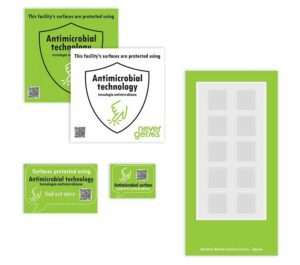
    Antimicrobial covers offered by Star

    4. Cleanliness

    This one might seem like a no-brainer, but its effects may be more long-term than you initially thought. Germ avoidance is of course extremely important, especially during the peak of the pandemic. However, even as the worries of COVID-19 eventually fade, the desire to avoid touching other people’s germs is likely to stay. Things that we used to touch regularly without a second thought, like door handles, now have us feeling some hesitation. Flu season is an example of a recurring scenario in which people will likely be a lot more cautious about germs than before the pandemic.

    Businesses can ease these worries by installing the right solutions. Most retailers probably already have a plexiglass sneeze guard installed at checkout counters, but something they may not have yet are antimicrobial covers. These peel-and-stick covers can be applied to door handles, checkout counters, elevator buttons, and more. With an easy application process and a lifespan of up to six months, they’re a great way to consumers’ ongoing need to stay safe and healthy.


    5. Self-Service

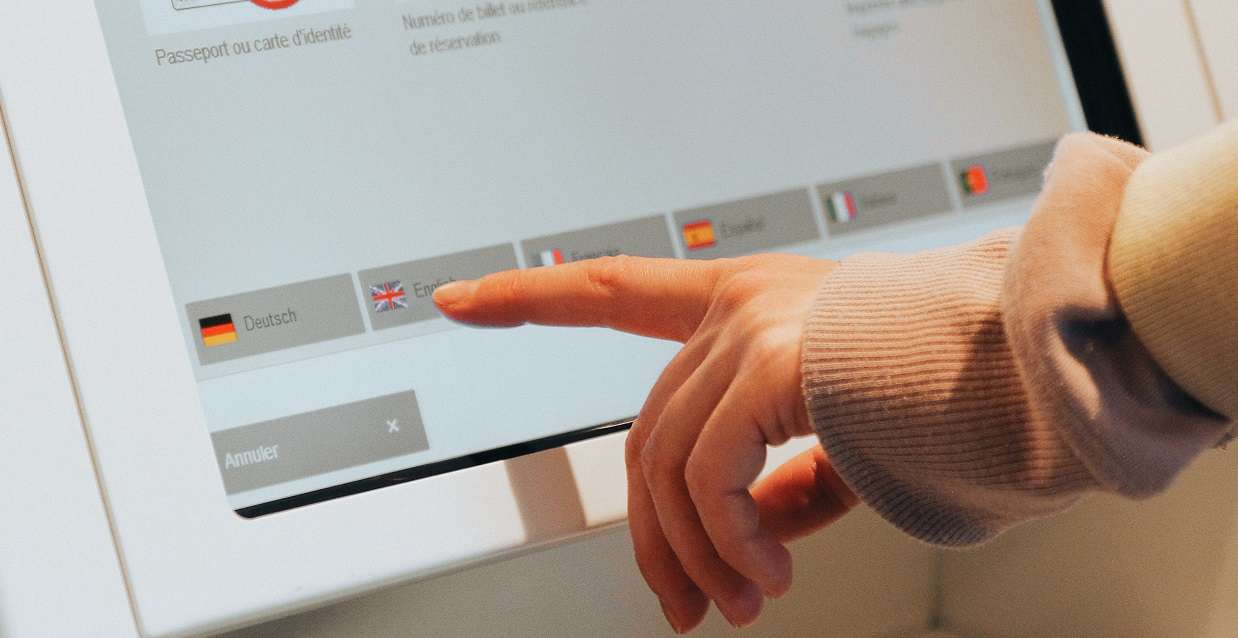
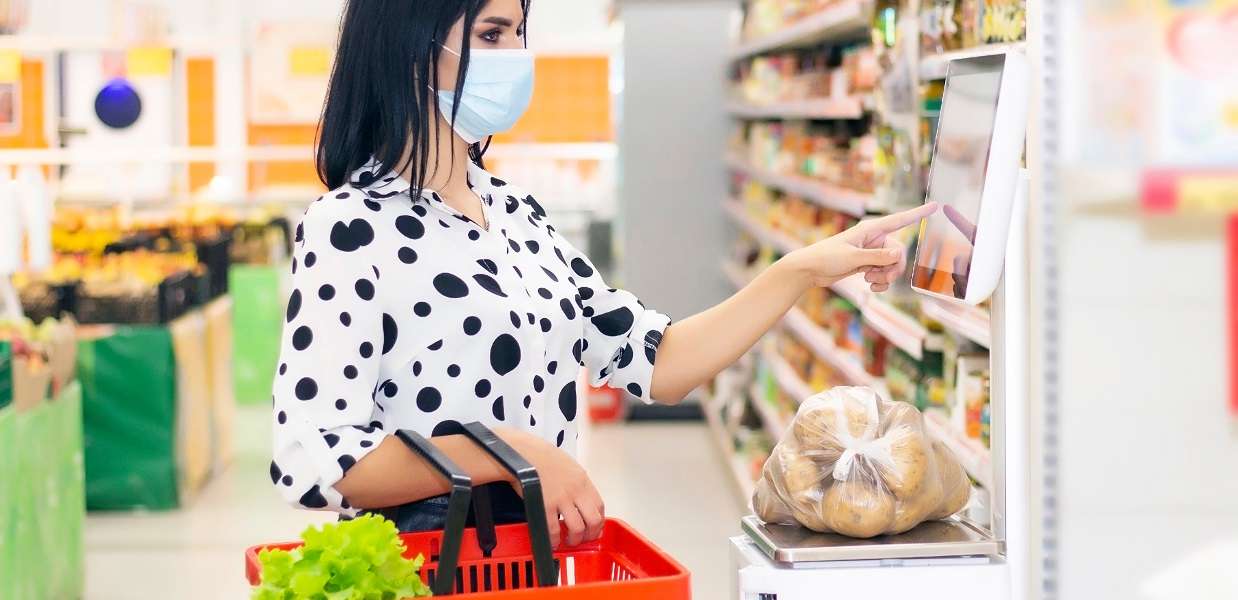
    Whether you’re ordering your meal at a restaurant or checking in to your doctor’s office, self-service kiosks are growing in popularity across several markets – and for good reason. Kiosks help minimize the risk of spreading germs via face-to-face contact, they can help with line-busting (especially during the current labor shortage), and they provide a prime opportunity for upselling and brandingThese benefits are expected to remain present during the pandemic and beyond; according to Infiniti Research Limited, during 2021-2025 the self-service kiosk market is expected to grow by $2.97bn, at a CAGR of almost 6%.

    Retail Rebound: The “Here and Now” is Here to Stay

    Retail has changed for good. The unprecedented pandemic brought on a slew of challenges seemingly overnight, and the solutions the market has created to adapt to those challenges are likely here to stay as they provide ongoing safety, convenience, and security to shoppers worldwide. Now is the time for retailers to assess and optimize their operations.

    Always leading, and always innovating, Star is proud to offer a range of retail POS hardware solutions to accompany the ever-evolving retail market trends.

    Full 2022 Product Catalog by Star Micronics.

    Star Micronics Product Catalog

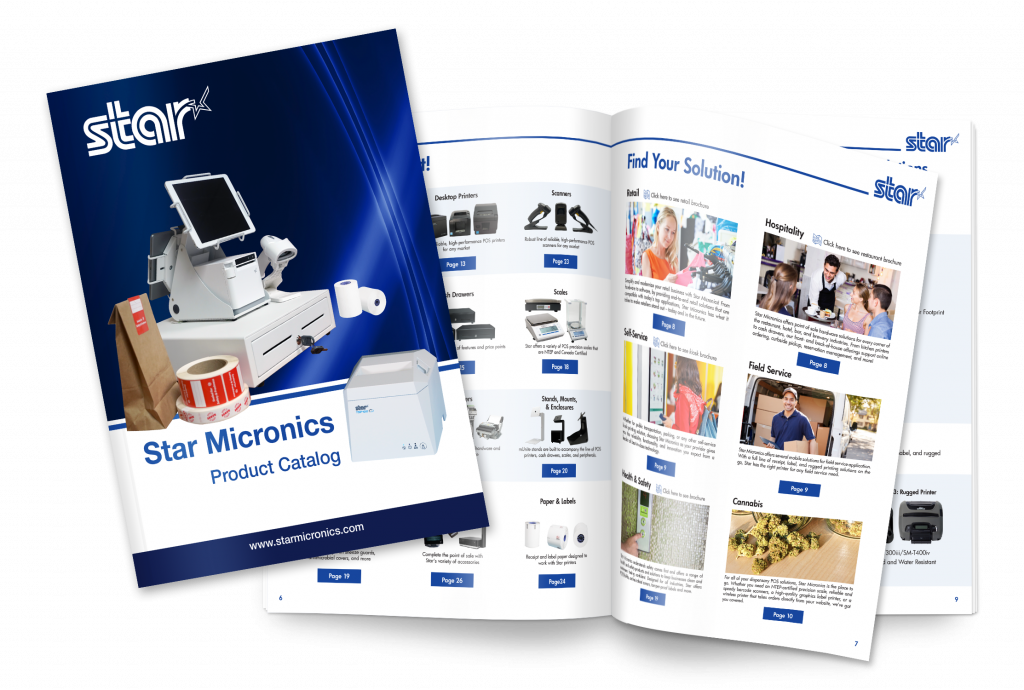
    Explore POS printers, label printers, kiosk solutions, and accessories for retail, restaurant, self-service, and more.

    Disclaimer: NeverGerms® makes no claims regarding the safety or health of the general public or those interacting with its products. “NeverGerms®” and “Touch Less Germs®” are registered trademarks and not intended to have literal interpretation. NeverGerms products are manufactured by NeverGerms and distributed by Star Micronics. Although these products are designed to reduce microbe populations on commonly-utilized surfaces and have been tested by the manufacturer for their antimicrobial properties, Star Micronics cannot guarantee that they will eliminate all risk of germ, including virus, transfer from such surfaces. Star Micronics, as distributor, relies entirely upon claims made by manufacturer as supported by prior research. For further information, please visit www.nevergerms.com.

  • What to Look for in a POS System for a Small Restaurant

    What to Look for in a POS System for a Small Restaurant

    As the owner or manager of a small restaurant, it can be intimidating to think about all of the point of sale (POS) components that you need. With so many options on the market, what’s the best POS system for a restaurant? Read on to explore the must-have POS system features, from online ordering to front-of-house management.

    1. Online Ordering Capabilities

    Online ordering went from a “nice-to-have” option to a “must -have” in just a couple of short years. In fact, online food delivery sales are estimated to grow up to $220 billion by 2023 (and comprise 40% of total restaurant sales). And let’s not forget about online orders for in-store pickup, too. Either way you cut it, online ordering isn’t just for the chains; it’s for small businesses like yours.

    Be sure to look for a POS system that includes online ordering capabilities. Some POS software may include this feature, or you may be able to simply use a printer equipped with cloud printing technology (like Star’s) to print third-party online orders from services like DoorDash, GrubHub, Uber Eats, and more.

    2. Mobile Payment Acceptance

    Just like online orders are booming, so are mobile payments. Simply put, mobile payments are those made on mobile devices like smartphones and smart watches. Instead of paying with cash or a credit/debit cards, consumers use their digital wallet to pay for their goods.

    To be able to accept mobile payments, your POS system must be equipped to handle NFC (or, near field communication) payments, which are made by a mobile device (or contactless card) being two inches or less from the NFC-equipped card reader. Examples of mobile payment providers are Apple Pay, Google Pay, and select credit/debit cards.

    3. Back-of-House Communication

    We’ve all been there: you find a restaurant that serves up delicious food but has a clunky workflow that leaves you hungrily waiting for your meal. Avoid being this restaurant by choosing a POS system that features top-of-the-line communication between the front-of-house and back-of-house. What does this look like? It looks like a POS terminal (or online ordering service) that seamlessly communicates to the restaurant kitchen KDS (kitchen display device) and kitchen ticket printer via technology like CloudPRNT. As orders are placed, they’re immediately sent to the cook in full detail. Say goodbye to long wait times and inaccurate orders with the right communication!

    4. Front-of-House Management

    Efficiently turning tables means higher revenue. Successfully navigating a large party means happy, repeat customers. Clearly, front-of-house management is key, and the right POS system for a small restaurant can help those efforts. Look for a POS system that features click-and-drag layout builders and the ability to see table times and when tables are about to turn.

    5. Menu and Order Management

    Menus change, and customers’ tastes vary. Your POS can help you navigate that. The right POS system can help you arrange your menu in a way that makes the checkout process faster, as well as let you make real-time updates from anywhere and apply them to every one of your locations.

    When it comes to order-taking, restaurant POS systems can help you quickly modify your customer’s order to their exact taste. Have a special discount idea in mind? POS systems can also allow you to create happy hours and more in mere seconds.

    Star Restaurant POS Solutions

    From online ordering printers to kitchen buzzers, Star is proud to offer POS solutions for restaurants, QSRs, food stands, and more.

    6. Marketing Capabilities

    One of the reasons people love small restaurants is for their personal touch. Leverage POS technology to take that personal touch to a new level! POS systems for small restaurants can include marketing capabilities including:

    • Detailed customer profiles so you can send customized offers
    • Loyalty/reward programs
    • White-labeled websites and apps that feature your restaurant’s branding
    • Custom receipt marketing (available on select receipt printers, like Star’s)

    7. Detailed Reporting

    If there’s one thing that POS systems have, it’s data, and you can put that to use by choosing a POS system that offers detailed reporting.

    Reporting can include:

    • Live data and daily statistics
    • Sales by category
    • Sales by item
    • Sales by payment type
    • Sales in different shifts
    • And more

    8. Integrations

    Right about now you may be thinking there’s a lot of different technologies involved in the best POS system for a restaurant. There’s the software, the hardware, and third-party services like food delivery. That leads us into the next (and possibly most important) aspect of a POS system: it’s integrations.

    Save valuable time (and avoid headaches) but choosing a POS system that is integrated with either the software and hardware you already have, or the software and hardware you want to have. For example, if you already have Star printers, choose a POS software that is integrated with Star (hint: there are many). Or, if you know you want to use a certain POS software, be sure that your hardware is integrated with it so that you can set up your system out-of-the-box.

    9. Technical support

    Support is important – and not just when something breaks! Be sure to choose a POS system and vendors that offer pre-sale support (helping you identify the right solution for your needs), installation support and training, and easily accessible post-sales support (like an online help center and live chat).

    Star’s Affordable Small Restaurant POS Bundle

    mCP30 with mC-Sound

    mCP30 with mC-Sound

    If you’re looking for an affordable kitchen printing setup, look no further than the mCP30 paired with an mC-Sound kitchen buzzer.


    mCP30 Highlights:
    Everything you love about the mC-Print3, with an even lower price tag.

    • Ethernet
    • USB
    • CloudPRNT for online ordering

    Learn More >


    mC-Sound Highlights:
    A modern take on the kitchen buzzer.

    • Discreetly fits inside the mCP30
    • High quality sound (89dB)
    • 16 pre-recorded melodies
    • Records custom user speech

    Learn More >

    Explore all of Star’s restaurant POS solutions now.

  • 6 “Must-Haves” for Stadium POS System

    6 “Must-Haves” for Stadium POS System

    The economy is reopening, and consumers are excited to attend events and sports games. When visiting a large sports stadium or entertainment arena, you often find long lines for food and merchandise during half-time or intermissions. The people attending these professional sports games or concerts paid good money to see their team play or favorite artist perform, and they don’t want to miss a thing. This puts a huge amount of pressure on the employees working the concession stands or merchandise shops to complete the customer’s order as quickly as possible. A lot of this workflow plays into the stadium point of sale (POS) system being used. Here are 6 “must-haves” when looking for a stadium POS system.

    1. Intuitive Software

    First and foremost, you will need an easy-to-use and intuitive stadium POS software. Depending on how often a team plays in the stadium or how many performances take place per year, stadium employees tend to work more sporadically compared to your standard restaurant or retail employee. This means that stadiums need a POS system that concession and merchandise shop employees can pick up quickly with little to no training.

    Some other key features to look for in stadium POS software are:

    • The ability to offer ordering in a variety of ways: in-queue, in-seat, or mobile
    • Mobile wallet payment acceptance
    • Loyalty programs and benefits
    • Detailed inventory management
    • Operational insights
    • Cash management and hawker support

    2. Back-of-House Support

    While people rarely see what goes on behind the scenes at stadium concession stands, it’s important to make sure that your stadium POS manages the back-of-house just as well as it manages your transactions.

    A variety of tools – from inventory management and menu management to fan data and back-end analytics – can help you to make sure you never run out of stock during a big event. By having access to analytics that can be reported day-to-day, you can make sure that your concession menu appeals to your audience for a particular game or event.

    3. Varied Payment Support

    When you have a packed stadium with a mile-long line of customers, you simply do not have time to fuss over payment methods. In a high-pressure, high-volume environment such as sport and entertainment stadiums, you need to get your customers through the line as quickly as possible.

    One of the best ways to ensure a quick and seamless transaction is to make sure your POS system supports a multitude of payment methods. Did you know that it is estimated that by 2023, there will be 80.1 million near field communication (NFC) mobile payment users? Now, with more people adopting mobile wallets, you will see more and more retailers and concession stands accepting NFC payments at major sports arenas. Make sure that when your customer is set with their order and ready to pay, that whatever form of payment they choose will be accepted at your point of sale.

    4. Mobile Ordering

    One ordering method that’s rapidly gaining popularity in sports entertainment properties is mobile ordering. During major sports games and concerts, people don’t want to leave their seat and risk missing a big play or their favorite song. Many stadiums are adopting a mobile ordering method where fans can order food or drinks on their mobile device and either have it delivered to their seat, or go grab it when it is ready. Fans don’t have to miss a thing and concession employees don’t have to deal with a line of angry customers. It’s a win for everyone!

    5. Reliable Hardware

    In fast-paced environments such as stadium concession stands and merchandise shops, employees don’t have time to deal with flaky hardware. They need their receipt printers to print and their cash drawers to open every time a transaction is completed, and they need hardware that will withstand the high volume of transactions. Appetize and Star Micronics have teamed up to create a complete stadium POS solution that combines intuitive software and reliable hardware peripherals.

    The Appetize-Star solution includes:

    You can find the Appetize and Star Micronics bundled POS solutions in major sports and live entertainment locations including the Golden 1 Center (home of the Sacramento Kings), U.S. Bank Stadium (home of the Minnesota Vikings), over 40 Live Nation properties, and many more.

    6. Health & Safety Products

    In this day and age, health and safety are a priority. Many people are ready to venture back into the world for some fun, but they of course want to minimize the spread of illness.

    Stadiums and event venues can keep their guests feeling safe and confident with the right health and safety products. Examples of these solutions including sneeze guards at the point of sale, antimicrobial covers on surfaces like door handles and railings, and tamper-proof labels to secure the food and beverages guests order from their seats.

    Health & Safety Solutions Brochure

    Discover which solutions can keep your business squeaky clean and help customers feel confident at your brick-and-mortar location.

    Featured Star Stadium Solutions

    TSP654IIBi

    TSP654II

    SM-S230i

    SM-S230i-300x200

    TUP500

    TUP500

    Antimicrobial Covers*

    ANTIMICROBIAL COVERS

    POSShield

    POSShield

    Tamper-Proof Labels

    Tamper-Proof Labels

    Looking to learn more about Star’s stadium POS solutions?

    *Disclaimer: NeverGerms® makes no claims regarding the safety or health of the general public or those interacting with its products. “NeverGerms®” and “Touch Less Germs®” are registered trademarks and not intended to have literal interpretation. NeverGerms products are manufactured by NeverGerms and distributed by Star Micronics. Although these products are designed to reduce microbe populations on commonly-utilized surfaces and have been tested by the manufacturer for their antimicrobial properties, Star Micronics cannot guarantee that they will eliminate all risk of germ, including virus, transfer from such surfaces. Star Micronics, as distributor, relies entirely upon claims made by manufacturer as supported by prior research. For further information, please visit www.nevergerms.com.

  • POS Trends to Expect in the Second Half of 2021

    POS Trends to Expect in the Second Half of 2021

    As we reach the midway point of 2021, one thing is certain: this year is monumental to the point of sale (POS) industry as the economy rushes into recovery. Read on to explore some of the top POS trends to expect in the second half of the year and beyond.

    POS Trend #1: Ongoing Online Ordering Boom

    In the return to normalcy, and in many regions, restaurants are reopening, and brick-and-mortar retailers are trying to resume their activities as close as possible to their pre-pandemic levels. But no matter where businesses are on their recovery journey, online ordering is here to stay, and not just because of it being the primary method available to consumers during the pandemic. In fact, consumers worldwide have discovered the convenience and benefits of online ordering and have decided to stick with that method of purchasing, even as physical businesses reopen.

    Interestingly, businesses have also found additional benefits in using online ordering platforms. Advantages include an additional revenue stream flowing into their businesses, as well as the opportunity to utilize more robust loyalty programs in a less intrusive, nearly seamless way. This improved loyalty strategy can improve the customer experience and in turn create sticky customers.

    Most of the initial challenges many online ordering systems and digital transactions faced have been mitigated, making them an even more appealing option for businesses everywhere. For example, new security measures like multi-factor authentication are becoming standard, allowing a business to offer promotions, discounts, and payments that are less susceptible to fraud.

    POS Trend #2: Faster Technology Adoption

    Complete solutions and intuitive user experiences (UX) have become essential, and although price will most definitely always be an important consideration in any technological deployment, now value and having the right solution have risen to the top of the priority list.

    In a rapidly changing market, solution integrators have no time to spare to try new things that they are not sure will work or test products from uncertain vendors. Instead, they are opting to go directly to what is already working in the market and are selecting the brands with the technologies that are being adopted massively by market leaders.

    POS Trend #3: An Emphasis on Health and Safety

    Even after the COVID-19 pandemic passes, health and safety will remain a priority to people worldwide. To put employees and customers at ease, a new POS trend has accelerated and retail and hospitality businesses that are reopening must offer a tangible sense of safety to their customers.

    Popular health and safety POS products include sneeze guards placed at the point of sale, antimicrobial covers which reduce germ transfer on high-touch surfaces, and tamper-proof labels to securely seal delivery and takeout orders.

    Health & Safety Solutions Brochure

    Discover which solutions can keep your business squeaky clean and help customers feel confident at your brick-and-mortar location.

    POS Trend #4: Affordable and Simplified Development

    The development side of the industry is also experiencing changing POS trends. Development phases are accelerating, and software providers are developing using cross-platform tools (like the StarXpand™ SDK) on the React Native platform, cutting development time and cost in half.

    As most digital interactions and virtual communications are happening in the cloud, POS transactions, especially for online ordering, are not an exception. Technologies, like CloudPRNT, are allowing the seamless connection of thermal printers to the cloud. These technologies are not only cost-effective but also shorten integration and development times and are becoming the go-to solution in the market.

    POS Trend #5: The Continued Rise of Self-Service Kiosks

    Did you know that more than 65% of customers said they would be more willing to visit a restaurant if self-service kiosks were offered?

    Clearly, self-service kiosks are a rising POS trend and as they are more widely used, consumers will hold them to a higher standard and expect them to be reliable, intuitive, and safe to use. Because of this, self-service kiosks are particularly sensitive to the quality of the components they are integrated with, so it is essential that those components are selected carefully.

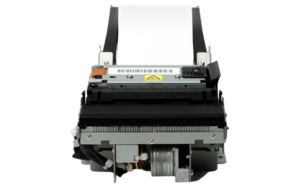
    Some POS hardware manufacturers, like Star, offer a vast portfolio of kiosk printers with receipt and labeling capabilities with features that can help ensure customer satisfaction. For example, a kiosk printer with a bezel allows for jam-free kiosk operations, and large-capacity paper rolls allow for extended paper autonomy.

    mC-Print3-Kiosk-193x300For businesses and integrators with tight budgetary constraints, there are still options for assembling a highly sophisticated self-service kiosk solution. For example, businesses can pair a desktop printer, with the right technology built-in, with a universal tablet enclosure, a tablet, and a tablet stand. This is when finding the right one-stop shop POS manufacturer to work with that can provide all of those components becomes key.

    Recommended Solution

    For an affordable yet high-quality kiosk, connect the Star Micronics mCP31L multi-interface thermal printer to an iPad via the Lightning port. Next, place the iPad in a Universal mEnclosure (which locks for security purposes), attached firmly to an mUnite stand. Pairing these Star products together can turn a potentially complicated and costly kiosk project into a functional, cost-effective, and simple one.

    As a one-stop shop, Star is proud to provide a complete range of POS hardware solutions for retailers, restaurants, and more.


  • 6 Post-Pandemic Kiosk Business Ideas

    6 Post-Pandemic Kiosk Business Ideas

    For years now the self-service kiosk market has been growing but undoubtedly the COVID-19 pandemic skyrocketed its growth even further. According to Technavio Research, the self-service kiosk market grew 3.55% in 2020 alone, and it’s expected to grow by $2.29 billion USD during 2020-2024. As the world begins to recover from the unprecedented pandemic, you may be wondering what post-pandemic business ideas and self-service business ideas are emerging in the market. Read on to learn about some of the new ways kiosks are being used, from health and safety check-ins to kiosks for a good cause.

    1. Health & Safety Kiosks

    This first business idea is probably not a surprise. As the economy reopens, health and safety kiosks will be an easy addition to restaurants and retail stores. An example of this may look like a kiosk placed near the front door of establishments where customers can check their body temperature, and if applicable the kiosk can use facial recognition technology to detect if the customer is wearing a mask. Quatrefoil, a Ontario-based restaurant, uses a kiosk that checks both of those things and will display a green checkmark if requirements are met, while if the requirements are not met, a staff member is alerted to come provide assistance.

    2. COVID-19 Test Distribution

    Also health-related, another post-pandemic business idea is to use kiosks to distribute testing kits for COVID-19 – and more. In New York City, this is already happening. Vending machines from Wellness 4 Humanity conveniently provide at-home COVID-19 testing kits to the public, which can be more convenient than being tested at a pharmacy drive-through, especially for city dwellers. Kits currently cost $149 and can be paid for by credit or debit card only. These kinds of kiosks have lots of potential to distribute much more than just COVID-19 testing kits, like at-home tests for allergies, hormones, blood panels, and more.

    3. Pickup Lockers

    Restaurant Food Pickup Locker
    A heated pickup locker for food orders. (Image via Kiosk Marketplace/Rise Southern Biscuits & Righteous Chicken)

    You’ve probably heard of retail pickup lockers, like Amazon Hub Locker, a secure, self-service kiosk where customers can pick up or return Amazon packages at their convenience. Pickup lockers are for more than just retail, though. Restaurants like Rise Southern Biscuits & Righteous Chicken are beginning to incorporate heated locker systems in their brick-and-mortar establishments to further build upon their contactless ordering options for customers. These heated lockers keep food fresh while also minimizing the physical contact between customers and employees, which not only provides a safety benefit during the pandemic, but will boost convenience and help line-busting well into the future.

    4. Transportation

    A common complaint regarding department of motor vehicle (DMV) offices is the chance of experiencing a long wait time. What better way to line-bust than with self-service kiosks? Currently approximately 45 DMVs in the US operate some sort of self-service technology, but the potential is huge for a number of government agencies. At self-service kiosks, DMV customers can renew drivers licenses, register vehicles, obtain license plates, take driving and CDL exams, and more. The process can be secure by using an access code or barcode from a renewal notice or license plate number and last four digits of a VIN, and language barriers become a problem of the past with multilingual on-screen instructions and audio.

    Free Self-Service Kiosk Resources

    The future of many industries lies with self-service solutions. That’s why Star Micronics is offering free online ordering resources for resellers and software developers who are helping customers future-proof their businesses with self-service solutions.

    5. Reception

    As people become more comfortable traveling again – and more workers remain remote – self-service kiosks that aid in reception will be very helpful to countless sectors. One example of this is a Zoom product that “enables a contactless, virtual receptionist in its newly introduced Zoom Rooms product to help organizations safely re-enter the office and sustain an ‘everywhere workforce.’” To use the solution, users can customize the “Start Meeting” button on a device in their building that is set up with Zoom Rooms for Touch to connect visitors with a receptionist. This kind of self-service check-in service could be useful for countless types of business and medical offices, hotels, and more.

    6. Kiosks for a Good Cause

    Marla Aaron Jewelry Vending Machine
    The Marla Aaron jewelry vending machine that benefits restaurants and those in need. (Image via Marla Aaron)

    Kiosks aren’t just about line-busting, boosting profits, and increasing convenience – they can give back, too. Self-service kiosks can be a great way to increase awareness of fundraising campaigns and make it easier for busy citizens to contribute to a cause. Take, for example, the kiosk that is a part of the “Take a Seat for Restaurants” campaign. The campaign is a part of jeweler Marla Aaron’s plan to contribute to the World Central Kitchen, a popular food-related charity that pays local restaurants to make meals for those in need. Aaron sells small 2” sterling silver chairs for $250 each from her brick-and-mortar locations, her online store, and a self-service vending machine based in New York City that changes locations to maximize its awareness (and more installations are coming!).

    The number of post-pandemic self-service business ideas is limitless. Whether you’re looking to implement a self-service solution for a restaurant or for a charity – or anything in between – you’ll likely need a built-in receipt printer. Look no further than Star Micronics. We proudly offer a wide range of thermal kiosk printers that can print receipts, labels, tickets, and more, and are ideal for a variety of applications and industries.

    Looking to implement a post-pandemic business idea involving self-service kiosks?

    Explore how Star can help you build a solution.

  • 4 Self-Service Market Predictions in 2021

    4 Self-Service Market Predictions in 2021

    As businesses and consumers become more aware of and more familiar with what is needed to continue doing business in the new normal, a brighter light is emerging at the end of the tunnel in terms of the coronavirus pandemic – vaccines are becoming more available and the processes needed to get them into people’s arms more efficient. From a technology perspective, you may wonder which solutions that picked up steam during the past year will continue to gain momentum in the future.

    One technology that has taken flight during the pandemic – and has immense potential for years to come – is the self-service market. As the economy reopens and shutdowns become less restrictive, early adopters of self-service kiosks are coming back with revamped versions of their previous kiosk’s solutions, while new adopters are considering the latest trends in the self-service market.

    Read on to explore which industries are experiencing self-service market solution changes and key self-service technology predictions.

    Which Industries are Experiencing Self-Service Market Changes?

    Let’s take a closer look at which industries and solutions have been affected and needed some fine-tuning during the pandemic, and which were introduced as brand-new alternatives to existing technology.

    • Healthcare and Service Providers: In the healthcare and service provider sectors, a few self-service trends have emerged. These industries have begun to require a more powerful queue management system, as well as additional features such as temperature screening, AI-powered engines, and expanded access control solutions like printing name badge labels for visitors who were cleared during the screening process.
    • Banking: ATMs have recently gotten a facelift by providing additional human interaction. While ATMs are of course still a self-service solution, intelligent ATMs are pairing their automation power with a human touch by providing teller-customer communication through a speaker. The teller can answer questions, print full transactions, account details, and more.
    • Retail and Hospitality: With the proliferation of online ordering, the buy-online-pickup-in store (BOPIS) model has become more popular than ever for restaurants and retailers. In some cases, it has even helped to keep businesses afloat that would not have delivery options otherwise. One popular update to the BOPIS model is the introduction of virtual lockers to pick up small-sized orders. The virtual lockers offer many options including the ability for consumers to obtain printed receipts at the locker (or virtually) instead of having to go inside the store.

    Self-Service Market Technology Predictions

    When we look into the future of the self-service market, many of the trends we expect to see revolve around creating fully contactless processes and transactions, improving on user experience, expectations, and their perception of feeling safe. These trends include:

    1. QR Barcode Scanning / Cell Phone-Mirroring Screens

    With QR barcode scanning and cell phone-mirroring kiosk screens, customers can turn their own smartphones into a remote kiosk navigation tool and can even complete payments on their own devices.

    2. Touchless Touch Screens

    These screens are quickly becoming part of the new standard for self-service kiosks. By using infrared (IR) and even sonar-based technologies, touchless touch screens allow users to interact without touching them, and in some cases they even allow gesture interactions.

    3. New Biometric Tools

    Biometric tools have been on the market for years but are experiencing updates. For example, Amazon One, available at select Amazon Go stores, uses the latest biometric technologies to allow users to pay with just a wave of their hand. Replacing fingerprint scanners that required direct contact with contactless palm scanners is something we expect to see more of in the self-service market.

    4. Self-Cleaning Technologies

    When touching is unavoidable, what could be better than a self-cleaning kiosk? Ultraviolet C (UVC) technology, which uses ultraviolet light to kill or inactivate germs, allows this to become a reality by ensuring the touchable areas of a kiosk are cleaned and ready for the next customer after each use. As more users become aware of the benefits that UVC technology offers, it may become something they expect in all self-service kiosks which will in turn encourage a stronger adoption of it within the self-service market.

    The possibilities for the self-service kiosk market are truly endless, as the need for self-service has become more relevant and diverse than ever before. We’re excited to watch the market evolve.

    Star Micronics Self-Service Solutions

    Looking to expand your self-service offering? Star Micronics is proud to offer a wide variety of thermal kiosk printers capable of printing receipts, labels, tickets, and more. Ideal for virtually any self-service application, the printers include features like:

    • A variety of paper sizes (2”, 3”, and 4”)
    • Compact or modular footprints
    • Multiple optional accessories like bezels, presenters, large paper roll holders, and more
    • Interfaces like serial, USB, parallel, and Ethernet
    • Operating system support for Windows, Linux, Android, Mac, and iOS
    • StarPRNT emulation, allowing software developers to take advantage of all of Star Micronics’ technology like StarPRNT SDKs and its powerful line of drivers
    • A dedicated integration team ready to help you build the right solution for your needs

    Kiosk Printer Wizard

    Star Micronics offers a full variety of self-service kiosk printers – but deciding which one fits your needs can be easy. This wizard will help you select the right printer for your specific use case, based on desired paper size, interface, footprint, operating system, accessories, and more factors.

    Featured Kiosk Printers

    SK1-211

    Star Micronics SK1-211 Kiosk Printer

    2” Kiosk Printer
    Compact and Lightweight
    Supports Receipt, Ticket, or Label Media

    SK1-311

    Star Micronics SK1-311 Kiosk Printer

    3” Kiosk Printer
    For Banking, ATMs, and More
    Supports Receipt, Ticket, or Label Media

    TUP900

    Star Micronics TUP900 Kiosk Printer

    4” Wide Format Kiosk Printer
    Looping Presenter
    Easy Paper Width Adjustments

    Want to learn more about Star’s self-service kiosk printing solutions?

  • 3 Advantages of Kiosks in Retail Stores

    3 Advantages of Kiosks in Retail Stores

    Self-service kiosks have been popping up in multiple industries: you see them in airports, quick-service restaurants, and more. Kiosks are also making a splash in the retail industry – and for good reason. In today’s blog, explore the growth of kiosks in the retail industry as a whole, as well as three major advantages of kiosks in retail stores like yours.

    The Growth of Kiosks in Retail Stores

    The self-service kiosk market is flourishing  – according to a 2020 report from Research and Markets, the interactive kiosk market was valued at $23.94 billion in 2019 and is expected to reach an impressive $33.05 billion by 2025.

    While, like we explained and you have surely noticed, kiosks are abundant in a variety of markets, the retail industry is certainly a part of the growth of the overall interactive kiosk market.

    In terms of how retailers are contributing to the explosion of self-service kiosks, according to the report,

    In-store product information and promotional displays have become a prominent source of customer attraction. Self-directed bill payment, check-out, digital signage are some of the key applications that retailers offer to keep their overhead costs low.

    With the advent of AI-enabled interactive kiosks gaining popularity in retail applications, it acts as a catalyst for adoption of interactive kiosks in retail. Many organizations in the marketplace are seen collaborating with an aim to offer the retail industry with targeted marketing.

    Also, many online retailers are seen widely adopting kiosks to make an offline retail presence. For Instance, in 2019, Amazon planned to roll out more than 100 kiosks in malls across India to sell its devices such as the Kindle ebook reader, the Echo speaker, and the Fire TV dongle by the end of the year.

    Key Advantages of Self-Service Kiosks in Retail Stores

    So, why exactly are self-service kiosks popping up in so many retail applications and what’s in it for you, the retailer? Read on to learn more about three major advantages of kiosks in retail stores.

    1. Increased Profits

    Money matters and simply put, self-service kiosks can help you make more of it.

    First, upselling – or introducing an upgraded and profitable good or service, like adding an extended warranty to a product – happens easily and naturally on a self-service kiosk. In a similar vein, kiosks also present many opportunities for cross-selling, or offering a complimentary product or service, like adding an accessory on to the purchase of a shirt. According to Olea Kiosks Inc., kiosks in the quick service restaurant market can increase sales by 15% due to effective upselling and cross-selling – and that trend isn’t only found in restaurants. The kiosk manufacturer claims that studies show that customers in a variety of good and services industries also enjoy the add-on products and services that kiosks seamlessly offer – and that make your business more money.

    The money-making opportunities don’t stop there. By installing self-service kiosks in new, additional locations, they can also help your business bring in more profit by reaching new customers in different places and thus selling more product.

    Lastly, by providing a better customer experience – which we will discuss in further detail below – staff can focus on strategically selling instead of simply answering questions or ringing up sales, which can lead to a higher total sales volume.

    2. Better Customer Experience

    Satisfied customers are returning customers. Keep your shoppers happy with self-service kiosks, which can improve the customer experience in multiple ways.

    • Reduce Line Length: No one likes waiting. In fact, one study found that waiting in long lines causes roughly 50% of customers to believe that the business is run poorly, and over 50% of shoppers will take their business elsewhere if they feel the line is too long. Furthermore, 87% of shoppers say they would gladly use a self-service kiosk if it meant they don’t have to spend as much time waiting in line.
    • Easily View Inventory: Easily accessible information is important to customers, and self-service kiosks make it a piece of cake for shoppers to find product pricing, availability, and feature comparison information.
    • Omnichannel Shopping: Sometimes the product your shopper needs isn’t available in your brick-and-mortar store, but it is available online. Self-service kiosks enable customers to easily shop additional products, sizes, and options even if they are not available in-store.
    • Manage Gift Registries: Self-service kiosks help shoppers easily create, edit, and manage their gift registry, and help customers quickly find a loved one’s gift registry.
    3. More Efficient Use of Staff

    Last but not least, self-service kiosks can free up a lot of time for your staff. Like we mentioned above, instead of simply ringing up sales, staff can spend more time stocking, cleaning, and providing customer service. Focusing on these duties can lead to happier employees, too – by providing a better overall customer experience by spending more time one-on-one with shoppers and maintaining a cleaner store, more sales may be made and staff may experience higher commissions. Additionally, kiosks can be used for hiring purposes by making the job application process quick and easy for candidates.

    Star Micronics and Self-Service Kiosks
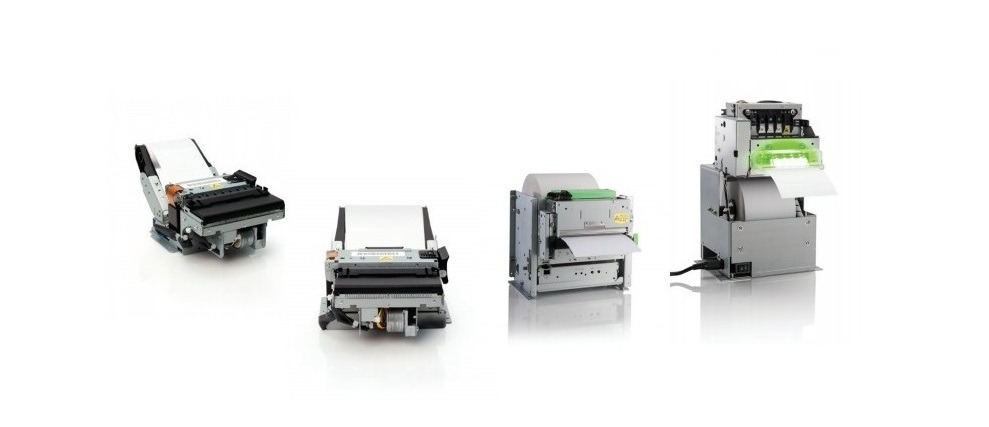
    Always leading, and always innovating, Star Micronics is proud to offer a robust range of self-service kiosk printers. With printer options available to accommodate a variety of paper sizes, interfaces, footprints, and operating systems, Star Micronics provides printing options for virtually any retailers’ needs.

    Kiosk Printer Family Features:

    • 2”, 3”, and 4” paper sizes
    • Compact or modular footprints
    • Available with multiple accessories including bezels, presenters, large paper roll holders, and more
    • Support Windows, Linux, Android, Mac, and iOS
    • Print receipts, tickets, coupons, or adhesive labels
    • Interfaces include serial, USB, parallel, and Ethernet

    Ready to learn more about Star Micronics’ self-service printing solutions?