Tag: Payments

  • Technology for Retail Stores: What’s New in 2021

    Technology for Retail Stores: What’s New in 2021

    Needless to say, the retail industry faced monumental changes during 2020. Many brick-and-mortar locations closed their doors, and omnichannel retailing and health and safety quickly became the focus of the industry. As we enter 2021 and the world continues to slowly reopen and move further into the “new normal,” what technology for retail stores can be expected to make a splash in the industry? Read on to find out.

    Online Ordering / eCommerce

    It comes as no surprise that online ordering will continue to be pivotal to retailers around the globe. In fact, 69% of Americans have shopped online and that percentage is expected to hit 91% by 2023. And did you know that shopping app downloads reached 2.8 million on Black Friday 2020, a new single-day record?

    As shoppers everywhere continue to enjoy the convenience and extra level of safety that comes with placing their orders online, it’s more critical than ever for online ordering software to be an important piece of technology for retail stores. Some online ordering features retailers should look for in a POS application include:

    • Secure payment technology, automatic tax calculation, automatic carrier shipping rates
    • Customer account creation and customer profile abilities
    • Inventory management
    • Sales analytics
    • Web and mobile applications
    • Professional, attractive online store layouts that are easy-to-brand
    • Marketing tools like social media integration and search engine optimization
    • And more

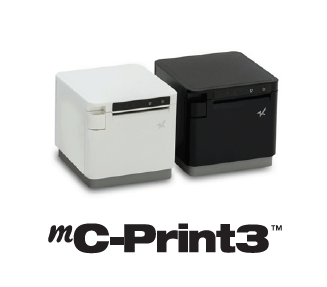
    Equally important to having the right eCommerce software is having the right eCommerce hardware. Using a POS printer like the mC-Print3 with CloudPRNT technology can greatly streamline omnichannel retail operations. CloudPRNT technology enables printing directly through a cloud service by working with the online ordering service to store and create print jobs and communicate status with the printer. This seamless online order fetching makes it so that retailers can automatically receive online orders without the need for an additional tablet, software, or SSL certificate. And better yet, the mC-Print3 features USB hub functionality, allowing for connecting peripherals like cash drawers, customer displays, scanners, and more. There’s no reason for omnichannel retailing to cause complicated logistics for business owners!

    Buy-Online-Pickup-in-Store (BOPIS)

    Another retail trend related to eCommerce is buy-online-pickup-in-store (BOPIS). While the same POS software mentioned above can likely field BOPIS orders, the technology that retail stores may need for BOPIS may be slightly different.
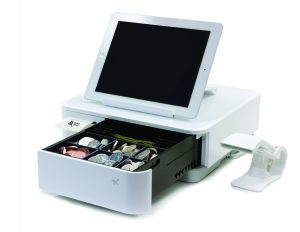
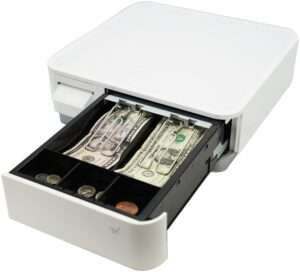
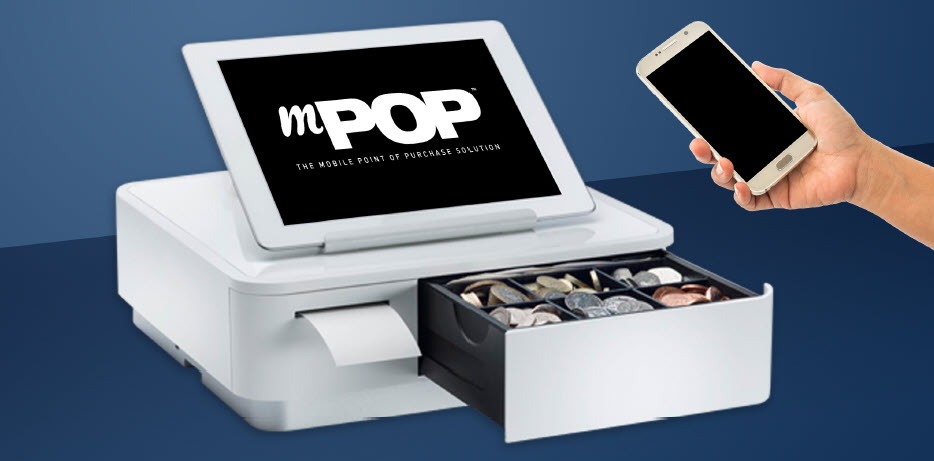
    Star Micronics mPOPWhile many online orders are paid for by credit card, retailers may still experience some shoppers who wish to pay with cash. In that case, a space-saving, all-in-one POS featuring a small cash drawer – like the Star Micronics mPOP™ – may be ideal. A thermal printer (like the Star Micronics TSP654IISK) capable of printing linerless labels – which are repositionable, residue-free, and can improve order accuracy up to 99% – may also be helpful in preparing BOPIS orders for customer pickup. Last but not least, if a store is offering curbside payments, portable receipt printers with magnetic stripe readers (MSR) can allow employees to complete transactions at the customer’s car, eliminating the need to run back inside and ultimately saving the business time and money.

    Did you know that 85% of shoppers said they have made additional in-store purchases while visiting stores to pick up their BOPIS orders, and 15% of them say they make those additional purchases “somewhat frequently?” Because of that, it is worth noting that if a retailer experiences a high volume of BOPIS orders, it may be useful to invest in a higher-volume cash management solution. Star Micronics proudly offers three lines of cash drawers with a variety of features, sizes, and price points, to meet any retailer’s cash management needs.

    Health and Safety Products

    While recent events have undoubtedly expanded the eCommerce market, brick-and-mortar is here to stay. In fact, according to Tinuiti,

    “Last year, real estate experts predicted that digitally native brands would open 850 brick-and-mortar stores in the next 5 years, with New York being the most popular destination. And while the COVID-19 pandemic has undoubtedly slowed the openings of new brick-and-mortar stores, we’re still seeing offline experiences from previously online-only brands, and will continue to in 2021.” 
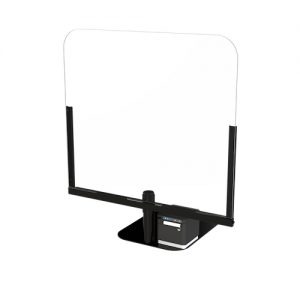
    Star Micronics POSShield Sneeze Guard
    Star Micronics POSShield Sneeze Guard

    While physical retail locations will remain, so will health concerns. Businesses can put their employees’ and customers’ minds at ease by deploying the right health- and safety-focused technology for retail stores. One tool is a sneeze guard, or a plexiglass divider placed at the point of sale to limit the spread of germs. Not all sneeze guards are the same, and retailers may find a lightweight, portable guard (like the Star Micronics POSShield) that doesn’t require any drilling or mounting is a more convenient choice for both their short-term and long-term needs.

    Another simple yet effective health and safety tool is antimicrobial covers. This film, which is safe to use and easy to apply, reduces germ transfer on high-touch surfaces like door handles and push bars, checkout counters, restroom surfaces, elevator buttons, and more. Antimicrobial covers can help build consumer confidence in a retailer, as the film is printed with an eye-catching message conveying that it limits the spread of germs. This message lets customers know the store is doing what it can to protect the public health.

    Augmented Reality (AR)

    Purchasing products online isn’t the only web-based tool making a splash in the retail industry. A Nielsen survey has revealed that consumers listed augmented and virtual reality as the top technologies they’re seeking to assist them in their daily lives, with 51% saying they would be willing to use AR to evaluate products.

    And AR isn’t just for big name brands. In 2020, Shopify launched Shopify AR, a toolkit for small- and medium-sized businesses to create immersive AR experiences showcasing realistic and interactive versions of products to shoppers. AR helps shoppers get a better understanding of a product’s size, scale, and details, and apparently digitally “trying it on” works – Shopify reported that interactions with products having AR content experienced a 94% higher conversion rate than products without AR.

    For eCommerce, brick-and-mortar, and everything in between, Star Micronics proudly offers a complete range of POS technology for retail stores.

  • 4 Reasons Why It’s a Great Time to Open a Retail Store

    4 Reasons Why It’s a Great Time to Open a Retail Store

    Nearly one year ago, no one was sure how the new COVID-19 pandemic would impact retail. Seemingly quickly, shops closed their physical doors and the country began to stay at home. Over the months to follow trends emerged and the market changed in ways that now make it an enticing time to start a business. There are four major reasons why it’s a great time to open a retail store.  Read on to discover how 2021 provides great opportunities to open a retail store, and create a strong business plan with strong technology you need both during the remainder of the pandemic, and for post-pandemic retail.

    1. Low-Interest Loans

    If you are considering opening a retail store and purchasing a commercial space, now might be the perfect time to do so. Why? One result of the pandemic is that real estate loan interest rates have dropped significantly. According to ValuePenguin.com,

    “Currently, the average interest rate on a commercial real estate loan is about 3% to 12%. The actual interest rate you secure on a loan depends on the type of loan you choose, your qualifications as a borrower, and the type of building or project you’re financing.”

    Additionally, according to investment management firm Colliers International Group Inc., in 2021 investors expect to see pricing discounts of over 20% on retail and hospitality real estate, presenting a valuable, cost-efficient opportunity to repurpose these vacant storefronts.

    Securing a commercial real estate loan comes with many benefits, including the ability to build equity and make the most of additional tax benefits. But what kind of loan is best for your needs? The various commercial loans available today offer different terms, rates, and uses. Click here to read more about different commercial loan options on the market.

    2. Affordable Leases

    Looking to lease, not buy, a retail space? It’s still a great time to open a store.

    Due to the pandemic, commercial landlords have been providing rent relief in many ways to its retail tenants. Some examples of this include granting concessions on lease payments, lengthening payment terms, extending or shortening leases, permanently lowering rents, and forgiving past-due payments, according to The Wall Street Journal.

    Another alternative some commercial landlords have been offering a turnover rent model to its tenants. According to Retail Gazette,

    “Turnover rent is calculated by reference to the income and other receivables generated at the leased property – usually it’s an agreed percentage of turnover. Because turnover-based rents are closely aligned to individual stores’ performance, it arguably creates a symbiotic relationship between landlord and retail tenant. During a successful sales period, both parties benefit, but less favorable times can create an incentive to seek improvements.”

    It’s important to commercial landlords to agree to providing rent relief so that they can avoid their occupancy rates from decreasing during the pandemic. While making concessions is not ideal to landlords, it is better than their tenants leaving all together. Because of that, it can be an affordable time to open a store, whether you are expanding an existing retail franchise or starting a new brick-and-mortar business.

    3. Business-Boosting Omnichannel Technology

    So, you may be wondering how to open a retail store and survive in the current market. One essential way to boost your business is to leverage omnichannel retailing, or the seamless merging of physical and digital storefronts.

    Incorporating e-commerce into your business plan was important before COVID-19 rattled the world, but due to lockdown requirements and the hesitancy some currently have to shop in physical stores, it’s simply a must in the current retail landscape. By embracing both brick-and-mortar and e-commerce, you can increase your store’s visibility. Some other benefits of omnichannel retail include:

    • Improving sales
    • Higher margins
    • Building brands
    • Better data collection
    • Increased staff productivity

    Taking advantage of all that omnichannel retail has to offer requires the right technology. First, you must be sure that you use POS software that facilitates both in-person and online shoppers. Some features to look for in a POS software include a white-labeled online shopping platform, curbside pickup and buy-online-pickup-in-store (BOPIS) functionality, multi-store inventory management, detailed reporting, and marketing capabilities.

    Star Micronics mPOP Flat Bill
    The Star Micronics all-in-one mPOP™ is built for modern retail.

    Equally important is choosing POS hardware that works with your chosen modern POS software. It’s a good idea to confirm that all of your POS hardware – including your receipt and label printers, cash drawers, and more – are compatible with your software. An easy way to ensure that is to choose a POS hardware manufacturer that is a one-stop shop that can provide a full retail POS hardware solution and is integrated with the industry’s top retail POS applications. Another must-have is online order printing capabilities.

    While e-commerce is important, the aesthetics of your brick-and-mortar location is still crucial. Choose POS hardware that is sleek and compact, like the Star Micronics all-in-one mPOP™ that combines a printer, cash drawer, scanner, and tablet stand. It’s also essential to protect both your staff and customers, so don’t forget to install sneeze guards and antimicrobial film on commonly touched surfaces.

    Case Study

    Dry cleaner leverages Sudzy POS software and Star Micronics printers for a spotless, cloud-based operation.

    4. Brick-and Mortar is Here to Stay

    Yes, really. The pandemic has shown people do indeed value going out and visiting brick-and-mortar retail locations. According to The New York Times, consumers still like to shop in person, even if that only entails picking up their orders curbside. Furthermore,

    “The popularity of curbside pickup reveals that the future of retail is not just more packages piling up on people’s doorsteps. Beyond satisfying the need for contactless shopping in the pandemic, it taps into Americans’ desire to drive to a store, a pull that can be just as strong as, or even stronger than, the convenience of home delivery.

    ‘Americans are used to their cars and actually do like stores, so this is kind of a hybrid where you’re getting the best of both worlds,’ said Oliver Chen, a retail analyst at Cowen.”

    For those shoppers that do enter the store to browse or pick up their BOPIS orders, it’s important to keep your store safe by social distancing, wearing masks, and using equipment like sneeze guards and antimicrobial film covers, and embrace omnichannel retail technologies.

    While the retail landscape certainly looks different now, it’s still a great time to open a store and with the right technology, you have a great chance for success.

    Is it time for you to open a retail store?

    Discover Star Micronics’ full POS solution for retailers like you.

  • Why Contactless Solutions will Be Indispensable for Retailers in 2021

    Why Contactless Solutions will Be Indispensable for Retailers in 2021

    If you could summarize the hottest retail technology trends from 2020, contactless solutions would undoubtedly make the list. Between the fact that retail technology is constantly advancing, and the COVID-19 pandemic that rocked the world earlier this year, contactless solutions will simply be indispensable for retailers in 2021. Read on to learn more about what exactly contactless solutions are, the importance of going contactless, and how to get started with contactless solutions so that you can not only keep up, but stand out, from your competition in the new year and beyond.

    What are Contactless Solutions?

    Simply put, contactless solutions are retail solutions that don’t require shoppers to come in contact with other people or any public surfaces, where viruses and germs can lurk. Two popular contactless solutions – especially in the new normal – are contactless payments and contactless fulfillment.

    Contactless Payments

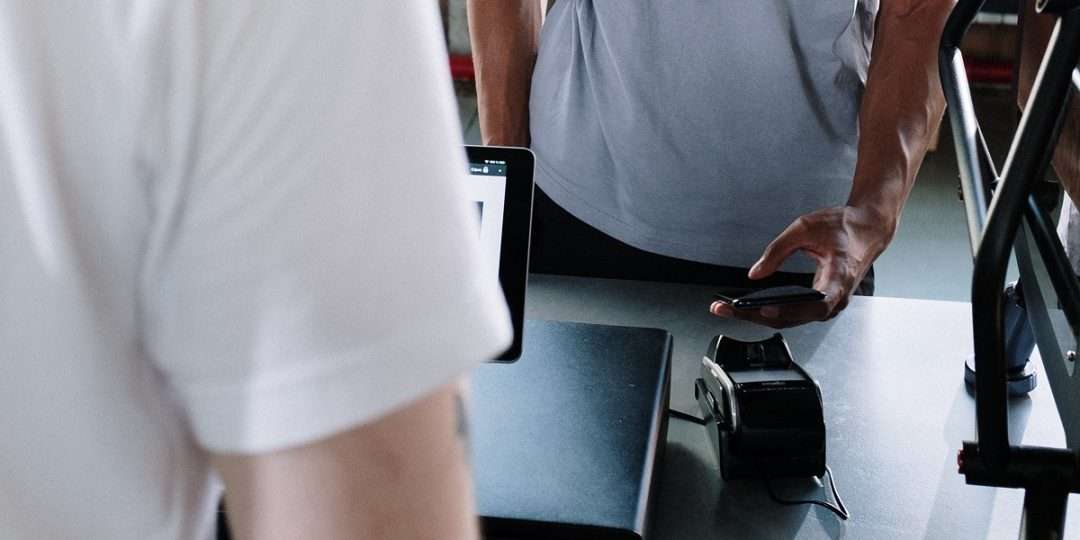
    Contactless payments, which as a retailer you have surely seen, are payments that are made through EMV cards or smart devices like smartphones and smartwatches.

    According to Investopedia,

    Contactless payment is a secure method for consumers to purchase products or services using a debit, credit, or smartcard—also known as a chip card—by using RFID technology or near-field communication (NFC).

    To make a contactless payment, tap your card near a point-of-sale terminal that is equipped with the contactless payment technology. Since contactless payments do not require a signature or a personal identification number (PIN), transaction sizes on cards are limited. The allowable amount for a contactless transaction varies by country and by the bank.

    Contactless payment is also referred to as tap-and-go by some banks and retailers. Examples of non-credit or debit card contactless payments include transit cards, Apple Pay, Android Pay, and Google Wallet.

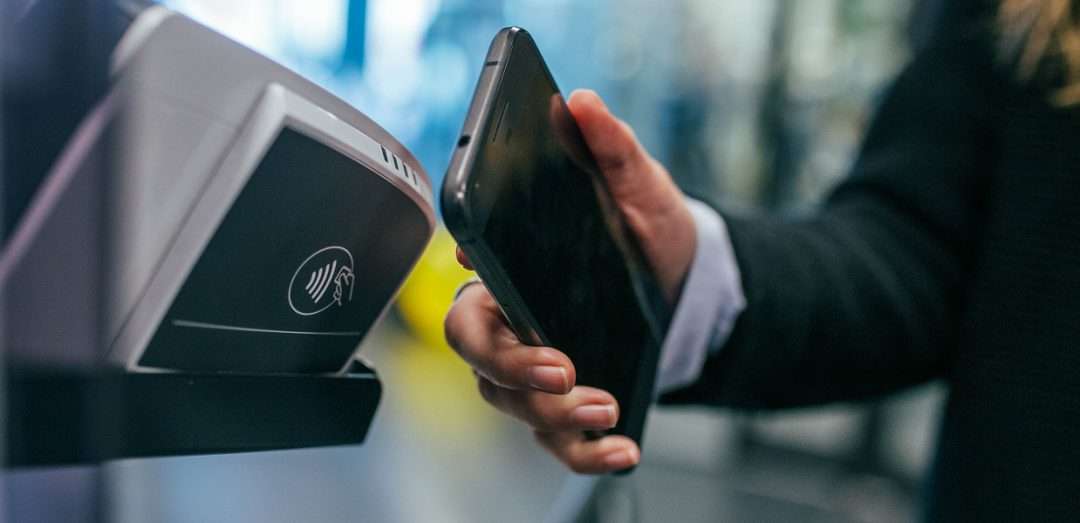
    When it comes time for customers to pay, they simply hold their card, smartphone, or smartwatch one to two inches from the contactless symbol on the payment terminal. When the payment has been accepted, the terminal will alert the customer with a beep, green light, or checkmark.

    Contactless Fulfillment

    Another common contactless solution is contactless fulfillment. For shoppers that would rather not shop in a brick-and-mortar location, contactless fulfillment solutions include curbside pickup and several online ordering options like traditional delivery and BOPIS (buy online, pick up in store). These solutions allow customers to safely receive their orders when and where they want, something that became highly demanded during COVID-19 and will likely continue to remain popular.

    The Importance of Going Contactless

    Maybe you already implemented some contactless solutions in 2020 or previous years, but in 2021 it will be crucial for you as a retailer to fully leverage these technologies and processes. As the world moves even further into its new normal, consumers will continue to seek shopping methods that minimize how much contact they have with other people and mitigate their risk of contamination.

    Contactless payments have been around for some time and are already very popular globally – approximately 20% of all transactions in Australia, Canada, South Korea, and the United Kingdom are completed with contactless technology. The contactless payment trend is present in the United States, too. TD Bank saw a surge in contactless payments following the onset of COVID-19, and it’s likely that shoppers will continue to pay for their orders in this quick and easy way well after the pandemic ends.

    Contactless fulfillment methods like delivery and curbside pickup/BOPIS, are also going to be a critical retail offering in 2021. According to Retail TouchPoints,

    While the surge in contact-free pickup and delivery offerings has been tied to the current pandemic, it’s likely that their popularity will remain even after the crisis passes. Many retailers will need to figure out ways to incorporate these offerings on a regular basis while still keeping a tight rein on additional labor, operational and systems integration costs.

    How to Get Started

    Contactless payments can be surprisingly easy to roll out. Many banks offer contactless credit and debit cards, as well as the payment terminals that process contactless transactions. These terminals have a contactless payment symbol to show shoppers that contactless payment methods are accepted. To better communicate to your clientele that they may now make contactless payments, you may have your staff inform customers in person, communicate the update via social media or email marketing, place a sign at the point of sale, or promote the news on your receipts by using free receipt marketing software, like Star Micronics PromoPRNT.

    mC-Print3When it comes to contactless order fulfillment, check in with your POS software provider to see if they offer online ordering and curbside pickup/BOPIS functionalities. To successfully roll these methods out, your POS hardware also matters. Be sure to use a receipt printer that comes with built-in online ordering technology, like the Star Micronics mC-Print3 that includes CloudPRNT technology which enables the printer to automatically fetch and print online orders without the need for an additional tablet in your store. Star Micronics printers are also integrated with many industry-leading retail POS software programs, meaning they are a truly an easy, one-stop shop solution for your retail store.
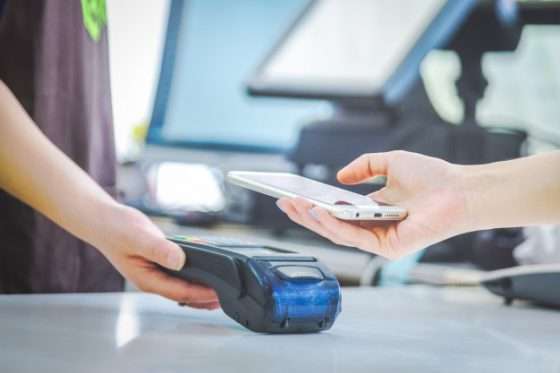
    To wrap up, contactless solutions are already popular, and all signs indicate they will continue to be in 2021. While it may sound intimidating, it can be easy for retailers like you to adopt these solutions if you are working with the right, one-stop shop POS software and hardware companies. Keep your customers happy and safe, and stand out from competition for years to come, by adopting contactless solutions like contactless payments and contactless order fulfillment methods in the new year.

    Star Micronics has full technology solutions to help prepare your retail store for 2021.

  • How to Prepare Your Retail Store for 5 Challenges 2021 Will Bring

    How to Prepare Your Retail Store for 5 Challenges 2021 Will Bring

    Most years, there are one or two emerging trends that are expected to become big over the following 12 months. And this can make it relatively straightforward for retailers to prepare for the changes. But of course, 2020 hasn’t been like most years. The COVID-19 outbreak has shifted customer behaviors more rapidly than ever before, and many of the effects of the pandemic are expected to roll over to next year. 

    This means that there’s no single way that retailers can prepare for 2021. Preparing to succeed next year means carefully considering what new challenges the pandemic has introduced to the retail world, and identifying innovative and effective ways to overcome these challenges to meet customer expectations.

    So what challenges are retailers likely to face next year, and how can you prepare for them?

    Let’s take a look…

    Challenge 1: Fluctuating Demand

    “While traffic has begun to rise again over the past few months, there will most likely be variability moving forward. With active cases in a state of flux, store traffic can be expected to do the same”.

    That’s according to the National Retail Federation, which believes that the ebbs and flows of localized outbreaks will create ongoing variability in foot traffic. As local cases rise, foot traffic may slow either due to a personal preference to remain at home or due to changes in legislation. And as cases drop, it can be expected that many shoppers will flock to stores to grab items they need during periods of lower risk. 

    And this is set to create one of the biggest challenges for retailers in 2021; knowing when the store will require the greatest level of cover – and when it won’t – to ensure retailers are getting the most value from the workforce. The best way to prepare for this unique challenge is to prioritize data analysis and forecasting, using both real-time and historical data to facilitate improved employee scheduling

    Challenge 2: Evolving Customer Needs

    It’s clear that the global pandemic has had a huge impact on what customers want from their in-store shopping experience. Post-pandemic shoppers want contactless payments, with research by Mastercard suggesting that 80% of shoppers now use contactless, citing ‘safety and cleanliness’ as the primary reason. Next year, customers are expected to place more importance on store sanitation than ever. 

    Improving your store’s existing hygiene and sanitation practices – and communicating with shoppers the changes that are being made to facilitate a safe and secure in-store shopping experience – is key to preparing to succeed in 2021. If you haven’t already dipped a toe into the world of contactless payments, now is the time to invest in new payment technologies or upgrade older technologies. 

    Challenge 3: Altered Spending Habits

    COVID-19 hasn’t just sparked a health crisis; it’s sparked an economic crisis, too. The US unemployment rate rose from 3.8% in February 2020 to 14.4% just two months later, resulting in many people facing financial uncertainty and difficulties. In turn, this has created a major trend for shoppers to spend more cautiously, and many are taking a more savvy approach to shopping in a bid to lower their outgoings.

    This creates a new challenge for retailers who will need to introduce innovative tactics to re-normalize spending. The secret to preparing for this challenge is to focus on getting traffic through the door with savings, offers, and promotional deals. Coupons can be a highly effective option, particularly printed coupons which research shows have an 18% higher return on investment than digital alternatives. 

    Challenge 4: A Need for Speed

    One of the biggest impacts the pandemic has had on the retail sector is that it’s sparked a new trend for ‘shopping with purpose’, which replaces the former trend of leisurely browsing. That’s because shoppers have a new desire to spend less time in enclosed spaces such as busy stores where it’s not always possible to practice social distancing. Retailers should now focus on creating swift in-store experiences. 

    The best way to prepare for this 2021 challenge is to introduce advanced technologies such as self-service kiosks or mobile point of sale solutions which can reduce line length and in some cases even eradicate traditional queuing systems in a bid to get shoppers through the store faster. By spending less time in busy queues, shoppers can reduce the risk of viral spread and maintain a safe distance from others. 

    Challenge 5: Shifting Customer Preference

    Many countries around the world were together making huge strides towards a greener future. And sadly, the pandemic has caused a significant setback. It’s reported that 129 billion face masks and 65 billion gloves are used – and disposed of – every month, and for hygiene reasons, single-use plastics are back in fashion. It’s reported that waste levels have grown by 30% as a result of the COVID-19 outbreak.

    Today, customers are actively looking to support retailers that do their part to protect the environment. And for those retailers that have not introduced eco-friendly processes, this presents a new challenge. The good news is there are lots of ways to prepare. One such way is to switch to eco-friendly POS solutions, such as receipt printers from responsible suppliers that use BPA-free, recyclable paper. 

    COVID-19 and Beyond

    While the COVID-19 outbreak is expected to be temporary, the impact that the pandemic has had on the retail sector – and on the world – is not. The global crisis has introduced many long-lasting changes that will be witnessed throughout 2021, and beyond. That’s why preparing for the new challenges that have arisen in 2020 is so crucially important for retailers. These challenges are not one-offs; these are challenges that retailers are going to face long into the future, so taking measures now to facilitate great shopping experiences in the future is one of the best ways to ensure you don’t just survive, but thrive. 

  • How to Set Retailers Up for Success with a Technology Upgrade

    How to Set Retailers Up for Success with a Technology Upgrade

    Retail technology is always on the up-and-up, and in order to stay relevant retailers need to prioritize taking advantage of the latest retail technology innovations. As a reseller, it’s equally important for you to act as your retail customers’ trusted advisor and serve as a one-stop, solution-selling shop. Your customers expect their solutions to be reliable, come from one place, and have an easy installation process. So, what is the best way to set your retailers up for success by providing a technology upgrade? Read on to find out.

    Assess Their Current Technology Landscape

    First and foremost, it’s important to look at your retailer’s existing technology landscape. Take inventory of the different technologies they are currently utilizing.

    Most importantly, don’t assume the path they want to take with their technology upgrade. Arguably the most important aspect of being a trusted advisor is simply listening. Ask your customer what they’d like to improve and fully understand their priorities before you propose a solution. Do they want to take advantage of online ordering? Do they want to change the look and feel of their point of sale (POS)? Do they want to leverage mobile payments for line-busting and curbside pickups?

    Next, when you feel confident that you have fully identified the customer’s technology upgrade wish list, start thinking about how you can help them make their wishes become reality. If you identify additional areas for improvement based on your industry experience, let the customer know but do not force the sale.

    Provide the Right Solution for Them

    Once you have mapped out your retailer’s priorities and have agreed on their technology upgrade roadmap, it’s time to get busy providing the right solution. Keep in mind that a complete and proper technology upgrade is multi-faceted and not “one size fits all.” A full retail technology solution keeps your customer’s priorities in mind at all times, and includes things like:

    POS Software

    Be sure to propose a modern POS software that is capable of online ordering, can provide detailed sales and marketing data, includes loyalty program functionality, and more.

    POS Hardware

    Next, consider what POS hardware the customer needs. To provide a simple user experience, remember to propose receipt printers and other POS hardware that is already integrated with industry-leading retail POS software and features connectivity options that accommodate your retailer’s business. Even better, some printers include technology to take your retailer’s POS to the next level, like Star Micronics SteadyLAN® which enables devices of all kinds (iOS, Android, Windows, and Mac) to receive stable WLAN connection and power delivery, all through one cable.

    When proposing POS hardware, don’t forget the accessories! Sleek, modern, and future-proof POS accessories can really help to tie the customer’s POS together, both visually and functionally. Important POS accessories include simple yet stylish tablet stands that can accommodate a variety of tablets, extra-strong cash drawers that come in a variety of colors to match the rest of the POS, NTEP-certified scales, 1D and 2D scanners, customer displays, and especially in the new normal, sneeze guards to protect both retail staff and shoppers.

    Online Ordering Technology

    Online ordering is here, and it’s here to stay. When considering POS software and hardware options be sure to propose choices that include online ordering functionality. When it comes to POS hardware, you can provide a “two birds, one stone” solution by proposing a receipt printer that comes equipped with built-in online ordering technology like the Star Micronics mC-Print3. The mC-Print3 includes CloudPRNT technology which enables the printer to directly fetch and print online orders with no need for any additional POS hardware within the store.

    Modern Payment Solutions

    Shoppers are no longer satisfied by paying in traditional ways and this shift in the way consumers pay will continue. Account for this in your retailer’s technology upgrade by proposing contactless payment terminals, mobile payment methods for line-busting and curbside pickup orders, and more. Don’t forget: when in doubt, ask what your customer needs and wants.

    Self-Service Kiosks

    Self-service kiosks are another trend that is steadily growing. In the retail industry, kiosks can be used by shoppers for looking up product details, pricing, inventory, and gift registries. They can also be used by shoppers to pay for their order, or even by job candidates for the job application process.

    Free Self-Service Kiosk Resources

    The future of many industries lies with self-service solutions. That’s why Star Micronics is offering free online ordering resources for resellers and software developers who are helping customers future-proof their businesses with self-service solutions.

    Provide Ongoing Support

    As a reseller, your job should not be over once the technology upgrade sale is made. Be sure you don’t leave your customers out to dry by regularly checking in with them and partnering with POS software and hardware companies that provide quality customer and technical support, like online help centers, web chat support, and a telephone hotline.

    Star Micronics Retail POS Solutions

    Star Micronics is proud to offer a complete retail POS hardware upgrade offering, including:

    • Receipt printers with built-in tablet POS connectivity and online ordering technology
    • Tablet stands featuring universal VESA mounting and clean cable management
    • NTEP-certified retail scales
    • Portable printers for line-busting and curbside pickups
    • A full range of self-service kiosk printers
    • A variety of accessories like sneeze guards, customer displays, scanners, etc.
    • And more

    Furthermore, Star Micronics hardware is integrated with the retail industry’s top POS software providers and has a dedicated technical support team and online help center, helping you become a true one-stop shop reseller.

    Ready to learn more? Click here to learn more about Star Micronics’ retail POS solutions.

    Full 2022 Product Catalog by Star Micronics.

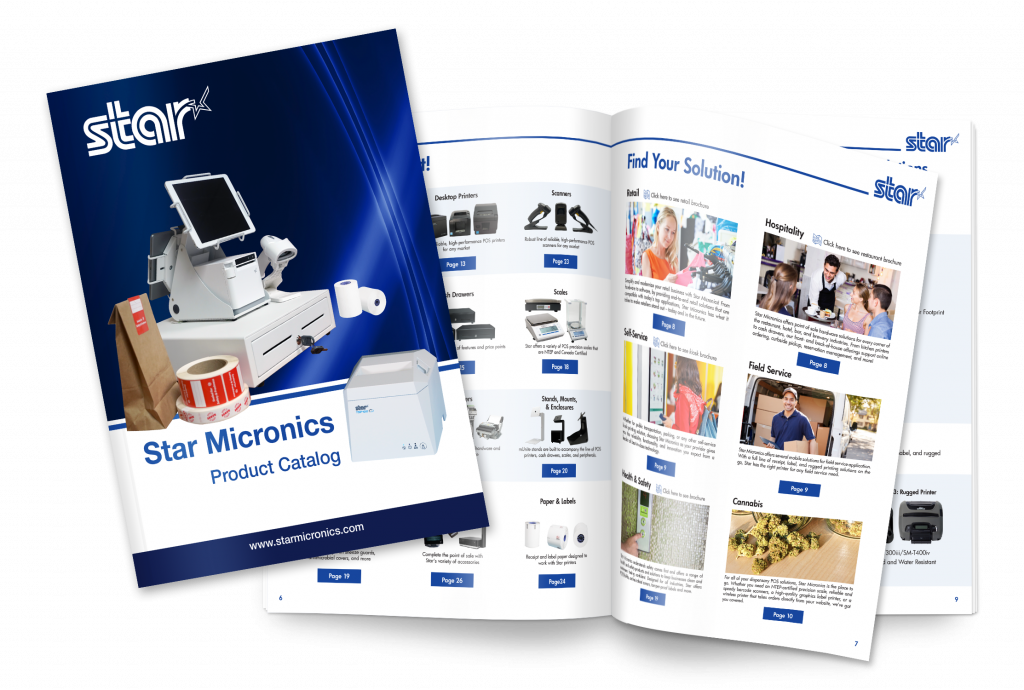
    Star Micronics Product Catalog

    Explore POS printers, label printers, kiosk solutions, and accessories for retail, restaurant, self-service, and more.

  • 4 Contactless Payment Solutions Every Restaurateur Needs to Thrive

    4 Contactless Payment Solutions Every Restaurateur Needs to Thrive

    Contactless payments have been increasing in popularity, even before COVID-19 rocked the world. According to Statista, contactless payment revenue in 2018 was $48 billion. There’s no doubt, however, that the pandemic has accelerated the adoption of contactless payments amongst consumers and businesses alike. According to a report earlier this year, 27% of businesses reported an increase in contactless payments following the beginning of the pandemic, and Juniper Research predicts that by 2022, over half of point of sale (POS) transactions will be contactless.

    It’s quite apparent that in order to thrive in the new normal, restauranteurs need to adopt a contactless payment strategy if they haven’t already done so. Read on to explore how contactless technology works, four of the top contactless payment solutions on the market today, the many benefits of contactless payments, and how Star Micronics can help you roll these technologies out to your restaurant customers.

    How Does Contactless Technology Work?

    Contactless technology largely relies on radio frequency identification (RFID) and near-field communication (NFC) technologies. Inside contactless cards, there is a chip that emits radio waves that are picked up by the contactless payment terminal (also known as an RFID reader). The terminal will pick up the signal emitted by the card, communicate with the card, and process the payment. The customer is then alerted that the payment has been completed (or not) by the terminal.

    Similarly, if a customer is paying with a mobile phone or other smart device, the device uses NFC to transmit data to the terminal, and again the terminal will alert the customer that the transaction was successful or unsuccessful.

    4 Must-Have Contactless Payment Solutions

    Even as restaurants have reopened their doors, safety is a priority to diners and business owners alike. The below contactless payment solutions are popular amongst consumers and are important for restauranteurs to adopt in order to thrive in the new normal.

    1. Contactless Debit and Credit Cards

    It’s important for restaurants to deploy payment terminals that feature NFC capability so that they can process contactless debit and credit card transactions. These terminals, as well as debit and credit cards capable of contactless payments, have a contactless payment symbol on them to indicate contactless transactions are supported. When it’s time to pay, customers simply hold their card one to two inches away from the contactless symbol on the terminal and voila – the payment is made.

    2. Mobile Wallets

    Mobile wallets like Apply Pay and Google Wallet – which are available on a range of devices including smartphones, smart watches, fitness trackers, key fobs, and more – work similarly to contactless debit and credit cards. Diners simply hold their device in close proximity to the contactless payment terminal to complete their transactions.

    3. Pay at Table

    Another great contactless payment solution for restauranteurs is pay at table. According to Mobile Payments Today, 69% of diners think that waiting for the check is the most frustrating part of the dining out experience. Help your restaurant customers improve their diners’ experiences by integrating pay at table into your POS software. Pay at table functionality can enable guests to simply check-in through the restaurant’s app where their bill can be associated to their mobile device, creating a seamless transaction where diners can pay at any time and there is no reason for a server to touch their card or cash.

    4. QR Codes

    Restaurants looking for an easy, affordable contactless payment method need not look further than their receipt printer! If restauranteurs have receipt printers capable of printing QR codes, like Star Micronics printers, they can print QR codes that diners simply scan with their smartphone camera, which then opens the restaurant’s app or website where customers can pay their bill.

    Free Resources During COVID-19 & Beyond

    Now more than ever, safety is a priority in retail and hospitality environments. Star Micronics is proud to offer a line of solutions and resources for businesses during this challenging time, designed to keep consumers and employees safe, as well as mitigate business impact caused by COVID-19.

    Benefits of Contactless Payments

    • Safe: It probably goes without saying, but contactless payments are safer than traditional payment methods thanks to less human contact and fewer opportunities to come in contact with other people’s germs and viruses.
    • Secure: Despite the belief that mobile contactless payments are less secure than traditional payment methods, the opposite is true. According to Fast Casual, “Mobile payments are processed without the transfer of sensitive information. Apple does not store consumer information on their servers, and Google encrypts the financial data they receive. The security measures on the phone itself — face recognition and fingerprint scanning, for example — protect card information in the event of a lost or stolen phone.”
    • Convenient: Who doesn’t love convenience? Contactless payments process in about half the time of the more traditional process of inserting a card’s chip into a card reader.
    • Profitable: Did you know that consumers who use mobile wallets make purchases at a rate 23% higher than those who pay with physical cash or card, and spend 2.4% more per transaction, according to researchers at the University of Illinois? It’s true – and we’re sure that by offering safe and convenient contactless payments, your restaurant customers will experience happier diners who are more likely to return to the business.

    Star Micronics and Contactless Payments

    One design. One integration. One provider. For all payment peripherals.

    mPOP-mPOS-eBook

    Star Micronics is proud to accommodate the latest POS trends, including contactless payments. By providing sleek, easy-to-integrate POS hardware, Star Micronics merges the priorities of software providers and payments companies, while offering restauranteurs an easy, reliable, and compliant solution.

    Click here to learn more about Star Micronics’ payment solutions.

    From all-in-one POS hubs to mix-and-match POS hardware combinations, Star Micronics provides the features restauranteurs need and the connectivity to bring together applications and payment processing. Star Micronics’ experienced team works with major players in the payment and restaurant POS industry to bridge the gap in the payments world and provide win-win business scenarios for all involved parties.

    Ready to learn more about how Star Micronics’ hardware powers today’s payments?

  • 4 Ways to Tell that It’s Time for a Retail Technology Upgrade

    4 Ways to Tell that It’s Time for a Retail Technology Upgrade

    As a retail business owner, you are busy and your plate is full of responsibilities. From managing inventory to recruiting staff, you have a lot of tasks to juggle and one of the last things on your mind might be your point of sale (POS) technology. So, how exactly do you know when it’s time for a retail technology upgrade? Read on to explore four common ways to determine when it’s time to refresh that tech.

    1. You’re Not Online

    Did you know that online shopping started all the way back in the mid-1990s? According to Money Magazine,

    “Toward the end of 1994, Money magazine published a story about the sharp rise in consumers shopping from home. That year, some 98 million consumers made $60 billion worth of purchases from home, nearly all of it through phone orders prompted by mail catalogues and TV shopping channels. Another home-shopping option had suddenly arrived on the scene that year, too–an “on-line shopping service [that] requires a PC or Macintosh that’s equipped with a modem.” The article explained how such curious services worked:

    ‘For ordering, many of the “computer stores” offer shoppers an 800 telephone number to call. Others are set up so a shopper can click on a box next to the desired gift, type in payment information and the shipping address and then hit a “Submit Order” button. Some companies even let shoppers pick out the wrapping paper via computer.’”

    Obviously, online ordering has come a long way since 1994 – and the COVID-19 pandemic kicked the trend into high gear. It’s simply not an option to not be online anymore. According to Zoovu.com, Target’s digital sales increased by 275% in April 2020 alone, and there has been a 500% rise in curbside pickup year-over-year. This trend extends past large retail chains; people understand the hardships many small businesses have faced during this unprecedented time and are looking to support their local mom-and-pops during the new normal.

    If you aren’t online yet, don’t panic. There is a chance your current POS software provider offers e-commerce capabilities, and if they don’t, set aside some time to research an affordable and easy-to-use solution. From a POS hardware perspective, establishing an online store can be easier than you think. Certain online ordering printers, like the Star Micronics mC-Print3, are equipped with retail technology enabling the printer to automatically and directly retrieve orders from your online store. What does this mean for you? No extra tablet to purchase and install in your store and no additional timely training for your staff.

    2. Your Marketing is Lackluster

    Another task that can easily slip through the cracks for small business owners who wear multiple hats is marketing. While it may sound daunting, if you are equipped with the right retail technology, marketing can be easy.

    From a software perspective, many POS software providers offer integrated, easy-to-view sales and marketing data right in their dashboards. These analytics can be used for sales reporting, loyalty programs, email marketing, and much more.

    From the hardware end of things, did you know that with the right receipt printer, you can print promotions on your receipts for free? These promotions can easily and quickly be customized to communicate upcoming sales, your social media accounts, now hiring messaging, and more. You can design and schedule the promotions from anywhere using a simple online-based dashboard – even if you have multiple store locations.

    3. Your Customers Can’t Pay the Way They Want To

    The days of traditional cash and credit/debit card transactions are over. The COVID-19 pandemic has launched the retail world into a new way of doing things, and consumers demand modern payment methods that either reduce or eliminate contact with common surfaces and other people.

    Is your store set up to accept contactless payments? Contactless payments – or the processing of transactions via the tap or close placement of a credit/debit card, smartphone, or smart watch – are growing in popularity as a safer and more efficient way to make purchases.

    If you are looking to implement contactless payments, rest assured the process can be quite simple. Most banks not only offer contactless credit and debit cards, but also the terminals that are required for processing contactless transactions. These terminals have a contactless payment symbol on them showing customers that contactless payment methods are accepted. You may also tell your customers that you accept contactless payments in person, through social media or email marketing, by placing a sign at the point of sale, and through receipt marketing.

    4. You Have a Dated Aesthetic

    They say looks aren’t everything, but when it comes to retail technology, aesthetic makes a big difference. You might be used to seeing your POS hardware every day but try to take a look at it with a fresh set of eyes. Does it look clunky? Does it match the environment of the rest of your store? Does it complement the personality and vision you have in mind for your business?

    If you find that your POS hardware looks a bit outdated and takes up too much space, it’s time to consider a refresh. In terms of style, POS hardware has come a long way in recent years. Tablet POS systems are now the norm, and not only provide a modern, clean appeal, but can provide an even better customer experience as well with features like tilting tablet stands that can be used to capture customer signatures. There are options on the market for modern-looking printers, cash drawers, scales, and more, too.

    mCollection: Changing the Face of Retail

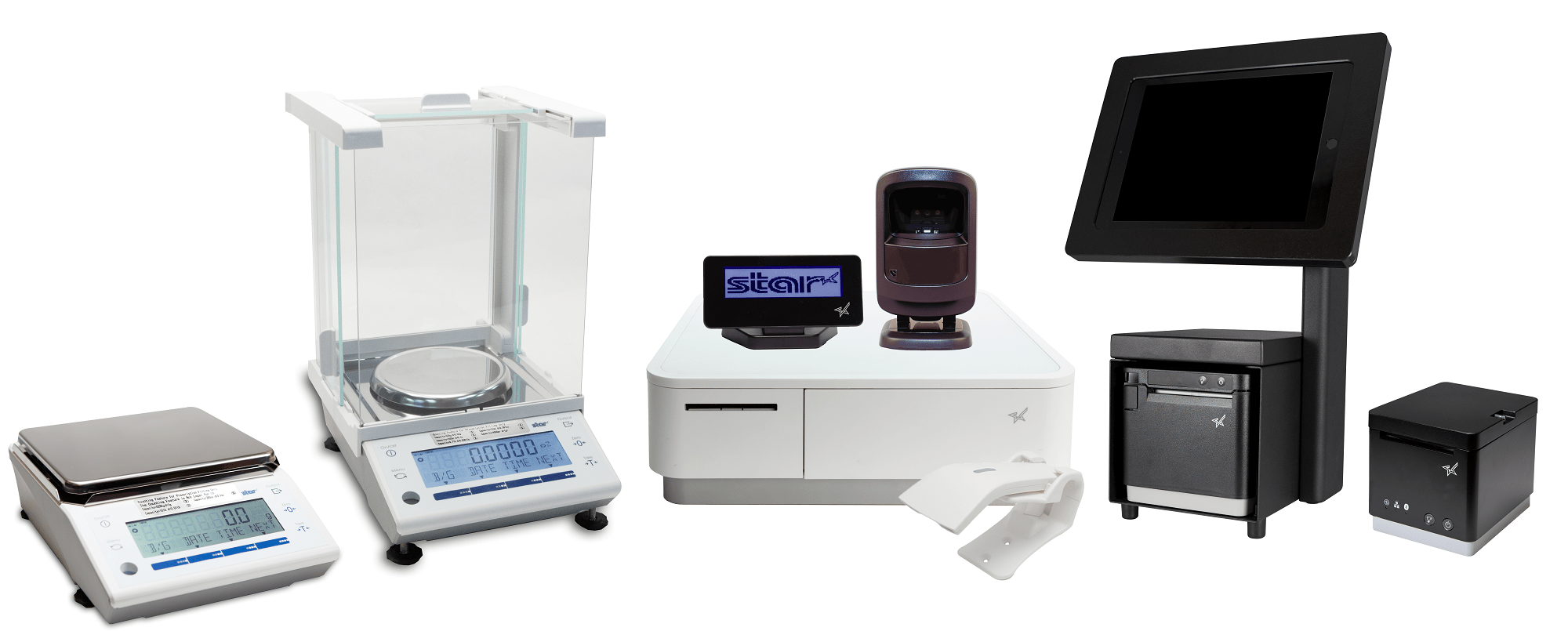
    Star Micronics mCollectionWhether just a couple parts of your retail technology environment need an upgrade, or you’re looking for a complete overhaul, the Star Micronics mCollection has you covered. A true one-stop shop, the mCollection includes receipt printers built for online ordering, tablet stands featuring clean cable management, stylish and durable cash drawers, and a full range of accessories like scanners, customer displays, and more.

    Designed with ease-of-use in mind, the mCollection is integrated with the retail industry’s top POS software providers, like Shopify, PredictSpring, Square, Vend, and more.

    Star Micronics has what it takes to modernize your small business.

  • Provide Restaurateurs With Post-Pandemic Restaurant Tools for Success

    Provide Restaurateurs With Post-Pandemic Restaurant Tools for Success

    It goes without saying that today’s restaurants have needed to adapt to the changes that occurred in the hospitality industry following the unprecedented COVID-19 pandemic. As a reseller, your restaurant customers turn to you to provide full solutions – especially in recent times. Did you know that the restaurants tools and technology that you can provide now will continue to be needed, and can help restaurants succeed, for years to come? Read on to explore four restaurant tools you can offer that are designed to help businesses survive during a crisis – and thrive in the long term.

    Online Ordering and Multiple Delivery Methods

    It’s not exactly news that online ordering has been prevalent for years now, but the rapid growth in its popularity during COVID-19 is undeniable. Did you know that according to Adobe Analytics, the number of orders placed online and picked up at retail stores alone rose 208% during April 2020 compared to April 2019? And when it comes to food specifically, 31% of adults polled in the United States in May 2020 claimed they spend more than usual on food takeout and delivery.

    As a reseller, it’s important to provide the necessary restaurant tools needed for online ordering, curbside pickup, and food delivery. What do these tools look like? From a technological perspective, be sure to offer online ordering printers that are easy to install and use, and are integrated with today’s popular online ordering service providers. An added bonus is if the printer features technology like Star Micronics CloudPRNT, which enables the printer to communicate directly with the online ordering service so that restaurants do not need to invest in and fuss over a new tablet – the printer will simply automatically print new online order tickets as they are received.

    Once the order is received and prepared, a restaurant’s priority is ensuring the food is delivered promptly and securely. Offering tamper-proof food labels for takeout and delivery orders to your restaurant customers can provide peace of mind to both the diners and business owners.

    The flexibility and added safety of online ordering and delivery will likely continue to be a customer favorite well into the future. According to Rewards Network, 42% of restaurants added delivery as a result of COVID-19, and 31% of them plan to continue to invest in delivery services. By offering a full online ordering solution, you will help your restaurant customers succeed for years to come.

    Contactless Payments

    Another trend that was on its way to becoming mainstream, but got a serious boost during the pandemic, is contactless payments. These payments, which are made by credit and debit cards and smart devices like smartphones and smartwatches, use radio-frequency identical or near-field communication (NFC) to enable secure transactions without the need for consumers to make any physical contact with cash or payment terminals that can harbor germs. Instead, customers simply wave or tap their card or device near a payment terminal that accepts contactless payments.

    While many consumers turn to contactless payments as a way to avoid unnecessary contact with common surfaces during the COVID-19 pandemic, the added convenience of this method of payment is sure to make contactless payment options alluring well after the pandemic passes.

    Speaking of contactless, another tip you can share with your restaurant customers to enable an even safer transaction is to turn their restaurant receipt printer toward their diners so that the diners can collect their receipt themselves, further eliminating potentially dangerous contact. If your restaurant customers use Star Micronics printers, you may also share the official Star Micronics Printer Cleaning Guide with them.

    Reopening Toolbox

    Now more than ever, safety and convenience are priorities in retail and hospitality environments. As businesses reopen their doors, Star is proud to offer a line of solutions and resources designed to keep consumers and employees safe and satisfied.

    Protective Sneeze Guards

    Avoiding contact with other people’s germs is something that has become a priority to the public at large. What’s a restaurant tool that can help with that? Sneeze guards!

    Sneeze guards – or acrylic or glass screens designed to protect people or food from droplets caused by coughing, sneezing, or talking – have been around for decades but have gotten a refresh and become mainstream at restaurants and retailers of all sizes and types during the pandemic. Instead of simply being found at salad bars and buffet lines, sneeze guards are now located at the point of sale to protect employees and customers alike.

    Although they may sound simple, not all sneeze guards are the same. Here are some key features of a convenient and high-quality sneeze guard:

    • Easy to install
    • A lightweight and portable design, with no countertop mounting or drilling required
    • High compatibility with features like an adjustable mounting pole and compatibility with the restaurant’s existing POS or mPOS terminal
    • The ability to be easily relocated for future store redesigns, flu seasons, and more

    The Star Micronics POSShield sneeze guard offers all of the above – and more. Learn more now.

    Self-Service Kiosks

    Last but not least, self-service kiosks are restaurant tools that boost safety during a pandemic – and enable success in a post-pandemic world.

    During these challenging times, safety is a priority, and did you know that self-service kiosks can help protect a restaurant’s employees and customers? Not only do the kiosks reduce face-to-face contact between an employee and a diner, but they can also feature antimicrobial glass that effectively reduces bacteria’s ability to multiple as well as a simple, one-piece glass screen design to eliminate the nooks, crannies, keys, and buttons that can contain germs and viruses.

    While safety and cleanliness will always be a priority, self-service kiosks also have long-term business-boosting benefits for restaurants. Did you know that:

    • Customers spend 30% more when ordering through a kiosk
    • 20% of customers who had not intended to order a beverage would buy one after it was offered on the kiosk screen
    • Kiosks enable diners to customize their orders, something that 72% of them expect when dining out

    Learn more about the benefits of self-service kiosks in restaurants in the Self-Service Kiosks in Foodservice infographic.

    To conclude, the restaurant tools that benefit and safeguard restauranteurs now – like online ordering technology, contactless payments, sneeze guards, and self-service kiosks – will likely continue to be in high demand from both your restaurant customers and consumers, even in the post-pandemic world. As a reseller, set your restaurant customers up for success by offering the right one-stop shop solutions today.

    Free Resources During COVID-19 & Beyond

    Now more than ever, safety is a priority in retail and hospitality environments. Star Micronics is proud to offer a line of solutions and resources for businesses during this challenging time, designed to keep consumers and employees safe, as well as mitigate business impact caused by COVID-19.

  • 6 Technologies Resellers Need to Equip Retailers for Success

    6 Technologies Resellers Need to Equip Retailers for Success

    When the COVID-19 wave first began rippling across the globe, many underestimated the full impact it would have on retailers. Now that we are in the throes of it, we are finally recognizing how different the brand-new business climate that we’ve found ourselves in really it. Consumer behavior has shifted in major ways, and retailers all across the country are trying to navigate how to operate and eventually reopen in this brave new world.

    What retailers are truly looking for is guidance and leadership. Like everyone else, retailers feel like they are trying to develop clairvoyance in the face of overwhelming uncertainty. Without having experience a pandemic like this before, it is difficult for them to determine how to reopen safely and successfully.

    Resellers are in a unique position to provide that guidance, as well as the tools retailers need to set themselves up for success.

    1. eCommerce Point of Sale Integration

    Social distancing is top-of-mind for everyone these days. As such, consumers are drastically reducing the amount of time they’re spending in brick-and-mortar location. They prefer shopping online from the safety of their homes instead. It’s going to be crucial that you offer retailers solutions that integrate with eCommerce.

    2. Shop-by-Appointment and Curbside Pickup

    Consumers are shopping less. Concerned with spending a lot of time in brick-and-mortar locations, and the number of other customers they’ll come into contact with, they’re hesitant to venture out. Because of this, some retailers have started implementing shop-by-appointment operations, which helps control the number of customers within the store at any given time and helps provide peace of mind to shoppers.

    Similarly, curbside pickup is booming for many different retailers. This functionality was traditionally used in restaurant takeout operations but has quickly been adopted by retail to help boost brick-and-mortar operations while continuing to keep their customers safe.

    3. Mobile POS Technology for Line Busting and In-Aisle Payments

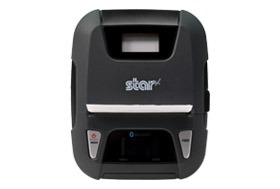
    With how easily this strain of the coronavirus can be spread from person to person, it’s critical that retailers take additional measures to keep Star Micronics SM-L300 BLE Portable Thermal Printercustomers from congregating throughout the store. This includes checkout lines, which are especially ripe for spreading viruses due to the close contact.
    Star’s mobile printers allow retailers to conduct transactions throughout the store to keep customers from gathering in one area. Click here to view all of Star’s mobile offerings.

    4. Self-Service Kiosk

    For a virus that can be spread easily through face-to-face contact and tiny respiratory droplets, it is critical that retailers especially strive to reduce the amount of contact between their customers and their employees. When sanitized properly and regularly, self-service kiosks can help. These devices curtail the spread of infection by limiting the amount of face-to-face contact between staff and customers, helping them feel safer shopping in stores.

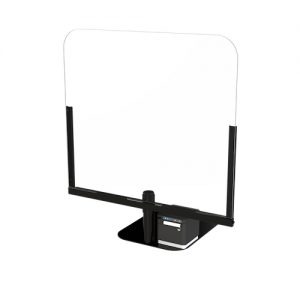
    5. Protective Shields

    Offering protective shields that retailers can install at the checkout counter can help them provide some additional protection during the most posshield-portable-plexiglass-sneeze-guard-retail-pos-300x300vulnerable and high-risk time of the shopper’s journey: the point of sale. This is the time where shoppers and employees come in close contact and lines can develop at the counter. It can be difficult to maintain the recommended distance of six feet for this reason. Because of the risks associated with the point of sale, it is necessary for retailers to install additional protection.
    Click here to learn more about Star’s POSShield protective sneeze guard for retail checkout counters.

    6. Contactless Payment Options

    Ultimately, the goal of any retail operation right now is to be able to operate effectively without exposing anyone to the virus. The virus can easily be picked up and carried on hands, so for retailers, implementing contactless payment options will go a long way in preventing its spread.

    The success of your customers directly reflects your own success, so during this time, helping them succeed is paramount. Star Micronics is here to help! We provide the critical solutions that can help your customers overcome their most pressing business challenges – such as online ordering printers, portable printers for mobile payments, self-service kiosk printers, protective barriers for the point of sale, and more.

    Our free eBook provides all information needed to retail resellers, at a glance.

    Free Resources During COVID-19 & Beyond

    Now more than ever, safety is a priority in retail and hospitality environments. Star Micronics is proud to offer a line of solutions and resources for businesses during this challenging time, designed to keep consumers and employees safe, as well as mitigate business impact caused by COVID-19.

  • Provide a Touch-free Experience to Your Dine-in Guests with Contactless Digital Menus

    Provide a Touch-free Experience to Your Dine-in Guests with Contactless Digital Menus

    One of the major concerns for restaurant dine-in was the use of traditional (printed) menus because they are found to be the dirtiest thing on a restaurant table. Guests are hesitant to touch these traditional menus and also the CDC regulations have made it clear that disposable menus should be provided. But printing disposal menus are not ideal given the rising costs. Restaurants are quickly pivoting by offering their guests a touch-free experience with contactless digital menus/QR menus.

    Why Contactless Digital Menus?

    1. Contactless is here for the long haul

    The global pandemic has literally been life changing. More than ever, society is concerned and obsessed with their health. With COVID-19 cases still surging guests are looking for more ways to go contactless to protect themselves from the possible contact with the virus. These measures are even more heightened when it comes to ordering food at the restaurant. Therefore, contactless digital menus are ideal for restaurants like yours to adapt to.

    2. Cost-effective

    If you are going for disposal menus, a single paper menu, uncoated, in black and white print costs about 50 cents. If you are doing over 100 for lunch and 100 for dinner that’s $100, adding up to about $3,000 a month. QR menus are very cost-effective. You only have to print and place the table tents on the table and this can be used for a more extended period of time. 

    3. Easily accessible

    Accessing the menu is as simple as scanning the QR code from their phones or tablets, and then accessing the web page to place their orders.

    4. No app download

    With QR menus or digital menus, guests do not need to download heavy apps to their phones. They can simply place their orders online through a web URL.

    5. Flexible menu updates

    Restaurateurs can instantly add, edit, and delete menu items and update item descriptions. If the menu is updated once, it updates on every menu scanned.

    6. Attention with images

    Traditional menus do not have images mostly because it is costly to print high-quality images on paper. But with contactless digital menus, you can have mouth-watering images to make customers want to order more. Having images help them decide what they want, which therefore makes their ordering process easier.

    7. Less wait-staff assistance

    Wait-staff can be re-allocated to add value to other parts of the business. When orders are placed through contactless digital menus, the order can be sent directly to receipt or kitchen printer.

    8. Cashless payments

    Guests and staff do not have to handle cash. Cash being passed from hand to hand and can be contaminated, and compromises the safety and health of both customers and staff. 

    9. Re-ordering

    Guests can re-order their favorite dishes, or a beverage refill without having to wait for the staff approach the table, and eliminating more human contact.

    10. Quicker table turns

    With seating capacity reduced to allow tables to be placed at least 6 feet apart, restaurants are not getting their normal amount of guests, resulting in less revenue. Contactless digital menus increase the speed for ordering and payment and so you can turn more tables and increase the potential for revenues.

    11. Collect guest information and traceability

    You do not need to manually take down customer information. With contactless digital menus, the guest will have to input their information to complete their order.

    12. Run targeted campaigns

    Ordering through contactless digital menu captures guest information like email, contact number, etc. This helps you run future targeted marketing campaigns such as email campaigns on your latest offers, SMS on going discounts, and more.

    How to get Contactless Digital Menus/QR Menus?

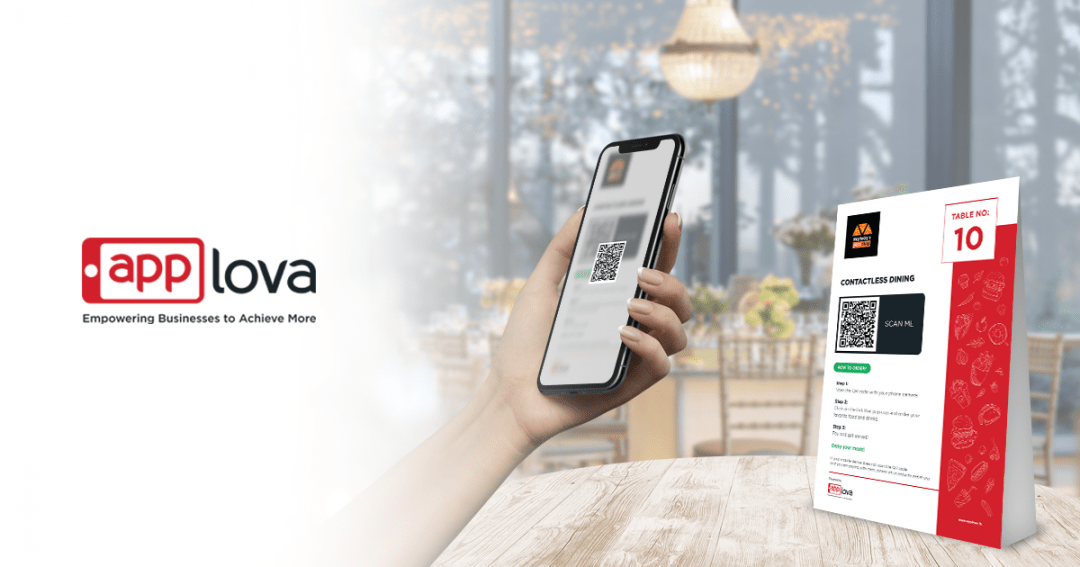
    When you sign up for a demo with Applova, the team will get in touch with you to set up contactless digital menus. This can be ready in a couple of days. The Applova team will build the menu with enticing food imagery. Then the team will also provide you with a free marketing pack to launch contactless digital menus at your restaurant. The marketing pack would include customized table tent designs with QR codes on it for each table (each QR code will carry the table number so that the restaurant staff can easily track the table that made the order).

    How is the process contactless? How does it work?

    When you get your table tent designs, you can print them and place them on each table.

    1. Your dine-in guest scans the contactless digital menu to view the menu on their phone or tablet.
    2. They can select their food and beverages
    3. Tip the waiter and make their payment online
    4. Orders will be directly pushed to the POS and printed in the kitchen printers
    5. When the order ready, the order will be sent to the correct table.

    To wrap it up, ever since the wake of COVID-19 restaurants are quickly adapting to contactless digital menus. These contactless digital menus are hygienic and easy to roll out. They are cost effective, environmentally friendly, engaging to customers and they are mobile-optimized, simple to search and navigate. They are easy to update instantly. Adapting to contactless digital menus is a new experience for guests and it is now the way of dining life.