Tag: Payments

  • Infographic: Benefits of EMV Compliance

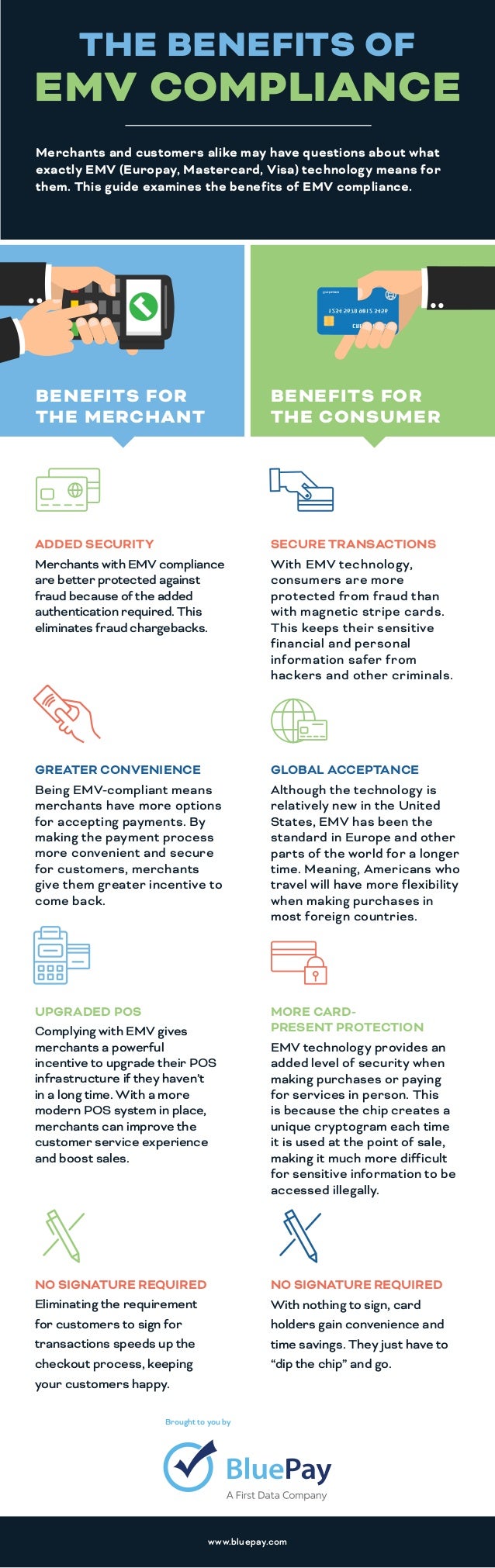
    Infographic: Benefits of EMV Compliance

    EMV: we’ve all heard of it, but what exactly does it mean and how does it work? Even more important, what are the benefits of EMV compliance, for both merchants and consumers?

    Europay, Mastercard and Visa, or EMV for short, is global standard for payment cards equipped with computer chips and technology that enable a business’s POS system to authenticate a transaction. Thanks to the EMV standardization, chip cards work worldwide at any payment terminal capable of processing chips.

    Designed to protect consumers and reduce costly fraudulent purchases, EMV has been in existence since 1994, but didn’t make major waves in the United States until October 2015, when a new set of compliance rules hit the nation. According to the new rules, American businesses that do not process EMV (and still process transactions via magnetic strip) will be held responsible for any fraudulent charges made at their location.

    Any way you cut it, EMV compliance is important, but what benefits does it hold? Read on to discover the many ways EMV compliance is helpful to both businesses and consumers.

    EMV Credit Card Processing

    Benefits of EMV Compliance Guide created by BluePay

    Looking to upgrade your POS system? Check out the Star Micronics Ultimate Guide to Building Your iOS POS System.

  • The Cannabis Industry: What Lies Ahead in 2019

    The Cannabis Industry: What Lies Ahead in 2019

    As more states and countries continue to legalize medicinal and recreational cannabis use, one thing is clear: the cannabis industry is here to stay – and it’s rapidly growing. This new industry doesn’t just affect cannabis users – it affects countless markets. So, what’s to come in 2019, in terms of cannabis? Here are four key predictions for this year:

    Cannabis-Infused Products Will Thrive

    If you only think of dry leaf marijuana when you imagine cannabis, you are missing out on a ton of the market’s hottest products. Non-leaf CBD-infused items have a very high profit margin. Derived from the Cannabis Sativa plant, but without any psychoactive properties, hemp products infused with CBD are a great way to introduce cannabis to a larger crowd. Cannabis-infused beverages, in particular, are slated to be a huge hit in 2019, but other infused products include oils, beauty and skin care products, pain relief ointments, chocolates, nuts, gummies – and even dog treats. These alternative forms of cannabis are expected to spread across North America, thanks to the recently passed U.S. Farm Bill which legalized industrial hemp. Many of these products (minus the dog treats) also come in psychoactive THC-infused forms, and are experiencing widespread popularity, thanks to medical and recreational marijuana bills being passed in several states, as well as Canada’s recent legalization of recreational usage.

    The Key Players Will Emerge

    Until now, it’s been tricky figuring out who the top players will be in the cannabis industry. However, with consumer spending expected to jump 40% this year, those who are executing successful cannabis business plans should get a big boost this year as sales continue to grow. Strategy in this rapidly-expanding market will be key, and by the end of the year (or before), we should have a good idea of who the top dogs are. However, because interstate commerce is denied and it is currently difficult to create any sort of national brand, we will likely not see any nationwide dominators – yet. In the meantime, it will be of utmost importance for cannabis retailers to successfully promote themselves and maintain a tight business plan.

    Legalization Will Continue

    Capture-Cannabis-brochure-e1574802612781

    2018 was a big year for legalization – in fact, it was arguably the biggest one yet – and that trend is expected to continue into 2019. At least six more countries are slated to legalize medicinal marijuana usage, and at least one is expected to legalize recreational use. In terms of the U.S., at least three states have plans to legalize medicinal or recreational usage, with Illinois, New Jersey, and New York being the biggest possibilities. Even more traditionally-conservative states like Texas could change their current marijuana regulations.

    (More) Research Will Be Conducted

    Cannabis research has already been taking place, but it will pick up speed even more this year. Because of the more open regulatory environment, more research will be conducted, which is expected to spark even more innovation within the cannabis industry. The Farm Bill has opened the CBD market this year, and will support overall marijuana consumption, meaning more knowledge will soon be uncovered on each specific cannabinoid’s (the chemical compounds secreted by cannabis flowers) powers. For example, therapeutic uses include treating and managing obesity, anorexia, emesis, pain, multiple sclerosis, neuroprotection, inflammation, Parkinson’s disease, Huntington’s disease, Tourette’s syndrome, Alzheimer’s disease, epilepsy, bipolar disorder, schizophrenia, PTSD, depression, anxiety, insomnia, asthma, cardiovascular disorders, glaucoma, cancer, and more.

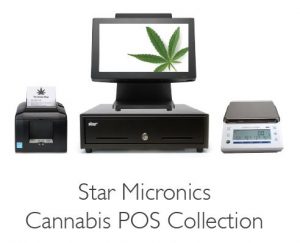
    The cannabis industry is booming. Are you looking to cash in on cannabis point of sale? Download our e-book now!

  • Star’s Top 5 Blog Posts of 2018

    Star’s Top 5 Blog Posts of 2018

    Happy New Year! To celebrate the beginning of 2019, we’re taking a look back at our top five blog posts that were published in 2018. But don’t be confused: just because these were our top blog posts last year, they certainly still have value today and beyond.

    Read on to discover everything from how to implement an iOS POS system and how blockchain can optimize retail stores, to the benefits of digital signage and the importance of properly managing cannabis receipts. Happy reading!

    1. 3 Ways to Get the Most Out of Your Apple POS System with AirPrint Receipt Printers

    AirPrint-With-drawer-cropped-e1574795965801


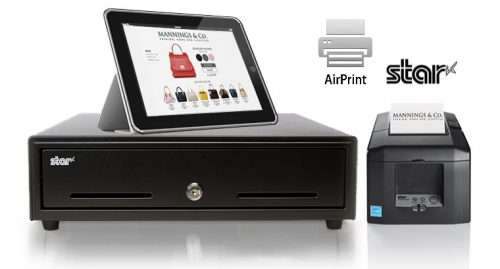
    Apple POS systems are extremely popular in many industries including retail, restaurant, hospitality and more – and that’s sure to remain the same in 2019. But how can you get the most out of your iOS POS setup? This blog post dives into three ways to do just that with AirPrint, from printing receipts directly from your device to controlling your cash drawer remotely.

    2. 5 Benefits of Digital Signage Solutions

    My-Post-e1574796095841

    Digital signage displays do more than just look good – they’re a great way to boost your business’ marketing strategy! Discover the many benefits digital signage can offer you, including grabbing customers’ attention, providing dynamic updates, being cost-effective, boosting impulse purchases, and increasing in-store digital and social media presence.

    3. The Ultimate Guide to Building Your iOS POS System

    The-Ultimate-Guide-to-Building-Your-iOS-POS-system-e1574796222219


    Another iOS POS post reached the top of our ranks this year – can you tell the systems are popular? In this blog post, we walk you through how exactly to set up the ideal iOS POS system, from choosing the right device to creating an aesthetic appeal … and everything in between!

    4. 3 Things Cannabis Retailers Need to Know About Cannabis Receipt Regulations

    Cannabis-Blog-e1574796358246


    Not surprisingly, one of our top posts in 2018 was about cannabis. Also not surprising is the fact that cannabis retailers need to pay close attention to cannabis receipt regulations, which is what this post is all about. There are three main things you need to stay on top of if you’re a marijuana retailer: adhering to your state’s requirements, managing your cannabis receipts, and including all of the required information on the receipts. Read on!

    5. The Future of Blockchain in Retail

    Blockchain-Innovation-in-Retail-e1574798838700

    Blockchain, or an incorruptible digital ledger, is here to stay. It might sound a little intimidating, but in this post we explore how retailers small and large can use blockchain technology to improve the consumer experience, streamline the supply chain, and optimize payments and contracts.

    Thanks for reading! Happy New Year!

  • The Latest POS Technology to Modernize Retail Tech

    The Latest POS Technology to Modernize Retail Tech

    If you’re looking for a good reason to upgrade to the latest POS technology, consider this: it’s designed to be more effective at customer engagement.  Forget the middleman — traditional engagement strategies are going out the window as retailers opt for technologies that do two things: reach shoppers at critical touch points, and give them the opportunity to collect customers’ contact information for future use.

    Here are six examples of the latest POS technology and how they can benefit your business and create great shopping experiences for your customers:

    1. Digital Signage

    Digital signage takes the guesswork out of advertising. Will people see your messaging? With digital signage, the answer is YES. Digital signage is a virtual guarantee that customers will see important messages about new products or promotions while they are in-store browsing or deciding whether to make a purchase. This foolproof method of communicating with customers translates into higher sales numbers almost immediately, because it encourages upselling, cross-selling, and impulse buys.

    2. Mobile Payments

    Your customers will appreciate the ability to use their preferred payment methods — including giving them the option to use mobile payments.  The latest POS technology allows your customers to pay in a variety of ways:

    • Mobile at the POS: Paying via smartphone or mobile device at the register using near-field communication (NFC) technology
    • Mobile as the POS: Accepting a payment card on a retailer’s mobile device
    • Mobile Payment Platforms: Sending money to a merchant using a mobile device, such as using a mobile wallets

    3. mPOS and Tablet POS + High Speed, Ergonomic Thermal Receipt Printers

    No one wants to finish a shopping trip, only to be faced with a long line that’s not moving. mPOS or tablet POS and thermal printers allow employees to process transactions, complete with a receipt, anywhere in the store. The latest POS technology, used on a mobile device and coupled with quiet and reliable thermal receipt printers, provides an engaging shopping experience that gets shoppers out the door faster and gives you the flexibility to add more checkouts when needed.

    4. Digital Receipts

    Keeping track of receipts can be frustrating for customers, because these elusive slips of paper seem to get lost so easily. Offering digital receipts allows customers to keep, sort and locate their proof of purchase easily — even days or weeks later. The ability to make hassle-free returns with digital receipts moves customer service lines faster and may increase the chance that people will shop at your store again.

    5. Printed Promotions

    Don’t overlook the value of printed promotions within the increasingly digital world.  The “2K17 Valassis Coupon Intelligence Report” revealed that 84% of shoppers surveyed said that coupons influence what products they buy, while 86% of people said that they were persuaded to purchase a new product because they had a coupon for it.

    6. Customer Satisfaction Survey

    A customer satisfaction survey is a direct line of communication with customers to get their feedback on how your business and products are performing. These surveys, which are typically offered at checkout, help you understand your customers’ needs, evaluate employees, and remedy issues in a timely manner.

    The latest POS technology will give you the ability to engage with your customers like never before and provide them with the types of shopping experiences that they want and expect. Consider incorporating the latest POS technology into your business to generate more sales, more repeat customers, and better in-store experiences.

    Can mPOS increase your sales and boost your customer satisfaction? Find out now.

  • The Ultimate Guide to Payment Data Security

    The Ultimate Guide to Payment Data Security

    Point of sale systems make every merchants’ day-to-day activities run more smoothly, so keeping technology up to date and secure is important. It’s not just your business that relies on your system; your customers put their trust in it to keep their data secure as well. Every time shoppers complete a transaction at the terminal, their personal information is sent across public networks. If your business is not PCI compliant for maximum payment data security,  you are putting customers and your business at risk.

    Breaches are like a perfect storm: they can happen when the system is vulnerable and cybercriminals are looking for ways to steal your data. However, you have some control to stop the storm. It’s a given that hackers and thieves want your data, but you can control whether your POS system is vulnerable. A good place to start is making sure your POS and payment technology meets PCI-DSS standards.

    What is PCI Compliance?

    PCI compliance refers to meeting Payment Card Industry DataSecurity Standards (PCI-DSS), which outline how credit card data should be secured and stored. The credit card industry’s big four, Visa, MasterCard, American Express and Discover, founded the PCI Security Standards Council which regulates the standards. To ensure a high level of payment data security across the industry, PCI security standards include requirements about firewalls, passwords, encryption, employee ID numbers, system access, and data storage and transmission.

    Does this matter for my business?

    If your business accepts credit cards in-store or online, then PCI compliance pertains to you. There are no varying degrees of compliance, you either are or you’re not. Non-compliance puts you at risk for financial attacks and breaches. Aside from bad publicity and loss of business, these events can hurt your wallet and end your relationship with your financial institution. Fines for non-PCI compliance can run upwards of $100,000 a month from the PCI council.

    What do I need for maximum payment data security?

    There are three technologies that work together to optimize a payment data security environment:

    EMV: EMV technology makes card-present transactions more secure. The changeover to EMV not only changed how people pay with a credit card (inserting chip cards into the terminal, rather than swiping), it also shifted responsibility for fraudulent transactions from the banks to the merchants if the merchants aren’t using EMV-ready technology. That means businesses no longer have the credit card companies’ protection if someone makes a fraudulent transaction; they’re on the hook for those losses. The result of non-compliance can be an expensive lesson.

    Tokenization: This technology helps merchants keep payment card data out of PCI scope. Tokenization refers to swapping sensitive data like credit card numbers or personal information with a “token” that is used to complete a specific transaction. Since the data has been converted to a token before being sent over the networks and it isn’t an actual account number, tokenized information doesn’t have any value to hackers and data thieves.

    Encryption: Whenever cardholder information is saved or sent over open networks, this data must be encrypted. Encryption is when sensitive information is converted into a code that can only be deciphered with a cryptographic key — which hackers don’t have. Full credit and debit card numbers and other personal information should never be stored or sent over open networks.

    Payment data security technologies and PCI compliance help protect your business from security breaches. These events are front-page news that have long-lasting consequences for businesses, including negative publicity, loss of revenue, and liability associated with the breach. Don’t allow your POS system to be a victim, stay informed and keep your technology up to date.

    Discover How mPOS is Revolutionizing Payments

  • 3 Must-Have Restaurant Back-of-House Technologies

    3 Must-Have Restaurant Back-of-House Technologies

    A restaurant’s “back-of-house” generally refers to three parts: kitchen (the largest component), offices, and staff break room/rest area. A restaurant with a well-run back-of-house operation increases customer satisfaction, empowers staff to provide a higher level of customer service, and prepares the consistent, quality meals your customers expect at every visit.

    Essential restaurant back-of-house technologies like a kitchen display system, durable receipt printers, and an all-in-one point of sale system help your kitchen run more smoothly so the front-of-house doesn’t suffer from long waits for a table, poorly timed service or incorrect orders.

    Here are three restaurant back-of-house technologies that your eatery should implement right now:

    1. Kitchen display system (KDS)

    A kitchen display system streamlines food preparation. This critical restaurant back-of-house technology helps manage customer expectations by preventing kitchen backups, monitoring prep times and alerting staff when things start to go awry. The KDS also lists out cooking directions/ingredients to ensure that diners have the same delicious experience every time they visit your restaurant.

    A kitchen display system connects to the point of sale terminal and consists of software, a monitor that can resist moisture and heat, controller, and a bump bar to scroll through the orders. When the customer is finished ordering, data is sent through the kitchen controller to the appropriate location, either to a single screen or multiple ones at different food prep stations.

    Selections are time stamped, labeled with the customer’s name and sent to the appropriate prep area at different times to ensure everything will be finished and served to the proper person simultaneously. This means diners will never have to wait for their friends to be served while their meal gets cold or receive their appetizer with their dinner being served immediately after.

    1. Fast, tough receipt printer for orders

    Receipt printers are an integral part of your restaurant back-of-house technologies. However, an immaculately well-run kitchen is full of hazards for electronic components. Overuse, heat, spills, particles and steam can harm a restaurant kitchen printer, causing expensive work slowdowns, bottlenecks, and mistakes.

    Restaurant owners looking for a quality printer for their kitchen should consider a durable receipt printer that can withstand this harsh environment. To guarantee a healthy ROI, the receipt printer chosen should be spill-proof and insect-proof. Additionally, consider a compact model that won’t take up much valuable back-of-the-house counter space. Ensure that the printer you choose is flexible and able to connect with future hardware by selecting one with a multi-interface. For example, the mC-Print3 fills all of these requirements, plus grants access to a suite of free value-added Star Cloud Services.

    1. All-in-one point of sale systems

    All-in-one point of sale (POS) systems are exactly what the name implies: POS systems that include all the important components in space-saving configurations. The best all-in-one POS systems will give end-users the ability to add peripherals, upgrades, and new options as they come to market.

    All-in-ones typically include a touchscreen, printer, cash drawer, and magnetic stripe reader, with the option of adding other peripherals such as a scale, bar code scanner, additional security options, and displays. In addition to the mC printers, Star’s mCollection includes 1D scanners, 2D imagers, customer display, and three NTEP-certified scales.

    All-in-one POS systems can save a business money, time, and counter space. These systems have a much smaller footprint then a stationary terminal which frees up space for taking orders and impulse purchases. Purchasing an all in one POS means the components are equally rugged and designed for the environment you’re working in. This will also eliminate any headaches and runaround from different vendors when it’s time to make repairs to the system.

    Take a Wholistic View of Your Operation

    Restaurant back-of-house technologies can be just as important to profitability and customer service as solutions your restaurant uses in the front of the house. Evaluate your entire operation for areas that can operate more efficiently and find solutions that can address those issues, helping you save time and money.

  • 4 Ways to Streamline Restaurant Kitchen Operations

    4 Ways to Streamline Restaurant Kitchen Operations

    Well-run kitchen operations mean perfectly timed food prep, faster table turns, and few mistakes. However, no restaurant is perfect and in these high-pressure, non-stop work environments, sometimes mistakes are unavoidable. Errors that aren’t quickly contained can trickle down and cause kitchen backups, longer wait times and fewer table turns, which means less profit and lower tips for staff.

    If your kitchen operations could use a refresh, or if you want to integrate new technology for greater efficiency, choose a system that will help you achieve your current goals as well as keep your restaurant humming in the future.

    1. Assess your hardware

    Evaluate your technology components from top to bottom, including point of sale (POS) hardware and front- and back-of -house printers. Overuse, heat, spills, food particles, and steam can harm point of sale hardware and printers, causing expensive work slowdowns and inviting mistakes. Even the cleanest, most organized kitchen operations can lead to electronics damage, especially the moving parts and printhead of a printer. Choosing a model protected from splashes and designed for use in your kitchen environment will ensure your investment will last.

    1. Consider tableside ordering and payment processing

    Mobile POS is a must for restaurants that want to increase throughput and boost profits. These systems allow servers to take orders tableside and transmit them directly to the kitchen, so the kitchen staff can prepare them without delay. It eliminates the time spent writing down the orders, walking back to the POS terminal and waiting if someone else is using it to input an order.  Taking orders with a mobile device also eliminates costly mistakes that can occur when trying to remember an order or deciphering handwriting on the way to the POS terminal. In addition, using mobile POS, staff can process credit card payments tableside, which eliminates the need to bring the check to the table, take the credit card to the terminal and swipe it, and then bring the receipt back for the customer to sign.

    1. Floorplan mapping

    An entire restaurant can be monitored from the tablet POS or stationary terminal with just a few clicks. If one section becomes too busy, the floor plan can be shifted around to incorporate more staff. And if a backup slows down the pace or a server becomes overwhelmed, it’ll be easy to identify and adapt kitchen operations before it becomes a larger issue.

    1. Real-time cloud-based reporting

    Cloud-based point of sale systems enable you to review sales and inventory information in real time, so you can monitor your business throughout the day. These systems also include a variety of reporting options that give you an in-depth look in to every shift, hour, day, week, month or year. Running sales reports help restaurant owners and managers identify which menu items are most popular and which result in ingredients taking up shelf space in the kitchen. Identifying best-selling menu items also ensures the right stock is available to make them, maximizing profitability and increasing customer satisfaction.

    Kitchen operations can make or break a restaurant, but the right technology can help keep them on track. The most successful eateries have the tools they need to succeed—mobile POS, kitchen technology, real-time reporting and the ability to monitor the restaurant floor right from the POS. How do your kitchen operations stack up?

  • Why Shoppers Prefer Brick-and-Mortar Stores

    Why Shoppers Prefer Brick-and-Mortar Stores

    While in parts of Asia e-commerce is really catching on, in North America especially, brick-and-mortar shopping experiences still dominate. However consumers have new expectations regarding convenience, discounts, personalization in retail, and in particular, the interactions at the POS like mobile payments and offers on receipts.

    As stores are learning the kinds of experiences their audience enjoys, physical retailers are getting better at adapting and boosting store traffic and engaging with their customers in contemporary and complementary ways. Enabling a better experience is key by marrying the human with the technology.

    1. Cater to experiences.
    2. Create human-interaction that’s educational and fun.
    3. Do seasonal campaigns better, promote community, and leverage unique product, lifestyle and cultural niches.

    We live in an era where online sales are booming and a lot of retail growth occurs online, however, the majority of shoppers still prefer visiting stores in person. Why is that?

    Why-Shoppers-Prefer-Brick-and-Mortar-StoresMS-e1574798979670Local retailers provide a grass-roots way to connect with the community, culture, and vibe of a neighborhood, culture, and social life of a district. Retail and the marketplace is about connecting with our roots.

    It’s Not Just About Convenience

    While online shopping has never been easier, in a mobile-addicted world, younger consumers are showing a preference to experiences over the acquisition of stuff, goods, and material products.

    Many younger consumers live in an era of discount shopping, price-wars, and comparative shopping impacted by the likes of mobile search, causing them to make different kinds of choices that retailers are still discovering in efforts to keep up with.

    Smart small businesses and independent and local retailers are leveraging this to create a whole new retail culture around their products, staff, and locations. At Star Micronics, we’re creating products that reflect this. Sleek POS hardware at the cutting-edge of reliability and innovation.

    Why-Shoppers-Prefer-Brick-and-Mortar-StoresMS2-e1574798997462We Are a Species of Touchers and Feelers

    The more mobile is starting to impact every aspect of our lives, the more, as consumers, we crave tactile, human, intimate, empowering, and genuine interactions with local retailers. Human beings thrive not just with good customer service, but with customer experiences tailored to them in-person.

    Small Businesses Are Learning to “Hack” The Experience Economy

    Fostering the “experience economy” that has been related to Millennials (shoppers under 40) means how small business retailers engage with their audience through education, classes, in-person local influencers, events, and creating social relevance of their locations in the community, is a huge deal!

    If the modern shopper associates the big-box retailers with price, speed, and fulfillment, what then are the equivalent characteristics of their favorite SMB local retailers? Small business-love and shopping local as trends, it can be argued, are at all-time highs. Consumers want to support family-owned businesses and retailers they consider more like them and in sync with their own values.

    Why-Shoppers-Prefer-Brick-and-Mortar-StoresMS3-e1574799019310Men and Women Shop Differently — Why it Matters

    According to Retail Dive, the way men and women approach shopping experiences might be different.

    In particular, female shoppers overwhelmingly want to see, touch and feel products before buying them. Males, on the other hand, skew more toward the immediate satisfaction of taking items home with them.

    If this is true, in-store enhancements that are design-orientated are catering to Millennials, including digital influence that is good for the planet such as Star’s Micro Receipt that saves paper on receipts. In fact, when stores show they care about sustainability and corporate social responsibility, their female customers gravitate more to them, showing how valuable from a loyalty and marketing perspective CSR and sustainability is for stores to embed in customer journeys.

    Why-Shoppers-Prefer-Brick-and-Mortar-StoresMS4-e1574799038198How we Do Customer Experience is Changing

    The way we do customer experience is shifting to the preferences of the new consumer. Retail tech must shift to being customer-centric, giving more choice and augmenting a store’s ability to connect with their customers on the most human basic emotional level.

    With more than a third of consumers shopping online at least once a week, physical retailers and small business owners need to find ways to be more personable, unique, and offer better customer service than ever before. For these are the true differentiators that will build a loyalty customer base that generates revenue and improves margins.

    Brick-and-mortar stores are beginning to incorporate mobile technology that humanizes their retail brands, such as Instagram stories, mobile coupons, digital receipts, and QR code-based technology. This technology marries the human with the resonating digital influence that is starting to permeate our society that can no longer be seen as separate from the emotional experience of our love of shopping in stores.

    Physical stores are going through a wonderful transformation and a retail renaissance, and are still at the core, the center of our urban commercial experiences. This is even more true for small towns and local communities. Shoppers prefer trips to stores since they deliver experiences and not just stuff.
  • The Future of Blockchain in Retail

    The Future of Blockchain in Retail

    According to leading retail news publication, Retail Dive, blockchain will drive $164 billion in efficiencies for retail by 2030. The press release by IHS Markit defines business value as the cost savings and efficiencies resulting from incorporating blockchain into business strategies.

    According to a Spring 2018 report by Deloitte, blockchain’s adoption in retail will also be at a tipping-point in the next five years. Deloitte sees this occurring especially in three main pillars of adoption:

    • Consumer — Improving and protecting the consumer experience
    • Supply chain — Improving process efficiencies across the supply chain
    • Payments and contracts — Improving transaction processes and ensuring the validity and implementation of contracts

    While this provides a nice overview of mainstream adoption, it doesn’t take into consideration all the specialized blockchain startups that are seeking to impact a particular niche.

    Recently, a corporate startup called Bakkt was announced where the likes of even Starbucks is a major partner. This has the retail and crypto community buzzing over if we’ll be able to pay for a Starbucks drink with cryptocurrencies such as ETH (Ethereum), XLM (Stellar), XRP (Ripple) or another crypto.

    What makes this news noteworthy is since Bakkt is being formed by Intercontinental Exchange — the trading colossus that owns the New York Stock Exchange and other global marketplaces, namely Jeffrey Sprecher and his partner Kelly Loeffler. With the likes of Microsoft and Boston Consulting Group involved, the retail applications here could be enormous.

    This could be a “Bakkt to the future” story for crypto in retail, where Starbucks on ICE (Intercontinental Exchange) combine forces. However, for blockchain in retail, the patents are where the real action is occurring, where the likes of Alibaba (the e-commerce giant) is a leader for blockchain patents with long-term implications in retail.

    Deloitte’s report suggests that for blockchain’s future in retail, before 2020 many large retailers and businesses are quickly determining what value blockchain might hold for them, and have —or will begin—testing it soon, to benefit greatly while others will surely miss out and fall behind. Major retail chains now need not only to think about e-commerce, but the next layer of the internet, blockchain.

    According to the forecast by IHS Markit, in the worst “downside” case scenario for the future of blockchain in retail, still sees this value increasing to $49 billion by 2030. To put this figure in perspective, the business value of blockchain in 2017 for retail and e-commerce was only $38 million.

    Bakkt’s CEO describes it as the following:

    “Bakkt is designed to serve as a scalable on-ramp for institutional, merchant, and consumer participation in digital assets by promoting greater efficiency, security, and utility.”

    Merchant and consumer participation definitely sounds like retail. Many analysts believe Bakkt is an example of—and which the ICE can offer— something the crypto world currently lacks and that many crypto enthusiasts steadfastly reject: a trusted third party. How cryptocurrencies might integrate into retail will require these trusted and centralized businesses to get involved to help spur innovation in the space.

    This signals Wall St. and larger investors that are starting to enter the cryptocurrency and blockchain landscape and while retail has been slow to follow; in the 2020s this movement could accelerate considerably as more use cases come into being including IBM’s private blockchain consortium. In 2018 a rapid rise of crypto funds and Wall St.’s more active involvement means it will spur on the retail sector to integrate with blockchain solutions that ultimately won’t just decrease costs and improve efficiencies, but improve customer experiences.

  • Finding the Right Mobile Application and Printer for Your Restaurant

    Finding the Right Mobile Application and Printer for Your Restaurant

    When owning and operating a restaurant or food service business, it’s important that your customers are always left satisfied, whether that be by the food, wait service, or speed. What many restaurateurs do not realize is that this often goes beyond serving a good plate of food and having an attentive staff, but it all connects to your backend operations. Food service and restaurant businesses need to make sure that they have a solid point of sale system that keeps everything running smoothly and efficiently.

    fourleaf-drawing-e1574798579744

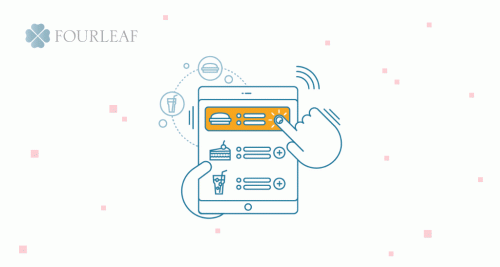
    Fourleaf and Star Micronics offer restaurant solutions for businesses of all sizes with top performance. Fourleaf is a restaurant point of sale (POS) application that allows management and staff to manage orders from start to finish using an iPad. Restaurant and food service business choose Fourleaf and Star for its mobility, always-on functionality, and outstanding user and customer experience.

    Mobility

    Smaller restaurants, cafes, and food trucks need mobility options that will allow them to take an order and accept payment from anywhere, at any time. With mobile ordering and payment becoming more popular options when it comes to food service, it is important for business owners to accommodate to the new generation of consumers by offering more mobile options. Fourleaf allows restaurants to seamlessly accept mobile orders and payments. Operating on iPads, Fourleaf’s POS solution enables food service businesses to go completely mobile using one of Star’s mPOS hardware options including the SM-L200 portable printer, mPOP, or mC-Print3.

    Always-On Connectivity

    With Fourleaf and Star Micronics, restaurateurs never have to worry about devices being disconnected, or losing payment or transaction information. The benefit of Fourleaf’s real-time sales and inventory updates is that business owners and managers are always connected and able to see updates whether they are in the restaurant or relaxing at home. And with Star Micronics’ new mC-Print3, they never have to worry about losing connectivity with the printer’s HUB interface with Bluetooth, USB, lightning USB, and Ethernet options. Not only does the mC-Print3 offer multiple connectivity options, but it also allows restaurants to connect multiple devices to be used all at the same time while boasting both spill- and insect-proof technology, making it ideal for kitchen and restaurant environments. For mid-size and large-scale restaurants, always-on and always-connected functionality is a must.

    User and Customer Experience

    The most important aspect of running a successful restaurant business is providing an exceptional customer experience. In order to do this, staff must be knowledgeable of the menu and the back-of-house operations including how food is prepared, wait times in the kitchen, and most importantly, the point of sale. Providing your staff with a user-friendly POS system helps set-up them—and your business—up for success, especially in a large-scale and busy restaurant environment. Fourleaf POS offers an easy-to-use and intuitive system that makes it easy for staff to take orders, print receipts, and track loyalty. This is also great for the customer experience because they receive excellent service and rewards for frequenting your business. Star’s TSP143III printer helps staff to quickly print receipts and credit card slips and offers an aesthetically pleasing printing solution for your business.

    The bottom line is that no matter what size or type of restaurant or food service business you run, it is important to have modern and functional technology to help your staff get the job done and provide your customers with a 5-star experience every time. Whether you own a food truck or a steakhouse, Fourleaf and Star Micronics have the solutions to help you succeed.