Category: Industry Insights

  • Why Restaurants and QSRs Are Switching to Linerless Food Service Labels

    Why Restaurants and QSRs Are Switching to Linerless Food Service Labels

    Takeout, delivery, and grab-and-go orders are booming — and every one of them depends on the right label. For restaurants and QSRs, labels may seem like a small detail, but they’re essential for food prep, food packaging, and delivery accuracy. The wrong system leads to wasted time, sticky residue, and costly mistakes.

    Linerless food service labels solve these challenges. They streamline fast-paced workflows, cut down on waste, and support compliance without slowing operations. From prep stations to delivery bags, they’re quickly becoming the smarter way to label in the food service industry.

    The Business Case for Switching to Linerless Food Service Labels

    Beyond accuracy and compliance, the switch to linerless comes with major operational and financial benefits:

    • Less waste: no liners piling up on counters or floors.
    • More labels per roll: fewer roll changes and better uptime.
    • Flexible adhesive strengths: diamond, full, or permanent — a solution for every prep, packaging, and delivery workflow.
    • Cost savings over time: lower material use, fewer mistakes, and reduced disposal costs.

    Linerless isn’t just about eco-friendliness. It’s about giving restaurants a faster, cleaner, and more scalable way to handle labeling.

    Choosing the Right Adhesive Strength

    Linerless food service labels come in different adhesive strengths to match every task in a restaurant or QSR. Operators can choose from:

    • Diamond adhesive – light-tack flexibility, no residue
    • Full adhesive – reliable coverage, removable when needed, no residue
    • Permanent adhesive – tamper-evident, lasting hold
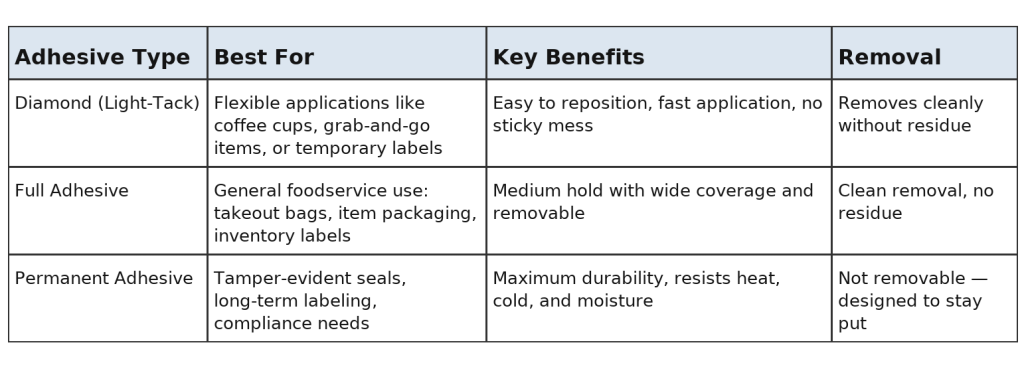
    Linerless labels have different adhesive strengths for a wide range of applications.

    This range makes it easy to pair the right label with the right workflow, whether in prep, packaging, or delivery.

    Food Prep Labels That Keep Kitchens Compliant and Efficient

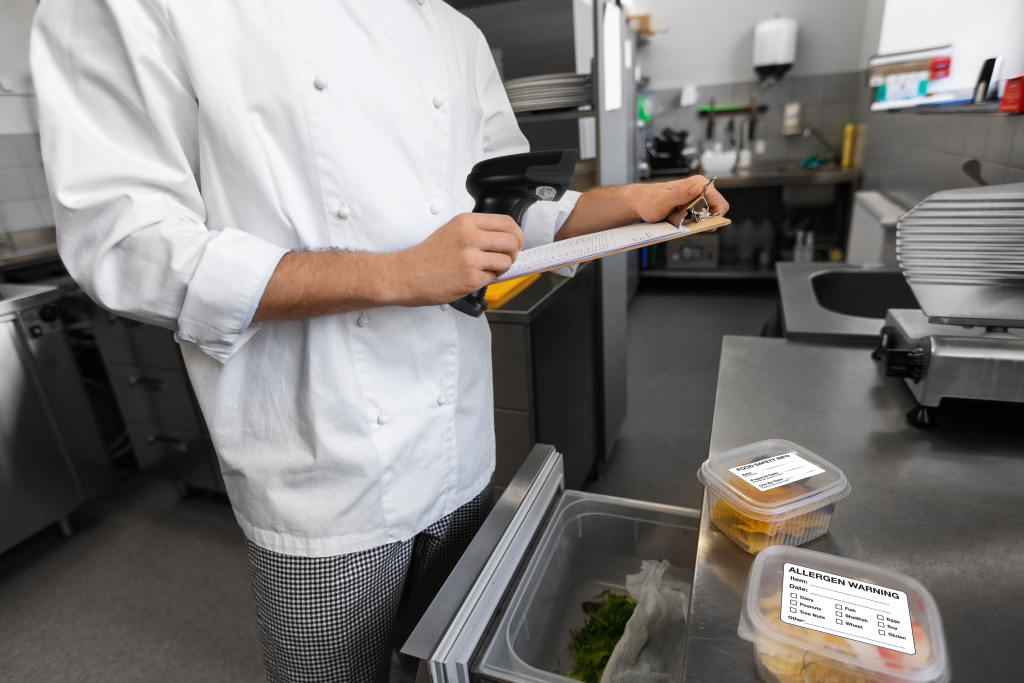
    In the kitchen, food prep labels are mission-critical. They track expiration dates, display allergen details, and support FIFO systems through food rotation labels. Without reliable labeling, food safety can suffer, and compliance with FDA, USDA, and Prop 65 standards becomes harder to maintain.

    Linerless prep labels are built to handle the heat, cold, and moisture of busy kitchens. They come in adhesive strengths tailored to every task:

    • Diamond adhesive labels make it easy to move containers if ingredients shift stations.
    • Full adhesive labels provide stronger coverage for general food prep and most kitchen environments, including in the fridge, while still removing cleanly when needed.

    The result? Order accuracy, less waste, and smoother prep operations.

    Learn “How Inventory Labels Improve Traceability and Reduce Shrink” here >

    Food Packaging Labels for Accuracy and Customer Confidence

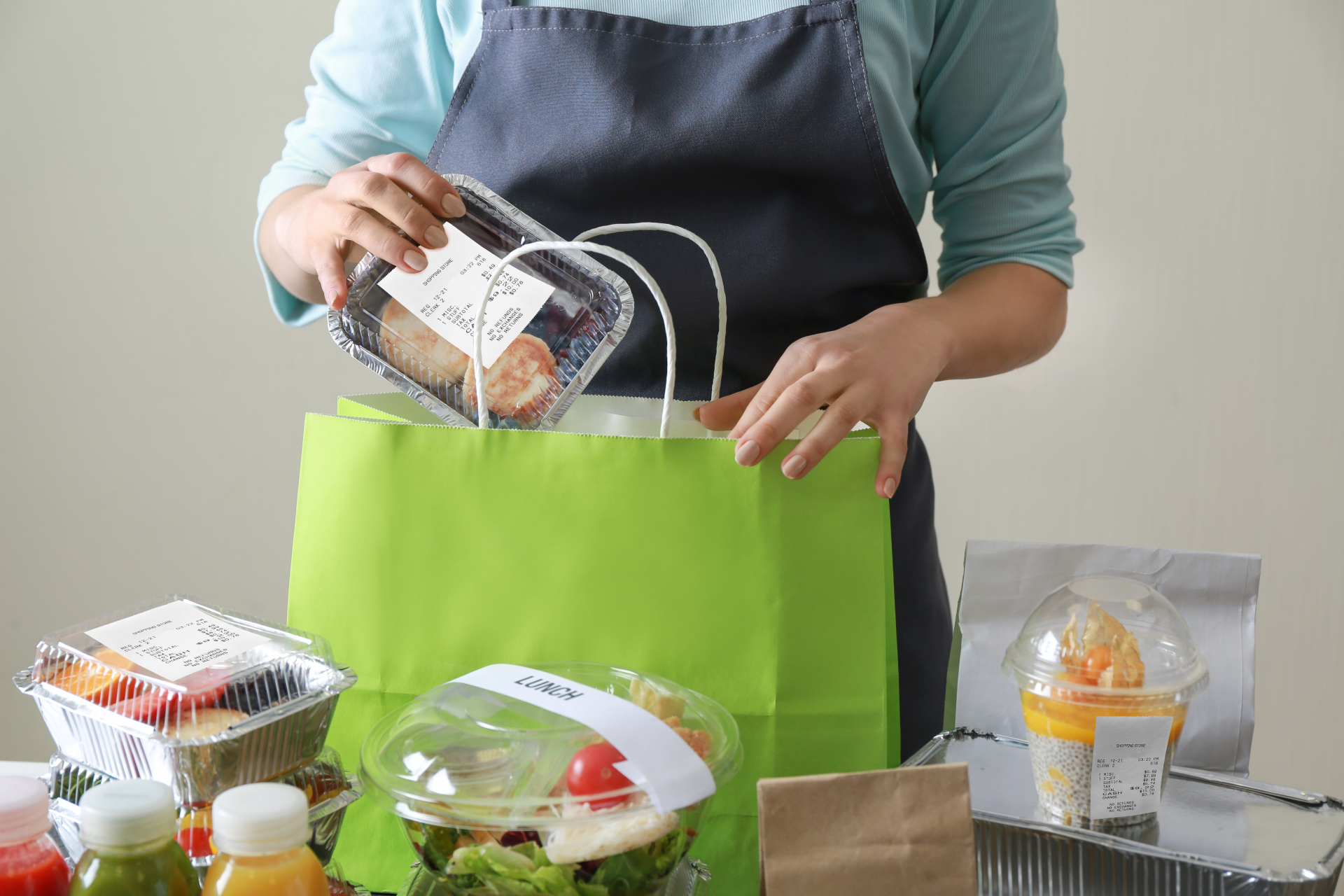
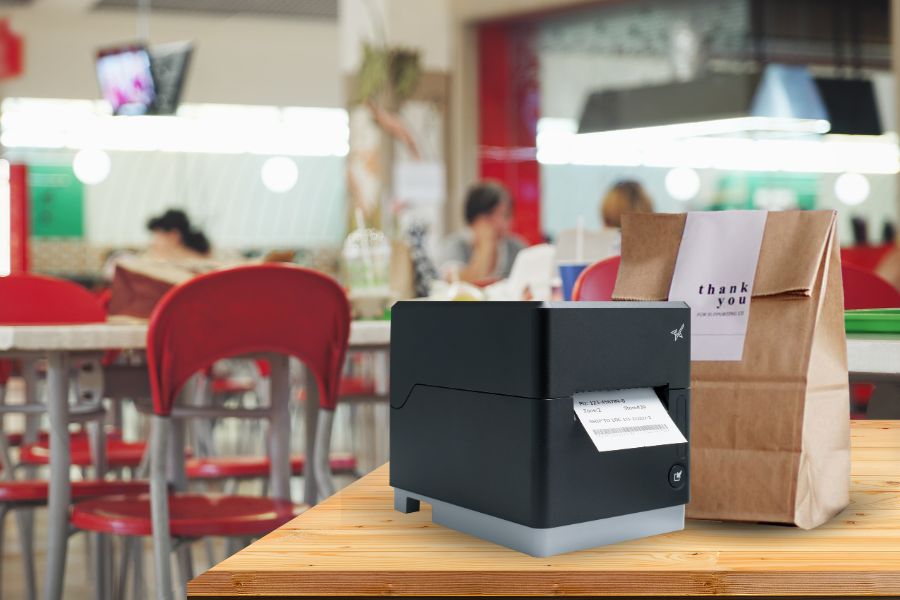
    Packaging is the last touchpoint before an order reaches a customer. Clear, legible food packaging labels are critical for accuracy and brand trust. They ensure that every item, bag, clamshell, or cup contains the correct items and that special instructions are clearly visible at a glance.

    Linerless labels are ideal for food packaging because they adapt to different surfaces and workflows:

    • Repositionable adhesive lets staff update or replace labels without leaving residue behind (diamond or full adhesive).
    • Permanent adhesive creates tamper-evident seals often needed for takeout and delivery.

    Every correctly labeled order reduces mix-ups, prevents food waste, and delivers a more professional experience, making guests happier and more confident in ordering from your restaurant.
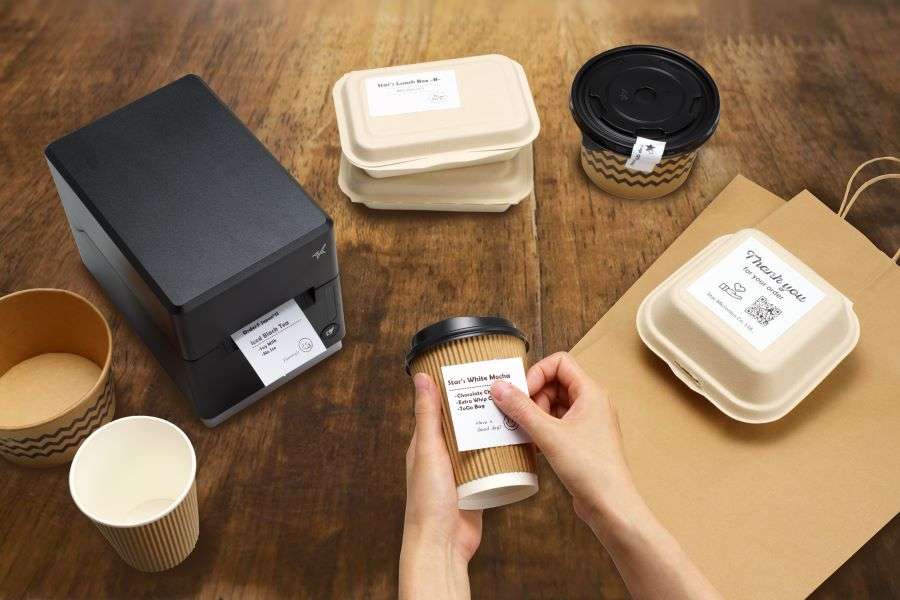
    Why Food Packaging Labels Are Essential to Online Order Fulfillment

    Food Delivery Labels for Takeout and Off-Premise Dining

    With takeout and delivery driving growth in food service, food delivery labels are more important than ever. They identify which order belongs to which customer, seal bags securely, and reassure diners that their food is safe.

    Linerless delivery labels eliminate liner waste, provide more labels per roll, and keep labeling stations clear of clutter. Adhesive options make them versatile across use cases:

    • Tamper-evident permanent labels seal delivery bags for customer confidence. These linerless labels cannot be easily removed or done so without being noticeable.
    • Repositionable labels fit cups, boxes, and grab-and-go containers (usually, full adhesive works here).

    Whether it’s dine-in pickup, drive-thru, or third-party delivery, linerless food delivery labels keep orders moving smoothly.

    QSR Order Labels and Restaurant Order Labels in Action

    High-volume restaurants and QSRs can’t afford order mistakes. QSR order labels and restaurant order labels speed up service by clearly tagging every order with customer names, order numbers, or instructions.

    With linerless, operators gain flexible label lengths that fit everything from catering trays to drink lids. Fewer roll changes mean staff can keep pace during peak rushes, while food rotation labels in the back of house keep ingredients fresh and compliant.

    From the kitchen to the counter, linerless order labels ensure accuracy at every step.

    Why Food Packaging Labels Are Essential to Online Order Fulfillment

    How Star Micronics Leads in Food Service Labeling

    Star Micronics helps restaurants and QSRs simplify every part of labeling with printers, supplies, and software built for modern food service:

    • mC-Label3: all-in-one multifunction printer for receipts, linerless labels, and die-cut labels. Feature-rich.
    • mC-Label2: a compact 2-inch multifunction printer ideal for small prep containers, micro-labels, and tight stations.
    • Linerless adhesive options — diamond, full, and permanent — to match the exact needs of prep, packaging, and delivery workflows.
    • Custom labeling designs with Label Builder.
    • Cloud-ready integration with CloudPRNT Next and StarIO.Online.
    • Eco-friendly choices like Star Blue Eco paper and labels for BPA- and BPS-free operations.

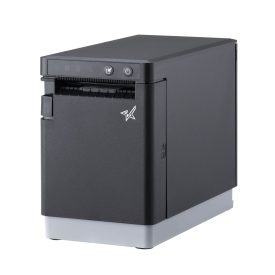
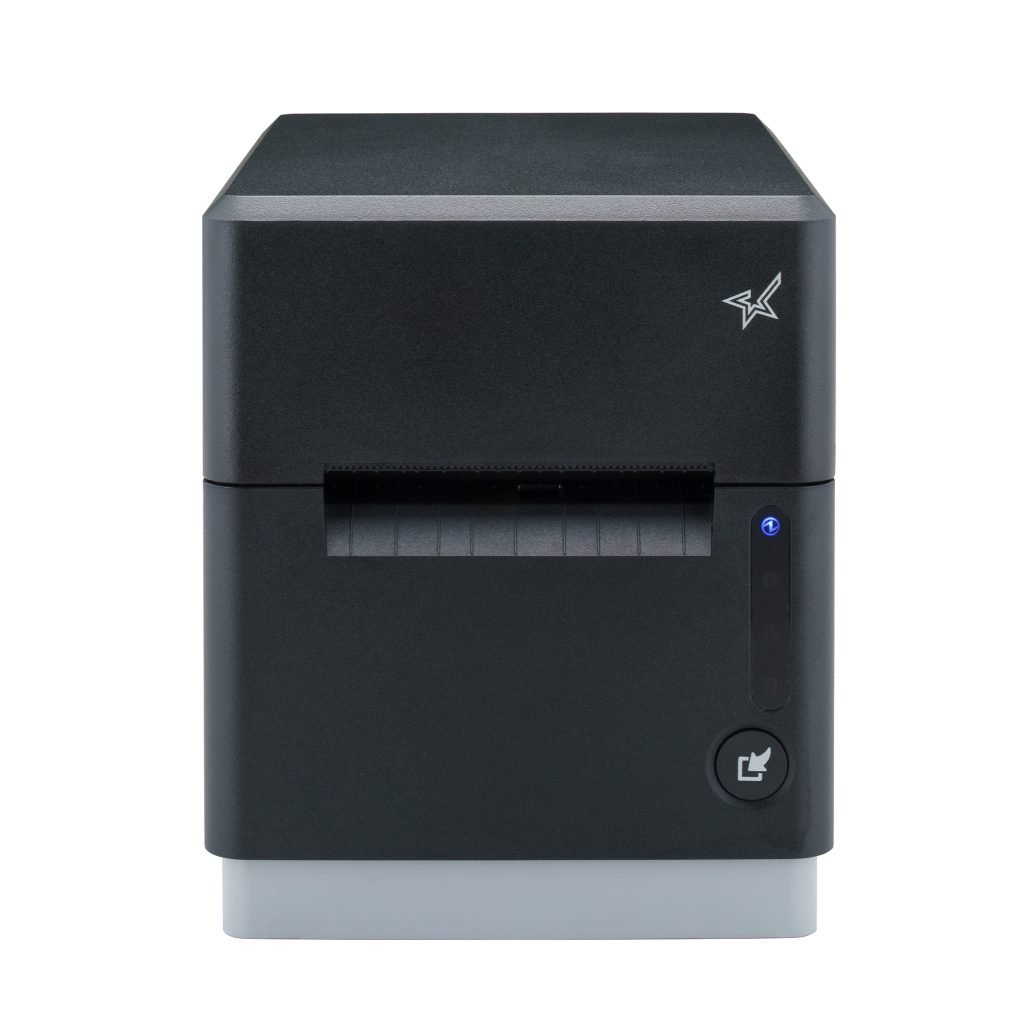
    mC-Label2 Multifunction Printer

    The mC-Label2 packs powerful features into a compact, front-loading design, including 300 dpi resolution, support for linerless, die-cut, receipt, and continuous media, and connectivity options like USB-C, LAN, WLAN, Bluetooth, and Apple MFi-certified pairing (X4 models only).
    Explore the mC-Label2 >

    mC-Label3 Multifunction Printer

    The Star Micronics mC-Label3 is a versatile multimedia printer that prints a wide range of labels and receipts, including both permanent and repositionable sticky linerless. It features cloud connectivity and innovative technologies like SteadyLAN and TetherLAN for enhanced printing convenience.

    Discover the mC-Label3 >

    With Star, restaurants can take labeling from a pain point to a performance driver.
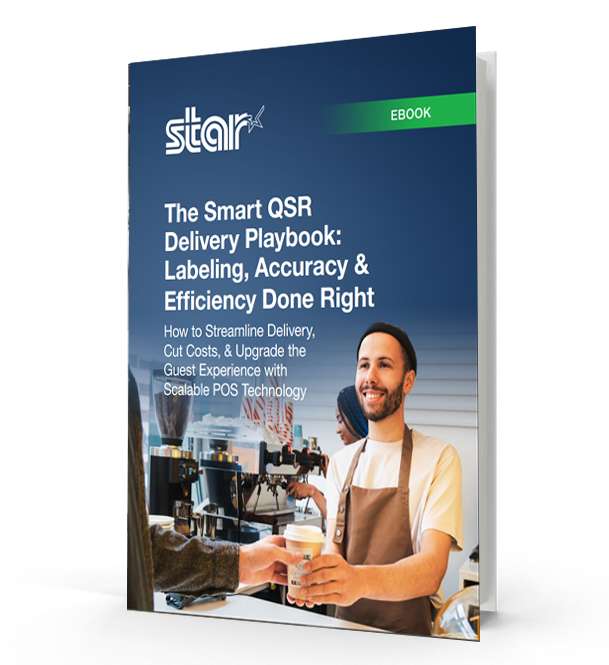
    The Smart QSR Delivery Playbook: Labeling, Accuracy & Efficiency Done Right

    Learn how leading QSRs are using smart labeling and scalable POS technology to reduce errors, cut costs, and deliver a better guest experience.

    The Future of Food Service Labeling Is Linerless

    Linerless food service labels are redefining how restaurants manage takeout, prep, and delivery. From food prep labels that ensure compliance to food packaging and delivery labels that improve order accuracy and customer confidence, linerless technology makes operations faster, cleaner, and more sustainable.

    With Star Micronics, restaurants and QSRs can take labeling from a pain point to a performance driver. Smarter prep. Smarter packaging. Smarter delivery. That’s the power of linerless with Star, and it’s available today.


    Ready to switch? Star Micronics makes it easy.

  • Take the Pain Out of Ecommerce Returns Management with Smarter Labeling

    Take the Pain Out of Ecommerce Returns Management with Smarter Labeling

    Returns are part of doing business, but smart returns management ensures they don’t have to drain your profits. According to the National Retail Federation, returns accounted for 16.9% of 2024 sales, totaling $890 billion for retailers. For ecommerce, the challenge is even bigger: about one-quarter of online purchases are returned, according to Statista.

    Of course, ecommerce companies cover those costs. However, the impact of returns extends beyond the cost of shipping or writing off damaged products that cannot be resold. Returns management is also a hidden cost center, requiring staff time, packaging supplies, and warehouse resources to process refunds or exchanges and to track items until they are properly restocked in inventory.

    Yet failing to provide customer-friendly returns can be even more costly. An ICSC survey found that return policies influence 82% of consumers’ purchase decisions. Shoppers often check policies before they buy and may abandon carts if the process feels too restrictive. On the other hand, a simple, transparent return policy builds confidence in the purchase and trust in your brand.

    That’s why solving the challenge of ecommerce returns requires a practical returns management strategy, and smarter labeling is at the heart of it.

    How to Develop the Best Returns Management Processes

    A great returns policy does more than save you money. It keeps customers confident in your brand and makes them more likely to shop with you again. To optimize your returns processes, start by mapping the customer journey and improving each step along the way.

    > Start with Clear Policies and Procedures

    Be transparent with customers about how, when, and why you accept returns. A customer-friendly policy can actually drive more sales, but it still needs to protect your business. For example, you may allow extra time for holiday returns while limiting returns on clearance items.

    Keep policies as simple as possible, and make sure they’re easy to find on your website. On the back end, train employees so they know return timelines, refund or replacement procedures, and how to move items back into inventory.

    Finally, back up your policies with the right technology. Replacing manual steps with smarter return labeling systems makes the process faster, more accurate, and less frustrating for staff and customers alike.

    > Choose Where to Accept Returns

    Retailers have several options when it comes to receiving returns, each with its own benefits and trade-offs:

    • In-house warehouses: Full control over the returns management process, but higher demands on staff and resources.

    • Third-party logistics (3PL) providers: Offload the burden of processing returns, though additional fees may apply.

    • Drop-off partnerships or in-store kiosks: Create a smoother customer experience and can even drive foot traffic to partner businesses.

    Growing trend: Self-service returns

    • Customers print their own return labels or barcode labels for inventory.

    • Items are placed in secure lockers.

    • Employees scan the labels for processing.

    • This model saves time, reduces labor costs, and delivers the speed and convenience customers expect.

    The key is choosing a returns model that balances customer satisfaction, operational efficiency, and cost savings for your business.

    > Use Barcode Labels for Inventory Control

    Every item that comes back into your system needs to be tracked. Barcode labels for inventory control ensure products are logged correctly, routed to the right location, and available for resale as quickly as possible.

    Automating this process also reduces the labor burden on your staff, while providing both your team and online shoppers with a real-time view of availability. That means faster restocking, fewer mistakes, happier customers, and proof that smarter labeling drives better business outcomes.

    LIFESTYLE BSH 32B Warehouse 2 JPG

    > Learn from Returns

    Returns management systems that use barcode labels for inventory control allow you to collect data that you can analyze to learn more about customer behaviors. You can track which items are most commonly returned, allowing you to make informed decisions about whether to continue selling them. 

    With this information, you can make better decisions about which products to keep selling, forecast more accurately, and avoid tying up capital in items that are consistently sent back. Returns data can transform a challenge into a valuable business advantage.

    > Use Linerless Return Labels

    Returns can be messy, but labeling doesn’t have to be. Linerless return labels print without a paper backing, which means no clutter piling up on counters, workstations, or warehouse floors. They help keep return stations organized and efficient, especially during peak volumes.

    Beyond efficiency, linerless labels reduce waste and support sustainability goals, a growing priority for today’s consumers and businesses alike. By choosing linerless technology, retailers can maintain smooth returns operations while reducing waste and reinforcing a modern, sustainable brand image.

    Great Customer Experiences, Efficient Operations, Just in Reverse

    A higher rate of returns for ecommerce purchases is a trend that is unlikely to end soon, but with the right returns management strategy and smarter labeling, it can become an opportunity to build trust and confidence in your brand. Carefully planning returns processes, including establishing clear policies and using return labels and barcode labels for inventory tracking, can help control costs while maintaining customer satisfaction.

    Using the right technology, from printers that support linerless return label printing to automated data collection, will help you streamline return processes for your ecommerce business.

    Additional Resources

    Star Micronics offers labeling and scanning solutions ideal for retail and ecommerce returns management processes, including: 

    mC-Label2 Multifunction Printer

    The mC-Label2 packs powerful features into a compact, front-loading design, including 300 dpi resolution, support for linerless, die-cut, receipt, and continuous media, and connectivity options like USB-C, LAN, WLAN, Bluetooth, and Apple MFi-certified pairing (X4 models only).

    Explore the mC-Label2 >

    mC-Label3 Multifunction Printer

    The Star Micronics mC-Label3 is a versatile multimedia printer that prints a wide range of labels and receipts, including both permanent and repositionable sticky linerless. It features cloud connectivity and innovative technologies like SteadyLAN and TetherLAN for enhanced printing convenience.

    Discover the mC-Label3 >

    Star’s 1D/2D Barcode Scanners

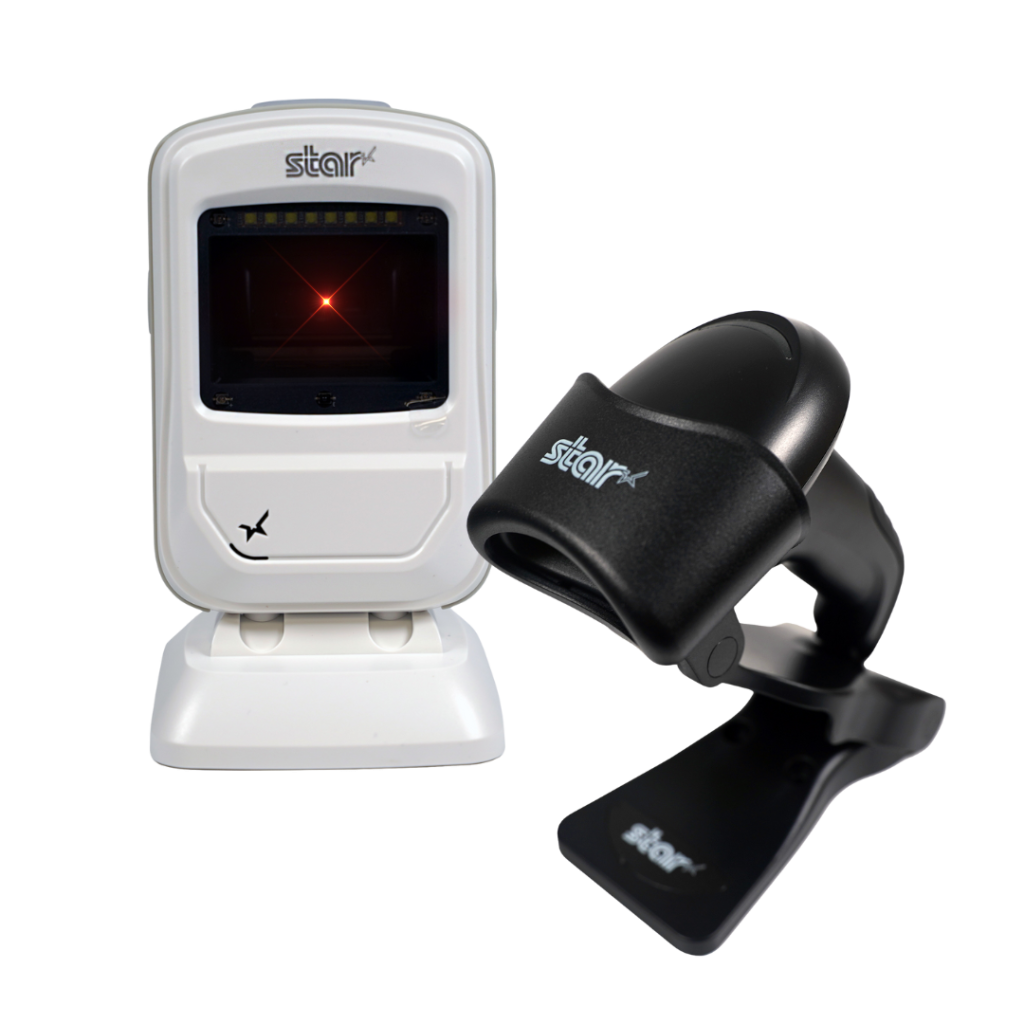
    Star offers a comprehensive range of IP-rated 1D/2D barcode scanners, ideal for diverse business needs. From retail to healthcare, our versatile scanners excel in parsing driver’s license and ID barcodes, ensuring swift and accurate data capture. Choose the perfect fit for your setup—desktophandheld, or wireless Bluetooth options available.

    A higher rate of ecommerce returns is here to stay, but it does not have to erode profits. With the right returns management strategy supported by return labels, barcode labels for inventory, and efficient labeling technology, retailers can transform returns into an opportunity to build loyalty and protect their bottom line.

    Star Micronics makes it possible with smarter labeling and scanning solutions designed to take the pain out of ecommerce returns management. Contact us today to learn more.

    Get smart labeling solutions for better returns management now:

  • Prop 65 and Thermal Paper: What Retailers and Restaurants Must Know

    Prop 65 and Thermal Paper: What Retailers and Restaurants Must Know

    If your business handles thermal paper, whether it be receipts, kitchen tickets, or labels, Proposition 65 is not just a California issue anymore. Although Prop 65 is a California law, its reach is already stretching nationwide. Many companies are reformulating products or adjusting labeling strategies across the board to meet the standards. Not understanding the rules is not only risky health-wise, but it could also mean fines, lawsuits, or damage to your brand’s reputation.

    Let’s break down what Prop 65 is, why it matters for thermal paper, and how retailers and restaurants everywhere can stay compliant.

    What Is Prop 65?

    Proposition 65, officially called the Safe Drinking Water and Toxic Enforcement Act of 1986, is California’s way of keeping consumers informed about potential exposure to harmful chemicals. The law requires businesses to provide “clear and reasonable” warnings if their products expose consumers to substances known to cause cancer, birth defects, or other reproductive harm.

    While it’s a California law, its influence extends far beyond the state. Many national brands and businesses choose to comply everywhere because consistency is simpler than running two different playbooks.

    Why Prop 65 Matters for Receipts and Thermal Paper

    Here’s where it connects to your day-to-day: thermal paper.

    Traditional thermal paper has often used chemicals like BPA and BPS to develop printed text. These substances are on California’s Prop 65 list. That means something as ordinary as handing a customer a receipt or printing a kitchen ticket could technically count as “exposure.”

    For retailers and restaurants, that’s a big deal. Customers touch receipts. Employees handle rolls all day. It’s more than compliance, it’s about health and safety.

    And it doesn’t stop with receipts. Paper-based touchpoints like order confirmation labels, allergen label information, grab-and-go labels, and nutritional information labels may also be impacted if the wrong media is used.

    Star Micronics offers non-toxic, BPA/BPS phenol free, Prop 65 compliant thermal receipt paper and labels.

    Prop 65 Compliance Requirements for Businesses

    If your receipts, labels, or kitchen tickets contain Prop 65–listed substances, you may need to provide visible warnings. The requirements include:

    • Clear communication that a listed chemical is present
    • Placement of warnings where customers and employees will see them
    • Consistency across all impacted locations

    Non-compliance can result in penalties that add up fast. In addition to fines, businesses risk lawsuits and reputational harm, which are two things every operator wants to avoid.

    What Prop 65 Means for Retail and Restaurants

    Prop 65 compliance is not just a back-office concern. It shows up in everyday touchpoints where customers and staff interact with paper.

    > For Retailers

    Receipts are the obvious starting point, but compliance extends far beyond the checkout counter. Retailers also rely on:

    • Barcode labels for pricing and scanning
    • Inventory labels for stock management and traceability
    • Product rotation labels to manage freshness and reduce shrink
    • Loyalty coupons and promotional tickets handed directly to customers

    Each of these is a potential source of exposure if the wrong thermal paper is used.

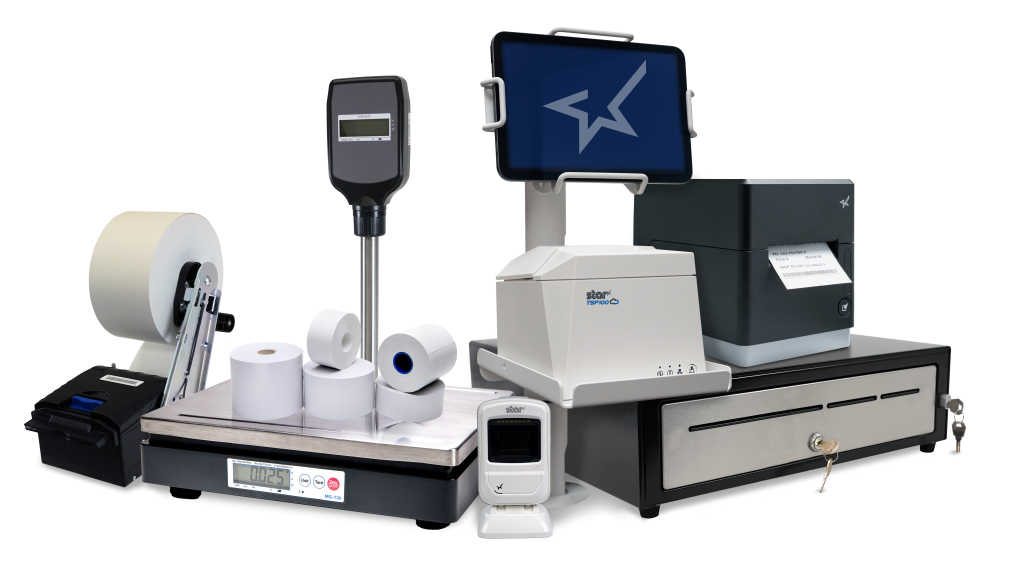
    Star Micronics offers the full suite of retail POS hardware solutions for today's businesses.

    > For Restaurants and QSRs

    Foodservice operations depend heavily on thermal paper for smooth workflows and accurate orders. Prop 65 compliance comes into play with:

    • Kitchen tickets that keep back-of-house organized
    • Catering labels for large orders and off-premise service
    • Weight and serving size labels that provide critical portioning information
    • Food identification labels to separate allergen-sensitive items or specialty orders
    • Special product offerings labels and nutritional information labels that help guests make informed choices

    From grab-and-go stations to off-premise dining, labels are everywhere in modern foodservice. Each printed piece is a small but important part of both compliance and customer trust.

    Restaurant POS Solutions

    How to Choose Prop 65-Compliant Paper

    The solution is simple: choose the right media. Look for thermal paper that is:

    • BPA-free and BPS-free (phenol-free)
    • Tested for Prop 65 compliance
    • Verified by a trusted supplier

    The right paper doesn’t just protect your business legally. It also reassures your customers and employees that you take their safety seriously, which makes them feel good about doing business with your brand.

    The Star Micronics Commitment

    Star is committed to anticipating industry trends and staying ahead of them. That’s why we offer thermal paper options that are Prop 65 compliant, BPA-free, BPS-free, and non-toxic. These media choices are designed for receipts, linerless labels, and the wide variety of labeling applications retailers and restaurants rely on every day.

    Interested in learning more about linerless label paper? Read about the different adhesive strengths here, or find out why linerless may be a better alternative for your business.

    Prop 65 and Thermal Paper: Final Thoughts

    Prop 65 may feel like just another piece of red tape, but in reality, it’s about protecting people and protecting your brand. If your business prints receipts, kitchen tickets, or labels, compliance isn’t just the smart move; it’s the safe one.

    With Star, businesses can simplify compliance by choosing trusted solutions for Prop 65 and thermal paper in both retail and restaurant environments. Connect with us to explore your options and keep your business ahead of the curve.

    Ready to get your business Prop 65 compliant thermal paper and labels?

  • Compliant Cannabis Labels: Print Small, Accurate, and Legible Every Time

    Compliant Cannabis Labels: Print Small, Accurate, and Legible Every Time

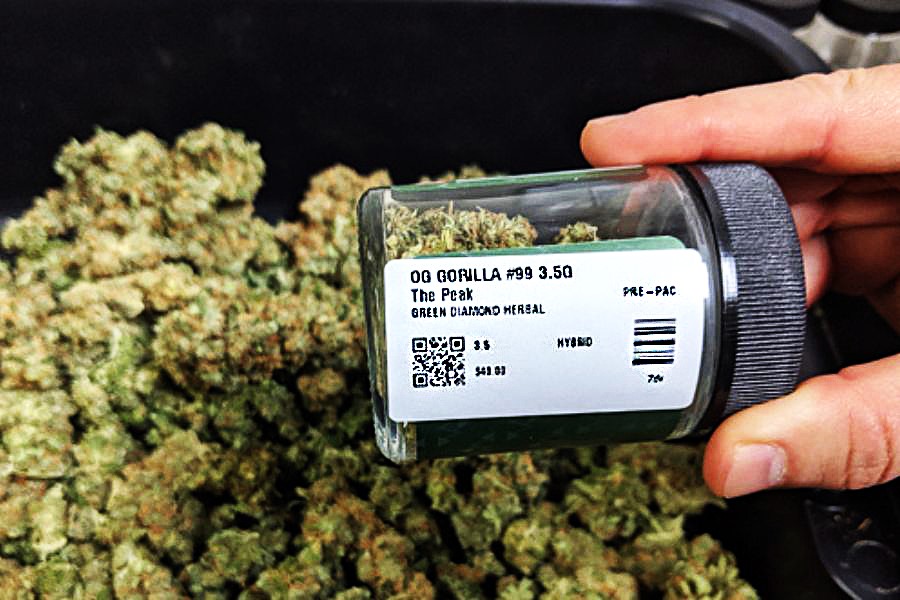
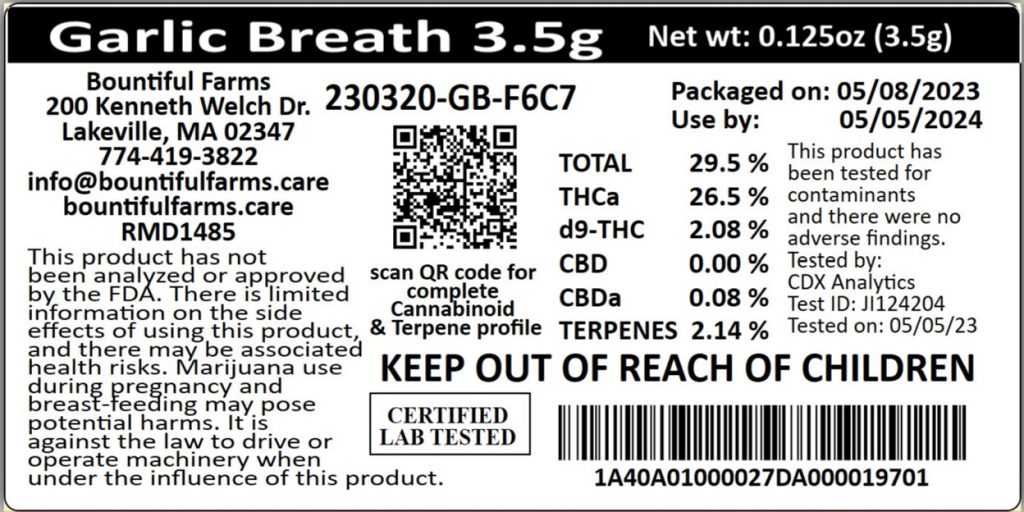
    Labeling in the cannabis industry is not just a matter of branding—it’s a legal requirement. Dispensaries and cannabis retailers must ensure that every package includes detailed information such as THC and CBD content, batch numbers, manufacturer info, warning symbols, and expiration dates. 

    While branded packaging typically uses colorful labels for visual appeal, most operations rely on a second, white regulatory label for compliance (required information varies by state). These compliance cannabis labels are often small, and printing them clearly is critical for both legal adherence and customer trust.

    5 Best Practices for Printing Small Cannabis Labels

    Cannabis packaging labels can be very small, which can make printing clear, compliant labels difficult. To print small labels for cannabis products, following these best practices is a good place to start: 

    1. Use Simple, Readable Label Designs

    Regulatory cannabis labels should prioritize legibility over aesthetics. Use clear, sans-serif fonts and maintain enough spacing between text and label edges. Even when printing on labels under 1 inch, clarity is non-negotiable. In some jurisdictions, font types and minimum sizes are specified by law.

    2. Choose a High-Resolution Label Printer

    To ensure every letter, number, and barcode scans cleanly, you need a printer that delivers high resolution. A label printer with a resolution of at least 300 DPI is ideal for printing small cannabis labels that require dense amounts of information. Lower-resolution printers can blur or distort critical details, potentially putting compliance at risk.

    Compliant Cannabis Labels

    3. Select the Right Label Media

    The label type impacts both durability and legibility. Choose white die-cut labels with a matte finish for optimal scan quality and text contrast. For improved workflow and less waste, consider linerless labels with permanent adhesive for tamper-evident applications. These can be applied directly over colorful branded packaging.

    4. Centralize Label Design and Printing

    Cannabis businesses often operate across multiple stations or locations, making consistency a challenge. With Star’s CloudPRNT Next and Label Builder, you can centrally manage and deploy approved cannabis label designs to any connected printer. Paired with a cloud-enabled printer like the mC-Label2, this setup ensures version control, prevents unauthorized edits, and delivers consistent, compliant output at every touchpoint.

    5. Review and Refresh Regularly

    Compliance rules change frequently. Conduct routine reviews to ensure your labels meet current state regulations and visual standards. Also, inspect print quality regularly to identify issues early, such as fading, misalignment, or worn printheads.

    Why the mC-Label2 Is Ideal for Cannabis Compliance Labels

    The Star Micronics mC-Label2 is a compact, front-loading 2-inch label printer that excels in tight spaces, like dispensary counters and prep stations. With ultra-sharp 300 DPI resolution, it prints small cannabis labels with exceptional clarity, perfect for overlaying compliance data on branded packaging.

    It supports multiple media types, including white die-cut labels, linerless adhesive labels, receipts, and continuous rolls. The LBL models print die-cut labels and receipts only for focused use cases.

    mC-Label2 Multifunction Printer

    The mC-Label2 packs powerful features into a compact, front-loading design, including 300 dpi resolution, support for linerless, die-cut, receipt, and continuous media, and connectivity options like USB-C, LAN, WLAN, Bluetooth, and Apple MFi-certified pairing (X4 models only).

    Explore the mC-Label2 >

    The printer’s One Touch Label feature allows users to store and print up to three pre-approved label designs without needing a network connection, speeding up repetitive labeling tasks. This helps budtenders or staff rapidly apply consistent labels during high-traffic hours—no need to access software or re-enter data for common label types.

    Connectivity is seamless with support for USB-C, LAN, Bluetooth, and Wi-Fi. And because it integrates with CloudPRNT Next, StarIO.Online, and Star’s Label Builder, it’s easy to manage label templates and ensure accuracy across every location.

    Start Printing Smarter Compliance Labels

    Meeting cannabis labeling regulations doesn’t require oversized printers or complicated workflows. With the right cannabis label printer and a thoughtful process, you can create accurate, compliant, and professional labels that support your business and satisfy state requirements.

    Mastering Label Compliance in the U.S.

    From food and beverages to pharmaceuticals and consumer goods, this ebook provides the necessary tools to ensure your labeling meets legal standards and enhances customer engagement.

    Want to see how the mC-Label2 can support your cannabis operations?

  • How Inventory Labels Improve Traceability and Reduce Shrink

    How Inventory Labels Improve Traceability and Reduce Shrink

    Inventory is one of the most valuable and vulnerable assets in any retail or foodservice business. From stock miscounts to expired goods and theft, shrink can quietly chip away at profits. And with tighter regulations and growing customer expectations, traceability and compliance are more important than ever.

    That’s where smart inventory labeling makes a real difference.

    Inventory labels don’t just keep shelves organized. They’re the foundation for traceability, food safety, regulatory compliance, and operational control. With the right labeling system in place, businesses can track every item, meet inspection requirements, and reduce waste across the board.

    Why Traceability and Compliance Matter More Than Ever

    Today’s restaurants, QSRs, and retailers are under growing pressure to track every product through its full lifecycle. Whether it’s a local health inspection or a national recall, regulators expect clear labeling, real-time tracking, and accurate records.

    Without proper labeling, operators risk:

    • Product misidentification and stock confusion
    • Poor FIFO (first in, first out) rotation
    • Delays during recalls or health inspections
    • Missed expiration dates leading to spoilage
    • Lost items or manual tracking errors
    • Increased shrink from theft or disorganization
    • Fines or violations due to noncompliance

    The solution? Smarter inventory labels and reliable hardware that make printing those labels easy.

    Kitchen Labels for food label compliance

    Types of Labels That Improve Inventory Control

    Not all labels are created equal. Here are some of the most impactful types of inventory labels that help reduce shrink and support compliance:

    >Inventory Labels

    Used to tag incoming products, backroom stock, or bulk ingredients with SKUs, storage instructions, or shelf life details. These labels make stock easy to locate and manage from receiving to removal.

    >Traceability Labels

    Include supplier info, batch numbers, and lot codes. Essential for tracking high-risk or perishable items through the supply chain and required documentation in case of a recall or audit.

    >Barcode Labels

    Enable fast, accurate scanning for receiving, transfers, and counts. Barcode inventory labels eliminate manual entry errors and ensure that digital systems reflect physical stock.

    >Rotation & Expiration Labels

    Support FIFO systems and help staff use the oldest items first. These labels often include prep dates, expiration times, or storage instructions, reducing spoilage and keeping inventory compliant with health regulations.

    How Inventory Labels Reduce Shrink

    Shrink often occurs because of inconsistent labeling, poor visibility, or reliance on manual tracking.

    Imagine a hectic kitchen during the lunch rush: staff members are reaching for ingredients, prepping items, and trying to move quickly, only to discover two opened containers of the same product, both unlabeled, one of which may be expired. Or, picture a back stock area where boxes are marked by hand, and no one’s quite sure when each arrived or how much is left.

    How Inventory Labels Improve Traceability and Reduce Shrink - blog article by Star Micronics.

    These moments may seem minor, but they add up to lost product, potential health risks, and unnecessary waste.

    Inventory labels directly address these challenges by:

    • Improving shelf visibility and product identification
    • Supporting better rotation with expiration labeling
    • Speeding up audits, receiving, and restocking
    • Helping prevent overordering, underordering, or missed use-by dates
    • Creating accountability and traceable paper trails
    • Ensuring compliance with food safety and storage regulations

    In foodservice especially, date-based inventory labels play a critical role in meeting health code requirements and reducing the risk of contamination, spoilage, or noncompliance penalties.

    Inventory Labeling Tools from Star Micronics

    Star Micronics provides flexible, compact, and high-performance labeling solutions to support smarter inventory workflows in any environment—from retail stockrooms to restaurant kitchens.

    > All-in-One Labeling: Star’s mC-Label series of multifunction printers handle die-cut, linerless, and continuous labels (receipts, too), making them ideal for receiving, prep, storage, and inventory tracking. With One Touch Label, you can store up to three static label designs directly on the printers and print them instantly using the multifunction button. No internet needed!

    > Compact, Flexible Designs: These space-saving printers install easily at any workstation. One model supports multiple labeling applications, reducing hardware SKUs and simplifying training and support.

    mC-Label3 Multifunction Printer

    The Star Micronics mC-Label3 is a versatile multimedia printer that prints a wide range of labels and receipts, including both permanent and repositionable sticky linerless. It features cloud connectivity and innovative technologies like SteadyLAN and TetherLAN for enhanced printing convenience.

    Discover the mC-Label3 >

    mC-Label2 Multifunction Printer

    The mC-Label2 packs powerful features into a compact, front-loading design, including 300 dpi resolution, support for linerless, die-cut, receipt, and continuous media, and connectivity options like USB-C, LAN, WLAN, Bluetooth, and Apple MFi-certified pairing (X4 models only).

    Explore the mC-Label2 >

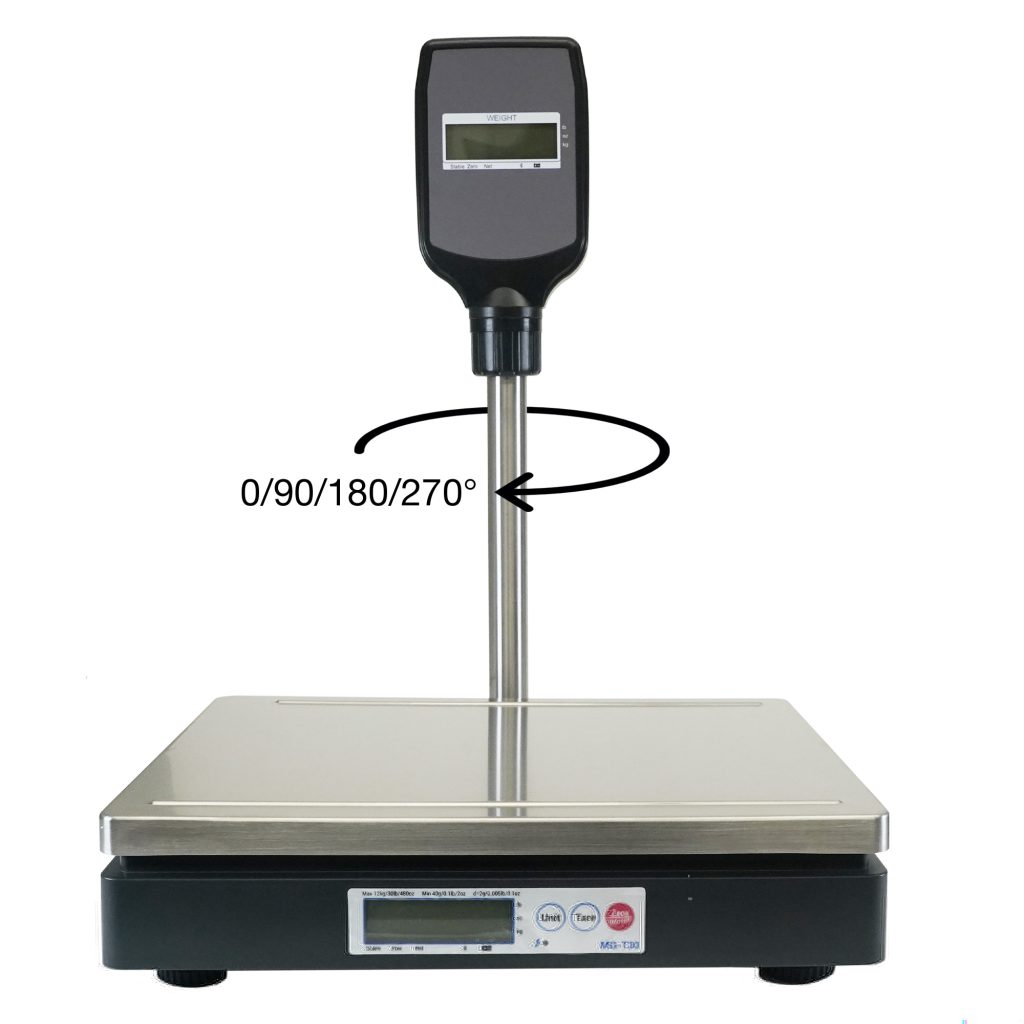
    > Scales for Accuracy: Pair Star printers with mG-T series POS scales for accurate weight-based labeling. Ideal for portioning, serving size tracking, and receiving by weight.

    mG-TUDB Scales

    Designed for precision and versatility, the mG-TUDB scales are a perfect fit for grocery self-checkout stations, produce sections and bulk item sales. With trade-legal certification for the U.S. and Canada, these scales offer Class III accuracy and seamless connectivity via Bluetooth, serial, or USB-C. Their large platter and optional pole display accessory ensure effortless setup with your POS system, making them ideal for a wide range of applications, from delis to farmer’s markets.

    Find Out More >

    > Software Compatibility: Star printers work with modern cloud-based and legacy inventory systems via USB, Bluetooth, Ethernet, Wi-Fi, CloudPRNT Next, and fully-managed cloud printing with StarIO.Online. Easy to integrate, easy to scale.

    Inventory Labels: The Bottom Line

    Inventory shrink may feel like an unavoidable cost, but with the right inventory labels and strategy, it’s entirely manageable. Whether you’re dodging spoilage, staying on top of compliance, or just trying to make it through the lunch rush without losing your mind, smart labeling gives you one less thing to stress about.

    The Smart QSR Delivery Playbook: Labeling, Accuracy & Efficiency Done Right

    Learn how leading QSRs are using smart labeling and scalable POS technology to reduce errors, cut costs, and deliver a better guest experience.

    Ready to boost your inventory labeling workflow?

  • Always Innovating: 5 Tech Trends Gaining Momentum in 2025

    Always Innovating: 5 Tech Trends Gaining Momentum in 2025

    One of Star Micronics’ most impactful objectives is to provide customers with products and services that meet their needs today and anticipate the tech trends of tomorrow. We listen to stakeholders, explore options, and develop with the overarching goal of making businesses more efficient. This is Star’s spirit of “always leading, always innovating.”

    Based on feedback from our customers and partners, and maintaining our position at the forefront of the industry, we’ve identified several tech trends gaining momentum as we head into the second half of 2025. I’m sharing this information to help our partners prepare to meet growing demand and to assist our customers in staying on track toward reaching their business goals.

    Take these five tech trends into account to finish 2025 strong and set the stage for a successful 2026:

    1. Migration to Cloud Printing in Retail & Hospitality Systems

    This year’s tech trends align with the rapid shift toward cloud-first, host device-agnostic ecosystems. Point of sale (POS) software and backend platforms are increasingly cloud-based, driving demand for cloud-managed printing and peripheral solutions.

    To support our customers, we are launching a new, fully managed cloud printing solution. StarIO.Online eliminates the need for local infrastructure. Businesses can host their print jobs on secure Star servers, monitor their devices remotely, and manage updates from a single dashboard. Managing printing in the cloud complements businesses’ increasingly cloud-based computing environments with streamlined workflows and increased efficiency.

    2. Rising Demand for Multi-Function Printers & Modular Hardware

    Tech trends reflect businesses’ desire to simplify device fleets and reduce complexity by upgrading to single devices that can support multiple use cases. Printers are now available that do it all, from printing receipts and chits to sticky and die-cut labels. A single device allows businesses to optimize space, control costs, and increase flexibility, which has particular benefits in QSR, fast casual, and retail environments. We’ve designed our mC-Label series printers to meet this demand and give businesses the flexibility to easily build multifunction printers into their workflows.

    In addition, today, even small printers come with all interfaces in one device. The printer can now be tethered to a USB or Ethernet connection, be connected wirelessly through Bluetooth or Wi-Fi, or be connected to a local or cloud based network, all with the same printer. What’s better than making the right choice? Not having to choose at all.

    3. Growing Focus on Sustainable Printing & Compliant Media

    Sustainability is no longer optional — customers expect it. There’s rising demand for linerless labeling to reduce waste and Prop 65-compliant paper in response to evolving state and regional regulations. Prop 65 in California mandates warnings if products contain harmful chemicals, such as BPA/BPS, which are found in traditional printer paper. Although it’s now the law in California, other legislatures are likely to follow suit. Along with transitioning to sustainable printing to help protect the environment, compliance is driving a shift in how businesses select print media,  partners, and hardware.

    4. Shift Toward Loyalty-Focused, Value-Added Channel Partnerships

    Solution providers want more than discounts. They want programs that support joint marketing, loyalty incentives, and true collaboration. The partner ecosystem is evolving beyond pure pricing to strategic partnerships that help both sides grow.

    To support our channel partners, Star is reimagining its Empower Program to accommodate the business models of our reseller and ISV partners. We’re introducing a loyalty program that rewards our partners with marketing funds to help them grow their businesses. Our updated program will support trade show attendance, help create customized campaigns, and deliver content that meets our partners’ go-to-market strategies.

    5. Transition to More Agile, Scalable Distribution

    While businesses plan to update printing technology to enhance operations, channel dynamics are more critical than ever. With last-minute deployments, multi-location rollouts, and complex integration timelines, distributors and vendors that can deliver speed, flexibility, and stock availability have a significant competitive edge. Star is uniquely positioned to offer our products through the largest, most innovative, and efficient distribution channel.

    Get the complete POS solutions from Star Micronics.

    Don’t Pass By This Opportunity

    For many business leaders, summer is the time for a break from the day-to-day. But it’s also a great time to take stock and course correct, if necessary, to keep your business moving in the right direction. Businesses have the opportunity to increase efficiency with cloud printing, operate more cost-effectively with multi-function printers, and operate more sustainably with eco-friendly paper and linerless labels. Star channel partners (and potential partners) can meet that demand by providing products from Star’s portfolio and collaborating more closely with us to market their businesses.

    Join us in always leading, always innovating in 2025 and beyond.

    Written by Christophe Naasz, Director of Business Development at Star Micronics America.

    Take the Next Step with Smarter POS Solutions

  • The Role of Labels in Modern Off-Premise Dining Solutions

    The Role of Labels in Modern Off-Premise Dining Solutions

    Off-premise dining is no longer a side channel. Because of popular demand, it’s become a core part of how restaurants operate. With digital orders flooding in from mobile apps, third-party platforms, kiosks, and drive-thru lanes, the pressure is on to deliver food fast, fresh, and error-free. And behind the scenes? It’s labeling that makes it all run smoothly.

    Let’s break down how smart labeling plays a pivotal role in powering today’s workflows and explore the off-premise dining solutions that make it happen.

    Why Off-Premise Dining Needs Better Labeling

    From kitchen prep to bag sealing, off-premise fulfillment relies on clear communication. Without effective labeling, it’s easy for orders to get mixed up, items to be forgotten, or bags to go unverified.

    Restaurants that don’t label effectively risk:

    • Incorrect or missing items in delivery and pickup orders
    • Chargebacks from third-party delivery platforms
    • Slower order assembly and longer wait times
    • Frustrated customers and negative reviews

    As off-premise volume increases, so does the need for strategy and precision, and that starts with the right labels.

    Key Label Types for Off-Premise Dining Success

    No two off-premise orders are exactly the same, which means clear, consistent labeling is essential at every step. From the moment the order comes in to the moment it’s handed off, each label plays a specific role in keeping things accurate, organized, and customer-ready. Below are some of the key label types that help restaurants succeed in today’s fast-paced off-premise environment.

    1. Order Confirmation Labels

    Printed as soon as the order is received, these labels identify the customer, order number, pickup method, and fulfillment status, ensuring nothing gets lost in the shuffle.

    2. Item & Inventory Labels

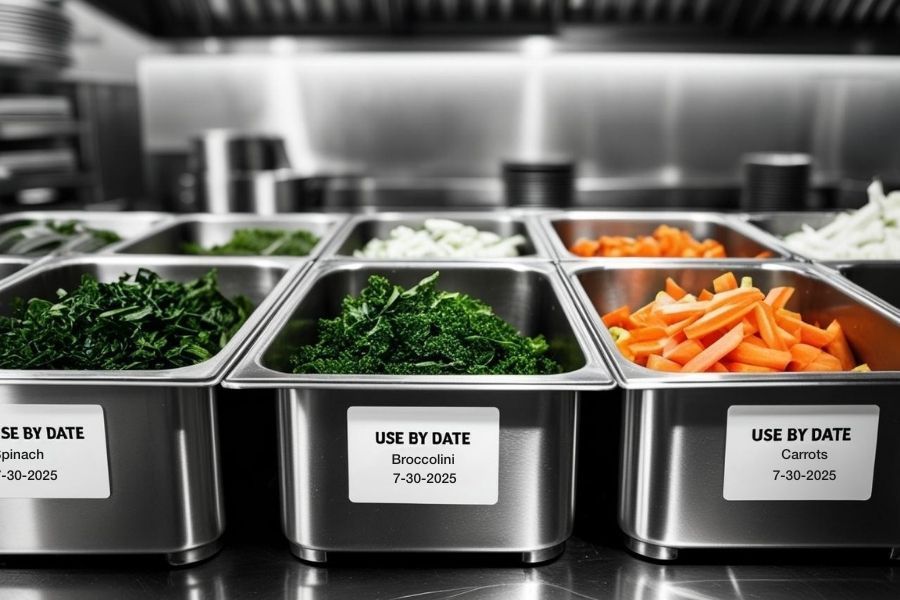
    Used in kitchens and staging areas to clearly tag and date each item. Especially important for personalized or modified orders, including allergen warnings and special dietary instructions. Keeping labels on food items with clear date markings also helps teams monitor spoilage, support food safety compliance, and reduce unnecessary waste.

    Kitchen Use By Labels

    3. Bag Seal Labels

    Often made with permanent linerless adhesive or die-cut formats, these labels seal the bag shut for tamper-evident delivery, giving customers peace of mind.

    4. Staging Labels

    Used to organize and queue multiple orders during rushes, particularly in drive-thru and curbside workflows.

    Off-Premise Dining Solutions from Star Micronics

    To meet the demands of modern off-premise operations, restaurants need tools that are fast, flexible, and easy to manage. Star Micronics offers a suite of hardware and cloud-based solutions designed to simplify labeling, reduce errors, and support seamless workflows at every station. Below are the key features that make Star a trusted choice for off-premise dining success.

    > One Printer Model Per Station

    Star’s mC-Label3 multimedia printers print receipts, die-cut labels, and linerless labels, all from one device. That means you can standardize across stations with less complexity: fewer SKUs to manage, less training for staff, simpler IT support when needed, and easier maintenance. Need a replacement? Keep one extra on hand and drop it in at any station. No compatibility issues, no reconfiguration.

    mC-Label3 Multifunction Printer

    The Star Micronics mC-Label3 is a versatile multimedia printer that prints a wide range of labels and receipts, including both permanent and repositionable sticky linerless. It features cloud connectivity and innovative technologies like SteadyLAN and TetherLAN for enhanced printing convenience.

    Discover the mC-Label3 >

    > Linerless Compatibility

    Star printers support both repositionable and permanent linerless labels, offering flexibility across multiple use cases. Sticky linerless labels are often used for item labeling, such as sandwiches, drinks, or personalized orders. Permanent linerless labels are ideal for securely sealing to-go bags and other types of delivery packaging.

    Because linerless labels don’t use silicone backing, you get more labels per roll, reduce roll changes, and eliminate liner waste. That means lower supply costs, less downtime, and a more environmentally responsible operation.

    The mC-Label3 can handle various linerless applications, but for simpler workflows, the TSP143IV SK series prints receipts and sticky linerless labels only.

    > Scales for Order Accuracy

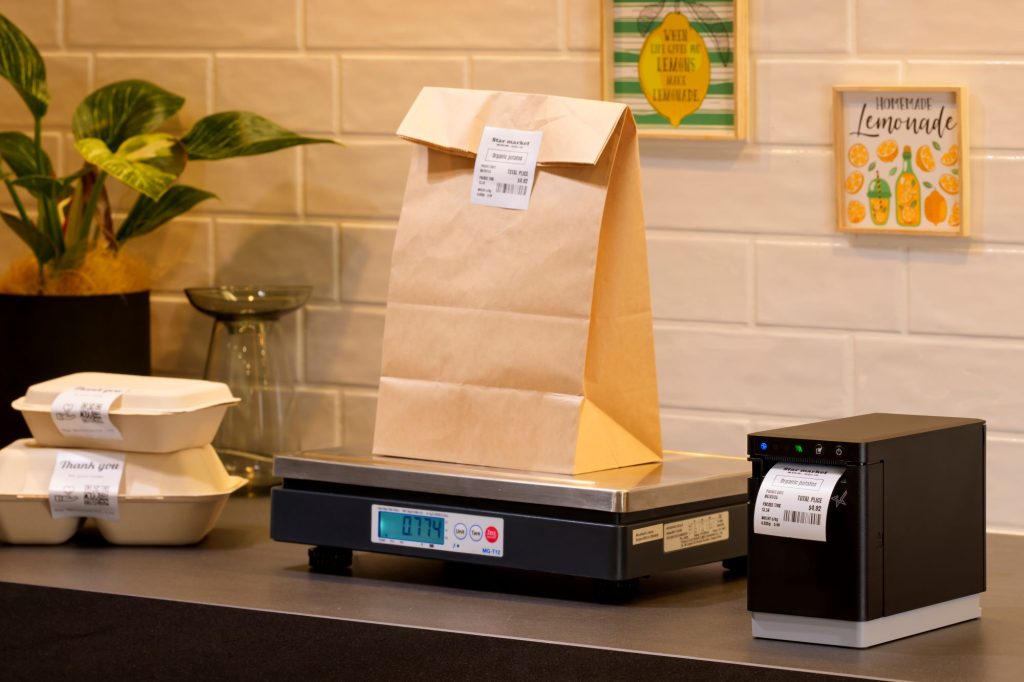
    Pair Star printers with mG-T series scales to enable accurate weight-based pricing, portioning, and order verification. This is especially valuable in QSRs, delis, meal kit programs, and food prep lines where consistency and speed matter.

    Many QSRs are now using POS-integrated scales to confirm that assembled orders match expected weight totals before handoff. When supported by their POS software, this real-time weight check adds an extra layer of quality control. It helps reduce errors, avoid refunds, and improve the customer experience.

    Scales are no longer just for pricing. They are becoming a key part of efficient off-premise dining operations.

    MG TUDB MCL2

    mG-TUDB Scales

    Designed for precision and versatility, Star’s mG-TUDB POS scales are ideal for everything from self-checkout produce stations to QSR order prep and deli portioning. With Class III trade-legal certification, a large platter, and Bluetooth, USB-C, and serial connectivity, they easily connect to most POS systems. An optional pole display adds customer-facing visibility where it counts.

    Find Out More >

    > Cloud Capable

    Star’s mC-Label series of printers supports both CloudPRNT Next and StarIO.Online, giving restaurants the flexibility to choose how they manage their cloud infrastructure.

    • CloudPRNT Next is ideal for businesses that want to run their own servers and maintain control of the back end.
    • StarIO.Online is a fully managed service hosted by Star Micronics, perfect for operators who want cloud printing without the burden of server management.

    Both options enable real-time printing from cloud-based ordering platforms, allowing your kitchen and pickup stations to run more efficiently with fewer hardware constraints.

    > Certified by the Best

    Star’s mC-Label3 is trusted by some of the largest and most respected QSR and fast casual brands around the world. Its speed, accuracy, and media versatility make it a go-to choice for high-volume environments where every second counts. From front-of-house to kitchen to delivery staging, operators rely on the mC-Label3 to support multiple stations using one compact, reliable model. It’s been tested in demanding real-world workflows and proven to perform.

    The Smart QSR Delivery Playbook: Labeling, Accuracy & Efficiency Done Right

    Download the free QSR delivery playbook to learn how labeling, POS scales, and multi-function printers can improve accuracy, speed, and guest trust.

    The Takeaway

    In the world of off-premise dining, labeling is essential. From confirming orders to sealing bags and staging pickups, smart labeling keeps operations moving and customers coming back.

    With the right off-premise dining solutions in place, including flexible printers, linerless label support, and optional scale integration, restaurants can operate faster, more accurately, and with greater confidence.

    Find the best off-premise dining solutions for you:

  • The Dual Interface Cash Drawer: One Model, More Ways to Connect

    The Dual Interface Cash Drawer: One Model, More Ways to Connect

    A dual interface cash drawer may not get much attention in point-of-sale conversations, but it plays a critical role in how payments flow, especially in today’s hybrid retail and hospitality environments. As businesses juggle fixed terminals, mobile tablets, kiosks, and mixed setups across locations, managing hardware compatibility has become increasingly difficult.

    Too often, cash drawers are treated as one-size-fits-all, only to cause problems when the connection type doesn’t match the printer or POS terminal. This leads to delays during installation, extra support calls, and wasted time troubleshooting.

    That’s why more ISVs, VARs, and end users are turning to dual interface cash drawers. By supporting both USB and printer-driven connections in one model, they eliminate guesswork and simplify deployment, no matter how your customers run their point of sale.

    Why Cash Drawer Connectivity Matters

    In most POS systems, the cash drawer connects either to the receipt printer or directly to the POS terminal via USB. Each setup has its benefits, but when your drawer only supports one option, it limits where and how it can be used. This creates challenges for VARs, ISVs, and end users who manage a variety of environments.

    It also creates limitations down the line. If a business wants to upgrade its POS system—moving from fixed terminals to tablets, adding kiosks, or switching printer brands—those single-interface drawers may no longer work with the new setup. That means more hardware to replace, more installation friction, and fewer options for scaling efficiently.

    A single-interface drawer can mean:

    • Compatibility issues
    • Extra SKUs to manage
    • Delays during install
    • More field support tickets
    • Less flexibility for future hardware upgrades

    To solve this, Star Micronics created a smarter approach.

    What Is a Dual Interface Cash Drawer?

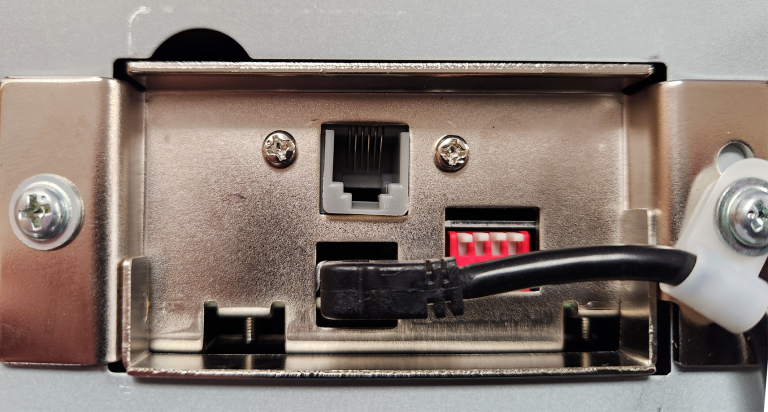
    A dual interface cash drawer supports both USB and printer-driven (DK port) connections in a single model. This means the same drawer can connect directly to a printer or plug into the POS terminal itself, giving you more options and fewer complications.

    Instead of choosing between USB or DK models, you get both. This helps reduce inventory confusion, ensures a smoother installation process, and gives your customers flexibility if their setup evolves.

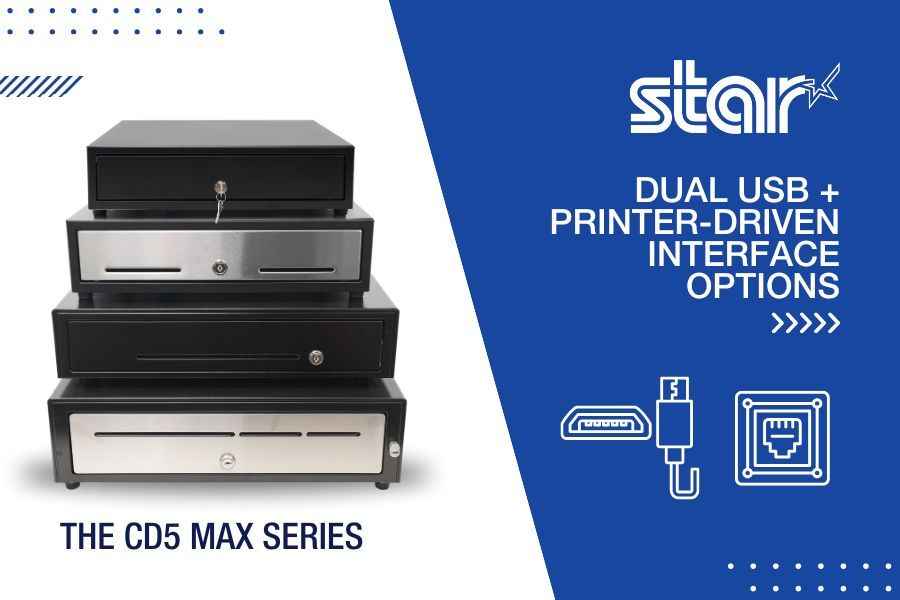
    Star’s CD5 Max Series offers this level of versatility out of the box.

    CD5 Max Series Dual Interface Cash Drawer by Star Micronics

    Who Benefits from Dual Interface Connectivity

    1. VARs and Installers

    A dual interface cash drawer means fewer models to stock and less time troubleshooting compatibility in the field. The drawer will work whether the customer uses a printer, a USB-connected touchscreen, or both.

    2. ISVs

    Software developers can build solutions that work across more environments, knowing the drawer will connect through whichever method the end user prefers. That makes onboarding and deployment smoother.

    3. Retailers and QSRs

    Enterprise-level or growing businesses often run a mix of hardware setups across locations. A dual interface drawer allows them to standardize on a single model that works everywhere, whether at the counter, in the kitchen, or at a self-checkout kiosk.

    4. Mobile POS and Kiosk Applications

    Many self-service stations and mPOS setups do not use receipt printers at all. USB becomes essential. With a dual interface drawer, you can still use the same hardware, regardless of the station design.

    The CD5 Max Series is Built for Flexibility

    Star’s CD5 Max Series is a rugged, reliable cash drawer designed for modern retail. It offers:

    • Dual USB and printer-driven connectivity
    • All-steel construction for high-volume environments
    • Multiple size options for tight counters or large setups
    • Support for Star, Epson, Bixolon, NCR, Oracle, and other major brands
    • Long-term durability backed by a 5-year warranty
    • Optional accessories like the APG 320 adapter cable and dual-drawer secure cash drawer cables

    Whether you’re replacing legacy hardware or building a new POS system from scratch, the CD5 makes integration and installation easier and smarter.

    Simplify Cash Handling with the Right Connectivity

    The more flexible your hardware, the more adaptable your business becomes. A dual interface cash drawer is a small shift that delivers big value. It cuts down on support issues, reduces install time, and keeps your POS system ready for whatever setup comes next.

    If you are looking for a cash drawer that fits every connection, every environment, and every POS strategy, the CD5 Max Series is your answer.

    6 Industry Trends Affecting POS VARs and How to Handle Them

    Explore the shifts and challenges reshaping the landscape for POS Value-Added Resellers (VARs), offering actionable strategies for staying competitive.

    Find out more about dual interface cash drawers:

  • Reduce Label Printer Downtime with Smarter Maintenance Tools

    Reduce Label Printer Downtime with Smarter Maintenance Tools

    When orders pile up and customers are waiting, restaurants and retailers can’t afford wasted time. Every second counts, especially when label printer downtime threatens to derail the entire workflow. The right label printer can help with order accuracy, speed, and customer satisfaction. But without smart, proactive label printer maintenance, even the best devices can fail mid-shift, delaying orders, frustrating staff, and risking customer trust.

    Unfortunately, traditional label printers offer little warning before they fail. Maintenance procedures are often buried in technical manuals, and staff members may not know what to do when a problem arises. The result? Unplanned downtime, lost revenue, and missed opportunities.

    There’s a smarter way forward. Maintenance tools built into today’s best label printers help operators stay proactive, avoid surprises, and keep their operations running smoothly.

    Table of Contents

    Why Label Printer Downtime Hurts QSR and Retail Operations

    Label printer downtime hits hardest when your team needs it most. During rush periods, a single stalled device can trigger a ripple effect: delayed tickets, packing errors, and frustrated customers.

    When a label printer fails, the order accuracy chain breaks. Bags leave without tamper-evident seals. Orders get misrouted or repacked. Allergen and ingredient labels may be skipped, creating food safety risks and compliance issues. For QSRs and retailers, that means chargebacks, reputation damage, and slower service when speed matters most.

    Label printer downtime doesn’t just slow things down; it disrupts trust and hurts the bottom line.

    Unhappy Customers Printer Downtime

    The Hidden Gaps in Label Printer Maintenance & Why They Happen

    Too often, label printer maintenance is an afterthought. There’s no real warning before issues arise, and no clear process for routine upkeep. Most teams only respond once something breaks, and by then, it’s too late.

    Without maintenance alerts or built-in guidance, staff may not know a part is worn or how to fix it. Manuals are buried, IT is busy, and backup printers aren’t always available. That leaves teams scrambling to recover.

    These gaps create recurring pain points:

    • Lost productivity during peak times
    • Wasted materials from failed prints
    • Packaging errors that impact customer satisfaction
    • Avoidable damage to brand trust

    Without a proactive maintenance system, even the best labeling strategy can fall short.

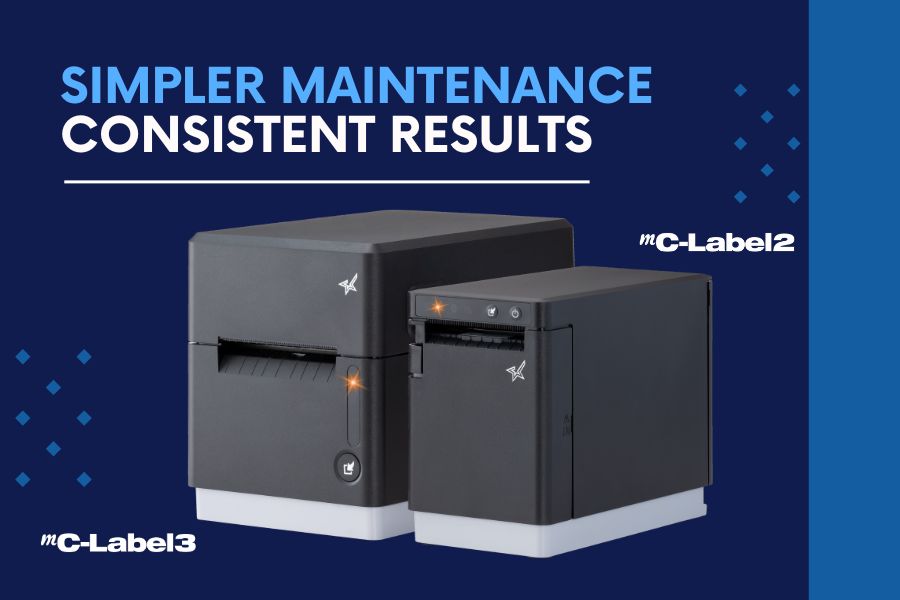
    Meet the mC-Label Series: Smarter Label Printer Maintenance, Built In

    When it comes to avoiding label printer downtime, the best defense is a device that knows how to take care of itself. That’s why Star Micronics designed the mC-Label multifunction printer series with proactive maintenance tools that keep QSR and retail workflows moving without disruption.

    1. Maintenance Alerts

    Real-time notifications let staff know exactly when printer maintenance is due before it becomes a problem.

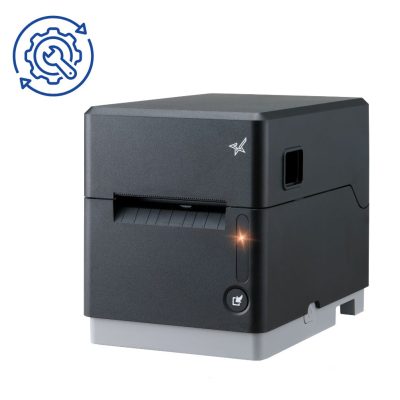
    The mC-Label3 multifunction label printer has convenient maintenance alerts.

    2. Auto-Printed QR Codes

    The printer prints a QR code that links directly to simple, step-by-step instructions. No manuals needed.

    3. Tool-Free Maintenance

    Downtime often starts with small issues, like adhesive buildup or worn components. That’s why Star mC-Label printers are designed with tool-free maintenance in mind.

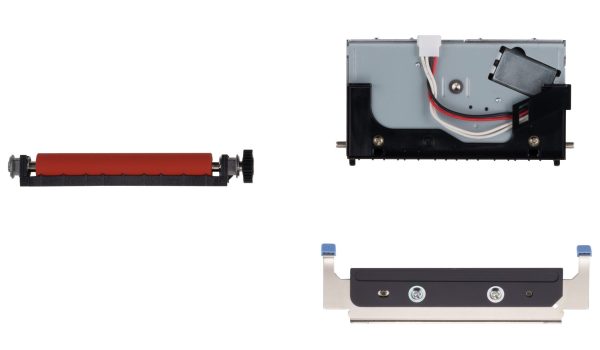
    Color-coded parts, including the cutter and platen, are easy to identify, remove, clean, and reinstall without any tools. No technician is required. Your team can handle routine maintenance on the spot without waiting for IT or scheduling a service call. That means less downtime, fewer disruptions, and a label printer that’s always ready to go.

    For the mC-Label2 and mC-Label3 multifunction label printers, routine cutter cleaning is simple. If adhesive begins to accumulate on the cutter blade, use the adhesive side of a separate label or linerless label and gently tap it against the blade. This helps remove gum and debris before buildup affects cutting performance.

    When components eventually wear over time, Star offers replacement cutter and platen sets so you can restore performance quickly without replacing the entire printer. Fast, user-level maintenance keeps labeling workflows running smoothly, even in high-volume environments.

    4. Built for the Front and Back of House

    Whether you’re sealing to-go bags, labeling food items, or printing ingredient info, the mC-Label series prints die-cut and linerless labels (with all adhesive strengths) plus receipts, helping you maintain speed, accuracy, and peace of mind.

    mC-Label2 Multifunction Printer

    The mC-Label2 packs powerful features into a compact, front-loading design, including 300 dpi resolution, support for linerless, die-cut, receipt, and continuous media, and connectivity options like USB-C, LAN, WLAN, Bluetooth, and Apple MFi-certified pairing (X4 models only).

    Explore the mC-Label2 >

    mC-Label3 Multifunction Printer

    The Star Micronics mC-Label3 is a versatile multimedia printer that prints a wide range of labels and receipts, including both permanent and repositionable sticky linerless. It features cloud connectivity and innovative technologies like SteadyLAN and TetherLAN for enhanced printing convenience.

    Discover the mC-Label3 >

    Keep Labeling Simple and Reliable

    In today’s high-volume, high-expectation environment, printer downtime is a problem you can’t afford.

    Smart maintenance tools like those built into the mC-Label series give operators the confidence that their labeling workflow won’t be derailed by preventable issues. Proactive alerts, guided instructions, and simple part handling turn maintenance from a challenge into an opportunity to keep operations running at their best.

    Smarter maintenance enables smarter labeling—and smarter labeling helps QSRs and retailers deliver the speed, accuracy, and trust their customers expect.

    Beyond the Label: Elevating Brand Connection and Loyalty

    “Beyond the Label” offers insights into innovative labeling techniques that help retailers and restaurateurs captivate and connect with their audience more effectively.

    Minimize label printer downtime and keep customers smiling with the mC-Label series:

  • On BlueStar Nation: How Modern Kitchen Technology Is Evolving in Restaurants and QSRs

    On BlueStar Nation: How Modern Kitchen Technology Is Evolving in Restaurants and QSRs

    Restaurant kitchens are facing more demands than ever. From food safety compliance to lightning-fast delivery expectations, operators are turning to modern kitchen technology to keep pace. As cloud POS systems and restaurant label printers reshape how kitchens run, efficiency and accuracy are becoming essential to delivering a superior customer experience.

    In the latest episode of the BlueStar Nation Podcast, Star Micronics’ Christophe Naasz dives into how QSR kitchen technology and restaurant efficiency tools are helping restaurants evolve. He shares insights on trends from the National Restaurant Association Show, the growing advantages of cloud POS vs on-prem, and how kitchen labeling solutions and modern scanning are driving new levels of order accuracy.

    Podcast Highlights: Smarter Kitchens, Better Results

    From restaurant scanning solutions that improve accuracy to kitchen label printers that streamline order staging, Christophe explains how the right technology can transform back-of-house operations. He also discusses why restaurant kitchens adopting cloud POS platforms are seeing faster innovation cycles and improved delivery outcomes.

    Read the blog post, “Why Restaurant Refunds Happen and How to Prevent Them” >

    Stay up-to-date on all things Star, don’t forget to follow us on X, LinkedIn, Facebook, Instagram, and YouTube.

    Want more industry news?