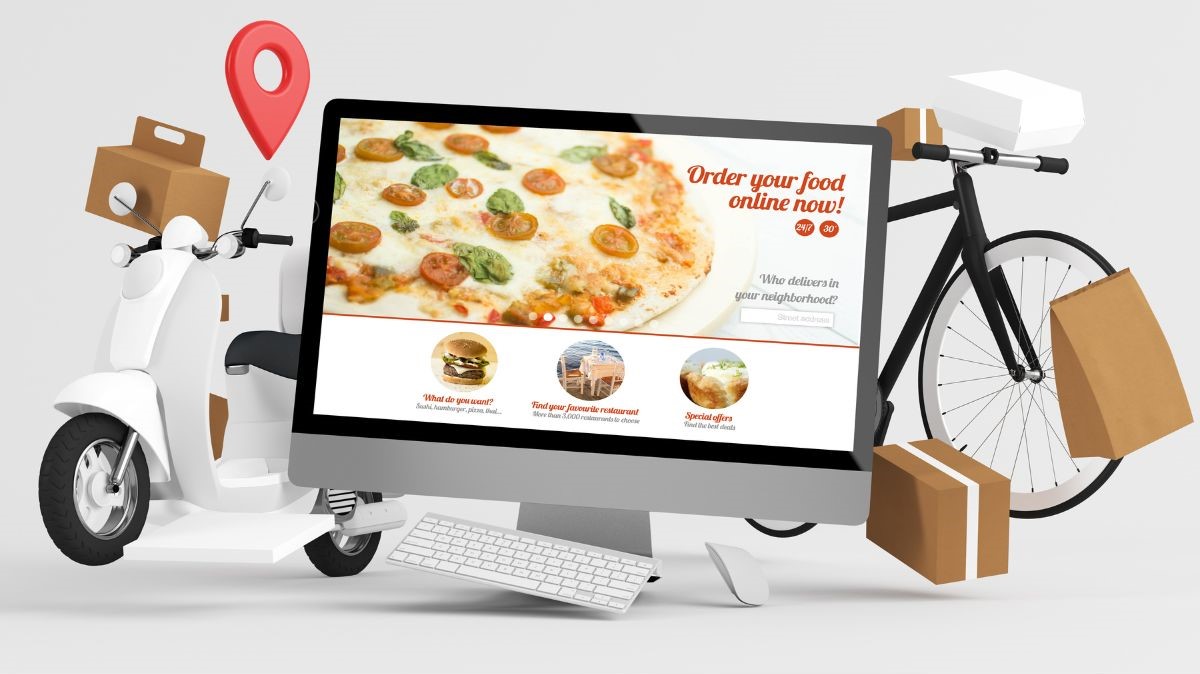
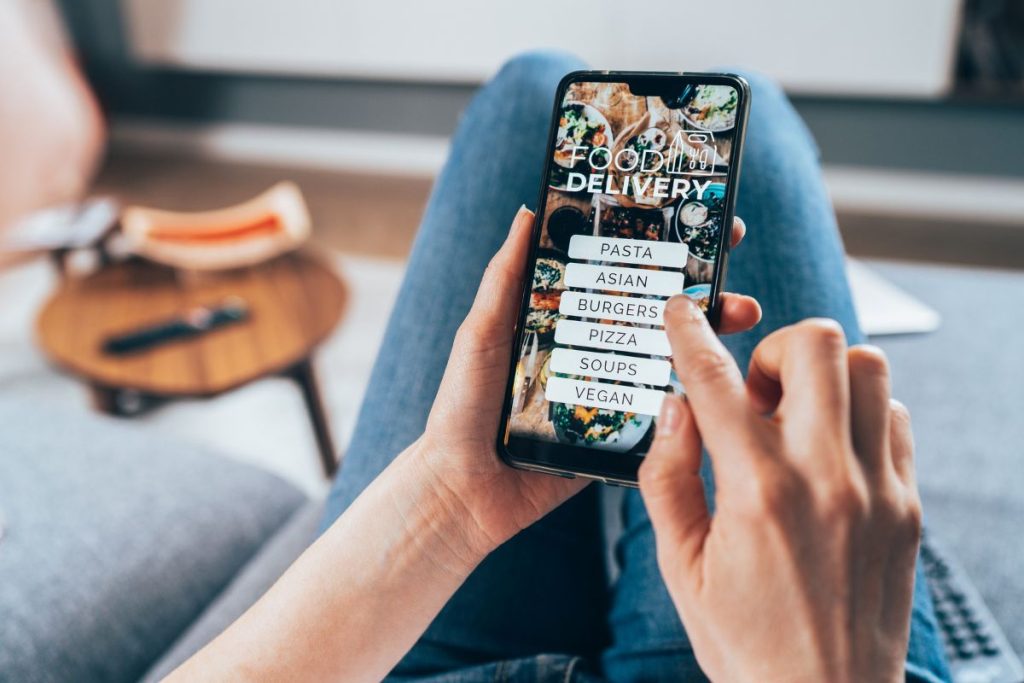
In today’s digital age, online ordering is more popular than ever, especially in the restaurant industry. DoorDash, Grubhub, and Uber Eats are just a few of the most popular online ordering platforms, and many restaurants are now using these services to reach a wider audience and increase sales.
But with the influx of online orders on top of in-person customers, managing things can become overwhelming.
That’s where proper thermal receipt printers come in.
Some thermal receipt printers are better for printing online orders than others because they connect to cloud- and web-based POS systems directly. They’re faster, more efficient, and easy to use. They print out orders as soon as they arrive, allowing the kitchen staff to fulfill them immediately.
Many of these printers are designed to work with a wide range of devices, including mobile phones and tablets, making them an ideal choice for online ordering.
So, how can restaurants use thermal printers with online ordering applications like DoorDash and Uber Eats? Usually, online ordering applications will suggest certain printers to use, or their software also comes with hardware. However, some people may need to purchase a thermal receipt printer on their own.
In any case, here are some tips on how to get started with the proper receipt printer to use with online ordering applications like DoorDash and Uber Eats:
1. Choose a Compatible Thermal Printer
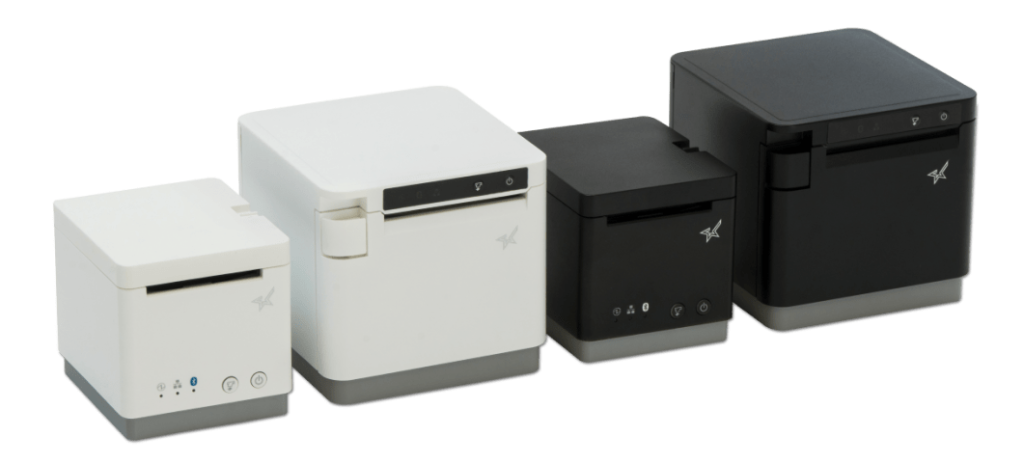
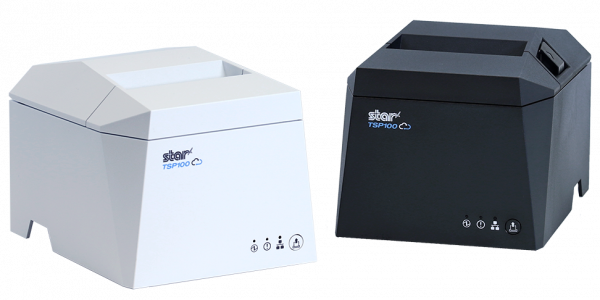
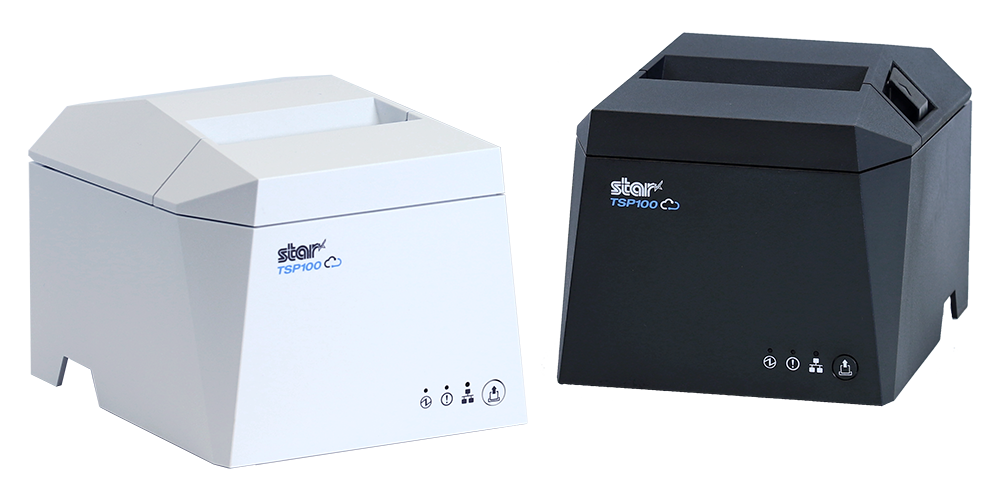
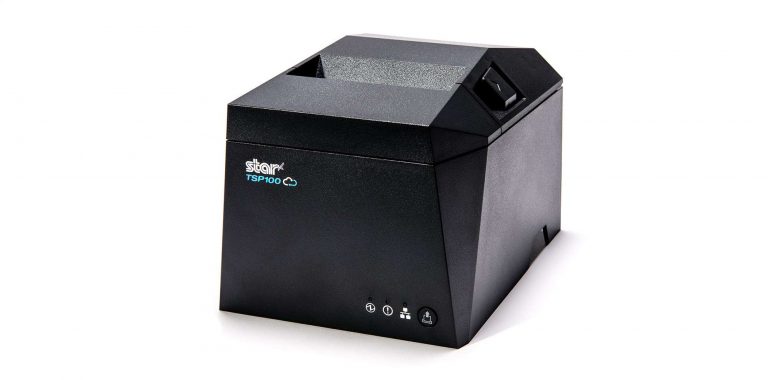
To start, it’s important to choose a thermal printer that is compatible with the online ordering platform you are using. DoorDash and Uber Eats have guidelines for compatible printers, and it’s essential to make sure that the printer you choose meets these requirements. Some of the most popular printers used for online ordering include Star’s TSP100 and mC-Print3 series.
2. Connect the Printer and Set it Up
Once you’ve chosen a compatible printer, you’ll need to connect it to the online ordering application. This typically involves pairing the printer to the tablet or connecting it to the router of your restaurant. The application provider will provide instructions on how to do this. Still, if you have complications, you may also want to consult a professional to ensure the setup is done correctly.
3. Customize the Printer Settings
Finally, you can customize the printer settings to meet your specific needs. For example, you can adjust the font size, add your restaurant’s logo to the printout, and customize the order layout to make it easier for your kitchen staff to read and fulfill the orders.
Online Ordering Solutions: A Quick Guide
Want to know which Star printers are compatible with some of the most popular online ordering applications?
By using thermal printers like Star’s TSP100 series for online ordering apps like DoorDash, Grubhub, and Uber Eats, restaurants can streamline operations and improve efficiency. Orders will arrive faster, print in real-time, and be sent directly to the kitchen.
This lets kitchen staff start orders immediately and ensures customers receive their food quickly. Plus, the improved accuracy and organization of online orders with the proper printers can help reduce errors and improve the overall customer experience.
If you are a restaurant owner and want to start using online ordering applications like DoorDash or Uber Eats, purchasing the correct thermal printer for what you need can streamline operations and help boost revenue.
With the right printer and a little setup, start taking orders from popular online apps and expand your restaurant’s clientele. Just keep in mind you’ll be busy!
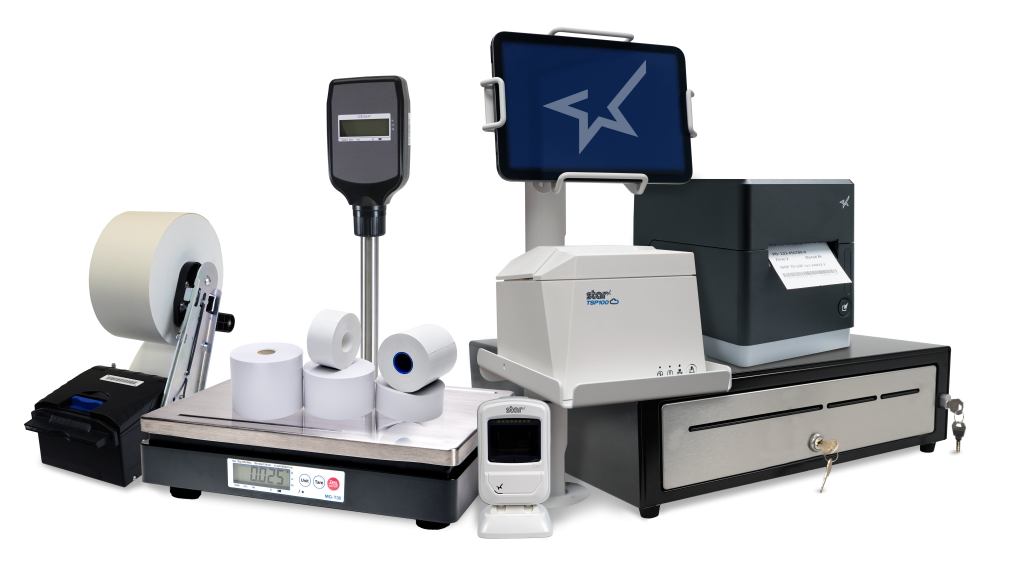
Star Micronics has the POS hardware and technology to help keep your business ahead.
How to Get Your Restaurant Ready for Online Ordering
Are you looking for a new way to grow your restaurant business? Accepting online orders keeps you relevant and competitive.
In today’s connected world, dining and shopping experiences are no longer limited to physical restaurants and stores. Restaurateurs and retailers leverage cloud-based, omnichannel order management and fulfillment solutions to reach customers across various mobile and digital channels. In the post-pandemic era of retail and hospitality, technology is critical.
Throughout the pandemic, cloud-based, omnichannel ordering options kept restaurants, stores, and customers connected. In addition, convenience and ease of use helped scale online ordering, curbside pickup, and delivery services, all becoming a mainstay of the modern customer experience.
Even before the global pandemic, studies have shown that consumers and merchants were pivoting to digital and mobile technologies. As consumers lean into new technologies, retail and restaurant brands must increasingly adapt and compete on multiple fronts to win and retain their customers.
So, what does omnichannel mean, and why is it essential for your business?
Frost & Sullivan, a major consulting firm, has defined omnichannel as “seamless and effortless, high-quality customer experiences that occur within and between contact channels.”
In simpler terms, omnichannel is a more individualized form of retail. It’s a customer-focused business strategy that integrates all channels to provide the perfect experience for the consumer. Patrons connect with businesses online and in person. They order through both. Their experiences from one channel to the next are natural and more tailored to them.
Mass Implementation of Omnichannel Strategy
Beyond being a buzzword, omnichannel strategy is a tactical reality for business owners who can’t afford to get sidelined in the race to fast and secure commerce. Surviving and thriving in the digital-first economy means reaching customers anytime and anywhere, including after hours.
COVID-19 created a renaissance for multiple industries, including hospitality, retail, and the emerging cannabis sector. Stores invited customers to take virtual tours and try cosmetics and apparel in digitally-enabled dressing rooms. Restaurants introduced online ordering and curbside pick-up.
The power of cloud and omnichannel solutions enabled these companies to deliver an uninterrupted experience while driving orders, marketing, and customer service across all channels, platforms, and devices.
Omnichannel ordering options are an expectation, not an exception. Consumers have become accustomed to patronizing their favorite brands from multiple touchpoints. Our experts have compiled the following list of items needed for developing a consistent brand experience across all channels.
Cloud enablement: Invest in hardware and software that operates with the cloud to ensure your omnichannel strategy runs smoothly.
Single-access view: Create a secure portal where you can monitor all of your channels to streamline communications and manage operations from one place.
Automated task management: Implement order displays, cloud printing, and other purpose-built technology to save time and labor by automating basic procedures.
Enhanced connectivity: Select products that connect with the cloud to create a cohesive work environment and use peripheral connectivity to improve and accelerate business processes.
How to Create a Connected Environment
In 2021, retail e-commerce sales amounted to approximately 5.2 trillion U.S. dollars worldwide. This figure is forecast to grow by 56 percent over the following years, reaching about 8.1 trillion dollars by 2026. In addition, global online food delivery services are poised to reach nearly $344 billion this year, projected to reach more than $466 billion by 2027. With such high ROI at stake, getting products to customers via cohesive online or mobile channels is essential.
Our experts compiled these six products every business should invest in to get the most out of omnichannel ordering. To read about these crucial omnichannel technology solutions, download our free ebook:
Conquering Omnichannel Order Management with Cloud-Based Technology Solutions
Consumers have spoken! The future of retail and hospitality is omnichannel, cloud-based, and connected. Is your business prepared?
The future of hospitality is connected, and for many tech-enabled businesses that offer alternative dining and shopping experiences, that future is already here. Companies need new technology to reach customers and give them convenient ways to purchase products and services. As consumers acclimate to mobile and online reservations and ordering, advanced hospitality technologies facilitate a seamless and enjoyable customer experience.
How SaaS Impacts The Restaurant and Retail Industry
The hospitality ecosystem supports an array of technology solutions. Single-suite providers can simplify point-of-sale (POS) deployments, from hardware devices to cloud-based tools, through subscription-as-a-service (SaaS) models. SaaS models are increasingly popular in hospitality due to their cost-effectiveness and flexibility.
Subscription services enable merchants to pay for hardware and software monthly instead of making an upfront investment. These services include automatic upgrades or enhancements that keep technology up to date. Many of these services provide ongoing IT support.
Hospitality leaders, attracted by lower costs and extended lifetime value, choose single-suite SaaS partners with cloud-based tools and connected commerce solutions. In addition to easy installations, remote management, and IT support features, SaaS solutions offer regular software updates, hardware swap-outs, enhanced security, and flexible, customizable software.
Conquering Omnichannel Order Management with Cloud-Based Technology Solutions
Consumers have spoken! The future of retail and hospitality is omnichannel, cloud-based, and connected. Is your business prepared?
Remote manageability is just one facet of hospitality’s connected future. Restaurateurs and hoteliers have added online and mobile ordering in record numbers to meet consumer demand for touchless experiences. Omnichannel solutions provided these during Covid-19, but their convenience and ease of use have made them permanent fixtures in the hospitality landscape.
In the pandemic’s aftermath, omnichannel ordering is an expectation, not an exception, for consumers. However, as many business owners have found, implementing omnichannel ordering adds complexity to business operations and requires staff to be mindful of both online and in-store order flows. To keep operations running smoothly, hospitality businesses need many tools to create a cohesive, connected workspace.
Cloud-Based Operations
A cloud technology system will keep your business running smoothly by providing solutions that work well together, such as cloud printing. Used by retail and restaurant owners, cloud printing seamlessly expedites and organizes online ordering. Additionally, these agile systems are easy to integrate and deploy as you scale your business.
CloudPRNT technology from Star Micronics sends online orders directly to your kitchen printer and is supported by an array of devices and peripherals, including the TSP143IV, mC-Print2, and mC-Print3 thermal printers. These thermal solutions are compatible with POS scales, scanners, and cash drawers with many connectivity options, such as Lightning and USB connection, Bluetooth, LAN, WLAN, and more. They are also easy to integrate with POS systems.
Mobile and Online Ordering
The mC-Print2 & mC-Print3
Currently, online food ordering accounts for about 40% of total restaurant sales in the U.S., and researchers expect these numbers to continue to climb. Restaurants with an online ordering system tend to raise their takeout profits by 30% over those that do not. In 2022, the number of Americans using apps to order food and other groceries is expected to rise from 27.9 million to 30.4 million. In addition, about 92% of all top-performing restaurants offered mobile order-ahead and loyalty rewards programs, or a combination of both. If your restaurant is not giving the consumers what they want, you’re missing out on some serious revenue. With the right technology, it’s easy to add mobile sales and online ordering to your business.
Let’s take a look at some technologies that help boost efficiency and customer satisfaction:
Printers
Embrace cloud-based solutions and online ordering with Star Micronics’ reliable Cloud Ready thermal printers. A receipt printer that connects to your cloud- or web-based point-of-sale software is a must-have. Cloud Ready printers reliably print orders directly to the kitchen as they come in.
CloudPRNT technology from Star Micronics sends online orders directly to your kitchen printer and is supported by an array of devices and peripherals, including the TSP143IV, mC-Print2, and mC-Print3 thermal printers. These thermal solutions are also compatible with cash drawers, POS scales, and barcode scanners. They’re offered with multiple connectivity options, such as Lightning and USB connection, Bluetooth, LAN, WLAN, and more, and Star makes integration with your POS software a breeze.
The TSP143IV Thermal Receipt Printer is Cloud Ready
Labels
While labels may be the last thing on your mind, equipping your cloud technology suite with the proper labeling capabilities is vital when completing your connected workstation. Whether your business requires traditional or linerless labels, ensure you have the appropriate solution. You may need food service and delivery labels, like tamper-proof labels or labels showing nutritional, shipping, or inventory information.
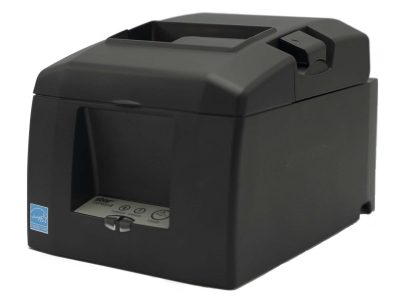
Traditional label printing solutions like the TSP743II or repositionable linerless label printers like the TSP654IISK are high-speed graphics printers able to connect to supported cloud- or web-based software. Food orders with special dietary requests can automatically be printed on takeout or delivery labels. Linerless labels are sticky but can be removed and re-applied following an online order from start to finish. These methods can help prevent potentially devastating mistakes.
The TSP654IISK Linerless Label Printer
Payment Solutions
Connected hospitality businesses also need flexible, cloud-based payment software that supports many traditional and mobile POS systems and payment schemes. When linked to omnichannel ordering, these software applications enable customers to pay in-store, online, and via mobile apps using credit cards and mobile wallets.
Contactless POS systems support mobile wallets, wearables, and contactless cards, meeting consumer demand for touchless payment methods. Mobile payment applications that support pay-at-table solutions are popular fixtures in stores and restaurants.
As you search for the right payment solution, look for technology compatible with leading operating systems and interfaces and consider Star Micronics. From contactless payments to paper checks – and everything in between – Star solutions support various payment software applications. Star also has a high-quality selection of portable printers, which may be precisely what your business needs.
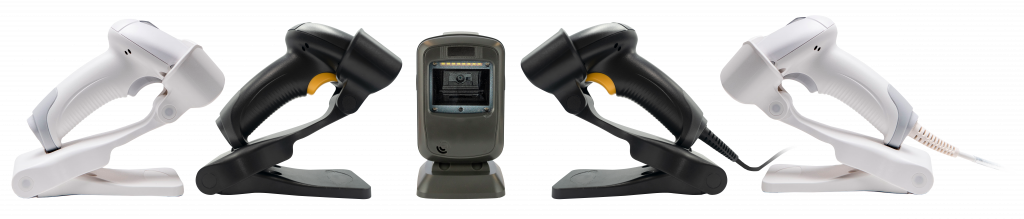
Star’s Line of 2D Precision Barcode Scanners
Barcode Scanners
Star’s 1D/2D barcode scanners perfectly fit omnichannel hospitality environments. These drop-resistant scanners are accurate when scanning barcodes or QR codes on paper, screens, or uneven media. The wireless handheld model has up to 12-hour battery power, and the white models are made with antimicrobial agents, helping to reduce the spread of germs and bacteria.
These highly reliable scanners can also be used in a warehouse setting to scan items on the floor for inventory purposes or to locate orders, product details, and stock availability. Scanner technology also helps businesses streamline everyday necessities. Check out this article for more information.
Get Advanced Omnichannel Solutions Today!
If you want to be part of hospitality’s connected future, partnering with a single-suite technology provider will help your business scale. Advanced omnichannel solutions, coupled with front- and back-of-house systems, will securely and efficiently manage orders across multiple channels, driving efficiency and growth.
Your single-suite provider will simplify integrations, keep your systems running optimally and meet all your technology needs. Contact your Star Micronics representative today if you’re ready to take your business into the future.
During the Covid lockdown, a lot of retail spending moved online. This was good for both merchants and consumers, but it ultimately led to a surge in chargebacks and friendly fraud.
As things slowly return to normal, buyers are making their way back into physical stores. Unfortunately, chargebacks are coming with them.
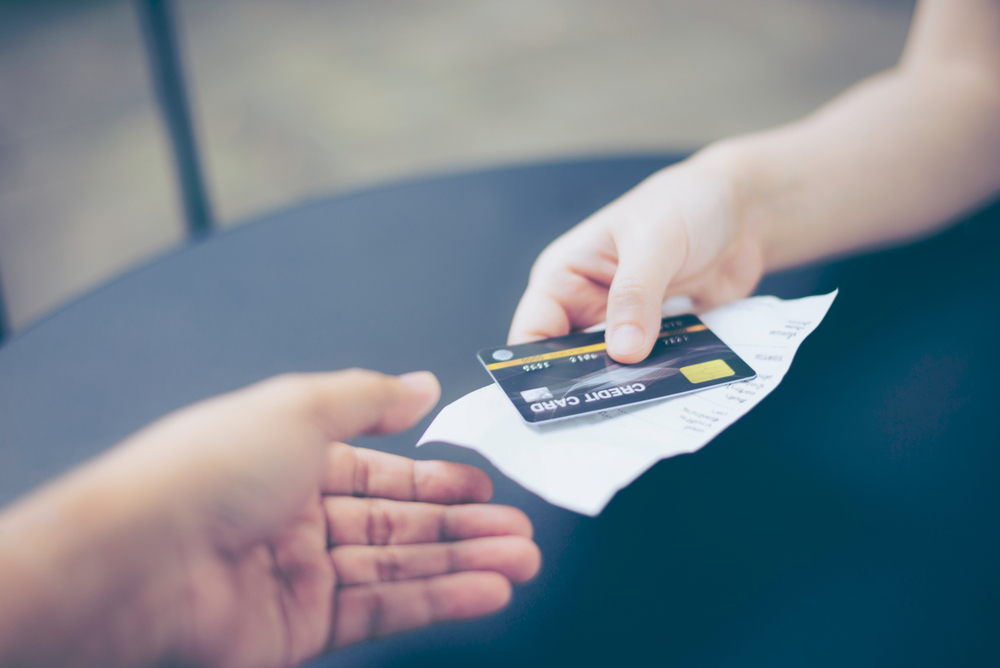
Merchants have the right to contest invalid chargebacks, but proving a claim is bogus requires evidence. Brick-and-mortar merchants may have an advantage when it comes to collecting compelling transaction proof: printed receipts.
How a Consumer Protection Became Friendly Fraud
First, let’s examine how this problem developed in the first place.
A chargeback occurs when a customer requests their bank to reverse a transaction. An important safeguard for cardholders, chargebacks were only intended for cases involving criminal fraud or merchant abuse, such as deliberate overcharging.
Chargebacks give cardholders a last resort in situations where the merchant cannot—or will not—provide a refund. The system works well enough under those conditions, but these days, the process is more commonly used to commit friendly fraud.
Friendly fraud occurs when customers leverage the chargeback system to obtain an undeserved refund. This may be unintentional; when a cardholder sees an unrecognized charge on their statement, the automatic reaction is often to call the bank, not the merchant.
On the other hand, the cardholder could be deliberately trying to obtain free merchandise. This is a practice called “cyber shoplifting.” The scam works like this: a cardholder makes a purchase at a brick-and-mortar store, then calls the bank. They’ll say they cannot resolve the issue with the merchant and ask to have the charge reversed. The buyer then keeps the merchandise, but gets their money back.
Ironically, what began as a consumer protection mechanism has become a tool consumers use to steal from merchants.
“Friendly Fraud Doesn’t Happen in Physical Stores!”
Historically, friendly fraud has been more of an issue for eCommerce; most of the claims still happen in the card-not-present space. That doesn’t mean, however, that brick-and-mortar merchants can ignore the threat.
The study, a joint endeavor between Chargebacks911 and Card Not Present, is based on survey results drawn from over 300 retail merchants across all verticals. Of the respondents, nearly two-thirds said that chargeback abuse—friendly fraud—had increased over the last three years.
As mentioned earlier, merchants have the right to contest unwarranted chargebacks. To have an illegitimate chargeback overturned, however, the retailer must demonstrate that the customer’s claim is false. For in-store sales, this is where printed receipts come into play.
How Receipts Work in the Merchant’s Favor
To understand the role receipts can play in fighting friendly fraud, it’s important to know how the process is supposed to work.
When a cardholder calls their bank to dispute a charge, the bank will usually tell the cardholder to try resolving the issue directly with the merchant. If the customer says they have already tried, the dispute will likely advance to a chargeback. Transaction funds are removed from the merchant’s account and returned to the cardholder. The merchant may not be informed about this until days later.
This may seem unfair, but again, merchants can contest the claim through the process of representment, which involves providing the bank with compelling evidence showing the transaction was valid.
Sometimes, a copy of the transaction details will be all that’s needed. Some point-of-sale solutions at physical stores will record and store copies of receipts, and can send them in response to the bank’s request.
That sounds convenient, but it may not be the best choice. While digital files work in the majority of cases, electronic files are more susceptible to manipulation. That means the bank may require more evidence.
Online retailers don’t really have another option, but for in-person sales, a scanned copy of a printed paper receipt can be more efficient and cost-effective. It’s hard to argue against a printed receipt. The specifics are literally all there in black and white.
If the bank sees that the customer’s claim is unwarranted, it may overturn the chargeback. Not representing the chargeback, however, means the fraudster may end up with both the product and a refund.
Physical Receipts Can Also Boost Prevention Efforts
Unfortunately, the merchant will get hit with a non-refundable chargeback fee whether the chargeback is reversed or not. That means preventing chargebacks is usually more efficient than challenging them.
There are numerous steps merchants can take to prevent chargebacks stemming from errors or criminal activity. However, the friendly fraud we’ve been talking about is post-transactional; it’s hard to prevent something you won’t even see until days or weeks after the fact. Fraudsters know this and have learned how to play the system.
It’s possible that the merchant will be able to produce an electronic receipt that contains enough information to invalidate the cardholder’s claim. The fraudster is betting against it, though.
A printed receipt is a different story. For a cyber shoplifter, a receipt printed with names, dates, prices, and truncated card data is like seeing a record of the crime before it’s even committed. One look makes it obvious that the merchant has too much evidence for the scam to work. The receipt signals that it’s time to move on to an easier target.
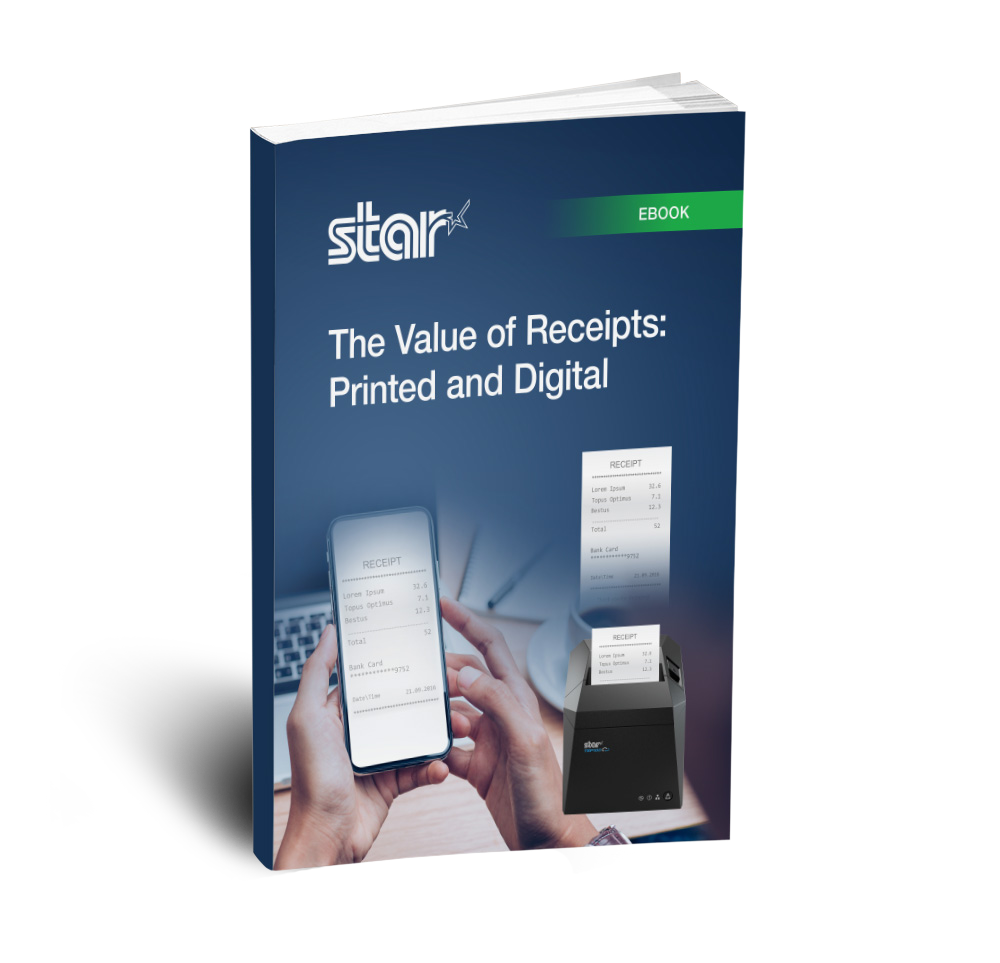
The Value of Receipts: Printed and Digital
There’s no getting away from it: receipts hold great value and are an irrefutable part of everyday life.
Electronic transaction receipts are useful, but technology can be exploited, and systems can be hacked. Printed receipts can benefit merchants in many ways, including chargeback management and prevention.
Having a hard record of transactions can simplify representment and increase the odds of success. At the same time, a printed receipt may encourage would-be friendly fraudsters to take their scams elsewhere. For brick-and-mortar merchants, it’s a win-win.
Guest Post Written by Monica Eaton-Cardone, COO and Co-Founder of Chargebacks911
Christophe Naasz, Director of Global Business Development here at Star Micronics America, spent some time with Dean and John from BlueStar’s TEConnect Podcast to discuss cloud-based technology and solutions. The three lay out how VARs can approach customers about utilizing the cloud for their businesses to stay competitive and relevant.
Consumers are moving forward with the latest technologies available, and cloud-based services are no longer an option for businesses. From online and omnichannel ordering to remote updates and secure data storage, the cloud offers business owners advantages that cannot be garnered elsewhere.
From TEConnect:
We all know that cloud computing is where it’s at, but not all businesses, especially retail & hospitality, are on board just yet. This week, Star Micronics’ Christophe Naasz is here to help VARs explain the benefits of cloud-based solutions.
How do cloud-based solutions improve customer experience?
What are the best talking points and questions to ask your customers?
How do cloud solutions benefit management and back-of-the-house insights?
Having quality barcode scanners and imagers are must-haves for businesses working in the cloud! As a complete POS solution provider, Star Micronics offers a line of sturdy and reliable 1D/2D barcode and QR code scanners to complete your cloud-based solution. Whether swiftly ringing up your customers or taking in a wide variety of inventory, Star’s scanners are precise, drop-resistant, and work as quickly as you do.
With a steady offering of innovative solutions, Star continues to meet market demand, showcasing recent highlights at RSPA’s RetailNOW show in Orlando, FL.
Somerset, NJ – July 20, 2022 – Star Micronics, a leading manufacturer of mobile, point-of-sale (POS), and customer engagement technologies, is excited to show off their latest technology and solutions at RSPA’s RetailNOW 2022 on Sunday, July 24th through the end of the show Tuesday, July 26th at the Gaylord Palms Hotel in Orlando, Florida. Star will be at booth #308, displaying and demonstrating an assortment of industry-leading solutions as they connect with attendees.
Over the last year, Star Micronics’ has worked hard to offer new solutions to meet market demand despite current supply chain issues, offering innovative benefits to many retail verticals.
Star has launched a variety of modern POS and self-service solutions since the last RetailNOW show, and these will all be at their booth, including:
The new TSP143IV in two models; the TSP143IVUE with Android Open Accessory (AOA) support and a USB/LAN dual interface, and the TSP143IVUW with USB-C and dual-band WiFi connectivity.
A kiosk printing solution that uses repositionable linerless label paper, the SK1-311 SK.
Three models within the new mG-T series of POS scales, the mG-T12, mG-T30, & mG-T60; ideal for shops, grocery stores, and farmer’s markets.
New WiFi-loving models of the popular mC-Print2 & mC-Print3 series; two thermal printing solutions from the state-of-the-art mCollection.
A revamped Star Micronics Cloud Services platform, great for software developers and business owners alike, including offsite device monitoring in real-time, custom-designed promotions, and more.
“Star Micronics has been investing in several areas to help channel partners succeed. Following our ‘Always Leading, Always Innovating’ decree, this includes diversifying and expanding our product offerings and bolstering our supply chain operations and sourcing. Globally, Star has been strategic, expanding manufacturing capacity aggressively… Star is dedicated to providing our channel partners with a full solution suite.”
Mike Hanson, Executive Vice President of Star Micronics America
Star Micronics, a world’s leader in point of sale, has designated a portfolio of printing, secure cash management, scanners, scales, stands, and customer engagement solutions for any retail or hospitality establishment in POS and mPOS environments. Embracing the mobility wave, Star’s complementary SDKs allow users to utilize Star in tandem with Android™, iOS, iPad®, and iPhone® devices to generate receipts, Chit, and labels for its printers. In addition, Star Micronics is always leading and innovating, enabling web-based printing solutions, including remote cloud printing, wireless cash drawer solutions, proximity-based printing, and secure cash management. For more information, visit www.starmicronics.com or follow us on Facebook, Twitter, YouTube, or LinkedIn.
At Star Micronics, we’re always attuned to market dynamics and trends. Following our successful launch of MFi technology, which facilitated seamless Lightning connections between our printers and Apple’s iOS devices, we recognized the surging adoption of Android devices in powering small business point-of-sale (POS) systems.
To remain at the forefront of industry innovation, we swiftly adapted to serve this expanding Android market segment, ensuring compatibility and operational excellence.
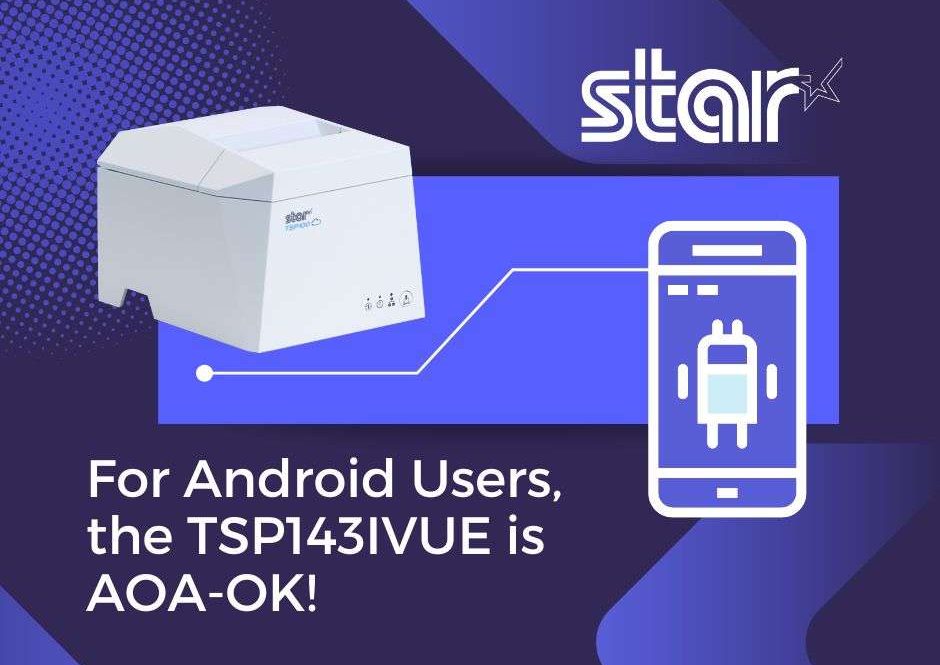
Embracing the Android Open Accessory (AOA) protocol has been transformative for both software developers and business owners. The TSP143IVUE is ultra-connected and boasts an array of features ensuring future-proof adaptability. With AOA integration, this thermal printer not only streamlines operations but also underscores the sophistication and innovation at the helm of today’s businesses.
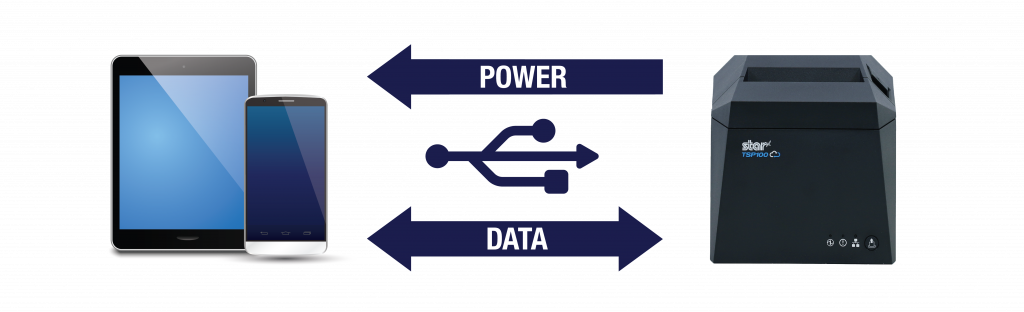
“Android Open Accessory (AOA) support allows external USB hardware (Android USB accessories) to interact with Android-powered devices in accessory mode. When an Android-powered device is in accessory mode, the connected accessory acts as the USB host (powers the bus and enumerates devices) and the Android-powered device acts as the USB accessory.”
“Android USB accessories are designed to attach to Android-powered devices. Such accessories adhere to AOA, enabling them to detect Android-powered devices that support accessory mode, and must provide 500mA at 5V for charging power.
Some previously-released Android-powered devices are capable of acting only as a USB device and cannot initiate connections with external USB devices. AOA support overcomes this limitation, enabling you to build accessories that can initiate connections and interact with an assortment of Android-powered devices.”
The TSP143IVUE Thermal Printer Supports AOA
Star’s new innovative printing solution accommodates the fast-growing Android-user market with the connectivity people want. The future-proof TSP143IVUE supports the Android Open Accessory (AOA) protocol, allowing the printer to communicate with and power most Android devices when plugged in.
With its modern design, enhanced connectivity, ease of integration, and 20% smaller footprint than its predecessor, the TSP143IVUE is the perfect solution for the demands of today’s market.
The TSP143IVUE Supports CloudPRNT & More
Along with AOA support, adding a USB/LAN Dual Interface and CloudPRNT to the newest TSP143IVUE thermal receipt printer has fully elevated our popular printing series for today’s needs. This advanced printing solution seamlessly integrates with Android, iOS, and Windows applications, offering unparalleled versatility and ease of use.
Plus, it’s backward compatible with its previous version, the TSP143III, making it effortless for people to upgrade.
It’s also Cloud Ready, connecting to cloud-based POS software and Star Micronics Cloud Services. Star’s Cloud Services enable offsite device monitoring in real-time, custom-designed promotions, and more.
Here are some key features of the TSP143IVUE:
A Dual Interface: LAN + USB (USB-C and USB-A)
A Compact and Ultra-Modern Design
AOA Protocol Support: Charging and Communicating with Android Devices
CloudPRNT technology to work with cloud-based software
If you’re a small business owner, understanding the difference between traditional 2.4GHz wireless bandwidth and the newer 5GHz might save you time, money, and future headaches.
Many consumers assume the higher number must be better, so they choose to use that for their devices. However, neither bandwidth is actually “better” than the other. They’re simply different, with each having pros and cons. Whether you want to use 2.4GHz or 5GHz bandwidth all boils down to what you need.
First, let’s find out what the difference is between the two:
The Differences Between 2.4GHz & 5GHz WiFi
2.4GHz
When it comes to wireless internet, 2.4GHz has been the standard used in various devices, including WiFi routers, microwave ovens, cordless phones, Bluetooth devices, and wireless cameras. It allows devices to connect over a longer range and penetrates better through solid objects such as walls. It’s a perfectly high-functioning bandwidth but falters when it comes to how much data can be exchanged (uploaded or downloaded) within a particular length of time. Plus, it’s prone to disturbance and interference from other devices on the network because of overcrowding.
5GHz
As mentioned above, many devices use the 2.4GHz band. As the signal becomes overcrowded and causes a lot of interference, it slows down the network considerably. In this scenario, 5GHz appears to be the rescuer, having little to no interference. Many devices still don’t use it, so it’s less clogged. It relieves internet consumers from slow network speed and facilitates a higher data range. Its only drawback is that it doesn’t cover large areas or easily penetrate through solid objects.
Is 2.4GHz or 5GHz WiFi Best For My Business Environment?
After learning the pros and cons of both frequencies, the most frequent question consumers ask is which band is preferable. Both certainly have perks, but you must consider some critical factors as a small business owner.
Start with determining the size of your workplace. Although the coverage area is decent and the bandwidth is more robust, 5GHz won’t be able to cover an extensive area. With larger spaces, 2.4GHz may be best suited for you. If your workplace has multiple devices using 2.4GHz wireless, it may cause interference and slow down your connection. In that case, perhaps 5GHz would be better for you.
What devices are you using?
Also, consider the devices you are using. How many only need a 2.4GHz network? Bluetooth devices and microwave ovens will only be using 2.4GHz, so if your business uses many, you may need 5GHz for other devices, like smartphones. Microwave ovens are staples in professional kitchens, so if you own a restaurant or food delivery service, you may also want to look into 5GHz.
Remember that 2.4GHz uses long transmission waves that easily penetrate through solid walls and objects. It’s ideal for internet browsing, but 5GHz is the go-to for streaming or playing online games.
Whether in retail or the restaurant industry, your answer depends on your business needs. Choosing which wireless bandwidth to employ is all about what best suits the environment of your workplace. Some businesses may get by using only 2.4GHz bandwidth, while others may need the extra power of 5GHz to make it work. The key is having the correct information and knowing what you need.
mC-Print21W & mC-Print31W
With the mC-Print21W, the mC-Print31W, or the TSP143IVUW thermal receipt printers from Star, you get printing solutions that work on either bandwidth.
Whichever bandwidth you need, Star Micronics has your printing solution. The mC-Print21W, mC-Print31W, and TSP143IVUW all support dual-band (2.4GHz / 5GHz) WiFi. Networks that need long-distance coverage can use 2.4GHz. The more powerful 5GHz is best for reducing lag and interference, especially in busy kitchens with microwaves and hardware that compete for bandwidth on a 2.4Ghz network. By offering a choice to use one of the two frequencies, 2.4GHz or 5GHz, these Star printers provide maximum flexibility when connecting to any network.
TSP143IVUW
These thermal printers are also Cloud Ready, able to connect to any cloud application that supports Star’s CloudPRNT technology. With the addition of Star Micronics Cloud Services, including Digital Journal, cloud promotion print management, and device monitoring. They offer retailers and restaurateurs the next generation of POS printing, enabling marketing and receipt tools for the omnichannel world.
Star Micronics releases the new TSP143IVUE, an ultra-connected and innovative thermal receipt printer.
Somerset, NJ – March 8, 2022 – Continuing its “Always Leading – Always Innovating” philosophy, Star Micronics presents the TSP143IVUE, a modern and ultra-connected point-of-sale (POS) printing solution.
Already a leading player in the mobile POS (mPOS) market, the new Star Micronics TSP143IVUE offers multiple ways to connect. It has a USB/LAN Dual Interface and cloud printing capabilities for traditional POS and mPOS solutions.
Built with all the capabilities you have come to expect, the TSP143IVUE has a more compact and sleek design, with added features like AOA (Android Open Accessory) support and CloudPRNT. AOA technology gives the printer full communication with your Android device while keeping it powered and charged.
The TSP143IVUE is high-speed and can print up to 250 millimeters per second. Its innovative design boasts a 20% smaller footprint, with a protected internal power supply and fast “drop-in and print” paper loading. This printer has exceptionally easy installation, making it simple to incorporate into your existing POS system.
The Star TSP143IVUE is also Cloud Ready, able to connect to any cloud application that supports Star’s CloudPRNT technology. It’s part of a new generation of devices that can connect to the Star Micronics Cloud Services platform, where users can customize and enhance their receipts by adding graphics or logos and triggering coupons, enhancing customer experience.
Star Micronics, one of the world’s largest POS providers, has designated a portfolio of printing, secure cash management, and customer engagement solutions for any retail or hospitality establishment in POS and mPOS environments. Embracing the mobility wave, Star’s complementary SDKs allow users to utilize Star printers in tandem with Android™, iOS iPad®, and iPhone® devices to generate receipts for all of its printers. In addition, Star Micronics is always leading and innovating, enabling web-based printing solutions, including remote cloud printing, wireless cash drawer solutions, proximity-based printing, and secure cash management. For more information, visit www.starmicronics.com or follow us on Facebook, Twitter, YouTube, or LinkedIn.
Star Micronics is proud to release the TSP143IVUE: a modern, ultra-connected thermal receipt printer in the TSP100 POS printing solution series.
Somerset, NJ – February 22, 2022 – Continuing its “Always Leading – Always Innovating” philosophy, Star Micronics presents the TSP143IVUE, a modern and ultra-connected POS printing solution.
Already a leading player in the mPOS market, the new Star Micronics TSP143IVUE offers multiple ways to connect, with a modern USB-C connector for communication and an additional USB-A connector for android mobile device powering and peripheral communication. It offers a USB/LAN Dual Interface and cloud printing capabilities for traditional and mobile POS solutions.
Built with all the capabilities you have come to expect from its predecessor, the TSP143IVUE provides a more compact and sleek design, with added features like AOA (Android Open Accessories) and CloudPRNT. Its innovative design boasts a 20% smaller footprint, a protected internal power supply, and “drop-in and print” paper loading.
Offered with AOA and Dual USB/LAN interface connectivity (the first in the series to do so), this printer has effortless installation, making it simple to incorporate into your existing point-of-sale system.
AOA technology gives the printer full communication with your Android device while keeping it powered. The Star TSP143IVUE is CloudReady which means it can connect to any cloud application supporting Star’s CloudPRNT technology.
The TSP143IVUE is high-speed and can print up to 250 millimeters per second. This printer is part of the new generation of devices that can connect to the Star Micronics Cloud Services platform, where users can customize and enhance their receipts by adding graphics and logos and triggering coupons for better customer experiences.
Star Micronics, one of the world’s largest POS providers, has designated a portfolio of printing, secure cash management, and customer engagement solutions for any retail or hospitality establishment in POS and mPOS environments. Embracing the mobility wave, Star’s complementary SDKs allow users to utilize Star printers in tandem with Android™, iOS iPad®, and iPhone® devices to generate receipts for all of its printers. In addition, Star Micronics is always leading and innovating, enabling web-based printing solutions, including remote cloud printing, wireless cash drawer solutions, proximity-based printing, and secure cash management. For more information, visit www.starmicronics.com or follow us on Facebook, Twitter, YouTube, or LinkedIn.