Tag: QSR & Fast Casual

  • Cannabis Legalization Check-In: What’s New

    Cannabis Legalization Check-In: What’s New

    It’s hard to believe that 2019 is almost halfway complete. Time is flying, and if one thing is true, it’s this: the cannabis industry is budding.

    It seems like there’s a major cannabis legalization update with each week that passes. With that legalization (and cultural acceptance) comes dollar signs: it’s predicted that the global legal cannabis market will be worth $63.5 billion by 2024. Whether or not you’ve dipped your toes into the cannabis market, it’s important to stay informed, which is why we’ve compiled a mid-year cannabis legalization check-in. Discover what’s new in cannabis legalization in the U.S. and beyond below.

    Cannabis Legalization: Where the U.S. Stands

    At the time this blog post was written, the medical use of cannabis is legal in 33 states, four out of five permanently inhabited U.S. territories, and the District of Columbia. Meanwhile, the recreational usage of cannabis is legal in 10 states (Alaska, California, Colorado, Maine, Massachusetts, Michigan, Nevada, Oregon, Vermont, and Washington). And interestingly, a 2018 Gallup poll found that two-thirds of Americans feel marijuana should be made legal.

    The following states have bills to legalize (and for the most part, regulate) adult marijuana use:

    • Alabama
      • Bill(s): SB 98; would legalize less than two ounces of cannabis, but does not include a regulated system
    • Connecticut
      • Bill(s): HB 7371, SB 1085, HB 5595, HB 6863, SB 496, SB 690 SB 744; on March 25, HB 7371 passed out of the General Law Committee
    • Florida
      • Bill(s): S. 1298; proposes a constitutional amendment that would go to voters for adults to grow, possess, and use cannabis
    • Hawaii
      • Bill(s): HB 1515, HB 1581, HB 708, SB 606, SB 686, SB 702; these bills did not advance out of committee before a deadline
    • Illinois
      • Bill(s): SB 7, HB 902, HB 2477
    • Indiana
      • Bill(s): SB 213; did not advance out of committee before a deadline
    • Iowa
      • Bill(s): SF 469; did not advance before a legislative deadline
    • Kentucky
      • Bill(s): SB 80; the legislature adjourned without voting on the bill
    • Louisiana
      • Bill(s): HB 509, HB 564, HB 462; HB 462 would create a constitutional amendment to allow cities to call elections to legalize and regulate adult use of cannabis
    • Maryland
      • Bill(s): SB 771 and SB 656; HB 632 proposes a constitutional amendment that would go to voters in 2020
    • Minnesota
      • Bill(s): SF 619 and HF 420; HF 265 and HF 465 propose a constitutional amendment that would go to voters in 2020; the Senate bills were voted down in committee in a 6-3 vote
    • Mississippi
      • Bill(s): SB 2349 died in committee
    • Missouri
      • Bill(s): HB 157, HB 551
    • Montana
      • Bill(s): HB 770
    • New Hampshire
      • Bill(s): HB 481, which the House voted 200-163 to pass on April 4, 2019, sending the bill to the Senate
    • New Jersey
      • Bill(s): S 830, A 1348, A 3819; the Senate Budget and Appropriations Committee and the Assembly Appropriations Committee voted on November 26, 2018 to advance S2703 and A4497; both bills carried over to 2019; the Senate Judiciary Committee reported a revised bill out on March 18, 2019
    • New Mexico
      • Bill(s): HR 356, SB 577; the House approved HR 356 in a 36-34 vote, then the bill died in the Senate Finance committee; the legislature has adjourned
    • New York
      • Bill(s): A. 1617, S. 1527, and S. 1509 and A. 2009, which are budget bills that include taxing and regulating cannabis for adult use
    • North Carolina
      • Bill(s): SB 58
    • Pennsylvania
      • Bill(s): HB 50
    • Rhode Island
      • Bill(s): H 5828 and H 5151; H 5151 is a budget bill that includes taxing and regulating cannabis for adult use
    • Texas
      • Bill(s): SB 460, SJR, 8, proposes a constitutional amendment that would go to voters in 2020
    • Virginia
      • Bill(s): HB 2371, HB 2373, both of which died in committee
    • West Virginia
      • Bill(s): SB 143, HB 2331, HB 2376, HB 3108; these bills did not advance before the legislature adjourned

    Adult-use legalization bills are predicted in Delaware and Wisconsin, as well.

    Where Other Countries Stand

    Here is where some other countries stand in terms of legalization:

    • Argentina: CBD legalized/partially medically legalized/decriminalized
    • Australia: Medically legalized/partially decriminalized
    • Canada: Full federal legalization
    • Chile: Medically legalized
    • Colombia: Medically legalized/decriminalized
    • Croatia: Medically legalized
    • Czech Republic: Medically legalized
    • Germany: Medically legalized/decriminalized
    • India: Federally illegal, but legal in some states
    • Israel: Medically legalized
    • Italy: Medically legalized
    • Jamaica: Partially medically legalized/decriminalized
    • Macedonia: Medically legalized
    • Mexico: Medically legalized/decriminalized
    • Philippines: Medical cannabis legislation in progress
    • Poland: Partially medically legalized
    • Puerto Rico: Medically legalized
    • Turkey: Medically legalized
    • Uruguay: Legalized

    Looking to Grow in the Cannabis Market?Capture-Cannabis-brochure-e1574802612781
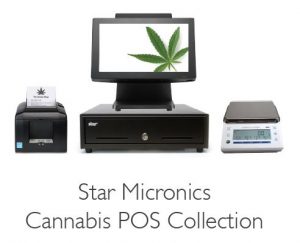
     

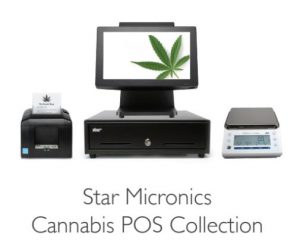
    Star Micronics has what it takes to compete in the cannabis industry. Our cannabis point of sale offering includes everything from NTEP-certified scales and high-volume cash drawers to pre-printed cannabis labels and in-store marketing tools.

    Are you a reseller looking to cash in on cannabis point of sale? Discover what makes the cannabis industry different from other retail industries, what POS systems are required to legally sell cannabis, and more!


  • Infographic: The Rise of Online Ordering

    Infographic: The Rise of Online Ordering

    Here’s something you probably already know: the online ordering industry is booming. Here are some things you may not have known, though: 86% of consumers use off-premise services at least monthly, and food delivery in particular is expected to grow 12% year-over-year in the next five years. And last but not least, digital ordering and delivery has grown 300% faster than dine-in traffic!

    If you’re looking to learn more about the online ordering industry as a whole, you’re at the right place. The below online ordering infographic explores the history of online ordering, industry key players and revenues, customer demographics, and more – including what point of sale features restaurants looking to jump into the growing industry should look for. Enjoy!

    Free Online Ordering Resources

    Social distancing has deeply affected our customers in the restaurant industry. That’s why Star Micronics is offering free online ordering resources for VARs and ISVs helping restaurants navigate the implementation of online ordering.

    Download Online Ordering Toolbox

    Online Ordering Infographic:

    Is Your Restaurant Ready for the Growing Online Ordering Trend?

    Download eBook

  • 5 Futuristic Ways to Order Online

    5 Futuristic Ways to Order Online

    Ah, online ordering. Who doesn’t love it? Online ordering makes the ordering process easier, improves order accuracy, keeps costs transparent, and more. And the public agrees: a whopping 86% of consumers report using online ordering services at least monthly, and a third are using it more than they did a year ago.

    One of the biggest segments of online ordering is food delivery, which is expected to grow 12% each year, for the next five years (and beyond, we’re sure). In such a booming industry (online food delivery alone is expected to be a $137 billion market by 2023), it comes as no surprise that new ways to order on the web are popping up left and right. Let’s explore five futuristic ways to order online – that are already happening.

    Free Online Ordering Resources

    Social distancing has deeply affected our customers in the restaurant industry. That’s why Star Micronics is offering free online ordering resources for VARs and ISVs helping restaurants navigate the implementation of online ordering.

    Download Online Ordering Toolbox

    1. Order by Tweet

    Did you know that on top of catching up on your daily news and memes, you can also order a pizza on Twitter? Domino’s Pizza allows customers to make a “pizza profile” on its online delivery service, create an “Easy Order” (which is like a pizza speed dial), link the pizza profile to their Twitter account, and order simply by tweeting a pizza emoji to Dominos’ Twitter account. Dominos also allows customers to order via Google Home, Alexa, Slack, Facebook Messenger, and more. Ordering via social networks is an interesting thing, and there is certainly already a market for social media-driven online ordering.

    2. Order Through Virtual Assistant

    You can ask Alexa for the forecast, to play your favorite song … or to order your lunch. Companies such as Just Eat, which has 24 million customers across the globe, are using virtual assistant technology to further modernize and personalize the food ordering process.

    Per Storm Fagan, head of product at Just Eat, “It’s as simple as having a conversation with your partner and you’re talking about what takeaway to order of an evening and, as natural as that conversation is, a voice assistant like Amazon Alexa will join in with your conversation. It will know how many people are in your home and what sort of food you like, and they can start recommending food options to you. Rather than us having to go to a website, it’s almost as if Just Eat will exist in your home with you.”

    3. Order via Smartwatch

    Smartwatches are no longer just for early adopters: in 2018 alone, 141 million of them were sold. With such a big adoption comes another wave of innovation and new features. One example of this is OrderUp/GrubHub, which allows a customer to place an order, track delivery status, and check estimated time of arrival, all through their watch. Expect to hear more about smartwatch functionality in the near future – the market is expected to grow to $73 billion by 2022.

    4. Order from Car

    Cars aren’t just for driving you to places where you can buy things – now you can buy things directly through your car! Take General Motors, for example. The automaker has launched GM Marketplace in millions of its cars, providing car owners the option to order food and beverages from Starbucks, Dunkin’ Donuts, Wingstop and more – all through the press of a button. Because the vehicles that feature GM Marketplace also have Wi-Fi connectivity, when drivers place an order through their car, it automatically will locate the nearest store and direct the driver how to get there. Although the service is predominantly foodservice-based, GM says there’s a huge potential for retailers to cash in on orders placed through cars.

    5. Order with Eyes

    Perhaps the most far fetched-sounding method of them all, believe it or not, you can order with your eyeballs. In conjunction with Tobii Technology, Pizza Hut developed Subconscious Menu, which tracks customer eye movement, and suggests pizza ingredients based on what a customer’s eyes focused on. Creepy? A little bit. Efficient? You betcha: the menu can suggest just the right pie for you, out of nearly 5,000 combinations, in 2.5 seconds.

    Is Your Restaurant Ready for the Online Ordering Trend?

    Download eBook

  • Millennials’ Eating Habits: How They’re Changing the Food Industry

    Millennials’ Eating Habits: How They’re Changing the Food Industry

    If there’s one generation that makes headlines, it’s millennials. According to the 2015 U.S. Census, there are 75.4 million millennials living in the country, officially making them the largest generation in the States. If you operate a restaurant, it’s worth paying attention to what millennials do and want – especially when you consider that they spend more dining out than they save for retirement. Here are the top four things millennials are seeking when it comes to dining out – and how these changes are affecting the food industry.

    They Want Convenience

    The first meal kit service started in 2007 – and now, 12 years later, it’s a booming industry estimated to hit $10 billion in revenue by 2020. Who’s to thank for that? Millennials, of course – they’re considerably more likely to subscribe to these services than non-millennials.

    That’s just one example of the importance convenience has to millennials. Other popular (and booming) examples are grocery delivery services, food trucks, heat-and-eat options available at grocery stores, and online ordering (millennials are the most likely to get home delivery from restaurants). In fact, according to the 2017 Food and Health Survey by the International Food Information Council, 55% of millennials say convenience is a top driver when buying food.

    They Want Transparency (And Responsibility)

    Don’t be mistaken: just because millennials value convenience doesn’t mean they don’t also take healthiness and sustainability seriously. The trend is just the opposite, actually.

    First and foremost, millennials are redefining what it means for a food to be considered “healthy” – instead of low-fat being a top priority, they now put natural, organic, locally sourced, and sustainable foods at the top of their list. Did you know that millennials eat 52% more vegetables than baby boomers and 52% of organic consumers are millennials?

    This generation also wants to know where their food is made – a whopping 80% of them want to know more about where their food is grown – and they value how it’s made (you may have noticed the terms “locally sourced” and “farm-to-table” popping up on menus in recent years).

    appetizer-avocado-basil-1824353-e1574802805597
    Avocado toast, a trendy meal popular among millennials. Source: pexels.com

    They Want Trendiness

    Gone are the days of steak and potatoes – instead, unique, customizable items are making a splash with millennials. “Build-your-own” quick service restaurants (like Chipotle) are growing steadily, and for a good reason: 72% of consumers expect customization! Some examples of recent unique trends are food bowls, food mashups/hybrids (hello, cronuts), and avocado toast.

    So, are unique meals actually popular with millennials, or do they just make headlines? The former is true: 40% of millennials report they like to order different things every time they eat in the same restaurant, and they don’t shy away from vegan and cultural cuisines. They’re also described as open-minded and curious. Besides adopting a creative menu, it’s a good idea to also create a unique, modern vibe in your restaurant – from your light fixtures to your point of sale.

    They Want an Experience

    If you have a social media account, you know that photos from users experiencing a satisfying meal are popular. In fact, 75% of millennials report they value the experience of eating food more than the nourishment. And social media is a huge part of the dining experience: 41% of millennials log in to Facebook every day, 29% use Instagram regularly, and 25% use Snapchat on a daily basis. To top it off, 20% of millennials say that they receive food news from peers on Facebook.

    To help make your restaurant “Instagram-worthy,” consider adopting a modern and aesthetically pleasing menu design, ambiance, and décor – and don’t forget to create social media accounts for your restaurant if you haven’t already!

    Looking to modernize your restaurant for today’s largest demographic? Discover how Star Micronics helped a restaurant operate efficiently, provide excellent service, and incorporate online ordering.

  • Sophatar Launches Sales Receipt Viewer in Partnership with Star Micronics

    Sophatar Launches Sales Receipt Viewer in Partnership with Star Micronics

    Download sales receipt images and obtain sales insights, with a brand new sale receipt viewer service from Sophatar for retailers using Star printers!

    • Are you a retailer looking for an easy web-based sales receipt re-print solution?
    • Or find out at which time of day, or day of the week you consistently generate more sales so you can plan employee shifts effectively?
    • Or find out when your first and last sales of the day happen?
    • And be able to do this from anywhere, not just while at your store, without extra software to install or change your POS?

    Then we have THE solution for you!

    Sophatar3-e1574799618468

    Sophatar is improving the sales IQ of retail locations with a Sales Receipt Viewer and Analytics dashboard that is targeted to customers of Star Micronics.

    No software to install. No need to change your point-of-sale software.

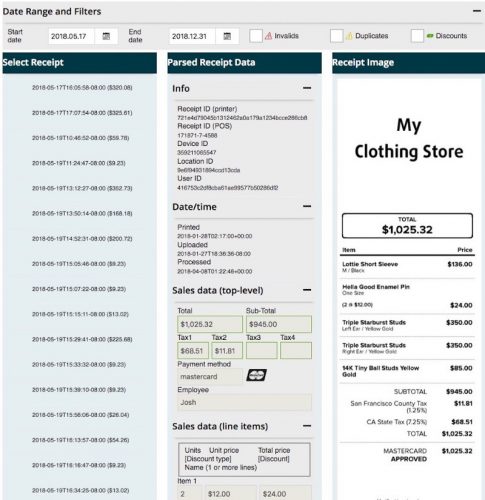
    It is a web-based service with downloadable images of your sales receipts showing in a browser and downloadable for re-print or email.

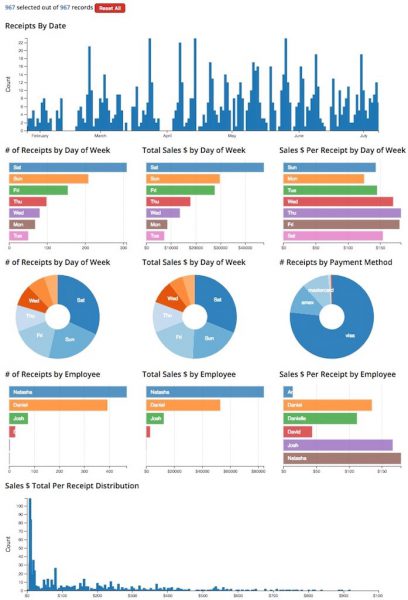
    The service also includes extracting the data from your sales receipt images and turning that into actionable information via an interactive graphical sales analytics tool so you can explore sales trends.

    It only costs $20 USD per month after an initial free 3-month period. No credit card is required during the trial period. This extended-time trial period is only offered for a limited time, during the introduction of this brand new service.

    Sophatar-1-e1574799635157

    What Do I Need for This to Work?

    Most Star Micronics printer installations have the unique capability that they can upload receipt images from your printer to the Star Micronics Cloud Dashboard each time a receipt prints. Check with your Star sales rep to find out if your install can. Once your image is uploaded and you sign up for this service, your receipt images will automatically be parsed in the cloud, and both the receipt images and parsed data is made available to you via a web dashboard and an interactive sales exploration graphics tool.

    Multi-Dimensional Sales Analytics in the Cloud

    Sophatar4-e1574799668664

    Explore your sales receipts to uncover trends and actionable insights in a variety of ways. Simply click on the interactive graph in the browser and select one or more dimensions to turn your sales data into insights. Graphs update automatically to filter and analyze your data:

    • by calendar date range
    • by day of week
    • by time of day
    • by payment method
    • by employee
    • by sales receipt total $
    • etc.

    Furthermore, you can filter to only see those receipts with discounts applied, or detect duplicate receipts. Use this to uncover ‘sweat-hearting’ by employees (discounts given to friends) or print receipt fraud (multiple prints of same receipt given to different customers from a single transaction on the POS, mostly seen in environments with a limited number of SKUs, such as QSR).

    As retail stores must compete in today’s world with e-commerce and online shopping, physical retailers are increasingly in need of more data and analytics. Sophatar’s partnership with Star Micronics means receipt data at the POS can deliver new insights for retailers to improve their marketing strategy to boost sales at key times.

    Besides this receipt viewer and analytics tool, Sophatar also offers other services based on sales receipt data from Star printers, such as its POS-transaction driven digital signage.

    How Do I Sign Up?

    Sophatar5

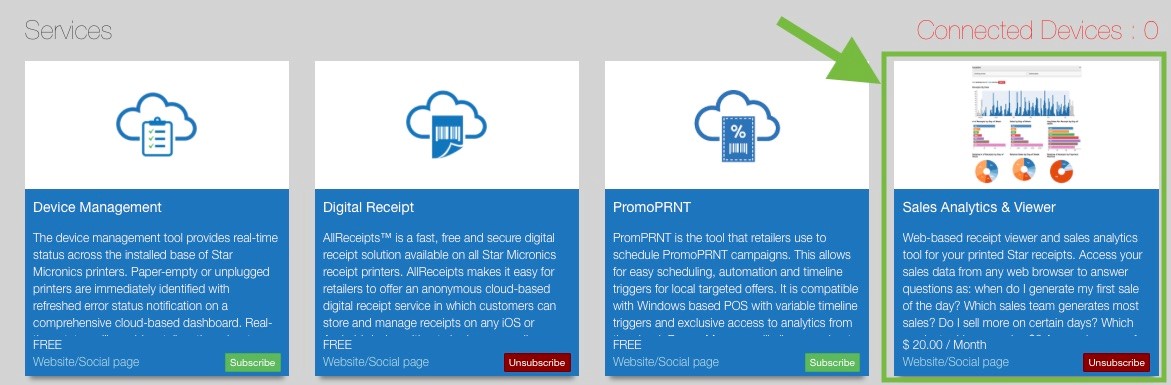
    The service is offered by Sophatar but fully integrated with Star Micronics. Star customers can login to their account at https://starmicronicscloud.com/ and subscribe to the ‘sales receipt analytics & viewer service’ in the Star Marketplace. We will then reach out to you to complete setup and activate your subscription.

    Now any retailer can keep an eye on their business, even from a remote location.

    Check out our 2-minute video demo and sign up today to take advantage of this no-risk limited-time no credit-card required introductory offer of $0 for the first 3 months!

  • 3 Reasons Why Restaurants Should Allow Customers to Order Online

    3 Reasons Why Restaurants Should Allow Customers to Order Online

    Online ordering and delivery are so convenient that more and more people are going online and, in a few clicks, having meals delivered to their door. According to banking analysts Cowen, delivery will grow to a $76 billion industry by 2022. CNBC reports that online orders comprise half of all deliveries, with millennials and the 35-44 age group leading the pack among diners who are taking advantage of online ordering apps and services.

    Online Ordering Makes Sense for Your Restaurant

    Although most restaurants take phone orders, it’s a good idea to have an alternate ordering method so people won’t get a busy signal or wait on hold for too long. Online ordering also means the phone won’t be ringing as often, taking staff away from other tasks and making the atmosphere more pleasant for dine-in customers.

    Online ordering allows diners to enter their orders online through the restaurant’s website or app and designate whether it’s for pickup, delivery, or dine-in. Online ordering solutions also enable the customer to pay with a credit card before the order is prepared, and it streamlines workflows by sending orders directly to the kitchen. Implementing an online ordering system means a better customer service experience for patrons and allows you to gather their contact information for future marketing efforts.

    Online ordering is a great way to boost revenue and attract new customers. The addition of Amazon Eats and Seamless are making it easier than ever for restaurants to introduce online ordering. If you haven’t already, here are three reasons why your customers should be able to point, click, and eat:

    1. Increased sales and larger orders

    Restaurants that introduce online ordering increase their takeout revenue, on average, by 30%. For small restaurants or ones with limited hours, adding online ordering and delivery generates an additional revenue stream without impacting your dine-in customers.

    Online ordering encourages larger orders by giving customers extra time to look through the menu and discover new items they would like to try. Diners are in control of the ordering process and they can take their time reading the menu without feeling rushed, securely process their payments, and never get a busy signal.

    2. Improved order accuracy

    Taking phone orders means an employee must be able to clearly hear the customer on the phone, accurately and legibly write down an order, and then input it into the point of sale (POS) system. Sometimes the employee may not hear the order correctly or make mistakes while entering it into the POS terminal. Removing these steps means less opportunity for errors and a reduction in the amount of time and resources wasted remaking orders prepared incorrectly.

    3. Expand your customer base

    More of your customers will seek out restaurants with online ordering, so it’s important to have every option available—phone, online and ordering app. According to a survey by the National Restaurant Association, 61% of people said they consider delivery and takeout options important for table service restaurants.  The experts at QSR Web reported that online ordering is outpacing dine-in patrons by 300%. If reservations at your restaurant are hard to get, or there are only a few tables, online ordering makes it easy for people to satisfy their craving or try it for the first time quickly and easily.

    Restaurants are preparing more meals for take-out than they are serving to on-premises customers, so make sure they can place their orders using the technology they want. Online ordering is the key to drawing in new customers and increasing revenue.

    CloudPRNT

  • The Future of Cannabis Retail is Looking Good

    The Future of Cannabis Retail is Looking Good

    The retail cannabis industry is growing fast, $75 billion by 2030 fast.

    But let’s look at the nearer future. According to Arcview Market Research and BDS Analytics, by 2021 the cannabis market is expected to reach $24.5 billion. Currently, cannabis is legal in 9 states for recreational use while 30 states have legalized cannabis for medical usage.

    With such a high market growth expectancy, dispensaries sell a variety of cannabis products in the forms of hash, rosin, shatter, and oils which can be smoked or vaped. In addition, as many are aware, cannabis is also sold in the forms of candy and baked goods. As for pharmaceutical use, cannabis contains cannabidiol (CBD) which when used in the form of candy or oil aids in the treatment of pain and epilepsy. Now that sounds pretty good.

    Let’s Talk Business

    There’s no doubt that cannabis has health benefits that aid in the relief of:

    • Pain
    • Muscle spasms
    • Arthritis
    • Dravet’s Syndrome
    • Mental health symptoms
    • Etc.

    But what about benefits for businesses?

    Well, as was mentioned earlier, legal cannabis reached $9.7 billion in sales in 2017.

    But let’s dig a little deeper into the facts and figures…

    By 2021, marijuana sales are expected to reach a whopping $24.5 billion. Younger generations are turning to cannabis consumption and slowly turning away from alcohol. This has resulted in a decrease in binge drinking, 9% below the nation’s average, in the states where marijuana is legalized. Funnily enough, the industry’s sales will be led by people 55 and older. With such a diverse market, the cannabis industry is opening up multiple opportunities for businesses to flourish.

    The increased popularity, and acceptance, of the cannabis industry is leading to the establishment of more small businesses with an increase in employment opportunities. With cannabis stores becoming more common in legalized states, the industry of creating products to efficiently, and legally, weigh and sell marijuana to meet regulations are necessary for the success of the business. Additionally, with cannabis being legalized all over Canada, there may even be a possibility that the East coast will speed up its state adoption for recreational use.

    Regardless, cannabis is creating a diverse industry that includes the need for different markets to ensure its success, thus providing a positive impact on the nation’s economy.

    The Cannabis POS Industry

    With Cannabis creating such a diverse industry, it only makes sense that businesses will need reliable POS systems…image-e1574796602929

    Keep in mind that the cannabis industry is different than your average retail business.

    There are multiple rules and regulations that need to be followed in order to ensure that your business is legal. Here are some key points to remember when choosing your POS system:

    1. Cannabis is a cash business
    2. Sensitive scales are a necessity
    3. Labels are regulated
    4. Receipts are essential

    How Resellers Can Cash in on Cannabis Point of Sale

    The cannabis industry has become one of the fastest growing markets. Here’s how resellers can take advantage.

  • How to Find the Best POS Solution for Your Restaurant

    How to Find the Best POS Solution for Your Restaurant

    four-leaf-products-e1574795534725Starting a restaurant business or a coffee shop has never been easy for people who don’t have experience. Such business requires large spending – from purchasing and investing in all necessary equipment to over hiring staff and releasing monthly salaries. Consequently, these have direct negative effects on a restaurant’s profitability. Last but not least, traditional systems cause difficulty for owners when they want to quickly expand their business.

    Contrary to popular belief, restaurant point of sale is not a one size fits all models. In the restaurant industry, you’ll find large to mid-sized sit-down restaurants, mom and pop shops with 5 to 10 tables, cafes, fast-casual, food trucks, and more. Finding the right point of sale system for your restaurant really depends on the type of business your running.

    1. Pop-up Restaurants & Food Trucks

    food-truck-e1574795558435

    For a pop-up restaurant or food truck scenario, you will want a point of sale that allows you to be mobile. Tablet POS or mPOS are very popular in this market because the mobility of the tablet or mobile device allows users to take up less space and take the POS outside of the pop-up or food truck to take orders and process payments of those waiting in line. With this type of mobile solution, you will want a receipt printer with the same mobility. A portable receipt printer that can hook right to your belt strap is ideal for these pop-up and food truck environments because they are lightweight, compact, and can print receipts from anywhere, at any time.

    2. mPOP™

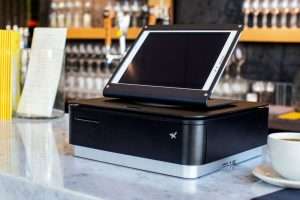
    mPOP-bar-e1574795580555In cafes and smaller restaurants, mobility is still preferred, but you will need a POS system that is more static. The mPOP allows restaurateurs to still utilize the mobility of a tablet or smartphone while having a set POS checkout station with a small footprint. This is the perfect solution for smaller restaurants or cafes that have a lower cash flow and want to maintain an aesthetically pleasing counter space.
    3. TSP143III

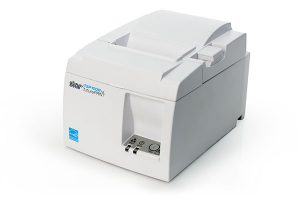
    For larger restaurants, you will need a more robust solution that can withstand busy periods with a high volume of orders being transmitted and receipts being printed. The TSP143III is the best printer for this scenario with a tethered USB connection for Apple iPad® devices that simultaneously facilitate data communication to the printer and charges the mobile device. The TSP143III is also offered with WLAN and Bluetooth connectivity option to print receipts from anywhere in the restaurant.

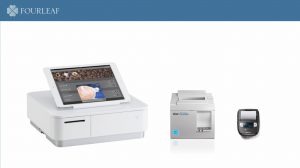
    TSP100IIILAN_600x377-IMG_9539-e1574795601338The FOURLEAF POS App aims to connect owners to their business 24/7. Help owners to track their sales income in real time and it is specially designed from fundamental concept to be an online restaurant POS system.


    Star and FOURLEAF strive to help restaurant owners to track their inventory and be able to send wireless orders to the kitchen within a fraction of a second.

  • 4 Reasons Why Integrated Online Ordering is a Must-Have for Restaurants

    4 Reasons Why Integrated Online Ordering is a Must-Have for Restaurants

    If you haven’t integrated online ordering with your point of sale system yet, it’s time to add this valuable feature and start operating more efficiently.

    Every take-out or delivery meal starts with an order. Although phone orders are universally accepted at restaurants, integrated online ordering is a must-have alternative to phone calls. If you haven’t integrated online ordering with your point of sale system yet, it’s time to add this valuable feature and start operating more efficiently.

    Free Online Ordering Resources

    Social distancing has deeply affected our customers in the restaurant industry. That’s why Star Micronics is offering free online ordering resources for VARs and ISVs helping restaurants navigate the implementation of online ordering.

    Download Online Ordering Toolbox

    What is integrated online ordering?

    Integrated online ordering allows diners to enter their orders online through the restaurant’s website or app, designate whether it’s pickup or dine-in, pay with a credit card and send the orders automatically to the kitchen. This functionality is a crowd-pleaser that, depending on the integration, updates the customer on their order’s progress and gives an ETA for delivery or pick-up.  In turn, restaurant owners and managers can increase revenues by accurately processing more orders with less staff.

    Here are four ways online ordering will positively impact your restaurant:

    1. Restaurants gain a new revenue stream with online ordering.

    For smaller restaurants with only a few tables, it can be difficult to increase profits without adding capacity, turning tables faster, or extending the hours your eatery is open. All these options add overhead in the form of higher rent, more employees and additional costs related to a longer work day. Adding online ordering and delivery generates an additional revenue stream without impacting the on-premises operations.

    People are looking for eateries with the technology that allows them to order in the way they feel most comfortable in the least amount of time. On average, restaurants that implemented online ordering increased their takeout revenue by 30%.

    2. Order accuracy will improve and customer satisfaction will increase.

    More people are logging on to place their orders for everything from doughnuts to Thanksgiving dinners. Customers want to be able to place their orders online —in fact, a National Restaurant Association survey shows that 63% of respondents said that they would use online ordering if it were offered.

    Without online ordering, an employee must reenter orders received via phone or non-integrated application into the restaurant POS, which creates double work and opens the door for mistakes to be made keying orders into the workstation. ­Removing these steps means more confident staff at the POS, less errors and a reduction in the amount of time and resources wasted on remaking orders prepared incorrectly.

    3. Integrated online ordering is more cost effective.

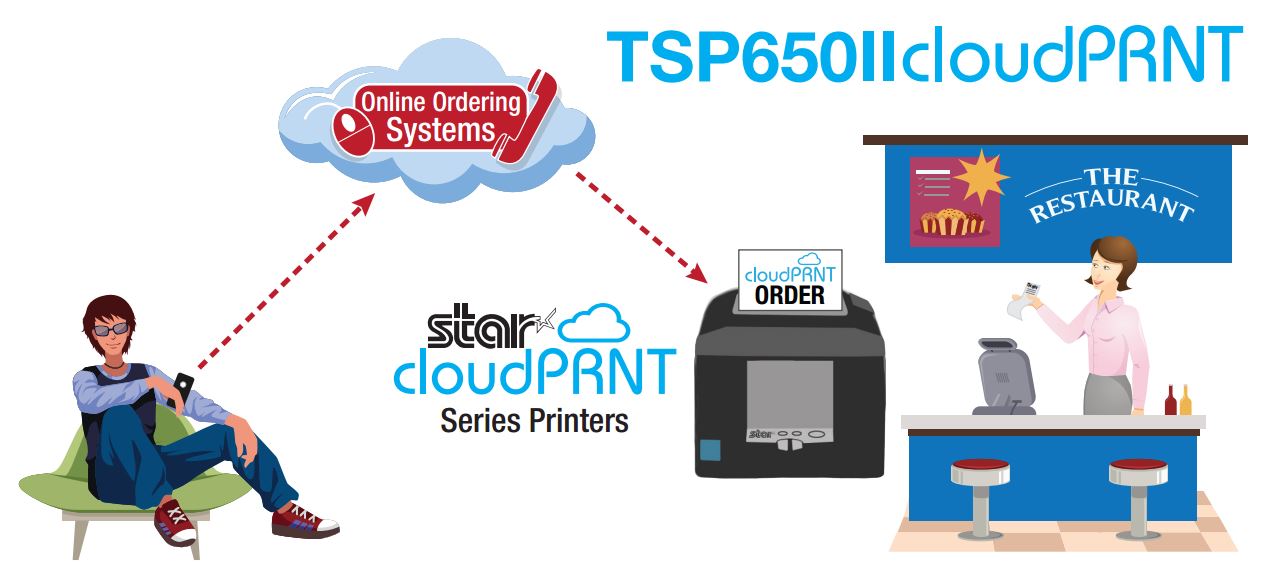
    If you currently offer menu items for delivery or take out, but do not have online ordering, your staff needs to spend time answering the phone. This means they are interrupted from another task, need to stop and place the order, and then return to their original task. This translates to a decrease in productivity — and an increase in labor costs. Paring with a POS system that uses Star’s CloudPRNT solution offers the option to have orders print automatically when received. Online orders that are directly transmitted to the kitchen save time and money.

    4. It helps you compete — your competition has already implemented it.

    Patrons expect your restaurant to have the technology that allows them to order online or with a mobile app. Online ordering is booming — it’s projected to be a $38 billion industry in the U.S. by 2020.  The restaurant industry is extremely competitive and has a high failure rate, so restaurateurs simply cannot afford a “wait-and-see” attitude.

    Online ordering delivers hot, fresh food quickly and correctly, so it’s time to integrate if haven’t already. Integrated online ordering will allow people to order their meals the way they want and when they want. This functionality will help you reduce human error while inputting orders and cut down on payroll cost and wasted resources. The restaurant business is fierce, so you can’t afford not to offer this cutting edge technology.

    Is Your Restaurant Ready for the Growing Online Ordering Trend?

    Download eBook

  • MoZONE Solutions Partners with Star Micronics to Bring Mobile In-Venue Ordering to Bars, Restaurants, Cafés, and Coffee Shops

    MoZONE Solutions Partners with Star Micronics to Bring Mobile In-Venue Ordering to Bars, Restaurants, Cafés, and Coffee Shops

    Somerset, NJ – Feb 21, 2017 -Star Micronics, leading provider of point of sale and proof of transaction technology, announced that it has joined forces with MoZONE, a leader in proximity marketing and customer engagement, to enable mobile in-venue ordering for thousands of businesses across North America, Europe, and Asian Pacific.

    MoZone-PR-hero-image-e1574786981654

    Improving Customer Experience

    This partnership will enable any QSR, Bar, or Café owner to allow customers to order from their smart phones when they enter the venue, approach the drive thru, or sit down at a table, thus eliminating standing in line, or waiting for a server to take their order. Unlike existing solutions available today, with MoZONE’s Self Ordering system and a Star Micronics TSP100ECO printer, customers no longer have to download an application to use the system. The system will recognize returning customers, preload past orders, offer the customer more choices and ‘favorites’, and provide real-time discounts, therefore boosting customer loyalty and repeat visits.

    Increasing Sales

    Restaurants and bars, regardless of their point of sale system – even those using legacy, on-premise software – can now virtually and immediately add Star/MoZONE’s Self Ordering  system to their operations. Pre-integrated with a Star receipt printer, orders are automatically printed to reduce time and improve order accuracy. This solution will help to increase kitchen throughput and table turnover and will decrease customer wait times.

    Real-Time Analytics & Enhanced Service

    The MoZONE/Star system collects real-time customer analytics to identify busy times and reduce the burden on the wait staff.  Customers can message the wait staff when they want to order more, or when they are ready to pay. Customer ‘selfies’ can accompany orders, making it easier for wait staff to deliver the order quickly and efficiently.

    “Together with Star Micronics, MoZONE is delivering the first easy to install, APP-less solution for in-venue ordering,” says Kash Johal, Founder and CEO of MoZONE. “Customers don’t want to wait for their food or drinks. Owners of bars, QSRs, cafés, and coffee shops struggle to optimize their wait staff during peak and off hours.  With the Star/MoZONE Self Ordering system, they can almost immediately add, for the first time, an easy, customer centric ordering system.”

    “We’re very excited to be empowering our customers and our channel with solutions to grow their business. MoZONE’s best-in-class technology coupled with its focus on self-ordering is a perfect fit for Star’s state of the art printers,” says Jon Levin, of Product Integrations Manager at Star Micronics. “We will be introducing the solution to our partners immediately.”

    Star and MoZONE aim to make it as easy and economical as possible for bars, restaurants, and coffee shops to add customer centric mobile ordering to their operations in 2017 and grow their sales and profits.

    Availability

    The Star/MoZONE Self-Ordering solution will be available mid-February. MoZONE will demo the system at the Nightclub and Bar Show (https://www.ncbshow.com/), March 27th — 29th at the Las Vegas Convention Center at booth #548.