Author: Kyle Lauber

  • What We Learned at NRF 2020

    What We Learned at NRF 2020

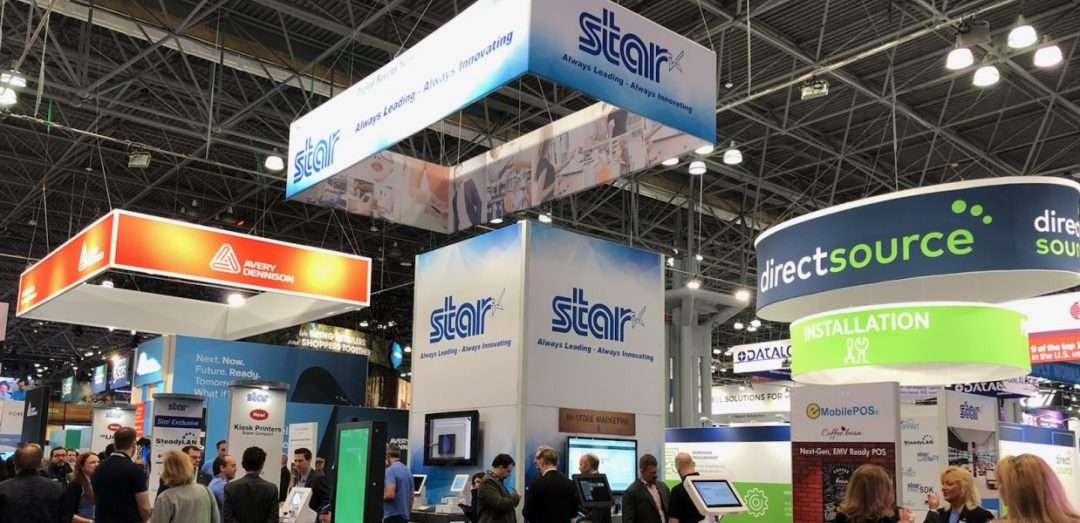
    Retail’s Big Show! With 40,000 attendees, over 800 exhibitors, and 400 speakers, NRF 2020 was another one for the record books. The keynotes were entertaining and educational while the show floor was filled with tried-and-true companies as well as startups looking to grow their business.

    Of course, the largest retail expo in the world is full of lots of new ideas and technology including everything from security and inventory management to BOPIS software and self-service kiosks. The keynote address Sunday morning by Microsoft CEO Satya Nadella set the tone for what would be a show filled with hundreds of new technologies based on the data touch points and robotic technology available to retailers. This theme also stood out on the show floor, with almost all companies both large and small featuring some form of artificial intelligence (AI).

    AI Meets QSR

    Kevin Johnson, CEO of Starbucks, held a keynote session Monday morning and it seemed as though the topic was nearly identical to the previous day’s keynote. Kevin explained how Starbucks, one of the largest coffee chains in the world, is creating a cutting-edge AI technology that will allow baristas to provide a more personal experience to their customers. Normally when we think of robotics and AI, we never imagine a more personal experience, but Kevin gave a few examples of how this is possible. At the drive-thru window, baristas always seem too busy to offer high-quality customer experience, but now with Deep Brew, the barista can simply say the order and the point of sale starts collecting the order via voice recognition.

    Robots for Every Corner of Retail

    On the show floor, actual robots were on display and demonstrating the added benefits they can provide during every step of a product’s lifecycle, from the warehouse to the customer’s shopping cart. Everywhere you looked, there were robots that could help a retailer better operate their business, from a fully automated sorting robot that scans and organizes products during the shipping process to a robot that roams the store looking for spills and hazards. These new robotic innovations seem to all focus on giving employees back their valuable time and in turn, save business owners money.

    Software Advances at NRF 2020

    From a software point of view, there was a huge increase in companies that were merging the offline world with the online world. While this is really nothing new to the industry, it is becoming more and more necessary for retailers to do this in our new world of online shopping interactions. It is quite amazing that a small business can now easily offer customers BOPIS options using almost any point of sale (POS) that they choose. Whether an in-store POS software was unveiling an updated application or a young startup company was offering an integration with any POS, NRF had the technology to bring retailers into the new world of eCommerce. Any feature that can connect a store’s offline world with the online world really goes a long way in terms of helping small businesses compete with larger chain stores.

    Star at NRF 2020

    What were Star’s biggest highlights at Retail’s Big Show? We’re glad you asked. Here are the top three innovations we shared at NRF 2020:

    1. SteadyLAN

    Without a doubt, the showstopper at Star’s NRF 2020 booth was SteadyLANTM. An industry-first technology for iPad POS, SteadyLAN provides reliable power and network access through one cable connection. Learn more about how it works in this quick video:

    2. New Kiosk Printers

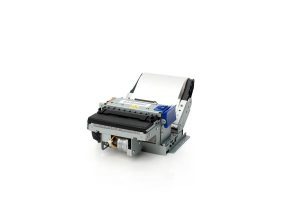
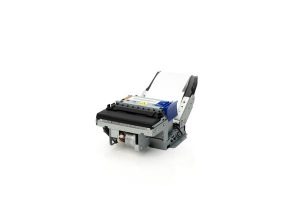
    Another highlight at Star’s booth is our new generation of SK1 kiosk printers, the SK1-211 and SK1-311. The SK1-211 and SK1-311 ship standard with StarPRNT emulation, which will allow software developers to take advantage of the full stack of Star Micronics technology, such as the StarPRNT SDKs and Star’s powerful line of drivers. Software developers that have already integrated Star products can now easily swap or extend their applications from a desktop printer to a kiosk printer. Learn more now in this video featuring Star’s Kiosk Product Champion, Augusto Echecopar:

    3. mUnite Stands

    Another hot topic at the Star booth was our new mUnite stands. These stands – designed for the mC-Print3, mPOPTM, and TSP143III/TSP654II – feature clean cable management, universal VESA mounting, and more. Discover more reasons why the mUnite is the industry’s best tablet stand in this video by Star’s mUnite Product Champion, Kyle Lauber:

    Last but not least, a special thanks to our in-booth partners this year:

    In Conclusion: Retail’s Big Show

    For anyone in the retail industry, NRF is the must-attend event of the year, and this year was no different. Rapidly advancing retail technology was on display at every turn you took at the show. The keynotes by Kevin Johnson and Satya Nadella had a large focus on AI and data learning. Robots on the show floor gathered crowds and demonstrated how quickly and efficiently automation is coming to the retail industry. This year we also saw the divide between big business and small business decrease. The technology that merges online business and offline business is becoming much easier to obtain, giving small business owners more tools to win a shopper’s purchase. If NRF is any indication of the trends in retail, this year will be filled with AI and automation leading the charge towards the future of retail.

  • What to Consider When Purchasing a Cash Drawer

    What to Consider When Purchasing a Cash Drawer

    To some, a cash drawer might just look like, well, a cash drawer. But when it comes to choosing a cash drawer as a business owner, cash drawers become a bit more complex. How will it fit in your space? Is it big enough to accommodate your day-to-day transactions? What kind of till do you need? The list of considerations goes on and on.

    Star is here to make the cash drawer selection process a bit more transparent and easier for you. Let’s explore the five key things to consider when purchasing a cash drawer:

    1. Connectivity

    First, let’s discuss connectivity options when it comes to cash drawers.

    The most common type of connectivity for cash drawers is a printer driven interface, which means the cash drawer is controlled through the printer’s DK port. The DK port, which stands for Drawer Kick, sends a 24V DC signal to open the cash drawer and is used in the majority of cash drawers.

    Another way to open a cash drawer is quite obvious: manually with a key. Most cash drawers have both DK port connectivity, and manual key access.

    Lastly, there are also wireless cash functions controlled by Wi-Fi and Bluetooth. These cash drawers are not as common, and tend to be more expensive.

    2. Size and Style

    The next topic to consider is one of the most important: how big of a cash drawer do you need, and what kind of cash drawer should you choose to match the look and feel of your counterspace and other POS components?

    On the market, there are normally two different sizes for cash drawers: a smaller option (typical 13” x 13”) and a larger option (typically 16” x 16” and larger). When choosing a cash drawer size, be sure to keep in mind considerations such as if you have items (like a keyboard) that needs to fit on top of the drawer, or if the drawer needs to be a specific height to fit under a counter.

    You may also choose a cash drawer color to match the other parts of your POS. For example, if you have a white receipt printer and white tablet-based POS/stand, choosing a white cash drawer will help provide a sleek look to your counter.

    How Star Can Help Even though each store is unique, balancing cash drawers is one thing every store has in common. Star Micronics offers the tools you need to make balancing your cash drawer as simple and painless as possible. For more information on the solutions we offer, contact Star Micronics today! Star’s Cash Drawer Solutions

    3. Cash Flow

    Next on your list of considerations is cash flow. What kind of currency do you accept? Do you accept a lot of physical coupons? What about checks?

    Cash drawer tills (the part of the cash drawer that holds the money) come in several different sizes and bill/coin layouts. Some tils have room for the US standard (five bill and four coins). Other tills come with room for more coins or more bills depending on if larger, higher value bills, such as $50 and $100, are accepted. There are also available tills for Canadian and Latin American currencies.

    Handle a lot of coupons, checks, and higher value bills? Be sure to choose a cash drawer with media slots, or slots on the front that feed into a hidden space underneath the till, to securely store these items.

    4. Durability

    Next on the list of considerations (and something that is very important) is durability.

    What type of material is the drawer made of? Is it made of steel, or a different material? Cash drawers like Star’s, which are made of steel, are highly durable which not only makes your investment more worthwhile, but is also a security feature.

    Another thing to consider is how many cash drawer opens is included in the product’s warranty? Be sure to choose a warranty that includes at least 1 million opens.

    5. Security

    Last but certainly not least on your list of considerations should be security. There are a few different security options to look for:

    • An additional lock that secures the drawer itself to the counter.
    • A locking till cover, so when you need to take the till to the back office at closing time, cash can’t be stolen during transport.
    • A universal key, so that cash drawers are easier to open in a rush and during an emergency there is no need to look through a huge key ring for the correct key.
    • A manual release options, so you can open the cash drawer no matter what. Manual release is quicker than waiting for a Bluetooth signal and even faster than some DK port signals.

    Meet Star’s Cash Drawers

    Cash-Drawers-Stacked-TW

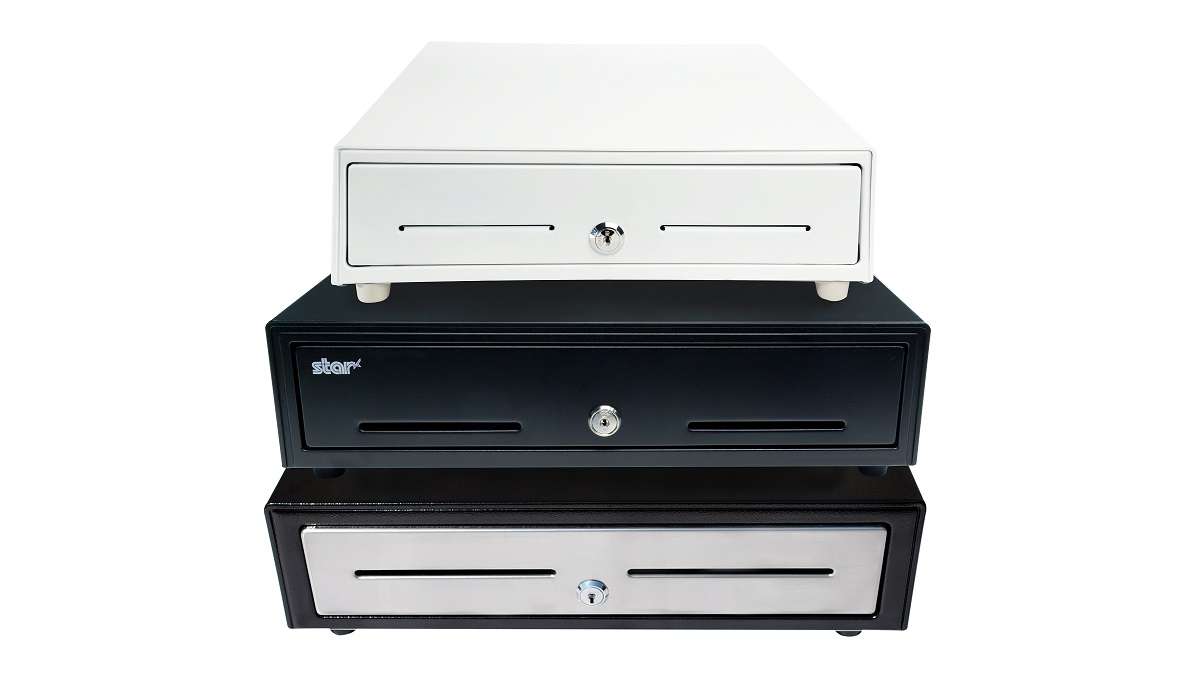
    With three lines of cash drawers with a variety of features and price points, Star Micronics is proud to offer cash drawers for any budget or application. Learn more about each series below:

    • Value Series: The Value Series includes cost-effective cash drawers that integrate seamlessly into any retail or hospitality environment with a standard printer communication interface and bottom exit cable, hidden from the customer’s view. The cash drawers also feature four lock functions: locked, closed, online (opens electronically), manual open, and locked open.
    • Choice Series: Choice Series cash drawers include features businesses already know and love, but with added features such as extra strength to support touch tablets and POS terminals, a secure dual-drawer cable to enable the Choice Series to work as either cash drawer 1 or cash drawer 2, a foldable hinged key which minimizes the possibility of breaking off in the lock, and over 10 different lock set options for added security.
    • Max Series: Max Series cash drawers are the premier choice for retailers. Featuring durable, high quality drawers with Kensington lock compatibility and sleek Star branding, the cash drawers are designed to securely manage cash while delivering professional looks. The cash drawers also feature four lock functions: locked, closed, online (opens electronically), manual open, and locked open.

    Explore all of the cash drawers now.

    Cash Drawers

  • POS Scales: What You Need to Know

    POS Scales: What You Need to Know

    Thinking of adding or replacing a POS scale in your store (or product offering line)? Scales are used in a variety of businesses, including: cannabis (production and dispensaries), grocery/deli, jewelry, yogurt shops, spice shops, pharmacies, candy/chocolate stores, coffee shops that sell beans by the pound, and more. They’re important for shoppers and business owners alike, ensuring the correct amount of goods is being sold – no more, no less – at the correct price.

    There are a couple important things to keep in mind when it comes to POS scales. First, all scales are not created equal – to get the most out of your investment, you need to carefully align your scale to your business use case. And second, you need to have your scale(s) certified, and calibrated and maintained by a certified service company.

    Does that sound daunting? Don’t worry – below we’ll teach you how to choose a POS scale, as well become informed on scale regulations in your state.

    Download Now: Scale Buyer’s Guide

    How to Choose a POS Scale

    Accuracy

    First and foremost, it’s important to choose a scale that aligns with the product that will be measured. The below scales offer an option for nearly any business:

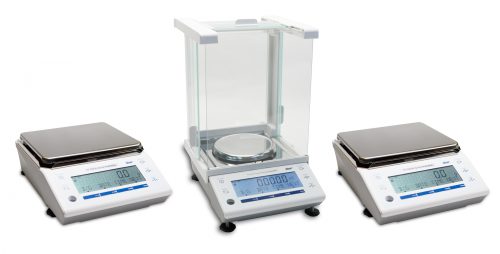
    • The mG-S322: This scale is accurate down to the hundredth of a gram, and is used in highly sensitive realms, like pharmacy and cannabis. Included with the scale is a windshield for even the most demanding scientific environments. It is legal to use in all states where cannabis is legal.
    • The mG-S1501: This scale is really the jack of all trades. It’s a versatile scale which measures down to the tenth of a gram, and also has four other units of measure. If you’re not sure which unit you will be measuring, this scale can adapt. Also, it is legal in some states for cannabis but it can only measure in certain amounts of weight.
    • The mG-S8200: In the market for grocery, deli, or frozen yogurt? This is your scale! The mG-S8200 is a conventional scale that can weigh goods up to 18 pounds, but can also measure down to the gram.
    The Star mG POS Scales Series
    The Star mG-Scales Series

    Connectivity

    Next thing to consider? Connectivity options. Look for a scale that comes with multiple interfaces, like serial, USB-B, and Bluetooth BLE (all three of Star’s scales come with all of these options). For legacy POS, make sure a serial interface is also present (again, Star’s scales have that).

    Having a variety of connectivity options all on the same scale is important because you know you won’t need to replace the scale anytime soon, and you can maximize your return on investment (ROI). Running a legacy POS but want to move toward a more modern POS? Having a serial interface can help you easily swap your old scale out without purchasing any other hardware. Plan on moving to a tablet-based Bluetooth connection in the future? Your scale is ready whenever you are, and BLE can provide you with a low-energy portable option.

    Software Support 

    Next on your checklist is software support. A good rule of thumb is to make sure your scale supports Windows, iOS, and Android. Having this support helps you prepare for the future of retail, where everyone uses a tablet instead of a PC. And you guessed it: all three of Star’s scales support all three software.

    Power Options

    When it comes to power, you need to ask yourself, “Where will my scale be used?” A traditional power supply is great for traditional brick-and-mortar stores, with standard POS.

    However, it’s a good idea to choose a scale that also comes with a battery option, like Star’s. A battery-operated scale is a great choice for farmer’s markets, food trucks, and more, because while typically businesses need to bring a generator to power their POS, with a battery-operated scale they no longer need to. Some extra benefits that a battery-operated scale can offer is a clean, wire-free footprint, and the ability for software to still work even in the case of a power outage.

    Important POS Scale Regulations

    State-Specific Regulations

    Now on to the fun important stuff. It’s extremely important to remember that nearly every state requires a State Certified Technician do scale installation, calibration, and registration.

    So how do you get started? First thing’s first: contact your local Weights and Measures office to get information and first steps on how to get your scale ready for use legally.

    State requirements can range from only getting the scale inspected after installation, to requiring you to file a request to have a certified installer come to your store to calibrate and lock your scale, followed by a Weights and Measures employee coming to examine the scale and issue a one-year seal (if it passes the examination). In those cases, if the scale fails the examination, a technician must return, redo the process, and then the scale must be re-examined. Long story short, do not try this yourself – be sure to choose a trusted technician! Our Scales Support webpage can help you find a nationwide partner.

    Registration

    In most states, registration with the Weights and Measures office needs to be done by a certified company. This registration usually expires each year, and gives the Weights and Measures office permission to come and test the scale without notice. If the scale fails the test the store can be fined, so be sure to use a certified company for all of your scale registration, calibration, and maintenance needs.

    Calibration

    Again, in the vast majority of cases, calibration should be completed by a certified company. Not only will choosing a certified company give you peace of mind, it can also save you serious money. To legally calibrate the scale, extremely precise weights, called F1 Class weights, must be used. These weights can cost nearly $5,000 and need to be kept in a special box with records of usage, maintenance, and more. Why go through the hassle of owning the weights yourself when a service company already has them?

    Maintenance

    For proper maintenance, a service company should be used once a year to ensure that the scale is still properly calibrated. Hiring a service company for maintenance gives store owners ease of mind that everything is working properly.

    Star’s NTEP Certification

    Star is proud to offer NTEP-certified scales – which means all three of our scales are legal for trade. In fact, when the scales were first released, Star was the first company to meet the new 2019 NTEP certification! Again, be sure that whatever scale you choose is NTEP-certified, or else it is not legal for trade.

    How to Start Planning Your POS Scale Project

    Ready to jump into your scale project? It’s best to start planning as soon as possible, so you know what process lies ahead. As a quick summary:

    • Choose a scale with the accuracy you need,
    • Choose a scale with future-proof connectivity options,
    • Choose a scale with flexible power options,
    • And be sure to stay compliant with your state’s requirements by working with a certified service company to register, calibrate, and maintain your scale.

    Visit Star’s Scales Support webpage to browse certified nationwide partners, as well as state-specific requirements.

    POS Scales

  • 3 Things to Consider When Choosing a Bank Kiosk

    3 Things to Consider When Choosing a Bank Kiosk

    Banking has changed quite a bit over the past few years, as mobile technologies rise and questions about financial security and data breaches are headline news. According to a survey completed by TD Bank, more than 50% of their customers are using online banking for normal transactions like deposits and transfers. But for more detailed banking information or financial products, people still prefer to do it the old-fashioned way and visit their local branch.For customers who want to visit the branch for routine transactions, many institutions have myriad options for them. Full-service assistance, drive-thrus, and self-service kiosks are usually available, but online banking customers may be most comfortable using the bank kiosk.

    Market research shows that implementing a self-service kiosk means a better customer service for patrons. One published study found that when given the option, 89% of 1,000 people surveyed would “sometimes” or “always” choose a self-service kiosk over a full-service option. These kiosks are typically easy to use and engage people while they are making a purchase. In turn, stores, restaurants, airports, banks, and hospitality venues can reduce their payroll, boost profits, and provide a high level of customer service with less staff.

    If you’re considering installing bank kiosks, consider these three things:

    1. Customer Experience

    Bank kiosks can facilitate a better customer service experience through a user-friendly interface that helps reinforce your brand. Banking at the kiosk means it’s just the customer and the machine; there is no line backing up behind them. People have a few extra minutes to read about new products and services at their own pace and find something that piques their interest.

    2. Security Features

    Don’t leave anyone’s financial information up for grabs. Banking kiosks should protect customers’ privacy just as well as an actual employee, so this hardware should be equipped with extra protection including:

    • Physical privacy screen: People shouldn’t be able to see the kiosk screen unless they are standing directly in front of it. Privacy screens help protect people’s financial information from prying eyes.
    • Physical and digital keys: A banking kiosk should require two keys to access the head and base for added security so it can’t be opened by just anyone.
    • Proximity detectors: Kiosks should be equipped with special sensors that can tell when a customer is approaching or departing. If a person leaves before logging off, the kiosk will automatically end the session.

    3. Software Security

    Investing in kiosk hardware with the security options listed above is important, but don’t forget the software. Software security helps protect your customers from data breaches and fraud.

    • EMV-compliant card reader: Look for a kiosk equipped with a card reader that is EMV-compliant. Merchants and institutions using non-EMV-compliant devices are held responsible for fraud.
    • PCI-compliant PIN pad: PCI standards require secure processing for card transactions, so be sure to ask if your equipment is PCI-compliant.
    • Core platform integration: Bank kiosks should integrate directly with the bank’s core platform so it’s like visiting a teller and more secure than stopping by the ATM.

    Bank kiosks are the preferred method for many customers who want to take a few extra minutes to review their account balances or skip the line because they’re pressed for time. A self-service kiosk serves a very specific purpose, but kiosks used in financial institutions need enhanced security features and PCI and EMV compliance to protect their customers’ sensitive information from fraud. Bank kiosks are a great way to generate interest in new financial products, eliminate wait times, and reach customers who want an omnichannel experience.

    Free Self-Service Kiosk Resources

    The future of many industries lies with self-service solutions. That’s why Star Micronics is offering free online ordering resources for resellers and software developers who are helping customers future-proof their businesses with self-service solutions.

    Visit Self-Service Toolbox

    Star’s Bank Kiosk Solutions

    Thermal self-service kiosk printing is a Star Micronics specialty! Star Micronics is proud to offer a full range of kiosk printers in a variety of paper sizes (2”, 3”, and 4”) with compact or modular footprints and multiple optional accessories like bezels, presenters, large paper roll holders, and more.

    SK1-31-e1574805301715

    SK1-311

    • 3″
    • Compact and lightweight
    • Full and partial cut (command selectable)
    • Easy to integrate

    SK1-21-e1574805318746

    SK1-211

    • 2″
    • Modular design for easy integration
    • High-speed printing: 200mm/s
    • Available with and without presenter and front paper loading

    Have kiosk questions?

    Contact Us

  • How to Create the Perfect POS Solution for Your Fitness Center

    How to Create the Perfect POS Solution for Your Fitness Center

    A fitness center is a challenging environment for point of sale (POS) systems. There are staff schedules, members to track, classes to register for, and different areas of the facility that may need retail POS functionalities but don’t have the counter space to spare.

    Owners and managers who want to create the perfect POS solution for their fitness center can build it with the right components and applications. There are a wide range of technologies and POS hardware solutions that can help you elevate your fitness center to the next level.

    Free Download: POS Software and Systems Buyer’s Guide.

    Scheduling and Membership Management

    Downloadable applications for scheduling and member management are popular because they require little upfront investment, update frequently, and typically utilize the hardware you already own. This affordable alternative to traditional, on-premises POS systems keep information secure and make it easy to create schedules and maintain client records, even when you’re not on site.

    However, many web-based applications have printer connectivity issues.  A platform-agnostic print data relaying application is a popular technology solution used to remedy this problem. You’ll want to find a low-cost, versatile solution to cloud/web-based printing that allows you to generate high-quality printing for your fitness center with professional, crisp graphics.

    Solutions for Off-Site or Outdoor Fitness Classes

    Fitness center owners who host off-site events or outdoor fitness classes need to have receipt-printing capability for customers paying for retail products, classes or services. For this reason, you’ll want to find a Bluetooth Low Energy (BLE)-enabled printer. These portable receipt printers can range from compact models to more robust options, and at price points that suit any budget.  Choose a portable receipt printer that is small, light, and can easily be carried outdoors and used to print invoices, labels, receipts, and other documentation.

    Space-Saving, Cost-Effective Solutions

    Fitness centers aren’t cash-heavy operations, so many gym owners don’t feel the need to shell out big bucks for a full POS setup. But for a select few areas that handle cash — for example, a juice bar, babysitting, or when paying for guests or special services — an ergonomic solution for tablet POS that combines a cash drawer and printer peripheral is the ideal solution. Select a unit with a fully integrated design that works with the tablet or mobile device of your choice, so you can have a mobile solution without compromising space, quality, or functionality.

    39650111-e1574803841207
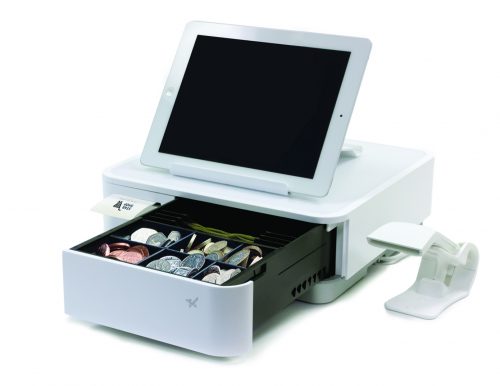
    The Star Micronics mPOP is the perfect modern, compact point of sale solution.

    Quick and Easy Connections

    Fitness center owners who choose popular iPad and iPhone POS solutions have demanded increasingly mobile and connected receipt printer solutions. Since gyms tend to be heavily soundproofed with electronic equipment or other signal blocking materials, you may struggle with connectivity.

    TSP650II-e1574803858349
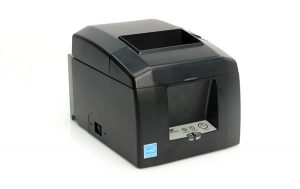
    The first AirPrint-certified receipt printer, the TSP654II.

    Choose a printing solution from a line of printers that was created to take care of connectivity problems. For example, consider the TSP654II. This printer was the first-ever AirPrint® certified receipt printer on the market, meaning it prints via iOS devices easily and without driver installation. On top of its compatibility, the TSP654II also is capable of printing 60 receipts per minute and features swappable interfaces.

    The Star Micronics mC-Printers are another great option for a connected gym. The sleek, cube-shaped printers are available in 2″ and 3″ models, and boast Bluetooth, USB, Lightning, LAN, and CloudPRNT connectivity options.

    Gym owners looking for printing solutions for fitness centers should explore Star Micronics’ lineup of hardware and technology applications. Whether you are looking to add printer connectivity, mobile POS, or off-site functionality, Star has a variety of options that will help you add the capabilities you need at an affordable price.

    Built-In Marketing Tools

    Printing receipts is great, but why not kill two birds with one stone and market to your fitness center members at the same time? Star Micronics PromoPRNT, a value-added, cloud-based marketing tool, lets you do just that. PromoPRNT uses existing Star receipt printers to print custom promotions directly on the bottom of receipts., You can easily log on to the cloud dashboard and design promotions from templates, boosting customer engagement and retention. Promotions can advertise sales, special events, loyalty programs, and much more. Learn more or sign up today!

    Need more guidance building out your ideal fitness center point of sale system? Contact us today!

  • 5 Reasons Why Shoppers Still Prefer Brick-and-Mortar

    5 Reasons Why Shoppers Still Prefer Brick-and-Mortar

    The constant evolution of e-commerce provides a hybrid of digital and physical purchasing possibilities to customers. While the appeal of an online market is steadily increasing, consumers still cannot resist the social experiences and certain advantages that brick-and-mortar is able to provide. Among the many irreplaceable elements of the in-store shopping experience that cannot be replicated online, here are the top five reasons why shoppers still rely on – and prefer – brick-and-mortar retailers.

    1. Personalized Shopping Experience

    With all of the advancements that online shopping provides, it still cannot compete with the personalized in-store shopping experience that’s found at brick-and-mortar stores – and that customers crave. Walking up and down the aisles, listening to the music, taking the time to browse and linger; there’s just no way the web can parallel such an immersive experience.

    It’s this sort of engagement and excitement that continuously attracts shoppers to brick-and-mortar stores. In fact, according to Retail Touch Points, during the 2018 holiday season 96% of consumers did at least some of their shopping in-store, thanks to the ambiance and festive decor found in physical stores.

    In addition to a store’s ambiance, physical stores also attract (and retain) customers through hosting events and classes – something an online store just can’t do. Some examples of events held in retail stores are product launch parties, book signings, holiday parties, charity events, and various classes for cooking, crafting, DIY home projects, and more. And don’t be mistaken, just because events are held in person doesn’t mean they can’t feature the convenience of the digital world. It’s easy for customers to securely pay registration fees and obtain event tickets online, using tools like Star Micronics’ partner Authorize.Net to provide a simplified payment process.

    Simply put, brick-and-mortar stores offer a level of customer service and personalized experience that online shopping simply can’t duplicate, making one thing clear: the need for physical stores is here to stay.

    2. Ability to Preview Products In-Person – Before Purchase Commitmentshopper-previewing-product-e1574803072351

    One of the biggest advantages that brick-and-mortar stores have is the ability for consumers to inspect products before buying them. Getting a feel for the material, verifying the quality, and testing the product before committing to it is a surefire way to avoid surprises that can be caused by misleading online information and pictures. A recent TimeTrade report showed that as many as 87% of modern consumers want to see and experience a product prior to “taking the plunge.”

    Who can blame them? Shoppers value seeing goods in person because it helps avoid inaccurate sizing, malfunctioning equipment, and product scams. Even with an abundance of high-quality photos and videos available online, there’s still nothing like seeing a product with your own eyes and touching it with your own hands, which is why consumers still travel to physical stores to get the most bang for their buck.

    Star Restaurant POS Solutions

    From online ordering printers to kitchen buzzers, Star is proud to offer POS solutions for restaurants, QSRs, food stands, and more.

    Download Brochure

    3. Quick, Hassle-Free Returns

    Even with the alluring ability to inspect products before purchasing, there’s always a possibility that customers may need to return an item. But there’s no question about it, the return policies available at brick-and-mortar stores offer a more simplistic and engaging process than their online counterparts. With just one quick stop, shoppers are able to verbally discuss their returns, ask questions, learn about new deals, and possibly even negotiate the return policy terms.

    Brick-and-mortar returns are a clear winner for customers seeking an urgent solution – they can replace the item right then and there, with no shipping costs, no deadline stress, and certainly no waiting. While online platforms consistently update return policies to better enhance customer service, brick-and-mortar stores continue to have benefits up their sleeves that makes in-store returns simply irresistible.

    4. Easy, Quick and Detailed Customer Service

    It’s undeniable that face-to-face customer service continues to reign supreme, even with the rise of modern online customer service tools. The interactive service offered at brick-and-mortar stores helps shoppers locate products in the store, get second opinions, and more. This sort of personalized expertise and knowledge is highly favored because it provides consumers with a level of interaction that can only happen in-person, as well as answers that even the web might not have (yes, that skirt matches that blouse).

    A recent Retail CX Trends study showed that 30% of consumers claim that personalized treatment is what elevates an experience and makes them feel special. The ability for brick-and-mortar stores to offer consistent service that is tailored to the customers’ specific needs and situations ultimately saves the consumer time and improves their overall shopping experience. You just can’t find that level of customized, instant attention online.

    5. Ability to Take Items Home Immediatelyshopper-taking-purchase-home-e1574803087845

    Even if an online store offers two-day or same-day delivery, no form of expedited shipping can compare to the delivery speed experienced at physical stores. When consumers choose a brick-and-mortar store, they don’t need to worry about waiting, handling fees, or damaged and lost packages. Only physical stores are able to offer the satisfaction of immediately bringing an item (that you know is correct and in satisfactory shape) home.

    Today’s shoppers have spoken and they want their purchases now. A recent Retail Dive survey shows that 49% of consumers choose brick-and-mortar stores over the web because they like to take home items immediately. Just one swipe of a credit card unlocks the instant use of your latest buy – the perfect option for the impulse buyer or last-minute shopper in all of us.

    Looking to empower your retail staff, save space, reduce your checkout lines, and enable fast and secure transactions? Download our free eBook to discover how the right mPOS technology can help you do just that.

    Download Retail eBook

  • NUSHOP Online Ordering System Partners with Star to Revolutionize SMB Restaurants and Retailers

    NUSHOP Online Ordering System Partners with Star to Revolutionize SMB Restaurants and Retailers

    When it comes to point of sale (POS) and online ordering technology, it can be difficult for small and medium sized businesses (SMB) to compete with the resources of large chain competitors. Gone are the days where it was enough to have an in-store POS system. In today’s omnichannel marketplace, it’s imperative for restaurants and retailers to have a website. Not only that, but consumers have come to expect the convenience of online ordering. For SMBs, the costs (not to mention the time) to keep POS and online ordering technologies functioning seamlessly are dizzying.

    This is precisely what motivated Ali Bakhtiari, a software engineer, and former restaurant chain owner, to establish NUSHOP Online Ordering System. Now a global provider of managed, cloud-based POS and online ordering systems, NUSHOP offers the functionalities of enterprise grade technology at an affordability that’s ideal for SMBs.

    Free Online Ordering Resources

    Social distancing has deeply affected our customers in the restaurant industry. That’s why Star Micronics is offering free online ordering resources for VARs and ISVs helping restaurants navigate the implementation of online ordering.

    Download Online Ordering Toolbox

    The Situation

    NUSHOP offers the latest functionalities of POS systems and online ordering used by corporate competitors, to businesses of any size at a fraction of the cost. With modules for both the food industry and any kind of retail business, NUSHOP sets up a tablet POS system and website for under $1,000 and then provides software and maintenance support of both for only $100 per month. This removes the burden of management from store owners, who now can focus more time and energy in running the business instead of running technology.

    2019-01-10_12-19-48-e1574802415409

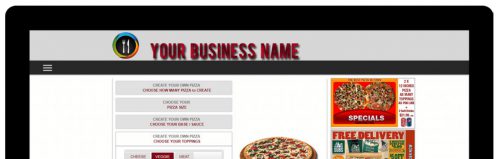
    The NUSHOP’s cloud-based system automatically processes online orders, sending them directly to both your business’ in-store POS and order printer. The system can support an unlimited number of printers and cash registers for both single and multiple store locations. Consumers can select options for pick-up or delivery, and the system automatically sends the orders to the ideal location for delivery based on zip code. Best of all, store owners have peace of mind knowing that the entire system can be restored in a matter of minutes should a major issue arise.

    For NUSHOP’s system to provide greatest efficiency and profitability for its customers, the right printing technology would be essential.

    The Solution

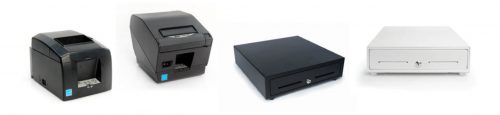
    The NUSHOP team partnered with Star Micronics for the technology that would provide the sophistication and processing power required to complement their streamlined POS and online ordering software. This included Star Micronics’s CloudPRNT, as well as two printer models, the TSP650II and TSP700, and two Value Series cash register models, the CD3-1313 and CD3-1616.

    Is your restaurant ready for the growing online ordering trend? Find out now!

    CloudPRNT allows for cloud-connected control of peripherals enabling printers and cash drawers to speak directly with NUSHOP’s server, saving time, increasing efficiency in order processing, and significantly decreasing the chance of error.

    2019-01-10_12-16-23-e1574802438211

    Both the TSP650II and TSP700 printer models have the ultra-high class-leading reliability and performance ideal for high-volume retail and restaurant establishments. With lighting fast print speeds of 60 RPM (receipts per minute), rugged construction, and thermal printing that withstands damage from heat and spills, the Star Micronics printers provided all the functionalities necessary for dependability and enhanced workflows.

    Star Micronics’ printers were coupled with the cost effective and durable Value Series cash drawer models CD3-1313 and CD3-1616. The CD3 models integrate seamlessly into retail and restaurant environments, particularly where counter space is at a premium, and enhances the appearance of your POS terminal.

    The Results

    NUSHOP customers find that once their domain name is setup and product photos approved, the NUSHOP system and Star Micronics CloudPRNT software can be up and running in a matter of minutes. Star Micronics printers and cash drawers are operational in seconds, needing only to be plugged into an electrical outlet.

    Back office training can be done in less than an hour, and customers appreciate the ability to assign different roles to employees regarding what they can or can’t see or do within the system.

    For the NUSHOP team, Star Micronics’s specialized technology supported their overall vision to provide a managed POS, website, and online ordering system that allowed SMB’s to gain a competitive edge against corporate chains, while improving productivity and profitability.

    Download Success Story

  • How Retail Stores Can Create Customer Centric Experiences

    How Retail Stores Can Create Customer Centric Experiences

    This blog post was written by Sarah Jane Callender

    The retail sector is facing huge changes. It is no longer enough for retailers to simply sell their products. With big, online and retail giants like Amazon, Apple, and Zappos, your retail store has to offer something which these corporations cannot; this is tangible, physical, and emotional experiences. So, here are some tips on the best ways to do it:

    1. Excellent Customer Service is Priority

    Customers are number one. Making your customer feel welcome and happy in your store is essential. Any choices you make for your business should include the consumer at the heart of the discussion. It all starts with your employees. There is a linear relationship between in-person interaction and customer experience. When hiring new members of staff, consider focusing on their attitude as well as their skills and experience. Although work experience is important, stores generally perform better when their associates have a natural service-based character than when an experienced associate has the right skills but the wrong attitude.

    2. Create a Company Culture

    Retailers must balance operational efficiencies with customer experience. This can be achieved by creating a strong and clear company culture. The problem when a retail store focuses solely on operational efficiency is that the business starts to function like an assembly line, where worth is determined by a worker’s productivity. This means there is little room for incentives to go beyond the task and focus on the customer.

    A great way to counter this is by creating and investing in your company’s culture, focusing on talent, capital, and training. The businesses that are best at this spend time and energy motivating, inspiring, and rewarding their team. This provides incentives where employees want to work smarter in your store, both for the reward, and because they are invested in your company’s culture.

    3. Display Reviews and Consumer Feedback

    The most credible form of advertising comes straight from the people we know and trust.
    Displaying little reviews and phrases from consumers next to your products, or having a review or consumer feedback box in-store, as well as on your website, can really boost sales and enhance the customer experience. Not only does this make your retail store seem more trustworthy, it also shows how good and reliable your products and company are. It shows that you value the consumer.  Why not include social media as part of this marketing strategy as well? Social media is a fantastic way to reach out to wider audiences, and to advertise and market to your existing and potential customers.

    4. Improve the In-Store Experience

    Late last year, one study found 44% of retail executives in Germany, Japan, the U.K, and the U.S. claiming that improving in-store experiences was a strategic priority for the year.
    As brick and mortar stores struggle to stay afloat, we must consider what differentiates the physical store from what is online and capitalize on this.

    Retailers should provide their employees with the technologies, tools, and information so that they can add value to the in-store shopper. The brick and mortar store can offer physical in-store experiences and demonstrations. For example, Dyson’s London store allows customers to try their vacuums; Apple allows consumers to try their latest gadgets and holds regular demonstrations; Lush lets their consumers try their hand creams, body lotions, and face masks. Whatever your retail store, there is always a way to connect with your clients and make an emotional impact.

    5. Connect Physical and Digital Experiences

    Retailers must now realize that the customer journey is no longer linear, but involves a series of backward and forward decisions.

    For example, it is important to consider your online content and how it inspires and informs store shopping. Brands should aim to create a seamless experience that connects their online and social media content with their brick and mortar shopping experience.

    How can you achieve this? You could start by analyzing your customer journey, working out how customers interact with your web content compared with their in-store experience. Data drives this. By analyzing your consumer buying decisions and what channels are involved, you can create a tailored service perfect for each customer to promote in-store foot traffic.

    6. Make it Personal

    Personalizing your communications and marketing material can go a long way with your customer. It makes them feel valued and a part of your brand.

    You can maximize this approach in store by explaining or including signage of why your products are ideal for a particular customer. For example, if you’re retail store targets young women, use signage, feedback from customers, or create events specifically targeted at your consumers, and personally advise your shopper exactly why your products are perfect for them.

    7. Build a Community

    Everyone wants to be a part of something and this goes for shoppers as well.
    One way to do this is by rewarding your customers. Include discounts for loyal consumers or have a customer loyalty program, such as ‘buy 10 drinks and get the eleventh for free’. This will strengthen the relationship between your retail store and your shoppers.

    Social media can help with this too. Twitter campaigning or creating hashtags are fantastic ways to advertise and build excitement for a product or an event in your store.

    Other ways include sending a bi-weekly newsletter to subscribers and loyal customers, or giving shoppers a gift card, or exclusive discounts for your store.

    PromoPRNT is a fantastic way to do just this. PromoPRNT allows retailers to automatically create printed promotions to print after the paper receipt. These incentives and bonuses will be delivered directly to shoppers’ hands, boosting customer retention and notifying customers of new deals and promotions. Check it out here.

    Overall, it is becoming increasingly important that retailers know how to embrace change. Retail brands should be open to embracing new technologies to meet their consumer expectations and challenge their online competitors. As the brick and mortar store becomes increasingly threatened, the retailers that survive will be those that find ways to improve shopper experiences and provide customers with the most satisfying post-purchase and loyalty-building relationships.

    The lesson here is clear: differentiate yourself based on the experiences you deliver to customers, not on the products you sell.

  • Everything Grocery Retailers Need to Know About Scale Integration

    Everything Grocery Retailers Need to Know About Scale Integration

    Grocery retailers sell a variety of items by weight, including fruit, vegetables, meat, fish, cold cuts, bulk bin dry goods, and more. Whether people are buying a bag of sweet treats or a pound of sliced cheese, you rely on grocery scales to measure the weight of items and calculate the prices. Although it seems easy to lay products on the scale and print the tags, there’s a battery of scientific tests and several government agencies dedicated to calculating weights and prices correctly.

    Proper scale integration for your point of sale (POS) system can take some research. First, grocery retailers should check to see if the scale is NTEP certified for legal use.

    What is NTEP? How Does it Work?

    The National Type Evaluation Program (NTEP) is facilitated by the National Conference on Weights and Measures. NTEP standards cover every aspect of a scale’s use, including:

    • Capacity
    • Accuracy
    • Appearance
    • Effects of temperature and humidity changes

    The standards are developed by a division of the U.S. Department of Commerce called the National Institute of Standards and Technology or NIST. Every device is tested in a lab setting to ensure compliance with federal laws and regulations.

    An NTEP Certificate of Conformance (CoC) means the scale is legal for trade and can be used in a commercial setting to sell products by weight. Every NTEP-approved scale will have a CoC number that an inspector can use to verify that the scale meets the agency’s rigorous testing standards and is legal for use.

    Why is NTEP Important?

    Grocery retailers that buy, sell, or determine prices by weight are required by law to use a NTEP certified scale. NTEP scale certification isn’t optional — never purchase a scale that doesn’t have a CoC. Only NTEP-certified devices, when properly inspected and calibrated, can legally determine the weight of products. A grocery retailer with a non-NTEP-certified scale integration may be subject to civil penalties, seizure of the illegal device, or stop-work orders.

    Does it Matter if my Scale is Off by a Little?

    Simply put — yes, it matters. Every state has its own agencies and departments that monitor scales and inspect them for accuracy. Customers trust that their grocery retailer is charging them accurately for the products they buy, so imagine the public relations nightmare if it was reported that your store was caught overcharging customers for items sold by weight. The bad publicity alone isn’t worth the risk to your business, even if it was unintentional. Don’t be cavalier about following the calibration and compliance laws, which help prevent fraud at the scale.

    In addition, choose a scale that’s the correct accuracy class. A grocery retailer needs a scale that’s accurate, but doesn’t need the same type of scale used for medicinal or pharmaceutical purposes.

    Download the Complete Scale Buyer’s Guide.

    I’ve Chosen a NTEP-Certified Scale, Now What?

    NTEP-certification doesn’t mean you can plug in the scale and start using it right away. Before using the scale, contact your local regulatory authority to find out what you need to do before processing any sales by weight. You’ll likely have to register the device for inspection prior to scale integration and participate in regular inspections.  A local weights and measures official will use NIST standards when inspecting your scale and certifying it for use.

    Grocery retailers who charge for items by weight need a scale to conduct business legally. Look for a scale that is NTEP certified, and legal for use or trade, and be sure to consult your local laws and regulatory agency regarding its set up and use. Always maintain properly calibrated devices, to avoid overcharging customers or shorting your business.

    Star’s mG-Scales have the NTEP certification and modern connectivity options you need.

    Learn More

    Interested in integrating with Star Micronics?

    Contact Integrations Now

  • How to Use PromoPRNT Technology and Receipt Printers for In-Store Communications

    How to Use PromoPRNT Technology and Receipt Printers for In-Store Communications

    At Star Micronics, we’re always pushing the limit of our POS-tech designs. We’ve been a leading global manufacturer of mobile, point of sale (POS), and customer engagement technologies and this year we wanted to offer an add-on that has usefulness for a wide range of small businesses and local retailers.

    PromoPRNT is the easiest way to reach your customers offline and in-store. It can be used for any kind of messages a retailer or small business needs to share with their customers.

    An In-Store Customer Engagement Suite

    • Hiring notices
    • Event reminders
    • Discount promotions
    • Driving traffic online
    • Customer feedback surveys
    • Seasonal campaign sale (e.g. Back to School deals)
    • A funny message for brand awareness
    • Mention of a charity or community initiative
    • A point of purchase message designed for customer retention
    • Thank you and seasons greetings messages

    With Promotion Builder and Promotion Scheduler, small businesses can easily customize and schedule their messages on receipts of Star printers.

    A receipt printer is, therefore, more than just a printer, but one part of the Star Micronics Cloud suite of retailer tools. PromoPRNT also comes with inbuilt templates to get you started on the right foot.

    Reaching customers offline has many distinct advantages over digital communications, such as:

    • Higher read rates than email (“open rate” is also considerably higher)
    • Much less costly, resulting in higher overall ROI
    • Easy to create original memories for local repeat customers
    • Simple implementation of an offline to online strategy
    • More intimate communications that go “straight to customer’s wallet”

    PromoPRNT is Creating an IoT Approach to Retail

    Since PromoPRNT is managed on the Cloud and has an O2O (offline to online) aspect, this represents an evolution of Star’s ability to contribute an IoT aspect to all of the different kinds of businesses who use our products including retail stores, restaurants, gift shops, hospitality locations, seasonal kiosks, and retail chains.

    Essentially:

    • Promotion Builder is a simple way to create and design receipt promotions.
    • Promotion Scheduler is a detailed way retailers can schedule their on-receipt POS ad campaigns.
    • Promotion Builder has an inbuilt library of templates to help SMBs get started.
    • Reaching your customers was never this easy! Since access to PromoPRNT tools is free in 2018, retailers are trying it out to deliver incentives directly to their shoppers’ hands.

    To sign-up, simply register your business here with the Star Micronics Cloud.

    To understand more about how PromoPRNT works, watch this short video:

    Discover More Information About the Value of Printed and Digital Receipts

    Download our FREE eBook, “The Value of Receipts: Printed and Digital,” now!