Tag: Receipt Printers

  • Star Micronics and Quetzal POS Help Specialty Retailers Modernize Inventory, Labeling, and Omnichannel Operations

    Star Micronics and Quetzal POS Help Specialty Retailers Modernize Inventory, Labeling, and Omnichannel Operations

    The integration combines Quetzal POS software with Star Micronics hardware solutions for receipt printing, merchandise labeling, barcode scanning, and checkout, helping specialty retailers manage inventory and support both in-store and online sales.

    Somerset, NJ – June 30, 2026 – Star Micronics, a global provider of point-of-sale (POS) hardware, cloud printing, and labeling solutions, today announced its integration with Quetzal POS, a point-of-sale platform designed for specialty retailers. The integration brings together Quetzal POS software and Star’s portfolio of receipt printing, merchandise labeling, barcode scanning, and hybrid POS hardware, providing retailers with flexible options for managing sales and store operations.

    Quetzal POS supports Star’s full portfolio of receipt and label printers, including the TSP143IV X4, TSP143IV SK X4, mC-Print series, mC-Label series, and the mPOP® hybrid receipt printer and cash drawer, as well as Star’s BSH-32 barcode scanner. Across iOS, Android, and Windows environments, Quetzal uses StarPRNT SDK to support local device communication over USB, Ethernet, Wi-Fi, and Bluetooth, giving retailers flexibility in how they deploy hardware across store and fulfillment workflows.

    Available on iOS, Android, and the web, the platform supports both single-store and multi-location retailers and can automatically discover compatible Star printers across network and Bluetooth connections.

    Inventory Management with Barcode Labeling

    For many specialty retailers, inventory management remains one of the most time-consuming aspects of daily operations. Manual inventory processes can lead to pricing errors, inaccurate stock counts, and lost sales opportunities.

    Quetzal POS helps retailers track inventory using barcode-based workflows that improve visibility into stock levels across stores and sales channels. Through its integration with Star’s printers and barcode scanning solutions, including the mC-Label multifunction label printer series and BSH-32 barcode scanners, retailers can generate merchandise labels directly from the POS system while improving item tracking and inventory accuracy.

    These capabilities help retailers:

    • Track inventory using barcode-based workflows
    • Improve inventory visibility across locations
    • Create merchandise labels directly from the POS system
    • Reduce reliance on manual inventory processes

    Supporting In-Store and Online Sales

    As more independent retailers expand into ecommerce, they need systems that connect online and in-store operations without adding complexity.

    Quetzal POS includes a web application that integrates with WooCommerce and will soon support Shopify. Using StarPRNT SDK, Quetzal POS extends online orders into the same receipt and labeling workflows used for in-store sales, helping retailers maintain consistency across sales channels.

    This allows retailers to:

    • Receive online orders directly within their existing workflows
    • Print fulfillment documents and labels automatically
    • Support in-store pickup and delivery workflows
    • Maintain consistent processes across sales channels

    Built for Specialty Retail

    Quetzal POS includes tools for customer relationship management, loyalty programs, integrated payments, trade-in transactions, and multi-location management. Retailers can customize receipt and label workflows based on transaction type, helping support a variety of specialty retail environments.

    “We built Quetzal POS to give specialty retailers practical tools for managing inventory, sales, and customer relationships without requiring the resources of a large retail chain. Working with Star allows us to extend those workflows into labeling, receipt printing, and ecommerce fulfillment, giving merchants options in how they deploy their systems.”

    “Specialty retailers rarely operate the same way from store to store. By supporting Star’s full portfolio of receipt printing, labeling, barcode scanning, and hybrid POS hardware, Quetzal POS gives merchants the flexibility to choose the workflows and hardware that best fit their business.”

    To learn more about Star Micronics solutions, visit starmicronics.com.

    To explore Quetzal POS, visit quetzalpos.com.
    Can’t get enough industry news?

    Quetzal POS Logo Red

    Quetzal POS is a point-of-sale platform built for specialty retailers, including boutiques, thrift stores, music shops, electronics retailers, and other independent businesses. Available on iOS, Android, and the web, the platform combines inventory management, customer loyalty, trade-ins, payments, and ecommerce tools to help retailers manage day-to-day operations across in-store and online sales channels. Through QuetzalPay, merchants can process payments, manage high-volume transaction workflows, simplify reconciliation, and access reporting tools that provide greater visibility into payment activity and business performance.
    Star Micronics logo, point-of-sale (POS) hardware and technology company.

    Star Micronics is a global provider of point-of-sale (POS) hardware, cloud printing, and labeling solutions that help businesses connect digital workflows to real-world operations. Serving retail, hospitality, healthcare, and service industries, Star delivers printing, labeling, cash management, self-service, and cloud-based technologies designed to support scalable, connected, and automated environments. Star’s solutions support Android, iOS, Windows, and web-based platforms and extend into the cloud through services such as CloudPRNT Next and StarIO.Online, Star’s fully managed cloud printing service.

    Visit starmicronics.com or follow us on Facebook, X, YouTube, or LinkedIn to learn more.

    Media Contact:

    Christin Dorner
    Star Micronics America, Inc.
    cdorner@starmicronics.com
    848-216-3318

    Media Contact:

    Nith Nadarajah
    Quetzal POS
    nith@heliotech.ca
    877-343-5467

  • Bisphenol-Free Thermal Paper: What Businesses Need to Know

    Bisphenol-Free Thermal Paper: What Businesses Need to Know

    Thermal paper has long been a staple in point-of-sale printing, but the conversation around receipt paper and thermal media is evolving quickly. As more businesses evaluate sustainability initiatives, regulatory requirements, and operational standards, many are reassessing the materials used for receipts, labels, tickets, and foodservice workflows.

    For businesses that rely on thermal printing, understanding the differences between BPA-free, BPS-free, and bisphenol-free thermal paper has become increasingly important. From retail and restaurants to healthcare and logistics, operators are looking for thermal media that supports reliable printing performance while aligning with broader compliance and sustainability goals.

    Whether your business prints receipts, barcode labels, linerless labels, or tickets, now is the time to understand how thermal media is changing and what to consider when evaluating paper suppliers and printing solutions.

    Table of Contents

    What Is Bisphenol-Free Thermal Paper?

    Traditional thermal paper uses heat-sensitive coatings that react with the thermal print head to produce printed text and images. For many years, BPA (bisphenol A) was commonly used in thermal paper formulations. As concerns around BPA increased, many manufacturers transitioned to BPS (bisphenol S) or other alternative chemistries.

    Today, many businesses are specifically looking for:

    • BPA-free receipt paper
    • BPS-free receipt paper
    • Bisphenol-free thermal paper
    • Eco-friendly thermal media
    • Prop 65 compliant paper

    Modern thermal media options may use alternative developers and materials designed to support evolving sustainability and compliance initiatives while maintaining the print quality and reliability businesses expect from thermal printing systems.

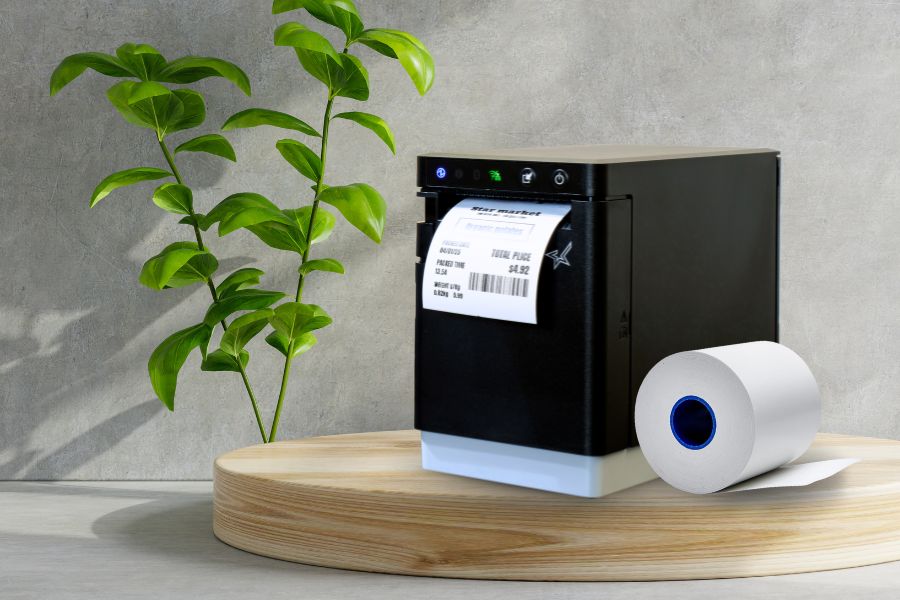
    Star Eco and Star Blue Eco media are produced using materials with no intentionally added BPA or BPS, supporting more mindful material selection across retail, hospitality, and foodservice operations.

    Why High-Contact Industries Are Paying Attention

    Thermal paper and labels are handled constantly throughout the day in many business environments, especially in industries where receipts, tickets, food labels, and packaging workflows are central to daily operations.

    As conversations around thermal media have evolved, many businesses have started evaluating whether receipt paper and labels contain added bisphenols such as BPA or BPS, particularly in workplaces where employees frequently handle thermal media throughout their shifts.

    This is especially relevant in industries such as:

    In response, many manufacturers now offer thermal paper and label media made without intentionally added BPA or BPS. In thermal media manufacturing, this generally means bisphenol-based developers are not intentionally used in the paper formulation itself, although trace amounts may still be possible due to raw material sourcing, manufacturing processes, or supply chain variables.

    Some media lines also include additional sustainability-focused features such as FSC-certified materials, recyclable paper options, and select products made without added Pergafast.

    Why Businesses Are Reevaluating Thermal Media

    The shift toward more sustainable thermal media is being driven by several factors, including:

    • Evolving state and regional regulations
    • Sustainability initiatives
    • Food safety and traceability programs
    • Procurement standardization
    • Consumer expectations around environmental responsibility
    • Operational consistency across multi-location businesses

    Several states have introduced or discussed restrictions related to thermal paper materials, including BPA and other chemicals commonly associated with receipt paper. Requirements vary by region, and businesses operating nationally are increasingly looking for media options that can support broader compliance readiness.

    For many operators, updating thermal paper and labeling supplies is also part of a larger operational strategy tied to:

    • Sustainable restaurant operations
    • Eco-friendly printing supplies
    • Order accuracy initiatives
    • Food labeling compliance
    • Waste reduction programs
    • Scalable POS hardware and labeling workflows

    Understanding Prop 65 and Thermal Paper Compliance

    California’s Proposition 65, formally known as the Safe Drinking Water and Toxic Enforcement Act, has become one of the most recognized compliance frameworks related to product material disclosures in the United States. Businesses that distribute products in California often evaluate whether materials align with Prop 65 requirements as part of their procurement process.

    For thermal paper and labels, operators may specifically look for:

    • Prop 65 compliant paper
    • No added BPA or BPS
    • Sustainable thermal receipt paper
    • FSC-certified media
    • Recyclable thermal paper options

    Star Eco and Star Blue Eco paper lines are produced using materials with no added BPA or BPS and are designed to support Prop 65 compliant operations.

    Because regulations and material standards continue evolving, many businesses are proactively standardizing compliant thermal media across locations to simplify purchasing and support long-term operational consistency.

    Explore Proposition 65 Business Resources Here >

    How Modern Thermal Paper Works

    Modern thermal paper continues to deliver the fast, reliable printing performance businesses expect while supporting updated material standards and sustainability goals.

    Today’s thermal media can provide:

    • Clear, high-contrast printing
    • Reliable image retention
    • Compatibility with existing thermal receipt printers
    • Support for high-volume POS environments
    • Reduced material concerns compared to legacy thermal media

    Importantly, businesses do not typically need to replace existing thermal printers when transitioning to updated thermal paper or label media. Modern thermal receipt paper and labels are designed to work with standard thermal printing systems, including Star Micronics receipt and label printers.

    Some premium thermal media options also help:

    • Reduce paper dust
    • Maintain print head performance
    • Improve long-term printer reliability
    • Support warranty-compliant printer operation

    Star Blue Eco media is specifically engineered to optimize printer performance and support long-term reliability across demanding POS environments.

    Industries Transitioning to More Sustainable Thermal Media

    Retail & Hospitality

    Retailers and hospitality businesses continue evaluating eco-friendly receipt paper and sustainable labeling solutions as part of broader operational and customer experience initiatives.

    Restaurants & QSRs

    Restaurants increasingly rely on thermal labels for:

    • Grab-and-go labels
    • Catering labels
    • Food rotation labels
    • Order confirmation labels
    • Allergen label information
    • Traceability labels
    • Off-premise dining workflows

    Many QSR operators are also adopting linerless labels to support waste reduction and operational efficiency.

    Healthcare & Pharmacies

    Healthcare organizations often require reliable thermal printing for:

    • Prescription labeling
    • Patient-facing receipts
    • Barcode labels
    • Traceability workflows

    Grocery & Foodservice

    Grocery stores and foodservice operations use thermal labels for:

    • Nutritional information labels
    • Inventory labels
    • Expiration date labels
    • Weight and serving size labels
    • Food identification labels

    What to Look for in Thermal Receipt Paper and Labels

    When evaluating thermal paper suppliers and labeling solutions, businesses should consider:

    Material Standards: Look for media produced using materials with no intentionally added BPA or BPS.

    Print Performance: Consistent thermal imaging and durable print quality help support reliable operations.

    Printer Compatibility: Thermal media should work seamlessly with existing POS printers and label printers.

    Sustainability Features: Some thermal media products offer:

    • FSC-certified materials
    • Recyclable thermal paper
    • Reduced packaging waste
    • No added Pergafast
    • Linerless labeling options

    Operational Reliability: Higher-quality thermal media can help reduce dust buildup and support long-term print head performance.

    Linerless Labels and Sustainable Labeling Workflows

    Linerless labels are becoming increasingly popular across restaurant, retail, and logistics environments because they help reduce liner waste while supporting flexible labeling workflows.

    Common linerless label applications include:

    • Order accuracy labels
    • Delivery bag labels
    • Product rotation labels
    • Barcode labels
    • Shelf labels
    • Grab-and-go labels
    • Catering workflows

    Star supports both linerless and linered label workflows across its media portfolio, including:

    • Repositionable linerless labels
    • Permanent linerless labels
    • Die-cut labels
    • Continuous linered labels

    These labeling solutions support modern restaurant workflows, cloud printing environments, and foodservice traceability initiatives.

    The Star Blue Eco Advantage

    Star Blue Eco is Star’s premium paper and thermal media line, designed to support reliable printing performance while aligning with evolving sustainability and operational standards.

    Key advantages include:

    • Produced using materials with no added BPA or BPS
    • Prop 65 compliant
    • Premium-grade thermal coating for consistent print quality
    • Designed to optimize printer performance
    • Helps support long-term print head reliability
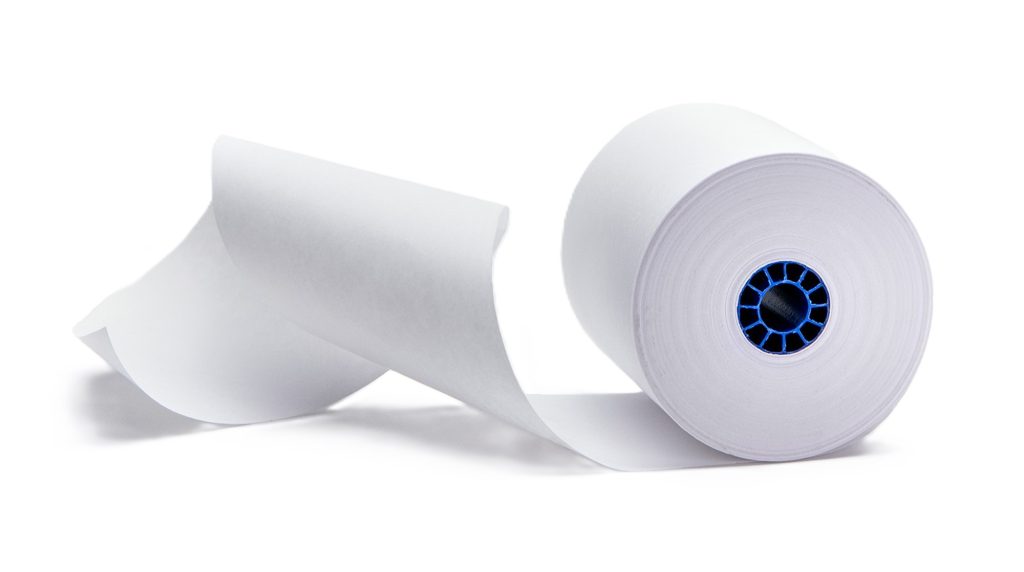
    • Signature blue core for fast identification
    • Select options include FSC-certified materials
    • Select options include recyclable thermal paper
    • No added Pergafast on select SKUs

    Star Blue Eco media is designed for receipt printers, label printers, linerless labeling applications, and scalable POS environments across retail, hospitality, and foodservice industries.

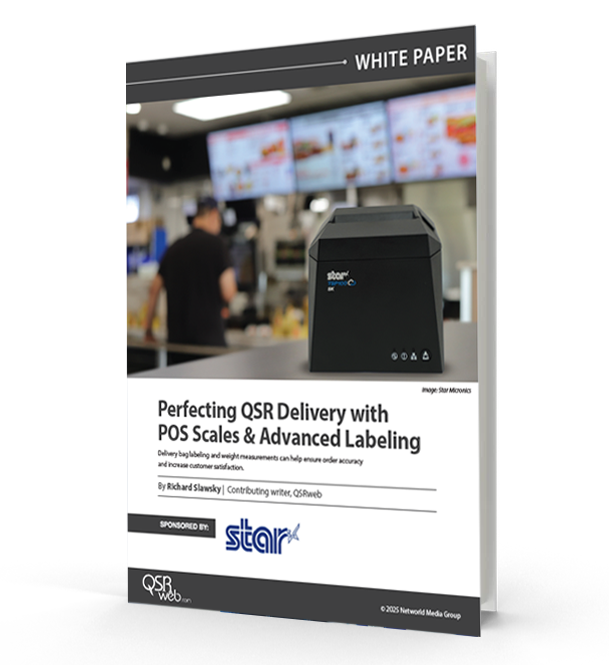
    Perfecting QSR Delivery with POS Scales & Advanced Labeling

    Learn how QSR operators are transforming delivery with weight-based verification and advanced labeling solutions.

    Ready to find out more about Star Blue Eco eco-friendly thermal paper and labels?

    Frequently Asked Questions About Bisphenol-Free Thermal Paper

    What is bisphenol-free thermal paper?

    “Bisphenol-free thermal paper” generally refers to thermal paper formulated without bisphenol-based developers such as BPA or BPS. However, terminology, testing methods, and formulation standards can vary across manufacturers and suppliers.

    In some cases, manufacturers may use phrases such as “no intentionally added BPA or BPS” to describe thermal media formulations. This reflects the fact that trace amounts may still be possible due to manufacturing, raw material, or supply chain variables, even when bisphenols are not intentionally used in the formulation itself.

    Is BPA-free thermal paper the same as BPS-free paper?

    Not necessarily. BPA-free thermal paper simply means BPA was not intentionally used in the formulation, but some products may still use BPS or other alternative developers.

    Because terminology and material standards can vary across suppliers, many businesses now evaluate broader claims around added bisphenols and overall material composition rather than focusing on a single chemical term alone.

    What is Prop 65 compliant thermal paper?

    Prop 65 compliant thermal paper refers to receipt paper or labels designed to align with California Proposition 65 requirements related to listed chemicals and exposure warnings. Many businesses use Prop 65 compliant thermal media to support purchasing consistency across multiple states and locations.

    Can thermal paper be recyclable?

    Some thermal paper products are designed to support recyclability initiatives, though recyclability can depend on the specific paper formulation and local recycling capabilities. Some manufacturers also offer FSC-certified paper and sustainability-focused media options designed to support broader environmental initiatives.

    Star Micronics offers select SKUs of Star Blue Eco thermal receipt paper that are 100% recyclable.

    What is Pergafast in thermal paper?

    Pergafast is a chemical developer that has been used in some thermal paper formulations as an alternative to BPA or BPS. As thermal media standards continue evolving, some manufacturers now offer paper products made without added Pergafast as part of broader sustainability and material selection initiatives.

    Businesses evaluating thermal paper may review whether products contain added BPA, BPS, Pergafast, or other developers depending on their internal standards, sustainability goals, or regulatory considerations.

    What does FSC-certified paper mean?

    FSC-certified paper refers to paper products certified by the Forest Stewardship Council (FSC), an organization that promotes responsible forest management practices.

    FSC-certified thermal paper and labels are sourced from forests and supply chains that meet specific environmental, social, and sustainability standards. Many businesses look for FSC-certified media as part of broader sustainability, sourcing, and ESG initiatives.

    Do eco-friendly thermal paper rolls work with existing POS printers?

    Yes. Most modern thermal paper and label products are designed to work with standard thermal receipt printers and POS systems without requiring hardware changes. Businesses can typically transition to updated thermal media while continuing to use their existing printing equipment.

    What are linerless labels?

    Linerless labels are adhesive labels that do not use a traditional backing liner. They help reduce liner waste, allow for more labels per roll, and support flexible custom-length printing across restaurant, retail, and logistics workflows.

    Why are restaurants using more thermal labels?

    Restaurants increasingly use thermal labels to support:

    • Order accuracy
    • Food traceability
    • Off-premise dining workflows
    • Grab-and-go operations
    • Catering workflows
    • Food rotation and expiration labeling
    • Allergen and compliance labeling

    As delivery and mobile ordering continue growing, labeling has become a more important part of restaurant operations and packaging workflows.

    What should businesses look for in sustainable thermal media?

    Businesses evaluating thermal paper and labels often consider:

    • Material composition and formulation claims
    • Printer compatibility
    • Print quality and durability
    • Prop 65 compliance
    • FSC-certified materials
    • Recyclable paper options
    • Linerless labeling capabilities
    • Long-term media consistency and reliability

    Many businesses are also looking for suppliers that clearly explain how sustainability and material claims are defined across their product lines.

    Originally published on October 17, 2025, by the author.

  • Star Micronics Becomes the First to Offer Windows on ARM Driver Support for POS Printers

    Star Micronics Becomes the First to Offer Windows on ARM Driver Support for POS Printers

    The new driver enables ISVs and solution providers to deploy Star printers on ARM-based Windows devices, expanding compatibility for modern POS environments.

    Somerset, NJ – April 7, 2026 – Star Micronics, a global provider of point-of-sale (POS) hardware, cloud printing, and labeling solutions, today announced the availability of Windows on ARM driver support for its printer portfolio. As the first POS hardware manufacturer to offer native support for Windows on ARM devices, Star is expanding compatibility with next-generation computing platforms used by ISVs, resellers, and enterprise customers.

    As adoption of ARM-based Windows devices continues to grow across tablets, laptops, and compact POS systems, software developers and solution providers are increasingly building applications for these environments. Star’s Windows on ARM driver enables native integration with Star printers, allowing ISVs to support receipt, label, and ticket printing without relying on emulation or additional workarounds.

    Expanding Compatibility for Modern POS Deployments

    Star’s Windows on ARM driver support enables ISVs to support printing natively on ARM-based Windows devices, while giving resellers confidence that Star printers will work with newer Windows hardware without requiring emulation or additional configuration. This is especially important as businesses adopt lighter, more energy-efficient ARM-based systems across retail, hospitality, and service environments.

    Supporting ISVs and Solution Providers

    For ISVs, native Windows on ARM driver support removes the need for emulation and ensures consistent printing functionality across both ARM and traditional x86 platforms, simplifying development for modern POS environments.

    Resellers and solution providers also gain greater flexibility in supporting customer environments that are adopting ARM-based Windows devices, allowing them to offer compatible solutions across a wider range of system configurations.

    “ISVs and solution providers are increasingly working with ARM-based Windows devices as part of modern POS deployments. By offering native Windows on ARM driver support, Star ensures our partners can support the latest hardware platforms without compromising compatibility or performance.”

    Availability

    Star’s Windows on ARM drivers are available on request. To learn more or request access, please contact Star Micronics at integrations@starmicronics.com.

    For more information about Star Micronics solutions, visit starmicronics.com.

    Can’t get enough industry news?

    Star Micronics logo, point-of-sale (POS) hardware and technology company.

    Star Micronics is a global provider of point-of-sale (POS) hardware, cloud printing, and labeling solutions that help businesses connect digital workflows to real-world operations. Serving retail, hospitality, healthcare, and service industries, Star delivers printing, labeling, cash management, self-service, and cloud-based technologies designed to support scalable, connected, and automated environments. Star’s solutions support Android, iOS, Windows, and web-based platforms and extend into the cloud through services such as CloudPRNT Next and StarIO.Online, Star’s fully managed cloud printing service.

    Visit starmicronics.com or follow us on Facebook, X, YouTube, or LinkedIn to learn more.

    Media Contact:

    Christin Dorner
    Star Micronics America, Inc.
    cdorner@starmicronics.com
    848-216-3318

  • POS Printer Integration Shouldn’t Slow Down Your Platform. A New Case Study.

    POS Printer Integration Shouldn’t Slow Down Your Platform. A New Case Study.

    For many POS platforms, printing issues don’t show up during development. They show up during deployment. Different restaurant environments, network configurations, and connectivity challenges can quickly turn printing into one of the biggest sources of support calls.

    That’s exactly what Selflane experienced. Printing instability wasn’t just a minor inconvenience. It was pulling engineering and service teams into troubleshooting instead of product development and growth.

    By standardizing on the TSP143IV thermal receipt printer and moving to the StarXpand SDK, Selflane was able to modernize its POS printer integration, simplify installations, and reduce recurring support issues.

    We put together a short case study that walks through what changed and what other ISVs can learn from it.

    Download the Selflane case study to read the full story.

  • 4 Features to Look for in the Ultimate Restaurant Kitchen Printer

    4 Features to Look for in the Ultimate Restaurant Kitchen Printer

    A restaurant kitchen printer is one of the most important tools for maintaining order accuracy and speed in a busy kitchen environment. By printing clear, durable tickets instantly, kitchen staff can prepare orders efficiently and reduce costly mistakes.

    In modern restaurants—whether quick service, fast casual, or full service—kitchen printers connect the point-of-sale (POS) system directly to the back-of-house team. Instead of relying on handwritten tickets that can be misread or misplaced, orders are printed clearly and delivered immediately to the stations preparing them.

    Choosing the right printer matters. Commercial kitchens often expose equipment to heat, grease, steam, and constant activity, so not every printer is built to perform reliably under these conditions.

    Table of Contents

    What Is a Restaurant Kitchen Printer?

    A restaurant kitchen printer is a specialized printer used in commercial kitchens to print order tickets directly from a restaurant point-of-sale (POS) system. These printers ensure kitchen staff receive accurate order details immediately so food preparation can begin without delays or confusion.

    Unlike standard receipt printers used at checkout counters, kitchen printers are built to operate in demanding environments and are typically installed at prep stations, grill stations, expo lines, or beverage areas where orders are fulfilled.

    Restaurant kitchen printers generally use either impact printing for high-heat kitchen environments or thermal printing in modern, temperature-controlled kitchens. The best restaurant kitchen printer depends on the kitchen environment, order volume, and how the restaurant’s POS system sends orders to the back of house.

    If you’re evaluating a restaurant kitchen printer, here are four features that can make the biggest difference in kitchen performance and reliability:

    1. Durable Impact Printing for Harsh Kitchen Environments

    A restaurant kitchen printer must be built to withstand the realities of a commercial kitchen. Heat, grease, and airborne food particles can quickly damage equipment not designed for such environments.

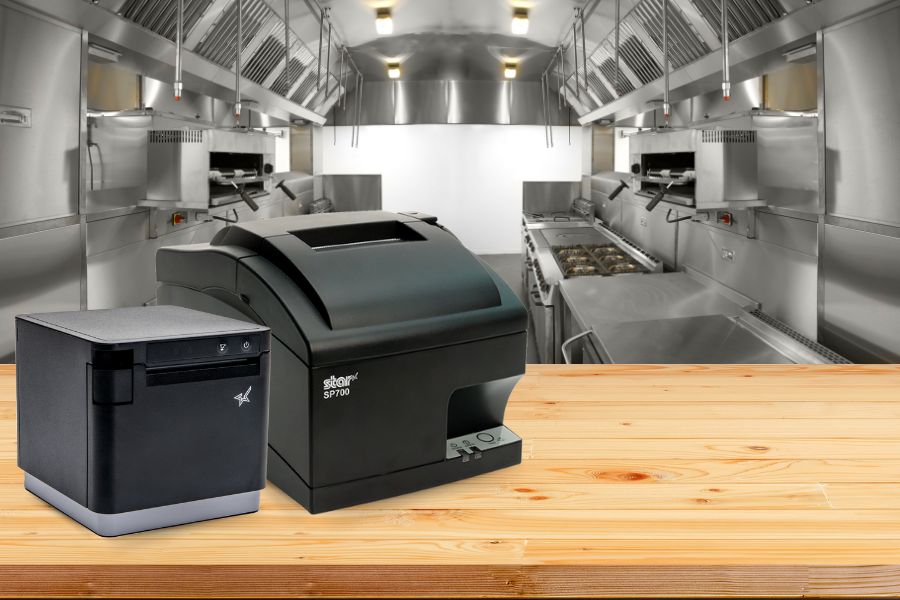
    Impact printers, like the SP742 from Star, are widely used in restaurant kitchens because they are extremely durable and reliable. They work by striking an ink ribbon against impact paper, producing clear, legible tickets that remain readable even in high heat.

    Unlike thermal paper, which can darken when exposed to high temperatures, impact paper maintains readability in hot kitchen environments. This makes impact printing particularly useful near grills, fryers, and other high-heat stations.

    For these reasons, many restaurants rely on impact printers for high-heat kitchen environments.

    Impact vs. Thermal Kitchen Printers: Choosing the Right Technology

    While impact printers are widely used in traditional kitchen environments, some restaurants operate in modern, climate-controlled kitchens where thermal printing can also perform reliably.

    Thermal kitchen printers use heat to create images on specially coated paper, eliminating the need for ink ribbons and reducing maintenance. In controlled environments where excessive heat, grease, or steam are less of a concern, thermal printers can offer fast, quiet, and efficient ticket printing.

    For example, the Star mC‑Print3 thermal ticket printer is often used in modern restaurant kitchens, cafes, and quick-service environments where operators want the speed and simplicity of thermal printing.

    However, for kitchens exposed to high heat, oil, or heavy airborne particles, impact printers remain a dependable choice due to their rugged design and heat-resistant paper.

    Choosing between impact and thermal ultimately depends on the conditions of the kitchen and the restaurant’s operational needs.

    The mC-Print3 thermal kitchen printer in a modern heat-controlled environment.

    2. Internal Power Supply for Flexible Kitchen Layouts

    Kitchen space is often limited, and equipment placement can directly affect workflow efficiency.

    A restaurant kitchen printer with an internal power supply simplifies installation and helps reduce cable clutter. Instead of managing bulky external power adapters, staff can install printers directly at prep stations, expo stations, or beverage areas.

    Benefits of internal power supplies include:

    • Cleaner workstation setups
    • Easier installation in tight spaces
    • Fewer exposed cables in high-traffic areas
    • More flexibility when arranging kitchen equipment

    In environments such as food trucks, kiosks, or compact restaurant kitchens, these small, space-saving features can make a significant difference.

    3. Fast Print Speed to Keep Kitchens Moving

    During peak service hours, kitchens operate at high speed. A restaurant kitchen printer must keep up with order volume without slowing down the workflow.

    High-speed printers can produce 13 or more receipts per minute, allowing orders to move quickly from the POS system to the kitchen staff.

    Fast printing provides several operational benefits:

    • Orders reach the kitchen instantly
    • Staff can begin preparation sooner
    • Order queues stay organized during busy periods
    • Restaurants can handle higher order volumes efficiently

    Fast, clearly printed tickets help kitchens maintain speed and accuracy even during the busiest service periods.

    4. Easy Paper Loading to Minimize Downtime

    Even the most reliable kitchen printer will eventually need a paper refill. When that moment comes during a busy shift, the process should be quick and simple.

    A restaurant kitchen printer with drop-in paper loading allows staff to replace paper rolls in seconds. This feature reduces downtime and helps kitchen operations continue smoothly during peak service periods.

    Look for printers designed with:

    • Drop-in paper loading
    • Jam-resistant mechanisms
    • Clear paper guides

    These design features allow kitchen staff to reload paper quickly and return their attention to preparing orders.

    Why Kitchen Printers Matter for Restaurant Operations

    A reliable restaurant kitchen printer helps restaurants maintain fast service and accurate order fulfillment. By delivering clear, durable tickets directly to kitchen stations, these printers reduce communication errors and improve overall workflow efficiency.

    Restaurants that invest in the right kitchen printing technology often see improvements in:

    • Order accuracy
    • Kitchen speed and efficiency
    • Staff productivity
    • Customer satisfaction

    In a fast-paced restaurant environment, even small improvements in communication and efficiency can lead to better service and stronger profitability.

    Choosing the Right Restaurant Kitchen Printer

    When selecting a restaurant kitchen printer, prioritize durability, speed, ease of use, and compatibility with your POS system.

    A well-designed printer helps kitchen staff stay organized, reduces order errors, and ensures food reaches customers quickly and correctly every time.

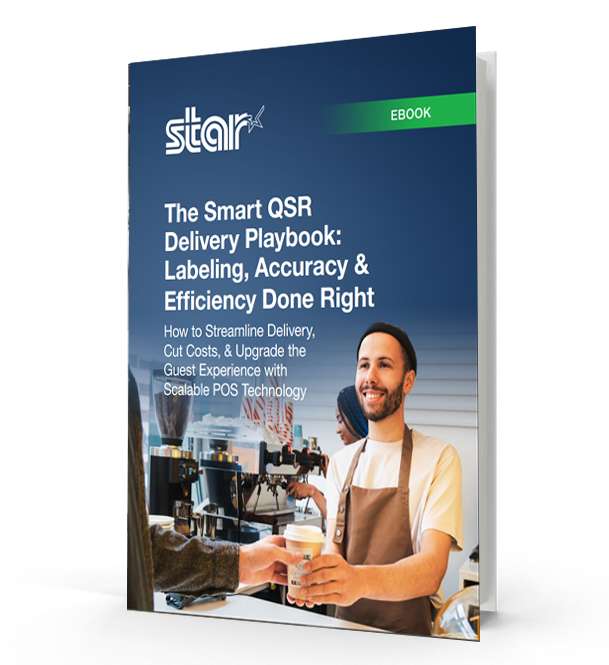
    The Smart QSR Delivery Playbook: Labeling, Accuracy & Efficiency Done Right

    This ebook explores how labeling, verification tools, and flexible POS technology can help restaurants manage QSR delivery workflows more effectively—from the kitchen to the handoff point.

    Kitchen Printer FAQs for Restaurants

    What is a restaurant kitchen printer?

    A restaurant kitchen printer is a specialized printer that prints order tickets directly from a point-of-sale (POS) system to kitchen stations. These printers ensure staff receive orders immediately so food can be prepared quickly and accurately.

    What printer do restaurants use in kitchens?

    Many restaurants use impact printers in kitchens because they are durable and can withstand heat, grease, and steam. In modern, temperature-controlled kitchens, thermal printers may also be used for their speed and low maintenance.

    When should you use an impact vs. a thermal kitchen printer?

    Impact printers are typically best for:

    • high-heat kitchens
    • heavy grease environments
    • grill or fryer stations

    Thermal printers are often used in:

    • temperature-controlled kitchens
    • cafes and quick-service restaurants
    • modern POS workflows

    Why do restaurants use kitchen printers instead of handwritten tickets?

    Kitchen printers improve order accuracy, speed, and communication between front-of-house staff and kitchen teams. Printed tickets are easier to read than handwritten orders and help reduce mistakes during busy service periods.

    Ready to learn more about how the ultimate restaurant kitchen printer can impact your business?

  • Star Micronics Integrates Labeling and Printing Solutions with Crunchtime Kitchen to Improve Order Accuracy and Fulfillment

    Star Micronics Integrates Labeling and Printing Solutions with Crunchtime Kitchen to Improve Order Accuracy and Fulfillment

    The integration connects kitchen workflows with reliable labeling and printing to support faster, more accurate order fulfillment across modern restaurant environments.

    Somerset, NJ – February 23, 2026 – Star Micronics, a global leader in POS hardware, labeling, and cloud printing technology, today announced the integration of its printing and labeling solutions with Crunchtime Kitchen, an industry-leading kitchen display system (KDS) by Crunchtime. The integration extends digital kitchen workflows beyond the screen, helping restaurants improve order accuracy, accountability, and fulfillment across dine-in, takeout, and delivery channels, with particular impact for quick-service restaurants (QSRs), fast-casual brands, large casual-dining chains, and other hospitality venues.

    Kitchen display systems play a critical role in organizing and prioritizing orders, but accuracy challenges often arise once orders move from preparation to packaging and handoff. By integrating Star Micronics’ labeling and printing solutions with Crunchtime Kitchen, restaurants gain a reliable physical verification layer that supports accurate assembly, clear identification, and confident delivery of every order.

    Extending Order Accuracy Beyond the Screen

    Through the integration, orders displayed within Crunchtime Kitchen workflows trigger printed labels and receipts at key points in the kitchen process. Item-level and order-level labels help teams verify contents, eliminate missed items, and minimize confusion during packaging and pickup.

    Star’s mC-Label multifunction printer series supports a wide range of restaurant labeling needs, including item labels, bag seals, and order identification, using linerless, die-cut, or receipt media, all from a single model. Available in 2-inch and 3-inch options, the series also features user-friendly maintenance that reduces downtime and simplifies upkeep for kitchen teams.

    Star’s TSP143IV SK supports sticky linerless labels and receipt printing, giving restaurants flexible options for labeling and order verification. When paired with Crunchtime Kitchen, labeling helps ensure that digital orders are accurately reflected in the final order handed to the customer.

    Orchestrating Complex, Multi-Channel Kitchen Operations

    Crunchtime Kitchen is purpose-built to help restaurants manage complex, high-volume kitchen operations where speed, accuracy, and coordination are critical. Rather than simply displaying orders, the system orchestrates how orders move through the kitchen by pacing tickets, routing items to the right stations, and adjusting workflows based on real-time demand.

    “When kitchens are under pressure, teams need systems they can trust. Bringing Crunchtime Kitchen together with Star Micronics’ labeling and printing solutions gives restaurants greater confidence that orders are executed accurately for the guest.”

    Features such as delayed routing, customizable prep stations, and dynamic capacity management help balance workloads, reduce bottlenecks, and keep multi-item orders finishing together. This approach supports consistent execution across dine-in, takeout, and delivery channels, even during peak periods.

    Paired with Star Micronics’ labeling and printing solutions, these orchestrated workflows extend beyond the screen, giving kitchen teams a clear, physical way to verify, assemble, and fulfill orders accurately.

    Reliable Printing for Real-World Kitchen Execution

    The integration also supports Star’s mC-Print3 thermal receipt printer, delivering fast, dependable receipt and order printing in high-volume kitchen environments. Built for the demands of busy kitchens, the mC-Print3 provides consistent output at prep, expo, and fulfillment stations during peak service.

    Together, Star’s printing and labeling hardware provides restaurants with flexible options to support prep stations, expo lines, and fulfillment areas, while maintaining clarity and reliability across workflows.

    Supporting Modern Restaurant Operations

    As restaurants manage increasing order complexity driven by kiosks, online ordering, and third-party delivery, accuracy at handoff has become a critical factor in customer satisfaction and loyalty. Clear labeling and reliable printing help reduce costly remakes, refunds, and delivery issues, while improving the overall guest experience.

    The integration between Star Micronics and Crunchtime Kitchen enables restaurant operators to unify digital order management with consistent, real-world execution across every service channel. Designed for multi-channel, enterprise restaurant environments, Crunchtime Kitchen helps operators maintain service consistency and throughput by intelligently managing order flow across stations, channels, and peak demand periods.

    A Trusted Partner for KDS Labeling Solutions

    With decades of experience supporting restaurant technology ecosystems, Star Micronics continues to work closely with leading software providers to deliver dependable hardware solutions. The integration with Crunchtime Kitchen reinforces Star’s role as a go-to provider of labeling and printing technology for KDS environments.

    For more information about Star Micronics solutions, visit starmicronics.com.
    To learn more about Crunchtime Kitchen, visit crunchtime.com.

    About Star Micronics

    Star Micronics is a world leader in point-of-sale (POS) hardware, offering a portfolio of printing, secure cash management, self-service, and customer engagement solutions for retail and hospitality environments. Star’s technologies support Android, iOS, Windows, and web-based platforms, as well as cloud printing solutions such as CloudPRNT Next and StarIO.Online.

    About Crunchtime

    About Crunchtime: Crunchtime helps multi-unit restaurants operate every location like their best one. Trusted by 850+ brands across 150,000+ locations worldwide, Crunchtime connects the full operations management lifecycle across inventory management, labor and scheduling, kitchen management, and operations execution, in the industry’s only complete, AI-powered suite. Top operators, including Jersey Mike’s, Five Guys, Smoothie King, Wingstop, and Chili’s, rely on Crunchtime to achieve profitability and deliver great guest experiences every day in every store. To learn more, visit Crunchtime.com.

    Can’t get enough industry news?

    Star Micronics logo, point-of-sale (POS) hardware and technology company.

    Star Micronics is a global leader in POS hardware and transaction technology, providing printers, secure cash management, and connected peripherals for retail and hospitality environments. Known for reliability and developer-friendly integration, Star solutions work seamlessly with Android™, iOS, Windows®, and web-based POS platforms to power receipt, label, ticket, and order printing across modern commerce environments.

    Star’s cloud technologies extend printing beyond the counter. CloudPRNT Next enables scalable direct cloud printing, while StarIO.Online is Star’s fully managed cloud printing service that removes the need for server infrastructure and simplifies remote printer management across distributed locations. Star also offers a broad portfolio of POS peripherals, including barcode scanners, scales, and tablet stands, designed to work together as a complete hardware solution.

    Learn more at starmicronics.com or follow Star on LinkedIn, YouTube, Facebook, Instagram, and X.

    Media Contact:

    Christin Dorner
    Star Micronics America, Inc.
    cdorner@starmicronics.com
    848-216-3318

  • Star Micronics Expands ESC/POS Printer Compatibility Across Thermal and Impact Printing Solutions

    Star Micronics Expands ESC/POS Printer Compatibility Across Thermal and Impact Printing Solutions

    New ESC/POS printer support includes the TSP100IV series, including SK models, and LAN-based ESC/POS emulation for the SP742 impact printer.

    Somerset, NJ – January 30, 2026 – Star Micronics today announced expanded ESC/POS printer support for the TSP100IV thermal printer series, including TSP100IV SK models, and added LAN-based ESC/POS emulation for the SP742 impact printer. This update extends across the UE and X4 models, including both receipt and linerless sticky label printers. It gives retailers, resellers, and software developers the flexibility to expand their Star hardware portfolio or move to Star, even when their current applications rely on ESC/POS support.

    TSP143IV Series with ESC/POS: Compact & Connected

    The TSP143IV UE (thermal receipt) and TSP143IV UE SK (linerless sticky label) provide a balance of compact design and versatile connectivity. Both models feature USB-C, LAN, CloudPRNT, and Android Open Accessory (AOA) support. With the addition of ESC/POS emulation, integration with legacy systems is even simpler.

    TSP143IV X4 Series with ESC/POS: Future-Proof Versatility

    The TSP143IV X4 (thermal receipt) and TSP143IV SK X4 (linerless sticky label) printers bring four interfaces in one device — “Ultra-C” USB-C, LAN, WLAN, and Bluetooth — along with CloudPRNT Next for faster, more reliable cloud-based printing. Now with ESC/POS emulation, the X4 series ensures maximum compatibility while maintaining industry-leading performance and connectivity.

    Shared Features Across All Models

    • ESC/POS emulation for broader software support
    • High-speed thermal printing (up to 250mm/s on receipt models, 180mm/s on SK label models)
    • Built-in guillotine auto-cutters
    • Compact, space-saving design with internal power supply
    • EnergyStar certification and eco-friendly packaging with minimal plastic

    SP742 Impact Printer Adds ESC/POS Support via LAN

    Star Micronics has also expanded ESC/POS™ emulation support to its SP742 impact printer with the LAN interface. This update enables broader compatibility with legacy POS systems that rely on ESC/POS while continuing to support environments that require durable, impact-printed output. The SP742 remains well suited for kitchens, back-office operations, and other applications where impact printing is preferred.

    Supporting Retail & Hospitality Innovation

    “By adding ESC/POS emulation to all four models in the TSP100IV series, we’re giving businesses and ISVs greater flexibility without compromising the advanced performance that defines Star. Whether for receipts or linerless sticky labels, the UE and X4 models deliver the connectivity, reliability, and sustainability today’s businesses need.”

    For more details on the new ESC/POS-enabled models, visit starmicronics.com or contact sales@starmicronics.com.

    Can’t get enough industry news?

    Star Micronics logo, point-of-sale (POS) hardware and technology company.

    Star Micronics is a global leader in POS hardware and transaction technology, providing printers, secure cash management, and connected peripherals for retail and hospitality environments. Known for reliability and developer-friendly integration, Star solutions work seamlessly with Android™, iOS, Windows®, and web-based POS platforms to power receipt, label, ticket, and order printing across modern commerce environments.

    Star’s cloud technologies extend printing beyond the counter. CloudPRNT Next enables scalable direct cloud printing, while StarIO.Online is Star’s fully managed cloud printing service that removes the need for server infrastructure and simplifies remote printer management across distributed locations. Star also offers a broad portfolio of POS peripherals, including barcode scanners, scales, and tablet stands, designed to work together as a complete hardware solution.

    Learn more at starmicronics.com or follow Star on LinkedIn, YouTube, Facebook, Instagram, and X.

    Media Contact:

    Christin Dorner
    Star Micronics America, Inc.
    cdorner@starmicronics.com
    848-216-3318

  • Star Micronics Showcases the Latest POS & Labeling Innovations at VARTECH 2025

    Star Micronics Showcases the Latest POS & Labeling Innovations at VARTECH 2025

    Step into Booth 311 to experience Star’s full lineup: printers, cash drawers, BPA/BPS-free Star Blue Eco paper and labels, and next-gen cloud solutions.

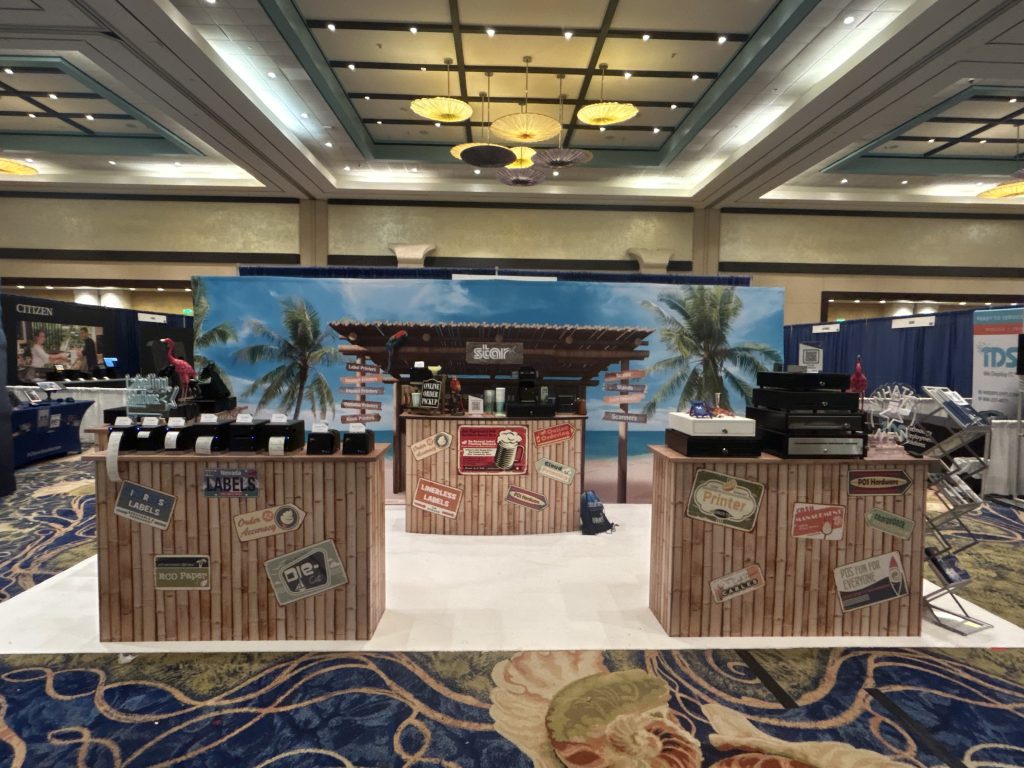
    Nassau, Bahamas – September 15-16, 2025 – Star Micronics, a global leader in point of sale (POS), labeling, and cloud technology, is pleased to announce its participation in VARTECH 2025, BlueStar’s premier channel partner event. The conference takes place September 15–16, 2025, at the Atlantis Resort in Nassau, Bahamas, where Star will welcome attendees at Booth 311.

    At VARTECH 2025, Star will demonstrate how independent software vendors (ISVs), value-added resellers (VARs), and technology partners can accelerate business growth by integrating Star solutions into their portfolios. Visitors will see live demos of Star’s latest products and services, including:

    • The mC-Label2 Multimedia Printer: A compact, front-loading, 2-inch printer with ultra-sharp 300 DPI resolution. Capable of printing receipts, tags, linerless labels, and die-cut labels, the mC-Label2 is built for tight spaces and versatile use. The X4 models offer all four connectivity options (USB, LAN, Bluetooth, and Wi-Fi) while featuring One Touch Label for instant, stored label printing.
    • The TSP143IV X4 and SK X4 Series: Advanced thermal printers with four connectivity interfaces, Bluetooth-assisted Wi-Fi setup, and compatibility with CloudPRNT Next for fast, reliable cloud printing. The SK X4 model supports removable linerless sticky labels, making it perfect for food prep, online ordering, and retail/BOPIS workflows.
    • StarIO.Online: A fully managed cloud printing service that eliminates the need for servers or custom infrastructure. From one dashboard, businesses and ISVs can monitor printer status, push remote updates, and manage devices across multiple locations, reducing overhead while improving multi-location visibility and scalability.
    • CD5 Max Series Cash Drawers: Star’s most durable, premier cash drawer line, built for cash-heavy retail and hospitality environments. With all-steel construction, dual printer-driven and USB interfaces, a five-year warranty, and multiple accessory options, the CD5 Max delivers unmatched reliability and flexibility.
    • Star Blue & Star Blue Eco Receipt Paper and Label Rolls: Solutions providers can meet the demand for eco-friendly, BPA/BPS-free, and Prop 65-compliant receipt paper and labels with Star Blue Eco. It’s one of the products in Star’s full line of consumables designed for optimal performance and compatibility with Star printers.

    Star Micronics Showcases the Latest POS & Labeling Innovations at VARTECH 2025
    Step into Booth 311 to experience Star’s full lineup!

    As a trusted BlueStar partner, Star Micronics is proud to support VARTECH 2025 and its mission of connecting distributors, resellers, and software providers. Attendees are encouraged to stop by Booth 311 to see the latest Star innovations in action and schedule one-on-one demos with Star representatives.

    To book a demo or for more information, contact sales@starmicronics.com.

    Love Industry News? Explore our Podcast:

    Star Micronics logo, point-of-sale (POS) hardware and technology company.

    Star Micronics, a world leader in point-of-sale (POS), has designated a portfolio of printing, secure cash management, self-service, and customer engagement solutions for any retail or hospitality establishment. Embracing the mPOS wave, Star’s SDKs allow developers to utilize Star printers in tandem with Android™, iOS, iPad®, and iPhone® devices to generate receipts, labels, Chit, and tickets. Star Micronics is always leading and always innovating, creating cloud-based printing solutions, including CloudPRNT Next, StarIO.Online, and Star Cloud Services, with AOA support and MFi connectivity. Star also has a wealth of peripherals, including 2D barcode scanners, scales, tablet display stands, and more. Visit starmicronics.com or follow us on Facebook, X, YouTube, or LinkedIn to learn more. 

    Media Contact:

    Christin Dorner
    Star Micronics America, Inc.
    cdorner@starmicronics.com
    848-216-3318

  • Prop 65 and Thermal Paper: What Retailers and Restaurants Must Know

    Prop 65 and Thermal Paper: What Retailers and Restaurants Must Know

    If your business handles thermal paper, whether it be receipts, kitchen tickets, or labels, Proposition 65 is not just a California issue anymore. Although Prop 65 is a California law, its reach is already stretching nationwide. Many companies are reformulating products or adjusting labeling strategies across the board to meet the standards. Not understanding the rules is not only risky health-wise, but it could also mean fines, lawsuits, or damage to your brand’s reputation.

    Let’s break down what Prop 65 is, why it matters for thermal paper, and how retailers and restaurants everywhere can stay compliant.

    What Is Prop 65?

    Proposition 65, officially called the Safe Drinking Water and Toxic Enforcement Act of 1986, is California’s way of keeping consumers informed about potential exposure to harmful chemicals. The law requires businesses to provide “clear and reasonable” warnings if their products expose consumers to substances known to cause cancer, birth defects, or other reproductive harm.

    While it’s a California law, its influence extends far beyond the state. Many national brands and businesses choose to comply everywhere because consistency is simpler than running two different playbooks.

    Why Prop 65 Matters for Receipts and Thermal Paper

    Here’s where it connects to your day-to-day: thermal paper.

    Traditional thermal paper has often used chemicals like BPA and BPS to develop printed text. These substances are on California’s Prop 65 list. That means something as ordinary as handing a customer a receipt or printing a kitchen ticket could technically count as “exposure.”

    For retailers and restaurants, that’s a big deal. Customers touch receipts. Employees handle rolls all day. It’s more than compliance, it’s about health and safety.

    And it doesn’t stop with receipts. Paper-based touchpoints like order confirmation labels, allergen label information, grab-and-go labels, and nutritional information labels may also be impacted if the wrong media is used.

    Star Micronics offers non-toxic, BPA/BPS phenol free, Prop 65 compliant thermal receipt paper and labels.

    Prop 65 Compliance Requirements for Businesses

    If your receipts, labels, or kitchen tickets contain Prop 65–listed substances, you may need to provide visible warnings. The requirements include:

    • Clear communication that a listed chemical is present
    • Placement of warnings where customers and employees will see them
    • Consistency across all impacted locations

    Non-compliance can result in penalties that add up fast. In addition to fines, businesses risk lawsuits and reputational harm, which are two things every operator wants to avoid.

    What Prop 65 Means for Retail and Restaurants

    Prop 65 compliance is not just a back-office concern. It shows up in everyday touchpoints where customers and staff interact with paper.

    > For Retailers

    Receipts are the obvious starting point, but compliance extends far beyond the checkout counter. Retailers also rely on:

    • Barcode labels for pricing and scanning
    • Inventory labels for stock management and traceability
    • Product rotation labels to manage freshness and reduce shrink
    • Loyalty coupons and promotional tickets handed directly to customers

    Each of these is a potential source of exposure if the wrong thermal paper is used.

    Star Micronics offers the full suite of retail POS hardware solutions for today's businesses.

    > For Restaurants and QSRs

    Foodservice operations depend heavily on thermal paper for smooth workflows and accurate orders. Prop 65 compliance comes into play with:

    • Kitchen tickets that keep back-of-house organized
    • Catering labels for large orders and off-premise service
    • Weight and serving size labels that provide critical portioning information
    • Food identification labels to separate allergen-sensitive items or specialty orders
    • Special product offerings labels and nutritional information labels that help guests make informed choices

    From grab-and-go stations to off-premise dining, labels are everywhere in modern foodservice. Each printed piece is a small but important part of both compliance and customer trust.

    Restaurant POS Solutions

    How to Choose Prop 65-Compliant Paper

    The solution is simple: choose the right media. Look for thermal paper that is:

    • BPA-free and BPS-free (phenol-free)
    • Tested for Prop 65 compliance
    • Verified by a trusted supplier

    The right paper doesn’t just protect your business legally. It also reassures your customers and employees that you take their safety seriously, which makes them feel good about doing business with your brand.

    The Star Micronics Commitment

    Star is committed to anticipating industry trends and staying ahead of them. That’s why we offer thermal paper options that are Prop 65 compliant, BPA-free, BPS-free, and non-toxic. These media choices are designed for receipts, linerless labels, and the wide variety of labeling applications retailers and restaurants rely on every day.

    Interested in learning more about linerless label paper? Read about the different adhesive strengths here, or find out why linerless may be a better alternative for your business.

    Prop 65 and Thermal Paper: Final Thoughts

    Prop 65 may feel like just another piece of red tape, but in reality, it’s about protecting people and protecting your brand. If your business prints receipts, kitchen tickets, or labels, compliance isn’t just the smart move; it’s the safe one.

    With Star, businesses can simplify compliance by choosing trusted solutions for Prop 65 and thermal paper in both retail and restaurant environments. Connect with us to explore your options and keep your business ahead of the curve.

    Ready to get your business Prop 65 compliant thermal paper and labels?

  • Eco-Friendly Receipt Paper: Non-Toxic, BPA-Free, and Prop 65 Compliant

    Eco-Friendly Receipt Paper: Non-Toxic, BPA-Free, and Prop 65 Compliant

    As you evaluate your company’s impact on health, safety, and the environment, an important factor to consider is the thermal receipt paper you’re using—specifically whether it’s standard or eco-friendly receipt paper.

    California’s Proposition 65 law requires businesses to provide warnings about significant exposures to chemicals known to cause cancer, birth defects, or other reproductive harm. Traditional thermal paper often contains chemicals on that list—making compliance and customer safety a growing concern.

    It’s easy to overlook the paper rolls that your employees load into receipt printers as a source of harmful chemicals. However, traditional thermal receipt paper often contains toxic chemicals, including bisphenols and microplastics, that can impact your employees’ and your customers’ health. Switching to eco-friendly paper will mitigate these risks and help you establish sustainable printing processes.

    What You Can Come in Contact With When You Touch a Receipt

    The make-up of thermal receipt paper varies from brand to brand, but it can contain the following harmful chemicals: 

    Bisphenol S (BPS)

    Research by the Center for Environmental Health found that holding a receipt from a thermal printer for only 10 seconds results in absorbing enough BPS to exceed California’s Prop 65 thresholds. Plaintiffs are using the research as evidence in legal action seeking to force retailers to stop using paper coated with BPS, an easily absorbed chemical linked to cancer and reproductive issues. 

    Bisphenol A (BPA)

    Thermal receipt paper can also contain BPA to support heat-activated printing. Using this chemical is banned in many countries and several U.S. states for use in certain products like beverage cups and food containers. Like BPS, BPA is linked to reproductive system issues and other health concerns. Research by The Ecology Center found that BPA is decreasing in receipts in the U.S. However, unfortunately, BPS is taking its place, most likely because merchants aren’t aware of their BPA-free paper or phenol-free alternatives.

    Microplastics

    Coatings used on thermal receipt paper, like polyethylene (PE) and ethylene vinyl alcohol (EVOH), do not decompose and contribute to microplastic pollution. The mounting problems that microplastics create in the environment and population health require finding an eco-friendly paper alternative.

    Get Star Blue Eco paper and labels from Star Micronics for BPA-free, non-toxic, Prop 65-compliant confidence.

    Why You Need to Switch to Eco-Friendly Paper Now

    Awareness is growing around the health and environmental risks linked to traditional thermal receipt paper. Organizations and advocacy groups are encouraging businesses to switch to safer, non-toxic alternatives, and some retailers are already making changes in response to consumer demand and compliance guidelines. Now is a smart time to evaluate your paper sources and explore eco-friendly receipt options that align with both customer expectations and long-term sustainability goals.

    Star Offers High-Performance, Non-Toxic Paper

    With decades of experience in thermal printing, Star Micronics recognized the growing need for eco-friendly receipt paper options. After extensive research and development, we introduced the Star Blue Eco line—featuring phenol-free thermal technology that supports a safer, healthier environment and more sustainable printing.

    All products in the Star Blue Eco line are California Proposition 65-compliant and deliver high-quality thermal printing without BPA or BPS coatings.

    Star Blue thermal paper rolls by Star Micronics. Receipt, linerless, sticky, traditional, permanent, thermal, bond, label.
    Star Blue Eco paper and labels are non-toxic, BPA-free, and Prop 65-compliant.

    Switching to phenol-free receipt paper is a small but meaningful step. It signals to your customers that you care about their health, safety, and the environment. While any merchant can benefit, this is especially important in retail settings where customers may hold a receipt for several minutes—whether waiting to make a return or pick up an online order.

    And in restaurants and QSRs, where receipts can come into contact with food containers, utensils, or even food directly, using non-toxic paper shows you’re committed to safety at every step. It’s the right thing to do—and it could also build stronger customer loyalty.

    Additional Steps to Take Toward More Sustainable Printing

    Using non-toxic paper is only one step you can take to create more sustainable printing practices. Consider these additional actions that can decrease your company’s carbon footprint and overall impact on the environment.

    Energy-Efficient Printers

    Choosing Energy Star-certified energy-efficient printers lowers demand for energy and conserves resources for other vital needs. An added benefit is that using less energy means lower utility bills. 

    Linerless Labels

    Linerless labels have no backing to remove. There is no waste, and they even save time since employees can apply them more quickly. Linerless label rolls also contain up to 40% more labels than rolls of traditional labels, which means a company can store more at one time. That can mean fewer orders and deliveries, saving fuel and emissions from transportation.

    Efficient Connectivity with the MQTT Protocol

    Ensuring that your printers communicate efficiently with your IT environment can contribute to more sustainable and cost-effective printing infrastructure. The MQTT protocol, used in Star’s CloudPRNT Next, is lighter and more efficient than traditional methods like HTTP. It transmits data only when needed, reducing unnecessary network traffic, server load, and bandwidth consumption—especially beneficial for multi-location or high-volume printing environments.

    Learn the “The Answers You Need to Make an Informed Decision About Cloud POS Services” here >

    Make a Commitment to Sustainable Printing

    Small changes—like switching to eco-friendly receipt paper—can have a lasting impact on your customers, your staff, and the environment. As regulations tighten and consumer expectations rise, now is the time to take a proactive approach to safer, smarter printing.

    The 5 Best Star Receipt Printers for Retail, Restaurants, and More

    Explore top-rated thermal receipt printers designed for POS systems in every environment.

    Talk to our experts about BPA-free Star Blue Eco: