Tag: Receipt Paper

  • Bisphenol-Free Thermal Paper: What Businesses Need to Know

    Bisphenol-Free Thermal Paper: What Businesses Need to Know

    Thermal paper has long been a staple in point-of-sale printing, but the conversation around receipt paper and thermal media is evolving quickly. As more businesses evaluate sustainability initiatives, regulatory requirements, and operational standards, many are reassessing the materials used for receipts, labels, tickets, and foodservice workflows.

    For businesses that rely on thermal printing, understanding the differences between BPA-free, BPS-free, and bisphenol-free thermal paper has become increasingly important. From retail and restaurants to healthcare and logistics, operators are looking for thermal media that supports reliable printing performance while aligning with broader compliance and sustainability goals.

    Whether your business prints receipts, barcode labels, linerless labels, or tickets, now is the time to understand how thermal media is changing and what to consider when evaluating paper suppliers and printing solutions.

    Table of Contents

    What Is Bisphenol-Free Thermal Paper?

    Traditional thermal paper uses heat-sensitive coatings that react with the thermal print head to produce printed text and images. For many years, BPA (bisphenol A) was commonly used in thermal paper formulations. As concerns around BPA increased, many manufacturers transitioned to BPS (bisphenol S) or other alternative chemistries.

    Today, many businesses are specifically looking for:

    • BPA-free receipt paper
    • BPS-free receipt paper
    • Bisphenol-free thermal paper
    • Eco-friendly thermal media
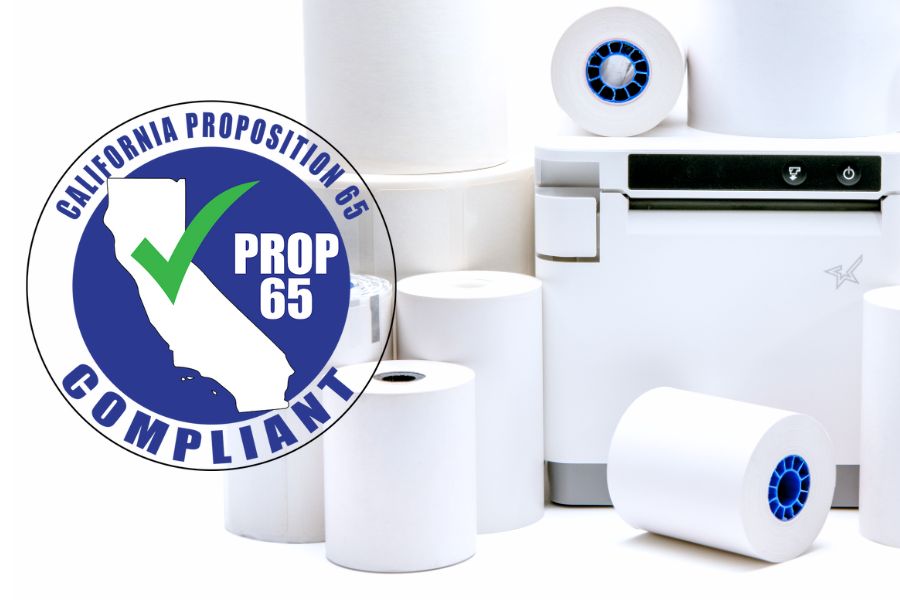
    • Prop 65 compliant paper

    Modern thermal media options may use alternative developers and materials designed to support evolving sustainability and compliance initiatives while maintaining the print quality and reliability businesses expect from thermal printing systems.

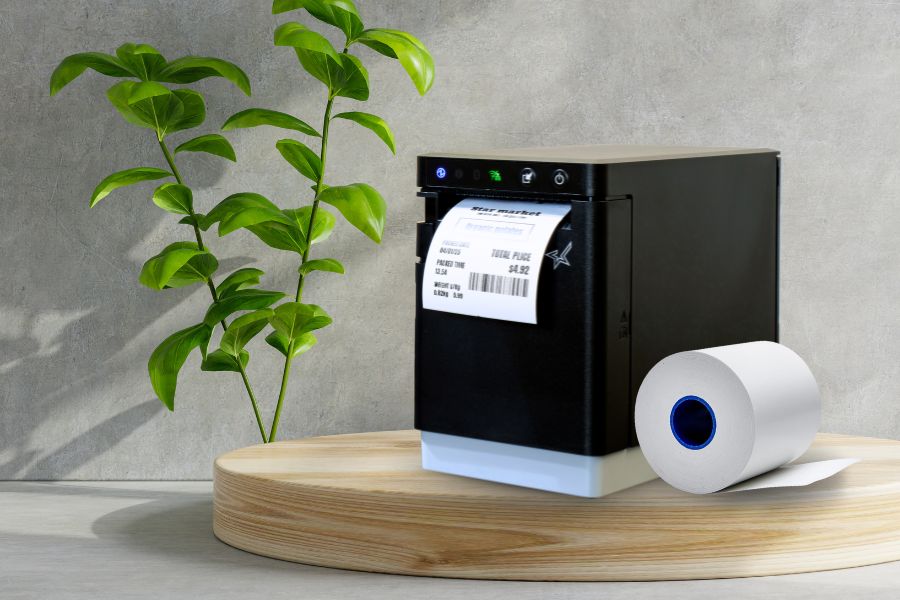
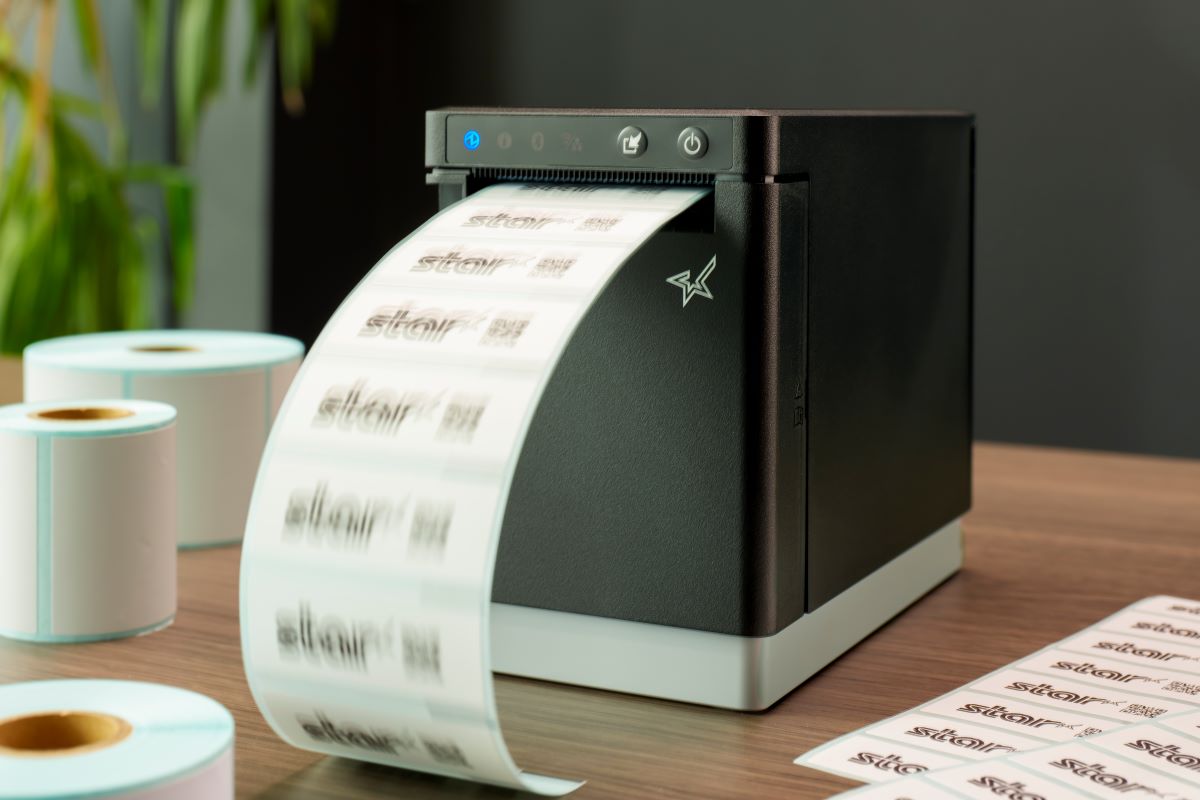
    Star Eco and Star Blue Eco media are produced using materials with no intentionally added BPA or BPS, supporting more mindful material selection across retail, hospitality, and foodservice operations.

    Why High-Contact Industries Are Paying Attention

    Thermal paper and labels are handled constantly throughout the day in many business environments, especially in industries where receipts, tickets, food labels, and packaging workflows are central to daily operations.

    As conversations around thermal media have evolved, many businesses have started evaluating whether receipt paper and labels contain added bisphenols such as BPA or BPS, particularly in workplaces where employees frequently handle thermal media throughout their shifts.

    This is especially relevant in industries such as:

    In response, many manufacturers now offer thermal paper and label media made without intentionally added BPA or BPS. In thermal media manufacturing, this generally means bisphenol-based developers are not intentionally used in the paper formulation itself, although trace amounts may still be possible due to raw material sourcing, manufacturing processes, or supply chain variables.

    Some media lines also include additional sustainability-focused features such as FSC-certified materials, recyclable paper options, and select products made without added Pergafast.

    Why Businesses Are Reevaluating Thermal Media

    The shift toward more sustainable thermal media is being driven by several factors, including:

    • Evolving state and regional regulations
    • Sustainability initiatives
    • Food safety and traceability programs
    • Procurement standardization
    • Consumer expectations around environmental responsibility
    • Operational consistency across multi-location businesses

    Several states have introduced or discussed restrictions related to thermal paper materials, including BPA and other chemicals commonly associated with receipt paper. Requirements vary by region, and businesses operating nationally are increasingly looking for media options that can support broader compliance readiness.

    For many operators, updating thermal paper and labeling supplies is also part of a larger operational strategy tied to:

    • Sustainable restaurant operations
    • Eco-friendly printing supplies
    • Order accuracy initiatives
    • Food labeling compliance
    • Waste reduction programs
    • Scalable POS hardware and labeling workflows

    Understanding Prop 65 and Thermal Paper Compliance

    California’s Proposition 65, formally known as the Safe Drinking Water and Toxic Enforcement Act, has become one of the most recognized compliance frameworks related to product material disclosures in the United States. Businesses that distribute products in California often evaluate whether materials align with Prop 65 requirements as part of their procurement process.

    For thermal paper and labels, operators may specifically look for:

    • Prop 65 compliant paper
    • No added BPA or BPS
    • Sustainable thermal receipt paper
    • FSC-certified media
    • Recyclable thermal paper options

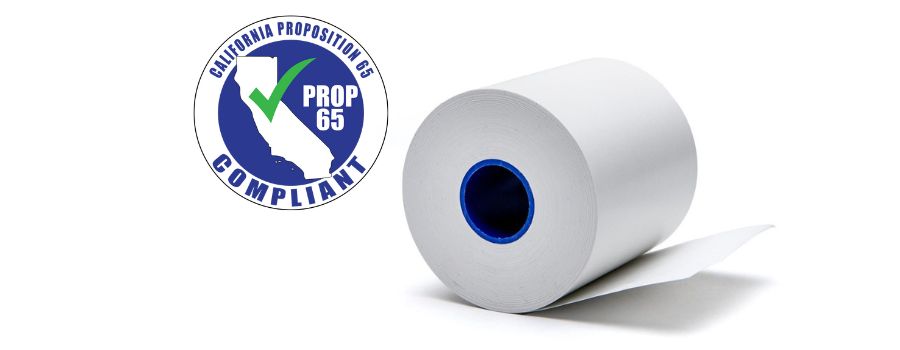
    Star Eco and Star Blue Eco paper lines are produced using materials with no added BPA or BPS and are designed to support Prop 65 compliant operations.

    Because regulations and material standards continue evolving, many businesses are proactively standardizing compliant thermal media across locations to simplify purchasing and support long-term operational consistency.
    Explore Proposition 65 Business Resources Here >

    How Modern Thermal Paper Works

    Modern thermal paper continues to deliver the fast, reliable printing performance businesses expect while supporting updated material standards and sustainability goals.

    Today’s thermal media can provide:

    • Clear, high-contrast printing
    • Reliable image retention
    • Compatibility with existing thermal receipt printers
    • Support for high-volume POS environments
    • Reduced material concerns compared to legacy thermal media

    Importantly, businesses do not typically need to replace existing thermal printers when transitioning to updated thermal paper or label media. Modern thermal receipt paper and labels are designed to work with standard thermal printing systems, including Star Micronics receipt and label printers.

    Some premium thermal media options also help:

    • Reduce paper dust
    • Maintain print head performance
    • Improve long-term printer reliability
    • Support warranty-compliant printer operation

    Star Blue Eco media is specifically engineered to optimize printer performance and support long-term reliability across demanding POS environments.

    Industries Transitioning to More Sustainable Thermal Media

    Retail & Hospitality

    Retailers and hospitality businesses continue evaluating eco-friendly receipt paper and sustainable labeling solutions as part of broader operational and customer experience initiatives.

    Restaurants & QSRs

    Restaurants increasingly rely on thermal labels for:

    • Grab-and-go labels
    • Catering labels
    • Food rotation labels
    • Order confirmation labels
    • Allergen label information
    • Traceability labels
    • Off-premise dining workflows

    Many QSR operators are also adopting linerless labels to support waste reduction and operational efficiency.

    Healthcare & Pharmacies

    Healthcare organizations often require reliable thermal printing for:

    • Prescription labeling
    • Patient-facing receipts
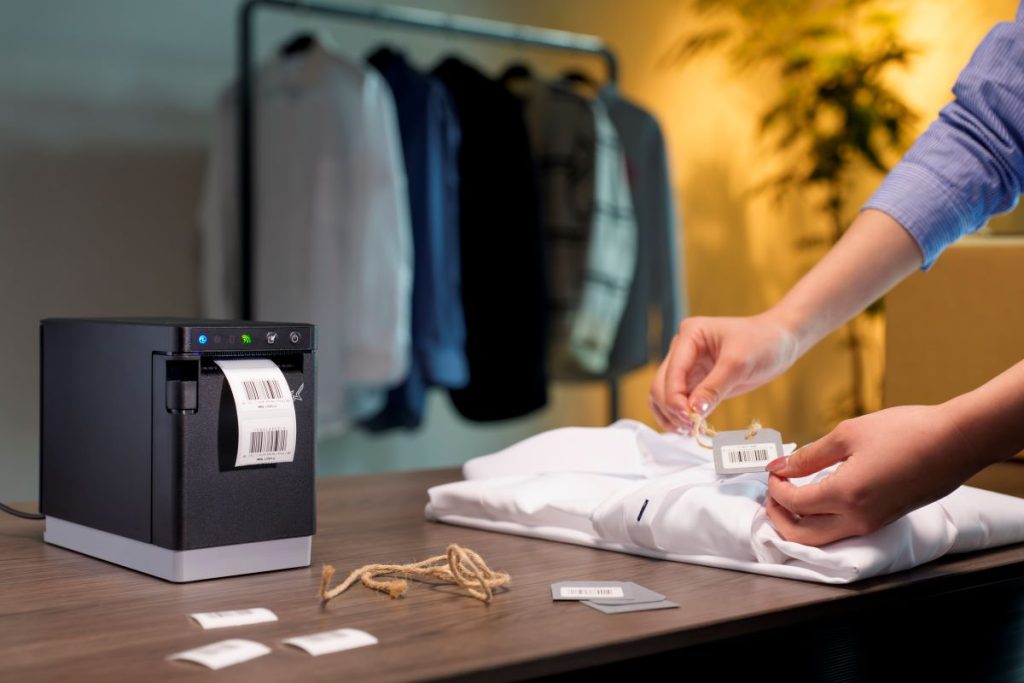
    • Barcode labels
    • Traceability workflows

    Grocery & Foodservice

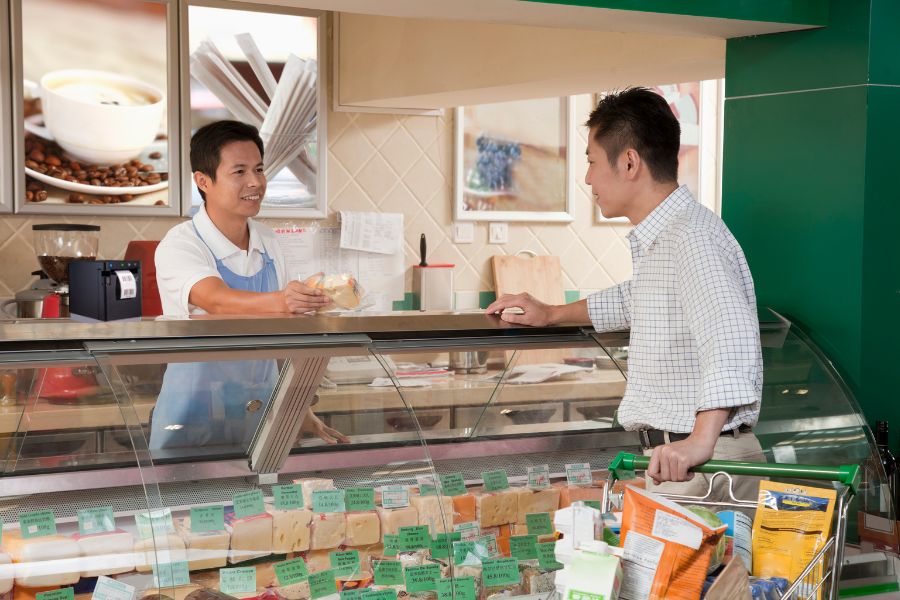
    Grocery stores and foodservice operations use thermal labels for:

    • Nutritional information labels
    • Inventory labels
    • Expiration date labels
    • Weight and serving size labels
    • Food identification labels

    What to Look for in Thermal Receipt Paper and Labels

    When evaluating thermal paper suppliers and labeling solutions, businesses should consider:

    Material Standards: Look for media produced using materials with no intentionally added BPA or BPS.

    Print Performance: Consistent thermal imaging and durable print quality help support reliable operations.

    Printer Compatibility: Thermal media should work seamlessly with existing POS printers and label printers.

    Sustainability Features: Some thermal media products offer:

    • FSC-certified materials
    • Recyclable thermal paper
    • Reduced packaging waste
    • No added Pergafast
    • Linerless labeling options

    Operational Reliability: Higher-quality thermal media can help reduce dust buildup and support long-term print head performance.

    Linerless Labels and Sustainable Labeling Workflows

    Linerless labels are becoming increasingly popular across restaurant, retail, and logistics environments because they help reduce liner waste while supporting flexible labeling workflows.

    Common linerless label applications include:

    • Order accuracy labels
    • Delivery bag labels
    • Product rotation labels
    • Barcode labels
    • Shelf labels
    • Grab-and-go labels
    • Catering workflows

    Star supports both linerless and linered label workflows across its media portfolio, including:

    • Repositionable linerless labels
    • Permanent linerless labels
    • Die-cut labels
    • Continuous linered labels

    These labeling solutions support modern restaurant workflows, cloud printing environments, and foodservice traceability initiatives.

    The Star Blue Eco Advantage

    Star Blue Eco is Star’s premium paper and thermal media line, designed to support reliable printing performance while aligning with evolving sustainability and operational standards.

    Key advantages include:

    • Produced using materials with no added BPA or BPS
    • Prop 65 compliant
    • Premium-grade thermal coating for consistent print quality
    • Designed to optimize printer performance
    • Helps support long-term print head reliability
    • Signature blue core for fast identification
    • Select options include FSC-certified materials
    • Select options include recyclable thermal paper
    • No added Pergafast on select SKUs

    Star Blue Eco media is designed for receipt printers, label printers, linerless labeling applications, and scalable POS environments across retail, hospitality, and foodservice industries.
    Perfecting QSR Delivery with POS Scales & Advanced Labeling

    Learn how QSR operators are transforming delivery with weight-based verification and advanced labeling solutions.

    Ready to find out more about Star Blue Eco eco-friendly thermal paper and labels?

    Frequently Asked Questions About Bisphenol-Free Thermal Paper

    What is bisphenol-free thermal paper?

    “Bisphenol-free thermal paper” generally refers to thermal paper formulated without bisphenol-based developers such as BPA or BPS. However, terminology, testing methods, and formulation standards can vary across manufacturers and suppliers.

    In some cases, manufacturers may use phrases such as “no intentionally added BPA or BPS” to describe thermal media formulations. This reflects the fact that trace amounts may still be possible due to manufacturing, raw material, or supply chain variables, even when bisphenols are not intentionally used in the formulation itself.

    Is BPA-free thermal paper the same as BPS-free paper?

    Not necessarily. BPA-free thermal paper simply means BPA was not intentionally used in the formulation, but some products may still use BPS or other alternative developers.

    Because terminology and material standards can vary across suppliers, many businesses now evaluate broader claims around added bisphenols and overall material composition rather than focusing on a single chemical term alone.

    What is Prop 65 compliant thermal paper?

    Prop 65 compliant thermal paper refers to receipt paper or labels designed to align with California Proposition 65 requirements related to listed chemicals and exposure warnings. Many businesses use Prop 65 compliant thermal media to support purchasing consistency across multiple states and locations.

    Can thermal paper be recyclable?

    Some thermal paper products are designed to support recyclability initiatives, though recyclability can depend on the specific paper formulation and local recycling capabilities. Some manufacturers also offer FSC-certified paper and sustainability-focused media options designed to support broader environmental initiatives.

    Star Micronics offers select SKUs of Star Blue Eco thermal receipt paper that are 100% recyclable.

    What is Pergafast in thermal paper?

    Pergafast is a chemical developer that has been used in some thermal paper formulations as an alternative to BPA or BPS. As thermal media standards continue evolving, some manufacturers now offer paper products made without added Pergafast as part of broader sustainability and material selection initiatives.

    Businesses evaluating thermal paper may review whether products contain added BPA, BPS, Pergafast, or other developers depending on their internal standards, sustainability goals, or regulatory considerations.

    What does FSC-certified paper mean?

    FSC-certified paper refers to paper products certified by the Forest Stewardship Council (FSC), an organization that promotes responsible forest management practices.

    FSC-certified thermal paper and labels are sourced from forests and supply chains that meet specific environmental, social, and sustainability standards. Many businesses look for FSC-certified media as part of broader sustainability, sourcing, and ESG initiatives.

    Do eco-friendly thermal paper rolls work with existing POS printers?

    Yes. Most modern thermal paper and label products are designed to work with standard thermal receipt printers and POS systems without requiring hardware changes. Businesses can typically transition to updated thermal media while continuing to use their existing printing equipment.

    What are linerless labels?

    Linerless labels are adhesive labels that do not use a traditional backing liner. They help reduce liner waste, allow for more labels per roll, and support flexible custom-length printing across restaurant, retail, and logistics workflows.

    Why are restaurants using more thermal labels?

    Restaurants increasingly use thermal labels to support:

    • Order accuracy
    • Food traceability
    • Off-premise dining workflows
    • Grab-and-go operations
    • Catering workflows
    • Food rotation and expiration labeling
    • Allergen and compliance labeling

    As delivery and mobile ordering continue growing, labeling has become a more important part of restaurant operations and packaging workflows.

    What should businesses look for in sustainable thermal media?

    Businesses evaluating thermal paper and labels often consider:

    • Material composition and formulation claims
    • Printer compatibility
    • Print quality and durability
    • Prop 65 compliance
    • FSC-certified materials
    • Recyclable paper options
    • Linerless labeling capabilities
    • Long-term media consistency and reliability

    Many businesses are also looking for suppliers that clearly explain how sustainability and material claims are defined across their product lines.

    Originally published on October 17, 2025, by the author.
  • Best Ways Restaurants and Retailers Are Using Die-Cut Labels

    Best Ways Restaurants and Retailers Are Using Die-Cut Labels

    Linerless labels are grabbing headlines in foodservice and retail—and for good reason. They cut down on waste, allow flexible label lengths, and streamline high-volume packaging and delivery. But even as linerless grows, die-cut labels remain the industry standard for many workflows where consistency, compliance, and clarity are non-negotiable.

    From food prep to retail shelves, die-cut labels provide pre-sized, uniform labeling that keeps operations accurate and compliant. And with the right die-cut label printer, businesses can ensure every label is crisp, clear, and ready to perform without slowing down their teams.

    That’s why Star developed the mC-Label2 LBL models, compact label printers purpose-built for die-cut media. Available with X4 connectivity or USB/LAN only, these models bring precision, efficiency, and flexibility to the everyday labeling tasks restaurants and retailers rely on most.

    Why Die-Cut Labels Still Matter

    While linerless brings flexibility, die-cut labels remain indispensable in operations where uniformity is key. Their pre-sized format ensures every label is consistent, whether it’s tracking expiration dates, displaying prices, or tagging inventory.

    Die-cut also shines in batch printing. Operators can print a stack of labels all at once for food prep, pricing, or product rotation, so staff always have exactly what they need on hand. This predictability reduces downtime and helps teams move quickly during peak periods.

    And with fixed shapes and sizes, die-cut labels help businesses maintain a consistent, professional look across all products, reinforcing customer trust. For many restaurants and retailers, die-cut remains the most cost-effective, reliable, and standardized choice for day-to-day labeling.

    The mC-Label2 LBL die-cut label printer is ideal for retail, food service, and cannabis, able to print ultra-precise with 300 dpi.

    Additional Reasons Die-Cut Labels Are Still Common

    • Standardization: Many QSRs, groceries, and retailers already work with standardized label sizes. Die-cut labels fit seamlessly into those systems.
    • Prepared in Advance: Staff can keep labels printed and ready to go for busy shifts.
    • Branding Consistency: Pre-cut shapes allow logos, graphics, and product details to remain uniform across every container or shelf.
    • Cost Control: For businesses that don’t need variable lengths, die-cut labels are a predictable, budget-friendly option.

    In short, linerless may offer flexibility, but die-cut labels continue to deliver the consistency and standardization most restaurants and retailers rely on every day.

    Best Uses for Die-Cut Labels in Restaurants

    In foodservice, die-cut labels support the workflows that keep kitchens compliant and customers confident:

    > Food Prep & Rotation

    Small die-cut prep labels track expiration dates, ingredients, and FIFO systems.

    > Nutritional & Allergen Labels

    Uniform labels display critical information in a way customers can trust.

    > Order Component Labels

    Perfect for sides, drinks, and add-ons in large catering or takeout orders, reducing mix-ups before handoff.

    With 300 dpi precision, the mC-Label2 LBL die-cut label printer ensures every label is crisp and legible, whether it’s a barcode or fine-print allergen information.

    Visit our Restaurant & Food Service Solutions Page for more >

    Best Uses for Die-Cut Labels in Retail

    Retail environments also depend heavily on die-cut label printers to keep shelves, products, and inventory in order:

    > Barcode Labels

    Fast, accurate scanning for point of sale and stock management.

    The mC-Label2 LBL die-cut label printer is ideal for retail, food service, and cannabis, able to print ultra-precise with 300 dpi.

    > Pricing Labels

    Clear, consistent sizing across shelves, tags, and items.

    > Product Identification Labels

    In grocery and c-stores, die-cut labels fit grab-and-go packaging like deli items or drinks. In non-food retail, they’re just as useful for tagging electronics, apparel, or specialty goods.

    > Specialty Labels (like Cannabis)

    Compliance-driven industries require precise, legible labels (sometimes with tiny QR codes) to display THC content, warnings, or tracking barcodes.

    Visit our Dispensary Solutions Page for more >

    Why the mC-Label2 LBL is Built for Die-Cut

    When it comes to die-cut label printers, the mC-Label2 LBL models are purpose-built to do the job right.

    • Die-Cut Only Design: Simplifies media use and reduces errors (can print receipts, too).
    • 300 dpi Resolution: Sharp text, barcodes, and logos, even on small labels.
    • Compact Size: Fits easily into kitchens, prep areas, retail counters, or against walls.
    • Front-Loading Design: Roll swaps are quick, space-saving, and hassle-free.
    • Connectivity Options: Choose between X4 connectivity (USB/LAN/Bluetooth/Wi-Fi) or streamlined USB/LAN only models to match your setup.

    For operators who don’t need linerless, the LBL models are a dedicated solution for reliable, professional die-cut labeling.

    mC-Label2 Multifunction Printer

    The mC-Label2 packs powerful features into a compact, front-loading design, including 300 dpi resolution, support for linerless, die-cut, receipt, and continuous media, and connectivity options like USB-C, LAN, WLAN, Bluetooth, and Apple MFi-certified pairing (X4 models only).

    Explore the mC-Label2 >

    Easy Integration for Software Developers

    For software providers, supporting die-cut labeling shouldn’t add complexity. Star makes it simple to integrate the mC-Label2 LBL into POS, inventory, or kitchen display systems (KDS) with robust SDKs, APIs, and cross-platform compatibility.

    That means developers can give their customers exactly what they want: a die-cut label printer that’s reliable, easy to deploy, and tailored for restaurant and retail workflows. With Star, integration is fast, maintenance is minimal, and scaling across multiple locations is seamless.

    Explore Star Micronics Industry-Leading Printing & Cloud Technology

    Find out what Star’s technologies can do for your business success with this free catalog.

    Die-Cut Labels: Still Essential, Now Smarter

    Die-cut labels remain a vital part of restaurant and retail operations, from prep and rotation to pricing and packaging. With the mC-Label2 LBL, operators get a die-cut label printer built for precision, speed, and ease of use. For developers, Star provides the SDKs and APIs to integrate seamlessly with POS and KDS systems, so their customers get the labeling solutions they expect.

    The payoff is simple: faster operations, consistent presentation, and stronger customer confidence—all powered by Star.

    Explore the mC-Label2 LBL die-cut label printer today and see how smarter labeling starts with Star.

  • Star Micronics Showcases the Latest POS & Labeling Innovations at VARTECH 2025

    Star Micronics Showcases the Latest POS & Labeling Innovations at VARTECH 2025

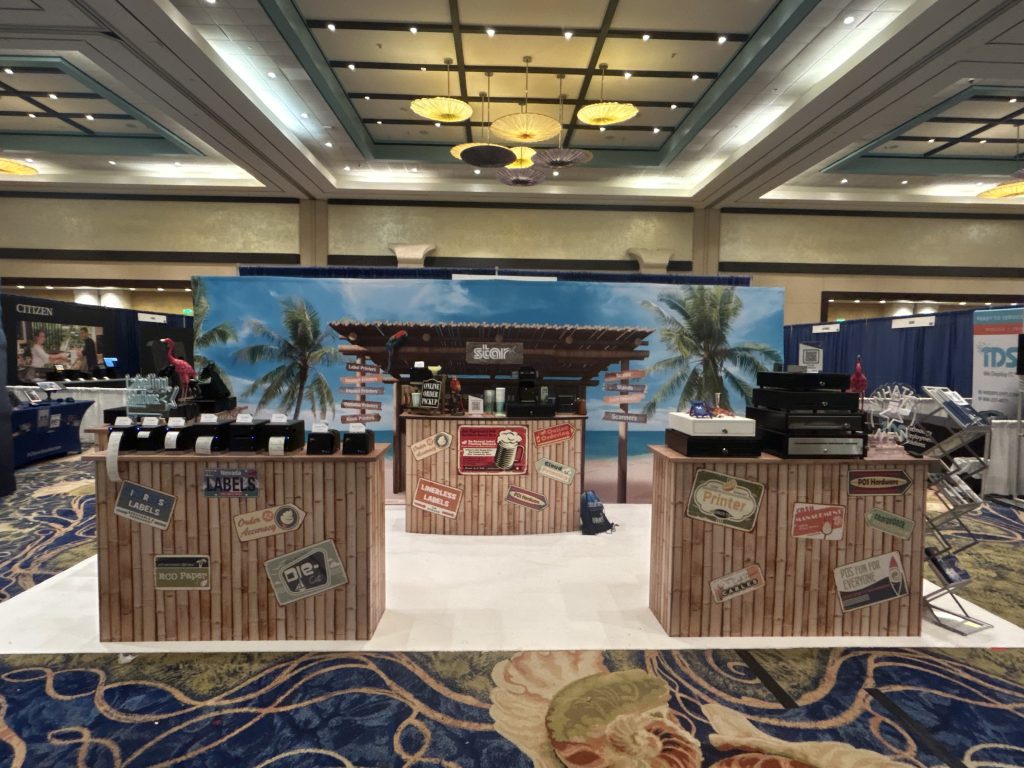
    Step into Booth 311 to experience Star’s full lineup: printers, cash drawers, BPA/BPS-free Star Blue Eco paper and labels, and next-gen cloud solutions.

    Nassau, Bahamas – September 15-16, 2025 – Star Micronics, a global leader in point of sale (POS), labeling, and cloud technology, is pleased to announce its participation in VARTECH 2025, BlueStar’s premier channel partner event. The conference takes place September 15–16, 2025, at the Atlantis Resort in Nassau, Bahamas, where Star will welcome attendees at Booth 311.

    At VARTECH 2025, Star will demonstrate how independent software vendors (ISVs), value-added resellers (VARs), and technology partners can accelerate business growth by integrating Star solutions into their portfolios. Visitors will see live demos of Star’s latest products and services, including:

    • The mC-Label2 Multimedia Printer: A compact, front-loading, 2-inch printer with ultra-sharp 300 DPI resolution. Capable of printing receipts, tags, linerless labels, and die-cut labels, the mC-Label2 is built for tight spaces and versatile use. The X4 models offer all four connectivity options (USB, LAN, Bluetooth, and Wi-Fi) while featuring One Touch Label for instant, stored label printing.
    • The TSP143IV X4 and SK X4 Series: Advanced thermal printers with four connectivity interfaces, Bluetooth-assisted Wi-Fi setup, and compatibility with CloudPRNT Next for fast, reliable cloud printing. The SK X4 model supports removable linerless sticky labels, making it perfect for food prep, online ordering, and retail/BOPIS workflows.
    • StarIO.Online: A fully managed cloud printing service that eliminates the need for servers or custom infrastructure. From one dashboard, businesses and ISVs can monitor printer status, push remote updates, and manage devices across multiple locations, reducing overhead while improving multi-location visibility and scalability.
    • CD5 Max Series Cash Drawers: Star’s most durable, premier cash drawer line, built for cash-heavy retail and hospitality environments. With all-steel construction, dual printer-driven and USB interfaces, a five-year warranty, and multiple accessory options, the CD5 Max delivers unmatched reliability and flexibility.
    • Star Blue & Star Blue Eco Receipt Paper and Label Rolls: Solutions providers can meet the demand for eco-friendly, BPA/BPS-free, and Prop 65-compliant receipt paper and labels with Star Blue Eco. It’s one of the products in Star’s full line of consumables designed for optimal performance and compatibility with Star printers.

    Star Micronics Showcases the Latest POS & Labeling Innovations at VARTECH 2025
    Step into Booth 311 to experience Star’s full lineup!

    As a trusted BlueStar partner, Star Micronics is proud to support VARTECH 2025 and its mission of connecting distributors, resellers, and software providers. Attendees are encouraged to stop by Booth 311 to see the latest Star innovations in action and schedule one-on-one demos with Star representatives.

    To book a demo or for more information, contact sales@starmicronics.com.

    Love Industry News? Explore our Podcast:

    Star Micronics logo, point-of-sale (POS) hardware and technology company.

    Star Micronics, a world leader in point-of-sale (POS), has designated a portfolio of printing, secure cash management, self-service, and customer engagement solutions for any retail or hospitality establishment. Embracing the mPOS wave, Star’s SDKs allow developers to utilize Star printers in tandem with Android™, iOS, iPad®, and iPhone® devices to generate receipts, labels, Chit, and tickets. Star Micronics is always leading and always innovating, creating cloud-based printing solutions, including CloudPRNT Next, StarIO.Online, and Star Cloud Services, with AOA support and MFi connectivity. Star also has a wealth of peripherals, including 2D barcode scanners, scales, tablet display stands, and more. Visit starmicronics.com or follow us on Facebook, X, YouTube, or LinkedIn to learn more. 

    Media Contact:

    Christin Dorner
    Star Micronics America, Inc.
    cdorner@starmicronics.com
    848-216-3318

  • Prop 65 and Thermal Paper: What Retailers and Restaurants Must Know

    Prop 65 and Thermal Paper: What Retailers and Restaurants Must Know

    If your business handles thermal paper, whether it be receipts, kitchen tickets, or labels, Proposition 65 is not just a California issue anymore. Although Prop 65 is a California law, its reach is already stretching nationwide. Many companies are reformulating products or adjusting labeling strategies across the board to meet the standards. Not understanding the rules is not only risky health-wise, but it could also mean fines, lawsuits, or damage to your brand’s reputation.

    Let’s break down what Prop 65 is, why it matters for thermal paper, and how retailers and restaurants everywhere can stay compliant.

    What Is Prop 65?

    Proposition 65, officially called the Safe Drinking Water and Toxic Enforcement Act of 1986, is California’s way of keeping consumers informed about potential exposure to harmful chemicals. The law requires businesses to provide “clear and reasonable” warnings if their products expose consumers to substances known to cause cancer, birth defects, or other reproductive harm.

    While it’s a California law, its influence extends far beyond the state. Many national brands and businesses choose to comply everywhere because consistency is simpler than running two different playbooks.

    Why Prop 65 Matters for Receipts and Thermal Paper

    Here’s where it connects to your day-to-day: thermal paper.

    Traditional thermal paper has often used chemicals like BPA and BPS to develop printed text. These substances are on California’s Prop 65 list. That means something as ordinary as handing a customer a receipt or printing a kitchen ticket could technically count as “exposure.”

    For retailers and restaurants, that’s a big deal. Customers touch receipts. Employees handle rolls all day. It’s more than compliance, it’s about health and safety.

    And it doesn’t stop with receipts. Paper-based touchpoints like order confirmation labels, allergen label information, grab-and-go labels, and nutritional information labels may also be impacted if the wrong media is used.

    Star Micronics offers non-toxic, BPA/BPS phenol free, Prop 65 compliant thermal receipt paper and labels.

    Prop 65 Compliance Requirements for Businesses

    If your receipts, labels, or kitchen tickets contain Prop 65–listed substances, you may need to provide visible warnings. The requirements include:

    • Clear communication that a listed chemical is present
    • Placement of warnings where customers and employees will see them
    • Consistency across all impacted locations

    Non-compliance can result in penalties that add up fast. In addition to fines, businesses risk lawsuits and reputational harm, which are two things every operator wants to avoid.

    What Prop 65 Means for Retail and Restaurants

    Prop 65 compliance is not just a back-office concern. It shows up in everyday touchpoints where customers and staff interact with paper.

    > For Retailers

    Receipts are the obvious starting point, but compliance extends far beyond the checkout counter. Retailers also rely on:

    • Barcode labels for pricing and scanning
    • Inventory labels for stock management and traceability
    • Product rotation labels to manage freshness and reduce shrink
    • Loyalty coupons and promotional tickets handed directly to customers

    Each of these is a potential source of exposure if the wrong thermal paper is used.

    Star Micronics offers the full suite of retail POS hardware solutions for today's businesses.

    > For Restaurants and QSRs

    Foodservice operations depend heavily on thermal paper for smooth workflows and accurate orders. Prop 65 compliance comes into play with:

    • Kitchen tickets that keep back-of-house organized
    • Catering labels for large orders and off-premise service
    • Weight and serving size labels that provide critical portioning information
    • Food identification labels to separate allergen-sensitive items or specialty orders
    • Special product offerings labels and nutritional information labels that help guests make informed choices

    From grab-and-go stations to off-premise dining, labels are everywhere in modern foodservice. Each printed piece is a small but important part of both compliance and customer trust.

    Restaurant POS Solutions

    How to Choose Prop 65-Compliant Paper

    The solution is simple: choose the right media. Look for thermal paper that is:

    • BPA-free and BPS-free (phenol-free)
    • Tested for Prop 65 compliance
    • Verified by a trusted supplier

    The right paper doesn’t just protect your business legally. It also reassures your customers and employees that you take their safety seriously, which makes them feel good about doing business with your brand.

    The Star Micronics Commitment

    Star is committed to anticipating industry trends and staying ahead of them. That’s why we offer thermal paper options that are Prop 65 compliant, BPA-free, BPS-free, and non-toxic. These media choices are designed for receipts, linerless labels, and the wide variety of labeling applications retailers and restaurants rely on every day.

    Interested in learning more about linerless label paper? Read about the different adhesive strengths here, or find out why linerless may be a better alternative for your business.

    Prop 65 and Thermal Paper: Final Thoughts

    Prop 65 may feel like just another piece of red tape, but in reality, it’s about protecting people and protecting your brand. If your business prints receipts, kitchen tickets, or labels, compliance isn’t just the smart move; it’s the safe one.

    With Star, businesses can simplify compliance by choosing trusted solutions for Prop 65 and thermal paper in both retail and restaurant environments. Connect with us to explore your options and keep your business ahead of the curve.

    Ready to get your business Prop 65 compliant thermal paper and labels?

  • Star Micronics Exhibits Innovative Retail Solutions at RSPA RetailNOW 2025

    Star Micronics Exhibits Innovative Retail Solutions at RSPA RetailNOW 2025

    RSPA Members can see and demo Star printers, cash drawers, BPA/BPS-free Prop 65-compliant paper and labels, and cloud solutions in Booth 411 at RetailNOW 2025.

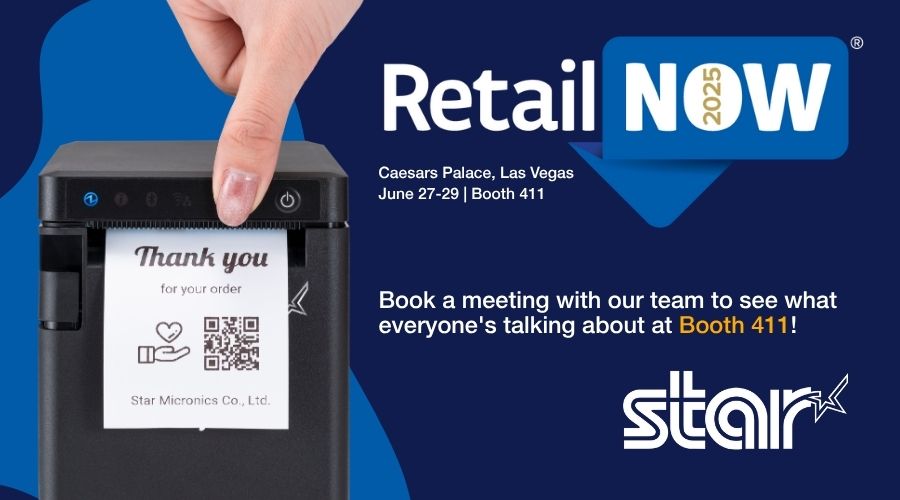
    Las Vegas, NV – July 17, 2025 – Star Micronics, a trailblazer in point of sale (POS), cloud printing, and retail technology solutions, is excited to announce participation in RetailNOW 2025, the annual Retail Solutions Provider Association (RSPA) trade show, education conference, and networking event. RetailNOW will take place from July 27 to 29, 2025, at Caesars Palace in Las Vegas, and attendees can meet with the Star team in Booth 411.

    Star will demonstrate how independent software vendors (ISVs), value-added resellers (VARs), and other solutions providers can grow their businesses by adding Star products and services to their portfolio. At RetailNOW, Star will highlight its retail and hospitality solutions, including:

    • The mC-Label2 Multifunction Printer: This front-loading, 2-inch label printer is designed for compact stations, delivering ultra-sharp 300 DPI resolution in a wide range of print widths. It prints traditional and linerless labels, tags, die-cut labels, and receipts, all from one device. The mC-Label2 X4 models feature all four connectivity ports (USB, LAN, Bluetooth, and Wi-Fi) in a single interface, providing maximum flexibility. Like the popular mC-Label3 multimedia printer, it features the One Touch Label function that streamlines workflows.
    • The TSP143IV X4 and SK X4 Series: This line of advanced thermal printers features all four modern interfaces, effortless Wi-Fi connectivity, and support for linerless labels (SK X4 model). These printers are perfect for online ordering, labeling, and POS environments and redefine efficiency and scalability.
    • StarIO.Online: StarIO.Online is a fully managed cloud printing service that gives businesses and ISVs the ability to monitor and manage their entire fleet of Star printers from a single dashboard—no servers or custom infrastructure required. With real-time device monitoring, remote updates, and multi-location visibility, it’s the simplest way to bring Star printers into a cloud-first ecosystem.
    • New CD5 Max Series Cash Drawers: As the highest-tier model in Star’s cash drawer lineup, the CD5 Max Series sets a new standard for secure, heavy-duty cash management. Designed for cash-heavy environments, these drawers combine rugged durability with flexible configurations, like dual printer-driven and USB connectivity options. Backed by Star’s five-year warranty and full range of accessories, the CD5 Max helps position Star as the new leader in modern cash drawer solutions for retail and hospitality.
    • Star Blue Receipt Paper and Label Rolls: Solutions providers can meet the demand for eco-friendly, BPA/BPS-free, and Prop 65-compliant receipt paper and labels with Star Blue Eco. It’s one of the products in Star’s full line of consumables designed for optimal performance and compatibility with Star printers.

    Star Micronics is a long-time RetailNOW sponsor and an RSPA vendor member, committed to the success of its channel partners. Technology and solutions providers attending RetailNOW 2025 are encouraged to schedule private demos with Star representatives to get a closer look at these cutting-edge solutions.

    Schedule private demos with Star representatives by contacting sales@starmicronics.com.

    Love Industry News? Explore our Podcast:

    Star Micronics logo, point-of-sale (POS) hardware and technology company.

    Star Micronics, a world leader in point-of-sale (POS), has designated a portfolio of printing, labeling, secure cash management, and customer engagement solutions for any retail or hospitality establishment. Embracing the mPOS wave, Star’s SDKs allow developers to utilize Star printers with Android™, iOS, iPad®, and iPhone® devices to generate receipts, labels, Chit, and tickets. Star Micronics is always leading and always innovating, creating cloud-based printing solutions, including CloudPRNT and Star Cloud Services, with AOA support and MFi connectivity. Star also has a wealth of peripherals, including 2D barcode scanners, scales, tablet display stands, and more. Visit starmicronics.com or follow us on Facebook, Instagram, X, YouTube, or LinkedIn to learn more.

    Media Contact:

    Christin Dorner
    Star Micronics America, Inc.
    cdorner@starmicronics.com
    848-216-3318

  • Eco-Friendly Receipt Paper: Non-Toxic, BPA-Free, and Prop 65 Compliant

    Eco-Friendly Receipt Paper: Non-Toxic, BPA-Free, and Prop 65 Compliant

    As you evaluate your company’s impact on health, safety, and the environment, an important factor to consider is the thermal receipt paper you’re using—specifically whether it’s standard or eco-friendly receipt paper.

    California’s Proposition 65 law requires businesses to provide warnings about significant exposures to chemicals known to cause cancer, birth defects, or other reproductive harm. Traditional thermal paper often contains chemicals on that list—making compliance and customer safety a growing concern.

    It’s easy to overlook the paper rolls that your employees load into receipt printers as a source of harmful chemicals. However, traditional thermal receipt paper often contains toxic chemicals, including bisphenols and microplastics, that can impact your employees’ and your customers’ health. Switching to eco-friendly paper will mitigate these risks and help you establish sustainable printing processes.

    What You Can Come in Contact With When You Touch a Receipt

    The make-up of thermal receipt paper varies from brand to brand, but it can contain the following harmful chemicals: 

    Bisphenol S (BPS)

    Research by the Center for Environmental Health found that holding a receipt from a thermal printer for only 10 seconds results in absorbing enough BPS to exceed California’s Prop 65 thresholds. Plaintiffs are using the research as evidence in legal action seeking to force retailers to stop using paper coated with BPS, an easily absorbed chemical linked to cancer and reproductive issues. 

    Bisphenol A (BPA)

    Thermal receipt paper can also contain BPA to support heat-activated printing. Using this chemical is banned in many countries and several U.S. states for use in certain products like beverage cups and food containers. Like BPS, BPA is linked to reproductive system issues and other health concerns. Research by The Ecology Center found that BPA is decreasing in receipts in the U.S. However, unfortunately, BPS is taking its place, most likely because merchants aren’t aware of their BPA-free paper or phenol-free alternatives.

    Microplastics

    Coatings used on thermal receipt paper, like polyethylene (PE) and ethylene vinyl alcohol (EVOH), do not decompose and contribute to microplastic pollution. The mounting problems that microplastics create in the environment and population health require finding an eco-friendly paper alternative.

    Get Star Blue Eco paper and labels from Star Micronics for BPA-free, non-toxic, Prop 65-compliant confidence.

    Why You Need to Switch to Eco-Friendly Paper Now

    Awareness is growing around the health and environmental risks linked to traditional thermal receipt paper. Organizations and advocacy groups are encouraging businesses to switch to safer, non-toxic alternatives, and some retailers are already making changes in response to consumer demand and compliance guidelines. Now is a smart time to evaluate your paper sources and explore eco-friendly receipt options that align with both customer expectations and long-term sustainability goals.

    Star Offers High-Performance, Non-Toxic Paper

    With decades of experience in thermal printing, Star Micronics recognized the growing need for eco-friendly receipt paper options. After extensive research and development, we introduced the Star Blue Eco line—featuring phenol-free thermal technology that supports a safer, healthier environment and more sustainable printing.

    All products in the Star Blue Eco line are California Proposition 65-compliant and deliver high-quality thermal printing without BPA or BPS coatings.

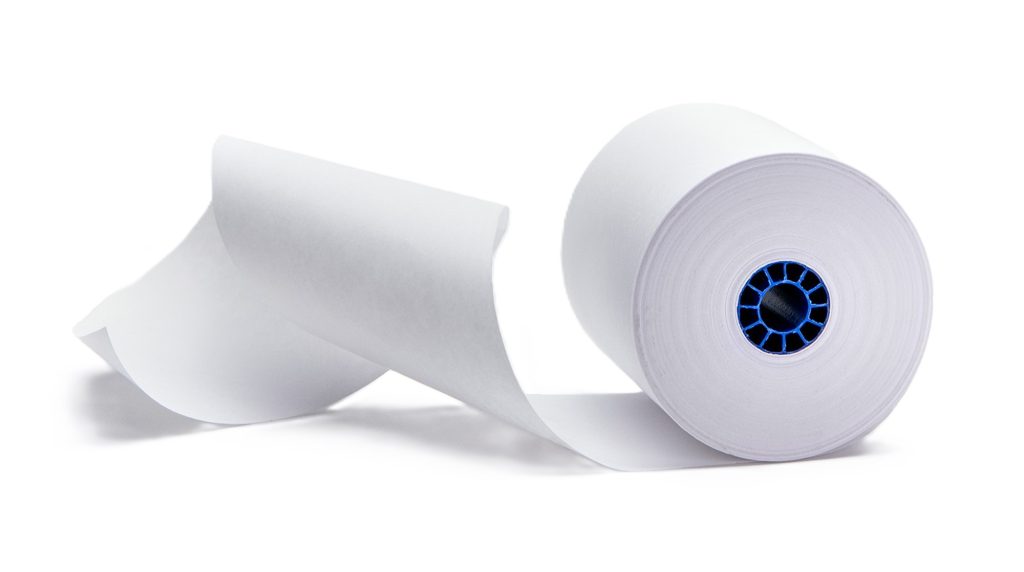
    Star Blue thermal paper rolls by Star Micronics. Receipt, linerless, sticky, traditional, permanent, thermal, bond, label.
    Star Blue Eco paper and labels are non-toxic, BPA-free, and Prop 65-compliant.

    Switching to phenol-free receipt paper is a small but meaningful step. It signals to your customers that you care about their health, safety, and the environment. While any merchant can benefit, this is especially important in retail settings where customers may hold a receipt for several minutes—whether waiting to make a return or pick up an online order.

    And in restaurants and QSRs, where receipts can come into contact with food containers, utensils, or even food directly, using non-toxic paper shows you’re committed to safety at every step. It’s the right thing to do—and it could also build stronger customer loyalty.

    Additional Steps to Take Toward More Sustainable Printing

    Using non-toxic paper is only one step you can take to create more sustainable printing practices. Consider these additional actions that can decrease your company’s carbon footprint and overall impact on the environment.

    Energy-Efficient Printers

    Choosing Energy Star-certified energy-efficient printers lowers demand for energy and conserves resources for other vital needs. An added benefit is that using less energy means lower utility bills. 

    Linerless Labels

    Linerless labels have no backing to remove. There is no waste, and they even save time since employees can apply them more quickly. Linerless label rolls also contain up to 40% more labels than rolls of traditional labels, which means a company can store more at one time. That can mean fewer orders and deliveries, saving fuel and emissions from transportation.

    Efficient Connectivity with the MQTT Protocol

    Ensuring that your printers communicate efficiently with your IT environment can contribute to more sustainable and cost-effective printing infrastructure. The MQTT protocol, used in Star’s CloudPRNT Next, is lighter and more efficient than traditional methods like HTTP. It transmits data only when needed, reducing unnecessary network traffic, server load, and bandwidth consumption—especially beneficial for multi-location or high-volume printing environments.

    Learn the “The Answers You Need to Make an Informed Decision About Cloud POS Services” here >

    Make a Commitment to Sustainable Printing

    Small changes—like switching to eco-friendly receipt paper—can have a lasting impact on your customers, your staff, and the environment. As regulations tighten and consumer expectations rise, now is the time to take a proactive approach to safer, smarter printing.

    The 5 Best Star Receipt Printers for Retail, Restaurants, and More

    Explore top-rated thermal receipt printers designed for POS systems in every environment.

    Talk to our experts about BPA-free Star Blue Eco:

  • The Hidden Cost of Bad QSR Labeling in Quick Service Operations

    The Hidden Cost of Bad QSR Labeling in Quick Service Operations

    Today’s quick-service restaurants (QSRs) are more complex than ever. Between mobile orders, delivery apps, kiosks, drive-thrus, and in-store traffic, your team is juggling a high-speed, high-stakes environment.

    That’s why QSR labeling is now a critical part of modern restaurant operations—keeping order accuracy high, workflows smooth, and customers satisfied. But if your labeling process is outdated or overlooked, it could be quietly draining your profits and damaging your brand.

    The Real Costs of QSR Labeling Mistakes

    Using the wrong label can slow down restaurant operations, but it can also hurt the bottom line. Poor QSR labeling can negatively impact profitability and hinder business growth in several ways. 

    > Order Mix-Ups & Customer Frustration

    Restaurants implement QSR labeling solutions to communicate order details, including special requests or allergy alerts, to food prep stations. Labels also indicate to the expeditor where the order will be sent when it’s ready, whether to the drive-thru, the front counter, for online order pickup, or to a delivery driver. 

    If the information on the label is incorrect or if the label does not remain in place throughout the process, order accuracy suffers, and both customer satisfaction and food safety are compromised. You must remember that getting every order right is essential. Research by customer service solution provider Simplr found that 51% of customers will not return after a single negative experience.

    > Operational Slowdowns and Excess Waste

    Manually labeling with handwritten notes, tape, and stickers is slow and unreliable. An employee in a food prep area can misread a scribbled note, leading to the wrong items being prepared in the wrong way. It slows down fulfillment, which customers waiting in line during peak times at the drive-thru or pickup counter won’t tolerate. 

    Subpar order accuracy rates also lead to a high volume of food waste. U.S. restaurants generate between 22 and 33 billion pounds of food waste each year, accounting for approximately 15% of the country’s total food waste sent to landfills. Minimizing food waste is key to operating profitably and sustainably. Optimizing QSR labeling processes and improving accuracy rates can decrease food waste, wasted time, and unnecessary resource consumption.

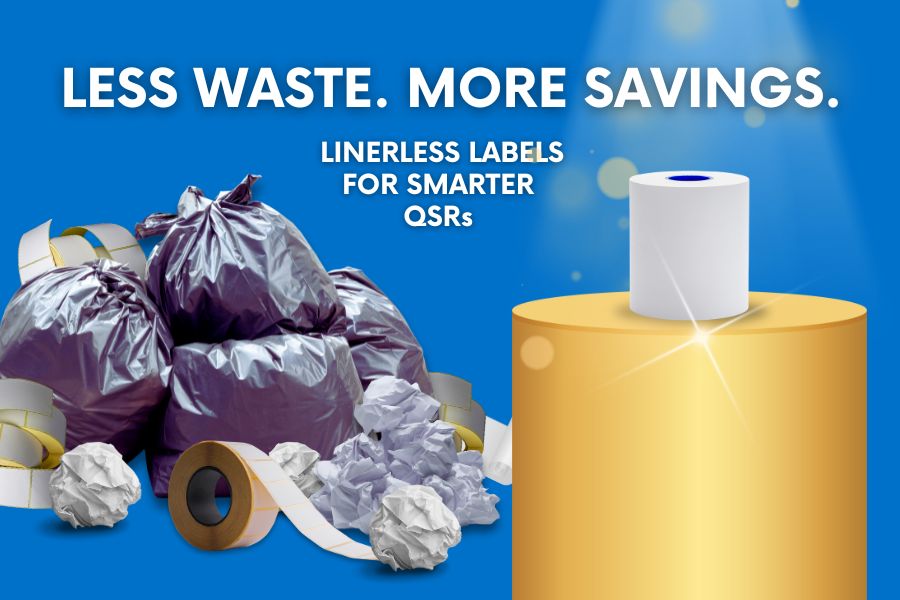
    Traditional labels with liners also generate unnecessary waste. Backings pile up quickly in high-volume environments, creating more trash to manage and dispose of. In a time when consumers increasingly prioritize sustainability, liner waste is not only inefficient and costly—it’s also out of step with modern environmental expectations.

    Linerless Labels No Waste

    > Damaged Brand Perception

    One of the effects of poor labeling is a bit harder to quantify, but it will be evident in the number of daily or weekly orders and revenues. Customers may perceive handwritten notes stapled or taped to bags as unprofessional, particularly if they’ve received clearly labeled orders from one of your competitors.

    Additionally, antiquated order packing methods may give a third-party delivery driver the opportunity to open the bag and take a few fries for themselves. It happens more than you may think. A study from US Foods found that 28% of drivers admitted to taking food from an order. If this occurs frequently, customer retention will plummet, and it will be reflected in sales reporting. Sealing bags and containers with tamper-evident labels will help you prevent this issue and maintain your customers’ trust.

    Why Traditional Labeling Doesn’t Cut It Any Longer

    Traditionally, QSR labeling has involved using stickers or tape to attach a receipt or handwritten note to a bag or container. The cons far outweigh the pros of this approach:

    • Employees waste time writing, and errors are hard to trace.
    • The kitchen and delivery drivers can misinterpret handwritten information.
    • Traditional processes don’t produce tamper-evident labels. 
    • Removing label backing slows down processes, creating clutter and waste.
    • The process slows down service, particularly in high-volume QSRs.
    • Hurts brand perception with unprofessional, inconsistent packaging.

    The Smarter Alternative: Linerless Labeling

    A better approach to QSR labeling is printing linerless labels. Consider how the benefits of these labels can impact your bottom line:

    1. Labeling That’s Clean, Sticky, and Fast

    Linerless labels have no backing, making them faster to apply and keeping counters and floors cleaner. Employees can print and apply them with one hand, making them perfect for busy QSR stations. 

    2. Multifunction Printers Support All Label Types

    One device, like Star’s mC-Label3 multifunction printer, prints linerless labels in addition to receipts and traditional labels. One label printer can do it all, allowing you to optimize your labeling processes. You can even print tamper-evident, permanent linerless labels to secure bags for delivery and assure your customers of food safety. 

    mC-Label3 Multifunction Printer

    The Star Micronics mC-Label3 is a versatile multimedia printer that prints a wide range of labels and receipts, including both permanent and repositionable sticky linerless. It features cloud connectivity and innovative technologies like SteadyLAN and TetherLAN for enhanced printing convenience.

    Discover the mC-Label3 >

    3. Efficient Labeling Leads to Order Accuracy and Food Safety

    When you use the right labels for each application in restaurant operations, whether repositionable labels for internal processes or tamper-evident labels for food safety, order accuracy and customer satisfaction improve. Both ultimately have a positive impact on your bottom line.

    Don’t Let Bad QSR Labeling Processes Undermine Your Restaurant Operations

    Bad labeling is a silent killer of QSR efficiency and profitability. Investing in better tools, such as linerless label printers, is an easy fix with a fast return on investment (ROI). Take the next step toward a more efficient restaurant and better financials with the right QSR labeling solution. Your customers, staff, and margins will thank you. 

    👉 Explore Star’s Labeling Solutions for QSRs:

    Perfecting QSR Delivery with POS Scales & Advanced Labeling

    Learn how QSR operators are transforming delivery with weight-based verification and advanced labeling solutions.

    Find out more from our QSR labeling experts:

  • Mastering Prop 65 Compliance for Resellers

    Mastering Prop 65 Compliance for Resellers

    In this episode of the Rising Stars Podcast, “Prop 65 Compliance Made Simple for Resellers,” host Kate Orara shines a light on a topic every Value-Added Reseller (VAR) and Independent Software Vendor (ISV) in the retail and restaurant technology space should know: California’s Proposition 65. With her expertise as Star Micronics’ Partner Development Manager, Kate delivers practical insights to help resellers navigate this critical regulation with ease.

    This episode covers key elements of Prop 65 compliance, including identifying products with listed chemicals, understanding the latest BPA-free receipt paper requirements, and ensuring proper warning labels to protect your business and customers.

    Stay Ahead of Prop 65 Compliance Challenges

    Kate offers actionable steps for VARs and ISVs to audit their inventory, collaborate with manufacturers, and educate their teams to stay compliant with Prop 65 updates. By tuning in, you’ll gain strategies to safeguard your business while building trust with your customers.

    Whether you’re new to Prop 65 or looking to refine your compliance strategy, this episode is a must-listen for resellers who want to maintain their competitive edge and protect their bottom line.

    Read our related blog post, “Staying Compliant with Prop 65: What VARs Need to Know About BPS and Paper Inventory” >

    Loving the podcast? Subscribe now, and let us know what you think by leaving a review!

    Stay up-to-date on all things Star, don’t forget to follow us on X, LinkedIn, Facebook, Instagram, and YouTube.

    The Rising Stars Podcast

    Immerse yourself in the world of point-of-sale (POS) with the Rising Stars Podcast by Star Micronics, hosted by industry pro, Kate Orara. Twice a month, we explore the fascinating journeys of innovators and businesses navigating the challenges of POS technology’s rapid pace.

    In every episode, Kate Orara, Star Micronics’ Partner Development Manager, discusses emerging retail technology trends and strategies with global industry giants. She’s spent her entire career meeting all the right people, and now listeners everywhere can benefit from this vast network of channel gurus.

    Always leading and always innovating, Star Micronics, a pioneer in POS and customer experience technology for over 60 years, welcomes you to join us in shaping a brighter future in the retail, hospitality, and cannabis industries.

    Want more industry news?

    Episode Transcript:

    [Music]

    Kate Orara: Hey there, retail tech enthusiasts! Welcome to the Rising Stars Podcast, your go-to for all things retail tech and point of sale. I’m Kate Orara, Partner Development Manager at Star Micronics, and I’m excited to guide you through this journey. Here, we dive into the latest innovations shaping the retail, hospitality, and cannabis industries. So whether you’re a techie or a business owner, this is your backstage pass to insider knowledge. Join me and the Star Micronics team as we innovate and rise together.

    Today, we’re diving into a topic that might not sound exciting at first, but trust me—if you’re a reseller in the retail technology space, this is something you need to know. We’re talking about California’s Proposition 65, also known as Prop 65. Don’t hit pause or exit just yet! Please give me a little bit of your time. This isn’t just about regulations—it’s about protecting your business, your customers, and, let’s be honest, your bottom line.

    By the end of this episode, you’ll have a clear understanding of what Prop 65 is, why it matters to you as a reseller, and how you can stay compliant with both old and new rules. I’ll even share a great resource from Star Micronics that breaks it all down for you. So grab your coffee, settle in, and let’s get started!

    All right, what is Proposition 65? Let’s start with the basics. Prop 65 is a California law that’s been around since 1986. Its goal? To protect the public from chemicals that can cause cancer, birth defects, or other reproductive harm. Now, what does that mean for businesses? If a product you sell contains one of the chemicals on California’s Prop 65 list, you’re required to provide a clear warning to your customers. Think of it as California’s way of saying, “Transparency is key!”

    But here’s the kicker: that list isn’t static. It’s updated annually, and as of now, it includes over 900 chemicals.

    If you’re a reseller, you might be thinking, “Well, I don’t manufacture the products, so this isn’t my problem.” Wrong! It is your problem because you’re the one putting these products into the hands of your end-users. If the products you sell don’t meet Prop 65 requirements, you could face hefty fines or even lawsuits.

    For example, one area of concern is receipt paper. Did you know that some thermal receipt papers contain BPA, a chemical on the Prop 65 list? If your end-users are unaware of this, it could spell trouble not just for them but for you, too.

    All right, so there have been some new updates to Prop 65. BPA has been a hot topic lately, especially in the context of receipt paper. Manufacturers are now producing BPA-free alternatives, but it’s up to resellers like you to ensure your inventory aligns with these changes. Another update is how warnings are delivered. It’s no longer enough to have vague, generic labels—the warnings must be specific about the chemical and the potential harm.

    To my resellers, what does this all mean for you? Here’s the game plan, and it’s a four-step process:

    1. Audit Your Inventory: Take stock of what you’re selling. If any of your products contain Prop 65-listed chemicals, make sure you know which ones.

    2. Work with Manufacturers: Stay in close communication with your suppliers. Ask for documentation that confirms compliance with Prop 65.

    3. Label Clearly: Remember, transparency is key. If a product requires a warning, make sure it’s properly labeled before it reaches your customers.

    4. Educate Your Team and Customers: Make sure your sales team understands these requirements, and don’t hesitate to pass that knowledge on to your end-users.

    Now, I know this sounds like a lot, but you’re not in this alone. The team at Star Micronics has put together a fantastic blog post that dives into Prop 65 compliance, particularly when it comes to receipt paper. So definitely read it when you have a minute. You can find it in the description notes of this episode, or simply go to Star’s website, navigate to the resources tab, and select the Star POS Blog. Star explains the regulations in plain English and even offers tips on managing BPA-free inventory.

    Compliance with Prop 65 might feel like a hassle, but think of it as an investment in your business. By staying ahead of these regulations, you’re not just protecting yourself—you’re building trust with your customers and showing them that you care about their safety. So take the time to review your processes, educate your team, and use resources like the Star blog to guide you.

    That’s it for today’s episode! Thanks for tuning in to the Rising Stars Podcast! If you found this episode helpful, please share it with your network, and don’t forget to subscribe so you never miss an update. Until next time, stay compliant, stay informed, and make sure to always be leading and always be innovating.

    And that is a wrap for this episode of the Rising Stars Podcast. A huge thanks to our incredible listeners for tuning in. Don’t forget to subscribe, rate, and leave a review. Your feedback fuels our journey to bring you the best in retail tech. Stay connected with us on social media for updates and behind-the-scenes content. As you sign off, remember, the future of retail technology is in our hands, and together, we are shaping it. Keep innovating, keep rising, and until next time, this is Kate Orara signing off. Together we rise.

    [Music]

  • Build a Visitor Badge System for Better Guest Experiences

    Build a Visitor Badge System for Better Guest Experiences

    Many organizations have established processes to identify visitors and control access within their facilities via visitor badge systems. Government buildings and schools require procedures to monitor who has entered the building and ensure everyone has registered, helping to keep their facilities and people secure. Hospitals and long-term care facilities require visitor badge printers as a part of a system to protect patients and to help control access to restricted areas. 

    Corporate enterprises issue badges to alert employees to the presence of visitors and ensure they don’t enter sensitive or unsafe areas. Whatever the setting, organizations across a wide range of industries have determined that identifying visitors and providing information about them on badges helps organizations operate more efficiently and securely.

    How to Increase Badge-Issuing Efficiency

    While visitor badges are an integral part of a comprehensive access control strategy, the process of issuing them may be inefficient and interfere with positive guest experiences. Issuing badges manually takes time, and handwritten badges may be difficult to read. Moreover, it’s often impractical to include a visitor photo or other key details when badges are created by hand.

    Badge solutions that incorporate purpose-built software, cameras, scanners, and printers streamline these processes. The system can allow guests to scan their ID to auto-populate fields on a badge, use an integrated camera to include a photo, and automatically add details like permissions and entry time. These systems also create a log for real-time tracking and auditing purposes. 

    While issuing badges in most cases will continue to require an employee to check credentials and ensure policy compliance, a visitor badge system saves time, keeps lines short, and improves the overall user experience.

    Features of the Optimal Visitor Badge Printer

    A visitor badge printer is a key component of any badge solution. To ensure efficient processes and high-quality badges, printers need the following features:

    1. Print Width

    You need the capability to print the right-sized labels so your team can easily read information and confirm that the badge is authentic. The ability to print on varying widths from the same printer is even more efficient, depending on your purposes.

    2. Print Quality and Speed

    A good visitor badge printer balances quick output with sharp, clear results to avoid bottlenecks while maintaining professionalism. 

    3. Flexible Connectivity

    Not all entrances to your facilities allow for a wired network connection to your software. Printers with wireless or Bluetooth connectivity options enable printing wherever necessary. 

    4. Access to Label Templates

    Printers that allow you to build and store pre-designed templates will make badge printing easier, especially when visitors have varying levels of permissions or unique needs.

    5. Hardware Design

    Choose a compact, space-saving printer with adaptable power options to suit your processes.

    6. Easy User-Friendly Maintenance

    A visitor badge printer with easy, user-friendly maintenance is essential for minimizing downtime and ensuring smooth operations. Features like toolless repair and straightforward upkeep allow staff to quickly address issues, keeping the badge-issuing process efficient and hassle-free.

    The mC-Label3 multifunction label and receipt printer from Star Micronics can fit media of multiple widths and types.
    The mC-Label3 multimedia printer by Star Micronics offers simple, user-friendly maintenance alerts.

    Choose the Right Label Media for Your Visitor Badge System

    The type of label media used is another crucial factor in building an efficient system.  Peel-and-stick die-cut labels, a common option, can slow down processes, extend visitor wait times, and generate waste from backing materials. These label rolls also need to be changed more often because they contain labels plus silicone backing, giving fewer labels per roll. Business owners will also need to keep more rolls stocked in-house, taking up valuable storage space. 

    Because of the drawbacks of using linered labels, many organizations are choosing linerless labels. These labels exit the printer ready to apply—there is no silicone backing to peel off. This allows employees to issue badges more quickly and efficiently. It’s also a more sustainable choice for the system, reducing paper waste and allowing organizations to store more labels per shipment, minimizing transportation emissions.

    Find out more about more about the eco-friendly advantages of linerless labels here >

    Evaluate Your Current Processes—and Your Options

    Transitioning from manual processes or outdated, legacy systems to a modern efficient badge solution will save time, streamline workflows, and help visitors get where they need to go with less friction and in less time. 

    Star’s mC-Label3 multimedia printer has all of the features you need to generate high-quality, easily readable badges that are customized to your needs. It allows flexible print widths and accommodates linerless sticky labels (whether diamond or full adhesive), permanent linerless labels, die-cut labels, and continuous labels. It also features multiple connectivity options, whether connecting requires wireless or wired options. 

    Designed with user-friendly maintenance in mind, the mC-Label3 offers toolless repair and provides maintenance alerts with QR codes that guide users to detailed instructions on what the printer needs. This multifunctional printer includes One Touch Label, allowing your team to print custom, pre-designed label templates stored directly in the printer—even without a network connection.

    Visit the mC-Label3 page for more information.

    mC-Label3 Multimedia Printer

    The Star Micronics mC-Label3 is a versatile multimedia printer that prints a wide range of labels and receipts, including both permanent and repositionable sticky linerless. It features cloud connectivity and innovative technologies like SteadyLAN and TetherLAN for enhanced printing convenience.

    Discover the mC-Label3 >

    Learn More About Visitor Badge Printers From Star

  • Staying Compliant with Prop 65: What VARs Need to Know About BPS and Paper Inventory

    Staying Compliant with Prop 65: What VARs Need to Know About BPS and Paper Inventory

    California’s Proposition 65 (Prop 65) has recently updated its regulations, requiring products containing Bisphenol S (BPS) to include proper warning labels before being sold in California. To ensure compliance and avoid potential issues, Star Micronics has issued an important letter to value-added resellers (VARs) outlining the situation and what steps need to be taken.

    Key Takeaways

    • Transition to Prop 65-Compliant Paper: Star strongly encourages VARs to update their paper lineup with compliant products to simplify operations and remain within regulatory guidelines.
    • Label Non-Compliant Inventory: Ensure any products containing BPS in your current inventory are correctly labeled if sold in California.
    • Educate Yourself on Prop 65 Laws: Carefully review the letter for detailed guidance and familiarize yourself with Prop 65 requirements to stay informed.

    What Does This Mean for Your Business?

    Many paper and label products currently in use may contain BPS. To avoid compliance issues, Star Micronics strongly encourages transitioning your paper inventory to our Prop 65-compliant Star Blue Eco paper. This sustainable option is designed to meet California’s standards while supporting environmentally conscious business practices.

    Learn More About Star Blue Eco >

    For any questions or concerns about Prop 65 compliance or Star Blue Eco products, please feel free to contact us. Staying informed and prepared ensures your business can continue to thrive while meeting these important standards.