Tag: QSR & Fast Casual

  • The Hidden Cost of Bad QSR Labeling in Quick Service Operations

    The Hidden Cost of Bad QSR Labeling in Quick Service Operations

    Today’s quick-service restaurants (QSRs) are more complex than ever. Between mobile orders, delivery apps, kiosks, drive-thrus, and in-store traffic, your team is juggling a high-speed, high-stakes environment.

    That’s why QSR labeling is now a critical part of modern restaurant operations—keeping order accuracy high, workflows smooth, and customers satisfied. But if your labeling process is outdated or overlooked, it could be quietly draining your profits and damaging your brand.

    The Real Costs of QSR Labeling Mistakes

    Using the wrong label can slow down restaurant operations, but it can also hurt the bottom line. Poor QSR labeling can negatively impact profitability and hinder business growth in several ways. 

    > Order Mix-Ups & Customer Frustration

    Restaurants implement QSR labeling solutions to communicate order details, including special requests or allergy alerts, to food prep stations. Labels also indicate to the expeditor where the order will be sent when it’s ready, whether to the drive-thru, the front counter, for online order pickup, or to a delivery driver. 

    If the information on the label is incorrect or if the label does not remain in place throughout the process, order accuracy suffers, and both customer satisfaction and food safety are compromised. You must remember that getting every order right is essential. Research by customer service solution provider Simplr found that 51% of customers will not return after a single negative experience.

    > Operational Slowdowns and Excess Waste

    Manually labeling with handwritten notes, tape, and stickers is slow and unreliable. An employee in a food prep area can misread a scribbled note, leading to the wrong items being prepared in the wrong way. It slows down fulfillment, which customers waiting in line during peak times at the drive-thru or pickup counter won’t tolerate. 

    Subpar order accuracy rates also lead to a high volume of food waste. U.S. restaurants generate between 22 and 33 billion pounds of food waste each year, accounting for approximately 15% of the country’s total food waste sent to landfills. Minimizing food waste is key to operating profitably and sustainably. Optimizing QSR labeling processes and improving accuracy rates can decrease food waste, wasted time, and unnecessary resource consumption.

    Traditional labels with liners also generate unnecessary waste. Backings pile up quickly in high-volume environments, creating more trash to manage and dispose of. In a time when consumers increasingly prioritize sustainability, liner waste is not only inefficient and costly—it’s also out of step with modern environmental expectations.
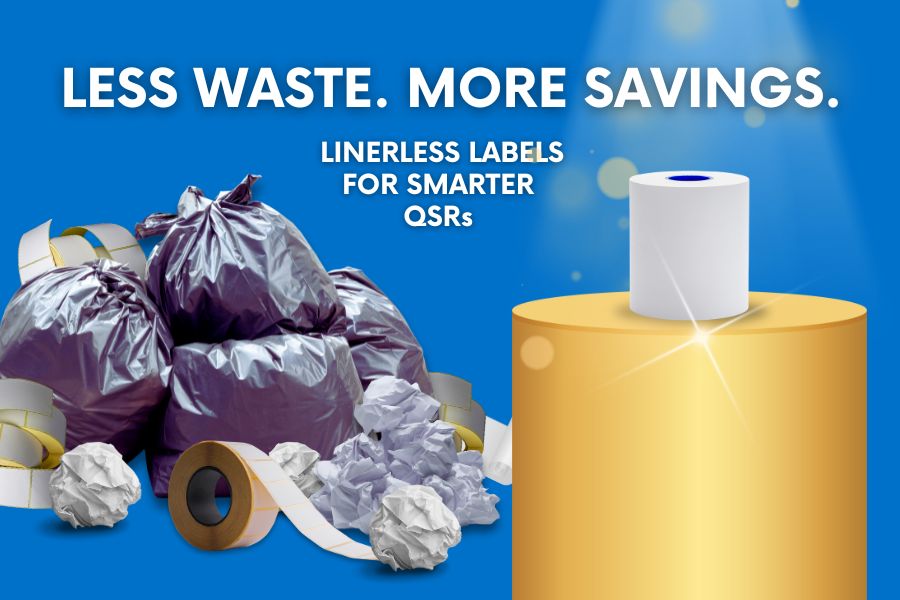
    Linerless Labels No Waste

    > Damaged Brand Perception

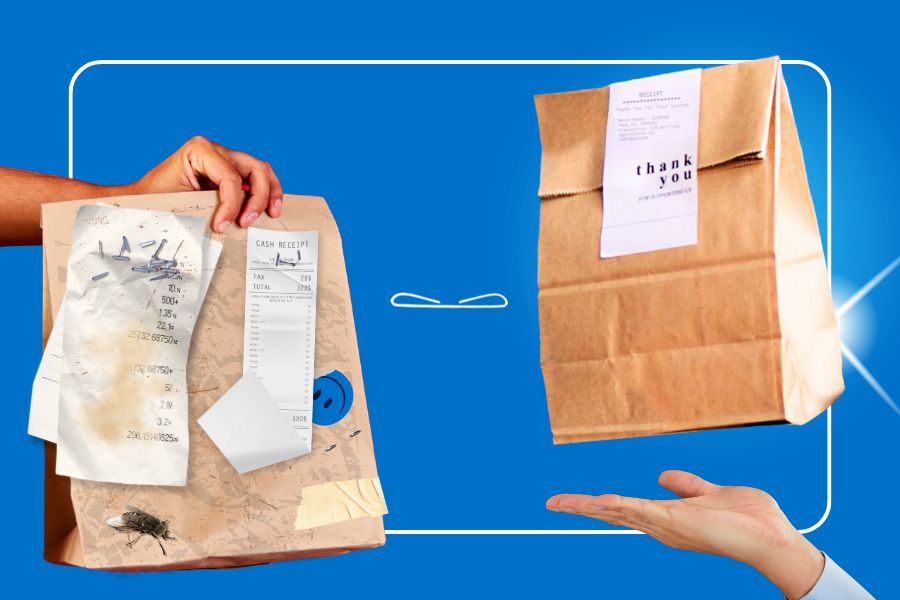
    One of the effects of poor labeling is a bit harder to quantify, but it will be evident in the number of daily or weekly orders and revenues. Customers may perceive handwritten notes stapled or taped to bags as unprofessional, particularly if they’ve received clearly labeled orders from one of your competitors.

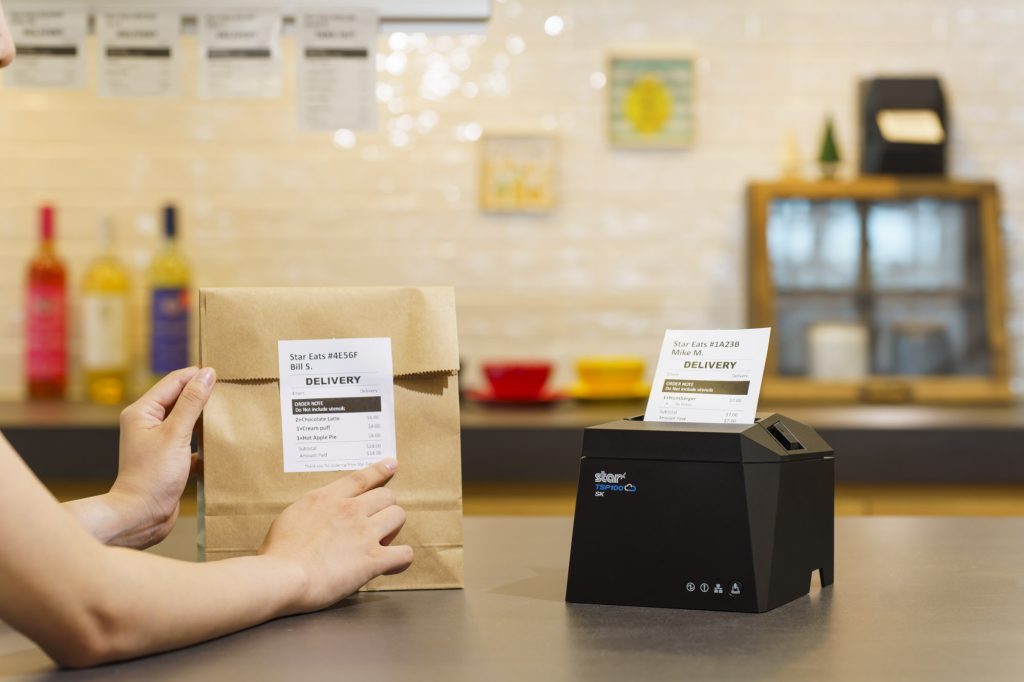
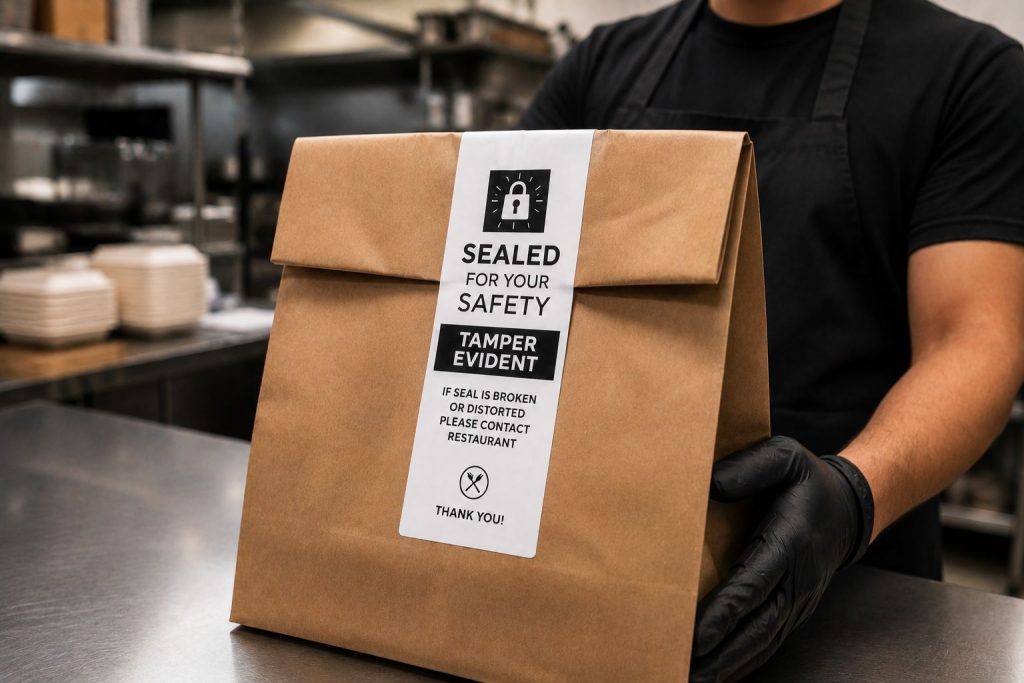
    Additionally, antiquated order packing methods may give a third-party delivery driver the opportunity to open the bag and take a few fries for themselves. It happens more than you may think. A study from US Foods found that 28% of drivers admitted to taking food from an order. If this occurs frequently, customer retention will plummet, and it will be reflected in sales reporting. Sealing bags and containers with tamper-evident labels will help you prevent this issue and maintain your customers’ trust.

    Why Traditional Labeling Doesn’t Cut It Any Longer

    Traditionally, QSR labeling has involved using stickers or tape to attach a receipt or handwritten note to a bag or container. The cons far outweigh the pros of this approach:

    • Employees waste time writing, and errors are hard to trace.
    • The kitchen and delivery drivers can misinterpret handwritten information.
    • Traditional processes don’t produce tamper-evident labels. 
    • Removing label backing slows down processes, creating clutter and waste.
    • The process slows down service, particularly in high-volume QSRs.
    • Hurts brand perception with unprofessional, inconsistent packaging.

    The Smarter Alternative: Linerless Labeling

    A better approach to QSR labeling is printing linerless labels. Consider how the benefits of these labels can impact your bottom line:

    1. Labeling That’s Clean, Sticky, and Fast

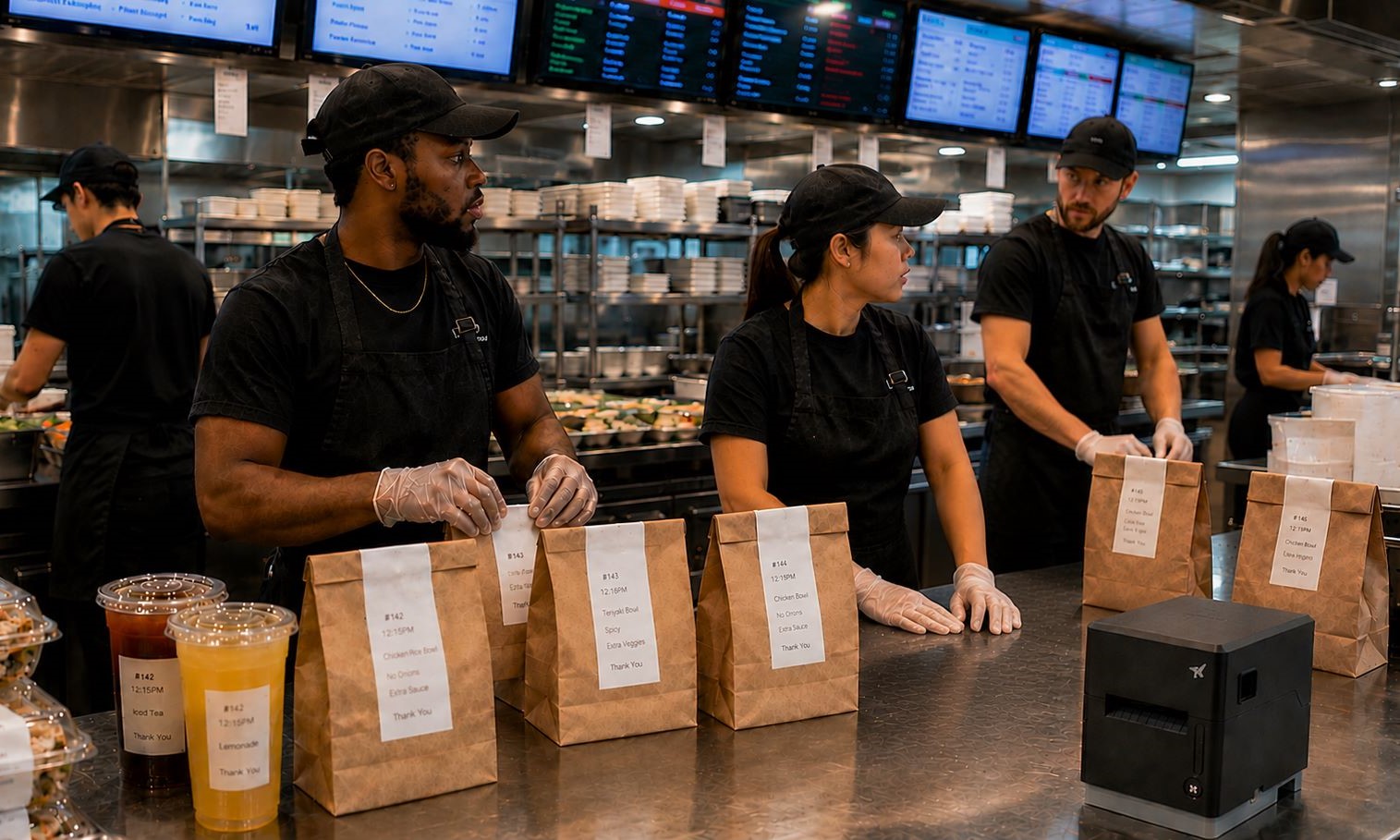
    Linerless labels have no backing, making them faster to apply and keeping counters and floors cleaner. Employees can print and apply them with one hand, making them perfect for busy QSR stations. 

    2. Multifunction Printers Support All Label Types

    One device, like Star’s mC-Label3 multifunction printer, prints linerless labels in addition to receipts and traditional labels. One label printer can do it all, allowing you to optimize your labeling processes. You can even print tamper-evident, permanent linerless labels to secure bags for delivery and assure your customers of food safety. 
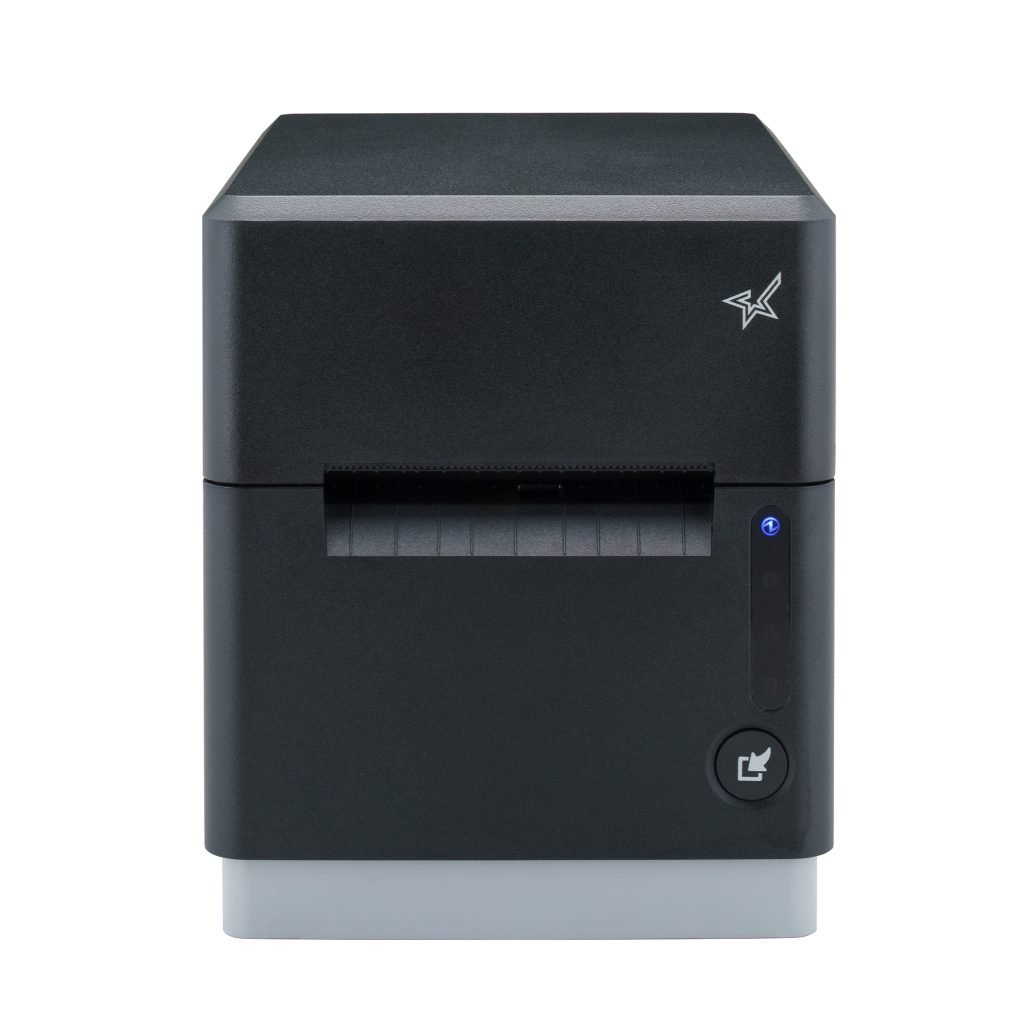
    mC-Label3 Multifunction Printer

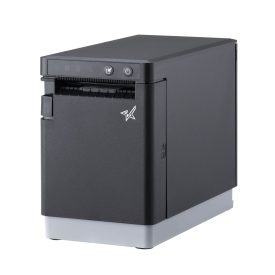
    The Star Micronics mC-Label3 is a versatile multimedia printer that prints a wide range of labels and receipts, including both permanent and repositionable sticky linerless. It features cloud connectivity and innovative technologies like SteadyLAN and TetherLAN for enhanced printing convenience.

    Discover the mC-Label3 >

    3. Efficient Labeling Leads to Order Accuracy and Food Safety

    When you use the right labels for each application in restaurant operations, whether repositionable labels for internal processes or tamper-evident labels for food safety, order accuracy and customer satisfaction improve. Both ultimately have a positive impact on your bottom line.

    Don’t Let Bad QSR Labeling Processes Undermine Your Restaurant Operations

    Bad labeling is a silent killer of QSR efficiency and profitability. Investing in better tools, such as linerless label printers, is an easy fix with a fast return on investment (ROI). Take the next step toward a more efficient restaurant and better financials with the right QSR labeling solution. Your customers, staff, and margins will thank you. 

    👉 Explore Star’s Labeling Solutions for QSRs:

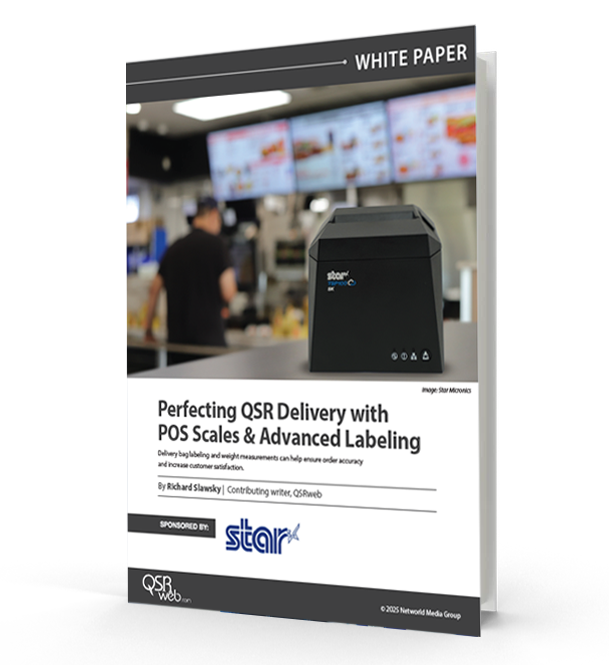
    Perfecting QSR Delivery with POS Scales & Advanced Labeling

    Learn how QSR operators are transforming delivery with weight-based verification and advanced labeling solutions.
    Find out more from our QSR labeling experts:

  • Choosing the Best Adhesive for QSR Labeling: Diamond, Full, or Permanent

    Choosing the Best Adhesive for QSR Labeling: Diamond, Full, or Permanent

    The market is filled with label media options for quick service restaurant (QSR) labeling. However, all labels are not created equal, and neither are their adhesives. While your focus may be on label size and finish, you must also select labels based on their ability to stay in place or allow for repositioning when necessary. The right choice will support operational speed, order accuracy, and food safety in any food service labeling workflow.

    QSR labeling plays a critical role in modern restaurant operations. Labels help communicate modifiers and allergy information in food prep areas, identify pickup and drive-thru orders, support delivery workflows, and create tamper-evident seals for customer confidence.

    However, all labels are not created equal, and neither are their adhesives. Choosing the right adhesive for each QSR labeling application helps improve workflow efficiency, food safety, order accuracy, and customer satisfaction.

    Table of Contents

    Understanding Linerless Label Adhesives for QSR Applications

    Linerless labeling is gaining major traction in QSR and fast casual environments—and for good reason. These labels print without a paper or silicone liner, allowing staff to peel and apply in one quick step. That means faster workflows, less clutter, and fewer disruptions during high-volume service hours.

    Without the waste backing, linerless labels also help reduce slip hazards, keep prep areas cleaner, and minimize landfill waste. More labels per roll means fewer roll changes, less storage space required, and more uptime at every station.

    But the benefits go beyond logistics. Linerless labels also:

    • Improve order accuracy with clearer item- and bag-level labeling
    • Create a more professional, branded presentation—no staples, no handwritten notes
    • Support sustainability goals while lowering supply costs
    • Provide more labels per roll, increasing uptime and boosting ROI
    • Simplify employee training with an intuitive, one-step labeling process

    From prep to packing, linerless labeling offers a smarter, more scalable approach to QSR operations.

    The TSP143IV SK linerless sticky label printer is ideal for QSRs, takeout, deliveries, and more.

    Why Adhesive Strength Matters in Food Service Labeling

    The benefits of linerless labels are clear. However, to maximize the value you get from them, you need to choose labels with the right adhesive strength. Everyone has experienced the frustration of not being able to remove a permanent label in the wrong place, or labels that don’t stay fixed where you need them. 

    QSR labeling often requires labels to be applied to different surfaces like paper or plastic, making adhesive choice even more important. Ensuring labels for each quick service label printing application have the right adhesive will lead to greater efficiency, productivity, and customer satisfaction.

    In general, QSRs can choose from labels with three types of linerless label adhesives: diamond-pattern, full, or permanent.

    1. Diamond-Pattern Label Adhesives: The Repositionable Option

    Diamond-pattern adhesive allows you to place a label and reposition or move it. Repositionable linerless labels with diamond-pattern adhesive also have the advantage of not leaving sticky residue behind, keeping work surfaces, shelves, food containers, and packaging clean. They also help reduce waste due to mislabeling.

    • Can be repositioned after application
    • Leaves little to no residue
    • Helps reduce waste from mislabeling
    • Ideal when information needs to move with the workflow

    2. Full-Coverage Label Adhesives: Strong Temporary Adhesion

    You can also choose full adhesive coverage for QSR labeling. These repositionable linerless labels stay in place reliably for a short time, for example, when labeling a package with a breakdown of contents or for customer pickup. Customers can remove the labels with little effort if they choose.

    • Provides greater surface coverage
    • Holds securely for short-term applications
    • Can still be removed when needed
    • Useful when labels need to stay attached through handoff

    3. Permanent Linerless Label Adhesives: Tamper-Evident and Secure

    Permanent linerless label adhesive doesn’t budge. Once applied, these labels will not budge easily, giving QSRs a solution to generate tamper-evident labels. Permanent linerless labels help QSRs build trust in their delivery processes, showing that once employees package an order, no one opens or touches it.

    • Designed for long-term adhesion
    • Difficult to remove once applied
    • Supports tamper-evident applications
    • Helps build confidence in delivery workflows

    Choosing the Best Adhesive for QSR Labeling: Diamond, Full, or Permanent - Delivery Label

    Matching Adhesives to Common QSR Labeling Applications

    Choosing the right adhesive for each QSR labeling application helps improve communication, food safety, order accuracy, and workflow efficiency. Different stations and processes require different levels of adhesion, repositionability, and durability.

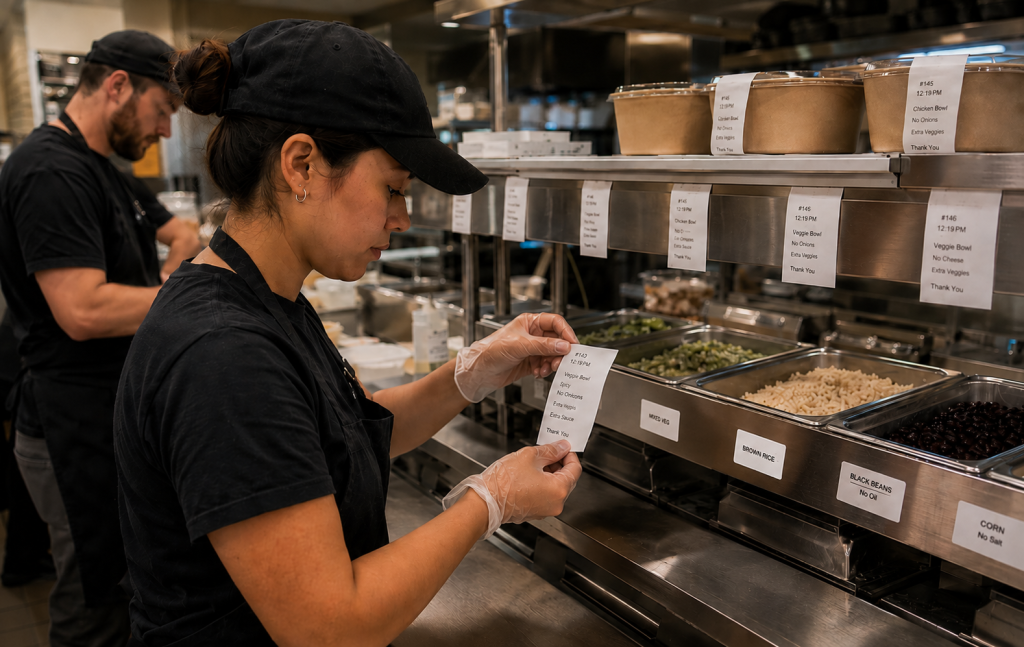
    Food Prep Labels

    Recommended Adhesive: Diamond-Pattern

    Diamond-pattern adhesive is ideal for food preparation workflows because labels can be repositioned without leaving residue behind.

    Common applications include:

    • Order modifiers
    • Allergy and dietary alerts
    • Special preparation instructions
    • Routing orders between prep stations
    • Ingredient tracking
    • Internal kitchen communication

    Choosing the Best Adhesive for QSR Labeling: Diamond, Full, or Permanent - Prep labels

    Expeditor and Order Verification Labels

    Recommended Adhesive: Diamond-Pattern or Full Coverage

    At the expeditor station, labels help verify that orders are complete and ready for handoff.

    Common applications include:

    • Order identification
    • Customer pickup information
    • Drive-thru order tracking
    • Online order verification
    • Order accuracy workflows using POS scales
    • Handoff communication between kitchen and fulfillment staff

    Pickup and Takeout Labels

    Recommended Adhesive: Full Coverage

    Full-coverage adhesive provides reliable short-term adhesion while still allowing customers to remove labels easily if desired.

    Common applications include:

    • Takeout bags
    • Pickup orders
    • Food containers
    • Customer identification labels
    • Order contents labels
    • Curbside pickup workflows

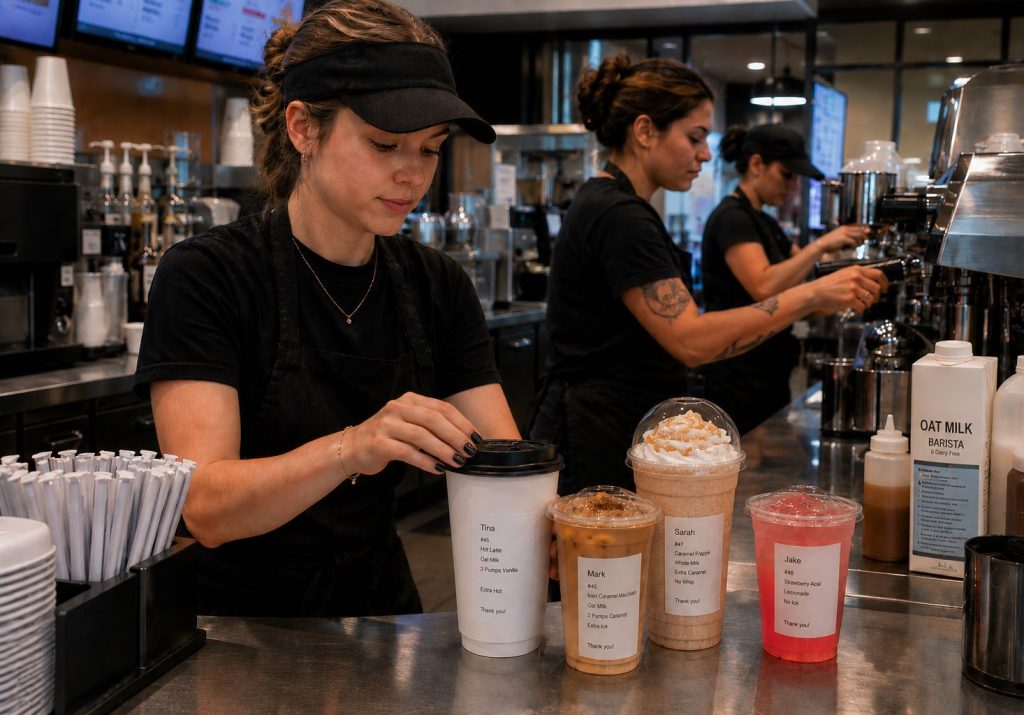
    Beverage Labels

    Recommended Adhesive: Full Coverage

    Drink orders often require labels that remain attached during preparation and customer handoff.

    Common applications include:

    • Coffee orders
    • Specialty beverages
    • Smoothies
    • Tea and espresso drinks
    • Customized drink orders
    • Customer name labels

    Choosing the Best Adhesive for QSR Labeling: Diamond, Full, or Permanent - Beverage labels

    Delivery and Tamper-Evident Labels

    Recommended Adhesive: Permanent

    Permanent adhesive helps create tamper-evident seals that remain attached throughout delivery.

    Common applications include:

    • Delivery bags
    • Tamper-evident package seals
    • Third-party delivery orders
    • Food safety labeling
    • Long-distance delivery packaging
    • Security seals

    Grab-and-Go and Pre-Packaged Food Labels

    Recommended Adhesive: Permanent

    Permanent labels are ideal when information must remain attached throughout storage, display, and sale.

    Common applications include:

    • Grab-and-go foods
    • Pre-packaged meals
    • Made-on and use-by dates
    • Nutrition information
    • Product identification
    • Retail food labeling

    Star’s mC-Label Series Can Handle It All

    Although different quick service label printing use cases require different labels for the best results, QSR labeling only requires one printer. A flexible multi-function printer can print labels with diamond-pattern adhesive, linerless labels with full adhesive, or permanent, tamper-evident labels. QSRs have the option of printing standard or die-cut labels and can even use these printers for receipt printing. Leading printers also make it easy for employees to switch label rolls for each use case.

    mC-Label2 Multifunction Printer

    The mC-Label2 packs powerful features into a compact, front-loading design, including 300 dpi resolution, support for linerless, die-cut, receipt, and continuous media, and connectivity options like USB-C, LAN, WLAN, Bluetooth, and Apple MFi-certified pairing (X4 models only).

    Explore the mC-Label2 >

    mC-Label3 Multifunction Printer

    The Star Micronics mC-Label3 is a versatile multimedia printer that prints a wide range of labels and receipts, including both permanent and repositionable sticky linerless. It features cloud connectivity and innovative technologies like SteadyLAN and TetherLAN for enhanced printing convenience.

    Discover the mC-Label3 >

    The Right Adhesive Supports Better QSR Labeling

    Effective QSR labeling depends on more than choosing the right printer or label size. The adhesive behind the label plays a major role in how information moves through food prep, packaging, pickup, and delivery workflows.

    Whether you need repositionable labels for food preparation, full-coverage labels for pickup orders, or permanent labels for tamper-evident delivery packaging, matching the adhesive to the application helps improve consistency, reduce errors, and support smoother restaurant operations.

    Choosing the right adhesive for each labeling task ensures your labels work as hard as your team.

    Explore Star’s Labeling Media and Printers for QSRs

    Star Micronics offers a wide range of label media designed to support QSR labeling applications, from food prep and pickup workflows to delivery and tamper-evident packaging. The Star Blue Eco portfolio includes label, thermal, and bond paper solutions made without bisphenols, helping businesses align with evolving industry expectations and regulatory requirements.

    Combined with Star’s multifunction and linerless label printers, businesses can implement labeling solutions designed for modern restaurant workflows:

    TSP143IV SK Sticky Label Printer

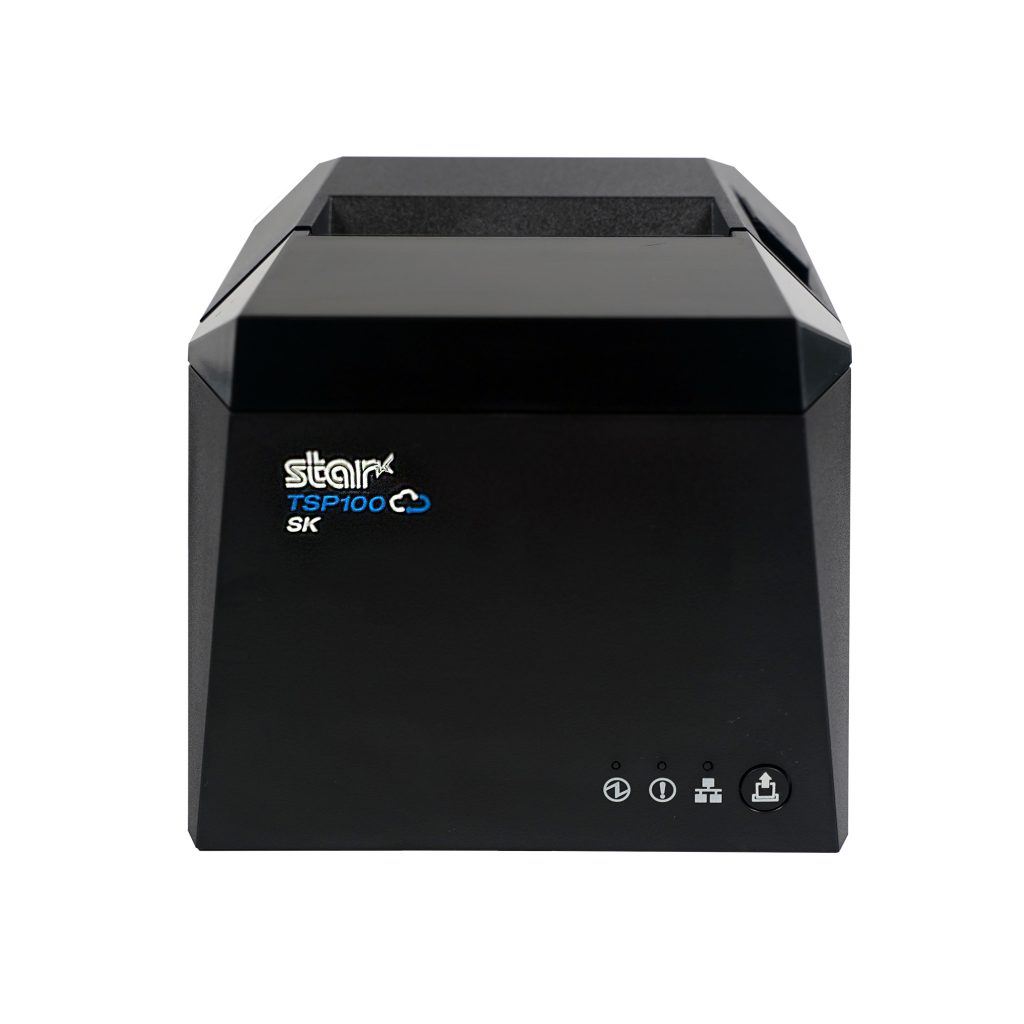
    The TSP143IV SK by Star Micronics sets a new standard for compact, eco-friendly thermal linerless label printing, offering advanced connectivity options like Wi-Fi and AOA, and efficient, residue-free labels for diverse business needs.

    Find out more >

    Perfecting QSR Delivery with POS Scales & Advanced Labeling

    Delivery bag labeling and weight measurements can help ensure order accuracy and increase customer satisfaction.

    Ready to get your QSR labeling upgraded?

    Frequently Asked Questions About QSR Labeling

    What is QSR labeling?

    QSR labeling refers to the use of labels throughout quick service restaurant operations to communicate order details, modifiers, allergen information, pickup instructions, delivery information, food safety data, and more.

    Why is QSR labeling important?

    QSR labeling helps improve communication, increase order accuracy, support food safety, and streamline workflows across food prep, packaging, pickup, and delivery operations.

    What is the difference between diamond-pattern, full, and permanent adhesive labels?

    Diamond-pattern labels are repositionable and leave no residue. Full adhesive labels provide stronger temporary adhesion. Permanent adhesive labels are designed to remain attached and can support tamper-evident applications.

    Which adhesive is best for food prep labels?

    Diamond-pattern adhesive is often ideal because labels can be repositioned as orders move through food preparation workflows.

    Which adhesive is best for food delivery labels?

    Permanent adhesive is often preferred because it supports tamper-evident labeling and helps keep packaging sealed during transit.

    What are tamper-evident labels?

    Tamper-evident labels show visible signs if a package has been opened after sealing, helping restaurants build customer confidence in delivery orders.

    What are the benefits of linerless labels for QSRs?

    Linerless labels reduce waste, provide more labels per roll, minimize storage requirements, reduce roll changes, and help support faster workflows.

    How do restaurants choose the right adhesive for different labeling applications?

    Restaurants should match adhesive strength to the workflow. Repositionable labels work well for food prep, while stronger adhesives may be better for pickup, delivery, or tamper-evident packaging.

  • Why Your Restaurant Needs a Mobile Ordering App

    Why Your Restaurant Needs a Mobile Ordering App

    It’s 2025, and if your restaurant hasn’t embraced mobile ordering apps, you’re already behind.

    Consumer habits have shifted, and digital convenience now drives dining decisions. From quick-service chains to neighborhood cafés, the restaurants adopting mobile and online ordering systems aren’t just staying afloat—they’re scaling faster than ever.

    Whether you run a fast casual, QSR, or full-service operation, implementing a mobile ordering solution is no longer optional. It’s a must-have for improving efficiency, boosting ticket size, and meeting customer expectations in an increasingly on-demand world.

    Need proof?

    Mobile ordering isn’t just convenient—it’s a growth engine for your business. And with the right tools, integrating a mobile app can be fast, seamless, and a win for both your front- and back-of-house operations.

    Read on to explore the key benefits of mobile ordering apps, how to integrate them into your restaurant without disruption, and what to look for in a modern app provider.

    Mobile Ordering App From Table QSR

    5 Benefits of a Mobile Ordering App for Restaurants

    Here’s how a restaurant mobile ordering system helps you stay competitive and profitable:

    1. Meet Customers Where They Are

    Today’s guests are mobile-first. Nearly half of QSR customers prefer to skip the counter altogether. A mobile app empowers them to order online from anywhere—home, the car, curbside, or even in-store.

    2. Deliver a Frictionless Experience

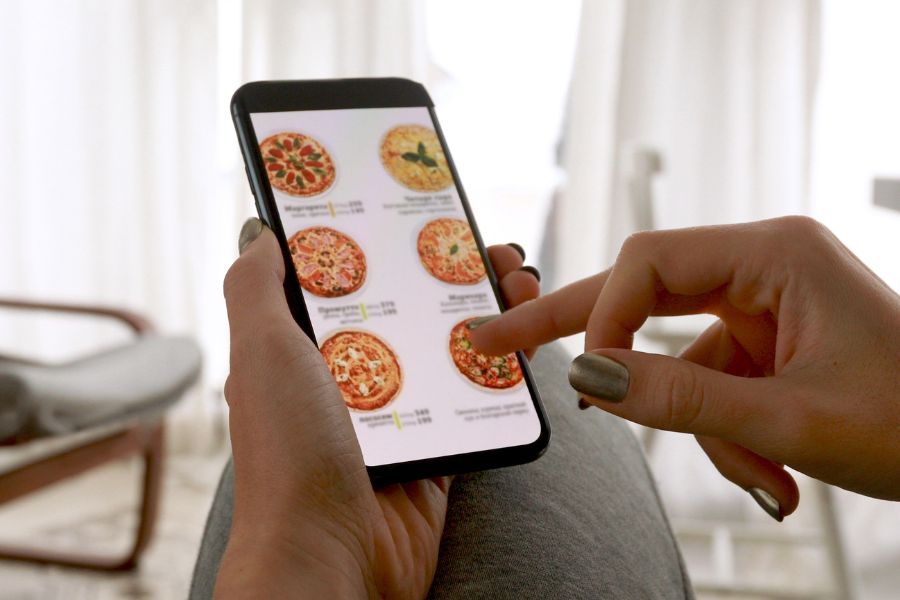
    A good mobile ordering app presents your menu visually and intuitively. When done right, it’s easier and faster than ordering in person—and can leave a better impression.

    3. Gain Actionable Sales Insights

    Mobile ordering unlocks powerful data. Track bestsellers, understand peak hours, test pricing strategies, and spot upsell opportunities. Better decisions, better margins.

    4. Increase Average Ticket Size

    Online orders are consistently higher in value. On average, customers spend 18–20% more when ordering through an app than by phone or in person.

    5. Improve Speed and Accuracy

    Mobile apps reduce wait times and errors. Online orders are placed more clearly and processed faster, giving your staff more time to focus on prep and service.

    Why Your Restaurant Needs an Online or Mobile Ordering App

    How to Integrate a Mobile App Without Disrupting Operations

    Getting started with a mobile ordering app can feel overwhelming—but it doesn’t have to be. With a little planning and the right partners, you can launch quickly and integrate seamlessly into your existing restaurant systems.

    Step 1: Choose the Right Mobile App Provider

    Look for a provider that understands foodservice—not just tech. Key features to prioritize include:

    • Easy menu management
    • POS system compatibility
    • Real-time order tracking
    • Loyalty and upsell tools
    • Responsive customer support

    Not sure where to start? Many POS platforms now offer built-in mobile ordering features, or you can explore third-party apps built specifically for QSRs and fast casual concepts.

    Step 2: Map Out Your Workflow

    Before launching, review how your current orders flow through the restaurant:

    • Where will mobile orders appear?
    • How will they reach the kitchen?
    • Who will be responsible for fulfillment?

    Laying this out in advance ensures your new system works with—not against—your existing team and tools.

    Step 3: Bridge the Tech With Your Kitchen

    Mobile orders need to land in the kitchen fast, clearly, and without extra steps. That’s where Star’s CloudPRNT® and CloudPRNT Next technologies come in. They route online and app orders directly to your kitchen printer—no tablets, no copying and pasting, no missed tickets.

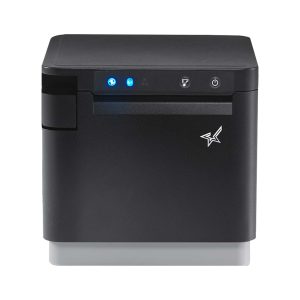
    For legacy kitchens, the SP742 impact printer remains a top choice. However, for modern kitchens with proper heat management, thermal printers like the mC-Print3 receipt printer are now a reliable, quieter, and more compact, connected alternative. The mC-Print3 features a sleek design, flexible connectivity (USB, Ethernet, Bluetooth, and CloudPRNT Next), and fits beautifully into tight counter setups.

    mC-Print3 Receipt Printer

    The Star Micronics mC-Print3 combines high-speed printing with advanced connectivity options like Ultra-C and CloudPRNT Next. Its Ultra-C USB-C port provides seamless power and data transfer with any device, while CloudPRNT Next offers enhanced remote printing using the MQTT protocol, ideal for modern POS environments.

    Discover the mC-Print3 >

    Don’t Forget the Labels: Linerless for the Win

    As mobile and online food ordering continues to grow, so does the need for clean, professional packaging. That’s where linerless labels come in.

    These labels stick securely to bags and containers without wasteful silicone backing, making them faster to apply and more sustainable. With more labels per roll, fewer roll changes, and options for repositionable (leaving zero residue) or tamper-evident, stronger adhesive, linerless labels are ideal for:

    • Mobile order pickups
    • Curbside delivery
    • Takeout packaging
    • Pre-packaged foods and beverages

    Pair linerless media with dedicated linerless label printers like the mC-Label3 and TSP143IV SK, and your staff can label orders quickly and cleanly—no tape or handwritten notes required. It’s the best labeling solution for fast-paced, off-premise dining.

    How to Get Your Restaurant Ready for Online Ordering

    Are you looking for a new way to grow your restaurant business? Accepting online orders keeps you relevant and competitive.

    Learn more about Star’s online and mobile ordering app solutions:

  • One Printer, Every Station: Rethinking Labeling for QSRs & Grocery Stores

    One Printer, Every Station: Rethinking Labeling for QSRs & Grocery Stores

    Today’s grocery and QSR labeling demands more than just speed—it demands precision across every touchpoint. From front-counter orders to back-of-house prep and last-mile delivery, modern operations are expected to move fast and get it right every time. As service channels multiply, so do the challenges. And unless your labeling strategy can keep up, efficiency and consistency take a hit.

    Labels have become essential here, offering a way to clearly communicate item details, reduce order errors, and streamline pickup and delivery. But creating a smooth, end-to-end labeling experience isn’t always easy. As menus and product assortments grow, and workflows evolve, many businesses find themselves struggling to keep labeling consistent across their POS, kitchen, bagging, and inventory stations.

    For enterprise brands with dozens or even hundreds of locations, this complexity scales rapidly, resulting in increased costs, heightened training needs, and avoidable inefficiencies.

    The Multi-Station Challenge

    Most QSRs and grocery stores operate multiple service zones, each with its own tasks, and often, its own printer. The POS counter may have a thermal receipt printer, the kitchen a die-cut label printer for ingredients, and the bagging station a linerless printer for sealing takeout or delivery bags. While this setup gets the job done, it introduces a host of operational inefficiencies.

    Here’s what that fragmented setup often leads to:

    • Higher hardware costs with different printer types at each station
    • Inconsistent print quality across devices and use cases
    • Increased training and support needs for staff and IT
    • Media management headaches with different paper sizes, adhesives, and formats, all requiring different printers
    • Workflow friction as teams juggle multiple systems and devices

    As operations scale across multiple locations, these small inefficiencies add up, creating friction in daily workflows and making it harder to deliver a consistent customer experience across every store.

    The Ideal Solution? One Printer That Does It All.

    What if every station in your operation—front counter, kitchen, delivery, self-checkout—could run on the same printer model? Instead of managing multiple printer types with different media formats, drivers, and maintenance protocols, QSRs and grocery stores could simplify with one device that does it all.

    That’s the benefit of standardizing on a single, versatile printer across the operation. The model may serve different functions at each station, but because the device is the same, it streamlines ordering, training, IT support, and overall consistency.

    This isn’t entirely about reducing the number of printers—one will have to be at each station—but it is about reducing the number of printer models. With one printer that can handle everything from receipts to bag seals, operators can reduce complexity while maintaining quality across every customer interaction.

    This isn’t just a wish list item. It’s real, and it’s available today.

    One Printer for Every Station | QSR & Grocery Labeling Solutions

    Versatility at Its Core: Star Micronics mC-Label3

    The mC-Label3 is a multifunction thermal printer built for the fast pace of today’s QSR and grocery operations. Designed to support unified labeling workflows, it can handle a wide range of media types, streamlining labeling across your business.

    This one model can be used to print:

    • POS receipts at the front counter
    • Die-cut labels for food prep, inventory, or shelf displays
    • Linerless labels (sticky or permanent) for bag sealing and delivery orders
    • Continuous linered media for specialty or regulatory labeling

    mC-Label3 Multifunction Printer

    The Star Micronics mC-Label3 is a versatile multimedia printer that prints a wide range of labels and receipts, including both permanent and repositionable sticky linerless. It features cloud connectivity and innovative technologies like SteadyLAN and TetherLAN for enhanced printing convenience.

    Discover the mC-Label3 >

    Standardizing on a single printer model like the mC-Label3 transforms QSR labeling and grocery labeling from a daily hurdle into a streamlined, scalable strategy. With just one printer across stations, teams deal with less hardware confusion, faster onboarding, and fewer support tickets—without sacrificing output quality or consistency.

    Swapping media is fast and foolproof, letting staff move from receipts to die-cut to linerless labels without skipping a beat. And that’s key, because linerless media is quickly becoming the future of labeling. It’s cleaner, faster, more flexible, and reduces waste, making it ideal for high-volume, multi-use environments like coffee chains, QSRs, convenience stores, and grocery pickup stations.

    With fewer disruptions and a leaner labeling setup, enterprises can keep counters clean, workflows smooth, and customers moving—no IT intervention required.

    Built for Enterprise Flexibility

    The mC-Label3 also supports multiple interfaces (USB, Ethernet, Bluetooth, WLAN) and CloudPRNT, ensuring straightforward connectivity with your current POS or labeling infrastructure. With its sleek footprint, it saves space without sacrificing performance.

    And because it’s from Star Micronics, you get industry-leading reliability, developer support, and the ability to scale across locations.

    Smarter Labeling Strategies for QSRs and Grocers

    When you rethink your labeling strategy to revolve around one printer, you unlock:

    • Simpler training and operations
    • Cleaner counters and kitchen setups
    • Faster service and fewer labeling errors

    The mC-Label3 isn’t just a printer. It’s your receipt station, kitchen expediter, and delivery labeler—all in one.

    Perfecting QSR Delivery with POS Scales & Advanced Labeling

    Learn how QSR operators are transforming delivery with weight-based verification and advanced labeling solutions.
    Ready to simplify your labeling across every station?

  • Why Leading QSRs Use POS Scales & Labels to Increase Order Accuracy

    Why Leading QSRs Use POS Scales & Labels to Increase Order Accuracy

    Order accuracy is a make-or-break factor for quick service restaurants (QSRs). According to PwC research, 61% of consumers will switch brands after just one bad experience. With growing customer expectations and the rise of online ordering, QSRs are turning to smarter technology to ensure every order is accurate and on time.

    Why Order Accuracy Matters More Than Ever

    QSRs are rediscovering the value of point of sale (POS) scales and label printers, using these familiar technology tools in new ways. Now, scales and printers are helping QSRs ensure online order accuracy with a clever way to confirm that the right menu items are included in customers’ orders.

    The mC-Label3 Multifunction Printer by Star Micronics great for delivery take out online ordering and QSRs.
    The mC-Label3 multimedia printer helps smart QSRs perfect order accuracy.

    More of a novelty than standard operating procedure before 2020, online ordering gave QSRs a way to reach a wider audience and accommodate consumers’ busy lifestyles. However, when the demand for online ordering increased in the 2020s, managers had to adapt QSR operations. It wasn’t practical to manage online delivery orders as one-offs, and getting orders wrong could have dire results.

    Customers who received the wrong menu items, incomplete orders, or bags that had clearly been tampered with knew they had other options. With just a few clicks, a customer could try a new restaurant—and a competitor could win their business and their loyalty. Optimizing QSR operations with improved online order fulfillment processes allows restaurants to increase order accuracy and make the most of higher demand for off-premises dining.

    Why QSRs Are Upgrading to New Online Order Labels

    Labels are one of the best ways to optimize QSR operations with a growing online ordering business. As soon as a QSR receives an order, staff can print labels that follow various items through food prep to packaging.

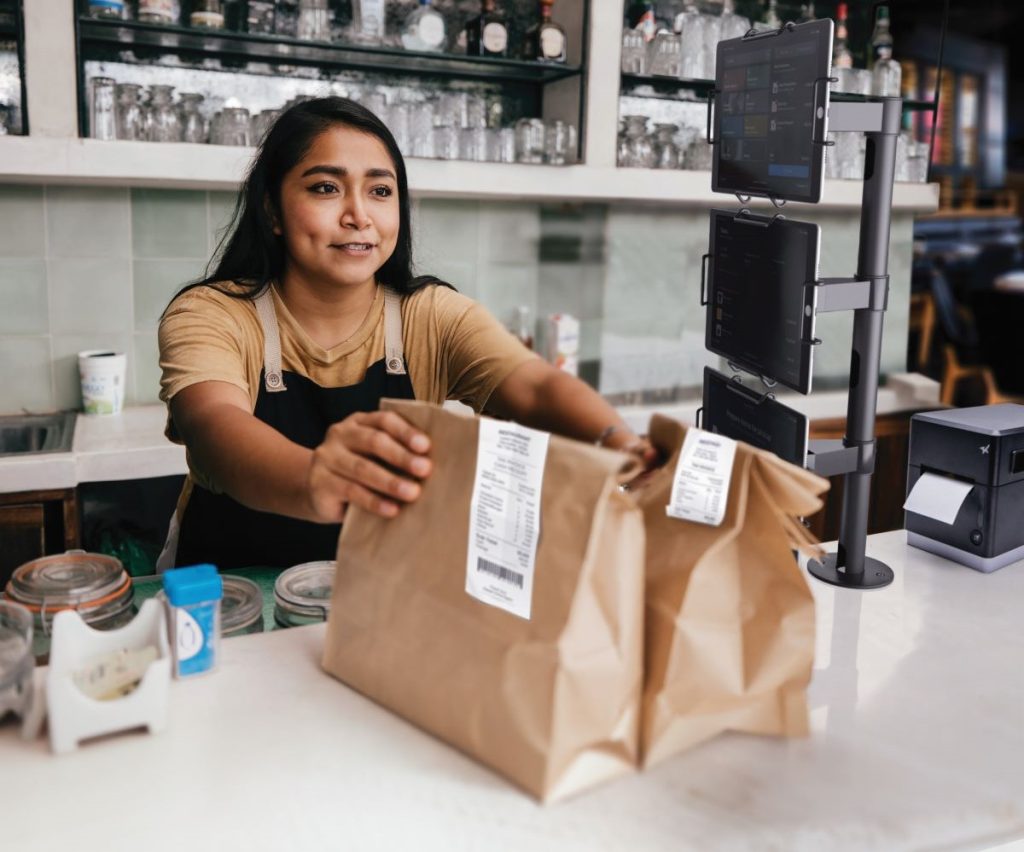
    Repositionable linerless labels that meet FDA standards for indirect contact with food are ideal for food preparation processes. They allow employees to print and apply labels with one hand because there’s no backing to remove, and they eliminate clutter on counters and floors. Additionally, QSR employees can move the labels from a shelf or tray before food prep begins to trays or containers during order preparation, and then to the packaging that lets the customer know their food was made-to-order.

    Why Food Packaging Labels Are Essential to Online Order Fulfillment
    The mC-Label3 can print on all media types with varying widths – perfect for QSRs.

    Innovative QSRs are also leveraging labels in new ways to boost efficiency and enhance the customer experience. Die-cut labels not only display branding and business information on every package, but they also come in various sizes, making them ideal for organizing kitchen inventory. With the mC-Label3 multimedia printer, QSRs can store image templates—such as ingredient lists or expiration dates—directly in the printer’s memory. These templates can be printed on demand using the printer’s multifunction button, even without an internet connection, making back-of-house operations faster and more consistent.

    Permanent labels give restaurants a way to assure their customers that once employees sealed the package, no one opened it. QSRs can also use labels to engage customers, encouraging them to scan a QR code so they can join a loyalty rewards program or access coupons or discounts on future orders. Using order labels is a simple solution, but it can have a huge impact on a QSR’s business.

    How POS Scales Improve QSR Online Order Accuracy

    Scales give QSR teams a quick and easy way to know what’s in a customer’s order. Weighing the bag gives QSR teams a way to check order accuracy. The POS scale can compare the weight of a packaged online order to known weights in a spreadsheet or database. Sensitive scales allow the QSR team to take wrappers, condiments, and utensils into account — and even recognize if a sandwich has the cheese and bacon that the customer requested.

    Taking the extra quality control step to weigh an online order can have significant returns in continued customer loyalty, revenues, and competitiveness.

    mG-TUDB Scales

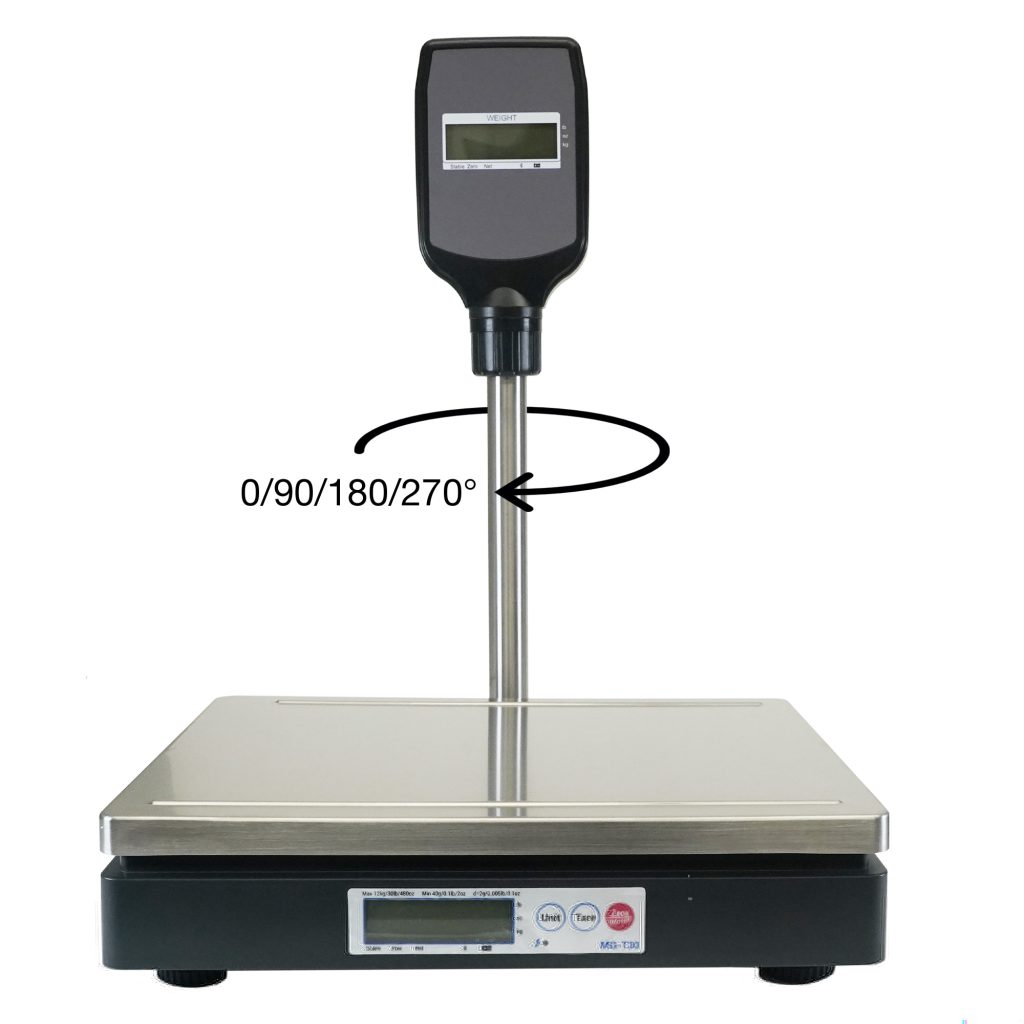
    Designed for precision and versatility, the mG-TUDB scales are a perfect fit for grocery self-checkout stations, produce sections and bulk item sales. With trade-legal certification for the U.S. and Canada, these scales offer Class III accuracy and seamless connectivity via Bluetooth, serial, or USB-C. Their large platter and optional pole display accessory ensure effortless setup with your POS system, making them ideal for a wide range of applications, from delis to farmer’s markets.

    Find Out More >

    The Benefits of Purpose-Built POS Scales and Order Labels

    Optimizing delivery order fulfillment processes by choosing the right scales and order labels has several benefits for QSRs, including:

    1. More Sustainable Operations

    Increasing order accuracy with scales and linerless order labels helps reduce food and paper waste, saving money, increasing ROI, and boosting sustainability initiatives.

    2. Food Safety

    QSRs that choose labels that meet FDA standards for indirect food contact remove risks to food safety from label media that may contain harmful chemicals.

    3. Lower Costs

    When QSRs streamline their operations and improve order accuracy, they enhance efficiency and control costs.

    Implement the Right Technology for Your Operation

    As QSR operations evolve to keep up with consumer behaviors, they need to find the most efficient processes and the technology to support them. POS scales and online order label solutions empower QSRs to meet demands while operating efficiently and keeping food safe. Contact Star to learn more about solutions for your QSR. 

    How to Get Your Restaurant Ready for Online Ordering

    Are you looking for a new way to grow your restaurant business? Accepting online orders keeps you relevant and competitive.

    Additional Resources

    Working with QSRs, Star Micronics has developed POS scales and order labeling solutions that contribute to more efficient operations and greater customer satisfaction. QSR solutions from Star include:

    • mG-T series POS scales: Star offers a line of NTEP and Measurement Canada-certified scales that deliver Class III accuracy.
    • mG-TUDB Pole Display: This pole display is designed specifically for Star POS scales to offer a clear view of weight. This scale powers this display, simplifying setup and powering the display during everyday use.
    • CloudPRNT and CloudPRNT Next: CloudPRNT and CloudPRNT Next ensure quick and reliable communication between cloud-based systems, like online ordering, mobile, and self-service printers. CloudPRNT Next uses the MQTT protocol for reliable printing across an enterprise’s devices and locations with flexibility and control.

    QSR the Smart Way:

  • QSR Delivery Done Right: How POS Scales & Labeling Tech Improve Accuracy

    QSR Delivery Done Right: How POS Scales & Labeling Tech Improve Accuracy

    In this episode of the Rising Stars Podcast, “QSR Delivery Done Right: Labeling, Scales & a Big Thank You from Kate,” host Kate Orara explores how restaurants are improving QSR delivery accuracy with connected POS scales and advanced labeling solutions.
    From sticky linerless labels on takeout bags to precision bag weighing for double-checking orders, Kate breaks down how the right tools can streamline QSR delivery operations and reduce costly mistakes. She also spotlights the power of using a single multifunction printer—like the Star Micronics mC-Label3—to handle everything from receipts to individual item labeling.

    Perfecting QSR Delivery with the Right Tech

    Order errors and packaging mix-ups can cost QSRs time, money, and loyal customers. In this episode, Kate shows how restaurants can solve those issues using scalable POS technology like connected scales and versatile labeling solutions. Whether you’re a franchise operator, ISV, or tech partner, these strategies can help your team boost QSR delivery accuracy, reduce waste, and simplify fulfillment from the kitchen to the customer.

    Plus, Kate wraps up her time as host with a heartfelt thank you—and gives listeners a hint at what’s coming next.

    Learn about Star’s advanced multimedia label printer, the mC-Label3 >

    Loving the podcast? Subscribe now, and let us know what you think by leaving a review!

    Stay up-to-date on all things Star, don’t forget to follow us on X, LinkedIn, Facebook, Instagram, and YouTube.

    The Rising Stars Podcast

    Immerse yourself in the world of point-of-sale (POS) with the Rising Stars Podcast by Star Micronics, hosted by industry pro, Kate Orara. Twice a month, we explore the fascinating journeys of innovators and businesses navigating the challenges of POS technology’s rapid pace.

    In every episode, Kate Orara, Star Micronics’ Partner Development Manager, discusses emerging retail technology trends and strategies with global industry giants. She’s spent her entire career meeting all the right people, and now listeners everywhere can benefit from this vast network of channel gurus.

    Always leading and always innovating, Star Micronics, a pioneer in POS and customer experience technology for over 60 years, welcomes you to join us in shaping a brighter future in the retail, hospitality, and cannabis industries.

    Want more industry news?

    Episode Transcript

    [Music]

    Kate Orara: Hey there, retail tech enthusiasts! Welcome to the Rising Stars Podcast, your go-to for all things retail tech and point of sale. I’m Kate Orara, Partner Development Manager at Star Micronics, and I’m excited to guide you through this journey. Here, we dive into the latest innovations shaping the retail, hospitality, and cannabis industries. So whether you’re a techie or a business owner, this is your backstage pass to insider knowledge. Join me and the Star Micronics team as we innovate and rise together.

    Welcome back to the Rising Stars Podcast, brought to you by Star Micronics. I’m Kate Orara, and before we dive into today’s exciting topic, I want to take a moment to express my gratitude. This is my final episode as your host of The Rising Stars Podcast, and it has truly been an incredible journey sharing industry insights with you all.

    A huge thank you to Star Micronics for supporting me—I’ve truly enjoyed the chance to explore new technologies with channel friends and solo. I’ve never hosted a podcast before, and while I experienced some bumps, Star allowed me to find my way. I deeply appreciate the opportunity they gave me.

    I also want to extend a heartfelt thank you to you, our dedicated listeners and viewers. Your feedback has helped guide me—from what you liked, didn’t like, and what you gained from the podcast. That insight has shaped my journey as host, and I’m so grateful.

    While I may be signing off, the podcast isn’t going anywhere. Stay tuned for an exciting new format launching in the coming weeks!

    Today, we’re talking about the power of POS scales and linerless labeling and how they’re transforming QSR (Quick Service Restaurant) delivery operations. Let’s dig in.

    QSRs have changed dramatically over the past few years. While drive-thru and dine-in are still essential, delivery has skyrocketed. According to Mordor Intelligence, the global food delivery market is set to reach $1.37 trillion by 2029, growing at a 15.1% annual rate. That’s huge.

    But as delivery grows, so does the challenge of ensuring order accuracy. Every QSR operator knows one of the biggest customer complaints is missing items—a burger left out, fries that never made it into the bag, or a forgotten drink. Let’s be honest: that kind of frustration can cost restaurants loyal customers and revenue.

    Here’s a personal story—I went to a local restaurant for a pickup order. It wasn’t even for me, it was for my husband and kids. When I got home, some items were missing, including a salad. I had to go back to the restaurant, and when I did, I had to argue with the staff about whether I actually ordered the salad. It was extremely frustrating. I won’t be returning to that establishment again. (And yes, I left a Yelp review!)

    So how can restaurants eliminate these kinds of errors and ensure every order is perfect?

    Enter the point of sale scale.

    These smart devices verify an order’s weight before it leaves the restaurant. Here’s how it works: each menu item has a predefined weight. When the order is packed, the scale checks the total weight. If something is missing, the system flags the discrepancy—before the bag even leaves the counter.

    It’s the same concept as grocery store self-checkouts, where the system verifies the item based on weight. For QSRs, this simple but powerful tool reduces missing items and speeds up operations.

    Now, order accuracy is just one part of the equation. What’s the next challenge? Order security.

    No one wants to receive a delivery bag that looks tampered with. That’s where linerless labels come in. These tamper-proof, sticky labels seal delivery bags and give customers peace of mind that their food is safe, untouched, and fresh.

    The benefits don’t stop there. Restaurants can print logos, promotions, or QR codes directly on the labels for added marketing impact. And unlike traditional labels, linerless labels eliminate waste from backing paper, making them a sustainable choice.

    They also promote operational efficiency. Since linerless labels auto-cut to size, they streamline packaging, save time, and reduce material costs.

    By combining POS scales with advanced labeling solutions, QSRs can:

    • Ensure every item is accounted for before the order leaves the kitchen
    • Protect food integrity with tamper-proof packaging
    • Enhance branding and customer trust with professional, informative labels
    • Reduce waste while boosting efficiency and sustainability

    Star Micronics is leading the charge with cutting-edge solutions like the MGT POS Scales and the mC-Label3 multimedia printer, making accuracy and security seamless for QSR operators.

    Well, that’s a wrap on today’s episode and my time as host of The Rising Stars Podcast. Once again, thank you so much to Star Micronics and to all of you who have tuned in, engaged, and shared your thoughts along the way.

    While I may be signing off, this podcast is just getting started on a new chapter. Keep following, stay tuned, and get ready for exciting changes ahead.

    Until next time, keep leading and innovating.

    And that is a wrap for this episode of the Rising Stars Podcast. A huge thanks to our incredible listeners for tuning in and to our phenomenal guests for sharing their insights. Don’t forget to subscribe, rate, and leave a review. Your feedback fuels our journey to bring you the best in retail tech.

    Stay connected with us on social media for updates and behind-the-scenes content. As you sign off, remember: the future of retail technology is in our hands, and together, we are shaping it. Keep innovating, keep rising, and until next time, this is Kate Orara signing off. Together, we rise.

    [Music]

  • Avoid POS Downtime: Why Your Business Needs an Extended Warranty

    Avoid POS Downtime: Why Your Business Needs an Extended Warranty

    In the latest episode of the Rising Stars Podcast, host Kate Orara is joined by Paul Leduc, CEO of Globe POS Systems, for an insightful discussion on the importance of extended warranties in the POS industry. In “Avoid POS Downtime: Why Your Business Needs an Extended Warranty,” Paul shares his expertise on how businesses can safeguard their POS investments and minimize costly disruptions.

    Paul breaks down the most common hardware failures, the true cost of downtime, and how extended warranties help businesses stay operational while reducing unexpected repair expenses. He also discusses how Globe POS partners with Star Micronics to offer seamless warranty solutions that keep retail and hospitality businesses running smoothly.

    The Business Benefits of POS Extended Warranties

    From reducing downtime to ensuring long-term cost savings, this episode is packed with actionable advice for business owners, ISVs, and resellers looking to perfect their POS system reliability. Whether you run a small retail shop or a multi-location restaurant, Paul’s insights will help you understand how to make the smartest investment in POS hardware protection.

    • Protect your business from costly repairs
    • Maximize POS uptime and efficiency
    • Gain peace of mind with long-term hardware coverage

    Loving the podcast? Subscribe now, and let us know what you think by leaving a review!

    Stay up-to-date on all things Star, don’t forget to follow us on X, LinkedIn, Facebook, Instagram, and YouTube.

    The Rising Stars Podcast

    Immerse yourself in the world of point-of-sale (POS) with the Rising Stars Podcast by Star Micronics, hosted by industry pro, Kate Orara. Twice a month, we explore the fascinating journeys of innovators and businesses navigating the challenges of POS technology’s rapid pace.

    In every episode, Kate Orara, Star Micronics’ Partner Development Manager, discusses emerging retail technology trends and strategies with global industry giants. She’s spent her entire career meeting all the right people, and now listeners everywhere can benefit from this vast network of channel gurus.

    Always leading and always innovating, Star Micronics, a pioneer in POS and customer experience technology for over 60 years, welcomes you to join us in shaping a brighter future in the retail, hospitality, and cannabis industries.

    Want more industry news?

    Episode Transcript:

    [Music]

    Kate Orara: Hey there, retail tech enthusiasts! Welcome to the Rising Stars Podcast, your go-to for all things retail tech and point of sale. I’m Kate Orara, Partner Development Manager at Star Micronics, and I’m excited to guide you through this journey. Here, we dive into the latest innovations shaping the retail, hospitality, and cannabis industries. So whether you’re a techie or a business owner, this is your backstage pass to insider knowledge. Join me and the Star Micronics team as we innovate and rise together.

    Welcome back to another episode of Rising Stars Podcast! I’m your host, Kate Orara, and I’m really excited for today’s discussion. I have a good friend and industry partner with me—Paul Leduc, CEO of Globe POS. Paul, how are you?

    Paul Leduc: I’m great! How are you? Nice to see you again.

    Kate Orara: Good to see you too! I’m super excited for today’s conversation. We had a call a couple of weeks ago that really inspired this topic, and I knew we had to bring it to the podcast. We’re talking about something near and dear to my heart—extended service warranties. I have experience in the services industry, working in warranty and non-warranty repair, so I know firsthand how important this topic is.

    But before we dive in, I’d love for you to introduce yourself to our listeners. Tell us a little about your experience in the channel and about Globe POS.

    Paul Leduc: Sure! I’ve been in the industry for a long time. I started in a software company as a dealer rep across North America, working with a variety of VARs of different sizes and focuses. Before that, I owned a grocery store, so I understand the retail environment firsthand. Over the years, I worked with different dealerships across different states and provinces. About 15 years ago, I decided to acquire Globe POS Systems because I wanted something stable and closer to home while staying active in the industry.

    To stay connected, I’ve remained involved in the RSPA (Retail Solutions Providers Association), serving on the board and keeping my ears on the ground for industry trends. I love engaging with resellers and partners and providing assistance wherever I can.

    Kate Orara: That’s great! Yes, we both have been involved with RSPA, and it’s such a fantastic organization. If any listeners have questions about RSPA, Paul and I are happy to help!

    Now, let’s dive into today’s topic: extended warranties. Our conversation a few weeks ago was about how Globe POS successfully incorporates extended warranties into its overall solution and how that has helped your business. To start, what inspired Globe POS to offer extended warranties on point-of-sale hardware, and how does this address common customer pain points?

    Paul Leduc: Years ago, manufacturers didn’t always offer extended warranties, and as a smaller VAR, that posed challenges. We wanted to grow beyond our immediate region while still offering high-level service, but the logistics were difficult. I remember flying out on a Sunday night to replace a hard drive for a customer, which was expensive and time-consuming.

    Without extended warranties, service and replacement costs could quickly add up for both us and our customers. It became clear that offering extended service plans was the best way to provide cost-effective, scalable support. When manufacturers started offering warranty add-ons more actively about eight years ago, we fully embraced it. Now, we can ensure that even customers in remote locations get the same level of service and peace of mind.

    Kate Orara: That makes so much sense. Having a warranty in place removes a lot of uncertainty for customers and prevents unexpected expenses.

    What are some of the key benefits for merchants who opt for extended warranties on their POS hardware? How do these warranties contribute to overall business continuity and cost savings?

    Paul Leduc: Beyond peace of mind, the cost savings are significant. One repair on a critical component like a scanner or cash drawer can be costly. Having a warranty means that rather than paying for an expensive repair or replacement, businesses are covered.

    Another benefit is faster service. If a business encounters an issue, they have a dedicated support line to troubleshoot first. Many times, it’s a simple fix—like pressing a reset button—but without support, the customer might have sent the unit in for repair, leading to unnecessary downtime.

    Extended warranties also ensure that businesses stay operational. If a POS terminal goes down, sales stop, and that’s lost revenue. For industries like hospitality and restaurants, where peak hours are critical, having warranty-backed support can mean the difference between minimal disruption and a full-blown crisis.

    Kate Orara: Absolutely! When I worked in services, restaurants would call us in a panic if their systems went down during the dinner rush. Having that warranty-backed support helped them get back up and running quickly.

    What are some of the most common POS hardware failures, and how do extended warranties help mitigate these challenges?

    Paul Leduc: It really depends on the environment. In restaurants, touchscreens take a lot of wear and tear—grease, spills, and heavy use can lead to dead zones or calibration issues. In retail, the biggest issues tend to be scanners, cash drawers, and occasionally printers.

    Having an extended warranty means businesses don’t have to worry about costly repairs. If a scanner is dropped or a cord is damaged, they can quickly get a replacement without extra expenses. It ensures minimal downtime and maintains business continuity.

    Kate Orara: That makes sense. Now, let’s talk about how extended warranties work with Star Micronics printers and other hardware. What should businesses know about coverage, response times, and maintenance support?

    Paul Leduc: Star Micronics is one of the easiest manufacturers to work with when it comes to extended warranties. The process is simple—when we sell a new printer, we can add the warranty with just a quick call. No complicated paperwork.

    If an issue arises, Star provides advanced exchange services. They’ll ship a replacement printer, and the customer just sends the faulty one back. Most issues, however, are solved over the phone. Instead of directing us to a knowledge base, Star’s team actually helps troubleshoot in real time, which saves a lot of frustration.

    Kate Orara: That hands-on support is invaluable. As technology continues to evolve, how do you see the role of extended warranties changing in the POS industry?

    Paul Leduc: While POS hardware itself is fairly stable, extended warranties will become even more important as businesses rely more on these devices. Many businesses keep their hardware for five to ten years, so offering a long-term warranty makes sense.

    The future changes in POS are happening more on the software side with AI and advanced analytics, but hardware remains the foundation of operations. Ensuring longevity and reliability through extended warranties will always be a smart investment.

    Kate Orara: Absolutely! Before we wrap up, here’s a curveball question I ask all my guests: If you could change one thing about the channel today, what would it be and why?

    Paul Leduc: I’d like to see more manufacturers commit fully to either channel sales or direct sales, rather than doing both. The channel has proven its value, and companies that truly invest in it see long-term success. While some direct sales efforts still exist, I think the channel is in a better position today than it was a decade ago.

    Kate Orara: That’s a great perspective. Thank you so much for joining me today, Paul! How can listeners reach out to you if they want to learn more about Globe POS?

    Paul Leduc: You can visit our website at globpos.ca for more information.

    Kate Orara: Perfect! Thank you again, Paul. I really appreciate your time and insights.

    And that’s a wrap for this episode of the Rising Stars Podcast! A huge thanks to our listeners for tuning in. Don’t forget to subscribe, rate, and leave a review—your feedback fuels our journey to bring you the best in retail tech. Stay connected with us on social media for updates and behind-the-scenes content.

    As we sign off, remember: the future of retail technology is in our hands, and together, we are shaping it. Keep innovating, keep rising, and until next time, this is Kate Orara signing off. Together, we rise.

    [Music]


  • The Answers You Need to Make an Informed Decision About Cloud POS Services

    The Answers You Need to Make an Informed Decision About Cloud POS Services

    With the rise of the Internet of Things (IoT), artificial intelligence (AI), and other advanced technologies, cloud services adoption is becoming increasingly common. Gartner reports that public cloud services spending will grow to $723.4 billion in 2025, up from $595.7 billion last year. 

    Cloud services benefit different industries in various ways, particularly for cloud point of sale (POS) services. For retailers and restaurateurs, cloud POS services enable managing POS devices and peripherals remotely. Managers can monitor devices to ensure they’re online and operating properly. They may also be able to run diagnostics remotely to address maintenance issues that might be brewing. A cloud POS enables a proactive approach that maximizes uptime rather than reacting when a printer or other device stops working.

    Cloud POS services can also make data and tools available to employees across an organization, saving time and ensuring brand consistency.

    So, What’s Holding You Back from Using Cloud POS Services?

    Even though cloud solutions offer retailers and restaurateurs numerous benefits, it’s common for business leaders to have some concerns. Getting the facts will help you understand how cloud solutions work and the safeguards that are in place so you can move forward confidently. Some of the most important facts you need to know about cloud POS services are: 

    Cloud POS Services Are Secure

    While news of cyberattacks has become common, using cloud POS services doesn’t necessarily increase your risk. Cloud service providers invest heavily in securing their offerings and keeping up with changes in the threat landscape.

    In most cases, the security measures the vendor has in place far exceed anything a single retailer or restaurateur could establish. By partnering with a trusted vendor, you can be confident that your data and your business are safeguarded by robust security measures. 

    Your Data Is Private

    Cloud POS services providers are careful to keep each customer’s data private. No other customers have access to your data; they can’t see the label templates you have built or access digital receipts you store to make returns more convenient for your customers. The only people who can access your data are your employees who use the right login credentials. 

    You Can Work Offline

    While accessing your data in the cloud requires a network connection, this doesn’t mean you can’t work when you’re offline. Cloud POS services often provide a way to establish a “hybrid” system where information is stored locally. This allows your employees to access it during network outages and sync when the connection is restored. Cloud service providers ensure that your workflows remain uninterrupted. 

    Star Micronics CloudPRNT Next Cloud Services
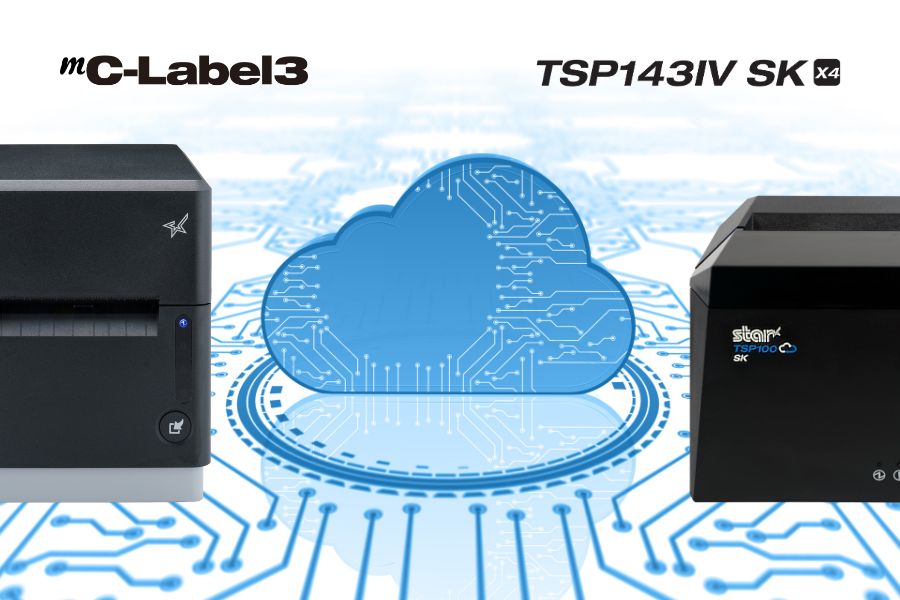
    Star Micronics mC-Label3 and TSP143IV SK label printers support CloudPRNT Next for fast cloud printing.

    You Can Afford Them

    Cost is always a consideration, but with cloud POS services, it’s important to think in terms of total cost of ownership (TCO). You don’t need the same amount of infrastructure on-site to do the same things that a cloud solution does. You use the provider’s resources, not your own servers, for things like data storage, backup, and data security.  

    When you consider all costs and all cost savings, including gains in operational efficiency, cloud services are generally more cost-effective than on-premises solutions. Furthermore, when it comes to Star Micronics Cloud Services, they’re included at no additional cost with our cloud-ready printers. 

    They’re Easy to Use

    A major concern among business leaders is that cloud POS services may be too challenging for their employees to use. However, a quick demo will demonstrate how easy using cloud services can be. For instance, Star’s PromoPRNT allows you to add promotions to receipts, providing you with a new—and effective—customer engagement tool. You can easily create promotions from templates and manage them from any connected device. For your employees, adding marketing messages to receipts is effortless. 

    What Is CloudPRNT Next?

    If you’re exploring cloud POS options, it’s worth getting familiar with CloudPRNT Next—Star Micronics’ next-generation remote printing technology.

    Built on the MQTT protocol, CloudPRNT Next offers faster, more secure, and more scalable communication between cloud applications and printers. Whether you’re printing receipts, orders, labels, or tickets, CloudPRNT Next gives developers and operators the power to:

    • Print directly from web apps—no middleware or local server required

    • Receive real-time feedback from the printer (status, errors, confirmations)

    • Scale easily across locations and devices

    • Support complex workflows like multi-item labeling or off-premise fulfillment

    It’s the ideal solution for ISVs, enterprise foodservice operators, and QSRs looking to streamline remote order fulfillment without sacrificing control or reliability.

    What’s Your Next Move?

    Once you have a clear understanding of the pros and cons of cloud POS services, you can make an informed decision about their value for your organization. You likely have more questions about how a cloud POS will operate within your organization and the benefits it will provide. The Star Micronics team is here to answer your questions and assist you in selecting the best cloud-ready solution for your company. Contact us today. 

    Conquering Omnichannel Order Management with Cloud-Based Technology Solutions

    Consumers have spoken! The future of retail and hospitality is omnichannel, cloud-based, and connected. Is your business prepared?

    Ready to boost your cloud printing capabilities?

  • Why Businesses Are Moving to Cloud-Based POS – And Why You Should Too

    Why Businesses Are Moving to Cloud-Based POS – And Why You Should Too

    In this episode of the Rising Stars Podcast, “Why Businesses Are Moving to Cloud-Based POS – And Why You Should Too,” host Kate Orara explores the growing shift toward cloud-based POS solutions and why businesses are making the transition. Drawing from her expertise as Star Micronics’ Partner Development Manager, Kate highlights how VARs, ISVs, and business owners can leverage cloud POS technology to drive efficiency, lower costs, and keep their operations competitive.

    This episode provides valuable insights into the benefits of cloud POS, including real-time data access, scalability, security enhancements, and lower total cost of ownership (TCO)—helping businesses stay competitive in an evolving digital landscape.

    Future-Proofing with Cloud POS

    The transition to cloud-based POS is reshaping the way businesses manage operations, customer interactions, and multi-location growth. Kate discusses key advantages such as automatic software updates, reduced IT maintenance, and enhanced data security. She also addresses common concerns, including offline functionality, PCI compliance, and data ownership, ensuring businesses understand how to navigate the shift with confidence.

    This episode is a must-listen for anyone looking to optimize their POS strategy. Whether you’re a QSR, retail chain, or enterprise business, embracing cloud technology can unlock new efficiencies and set the stage for continued success.

    Have you heard of Star’s CloudPRNT Next? Find out more about the next level of cloud printing here >

    Loving the podcast? Subscribe now, and let us know what you think by leaving a review!

    Stay up-to-date on all things Star, don’t forget to follow us on X, LinkedIn, Facebook, Instagram, and YouTube.

    The Rising Stars Podcast

    Immerse yourself in the world of point-of-sale (POS) with the Rising Stars Podcast by Star Micronics, hosted by industry pro, Kate Orara. Twice a month, we explore the fascinating journeys of innovators and businesses navigating the challenges of POS technology’s rapid pace.

    In every episode, Kate Orara, Star Micronics’ Partner Development Manager, discusses emerging retail technology trends and strategies with global industry giants. She’s spent her entire career meeting all the right people, and now listeners everywhere can benefit from this vast network of channel gurus.

    Always leading and always innovating, Star Micronics, a pioneer in POS and customer experience technology for over 60 years, welcomes you to join us in shaping a brighter future in the retail, hospitality, and cannabis industries.

    Want more industry news?

    Episode Transcript

    [Music]

    Kate Orara: Hey there, retail tech enthusiasts! Welcome to the Rising Stars Podcast, your go-to for all things retail tech and point of sale. I’m Kate Orara, Partner Development Manager at Star Micronics, and I’m excited to guide you through this journey. Here, we dive into the latest innovations shaping the retail, hospitality, and cannabis industries. So whether you’re a techie or a business owner, this is your backstage pass to insider knowledge. Join me and the Star Micronics team as we innovate and rise together.

    Today, we’re diving into an exciting topic that’s all about modernizing the way we do business—the move to cloud-based point-of-sale (POS) systems. Whether you’re a reseller or an independent software vendor (ISV), helping your end users understand the value of moving their POS to the cloud can be a game-changer, not just for their business but for yours too. So, let’s unpack this topic with an upbeat, practical lens.

    Accessibility and Flexibility

    Here’s the deal: cloud-based POS systems act like the ultimate remote control for business operations. With just an internet connection, business owners can manage sales, track inventory, and even oversee employee performance—no matter where they are.

    Think about it: a business owner could be at the beach (lucky them!) or visiting another store location, and they can still pull up real-time sales data on their smartphone or tablet. It’s like having their entire business in their back pocket. That level of flexibility isn’t just a perk—it’s a necessity in today’s fast-paced retail world.

    For resellers and ISVs, this is a golden selling point. You’re not just pitching software; you’re offering freedom and control.

    Operational Efficiency

    Cloud-based systems simplify many day-to-day processes, making them incredibly efficient for end users. Here’s an example: instead of manually updating inventory across multiple stores or platforms, a cloud system updates everything in real time. One click, and boom—inventory is synced. No spreadsheets, no guesswork, no headaches.

    What about software updates? Traditional POS systems often require manual updates, leading to downtime. With the cloud, updates happen automatically behind the scenes, ensuring no disruption to business operations. It’s seamless.

    As a reseller or ISV, you can confidently position cloud-based systems as tools that make life easier for end users. When businesses operate more efficiently, they grow faster, and that success reflects back on you as a trusted advisor.

    Packaging the Benefits for Customers

    So, how do you package these benefits into a compelling message for your customers? Here’s the win-win scenario you can paint for the business owner: Moving to a cloud-based POS means they gain freedom, speed, and peace of mind. For you, the reseller or ISV, it’s an opportunity to build deeper relationships, drive recurring revenue through subscriptions, and help your customers stay ahead of the curve.

    This isn’t just about selling technology; it’s about being a partner in growth.

    When Cloud-Based POS Might Not Be Ideal

    Now, before we wrap up, let’s address a common question: Are there businesses where a cloud-based POS might not be the ideal solution? The short answer: yes. While cloud-based systems offer significant benefits, they’re not a one-size-fits-all solution.

    Here are a few scenarios where they may not be the best fit:

    • Businesses in areas with unreliable internet: While many systems offer offline modes, consistent connectivity is essential to fully leverage the benefits of the cloud. In such cases, a hybrid system or a traditional locally hosted POS might be a better choice.
    • Specialized software or hardware requirements: Certain manufacturing businesses or highly specialized retail environments may use equipment or workflows that require older, on-premise systems.
    • Small businesses with minimal transactions: While cloud-based POS systems often have a lower total cost of ownership, very small businesses with extremely low transaction volumes may find subscription costs unnecessary compared to basic cash registers or standalone systems.

    As resellers and ISVs, your role is to guide end users toward the best solution for their unique situation. Ask thoughtful questions about their infrastructure, location, and operational needs. If a cloud-based system isn’t right for them, they’ll appreciate your honesty, and that trust can lead to future opportunities.

    Final Thoughts

    To wrap things up, remember: cloud-based POS systems bring tremendous value, but they’re not the answer for every business. Knowing when and why to recommend or not recommend them is what will set you apart as a trusted advisor.

    Thank you for tuning in to this episode of the Rising Stars Podcast! If you found today’s discussion valuable, share it with a colleague or post it on your socials. Let’s keep these conversations going! And if you’ve got more questions about cloud-based POS, reach out to me or the team at Star. I’d love to hear from you.

    Until next time, stay inspired, stay innovative, and keep reaching for the stars.

    And that is a wrap for this episode of the Rising Stars Podcast! A huge thanks to our incredible listeners for tuning in. Don’t forget to subscribe, rate, and leave a review. Your feedback fuels our journey to bring you the best in retail tech. Stay connected with us on social media for updates and behind-the-scenes content.

    As you sign off, remember: the future of retail technology is in our hands, and together, we are shaping it. Keep innovating, keep rising, and until next time, this is Kate Orara signing off. Together, we rise.

    [Music]

  • Star Micronics Unveils Cutting-Edge Receipt and Removable Linerless Label Printers

    Star Micronics Unveils Cutting-Edge Receipt and Removable Linerless Label Printers

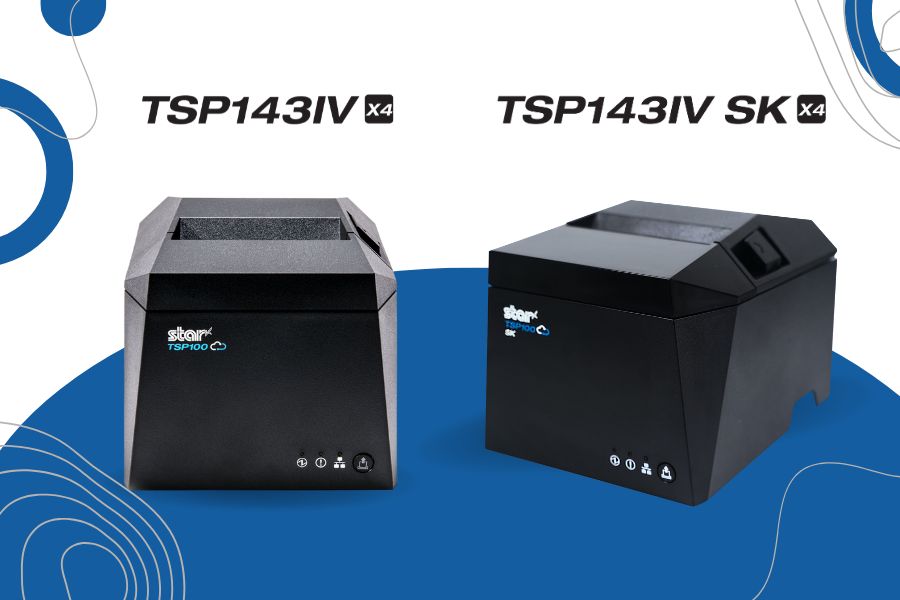
    Two innovative models, the TSP143IV X4 and TSP143IV SK X4 receipt and linerless label printers, redefine printing for modern retail and hospitality environments.

    Somerset, NJ – January 10, 2025 – Star Micronics, a global leader in point-of-sale (POS), labeling, and customer engagement technology, is excited to announce the launch of two groundbreaking printing solutions: the TSP143IV X4 receipt printer and the TSP143IV SK X4 removable linerless label printer. Designed to meet the demands of today’s businesses, these printers deliver exceptional performance and advanced connectivity, all in an eco-conscious package. Star Micronics once again sets a new standard for POS printing.

    TSP143IV X4: Advanced Connectivity Meets High-Speed Printing

    The TSP143IV X4 offers future-proof versatility with four connectivity options—USB, LAN, WLAN, and Bluetooth—ensuring seamless compatibility with iOS, Android, and Windows devices. With CloudPRNT Next technology utilizing the MQTT protocol, the TSP143IV X4 enables faster, more reliable cloud-based printing, making it ideal for businesses managing remote print operations across multiple locations.

    This compact printer supports high-speed printing of up to 250mm/s, a built-in guillotine auto-cutter, and 20W of USB-C power and data transfer for iOS, Android, and Windows devices. Plus, Wi-Fi setup has never been easier with the Star Quick Setup Utility app or via QR code. The TSP143IV X4 also embraces sustainability, featuring EnergyStar certification, which ensures it operates with energy efficiency, reducing power consumption and environmental impact while lowering operational costs for businesses. These printers include eco-friendly packaging with a 30% smaller box size and near-zero plastic wrapping to reduce environmental impact.

    TSP143IV SK X4: Smart Labeling for High-Demand Workflows

    The TSP143IV SK X4 builds on Star’s reputation for innovation with its removable linerless sticky label printing capabilities, designed for industries like food service, delivery, takeout, and laundry. This model simplifies operations by producing repositionable sticky labels that adhere without residue, ensuring order accuracy and streamlined workflows.

    The TSP143IV SK X4 also features four connectivity interfaces, a simplified Wi-Fi setup, and high-speed printing at 180mm/s with an auto-cutter. Like its sibling model, the SK X4 prioritizes sustainability with EnergyStar certification and is nearly 100% recyclable. Its reduced packaging minimizes material waste and CO2 emissions during transport.

    Innovative Features Across Both Printer Models

    Both the TSP143IV X4 and TSP143IV SK X4 share several cutting-edge features:

    • CloudPRNT Next with the MQTT protocol for faster, more reliable cloud communication.
    • User-friendly Wi-Fi setup using Star Quick Setup Utility or via QR code.
    • Compact, modern design with a built-in power supply for space efficiency.
    • EnergyStar certified with eco-conscious packaging to support sustainable business practices.

    “Retail and hospitality businesses require solutions that are not only efficient and reliable but also adaptable to their rapidly changing needs. The TSP143IV X4 and TSP143IV SK X4 embody Star’s commitment to innovation and sustainability, empowering businesses to improve efficiency while reducing their environmental footprint and boosting their bottom line.”

    To learn more about these new printers and how they can revolutionize your POS and labeling processes, visit starmicronics.com or contact sales@starmicronics.com.

    Experience the future of POS technology at NRF 2025! Star Micronics will showcase these models and more at Booth 5757, January 12–14, 2025, at the Javits Convention Center in New York City.

    Love industry news? Explore our podcast:

    Star Micronics logo, point-of-sale (POS) hardware and technology company.

    Star Micronics, a world leader in point-of-sale (POS), has designated a portfolio of printing, secure cash management, self-service, and customer engagement solutions for any retail or hospitality establishment. Embracing the mPOS wave, Star’s SDKs allow developers to utilize Star printers in tandem with Android™, iOS, iPad®, and iPhone® devices to generate receipts, labels, Chit, and tickets. Star Micronics is always leading and always innovating, creating cloud-based printing solutions, including CloudPRNT and Star Cloud Services, with AOA support and MFi connectivity. Star also has a wealth of peripherals, including 2D barcode scanners, scales, tablet display stands, and more. Visit starmicronics.com or follow us on Facebook, X, Instagram, YouTube, or LinkedIn to learn more.

    Media Contact:

    Christin Dorner
    Star Micronics America, Inc.
    cdorner@starmicronics.com
    848-216-3318