Tag: POS Scales

  • Star Micronics Unveils Their New Line of mG-Scales

    Star Micronics Unveils Their New Line of mG-Scales

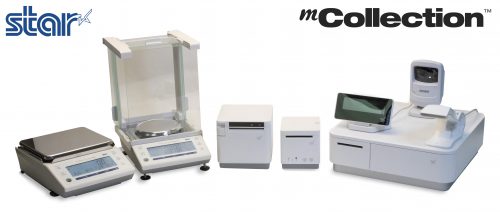
    m-collection_with-logo02-e1574798680532

    Somerset, NJ – October 15, 2018 Star Micronics, a leading global manufacturer of mobile, point of sale (POS), and customer engagement technologies, is proud to announce Star’s new NTEP Certified mG-Scales that allow retailers to legally and accurately measure to a fraction of a gram. The scales are perfect for industries that must comply with regulations or that demand a greater degree of accuracy such as pharmacy, cannabis, jewelry, and grocery.

    There are three models with different capacities and sensitivities to meet the needs of different industries and applications:

    1. mG-S322 (320g, 0.01g)
    2. mG-S1501 (1500g, 0.1g)
    3. mG-S8200 (8200g, 1g)

    Each of the three models includes a triple interface including BLE (Bluetooth Low Energy), USB, and serial and the ability to support Windows, iOS, and Android. The scales can also be battery powered, making them ideal for virtually any application. Everything is all in the box, including a waterproof and dustproof cover, power cable, and USB cable.

    “Certain retail niches need scales that measure the smallest quantities—down to the one-hundredth or one-thousandth of a gram—so they can comply with regulations and keep tight control on inventory,” Christophe Naasz, the Director of Business Development at Star Micronics, said. “The mG-Scales are the best solution.”

    Star Micronics also provides software support to ensure the fast and easy integration of the scales to the POS system used by the specific retailer. To learn more about the mG-Scales, visit our website or call us at 1-800-782-7636.


  • Everything Grocery Retailers Need to Know About Scale Integration

    Everything Grocery Retailers Need to Know About Scale Integration

    Grocery retailers sell a variety of items by weight, including fruit, vegetables, meat, fish, cold cuts, bulk bin dry goods, and more. Whether people are buying a bag of sweet treats or a pound of sliced cheese, you rely on grocery scales to measure the weight of items and calculate the prices. Although it seems easy to lay products on the scale and print the tags, there’s a battery of scientific tests and several government agencies dedicated to calculating weights and prices correctly.

    Proper scale integration for your point of sale (POS) system can take some research. First, grocery retailers should check to see if the scale is NTEP certified for legal use.

    What is NTEP? How Does it Work?

    The National Type Evaluation Program (NTEP) is facilitated by the National Conference on Weights and Measures. NTEP standards cover every aspect of a scale’s use, including:

    • Capacity
    • Accuracy
    • Appearance
    • Effects of temperature and humidity changes

    The standards are developed by a division of the U.S. Department of Commerce called the National Institute of Standards and Technology or NIST. Every device is tested in a lab setting to ensure compliance with federal laws and regulations.

    An NTEP Certificate of Conformance (CoC) means the scale is legal for trade and can be used in a commercial setting to sell products by weight. Every NTEP-approved scale will have a CoC number that an inspector can use to verify that the scale meets the agency’s rigorous testing standards and is legal for use.

    Why is NTEP Important?

    Grocery retailers that buy, sell, or determine prices by weight are required by law to use a NTEP certified scale. NTEP scale certification isn’t optional — never purchase a scale that doesn’t have a CoC. Only NTEP-certified devices, when properly inspected and calibrated, can legally determine the weight of products. A grocery retailer with a non-NTEP-certified scale integration may be subject to civil penalties, seizure of the illegal device, or stop-work orders.

    Does it Matter if my Scale is Off by a Little?

    Simply put — yes, it matters. Every state has its own agencies and departments that monitor scales and inspect them for accuracy. Customers trust that their grocery retailer is charging them accurately for the products they buy, so imagine the public relations nightmare if it was reported that your store was caught overcharging customers for items sold by weight. The bad publicity alone isn’t worth the risk to your business, even if it was unintentional. Don’t be cavalier about following the calibration and compliance laws, which help prevent fraud at the scale.

    In addition, choose a scale that’s the correct accuracy class. A grocery retailer needs a scale that’s accurate, but doesn’t need the same type of scale used for medicinal or pharmaceutical purposes.

    Download the Complete Scale Buyer’s Guide.

    I’ve Chosen a NTEP-Certified Scale, Now What?

    NTEP-certification doesn’t mean you can plug in the scale and start using it right away. Before using the scale, contact your local regulatory authority to find out what you need to do before processing any sales by weight. You’ll likely have to register the device for inspection prior to scale integration and participate in regular inspections.  A local weights and measures official will use NIST standards when inspecting your scale and certifying it for use.

    Grocery retailers who charge for items by weight need a scale to conduct business legally. Look for a scale that is NTEP certified, and legal for use or trade, and be sure to consult your local laws and regulatory agency regarding its set up and use. Always maintain properly calibrated devices, to avoid overcharging customers or shorting your business.

    Star’s mG-Scales have the NTEP certification and modern connectivity options you need.

    Interested in integrating with Star Micronics?

  • RetailNOW 2018 Recap

    RetailNOW 2018 Recap

    This year, RetailNOW 2018 ran from August 5th to 8th at the Gaylord Opryland Resort & Convention center in Nashville, Tennessee. In this post, we’ll do a short recap of some of the trends and our own experience of it at Star Micronics and our growing ecosystem of partners.

    RetailNOW was buzzing this year on Twitter under the hashtag #RetailNOW2018. It’s held by RSPA, a trade association comprised of resellers, ISVs, manufacturers, payment processors, distributors, and other POS and tech ecosystem participants.


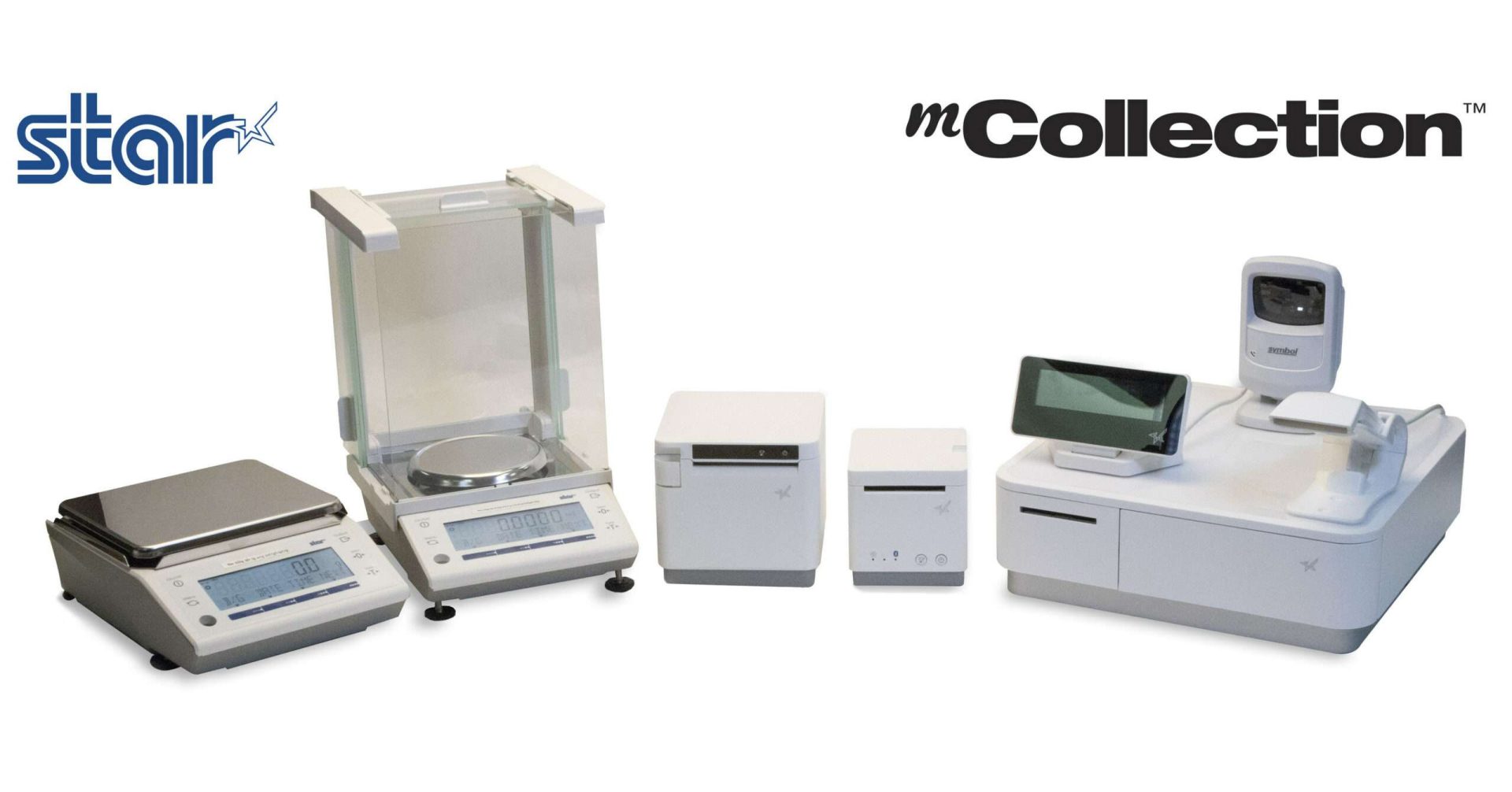
    Star Micronics had some exciting new products to showcase such as our mCollection including new printers and scales, which got a fair amount of attention at RSPA.

    RetailNOW is an important event for POS tech since it combines resellers with both hardware and software ecosystems. The point of sale industry is being challenged right now with channel sustainability and thus the role RSPA plays is crucial.

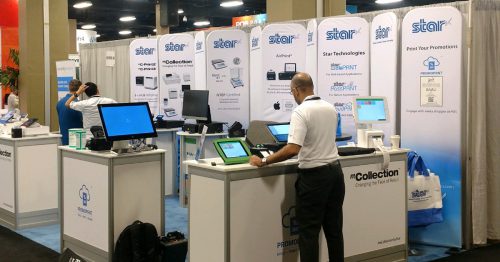
    Star Micronics’ booth was #803 and our set-up looked like this:

    RetailNow-2018-Booth-e1574798655138


    We held a contest where those who entered could win an Amazon Echo Spot. Our new mCollection series was well received, especially our scales.

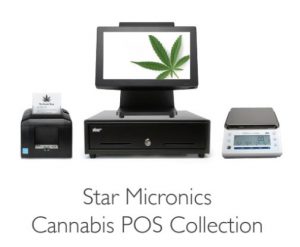
    m-collection_with-logo02-e1574798680532

    With over 160 exhibitors and a packed agenda, RetailNOW 2018 was the ideal event for us to showcase our mCollection series that has been designed with the latest tech to deliver products that are especially compact in size, sleek, and offer the easiest setup in the industry with a reliable and remarkable user experience. Where our mCollection truly shines is in connectivity–each printer has multiple connectivity options including Bluetooth, CloudPRNT, Ethernet, and of course, lightning USB and traditional USB options.

    RSPA speakers had warm reception that looked like this:

    DkAy4R9V4AE48MM-e1574798703265

                              Image credit: RSPA Twitter

    The inaugural RSPA women of the year in 2018 was Abby Sorensen. On the ISV insights panel, the importance of finding partners who need your software but who also have the same DNA was mentioned. The RetailNOW 2018 event also included golf, free head-shots at the photo booth on the show floor, and many other perks. Many speakers added value around the best practices for ISVs, VARs, and Vendors.

    Tips for Value Added Resellers (VARs)

    POS VARs are evolving how they see the emerging ecosystem:

    Jim-Roddy-Presentation-Image-e1574798741922

                           Image credit: Jim Roddy on Twitter

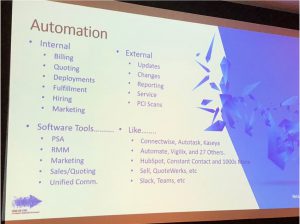
    RSPA is really committed to providing year-round education on topics relevant to its community with everything from tech boot camps to regional events and global expansion. VARs are also increasingly relying on automation tools to streamline their business.

    Capture-e1574798762533

                      Image credit: Jim Roddy on Twitter

    VARs know what works for them in terms of the top lead generation tools. For many of them, product catalogs, software overview videos and educational content such as buyers guides, e-books, lists, and live chats work really nicely. RetailNOW 2018 was full of educational content for VARs, Vendors, and those in related POS tech industries.

  • Star Micronics Introduces the mCollection

    Star Micronics Introduces the mCollection

    Somerset, NJ – August 1, 2018 – Star Micronics, a leading global manufacturer of mobile, point of sale (POS), and customer engagement technologies, is happy to announce the release of their latest line of products: the mCollection.  The mCollection was designed with the latest technology to deliver products that are compact in size, sleek in design, and provide an easy setup and wonderful user experience.

    The central pieces of the mCollection are the printers: the mC-Prints.

    The mC-Print2 and mC-Print3 are the collection’s 2- and 3-inch front-exit thermal printers designed for easy loading and low maintenance.  Each printer provides multiple connectivity options, including Ethernet, traditional USB, Lightning USB, Bluetooth, and CloudPRNT, which allow for versatile use throughout retail locations. These printers can also be cloud-connected allowing any retailer to use Star’s latest printed promotion tool, PromoPRNT. The printer’s stylish, compact design compliments any brand and works with any modern retail environment, even when counter space is limited. Both of these printers have an integrated hub and provide the ability to connect peripherals.

    The additional peripherals include the sleek and compact 1D scanners and 2D imagers. These products can communicate directly with the host or through the Star printer hub.

    Also available in the mCollection is the customer display.  The customer display is offered in the two mCollection colors, black and white, and can fit perfectly on the mPOP or on the latest mC-Print printers.

    Finally, Star is adding three digital NTEP certified scales to the mCollection. Two of these MG-scales (MG-S322 and MG-1501) are perfect for the cannabis industry, while the third one is designed for generic retail (MG-8200).

    Another big benefit of the mCollection is that all products are controlled through Star’s common SDK software providing a quick, easy, and simple tool for integration by software developers.

    “The mCollection is creating a lot of interest because it meets today and tomorrow’s retailer needs for flexibility and mobility with a future-proof design,” said Christophe Naasz, Director of Business Development at Star Micronics.

  • 3 Things to Consider When Selecting a Scale for Cannabis Retail

    3 Things to Consider When Selecting a Scale for Cannabis Retail

    One of the most important elements of cannabis retail compliance is accurately selling products by weight. A dispensary’s inventory may include a variety of cannabis offerings, including packages of marijuana buds or flowers, edibles, vaping supplies, or containers of shatter (cannabis concentrate), topicals (ointments and creams) and marijuana extracts. Scales for cannabis ensure you are not over- or under-charging customers and assist in inventory tracking at a medical marijuana dispensary or cannabis retail outlet, regardless of the product you sell. Running a business that sells products by weight is impossible without the proper scale, so make sure you choose the one that addresses your business needs and adheres to local and state cannabis laws.

    Download for Free: Scale Buyer’s Guide.

    The standards and regulations for cannabis scales vary by state, so choose the scale that will keep you in compliance and accurately serve your customers. Here are three main features you should look for when shopping for a scale for cannabis:

    1. Weigh to One-Hundredth of a Gram

    Anyone shopping for a scale for cannabis should brush up on the metric system. Metric isn’t standard in the U.S., but scales for cannabis measure in grams. Although it’s commonly thought that an ounce of is 28 grams, it’s actually 28.349 grams—so don’t short your customers by rounding. Most scales will weigh to the tenth of a gram, but it’s recommended that scales for cannabis weight to the one-hundredth of a gram (0.01) for a higher degree of accuracy. This is important because it tells the customer they are receiving the exact amount of product they’re paying for, it ensures the cannabis retailer is receiving the correct payment, and it maintains accurate inventory records.

    2. NTEP Certification

    The National Type Evaluation Program (NTEP), overseen by the National Conference on Weights and Measures, covers every aspect of a scale’s use, including capacity, accuracy and the effects of temperature fluctuations on the scale’s operation. The standards are developed by the National Institute of Standards and Technology (NIST). A local weights and measures official will use NIST standards when inspecting your scale and sealing/certifying it for legal use. Every NTEP approved scale will have a NTEP certificate of conformance (CoC) number that an inspector can use to verify the scale has been certified. However, a CoC doesn’t mean plug and play—call your local regulatory agency for the proper procedure before using the scale.

    3. Class II NTEP Balance

    A NTEP CoC means the scale is legal for trade and able to be used to sell product by weight. However, there are different classes of accuracy. Class II is a higher accuracy scale that applies to lab scales as opposed to industrial or retail equipment. This higher class of scale can be used in medical or scientific uses such as pharmacy, laboratory, and compounding, which require precise measurements. Most states require cannabis retail stores to have a Class II digital scale.

    Medical marijuana and cannabis retailers are legal in more than half of the U.S., but requirements for how you run your business will vary depending on your location.  With products sold by weight and strict regulatory requirements, investing in the right scale will be vital to your profitability and compliance. Carefully evaluate your options and make the right choice for your business.

    Star’s mG-Scales are ideal for the cannabis industry!

  • The Future of Cannabis Retail is Looking Good

    The Future of Cannabis Retail is Looking Good

    The retail cannabis industry is growing fast, $75 billion by 2030 fast.

    But let’s look at the nearer future. According to Arcview Market Research and BDS Analytics, by 2021 the cannabis market is expected to reach $24.5 billion. Currently, cannabis is legal in 9 states for recreational use while 30 states have legalized cannabis for medical usage.

    With such a high market growth expectancy, dispensaries sell a variety of cannabis products in the forms of hash, rosin, shatter, and oils which can be smoked or vaped. In addition, as many are aware, cannabis is also sold in the forms of candy and baked goods. As for pharmaceutical use, cannabis contains cannabidiol (CBD) which when used in the form of candy or oil aids in the treatment of pain and epilepsy. Now that sounds pretty good.

    Let’s Talk Business

    There’s no doubt that cannabis has health benefits that aid in the relief of:

    • Pain
    • Muscle spasms
    • Arthritis
    • Dravet’s Syndrome
    • Mental health symptoms
    • Etc.

    But what about benefits for businesses?

    Well, as was mentioned earlier, legal cannabis reached $9.7 billion in sales in 2017.

    But let’s dig a little deeper into the facts and figures…

    By 2021, marijuana sales are expected to reach a whopping $24.5 billion. Younger generations are turning to cannabis consumption and slowly turning away from alcohol. This has resulted in a decrease in binge drinking, 9% below the nation’s average, in the states where marijuana is legalized. Funnily enough, the industry’s sales will be led by people 55 and older. With such a diverse market, the cannabis industry is opening up multiple opportunities for businesses to flourish.

    The increased popularity, and acceptance, of the cannabis industry is leading to the establishment of more small businesses with an increase in employment opportunities. With cannabis stores becoming more common in legalized states, the industry of creating products to efficiently, and legally, weigh and sell marijuana to meet regulations are necessary for the success of the business. Additionally, with cannabis being legalized all over Canada, there may even be a possibility that the East coast will speed up its state adoption for recreational use.

    Regardless, cannabis is creating a diverse industry that includes the need for different markets to ensure its success, thus providing a positive impact on the nation’s economy.

    The Cannabis POS Industry

    With Cannabis creating such a diverse industry, it only makes sense that businesses will need reliable POS systems…image-e1574796602929

    Keep in mind that the cannabis industry is different than your average retail business.

    There are multiple rules and regulations that need to be followed in order to ensure that your business is legal. Here are some key points to remember when choosing your POS system:

    1. Cannabis is a cash business
    2. Sensitive scales are a necessity
    3. Labels are regulated
    4. Receipts are essential

    How Resellers Can Cash in on Cannabis Point of Sale

    The cannabis industry has become one of the fastest growing markets. Here’s how resellers can take advantage.

  • How to Choose the Right POS Scale for Your Application and Industry

    How to Choose the Right POS Scale for Your Application and Industry

    If you’re in the market for a new POS scale, consider these points to help you make a smart choice for your business.

    POS scales are used in different types of businesses that charge for items by weight, including supermarkets, self-service restaurants and buffets, butcher shops, candy stores, health food markets with bulk bins, cannabis dispensaries, and more. From a pound of cold cuts to a cup of frozen yogurt, scales measure the weight of a customer’s purchase and calculate the price accurately.

    Scales ensure you are not over- or under-charging customers and assist with inventory tracking at your store or restaurant. Running a business that charges based on weight is impossible without a properly calibrated scale, so make sure you choose the one that best takes care of your needs.

    If you’re in the market for a new point of sale (POS) scale, consider these points to help you make a smart choice for your business.

    • Application: Why do you need the scale? Before you purchase POS scales, identify how they’re going to be used and what you need to weigh. Is it fresh produce in a supermarket, bulk candy, and meat or items like mail and packages? Are most of your products heavy or light? Large or small? Identify the types of items you need to weigh and use that as a starting point.
    • Accuracy: How accurate do you need the measurements to be? Scale accuracy is important because it tells the customer they are receiving the exact amount of product they’re paying for. An accurate scale also ensures that the retailer is receiving the correct payment. Across the U.S., every state has its own agencies and departments that regulate scales and inspect them for accuracy. Some states may require a yearly inspection, while others are inspected less frequently. Make sure the scales you purchase will meet requirements for accuracy.
    • Capacity: What is the largest possible load you need the scales to handle? If you own a candy store or a supermarket, would anyone ever purchase 500 pounds of candy? It seems unlikely, so if you’re a purveyor of sweet treats, the scale’s capacity can be lower. For a butcher weighing large pieces of meat, or a UPS shipping store, however, a scale with a higher capacity would be in order.
    • Environment: Where will this scale be used? Choose a scale that’s durable enough for your business. If it is meant for high-volume use weighing food products, choose a hygienic scale designed for easy cleaning. Also, consider where the POS scales will be used. Are there extreme temperature variations? Are there disruptive vibrations, interference from other electronics, or even air currents that could affect the scale’s accuracy? Choose the type of scale with the right features for the environment.
    • Installation and calibration: Choose the location for your POS scales carefully, because you shouldn’t move them around once they’ve been installed. Connect the scale to your POS system so it can be set up and calibrated properly. Scales that are used daily will need frequent calibration to maintain accuracy and stay in compliance with local weights and measures laws.

    Business owners who sell items by weight need an accurate scale to protect their customers and their business. If you’re looking for a new scale for your store or restaurant, be honest about your needs, how accurate it needs to be, where it will be set up and how often it should be calibrated. Taking time to understand your business’ requirements for POS scales and the options available to you will result in a greater ability to provide excellent customer service and to manage inventory down to the ounce—or less.

    Available for Free: Scale Buyer’s Guide

  • The Ultimate Guide to Building Your iOS POS System

    The Ultimate Guide to Building Your iOS POS System

    iOS POS systems look sharp sitting on a counter or mounted on a wall, so it’s no wonder why retailers and restaurants are drawn to these sleek setups for their establishments. Whether you need fixed terminals or a mobile solution, an iOS POS system can fulfill all your needs.

     Are you in the market for a new iOS POS system? If so, keep these points in mind while you’re shopping around.

    1. iOS Device

    If you’re using an iPad or other iOS technology you already own, make sure it has the most recent update that the hardware will support. If you have older devices, make absolutely sure the POS software you want to run supports your hardware — before you invest in it. A better strategy is to choose your POS software first — find a solution that offers features and functionality you need to run your business — then select the hardware. All iPad POS solutions aren’t the same. Look for options such as clock in/out, split checks, payments, scheduling and inventory tracking that can help you run your business.

    2. iPad Enclosure

    mUnite POP tablet POS stand
    Star Micronics mUnite Stand

    Although iOS POS systems are feature-rich, they aren’t ruggedized devices. An iPad or iTouch is a consumer-grade device, nowhere near tough enough for retail and restaurant workplaces. iOS devices that get wet or hot will have functionality issues, so protecting your technology with a specialized enclosure is imperative to staying online. iPads left unattended are targets for loss and theft, so opt for an enclosure that allows you to secure the device to a wall or counter. Some enclosures can be fitted to stands that flip and swivel into a customer-facing position, so shoppers can sign for credit card transactions or add a tip.

    3. Peripherals

    iOS POS systems differ from more traditional POS solutions when it comes to peripherals. If you need a 2D barcode scanner, scale integration, receipt printer and customer display, make sure your solution has options to keep everything connected. Printing receipts from an iOS POS system can present a particular challenge for merchants. A great solution is Star Micronics’ TSP654II AirPrint, the First Receipt Printer on the market with AirPrint™ Certification. TSP654II printers allow merchants to print from their iOS devices without installing specific printer drivers.

    4. Aesthetic Appeal

    mPOP All in One Mobile Point of Sale
    Star Micronics mPOP

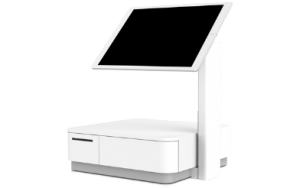
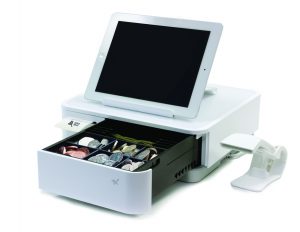
    One of the iPad’s main selling points is the tablet’s stylish design. If you selected an iOS POS system, chances are you care about how it looks. Don’t cover up a glossy iPad with a clunky enclosure or pair it with nondescript peripherals. Make sure your enclosure and peripherals enhance the iOS POS system and are as chic as their surroundings. Star Micronics offers mPOP™, Mobile Point of Purchase, the first hybrid for tablet POS that combines a cash drawer and printer peripheral. The unit’s ergonomic but fully integrated design works with the tablet or mobile device of your choice, so you can have a mobile solution without compromising space, quality design or functionality.

    iOS POS systems can be a great choice for your store or restaurant if you strategically design a system that will meet your business’ needs, withstand a harsh commercial environment and complement your brand with the look you want. Work with an experienced POS solution provider to help you incorporate those elements into your solution — and more— to help you get the most out of your investment.

    Free iOS Resources

    It can be tough to find truly Apple-compatible hardware for point of sale use. Star Micronics offers the largest range of Apple compatible printing products and Apple certified POS hardware. Developer friendly, Star was the first provider of SDK for iOS and is currently the only provider that offers iOS development support for scales, cash drawers, and kiosk printers. Help your customers future-proof their Apple POS solutions with Star Micronics.

  • 3 Reasons Why Merchants Should Choose Hybrid Tablet POS

    3 Reasons Why Merchants Should Choose Hybrid Tablet POS

    Some retailers are shifting away from a legacy point of sale (POS) terminal toward flexible, scalable tablet-based solutions. And for good reason. Tablet POS solutions are affordable, powerful platforms that increase mobility, generate comprehensive analytics and securely store data. Many tablet POS systems are cloud-based Software as a Service (SaaS) solutions that update automatically.

    Although SaaS solutions are easy to use, some merchants have been hesitant to implement them because they rely on an “always on” internet connection. A cloud-based system won’t function if the connection is spotty, which could wreak havoc during a big sale or holiday shopping time.

    Cloud-connected or hybrid POS solutions are a smarter choice for store owners who want the convenience and mobility of a cloud-based system, but can’t give up the reliability of a wired POS network. Sounds good? We think so, too. Here’s why you should consider a hybrid tablet POS system for your store:

    1. Versatility

    A hybrid tablet POS system gives you all the benefits of a cloud-based system, including real-time reporting — with one essential difference. If your store loses its internet connection, your hybrid tablet POS system will still run, but the real-time updates won’t sync until the internet connection is restored. A hybrid system can be used in any position: with the tablet mounted on a counter or wall or carried on the sales floor.

    2. Ergonomics/Aesthetics

    Hybrid tablet POS systems are attractive and chic, but they’re more than just a pretty face. These solutions are perfect for small counters, pop-up stores or other spaces where space is limited. Hybrid tablet POS systems have a small, practical footprint that won’t take up every inch of the counter, so there’s room to display impulse purchase items and gift cards. The checkout line is a customer’s last stop before they leave the store, so a tidy cash wrap with attractive technology leaves a positive, lasting impression as shoppers depart.

    3. Scalability

    If you are considering a future expansion or need to have more checkouts temporarily, a hybrid tablet POS system gives you the flexibility to easily add terminals and locations to your network. There are no licenses or technicians necessary, it’s essentially a “plug and play” operation. It only takes a few minutes to configure the tablet or mobile device and sync it to the network. Once it’s on the network, the device will be running the same solution, with the same data accessibility.

    Choose a hybrid tablet POS that can accommodate multiple peripherals. Star Micronics’ mPOP solution is one of the most comprehensive options on the market. We’ve recently added several new peripheral options, so the solution can be used as a complete check-out in nearly every retail category.

    The new peripheral options include:

    • Three Star Micronics scales that can be used in candy shops, farmer’s markets and grocery stores
    • 2D barcode scanner for retailers that want to accept QR code coupons or access item information
    • Two-line, blue backlit customer display that shows shoppers their transaction information as well as advertising messages
    • New cash drawer port that supports an additional external cash drawer for busy shifts

    Hybrid tablet POS solutions are a perfect solution for retail store owners who are hesitant to implement a SaaS system due to connectivity issues but want the freedom of mobile POS. A hybrid system empowers store owners and staff with all the benefits of a cloud-based solution, without ever turning away a sale because the internet is down.

    For more information on the Star Micronics mPOP solution, contact us!

  • Star Micronics to Showcase New mPOS Solutions at 2017 RSPA RetailNOW

    Star Micronics to Showcase New mPOS Solutions at 2017 RSPA RetailNOW

    Somerset, NJ – July 31, 2017 – Star Micronics, leading provider of point of sale and proof of transaction technology, will be exhibiting new solutions at the 2017 RSPA RetailNOW expo at booth #707.

    The show will be held from August 6th through August 8th at the Paris Hotel in Las Vegas, NV. RetailNOW® is one of RSPA’s signature events, billed as “the place where the industry meets” with over 170 exhibitors.

    Star Micronics will be showcasing a number of our newest mPOS peripherals and solutions including the mPOP™ with new peripheral options, TSP100IIIU, and SM-L300 portable printer, all compatible with Star Cloud Services digital receipt and customer engagement solutions.

    mPOP™

    Star Micronics has upgraded our popular all-in-one mPOP to add even more functionality. Now the mPOP will support a number of peripheral options including a 1D or 2D bar code reader, a customer-facing line display, three NTEP legal-for-trade point of sale scales, and an additional cash drawer. Users can now transform their mPOP into a complete point of sale hub, while still saving space.

    TSP100IIIU

    Star Micronics will be introducing the latest version to the TSP100III series, the TSP100IIIU at RetailNOW 2017. Now offered with a simple “plug and play” USB connection, users will be able to enjoy the upgrades of the TSP100III series including faster print speed and a paper de-curl mechanism that provides a flat receipt, even when the receipt paper is at the end of its roll. The TSP100III also facilitates data communication and device charging using only one lightning cable for iOS users.

    SM-L300

    The brand new SM-L300 is Star’s first Bluetooth low energy receipt, label, and MAXStick® portable printer. The SM-L300 is Bluetooth (3.0/4.0) compatible with all operating systems including Windows, Android™, and iOS, and is equipped with a receipt de-curl function and easy “drop-in and print” paper loading.

    Star Micronics is also proud to host our partners: CAP Software, Weigh & Pay Solutions, TouchBistro, GreenBits, AppSuite, Appetize, eMobilePOS, and Vend. Visit booth #707 for demonstrations of our partners’ POS software solutions with Star POS and mPOS peripherals.