Tag: Kitchen Workflows

  • Operandio and Star Micronics Standardize Food Safety Labeling for Multi-Location Restaurants

    Operandio and Star Micronics Standardize Food Safety Labeling for Multi-Location Restaurants

    Operandio integrates with Star’s mC-Label2 and mC-Label3 multifunction label printers to help multi-location restaurants simplify and improve food safety labeling workflows.

    Somerset, NJ – July 14, 2026 – Star Micronics, a global provider of point-of-sale (POS) hardware, cloud printing, and labeling solutions, today announced its integration with Operandio, an AI-powered operations platform for franchise and multi-unit restaurant networks. By combining Operandio’s digital food safety and operations platform with Star’s mC-Label2 and mC-Label3 multifunction label printers, restaurants can generate and print food safety labels directly from digital HACCP and food preparation workflows, helping improve operational control, traceability, and compliance across every location.

    Digital Food Safety from Preparation to Compliance

    Food safety depends on consistent execution throughout the day. Yet many restaurants still rely on handwritten labels, paper checklists, and manual processes that can introduce errors and make compliance more difficult.

    Operandio helps restaurants digitize HACCP procedures, food safety programs, temperature monitoring, operational checklists, corrective actions, and employee training through a single platform. By replacing paper-based processes with real-time digital workflows, restaurant operators gain greater visibility into daily execution while helping teams maintain consistent food safety standards across locations.

    Automated Labeling Where Food Safety Happens

    Through its integration with Star’s mC-Label2 and mC-Label3 printers, Operandio enables kitchen staff to print labels for prep, food rotation, expiration, allergen, and product identification directly from the application at the point of preparation.

    Restaurants can:

    • Print food safety labels directly from digital workflows
    • Replace handwritten labels with clear, consistent printed output
    • Standardize food safety labeling across multiple locations
    • Support HACCP procedures with accurate, time-sensitive labeling
    • Improve product traceability and inspection readiness
    • Reduce manual labeling during food preparation

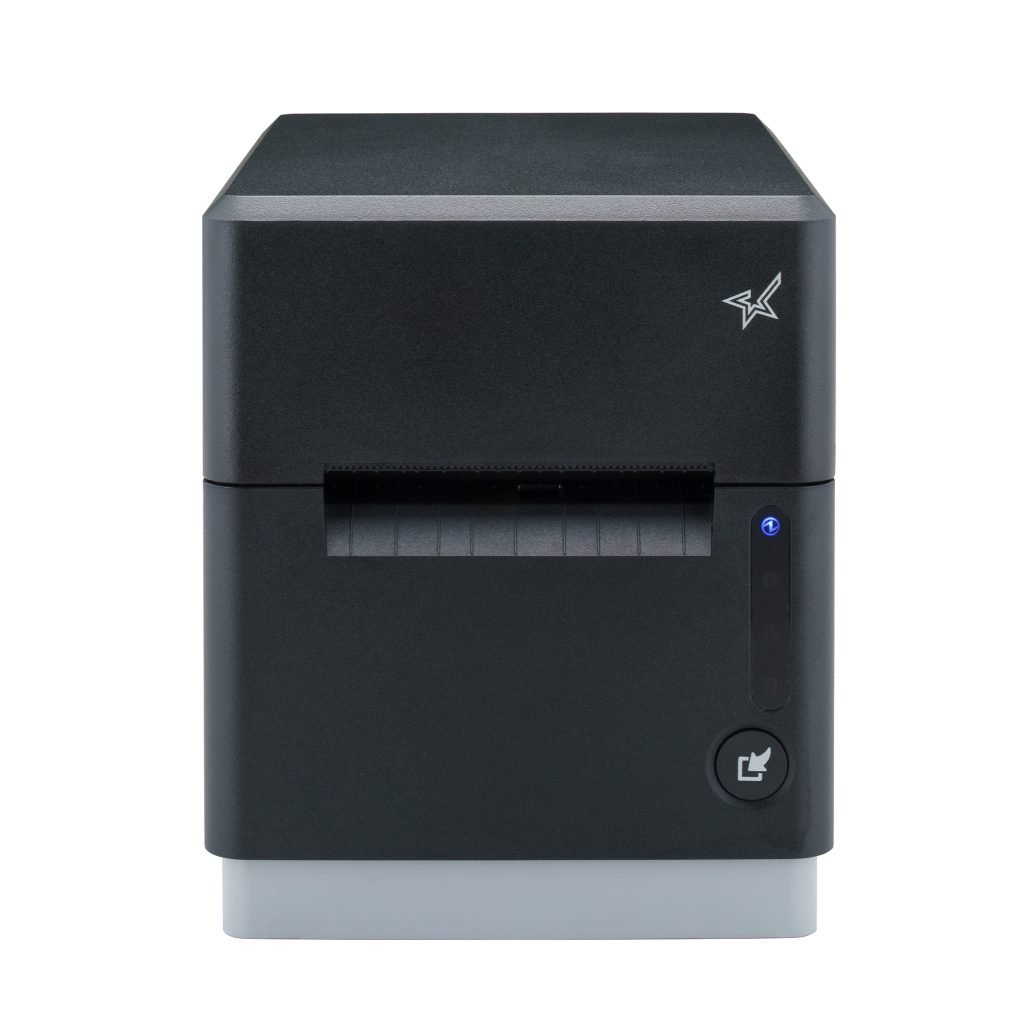
    Designed for demanding kitchen environments, the compact mC-Label2 fits easily into space-constrained prep stations with its front-loading, front-exit design, while the mC-Label3 supports label widths up to 3 inches for applications requiring larger label formats. Both printers support linerless and die-cut media, and feature tool-free maintenance to help minimize downtime in busy kitchen environments.

    “The Star mC-Label printer is an exceptionally versatile tool that brings both durability and flexible connectivity to the kitchen environment. At Operandio, we value partnering with experienced teams like Star Micronics that deliver reliable hardware to support consistent food safety and day-to-day restaurant operations.”

    “Digitizing food safety is only part of the equation. Restaurants also need a dependable way to turn those digital workflows into clear, accurate labels at the point of preparation. That’s where our mC-Label printers help complete the process.”

    Built for Multi-Unit Restaurant Operations

    Beyond food safety, Operandio provides restaurant operators with a centralized platform to recruit, onboard, train, operate, and maintain compliance across franchise and multi-location businesses. The platform digitizes standard operating procedures, inspections, equipment management, employee training, and daily tasks, giving restaurant operators greater visibility into execution across every location.

    To learn more about Star Micronics solutions, visit starmicronics.com.

    To explore Operandio, visit operandio.com.

    Can’t get enough industry news?

    Operandio Logo

    Operandio is an AI-powered operations platform built for franchise and multi-unit restaurant networks. The platform helps operators recruit, onboard, train, operate, and maintain compliance through a single system that digitizes food safety, task management, employee training, equipment management, and operational procedures. Founded in Australia with a North American headquarters in Utah, Operandio helps restaurant organizations improve consistency, accountability, and visibility across every location.
    Star Micronics logo, point-of-sale (POS) hardware and technology company.

    Star Micronics is a global provider of point-of-sale (POS) hardware, cloud printing, and labeling solutions that help businesses connect digital workflows to real-world operations. Serving retail, hospitality, healthcare, and service industries, Star delivers printing, labeling, cash management, self-service, and cloud-based technologies designed to support scalable, connected, and automated environments. Star’s solutions support Android, iOS, Windows, and web-based platforms and extend into the cloud through services such as CloudPRNT Next and StarIO.Online, Star’s fully managed cloud printing service.

    Visit starmicronics.com or follow us on Facebook, X, YouTube, or LinkedIn to learn more.

    Media Contact:

    Christin Dorner
    Star Micronics America, Inc.
    cdorner@starmicronics.com
    848-216-3318

    Media Contact:

    David Rigbye
    Operandio Pty Ltd.
    david@operandio.com
    213-863-1339

  • CaterZen and Star Micronics Help Restaurants Scale Catering with Linerless Labeling

    CaterZen and Star Micronics Help Restaurants Scale Catering with Linerless Labeling

    CaterZen Catering Software integrates with Star’s TSP143IV SK printer to help restaurants organize, identify, and fulfill catering orders with greater accuracy from the kitchen to the customer.

    Somerset, NJ – July 10, 2026 – Star Micronics, a global provider of point-of-sale (POS) hardware, cloud printing, and labeling solutions, today announced its integration with CaterZen Catering Software, a catering management platform built specifically for restaurants. Through the integration, CaterZen’s Catering Kitchen Display System (KDS) generates linerless labels on Star’s TSP143IV SK sticky linerless label printer as orders are prepared, helping restaurants keep complex catering orders organized from the kitchen to the customer.

    Extending the Catering Kitchen Workflow

    Catering orders are often larger, more customized, and more time-sensitive than traditional restaurant orders. Multiple trays, individually packaged meals, dietary restrictions, delivery locations, and scheduled pickup times all require clear labeling and organization throughout preparation and fulfillment.

    CaterZen helps restaurants manage every stage of the catering process, from customer inquiries and proposals to order management, production, online ordering, delivery coordination, marketing, and repeat business. In 2017, CaterZen introduced its Catering Kitchen Display System (KDS) to help restaurants manage catering production more efficiently. As customers looked to extend those digital workflows with printed labels, integrating the Star TSP143IV SK became a natural next step, allowing restaurants to generate clear, professional linerless labels directly from the KDS as orders are prepared.

    “We built CaterZen specifically for restaurant operators because catering requires workflows that fit the way restaurants actually work. Integrating Star’s TSP143IV SK gives our customers a dependable way to organize and identify every catering order while maintaining the professional presentation that keeps customers coming back.”

    The integration helps restaurants:

    • Print catering labels directly from CaterZen order workflows
    • Clearly identify trays, containers, bags, and individually packaged meals
    • Include customer names, delivery destinations, and special instructions
    • Organize complex catering orders during preparation and packing
    • Reduce packing and handoff errors before pickup or delivery

    Built for High-Volume Catering Workflows

    The Star TSP143IV SK is a single, compact linerless sticky label printer that gives restaurants the flexibility to handle everyday transactions and catering fulfillment with one printer. Repositionable linerless labels can be applied, removed, and repositioned without leaving adhesive residue, making them well-suited for catering containers, delivery bags, and order packaging. The printer also helps reduce liner waste while providing more labels per roll than traditional label media.

    “Large catering orders leave very little room for error. The last step before an order leaves the kitchen is often the one customers notice most. Clear, accurate labeling helps ensure every catering order arrives organized, identifiable, and ready to serve.”

    Supporting Restaurants That Cater

    As catering continues to grow as an important revenue channel for restaurants, operators need systems that simplify execution without adding unnecessary complexity. Together, CaterZen and Star provide a connected solution that helps restaurants manage catering orders, improve fulfillment accuracy, strengthen food presentation, and support a consistent customer experience for every event, meeting, and large-order delivery.

    For more information about Star Micronics solutions, visit starmicronics.com.

    To learn more about CaterZen Catering Software, visit caterzen.com.

    Can’t get enough industry news?

    CaterZen Catering Software and KDS logo

    CaterZen Catering Software is a catering management platform built specifically for restaurant operators. Designed by restaurateur Michael Attias, the platform helps restaurants manage customer inquiries, proposals, catering orders, online ordering, production, delivery coordination, customer communications, marketing, and repeat business through a single system. Built around real restaurant operations, CaterZen enables operators to grow catering revenue while maintaining organized, repeatable workflows.

    Star Micronics logo, point-of-sale (POS) hardware and technology company.

    Star Micronics is a global provider of point-of-sale (POS) hardware, cloud printing, and labeling solutions that help businesses connect digital workflows to real-world operations. Serving retail, hospitality, healthcare, and service industries, Star delivers printing, labeling, cash management, self-service, and cloud-based technologies designed to support scalable, connected, and automated environments. Star’s solutions support Android, iOS, Windows, and web-based platforms and extend into the cloud through services such as CloudPRNT Next and StarIO.Online, Star’s fully managed cloud printing service.

    Visit starmicronics.com or follow us on Facebook, X, YouTube, or LinkedIn to learn more.

    Media Contacts:

    Christin Dorner
    Star Micronics America, Inc.
    cdorner@starmicronics.com
    848-216-3318

    Michael Attias
    CaterZen Catering Software
    michael.attias@caterzen.com
    615-969-7090

  • 9 Restaurant Labels that Improve KDS Workflows

    9 Restaurant Labels that Improve KDS Workflows

    A kitchen display system (KDS) helps restaurants manage orders digitally by sending information from the point of sale (POS) system directly to food preparation stations. This gives kitchen teams real-time visibility into incoming orders, modifiers, and fulfillment priorities for dine-in, drive-thru, pickup, and delivery channels.

    However, once food preparation begins, orders move through physical workflows. Items are prepared, packaged, staged, picked up, and delivered. Restaurant labels for KDS workflows help carry order information beyond the screen, ensuring important details remain attached to the order throughout preparation, packaging, pickup, and delivery.

    From beverage labels and allergy alerts to catering labels and tamper-evident seals, the right labels help restaurants extend KDS communication throughout the operation.

    Table of Contents

    What Are Restaurant Labels for KDS Workflows?

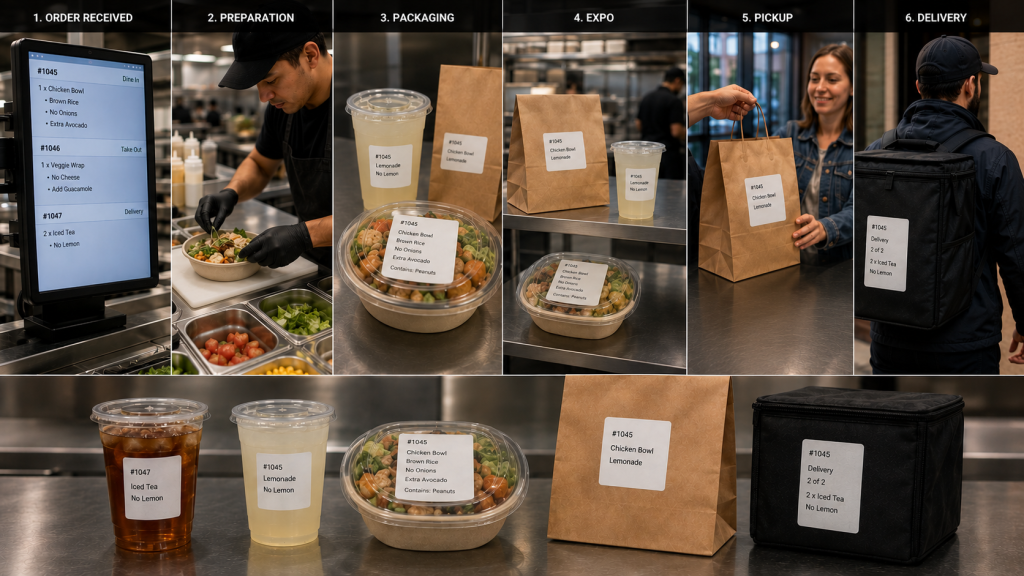
    A kitchen display system (KDS) manages order information digitally, but restaurant operations still depend on physical workflows. Orders move through multiple stages before reaching the customer, including:

    • Food preparation
    • Beverage preparation
    • Packaging
    • Expo
    • Pickup
    • Delivery

    Restaurant labels for KDS workflows help carry order information beyond the screen and keep it attached to the order as it moves through these stages.

    As orders move between stations, labels can communicate customer names, modifiers, allergy information, beverage customizations, pickup instructions, delivery details, and other important information. Keeping these details visible throughout preparation and fulfillment reduces reliance on verbal communication and helps teams coordinate complex dine-in, drive-thru, pickup, and delivery operations.

    Restaurant Label Workflow

    Types of Restaurant Labels for KDS Workflows

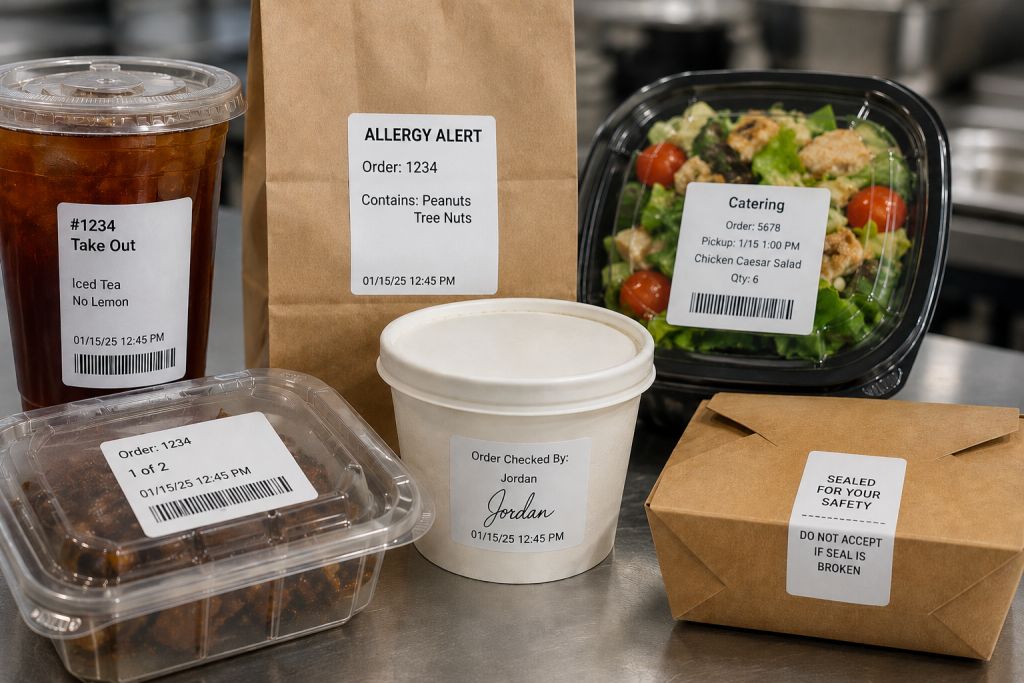
    A KDS communicates order information digitally, but labels help carry that information through food preparation, packaging, pickup, and delivery. Different types of restaurant labels support different stages of the workflow, helping employees identify orders, manage modifications, communicate food safety information, and direct completed orders to the correct destination.

    1. Drive-Thru and Takeout Labels

    An integrated system can generate labels along with sending orders to the KDS from the drive-thru, online ordering platform, or self-ordering kiosk. Labels can be applied to trays, containers, cups, or bags so order information remains attached to the order throughout preparation and fulfillment. Labels also ensure the team directs the order to the right place, whether the front counter, the drive-thru, or order pickup.

    2. Allergy and Exception Order Labels

    Allergies and food sensitivities have become more common, requiring special order preparation so diners can safely enjoy their meals. Furthermore, many customers have strong food preferences and request items prepared in specific ways.

    Allergy and exception order labels help ensure modifications remain visible as the order moves between preparation, packaging, and pickup stations. Exception order labels clearly inform food prep of changes to the way they typically prepare menu items. They also flag orders for the expeditor, server, or take-out counter worker that the kitchen prepared the order as the customer requested.

    3. Made-to-Order Food Labels

    Although a KDS has become a standard tool in quick service restaurants (QSRs), this technology offers benefits to the whole range of food service environments. When a store or café sells made-to-order (MTO) items, labels include vital information that helps customers make informed decisions and to keep the business in compliance.

    MTO food labels can include product name, description, ingredients, nutrition information, and allergen or dietary restriction alerts. Businesses can also customize MTO food labels with branding elements such as their name and logo.

    4. Beverage and Barista Labels

    Customers have strong opinions about how they want their coffee, espresso, or tea orders, requesting various types of milk, creamer, sweetener, flavors, and other options. Beverage orders often include customizations such as milk selections, flavors, sweeteners, and preparation instructions.

    Labels help baristas identify these details quickly and keep drinks matched to the correct customer throughout preparation and pickup. Labels with each detail of the order simplify order prep, and repositionable labels can follow orders from the POS system, to order prep, and then to the customer’s cup.

    5. Product ID and Barcode Labels

    Tracking prepared items or MTO foods can help shops manage their inventory, reduce shrinkage, and minimize waste. Barcoded labels generated during KDS workflows allow employees with scanners to capture data as items are placed into coolers or display cases, including their sell-by dates. Clear, reliable barcode labels also give shops a way to track ingredients’ sources in case of a recall and for fast price scanning at the checkout.

    6. Catering Labels

    If a restaurant or store offers catering, labels printed during KDS workflows can flag orders for the items they need for completeness, such as condiments, trays, or utensils. Labels can also include food safety instructions, nutrition information, allergen warnings, and serving instructions.

    7. Nutrition and Calorie Labels

    The FDA requires food service companies to provide nutrition facts to consumers. Although not every dine-in or take-out order has a nutrition label, restaurants must provide calorie counts and ingredient information on request. Restaurants can simplify this process with templated labels that employees print during packaging or order assembly.

    8. Order Verification and QC Labels

    Once an order is packaged, an expeditor or other restaurant employee cannot easily verify that every item is present by looking at the sealed bag alone. Some restaurants add a POS scale to the workflow to help verify order completeness before pickup or delivery.

    A typical order verification workflow may include:

    1. Package the order
    2. Weigh the completed bag
    3. Compare the weight to the expected total shown on the order label
    4. Investigate any significant discrepancies
    5. Release the order for pickup or delivery

    If the actual weight differs from the expected weight, employees can review the order and correct missing or incorrect items before the customer receives it. Combined with restaurant labels for KDS workflows, weight-based verification provides another checkpoint to help restaurants catch errors before orders leave the store.

    9. Tamper-Evident Labels

    When the kitchen team closes a package, they can add a tamper-evident label as the final step. Tamper-evident labels help indicate whether a bag or container has been opened after packaging. They are commonly used for delivery and pickup orders where food safety and package integrity are important.

    Restaurant Label Types

    How to Choose the Right Type of Restaurant Label for KDS Workflow Stages

    The right restaurant label depends on both the media type and adhesive required for the workflow. Some KDS applications benefit from linerless labels for fast application, while others require die-cut labels, repositionable adhesives, or permanent tamper-evident labeling.

    Linerless Labels

    • No liner backing
    • Fast application
    • Reduced waste
    • Great for:
      • beverage labels
      • takeout labels
      • pickup labels
      • food container labels

    Die-Cut Labels

    • Individual label shapes/sizes
    • Consistent placement
    • Useful for:
      • nutrition labels
      • product identification
      • barcode labels
      • made-to-order food labels

    Repositionable Linerless Labels

    • Diamond adhesive (light tack) or full coverage (stronger)
    • Can be removed and reapplied without residue
    • Useful for:
      • beverage workflows
      • food prep trays
      • staging areas
      • internal order tracking

    Permanent Linerless and Tamper-Evident Labels

    • Remain attached
    • Show evidence of removal
    • Useful for:
      • delivery bag seals
      • packaged foods
      • barcode labels
      • food safety workflows

    Features to Look for in Restaurant Label Printers for KDS Workflows

    Choosing the right restaurant label printer is just as important as selecting the right label media. KDS workflows often support food preparation, beverage stations, packaging, pickup, and delivery operations, so label printers should be able to support a variety of applications and deployment environments.

    Multimedia Printing

    Printers that support multiple media types, including linerless labels, die-cut labels, and receipts, allow restaurants to standardize hardware across stations. A multifunction printer can support different workflows without requiring separate printer models for each application.

    Linerless Label Support

    Linerless labels help reduce liner waste and counter clutter while supporting high-volume labeling workflows. Restaurants planning to use linerless labels should choose a printer designed specifically for linerless media.

    Cloud Printing Capabilities

    Cloud-connected printers can receive print jobs directly from KDS software, online ordering platforms, and cloud-based applications without relying on local print servers.

    Support for Multiple Adhesive Types

    Different workflows require different label adhesives. Restaurants may use repositionable labels for beverage preparation and internal workflows, while delivery and packaging applications may require permanent or tamper-evident labels.

    Fast Print Speeds

    High-volume kitchens depend on labels being available when needed. Fast print speeds help prevent delays during peak ordering periods and support continuous order flow.

    KDS and POS Compatibility

    Restaurant label printers should work with KDS software, POS systems, cloud platforms, and the operating systems used throughout the business. Compatibility can simplify deployment, support, and long-term maintenance.

    User-Friendly Maintenance

    Restaurant environments are busy, and printer maintenance is often handled by store-level employees. Features such as tool-free maintenance, easy media loading, user-replaceable components, and guided cleaning procedures can help reduce downtime and keep printers operating reliably.

    Star Micronics Label Printers for KDS Workflows

    Restaurants use a variety of labels throughout KDS workflows, including beverage labels, allergy labels, barcode labels, catering labels, order verification labels, and tamper-evident labels. Supporting these applications requires printers that match the media, adhesive, and workflow requirements of the operation.

    Star Micronics offers several printer options for restaurant labels used with KDS systems, including:

    mC-Label3 Multifunction Printer

    The mC-Label3 supports receipts, die-cut labels, repositionable linerless labels, and permanent linerless labels from a single printer platform. This makes it a good choice for restaurants looking to standardize printing across multiple stations.

    The Star Micronics mC-Label3 is a versatile multifunction printer that prints a wide range of labels and receipts, including both permanent and repositionable sticky linerless. It features cloud connectivity and innovative technologies like SteadyLAN and TetherLAN for enhanced printing convenience.

    Discover the mC-Label3 >

    mC-Label2 Multifunction Printer

    The mC-Label2 provides support for a wide range of label and receipt media in a compact design, making it suitable for food preparation, packaging, pickup, and other labeling applications.

    The mC-Label2 packs powerful features into a compact, front-loading design, including 300 dpi resolution, support for linerless, die-cut, receipt, and continuous media, and connectivity options like USB-C, LAN, WLAN, Bluetooth, and Apple MFi-certified pairing (X4 models only).

    Explore the mC-Label2 >

    TSP143IV SK Sticky Linerless Label Printer

    The TSP143IV SK is designed specifically for sticky linerless label printing and is commonly used for beverage labeling, food container labeling, pickup workflows, and other applications where repositionable labels are beneficial.

    The TSP143IV SK by Star Micronics sets a new standard for compact, eco-friendly thermal linerless label printing, offering advanced connectivity options like Wi-Fi and AOA, and efficient, residue-free labels for diverse business needs.

    Find out more >

    Whether a restaurant is deploying a new KDS or expanding existing workflows, selecting the right label printer helps ensure order information remains visible from preparation through pickup or delivery.

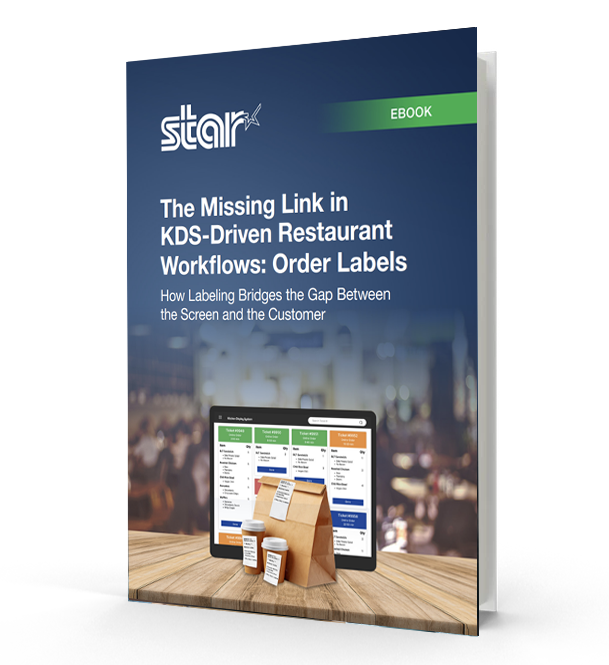
    The Missing Link in KDS-Driven Restaurant Workflows

    This eBook shows how labeling extends KDS accuracy into real-world workflows, helping restaurants and retailers improve fulfillment, accountability, and consistency across all ordering channels.

    Contact Star Micronics to learn more about restaurant label printers for KDS workflows.

    Frequently Asked Questions About Restaurant Labels for KDS Workflows

    What are restaurant labels used for in KDS workflows?

    Restaurant labels help carry order information through physical kitchen workflows after orders appear on a kitchen display system (KDS). They support food prep, packaging, pickup, delivery, catering, and labeling compliance workflows.

    How do restaurant labels support KDS workflows?

    A KDS communicates order information digitally, while labels help keep that information attached to the order itself as it moves through prep stations, expo, packaging, pickup, and delivery.

    What types of restaurant labels are commonly used with KDS systems?

    Restaurants commonly use:

    • Drive-thru and takeout labels
    • Allergy and exception order labels
    • Beverage labels
    • Product ID and barcode labels
    • Catering labels
    • Nutrition labels
    • Tamper-evident labels
    • Order verification and QC labels

    Different labels support different stages of the workflow.

    What is the difference between linerless and die-cut restaurant labels?

    Linerless labels print continuously without backing paper, helping reduce waste and clutter in high-volume kitchens. Die-cut labels are individually separated and are often used for applications requiring specific label sizes or permanent adhesion.

    Why are linerless labels popular in restaurant kitchens?

    Linerless labels help reduce liner waste, improve workflow efficiency, and minimize clutter on prep counters and floors. They are especially useful in fast-paced restaurant and QSR environments.

    What information should restaurant labels include?

    Depending on the workflow, restaurant labels may include:

    • Order details
    • Customer names
    • Allergens or dietary restrictions
    • Beverage customizations
    • Nutrition information
    • Barcodes or QR codes
    • Sell-by dates
    • Pickup or delivery details

    Why are allergy and exception order labels important?

    Allergy and exception order labels help kitchen staff quickly identify orders that require modified preparation. These labels support safer food handling and help reduce communication breakdowns during busy service periods.

    How do tamper-evident labels support delivery workflows?

    Tamper-evident labels help show customers that delivery bags or food containers have not been opened after packaging. They also help restaurants maintain more secure and organized delivery workflows.

    Can restaurant labels be printed automatically from a KDS?

    Yes. Many KDS workflows automatically trigger label printing when orders are received, bumped to another prep stage, packaged, or prepared for pickup or delivery.

    What should restaurants look for in a label printer for KDS workflows?

    Important features include:

    • Multimedia printing support
    • Linerless compatibility
    • Fast print speeds
    • Compact design
    • Cloud printing capabilities
    • Easy KDS integration
    • Support for repositionable and permanent labels

    Why are multimedia label printers useful in restaurants?

    Multimedia label printers can print receipts, linerless labels, and die-cut labels from a single device. This helps restaurants standardize hardware across stations and reduce the number of printer models they manage.

    How do cloud-connected label printers support KDS workflows?

    Cloud-connected printers can receive print jobs directly from KDS software or online ordering platforms without relying on local print servers. This simplifies deployment and supports multi-location restaurant operations more efficiently.

  • Star Micronics and OneTablet Help Restaurants Drive More Revenue from Delivery, Backed by Reliable Kitchen Printing

    Star Micronics and OneTablet Help Restaurants Drive More Revenue from Delivery, Backed by Reliable Kitchen Printing

    Star Micronics kitchen printing pairs with OneTablet’s delivery revenue platform to help restaurants increase order volume, improve menu conversion, and fulfill off-premise orders with greater accuracy.

    Somerset, NJ – May 1, 2026 – Star Micronics, a global provider of point-of-sale (POS) hardware, cloud printing, and labeling solutions, today announced its collaboration with OneTablet, a restaurant technology platform that helps independent restaurants and multi-location operators generate more revenue from third-party delivery. Together, the companies give restaurants the tools to improve menu visibility, conversion rates, and average order value across delivery platforms, while ensuring every order prints reliably at the right station.

    Third-party delivery now accounts for 30% or more of a restaurant’s revenue, and that share continues to climb. Restaurants that aren’t actively optimizing their presence on DoorDash, Uber Eats, and Grubhub are leaving money on the table. OneTablet gives operators the tools to win on these platforms: better menu visibility, stronger conversion rates, higher average order values, and the performance data to know what’s working and what isn’t.

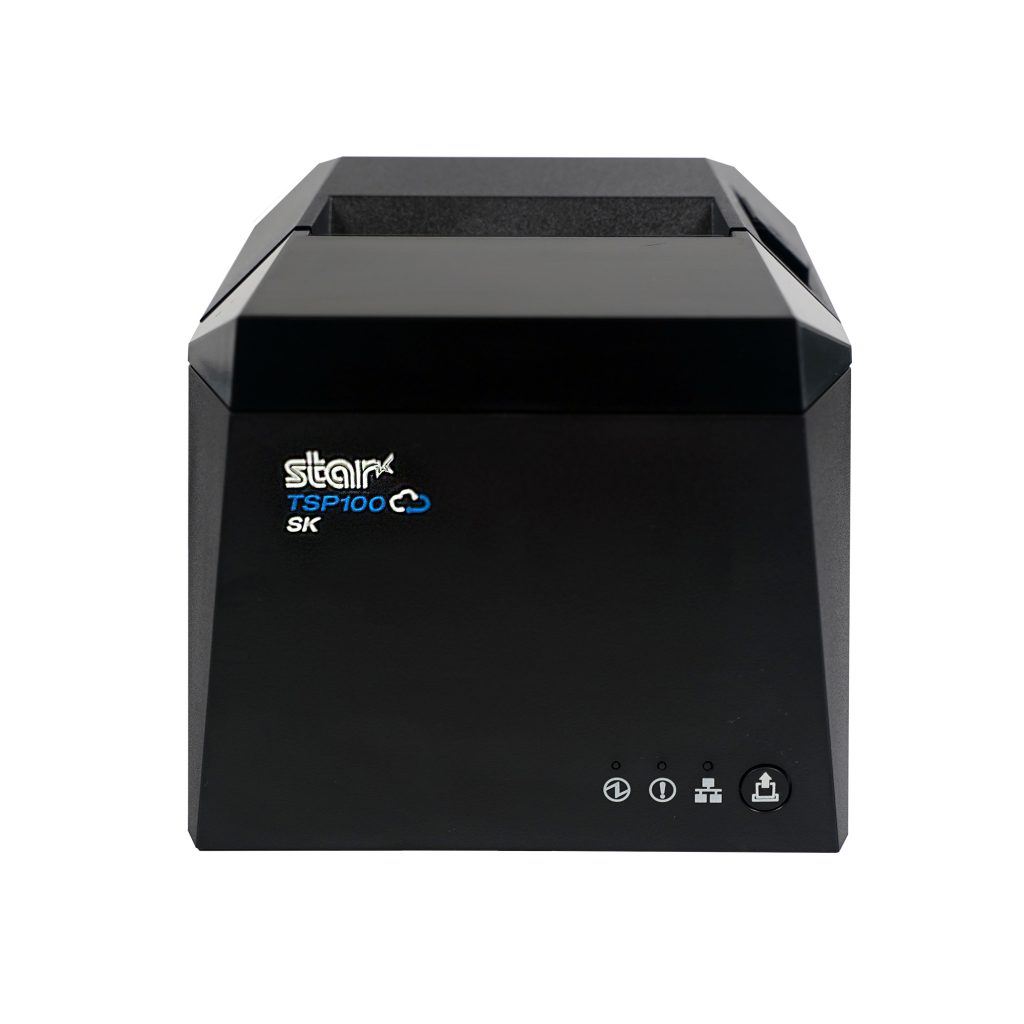
    As that order volume grows, kitchens need hardware that can keep up. Star’s TSP100 series delivers the print speed, reliability, and uptime that high-volume delivery operations demand, so every ticket reaches the right station, every time.

    From Delivery Platform to the Kitchen Line

    Aggregating orders is only part of the workflow. Restaurants also need to manage menus, monitor performance across delivery platforms, and maintain control over how orders are prepared and fulfilled.

    OneTablet is the operating system for off-premise restaurant operations, consolidating Uber Eats, DoorDash, and Grubhub into a single, unified platform. Beyond order aggregation, it gives operators centralized control over menus, pricing, and prep timing, while delivering real-time reporting across all channels.

    By surfacing performance data at the item, channel, and store level, OneTablet enables restaurants to continuously optimize their delivery business—adjusting menus, pricing, and availability to increase conversion, improve order volume, and maximize revenue. Through its integration with Star Micronics printers, OneTablet extends that control directly into the kitchen, ensuring orders are automatically routed, organized, and printed at the appropriate prep stations. This creates a seamless connection between digital optimization and in-store execution, reducing errors and improving throughput during peak service.

    Star’s TSP100 series thermal ticket printers, including the TSP143III (LAN, USB, and Bluetooth models), as well as the TSP143IV X4 and TSP143IV SK X4 sticky linerless label printers, were tested across OneTablet’s platform and performed reliably in each configuration. This allows restaurants to use the same trusted hardware for both standard ticket printing and sticky labeling workflows, depending on their kitchen setup.

    Supporting High-Volume Delivery Workflows

    Off-premise orders introduce significant pressure during peak hours, where missed tickets, unclear modifications, or delayed prints can quickly lead to errors and slowdowns.

    By combining OneTablet’s order aggregation with Star’s reliable printing, restaurants can:

    • route orders instantly to the correct prep station
    • maintain clear, readable tickets during peak volume
    • reduce missed or duplicated orders
    • kitchens moving at the pace of incoming delivery demand

    “Delivery isn’t linear. Orders hit in waves from multiple platforms at the same time. At OneTablet, we bring structure to that. We organize and route orders so kitchens can actually execute. If tickets are not clear and in the right place immediately, performance drops fast. Star gives us the consistency on the print layer to make sure that does not happen.”

    “As restaurants take in orders from multiple delivery channels, consistency at the kitchen level becomes critical. By working with OneTablet, we’re helping ensure those orders are reliably routed and printed at the right station, so staff can act on them immediately without confusion or delay.”

    Extending Workflows with Labeling

    In addition to ticket printing, labeling can be used to support order identification and quality control for off-premise orders. Applying labels to bags, containers, or drinks helps staff verify items before they leave the kitchen, reducing handoff errors during busy service periods.

    As delivery volume increases, combining order aggregation, printing, and labeling provides a more controlled workflow from order intake to fulfillment.

    For more information about Star Micronics solutions, visit starmicronics.com.

    To learn more about OneTablet, visit onetablet.com.

    Can’t get enough industry news?

    OneTablet Delivery Operations

    OneTablet is a restaurant technology platform designed to help independent restaurants and multi-location operators generate more revenue from third-party delivery. The platform consolidates DoorDash, Uber Eats, and Grubhub into a single dashboard, enabling operators to manage menus, improve visibility, increase conversion rates, and grow average order value across all channels.

    Unlike traditional POS-based integrations, OneTablet operates at the platform layer, giving restaurants direct control over menus, pricing, availability, and store operations within each marketplace. This allows operators to improve key performance drivers such as item availability, prep times, cancellations, and customer ratings—ultimately increasing order volume and revenue.

    Through advanced reporting and menu optimization tools, OneTablet surfaces actionable insights that help restaurants identify opportunities to improve performance, drive more orders, and capture incremental revenue.

    Originally founded as MealCo and relaunched as OneTablet in 2025, the company serves independent restaurants, enterprise brands, and digital-first operators across the United States.

    Star Micronics logo, point-of-sale (POS) hardware and technology company.

    Star Micronics is a global provider of point-of-sale (POS) hardware, cloud printing, and labeling solutions that help businesses connect digital workflows to real-world operations. Serving retail, hospitality, healthcare, and service industries, Star delivers printing, labeling, cash management, self-service, and cloud-based technologies designed to support scalable, connected, and automated environments. Star’s solutions support Android, iOS, Windows, and web-based platforms and extend into the cloud through services such as CloudPRNT Next and StarIO.Online, Star’s fully managed cloud printing service.

    Visit starmicronics.com or follow us on Facebook, X, YouTube, or LinkedIn to learn more.

    Media Contact:

    Christin Dorner
    Star Micronics America, Inc.
    cdorner@starmicronics.com
    848-216-3318

    Media Contact:

     
    Paula Moran
    OneTablet
    paula@onetablet.com

  • Kitchen Order Routing Breaks Down at Scale. A QSR Case Study.

    Kitchen Order Routing Breaks Down at Scale. A QSR Case Study.

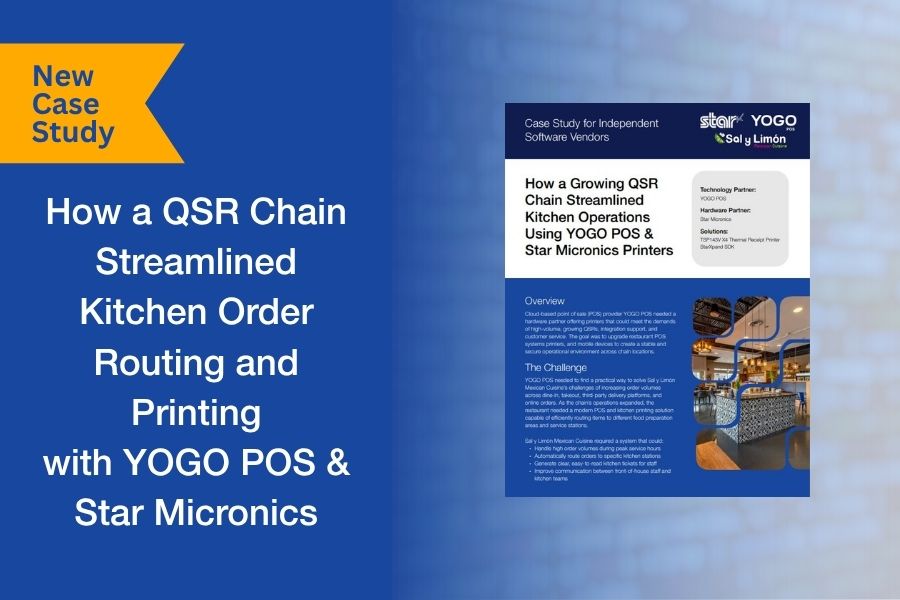
    For many QSRs, order complexity doesn’t become a problem until volume increases. Dine-in, takeout, online ordering, and delivery platforms all feed into the same kitchen, but without structured routing, orders can bottleneck at the wrong stations or get lost in the flow.

    That’s exactly what Sal y Limón Mexican Cuisine was facing. As order volume grew across channels, the kitchen needed a way to route items to the right preparation areas and ensure tickets were clear, consistent, and easy to act on during peak hours.

    Working with YOGO POS, the team implemented a kitchen printing and order routing system using Star Micronics printers and the StarXpand™ SDK. Orders from multiple sources were directed to specific stations, with dedicated printers supporting each part of the workflow.

    We put together a short case study that looks at how the system was configured, how the integration was handled, and what changed once routing and printing were aligned with kitchen operations.

    Download the full case study to see how the deployment was structured and scaled.

  • Star Micronics Partners with Kitchen Technology, Innovations by ICC to Deliver Automated Food Safety Labeling with i.Print3™ and mC-Label2

    Star Micronics Partners with Kitchen Technology, Innovations by ICC to Deliver Automated Food Safety Labeling with i.Print3™ and mC-Label2

    The partnership combines automated labeling technology with compact, reliable printing to help foodservice operators improve traceability, compliance, and kitchen efficiency.

    Somerset, NJ – April 14, 2026 – Star Micronics, a global leader in POS hardware, labeling, and cloud printing technology, today announced a partnership with Kitchen Technology, Innovations by ICC (KTI/ICC) to integrate the i.Print3™ automated labeling solution with Star’s mC-Label2 multifunction label printer. The combined solution helps foodservice operators automate food preparation labeling, improve traceability, and support food safety compliance across modern kitchen environments.

    Foodservice operations often rely on handwritten labels or preprinted label sheets for food preparation and grab-and-go items. These manual processes can lead to inconsistent labeling, wasted materials, and increased labor. Integrating the i.Print3 device with Star’s mC-Label multifunction printer series, including the compact mC-Label2 and mC-Label3 printers, allows operators to generate clear, accurate labels at the point of food preparation, including preparation dates, expiration times, and other key food safety information.

    Automating Food Safety Labeling in the Kitchen

    The i.Print3 device is designed to automate kitchen labeling workflows in fast-paced foodservice environments. Instead of relying on multiple tools and fragmented workflows, the solution combines hardware, software, and cloud connectivity into a single integrated labeling platform.

    Cloud-based traceability allows operators to store labeling data and maintain records that support food safety oversight and operational visibility. This capability helps organizations track food preparation information, improve accountability, and support compliance with evolving regulatory and food safety requirements.

    “The i.Print3 was developed to simplify labeling and food safety processes for foodservice operators. Partnering with Star Micronics allows us to deliver a complete labeling solution that fits right into kitchen environments while supporting accurate, automated food safety labeling.”

    Compact Hardware Designed for Busy Kitchens

    Star’s mC-Label2 printer provides the compact footprint and operational flexibility required in space-constrained kitchen environments where countertop space is limited and efficiency is critical.

    The printer’s front-loading design allows labels to be reloaded without removing the device from the counter, making it easier to maintain during busy service periods. The integrated cutter supports die-cut labels and allows operators to use multiple label sizes, providing flexibility for different food preparation and labeling workflows.

    “The mC-Label2 was an ideal fit for this solution because of its compact design, reliability, and flexible media support. These features allow the labeling system as a whole to fit naturally into real kitchen workflows without adding complexity.”

    Supporting a Wide Range of Foodservice Environments

    The combined solution is designed for a variety of foodservice and retail food preparation environments, including quick-service restaurants (QSRs), convenience stores, grocery prepared food departments, and institutional kitchens such as hospitals and cafeterias.

    By printing labels directly at the prep station, the i.Print3 and mC-Label2 turn a traditionally manual task into a fast, automated process that improves food safety visibility and keeps kitchen teams moving without interruption.

    With more than four decades of experience developing technology solutions for the foodservice industry, KTI/ICC brings deep industry knowledge to the partnership. By combining KTI/ICC’s foodservice automation expertise with Star Micronics’ reliable printing hardware, the partnership delivers a modern solution for automated food preparation labeling.

    For more information about Star Micronics solutions, visit starmicronics.com.

    To learn more about Kitchen Technology, Innovations by ICC and the i.Print3™ solution, visit onkti.com.

    Can’t get enough industry news?

    Kitchen Technology Innovations by ICC logo

    Founded in 1987, Kitchen Technology, Innovations by ICC. (ICC) and its innovation division, Kitchen Technology Innovations (KTI), develop advanced, integrated technologies for the foodservice industry. Leveraging decades of expertise and a portfolio of patented solutions, KTI/ICC delivers intelligent systems that digitize food safety, automate product management, and provide real-time operational visibility across multi-unit environments. Designed for scalability and ease of use, KTI/ICC’s platform enables operators to reduce risk, improve consistency, and optimize performance. The family-founded company supports leading global brands, including EB Group, Paradies Lagardère, and Burger King.

    Star Micronics logo, point-of-sale (POS) hardware and technology company.

    Star Micronics is a global provider of point-of-sale (POS) hardware, cloud printing, and labeling solutions that help businesses connect digital workflows to real-world operations. Serving retail, hospitality, healthcare, and service industries, Star delivers printing, labeling, cash management, self-service, and cloud-based technologies designed to support scalable, connected, and automated environments. Star’s solutions support Android, iOS, Windows, and web-based platforms and extend into the cloud through services such as CloudPRNT Next and StarIO.Online, Star’s fully managed cloud printing service.

    Visit starmicronics.com or follow us on Facebook, X, YouTube, or LinkedIn to learn more.

    Media Contact:

    Christin Dorner
    Star Micronics America, Inc.
    cdorner@starmicronics.com
    848-216-3318

    Media Contact:

    Mark Salerno
    Kitchen Technology, Innovations by ICC
    marky@goicc.com
    631-673-5100

  • Star Micronics and ConnectedFresh Automate Food Safety and Traceability Workflows with Cloud-Connected Labeling

    Star Micronics and ConnectedFresh Automate Food Safety and Traceability Workflows with Cloud-Connected Labeling

    The integration combines ConnectedFresh’s IoT monitoring and food safety platform with Star’s cloud printing technology to automate mission-critical workflows, dramatically improving documentation and reducing food waste and risk for foodservice operations.

    Somerset, NJ – April 13, 2026 – Star Micronics, a global leader in POS hardware and cloud printing technology, today announced that ConnectedFresh has integrated Star’s mC-Label3 multifunction label printer and StarIO.Online fully managed cloud printing service into its digital food safety platform. The integration enables restaurants and foodservice operators to generate accurate, traceable food labels directly from the ConnectedFresh platform, helping improve compliance, increase food safety visibility, and reduce manual labeling tasks.

    Connecting Digital Food Safety Monitoring to Physical Labeling

    ConnectedFresh uses wireless IoT sensors to give restaurant and foodservice operators real-time visibility into temperature conditions, equipment performance, and food safety compliance across their locations. Through the integration with Star Micronics, that digital food safety data can now trigger on-demand label printing via StarIO.Online, connecting digital records to printed labels that document preparation details, product information, and traceability records. Because Star manages the cloud infrastructure, labels can be generated without local servers or complex on-site IT setup.

    Supporting FSMA Traceability and Recordkeeping

    With the FDA’s Food Safety Modernization Act (FSMA) Section 204 Food Traceability Rule requiring expanded recordkeeping for certain foods, foodservice operators are strengthening their traceability processes ahead of the rule’s enforcement date in July 2028. Many operators are moving away from manual logs and handwritten labels toward digital systems that can automatically document Critical Tracking Events and maintain accurate traceability records.

    By combining ConnectedFresh’s platform with Star’s labeling and cloud printing technology, operators can automatically generate labels documenting key food safety and traceability information, including preparation dates, product details, and cooling records. For time-sensitive compliance tasks like cool-down logging, ConnectedFresh sensors can monitor the entire process and automatically trigger a printed label documenting the result, helping improve documentation accuracy while reducing labor, food waste, and risk.

    On-Demand Labeling for Real Kitchen Workflows

    Star’s mC-Label3 multifunction printer supports a wide range of labeling applications in foodservice environments, including food preparation, grab-and-go packaging, and product identification, while supporting multiple media types such as linerless and die-cut labels. Star’s mG-T30 scale is also integrated with the platform, enabling weight-based labeling and verification as an additional capability for foodservice operations.

    “ConnectedFresh is built to help operators stay on top of food safety without adding more complexity to the kitchen. Working with Star lets us connect our platform directly to reliable labeling hardware so teams can print accurate, traceable labels at the exact moment food is prepared, cooled, or packaged.”

    “Food safety and traceability are becoming more data-driven, and operators need solutions that can scale across every location. By bringing together ConnectedFresh’s sensor-driven platform and Star’s labeling and cloud technologies, this partnership helps standardize how food safety information is captured and managed across distributed operations.”

    Cloud-Connected Printing for Multi-Location Foodservice

    StarIO.Online enables cloud applications to manage and control printers remotely, allowing businesses to deploy and monitor labeling across distributed locations without maintaining on-site infrastructure. This allows ConnectedFresh users to standardize and scale labeling workflows across multiple kitchens, restaurants, and food preparation facilities using a single, versatile device that supports food safety labeling, grab-and-go labeling, and order accuracy workflows.

    For example, when ConnectedFresh sensors confirm that a food item has completed its cool-down process within the required time and temperature range, the platform can automatically generate and print a label documenting the completion time and product details, ready to apply directly to the stored product without any manual logging.

    By combining ConnectedFresh’s digital food safety platform with Star’s labeling and cloud printing technologies, the integration helps operators bridge the gap between digital compliance systems and real-world kitchen operations.

    For more information about Star Micronics solutions, visit starmicronics.com.

    To learn more about ConnectedFresh, visit connectedfresh.com.

    Can’t get enough industry news?

    ConnectedFresh Logo

    ConnectedFresh is the most comprehensive sensor-driven intelligence platform built for foodservice, helping restaurants and food operators automate food safety processes, monitor facilities and equipment in real time, and manage risk and compliance across all locations. The platform is powered by wireless IoT sensor hardware, sourced and passed through to customers at cost, delivering real-time visibility from the kitchen floor to the back office. Through integrations with partners like Star Micronics, ConnectedFresh extends that intelligence to physical labeling, connecting digital food safety records with printed documentation for improved traceability.

    To learn more about ConnectedFresh’s 25+ turnkey solutions for foodservice, visit connectedfresh.com/solutions.

    Star Micronics logo, point-of-sale (POS) hardware and technology company.

    Star Micronics is a global provider of point-of-sale (POS) hardware, cloud printing, and labeling solutions that help businesses connect digital workflows to real-world operations. Serving retail, hospitality, healthcare, and service industries, Star delivers printing, labeling, cash management, self-service, and cloud-based technologies designed to support scalable, connected, and automated environments. Star’s solutions support Android, iOS, Windows, and web-based platforms and extend into the cloud through services such as CloudPRNT Next and StarIO.Online, Star’s fully managed cloud printing service.

    Visit starmicronics.com or follow us on Facebook, X, YouTube, or LinkedIn to learn more.

    Media Contact:

    Christin Dorner
    Star Micronics America, Inc.
    cdorner@starmicronics.com
    848-216-3318

    Media Contact:

    ConnectedFresh
    media@connectedfresh.com
    888-310-2019

  • POS Printer Integration Shouldn’t Slow Down Your Platform. A New Case Study.

    POS Printer Integration Shouldn’t Slow Down Your Platform. A New Case Study.

    For many POS platforms, printing issues don’t show up during development. They show up during deployment. Different restaurant environments, network configurations, and connectivity challenges can quickly turn printing into one of the biggest sources of support calls.

    That’s exactly what Selflane experienced. Printing instability wasn’t just a minor inconvenience. It was pulling engineering and service teams into troubleshooting instead of product development and growth.

    By standardizing on the TSP143IV thermal receipt printer and moving to the StarXpand SDK, Selflane was able to modernize its POS printer integration, simplify installations, and reduce recurring support issues.

    We put together a short case study that walks through what changed and what other ISVs can learn from it.

    Download the Selflane case study to read the full story.

  • Star Micronics Powers Scalable Kitchen Workflows at MURTEC 2026

    Star Micronics Powers Scalable Kitchen Workflows at MURTEC 2026

    Visit Booth 112 to experience Star’s integrated labeling, KDS, and food safety solutions designed to improve consistency across multi-unit restaurant brands.

    Las Vegas, NV – March 9-11, 2026 – Star Micronics, a global leader in point-of-sale (POS), labeling, and cloud technology, is proud to announce its participation in MURTEC 2026, taking place March 9–11 at Caesars Palace in Las Vegas. Attendees are invited to visit Booth 112 to experience Star’s latest restaurant-ready hardware and connected kitchen solutions.

    At MURTEC 2026, Star Micronics will demonstrate how restaurant operators, enterprise brands, and technology providers can improve order accuracy, strengthen food safety compliance, and streamline kitchen workflows using integrated labeling and printing solutions built for modern foodservice environments.

    Attendees can explore live demonstrations at Booth 112, including:

    Food Safety Label Technology

    • KTI Food Safety Solution featuring i.Print3™: A live demonstration showing how Star’s mC-Label2 multifunction label printer, integrated with the i.Print3 automated prep labeling system, supports accurate date labeling, expiration tracking, and cloud-based traceability. Designed for high-volume kitchens, this workflow helps multi-unit operators strengthen food safety compliance and maintain consistent standards across locations.

    KDS Solutions

    • KitchenGO KDS Order Accuracy Demo with Logic Controls: A connected workflow demonstration showing how Logic Controls’ KitchenGO KDS and Star’s mC-Label3 multifunction printer work together to reduce missed modifiers, improve fulfillment timing, and increase order accuracy across dine-in, takeout, and off-premise channels.

    Online Ordering Cloud Printing Solutions

    • mC-Label Multifunction Cloud Printer Series (mC-Label2 and mC-Label3): Multifunction printers built for restaurant environments that support linerless labels, die-cut labels, and receipt media. Ideal for prep labeling, delivery workflows, and on-demand kitchen printing, the mC-Label series delivers flexibility and cloud-ready performance in a compact footprint.

    • TSP143IV SK X4 Linerless Label Printer: A compact 3″ linerless sticky label printer designed for high-volume foodservice environments. The X4 model delivers every modern connectivity option directly on its interface, including USB, LAN, Bluetooth, Wi-Fi, Android Open Accessory (AOA), and dual-band wireless, ensuring flexible deployment across tablet, mobile, and traditional POS systems. Supports repositionable linerless labels for cleaner operations and reduced waste.

    Star will also feature linerless labeling solutions powered by media partners Iconex and StickyPOS. These repositionable linerless labels eliminate backing liners to reduce waste while maintaining strong adhesion and print clarity for prep, delivery, and compliance labeling applications.

    “At MURTEC, we’re focused on helping restaurants solve real-world operational challenges inside the kitchen. Working alongside partners like Logic Controls and KTI, we’re demonstrating how connected KDS, labeling, and printing workflows improve order accuracy, strengthen food safety compliance, and support consistent execution across every ordering channel.”

    Restaurant operators, enterprise IT leaders, and technology providers are encouraged to visit Booth 112 to see live demonstrations and schedule one-on-one meetings with the Star team.

    To book a demo or for more information, contact sales@starmicronics.com.

    Can’t get enough industry news?

    Star Micronics logo, point-of-sale (POS) hardware and technology company.

    Star Micronics is a global leader in POS hardware and transaction technology, providing printers, secure cash management, and connected peripherals for retail and hospitality environments. Known for reliability and developer-friendly integration, Star solutions work seamlessly with Android™, iOS, Windows®, and web-based POS platforms to power receipt, label, ticket, and order printing across modern commerce environments.

    Star’s cloud technologies extend printing beyond the counter. CloudPRNT Next enables scalable direct cloud printing, while StarIO.Online is Star’s fully managed cloud printing service that removes the need for server infrastructure and simplifies remote printer management across distributed locations. Star also offers a broad portfolio of POS peripherals, including barcode scanners, scales, and tablet stands, designed to work together as a complete hardware solution.

    Learn more at starmicronics.com or follow Star on LinkedIn, YouTube, Facebook, Instagram, and X.

    Media Contact:

    Christin Dorner
    Star Micronics America, Inc.
    cdorner@starmicronics.com
    848-216-3318

  • Star Micronics Integrates Labeling and Printing Solutions with Crunchtime Kitchen to Improve Order Accuracy and Fulfillment

    Star Micronics Integrates Labeling and Printing Solutions with Crunchtime Kitchen to Improve Order Accuracy and Fulfillment

    The integration connects kitchen workflows with reliable labeling and printing to support faster, more accurate order fulfillment across modern restaurant environments.

    Somerset, NJ – February 23, 2026 – Star Micronics, a global leader in POS hardware, labeling, and cloud printing technology, today announced the integration of its printing and labeling solutions with Crunchtime Kitchen, an industry-leading kitchen display system (KDS) by Crunchtime. The integration extends digital kitchen workflows beyond the screen, helping restaurants improve order accuracy, accountability, and fulfillment across dine-in, takeout, and delivery channels, with particular impact for quick-service restaurants (QSRs), fast-casual brands, large casual-dining chains, and other hospitality venues.

    Kitchen display systems play a critical role in organizing and prioritizing orders, but accuracy challenges often arise once orders move from preparation to packaging and handoff. By integrating Star Micronics’ labeling and printing solutions with Crunchtime Kitchen, restaurants gain a reliable physical verification layer that supports accurate assembly, clear identification, and confident delivery of every order.

    Extending Order Accuracy Beyond the Screen

    Through the integration, orders displayed within Crunchtime Kitchen workflows trigger printed labels and receipts at key points in the kitchen process. Item-level and order-level labels help teams verify contents, eliminate missed items, and minimize confusion during packaging and pickup.

    Star’s mC-Label multifunction printer series supports a wide range of restaurant labeling needs, including item labels, bag seals, and order identification, using linerless, die-cut, or receipt media, all from a single model. Available in 2-inch and 3-inch options, the series also features user-friendly maintenance that reduces downtime and simplifies upkeep for kitchen teams.

    Star’s TSP143IV SK supports sticky linerless labels and receipt printing, giving restaurants flexible options for labeling and order verification. When paired with Crunchtime Kitchen, labeling helps ensure that digital orders are accurately reflected in the final order handed to the customer.

    Orchestrating Complex, Multi-Channel Kitchen Operations

    Crunchtime Kitchen is purpose-built to help restaurants manage complex, high-volume kitchen operations where speed, accuracy, and coordination are critical. Rather than simply displaying orders, the system orchestrates how orders move through the kitchen by pacing tickets, routing items to the right stations, and adjusting workflows based on real-time demand.

    “When kitchens are under pressure, teams need systems they can trust. Bringing Crunchtime Kitchen together with Star Micronics’ labeling and printing solutions gives restaurants greater confidence that orders are executed accurately for the guest.”

    Features such as delayed routing, customizable prep stations, and dynamic capacity management help balance workloads, reduce bottlenecks, and keep multi-item orders finishing together. This approach supports consistent execution across dine-in, takeout, and delivery channels, even during peak periods.

    Paired with Star Micronics’ labeling and printing solutions, these orchestrated workflows extend beyond the screen, giving kitchen teams a clear, physical way to verify, assemble, and fulfill orders accurately.

    Reliable Printing for Real-World Kitchen Execution

    The integration also supports Star’s mC-Print3 thermal receipt printer, delivering fast, dependable receipt and order printing in high-volume kitchen environments. Built for the demands of busy kitchens, the mC-Print3 provides consistent output at prep, expo, and fulfillment stations during peak service.

    Together, Star’s printing and labeling hardware provides restaurants with flexible options to support prep stations, expo lines, and fulfillment areas, while maintaining clarity and reliability across workflows.

    Supporting Modern Restaurant Operations

    As restaurants manage increasing order complexity driven by kiosks, online ordering, and third-party delivery, accuracy at handoff has become a critical factor in customer satisfaction and loyalty. Clear labeling and reliable printing help reduce costly remakes, refunds, and delivery issues, while improving the overall guest experience.

    The integration between Star Micronics and Crunchtime Kitchen enables restaurant operators to unify digital order management with consistent, real-world execution across every service channel. Designed for multi-channel, enterprise restaurant environments, Crunchtime Kitchen helps operators maintain service consistency and throughput by intelligently managing order flow across stations, channels, and peak demand periods.

    A Trusted Partner for KDS Labeling Solutions

    With decades of experience supporting restaurant technology ecosystems, Star Micronics continues to work closely with leading software providers to deliver dependable hardware solutions. The integration with Crunchtime Kitchen reinforces Star’s role as a go-to provider of labeling and printing technology for KDS environments.

    For more information about Star Micronics solutions, visit starmicronics.com.
    To learn more about Crunchtime Kitchen, visit crunchtime.com.

    About Star Micronics

    Star Micronics is a world leader in point-of-sale (POS) hardware, offering a portfolio of printing, secure cash management, self-service, and customer engagement solutions for retail and hospitality environments. Star’s technologies support Android, iOS, Windows, and web-based platforms, as well as cloud printing solutions such as CloudPRNT Next and StarIO.Online.

    About Crunchtime

    About Crunchtime: Crunchtime helps multi-unit restaurants operate every location like their best one. Trusted by 850+ brands across 150,000+ locations worldwide, Crunchtime connects the full operations management lifecycle across inventory management, labor and scheduling, kitchen management, and operations execution, in the industry’s only complete, AI-powered suite. Top operators, including Jersey Mike’s, Five Guys, Smoothie King, Wingstop, and Chili’s, rely on Crunchtime to achieve profitability and deliver great guest experiences every day in every store. To learn more, visit Crunchtime.com.

    Can’t get enough industry news?

    Star Micronics logo, point-of-sale (POS) hardware and technology company.

    Star Micronics is a global leader in POS hardware and transaction technology, providing printers, secure cash management, and connected peripherals for retail and hospitality environments. Known for reliability and developer-friendly integration, Star solutions work seamlessly with Android™, iOS, Windows®, and web-based POS platforms to power receipt, label, ticket, and order printing across modern commerce environments.

    Star’s cloud technologies extend printing beyond the counter. CloudPRNT Next enables scalable direct cloud printing, while StarIO.Online is Star’s fully managed cloud printing service that removes the need for server infrastructure and simplifies remote printer management across distributed locations. Star also offers a broad portfolio of POS peripherals, including barcode scanners, scales, and tablet stands, designed to work together as a complete hardware solution.

    Learn more at starmicronics.com or follow Star on LinkedIn, YouTube, Facebook, Instagram, and X.

    Media Contact:

    Christin Dorner
    Star Micronics America, Inc.
    cdorner@starmicronics.com
    848-216-3318