Tag: Cloud Printing

  • Star Micronics to Showcase POS Hardware, Partner Integrations, and the New mC-Connect Drawer at RetailNOW 2026

    Star Micronics to Showcase POS Hardware, Partner Integrations, and the New mC-Connect Drawer at RetailNOW 2026

    Visit Booth 631 to see the new mC-Connect Drawer, cloud printing, multifunction labeling, kiosk barcode scanning, and live demonstrations with MagTek and Logic Controls.

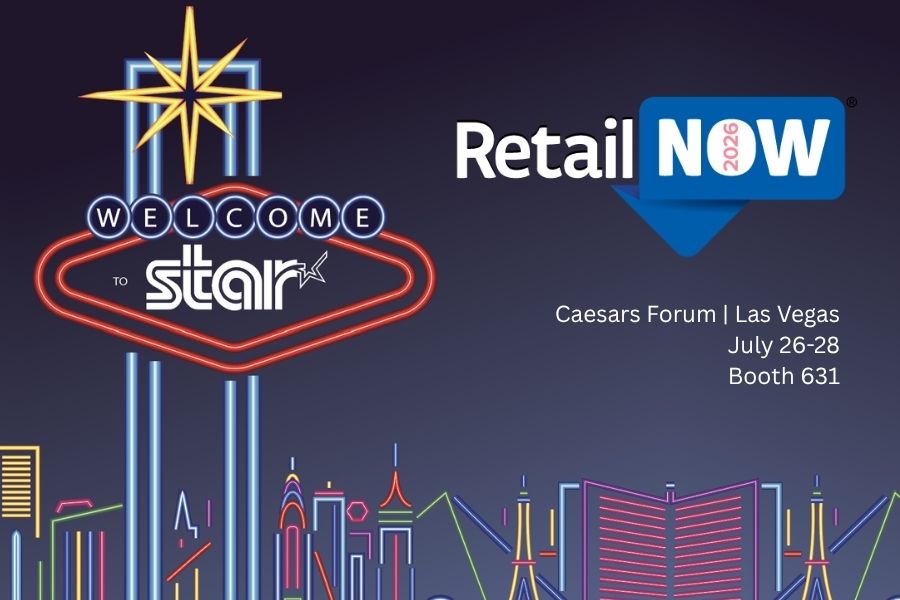
    Las Vegas, NV – July 17, 2026 – Star Micronics, a global leader in point-of-sale (POS) hardware, cloud printing, and labeling technology, will exhibit at RetailNOW 2026, the retail IT channel’s #1 trade show, education conference, and networking event. The show takes place July 26–28 at Caesars Forum in Las Vegas. Visitors to Booth 631 can explore Star’s latest POS hardware through live demonstrations with leading technology partners.

    RetailNOW attendees will see Star hardware working alongside software and payment technologies used across retail and hospitality.

    Featured Solutions at Booth 631

    Attendees can explore Star’s latest POS hardware and cloud technologies, including:

    • The new mC-Connect Drawer: Modernize any cash drawer with USB, Ethernet, Wireless LAN, and Bluetooth® Low Energy connectivity, enabling direct communication with today’s POS systems, tablets, and mobile devices.
    • Cloud Printing Solutions: CloudPRNT Next and StarIO.Online simplify cloud printing for online ordering, web applications, and multi-location deployments. From direct cloud communication using MQTT to fully managed cloud printing with remote device management, Star offers flexible options for cloud-connected POS environments.
    • Multifunction Labeling Solutions: The mC-Label2 and mC-Label3 support receipts, linerless labels, die-cut labels, and continuous media from a single device, allowing businesses to print food safety labels, order labels, barcode labels, receipts, and more.
    • Kiosk Barcode Scanning: Star’s fixed-mount kiosk barcode scanners, the NLS-FM431 and the NLS-FM3280, provide fast, hands-free scanning of 1D and 2D barcodes from printed labels and mobile devices for self-service kiosks, lockers, and customer-facing terminals.
    • Enterprise POS Hardware: From receipt printers and cash drawers to barcode scanners and cloud-connected peripherals, Star’s hardware portfolio supports retail, restaurant, grocery, healthcare, cannabis, and hospitality applications.

    Live Partner Demonstrations

    Star will feature several integrated demonstrations throughout the show.

    • One Touch Label with Logic Controls KitchenGO KDS and the mC-Label3: See Logic Controls’ KitchenGO KDS working with Star’s mC-Label3 multifunction printer to demonstrate the One Touch Label feature. Kitchen staff can generate labels directly from the KDS as orders move through production, helping identify orders and improve fulfillment accuracy.
    • Direct Cash Drawer Control with MagTek and the mC-Connect Drawer: MagTek will demonstrate the mC-Connect Drawer, showing how payment devices and POS systems can control cash drawers directly without requiring a printer connection.

    Star Solutions Featured Throughout the Show Floor

    Attendees can also see Star solutions featured at the following partner booths:

    “RetailNOW brings together the channel partners, ISVs, and solution providers that help businesses deploy POS technology every day. This year, we’re demonstrating how our hardware works alongside leading software and payment providers, from the new mC-Connect Drawer and cloud printing to multifunction labeling and kiosk technologies, showing how these technologies work together in real-world deployments.”

    Meet the Star Team at RetailNOW 2026

    Francis Angoyar, Sales Accounts Executive at Star Micronics, will participate in a speaking session at the ScanSource booth on Monday, July 27, from 11:45 a.m. to 11:55 a.m., where attendees can ask questions about Star’s POS hardware and integrations.

    Star is also proud to support the Women in Technology (W2W) community at RetailNOW. Joey Richholt, Director of Human Resources at Star Micronics, will serve as a panelist during Martinis & Mentorship: The Perfect Cocktail Mixing Career Advice, Authentic Connections, and Lasting Success, taking place on Sunday, July 26, from 7:00 p.m. to 8:00 p.m.

    Visitors are encouraged to stop by Booth 631 to see the demonstrations, meet with the Star team, and learn more about Star’s latest POS hardware and cloud technologies.

    To schedule time with the Star team or for more information, contact sales@starmicronics.com.
    Can’t get enough industry news?

    Star Micronics logo, point-of-sale (POS) hardware and technology company.

    Star Micronics is a global provider of point-of-sale (POS) hardware, cloud printing, and labeling solutions that help businesses connect digital workflows to real-world operations. Serving retail, hospitality, healthcare, and service industries, Star delivers printing, labeling, cash management, self-service, and cloud-based technologies designed to support scalable, connected, and automated environments. Star’s solutions support Android, iOS, Windows, and web-based platforms and extend into the cloud through services such as CloudPRNT Next and StarIO.Online, Star’s fully managed cloud printing service.

    Visit starmicronics.com or follow us on Facebook, X, YouTube, or LinkedIn to learn more.
    Media Contact:

    Christin Dorner
    Star Micronics America, Inc.
    cdorner@starmicronics.com
    848-216-3318

  • WebPRNT vs StarXpand SDK for Web: Choosing the Right Browser-Based Receipt Printing Solution

    WebPRNT vs StarXpand SDK for Web: Choosing the Right Browser-Based Receipt Printing Solution

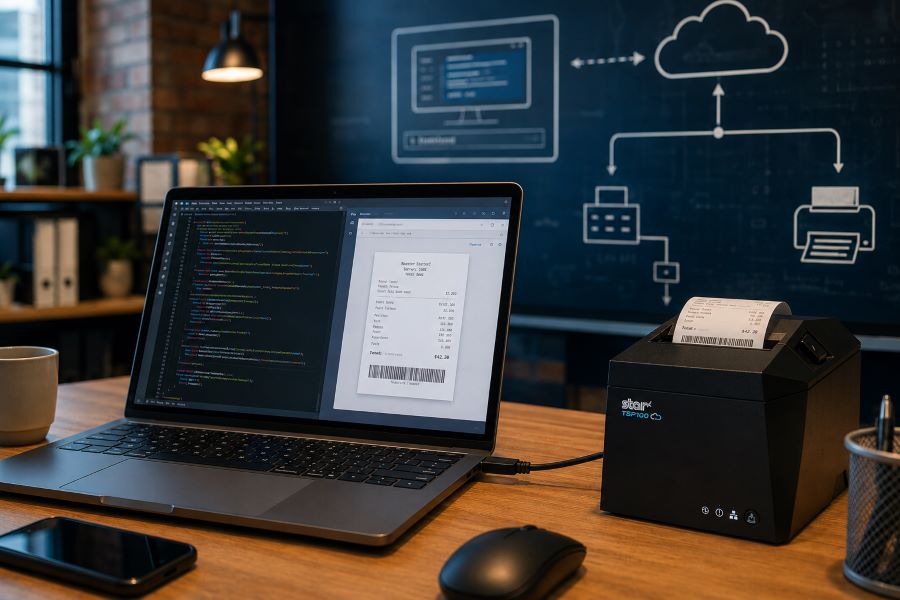
    Browser-based receipt printing has become a core part of POS applications across retail, restaurants, kiosks, and self-service environments. As cloud POS platforms and online ordering systems continue to grow, software providers need reliable ways to trigger receipts, labels, and kitchen tickets directly from web applications.

    For years, Star Micronics’ WebPRNT has given developers a practical way to handle local USB printing directly from the browser, without requiring desktop software or additional middleware.

    Today, StarXpand SDK for Web builds on that same browser-to-device model with a more unified SDK for printing and peripheral control, while CloudPRNT supports LAN and cloud-managed printing across distributed environments.

    Understanding where each fits can help ISVs reduce integration complexity and choose the right architecture for long-term growth.

    Table of Contents

    How Browser-Based Receipt Printing Has Changed

    When browser-based POS systems became more common, one of the biggest technical challenges was local printer communication. A web application could manage transactions, but connecting directly to a receipt printer from a browser was often difficult without middleware, desktop applications, or custom local services.

    WebPRNT helped solve this by enabling direct browser-to-printer communication over USB. This made browser-based printing practical for:

    For many ISVs, this reduced deployment friction and simplified local printing workflows. But browser-based printing requirements have expanded.

    Today, many deployments include:

    • Multi-location stores
    • Cloud-managed ordering systems
    • Distributed kitchen printing
    • Shared hardware environments
    • Remote print routing

    That shift changes how printers need to communicate. Some environments still depend on local USB printing. Others now require printers to communicate over LAN or directly with cloud services.

    That distinction is what separates WebPRNT, StarXpand SDK for Web, and CloudPRNT.

    What Is WebPRNT?

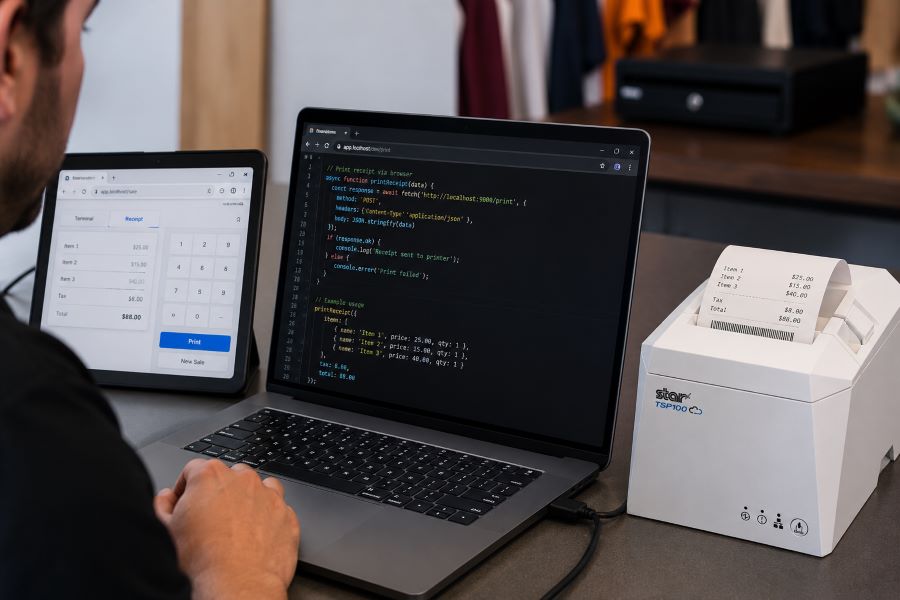
    WebPRNT is Star’s browser-based printing technology designed specifically for browser-based receipt printing over direct USB connections. It allows web applications to send print jobs directly to supported Star printers without requiring a native application layer.

    For developers, this makes WebPRNT useful when:

    • The browser runs locally at the print station
    • The printer is physically connected by USB
    • Printing requirements are focused only on output

    Many ISVs still use WebPRNT successfully in established deployments because it remains stable and predictable for local browser printing. For existing integrations that are already working, WebPRNT remains a practical option.

    TSP143IV USB Developer Test

    What Is StarXpand SDK for Web?

    StarXpand SDK for Web is Star’s browser-based SDK for USB-connected printers and supported peripherals. Like WebPRNT, it supports local browser-to-device communication over USB. The difference is in the SDK model.

    Instead of focusing only on print output, StarXpand SDK provides a broader API structure that aligns with Star’s SDK ecosystem across:

    For developers building new browser-based receipt printing workflows, StarXpand SDK for Web provides a broader SDK model that extends beyond print output. This can simplify development when browser applications need to interact with multiple hardware types, not just printers.

    StarXpand SDK for Web supports:

    • Receipt printing
    • Label printing
    • Cash drawer control
    • Barcode scanner integration
    • Peripheral status monitoring

    This makes it useful for browser-based POS environments where printing is only one part of the workflow.

    What Is CloudPRNT?

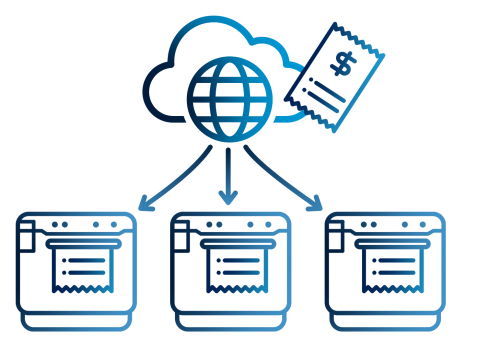
    CloudPRNT is Star’s cloud printing technology for LAN and Wi-Fi connected printers. Unlike WebPRNT and StarXpand SDK for Web, CloudPRNT does not depend on direct USB communication between the browser and printer. Instead, it allows printers to pull print jobs directly from cloud applications over a network.

    Star supports two CloudPRNT communication methods:

    • HTTP polling, where printers regularly check a cloud server for new print jobs
    • MQTT messaging through CloudPRNT Next, a publish-subscribe protocol that enables faster, more efficient real-time print delivery

    For developers, this provides more flexibility depending on the deployment.

    HTTP-based CloudPRNT remains effective for many existing cloud printing environments, while MQTT-based CloudPRNT Next can reduce latency and improve responsiveness for high-volume or multi-location deployments.

    This makes CloudPRNT useful when:

    • Print jobs originate remotely
    • Multiple locations need centralized print routing
    • Online ordering systems send jobs directly to kitchen printers
    • Low-latency print delivery is important
    • Local devices should not manage printer connections

    For distributed environments, this can reduce local infrastructure requirements and simplify cloud-based receipt printing at scale.

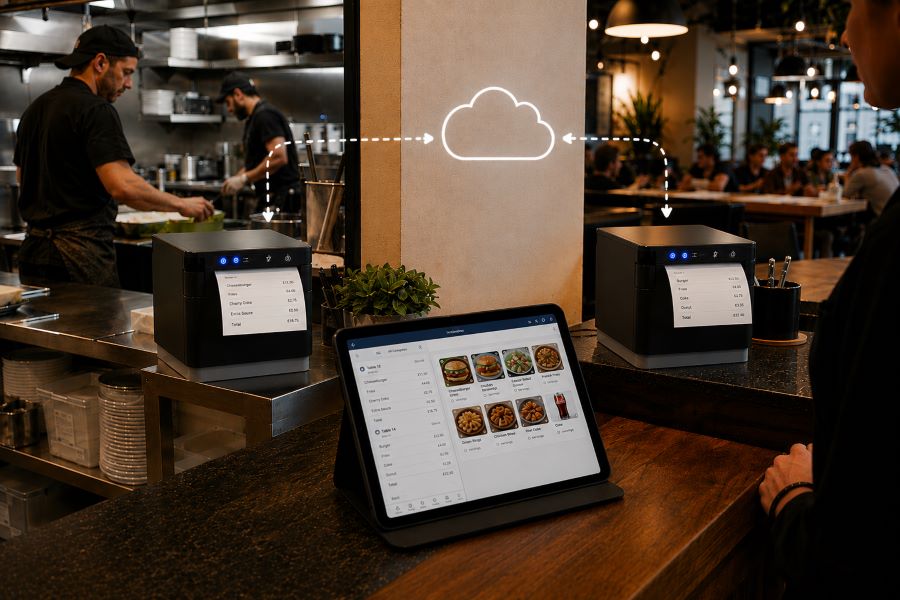
    MC Print3 Cloud POS Restaurant

    Why StarXpand SDK for Web Matters for New Development

    For ISVs building new browser-based POS applications, StarXpand SDK for Web solves a different problem than WebPRNT. It is less about replacing WebPRNT and more about reducing fragmentation between SDKs.

    This matters when development teams need:

    Shared Logic Across Platforms

    If your software runs on browser, tablet, and mobile environments, StarXpand SDK creates more API consistency. This can reduce duplicated hardware logic across teams.

    More Than Print Output

    Many modern POS workflows include:

    • Drawer status checks
    • Scanner-triggered workflows
    • Labeling stations
    • Shared hardware access

    StarXpand SDK can support these through one SDK model.

    Easier Long-Term Maintenance

    Maintaining separate hardware integration layers across web and mobile can increase support costs over time. Using one SDK family can reduce that overhead.

    Migration Considerations for Existing WebPRNT Users

    If you already have a working WebPRNT deployment, there may be no immediate reason to change it.

    WebPRNT remains effective for:

    • Local USB receipt printing
    • Browser-based order ticket printing
    • Fixed workstation POS environments

    Migration becomes more relevant when:

    • Expanding into mobile apps
    • Adding peripheral hardware support
    • Standardizing SDKs across multiple platforms
    • Rebuilding core hardware logic

    For ISVs planning future product updates, this is often the point where StarXpand SDK becomes worth evaluating.

    Key Considerations Before Choosing a Browser Receipt Printing Solution

    Before choosing between WebPRNT, StarXpand SDK for Web, and CloudPRNT, start with the deployment model.

    Where does the print job originate?

    If the print job starts at the local browser and the printer is USB-connected, WebPRNT or StarXpand SDK for Web are often the right fit.

    If the print job originates in the cloud, CloudPRNT is often the better option.

    Is this an existing deployment or new development?

    For existing WebPRNT integrations, staying with the current architecture may be the simplest path.

    For new builds, the StarXpand SDK may offer greater long-term flexibility.

    Do you need to control more than printing?

    If the workflow includes drawers, scanners, or other Star peripherals, StarXpand SDK can simplify communication.

    If printing is the only requirement, WebPRNT may still be sufficient.

    Will this scale across locations?

    If the deployment spans multiple stores, remote kitchens, or distributed print stations, CloudPRNT often provides more flexibility than local USB connections.

    Choosing the right architecture early can reduce future integration changes and simplify deployment support.

    An Independent Software Vendor’s (ISV’s) Guide to Star Printer SDKs

    This guide breaks down Star Micronics’ printer SDKs, APIs, and integration tools to help ISVs choose the right solution for POS systems, cloud printing platforms, and custom software applications.

    Final Thoughts on Browser-Based POS Printing

    Browser-based receipt printing is no longer one-size-fits-all. Some POS environments still rely on direct USB connections at a local workstation. Others now depend on cloud-based routing across multiple locations. That’s why Star offers multiple browser and cloud printing technologies built for different deployment models.

    • WebPRNT remains a proven option for stable local USB printing.
    • StarXpand SDK for Web provides a stronger framework for new browser-based development that needs broader hardware communication.
    • And CloudPRNT remains the best fit for LAN-connected and cloud-managed printing environments.

    For ISVs and developers, the best choice depends less on features and more on architecture: where print jobs originate, how hardware is connected, and how the application will scale over time.

    Interested in browser-based receipt printing with Star?

    Frequently Asked Questions About Browser-Based Receipt Printing

    What is browser-based receipt printing?

    Browser-based receipt printing allows web applications to send print jobs directly to a receipt printer without requiring a traditional desktop application. Depending on the deployment, this can happen through local USB communication or cloud-based network printing.

    When should I use browser-based receipt printing instead of cloud printing?

    Browser-based receipt printing is best when a local device needs to send print jobs directly to a USB-connected printer. Cloud printing is often better for LAN-connected printers, remote print routing, or multi-location deployments.

    What is the difference between WebPRNT and StarXpand SDK for Web?

    WebPRNT focuses on browser-based USB printing. StarXpand SDK for Web also supports USB printing, but adds a broader API structure for printers and peripherals.

    Does StarXpand SDK for Web replace WebPRNT?

    Not directly. Existing WebPRNT integrations can continue to operate. StarXpand SDK for Web is better suited for new browser-based development.

    Can I still use WebPRNT for browser-based receipt printing?

    Yes. WebPRNT remains a supported and effective option for local USB browser printing.

    When should I use CloudPRNT instead of StarXpand SDK for Web?

    Use CloudPRNT when printers need to connect over LAN or Wi-Fi and receive print jobs directly from cloud applications.

    Is StarXpand SDK for Web only for USB printing?

    Yes. For browser deployments, StarXpand SDK for Web is designed for direct USB communication.

    Can StarXpand SDK for Web control devices besides printers?

    Yes. It supports compatible Star peripherals such as cash drawers, POS scales, and barcode scanners.

    What is the best receipt printing method for cloud POS systems?

    For cloud POS systems with remote or multi-location print routing, CloudPRNT is generally the best fit.

  • Star Micronics and ConnectedFresh Automate Food Safety and Traceability Workflows with Cloud-Connected Labeling

    Star Micronics and ConnectedFresh Automate Food Safety and Traceability Workflows with Cloud-Connected Labeling

    The integration combines ConnectedFresh’s IoT monitoring and food safety platform with Star’s cloud printing technology to automate mission-critical workflows, dramatically improving documentation and reducing food waste and risk for foodservice operations.

    Somerset, NJ – April 13, 2026 – Star Micronics, a global leader in POS hardware and cloud printing technology, today announced that ConnectedFresh has integrated Star’s mC-Label3 multifunction label printer and StarIO.Online fully managed cloud printing service into its digital food safety platform. The integration enables restaurants and foodservice operators to generate accurate, traceable food labels directly from the ConnectedFresh platform, helping improve compliance, increase food safety visibility, and reduce manual labeling tasks.

    Connecting Digital Food Safety Monitoring to Physical Labeling

    ConnectedFresh uses wireless IoT sensors to give restaurant and foodservice operators real-time visibility into temperature conditions, equipment performance, and food safety compliance across their locations. Through the integration with Star Micronics, that digital food safety data can now trigger on-demand label printing via StarIO.Online, connecting digital records to printed labels that document preparation details, product information, and traceability records. Because Star manages the cloud infrastructure, labels can be generated without local servers or complex on-site IT setup.

    Supporting FSMA Traceability and Recordkeeping

    With the FDA’s Food Safety Modernization Act (FSMA) Section 204 Food Traceability Rule requiring expanded recordkeeping for certain foods, foodservice operators are strengthening their traceability processes ahead of the rule’s enforcement date in July 2028. Many operators are moving away from manual logs and handwritten labels toward digital systems that can automatically document Critical Tracking Events and maintain accurate traceability records.

    By combining ConnectedFresh’s platform with Star’s labeling and cloud printing technology, operators can automatically generate labels documenting key food safety and traceability information, including preparation dates, product details, and cooling records. For time-sensitive compliance tasks like cool-down logging, ConnectedFresh sensors can monitor the entire process and automatically trigger a printed label documenting the result, helping improve documentation accuracy while reducing labor, food waste, and risk.

    On-Demand Labeling for Real Kitchen Workflows

    Star’s mC-Label3 multifunction printer supports a wide range of labeling applications in foodservice environments, including food preparation, grab-and-go packaging, and product identification, while supporting multiple media types such as linerless and die-cut labels. Star’s mG-T30 scale is also integrated with the platform, enabling weight-based labeling and verification as an additional capability for foodservice operations.

    “ConnectedFresh is built to help operators stay on top of food safety without adding more complexity to the kitchen. Working with Star lets us connect our platform directly to reliable labeling hardware so teams can print accurate, traceable labels at the exact moment food is prepared, cooled, or packaged.”

    “Food safety and traceability are becoming more data-driven, and operators need solutions that can scale across every location. By bringing together ConnectedFresh’s sensor-driven platform and Star’s labeling and cloud technologies, this partnership helps standardize how food safety information is captured and managed across distributed operations.”

    Cloud-Connected Printing for Multi-Location Foodservice

    StarIO.Online enables cloud applications to manage and control printers remotely, allowing businesses to deploy and monitor labeling across distributed locations without maintaining on-site infrastructure. This allows ConnectedFresh users to standardize and scale labeling workflows across multiple kitchens, restaurants, and food preparation facilities using a single, versatile device that supports food safety labeling, grab-and-go labeling, and order accuracy workflows.

    For example, when ConnectedFresh sensors confirm that a food item has completed its cool-down process within the required time and temperature range, the platform can automatically generate and print a label documenting the completion time and product details, ready to apply directly to the stored product without any manual logging.

    By combining ConnectedFresh’s digital food safety platform with Star’s labeling and cloud printing technologies, the integration helps operators bridge the gap between digital compliance systems and real-world kitchen operations.

    For more information about Star Micronics solutions, visit starmicronics.com.

    To learn more about ConnectedFresh, visit connectedfresh.com.

    Can’t get enough industry news?

    ConnectedFresh Logo

    ConnectedFresh is the most comprehensive sensor-driven intelligence platform built for foodservice, helping restaurants and food operators automate food safety processes, monitor facilities and equipment in real time, and manage risk and compliance across all locations. The platform is powered by wireless IoT sensor hardware, sourced and passed through to customers at cost, delivering real-time visibility from the kitchen floor to the back office. Through integrations with partners like Star Micronics, ConnectedFresh extends that intelligence to physical labeling, connecting digital food safety records with printed documentation for improved traceability.

    To learn more about ConnectedFresh’s 25+ turnkey solutions for foodservice, visit connectedfresh.com/solutions.

    Star Micronics logo, point-of-sale (POS) hardware and technology company.

    Star Micronics is a global provider of point-of-sale (POS) hardware, cloud printing, and labeling solutions that help businesses connect digital workflows to real-world operations. Serving retail, hospitality, healthcare, and service industries, Star delivers printing, labeling, cash management, self-service, and cloud-based technologies designed to support scalable, connected, and automated environments. Star’s solutions support Android, iOS, Windows, and web-based platforms and extend into the cloud through services such as CloudPRNT Next and StarIO.Online, Star’s fully managed cloud printing service.

    Visit starmicronics.com or follow us on Facebook, X, YouTube, or LinkedIn to learn more.
    Media Contact:

    Christin Dorner
    Star Micronics America, Inc.
    cdorner@starmicronics.com
    848-216-3318

    Media Contact:

    ConnectedFresh
    media@connectedfresh.com
    888-310-2019

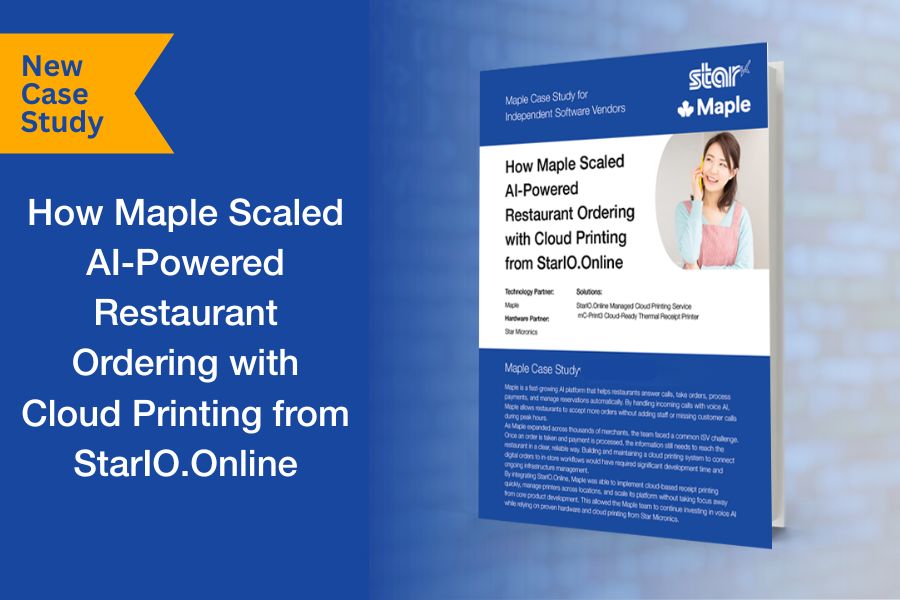
  • Build Your Product. Not Your Cloud Printing Infrastructure. A New Case Study by Star Micronics.

    Build Your Product. Not Your Cloud Printing Infrastructure. A New Case Study by Star Micronics.

    If you’re building a software platform that connects to the physical world, whether it’s for hospitality, retail, healthcare, or logistics, you eventually hit the same wall.

    Your app is triggering real-world actions. Orders are placed. Labels need to print. Receipts must be generated. Workflows move from screen to counter to customer.

    But how do those digital events reliably become real-world output without your engineering team building and maintaining the entire printing infrastructure layer?

    That was the challenge facing Maple as it scaled across thousands of locations.

    A Critical Infrastructure Decision

    Do you build and maintain your own cloud printing layer?

    Or integrate and stay focused on your product?

    They chose focus.

    By leveraging Star’s managed cloud printing infrastructure, StarIO.Online, Maple was able to scale rapidly without turning printing into an engineering burden.

    For ISVs, the lesson is clear: printing may be essential, but it shouldn’t pull engineering time away from what makes your platform unique.

    Read the full case study to see how Maple implemented secure, scalable cloud printing without building it themselves:

  • Star Micronics Introduces Easy Deployment for Cloud Printing with StarIO.Online

    Star Micronics Introduces Easy Deployment for Cloud Printing with StarIO.Online

    New serial-based onboarding dramatically simplifies CloudPRNT printer setup for ISVs and merchants using the StarIO.Online service.

    Somerset, NJ – February 3, 2026 – Star Micronics, a global leader in point-of-sale (POS) hardware and cloud printing technology, today announced a new Easy Deployment method for cloud printing using StarIO.Online, its fully managed CloudPRNT service. This new deployment approach significantly reduces setup time and complexity by eliminating traditional server configuration and manual printer settings.

    With Easy Deployment, supported Star printers can now be connected to StarIO.Online using a streamlined, serial-number-based onboarding process. Once the printer is on the network, users simply enter the printer serial number into their application, perform a brief printer operation, and the device automatically connects to Star’s cloud infrastructure. A confirmation printout verifies successful enrollment.

    This marks a major improvement over traditional self-hosted CloudPRNT deployments, which typically require logging into a printer web interface or utility application, manually enabling CloudPRNT, entering server URLs, rebooting the device, and then completing application-side configuration.

    “Easy Deployment removes unnecessary friction from cloud printing. By shifting infrastructure management to Star and simplifying onboarding to just a few steps, ISVs can deploy faster, merchants can get up and running with minimal effort, and support teams can spend less time troubleshooting setup issues.”

    Key Benefits of Easy Deployment Include:

    • Dramatically reduced setup steps compared to traditional CloudPRNT deployments
    • No server hosting or URL configuration required
    • Faster, more consistent installations across multiple locations
    • Lower risk of setup errors and misconfiguration
    • Immediate confirmation of successful connection via printer output

    Easy Deployment is designed specifically for use with StarIO.Online, Star’s fully managed cloud printing service, which handles server infrastructure, device communication, and monitoring on behalf of the customer. This approach allows ISVs to focus on core application development while Star manages the complexities of cloud printing at scale. Star offers a 90-day free trial for StarIO.Online.

    The new deployment method further reinforces Star Micronics’ commitment to simplifying POS integration and delivering future-ready solutions for modern, cloud-based retail and hospitality environments.

    For more information about StarIO.Online and Easy Deployment, contact Star’s Integration Team at integrations@starmicronics.com.

    Can’t get enough industry news?

    Star Micronics logo, point-of-sale (POS) hardware and technology company.

    Star Micronics is a global leader in POS hardware and transaction technology, providing printers, secure cash management, and connected peripherals for retail and hospitality environments. Known for reliability and developer-friendly integration, Star solutions work seamlessly with Android™, iOS, Windows®, and web-based POS platforms to power receipt, label, ticket, and order printing across modern commerce environments.

    Star’s cloud technologies extend printing beyond the counter. CloudPRNT Next enables scalable direct cloud printing, while StarIO.Online is Star’s fully managed cloud printing service that removes the need for server infrastructure and simplifies remote printer management across distributed locations. Star also offers a broad portfolio of POS peripherals, including barcode scanners, scales, and tablet stands, designed to work together as a complete hardware solution.

    Learn more at starmicronics.com or follow Star on LinkedIn, YouTube, Facebook, Instagram, and X.

    Media Contact:

    Christin Dorner
    Star Micronics America, Inc.
    cdorner@starmicronics.com
    848-216-3318

  • 3 Key Advantages of Online Food Ordering for Today’s Customers

    3 Key Advantages of Online Food Ordering for Today’s Customers

    Online food ordering has become a standard part of how customers interact with restaurants and QSR brands. What began as a convenience and accelerated during the COVID-19 pandemic has evolved into an essential way people discover menus, place orders, and enjoy meals on their own terms.

    Today, the advantages of online food ordering extend far beyond convenience. From faster ordering and improved accuracy to greater flexibility and control, digital ordering continues to redefine the customer dining experience. In this post, we explore the key benefits of online food ordering and why it remains a core part of the modern food service landscape.

    Table of Contents

    Key Advantages of Online Food Ordering for Customers

    The advantages of ordering food online for customers center on convenience, flexibility, and access to a wider range of dining options.

    1. A Convenient, Streamlined Experience

    The primary benefit of online food ordering is its unmatched convenience. Customers enjoy the flexibility of ordering from any location, eliminating the need to travel for meal collection. Features such as easy reordering, queue avoidance, and enhanced order accuracy significantly streamline the dining experience.

    These conveniences not only strengthen customer relationships but also encourage repeat ordering. Digital ordering platforms allow restaurants to meet customer expectations while supporting efficient, low-friction service.

    2. Catering to Evolving Dining Preferences

    Dining habits have continued to evolve as customers look for options that support both in-restaurant and at-home experiences. Online food ordering platforms help meet these expectations by offering flexible pickup, delivery, and ordering options that fit modern lifestyles.

    This shift reflects long-term changes in how people choose to dine, not just a short-term response to the pandemic.

    Explore Labeling Solutions for Online Ordering >

    3. Expanded Choices and Added Value

    Online food ordering gives customers access to a wider range of dining options and promotions. Digital platforms often feature exclusive deals, loyalty rewards, and seasonal offers that enhance value and encourage exploration.

    Virtual menus also make it easier for customers to discover new cuisines and customize their orders. High-quality images and clear descriptions create a more engaging and confident ordering experience.

    Meeting The Online Order Surge: How Hardware Impacts Efficiency

    To stay competitive as a business owner, you must be able to handle the surge in online orders, and one crucial aspect of this is re-evaluating your hardware systems.

    Online Orders with Star Micronics’ CloudPRNT Next Technology

    To fully support the advantages of online food ordering for both restaurants and customers, execution behind the scenes matters. Star Micronics developed CloudPRNT Next to ensure online orders move reliably from digital platforms to the kitchen without disruption.

    CloudPRNT Next simplifies how online ordering applications connect to restaurant printing workflows, helping orders from platforms like DoorDash and Uber Eats print accurately and consistently at the point of execution. It supports iOS, Android, Windows, and web-based environments, making it well-suited for modern POS and mobile ordering workflows.

    What is CloudPRNT Next?

    CloudPRNT Next is a cloud-based printing platform that enables direct communication between online ordering services and Star Micronics printers. Orders are securely transmitted through the cloud and printed automatically, without the need for additional hardware or complex network configurations.

    This streamlined approach makes it easier for restaurants to adopt and scale online food ordering while maintaining order accuracy and operational consistency.

    Key Features and Benefits of CloudPRNT Next:

    • Direct Cloud-to-Printer Communication
      Online food orders are sent directly from cloud-based ordering platforms to Star printers, reducing delays and eliminating unnecessary intermediary devices.

    • Improved Order Accuracy and Speed
      By automating how online orders reach the kitchen, CloudPRNT Next helps reduce manual steps, miscommunication, and missed items, improving the customer experience.

    • Scalable Support for Growing Restaurants
      CloudPRNT Next is designed to support multi-location restaurants and growing order volumes, making it easier to maintain consistent workflows as online demand increases.

    • Broad Device and Platform Compatibility
      The platform works across common operating systems and devices, giving restaurants flexibility as they adopt new POS systems or digital ordering tools.

    • Simplified Setup and Reduced IT Complexity
      CloudPRNT Next removes the need to manage IP addresses, local network configurations, or custom firewall rules, making installation and ongoing support easier for restaurant teams.

    Why This Matters for Online Food Ordering

    Reliable printing is a critical part of online food ordering. When digital orders are transmitted accurately and consistently to the kitchen, restaurants can fulfill orders faster, reduce errors, and deliver the convenience customers expect. CloudPRNT Next supports these outcomes by making printing a dependable part of the online ordering workflow rather than a point of failure.

    A Smarter Way to Support Online Food Ordering

    Online food ordering is no longer a temporary shift or a passing trend. It has become a standard part of how customers interact with restaurants. The advantages of online food ordering, from convenience and flexibility to improved accuracy and control, continue to shape customer expectations across the dining experience.

    Behind the scenes, reliable POS and printing technology plays a critical role in making online ordering work smoothly. When digital orders move accurately and consistently from the cloud to the kitchen, restaurants can fulfill orders faster, reduce errors, and deliver the experience customers expect.

    As online food ordering continues to evolve, restaurants that invest in dependable, scalable systems are better positioned to meet demand, maintain accuracy, and build long-term customer loyalty. The goal is not simply to offer online ordering, but to support it with the right technology so it works reliably every time.

    The Smart QSR Delivery Playbook: Labeling, Accuracy & Efficiency Done Right

    Learn how leading QSRs are using smart labeling and scalable POS technology to reduce errors, cut costs, and deliver a better guest experience.

    Frequently Asked Questions About Online Food Ordering

    What are the main advantages of online food ordering for customers?

    Online food ordering gives customers greater convenience, faster service, improved order accuracy, and access to digital menus, deals, and flexible payment options.

    Is online food ordering more accurate than ordering in person or by phone?

    Yes. Online food ordering reduces miscommunication by allowing customers to review their order before submission, resulting in fewer mistakes and higher satisfaction.

    Why do customers prefer online food ordering?

    Customers prefer online food ordering because it saves time, offers transparency, supports customization, and allows ordering anytime from mobile devices or computers.

    Does online food ordering improve the overall customer experience?

    Yes. Online food ordering improves the customer experience by making ordering faster, easier, and more reliable, especially for pickup and delivery.

    Which Star printer is right for your online ordering app?

    To browse all of our blog posts covering tips for small businesses, please visit our #StarForSmallBiz blog collection. Original article written by Heidi Orpilla and published June 18, 2020.

  • How ISVs Can Deliver Cloud Printing with Less Risk and Faster Scale

    How ISVs Can Deliver Cloud Printing with Less Risk and Faster Scale

    Cloud printing has moved from a value-add feature to core infrastructure for modern software platforms. As ISVs support multi-location customers, omnichannel ordering, kiosks, and mobile workflows, printing must scale reliably, remain visible, and work consistently across environments.

    Hosted cloud printing shifts the responsibility for print infrastructure, monitoring, and ongoing maintenance from the software vendor to a dedicated provider. This model allows ISVs to deliver cloud-enabled printing without building or managing their own server environments. Developers can put all their focus into making the best product for their customers.

    In the past, offering cloud printing required ISVs to host print servers in-house, absorb infrastructure costs, and carry long-term operational risk. StarIO.Online, a fully managed cloud printing service from Star Micronics, removes that burden by handling hosting, monitoring, and connectivity at the infrastructure level. This allows ISVs to deliver enterprise-ready printing while staying focused on core product development.

    Table of Contents

    Who StarIO.Online Is Designed For

    StarIO.Online is designed for independent software vendors (ISVs) building cloud-based, web-based, or multi-location platforms that require reliable receipt and label printing. It is particularly well-suited for ISVs supporting enterprise retail, hospitality, quick-service restaurants, kiosks, and distributed operations where printing must function consistently across locations and devices.

    Developers Love Fully Managed Cloud Printing Services Like StarIO.Online

    What You’ll Learn in This Blog

    • Why cloud printing has become table stakes for competitive ISVs
    • How device visibility strengthens cloud printing reliability
    • What hosted cloud printing changes for ISVs and their customers
    • How cloud printing and device management together drive measurable ROI

    Why Cloud Printing Has Become Table Stakes for ISVs

    For years, ISVs have worked to meet customer demand for cloud-enabled printing. In 2026, that demand is no longer emerging. It is expected. As organizations adopt cloud POS platforms, mobile devices, self-service kiosks, and remote management models, printing must function seamlessly across locations, devices, and workflows.

    What has changed is the scope of that responsibility. Cloud printing now needs to support:

    • Multi-location and multi-device environments
    • High-volume, always-on workflows
    • Remote visibility and centralized control

    StarIO.Online is a fully managed cloud printing service by Star Micronics.

    Historically, bringing cloud printing to market required ISVs to host and maintain their own managed print services. That meant investing in servers, security, uptime monitoring, and ongoing maintenance. Over time, those responsibilities pulled resources away from core product development and introduced risk as customer footprints expanded.

    Market adoption makes this challenge impossible to ignore. Quocirca research found that 69% of organizations used some form of cloud-based printing in 2024, up from 55% in 2023. According to Grand View Research, the cloud printing market is projected to exceed $3.1 billion by 2030. ISVs that cannot scale cloud printing efficiently risk falling behind competitors who can.

    Partnering with a hosted cloud printing provider offers a practical path forward. It allows ISVs to meet growing demand for cloud-enabled printing while avoiding the infrastructure burden and long-term complexity of legacy approaches.

    The Benefits of Cloud Print Solutions for ISVs and their Users

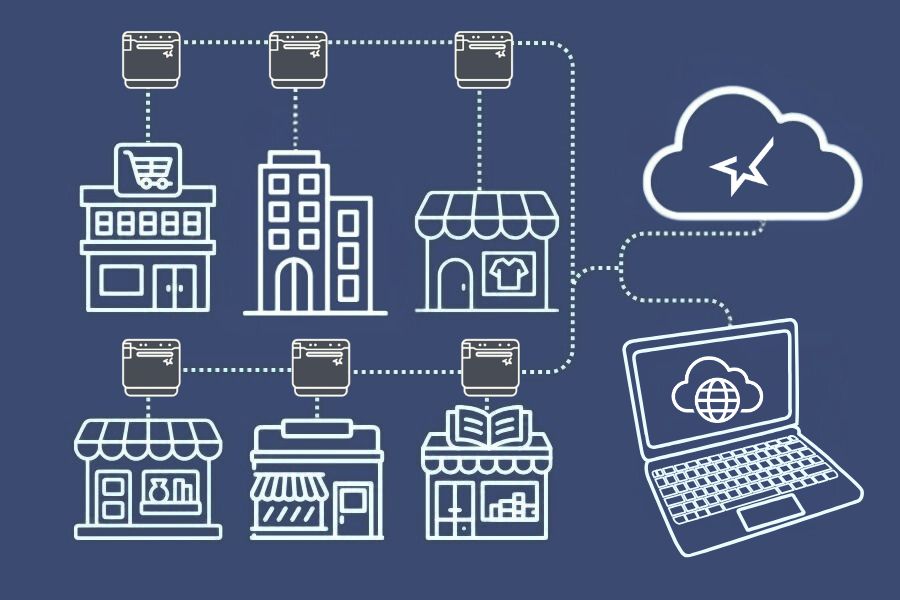
    Cloud printing enables ISVs to extend the value of their platforms by centralizing how organizations manage and standardize printing. Templates for receipts, labels, and documents can be created once and shared across locations, ensuring brand consistency and operational alignment.

    From an administrative standpoint, cloud printing provides greater control over user permissions, job routing and queuing, policy enforcement, and audit and compliance reporting.

    For end users, cloud printing introduces flexibility. Employees can print from tablets, mobile devices, kiosks, and countertop terminals without being tethered to a specific workstation. New locations or devices can be added quickly, connecting to existing printers via the cloud without complex configuration. The result is improved productivity, faster rollouts, and more resilient operations.

    Why Device Visibility Is the Missing Piece in Cloud Printing

    While cloud printing solves distribution and accessibility, device visibility solves reliability. Without insight into printer status, even cloud-connected environments remain vulnerable to downtime, missed jobs, and service interruptions.

    By pairing cloud printing with device management, ISVs can give customers the ability to monitor printer health and connectivity remotely, identify issues before they cause downtime, and resolve certain problems without dispatching on-site support.

    Proactive monitoring improves uptime, protects service-level agreements, and reduces support costs. For ISVs, it also minimizes reactive troubleshooting that pulls engineering resources away from product innovation. For customers, it means more consistent performance and higher satisfaction across locations.

    Software Developers Use StarIO.Online Cloud Printing Service By Star Micronics

    What Hosted Cloud Printing Really Changes for ISVs

    Unlike self-hosted cloud printing, hosted cloud printing removes the need for ISVs to manage servers, security updates, and uptime monitoring internally. Infrastructure responsibilities shift to a dedicated provider, reducing operational risk and long-term maintenance costs.

    Recognizing the growing complexity of cloud printing, Star Micronics developed StarIO.Online, a hosted cloud printing service designed specifically for ISVs building modern, scalable platforms.

    With StarIO.Online, ISVs no longer need to deploy or maintain their own print servers. Star manages the infrastructure layer so software teams can stay focused on product innovation rather than printing back ends.

    StarIO.Online helps ISVs:

    • Eliminate the need to host and maintain print servers
    • Reduce infrastructure, security, and uptime management overhead
    • Support CloudPRNT-compatible printers across distributed environments
    • Scale printing reliably as customer footprints grow

    Integration is streamlined through REST APIs, allowing developers to send print jobs and receive printer status updates with minimal code. Webhooks enable real-time printer event notifications, supporting automated workflows and faster issue resolution.

    In addition, StarIO.Online provides:

    • A unified dashboard to manage, monitor, and configure printers across all customer locations
    • Centralized visibility into printer status and connectivity
    • The ability to extend offerings using Star Micronics Cloud Services, such as Label Builder or PromoPRNT

    These capabilities allow ISVs to tailor managed services to specific markets and create bundled, recurring-revenue offerings without increasing operational complexity.

    Built on scalable architecture, StarIO.Online grows alongside ISVs and their customers, whether onboarding new clients or supporting expanding enterprise deployments.

    How Cloud Printing and Device Management Drive Measurable ROI

    When cloud-enabled printing and device visibility come together, the impact extends beyond operational efficiency. ISVs gain a scalable foundation that lowers the cost of delivering managed printing while improving margins and accelerating time to market.

    Customers benefit from reliable, consistent printing experiences across devices and locations. ISVs benefit from reduced infrastructure costs, fewer support escalations, and stronger platform stickiness. Over time, these advantages contribute to increased customer retention, higher lifetime value, and a clearer path to sustainable growth.

    POS Printing Technologies Built for Modern Software Platforms

    This brochure shows how Star helps ISVs extend their platforms with dependable printing and device control while minimizing integration effort and long-term maintenance.

    Frequently Asked Questions About Hosted Cloud Printing

    What is hosted cloud printing?

    Hosted cloud printing is a printing model where servers, infrastructure, monitoring, and maintenance are managed by a third-party provider, allowing software vendors to offer cloud-enabled printing without hosting their own print servers.

    How is hosted cloud printing different from self-hosted cloud printing?

    Self-hosted cloud printing requires ISVs to build, secure, and maintain their own server environments. Hosted cloud printing shifts those responsibilities to a dedicated provider, reducing operational risk and infrastructure overhead.

    Who benefits most from StarIO.Online?

    StarIO.Online is ideal for ISVs supporting multi-location retail, hospitality, quick-service restaurants, kiosks, and enterprise environments that require reliable, scalable printing across distributed operations.

    How does managed cloud printing support AI-driven restaurant operations?

    AI-driven ordering, forecasting, and labor tools rely on fast, consistent execution at the edge. Managed cloud printing ensures that receipts, labels, and order tickets print reliably as AI systems dynamically route orders, adjust prep timing, or optimize fulfillment across channels. By centralizing print logic in the cloud and pairing it with device visibility, operators can trust that automated decisions are carried out accurately at every location without adding operational risk.

    Is hosted cloud printing secure enough for enterprise and multi-location environments?

    Yes. Hosted cloud printing platforms are designed with enterprise security and scalability in mind. Print jobs are transmitted using secure protocols, and device access can be centrally controlled by role, location, or application. For ISVs and MSPs, this model reduces exposure by eliminating on-premise servers while still providing auditability, monitoring, and compliance support across distributed restaurant and retail environments.

    Learn More About StarIO.Online

    To learn how StarIO.Online can help you deliver reliable, scalable cloud printing without the infrastructure burden:

  • What NRF 2026 Revealed About the Future of Retail and Restaurant Technology

    What NRF 2026 Revealed About the Future of Retail and Restaurant Technology

    The National Retail Federation’s Big Show has long served as a bellwether for where retail technology is headed, offering a clear view each year into how the industry is evolving. NRF 2026, however, surfaced a more defining shift.

    The future of retail and restaurants is being built right before our eyes, as hardware, AI-powered platforms, and workflow design operate as a single system, with order accuracy forming the foundation for lasting customer loyalty. What stood out at NRF 2026 was not any single breakthrough, but how these technologies are increasingly designed to work together in real-world environments.

    Across the show floor, one theme surfaced repeatedly. Technology is no longer being evaluated in isolation. Operators are assessing complete, end-to-end workflows, from ordering and production to fulfillment and the final guest interaction. The conversation has moved beyond experimentation and toward execution, reliability, and scale.

    At NRF 2026, retail and restaurant technology clearly entered a phase of operational maturity, with solutions increasingly judged by how well they perform across locations, channels, and peak demand moments.

    Here are the key takeaways from NRF 2026, and what they signal for the rest of 2026.

    Table of Contents

    Self-Service Is No Longer Optional

    Self-service has moved beyond experimentation. At NRF 2026, kiosks, unattended stations, and automated pickup workflows were everywhere, across QSR, retail, travel, and hybrid environments.

    Operators are adopting self-service to address labor challenges, increase throughput, and meet customer expectations for speed and convenience. That shift places new demands on hardware reliability. When self-service fails, there is no staff member to step in.

    What this means for 2026:

    • Kiosks and unattended workflows will continue expanding into new verticals
    • Open-frame and kiosk printers must deliver high uptime and jam-free performance
    • Hardware flexibility will matter as much as software innovation

    Self-service is no longer a differentiator. It is the baseline.

    Order Accuracy Has Become the Guest Experience

    Speed gets orders out the door. Accuracy determines whether customers come back.

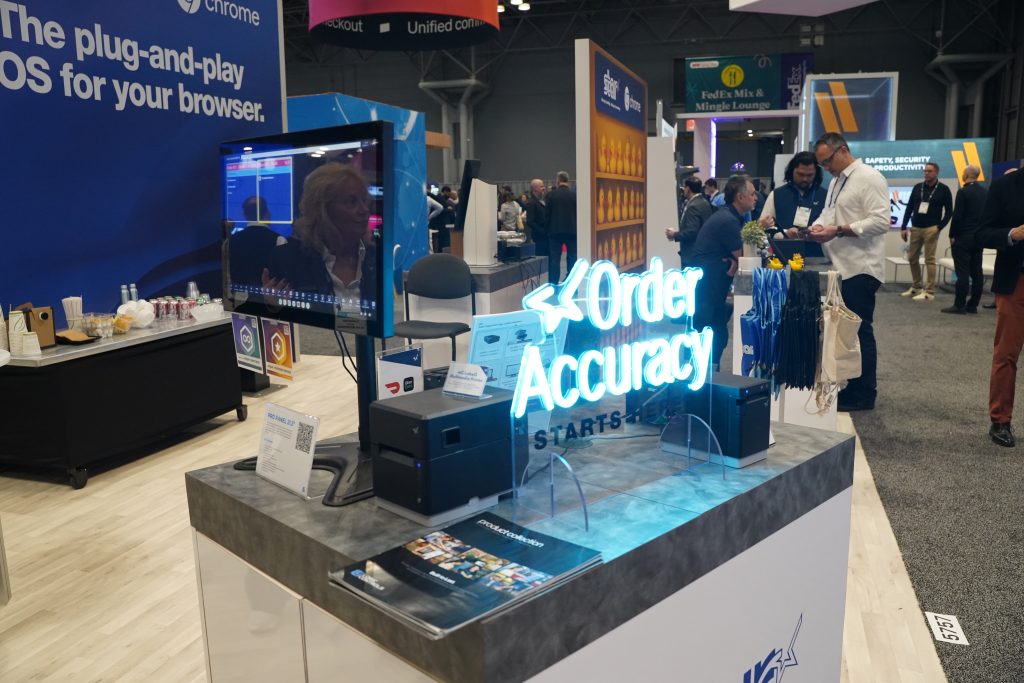
    One of the strongest signals at NRF 2026 was the growing emphasis on order accuracy, especially for off-premise dining, third-party delivery, catering, and pickup. As order volumes increase and channels multiply, operators are turning to labeling and verification workflows to reduce errors.

    Labeling is now being used to:

    • Identify individual items within an order
    • Seal bags for tamper-evident delivery
    • Improve kitchen communication and fulfillment accuracy
    • Support food safety and expiration tracking

    What this means for 2026:

    • Label printing will continue shifting from optional to mission-critical
    • KDS-driven label printing will become more common
    • Linerless and die-cut labels will be selected based on workflow, not trend

    Order accuracy is no longer only a back-of-house concern. It is central to the brand experience.

    Visit Star Micronics at booth 5757 during NRF 2026.

    Cloud Infrastructure Is Getting Simpler by Design

    ISVs and platform providers sent a clear message at NRF 2026. They want fewer systems to manage, not more.

    Rather than building and maintaining proprietary print servers, many developers are looking for hosted, API-based solutions that remove infrastructure overhead. Cloud printing is evolving from a technical challenge into a managed service expectation.

    What this means for 2026:

    • Hosted cloud printing will see increased adoption
    • API-first platforms will outperform custom infrastructure
    • Remote device monitoring and management will be table stakes

    The cloud stack is not getting more complex. It is becoming more streamlined.

    Web-Based POS and Chrome OS Are Gaining Momentum

    Another major takeaway from NRF 2026 was the continued rise of web-based POS applications and Chrome OS deployments. Developers are prioritizing flexibility, faster updates, and browser-based workflows that reduce OS dependency.

    This shift places new requirements on POS hardware. Devices must work seamlessly across Android, web, and kiosk environments without extensive integration work.

    What this means for 2026:

    • Web-based POS applications will continue to grow
    • Chrome OS kiosks will expand in retail and hospitality
    • Hardware that works across platforms will be preferred

    Platform flexibility is becoming a key purchasing criterion.

    POS Hardware Design and Ergonomics Matter More Than Ever

    NRF 2026 highlighted a growing focus on workspace design. Operators are paying closer attention to how POS environments look, function, and scale over time.

    Clean countertops, effective cable management, and ergonomic mounting solutions are no longer cosmetic concerns. They impact staff efficiency, safety, and customer perception.

    What this means for 2026:

    • Modular and adaptable hardware setups will increase
    • Mounting and peripheral integration will be planned together
    • POS design will be viewed as part of the brand experience

    Hardware must perform well and look intentional.

    Sustainability Is Becoming an Operational Advantage

    Sustainability conversations at NRF 2026 were quieter, but more serious. Operators are increasingly evaluating solutions that reduce waste, simplify operations, and support compliance without adding cost or complexity.

    Linerless labeling stood out as a clear example. It reduces liner waste, improves efficiency, and supports modern labeling workflows without changing user behavior.

    What this means for 2026:

    • Waste-reducing technologies will gain broader adoption
    • Media choices will factor into purchasing decisions
    • Sustainability and efficiency will continue to align

    Environmental considerations are becoming practical, not promotional.

    Partnerships Are Driving the Most Compelling Solutions

    Some of the most effective solutions at NRF 2026 were not built by a single company. They were the result of deep partnerships across hardware, software, and platform providers.

    Integrated ecosystems reduce friction for resellers, simplify deployments, and deliver better outcomes for operators. Collaboration is accelerating innovation faster than isolated development ever could.

    What this means for 2026:

    • Ecosystem-driven solutions will gain traction
    • Channel-friendly integrations will matter more
    • End-to-end workflows will outperform point solutions

    Looking Ahead to the Rest of 2026

    NRF 2026 made one thing unmistakable. Retail and restaurant technology is moving into a more disciplined and outcome-driven phase. The emphasis is no longer on adding disconnected features. It is on building systems that work together reliably under real operating conditions.

    As hardware, AI-powered platforms, and workflow design continue to converge, operators are prioritizing solutions that improve execution at every step of the journey. Order accuracy, uptime, and consistency across locations are becoming the true measures of success because they directly shape customer loyalty and long-term performance.

    For the rest of 2026, expect continued investment in:

    • Self-service and unattended workflows
    • Labeling and order verification
    • Cloud-managed and web-based platforms
    • Modular, adaptable POS hardware
    • Integrated partner ecosystems

    At Star Micronics, these shifts reinforce a long-standing focus on building reliable, flexible hardware that adapts as workflows evolve. When technology operates as a unified system rather than a collection of parts, it quietly enables better execution, stronger operations, and better experiences for customers.

    NRF 2026 did not just highlight what is emerging. It clarified how the next generation of retail and restaurant operations will be built.

    How VARs and ISVs Can Maximize ROI with Advanced Kiosk Printing Technology

    This ebook reveals how ISVs and VARs can harness the transformative potential of kiosk printing technology to maximize ROI for both their clients and their own businesses.

    Learn More About Star POS & Labeling Solutions

  • Star Micronics Brings Scalable Retail POS, Labeling, and Cloud Printing to NRF 2026

    Star Micronics Brings Scalable Retail POS, Labeling, and Cloud Printing to NRF 2026

    Visit Booth 5757 to see how Star’s hardware and cloud tools support omnichannel retail workflows, enterprise deployments, and cloud POS platforms.

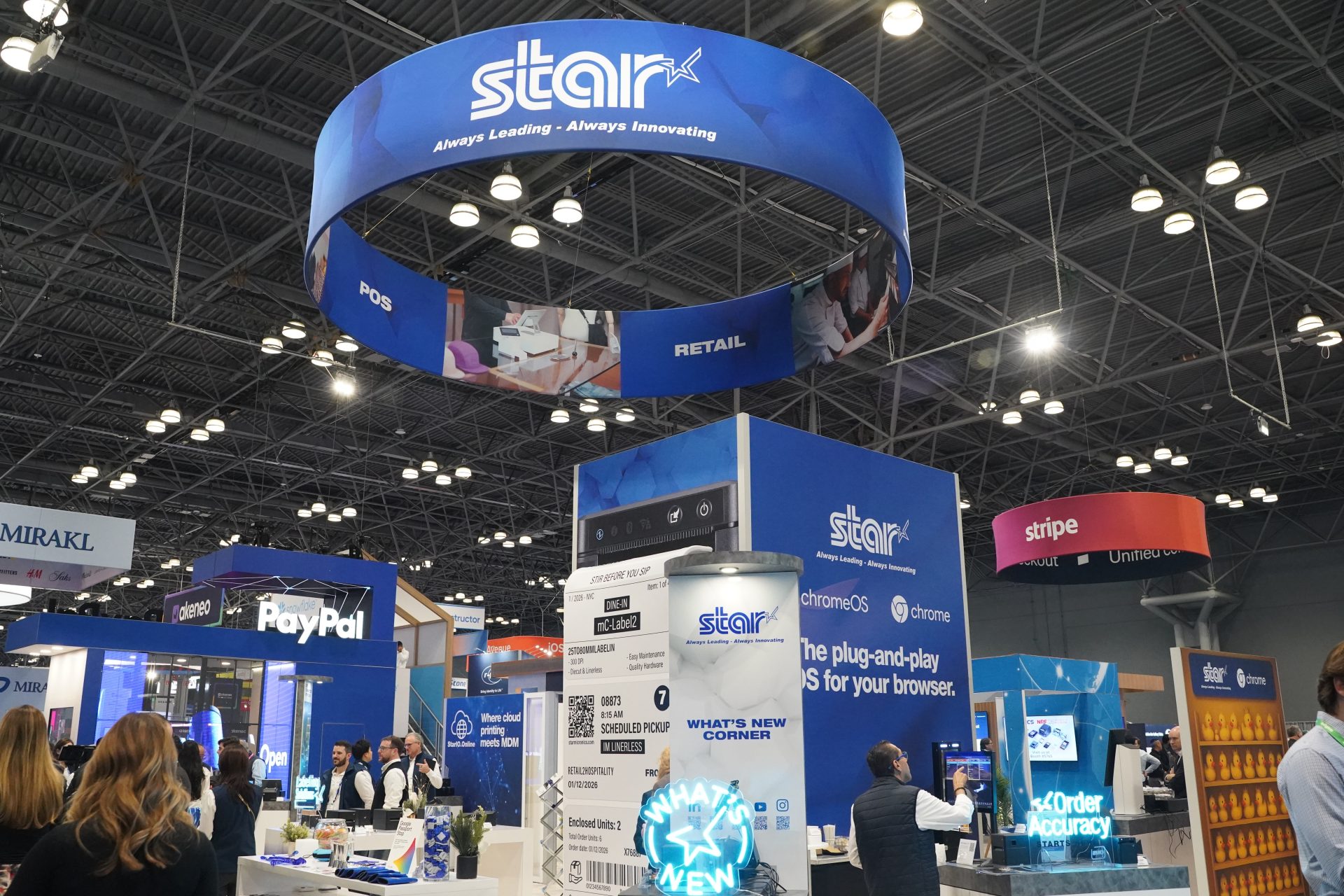
    New York, NY – January 11-13, 2026 – Star Micronics, a global leader in point-of-sale (POS), labeling, and cloud technology, is excited to announce its participation in NRF 2026: Retail’s Big Show, taking place January 11–13, 2026, at the Jacob K. Javits Convention Center in New York City. Attendees are invited to visit Booth 5757 to experience Star’s latest retail-ready hardware and cloud printing solutions.

    At NRF 2026, Star Micronics will demonstrate how enterprise retailers, omnichannel brands, and retail technology providers can improve order accuracy, simplify deployments, and scale printing across complex environments using Star’s customer-first solutions.

    Attendees can explore live demonstrations of Star’s retail technology and cloud tools, including:

    • The mC-Label Series (mC-Label2 and mC-Label3): Cloud-ready, multifunction printers designed for modern retail environments. The mC-Label series supports receipts, linerless labels, die-cut labels, and continuous media, enabling on-demand labeling for BOPIS, curbside pickup, third-party delivery, and in-store fulfillment. X4 models offer USB, LAN, Bluetooth, and Wi-Fi connectivity, along with advanced wireless features and cross-platform support.
    • StarIO.Online: A fully managed cloud printing service that removes the need for local servers or custom infrastructure. Developers and ISVs can use a single dashboard to monitor device health, push remote updates, and manage printers across multiple locations, improving visibility and control.
    • CD5 Max Series Cash Drawers: Star’s most durable cash drawer line, built for cash-heavy retail. With all-steel construction, dual printer-driven and USB interfaces, a five-year warranty, and optional accessories, the CD5 Max Series provides secure, long-lasting cash handling for high-volume environments.
    • LED Cash Drawer (CD4 Choice Series with LED Status): A Star first, this cash drawer features built-in LED indicators that provide instant visual confirmation of drawer status, helping staff quickly identify open or closed drawers in busy checkout environments and improving speed and accuracy at the point of sale.
    • mC-Connect™ Drawer: Another Star first and an industry milestone, this compact connectivity hub brings Ethernet, USB, wireless LAN, and Bluetooth® LE together in one device, unlocking true flexibility for cash drawer deployments. Built for modern, tablet-driven POS environments, it bridges traditional cash management with next-gen retail infrastructure, so retailers can evolve their systems without replacing what already works.
    • Star Eco and Star Blue Eco Paper & Labels: Star’s expanded media line offers value-focused and premium eco-forward options, including BPA/BPS-free and Prop 65-compliant formulations and recyclable thermal receipt paper. Engineered for consistent thermal performance and guaranteed compatibility with Star printers, these solutions help retailers support sustainability initiatives without compromising print clarity or reliability.

    At NRF 2026, Star Micronics will be joined in the booth by technology partners ImageHolders, Logic Controls, and Lenovo InstoreScreen to highlight how browser-based POS, kitchen, and printing workflows are shaping modern retail and foodservice environments. The show also marks a new partnership between Star Micronics and Logic Controls, bringing KDS software and labeling together to improve order accuracy and accountability across in-store, kiosk, BOPIS, delivery, and catering workflows. 

    In addition, Star will feature kiosk and drive-thru applications in the Food Service Innovation Zone alongside MicroTouch, highlighting scalable self-service and high-throughput ordering environments. 

    Star Micronics will also host an exclusive partner appreciation event during NRF 2026, offering invited guests the opportunity to connect with peers and industry leaders in a relaxed setting above the city. “Night Above NYC,” Star’s NRF rooftop gathering, will take place on Sunday, January 11, at the Sandbar Rooftop (23rd floor of the Hilton), featuring skyline views, refreshments, and networking. Attendance is limited, and advance registration is required.

    Retailers, ISVs, and solution providers are encouraged to visit Booth 5757 to see Star’s solutions in action and schedule one-on-one meetings with the Star team.

    To book a demo or for more information, contact sales@starmicronics.com. 

    Can’t get enough industry news?

    Star Micronics logo, point-of-sale (POS) hardware and technology company.

    Star Micronics, a world leader in point-of-sale (POS), has designated a portfolio of printing, secure cash management, self-service, and customer engagement solutions for any retail or hospitality establishment. Embracing the mPOS wave, Star’s SDKs allow developers to utilize Star printers in tandem with Android™, iOS, iPad®, and iPhone® devices to generate receipts, labels, chit, and tickets. Star Micronics is always leading and always innovating, creating cloud-based printing solutions, including CloudPRNT Next, StarIO.Online, and Star Cloud Services, with AOA support and MFi connectivity. Star also has a wealth of peripherals, including 2D barcode scanners, scales, tablet display stands, and more. Visit starmicronics.com or follow us on Facebook, X, YouTube, or LinkedIn to learn more. 
    Media Contact:

    Christin Trilone
    Star Micronics America, Inc.
    ctrilone@starmicronics.com
    848-216-3318

  • 2026 IT Channel Predictions Are Optimistic

    2026 IT Channel Predictions Are Optimistic

    Star partners in the IT channel are in a strong position going into 2026. What will define success for value-added resellers (VARs), independent software vendors (ISVs), and managed services providers (MSPs) in the IT channel this coming year? Rising IT spend, growth in subscription-based software, and expanding demand for vertical solutions all point to one of the strongest years for the IT channel in a decade. 

    Macro trends are positive. Gartner predicts worldwide IT spending will increase 9.8% from 2025 to reach $6.08 trillion in 2026. The IT services market is also growing, with Grand View Research reporting a CAGR of 9.4% from 2025 to 2026, reaching $2.59 trillion. For IT channel partners, these indicators suggest sustained opportunity rather than short-term recovery.

    Table of Contents

    What Is the IT Channel in 2026?

    The IT channel, comprising VARs, ISVs, MSPs, and other technology integrators, looks very different from what it did a decade ago. Today’s IT channel partners do far more than sell hardware. They design, deploy, and support complete technology ecosystems that combine software, integrations, and ongoing services.

    This modern channel model aligns closely with Star Micronics’ hardware portfolio, cloud printing technologies, and partner ecosystem. Reliable, cloud-ready hardware remains foundational to these deployments, especially in retail, restaurant, healthcare, and other multi-location environments.

    In 2026, IT channel organizations continue shifting toward recurring services, cloud-based deployments, and specialized vertical markets. According to the Retail Solutions Providers Association (RSPA) Retail IT Channel KPI Study, VARs and ISVs have rebounded from a flat or worse 2024. About 80% of the POS channel now reports growth, with 9.4% seeing revenue growth of 40% or more. These trends are setting the stage for a strong year ahead.

    Key Predictions for the IT Channel in 2026

    Based on market data and channel performance trends, several themes will define success for IT channel partners in 2026:

    • Continued growth in recurring, service-driven revenue models
    • Increased demand for cloud-ready, multi-location hardware deployments
    • Expansion into regulated and emerging verticals such as healthcare, cannabis, and senior living
    • Greater emphasis on simplifying infrastructure while enabling scale

    Partners that can deliver reliable hardware while reducing operational complexity will be best positioned to capitalize on these shifts.

    Cloud Servers and Multi Location Businesses for the IT channel

    More Insights from the Retail IT Channel KPI Study

    The RSPA’s Retail IT Channel KPI Study took a deep dive into the state of the channel, examining key performance indicators (KPIs) that IT channel partners, including VARs, ISVs, and other solutions providers, use to measure business health. One of the most telling indicators is revenue per employee.

    1. Growing Revenue per Employee

    Among RSPA member VARs and ISVs, 38.1% report $200K in revenue per employee, a long-standing benchmark for a healthy organization across both the POS channel and the broader IT channel. This figure represents a 5.6% increase from 2023 and an 11.8% improvement compared to 2022, signaling stronger operational efficiency among IT channel partners.

    RSPA views this improvement as evidence that IT channel partners are succeeding even as competition from VC-backed providers continues to grow. The study also shows that VARs and ISVs are increasingly effective at pairing high-value services with IT hardware and software. Approximately 55% of respondents report that 10% to 29% of their revenue is recurring from services, while about 6% generate more than 60% of revenue from services.

    Star partners are among the POS channel organizations benefiting from these trends. By combining managed services with hardware bundles such as printing, labeling, kiosks, and cloud-connected POS peripherals, they are well-positioned to meet evolving market demand and sustain long-term growth.

    2. Near Record Profit Margins

    In addition to revenue growth, the POS channel is seeing higher profitability. Only 1.2% of RSPA survey respondents reported a loss, while 64.7% reported profit margins between 20% and 60% or more. These results point to a healthier, more resilient channel overall.

    3. Expansion into New Markets and Niches

    Another key finding from the study is that IT channel partners are expanding beyond traditional retail and restaurant markets. Respondents reported growth in areas such as:

    In addition, many VARs and ISVs are setting their sights on healthcare (14.3%), medical office and senior living (13.1%), and non-profit organizations (11.9%). With broader solution portfolios, including cloud-ready hardware and printing technologies from Star, partners can confidently expand into these verticals.

    Ethnic Grocery Markets
    VARs and ISVs are increasingly moving into new markets, like ethnic grocery stores.

    4. Emerging Opportunities

    When asked about emerging opportunities, IT channel partners consistently pointed to larger customer profiles, expansion into enterprise accounts, and growing demand for specialized, vertical-focused software. Many also cited advancing technology as a key growth driver.

    As end customers seek to operate more efficiently and deliver better experiences, IT channel partners are increasingly positioned as strategic advisors. Simplifying infrastructure while enabling cloud-based, multi-location deployments is becoming a defining competitive advantage.

    What Makes a Star Partnership So Valuable?

    Partnerships enable VARs, ISVs, and MSPs to deliver the products, solutions, and services their markets demand. Star Micronics supports partners with an exceptional breadth of hardware, cloud technologies, and flexible deployment options designed for modern IT channel business models.

    > Star’s Portfolio

    Star Micronics offers one of the industry’s most complete portfolios of POS and labeling hardware, including receipt, label, and multifunction printers, cash drawers, scales, tablet stands, and scanners. This breadth allows VARs and ISVs to build standardized, scalable solutions across retail, restaurant, and emerging vertical markets.

    In addition to hardware, Star provides cloud technologies and services that support modern deployment models:

    • CloudPRNT Next is Star’s next-generation cloud printing technology built into compatible printers. Using MQTT-based communication, it enables fast, reliable, and scalable direct-to-cloud printing for ISVs that choose to manage their own cloud infrastructure.
    • StarIO.Online is Star’s fully managed cloud printing service. It allows ISVs to send print jobs to CloudPRNT-compatible printers through REST APIs while Star hosts and maintains the cloud infrastructure. StarIO.Online also provides real-time printer status visibility and centralized configuration related specifically to cloud printing workflows, helping partners reduce infrastructure complexity and support multi-location deployments more efficiently.
    • Star Micronics Cloud Services (SMCS) includes cloud-based tools and APIs that extend the value of Star hardware. SMCS provides developer-facing APIs that enable ISVs to build their own dashboards or workflows for printer status monitoring and connectivity. It also includes end-user tools such as PromoPRNT and Label Builder, designed to help merchants manage promotional content and customized label designs.

    Together, these options give VARs and ISVs flexibility in how they architect, deploy, and support cloud-enabled printing solutions at scale.

    StarIO.Online is a fully managed cloud printing service by Star Micronics.

    > Vertical-Specific Solutions

    Star supports a wide range of industries, with hardware designed for retail and restaurant environments, as well as for growing sectors such as healthcare, medical offices, senior living, and non-profits. Star’s experienced team provides the industry expertise needed to support partners as they expand into new verticals.

    > Opportunities to Build Recurring Revenue

    VARs, ISVs, and MSPs can package software and services around Star’s technology to build recurring revenue streams. By supporting cloud-first offerings and Software-as-a-Service (SaaS) models, Star makes it easier for partners to create predictable, scalable revenue while reducing long-term support complexity.

    Make the Most of a Great Year for the IT Channel

    In 2026, the IT channel will favor partners who simplify infrastructure while enabling scale. Star Micronics helps VARs and ISVs do exactly that, with cloud-ready POS hardware and a fully managed cloud printing service that removes friction for both partners and their end-user customers.

    Want to learn more about the benefits of a Star partnership?

    FAQs for VARs and ISV Partners

    What trends will matter most for the IT channel in 2026?

    Growth in cloud-based platforms, vertical specialization, and scalable hardware deployments will shape the IT channel in 2026. VARs and ISVs that simplify infrastructure and support multi-location environments will be best positioned to grow.

    Why are VARs and ISVs expanding into new vertical markets?

    Competitive pressure and maturing retail and restaurant markets are driving channel partners to explore healthcare, cannabis, senior living, and specialty retail. These industries demand reliable, purpose-built hardware and cloud-ready printing solutions.

    How does Star Micronics support VARs and ISVs as they scale?

    Star Micronics provides a broad portfolio of POS and labeling hardware, cloud-ready printing technologies, and a partner ecosystem designed to support multi-location deployments without unnecessary complexity.

    What’s the difference between StarIO.Online and Star Micronics Cloud Services?

    StarIO.Online is Star Micronics’ fully managed cloud printing service. Star hosts and maintains the cloud infrastructure, allowing ISVs to send print jobs to CloudPRNT-compatible printers through REST APIs without managing servers or middleware. StarIO.Online also provides built-in printer status visibility and cloud-printing-related configuration through Star’s managed dashboard.

    Star Micronics Cloud Services (SMCS) provides developer-facing APIs that allow ISVs to build their own dashboards and tools for printer status monitoring and related functions within their own platforms. SMCS also includes end-user cloud tools such as PromoPRNT and Label Builder, which are designed for merchant use and are not embedded into ISV platforms.

    Some partners use both: StarIO.Online to offload cloud printing infrastructure, and SMCS APIs to build customized monitoring or workflows on top of Star’s hardware ecosystem.

    Do partners need to use Star’s cloud services to work with Star hardware?

    No. Partners can choose the architecture that fits their business. ISVs may manage their own cloud infrastructure using CloudPRNT Next or opt for StarIO.Online, if they prefer a fully managed cloud printing service hosted by Star.