Category: Industry Insights

  • 5 Ways to Motivate Retail Store Staff and Keep Morale High

    5 Ways to Motivate Retail Store Staff and Keep Morale High

    Picture this:

    It’s just a normal Tuesday and you arrive at your shop. Your spirits are high and you are looking forward to your day. You step through the door and your cashier is on her phone. Another employee is lounging to the side. There is no sense of enthusiasm or motivation. There are no positive interactions with your customers. Your mood immediately changes and, suddenly, you realize that this is affecting your store’s sales.

    Motivation, the state or condition of being motivated or having a strong reason to act or accomplish something. In 2017, it was reported that 51% of employees in the United States are not motivated. With the lack of motivation, about 70% of Americans do not feel engaged at their job. Why? There is a science to motivation that needs to be understood in order to keep employees engaged in their daily work.

    Let’s first understand why it is so hard to stay motivated. As said by Forbes, there are three main mental reasons as to why it is so hard to remain motivated:

    1. “I have to”
    2. “I don’t feel right about this”
    3. “I can’t do this”

    Basically, motivation is determined by how your employees view a situation. So, how can you keep your staff motivated besides their paycheck? Take a look at these five tactics!

    1. Employee Training

    We get it, this sounds boring. Nobody actually wants to sit through training, right? Wrong. Employee training sessions may have a bad rap for being boring, however, when done correctly, can be fun and engaging. For starters, Myagi suggests utilizing quizzes and follow-up questions to bring about friendly competition to your employees and increase participation and memory retention. Additionally, get your employees to present their ideas to one another.  You never know what tricks they may have up their sleeves.

    2. Listen

    Such a simple concept, yet so effective. Think about your personal experiences. Don’t you feel more valued when your boss listens to what you are saying? Listening to your employees’ thoughts, concerns and ideas is crucial in allowing staff to feel involved. Showing employees that their insights are valued and appreciated guarantee a high morale and motivated work environment.

    3. Advancement Opportunities

    Knowing that you are working to achieve a goal is motivating. The goal is especially motivating if it leads to more opportunities to advance within the business. By offering these opportunities, you give your staff the encouragement to work to the best of their abilities.

    4. Incentives

    Incentives are a fun, simple, solution to keep staff members motivated. Don’t worry, your incentives do not need to be expensive. They can be as simple a gift card to Starbucks. Let’s be honest, most people love prizes, so why not give your employees a reward for a job well done?   

    5. Be an Effective Leader

    Blog-Image-e1574798413408

    Show that you’re passionate about your role. Be excited about your business’s goals. Nothing is more motivating than a leader who wants to succeed with their staff. However, passion is not solely what makes an effective leader. Take a look Peter Economy’s 10 powerful habits that leaders should practice:

    1. Confidence
    2. Persuasive communication
    3. The ability to be sensitive and responsive
    4. Determined
    5. Supportive
    6. Distinguished
    7. Responsible
    8. Optimistic
    9. Honesty
    10. Organized

    Takeaway

    Motivation is mental and the mind is strong. With the mind being such a powerful tool, one must learn how to interact with their staff in order to encourage a positive and productive workday. Motivated retail associates directly translate into better customer service and thus increased in-store sales.

  • The Future of Cannabis Retail is Looking Good

    The Future of Cannabis Retail is Looking Good

    The retail cannabis industry is growing fast, $75 billion by 2030 fast.

    But let’s look at the nearer future. According to Arcview Market Research and BDS Analytics, by 2021 the cannabis market is expected to reach $24.5 billion. Currently, cannabis is legal in 9 states for recreational use while 30 states have legalized cannabis for medical usage.

    With such a high market growth expectancy, dispensaries sell a variety of cannabis products in the forms of hash, rosin, shatter, and oils which can be smoked or vaped. In addition, as many are aware, cannabis is also sold in the forms of candy and baked goods. As for pharmaceutical use, cannabis contains cannabidiol (CBD) which when used in the form of candy or oil aids in the treatment of pain and epilepsy. Now that sounds pretty good.

    Let’s Talk Business

    There’s no doubt that cannabis has health benefits that aid in the relief of:

    • Pain
    • Muscle spasms
    • Arthritis
    • Dravet’s Syndrome
    • Mental health symptoms
    • Etc.

    But what about benefits for businesses?

    Well, as was mentioned earlier, legal cannabis reached $9.7 billion in sales in 2017.

    But let’s dig a little deeper into the facts and figures…

    By 2021, marijuana sales are expected to reach a whopping $24.5 billion. Younger generations are turning to cannabis consumption and slowly turning away from alcohol. This has resulted in a decrease in binge drinking, 9% below the nation’s average, in the states where marijuana is legalized. Funnily enough, the industry’s sales will be led by people 55 and older. With such a diverse market, the cannabis industry is opening up multiple opportunities for businesses to flourish.

    The increased popularity, and acceptance, of the cannabis industry is leading to the establishment of more small businesses with an increase in employment opportunities. With cannabis stores becoming more common in legalized states, the industry of creating products to efficiently, and legally, weigh and sell marijuana to meet regulations are necessary for the success of the business. Additionally, with cannabis being legalized all over Canada, there may even be a possibility that the East coast will speed up its state adoption for recreational use.

    Regardless, cannabis is creating a diverse industry that includes the need for different markets to ensure its success, thus providing a positive impact on the nation’s economy.

    The Cannabis POS Industry

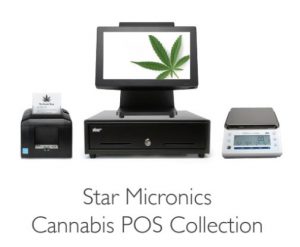
    With Cannabis creating such a diverse industry, it only makes sense that businesses will need reliable POS systems…image-e1574796602929

    Keep in mind that the cannabis industry is different than your average retail business.

    There are multiple rules and regulations that need to be followed in order to ensure that your business is legal. Here are some key points to remember when choosing your POS system:

    1. Cannabis is a cash business
    2. Sensitive scales are a necessity
    3. Labels are regulated
    4. Receipts are essential

    How Resellers Can Cash in on Cannabis Point of Sale

    The cannabis industry has become one of the fastest growing markets. Here’s how resellers can take advantage.

  • The SMB Guide to Retail Promotions

    The SMB Guide to Retail Promotions

    The weather is getting warmer and school’s almost over for the year. SMBs are shifting gears for summer months, lining the shelves with warm weather merchandise. Customers are ready for some fun in the sun, but they’re looking for deals to affordably stock up for summer camp and trips to the beach.

    E-commerce sales have outpaced brick-and-mortar store growth, but effective retail promotions will help you compete with online goliaths. It’s important to focus on your existing customer base because marketing experts agree that it’s less expensive to retain customers than it is to acquire new ones. How much exactly? According to the Harvard Business Review, it ranges from 5 to 25 times more expensive to attract a new customer than it is to generate repeat business.

    Brick-and-mortar stores still have the upper hand over online competitors when it comes to instant gratification and the face-to-face service experiences that shoppers crave. Supercharge these advantages by combining them with effective retail promotions that draw in foot traffic, giving customers can’t-miss reasons for wanting to shop in your store.

    1. Discount Promotions

    It’s natural to think that the easiest way to give sales figures a boost is to run discount promotions however, it’s important to ensure there’s enough long-term value to justify the short-term discount. Bundling is a great way to encourage shoppers to spend more money. Couple related items for a discount—for example, purchase a beach towel and get a bottle of sunscreen for 50% off. Partnering less popular items at full price with discounted best sellers is a smart way to move inventory quickly while still earning a profit.

    2. Utilize “Free” in Your Promotions

    Free items or small “tokens of affection” can go a long way toward making shoppers feel their business is appreciated. Customers are more likely to return to your store if they feel they are being rewarded for buying items they need or value, so “buy one, get one free” can inspire shoppers to stock up. This is especially effective for special event-related merchandise that’s headed for the markdown bin after the season is over. Retail promotions such as “purchase a $100 gift card and get a $10 gift card free,” are also popular because consumers feel like they are getting a bonus with their purchase.

    3. Coupons, Coupons, Coupons

    Coupons are a great way to get people to try new products at a lower price, and if the product lives up to expectations, pay full price the next time. In addition, coupons like “spend $50 and take $10 off” give people an incentive to buy a few more items to reach the $50 goal, and let the shopper choose which items to purchase. Merchants can use their POS solutions to reduce the cost of printing coupons by generating offers in-store. Printing coupons on receipts allows you to reach a higher percentage of shoppers because you can be sure the customer receives it, and it gives your sales associates an additional opportunity to engage customers before they leave the store.

    4. Limited-Time-Only Retail Promotions

    Discounts or items that are only available for a short amount of time creates scarcity and a sense of urgency to purchase. For example, flash sales that happen between certain hours will force people to purchase in that time frame. Daily deals give the perception that the deal will last only as long as the items are in stock. Use these tactics to your advantage with summer deals.

    Although the retail landscape is competitive, SMBs can employ smart retail promotions to help attract new shoppers and retain their customer base. Coupons, free products, discounts, and limited-time-only sales can make an already-great, in-store shopping experience too irresistible to pass up.

    Star’s PromoPRNT allows you to easily customize promotions that print directly on receipts.

  • 4 Ways to Use Offers, Coupons, Discounts and Deals to Drive Revenue and Customer Loyalty

    4 Ways to Use Offers, Coupons, Discounts and Deals to Drive Revenue and Customer Loyalty

    At Star Micronics we’re a POS tech engagement company obsessed with adding value to retail stores and small businesses. We became a leading global manufacturer of mobile point of sale (POS) and customer engagement technologies through many years of building simple-to-use and reliable products such as receipt printers. In 2017 we created innovative partnerships at  Star Micronics Cloud (formerly called Star Cloud Services) which have helped solidify our position with tens of thousands of independent business users and hundreds of thousands of devices sold.

    Today we want to present to you how to use promos, discounts, coupons, and deals to generate ROI and increase basket size at your store and local business. Creating offers cheaply that engage customers at the POS and at the time of sale is key for developing memorable offers that lead to repeat customers and long-term customer loyalty.

    1. Create Promos Easily on Receipts

    The physical receipt is now a key marketing real estate in 2018. With the advent of our solution called PromoPRNT, you can easily create ads at the POS that quickly and efficiently create marketing campaigns on your store’s best deals, offers as well as QR-code-based coupons.

    With Promo Maker and Promo Manager, retailers can create in-store ads on receipts that convert shoppers and get eyeballs with the greatest ROI and also improve word-of-mouth benefits for your small business. Since PromoPRNT allows for the customization of the offer, receipt-based promos can drive revenue 24/7 automatically with POS ads. The solution is available to registered users on the Star Micronics Cloud.  

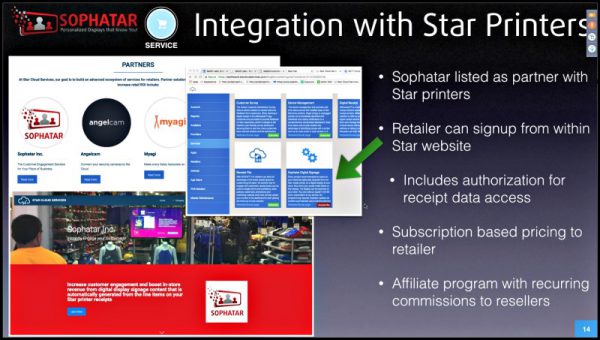
    sophatar-webinar-screen-e1574796452796

    Source: screenshot from Sophatar Webinar hosted by Star Micronics.

    2. Sync Digital Signage with Post and Receipt Data

    Sophatar is a Digital Signage startup with whom we have created an innovative solution with Sophatar® POS Signage™.  Easy-to-install digital screens help increase basket size, enabling retailers to produce more ROI from their top selling products. This means that through a simple software subscription, small businesses can easily create discounts, promos, and deals that integrate with POS data from Star Printers, directly and automatically creating contextual and dynamic signage that shoppers can see at physical locations.

    This essentially enables any retail or hospitality business to implement professional digital signage that’s smart and can easily integrate with mobile coupons and loyalty cards, with no need for customers to install a mobile app. This not only creates customer loyalty, through engaging customer experience in-store but also deals that shoppers cannot resist. As the offers are generated and displayed, based on existing sales data, the best selling items can be displayed, driving higher revenues and increasing average basket sizes at your location.

    3.  Mobile Loyalty Offers Paired with Seasonal Campaigns

    For promotions and loyalty offers that sync with a retailer’s Email and SMS marketing campaigns, it’s essential to onboard top customers into a customized loyalty program. From here, retailers and brick-and-mortar stores can drive ROI from events, seasonal campaigns, free product giveaways, birthday messages and other strategic discounts where loyalty points can drive in-store traffic.

    Automated customer communications inside loyalty programs build and strengthen existing relationships with a retailer’s best shoppers. Thirdshelf is the ideal software for independent retailers to accomplish this:  

    • Creating a loyalty program out-of-the-box
    • Segmenting customers and tracking loyalty analytics
    • Automating Email and SMS marketing offers

    Nurturing high-value customers can drive revenue and increase customer loyalty through tailored and highly segmented marketing campaigns that reach the smartphones of shoppers.

    4. Creating an Omnichannel Loyalty Experience

    In an era when retailers need to create customer experiences in-store, at Star Micronics we believe that creating immersion in-store at the POS — via promos on receipts, via digital signage and mobile that can all work together to create promotions whose benefits stack, generating ROI at physical locations and increasing sales.

    This is also a seamless loyalty strategy that is affordable even for retailers who operate from a single physical location. Secondly, the offers created via PromoPRNT, Sophatar® POS Signage™ and Thirdshelf complement different touch-points of the customer journey that create irresistible offers while boosting customer loyalty.

    What the three solutions mentioned all have in common is that they exist to help retailers automate marketing at their retail location and at the POS, in-store, and via mobile, to create the best customer engagement at the lowest cost.

    Yes, really.

    Coupons are still the top-performing marketing and promotional tools for businesses. Learn more in our free eBook.

  • 4 Reasons Why Integrated Online Ordering is a Must-Have for Restaurants

    4 Reasons Why Integrated Online Ordering is a Must-Have for Restaurants

    If you haven’t integrated online ordering with your point of sale system yet, it’s time to add this valuable feature and start operating more efficiently.

    Every take-out or delivery meal starts with an order. Although phone orders are universally accepted at restaurants, integrated online ordering is a must-have alternative to phone calls. If you haven’t integrated online ordering with your point of sale system yet, it’s time to add this valuable feature and start operating more efficiently.

    Free Online Ordering Resources

    Social distancing has deeply affected our customers in the restaurant industry. That’s why Star Micronics is offering free online ordering resources for VARs and ISVs helping restaurants navigate the implementation of online ordering.

    What is integrated online ordering?

    Integrated online ordering allows diners to enter their orders online through the restaurant’s website or app, designate whether it’s pickup or dine-in, pay with a credit card and send the orders automatically to the kitchen. This functionality is a crowd-pleaser that, depending on the integration, updates the customer on their order’s progress and gives an ETA for delivery or pick-up.  In turn, restaurant owners and managers can increase revenues by accurately processing more orders with less staff.

    Here are four ways online ordering will positively impact your restaurant:

    1. Restaurants gain a new revenue stream with online ordering.

    For smaller restaurants with only a few tables, it can be difficult to increase profits without adding capacity, turning tables faster, or extending the hours your eatery is open. All these options add overhead in the form of higher rent, more employees and additional costs related to a longer work day. Adding online ordering and delivery generates an additional revenue stream without impacting the on-premises operations.

    People are looking for eateries with the technology that allows them to order in the way they feel most comfortable in the least amount of time. On average, restaurants that implemented online ordering increased their takeout revenue by 30%.

    2. Order accuracy will improve and customer satisfaction will increase.

    More people are logging on to place their orders for everything from doughnuts to Thanksgiving dinners. Customers want to be able to place their orders online —in fact, a National Restaurant Association survey shows that 63% of respondents said that they would use online ordering if it were offered.

    Without online ordering, an employee must reenter orders received via phone or non-integrated application into the restaurant POS, which creates double work and opens the door for mistakes to be made keying orders into the workstation. ­Removing these steps means more confident staff at the POS, less errors and a reduction in the amount of time and resources wasted on remaking orders prepared incorrectly.

    3. Integrated online ordering is more cost effective.

    If you currently offer menu items for delivery or take out, but do not have online ordering, your staff needs to spend time answering the phone. This means they are interrupted from another task, need to stop and place the order, and then return to their original task. This translates to a decrease in productivity — and an increase in labor costs. Paring with a POS system that uses Star’s CloudPRNT solution offers the option to have orders print automatically when received. Online orders that are directly transmitted to the kitchen save time and money.

    4. It helps you compete — your competition has already implemented it.

    Patrons expect your restaurant to have the technology that allows them to order online or with a mobile app. Online ordering is booming — it’s projected to be a $38 billion industry in the U.S. by 2020.  The restaurant industry is extremely competitive and has a high failure rate, so restaurateurs simply cannot afford a “wait-and-see” attitude.

    Online ordering delivers hot, fresh food quickly and correctly, so it’s time to integrate if haven’t already. Integrated online ordering will allow people to order their meals the way they want and when they want. This functionality will help you reduce human error while inputting orders and cut down on payroll cost and wasted resources. The restaurant business is fierce, so you can’t afford not to offer this cutting edge technology.

    Is Your Restaurant Ready for the Growing Online Ordering Trend?

  • What’s Next for Cannabis Retail?

    What’s Next for Cannabis Retail?

    Cannabis legalization is not just creating more business opportunities for recreational dispensaries, but for the point of sale industry as well. Star Micronics has found ourselves rapidly gaining popularity among the cannabis point of sale market and are looking forward to what lies ahead.

    First, it’s important to consider the fact that the legal cannabis market is growing quickly with no intention to slow down. The legal cannabis market was worth an estimated $7.2 billion in 2016 and is projected to grow at a compound annual rate of 17%. This is more than 8 times the growth rate of the beer and liquor store market in the U.S.

    While the cannabis market is growing, there are still issues with marijuana businesses and traditional banking, which means it has mostly been a cash-only industry. While this can serve as an inconvenience for those who frequent recreational cannabis dispensaries, it helps us point of sale folk to keep in the market by providing receipts printers and cash drawers for these businesses. With more states beginning to legalize recreational marijuana use, we can predict that more people will begin to heavily invest in this market, and smaller dispensary businesses will soon be able to fold into larger companies.

    In addition to the issues that cannabis businesses face with banking and financial services, recreational marijuana dispensaries are required to practice “seed to sale” tracking compliance. For those unfamiliar with this term, the “seed to sale law” requires every marijuana producing plant to be tracked through each stage of its life, from cultivation to the point of sale.

    With this in mind, software developers are working to create point of sale systems that help dispensaries to easily manage their seed to sale tracking, as well as perform other daily functions that your average retailer would need. For this detailed and complicated task, there is simply too much risk of human error for dispensaries to not use a retail management solution. This is where we begin to see the cannabis market booming in the point of sale industry.

    So, what can we predict for the future of cannabis retail?

    In the recent U.S. election, California, Massachusetts, Maine, and Nevada all passed measures legalizing recreational marijuana. While there are still tax and licensing provisions that will not take effect until January 2018, we can expect a major growth in legal marijuana sales, with California forecast to dominate the market. California, being the oldest medical cannabis state and the largest cannabis consumer population, is predicted to reach $7.6 billion in annual marijuana sales by 2020.

    Similar to the online ordering trend among restaurant take-out and delivery services, we may be looking at the future of remote ordering for cannabis sales. California delivery startup, Eaze, has procured more than $25 million in multiple rounds of funding in the hopes of being the largest provider of on-demand cannabis delivery.

    With the advances of technology and innovation in legal cannabis sales, Star Micronics is very excited to continue to provide support for this emerging market and see our partners grow along the way.

  • 5 Reasons Retailers are Moving to Web-Based Applications for POS

    5 Reasons Retailers are Moving to Web-Based Applications for POS

    Web-based applications have changed the IT landscape because they require little upfront investment, update frequently, and businesses typically can use the hardware they already own. This affordable alternative to traditional, on-premises POS software keeps databases and information secure, with around-the-clock access from any location or mobile device with an Internet connection.

    Although their applications apply to virtually all markets and industries, Web-based applications have had a particularly large impact on retail point of sale (POS). Consider these five reasons: Can your POS system do this?

    1. Effortless Scheduling. A Web-based application means you can access back office functions from anywhere, anytime. This empowers managers to update schedules and view time off or vacation requests quickly and easily from any mobile device. Employees can view their work schedules and request time off through an easy-to-use interface, even when they aren’t in the store.

    2. Easy Inventory Access. According to retail advisory firm IHL Group, inventory errors cost retailers $1.75 million every year. The number one reason these errors occur is because of internal process failures, which can be prevented by a Web-based application. Inventory is tracked in real time, instead of updating hourly or daily. Employees can easily see which items are on-hand, in-transit or on-order. This is especially important if you’re managing stock at multiple stores because it allows managers to place an order for all the stores from one location.

    3. Order Online, Pick Up in Store. People are seeking out an omnichannel shopping experience so it’s no surprise that the “buy online, pick up in store” is becoming even more popular. It’s the perfect solution for people who want the instant gratification of getting their item the same day, while saving on shipping costs. Web-based application inventory management is updated in real time, so customers can see what’s in stock while they are shopping. It also allows them to select a different location if their item is out of stock, and have it shopped to the closest store for pickup.

    4. Offsite Access. Traditional POS systems may require you to be on-site to work on back office functions or review reports, but a Web-based application lets business owners and managers access the system from anywhere with Internet access. Web-based applications store data in the cloud, so it’s open 24/7 for managers to run reports, schedule staff, and manage inventory from home while on a businesses trip, or late at night.

    5. Save a Webpage (Like an App) to a Mobile Device Home Screen. Business owners and managers can save a shortcut to their Web portal – like an app – right to their smartphone or tablet so they can log in with just a few clicks. This technology, which brings their entire operation right to their fingertips, is compatible with iPhone® and Android™ OS platforms. Customers can also take advantage of your store’s Web-based application for easy, one-click ordering (if available). Having your store’s webpage available on a customer’s home screen will help ensure your store will always be their first stop.

    Increasingly, retailers are opting for Web-based applications due to their ease of use, the expanded capabilities they offer, and the enhanced customer experiences they can help provide. Web-based applications are an affordable alternative to legacy POS systems that can help move your business toward greater efficiency and competitiveness.

  • Customer Experience Trends for the Future of Retail

    Customer Experience Trends for the Future of Retail

    Technology in retail has reached an all time high and is continuing to grow in 2017. The Internet of Things (IoT), Virtual Reality (VR), and Augmented Reality (AR) have all began to make their breakthrough into retail technology. It’s needless to say that this technology is changing the customer experience.

    IoT in Retail

    The Internet of Things simply defined is the “internet working of physical devices, vehicles (also referred to as ‘connected devices’ and ‘smart devices’), buildings, and other items – embedded with electronics, software, sensors, actuators, and network connectivity that enable these object to collect and exchange data.”

    IoT is everywhere! If you own a smart phone, then you are using IoT on a daily basis. With the new trend of mobile wallets and near field communication (NFC) payments, retailers are beginning to use IoT in their stores to enhance the customer experience. With wearable technology and NFC payments, retailers can provide more payment options for the customer and a smoother transaction process by allowing the customer to pay via smartphone or wearable device such as an Apple Watch.

    Moving toward an age of paperless transactions, it’s crucial for retailers to accept mobile payments and offer digital interaction with their shoppers via IoT. Virtual and digital communication and transactions are something that shoppers are going to be looking for in 2017, and it will have a huge impact on the overall customer experience.

    VR and AR in Retail

    2016 has proved to us that virtual reality and augmented reality will change the way people shop and in turn, transform the customer experience in retail. Shoppers will no longer need to physically travel to a store to experience the way something looks and feels. While VR and AR are definitely related, the two are used very differently in retail technology.

    If you are active on Facebook or another social media platform, you may have notices that many people have received a pair of virtual reality goggles during the holiday season (seriously… a lot of people). Overall, these goggles are used to play video games or experience virtual realities like riding a virtual roller coaster or exploring a virtual jungle. In terms of retail technology, virtual reality could possibly be the new way people do their shopping.

    How will this change the customer experience? How will this change omnichannel retail?

    Think about when you are shopping online, but hesitant to make the purchase because you’re not sure if the pants you are purchasing will fit you, or because you don’t know if the lamp you’re looking at will go well in the living room. With the rise of VR, ecommerce retailers will be able to create a virtual store and connect the shopper with the physical product, without the shopping ever needing to leave their home. Sounds crazy, right?

    Now let’s talk about AR. In 2016, Pokémon Go! took the world by storm by introducing one of the first successful augmented reality games for smartphones. We quickly learned how the game could affect retailers, and retailers quickly learned how to take advantage of the game by offering discounts and special promotions to their customers who were playing.

    As technology continues to advance and VR and AR becomes ‘the norm’, shoppers will expect a more technologically advanced customer experience. We can already see this trend with the growing adoption of online retailers and mobile payments. Now the question is: what can SMB retailers do to keep up with this advance in technology? How can they continue to keep the customer satisfied?

    SMB Retail Technology

    While the rise in retail technology will have a huge impact on the overall customer experience, there are ways SMB retailers will be able to better the customer experience for their shoppers in 2017 that won’t require a virtual reality store.

    One very simple way SMB retailers can use technology already available to them to ehance the customer experience, is to create an omnichannel shopping experience for their customers. Engaging customers beyond the transaction is key when creating the ultimate shopping experience. This can be done through the retailer’s website, mobile app, etc. According to nChannel, two-thirds of shoppers will check prices on their phone before making a purchase in a brick and mortar retail store. For this reason, SMB retailers need to make sure that they are engaging customers both in-store and online in order to keep their shoppers satisfied.

    Enhancing the Customer Experience

    In this age of new technology, omnichannel retail, and being able to basically purchase anything you need online or on your smartphone at your convenience, there is an increased pressure being put on SMB retailers to keep their customers satisfied in-store. The important thing to note is that shopping is no longer just about making the purchase, but it is about the entire shopping experience, whether that is a virtual reality store, or superior customer service.

    In order for SMB retailers to keep their customers satisfied, they must first understand their audience and their needs. If a retailer’s target audience is a middle or older-aged crowd, creating an app for a virtual store may not be appealing. For this same audience, increasing customer service reps in store or sending mailing coupons might be more efficient. With every audience comes a new strategy for providing the best customer experience.


  • 10 Ways mPOS Can Benefit Your Business

    10 Ways mPOS Can Benefit Your Business

    As a business owner, the last thing you should need to stress over is your point-of-sale system. POS  systems are designed to make your daily workflow smoother and easier for business owners and employees alike. If you’re considering a mobile POS solution, be sure to look at ergonomic mobile solutions.

    These solutions recognize that some businesses need peripherals beyond the basic tablet POS, such as a combination cash drawer/receipt printer. Here’s what ergonomic mobile solutions offer:

    1. Convenience. With an ergonomic tablet POS plus cash drawer/receipt printer, you can accept all payments anywhere, anytime. This is a big improvement over common mPOS, which traditionally only handles electronic payments.

    2. Space saver. Ergonomic solutions reduce your POS footprint significantly. With their small size and sleek profile, these platforms are attractive and unobtrusive in your retail or restaurant environment, freeing up space in which you can add tables or expand merchandise displays.

    3. Assist mPOS solutions. Because these ergonomic mobile solutions rely on Bluetooth technology for connectivity, they’re fully mobile when needed and rid you of tangled wires and a jumble of dongles.

    4. Full functionality. Ergonomic mobile solutions offer robust features and functionality for a wide range of applications.

    5. Receipt printer. Small and compact, a built-in printer lets you quickly and quietly print a receipt as soon as the transaction closes. Additionally, sometimes single accessories are needed without a full system. In this case, you should check to see if your system can support additional printers for your bar, kitchen, and other areas.

    6. Barcode scanner. If your tablet or mobile device lacks a barcode scanner, your ergonomic mobile solution easily accommodates an optional plug-and-play scanner for reading merchandise.

    7. Cash Drawer. A secure cash drawer stores currency, checks, receipts and other important items. The size of the cash drawer you choose will depend on the number of cash transactions you process a day.

    8. Software application. To get the greatest value of your ergonomic mobile solution, pick a software application that supports the latest payment options such as NFC and EMV. This will help you to avoid another technology upgrade in the near future.

    9. Tablet/device. When evaluating tablet and mobile device options on the market, be sure to select hardware that’s designed to process NFC and EMV payments, preferable without requiring add-ons or peripherals to do so. Choose a device that’s compatible with your preferred software application. Most software applications have a preferred operating system, however if you need a software application to be cross compatible, make sure to do your research and find a web-based solution.

    10. Digital receipt. More and more retailers want to deliver an in-store experience that provides digital support. There are innovative, downloadable apps on the market today that are supported by many POS systems. These apps allow your customers to receive a digital copy of their receipt on their smatphones. Some of these apps even allow functionality for customer satisfaction surveys, so retailers can always get a gauge on how they are perceived by their customers.

    For more information on mPOS solutions, download our eBook: mPOS: How it’s Revolutionizing Payments

  • Dry Cleaning POS Software Checklist: 10 Things Not to Compromise On

    Dry Cleaning POS Software Checklist: 10 Things Not to Compromise On

    Your dry cleaning business must operate efficiently and profitably to succeed in this highly competitive market. So it stands to reason that when you are considering new point of sale (POS) software for your business, that you would settle for nothing less than the solution that allows you to operate most efficiently and maximize profits.

    There are many POS software options available, but you need to narrow the field of choices to those that have the features best suited for operating a dry cleaning business.

    This checklist of POS software for dry cleaners can help. It lists 10 features essential to your operations, and finding software with these features can bring you one step closer to the right solutions for your business.

    1. Intuitive Interfaces and Functionality. POS software with an easy to use interface will also benefit your business by making the task of training new employees easier and quicker.
    2. Labor Management. The POS system can help managers monitor attendance and control overtime.
    3. Peripheral Support. Make sure the POS solution you invest in today can accommodate your business’ changing needs, and can scale or be upgraded to accommodate new technology.
    4. Customer Engagement. The customer relationship management (CRM) module of your POS software solution provides you with an updated database of customer contacts, delivery information, and even how much starch individual customers like in their shirts.
    5. Delivery. Your POS software should also support mobile POS and a mobile printer to equip your drivers with tools for delivery confirmation, to print invoices and receipts, and to accept payments.
    6. Labeling and Tags. You’ll want to ensure that your receipt printer can handle wash tag printing that will be durable after the customer takes it home.
    7. Payment Processing. Your POS system should provide your customers with the convenience of accepting any of their preferred payment methods.
    8. Inventory Management. Whether you use a numbering or a barcode system, your POS software solution should include an inventory management tool that helps you track items from drop off to pickup or delivery.
    9. Assisted Assembly. If your dry cleaning business has automatic assembly systems or if you are considering it for the future, make sure your POS system can integrate with them so your business can take full advantage of this time-saving technology.
    10. Reporting. Your POS solution should provide reports in a format that allows you to keep a close watch on operations and on your bottom line.

    In a highly competitive dry cleaning market, decisions that can impact your efficiency and profitability are too important to take lightly. Practice due diligence to ensure your new POS software solution will provide the right features, and ultimately, the right outcomes for your business.

    Download our full eBook: Dry Cleaning POS Software Checklist: 10 Things Now to Compromise On.