Author: Star Micronics

  • PromoPRNT is the Easiest Small Business In-Store Marketing Tool

    PromoPRNT is the Easiest Small Business In-Store Marketing Tool

    What is the cost of receipt paper? It’s $1.25 per 1000 receipts. The true cost of PromoPRNT is just owning a Star Micronics receipt printer and the time to customize receipt messaging to your audience. Any small business or retail store can be doing in-store POS ads with this tool. PromoPRNT has Promo Builder and Promo Scheduler, making it the easiest way for retailers to do in-store ads at the time of purchase. Offline marketing is severely underestimated in 2018, and PromoPRNT works on the valuable real estate where it’s easiest to get eyeballs—the physical paper receipt.

    In the first half of 2018, a slew of retailers have been busy trying this brand-new service added to the popular Star Micronics Cloud Services platform.

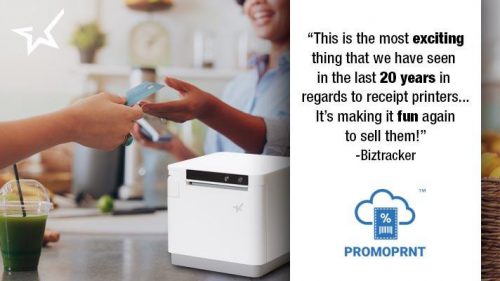
    Biztracker-quote-e1574799468985

    Marketing doesn’t have to be expensive or yield uncertain results such as with Facebook or Instagram ads online. PromoPRNT is immediate, physical, and ends up, literally, in your shoppers’ hands.

    It allows small businesses to build rapport with customers where it matters most — at the physical location. Having the ability to do campaigns in-store, that are easy to set up and practically automated and very inexpensive, obviously has incredible benefits.

    PromoPRNT is also a great way for resellers of retail hardware and software to gain a recurring revenue stream. Meanwhile for retail store managers, this is an easy way to communicate with customers, to implement a customer retention program and gain traction on campaigns, discounts, and seasonal offers. Small businesses are using it to implement the following:

    Communicate Easily with Customers

    • A discount offer or time-limited promotion
    • Quotes & branding keywords
    • Hiring notices

    Build Rapport with Customers

    • Event reminders
    • A positive thank you message
    • Driving traffic online

    Create Customer Experiences

    • Customer feedback surveys
    • Seasonal campaign sale (e.g. Back-to-School deals)
    • A funny message for brand awareness

    Build Customer Loyalty

    • Mention of a charity or community initiative
    • A point-of-purchase message designed for customer retention
    • Seasons greetings messages

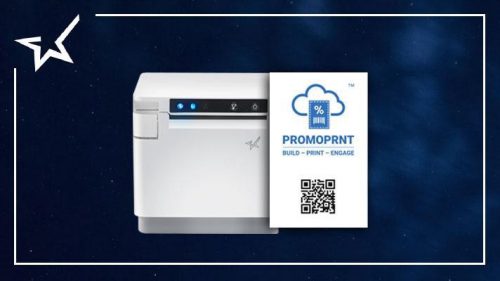
    mC-Print-PromoPRNT-e1574799485716

    PromoPRNT Costs Only a Star Printer

    PromoPRNT as an automation tool for retail stores only costs the price of a Star Micronics Printer. With a library of templates and the built-in Promo Builder and Scheduler to create and schedule receipt ads, it’s very easy to set-up.

    PromoPRNT takes no time at all. To connect your printer, it takes under 3 minutes. To make your first promotion from a template, it takes under 5 minutes. So, in about 10 minutes, you are up and running.

    How to Set Up and Use PromoPRNT

    All a small business requires to on-board PromoPRNT is to own a Star Micronics receipt printer and to sign up on Star Micronics Cloud.

    In an era of mobile and eCommerce, it’s refreshing for retailers to have such a simple tool that can be so valuable for building customer experiences. Customer experiences and an entire brand’s reputation live in memories made in the brick-and-mortar store. The physical store is the centerpiece of the retail brand. So why not augment it?

    PromoPRNT supports any printer that works with windows PC. We support USB connected printers, with the most common printer being the TSP143III series. We also support the TSP654II series, TSP743II, and mPOP and the new mC-Prints under Windows.

    To get started simply sign up here.

    We recently crafted a short how-to video to show just how easy it is for retailers and small businesses to implement.


  • 4 Ways to Streamline Restaurant Kitchen Operations

    4 Ways to Streamline Restaurant Kitchen Operations

    Well-run kitchen operations mean perfectly timed food prep, faster table turns, and few mistakes. However, no restaurant is perfect and in these high-pressure, non-stop work environments, sometimes mistakes are unavoidable. Errors that aren’t quickly contained can trickle down and cause kitchen backups, longer wait times and fewer table turns, which means less profit and lower tips for staff.

    If your kitchen operations could use a refresh, or if you want to integrate new technology for greater efficiency, choose a system that will help you achieve your current goals as well as keep your restaurant humming in the future.

    1. Assess your hardware

    Evaluate your technology components from top to bottom, including point of sale (POS) hardware and front- and back-of -house printers. Overuse, heat, spills, food particles, and steam can harm point of sale hardware and printers, causing expensive work slowdowns and inviting mistakes. Even the cleanest, most organized kitchen operations can lead to electronics damage, especially the moving parts and printhead of a printer. Choosing a model protected from splashes and designed for use in your kitchen environment will ensure your investment will last.

    1. Consider tableside ordering and payment processing

    Mobile POS is a must for restaurants that want to increase throughput and boost profits. These systems allow servers to take orders tableside and transmit them directly to the kitchen, so the kitchen staff can prepare them without delay. It eliminates the time spent writing down the orders, walking back to the POS terminal and waiting if someone else is using it to input an order.  Taking orders with a mobile device also eliminates costly mistakes that can occur when trying to remember an order or deciphering handwriting on the way to the POS terminal. In addition, using mobile POS, staff can process credit card payments tableside, which eliminates the need to bring the check to the table, take the credit card to the terminal and swipe it, and then bring the receipt back for the customer to sign.

    1. Floorplan mapping

    An entire restaurant can be monitored from the tablet POS or stationary terminal with just a few clicks. If one section becomes too busy, the floor plan can be shifted around to incorporate more staff. And if a backup slows down the pace or a server becomes overwhelmed, it’ll be easy to identify and adapt kitchen operations before it becomes a larger issue.

    1. Real-time cloud-based reporting

    Cloud-based point of sale systems enable you to review sales and inventory information in real time, so you can monitor your business throughout the day. These systems also include a variety of reporting options that give you an in-depth look in to every shift, hour, day, week, month or year. Running sales reports help restaurant owners and managers identify which menu items are most popular and which result in ingredients taking up shelf space in the kitchen. Identifying best-selling menu items also ensures the right stock is available to make them, maximizing profitability and increasing customer satisfaction.

    Kitchen operations can make or break a restaurant, but the right technology can help keep them on track. The most successful eateries have the tools they need to succeed—mobile POS, kitchen technology, real-time reporting and the ability to monitor the restaurant floor right from the POS. How do your kitchen operations stack up?

  • This is How Big the Cannabis Retail Sector is Going to Be

    This is How Big the Cannabis Retail Sector is Going to Be

    Within the next 10 years, the legal cannabis industry is likely to boom around the globe, according to Arcview Market Research and its research partner BDS Analytics.

    Spending on legal cannabis is expected to reach $57 billion by 2027. The adult recreational market is predicted to reach 67% of the spending and the remaining 33% will be taken up by medical marijuana.

    More states are recognising cannabis

    Take the U.S. for example, where it looks like more states are likely to legalize cannabis. Thirty states plus the District of Columbia now allow the legal use of medical marijuana. Nine of these states plus D.C. have also legalized the recreational use of marijuana.

    Two more states, Michigan and New Jersey, seem to be on the path to legalization in 2018. In April, The Michigan Board of State Canvassers approved an initiative to put recreational marijuana legalization on the ballot paper later this year. They needed to gather 250,000 signatures and ended up with more than 365,000 signatures of support.

    Meanwhile, Democrat Phil Murphy, Governor of New Jersey, voiced his support for the legalization of recreational cannabis and is promoting a bill that would legalize recreational use of marijuana in his state.

    Cannabis Sales Could Even Eclipse Beer

    The cannabis market is even putting pressure on alcohol sales and could out-sell beer.

    Binge-drinking rates have fallen 9% below the national average in states that have legalized marijuana, and 11% in states that allow the recreational use of the drug, according to Bloomberg reports. Adults in states which have legalized marijuana binge drink on average 13% fewer times per month than those in states which have legalized recreational usage.

    Other estimates show that the market for cannabis could even eclipse the sales of soda.

    According to investment bank Cowen, if marijuana is legalized nationwide in the US by 2030, the legal weed industry could generate $75 billion in sales by that year. Soda consumption, on the other hand, is declining. Per capita, soda consumption fell to a 31-year low in the US in 2016, Bloomberg reports, with $76.4 billion in sales in 2017.

    Having said this, even though the US decriminalization of cannabis is likely over time, there are still legal challenges for the booming market. Marijuana is still considered illegal and a Schedule I substance by the federal government and therefore cannabis-based businesses don’t have access to traditional banks and so cannot open lines of credit. And around the globe, the adult recreational cannabis market remains hampered by the United Nations and its 1961 Single Convention on Narcotic Drugs.

    A Canadian Perspective

    Meanwhile in Canada the cannabis industry is expected to soar as the recreational use of marijuana will be legalized on October 17, 2018. The market is due to increase drastically as Justin Trudeau announced the long-awaited date after months of speculation in Ottawa, confirming that Canadians will be able to purchase and consume the drug.

    Of course, no one can know for sure what the retail environment will look like once marijuana stores are legal. But according to Avery Shenfeld, chief economist at CIBC World Market, if businesses are allowed cannabis shops and to compete in the same way other retailers do, then Canadians could be buying as much as $10 billion worth of marijuana products per year.

    To put this in perspective, Canadians bought around $9 billion worth of beer in 2015, according to Statistics Canada.

    Further promises of the booming market come after the Ontario Cannabis Store (OCS) announced that it has partnered with 26 licensed producers for its online retail platform, which is the province’s only retailer for recreational marijuana this fall.

    The store says that supply agreements with these Health Canada-authorized producers were extremely competitive and will allow for a variety of products to be sold when pot becomes legal on October 17th.

    The Picture of Legalization

    The online store plans to sell various products including dried flowers, cannabis oil and cannabis seeds to customers 19 or older and plans to expand the selection over time.

    Ontario has also announced it will allow recreational pot to be sold in retail stores while the province will handle online sales.

    With this plan, the OCS will not operate any storefronts, but will provide an online channel that will include an age-verification system to ensure safe home delivery of cannabis products. This means the OCS will act as a wholesale supplier for private retailers.

    Minister of Finance Vic Fedeli says that the government will propose an official Ontario Cannabis Retail seal which will help consumers identify retailers that sell federally qualified products. “Consumers can look to this seal to confirm they are buying from a legal channel,” said Fedeli. “This is an assurance that the illegal market simply cannot match.”

    The full regulatory framework for the private sector will be designed in consultation with stakeholders, including municipal governments, indigenous communities, law enforcement, public health advocates, business and consumer groups. Fedeli assures sceptics that the government’s priorities are ensuring public safety and eliminating the black market. “The Government of Ontario will not be in the business of running physical cannabis stores,” said Fedeli. “Instead we will work with private-sector businesses to build a safe, reliable retail system that will divert sales away from the illegal market.”

    So what does this mean for the future of cannabis retail? Although the exact outcome is unknown, the $57 billion spending on legal cannabis predicted by Arcview Research is extremely promising. We are already seeing positive steps in the US and Canada, where legalization is becoming increasingly common and is arguably filtering into mainstream law. This is fantastic news for the marijuana retail sector.

    The cannabis retail store definitely shows huge potential and only time will tell just how big the market will really be.

  • 4 Indicators That It’s Time to Upgrade Your Salon POS System

    4 Indicators That It’s Time to Upgrade Your Salon POS System

    Salons and spas require special point of sale (POS) features like walk-in management, appointment schedulers, customer relationship management (CRM), loyalty functions, reminders, online booking, payment processing and more. It doesn’t matter if you own a hair or nail salon, blow-out bar or a full-service spa, salon POS systems aren’t a “one and done” investment—they require upgrades to keep up with your industry and new client demands and expectations.

    Do you have a fast salon POS system that engages clients at checkout, tracks clients via CRM, accepts any form of payment, facilitates loyalty programs and accepts appointments online? If they can’t do these things and extra seconds are adding up to longer wait times, then it’s time for an upgrade. Here are four signs it’s time for a refresh:

    1. Hardware is outdated and no longer compatible with new software

    New functionalities designed to enhance customer service become available regularly, so your hardware needs to support these platforms. Watch for the signs that a hardware failure is imminent:  crashing, inexplicable component malfunctions, or software running slowly. Don’t wait until the system is offline, which means work slowdowns, data loss and longer wait times. Obviously, if your hardware is so old it can’t run new software, it’s time for a replacement. Set a regular schedule for evaluating salon POS system hardware to make sure all components are running well.

    2. Your existing system is not scalable

    If growth and additional locations is your goal, it’s important to have a scalable system that allows you to easily add terminals and locations to your network. Scalability is also important if you need more checkouts temporarily, because once the terminal is added to the network, the device will be running the same solution with the same data accessibility. If your current solution isn’t scalable or you’ve been putting it off because it’s a hassle, it’s time for an upgrade.

    3. Your POS system doesn’t provide actionable data and analytics

    A salon POS system should be a workhorse that makes your life easier. A few clicks should give you comprehensive reports that allow you to view sales, customer information, appointments and inventory data in real time. These systems also include a variety of reporting options that give you comprehensive intelligence by the shift, hour, day, week, month or year. Without this information, it’s impossible to optimize employee scheduling, see what products are in stock, what’s selling out and what’s ready for markdown. Without actionable data and analytics, you can’t make changes that will improve your business or maximize efficiency.

    4. Customer service is less than stellar

    Constantly apologizing to customers because “the system is slow today” or making them wait to checkout is a poor finish to a relaxing massage, exciting new haircut or a fresh manicure. Your salon POS system should empower you to give each client personalized attention by tracking customer purchases and preferences and offering coupons, based on their buying habits. It should also facilitate loyalty programs, marketing initiatives and engage the customer during their final moments in the salon. However, if a fast (or slow, depending on your hardware) checkout is all you have to offer before your clients leave, then it’s time for an upgrade.

    Even though there are other business changes you’d probably prefer to finance, your salon POS system needs regular TLC. In fact, not keeping your POS system current will cost you money and time and customer service will suffer. Don’t get caught off guard—monitor your salon POS system for signs of failure and address them right away.

  • Star Micronics and Celerant Team Up to Offer a Comprehensive Retail Point of Sale Solution

    Star Micronics and Celerant Team Up to Offer a Comprehensive Retail Point of Sale Solution

    Somerset, NJ – Sept. 20, 2018 – Star Micronics, a leading manufacturer of mobile, point of sale (POS), and customer engagement technologies, is proud to announce that Celerant Technology has added support for its TSP100IIIU receipt printer. Celerant is considered a leader in POS software for retail and has topped the RIS LeaderBoard charts for the past fourteen years. Enhancing their solution even further, Celerant has added support for one of Star’s top-performing receipt printers.

    The TSP100IIIU uses a USB interface and allows retailers to facilitate printer communication and device charging through lightning cable connection. This special feature helps to remove clutter and creates a clean and attractive check-out experience.

    Stratus Retail by Celerant is a powerful point of sale solution used by many retail industries, including apparel, footwear, toy stores, sporting goods, specialty/gift, and many others. With a user-friendly interface and a flexible backend, the POS can be customized to any store’s requirements. The POS system is mobile-ready, incorporates modern security, connects to popular POS hardware, and leverages IoT technologies and predictive analytics to increase sales and optimize the customer experience.

    Star’s TSP100IIIU printer is also compatible with Star’s suite of cloud-based customer engagement solutions such as AllReceipts and PromoPRNT. These services allow retailers to offer digital receipts and create printed promotions for their customers for free.

    ”Having integrated with many of Star Micronics printers over the years, we have valued our partnership with Star,” stated Ian Goldman, Celerant’s CEO and President.  “Our retail clients have come to trust the quality thermal printers provided by Star.  Most recently, our integrations with Star’s mobile POS devices have had the biggest impact.  Through our Stratus Retail POS, an iPad or other tablet, and the portable, Bluetooth printers we integrate with from Star Micronics, our retail customers can easily process sales from anywhere.”

  • Star Micronics and MunchEm Team Up to Offer Online Ordering for Web, Custom Apps, and Kiosks

    Star Micronics and MunchEm Team Up to Offer Online Ordering for Web, Custom Apps, and Kiosks

    Somerset, NJ – Sept. 18, 2018 – Star Micronics, a leading manufacturer of mobile, point of sale (POS), and customer engagement technologies, is proud to announce that MunchEm has added support for its SP700 and TSP100III printers. MunchEm, unlike other online ordering and delivery services, is enhancing how the consumer orders food and the restaurant delivers.

    MunchEm offers cutting edge customizable online ordering and content management software to allow restaurants to get ahead of their competition. Its order management platform has allowed restaurants to manage online pickup/delivery orders placed from web/mobile apps, and “skip the line” self-service kiosks. Restaurants can use OrderEm to assign delivery orders to drivers and allow both restaurants and customers to track drivers.

    Star’s SP700 is durable for kitchen environments with the ability to withstand high heat, whereas the TSP100III printer is perfect for counter printing. The TSP100III can be used to print non-kitchen orders such as smoothies, pre-packed sandwiches, or coffee, or can simply be used to print the receipt for a take-out order.

    The TSP100III is also compatible with Star Micronics’ suite of cloud-based customer engagement services, including AllReceipts and PromoPRNT. These services allow restaurants to offer digital receipt and printed promotions to their customers for free.

    “Our partnership with Star Micronics has provided our merchant partners tremendous value,” says Ricky Rodrigues, Operations Manager of MunchEm. “The chaos that happens in a restaurant during peak hours can be the most hectic among many different industries. We can now ease some of that by having online orders print automatically in a kitchen.”

  • 5 Things That Make a Good Promotion

    5 Things That Make a Good Promotion

    Successfully selling products is the ultimate goal for a small business. However, in order to sell those products, whatever they may be, the business must entice customers to make a purchase. Promotions are the backbone of creating a sense of urgency to take initiative and purchase a product.

    But, what makes a good promotion? How do you create the perfect promotion that encourages buyers? Here are five ways to successfully promote to your customers!

    1. Run a Targeted Promotion

    Promotions are used in a multitude of ways, whether it is to gain new customers, sell products, or steer them away from competition. However, one promotion cannot reach every point in your promotional plan. Therefore, it is crucial to determine your promotion’s target efforts:

    • Do you want to entice more purchases either through greater frequency or volume?
    • Advertise to new customers?
    • Repair your relationships with previous customers?
    • Advertise your business during slow months?

    2. Know Your Incentives

    Once you have determined the purpose of your promotion, you have to create an incentive for your promotion to draw your customers in. Here are some examples:

    • Discounts/Coupons
    • Samples/Trial Offers
    • Events

    3. Set a Goal

    Although this may seem obvious, always have a goal for your promotions in mind. Know what you want to achieve. For instance:

    • What is your sales target?
    • How many new customers do you want to gain?
    • How much revenue do you want to bring in for the quarter?

    Having a determined goal for your promotions will help to keep your business on track an aid in your its success.

    4. Choose a Promotional Strategy

    Once your goal is determined, you will need a strategy for your promotion. That is, how will you best reach your customers? There are many effective ways to successfully advertise to your customers.

    • Social Media
    • Contests
    • Mail Order Marketing
    • Giveaways
    • Customer Surveys
    • Charity
    • Customer Appreciation Gifts

    5. Know Your Promotional Techniques

    It is important to have an understanding of the many promotional techniques that can be offered. Like incentives, these techniques can be used to draw in your customers and lead to an increase in sales and loyalty:

    • Free samples, trials, and gifts
    • Special Pricing
    • Influencer Marketing
    • Digital Marketing

    To Discover Star Micronics Newest Value-Added Service PromoPRNT

  • How Retail Stores Can Create Customer Centric Experiences

    How Retail Stores Can Create Customer Centric Experiences

    This blog post was written by Sarah Jane Callender

    The retail sector is facing huge changes. It is no longer enough for retailers to simply sell their products. With big, online and retail giants like Amazon, Apple, and Zappos, your retail store has to offer something which these corporations cannot; this is tangible, physical, and emotional experiences. So, here are some tips on the best ways to do it:

    1. Excellent Customer Service is Priority

    Customers are number one. Making your customer feel welcome and happy in your store is essential. Any choices you make for your business should include the consumer at the heart of the discussion. It all starts with your employees. There is a linear relationship between in-person interaction and customer experience. When hiring new members of staff, consider focusing on their attitude as well as their skills and experience. Although work experience is important, stores generally perform better when their associates have a natural service-based character than when an experienced associate has the right skills but the wrong attitude.

    2. Create a Company Culture

    Retailers must balance operational efficiencies with customer experience. This can be achieved by creating a strong and clear company culture. The problem when a retail store focuses solely on operational efficiency is that the business starts to function like an assembly line, where worth is determined by a worker’s productivity. This means there is little room for incentives to go beyond the task and focus on the customer.

    A great way to counter this is by creating and investing in your company’s culture, focusing on talent, capital, and training. The businesses that are best at this spend time and energy motivating, inspiring, and rewarding their team. This provides incentives where employees want to work smarter in your store, both for the reward, and because they are invested in your company’s culture.

    3. Display Reviews and Consumer Feedback

    The most credible form of advertising comes straight from the people we know and trust.
    Displaying little reviews and phrases from consumers next to your products, or having a review or consumer feedback box in-store, as well as on your website, can really boost sales and enhance the customer experience. Not only does this make your retail store seem more trustworthy, it also shows how good and reliable your products and company are. It shows that you value the consumer.  Why not include social media as part of this marketing strategy as well? Social media is a fantastic way to reach out to wider audiences, and to advertise and market to your existing and potential customers.

    4. Improve the In-Store Experience

    Late last year, one study found 44% of retail executives in Germany, Japan, the U.K, and the U.S. claiming that improving in-store experiences was a strategic priority for the year.
    As brick and mortar stores struggle to stay afloat, we must consider what differentiates the physical store from what is online and capitalize on this.

    Retailers should provide their employees with the technologies, tools, and information so that they can add value to the in-store shopper. The brick and mortar store can offer physical in-store experiences and demonstrations. For example, Dyson’s London store allows customers to try their vacuums; Apple allows consumers to try their latest gadgets and holds regular demonstrations; Lush lets their consumers try their hand creams, body lotions, and face masks. Whatever your retail store, there is always a way to connect with your clients and make an emotional impact.

    5. Connect Physical and Digital Experiences

    Retailers must now realize that the customer journey is no longer linear, but involves a series of backward and forward decisions.

    For example, it is important to consider your online content and how it inspires and informs store shopping. Brands should aim to create a seamless experience that connects their online and social media content with their brick and mortar shopping experience.

    How can you achieve this? You could start by analyzing your customer journey, working out how customers interact with your web content compared with their in-store experience. Data drives this. By analyzing your consumer buying decisions and what channels are involved, you can create a tailored service perfect for each customer to promote in-store foot traffic.

    6. Make it Personal

    Personalizing your communications and marketing material can go a long way with your customer. It makes them feel valued and a part of your brand.

    You can maximize this approach in store by explaining or including signage of why your products are ideal for a particular customer. For example, if you’re retail store targets young women, use signage, feedback from customers, or create events specifically targeted at your consumers, and personally advise your shopper exactly why your products are perfect for them.

    7. Build a Community

    Everyone wants to be a part of something and this goes for shoppers as well.
    One way to do this is by rewarding your customers. Include discounts for loyal consumers or have a customer loyalty program, such as ‘buy 10 drinks and get the eleventh for free’. This will strengthen the relationship between your retail store and your shoppers.

    Social media can help with this too. Twitter campaigning or creating hashtags are fantastic ways to advertise and build excitement for a product or an event in your store.

    Other ways include sending a bi-weekly newsletter to subscribers and loyal customers, or giving shoppers a gift card, or exclusive discounts for your store.

    PromoPRNT is a fantastic way to do just this. PromoPRNT allows retailers to automatically create printed promotions to print after the paper receipt. These incentives and bonuses will be delivered directly to shoppers’ hands, boosting customer retention and notifying customers of new deals and promotions. Check it out here.

    Overall, it is becoming increasingly important that retailers know how to embrace change. Retail brands should be open to embracing new technologies to meet their consumer expectations and challenge their online competitors. As the brick and mortar store becomes increasingly threatened, the retailers that survive will be those that find ways to improve shopper experiences and provide customers with the most satisfying post-purchase and loyalty-building relationships.

    The lesson here is clear: differentiate yourself based on the experiences you deliver to customers, not on the products you sell.

  • Everything Grocery Retailers Need to Know About Scale Integration

    Everything Grocery Retailers Need to Know About Scale Integration

    Grocery retailers sell a variety of items by weight, including fruit, vegetables, meat, fish, cold cuts, bulk bin dry goods, and more. Whether people are buying a bag of sweet treats or a pound of sliced cheese, you rely on grocery scales to measure the weight of items and calculate the prices. Although it seems easy to lay products on the scale and print the tags, there’s a battery of scientific tests and several government agencies dedicated to calculating weights and prices correctly.

    Proper scale integration for your point of sale (POS) system can take some research. First, grocery retailers should check to see if the scale is NTEP certified for legal use.

    What is NTEP? How Does it Work?

    The National Type Evaluation Program (NTEP) is facilitated by the National Conference on Weights and Measures. NTEP standards cover every aspect of a scale’s use, including:

    • Capacity
    • Accuracy
    • Appearance
    • Effects of temperature and humidity changes

    The standards are developed by a division of the U.S. Department of Commerce called the National Institute of Standards and Technology or NIST. Every device is tested in a lab setting to ensure compliance with federal laws and regulations.

    An NTEP Certificate of Conformance (CoC) means the scale is legal for trade and can be used in a commercial setting to sell products by weight. Every NTEP-approved scale will have a CoC number that an inspector can use to verify that the scale meets the agency’s rigorous testing standards and is legal for use.

    Why is NTEP Important?

    Grocery retailers that buy, sell, or determine prices by weight are required by law to use a NTEP certified scale. NTEP scale certification isn’t optional — never purchase a scale that doesn’t have a CoC. Only NTEP-certified devices, when properly inspected and calibrated, can legally determine the weight of products. A grocery retailer with a non-NTEP-certified scale integration may be subject to civil penalties, seizure of the illegal device, or stop-work orders.

    Does it Matter if my Scale is Off by a Little?

    Simply put — yes, it matters. Every state has its own agencies and departments that monitor scales and inspect them for accuracy. Customers trust that their grocery retailer is charging them accurately for the products they buy, so imagine the public relations nightmare if it was reported that your store was caught overcharging customers for items sold by weight. The bad publicity alone isn’t worth the risk to your business, even if it was unintentional. Don’t be cavalier about following the calibration and compliance laws, which help prevent fraud at the scale.

    In addition, choose a scale that’s the correct accuracy class. A grocery retailer needs a scale that’s accurate, but doesn’t need the same type of scale used for medicinal or pharmaceutical purposes.

    Download the Complete Scale Buyer’s Guide.

    I’ve Chosen a NTEP-Certified Scale, Now What?

    NTEP-certification doesn’t mean you can plug in the scale and start using it right away. Before using the scale, contact your local regulatory authority to find out what you need to do before processing any sales by weight. You’ll likely have to register the device for inspection prior to scale integration and participate in regular inspections.  A local weights and measures official will use NIST standards when inspecting your scale and certifying it for use.

    Grocery retailers who charge for items by weight need a scale to conduct business legally. Look for a scale that is NTEP certified, and legal for use or trade, and be sure to consult your local laws and regulatory agency regarding its set up and use. Always maintain properly calibrated devices, to avoid overcharging customers or shorting your business.

    Star’s mG-Scales have the NTEP certification and modern connectivity options you need.

    Interested in integrating with Star Micronics?

  • Top 5 Reasons Why Small Businesses Fail

    Top 5 Reasons Why Small Businesses Fail

    According to the U.S. Small Business Administration, over 50% of small businesses fail in the first year and 95% fail within the first five years. For local retailers, this is important. To determine how to succeed, first, know why small businesses typically fail. In this article, we’re going to be exploring this issue for would-be retail entrepreneurs and new small businesses who power local economies.

    To start a small business and sustain it at the beginning and scale and grow the business isn’t easy. You need a combo of management skills, business savvy, product-market fit, and access to the proper capitalization. You need to be agile and learn as you go, especially if you are new to the industry.

    We know from startup lore that about 7 out of 10 businesses fail after ten years. The harsh reality of businesses is a survival of the fittest. If you think a tech startup is harsh, try being a retail startup — not all glamour and customers to be sure, however well worth the challenge!

    Even surviving your first year of operation makes you a success story as a retail startup and retail entrepreneur. But it’s true for all new businesses, the beginning is the hardest part.

    According to the Bureau of Labor Statistics, this has less to do with the economic climate, but numbers do vary according to different industries. The economic climate in the U.S. has been in decent recently, and this is leading to new retail startups coming into being in both cities and local areas. What does it take not only to survive but to thrive?

    Star’s retail POS solutions help retailers thrive not only today, but tomorrow.

    First, we must look at the most common reasons for failure.

    Blank-Blog-image-1-e1574799095791

    1. Poor Management

    Retail is a complex industry. Growing a small businesses doesn’t just take guts, it takes business smarts, organizational skills, time management skills, and a talent for dealing with people, product, and marketing. As a manager, you cannot just lead, but inspire customers, employees, partners, and possibly even investors that your brand has a unique value and what you are bringing to the world is truly exceptional.

    Not everyone possesses these rare talents or passion that’s contagious and attracts profitability. Not everyone is able to grow their business fast enough to make the margins that are required to stay in business. Give the idea time to bloom in the real world.

    2. Failure to Optimize Conversions

    If about 50% of businesses with employees will survive their fifth year in business, they did a lot of things right but they may not be growing fast enough.

    This means they aren’t converting their existing customers into better customers. They aren’t doing a stellar job of bringing back customers to their store or location. Customer growth is often a problem of building customer engagement and converting new customers into regular ones and regular ones into high-value customers.

    Business sustainability is about targeting the right customers and converting them into high-value customers successfully. Retail entrepreneurs especially need to create an elevated brand and market it to the right customer by having a deep knowledge of the product-market fit and the culture of their target customer. Optimizing conversions, in this case, is all about bringing a new customer back to the store, re-targeting them in campaigns, and using loyalty and discount tactics to attract them once again.

    3. Lack of Product-Market Fit

    Business is all about bringing something to market that’s in high demand or that can fit a valuable niche. For small businesses and retail stores, this is especially true. Knowing your competitors and doing better is essential, as well as providing a unique selling point that’s irresistible to your audience.

    Even with a great brand and great products, small businesses still need to create an effective sales funnel and customer acquisition strategy. The customer experience must resonate with the audience and stand-out as memorable. The business plan has to embody the unique value of the culture and offer exceptional products with a strategy and marketing plan that ensures that the product and the market sync in the best possible way. This requires constant pivoting and not every business will be able to do it successfully. It requires listening to customers obsessively, tweaking details, optimizing experiences, reducing friction, and enabling staff to succeed.

    However retail entrepreneurs can do everything right and still might find that the brand simply doesn’t have enough product-market fit to survive. There are intangibles, trends, and shifting customer preferences that could change things overnight or competitors that rise to the occasion, taking market share. Retail entrepreneurs must do an incredible amount of research before they start their business, to make sure they have the right product-market fit to risk starting the business in the first place.

    4. Failure to Innovate and Be Agile to Changes

    Onward, about 30% of businesses will survive their 10th year in business. Retail entrepreneurs need to be especially sensitive to changing consumer preferences. Small businesses need to implement technology and best practices that ensure they are responsive to customers at every level.

    As entrepreneurs, we can’t do it all. We have a tendency to overgeneralize and become biased in our frame of reference. To keep growing our businesses and an SMB into something more requires that we remain agile to the marketplace. This includes an ability to control expenses, manage inventory, track key KPIs and remain customer-centric with evergreen branding and a fine-tuned flexibility to your audience.

    As a founder of a small business, you need to be open to implementing technology and being data-centric in order to ground your business, automate tasks, and deliver incredible results where your business is a fine-tuned machine that balances people, customer experiences, and technology that empowers your business model and boosts your profits.

    5. Failure to Build a Tribe

    A small business today requires community. This is an often overlooked point. A tribe of loyal customers and devoted employees is essential for sustaining growth and the ups and downs of being a retail entrepreneur or founding a small business. A tribe means you have reached people on a fundamental level, not just as a brand or for discounts or products, but as a message to the local community — we bring value to your life.

    Building a tribe means establishing a brand and doing all the little things in marketing right that can help scale your business, so it can adapt to changes in the market or the economy or the location of your physical store or business. Building a tribe means so many things in the value you bring to your local community: events, partnerships, charities, in-store happenings, connecting people together at your business — that is great for word-of-mouth. Being a leader in your community and inspiring your audience with your products.

    Building a tribe is easier said than done. If you started your business for the right reasons, it will also be easier to build a tribe that resonates with people authentically. 42% of small businesses fail because there’s no market need for their services or products. If you build a tribe effectively, you can create a market need; that’s the power of local businesses fueling economies and inspiring entrepreneurship.