At Booth 227, Star will showcase rapidSYNC, X4 multi-connectivity, labeling solutions, connected cash management, and media for VARs and technology partners at BlueStar’s VARTECH 2026.
Uncasville, CT – September 21-22, 2026 – Star Micronics, a global provider of point-of-sale (POS) hardware, labeling, and cloud technologies, will showcase its latest solutions at VARTECH 2026: New England, Booth 227, taking place September 21–22 at Mohegan Sun Resort & Casino in Uncasville, Connecticut.
This year, Star is putting the focus on technologies that help value-added resellers (VARs), independent software vendors (ISVs), and technology partners simplify how POS hardware is configured, connected, and deployed across retail and hospitality environments.
More Flexibility from Setup to Deployment
POS environments can vary significantly from one customer or location to the next. Star’s VARTECH lineup gives solution providers more flexibility to adapt hardware to different connectivity, labeling, cash management, and application requirements.
rapidSYNC: Technology designed to simplify printer WLAN setup and configuration for POS deployments.
Multifunction Labeling: The compact 2-inch mC-Label2 and 3-inch mC-Label3 support applications ranging from food preparation and online ordering to product, barcode, and retail labeling.
mC-Connect Drawer: Adds USB, Ethernet, WLAN, and Bluetooth LE connectivity to traditional RJ-12 cash drawers and supports direct drawer control.
New Cash Drawer with Built-In Security Features:Adds an extra layer of cash-handling protection with built-in UV counterfeit detection, plus red LED and audible alerts when the drawer is left open too long.
Star Media: Receipt paper and label media, including Star Blue Eco receipt paper, sticky linerless media, and die-cut labels.
VARs need hardware that gives them options without creating more complexity. Whether it’s choosing how a printer connects, simplifying deployment, adding labeling, or modernizing cash management, we want our partners to be able to build the right solution for each customer without starting from scratch every time.
Jon Levin, Director of Product Management at Star Micronics
Built for the Channel
For VARs and ISVs supporting different customers, locations, and POS environments, hardware flexibility can make it easier to standardize solutions while adapting to individual deployment requirements.
At VARTECH 2026, attendees can meet with the Star team at Booth 227, see the latest technologies in action, and discuss solutions for upcoming retail and hospitality deployments.
Star Micronics is a global provider of point-of-sale (POS) hardware, cloud printing, and labeling solutions that help businesses connect digital workflows to real-world operations. Serving retail, hospitality, healthcare, and service industries, Star delivers printing, labeling, cash management, self-service, and cloud-based technologies designed to support scalable, connected, and automated environments. Star’s solutions support Android, iOS, Windows, and web-based platforms and extend into the cloud through services such as CloudPRNT Next and StarIO.Online, Star’s fully managed cloud printing service.
Wi-Fi printer setup gives businesses more options for placing receipt and label printers. A wireless printer can operate at a checkout counter, pickup station, prep area, kiosk, or other location where running an Ethernet cable may be difficult.
Connecting a printer to a wireless network, however, has traditionally required several manual steps. Users may need to find the printer’s temporary network, open a configuration page, enter network credentials, and confirm that the printer received an IP address.
Star Micronics created rapidSYNC, its Bluetooth Low Energy (BLE)-based setup technology, to make that process easier. Available on select Star receipt and label printers, rapidSYNC uses the Star Quick Setup Utility to guide users through Wi-Fi printer setup with a smartphone or tablet, without relying on the traditional captive portal process. For users who prefer the standard QR code setup method, that option is also available on supported models.
Once setup is complete, the printer produces a network diagnosis confirming whether it connected successfully.
Star Micronics’ rapidSYNC is Bluetooth Low Energy (BLE)-based Wi-Fi onboarding technology for supported receipt and label printers. It helps users transfer their wireless network name and password to the printer without navigating printer buttons or entering settings directly on the hardware.
Star product materials may also use the term WLAN, or wireless local area network. In this article, WLAN and Wi-Fi both refer to the wireless network the printer uses to receive print jobs.
Star’s rapidSYNC is a setup process, not a printing protocol. Bluetooth Low Energy is used to detect the printer and transfer network settings during setup, while the printer communicates over Wi-Fi after the connection is established.
Supported printers also produce a wireless network diagnosis after setup. The printout confirms whether the connection succeeded and provides information such as the printer’s assigned IP address.
How Does rapidSYNC Wi-Fi Printer Setup Work?
Star’s rapidSYNC uses the Star Quick Setup Utility and Bluetooth Low Energy (BLE) to guide Wi-Fi printer setup on supported models. Some Star printers also offer a separate QR-code-based setup method for users who prefer a traditional captive portal process.
Set Up Wi-Fi with the Star Quick Setup Utility
The Star Quick Setup Utility provides guided Wi-Fi printer setup from a compatible iOS or Android device.
Choose the printer from the list of detected devices.
Enter the Wi-Fi network name and security key.
Bring the mobile device close to the printer when prompted.
Wait for the printer to produce its wireless network diagnosis.
The network name and password are case-sensitive, so users should confirm both before beginning setup. When the printer connects successfully, the diagnosis page displays “Successful” along with the printer’s IP address. The utility also allows users to continue configuring additional printers without restarting the process.
Alternative: Set Up Wi-Fi with a QR Code
Supported TSP143IV X4 models also provide a QR-code-based Wi-Fi setup option that does not require the Star Quick Setup Utility. This is a separate setup method from rapidSYNC.
The process includes:
Power on the printer.
Wait for the printer to produce the WLAN setup QR code.
Scan the code with a smartphone or tablet.
Open the printer’s web configuration page.
Select the business Wi-Fi network.
Enter the network password and save the settings.
Review the printed network diagnosis.
This option uses the printer’s temporary wireless network to open its configuration page. Once the business network information is saved, the printer disconnects from the temporary network and connects to the selected Wi-Fi network.
Which Star Printers Support rapidSYNC?
Star’s rapidSYNC is available on select Star receipt and label printers and uses Bluetooth Low Energy (BLE) with the Star Quick Setup Utility for Wi-Fi setup. Supported models may also offer QR code setup as a separate alternative.
Compatible Printer
Primary Use
rapidSYNC Setup
Alternative Wi-Fi Setup
Wireless Connection
TSP143IV X4
Thermal receipt printing
Star Quick Setup Utility via BLE
QR code
Dual-band 2.4 GHz and 5 GHz Wi-Fi
TSP143IV SK X4
Repositionable linerless label printing
Star Quick Setup Utility via BLE
QR code
Dual-band 2.4 GHz and 5 GHz Wi-Fi
mC-Label2 MCL21CWBi and MCL21CWBi LBL
Labels and receipts
Star Quick Setup Utility via BLE
QR code
Wi-Fi and Bluetooth
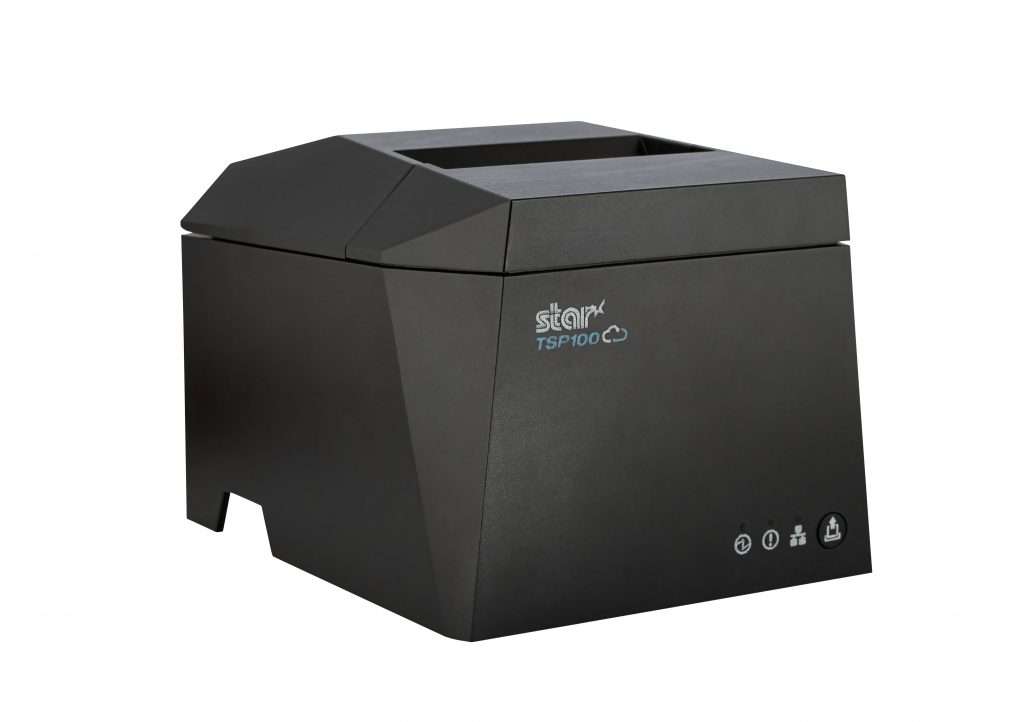
TSP143IV X4 Thermal Receipt Printer
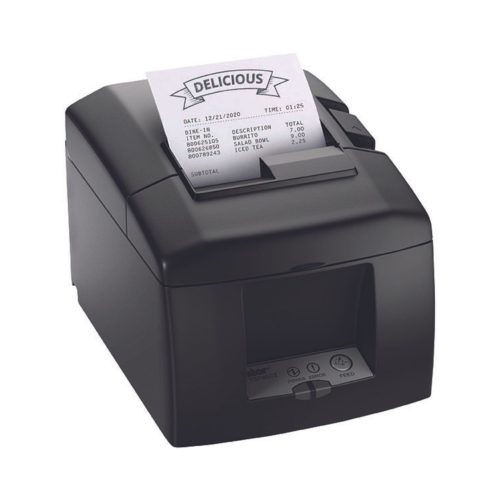
The TSP143IV X4 is a 3-inch thermal receipt printer with USB-C, Ethernet, WLAN, and Bluetooth connectivity. It supports both 2.4 GHz and 5 GHz wireless networks and offers rapidSYNC Wi-Fi setup through the Star Quick Setup Utility using Bluetooth Low Energy (BLE). Supported models also provide QR-code onboarding as a separate Wi-Fi setup option.
The printer is designed for receipts, return documentation, order tickets, and other point-of-sale printing in retail, restaurant, hospitality, and service environments.
TSP143IV X4 Thermal Receipt Printer
The TSP143IV series thermal receipt printer from Star Micronics is 20% smaller than its predecessor, offering high-speed printing with USB, LAN, WLAN, and Bluetooth connectivity. With CloudPRNT Next, dual-band WLAN, and Android Open Accessory (AOA) support, it ensures seamless compatibility across Windows, iOS, Android, and cloud-based applications, making it an efficient, adaptable solution for modern POS environments.
Like the receipt-printing model, it includes USB-C, Ethernet, WLAN, and Bluetooth connectivity. It supports dual-band 2.4 GHz and 5 GHz Wi-Fi and offers rapidSYNC setup through the Star Quick Setup Utility using Bluetooth Low Energy (BLE). QR-code onboarding is also available as a separate Wi-Fi setup option. Diagnostic printouts confirm whether the wireless connection succeeded.
TSP143IV SK Sticky Label Printer
The TSP143IV SK by Star Micronics sets a new standard for compact, eco-friendly liner-free label printing using residue-free removable sticky labels. It offers advanced connectivity options like Bluetooth, USB-C, Wi-Fi, and AOA support for today’s diverse business setups.
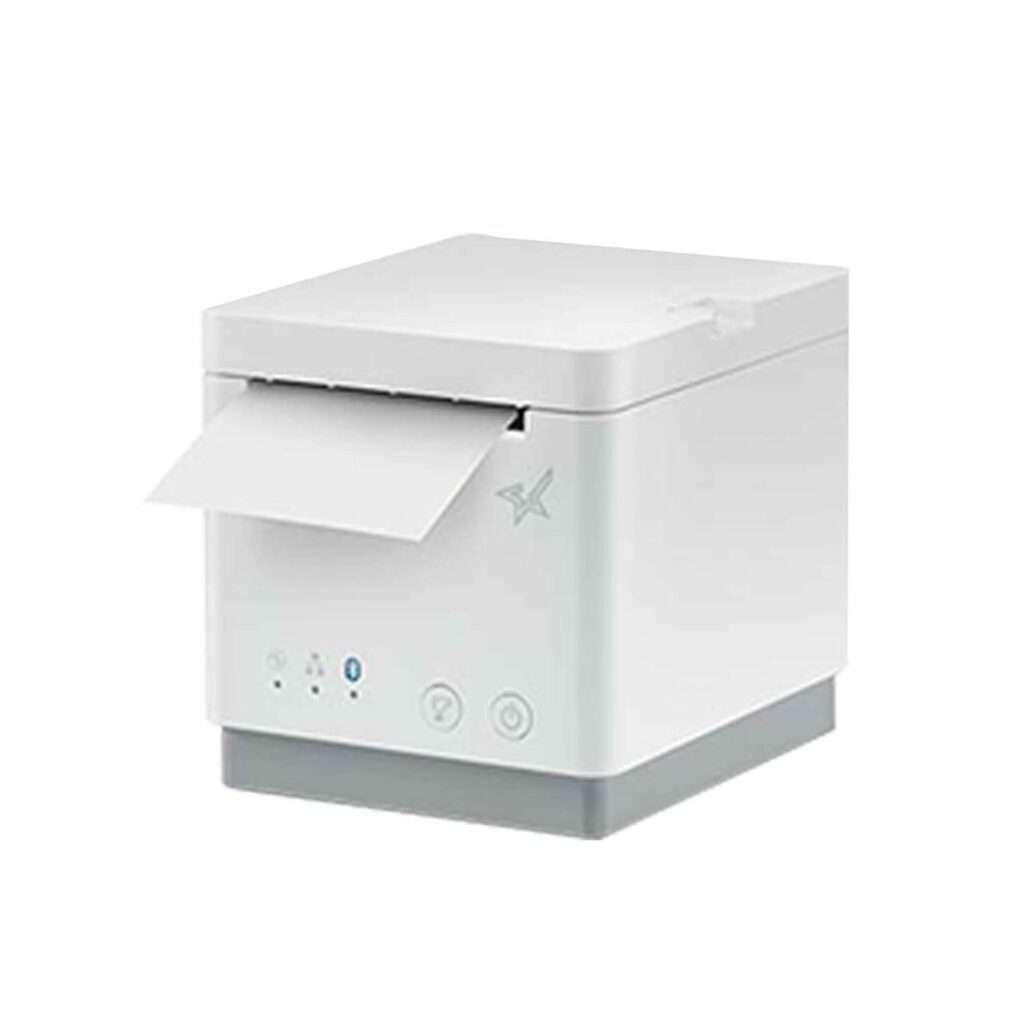
Wireless mC-Label2 X4 multifunction label printer models, including the MCL21CWBi and MCL21CWBi LBL, support rapidSYNC Wi-Fi setup through the Star Quick Setup Utility using Bluetooth Low Energy (BLE). QR-code onboarding is also available as a separate Wi-Fi setup option.
With rapidSYNC, users enter the network credentials on a smartphone or tablet and transfer them to the printer through BLE-assisted setup. The app-free QR-code method uses printed QR codes to connect the device to the printer’s temporary network and open its web configuration page.
mC-Label2 Multifunction Label Printer
The mC-Label2 packs powerful features into a compact, front-loading design, including high-precision 300 dpi resolution, support for linerless, die-cut, receipt, and continuous media, and connectivity options like USB-C, LAN, WLAN, Bluetooth, and Apple MFi-certified pairing.
Star’s rapidSYNC can be used during initial printer installation or whenever a supported printer needs new wireless network settings using Star’s BLE-based setup method.
Common situations include:
Installing a new receipt or label printer
Moving a printer to another location
Connecting a printer after replacing a router
Updating a printer after changing the Wi-Fi name or password
Adding printers at a new store or restaurant
Configuring multiple printers during a rollout
Installing a printer where Ethernet cabling is unavailable
Reconnecting a printer after network settings have been reset
For multi-printer deployments, the Star Quick Setup Utility allows users to configure another printer after completing the first connection. The printed network diagnosis also gives installers an IP address they can record for testing, POS configuration, or technical support.
What Should You Check Before Wi-Fi Printer Setup?
A few checks before installation can prevent common connection problems.
1. Confirm the Exact Printer Model
Not every version of a printer includes WLAN. Check the model number and interface specifications before starting a Wi-Fi printer setup.
For example, the TSP143IV X4 includes Wi-Fi and Bluetooth, while the TSP143IV UE is a wired USB and Ethernet model. Star’s rapidSYNC applies to supported WLAN-equipped models and uses Bluetooth Low Energy (BLE) during setup.
2. Have the Correct Network Credentials
Confirm the following information:
Wi-Fi network name, also called the SSID
Case-sensitive Wi-Fi password
Correct business network
Network frequency supported by the printer
Avoid connecting business printers to a public or customer guest network unless that network is specifically configured for POS hardware.
3. Check the Wireless Signal
Place the printer where it can maintain a stable connection to the wireless access point. Walls, metal equipment, distance, and crowded wireless channels can affect signal strength.
The TSP143IV X4 and TSP143IV SK X4 support both 2.4 GHz and 5 GHz networks. A 2.4 GHz network typically reaches farther, while 5 GHz may provide less interference and more bandwidth over shorter distances.
4. Reset Old Network Settings When Necessary
A printer that was previously connected to another network may retain its old wireless settings. Resetting the printer’s network configuration may be necessary before connecting it to a replacement router or a network with a new SSID.
5. Save the Network Diagnosis
After setup, keep the printed diagnosis page until the printer has been tested with the POS or business application. The IP address and connection status can help identify whether a problem is related to the network, printer, or software configuration.
Connect Supported Star Printers with rapidSYNC
Wireless printer installation should not require employees or installers to work through complex printer menus. Star rapidSYNC provides a guided Wi-Fi printer setup process using Bluetooth Low Energy (BLE), a smartphone or tablet, and the Star Quick Setup Utility. Supported models may also offer QR-code onboarding as a separate Wi-Fi setup option.
The right rapidSYNC-compatible printer depends on what the business needs to print:
Choose the TSP143IV X4 for thermal POS receipts.
Choose the TSP143IV SK X4 for 3-inch repositionable linerless labels.
Choose the mC-Label2 MCL21CWBi or MCL21CWBi LBL for compact 2-inch all-media printing.
Contact Star Micronics to compare compatible models, confirm POS compatibility, or plan a multi-location printer deployment.
The Case for Sourcing POS Hardware from a Single Manufacturer
Discover how retailers, restaurants, and solution providers can reduce complexity, improve support, and simplify growth with a unified POS hardware ecosystem.
Frequently Asked Questions About rapidSYNC Wi-Fi Printer Setup
What is Wi-Fi printer setup?
Wi-Fi printer setup is the process of connecting a printer to a wireless network so it can receive print jobs from POS systems, computers, tablets, or mobile devices without an Ethernet cable.
What is rapidSYNC?
rapidSYNC is Star Micronics’ Bluetooth Low Energy (BLE)-based Wi-Fi printer setup technology for supported receipt and label printers. Using the Star Quick Setup Utility on a smartphone or tablet, users can transfer wireless network settings to the printer in just a few steps.
Which Star printers support rapidSYNC?
Compatible printers include the TSP143IV X4 thermal receipt printer, TSP143IV SK X4 linerless label printer, and wireless mC-Label2 X4 models, including the MCL21CWBi and MCL21CWBi LBL.
These models support rapidSYNC through the Star Quick Setup Utility using Bluetooth Low Energy (BLE). Supported models may also offer QR-code onboarding as a separate Wi-Fi setup option.
Do I need an app to use rapidSYNC?
Yes. Star’s rapidSYNC uses the Star Quick Setup Utility and Bluetooth Low Energy (BLE) to configure Wi-Fi on supported printers.
Some supported Star printers also provide QR-code onboarding that does not require the utility. That is a separate Wi-Fi setup method from rapidSYNC.
Does rapidSYNC use Bluetooth or Wi-Fi?
rapidSYNC uses Bluetooth Low Energy (BLE) to detect the printer and transfer wireless network credentials during setup. After configuration, the printer connects to the selected Wi-Fi network to receive print jobs.
How do I reconnect a printer after changing the Wi-Fi password?
Use the Star Quick Setup Utility and rapidSYNC to enter the new Wi-Fi network credentials and transfer them to the printer through Bluetooth Low Energy (BLE). Supported models may also offer QR-code setup as a separate option.
After configuration, review the printed network diagnosis to confirm the connection. A network reset may be required if the printer retains its previous settings.
Does rapidSYNC support 2.4 GHz and 5 GHz Wi-Fi?
Frequency support depends on the printer. The TSP143IV X4 and TSP143IV SK X4 support both 2.4 GHz and 5 GHz wireless networks. Check the specifications for the exact model before installation.
How do I know whether Wi-Fi printer setup was successful?
The printer automatically produces a wireless network diagnosis after configuration. A successful connection printout displays “Successful” and includes the printer’s assigned IP address.
Can rapidSYNC be used to configure multiple printers?
Yes. Printers can be configured one at a time with the Star Quick Setup Utility. After completing one setup, the utility provides an option to continue with another printer, which is useful when installing multiple devices at one location.
Visit Booth 631 to see the new mC-Connect Drawer, cloud printing, multifunction labeling, kiosk barcode scanning, and live demonstrations with MagTek and Logic Controls.
RetailNOW attendees will see Star hardware working alongside software and payment technologies used across retail and hospitality.
Featured Solutions at Booth 631
Attendees can explore Star’s latest POS hardware and cloud technologies, including:
The new mC-Connect Drawer: Modernize any cash drawer with USB, Ethernet, Wireless LAN, and Bluetooth® Low Energy connectivity, enabling direct communication with today’s POS systems, tablets, and mobile devices.
Cloud Printing Solutions:CloudPRNT Next and StarIO.Online simplify cloud printing for online ordering, web applications, and multi-location deployments. From direct cloud communication using MQTT to fully managed cloud printing with remote device management, Star offers flexible options for cloud-connected POS environments.
Multifunction Labeling Solutions: The mC-Label2 and mC-Label3 support receipts, linerless labels, die-cut labels, and continuous media from a single device, allowing businesses to print food safety labels, order labels, barcode labels, receipts, and more.
Kiosk Barcode Scanning: Star’s fixed-mount kiosk barcode scanners, the NLS-FM431 and the NLS-FM3280, provide fast, hands-free scanning of 1D and 2D barcodes from printed labels and mobile devices for self-service kiosks, lockers, and customer-facing terminals.
Enterprise POS Hardware: From receipt printers and cash drawers to barcode scanners and cloud-connected peripherals, Star’s hardware portfolio supports retail, restaurant, grocery, healthcare, cannabis, and hospitality applications.
Live Partner Demonstrations
Star will feature several integrated demonstrations throughout the show.
One Touch Label with Logic Controls KitchenGO KDS and the mC-Label3: See Logic Controls’ KitchenGO KDS working with Star’s mC-Label3 multifunction printer to demonstrate the One Touch Label feature. Kitchen staff can generate labels directly from the KDS as orders move through production, helping identify orders and improve fulfillment accuracy.
Direct Cash Drawer Control with MagTek and the mC-Connect Drawer: MagTek will demonstrate the mC-Connect Drawer, showing how payment devices and POS systems can control cash drawers directly without requiring a printer connection.
Star Solutions Featured Throughout the Show Floor
Attendees can also see Star solutions featured at the following partner booths:
“RetailNOW brings together the channel partners, ISVs, and solution providers that help businesses deploy POS technology every day. This year, we’re demonstrating how our hardware works alongside leading software and payment providers, from the new mC-Connect Drawer and cloud printing to multifunction labeling and kiosk technologies, showing how these technologies work together in real-world deployments.”
Christophe Naasz, Global Director of Business Development at Star Micronics
Meet the Star Team at RetailNOW 2026
Francis Angoyar, Sales Accounts Executive at Star Micronics, will participate in a speaking session at the ScanSource booth on Monday, July 27, from 11:45 a.m. to 11:55 a.m., where attendees can ask questions about Star’s POS hardware and integrations.
Visitors are encouraged to stop by Booth 631 to see the demonstrations, meet with the Star team, and learn more about Star’s latest POS hardware and cloud technologies.
To schedule time with the Star team or for more information, contact sales@starmicronics.com.
Star Micronics is a global provider of point-of-sale (POS) hardware, cloud printing, and labeling solutions that help businesses connect digital workflows to real-world operations. Serving retail, hospitality, healthcare, and service industries, Star delivers printing, labeling, cash management, self-service, and cloud-based technologies designed to support scalable, connected, and automated environments. Star’s solutions support Android, iOS, Windows, and web-based platforms and extend into the cloud through services such as CloudPRNT Next and StarIO.Online, Star’s fully managed cloud printing service.
Star partners in the IT channel are in a strong position going into 2026. What will define success for value-added resellers (VARs), independent software vendors (ISVs), and managed services providers (MSPs) in the IT channel this coming year? Rising IT spend, growth in subscription-based software, and expanding demand for vertical solutions all point to one of the strongest years for the IT channel in a decade.
Macro trends are positive. Gartner predicts worldwide IT spending will increase 9.8% from 2025 to reach $6.08 trillion in 2026. The IT services market is also growing, with Grand View Research reporting a CAGR of 9.4% from 2025 to 2026, reaching $2.59 trillion. For IT channel partners, these indicators suggest sustained opportunity rather than short-term recovery.
The IT channel, comprising VARs, ISVs, MSPs, and other technology integrators, looks very different from what it did a decade ago. Today’s IT channel partners do far more than sell hardware. They design, deploy, and support complete technology ecosystems that combine software, integrations, and ongoing services.
This modern channel model aligns closely with Star Micronics’ hardware portfolio, cloud printing technologies, and partner ecosystem. Reliable, cloud-ready hardware remains foundational to these deployments, especially in retail, restaurant, healthcare, and other multi-location environments.
In 2026, IT channel organizations continue shifting toward recurring services, cloud-based deployments, and specialized vertical markets. According to the Retail Solutions Providers Association (RSPA) Retail IT Channel KPI Study, VARs and ISVs have rebounded from a flat or worse 2024. About 80% of the POS channel now reports growth, with 9.4% seeing revenue growth of 40% or more. These trends are setting the stage for a strong year ahead.
Key Predictions for the IT Channel in 2026
Based on market data and channel performance trends, several themes will define success for IT channel partners in 2026:
Continued growth in recurring, service-driven revenue models
Increased demand for cloud-ready, multi-location hardware deployments
Expansion into regulated and emerging verticals such as healthcare, cannabis, and senior living
Greater emphasis on simplifying infrastructure while enabling scale
Partners that can deliver reliable hardware while reducing operational complexity will be best positioned to capitalize on these shifts.
More Insights from the Retail IT Channel KPI Study
The RSPA’s Retail IT Channel KPI Study took a deep dive into the state of the channel, examining key performance indicators (KPIs) that IT channel partners, including VARs, ISVs, and other solutions providers, use to measure business health. One of the most telling indicators is revenue per employee.
1. Growing Revenue per Employee
Among RSPA member VARs and ISVs, 38.1% report $200K in revenue per employee, a long-standing benchmark for a healthy organization across both the POS channel and the broader IT channel. This figure represents a 5.6% increase from 2023 and an 11.8% improvement compared to 2022, signaling stronger operational efficiency among IT channel partners.
RSPA views this improvement as evidence that IT channel partners are succeeding even as competition from VC-backed providers continues to grow. The study also shows that VARs and ISVs are increasingly effective at pairing high-value services with IT hardware and software. Approximately 55% of respondents report that 10% to 29% of their revenue is recurring from services, while about 6% generate more than 60% of revenue from services.
Star partners are among the POS channel organizations benefiting from these trends. By combining managed services with hardware bundles such as printing, labeling, kiosks, and cloud-connected POS peripherals, they are well-positioned to meet evolving market demand and sustain long-term growth.
2. Near Record Profit Margins
In addition to revenue growth, the POS channel is seeing higher profitability. Only 1.2% of RSPA survey respondents reported a loss, while 64.7% reported profit margins between 20% and 60% or more. These results point to a healthier, more resilient channel overall.
3. Expansion into New Markets and Niches
Another key finding from the study is that IT channel partners are expanding beyond traditional retail and restaurant markets. Respondents reported growth in areas such as:
In addition, many VARs and ISVs are setting their sights on healthcare (14.3%), medical office and senior living (13.1%), and non-profit organizations (11.9%). With broader solution portfolios, including cloud-ready hardware and printing technologies from Star, partners can confidently expand into these verticals.
VARs and ISVs are increasingly moving into new markets, like ethnic grocery stores.
4. Emerging Opportunities
When asked about emerging opportunities, IT channel partners consistently pointed to larger customer profiles, expansion into enterprise accounts, and growing demand for specialized, vertical-focused software. Many also cited advancing technology as a key growth driver.
As end customers seek to operate more efficiently and deliver better experiences, IT channel partners are increasingly positioned as strategic advisors. Simplifying infrastructure while enabling cloud-based, multi-location deployments is becoming a defining competitive advantage.
What Makes a Star Partnership So Valuable?
Partnerships enable VARs, ISVs, and MSPs to deliver the products, solutions, and services their markets demand. Star Micronics supports partners with an exceptional breadth of hardware, cloud technologies, and flexible deployment options designed for modern IT channel business models.
> Star’s Portfolio
Star Micronics offers one of the industry’s most complete portfolios of POS and labeling hardware, including receipt, label, and multifunction printers, cash drawers, scales, tablet stands, and scanners. This breadth allows VARs and ISVs to build standardized, scalable solutions across retail, restaurant, and emerging vertical markets.
In addition to hardware, Star provides cloud technologies and services that support modern deployment models:
CloudPRNT Next is Star’s next-generation cloud printing technology built into compatible printers. Using MQTT-based communication, it enables fast, reliable, and scalable direct-to-cloud printing for ISVs that choose to manage their own cloud infrastructure.
StarIO.Online is Star’s fully managed cloud printing service. It allows ISVs to send print jobs to CloudPRNT-compatible printers through REST APIs while Star hosts and maintains the cloud infrastructure. StarIO.Online also provides real-time printer status visibility and centralized configuration related specifically to cloud printing workflows, helping partners reduce infrastructure complexity and support multi-location deployments more efficiently.
Star Micronics Cloud Services (SMCS) includes cloud-based tools and APIs that extend the value of Star hardware. SMCS provides developer-facing APIs that enable ISVs to build their own dashboards or workflows for printer status monitoring and connectivity. It also includes end-user tools such as PromoPRNT and Label Builder, designed to help merchants manage promotional content and customized label designs.
Together, these options give VARs and ISVs flexibility in how they architect, deploy, and support cloud-enabled printing solutions at scale.
> Vertical-Specific Solutions
Star supports a wide range of industries, with hardware designed for retail and restaurant environments, as well as for growing sectors such as healthcare, medical offices, senior living, and non-profits. Star’s experienced team provides the industry expertise needed to support partners as they expand into new verticals.
VARs, ISVs, and MSPs can package software and services around Star’s technology to build recurring revenue streams. By supporting cloud-first offerings and Software-as-a-Service (SaaS) models, Star makes it easier for partners to create predictable, scalable revenue while reducing long-term support complexity.
Make the Most of a Great Year for the IT Channel
In 2026, the IT channel will favor partners who simplify infrastructure while enabling scale. Star Micronics helps VARs and ISVs do exactly that, with cloud-ready POS hardware and a fully managed cloud printing service that removes friction for both partners and their end-user customers.
Want to learn more about the benefits of a Star partnership?
What trends will matter most for the IT channel in 2026?
Growth in cloud-based platforms, vertical specialization, and scalable hardware deployments will shape the IT channel in 2026. VARs and ISVs that simplify infrastructure and support multi-location environments will be best positioned to grow.
Why are VARs and ISVs expanding into new vertical markets?
Competitive pressure and maturing retail and restaurant markets are driving channel partners to explore healthcare, cannabis, senior living, and specialty retail. These industries demand reliable, purpose-built hardware and cloud-ready printing solutions.
How does Star Micronics support VARs and ISVs as they scale?
Star Micronics provides a broad portfolio of POS and labeling hardware, cloud-ready printing technologies, and a partner ecosystem designed to support multi-location deployments without unnecessary complexity.
What’s the difference between StarIO.Online and Star Micronics Cloud Services?
StarIO.Online is Star Micronics’ fully managed cloud printing service. Star hosts and maintains the cloud infrastructure, allowing ISVs to send print jobs to CloudPRNT-compatible printers through REST APIs without managing servers or middleware. StarIO.Online also provides built-in printer status visibility and cloud-printing-related configuration through Star’s managed dashboard.
Star Micronics Cloud Services (SMCS) provides developer-facing APIs that allow ISVs to build their own dashboards and tools for printer status monitoring and related functions within their own platforms. SMCS also includes end-user cloud tools such as PromoPRNT and Label Builder, which are designed for merchant use and are not embedded into ISV platforms.
Some partners use both: StarIO.Online to offload cloud printing infrastructure, and SMCS APIs to build customized monitoring or workflows on top of Star’s hardware ecosystem.
Do partners need to use Star’s cloud services to work with Star hardware?
No. Partners can choose the architecture that fits their business. ISVs may manage their own cloud infrastructure using CloudPRNT Next or opt for StarIO.Online, if they prefer a fully managed cloud printing service hosted by Star.
Since the pandemic began, value-added resellers (VARs) and technology providers (ISVs, ISOs) in the point-of-sale space have been going through one of the most rewarding and challenging macro environments of their lives. Costs and demand are up, supply is down, and uncertainty seems to be the only constant. Sometimes, we can get too caught up in the details and forget the larger picture.
At Star Micronics, our executive team is always listening. We want to understand the challenges our channel partners face so we can do whatever is in our power to alleviate them. Star is working relentlessly behind the scenes throughout these hardships to help our dedicated channel partners achieve their goals. We believe when we work together, there is nothing we can’t overcome.
Recently, I sat with Mike Hanson, Executive Vice President of Star Micronics America, to get his take on how the industry horizon looks from here.
What areas is Star Micronics investing in to help channel partners succeed?
Star Micronics has been investing in several areas to help channel partners succeed. Following our “Always Leading, Always Innovating” decree, this includes diversifying and expanding our product offerings and bolstering our supply chain operations and sourcing.
To start, we recently launched the new TSP143IV printer. It features Android Open Accessory (AOA) to allow power and communication on a single wired connection for Android, which is highly used in the industry now. Having AOA now complements our wired SteadyLAN power and communication technology for iOS devices. We also re-engineered the design of our mPOP from wireless Bluetooth MFI to wired USB-C MFI, getting more out to market sooner.
As for our supply chain operations and sourcing, Star has experienced unprecedented demand for our products thanks to our partners’ success. Globally, Star has been strategic by transitioning and diversifying our production lines to incorporate additional regions aside from our traditional team, allowing us to expand manufacturing capacity aggressively. Star has vigorously sourced components from available global suppliers to overcome continued semiconductor supply limitations.
How is Star’s product line evolving to meet the needs of today’s channel partners?
Star is dedicated to providing our channel partners with a full solution suite to power their workspaces this year. Thanks to solid relationships with our partners, we have developed complementary products that leverage our advanced software integration tools to provide a complete hardware solution.
The Star solution suite is a cohesive, connected network of products that work together to provide reliable and easy-to-use solutions that support various industries. This gives resellers, retailers, and channel partners products that offer years of use and support from a single supplier. The Star suite enables resellers to purchase printers and related peripherals (like scales, barcode scanners, cash drawers, etc.) in one place. Fewer vendors to manage makes it easier for channel partners.
What new programs and services does Star offer that can benefit channel partners?
Star is blessed to have the industry’s best group of dedicated distribution partners who have truly shined during the recent supply chain challenges to meet resellers’ needs. To support these incredible channel partners, we established our Empower Partner Program. The Empower Program’s introduction has successfully reestablished value and price parity for our resellers.
Last year, we enhanced the program with the addition of loyalty benefits. These benefits reward resellers that provide a variety of products from the Star solution suite. We recognize the long-term value of every reseller offering our complete suite, such as our printers, cash drawers, scanners, scales, stands, paper, warranties, and other Star products. As a result, full solution suite resellers are rewarded at the same level as a large volume reseller that may only sell Star printers.
As we head into the second half of 2022, is there any advice or insight Star can provide to channel partners?
As we move into the second half of 2022 and beyond, we are seeing some improvements in semiconductor and component availability. Gradually, this will help recover product shortages, which is good news for all.
Conversely, the macroeconomic situation is unstable as we feel the impact of inflation, high oil prices, and global unrest. It’s tough to see when logistics, components, and manufacturing costs will stabilize, making it difficult to imagine when pre-pandemic prices will return.
We want every channel partner to know that Star is working hard behind the scenes to reduce transportation costs while implementing new software solutions to improve the accuracy and visibility of product availability. We are also expanding our resources to support our partners in any way we can.
Please take some time to learn about the many new solutions Star has just introduced, and look forward to more “Always Leading, Always Innovating” products and services that will help our partners continue to flourish.
Star’s Latest Solutions
TSP143IV
This futureproof printing solution provides maximum connecting flexibility with added features like support for the Android Open Accessory (AOA) protocol and a USB/LAN Dual Interface (TSP143IVUE) or WLAN capability with a dual-band wireless connection (TSP143IVUW).
Our ultimate 2″ mC-Print21W and 3″ mC-Print31W thermal printers are now available with WiFi capability. Whether you need to use 2.4GHz or 5GHz bandwidth, these sleek, space-saving technologies keep your business connected.
Star’s IP-rated premium scanner line includes a desktop scanner, a handheld scanner, and a wireless handheld scanner, so however you need to get the job done, it’s sure to be quick and reliable. Find the perfect one for your business.
Star Micronics is proud to offer both function and style with its mUnite tablet display solution stands, kiosks, and mounts. Built to accompany a vast array of printers, cash drawers, scales, and peripherals, these modern, all-steel stands unify your point-of-sale while protecting your valuables.
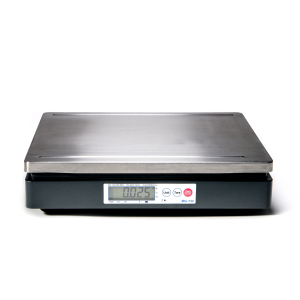
Star’s new line of three NTEP and Measurement Canada certified scales are trade-ready and effortless to set up, connecting to your POS system via Bluetooth or Serial connectivity. Plus, they integrate easily with Star SDK, so you’ll be back doing what you do best.
By connecting Star printers to Cloud Services, Star has created a practical, developer-friendly platform for more efficient, connected, and intelligent systems. For business owners and technology providers alike, Star’s Cloud Services can be used for device management, receipt customization, and cloud-based data access.
This 3″ linerless label kiosk printer is compact and lightweight, ideal for the food and travel industries or any self-service application. Linerless labels are an alternative to silicone-lined labels or tape and are more eco-friendly with less waste.
As a POS value-added reseller (VAR), you are constantly looking for new opportunities to grow your business. Ghost kitchen startups offer just that opportunity. With 8,000 active operations across North America, ghost kitchens have moved past the proof-of-concept stage and are well on their way to becoming mainstream. In fact, a November 2020 report by Valuates Reports predicts ghost kitchens will generate $71.4 billion by 2027.
VARs providing ghost kitchen solutions have the perfect opportunity to differentiate their businesses. You can expand beyond providing solutions to traditional restaurant models, help your clients enter this nontraditional space, and win back their declining revenue streams by offering ghost kitchen solutions.
Products VARs Can Provide For Ghost Kitchen Startups
For VARs looking to help clients open their new businesses, or expand current ones, these are the technologies that are essential:
Mobile POS
The first thing you will need to help clients obtain is a mobile point of sale (POS) solution. This point of sale system should feature wireless connectivity and integrations necessary to allow ghost kitchen operations to be flexible and efficient. This may mean that the POS software is used on a tablet so that managers can take their work with them as they review operations.
Online Ordering and Payment
Ghost kitchens are specialized kitchens designed to handle to-go orders. Thus, the POS system you provide must integrate with an online ordering and payment system. Bonus points if that integration comes with an easy-to-use mobile app!
Printers & Paper
Additionally, your POS solution should integrate with portable printers. Having a solution that can intake orders and print them instantly to keep operations running quickly is vital. Improve their operations even more by stocking them up on linerless labels and receipt paper for commercial-grade linerless sticky label printers, like the TSP654IISK, which allows online order labels to be placed directly on corresponding to-go boxes for frictionless operations that make food preparation and pickup a breeze.
The TSP654IISK sticky linerless label printer by Star Micronics
Tablet Stands & Pole Mounts
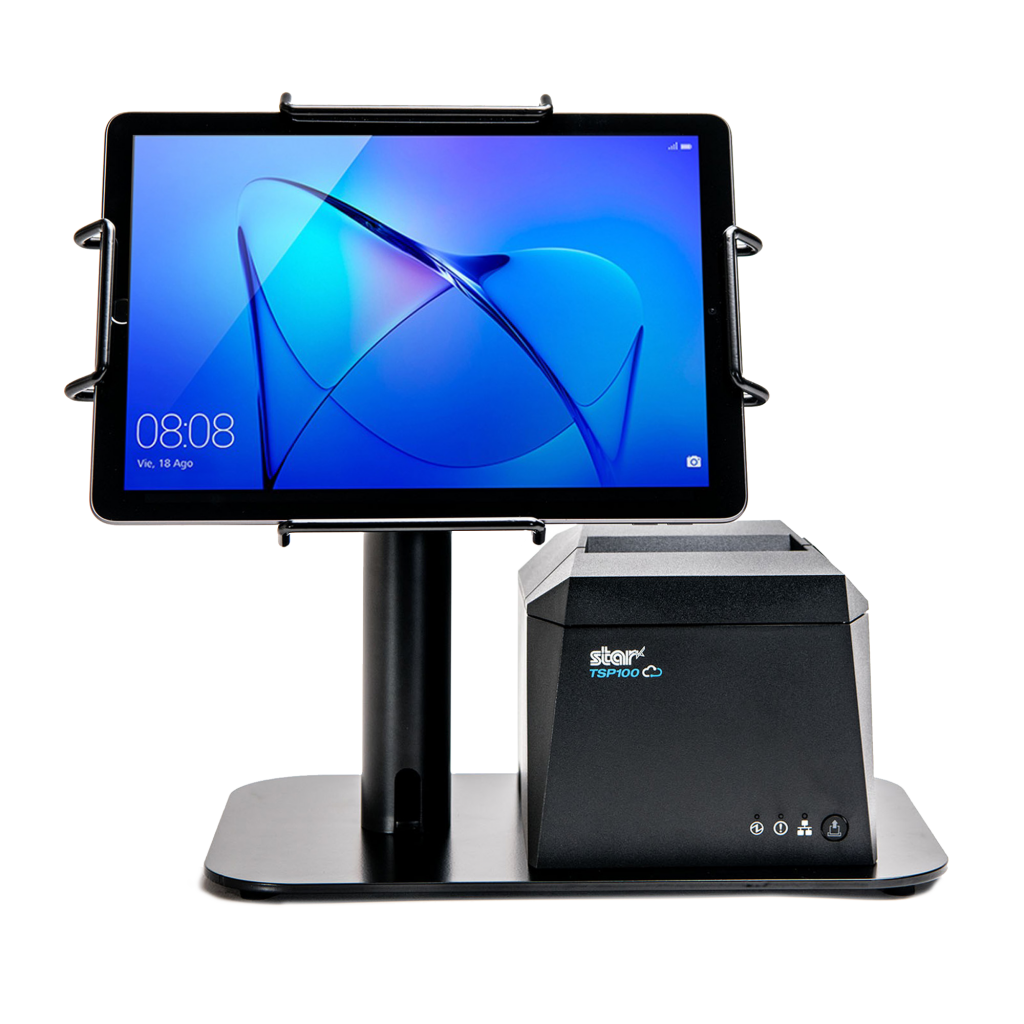
Provide clients a home base for their tablet and printer system with a durable and protective tablet stand. With the right stand, you can give clients style and function within a sleek, compact frame. The mUnite stand is highly configurable and easy to set up and use. These reliable steel tablet display stands and pole mounts support Star’s extended line of POS printers, in addition to all major Android, iOS, and Windows tablet models, affording protection to each device.
Ready to Begin?
Star Micronics provides flexible, futureproof POS technology designed to seamlessly connect front and back-of-house operations to keep ghost kitchens operating at their peak. They can help you provide clients with all the technology above and more! If you’re ready to start making a profit off of ghost kitchen startups, contact Star Micronics today.
Ghost Kitchens: A Growing Market Within the Restaurant Point-of-Sale Space
Insights for VARs on why more restaurateurs and entrepreneurs are utilizing ghost kitchen business models and how to leverage existing technology to assist those clients.