For some diners, bigger is no longer better. Rising food costs, changing eating habits, and growing use of GLP-1 medications are giving consumers more reasons to think carefully about portion size and what they put on their plates.
That creates an opening for a different buffet model: weigh and pay. Instead of paying one flat price, diners choose the foods and portions they want and pay based on weight.
For restaurants, making that model work takes more than putting a scale at the end of the buffet. Accurate weighing, POS integration, food labeling, and checkout all need to work together so customers are charged correctly and staff can keep the process moving.
Explore More Restaurant Solutions
Why Are Diners Rethinking Portion Size?
The Associated Press reports that restaurants are increasingly offering smaller, lower-priced portions as diners watch their budgets, appetites, and health goals.
For some customers, a smaller portion makes dining out more affordable. Others simply do not want to pay for food they are unlikely to finish. Growing use of GLP-1 medications is adding another reason some diners are looking for greater control over portion size.
Restaurants are responding in different ways, from smaller plates and lower-calorie menu options to more flexible portion choices. Weigh-and-pay takes that flexibility a step further by letting guests decide exactly how much food they want and pay for the amount they choose.
What Is a Weigh-and-Pay Buffet?
A weigh-and-pay buffet lets diners choose the foods and portions they want, then pay based on the weight of the food rather than a flat all-you-can-eat price.
That gives customers more control over portion size, food combinations, and cost.
Pizza Ranch is one current example. At select locations, guests can choose Weigh & Pay as an alternative to the traditional buffet, fill a container with items such as pizza, chicken, salads, sides, and desserts, and pay by weight.
For restaurants, the appeal is flexibility: diners can build a meal around appetite, budget, or dietary preferences without committing to a full buffet price.
What Are the Benefits of a Weigh-and-Pay Buffet?
A weigh-and-pay buffet changes more than how the customer is charged. It can also affect staffing, food waste, pricing, menu flexibility, and the way guests move through the restaurant.
Five potential benefits include:
-
Less order-taking and table-service labor. Because guests choose and portion their own food, restaurants may need fewer employees dedicated to taking orders or serving individual meals. Staff are still needed to maintain the buffet, assist guests, manage food safety, and handle checkout.
-
Better portion control and less plate waste. When customers pay based on how much food they select, they have a financial reason to take only what they expect to eat. That can help reduce the oversized portions and uneaten food often associated with traditional buffets.
-
Pricing tied to the quantity purchased. A traditional buffet charges one flat price regardless of how much a guest eats. Weigh and pay links the transaction directly to the amount of food purchased, giving operators a clearer relationship between portion size and revenue.
-
More menu flexibility. Restaurants can rotate buffet selections without rebuilding the entire menu. Operators can also adjust the food mix and per-weight pricing as ingredient costs change.
-
One service model for dine-in and takeout. Guests can build a meal, pay by weight, and either take a seat or take the food to go. That gives restaurants another way to serve customers without creating separate ordering processes for each use case.

What Do Restaurants Need to Manage Weigh-and-Pay Transactions?
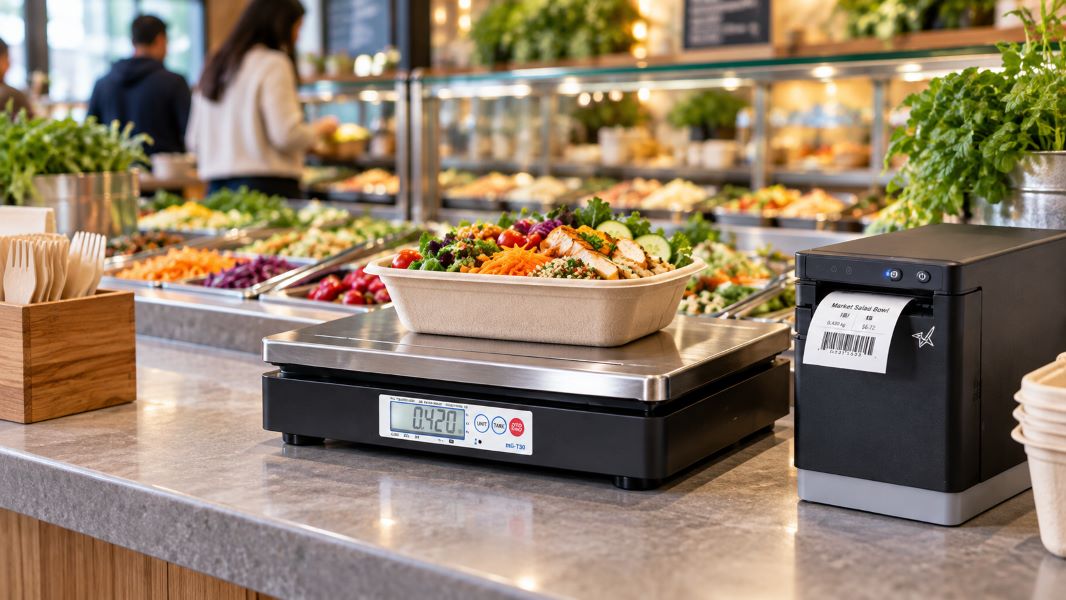
A weigh-and-pay transaction has to connect four steps: weigh the food, calculate the price, identify the item, and complete checkout.
That starts with the scale.
In the U.S., restaurants should use an NTEP-certified scale and confirm applicable state and local legal-for-trade requirements. In Canada, scales used for commercial transactions must meet Measurement Canada requirements. The weighing process should also account for the container’s tare weight so customers are charged for the food, not the packaging.
The scale should integrate with the POS system so weight and pricing data can move directly into the transaction instead of being entered manually.
Food labeling can make the workflow even faster, especially when the buffet and checkout are in different areas. After the food is weighed, a restaurant label printer can produce a label with information such as:
- Net weight
- Price
- Product or category information
- Barcode for checkout
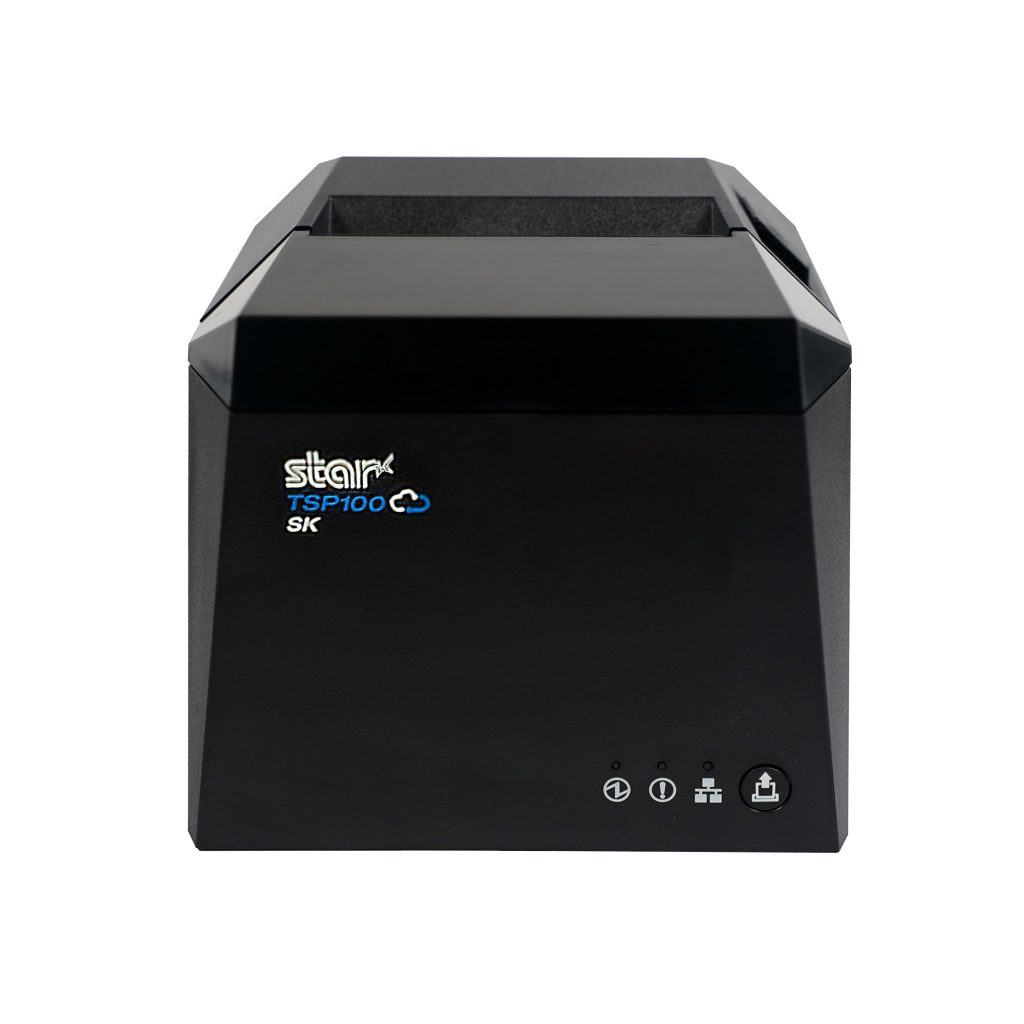
A multifunction printer can also give restaurants the option to produce both labels and receipts from the same printer family, reducing the number of hardware types IT teams need to support.
Connectivity matters, too. Ethernet, Wi-Fi, Bluetooth, or USB options can give restaurants more flexibility when positioning the scale and printer at the end of a buffet line, near a checkout counter, or in another area where running additional cabling is impractical.
The goal is a simple flow: weigh, price, label, scan, and pay.
Providing Great Dining Experiences, Pound for Pound
Some diners want a hearty meal. Others want smaller portions, more control over what goes on the plate, or a lower total at checkout.
A weigh-and-pay buffet can serve both by letting guests choose the amount they want and pay for what they take. For restaurants, that can mean less order-taking labor, more flexible menu planning, and better control over portion-related waste.
To make the model work, restaurants need accurate commercial weighing, POS integration, and clear labeling. In the U.S., that means selecting an NTEP-certified scale and confirming applicable state and local legal-for-trade requirements. In Canada, scales used for commercial transactions must meet Measurement Canada requirements.
An integrated restaurant label printer can carry weight, price, and barcode information from the buffet line to checkout, helping keep the transaction clear and easy to process.
Need help planning a weigh-and-pay setup? Contact Star Micronics to discuss compatible scales, printers, and POS integration options.

The Smart QSR Delivery Playbook: Labeling, Accuracy & Efficiency Done Right
Learn how leading QSRs are using smart labeling and scalable POS technology to support faster, more accurate QSR delivery operations.
Learn More About Star POS Solutions for Weigh-and-Pay Buffets
Frequently Asked Questions About Weigh-and-Pay Buffet Management
How does a weigh-and-pay buffet work?
Diners select food from the buffet and place it in a container. The food is weighed, the applicable price is calculated based on that weight, and the transaction is completed at checkout.
Depending on the setup, a label can also carry the weight, price, product information, or a barcode from the buffet area to the POS.
What type of scale does a restaurant need for weigh-and-pay?
Restaurants need a commercial scale appropriate for legal-for-trade transactions.
In the U.S., restaurants should select an NTEP-certified scale and confirm applicable state and local weights-and-measures requirements. In Canada, scales used for commercial transactions must meet Measurement Canada requirements.
For an integrated weigh-and-pay workflow, the scale should also be compatible with the restaurant’s POS system so weight data can be used to calculate the transaction accurately.
How is the container weight handled in a weigh-and-pay transaction?
The weight of the empty container, or tare weight, should be deducted so the customer is charged for the food rather than the packaging.
Restaurants can account for tare weight through the scale or integrated POS workflow, depending on the equipment and software being used.
Can a weigh-and-pay buffet reduce food waste?
It can help reduce portion-related waste because customers choose how much food they want and pay according to the quantity selected.
The model does not eliminate buffet waste on its own. Restaurants still need to manage production, replenishment, and food holding carefully to avoid preparing more food than guests purchase.
Do weigh-and-pay buffets require a label printer?
Not necessarily, but a restaurant label printer can be useful when the weighing station and checkout are in different areas.
After an item is weighed, the printer can produce a label containing information such as net weight, price, product details, and a barcode. The customer can then carry the labeled container to checkout for faster identification and payment.
Can restaurants use an existing POS system with weigh-and-pay scales and printers?
Possibly. Compatibility depends on the POS software, scale, printer, interfaces, and integration method.
Before purchasing hardware, restaurants should confirm that the POS system can receive the required weight data and communicate with the scale and printer being considered. Star Micronics’ integration team can help software providers and restaurant technology teams identify compatible hardware and integration options.