
Tag: PromoPRNT

  • Greene Street Expands to a Greene Neighborhood

    Greene Street Expands to a Greene Neighborhood

    From its origins as a small consignment shop in the ’90s that sold a hodgepodge of furniture, clothing, appliances, and more, Greene Street has evolved into the multi-location franchise it is today, spanning across Pennsylvania and New Jersey. Though it operated successfully as a single-location consignment shop, when the business passed from the original owners to their daughters, Greene Street began to shift its focus from an eclectic assortment of general goods to a fashionable and environmentally-conscious clothing reseller.

    As consumers become more aware of the social, economic, and environmental impacts of the disposable fast fashion industry that has made a home in today’s retail space, Greene Street has risen to provide a sustainable shopping alternative, offering mid- to high-end labels at a fraction of retail prices at all of its 10 locations.

    Greene Street Promo Image

    The Challenge

    As the popularity of ethical consumerism grew, Greene Street expanded along with it. The original point of sale (POS) system that had worked well enough for the retailer in the past no longer addressed the challenges of the growing business. Greene Street needed a POS system that could be tailored to their specific industry, with built-in buy/trade software.

    Greene Street was looking for a feature-rich system with robust reporting and analytics software that would allow the owners to view critical sales and purchase data. They needed to keep more accurate records of what customers were buying and what they desired.

    With the additional locations that they have opened, they also needed the ability to transfer items from store to store without needing to manually pull items and re-key them into the system.

    Additionally, they needed a more convenient way to advertise employment opportunities and bring in applicants so they could appropriately staff the new locations.

    The Solution
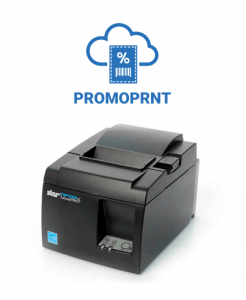
    Star Micronics TSP143III and PromoPRNT

    After researching its options, Greene Street chose Celerant command software, which has built-in buy/trade software and can be easily customized and modified based on the needs of the retailer. At the time of the install, Greene Street had seven locations with 11 register stations, which were all fitted with the Celerant solution, as well as the TSP143III Windows setup. As the brand added new stores, Celerant scaled with it, and is currently used in all 10 locations.

    In addition to Celerant command software, Greene Street chose to use Star Micronics PromoPRNT software for its seamless integration into the Celerant system and its ability to make custom printed promotions and receipts.

    After determining the solution they wanted to use, Greene Street went live within a couple of months for the first location, and added on a store every two months for the rest. When they added PromoPRNT, they were able to train employees on the software and go live the same day.

    The Results

    After implementing the Celerant software, Greene Street was able to expand and add three more locations to the franchise. The integrated loyalty program enabled the retailer to foster better customer relationships and review critical data that helped with promotional marketing.

    The POS software also provided more robust analytics, which allowed them to know the inventory and profitability of the products in their store. Celerant software accommodated the easy transfer of products from store to store, and provided necessary tools for streamlining operations and improving productivity.

    Once the Star Micronics PromoPRNT software was integrated, Greene Street was able to solve many of its hiring challenges. The software allowed management to design and schedule promotions to be printed, and it was easy to install their own templates. Additionally, pre-loaded templates and fonts were available and easy to use.

    Greene Street used the PromoPRNT solution to print receipts that advertised job openings, which allowed the retailer to spend less time recruiting candidates. They have received more applications since implementing the solution, and have been able to adequately staff all of their locations.


  • 3 Ways PromoPRNT is More Than Just a Coupon Creator

    3 Ways PromoPRNT is More Than Just a Coupon Creator

    Customers love to feel like they got a great deal or a deep discount on their purchases. Mailing lists and email promotions are common ways to distribute coupons, but not the most direct and cost-effective way to hand the coupon right to the patron.

    SMBs can use PromoPRNT, a new service added to the Star Micronics Cloud Service platform to generate coupons right at the point of sale.  PromoPRNT allows retail stores and small businesses to advertise their promotions in the most simple and effective way—printing coupons and promotional materials right onto the receipt. Delivering discounts directly to shoppers’ hands means engaging them at checkout and driving repeat business.

    But did you know that PromoPRNT is so much more than just a coupon creator? Here are three additional benefits of using PromoPRNT.

    1. Promotion Planning and Scheduling Tool

    PromoPRNT is provided through two services on the Star Micronics Cloud Services dashboard: Promotion Builder and Promotion Scheduler.

    Promotion Builder is a seamless, simple tool that designs promotions for receipts. Forget trying to manage design software or outsourcing receipt customization to a third-party vendor–the Promotion Builder library includes templates that make it easy to add logos, text, and icons to your receipts.

    Promotion Scheduler is used to schedule the duration of a coupon campaign by selecting a time, date, and printer for each coupon/promotion, even from a remote site. Campaigns can be scheduled based on the day or time, and each promotion is given a priority, which determines in what order they are printed on the receipt. With Promotion Scheduler, retailers have access to analytics that provide insight into promotional campaigns, so you can track which ones are resonating.

    2. Customer Engagement and Retention Tool

    SMBs have already started using PromoPRNT to make each customer visit unique by delivering promotions using nothing but their Star Micronics cloud-connected thermal printers. Printing coupons on customer receipts allows you to reach a higher percentage of shoppers for a fraction of the cost of a print or digital campaign, and compliments the marketing campaign you already have in place. But PromoPRNT can also be a part of your overall customer engagement and retention strategy. Encourage employees to engage customers by talking about the coupon/promotion while they are processing the transaction. Boosting customer retention and encouraging a repeat purchase can be as easy as circling or highlighting a promotional offer on the receipt so the customer doesn’t forget.

    3. A Cost-Effective Service

    Issuing coupons and promotional materials can be costly and even heavy investments in digital coupon campaigns can’t guarantee coupons will ever reach your audience. Instead, merchants can use the PromoPRNT coupon creator and scheduler to generate offers and deliver them for no additional charge.

    The checkout is the last touchpoint before your customers leave the store. Make it a good experience by thanking them for their purchases with coupons for a future shopping trips, delivered by sales associates who can emphasize how much you value their business. This strategy is more effective than just sending a coupon in the mail or via email — it’s an in-person invitation to return and it can help differentiate you in a competitive market place.

    Is it time for you to upgrade your checkout process to include coupons and promotions? For more information about the benefits coupons can provide for your business, download our e-book, “Why You Shouldn’t Underestimate Coupons as a Promotional Tool.”

  • How Retail Stores Can Create Customer Centric Experiences

    How Retail Stores Can Create Customer Centric Experiences

    This blog post was written by Sarah Jane Callender

    The retail sector is facing huge changes. It is no longer enough for retailers to simply sell their products. With big, online and retail giants like Amazon, Apple, and Zappos, your retail store has to offer something which these corporations cannot; this is tangible, physical, and emotional experiences. So, here are some tips on the best ways to do it:

    1. Excellent Customer Service is Priority

    Customers are number one. Making your customer feel welcome and happy in your store is essential. Any choices you make for your business should include the consumer at the heart of the discussion. It all starts with your employees. There is a linear relationship between in-person interaction and customer experience. When hiring new members of staff, consider focusing on their attitude as well as their skills and experience. Although work experience is important, stores generally perform better when their associates have a natural service-based character than when an experienced associate has the right skills but the wrong attitude.

    2. Create a Company Culture

    Retailers must balance operational efficiencies with customer experience. This can be achieved by creating a strong and clear company culture. The problem when a retail store focuses solely on operational efficiency is that the business starts to function like an assembly line, where worth is determined by a worker’s productivity. This means there is little room for incentives to go beyond the task and focus on the customer.

    A great way to counter this is by creating and investing in your company’s culture, focusing on talent, capital, and training. The businesses that are best at this spend time and energy motivating, inspiring, and rewarding their team. This provides incentives where employees want to work smarter in your store, both for the reward, and because they are invested in your company’s culture.

    3. Display Reviews and Consumer Feedback

    The most credible form of advertising comes straight from the people we know and trust.
    Displaying little reviews and phrases from consumers next to your products, or having a review or consumer feedback box in-store, as well as on your website, can really boost sales and enhance the customer experience. Not only does this make your retail store seem more trustworthy, it also shows how good and reliable your products and company are. It shows that you value the consumer.  Why not include social media as part of this marketing strategy as well? Social media is a fantastic way to reach out to wider audiences, and to advertise and market to your existing and potential customers.

    4. Improve the In-Store Experience

    Late last year, one study found 44% of retail executives in Germany, Japan, the U.K, and the U.S. claiming that improving in-store experiences was a strategic priority for the year.
    As brick and mortar stores struggle to stay afloat, we must consider what differentiates the physical store from what is online and capitalize on this.

    Retailers should provide their employees with the technologies, tools, and information so that they can add value to the in-store shopper. The brick and mortar store can offer physical in-store experiences and demonstrations. For example, Dyson’s London store allows customers to try their vacuums; Apple allows consumers to try their latest gadgets and holds regular demonstrations; Lush lets their consumers try their hand creams, body lotions, and face masks. Whatever your retail store, there is always a way to connect with your clients and make an emotional impact.

    5. Connect Physical and Digital Experiences

    Retailers must now realize that the customer journey is no longer linear, but involves a series of backward and forward decisions.

    For example, it is important to consider your online content and how it inspires and informs store shopping. Brands should aim to create a seamless experience that connects their online and social media content with their brick and mortar shopping experience.

    How can you achieve this? You could start by analyzing your customer journey, working out how customers interact with your web content compared with their in-store experience. Data drives this. By analyzing your consumer buying decisions and what channels are involved, you can create a tailored service perfect for each customer to promote in-store foot traffic.

    6. Make it Personal

    Personalizing your communications and marketing material can go a long way with your customer. It makes them feel valued and a part of your brand.

    You can maximize this approach in store by explaining or including signage of why your products are ideal for a particular customer. For example, if you’re retail store targets young women, use signage, feedback from customers, or create events specifically targeted at your consumers, and personally advise your shopper exactly why your products are perfect for them.

    7. Build a Community

    Everyone wants to be a part of something and this goes for shoppers as well.
    One way to do this is by rewarding your customers. Include discounts for loyal consumers or have a customer loyalty program, such as ‘buy 10 drinks and get the eleventh for free’. This will strengthen the relationship between your retail store and your shoppers.

    Social media can help with this too. Twitter campaigning or creating hashtags are fantastic ways to advertise and build excitement for a product or an event in your store.

    Other ways include sending a bi-weekly newsletter to subscribers and loyal customers, or giving shoppers a gift card, or exclusive discounts for your store.

    PromoPRNT is a fantastic way to do just this. PromoPRNT allows retailers to automatically create printed promotions to print after the paper receipt. These incentives and bonuses will be delivered directly to shoppers’ hands, boosting customer retention and notifying customers of new deals and promotions. Check it out here.

    Overall, it is becoming increasingly important that retailers know how to embrace change. Retail brands should be open to embracing new technologies to meet their consumer expectations and challenge their online competitors. As the brick and mortar store becomes increasingly threatened, the retailers that survive will be those that find ways to improve shopper experiences and provide customers with the most satisfying post-purchase and loyalty-building relationships.

    The lesson here is clear: differentiate yourself based on the experiences you deliver to customers, not on the products you sell.