Tag: Self-Service & Kiosk Printing

  • The Cannabis Industry: What Lies Ahead in 2019

    The Cannabis Industry: What Lies Ahead in 2019

    As more states and countries continue to legalize medicinal and recreational cannabis use, one thing is clear: the cannabis industry is here to stay – and it’s rapidly growing. This new industry doesn’t just affect cannabis users – it affects countless markets. So, what’s to come in 2019, in terms of cannabis? Here are four key predictions for this year:

    Cannabis-Infused Products Will Thrive

    If you only think of dry leaf marijuana when you imagine cannabis, you are missing out on a ton of the market’s hottest products. Non-leaf CBD-infused items have a very high profit margin. Derived from the Cannabis Sativa plant, but without any psychoactive properties, hemp products infused with CBD are a great way to introduce cannabis to a larger crowd. Cannabis-infused beverages, in particular, are slated to be a huge hit in 2019, but other infused products include oils, beauty and skin care products, pain relief ointments, chocolates, nuts, gummies – and even dog treats. These alternative forms of cannabis are expected to spread across North America, thanks to the recently passed U.S. Farm Bill which legalized industrial hemp. Many of these products (minus the dog treats) also come in psychoactive THC-infused forms, and are experiencing widespread popularity, thanks to medical and recreational marijuana bills being passed in several states, as well as Canada’s recent legalization of recreational usage.

    The Key Players Will Emerge

    Until now, it’s been tricky figuring out who the top players will be in the cannabis industry. However, with consumer spending expected to jump 40% this year, those who are executing successful cannabis business plans should get a big boost this year as sales continue to grow. Strategy in this rapidly-expanding market will be key, and by the end of the year (or before), we should have a good idea of who the top dogs are. However, because interstate commerce is denied and it is currently difficult to create any sort of national brand, we will likely not see any nationwide dominators – yet. In the meantime, it will be of utmost importance for cannabis retailers to successfully promote themselves and maintain a tight business plan.

    Legalization Will Continue
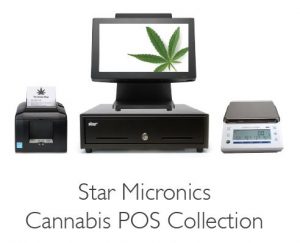
    Capture-Cannabis-brochure-e1574802612781

    2018 was a big year for legalization – in fact, it was arguably the biggest one yet – and that trend is expected to continue into 2019. At least six more countries are slated to legalize medicinal marijuana usage, and at least one is expected to legalize recreational use. In terms of the U.S., at least three states have plans to legalize medicinal or recreational usage, with Illinois, New Jersey, and New York being the biggest possibilities. Even more traditionally-conservative states like Texas could change their current marijuana regulations.

    (More) Research Will Be Conducted

    Cannabis research has already been taking place, but it will pick up speed even more this year. Because of the more open regulatory environment, more research will be conducted, which is expected to spark even more innovation within the cannabis industry. The Farm Bill has opened the CBD market this year, and will support overall marijuana consumption, meaning more knowledge will soon be uncovered on each specific cannabinoid’s (the chemical compounds secreted by cannabis flowers) powers. For example, therapeutic uses include treating and managing obesity, anorexia, emesis, pain, multiple sclerosis, neuroprotection, inflammation, Parkinson’s disease, Huntington’s disease, Tourette’s syndrome, Alzheimer’s disease, epilepsy, bipolar disorder, schizophrenia, PTSD, depression, anxiety, insomnia, asthma, cardiovascular disorders, glaucoma, cancer, and more.
    The cannabis industry is booming. Are you looking to cash in on cannabis point of sale? Download our e-book now!

  • Amazon Expands AmazonGo Stores and Hits New Milestone

    Amazon Expands AmazonGo Stores and Hits New Milestone

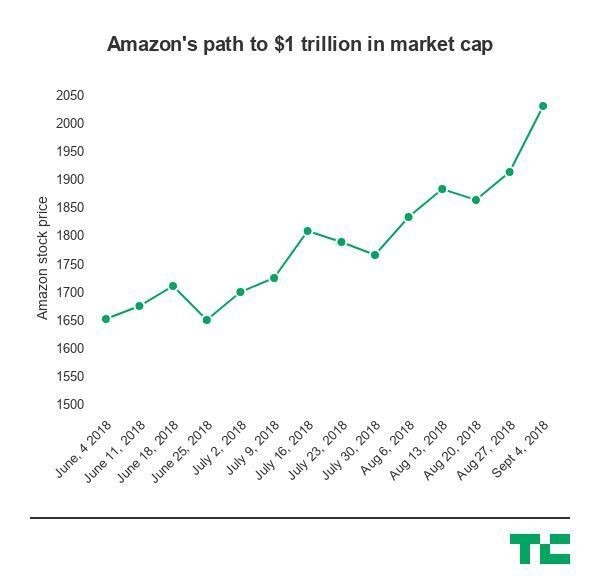
    It was a big month for Amazon in September, 2018. Amazon has become the 2nd company to hit the $1 Trillion dollar market cap. This is significant since Amazon, according MKM Partners, could reach a whopping $2.4 trillion valuation by 2024. AmazonGo is billed as the cashierless stores of the future and Amazon is ready to expand them to new locations. The latest location is its third overall and third in Seattle, where it’s headquartered. The 2,100 square foot store sits on the corner of Boren Ave. and Thomas St. and is its largest yet.

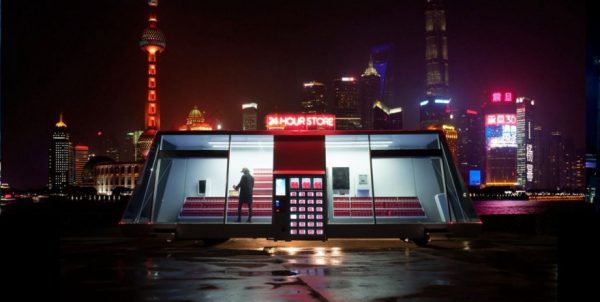
    While expansion to San Francisco and Chicago remains imminent, Cate Trotter of Insider Trends recently did an article on these new, more automated kinds of stores. The AmazonGo concept has been embraced by many retailers across the world with various initiatives from smart kiosks, to what appear to be more like vending machines that operate on AI, to mobile stores ;  the idea of more seamless retail and customer experiences is growing.

    A report on Kiosk and Retail by USA Technologies and PYMNTS.com predicts that the interactive kiosk sector in the US will be worth more than $1 billion by 2020. AmazonGo isn’t at Alibaba’s level in China for retail experiences, but it certainly does re-conceive how the physical stores work for convenience. While E-commerce is growing faster in China, in the U.S. even the likes of JD.crew have started selling on Amazon.

    Amazon is Fueling Retail Innovation

    The Amazon Prime value is incredible and is beginning to scale into entertainment (Prime Video), AI (Alexa), Grocery (WholeFoods) and many other segments. There’s been talk about Alexa Smart Glasses and an Amazon home robot, both likely to appear before 2021. However for physical retail experiences, AmazonGo may be the most tested and innovative feature in the evolution of retail we’ve seen for quite some time.

    Amazon2

    Amazon’s profitability of AWS, Alexa, and future advertising revenue means it will be able to perfect in-store technology. Walmart is testing a new feature called Spark delivery, that uses crowdsourcing to find drivers to make grocery deliveries and will include a partnership with Delivery Drivers, which manages such workers, because the race to automated grocery delivery is also fairly lucrative. JD.com, Kroger, and many others are all looking at this service very carefully.

    AmazonGo has been slow to expand its cashierless grab-and-go experience. However, the concept is clear—this is using LiDAR and other technologies to create a faster experience that is uniquely made for urban shoppers. The point of sale is, for all intents and purposes, virtual. Checkout is completely eliminated, there’s only a kind of mobile check-in with QR codes.

    In the evolution of what physical stores might become, there are lessons for brick-and-mortar retailers to look into:

    • AmazonGo
    • BingoBox
    • Auchan Minute
    • JD.com’s “X” chain
    • Alibaba’s TaoCafe
    • The robotic CafeX
    • Stockwell (Bodega)
    • Moby Mart

    Amazon3-e1574799762164

    The Future Store is Late, but is Arriving in the 2020s

    For the future of commerce, the marketplace, and the local store, these are not isolated incidents. These represent a trend towards increased retail automation, logistics, and consumer fulfillment that will change how GenZ interacts with stores, restaurants, and the future of mobile in-store as well. 5G mobile, the IoT and blockchain will all power the smart store in new creative ways.

    Just as point of sale is evolving, our entire concept of what a “store” is, could change considerably in the next decade. According to Nielson and many retail analysts, we’ll be doing 70% of our grocery shopping online by 2024. In China, Meituan is about to go IPO in Hong Kong, it’s one of the leaders in “O2O”—online to offline—and represents the ultimate in convenience for consumers, though it’s burning cash.

    As impressive as Amazon is to the future of convenience and giving consumers various “upgrades” in customer experience and fulfillment, a lot of the interesting stuff in retail is happening in China, where mobile penetration and eCommerce are both higher and where there are more total consumers and digital natives.

    • 7-Eleven Signature
    • Suning Biu
    • Alibaba’s “smile to pay”
    • Bianlifeng
    • Alibaba’s Hema supermarket

    It turns out having a cashless society with QR codes and an app-of-everything (WeChat) is a huge advantage for China in terms of retail innovation. China’s integration of facial recognition is also very advanced in retail, financial and services generally.

    AmazonGo might be just the tip of the iceberg in how physical retail innovation occurs globally. The future of automation in retail is occurring not just in eCommerce, but in restaurants, grocery, cafes, local stores, convenience stores, and syncing with the values of the new consumer.

    The Future of AmazonGo

    The further expansion in Seattle makes sense as the newest store reportedly is the largest Amazon Go location yet, at about 2,100 square feet, according to the Seattle Times story.

    AmazonGo tech, perfected in Seattle, does not stay in Seattle. An AmazonGo store is heading to New York. Here’s how it works:

    1. When entering the grocery stores, shoppers scan their phone using the Amazon Go app. (The virtual POS is essentially sign-in only)
    2. As you shop, cameras, LiDAR, and motion sensors track what you pick up from (and put back on) shelves.
    3. You can “grab and go” with just-walk-out technology. There are no lines, checkout, or cashiers to worry about.
    4. There’s less staff and typically no grocery carts or baskets. Shoppers are encouraged to use their own bags.

    AmazonGo is rumored to launch in places such as New York, San Francisco, and Chicago first, before spreading to more cities. So if Seattle was phase one, this is phase two.

    Considering how long AmazonGo’s concept was in R&D and testing, this is a pretty huge deal. Amazon’s footprint in brick-and-mortar stores is still pretty small even with the Whole Foods acquisition. Nothing compared to its rival in China, Alibaba, or even JD.com.

    However, AmazonGo is the torch bearer for being a prototype of the “smart store”. As such, many physical retailers are watching closely to see what Amazon accomplishes with AmazonGo and how consumers will respond. Surely it’s an upgrade in what we might term convenience and customer experience in-store. With 7-Eleven integrating Apple Pay recently, it’s only a matter of time before Amazon becomes more aggressive in its brick-and-mortar strategy.

    As for AmazonGo in NYC, Amazon is seeking members for its staff and roles such as:

    • Store Manager
    • Assistant Manager
    • Trading Lead Associate
    • Prep Ingredients Associate
    • Shelves Stocking Associate
    • Customer Success and Help Associate
    • Food Prep Associate
    • Security Associate

    It’s important to note, these stores won’t need as many regular staff due to their unique technology.

    Seattle, New York, San Francisco, and Chicago seem to be the early birds to enjoy semi-automated AmazonGo shopping experiences in 2018 and early 2019. While Amazon is expected to choose Washington D.C. as its next HQ site, it appears to be in no hurry to launch AmazonGo too quickly.

    Later in September it was rumored Amazon will open 3,000 AmazonGo stores by 2021. Amazon also opened an Amazon 4-Star store in New York.

  • Star Micronics Releases Peripheral Support with the mPOP™ Mobile Point of Purchase

    Star Micronics Releases Peripheral Support with the mPOP™ Mobile Point of Purchase

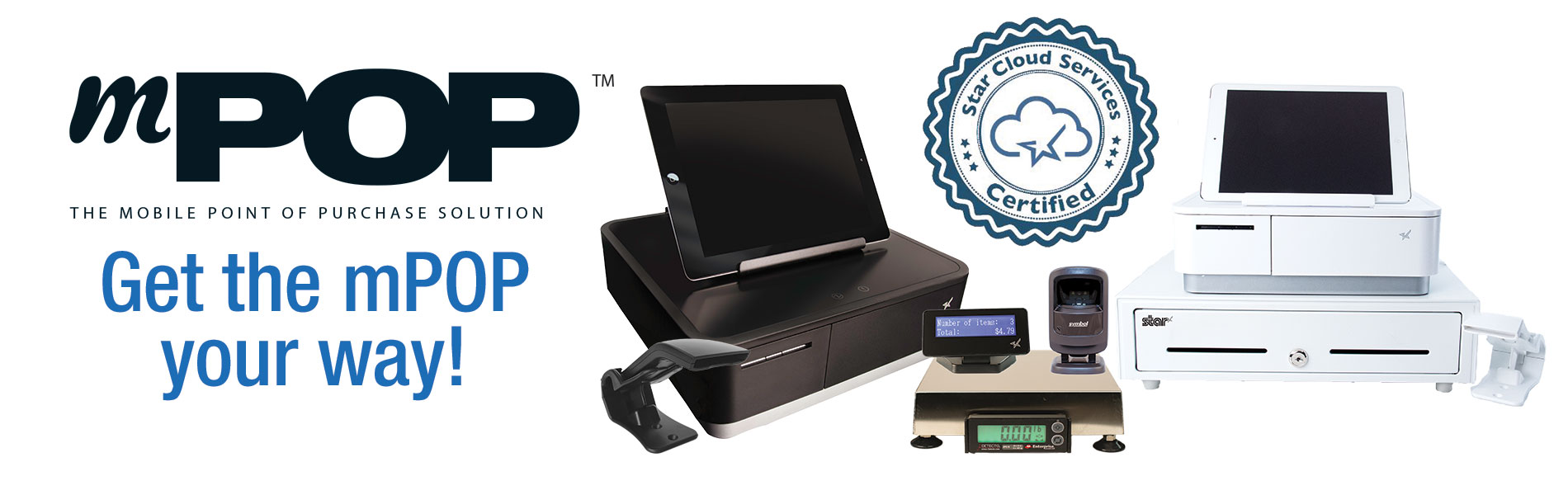
    Somerset, NJ – June 1, 2017 – Star Micronics, leading provider of point of sale and proof of transaction technology, presents the mPOP™ with added peripheral options. Star’s mPOP now supports an optional scale, 2D bar code scanner, customer display, and external cash drawer. With these added peripherals, retailers and restaurateurs can now transform their mPOP into a complete point of sale hub to accept more versatile transactions in higher volume.

    mPOP-Press-Release-June-2017

    Star Micronics has integrated support for three Detecto APS scales. The APS scales supported are offered for varied use cases. The APS10 (max. 15 kg) is ideal for candy shops, delis, frozen yogurt shops, etc., where the APS20 (max. 15 kg) is better for larger items like bags of fruit and vegetables at a farmer’s market or grocery store. The APS12 (max. 160 oz.) is best in similar environments as the APS10, or any other location than prefers to measure in ounces.

    Star has integrated a 2D bar code scanner for the mPOP. Now, users have the option of choosing between the Star 1D scanner and the new 2D scanner. The 2D bar code reader will be beneficial to accept coupons in the form of QR code, or access item information. In addition to 2D bar code scanner support, Star has designed a two-line, blue backlit customer display with up to 20 characters per line. With this support, the retailer can not only show the customer their transaction price, but they can also add advertising messages for when the mPOP is not being used.

    Lastly, Star added a cash drawer connection port (DK port) to the mPOP™ to support an extra cash drawer. This is ideal for users who need a point of sale system with a small footprint, but still have a higher cash flow, such as a bar or deli.

  • Star Micronics and Elo Partner to Provide a Modernized All-In-One POS Solution

    Star Micronics and Elo Partner to Provide a Modernized All-In-One POS Solution

    Somerset, NJ – May 8, 2017 –Star Micronics, leading provider of point of sale and proof of transaction technology, has announced their partnership with Elo, a global supplier of touchscreen solutions, to provide a new all-in-one POS hardware bundle for point of sale. This solution combines the Elo I-Series for Android and Windows tablets with a flip stand that houses a Star Micronics TSP100III, TSP650II, or TSP700II thermal printer. This bundle provides a perfect solution for hospitality, enterprise stadiums, and other environments where space saving and durability are essential. The flip stand is designed to seamlessly transform your point of sale into a self-service kiosk solution or a customer-facing display, and is ideal for small counter spaces with integrated cable management.

    “Elo and Star recognize that demand is growing for POS solutions with mobile architecture combined with the configurability of traditional POS systems,” said Sonal Apte, Senior Director of Product Management at Elo. “With this new mPOS platform, customers can instantly transform a traditional POS station into a self-service countertop kiosk that integrates a best-in-class Star printer, an EMV payment device, and a barcode scanner into one seamless design.”

    The all-in-one POS bundle allows users to print receipts using their choice of WLAN, LAN, Bluetooth, and USB connectivity with Star’s TSP100III or TSP650II thermal receipt printers. In addition, Star’s TSP700II offers a solution for receipt and label printing with the I-Series tablet and stand. With high-speed printing, “drop-in and print” paper loading, and a receipt de-curl mechanism that allows receipts to print smooth and flat, Star Micronics’ printers are easy to use in fast-paced environments.

    “Star Micronics is very excited about this new partnership and can expect this bundle to gain a lot of popularity in the hospitality and retail markets,” says Christophe Naasz, Business Development Director of Star Micronics. “There has been a major increase in the use of tablets in these markets over the past few years. Star Micronics and Elo have worked together to create a POS bundle that still has a sleek and compact look, but provides a durable solution for high-volume point of sale environments.”

  • Star Micronics Announces Exclusive Partnership with Sanei Electric Inc.

    Star Micronics Announces Exclusive Partnership with Sanei Electric Inc.

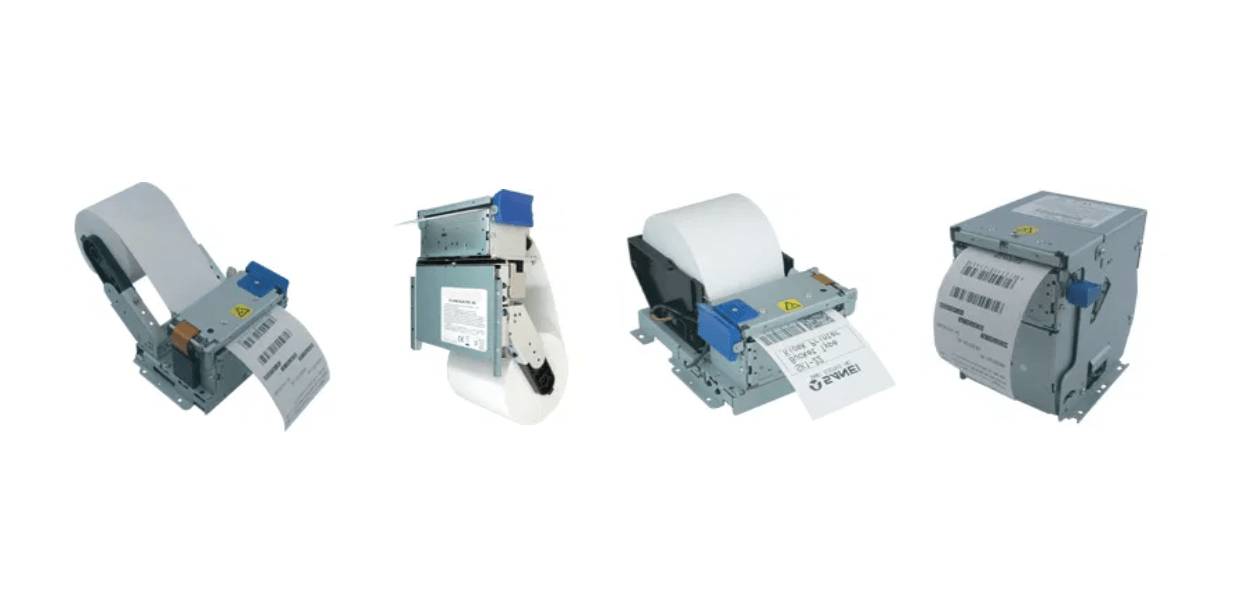
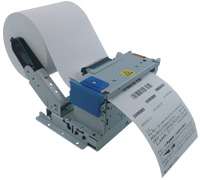
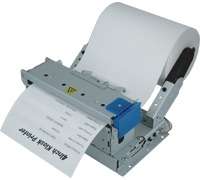
    Star Micronics America is pleased to announce its exclusive partnership with Sanei Electric Inc. to expand its kiosk solution offerings with two-inch (SK1-20 Series), three-inch (SK1-30 Series) and four-inch (SK1-40 Series) thermal kiosk printer series as part of the company’s continued commitment to the growing kiosk market.

    The SK1 line of thermal kiosk printers provides dependable, maintenance-free printing with a quick speed of up to 200mm/sec with 203 dpi resolution. The diverse SK1 Line of kiosk printers provides horizontal, vertical and drop-in loading paper formats for the SK1-20 Series and SK1-30 Series and horizontal paper format for the SK1-40 Series. Presenters are available on select models for the entire SK1 Line of kiosk printers. Additional options include large paper roll holder and bezel paper detector for the SK1-20 and SK1-30 Series.

    SK1-31_Llg                                                              SK1-41_Rlg

    The SK1 line of thermal kiosk printers offer a variety of features, accessories, and sizes to meet virtually every kiosk application, including gas pumps, airline e-ticket/boarding passes, ATMs, bus/rail tickets, gift registries, Internet access terminals, lottery/gaming, and maps/direction kiosks.

    To learn more about Star Micronics printers, visit www.starmicronics.com.