Tag: POS Software

  • Grocery Store Technology with Rod Plus Solutions on the Rising Stars Podcast

    Grocery Store Technology with Rod Plus Solutions on the Rising Stars Podcast

    The grocery industry is undergoing rapid transformation, fueled by digital innovation and evolving consumer expectations. For grocery retailers and technology solutions providers, staying ahead in this dynamic landscape requires a deep understanding of the intersection between technology and customer service.

    In the latest episode of the Rising Stars Podcast, “The Impact of Technology on Modern Grocery Stores,” host Kate Orara welcomes Kevin Spencer, President and CEO of Rod Plus Solutions and host of the podcast Retail Checks and Balances. Together, they explore Rod Plus’s pivotal role in reshaping the grocery sector through innovative technology solutions that cater to the digital retail landscape and changing consumer behaviors.


    Listen to the New Episode Now

    Innovations in Grocery Store Technology

    Kevin Spencer shares insights into Rod Plus’s contributions to the grocery technology sector, focusing on how the company’s solutions have revolutionized inventory management, e-commerce platforms, and customer engagement. This episode offers a unique glimpse into Rod Plus Solutions’ innovative strategies to help grocery retailers adapt to the digital era, enhancing both operational efficiency and customer satisfaction.

    What Listeners Will Discover

    By listening to this episode, audiences will discover:

    • The strategic innovations Rod Plus brings to the grocery industry.
    • How Rod Plus Solutions addresses common challenges in the sector.
    • The role of AI and IoT in advancing grocery services while maintaining a human touch.
    • Kevin Spencer’s perspectives on managing digital transformation in grocery retail.

    A Must-Listen for Industry Stakeholders

    “The Impact of Technology on Modern Grocery Stores” is essential listening for anyone involved in the grocery industry—from technology providers to retail managers and business leaders. As Kevin Spencer and Kate Orara explore Rod Plus Solutions’ approach to leveraging technology for grocery retail, they highlight the importance of balancing digital advancements with the intrinsic value of human connections in creating memorable customer experiences.

    As Rod Plus Solutions and Star Micronics prepare for their appearance at the upcoming National Grocers Association (NGA) show, this episode is a timely resource for retailers looking to navigate the complexities of grocery technology and digital transformation.

    Tune in to gain actionable insights into the future of grocery retail, driven by technology solutions that prioritize efficiency, customer engagement, and adaptability in a quickly changing market landscape.


    Explore All Episodes

    Loving the podcast? Subscribe now, and let us know what you think by leaving a review!

    Stay up-to-date on all things Star, don’t forget to follow us on Twitter, LinkedIn, Facebook, Instagram, and YouTube.


    Podcast Playlist on YouTube

    The Rising Stars Podcast

    Immerse yourself in the ever-evolving world of point-of-sale (POS) with the Rising Stars Podcast by Star Micronics, hosted by industry pro, Kate Orara. Twice a month, we dive into the fascinating journeys of innovators and businesses navigating the challenges of technology’s rapid pace.

    In every episode, Kate Orara, Star Micronics’ Partner Development Manager, takes listeners on an exploration of emerging retail technology trends and strategies with global industry giants. She’s spent her entire career meeting all the right people, and now listeners everywhere can benefit from this vast network of channel gurus.

    Always leading and always innovating, Star Micronics, a pioneer in POS and customer experience technology for over 60 years, welcomes you to join us in shaping a brighter future in the retail, hospitality, and cannabis industries.

    Want more industry news?


    Explore the Star Blog

  • Retail Software Success with RMH on the Rising Stars Podcast

    Retail Software Success with RMH on the Rising Stars Podcast

    Welcome to another exciting edition of the Rising Stars Podcast! In episode 38, “RMH’s Blueprint on Retail Software Success,” we had the pleasure of hosting Israel Morrison, Director of Sales & Marketing at Retail Management Hero (RMH), with our own Kate Orara, Partner Development Manager at Star Micronics.

    This episode dives into the innovative world of RMH’s tailor-made software solutions for small- to medium-sized retailers. Israel Morrison brings over a decade of experience in point-of-sale (POS) technology to the table, sharing valuable insights into the company’s RMH Store and RMH Central software systems.

    These solutions are not just revolutionizing retail management but are also driving efficiency and growth for a variety of industries, including grocery, liquor, apparel, and specialty retail.

    Listeners will gain valuable insights into:

    • Israel Morrison’s perspectives on the evolving POS landscape.
    • RMH’s strategies for tackling the rise of tablet-based POS systems.
    • The significance of adapting to fast-evolving technologies like cloud computing, e-commerce, AI, and online ordering.
    • The importance of these technologies for businesses aiming to stay competitive.
    • RMH’s collaborative methods with hardware manufacturers and resellers for all-encompassing solutions.
    • Future predictions for the retail industry over the next decade.
    • How Value-Added Resellers (VARs) and software companies can prepare for or lead industry changes.

    A Must-Listen for Retail Enthusiasts and Professionals

    This episode is a must-listen for anyone in the retail sector, from VARs to software enthusiasts and business owners. Israel’s expertise and RMH’s forward-thinking approach are a beacon for those navigating the complex retail technology landscape.

    Take advantage of this informative and engaging episode! Listen now and join us as we explore the future of retail with RMH. Check out the Rising Stars Podcast for more episodes on the latest trends and innovations in the POS and retail industry.

    Loving the podcast? Subscribe now, and let us know what you think by leaving a review!

    Stay up-to-date on all things Star, don’t forget to follow us on Twitter, LinkedIn, Facebook, Instagram, and YouTube.

    The Rising Stars Podcast

    Immerse yourself in the ever-evolving world of point-of-sale (POS) with the Rising Stars Podcast by Star Micronics, hosted by industry pro, Kate Orara. Twice a month, we dive into the fascinating journeys of innovators and businesses navigating the challenges of technology’s rapid pace.

    In every episode, Kate Orara, Star Micronics’ Partner Development Manager, takes listeners on an exploration of emerging retail technology trends and strategies with global industry giants. She’s spent her entire career meeting all the right people, and now listeners everywhere can benefit from this vast network of channel gurus.

    Always leading and always innovating, Star Micronics, a pioneer in POS and customer experience technology for over 60 years, welcomes you to join us in shaping a brighter future in the retail, hospitality, and cannabis industries.

    Want more industry news?

  • The Future of Payment Technology with ScanSource on the Rising Stars Podcast

    The Future of Payment Technology with ScanSource on the Rising Stars Podcast

    Payment technology is rapidly transforming, presenting new challenges and opportunities for businesses and consumers alike. To stay ahead in this fast-evolving sector, it’s crucial to understand the latest trends and innovations.

    In the newest episode of the Rising Stars Podcast, “New Dimensions in Payment Tech Evolution,” host Kate Orara discusses payment tech with Heather Philpott, Director of Supplier Services at ScanSource. This essential episode covers the need-to-know information about the present and ongoing evolution of payment technologies.

    Unraveling Payment Tech Innovations

    Heather Philpott shares her in-depth knowledge, discussing key topics reshaping the payment industry. The discussion spans various areas, including the intricacies of remote key injection, the evolution of traditional payment devices, and the nuances between multifunction and integrated payment systems.

    Listeners get into a comprehensive exploration of:

    • How virtual payments are altering the landscape of transactions.
    • The rising influence of app-based payments like Venmo and Zelle.
    • The role and impact of installment payment services, including Afterpay, Affirm, and Klarna.
    • The evolving roles of value-added resellers (VARs) and independent software vendors (ISVs) in the POS sector.
    • Strategies for fostering strong industry collaborations.

    A Must-Listen for Industry Enthusiasts and Professionals

    For professionals in the POS and payment technology sectors, this episode is a must-listen. It offers a detailed analysis of how payment tech is evolving and what it means for the future of retail and commerce.

    Join us on another riveting episode of the Rising Stars Podcast and equip yourself with the insights and knowledge to better navigate the dynamic world of payment technology.

    Loving the podcast? Subscribe now, and let us know what you think by leaving a review!

    Stay up-to-date on all things Star, don’t forget to follow us on Twitter, LinkedIn, Facebook, Instagram, and YouTube.

    The Rising Stars Podcast

    Immerse yourself in the ever-evolving world of point-of-sale (POS) with the Rising Stars Podcast by Star Micronics, hosted by industry pro, Kate Orara. Twice a month, we dive into the fascinating journeys of innovators and businesses navigating the challenges of technology’s rapid pace.

    In every episode, Kate Orara, Star Micronics’ Partner Development Manager, takes listeners on an exploration of emerging retail technology trends and strategies with global industry giants. She’s spent her entire career meeting all the right people, and now listeners everywhere can benefit from this vast network of channel gurus.

    Always leading and always innovating, Star Micronics, a pioneer in POS and customer experience technology for over 60 years, welcomes you to join us in shaping a brighter future in the retail, hospitality, and cannabis industries.

    Want more industry news?

  • Rising Stars Podcast: Innovating the POS Landscape with Biztracker

    Rising Stars Podcast: Innovating the POS Landscape with Biztracker

    The landscape of point-of-sale (POS) technology is in a state of continual evolution. For companies aiming to maintain a competitive edge, it’s essential to not only keep up with these rapid advancements but also to craft adaptable business strategies that are responsive to these ongoing shifts.

    In the latest episode of the Rising Stars Podcast, “Biztracker’s Edge: Innovating the POS Landscape,” host Kate Orara delivers an insightful discussion with a key figure in the industry, Craig Kaliebe, Director of Business Development and Marketing at Biztracker.

    Together, they explore innovative approaches to shaping company strategy that sharpen competitive edge no matter where the path of POS technology takes us.

    Unveiling Innovations in POS

    Craig Kaliebe brings his extensive expertise to the table, discussing Biztracker’s unique “Fulfillment as a Service” model. This approach has revolutionized how Independent Software Vendors (ISVs) manage hardware supply, logistics, and support, offering a glimpse into the future of streamlined POS solutions.

    The discussion also ventures into the diverse applications of POS systems, ranging from retail to healthcare and warehouse automation, highlighting Biztracker’s versatility and adaptability in a rapidly evolving market.

    Listeners will gain valuable insights into:

    • The transformative role of AI and cloud computing in the POS domain.
    • Strategies for maintaining robust data security in an increasingly digital landscape.
    • The importance of adaptability and staying informed about emerging technologies.
    • Building powerful partnerships and collaboration strategies.
    • Effectively leveraging the power of social media branding.

    A Must-Listen for Industry Enthusiasts and Professionals

    Whether you’re a seasoned professional, a budding entrepreneur, or simply an enthusiast curious about the direction of retail technology, this episode of the Rising Stars Podcast is an invaluable resource. Craig Kaliebe’s insights provide a roadmap for navigating the complexities of the POS industry and harnessing the power of innovation to drive business success.

    Tune in to this episode and arm yourself with the knowledge and insights needed to stay ahead in the dynamic world of POS technology.

    Loving the podcast? Subscribe now, and let us know what you think by leaving a review!

    Stay up-to-date on all things Star, don’t forget to follow us on Twitter, LinkedIn, Facebook, Instagram, and YouTube.

    The Rising Stars Podcast

    Immerse yourself in the ever-evolving world of point-of-sale (POS) with the Rising Stars Podcast by Star Micronics, hosted by industry pro, Kate Orara. Twice a month, we dive into the fascinating journeys of innovators and businesses navigating the challenges of technology’s rapid pace.

    In every episode, Kate Orara, Star Micronics’ Partner Development Manager, takes listeners on an exploration of emerging retail technology trends and strategies with global industry giants. She’s spent her entire career meeting all the right people, and now listeners everywhere can benefit from this vast network of channel gurus.

    Always leading and always innovating, Star Micronics, a pioneer in POS and customer experience technology for over 60 years, welcomes you to join us in shaping a brighter future in the retail, hospitality, and cannabis industries.

    Want more industry news?

  • Rising Stars Podcast: Behind the Tech Curtain of Star’s Integration Success

    Rising Stars Podcast: Behind the Tech Curtain of Star’s Integration Success

    The point-of-sale (POS) landscape always presents a unique set of challenges and opportunities for software developers. Technology is advancing at a remarkable rate, and striking the right balance between innovation and practicality is key.

    What developers need is a powerful ally in this journey—an effective partner who ensures their cutting-edge applications will work with the latest hardware and still provide a smooth user experience.

    What software developers need is the Star Integration Team!

    In the latest episode of the Rising Stars Podcast, “Behind the Tech Curtain: Star’s Integration Success,” host Kate Orara has an eye-opening conversation with Mark Rasho, the seasoned Manager of Star Micronics’ world-class Integration Team. With his extensive background in electronic manufacturing, consulting, and business development, Mark sheds light on the critical role integration plays in harmonizing hardware and software to create POS systems that wow customers.

    What you will learn in this episode:

    • The integral role of Star’s Integration Team in supporting software developers.
    • Innovative technologies in the POS industry, including the mC-Label3, TetherLAN, and Android Open Accessory.
    • The importance of seamless integration between hardware and software in POS systems.
    • The evolving role of software vendors in the POS industry and the expansion into niche markets.
    • How Star empowers software developers in the fast-paced world of POS.

    Take advantage of this informative and insightful episode – tune in today and discover the secrets of POS integration success.

    Loving the podcast? Subscribe now, and let us know what you think by leaving a review!

    Stay up-to-date on all things Star, don’t forget to follow us on Twitter, LinkedIn, Facebook, Instagram, and YouTube.

    The Rising Stars Podcast

    Immerse yourself in the ever-evolving world of point-of-sale (POS) with the Rising Stars Podcast by Star Micronics, hosted by industry pro, Kate Orara. Twice a month, we dive into the fascinating journeys of innovators and businesses navigating the challenges of technology’s rapid pace.

    In every episode, Kate Orara, Star Micronics’ Partner Development Manager, takes listeners on an exploration of emerging retail technology trends and strategies with global industry giants. She’s spent her entire career meeting all the right people, and now listeners everywhere can benefit from this vast network of channel gurus.

    Always leading and always innovating, Star Micronics, a pioneer in POS and customer experience technology for over 60 years, welcomes you to join us in shaping a brighter future in the retail, hospitality, and cannabis industries.

  • GitHub & Star Micronics: The Benefits for POS Software Developers

    GitHub & Star Micronics: The Benefits for POS Software Developers

    If you’re a point-of-sale (POS) software developer, you may already know Star Micronics puts all its code onto GitHub. It may have even helped you at one point. Maybe you’ve also helped Star by posting your thoughts there and sharing some great ideas. Or perhaps you’re just starting out and want to learn more about what I’m referring to.

    Either way, it’s helpful to know about Star and GitHub. As someone new to software development, I wanted to learn more about GitHub – a decentralized, open-sourced platform where developers can publicly post their code and get feedback – and why Star puts its SDK codes on there to help ISVs, software developers, and the tech community in the point-of-sale (POS) space.

    Recently, I spoke to Mark Rasho, Joshua Ventocilla, and Oreoluwa Akeredolu from Star Micronics’s Integration Team to get more information about Star on GitHub

    Here’s how the conversation went:

    Most of our technology providers already know what GitHub is, but for people new in the space, what is GitHub, and how do you use it?

    Mark: So, as far as what GitHub is, I’ll leave that to Josh and Oreo, but I do know the platform is used by developers a lot. They create code in there. If they see any problems with software, they’ll solve them. Guillermo Cubero, our Product Integration Specialist, was the one pushing for us as a company to get on GitHub because he found it useful.

    Then Star Micronics started putting our SDKs on GitHub, our CloudPRNT, Native iOS, and Android, so it’s important. It is something a lot of developers use. It’s basically a platform where you can communicate with developers, ask questions, get questions answered, and support each other. So, it’s like a developer community app, right guys?

    GitHub chat 3

    Oreo: Yep.

    Josh: Yep. That’s correct. I mean, essentially, in the world of development, this is an essential tool to use. GitHub is one of the bigger Git that they have – there are many different types of Git – GitLab is one of them, I use that also, but GitHub is one of the bigger ones. As far as development goes, it’s like a portfolio, in a way, for a developer to have. It’s where all the code source is pushed. You can edit it.

    Also, the great thing about it is you can have other developers collaborate with your code source in case someone needs to edit or improve features on it. They can ask to edit it or suggest edits, and you can approve that. So, it’s one of the most important tools for a developer to have. As Mark mentioned, Star Micronics must be on it because nearly all of our clients who are developing applications use it. We refer them to our GitHub and they can review our code or our SDKs whenever they need to.

    Mark: And to give you a scope of how big GitHub is, there are over 94 million developers on it, and over 4 million organizations use it (at the time of this post), so it’s huge.

    How does GitHub work? Is it kind of like Wikipedia for code? Say, Josh writes code and puts it on there. Can anyone go on and edit it, or do you need to approve it as the original poster?

    Josh: Good question. It’s open source, so almost everyone has access to it. If I were the owner of a code and someone wanted to edit it, depending on how I had the setting (whether public or private: if it’s public, anyone can see it; if it’s private, it’s only allowed by me, or whoever I choose to see it) so, if someone wants to edit that, they’d have to request approval for it. Then, the original poster can review the updated code, see how it works, and if they approve it, it becomes part of the code.

    Is the original code still on there?

    Josh: Yes. Think of it like the base of a car. It needs wheels. So, if I start with the frame of a vehicle and someone wants to add a wheel they made, they will request to add it. Then, I would need to approve their wheel. Once I approve it, you will have both the frame and the wheel together. You can add to or edit the original code, but it needs to be approved.

    Mark: It may not be maintained by the original person who put the code up there, but it’s still there. And viewers can see the changes.

    GitHub is safe to use, right?

    Josh: Absolutely! It allows developers to collaborate on projects. It lets you upload your codebase so other developers may use what you’ve built. It’s also a platform for sharing self-made projects or projects you’ve worked on. It’s like a portfolio of work, but everyone can build upon it.

    Github chat 6 Josh

    So, it definitely sounds helpful and valuable to software developers. But how would you describe the benefits of Star Micronics being on GitHub? Not only the benefits for us as a company but for ISVs and technology providers as well?

    Mark: One benefit developers get from our GitHub page is that they can see our source codes and read and participate in discussions about them. So they can reach out to us, ask us questions, or ask about specific features. And, as a company, we get a lot of ideas from that.

    We may make changes because of a discussion with a developer, or maybe a developer has an idea – hey, I want to do this, I want to do it in a different way – and that can give us some ideas, too. We can make changes and get feedback from developers, which helps us improve our source code. Many benefits come from these discussions and input from other users.

    Oreo or Josh, have you had any situations where a developer brought ideas to you?

    Oreo: Yes! One of the greatest benefits we get from GitHub is the ability to fix bugs. While we release our SDKs for iOS, Android, Windows, and others, there are different ways to create applications on those platforms.

    Here’s an example using one of our recent SDKs, the React Native SDK. Most people use Expo, which is like a wrapper to ensure the application works on iOS and Android. However, with our React Native SDK, it wasn’t working with Expo. That was a bug that needed to be fixed, and it was a developer in the community who brought it to our attention. After seeing that on GitHub, we tested it on our end and worked with the developers at Expo to create a solution that everybody could use. Then we published that update on GitHub and let everyone know that the bug was fixed.

    So, different people use the code in different ways. On GitHub, you can bring up a bug, and we’ll take a look at it, fix it, and update it. That way, everybody can use the solution Star provides however they want to on every platform and framework. That’s one importance of GitHub.

    Interested in integrating with Star Micronics?

    So, GitHub helps make our codes more accessible to people.

    It allows ISVs and technology providers to communicate with us directly to solve problems for more people.

    Oreo: It also makes the developmental process easier because, on the GitHub discussion page, people already put examples of how they got specific things to work. For example, the TSP100 is a graphic-only printer, and the TSP650 supports text. That’s one thing you can find on our GitHub: how to print an image to the printer.

    While we have examples in the SDKs, some developers still have issues. However, there’s a good chance someone has already posted a solution on GitHub. So when you have an issue, you don’t have to start racking your brain because someone else has already posted what you need. You just had to look at it and implement it into your application. Having that community on GitHub reduces development time.

    Github chat 7 Oreo

    Is there anything new coming to GitHub that you may know of?

    Oreo: Well, we had the StarPRNT SDK, and now we have the StarXpand SDK. Both SDKs are on GitHub, but we also explain how to upgrade from StarPRNT to StarXpand on GitHub. So, having that easy transition on there is new. The StarXpand supports more frameworks, and there are examples of how to upgrade on GitHub so that most of the functions don’t break when you do so.

    Josh: And to add to that, there are how-to’s on GitHub in terms of installations. So, for anyone who wants to go break it down, there are step-by-step instructions on how to use our code.

    So GitHub makes things smoother, so developers don’t waste their time.

    Josh: It’s a collaborative platform for almost everybody to use our code. And in the process, as we go through trials and tests, it also helps to improve our code.

    Would most developers know to go to GitHub for Star SDKs and APIs?

    Oreo: Usually, when we’re on an initial call with an ISV, we provide them follow-up messages with links to GitHub. We can also send ISVs links to issues that have already been resolved on GitHub.

    So, it’s part of the onboarding process.

    Oreo: Yes. We let them know we have GitHub when we bring them on board.

    Mark: As soon as Star Micronics began on GitHub, we migrated our SDKs and APIs over to its one central location where everybody has access. We duplicated what we have on our website onto GitHub, where most developers would go anyway.

    GitHub sounds like it’s been an enormous help to Star.

    Mark: Huge.

    My final question is: for anyone thinking about integrating with Star Micronics or anyone about to start that process, is there anything important you want them to know about GitHub and Star?

    Mark: We want to let everyone know to please reach out to the Integration Team with any questions, big or small. Instead of ISVs & developers spending time trying to figure something out, our Integration Specialists like Josh and Oreo may already have the answer. Going to our team first will speed up development time, and when you speed up development time, it drops the costs a lot more for the developer and the ISV, and it just makes the process smoother.

    So, please always reach out to Star. We’re always available, and we respond immediately (during regular business hours, Monday through Friday, 9 pm to 5 pm EST). We are here for the ISVs. Star’s Integration Team is here to make their job simpler and more cost-effective and to integrate them with our hardware as quickly as possible. So, please remember to reach out to us for any reason.

    GitHub chat 3 Mark

    Think of Star’s Integration Team first because this is what it’s here for.

    Josh: To add something, I recommend looking over our SDKs to see what compatible languages we have written up before developing. Sometimes we don’t have some of the language ISVs use. So that slows down the development process because now they have to review our SDKs and then translate them into their language.

    By visiting GitHub, developers can get an idea of “if I’m using JAVA, can I do that with this SDK.” Because there are so many different languages, we may only have options for some of them. GitHub is the go-to platform for seeing what languages we support. If people do that, then development would be a lot smoother.

    Mark: For example, we noticed that React was the trend many developers were going to, so we decided to develop React. And we will keep incorporating other programming languages as long as people are using them.

    We get those trends from GitHub, from ISVs asking us questions, and that’s how we decide what to come out with next.

    Can’t wait to see what that’ll be! Thank you so much for talking to me today. I really appreciate your knowledge.

    Mark: Anytime. And, thank you for listening!

    Oreo: Thanks, Brittany.

    Josh: Always a pleasure. Thanks!

    SaaS in tech cloud on black background.

    Check out another article:

    Independent software vendors (ISVs) and developers devote time, attention, and resources to developing applications that address their markets’ challenges and pain points. An ISV’s success depends on achieving those objectives. However, it is equally important to determine the best way to deliver software to consumers and take it to market.

    Interested in integrating with Star Micronics?

  • POS Software and Systems Buyer’s Guide

    POS Software and Systems Buyer’s Guide

    Investing in a point of sale (POS) system is one of the best things you can do for your business, but with so many options on the market, how do you determine which POS hardware and software best suit your business needs and your budget?

    This guide can help you get on the right path to finding the perfect POS system for your business.

    Download the full POS Software and Systems Buyer’s Guide

    Step 1: Define Business Needs

    No one wants to waste time and money on a POS solution that lacks needed capabilities, or has unnecessary features that increase the price. To avoid purchasing a system that isn’t right for your business, you need to identify the specific challenges that you will need your new POS system to address.

    You can start by asking questions such as:

    • Is business suffering because customers must often wait in long lines at the POS?
    • Do shoppers frequently leave your establishment empty-handed because you don’t have the merchandise they want?
    • Are you spending too much time managing employees or trying to find out why your sales volume often doesn’t jibe with your inventory levels?
    • Do you want to attract new customers?

    The answers will help you identify the pain points you want to eliminate and the goals you want to achieve with a new POS system. Also consider the amount of time you spend on operations-related tasks and whether you need the POS system to automate processes. You may also want to consider whether you need the POS system to support initiatives that can help grow your business.

    Once you have clearly identified your business needs, research which POS functions address them. The list of the functions you need your new system to provide will help narrow the field of choices when you shop for a new POS system. The solutions you consider are likely to have a mix of “must-have” and “nice-to-have” features; remember to focus on what you need, which can help you minimize the cost of the system. “More” isn’t necessarily better when it comes to technology solutions.

    Step 2: Set a Budget

    Decide how much your business can afford to spend on a POS system. By most accounts, the average industry investment in POS systems totals 2 to 3 percent of retailers’ annual volume, and 1 to 1.5 percent of restaurant operators’ annual volume. Consider ongoing costs, such as software maintenance/updates, hardware maintenance, and technical support.

    Ask about payment options. Financing may be available to help with the considerable capital investment you will make. You may also be able to lease or lease-to-own POS hardware, which can minimize upfront costs, but may add to the total cost of the system. Another option available to you may be a POS-as-a-Service offer, which provides your system, as well as software updates and system upgrades, for a subscription fee to use (rather than own) the system.

    When choosing from among these options, always consider the total cost of ownership (TCO) and return on investment (ROI). The price of a full-featured POS system may seem high, but don’t forget the financial savings that such a system will yield throughout its lifecycle by reducing labor expenditures, improving inventory control, order accuracy, and cash-tracking, and putting a lid on shrinkage. A comprehensive POS system will also help to up the sales ante by facilitating more effective customer engagement and better customer service, as well as by giving you real-time insight into all aspects of your operation.

    Software-Stock-Image

    Step 3: Shop for Software

    As you consider your options, you will find that not every software solution is compatible with all POS hardware. Selecting your software first will prevent you from being limited in functionality.

    There are different types of software you can choose from:

    • Native. Native POS software is installed on your POS hardware. It is easier to customize than cloud-based software.
    • Cloud-based software (Software-as-a-Service, or SaaS). In a SaaS model, software is delivered via the cloud, and you pay for it on a monthly subscription basis. Also, cloud-based software can be accessed from anywhere there is an Internet connection, giving you enhanced visibility into, and control over your operation. Customizing this type of software may be difficult.
    • Hybrid software. This software can be run online in the cloud or offline.

    It can be helpful to research the types of POS software that other businesses like yours are using. Find out through references or reviews if these retailers or restaurateurs are happy with the type of solution, the functionality it provides, and the benefits the solutions provide to their businesses.

    It can also be helpful to learn about the POS software vendors that provide the software, gaining insights on the level of customer service they provide and their experience working with companies in your market or industry. Also consider whether the vendor is an established company — one that is not likely to close its doors and leave you without support for your system.

    Once you have created a list of POS solutions to consider for your business, it’s time to arrange for demonstrations. Using the solution yourself will give you a sense of how easy it will be for your employees to learn, to use efficiently, and to discover whether it will support your operations. It may be helpful to compare similar features side-by-side to arrive at an accurate assessment of the best solution for your business.

    Step 4: Find Compatible Hardware
    mPOP-300x202

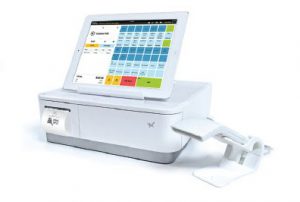
    The POS software you choose will dictate the POS hardware that you can use. In many cases, however, there will still be a number of options to choose from. Some of the choices you must make are related to how your employees will use the system. For example:

    • What is the preferred input method? Some operators favor keyboards or a scanner interface for POS data input, while others prefer a touchscreen interface that facilitates faster data input and easier training for new employees.
    • Will you use mobile POS? POS functionality on a tablet or other mobile device can give you linebusting, in aisle assist, and pay-at-the-table capabilities that can greatly enhance customer experiences. Your options include adding mobile POS to a traditional, stationary system, or using mobile POS alone.
    • Which peripherals are needed? You need to consider printers, cash drawers, PIN pads, payment card readers, and barcode scanners, and select the model that best suits your needs.
    • Will you accept all forms of payment? Make sure your new system gives your customers the ability to pay by their preferred methods. Now that the U.S. is migrating toward EMV payments, all new POS systems should have the ability to accept chip card payments. Failure to do so can result in bearing liability for fraudulent payment card charges. Also consider trends that indicate emerging payment types. Mobile wallet use, for example, is gaining ground. To accept payments of this type, you’ll need POS solutions that include near field communications (NFC) technology.
    • Which terminal design do you prefer? A traditional POS terminal design may work well for your business. If space at the checkout counter is limited, however, you may want to consider a more ergonomic solution with a smaller footprint, such as an all-in-one configuration that incorporates basic peripherals (e.g., printers, cash drawers, credit card readers, PIN pads, and customer displays) or a tablet POS system. You will also find options that are aesthetically pleasing and don’t detract from a store’s décor or restaurant’s ambiance.

    Just as you did with software vendors, find out all you can about POS hardware vendors. Read references and reviews, and speak with other businesses — preferably similar to yours — that use their solutions. Also ensure that the company provides warranties and technical support.

    Need Help Navigating This Process?

    Choosing a new POS system is an important decision, and to properly research your options and find the right solutions can be a time-consuming task. Fortunately, value-added resellers who specialize in POS systems for retail and restaurants are ready to assist you as you consider business needs and challenges that a POS system can address, set a budget, and select solutions that are right for your business. They will also help you deploy the new system and provide training and technical support.

    Download the Full Buyers Guide Now to Learn More