Tag: Labeling Solutions

  • Optimize Dry Cleaning Processes with Print-On-Demand Garment Tracking

    Optimize Dry Cleaning Processes with Print-On-Demand Garment Tracking

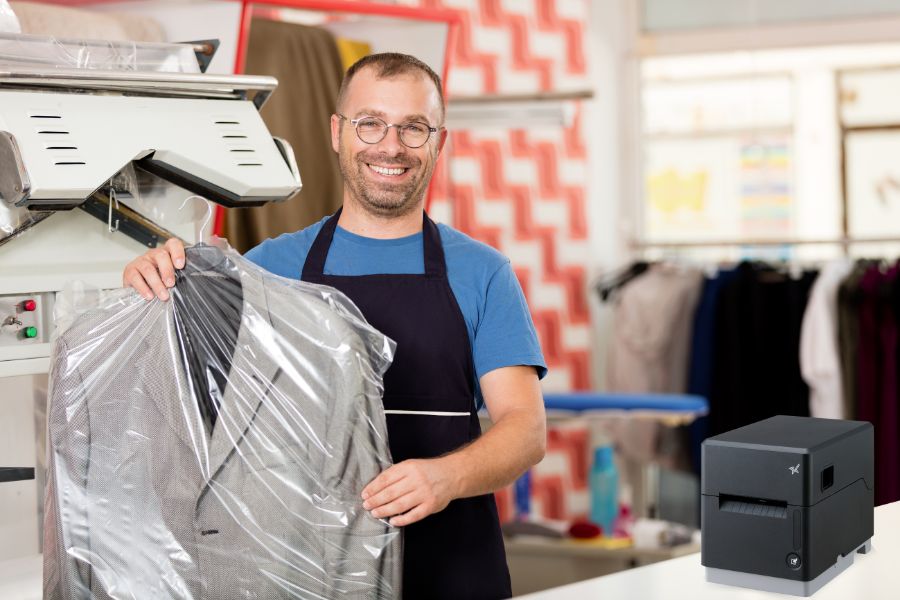
    As long as people cherish luxury fabrics like silk and velvet, rely on sharp business suits to make a lasting impression, or don formalwear for special occasions, the dry cleaning process will remain essential for garment care. Customers turn to dry cleaners not only for the expertise required to handle delicate materials but also for the convenience and reliability that come with professional service. 

    However, times are changing. In the digital age, consumers expect more than just clean clothes—they demand a seamless, efficient, and error-free experience. Outdated practices, such as stapled dry cleaning labels and handwritten tickets, are no longer sufficient to meet these expectations. These methods not only appear antiquated but also increase the likelihood of errors, such as lost items or incorrect orders, which can damage customer trust and loyalty. 

    Updating your labeling and ticketing equipment to meet modern standards can dramatically improve your dry cleaning processes, enhancing accuracy, efficiency, and customer satisfaction in today’s competitive market.

    Printing Can Enhance Each Step of the Dry Cleaning Process

    Modernizing operations with advanced printing technology can significantly improve garment tracking and communication across all stages of the dry cleaning process.

    1. Garment Tagging

    When customers drop off their clothes, dry cleaners tag each item with a unique number so they can accurately identify them. These tags need to withstand the chemicals used in the operation and stay readable throughout dry cleaning processes. It’s common for dry cleaners to purchase prenumbered tags in various colors to help direct items back to the right location after cleaning or to sort items quickly by the day the customer returns to pick them up. 

    However, preprinted tags require an upfront investment and storage in dry cleaning operations where space is at a premium. Preprinted tags could also lead to errors. If two customers come to the counter at about the same time, it’s possible the tags could be switched. 

    Printing tags on demand can overcome those challenges. By choosing tag media and inks that withstand dry cleaning processes, businesses can revise their tagging processes to be customer-specific and accurate. When receiving clothing for cleaning, employees can print tags with the job number, the customer’s name, or other essential information.
    Optimize Dry Cleaning Processes with Print-On-Demand Garment Tracking
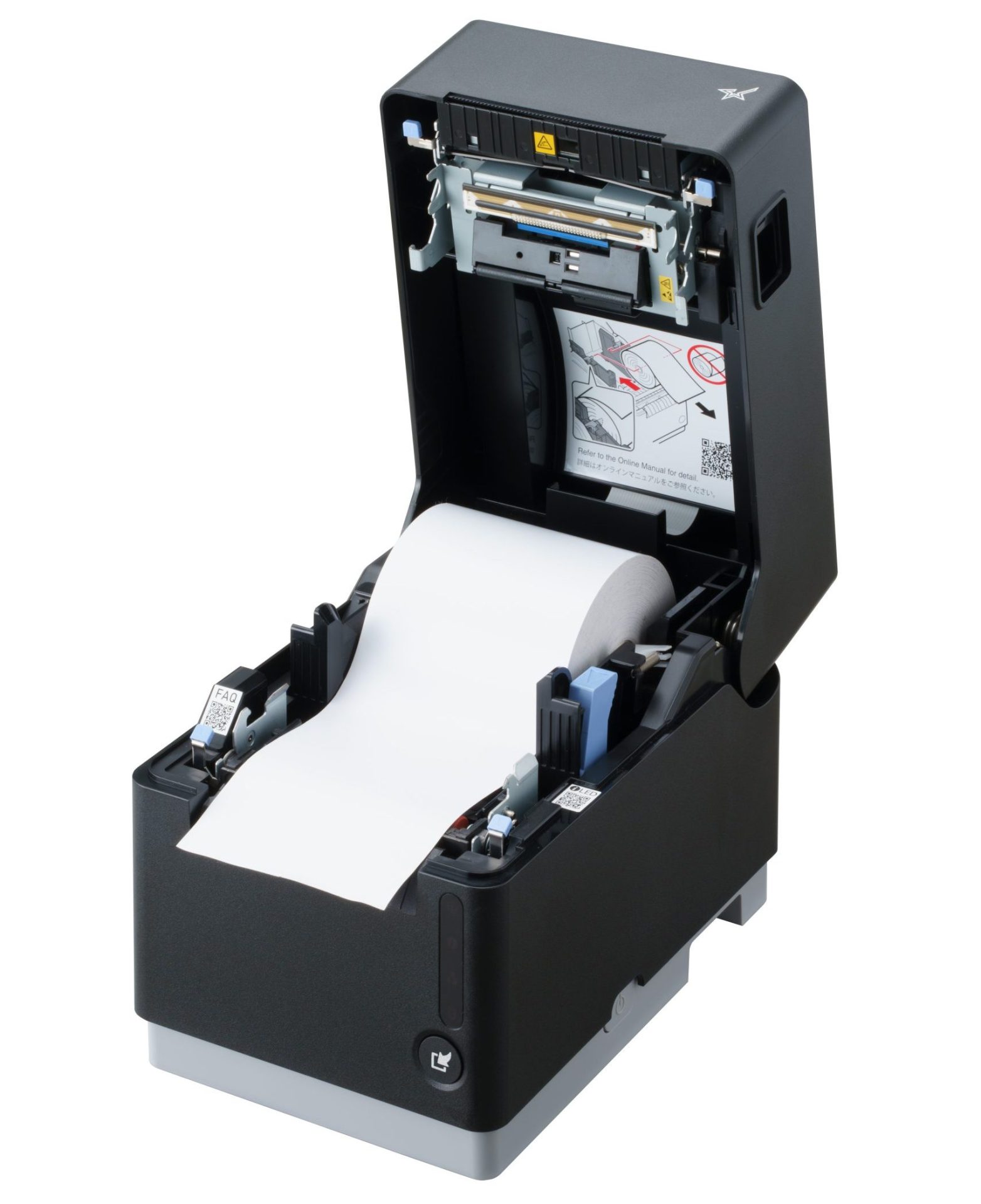
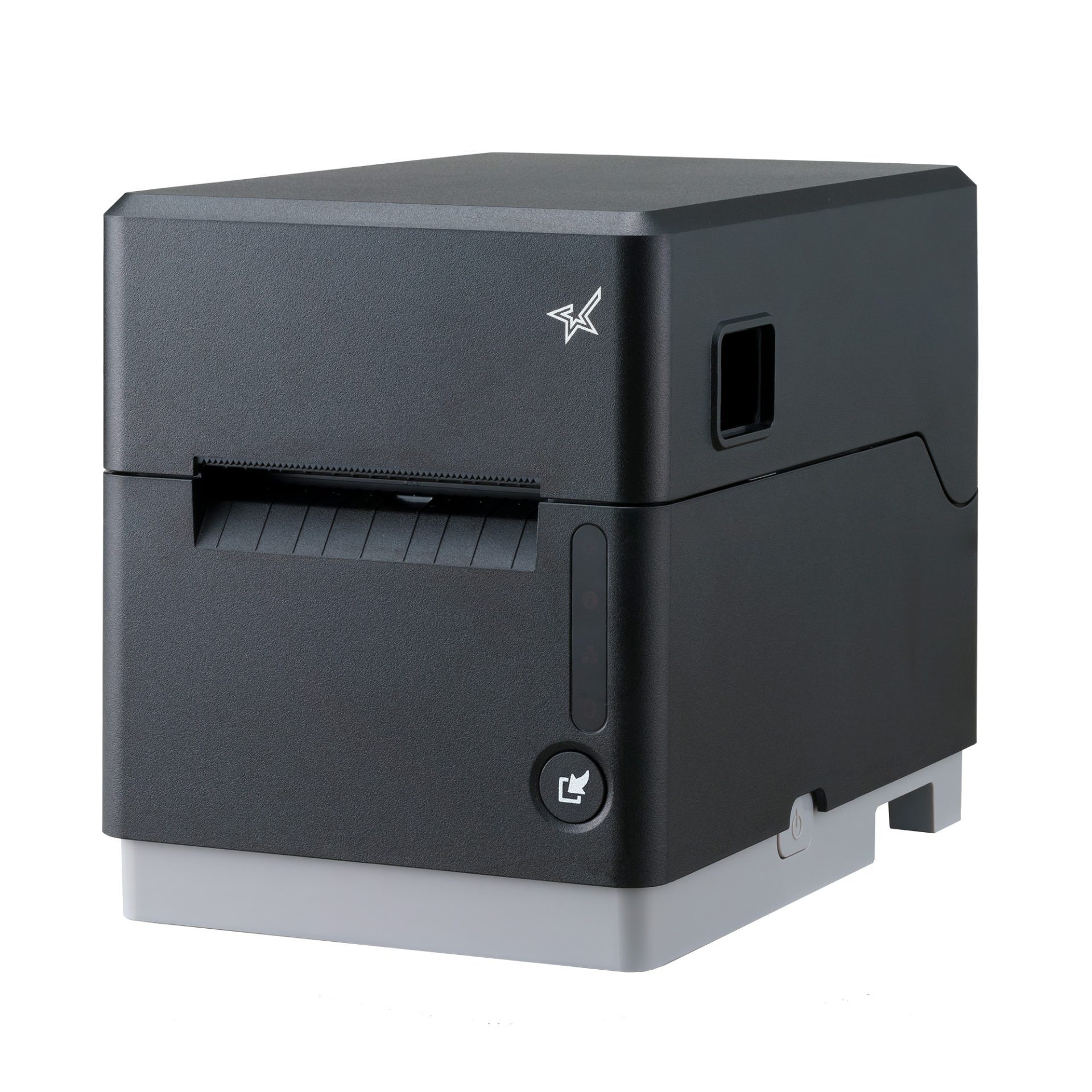
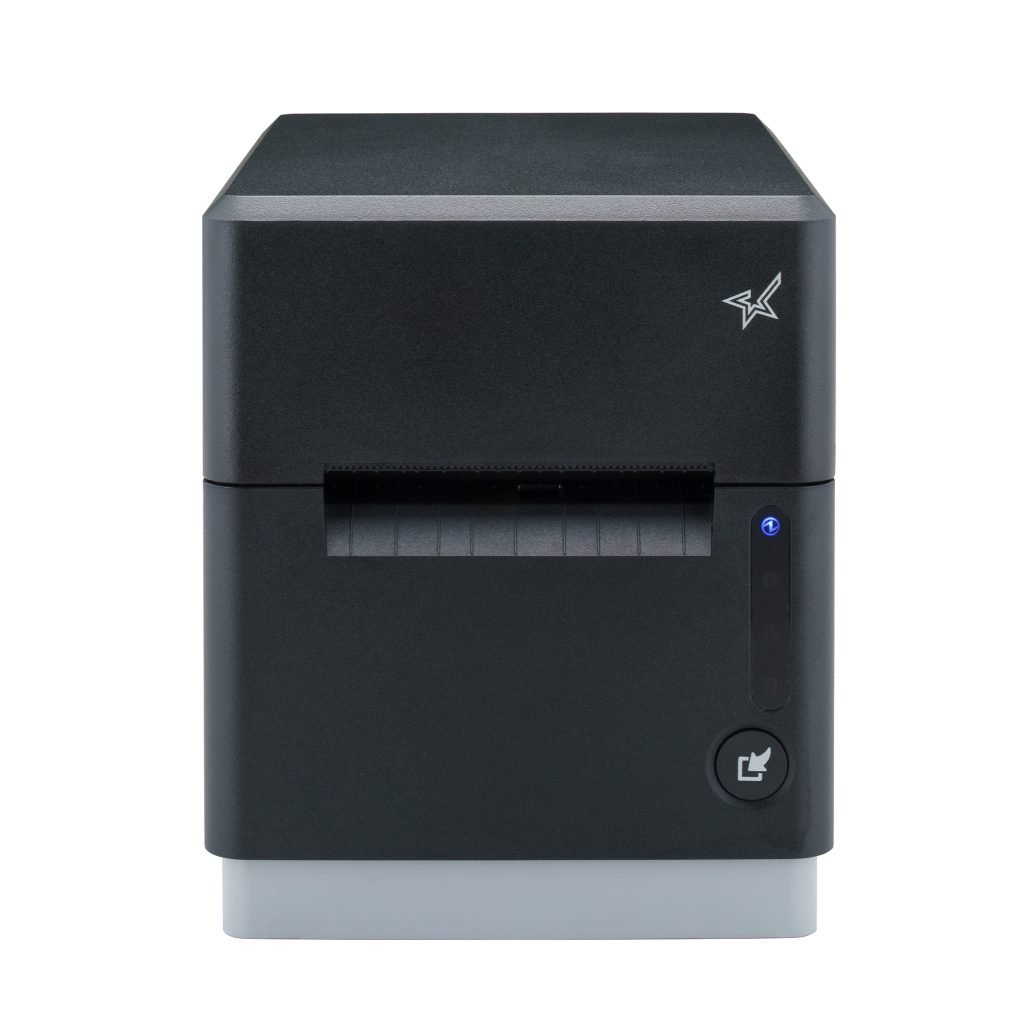
    The mC-Label3 multimedia printer by Star Micronics is perfect for labels.

    mC-Label3 Multimedia Printer

    The Star Micronics mC-Label3 is a versatile multimedia printer that prints a wide range of labels and receipts, including both permanent and repositionable sticky linerless. It features cloud connectivity and innovative technologies like SteadyLAN and TetherLAN for enhanced printing convenience.

    Discover the mC-Label3 >

    2. Inspection

    Before garments proceed to the dry cleaning process, an inspector looks for specific issues that the cleaner must address. The inspector will mark stains that need pretreatment and find tears or missing buttons that the cleaner must document or repair. The inspector typically tags these spots. 

    Equipping inspectors with a printer can enable them to provide clear, detailed instructions on tags, ensuring that cleaners address all issues during the dry cleaning process. This additional layer of precision supports smoother operations and helps ensure customer satisfaction with the final results.

    3. Garment Tracking and Second Inspection

    It’s common for dry cleaners to transport clothing and fabrics that customers drop off at a storefront to a cleaning facility. Dry cleaners often use legacy methods, such as color coding, for tracking items from multiple locations so that they return to the right place on time. 

    However, printing linerless sticky labels that communicate exactly where the job originated and when it’s scheduled for pickup can optimize the process. With linerless dry cleaning labels, there’s no backing to remove, so employees can print the label and immediately apply it to the garment’s plastic wrapping. This method also eliminates waste from silicone label backing, reducing clutter in work areas. Using repositionable linerless sticky labels also means the labels stay in place but are easier to remove, keeping the garment’s plastic casing neat and intact.

    After cleaning, an inspector will ensure the job meets quality standards. If not, the inspector will mark the garment for further care. Printing a label or tag can provide the information necessary to correct issues and facilitate garment tracking so employees can bundle the item with the rest of the customer’s order in time for pickup.

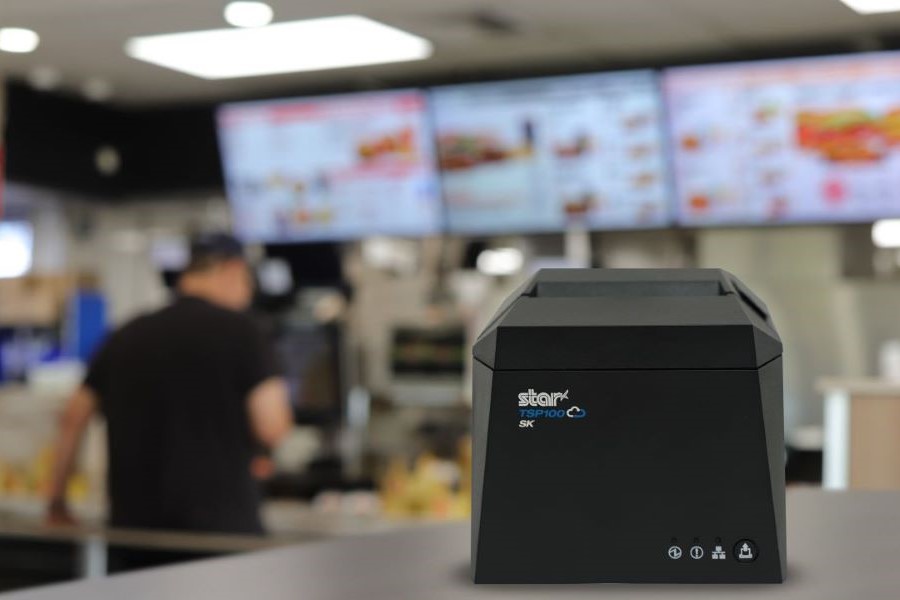
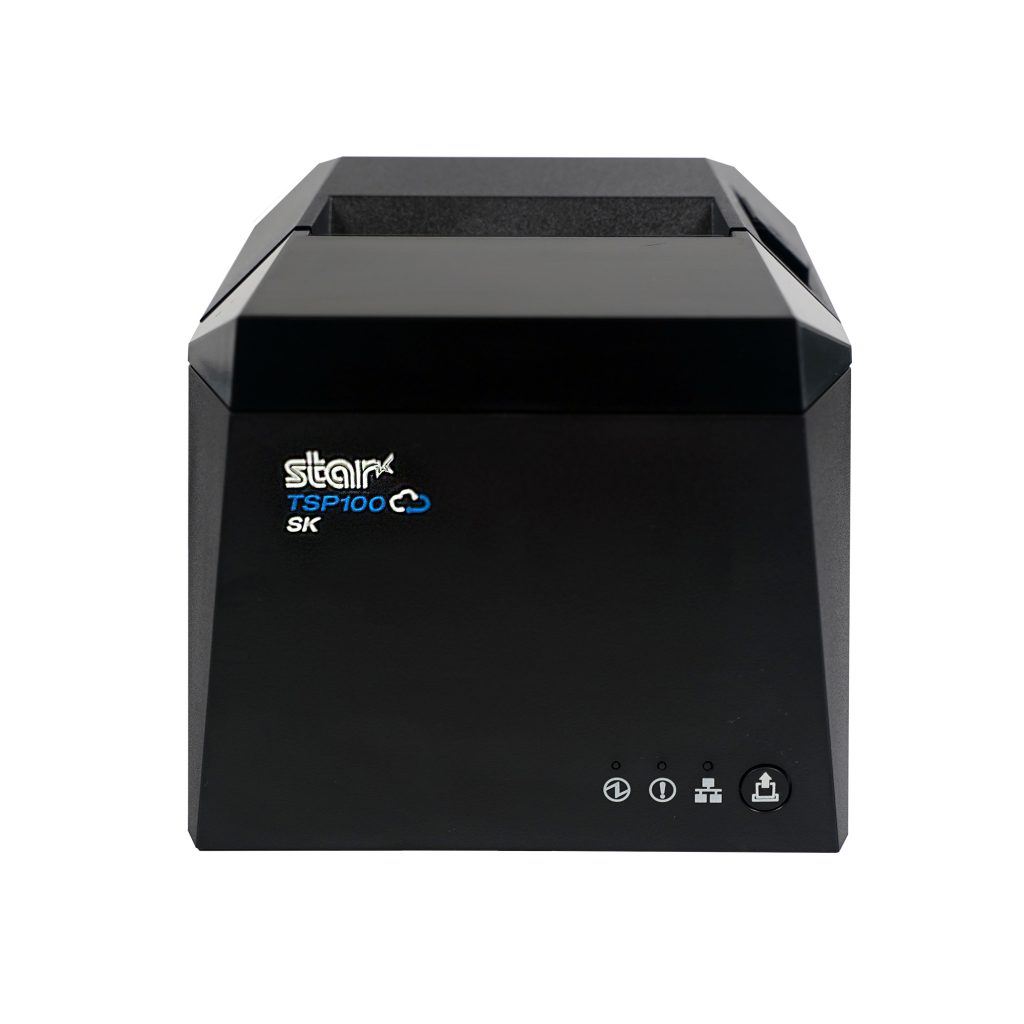
    TSP143IV SK Sticky Label Printer

    The TSP143IV SK by Star Micronics sets a new standard for compact, eco-friendly thermal linerless label printing, offering advanced connectivity options like Wi-Fi and AOA, and efficient, residue-free labels for diverse business needs.
    Find out more >

    When clean clothes and fabric items return to the dry cleaner’s storefront, employees need to organize them so they can find them quickly when customers arrive. Dry cleaning labels on the items will help them hang them in the proper location and ensure that all items in the order are together. 

    When customers arrive, employees take payment and provide customers with a receipt. The receipt is proof that the customer paid their bill, but dry cleaners can leverage it to engage customers and incentivize return business. The right printer will enable dry cleaners to print receipts that include coupons or discounts for the next visit, give customers instructions to enroll in the dry cleaners’ loyalty program, or encourage customers to provide feedback with a brief survey. 

    A multifunction printer will also enable dry cleaners to print custom labels, which can be used to increase brand awareness and add professional finishing touches when returning items to customers.
    Technology Trends You Need to Implement into your Wash-and-Fold or Laundromat Business

    Run your competitors through the rinse cycle using the POS technology explained in this helpful guide!

    Take the Next Step for Your Dry Cleaning Process

    Printing can modernize and optimize each step of the dry cleaning process, resulting in more efficient garment tracking, accurate orders, and customer satisfaction. To learn more about printers that are ideal for dry cleaning operations and adapt to your specific requirements, contact us

    Additional Resources

    Star Micronics offers several options for dry cleaning label, tag, and receipt printing. Follow these links to learn more:

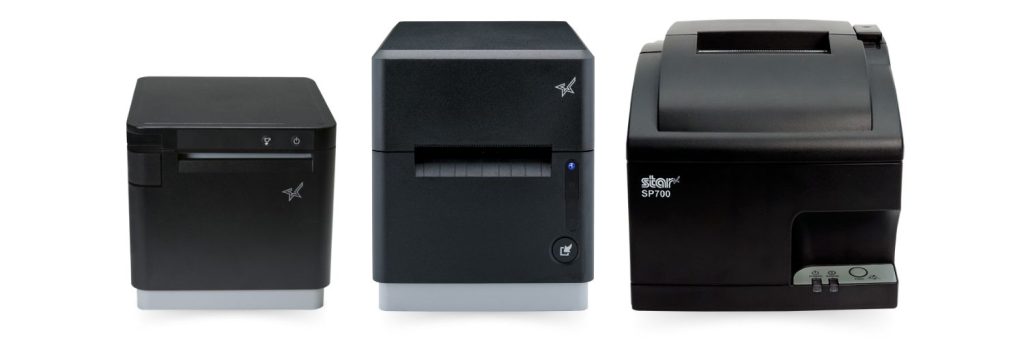
    • mC-Label3This multifunction printer enables printing on a variety of media, including linerless labels, both permanent and removable sticky linerless, traditional die-cut labels, and thermal receipts. The mC-Label3 is also cloud-ready. It connects with Star Micronics Cloud Services and Label Builder, so you can design labels and receipts and print them on demand without an internet connection using its One Touch multifunction button. 
    • TSP143IV SKThis thermal linerless sticky label printer is compact, features multiple connectivity options, and can accommodate paper widths of 80 mm, 58 mm, and 40 mm. 
    • SP742If ticket stapling is still part of your workflow, the SP742 impact printer is the optimal choice for producing clear, durable receipts that withstand the rigors of the dry cleaning process. This high-speed, reliable impact printer performs well where heat and humidity are concerns. Plus, it features multiple connectivity options and easy maintenance.
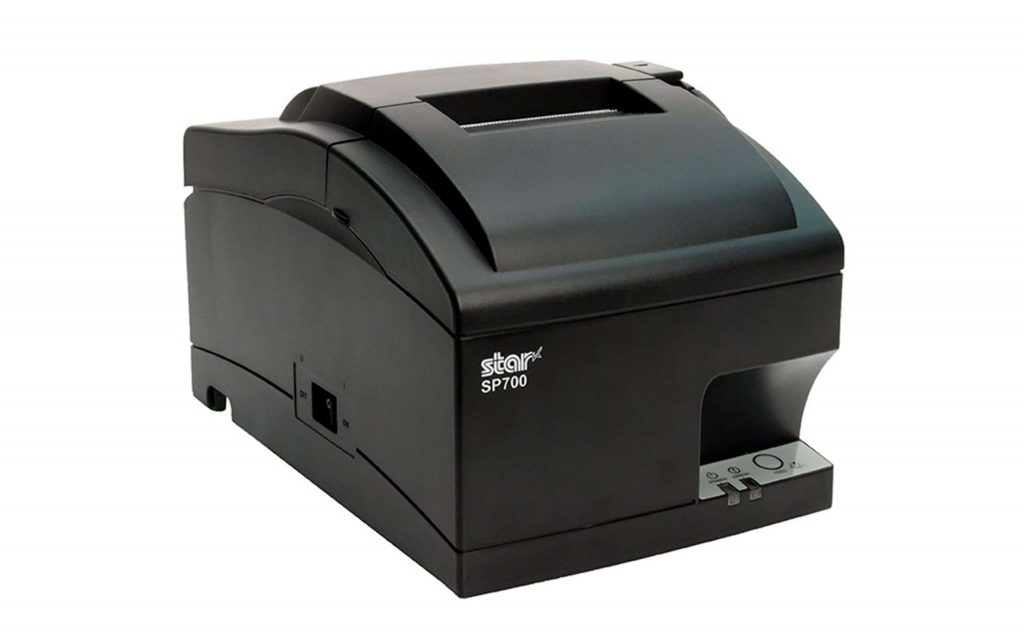
    SP700 Impact Printer

    With its robust design and consistent print quality, the SP700 impact printer enhances both operational efficiency and customer satisfaction by streamlining order management.


    Explore the SP700 >

    Ready to boost your dry cleaning workflow?

  • Mastering Prop 65 Compliance for Resellers

    Mastering Prop 65 Compliance for Resellers

    In this episode of the Rising Stars Podcast, “Prop 65 Compliance Made Simple for Resellers,” host Kate Orara shines a light on a topic every Value-Added Reseller (VAR) and Independent Software Vendor (ISV) in the retail and restaurant technology space should know: California’s Proposition 65. With her expertise as Star Micronics’ Partner Development Manager, Kate delivers practical insights to help resellers navigate this critical regulation with ease.

    This episode covers key elements of Prop 65 compliance, including identifying products with listed chemicals, understanding the latest BPA-free receipt paper requirements, and ensuring proper warning labels to protect your business and customers.

    Stay Ahead of Prop 65 Compliance Challenges

    Kate offers actionable steps for VARs and ISVs to audit their inventory, collaborate with manufacturers, and educate their teams to stay compliant with Prop 65 updates. By tuning in, you’ll gain strategies to safeguard your business while building trust with your customers.

    Whether you’re new to Prop 65 or looking to refine your compliance strategy, this episode is a must-listen for resellers who want to maintain their competitive edge and protect their bottom line.

    Read our related blog post, “Staying Compliant with Prop 65: What VARs Need to Know About BPS and Paper Inventory” >

    Loving the podcast? Subscribe now, and let us know what you think by leaving a review!

    Stay up-to-date on all things Star, don’t forget to follow us on X, LinkedIn, Facebook, Instagram, and YouTube.

    The Rising Stars Podcast

    Immerse yourself in the world of point-of-sale (POS) with the Rising Stars Podcast by Star Micronics, hosted by industry pro, Kate Orara. Twice a month, we explore the fascinating journeys of innovators and businesses navigating the challenges of POS technology’s rapid pace.

    In every episode, Kate Orara, Star Micronics’ Partner Development Manager, discusses emerging retail technology trends and strategies with global industry giants. She’s spent her entire career meeting all the right people, and now listeners everywhere can benefit from this vast network of channel gurus.

    Always leading and always innovating, Star Micronics, a pioneer in POS and customer experience technology for over 60 years, welcomes you to join us in shaping a brighter future in the retail, hospitality, and cannabis industries.

    Want more industry news?

    Episode Transcript:

    [Music]

    Kate Orara: Hey there, retail tech enthusiasts! Welcome to the Rising Stars Podcast, your go-to for all things retail tech and point of sale. I’m Kate Orara, Partner Development Manager at Star Micronics, and I’m excited to guide you through this journey. Here, we dive into the latest innovations shaping the retail, hospitality, and cannabis industries. So whether you’re a techie or a business owner, this is your backstage pass to insider knowledge. Join me and the Star Micronics team as we innovate and rise together.

    Today, we’re diving into a topic that might not sound exciting at first, but trust me—if you’re a reseller in the retail technology space, this is something you need to know. We’re talking about California’s Proposition 65, also known as Prop 65. Don’t hit pause or exit just yet! Please give me a little bit of your time. This isn’t just about regulations—it’s about protecting your business, your customers, and, let’s be honest, your bottom line.

    By the end of this episode, you’ll have a clear understanding of what Prop 65 is, why it matters to you as a reseller, and how you can stay compliant with both old and new rules. I’ll even share a great resource from Star Micronics that breaks it all down for you. So grab your coffee, settle in, and let’s get started!

    All right, what is Proposition 65? Let’s start with the basics. Prop 65 is a California law that’s been around since 1986. Its goal? To protect the public from chemicals that can cause cancer, birth defects, or other reproductive harm. Now, what does that mean for businesses? If a product you sell contains one of the chemicals on California’s Prop 65 list, you’re required to provide a clear warning to your customers. Think of it as California’s way of saying, “Transparency is key!”

    But here’s the kicker: that list isn’t static. It’s updated annually, and as of now, it includes over 900 chemicals.

    If you’re a reseller, you might be thinking, “Well, I don’t manufacture the products, so this isn’t my problem.” Wrong! It is your problem because you’re the one putting these products into the hands of your end-users. If the products you sell don’t meet Prop 65 requirements, you could face hefty fines or even lawsuits.

    For example, one area of concern is receipt paper. Did you know that some thermal receipt papers contain BPA, a chemical on the Prop 65 list? If your end-users are unaware of this, it could spell trouble not just for them but for you, too.

    All right, so there have been some new updates to Prop 65. BPA has been a hot topic lately, especially in the context of receipt paper. Manufacturers are now producing BPA-free alternatives, but it’s up to resellers like you to ensure your inventory aligns with these changes. Another update is how warnings are delivered. It’s no longer enough to have vague, generic labels—the warnings must be specific about the chemical and the potential harm.

    To my resellers, what does this all mean for you? Here’s the game plan, and it’s a four-step process:

    1. Audit Your Inventory: Take stock of what you’re selling. If any of your products contain Prop 65-listed chemicals, make sure you know which ones.

    2. Work with Manufacturers: Stay in close communication with your suppliers. Ask for documentation that confirms compliance with Prop 65.

    3. Label Clearly: Remember, transparency is key. If a product requires a warning, make sure it’s properly labeled before it reaches your customers.

    4. Educate Your Team and Customers: Make sure your sales team understands these requirements, and don’t hesitate to pass that knowledge on to your end-users.

    Now, I know this sounds like a lot, but you’re not in this alone. The team at Star Micronics has put together a fantastic blog post that dives into Prop 65 compliance, particularly when it comes to receipt paper. So definitely read it when you have a minute. You can find it in the description notes of this episode, or simply go to Star’s website, navigate to the resources tab, and select the Star POS Blog. Star explains the regulations in plain English and even offers tips on managing BPA-free inventory.

    Compliance with Prop 65 might feel like a hassle, but think of it as an investment in your business. By staying ahead of these regulations, you’re not just protecting yourself—you’re building trust with your customers and showing them that you care about their safety. So take the time to review your processes, educate your team, and use resources like the Star blog to guide you.

    That’s it for today’s episode! Thanks for tuning in to the Rising Stars Podcast! If you found this episode helpful, please share it with your network, and don’t forget to subscribe so you never miss an update. Until next time, stay compliant, stay informed, and make sure to always be leading and always be innovating.

    And that is a wrap for this episode of the Rising Stars Podcast. A huge thanks to our incredible listeners for tuning in. Don’t forget to subscribe, rate, and leave a review. Your feedback fuels our journey to bring you the best in retail tech. Stay connected with us on social media for updates and behind-the-scenes content. As you sign off, remember, the future of retail technology is in our hands, and together, we are shaping it. Keep innovating, keep rising, and until next time, this is Kate Orara signing off. Together we rise.

    [Music]

  • Build a Visitor Badge System for Better Guest Experiences

    Build a Visitor Badge System for Better Guest Experiences

    Many organizations have established processes to identify visitors and control access within their facilities via visitor badge systems. Government buildings and schools require procedures to monitor who has entered the building and ensure everyone has registered, helping to keep their facilities and people secure. Hospitals and long-term care facilities require visitor badge printers as a part of a system to protect patients and to help control access to restricted areas. 

    Corporate enterprises issue badges to alert employees to the presence of visitors and ensure they don’t enter sensitive or unsafe areas. Whatever the setting, organizations across a wide range of industries have determined that identifying visitors and providing information about them on badges helps organizations operate more efficiently and securely.

    How to Increase Badge-Issuing Efficiency

    While visitor badges are an integral part of a comprehensive access control strategy, the process of issuing them may be inefficient and interfere with positive guest experiences. Issuing badges manually takes time, and handwritten badges may be difficult to read. Moreover, it’s often impractical to include a visitor photo or other key details when badges are created by hand.

    Badge solutions that incorporate purpose-built software, cameras, scanners, and printers streamline these processes. The system can allow guests to scan their ID to auto-populate fields on a badge, use an integrated camera to include a photo, and automatically add details like permissions and entry time. These systems also create a log for real-time tracking and auditing purposes. 

    While issuing badges in most cases will continue to require an employee to check credentials and ensure policy compliance, a visitor badge system saves time, keeps lines short, and improves the overall user experience.

    Features of the Optimal Visitor Badge Printer

    A visitor badge printer is a key component of any badge solution. To ensure efficient processes and high-quality badges, printers need the following features:

    1. Print Width

    You need the capability to print the right-sized labels so your team can easily read information and confirm that the badge is authentic. The ability to print on varying widths from the same printer is even more efficient, depending on your purposes.

    2. Print Quality and Speed

    A good visitor badge printer balances quick output with sharp, clear results to avoid bottlenecks while maintaining professionalism. 

    3. Flexible Connectivity

    Not all entrances to your facilities allow for a wired network connection to your software. Printers with wireless or Bluetooth connectivity options enable printing wherever necessary. 

    4. Access to Label Templates

    Printers that allow you to build and store pre-designed templates will make badge printing easier, especially when visitors have varying levels of permissions or unique needs.

    5. Hardware Design

    Choose a compact, space-saving printer with adaptable power options to suit your processes.

    6. Easy User-Friendly Maintenance

    A visitor badge printer with easy, user-friendly maintenance is essential for minimizing downtime and ensuring smooth operations. Features like toolless repair and straightforward upkeep allow staff to quickly address issues, keeping the badge-issuing process efficient and hassle-free.

    The mC-Label3 multifunction label and receipt printer from Star Micronics can fit media of multiple widths and types.
    The mC-Label3 multimedia printer by Star Micronics offers simple, user-friendly maintenance alerts.

    Choose the Right Label Media for Your Visitor Badge System

    The type of label media used is another crucial factor in building an efficient system.  Peel-and-stick die-cut labels, a common option, can slow down processes, extend visitor wait times, and generate waste from backing materials. These label rolls also need to be changed more often because they contain labels plus silicone backing, giving fewer labels per roll. Business owners will also need to keep more rolls stocked in-house, taking up valuable storage space. 

    Because of the drawbacks of using linered labels, many organizations are choosing linerless labels. These labels exit the printer ready to apply—there is no silicone backing to peel off. This allows employees to issue badges more quickly and efficiently. It’s also a more sustainable choice for the system, reducing paper waste and allowing organizations to store more labels per shipment, minimizing transportation emissions.

    Find out more about more about the eco-friendly advantages of linerless labels here >

    Evaluate Your Current Processes—and Your Options

    Transitioning from manual processes or outdated, legacy systems to a modern efficient badge solution will save time, streamline workflows, and help visitors get where they need to go with less friction and in less time. 

    Star’s mC-Label3 multimedia printer has all of the features you need to generate high-quality, easily readable badges that are customized to your needs. It allows flexible print widths and accommodates linerless sticky labels (whether diamond or full adhesive), permanent linerless labels, die-cut labels, and continuous labels. It also features multiple connectivity options, whether connecting requires wireless or wired options. 

    Designed with user-friendly maintenance in mind, the mC-Label3 offers toolless repair and provides maintenance alerts with QR codes that guide users to detailed instructions on what the printer needs. This multifunctional printer includes One Touch Label, allowing your team to print custom, pre-designed label templates stored directly in the printer—even without a network connection.

    Visit the mC-Label3 page for more information.

    mC-Label3 Multimedia Printer

    The Star Micronics mC-Label3 is a versatile multimedia printer that prints a wide range of labels and receipts, including both permanent and repositionable sticky linerless. It features cloud connectivity and innovative technologies like SteadyLAN and TetherLAN for enhanced printing convenience.

    Discover the mC-Label3 >

    Learn More About Visitor Badge Printers From Star

  • Choosing the Best Thermal Receipt Printer for Your QSR

    Choosing the Best Thermal Receipt Printer for Your QSR

    Providing fast, efficient customer service and communicating orders quickly and accurately to food prep areas are absolutely vital to a quick-service restaurant (QSR) operation. Thermal receipt printers will help you achieve those objectives if you choose a model with the right features and design for your operation. 

    Answer these questions to narrow your choices decision-tree-style to make a confident thermal receipt printer choice for your business.

    What Do You Need the Thermal Printer to Do?

    The best place to start with any technology purchasing decision is by identifying gaps in your operation or developing plans for a more efficient operation. Are you looking for an efficient printer for receipts? Do you plan to deploy printers in the kitchen? Or do you need a model designed for both uses? 

    Do you need a printer that can generate labels for efficient online order fulfillment in addition to printing receipts and chits? Once you define your needs, you can narrow your choices to thermal receipt printer models designed for your applications.

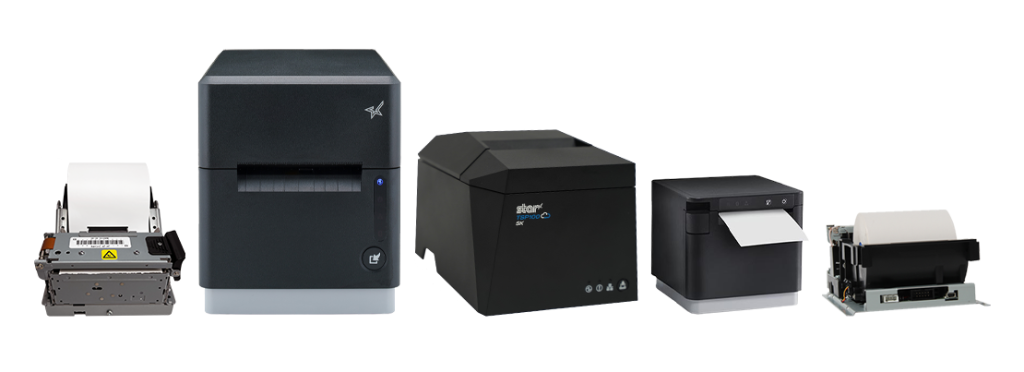
    Star Micronics has the kitchen printers you need for your restaurant, QSR, and cafe, including the SP742 impact printer, the mC-Label3 multimedia printer, and the mC-Print3 thermal printer.

    Where Do You Need Printers?

    Another question you need to ask before you begin to search for point of sale (POS) printers or kitchen printers is where it makes the most sense to implement them in your operation. 

    In a modern, fast-paced QSR, it’s not practical for employees to walk to a wired printer to generate a receipt for drive-thru customers or pick up kitchen orders. If you can save steps and time by deploying printers where wired connections aren’t possible, narrow your choices to printers that can connect via WLAN, Wi-Fi, or Bluetooth. 

    Restaurants choose impact printers for hot, humid kitchens that could impact the quality of thermal-printed chits and receipts. Impact printers remain a good choice; however, more kitchens are now heat-controlled, allowing restaurants to use thermal printers for better speed and connectivity options. 

    Chef in modern, professional kitchen looking at ticket from mC-Print3 thermal receipt and restaurant printer by Star Micronics.

    If you plan to deploy your printer in the kitchen, limit your choices to models with IP ratings for resistance to damage from dust, dirt, and liquid splashes or sprays to minimize repair and replacement costs. Easy maintenance is also a must!

    Learn “Why Thermal Printers Have A Place In Today’s Modern Kitchens” >

    Where Are Customers Placing Orders?

    The days of only taking orders at the counter are over. Drive-thru traffic rose 30% from 2019 to 2022 and continues. Nearly 45% of QSRs plan to add self-service kiosks this year, and restaurants continue to take orders from third-party ordering and delivery services. Plus, many establishments are now taking orders from their own websites or apps. 

    While giving customers the freedom to choose how they interact with your restaurant can increase satisfaction, loyalty, and revenue, it also creates operational complexity. A printer that can print orders, labels, and receipts directly from a web application or cloud-based software eliminates the need for additional devices and simplifies the IT environment necessary to make an omnichannel operation work.

    How Fast Do You Need to Print Labels and Receipts?

    Your customers expect fast, accurate service. Delaying food prep because a kitchen printer queue is backed up or serving the wrong order because employees mixed up slow-printing chits can hurt your brand and negatively impact loyalty. Narrow your choices only to options with print speeds that can keep up with peak traffic. 

    The Best Thermal Receipt Printer Choice

    After you answer these questions, you’ll have a clearer picture of the best thermal receipt printer for your business. Following this decision-making process may guide you straight to the best printers for business — or convince you that you need more help to find the right model for your restaurant. 

    The good news is that Star Micronics has a full line of printers for QSRs with models that meet every need–backed by world-class support. Contact us to connect with an expert who knows your industry and printer technology options and can help you explore your options.

    Star Micronics has a wide range of receipt, label, and kiosk printers for ChromeOS and Google Chromebooks.

    Additional Resources

    Learn more about these Star Micronics products for your QSR: 

    • The mC-Label3 Multifunctional Printer prints permanent or repositionable sticky labels on linered or linerless media and also provides thermal receipt printing. 
    • The mC-Print3 series of thermal receipt printers are lightning-fast with robust connectivity options, CloudPRNT Next capability, and compact, splash-proof designs–perfect for demanding, high-traffic environments.
    • The TSP143IV SK is a compact, sticky linerless label printer that can help increase efficiency in order preparation and fulfillment processes. Linerless labels are also the more eco-friendly label media.
    • The TSP143IV thermal receipt printer delivers high print quality and offers multiple connectivity options and high-speed printing. 
    • Star’s CloudPRNT technology stores and creates print jobs and offers cloud-based printing capabilities, allowing QSRs to print directly from web apps and cloud applications.
    • The mPOP® multifunction “mobile point of purchase” system combines a printer and cash drawer into one sleek solution.
    • The SP742 impact printer is a high-speed, reliable solution for hot, humid kitchens. It features multiple connectivity options, including cloud-based printing.

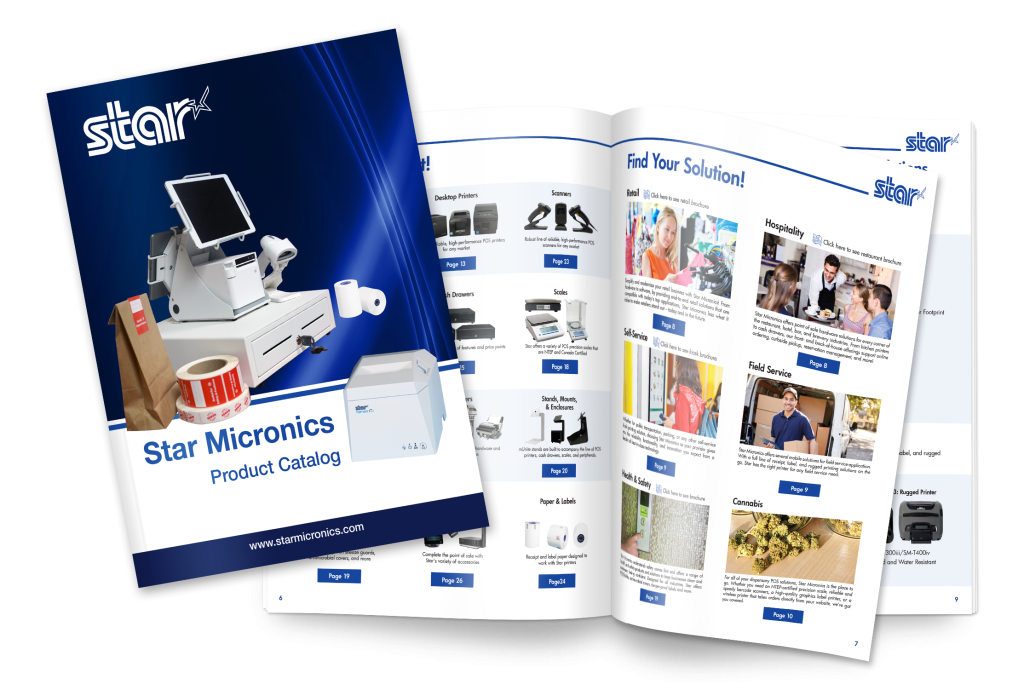
    Star Micronics Product Catalog

    Explore Star’s Product Catalog today to discover the perfect printer solutions tailored for your QSR’s unique needs.

    Find Your Thermal Receipt Printer Today!

  • Smarter Cafe Management with Linerless Sticky Labels

    Smarter Cafe Management with Linerless Sticky Labels

    In this episode of the Rising Stars Podcast, “Smarter Cafe Management with Linerless Sticky Labels,” host Kate Orara uncovers the many benefits of linerless sticky label printers for cafes and coffee shops. As Partner Development Manager at Star Micronics, Kate shares her expertise on how this technology can streamline daily operations while offering a sustainable solution for labeling.

    This quick episode highlights the key benefits of linerless printing, from speeding up order labeling and minimizing customer wait times to reducing environmental waste by eliminating non-recyclable liners. Kate discusses how these printers offer flexible label sizing, catering to a variety of needs from small coffee cups to larger takeout containers, making them a game-changer for both front-of-house and back-of-house operations.

    Power-Up Your Cafe with Linerless Label Printing

    Listeners will gain insights into how linerless sticky label printers can boost productivity, enhance customer service, and contribute to sustainability efforts. Kate also emphasizes the long-term cost savings and operational advantages that make these printers a must-have for any cafe looking to stay competitive in today’s fast-paced environment.

    Whether you’re looking to enhance order management or explore eco-friendly solutions, this episode provides valuable guidance on making the switch to linerless technology. With real-world examples and expert advice, Kate makes the case for why linerless sticky labels are the future of efficient cafe management.

    Subscribe and listen now to discover how linerless sticky label printers can elevate your cafe’s operations.

    Read the blog post, “Why Every Café and Coffee Shop Needs a Linerless Sticky Label Printer,” here >

    Loving the podcast? Subscribe now, and let us know what you think by leaving a review!

    Stay up-to-date on all things Star, don’t forget to follow us on X, LinkedIn, Facebook, Instagram, and YouTube.

    The Rising Stars Podcast

    Immerse yourself in the world of point-of-sale (POS) with the Rising Stars Podcast by Star Micronics, hosted by industry pro, Kate Orara. Twice a month, we explore the fascinating journeys of innovators and businesses navigating the challenges of POS technology’s rapid pace.

    In every episode, Kate Orara, Star Micronics’ Partner Development Manager, discusses emerging retail technology trends and strategies with global industry giants. She’s spent her entire career meeting all the right people, and now listeners everywhere can benefit from this vast network of channel gurus.

    Always leading and always innovating, Star Micronics, a pioneer in POS and customer experience technology for over 60 years, welcomes you to join us in shaping a brighter future in the retail, hospitality, and cannabis industries.

    Want more industry news?

    Episode Transcript

    [Music]

    Kate Orara: Hey there, retail tech enthusiasts. Welcome to the Rising Stars podcast, your go-to source for all things retail technology and the ever-evolving world of point of sale. I’m your host, Kate Orara, Partner Development Manager at Star Micronics, and I am thrilled to be your guide on this exciting journey. Here at Rising Stars, we’re not just keeping up with the trends—we’re setting them. We dive deep into the tech landscape with global industry leaders, unpacking strategies, and discussing the latest innovations that shape the future of retail IT. Whether you’re a tech aficionado, business owner, or just curious about the dynamic world of retail, this podcast is your backstage pass to insider knowledge. And hey, it’s not just about the tech, it’s about the community. Join me and the Star Micronics team as we lead and innovate, shaping a brighter future for the retail, hospitality, and cannabis industries, as well as beyond. Together, we rise. So hit that subscribe button, stay in the loop, and let’s make waves in the retail tech space. This is the Rising Stars podcast, where innovation meets inspiration. Let’s rise together.

    Kate Orara: Hey y’all, welcome back to the Rising Stars podcast. I’m your host, Kate Orara, and in today’s episode, we’re diving into a game changer for cafes and coffee shops—the linerless sticky label printer. If you’ve ever wondered why every cafe needs one, you’re in the right place—or shall I say, you’re listening to the right podcast. We’ll actually be summarizing an insightful blog from Star Micronics that breaks down the benefits. If you’re not already subscribed to Star’s blog, be sure to visit Star Micronics’ website, go to the resources tab at the top, and select Star POS Blog. Scroll all the way down to the bottom of the page and complete the two-field form so you never miss an insightful piece from the resourceful marketing team at Star.

    Kate Orara: With that being said, grab your favorite brew—of the coffee variety—and let’s get started.

    Kate Orara: First off, what’s all the fuss about linerless sticky label printers? Well, imagine a world where labeling your coffee cups, food items, and merchandise is not only quick and easy but also eco-friendly. That is the power of linerless printing technology. The blog emphasizes a key point: efficiency. Picture a bustling morning rush in your cafe—orders are flying, and every second counts. With a linerless printer, you can print labels faster than ever before, reducing wait times and keeping your customers happy. That’s what it’s all about, right?

    Kate Orara: But it’s not just about speed—it’s also about versatility. Linerless printers can produce labels of various lengths, which is perfect for everything from small espresso cups to large venti-to-go containers. Plus, they’re compatible with a range of label materials, ensuring durability without the waste of traditional label rolls.

    Kate Orara: Now, let’s talk about waste reduction. Traditional label rolls come with a backing material called liner, and with linerless printing—well, you see where we’re going—that liner is not often recyclable. So by switching to linerless printing, cafes can significantly reduce their environmental footprint. It’s a win-win for both your business and the planet.

    Kate Orara: But wait, there’s more. Linerless printers aren’t just for labeling cups and containers—they can also streamline your back-of-house operations. From labeling ingredients to organizing inventory, these printers are a game changer for cafe management.

    Kate Orara: So why aren’t all cafes jumping on the linerless bandwagon? Well, like any technology, there is an initial investment involved. But as Star’s blog points out, the long-term benefits far outweigh the upfront costs. Think of it as an investment in the future of your cafe.

    Kate Orara: So, to wrap up, it’s clear that linerless sticky label printers are revolutionizing the way cafes and coffee shops operate. From boosting efficiency to reducing waste, these devices are truly a must-have for any modern cafe looking to stay ahead of the curve.

    Kate Orara: That’s it for today’s episode of the Rising Stars. I hope you’ve enjoyed our dive into the world of linerless printing. Just a reminder, be sure to check out the full blog on Star Micronics’ website for more details. And do not forget to subscribe so you can get all sorts of great information on a regular basis. Until next time, keep brewing excellence in your cafe.

    Kate Orara: And that’s a wrap for this episode of the Rising Stars podcast. A huge thanks to our incredible listeners for tuning in, and to our phenomenal guests for sharing their insights. Don’t forget to subscribe, rate, and leave us a review. Let us know what you want to hear more about. Give us your feedback, because it fuels our journey to bring you the best in retail technology. Stay connected with us on social media for updates and behind-the-scenes content. As we sign off, remember, the future of retail technology is in our hands, and together, we’re shaping it. Keep innovating, keep rising, and until next time, this is Kate Orara signing off. Together, we rise.

    [Music]

  • The Easy Way to Implement Library Book Barcodes and Maximize Their Benefits

    The Easy Way to Implement Library Book Barcodes and Maximize Their Benefits

    Implementing library book barcodes offers readers and librarians the best of both the physical and digital worlds. Despite the trend toward digital information, physical books remain the preferred choice for many. 

    Professionals using reference books with maps or schematics often find it easier to see the entire image in a physical book rather than scrolling on a screen. Students may also benefit more from reading physical books. A Cambridge study reported in Yahoo! News found that students reading printed material comprehend six to eight times better than those reading from digital devices.

    Additionally, many people who read for pleasure simply enjoy the tactile experience of turning pages as they anticipate the next sentence in a thriller or romance.

    The continued demand for printed books underscores the importance of libraries to their communities. However, as more books join the classics and centuries of reference materials on the shelves, the task of classifying, organizing, and protecting them becomes increasingly complex. Library book barcodes simplify the management of these physical assets, making storing, organizing, and tracking books easier.

    The Benefits of Library Book Barcodes

    When library administrators choose to barcode library books and other assets in their collections, they take a major step toward greater efficiency and visibility. Using barcodes for library books optimizes:

    Inventory Management

    Scanning a permanent barcode label on a library book informs the library’s system that the title is on the shelf and available for patrons to borrow. Additionally, when librarians scan library book barcodes upon return, their management system can direct them to the exact floor, stack, and shelf for reshelving.

    Barcodes for library books streamline inventory management by providing a digital representation of all titles, saving time, and ensuring proper storage and display.

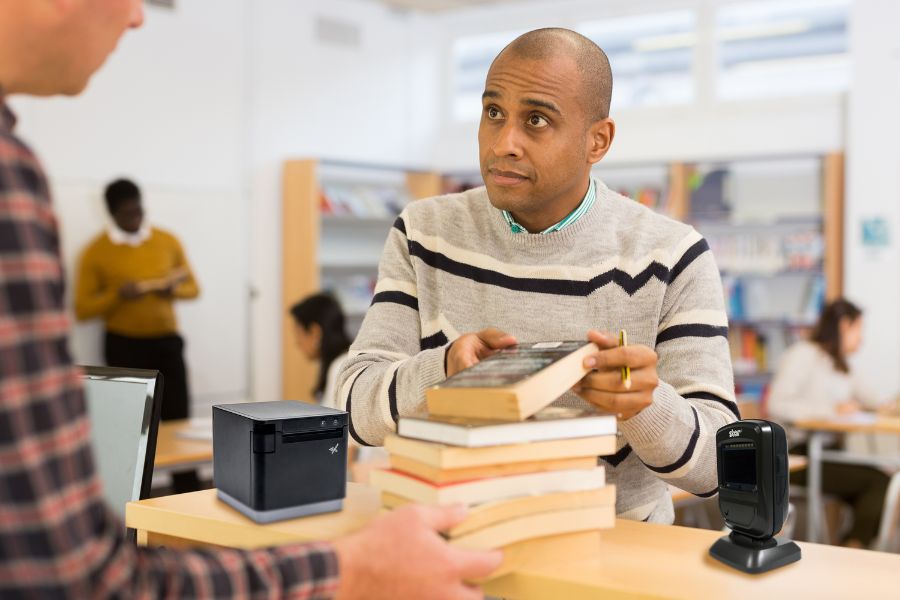
    Get the ideal library printers and scanners from Star Micronics.

    Online Services

    Library barcode systems are essential to publishing a collection online, giving patrons the convenience of reserving titles for pickup via a device. Libraries that work cooperatively can also use data from barcodes to find titles in other locations and arrange for their patrons to borrow them.

    Book Borrowing

    Barcodes for library books eliminate the need to glue library cards inside books. Librarians simply scan patrons’ library cards and the barcodes on the titles they’re borrowing. The library management system then tracks who borrowed the books and their due dates. Additionally, the system can send email or text reminders to help patrons avoid fines.

    Self-Service Returns

    Library barcode systems enhance the efficiency of dropbox returns. Patrons scan the barcodes at a kiosk when returning books, confirming the return and logging the time. The library’s system immediately updates the status, making the books available for borrowing sooner, benefiting patrons waiting for those titles.

    The Right Tools to Generate and Read Library Book Barcodes

    While library barcode systems offer numerous benefits, the value they provide depends on the quality of labels and the library’s barcode scanner capabilities.

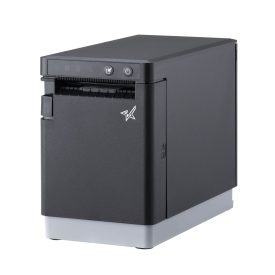
    Library Barcode Label Printers

    Printers for library book barcodes must produce high-quality images for accurate scans. Printers that are flexible enough to work with the library’s label software will result in higher-quality barcode labels and make the labeling process easier. 

    The printer should also accommodate the label media the library chooses. It should be versatile enough to print permanent linerless or die-cut labels for book spines and repositionable sticky labels that librarians can use for holds or titles that patrons reserve online. A printer that accommodates linerless labels–labels without a silicone backing–can streamline labeling processes and reduce clutter and paper waste.

    mC-Label2 Multifunction Printer

    The mC-Label2 packs powerful features into a compact, front-loading design, including 300 dpi resolution, support for linerless, die-cut, receipt, and continuous media, and connectivity options like USB-C, LAN, WLAN, Bluetooth, and Apple MFi-certified pairing (X4 models only).

    Explore the mC-Label2 >

    mC-Label3 Multifunction Printer

    The Star Micronics mC-Label3 is a versatile multimedia printer that prints a wide range of labels and receipts, including both permanent and repositionable sticky linerless. It features cloud connectivity and innovative technologies like SteadyLAN and TetherLAN for enhanced printing convenience.

    Discover the mC-Label3 >

    Library Barcode Scanners

    In addition to printing high-quality labels, libraries also need reliable barcode scanners to read them. Scanners should read both one-dimensional, also known as 1D or linear barcodes, and 2D barcodes, like QR codes, to collect information from different types of codes the library uses. 

    Because labels on book spines or assets could become distorted, libraries will benefit from scanners that can read barcodes on uneven surfaces. The scanner should also work reliably in different lighting conditions, giving accurate reads even in low-light areas. 

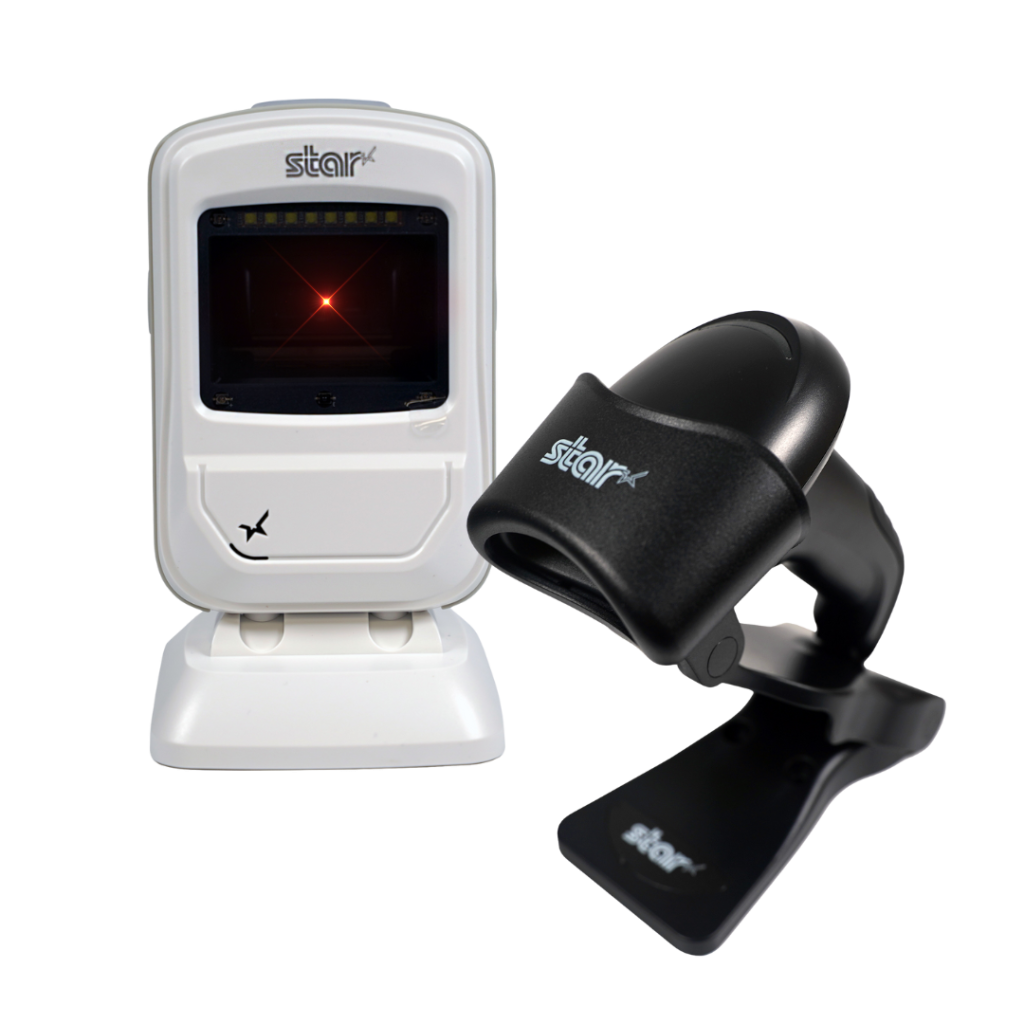
    Libraries will also benefit from desktop scanners for use at the front counter and wireless handheld scanners for use by librarians when managing inventory.

    Star’s 1D/2D Barcode Scanners

    Star offers a comprehensive range of IP-rated 1D/2D barcode scanners, ideal for diverse business needs. From retail to healthcare, our versatile scanners excel in parsing driver’s license and ID barcodes, ensuring swift and accurate data capture. Choose the perfect fit for your setup—desktophandheld, or wireless Bluetooth options available.

    Future-Proof Operations with a Barcode Library System

    As library collections expand and the labor shortage persists, libraries must find ways to operate more efficiently. Implementing barcodes for library books allows librarians to accurately manage inventory and gain instant visibility into their collections.

    Barcode technology transforms the management of physical books, making it as streamlined as handling digital assets. This advancement ensures libraries can continue to provide patrons with the benefits of printed works well into the future.

    Beyond the Label: Elevating Brand Connection and Loyalty

    Discover how strategic labeling can redefine customer engagement and boost brand loyalty in this digital age.

    Learn More About Star’s Library Solutions:

  • Reusable Cups: The Growing Trend and the Need for Linerless Sticky Labels

    Reusable Cups: The Growing Trend and the Need for Linerless Sticky Labels

    Since 2020, restaurants have significantly changed their operations. They adapted to regulations and mandates during the COVID-19 pandemic. They added online ordering and curbside pickup options to offer customers new ways to engage. They deployed self-service ordering and payment kiosks to meet changing consumer preferences. 

    However, the evolution of this industry isn’t over. Now, chains are prioritizing sustainability, transitioning to reusable cups. Repositionable linerless sticky labels will be vital to making that strategy work.

    The Challenge of Beverage Cup Waste

    Stopping for coffee on the way to work or between errands is routine for many consumers. However, the cups they use are piling up. The Guardian reports that the U.S. landfills about 25 billion polystyrene cups each year, and that material takes about 500 years to decompose. 

    However, polystyrene isn’t the only type of cup that negatively impacts the environment. The estimated 16 billion paper cups that U.S. consumers use each year require cutting down about 6.5 million trees. Furthermore, adding up the cup, sleeve, production, and shipping, each paper cup is responsible for 110g of carbon dioxide emitted into the environment. 

    While protecting the environment and complying with new regulations for sustainable operations are driving changes in how restaurants serve to-go beverages, another factor is cost. Every 1,000 cups and lids cost about $75-$150, and with traditional processes, it’s equivalent to paying for something that immediately heads to a landfill. It’s one more reason that restaurants are taking a serious look at joining the reusable cup trend.

    Why Every Café and Coffee Shop Needs a Linerless Sticky Label Printer

    Chains Trailblazing the Transition to Reusable Cups

    One chain that has launched a program to serve beverages in reusable cups is Tim Hortons. The brand, which had used this model before the pandemic, offers a 10-cent discount to customers who bring a clean reusable cup for their hot or cold beverage orders. Tim Hortons reports that, in 2019, it was able to reduce the number of disposable cups it used by 15 million for hot beverage orders alone. 

    Starbucks is also emerging as a leader in this area, becoming the first to accept reusable cups at the drive-thru and for mobile orders at participating locations in the U.S. and Canada. When customers place their orders at the drive-thru or with the Starbucks app, they let the barista know they brought a reusable cup. When they arrive at the pickup window or the counter, the barista collects the cup in a contactless vessel to ensure hygiene.

    After baristas prepare orders, they serve them in customers’ cups. These customers receive a 10-cent discount, 25 Bonus Stars, and the satisfaction of supporting Starbucks’ commitment to reduce waste by 50% by 2030.

    Repositionable Linerless Sticky Labels Make Serving Beverages in Reusable Cups Practical

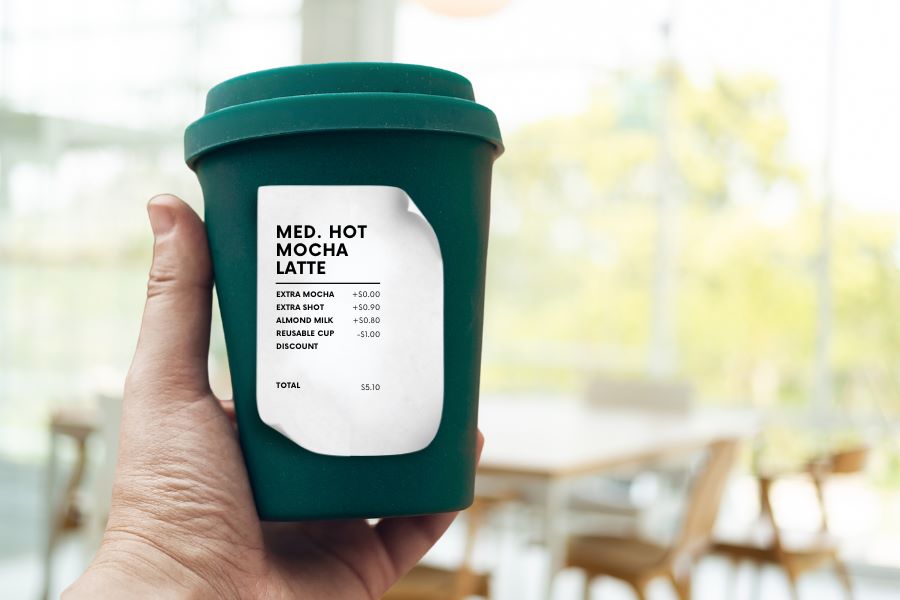
    When serving beverages in customers’ reusable cups, it’s essential to ensure employees can quickly identify which cup belongs to which customer. Repositionable sticky labels allow restaurants and cafes to keep the order and customer information with the cup to avoid mix-ups. If the goal is to reduce waste, ensuring the correct order is poured into the right cup is essential. Otherwise, employees would have to discard the beverage and remake the order. 

    Also, repositionable labels are durable enough to stay attached throughout the process but are easy for customers to remove. Therefore, they don’t have to scrape off a permanent label so they can use the cup again. 

    An even more environmentally friendly option is to use repositionable linerless sticky labels. These labels don’t have a backing that employees must remove before applying them. This streamlines processes, allowing employees to even apply labels with one hand. Linerless labels also decrease the waste that the restaurant or café produces and clutter from paper backing on counters or the floor. 

    Additionally, linerless rolls contain 60% more labels, so employees spend less time replacing label rolls and more time serving customers. 

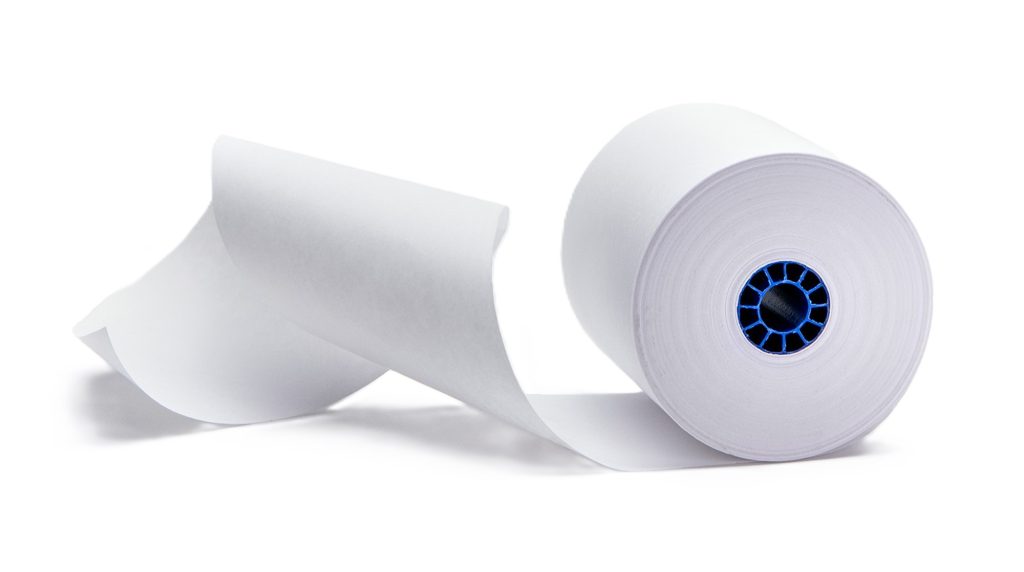
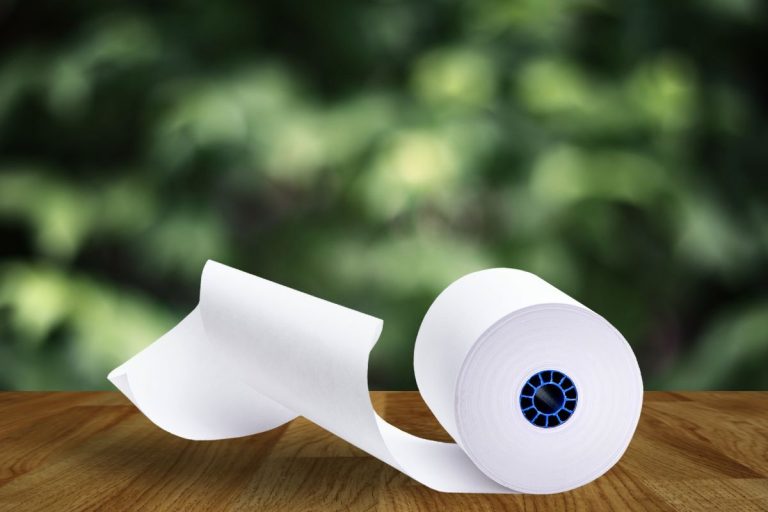
    Star Blue thermal paper rolls by Star Micronics. Receipt, linerless, sticky, traditional, permanent, thermal, bond, label.
    Linerless labels have no backing, giving more labels per roll with less waste.

    Restaurants Need Flexible Print Capabilities

    Printing repositionable linerless sticky labels for reusable cups is just one of the print jobs required at cafes and restaurants. They also need to print receipts and may need to print permanent labels for prepared foods or shelf labels for inventory control. 

    Brands that partner with third-party delivery services may want to generate tamper-proof labels to assure customers of quality and safety. The restaurant or café may also want to create custom QR codes or branded labels on demand to enhance customer engagement. 

    The best investment is in a printer capable of handling a variety of linerless label sizes to meet all of the business’s needs. This printer will also allow a restaurant or café to keep up with emerging restaurant trends, like “bring your own cup” (BYOC) or other labeling use cases on the horizon. 

    Recommended Linerless Label Printers

    TSP143IV SK Sticky Label Printer

    The TSP143IV SK by Star Micronics sets a new standard for compact, eco-friendly thermal linerless label printing, offering advanced connectivity options like Wi-Fi and AOA, and efficient, residue-free labels for diverse business needs.

    Find out more >

    mC-Label3 Multimedia Printer

    The Star Micronics mC-Label3 is a versatile multimedia printer that prints a wide range of labels and receipts, including both permanent and repositionable sticky linerless. It features cloud connectivity and innovative technologies like SteadyLAN and TetherLAN for enhanced printing convenience.

    Discover the mC-Label3 >

    The restaurant industry’s evolution will continue as consumer behaviors and regulations change, technology advances, and new challenges arise. The best strategy is to stay agile, open to adapting to what lies ahead, and informed about solutions that make new processes practical and cost-effective.

    Beyond the Label: Elevating Brand Connection and Loyalty

    Discover how strategic labeling can redefine customer engagement and boost brand loyalty in this digital age.

    Get the Best for Your Business:

  • Embracing Sustainability: The Eco-Friendly Advantages of Linerless Sticky Labels

    Embracing Sustainability: The Eco-Friendly Advantages of Linerless Sticky Labels

    In an age of heightened environmental awareness, businesses increasingly seek eco-friendly alternatives in all aspects of their operations. From reducing waste to minimizing carbon footprints, sustainability has become a crucial consideration for modern enterprises. Among the innovative solutions making a positive impact is the adoption of linerless sticky labels.

    Whether permanent linerless or repositionable linerless, these versatile labels offer a greener alternative to traditional labels, aligning with businesses’ commitment to eco-conscious practices. But why are they the greener choice, and are there any issues that need further consideration?

    In this article, we will explore the many eco-friendly advantages of linerless sticky labels and why they are an essential addition to any environmentally-conscious business that uses labels.

    Why Linerless Sticky Labels are the Greener Choice

    Linerless sticky labels are greener, more sustainable, and eco-friendly environmentally.

    Waste Reduction

    First and foremost, linerless sticky labels eliminate the need for backing paper, a significant source of waste with traditional labels. Silicone backing paper, also known as liner waste, contributes to the bulk of discarded materials in labeling processes.

    With linerless labels, this waste is drastically reduced during production and application, leading to less environmental strain and landfill usage. By adopting linerless sticky labels, whether repositionable or permanent, businesses can demonstrate their commitment to waste reduction and a circular economy.

    Recyclable Materials

    Linerless sticky labels can be made from eco-friendly, fully recyclable, and even biodegradable materials. These materials can be chosen to ensure minimal environmental impact throughout their lifecycle. As businesses aim to meet their sustainability goals, opting for eco-friendly sticky labels becomes an essential step toward reducing their environmental impact.

    Improved Material Efficiency

    The absence of backing paper with linerless labels translates to optimized efficiency in printing processes. Linerless labels have more labels per roll, reducing the frequency of roll changes and ultimately saving resources. Plus, businesses don’t need to change the sticky paper roll as often.

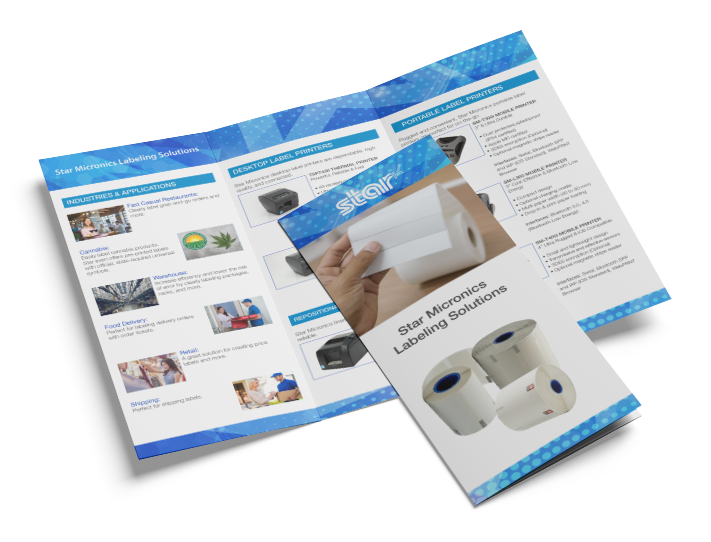
    Star Micronics Labeling Solutions Brochure

    Ideal for self-ordering, Star Micronics kiosk label printers have a small footprint and are easy to incorporate.

    Space-Saving and Cost-Effective

    The higher number of labels per roll and the elimination of liner waste contribute to significant space-saving advantages. Businesses can store and transport more sticky labels at once, reducing storage space requirements and logistic costs. This space-saving feature also extends to retail environments where compact label rolls allow for more products on display, enhancing visual appeal.

    Versatility in Applications

    Linerless sticky labels are incredibly versatile and can be used for a wide range of applications. Whether you need labels for food and beverages, retail items, shipping, or any other purpose, these labels offer a convenient all-in-one solution. 

    By using linerless labels, businesses can simplify inventory management and reduce the need for multiple label types, resulting in less material consumption and a more efficient labeling process.

    Exploring Linerless Labels Responsibly

    When it comes to linerless labels, understanding their potential environmental advantages requires careful consideration of critical factors:

    • Adhesive Selection: Linerless labels rely on specialized adhesives that eliminate the need for liners. The environmental impact of these adhesives may vary, making it crucial to opt for eco-friendly options that align with your application requirements.
    • Label Application Process: Efficient application techniques and equipment are vital for minimizing waste and reducing environmental impact when working with linerless labels. Ensuring streamlined processes can contribute to sustainable practices.
    • Responsible Disposal: Maximizing the environmental benefits of linerless labels necessitates proper disposal or recycling. Educating consumers about recyclability and providing clear disposal instructions can encourage eco-friendly habits.


    As with any labeling solution, the overall environmental impact of linerless labels depends on factors like material choices, manufacturing practices, and end-of-life disposal. Collaborating with knowledgeable suppliers or sustainability experts can assist in evaluating specific linerless label options and understanding their environmental implications.

    Paving the Way to a Greener Future

    Environmentally friendly business man

    Sustainability is a top priority for many businesses, so opting for eco-friendly solutions like linerless sticky labels makes perfect sense. Not only do these labels help reduce waste and minimize carbon footprints, but they also offer cost-effective benefits and can be used in a variety of applications.

    By making the switch to linerless labels, businesses showcase their dedication to environmental responsibility, attracting eco-conscious customers and playing their part in building a greener future. Take a leap toward sustainability and enhance your business’s environmental profile by embracing linerless sticky labels today.

    The mC-Label3 Multimedia Printer

    The latest innovation by Star Micronics, the mC-Label3 Multimedia Printer, prints across a wide array of media types, including repositionable linerless sticky label paper.


    Always Leading, Always Innovating

    Star Micronics is a leading provider of sustainable labeling solutions tailored to meet your unique business needs. Learn more about our eco-friendly printer and label options and how we can help your business make a positive impact on the environment:

  • Sandwiching Success: Unveiling the Power of POS Tech in Our Latest Deli eBook

    Sandwiching Success: Unveiling the Power of POS Tech in Our Latest Deli eBook

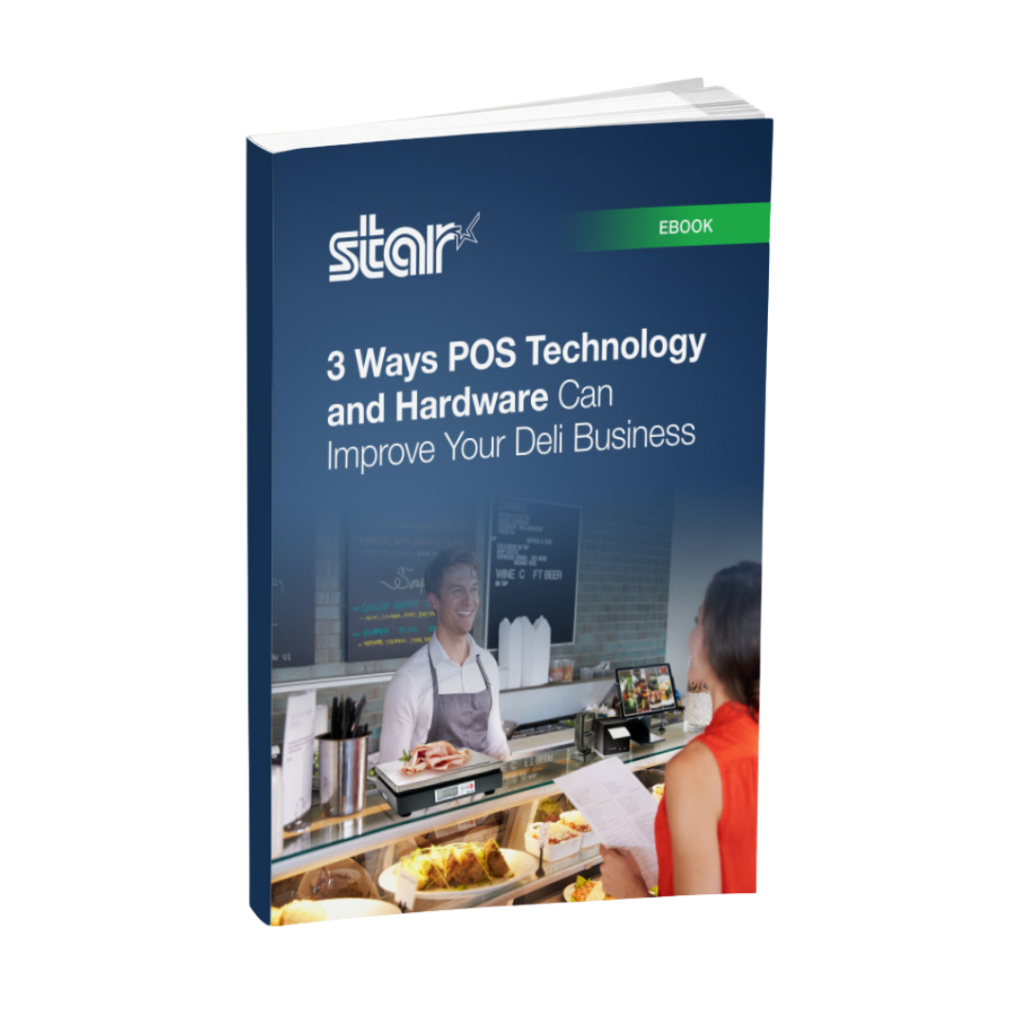
    In the fast-paced, competitive world of food service, delis, butcher shops, and fish markets require efficient, tech-driven solutions to stay ahead. In our latest eBook, “3 Ways POS Tech and Hardware Improve Deli Operations and Customer Experiences,” we delve into the transformative power of modern point-of-sale (POS) technology and how it can optimize deli businesses.

    Addressing Key Challenges in Deli Operations

    Handling perishables, managing a vast array of items, and delivering top-notch service is no easy feat. Our eBook sheds light on how innovative POS tech addresses three key areas: order accuracy, customer service, and inventory management.

    Order Accuracy with Cutting-Edge POS Tools

    Delis juggle diverse offerings, making error-free orders crucial. This eBook illustrates how cutting-edge POS tools like integrated deli scales, receipt and label printers, and tablet stands keep things running smoothly.

    Enhancing Customer Experience and Satisfaction

    Delis thrive on repeat patrons, and exceptional experiences are non-negotiable. The eBook highlights POS-driven technologies like CloudPRNT and SteadyLAN®, self-service kiosks, and accessories, all aimed at streamlining the customer experience, boosting satisfaction, and nurturing loyalty.

    Streamlining Inventory Management

    Learn how real-time tracking and automation through advanced POS systems save time and curb errors, making stock management a breeze.

    Elevate Your Deli with POS Technology by Star Micronics

    Our eBook is a must-read for deli owners seeking to harness POS technology and stay ahead of the game. Don’t miss out—elevate your deli today!

    3 Ways POS Technology and Hardware Can Improve Your Deli Business

    Get the latest point-of-sale (POS) technology and hardware to streamline deli, butcher shop, or fish market operations.

    Want to know more about what Star can offer your business?