Tag: Label Printers

  • Star Micronics to Showcase POS Hardware, Partner Integrations, and the New mC-Connect Drawer at RetailNOW 2026

    Star Micronics to Showcase POS Hardware, Partner Integrations, and the New mC-Connect Drawer at RetailNOW 2026

    Visit Booth 631 to see the new mC-Connect Drawer, cloud printing, multifunction labeling, kiosk barcode scanning, and live demonstrations with MagTek and Logic Controls.

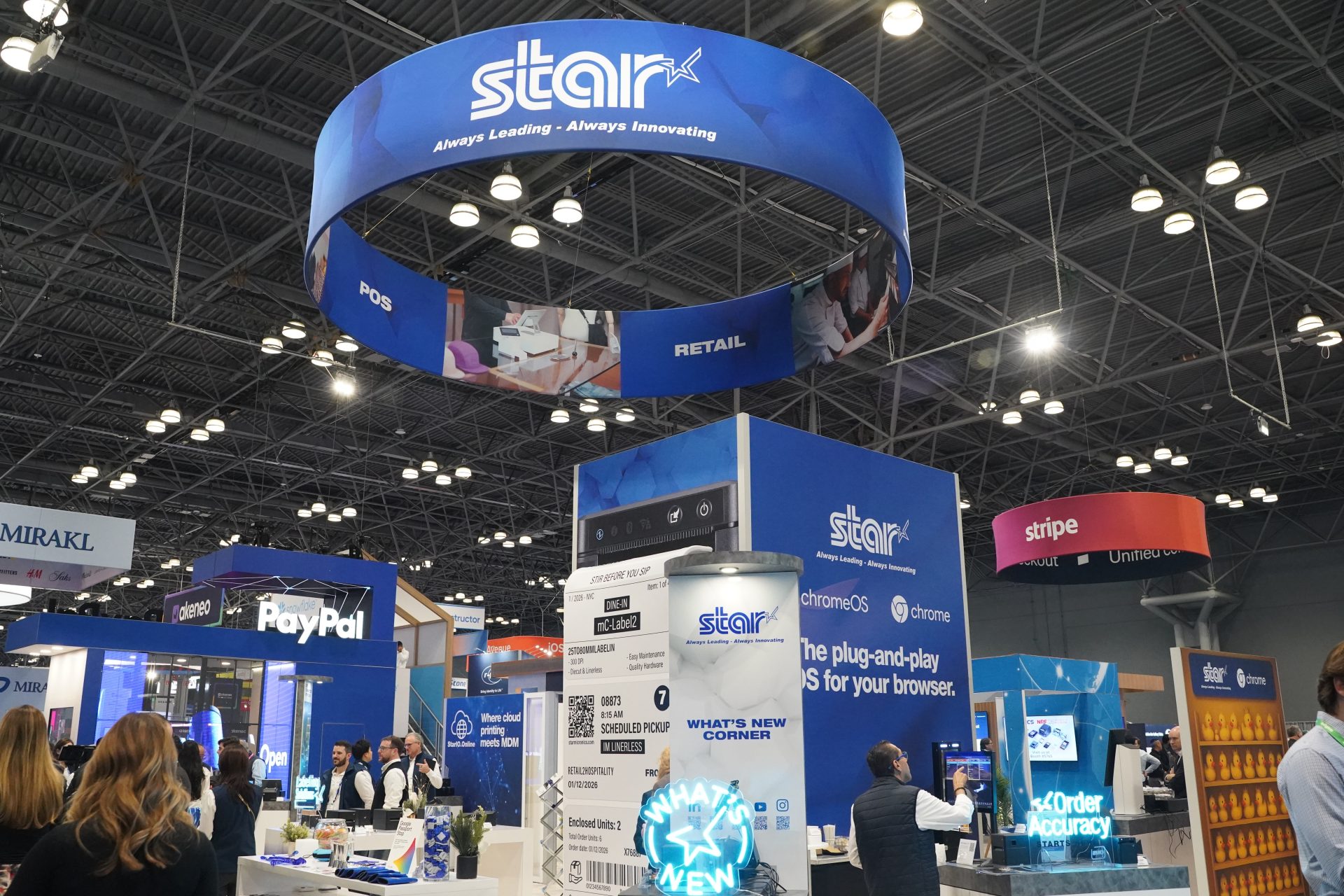
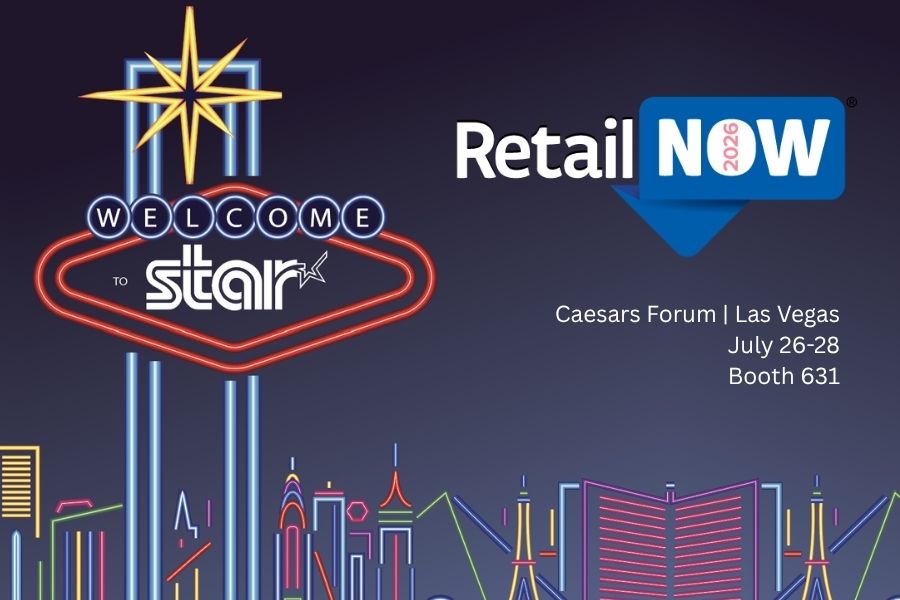
    Las Vegas, NV – July 17, 2026 – Star Micronics, a global leader in point-of-sale (POS) hardware, cloud printing, and labeling technology, will exhibit at RetailNOW 2026, the retail IT channel’s #1 trade show, education conference, and networking event. The show takes place July 26–28 at Caesars Forum in Las Vegas. Visitors to Booth 631 can explore Star’s latest POS hardware through live demonstrations with leading technology partners.

    RetailNOW attendees will see Star hardware working alongside software and payment technologies used across retail and hospitality.

    Featured Solutions at Booth 631

    Attendees can explore Star’s latest POS hardware and cloud technologies, including:

    • The new mC-Connect Drawer: Modernize any cash drawer with USB, Ethernet, Wireless LAN, and Bluetooth® Low Energy connectivity, enabling direct communication with today’s POS systems, tablets, and mobile devices.
    • Cloud Printing Solutions: CloudPRNT Next and StarIO.Online simplify cloud printing for online ordering, web applications, and multi-location deployments. From direct cloud communication using MQTT to fully managed cloud printing with remote device management, Star offers flexible options for cloud-connected POS environments.
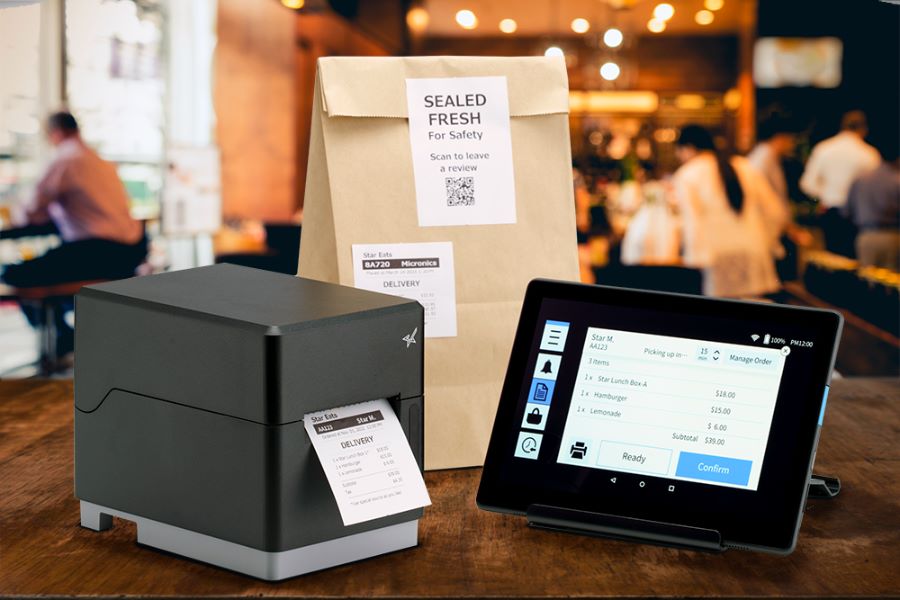
    • Multifunction Labeling Solutions: The mC-Label2 and mC-Label3 support receipts, linerless labels, die-cut labels, and continuous media from a single device, allowing businesses to print food safety labels, order labels, barcode labels, receipts, and more.
    • Kiosk Barcode Scanning: Star’s fixed-mount kiosk barcode scanners, the NLS-FM431 and the NLS-FM3280, provide fast, hands-free scanning of 1D and 2D barcodes from printed labels and mobile devices for self-service kiosks, lockers, and customer-facing terminals.
    • Enterprise POS Hardware: From receipt printers and cash drawers to barcode scanners and cloud-connected peripherals, Star’s hardware portfolio supports retail, restaurant, grocery, healthcare, cannabis, and hospitality applications.

    Live Partner Demonstrations

    Star will feature several integrated demonstrations throughout the show.

    • One Touch Label with Logic Controls KitchenGO KDS and the mC-Label3: See Logic Controls’ KitchenGO KDS working with Star’s mC-Label3 multifunction printer to demonstrate the One Touch Label feature. Kitchen staff can generate labels directly from the KDS as orders move through production, helping identify orders and improve fulfillment accuracy.
    • Direct Cash Drawer Control with MagTek and the mC-Connect Drawer: MagTek will demonstrate the mC-Connect Drawer, showing how payment devices and POS systems can control cash drawers directly without requiring a printer connection.

    Star Solutions Featured Throughout the Show Floor

    Attendees can also see Star solutions featured at the following partner booths:

    “RetailNOW brings together the channel partners, ISVs, and solution providers that help businesses deploy POS technology every day. This year, we’re demonstrating how our hardware works alongside leading software and payment providers, from the new mC-Connect Drawer and cloud printing to multifunction labeling and kiosk technologies, showing how these technologies work together in real-world deployments.”

    Meet the Star Team at RetailNOW 2026

    Francis Angoyar, Sales Accounts Executive at Star Micronics, will participate in a speaking session at the ScanSource booth on Monday, July 27, from 11:45 a.m. to 11:55 a.m., where attendees can ask questions about Star’s POS hardware and integrations.

    Star is also proud to support the Women in Technology (W2W) community at RetailNOW. Joey Richholt, Director of Human Resources at Star Micronics, will serve as a panelist during Martinis & Mentorship: The Perfect Cocktail Mixing Career Advice, Authentic Connections, and Lasting Success, taking place on Sunday, July 26, from 7:00 p.m. to 8:00 p.m.

    Visitors are encouraged to stop by Booth 631 to see the demonstrations, meet with the Star team, and learn more about Star’s latest POS hardware and cloud technologies.

    To schedule time with the Star team or for more information, contact sales@starmicronics.com.
    Can’t get enough industry news?

    Star Micronics logo, point-of-sale (POS) hardware and technology company.

    Star Micronics is a global provider of point-of-sale (POS) hardware, cloud printing, and labeling solutions that help businesses connect digital workflows to real-world operations. Serving retail, hospitality, healthcare, and service industries, Star delivers printing, labeling, cash management, self-service, and cloud-based technologies designed to support scalable, connected, and automated environments. Star’s solutions support Android, iOS, Windows, and web-based platforms and extend into the cloud through services such as CloudPRNT Next and StarIO.Online, Star’s fully managed cloud printing service.

    Visit starmicronics.com or follow us on Facebook, X, YouTube, or LinkedIn to learn more.
    Media Contact:

    Christin Dorner
    Star Micronics America, Inc.
    cdorner@starmicronics.com
    848-216-3318

  • CaterZen and Star Micronics Help Restaurants Scale Catering with Linerless Labeling

    CaterZen and Star Micronics Help Restaurants Scale Catering with Linerless Labeling

    CaterZen Catering Software integrates with Star’s TSP143IV SK printer to help restaurants organize, identify, and fulfill catering orders with greater accuracy from the kitchen to the customer.

    Somerset, NJ – July 10, 2026 – Star Micronics, a global provider of point-of-sale (POS) hardware, cloud printing, and labeling solutions, today announced its integration with CaterZen Catering Software, a catering management platform built specifically for restaurants. Through the integration, CaterZen’s Catering Kitchen Display System (KDS) generates linerless labels on Star’s TSP143IV SK sticky linerless label printer as orders are prepared, helping restaurants keep complex catering orders organized from the kitchen to the customer.

    Extending the Catering Kitchen Workflow

    Catering orders are often larger, more customized, and more time-sensitive than traditional restaurant orders. Multiple trays, individually packaged meals, dietary restrictions, delivery locations, and scheduled pickup times all require clear labeling and organization throughout preparation and fulfillment.

    CaterZen helps restaurants manage every stage of the catering process, from customer inquiries and proposals to order management, production, online ordering, delivery coordination, marketing, and repeat business. In 2017, CaterZen introduced its Catering Kitchen Display System (KDS) to help restaurants manage catering production more efficiently. As customers looked to extend those digital workflows with printed labels, integrating the Star TSP143IV SK became a natural next step, allowing restaurants to generate clear, professional linerless labels directly from the KDS as orders are prepared.

    “We built CaterZen specifically for restaurant operators because catering requires workflows that fit the way restaurants actually work. Integrating Star’s TSP143IV SK gives our customers a dependable way to organize and identify every catering order while maintaining the professional presentation that keeps customers coming back.”

    The integration helps restaurants:

    • Print catering labels directly from CaterZen order workflows
    • Clearly identify trays, containers, bags, and individually packaged meals
    • Include customer names, delivery destinations, and special instructions
    • Organize complex catering orders during preparation and packing
    • Reduce packing and handoff errors before pickup or delivery

    Built for High-Volume Catering Workflows

    The Star TSP143IV SK is a single, compact linerless sticky label printer that gives restaurants the flexibility to handle everyday transactions and catering fulfillment with one printer. Repositionable linerless labels can be applied, removed, and repositioned without leaving adhesive residue, making them well-suited for catering containers, delivery bags, and order packaging. The printer also helps reduce liner waste while providing more labels per roll than traditional label media.

    “Large catering orders leave very little room for error. The last step before an order leaves the kitchen is often the one customers notice most. Clear, accurate labeling helps ensure every catering order arrives organized, identifiable, and ready to serve.”

    Supporting Restaurants That Cater

    As catering continues to grow as an important revenue channel for restaurants, operators need systems that simplify execution without adding unnecessary complexity. Together, CaterZen and Star provide a connected solution that helps restaurants manage catering orders, improve fulfillment accuracy, strengthen food presentation, and support a consistent customer experience for every event, meeting, and large-order delivery.

    For more information about Star Micronics solutions, visit starmicronics.com.

    To learn more about CaterZen Catering Software, visit caterzen.com.

    Can’t get enough industry news?

    CaterZen Catering Software and KDS logo

    CaterZen Catering Software is a catering management platform built specifically for restaurant operators. Designed by restaurateur Michael Attias, the platform helps restaurants manage customer inquiries, proposals, catering orders, online ordering, production, delivery coordination, customer communications, marketing, and repeat business through a single system. Built around real restaurant operations, CaterZen enables operators to grow catering revenue while maintaining organized, repeatable workflows.

    Star Micronics logo, point-of-sale (POS) hardware and technology company.

    Star Micronics is a global provider of point-of-sale (POS) hardware, cloud printing, and labeling solutions that help businesses connect digital workflows to real-world operations. Serving retail, hospitality, healthcare, and service industries, Star delivers printing, labeling, cash management, self-service, and cloud-based technologies designed to support scalable, connected, and automated environments. Star’s solutions support Android, iOS, Windows, and web-based platforms and extend into the cloud through services such as CloudPRNT Next and StarIO.Online, Star’s fully managed cloud printing service.

    Visit starmicronics.com or follow us on Facebook, X, YouTube, or LinkedIn to learn more.

    Media Contacts:

    Christin Dorner
    Star Micronics America, Inc.
    cdorner@starmicronics.com
    848-216-3318

    Michael Attias
    CaterZen Catering Software
    michael.attias@caterzen.com
    615-969-7090

  • The Benefits of Durable, Reliable Commercial Label Printers

    The Benefits of Durable, Reliable Commercial Label Printers

    Commercial label printers play an important role in how businesses identify products, communicate workflow information, maintain regulatory compliance, and track inventory. From retail and restaurants to healthcare and fulfillment, labels help employees and customers access important information quickly and consistently.

    When a label printer fails, those workflows can slow down. Orders may be delayed, inventory may become harder to track, and important product or compliance information may not be available when needed.

    For businesses that rely on labeling throughout daily operations, choosing a durable and reliable commercial label printer can help reduce downtime, support high-volume workflows, and keep labeling processes consistent across the business.

    Table of Contents

    What Makes a Label Printer Durable and Reliable?

    The durability and reliability of a commercial label printer depend on both its physical construction and its internal components. A printer designed for daily commercial use should be built to handle frequent printing, different media types, and the environmental conditions where it will operate.

    Key factors that affect durability and reliability include:

    • Printhead lifespan: The printhead is one of the most important components in any label printer. Longer-life printheads help maintain consistent print quality and reduce replacement frequency.
    • Cutter durability: In high-volume environments, the cutter may operate thousands of times per day. Durable cutters help reduce jams and incomplete cuts.
    • Media path design: A well-designed media path helps labels feed smoothly and reduces misfeeds, jams, and wasted labels.
    • Housing materials and construction: Commercial environments may expose printers to heat, humidity, dust, or cleaning chemicals. Durable materials help the printer withstand these conditions.
    • Stable connectivity: Reliable wired, wireless, or cloud connectivity helps prevent missed print jobs and keeps workflows moving.
    • Maintenance accessibility: Printers designed for easy cleaning, media changes, and component replacement are often easier to maintain and less likely to experience preventable downtime.

    Reliable commercial label printers are typically characterized by consistent print quality, fewer jams, stable connectivity, and components designed for long-term use.

    Choosing a Label Printer for Commercial Environments

    Choosing a commercial label printer starts with understanding where and how it will be used. In addition to supporting the label types your operation requires, the printer should be built for the environment where it will operate.

    Commercial environments can expose printers to heat, humidity, dust, frequent handling, and cleaning chemicals. A printer designed for these conditions is less likely to require frequent repairs or replacement, which can help reduce long-term ownership costs.

    When evaluating a commercial label printer, consider the following:

    Printer Form Factor for Different Workspaces

    Printer design affects where and how employees use it. Front-loading and top-loading designs can make media changes easier in tight spaces, while wall-mounting options may help free up counter space in kitchens, prep stations, or healthcare environments.

    The right form factor depends on the workflow and available space.

    High-Volume Printing for Demanding Workloads

    Some environments require continuous, high-speed printing throughout the day. This may include labeling restaurant orders, retail inventory, shipping packages, patient medications, or kiosk-generated labels.

    A commercial label printer should be designed to keep up with the expected print volume without frequent jams, cutter failures, or overheating.

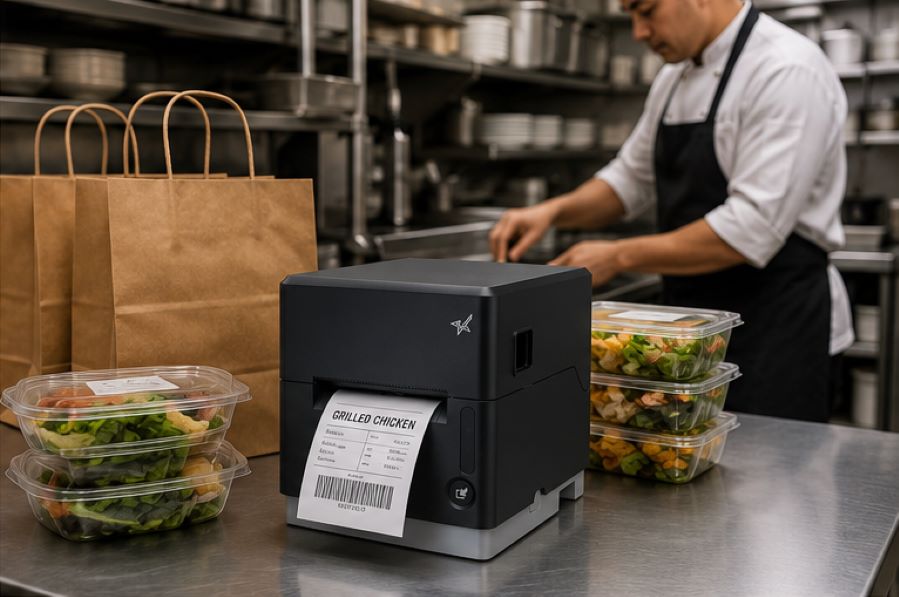
    The Benefits of Durable, Reliable Commercial Label Printers - Catering

    Support for Multiple Label Types

    Commercial labeling needs often vary by application. Some workflows use linerless labels, while others require die-cut labels, receipts, or permanent adhesive labels.

    A multifunction label printer can support multiple media types from a single device, allowing businesses to standardize hardware across different workflows while reducing the number of printer models they manage.

    Reliable Connectivity

    A commercial label printer should maintain stable wired, wireless, or cloud-based connections depending on how the business operates.

    For cloud-connected workflows, reliable communication between software and printers is especially important to prevent delayed or missed print jobs.

    Easy setup also matters, especially for wireless environments. Features like BLE-assisted Wi-Fi setup, available on Star’s mC-Label2 CWBi models, can help employees connect printers quickly using a smartphone or tablet without complex network configuration.

    Easy Printer Maintenance

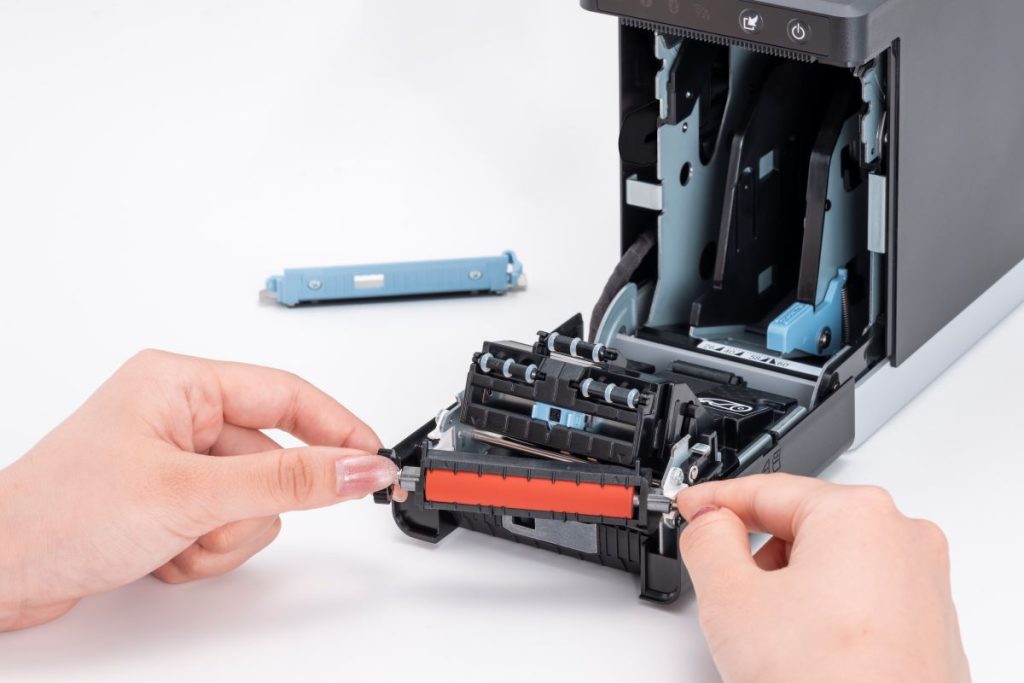
    Routine cleaning and maintenance help prevent adhesive buildup, cutter jams, and print quality issues. Commercial label printers designed with tool-free maintenance, simple media loading, and clear cleaning instructions can make routine upkeep easier for employees and reduce preventable downtime.

    The mC-Label2 multimedia printer by Star Micronics features user-friendly, tool-free maintenance.
    The mC-Label series by Star Micronics has tool-free, super easy maintenance.

    Why Durable and Reliable Printers Matter in Daily Operations

    In many businesses, labels are part of daily workflows. When a label printer stops working, those workflows can slow down or stop entirely.

    In a QSR kitchen, a printer failure can delay order packaging or delivery handoff. In an ecommerce fulfillment center, it can interrupt shipping and inventory tracking. In healthcare, missing labels on medications, patient records, or specimens can create serious operational and compliance issues.

    Reliable commercial label printers help reduce these risks by supporting consistent print quality, stable connectivity, and dependable performance during high-volume use.

    Over time, printer durability also affects ownership costs. A printer built for its environment is less likely to require frequent repairs, component replacements, or full device replacement. This can help businesses reduce downtime, maintain labeling consistency, and extend the useful life of their equipment.

    Explore Star Micronics Commercial Label Printers

    Choosing the right commercial label printer starts with understanding your environment, print volume, media requirements, connectivity needs, and maintenance expectations. The right printer should match the demands of your workflow and the types of labels your business relies on every day.

    Star Micronics offers a range of commercial label printers designed for retail, restaurant, healthcare, fulfillment, and other high-volume environments. From multifunction label printers that support linerless, die-cut, and receipt printing to purpose-built sticky linerless label printers, Star provides options for a wide range of labeling applications.

    Explore Star’s Labeling Solutions and Receipt and Label Media to learn more, or contact Star Micronics for help choosing the right commercial label printer for your business.

    Learn More About Star Label Printers

    Frequently Asked Questions About Label Printer Durability and Reliability

    What features make label printers more durable for commercial environments?

    Durable commercial label printers are typically built with long-life printheads, durable cutters, strong housing materials, stable connectivity, and media paths designed to reduce jams and misfeeds. Easy maintenance access also helps keep the printer operating consistently over time.

    How do durable label printers reduce downtime?

    Durable printers reduce downtime by using components designed for frequent, high-volume use. Printers built for harsh environments, such as hot restaurant kitchens or healthcare settings with frequent cleaning, are less likely to fail or require frequent repair. Long-life printheads and cutters also reduce replacement frequency.

    What should businesses look for in a high-volume commercial label printer?

    Businesses should look for print speed, cutter durability, media compatibility, reliable connectivity, and maintenance accessibility. The printer should be designed for the expected daily print volume and the environment where it will operate.

    Why is label printer maintenance important for reliability?

    Routine maintenance helps prevent adhesive buildup, cutter jams, print quality issues, and media misfeeds. Cleaning the printer regularly helps ensure labels remain readable and barcodes scan correctly.

    Can durable label printers support wireless and cloud connectivity?

    Yes. Many commercial label printers support wired, wireless, and cloud-based connections. Features like BLE-assisted Wi-Fi setup can also make wireless deployment faster and easier for employees.

    How do multifunction label printers improve commercial workflows?

    Multifunction label printers can support receipts, linerless labels, die-cut labels, and other media types from a single device. This helps businesses reduce the number of printer models they manage while supporting different workflows with one platform.

    Why does media compatibility matter in commercial label printing?

    Different workflows require different label formats and adhesive types. Choosing a printer that supports the required media helps ensure consistent printing, proper label application, and reliable performance.

    How do durable label printers lower the total cost of ownership?

    Durable label printers can reduce repair costs, extend equipment lifespan, and minimize downtime. Over time, this can lower replacement frequency and reduce interruptions to daily operations.

    Are linerless label printers reliable for high-volume environments?

    Yes. Linerless label printers are commonly used in high-volume environments because they allow for faster application and fewer media roll changes. Since linerless labels do not use backing paper, they also reduce waste and help keep workspaces cleaner.

    What industries benefit most from durable commercial label printers?

    Durable commercial label printers are commonly used in retail, restaurants, ecommerce fulfillment, healthcare, pharmaceuticals, manufacturing, airports, and logistics. Any business that depends on consistent labeling can benefit from a printer designed for long-term, high-volume use.

  • Restaurant Personalization Technology Only Works If the Details Reach the Table

    Restaurant Personalization Technology Only Works If the Details Reach the Table

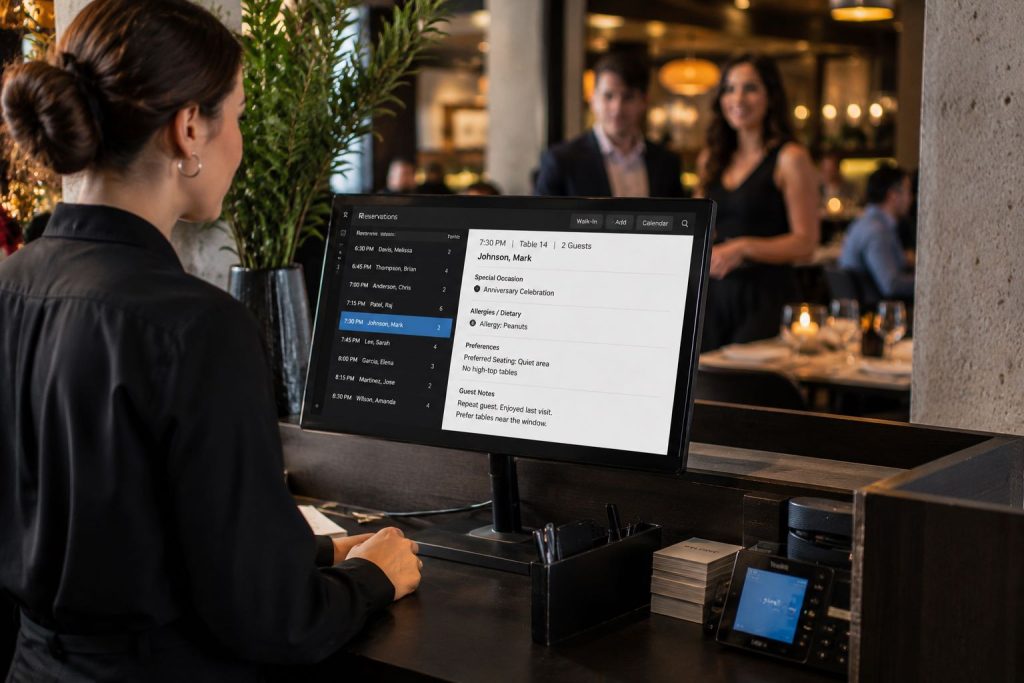
    Restaurants today collect more guest information than ever before. Modern restaurant personalization technology, including reservation platforms like OpenTable, Resy, and SevenRooms, helps restaurants capture birthdays, anniversaries, allergies, seating preferences, favorite menu items, and other details that help personalize service.

    But collecting information is only the first step.

    When a birthday goes unrecognized, a special request is missed, or an allergy note never reaches the server, guests don’t see a workflow breakdown. They see a restaurant that failed to follow through.

    The challenge is making sure important details remain visible once guests are seated and service begins. In many restaurants, printed reservation chits (tickets) help bridge the gap between reservation platforms and front-of-house staff, giving servers and managers quick access to guest information at the table.

    However, traditional paper chits can easily be lost, misplaced, or blown off the table. As restaurants continue investing in personalization, they also need reliable ways to ensure those details reach the people responsible for delivering them.

    Table of Contents

    The Rise of Personalized Dining Experiences

    Restaurant personalization has become a bigger part of modern hospitality operations. Reservation platforms now allow restaurants to collect far more information about guests before they even arrive, from allergies and seating requests to birthdays, anniversaries, and favorite menu items.

    Personalization can include:

    • Birthday and anniversary celebrations
    • Allergy and dietary information
    • Favorite seating areas
    • Preferred drinks or menu items
    • VIP guest recognition
    • Service pacing requests

    For restaurants, these details help staff prepare for service, recognize repeat guests, and accommodate special requests more consistently.

    The challenge is not collecting the information. Modern reservation platforms already do that well. The challenge is making sure those details remain visible and accessible once the guest is seated and service begins.

    Servers and managers move quickly throughout a shift, often handling multiple tables at once. If guest details remain buried inside a reservation platform or are only visible at the host stand, important requests can easily be missed.

    Restaurant Personalization Technology Only Works If the Details Reach the Table

    Why Restaurants Still Print Reservation Chits

    Despite the rise of digital restaurant technology, many restaurants still print reservation chits for one simple reason: physical workflows still matter.

    A printed reservation chit creates a fast, visible handoff between the host stand and the front-of-house staff. Once the guest is seated, the chit can stay at the table and communicate important information directly to the server and managers.

    The printed chit helps restaurant staff quickly understand the table before the first interaction even begins.

    Managers also benefit operationally. A chit left on the table can help indicate whether a server has greeted the guests yet, helping managers monitor service flow during busy shifts.

    In many restaurants, this small workflow plays an important role in delivering consistent hospitality.

    The Problem With Traditional Reservation Chits

    Traditional reservation chits are simple, but they create operational problems.

    Because the receipts are lightweight thermal paper, they can easily:

    • Blow off the table
    • Fall onto the floor
    • Get misplaced during service
    • Become difficult for servers to track

    Once the chit disappears, so does the personalization information tied to the guest experience.

    To solve this problem, some restaurants improvise by stapling reservation chits to cardstock or heavier paper so they stay visible on the table. While functional, this creates additional operational steps, clutter, and waste during already busy service periods.

    A personalization workflow only works if the information remains visible long enough for staff to act on it.

    Restaurant Personalization Technology Only Works If the Details Reach the Table

    Why Sticky Labels Work Better for Restaurant Personalization

    Repositionable sticky labels offer a cleaner, more reliable alternative to traditional reservation chits.

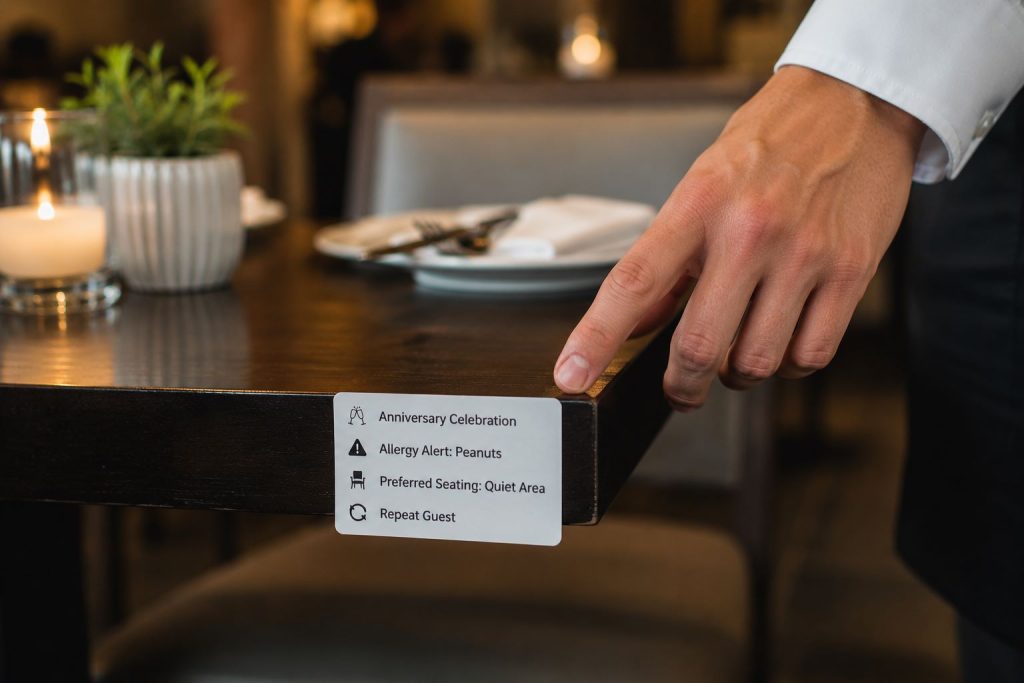
    Instead of loose paper receipts, restaurants can print reservation information on repositionable linerless labels that stay attached to the table throughout service. Servers can easily remove and reposition the label without damaging surfaces or leaving residue behind.

    This creates several operational benefits:

    • Personalization details stay visible
    • Labels do not blow away easily
    • Servers can move labels as needed during service
    • Restaurants eliminate the need for staplers and cardstock
    • Front-of-house workflows become cleaner and more consistent

    Repositionable linerless labels also help reduce waste compared to traditional linered labels because there is no liner backing to discard. Star’s TRK repositionable linerless labels are designed specifically for workflows that require temporary adhesion and clean removal, leaving no residue behind.

    For restaurants focused on consistent guest experience, small operational improvements like these can make personalization easier to execute in real-world service.

    Restaurant Personalization Technology Only Works If the Details Reach the Table

    How the TSP143IV SK Supports Front-of-House Personalization Workflows

    The TSP143IV SK linerless sticky label printer gives restaurants a more operationally efficient way to manage reservation personalization workflows.

    Designed for sticky linerless label printing, the TSP143IV SK allows restaurants to print repositionable labels that can remain attached to tables, trays, food packaging, or other surfaces throughout service.

    This helps restaurants:

    • Keep guest personalization details visible
    • Improve communication between hosts, servers, and managers
    • Reduce workflow disruptions caused by lost paper chits
    • Simplify front-of-house operations
    • Support more consistent hospitality experiences

    TSP143IV SK Sticky Label Printer

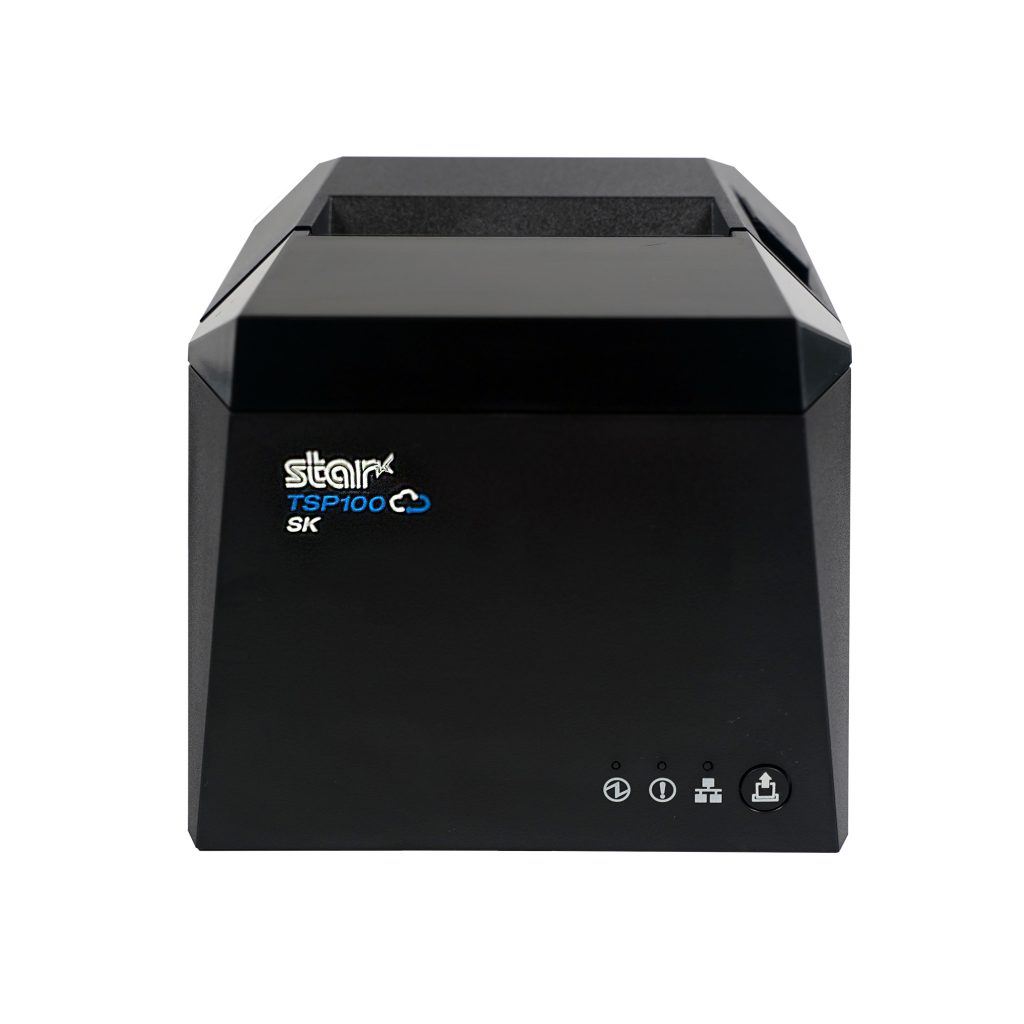
    The TSP143IV SK by Star Micronics sets a new standard for compact, eco-friendly thermal linerless label printing, offering advanced connectivity options like Wi-Fi and AOA, and efficient, residue-free labels for diverse business needs.

    Find out more >

    Because the labels are repositionable, servers can remove or relocate them easily during service without leaving residue behind. This creates a cleaner and more professional workflow compared to stapled paper chits or loose thermal receipts.

    The TSP143IV SK also supports cloud-connected restaurant environments and modern hospitality workflows, making it easier for reservation platforms and restaurant systems to integrate sticky label printing directly into existing operations.

    Why Reservation Platforms Should Support Sticky Label Printing

    Reservation platforms continue adding more personalization tools and guest profile features. But restaurants still need reliable ways to communicate that information during service.

    Supporting sticky label printing workflows can help restaurants:

    • Keep guest details visible throughout service
    • Reduce missed requests or forgotten notes
    • Improve communication between hosts, servers, and managers
    • Create more consistent table-side service

    Restaurants already use printed reservation chits because physical workflows still matter in busy dining rooms. Sticky linerless labels simply make those workflows easier to manage and more reliably execute.

    Personalization Creates Expectations

    The moment a guest enters a birthday, anniversary, seating request, allergy, or other preference into a reservation platform, an expectation is created.

    If a birthday candle never arrives, a special request is overlooked, or a preferred table isn’t honored, guests rarely know where the breakdown occurred. They don’t know whether the issue was with the reservation platform, the host stand, a lost chit, or a communication gap during service. They only know the restaurant missed an important detail.

    In many cases, servers end up carrying the blame for information they never received.

    As reservation platforms continue investing in personalization features, helping restaurants consistently deliver on those details may become just as important as collecting them.

    Restaurant Personalization Technology Only Works If the Details Reach the Table

    Personalization Is Only Valuable If Restaurants Can Execute It

    Restaurants often compete on food, service, and atmosphere. Increasingly, they’ll also compete on how well they remember their guests.

    A birthday celebration, allergy note, preferred table, or favorite menu item may seem like a small detail on its own. But those details are often what separate a routine dining experience from one guests talk about, review online, and return to again.

    Reservation platforms have made it easier than ever to capture guest preferences. The next challenge is helping restaurants consistently deliver on them.

    The restaurants that stand out won’t necessarily be the ones that collect the most information. They’ll be the ones that make sure important details never get lost between the reservation and the table.

    Learn More About Star POS & Labeling Solutions

    Frequently Asked Questions About Restaurant Personalization Technology

    What is restaurant personalization technology?

    Restaurant personalization technology includes digital tools and workflows that help restaurants collect, manage, and act on guest preferences, dining history, allergies, celebrations, and other hospitality-related information.

    Why is personalization important in restaurants?

    Personalization helps restaurants create better guest experiences, improve customer loyalty, encourage repeat visits, and differentiate themselves in competitive hospitality markets.

    What information do reservation platforms collect?

    Reservation platforms may collect guest names, birthdays, anniversaries, allergies, seating preferences, favorite menu items, visit history, and other dining preferences.

    Why do restaurants print reservation chits (tickets)?

    Restaurants print reservation chits to provide servers and managers with fast, visible access to guest details during service. Printed chits help bridge communication between digital reservation systems and front-of-house operations.

    What problems do traditional reservation chits create?

    Traditional reservation chits can blow away, fall off tables, become misplaced, or get lost during service. This can lead to missed guest requests and inconsistent hospitality experiences.

    How can restaurants ensure guest preferences are not overlooked?

    Restaurants use a combination of reservation platforms, host stand workflows, reservation chits, labels, and staff communication processes to ensure important guest details remain visible and accessible throughout service. The goal is to make sure information reaches the employees responsible for acting on it.

    How do sticky labels improve restaurant workflows?

    Sticky labels help keep important guest information visible throughout service, improving communication between hosts, servers, managers, and other restaurant staff.

    How can restaurants turn guest data into personalized service?

    Collecting guest information is only the first step. Restaurants must ensure guest preferences, celebrations, allergies, and other requests are communicated clearly and remain visible throughout service so staff can consistently act on them.

    How can restaurants make personalization details more visible during service?

    Restaurants can use reservation chits, sticky labels, and other front-of-house communication tools to keep guest information visible throughout service. Solutions such as the TSP143IV SK linerless sticky label printer by Star Micronics allow restaurants to print repositionable sticky labels that stay with the table and help ensure important details are not overlooked.

  • Cleaning Printers: How to Prevent Gummed-Up Printer Cutters

    Cleaning Printers: How to Prevent Gummed-Up Printer Cutters

    In a busy kitchen or retail environment, everything runs smoothly until it doesn’t. Orders are coming in, labels should be printing, and suddenly the printer slows down. Labels tear instead of separating cleanly. The cutter jams. Staff stop what they are doing to troubleshoot, and operations stall.

    This is a common issue with many label printers. Adhesive buildup from labels accumulates over time, especially in high-volume environments or when switching between media types. As residue collects on the printer cutter, it can cause jams, miscuts, and inconsistent label output. When maintenance is delayed, performance declines and downtime increases.

    Cleaning printers is a critical part of label printer maintenance for businesses that rely on accurate, consistent labeling. Multifunction printers handle linerless labels, die-cut labels, continuous media, and receipts, but they require regular cleaning to keep cutters operating properly. 

    This guide explains how to clean printer cutters, prevent adhesive buildup, and maintain reliable label printing in high-volume operations.

    Table of Contents

    What Is a Gummed-Up Printer Cutter?

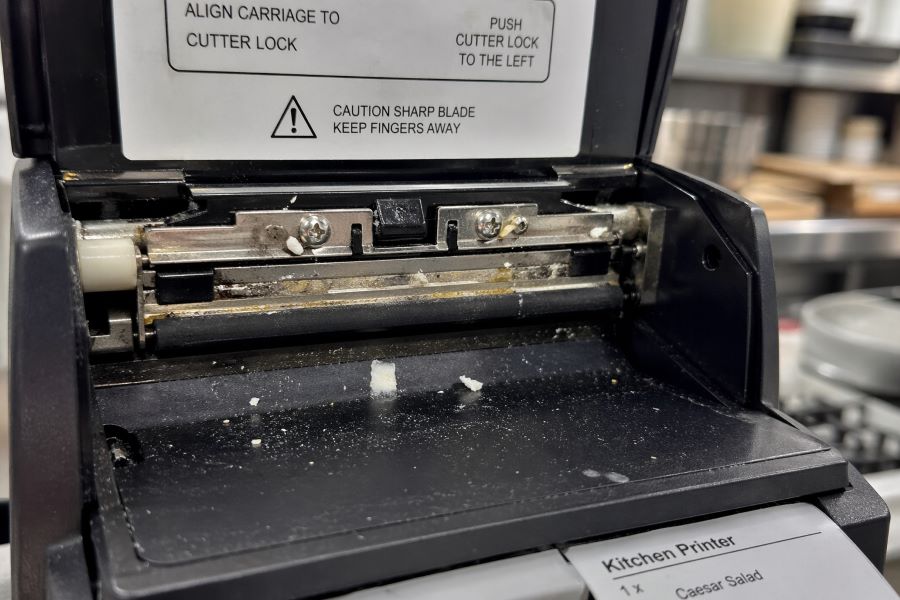
    A gummed-up printer cutter occurs when adhesive residue builds up on the cutter blade. Over time, this residue collects paper dust and label debris.

    As buildup increases, the cutter can become sticky, misaligned, or unable to cut cleanly. This leads to poor performance, inconsistent output, and eventual printer issues if left unaddressed.

    Gummed Up Printer Cutter
    A gummed-up printer cutter leads to poor performance and eventual printer issues if unaddressed.

    How Often Should You Clean a Label Printer Cutter?

    Cleaning frequency depends on print volume, media type, and overall label printer usage.

    High-volume environments and linerless label usage typically require more frequent cleaning due to increased adhesive exposure. Linerless labels, in particular, apply adhesive across the entire label surface, which makes buildup more likely.

    Rather than relying only on a fixed schedule, maintenance alerts are often a better approach. Alerts help ensure cleaning happens when it is actually needed, not too early and not too late.

    The Risks of Not Regularly Cleaning Printers

    Failing to clean printer cutters regularly can lead to a range of operational and mechanical issues:

    • Incomplete cuts, where labels tear instead of separating cleanly
    • Cutter jams that cause print queues to back up
    • Increased strain on the cutter motor, leading to long-term wear
    • Unexpected downtime that interrupts workflows and delays orders
    • Reactive maintenance that pulls staff away from their primary tasks
    • Workarounds that bypass labeling altogether, increasing the risk of errors, missing allergen information, or incorrect orders
    • Damage to brand perception when operations appear inconsistent or unreliable

    Over time, these issues compound. What starts as minor buildup can lead to more serious printer performance problems if not addressed early.

    How to Clean a Label Printer Cutter

    Keeping printer cutters clean is a simple process when done regularly. With the right approach, staff can remove adhesive buildup quickly and keep printers running without interruption.

    1. Power Off and Open the Printer

    • Turn off the printer before performing any maintenance.
    • Open the printer cover to access the cutter area.
    • Ensure the printer is stable and safe to handle before proceeding.

    2. Locate the Cutter Blade and Surrounding Area

    • Identify the cutter blade where labels or receipts are cut.
    • Check for visible adhesive buildup, dust, or debris.
    • Pay attention to edges where residue tends to collect.

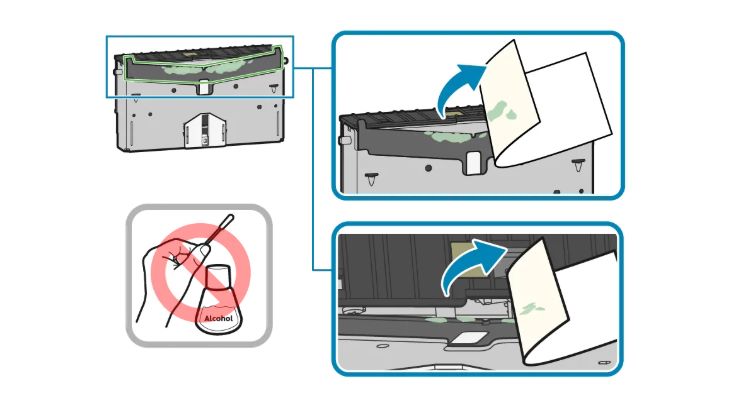
    3. Remove Adhesive Buildup

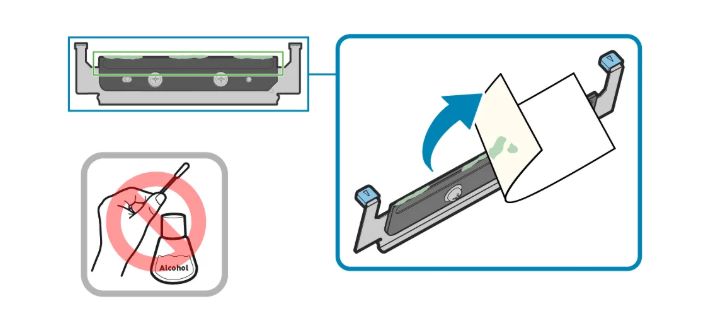
    • Use the adhesive side of an unused label to lift gum and residue.
    • Gently press and pull to remove buildup from the cutter surface.
    • Avoid using sharp objects or abrasive materials.

    Cleaning Printer Cutter Illustration

    4. Clear Loose Debris

    • Remove any remaining paper dust or label fragments.
    • Ensure the cutter area is free of obstructions.
    • Keep the cleaning process controlled and precise.

    Bottom Cutter Blade

    5. Close the Printer and Test

    • Close the printer securely after cleaning.
    • Power the printer back on.
    • Run a test print to confirm smooth, clean cuts.

    Printer Cleaning Do’s and Don’ts

    Do

    • Follow manufacturer guidelines for cleaning and maintenance
    • Clean printer cutters regularly, especially in high-volume or linerless environments
    • Use approved methods, such as the adhesive side of a label, to remove buildup
    • Perform cleaning in a controlled, well-lit area to ensure accuracy

    Don’t

    • Use sharp tools or abrasive materials that can damage the cutter
    • Apply harsh chemicals that may affect printer components
    • Attempt to clean the printer while it is powered on
    • Ignore early signs of buildup, such as uneven cuts or minor jams

    The mC-Label3 Multifunction Printer by Star Micronics great for delivery take out online ordering and QSRs.
    Keep your label printers working by following best practices for cleaning printer cutters.

    Best Practices for Cleaning Printer Cutters

    Keeping printer cutters clean comes down to a few practical maintenance habits.

    • Follow Maintenance Alerts, Not Just Schedules: Print volume can vary significantly. Built-in maintenance alerts help ensure cleaning happens at the right time, before performance issues begin.
    • Make Cleaning Instructions Easy to Access: When cleaning is required, staff need clear, immediate guidance. Printers that provide quick access to step-by-step instructions make maintenance easier and more consistent.
    • Simplify the Cleaning Process: If maintenance is complicated, it will be delayed. Tool-free access and clearly designed components allow staff to clean printers quickly without relying on IT support.
    • Replace Worn Parts Before They Fail: Even with regular cleaning, cutters and platens wear over time. Replacing these components proactively helps prevent jams and keeps printers performing reliably.

    Printer Cleaning and Maintenance Made Easy with Star Micronics

    Keeping label printers clean should not require specialized training or disrupt daily operations. In high-volume environments, printer cleaning and maintenance need to be simple, repeatable, and built into normal workflows. Star printers are designed so routine label printer maintenance can be performed by staff in minutes, without tools, service calls, or operational delays.

    The mC-Label2 and mC-Label3 multifunction label printers are built to support routine cleaning without technical expertise. Built-in maintenance alerts notify staff when attention is needed, helping prevent adhesive buildup before it impacts performance. When it’s time to clean, QR code-driven instructions provide immediate access to step-by-step guidance, so employees can act quickly and confidently.

    Cleaning the printer cutter is straightforward. In many cases, staff can use the adhesive side of an unused label to remove gum and debris from the cutter. Tool-free, color-coded components make it easy to access, clean, and reassemble parts without delays or IT support.

    With the right maintenance approach and tools, cleaning label printers becomes a quick, routine task instead of a source of downtime.

    Want to learn more about how the mC-Label series helps reduce printer downtime? Read our blog, “Reduce Label Printer Downtime with Smarter Maintenance Tools.”

    The mC-Label2 multimedia printer by Star Micronics features user-friendly, tool-free maintenance.
    The mC-Label series uses tool-free, color-coded components for easy printer maintenance.

    Contact us for a demonstration to see how easy printer cleaning and maintenance can be.

    Frequently Asked Questions About Cleaning Printers

    How often should you clean a printer cutter?

    A printer cutter should be cleaned based on print volume and media type. High-volume environments and linerless label printing require more frequent cleaning due to adhesive buildup. Maintenance alerts help ensure cleaning happens at the right time.

    What causes a label printer cutter to become gummed up?

    A label printer cutter becomes gummed up when adhesive residue builds up on the cutter blade. This residue collects paper dust and debris, causing the cutter to become sticky, misaligned, or unable to cut cleanly.

    What happens if you do not clean a printer cutter?

    A dirty printer cutter causes incomplete cuts, label tearing, and frequent jams. Over time, this increases wear on the cutter mechanism and leads to downtime that disrupts labeling workflows.

    How do you clean a label printer cutter?

    To clean a label printer cutter, use the adhesive side of an unused label to remove buildup from the cutter blade. Always follow manufacturer instructions and ensure the printer is powered off before cleaning.

    Do linerless labels require more printer maintenance?

    Yes. Linerless labels apply adhesive across the entire label surface, increasing the likelihood of buildup on the printer cutter. More frequent printer cutter cleaning is required in these environments.

    Can employees clean printer cutters without technical training?

    Yes. Printers designed with tool-free access and guided instructions allow staff to perform printer cutter cleaning without technical training or IT support.

    When should you replace a printer cutter or platen?

    Replace a printer cutter or platen when cleaning no longer resolves cutting issues, or when consistent jams and uneven cuts occur.

    How can businesses reduce printer downtime caused by cutter issues?

    Businesses can reduce printer downtime by performing regular printer cutter cleaning, following maintenance alerts, and replacing worn parts proactively. Using printers designed for easy maintenance improves consistency and reliability.

  • Star Micronics Becomes the First to Offer Windows on ARM Driver Support for POS Printers

    Star Micronics Becomes the First to Offer Windows on ARM Driver Support for POS Printers

    The new driver enables ISVs and solution providers to deploy Star printers on ARM-based Windows devices, expanding compatibility for modern POS environments.

    Somerset, NJ – April 7, 2026 – Star Micronics, a global provider of point-of-sale (POS) hardware, cloud printing, and labeling solutions, today announced the availability of Windows on ARM driver support for its printer portfolio. As the first POS hardware manufacturer to offer native support for Windows on ARM devices, Star is expanding compatibility with next-generation computing platforms used by ISVs, resellers, and enterprise customers.

    As adoption of ARM-based Windows devices continues to grow across tablets, laptops, and compact POS systems, software developers and solution providers are increasingly building applications for these environments. Star’s Windows on ARM driver enables native integration with Star printers, allowing ISVs to support receipt, label, and ticket printing without relying on emulation or additional workarounds.

    Expanding Compatibility for Modern POS Deployments

    Star’s Windows on ARM driver support enables ISVs to support printing natively on ARM-based Windows devices, while giving resellers confidence that Star printers will work with newer Windows hardware without requiring emulation or additional configuration. This is especially important as businesses adopt lighter, more energy-efficient ARM-based systems across retail, hospitality, and service environments.

    Supporting ISVs and Solution Providers

    For ISVs, native Windows on ARM driver support removes the need for emulation and ensures consistent printing functionality across both ARM and traditional x86 platforms, simplifying development for modern POS environments.

    Resellers and solution providers also gain greater flexibility in supporting customer environments that are adopting ARM-based Windows devices, allowing them to offer compatible solutions across a wider range of system configurations.

    “ISVs and solution providers are increasingly working with ARM-based Windows devices as part of modern POS deployments. By offering native Windows on ARM driver support, Star ensures our partners can support the latest hardware platforms without compromising compatibility or performance.”

    Availability

    Star’s Windows on ARM drivers are available on request. To learn more or request access, please contact Star Micronics at integrations@starmicronics.com.

    For more information about Star Micronics solutions, visit starmicronics.com.

    Can’t get enough industry news?

    Star Micronics logo, point-of-sale (POS) hardware and technology company.

    Star Micronics is a global provider of point-of-sale (POS) hardware, cloud printing, and labeling solutions that help businesses connect digital workflows to real-world operations. Serving retail, hospitality, healthcare, and service industries, Star delivers printing, labeling, cash management, self-service, and cloud-based technologies designed to support scalable, connected, and automated environments. Star’s solutions support Android, iOS, Windows, and web-based platforms and extend into the cloud through services such as CloudPRNT Next and StarIO.Online, Star’s fully managed cloud printing service.

    Visit starmicronics.com or follow us on Facebook, X, YouTube, or LinkedIn to learn more.

    Media Contact:

    Christin Dorner
    Star Micronics America, Inc.
    cdorner@starmicronics.com
    848-216-3318

  • Star Micronics Powers Scalable Kitchen Workflows at MURTEC 2026

    Star Micronics Powers Scalable Kitchen Workflows at MURTEC 2026

    Visit Booth 112 to experience Star’s integrated labeling, KDS, and food safety solutions designed to improve consistency across multi-unit restaurant brands.

    Las Vegas, NV – March 9-11, 2026 – Star Micronics, a global leader in point-of-sale (POS), labeling, and cloud technology, is proud to announce its participation in MURTEC 2026, taking place March 9–11 at Caesars Palace in Las Vegas. Attendees are invited to visit Booth 112 to experience Star’s latest restaurant-ready hardware and connected kitchen solutions.

    At MURTEC 2026, Star Micronics will demonstrate how restaurant operators, enterprise brands, and technology providers can improve order accuracy, strengthen food safety compliance, and streamline kitchen workflows using integrated labeling and printing solutions built for modern foodservice environments.

    Attendees can explore live demonstrations at Booth 112, including:

    Food Safety Label Technology

    • KTI Food Safety Solution featuring i.Print3™: A live demonstration showing how Star’s mC-Label2 multifunction label printer, integrated with the i.Print3 automated prep labeling system, supports accurate date labeling, expiration tracking, and cloud-based traceability. Designed for high-volume kitchens, this workflow helps multi-unit operators strengthen food safety compliance and maintain consistent standards across locations.

    KDS Solutions

    • KitchenGO KDS Order Accuracy Demo with Logic Controls: A connected workflow demonstration showing how Logic Controls’ KitchenGO KDS and Star’s mC-Label3 multifunction printer work together to reduce missed modifiers, improve fulfillment timing, and increase order accuracy across dine-in, takeout, and off-premise channels.

    Online Ordering Cloud Printing Solutions

    • mC-Label Multifunction Cloud Printer Series (mC-Label2 and mC-Label3): Multifunction printers built for restaurant environments that support linerless labels, die-cut labels, and receipt media. Ideal for prep labeling, delivery workflows, and on-demand kitchen printing, the mC-Label series delivers flexibility and cloud-ready performance in a compact footprint.

    • TSP143IV SK X4 Linerless Label Printer: A compact 3″ linerless sticky label printer designed for high-volume foodservice environments. The X4 model delivers every modern connectivity option directly on its interface, including USB, LAN, Bluetooth, Wi-Fi, Android Open Accessory (AOA), and dual-band wireless, ensuring flexible deployment across tablet, mobile, and traditional POS systems. Supports repositionable linerless labels for cleaner operations and reduced waste.

    Star will also feature linerless labeling solutions powered by media partners Iconex and StickyPOS. These repositionable linerless labels eliminate backing liners to reduce waste while maintaining strong adhesion and print clarity for prep, delivery, and compliance labeling applications.

    “At MURTEC, we’re focused on helping restaurants solve real-world operational challenges inside the kitchen. Working alongside partners like Logic Controls and KTI, we’re demonstrating how connected KDS, labeling, and printing workflows improve order accuracy, strengthen food safety compliance, and support consistent execution across every ordering channel.”

    Restaurant operators, enterprise IT leaders, and technology providers are encouraged to visit Booth 112 to see live demonstrations and schedule one-on-one meetings with the Star team.

    To book a demo or for more information, contact sales@starmicronics.com.

    Can’t get enough industry news?

    Star Micronics logo, point-of-sale (POS) hardware and technology company.

    Star Micronics is a global leader in POS hardware and transaction technology, providing printers, secure cash management, and connected peripherals for retail and hospitality environments. Known for reliability and developer-friendly integration, Star solutions work seamlessly with Android™, iOS, Windows®, and web-based POS platforms to power receipt, label, ticket, and order printing across modern commerce environments.

    Star’s cloud technologies extend printing beyond the counter. CloudPRNT Next enables scalable direct cloud printing, while StarIO.Online is Star’s fully managed cloud printing service that removes the need for server infrastructure and simplifies remote printer management across distributed locations. Star also offers a broad portfolio of POS peripherals, including barcode scanners, scales, and tablet stands, designed to work together as a complete hardware solution.

    Learn more at starmicronics.com or follow Star on LinkedIn, YouTube, Facebook, Instagram, and X.

    Media Contact:

    Christin Dorner
    Star Micronics America, Inc.
    cdorner@starmicronics.com
    848-216-3318

  • Star Micronics Integrates Labeling and Printing Solutions with Crunchtime Kitchen to Improve Order Accuracy and Fulfillment

    Star Micronics Integrates Labeling and Printing Solutions with Crunchtime Kitchen to Improve Order Accuracy and Fulfillment

    The integration connects kitchen workflows with reliable labeling and printing to support faster, more accurate order fulfillment across modern restaurant environments.

    Somerset, NJ – February 23, 2026 – Star Micronics, a global leader in POS hardware, labeling, and cloud printing technology, today announced the integration of its printing and labeling solutions with Crunchtime Kitchen, an industry-leading kitchen display system (KDS) by Crunchtime. The integration extends digital kitchen workflows beyond the screen, helping restaurants improve order accuracy, accountability, and fulfillment across dine-in, takeout, and delivery channels, with particular impact for quick-service restaurants (QSRs), fast-casual brands, large casual-dining chains, and other hospitality venues.

    Kitchen display systems play a critical role in organizing and prioritizing orders, but accuracy challenges often arise once orders move from preparation to packaging and handoff. By integrating Star Micronics’ labeling and printing solutions with Crunchtime Kitchen, restaurants gain a reliable physical verification layer that supports accurate assembly, clear identification, and confident delivery of every order.

    Extending Order Accuracy Beyond the Screen

    Through the integration, orders displayed within Crunchtime Kitchen workflows trigger printed labels and receipts at key points in the kitchen process. Item-level and order-level labels help teams verify contents, eliminate missed items, and minimize confusion during packaging and pickup.

    Star’s mC-Label multifunction printer series supports a wide range of restaurant labeling needs, including item labels, bag seals, and order identification, using linerless, die-cut, or receipt media, all from a single model. Available in 2-inch and 3-inch options, the series also features user-friendly maintenance that reduces downtime and simplifies upkeep for kitchen teams.

    Star’s TSP143IV SK supports sticky linerless labels and receipt printing, giving restaurants flexible options for labeling and order verification. When paired with Crunchtime Kitchen, labeling helps ensure that digital orders are accurately reflected in the final order handed to the customer.

    Orchestrating Complex, Multi-Channel Kitchen Operations

    Crunchtime Kitchen is purpose-built to help restaurants manage complex, high-volume kitchen operations where speed, accuracy, and coordination are critical. Rather than simply displaying orders, the system orchestrates how orders move through the kitchen by pacing tickets, routing items to the right stations, and adjusting workflows based on real-time demand.

    “When kitchens are under pressure, teams need systems they can trust. Bringing Crunchtime Kitchen together with Star Micronics’ labeling and printing solutions gives restaurants greater confidence that orders are executed accurately for the guest.”

    Features such as delayed routing, customizable prep stations, and dynamic capacity management help balance workloads, reduce bottlenecks, and keep multi-item orders finishing together. This approach supports consistent execution across dine-in, takeout, and delivery channels, even during peak periods.

    Paired with Star Micronics’ labeling and printing solutions, these orchestrated workflows extend beyond the screen, giving kitchen teams a clear, physical way to verify, assemble, and fulfill orders accurately.

    Reliable Printing for Real-World Kitchen Execution

    The integration also supports Star’s mC-Print3 thermal receipt printer, delivering fast, dependable receipt and order printing in high-volume kitchen environments. Built for the demands of busy kitchens, the mC-Print3 provides consistent output at prep, expo, and fulfillment stations during peak service.

    Together, Star’s printing and labeling hardware provides restaurants with flexible options to support prep stations, expo lines, and fulfillment areas, while maintaining clarity and reliability across workflows.

    Supporting Modern Restaurant Operations

    As restaurants manage increasing order complexity driven by kiosks, online ordering, and third-party delivery, accuracy at handoff has become a critical factor in customer satisfaction and loyalty. Clear labeling and reliable printing help reduce costly remakes, refunds, and delivery issues, while improving the overall guest experience.

    The integration between Star Micronics and Crunchtime Kitchen enables restaurant operators to unify digital order management with consistent, real-world execution across every service channel. Designed for multi-channel, enterprise restaurant environments, Crunchtime Kitchen helps operators maintain service consistency and throughput by intelligently managing order flow across stations, channels, and peak demand periods.

    A Trusted Partner for KDS Labeling Solutions

    With decades of experience supporting restaurant technology ecosystems, Star Micronics continues to work closely with leading software providers to deliver dependable hardware solutions. The integration with Crunchtime Kitchen reinforces Star’s role as a go-to provider of labeling and printing technology for KDS environments.

    For more information about Star Micronics solutions, visit starmicronics.com.
    To learn more about Crunchtime Kitchen, visit crunchtime.com.

    About Star Micronics

    Star Micronics is a world leader in point-of-sale (POS) hardware, offering a portfolio of printing, secure cash management, self-service, and customer engagement solutions for retail and hospitality environments. Star’s technologies support Android, iOS, Windows, and web-based platforms, as well as cloud printing solutions such as CloudPRNT Next and StarIO.Online.

    About Crunchtime

    About Crunchtime: Crunchtime helps multi-unit restaurants operate every location like their best one. Trusted by 850+ brands across 150,000+ locations worldwide, Crunchtime connects the full operations management lifecycle across inventory management, labor and scheduling, kitchen management, and operations execution, in the industry’s only complete, AI-powered suite. Top operators, including Jersey Mike’s, Five Guys, Smoothie King, Wingstop, and Chili’s, rely on Crunchtime to achieve profitability and deliver great guest experiences every day in every store. To learn more, visit Crunchtime.com.

    Can’t get enough industry news?

    Star Micronics logo, point-of-sale (POS) hardware and technology company.

    Star Micronics is a global leader in POS hardware and transaction technology, providing printers, secure cash management, and connected peripherals for retail and hospitality environments. Known for reliability and developer-friendly integration, Star solutions work seamlessly with Android™, iOS, Windows®, and web-based POS platforms to power receipt, label, ticket, and order printing across modern commerce environments.

    Star’s cloud technologies extend printing beyond the counter. CloudPRNT Next enables scalable direct cloud printing, while StarIO.Online is Star’s fully managed cloud printing service that removes the need for server infrastructure and simplifies remote printer management across distributed locations. Star also offers a broad portfolio of POS peripherals, including barcode scanners, scales, and tablet stands, designed to work together as a complete hardware solution.

    Learn more at starmicronics.com or follow Star on LinkedIn, YouTube, Facebook, Instagram, and X.

    Media Contact:

    Christin Dorner
    Star Micronics America, Inc.
    cdorner@starmicronics.com
    848-216-3318

  • Star Micronics Expands ESC/POS Printer Compatibility Across Thermal and Impact Printing Solutions

    Star Micronics Expands ESC/POS Printer Compatibility Across Thermal and Impact Printing Solutions

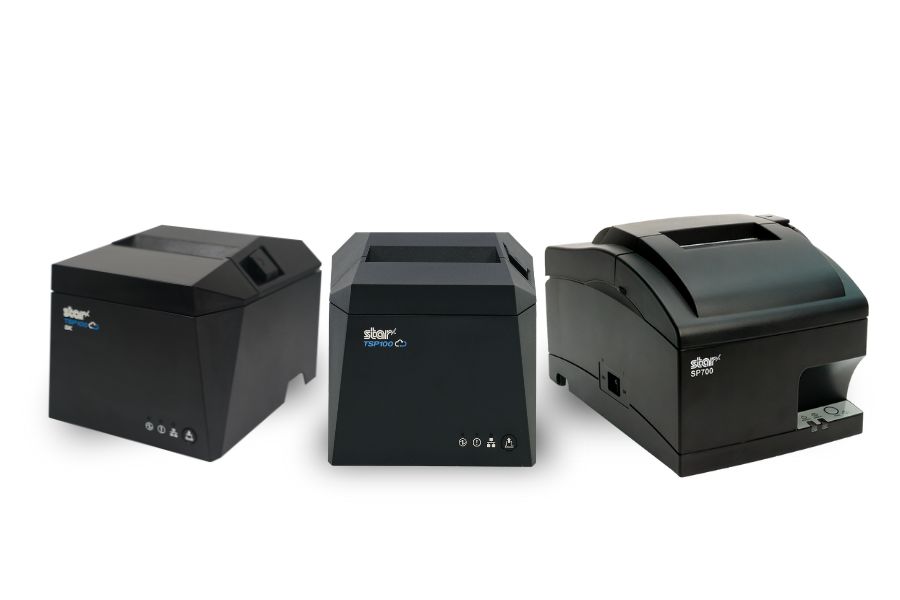
    New ESC/POS printer support includes the TSP100IV series, including SK models, and LAN-based ESC/POS emulation for the SP742 impact printer.

    Somerset, NJ – January 30, 2026 – Star Micronics today announced expanded ESC/POS printer support for the TSP100IV thermal printer series, including TSP100IV SK models, and added LAN-based ESC/POS emulation for the SP742 impact printer. This update extends across the UE and X4 models, including both receipt and linerless sticky label printers. It gives retailers, resellers, and software developers the flexibility to expand their Star hardware portfolio or move to Star, even when their current applications rely on ESC/POS support.

    TSP143IV Series with ESC/POS: Compact & Connected

    The TSP143IV UE (thermal receipt) and TSP143IV UE SK (linerless sticky label) provide a balance of compact design and versatile connectivity. Both models feature USB-C, LAN, CloudPRNT, and Android Open Accessory (AOA) support. With the addition of ESC/POS emulation, integration with legacy systems is even simpler.

    TSP143IV X4 Series with ESC/POS: Future-Proof Versatility

    The TSP143IV X4 (thermal receipt) and TSP143IV SK X4 (linerless sticky label) printers bring four interfaces in one device — “Ultra-C” USB-C, LAN, WLAN, and Bluetooth — along with CloudPRNT Next for faster, more reliable cloud-based printing. Now with ESC/POS emulation, the X4 series ensures maximum compatibility while maintaining industry-leading performance and connectivity.

    Shared Features Across All Models

    • ESC/POS emulation for broader software support
    • High-speed thermal printing (up to 250mm/s on receipt models, 180mm/s on SK label models)
    • Built-in guillotine auto-cutters
    • Compact, space-saving design with internal power supply
    • EnergyStar certification and eco-friendly packaging with minimal plastic

    SP742 Impact Printer Adds ESC/POS Support via LAN

    Star Micronics has also expanded ESC/POS™ emulation support to its SP742 impact printer with the LAN interface. This update enables broader compatibility with legacy POS systems that rely on ESC/POS while continuing to support environments that require durable, impact-printed output. The SP742 remains well suited for kitchens, back-office operations, and other applications where impact printing is preferred.

    Supporting Retail & Hospitality Innovation

    “By adding ESC/POS emulation to all four models in the TSP100IV series, we’re giving businesses and ISVs greater flexibility without compromising the advanced performance that defines Star. Whether for receipts or linerless sticky labels, the UE and X4 models deliver the connectivity, reliability, and sustainability today’s businesses need.”

    For more details on the new ESC/POS-enabled models, visit starmicronics.com or contact sales@starmicronics.com.

    Can’t get enough industry news?

    Star Micronics logo, point-of-sale (POS) hardware and technology company.

    Star Micronics is a global leader in POS hardware and transaction technology, providing printers, secure cash management, and connected peripherals for retail and hospitality environments. Known for reliability and developer-friendly integration, Star solutions work seamlessly with Android™, iOS, Windows®, and web-based POS platforms to power receipt, label, ticket, and order printing across modern commerce environments.

    Star’s cloud technologies extend printing beyond the counter. CloudPRNT Next enables scalable direct cloud printing, while StarIO.Online is Star’s fully managed cloud printing service that removes the need for server infrastructure and simplifies remote printer management across distributed locations. Star also offers a broad portfolio of POS peripherals, including barcode scanners, scales, and tablet stands, designed to work together as a complete hardware solution.

    Learn more at starmicronics.com or follow Star on LinkedIn, YouTube, Facebook, Instagram, and X.

    Media Contact:

    Christin Dorner
    Star Micronics America, Inc.
    cdorner@starmicronics.com
    848-216-3318

  • What NRF 2026 Revealed About the Future of Retail and Restaurant Technology

    What NRF 2026 Revealed About the Future of Retail and Restaurant Technology

    The National Retail Federation’s Big Show has long served as a bellwether for where retail technology is headed, offering a clear view each year into how the industry is evolving. NRF 2026, however, surfaced a more defining shift.

    The future of retail and restaurants is being built right before our eyes, as hardware, AI-powered platforms, and workflow design operate as a single system, with order accuracy forming the foundation for lasting customer loyalty. What stood out at NRF 2026 was not any single breakthrough, but how these technologies are increasingly designed to work together in real-world environments.

    Across the show floor, one theme surfaced repeatedly. Technology is no longer being evaluated in isolation. Operators are assessing complete, end-to-end workflows, from ordering and production to fulfillment and the final guest interaction. The conversation has moved beyond experimentation and toward execution, reliability, and scale.

    At NRF 2026, retail and restaurant technology clearly entered a phase of operational maturity, with solutions increasingly judged by how well they perform across locations, channels, and peak demand moments.

    Here are the key takeaways from NRF 2026, and what they signal for the rest of 2026.

    Table of Contents

    Self-Service Is No Longer Optional

    Self-service has moved beyond experimentation. At NRF 2026, kiosks, unattended stations, and automated pickup workflows were everywhere, across QSR, retail, travel, and hybrid environments.

    Operators are adopting self-service to address labor challenges, increase throughput, and meet customer expectations for speed and convenience. That shift places new demands on hardware reliability. When self-service fails, there is no staff member to step in.

    What this means for 2026:

    • Kiosks and unattended workflows will continue expanding into new verticals
    • Open-frame and kiosk printers must deliver high uptime and jam-free performance
    • Hardware flexibility will matter as much as software innovation

    Self-service is no longer a differentiator. It is the baseline.

    Order Accuracy Has Become the Guest Experience

    Speed gets orders out the door. Accuracy determines whether customers come back.

    One of the strongest signals at NRF 2026 was the growing emphasis on order accuracy, especially for off-premise dining, third-party delivery, catering, and pickup. As order volumes increase and channels multiply, operators are turning to labeling and verification workflows to reduce errors.

    Labeling is now being used to:

    • Identify individual items within an order
    • Seal bags for tamper-evident delivery
    • Improve kitchen communication and fulfillment accuracy
    • Support food safety and expiration tracking

    What this means for 2026:

    • Label printing will continue shifting from optional to mission-critical
    • KDS-driven label printing will become more common
    • Linerless and die-cut labels will be selected based on workflow, not trend

    Order accuracy is no longer only a back-of-house concern. It is central to the brand experience.

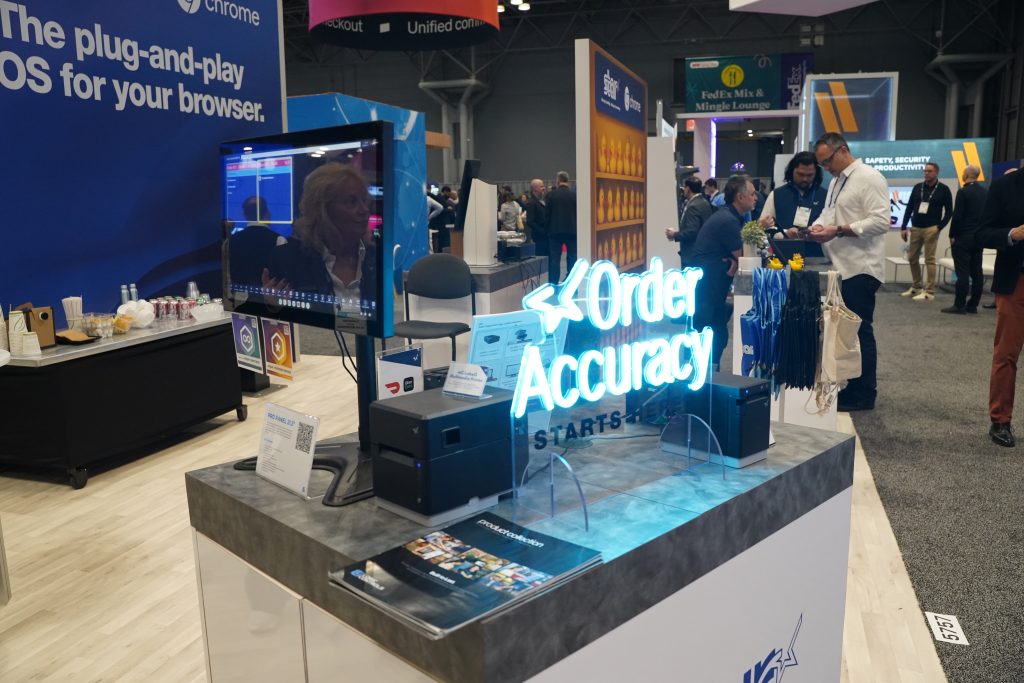
    Visit Star Micronics at booth 5757 during NRF 2026.

    Cloud Infrastructure Is Getting Simpler by Design

    ISVs and platform providers sent a clear message at NRF 2026. They want fewer systems to manage, not more.

    Rather than building and maintaining proprietary print servers, many developers are looking for hosted, API-based solutions that remove infrastructure overhead. Cloud printing is evolving from a technical challenge into a managed service expectation.

    What this means for 2026:

    • Hosted cloud printing will see increased adoption
    • API-first platforms will outperform custom infrastructure
    • Remote device monitoring and management will be table stakes

    The cloud stack is not getting more complex. It is becoming more streamlined.

    Web-Based POS and Chrome OS Are Gaining Momentum

    Another major takeaway from NRF 2026 was the continued rise of web-based POS applications and Chrome OS deployments. Developers are prioritizing flexibility, faster updates, and browser-based workflows that reduce OS dependency.

    This shift places new requirements on POS hardware. Devices must work seamlessly across Android, web, and kiosk environments without extensive integration work.

    What this means for 2026:

    • Web-based POS applications will continue to grow
    • Chrome OS kiosks will expand in retail and hospitality
    • Hardware that works across platforms will be preferred

    Platform flexibility is becoming a key purchasing criterion.

    POS Hardware Design and Ergonomics Matter More Than Ever

    NRF 2026 highlighted a growing focus on workspace design. Operators are paying closer attention to how POS environments look, function, and scale over time.

    Clean countertops, effective cable management, and ergonomic mounting solutions are no longer cosmetic concerns. They impact staff efficiency, safety, and customer perception.

    What this means for 2026:

    • Modular and adaptable hardware setups will increase
    • Mounting and peripheral integration will be planned together
    • POS design will be viewed as part of the brand experience

    Hardware must perform well and look intentional.

    Sustainability Is Becoming an Operational Advantage

    Sustainability conversations at NRF 2026 were quieter, but more serious. Operators are increasingly evaluating solutions that reduce waste, simplify operations, and support compliance without adding cost or complexity.

    Linerless labeling stood out as a clear example. It reduces liner waste, improves efficiency, and supports modern labeling workflows without changing user behavior.

    What this means for 2026:

    • Waste-reducing technologies will gain broader adoption
    • Media choices will factor into purchasing decisions
    • Sustainability and efficiency will continue to align

    Environmental considerations are becoming practical, not promotional.

    Partnerships Are Driving the Most Compelling Solutions

    Some of the most effective solutions at NRF 2026 were not built by a single company. They were the result of deep partnerships across hardware, software, and platform providers.

    Integrated ecosystems reduce friction for resellers, simplify deployments, and deliver better outcomes for operators. Collaboration is accelerating innovation faster than isolated development ever could.

    What this means for 2026:

    • Ecosystem-driven solutions will gain traction
    • Channel-friendly integrations will matter more
    • End-to-end workflows will outperform point solutions

    Looking Ahead to the Rest of 2026

    NRF 2026 made one thing unmistakable. Retail and restaurant technology is moving into a more disciplined and outcome-driven phase. The emphasis is no longer on adding disconnected features. It is on building systems that work together reliably under real operating conditions.

    As hardware, AI-powered platforms, and workflow design continue to converge, operators are prioritizing solutions that improve execution at every step of the journey. Order accuracy, uptime, and consistency across locations are becoming the true measures of success because they directly shape customer loyalty and long-term performance.

    For the rest of 2026, expect continued investment in:

    • Self-service and unattended workflows
    • Labeling and order verification
    • Cloud-managed and web-based platforms
    • Modular, adaptable POS hardware
    • Integrated partner ecosystems

    At Star Micronics, these shifts reinforce a long-standing focus on building reliable, flexible hardware that adapts as workflows evolve. When technology operates as a unified system rather than a collection of parts, it quietly enables better execution, stronger operations, and better experiences for customers.

    NRF 2026 did not just highlight what is emerging. It clarified how the next generation of retail and restaurant operations will be built.

    How VARs and ISVs Can Maximize ROI with Advanced Kiosk Printing Technology

    This ebook reveals how ISVs and VARs can harness the transformative potential of kiosk printing technology to maximize ROI for both their clients and their own businesses.

    Learn More About Star POS & Labeling Solutions