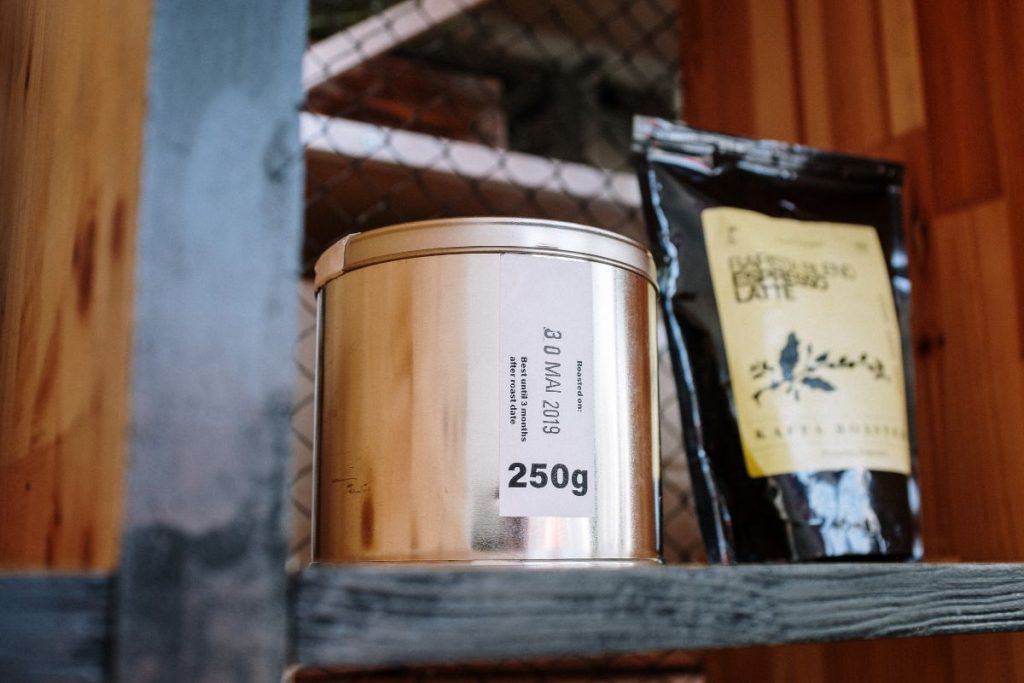
Tag: Label Media

  • Build a Visitor Badge System for Better Guest Experiences

    Build a Visitor Badge System for Better Guest Experiences

    Many organizations have established processes to identify visitors and control access within their facilities via visitor badge systems. Government buildings and schools require procedures to monitor who has entered the building and ensure everyone has registered, helping to keep their facilities and people secure. Hospitals and long-term care facilities require visitor badge printers as a part of a system to protect patients and to help control access to restricted areas. 

    Corporate enterprises issue badges to alert employees to the presence of visitors and ensure they don’t enter sensitive or unsafe areas. Whatever the setting, organizations across a wide range of industries have determined that identifying visitors and providing information about them on badges helps organizations operate more efficiently and securely.

    How to Increase Badge-Issuing Efficiency

    While visitor badges are an integral part of a comprehensive access control strategy, the process of issuing them may be inefficient and interfere with positive guest experiences. Issuing badges manually takes time, and handwritten badges may be difficult to read. Moreover, it’s often impractical to include a visitor photo or other key details when badges are created by hand.

    Badge solutions that incorporate purpose-built software, cameras, scanners, and printers streamline these processes. The system can allow guests to scan their ID to auto-populate fields on a badge, use an integrated camera to include a photo, and automatically add details like permissions and entry time. These systems also create a log for real-time tracking and auditing purposes. 

    While issuing badges in most cases will continue to require an employee to check credentials and ensure policy compliance, a visitor badge system saves time, keeps lines short, and improves the overall user experience.

    Features of the Optimal Visitor Badge Printer

    A visitor badge printer is a key component of any badge solution. To ensure efficient processes and high-quality badges, printers need the following features:

    1. Print Width

    You need the capability to print the right-sized labels so your team can easily read information and confirm that the badge is authentic. The ability to print on varying widths from the same printer is even more efficient, depending on your purposes.

    2. Print Quality and Speed

    A good visitor badge printer balances quick output with sharp, clear results to avoid bottlenecks while maintaining professionalism. 

    3. Flexible Connectivity

    Not all entrances to your facilities allow for a wired network connection to your software. Printers with wireless or Bluetooth connectivity options enable printing wherever necessary. 

    4. Access to Label Templates

    Printers that allow you to build and store pre-designed templates will make badge printing easier, especially when visitors have varying levels of permissions or unique needs.

    5. Hardware Design

    Choose a compact, space-saving printer with adaptable power options to suit your processes.

    6. Easy User-Friendly Maintenance

    A visitor badge printer with easy, user-friendly maintenance is essential for minimizing downtime and ensuring smooth operations. Features like toolless repair and straightforward upkeep allow staff to quickly address issues, keeping the badge-issuing process efficient and hassle-free.
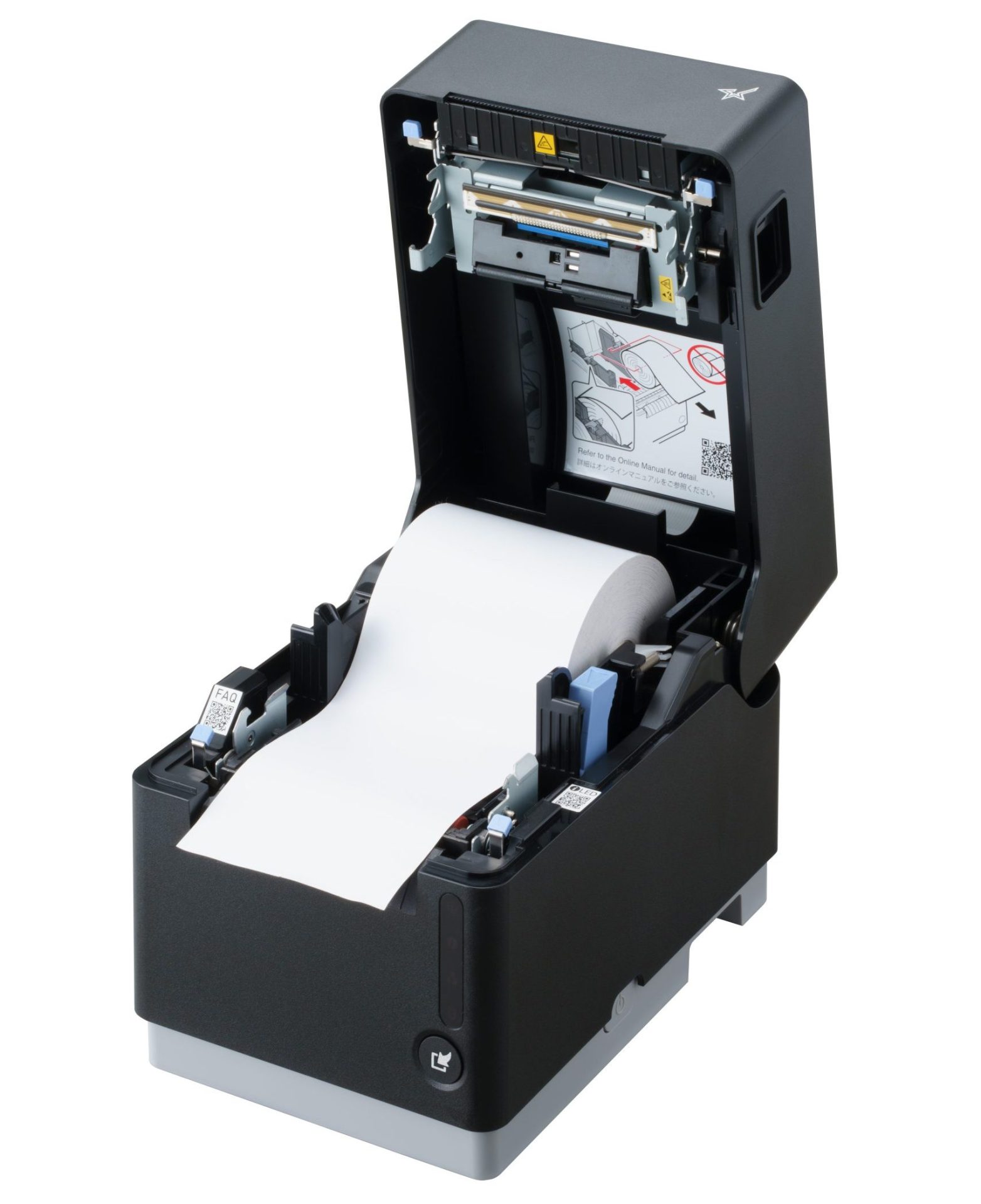
    The mC-Label3 multifunction label and receipt printer from Star Micronics can fit media of multiple widths and types.
    The mC-Label3 multimedia printer by Star Micronics offers simple, user-friendly maintenance alerts.

    Choose the Right Label Media for Your Visitor Badge System

    The type of label media used is another crucial factor in building an efficient system.  Peel-and-stick die-cut labels, a common option, can slow down processes, extend visitor wait times, and generate waste from backing materials. These label rolls also need to be changed more often because they contain labels plus silicone backing, giving fewer labels per roll. Business owners will also need to keep more rolls stocked in-house, taking up valuable storage space. 

    Because of the drawbacks of using linered labels, many organizations are choosing linerless labels. These labels exit the printer ready to apply—there is no silicone backing to peel off. This allows employees to issue badges more quickly and efficiently. It’s also a more sustainable choice for the system, reducing paper waste and allowing organizations to store more labels per shipment, minimizing transportation emissions.

    Find out more about more about the eco-friendly advantages of linerless labels here >

    Evaluate Your Current Processes—and Your Options

    Transitioning from manual processes or outdated, legacy systems to a modern efficient badge solution will save time, streamline workflows, and help visitors get where they need to go with less friction and in less time. 

    Star’s mC-Label3 multimedia printer has all of the features you need to generate high-quality, easily readable badges that are customized to your needs. It allows flexible print widths and accommodates linerless sticky labels (whether diamond or full adhesive), permanent linerless labels, die-cut labels, and continuous labels. It also features multiple connectivity options, whether connecting requires wireless or wired options. 

    Designed with user-friendly maintenance in mind, the mC-Label3 offers toolless repair and provides maintenance alerts with QR codes that guide users to detailed instructions on what the printer needs. This multifunctional printer includes One Touch Label, allowing your team to print custom, pre-designed label templates stored directly in the printer—even without a network connection.

    Visit the mC-Label3 page for more information.
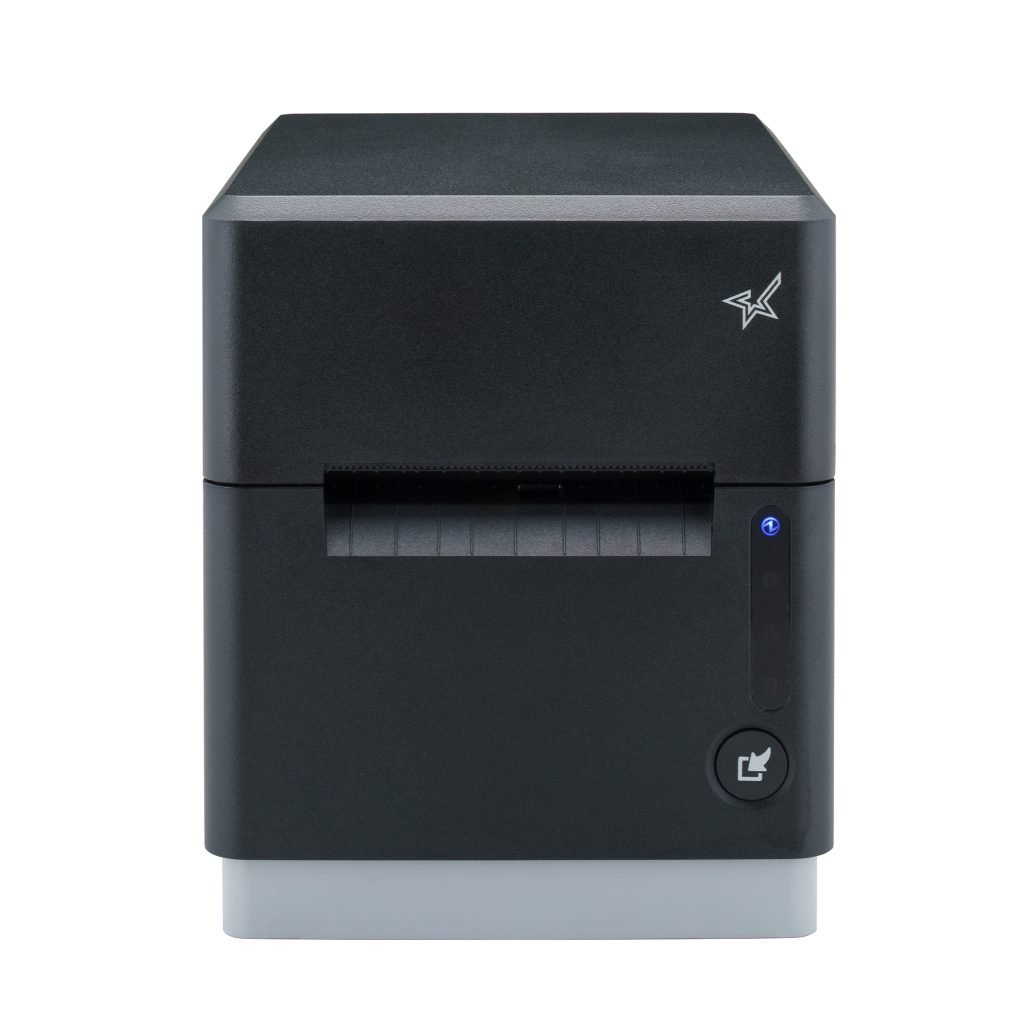
    mC-Label3 Multimedia Printer

    The Star Micronics mC-Label3 is a versatile multimedia printer that prints a wide range of labels and receipts, including both permanent and repositionable sticky linerless. It features cloud connectivity and innovative technologies like SteadyLAN and TetherLAN for enhanced printing convenience.

    Discover the mC-Label3 >

    Learn More About Visitor Badge Printers From Star

  • Staying Compliant with Prop 65: What VARs Need to Know About BPS and Paper Inventory

    Staying Compliant with Prop 65: What VARs Need to Know About BPS and Paper Inventory

    California’s Proposition 65 (Prop 65) has recently updated its regulations, requiring products containing Bisphenol S (BPS) to include proper warning labels before being sold in California. To ensure compliance and avoid potential issues, Star Micronics has issued an important letter to value-added resellers (VARs) outlining the situation and what steps need to be taken.

    Key Takeaways

    • Transition to Prop 65-Compliant Paper: Star strongly encourages VARs to update their paper lineup with compliant products to simplify operations and remain within regulatory guidelines.
    • Label Non-Compliant Inventory: Ensure any products containing BPS in your current inventory are correctly labeled if sold in California.
    • Educate Yourself on Prop 65 Laws: Carefully review the letter for detailed guidance and familiarize yourself with Prop 65 requirements to stay informed.

    What Does This Mean for Your Business?

    Many paper and label products currently in use may contain BPS. To avoid compliance issues, Star Micronics strongly encourages transitioning your paper inventory to our Prop 65-compliant Star Blue Eco paper. This sustainable option is designed to meet California’s standards while supporting environmentally conscious business practices.

    Learn More About Star Blue Eco >

    For any questions or concerns about Prop 65 compliance or Star Blue Eco products, please feel free to contact us. Staying informed and prepared ensures your business can continue to thrive while meeting these important standards.

  • Smarter Cafe Management with Linerless Sticky Labels

    Smarter Cafe Management with Linerless Sticky Labels

    In this episode of the Rising Stars Podcast, “Smarter Cafe Management with Linerless Sticky Labels,” host Kate Orara uncovers the many benefits of linerless sticky label printers for cafes and coffee shops. As Partner Development Manager at Star Micronics, Kate shares her expertise on how this technology can streamline daily operations while offering a sustainable solution for labeling.

    This quick episode highlights the key benefits of linerless printing, from speeding up order labeling and minimizing customer wait times to reducing environmental waste by eliminating non-recyclable liners. Kate discusses how these printers offer flexible label sizing, catering to a variety of needs from small coffee cups to larger takeout containers, making them a game-changer for both front-of-house and back-of-house operations.

    Power-Up Your Cafe with Linerless Label Printing

    Listeners will gain insights into how linerless sticky label printers can boost productivity, enhance customer service, and contribute to sustainability efforts. Kate also emphasizes the long-term cost savings and operational advantages that make these printers a must-have for any cafe looking to stay competitive in today’s fast-paced environment.

    Whether you’re looking to enhance order management or explore eco-friendly solutions, this episode provides valuable guidance on making the switch to linerless technology. With real-world examples and expert advice, Kate makes the case for why linerless sticky labels are the future of efficient cafe management.

    Subscribe and listen now to discover how linerless sticky label printers can elevate your cafe’s operations.

    Read the blog post, “Why Every Café and Coffee Shop Needs a Linerless Sticky Label Printer,” here >

    Loving the podcast? Subscribe now, and let us know what you think by leaving a review!

    Stay up-to-date on all things Star, don’t forget to follow us on X, LinkedIn, Facebook, Instagram, and YouTube.

    The Rising Stars Podcast

    Immerse yourself in the world of point-of-sale (POS) with the Rising Stars Podcast by Star Micronics, hosted by industry pro, Kate Orara. Twice a month, we explore the fascinating journeys of innovators and businesses navigating the challenges of POS technology’s rapid pace.

    In every episode, Kate Orara, Star Micronics’ Partner Development Manager, discusses emerging retail technology trends and strategies with global industry giants. She’s spent her entire career meeting all the right people, and now listeners everywhere can benefit from this vast network of channel gurus.

    Always leading and always innovating, Star Micronics, a pioneer in POS and customer experience technology for over 60 years, welcomes you to join us in shaping a brighter future in the retail, hospitality, and cannabis industries.

    Want more industry news?

    Episode Transcript

    [Music]

    Kate Orara: Hey there, retail tech enthusiasts. Welcome to the Rising Stars podcast, your go-to source for all things retail technology and the ever-evolving world of point of sale. I’m your host, Kate Orara, Partner Development Manager at Star Micronics, and I am thrilled to be your guide on this exciting journey. Here at Rising Stars, we’re not just keeping up with the trends—we’re setting them. We dive deep into the tech landscape with global industry leaders, unpacking strategies, and discussing the latest innovations that shape the future of retail IT. Whether you’re a tech aficionado, business owner, or just curious about the dynamic world of retail, this podcast is your backstage pass to insider knowledge. And hey, it’s not just about the tech, it’s about the community. Join me and the Star Micronics team as we lead and innovate, shaping a brighter future for the retail, hospitality, and cannabis industries, as well as beyond. Together, we rise. So hit that subscribe button, stay in the loop, and let’s make waves in the retail tech space. This is the Rising Stars podcast, where innovation meets inspiration. Let’s rise together.

    Kate Orara: Hey y’all, welcome back to the Rising Stars podcast. I’m your host, Kate Orara, and in today’s episode, we’re diving into a game changer for cafes and coffee shops—the linerless sticky label printer. If you’ve ever wondered why every cafe needs one, you’re in the right place—or shall I say, you’re listening to the right podcast. We’ll actually be summarizing an insightful blog from Star Micronics that breaks down the benefits. If you’re not already subscribed to Star’s blog, be sure to visit Star Micronics’ website, go to the resources tab at the top, and select Star POS Blog. Scroll all the way down to the bottom of the page and complete the two-field form so you never miss an insightful piece from the resourceful marketing team at Star.

    Kate Orara: With that being said, grab your favorite brew—of the coffee variety—and let’s get started.

    Kate Orara: First off, what’s all the fuss about linerless sticky label printers? Well, imagine a world where labeling your coffee cups, food items, and merchandise is not only quick and easy but also eco-friendly. That is the power of linerless printing technology. The blog emphasizes a key point: efficiency. Picture a bustling morning rush in your cafe—orders are flying, and every second counts. With a linerless printer, you can print labels faster than ever before, reducing wait times and keeping your customers happy. That’s what it’s all about, right?

    Kate Orara: But it’s not just about speed—it’s also about versatility. Linerless printers can produce labels of various lengths, which is perfect for everything from small espresso cups to large venti-to-go containers. Plus, they’re compatible with a range of label materials, ensuring durability without the waste of traditional label rolls.

    Kate Orara: Now, let’s talk about waste reduction. Traditional label rolls come with a backing material called liner, and with linerless printing—well, you see where we’re going—that liner is not often recyclable. So by switching to linerless printing, cafes can significantly reduce their environmental footprint. It’s a win-win for both your business and the planet.

    Kate Orara: But wait, there’s more. Linerless printers aren’t just for labeling cups and containers—they can also streamline your back-of-house operations. From labeling ingredients to organizing inventory, these printers are a game changer for cafe management.

    Kate Orara: So why aren’t all cafes jumping on the linerless bandwagon? Well, like any technology, there is an initial investment involved. But as Star’s blog points out, the long-term benefits far outweigh the upfront costs. Think of it as an investment in the future of your cafe.

    Kate Orara: So, to wrap up, it’s clear that linerless sticky label printers are revolutionizing the way cafes and coffee shops operate. From boosting efficiency to reducing waste, these devices are truly a must-have for any modern cafe looking to stay ahead of the curve.

    Kate Orara: That’s it for today’s episode of the Rising Stars. I hope you’ve enjoyed our dive into the world of linerless printing. Just a reminder, be sure to check out the full blog on Star Micronics’ website for more details. And do not forget to subscribe so you can get all sorts of great information on a regular basis. Until next time, keep brewing excellence in your cafe.

    Kate Orara: And that’s a wrap for this episode of the Rising Stars podcast. A huge thanks to our incredible listeners for tuning in, and to our phenomenal guests for sharing their insights. Don’t forget to subscribe, rate, and leave us a review. Let us know what you want to hear more about. Give us your feedback, because it fuels our journey to bring you the best in retail technology. Stay connected with us on social media for updates and behind-the-scenes content. As we sign off, remember, the future of retail technology is in our hands, and together, we’re shaping it. Keep innovating, keep rising, and until next time, this is Kate Orara signing off. Together, we rise.

    [Music]

  • Reusable Cups: The Growing Trend and the Need for Linerless Sticky Labels

    Reusable Cups: The Growing Trend and the Need for Linerless Sticky Labels

    Since 2020, restaurants have significantly changed their operations. They adapted to regulations and mandates during the COVID-19 pandemic. They added online ordering and curbside pickup options to offer customers new ways to engage. They deployed self-service ordering and payment kiosks to meet changing consumer preferences. 

    However, the evolution of this industry isn’t over. Now, chains are prioritizing sustainability, transitioning to reusable cups. Repositionable linerless sticky labels will be vital to making that strategy work.

    The Challenge of Beverage Cup Waste

    Stopping for coffee on the way to work or between errands is routine for many consumers. However, the cups they use are piling up. The Guardian reports that the U.S. landfills about 25 billion polystyrene cups each year, and that material takes about 500 years to decompose. 

    However, polystyrene isn’t the only type of cup that negatively impacts the environment. The estimated 16 billion paper cups that U.S. consumers use each year require cutting down about 6.5 million trees. Furthermore, adding up the cup, sleeve, production, and shipping, each paper cup is responsible for 110g of carbon dioxide emitted into the environment. 

    While protecting the environment and complying with new regulations for sustainable operations are driving changes in how restaurants serve to-go beverages, another factor is cost. Every 1,000 cups and lids cost about $75-$150, and with traditional processes, it’s equivalent to paying for something that immediately heads to a landfill. It’s one more reason that restaurants are taking a serious look at joining the reusable cup trend.

    Why Every Café and Coffee Shop Needs a Linerless Sticky Label Printer

    Chains Trailblazing the Transition to Reusable Cups

    One chain that has launched a program to serve beverages in reusable cups is Tim Hortons. The brand, which had used this model before the pandemic, offers a 10-cent discount to customers who bring a clean reusable cup for their hot or cold beverage orders. Tim Hortons reports that, in 2019, it was able to reduce the number of disposable cups it used by 15 million for hot beverage orders alone. 

    Starbucks is also emerging as a leader in this area, becoming the first to accept reusable cups at the drive-thru and for mobile orders at participating locations in the U.S. and Canada. When customers place their orders at the drive-thru or with the Starbucks app, they let the barista know they brought a reusable cup. When they arrive at the pickup window or the counter, the barista collects the cup in a contactless vessel to ensure hygiene.

    After baristas prepare orders, they serve them in customers’ cups. These customers receive a 10-cent discount, 25 Bonus Stars, and the satisfaction of supporting Starbucks’ commitment to reduce waste by 50% by 2030.

    Repositionable Linerless Sticky Labels Make Serving Beverages in Reusable Cups Practical

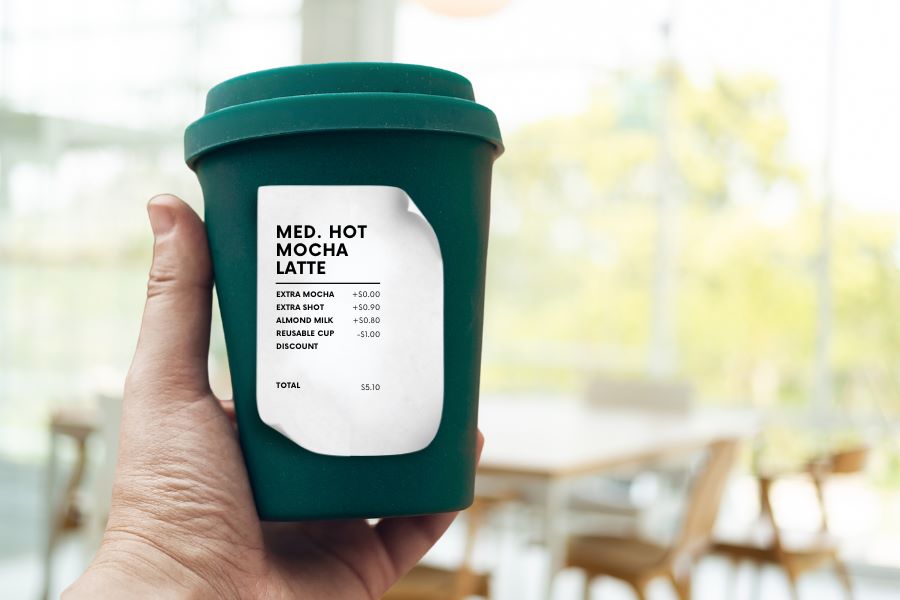
    When serving beverages in customers’ reusable cups, it’s essential to ensure employees can quickly identify which cup belongs to which customer. Repositionable sticky labels allow restaurants and cafes to keep the order and customer information with the cup to avoid mix-ups. If the goal is to reduce waste, ensuring the correct order is poured into the right cup is essential. Otherwise, employees would have to discard the beverage and remake the order. 

    Also, repositionable labels are durable enough to stay attached throughout the process but are easy for customers to remove. Therefore, they don’t have to scrape off a permanent label so they can use the cup again. 

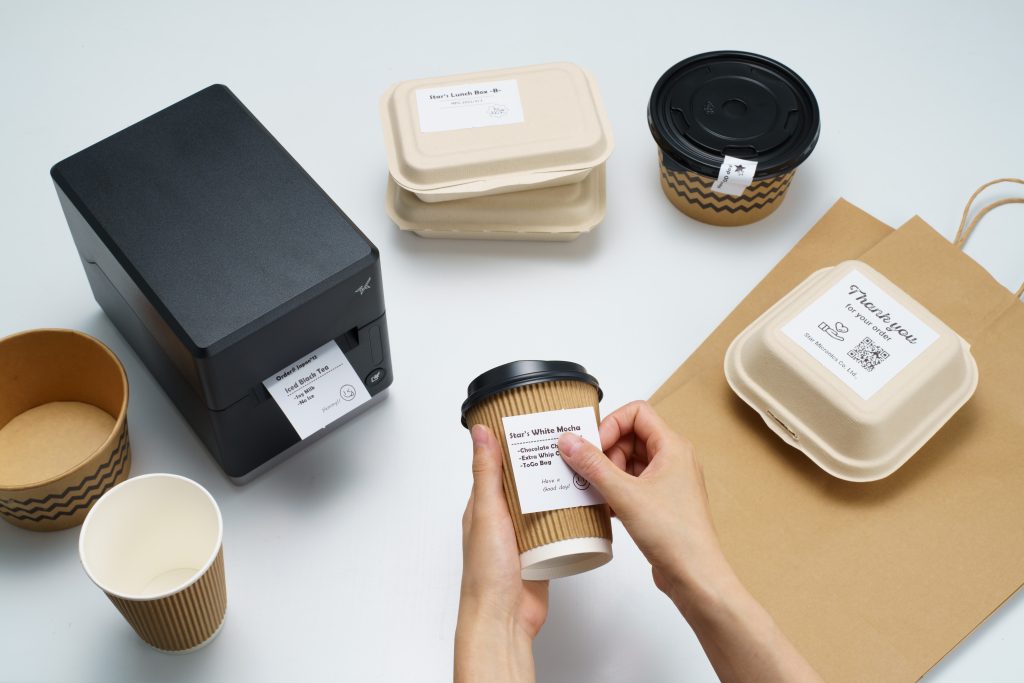
    An even more environmentally friendly option is to use repositionable linerless sticky labels. These labels don’t have a backing that employees must remove before applying them. This streamlines processes, allowing employees to even apply labels with one hand. Linerless labels also decrease the waste that the restaurant or café produces and clutter from paper backing on counters or the floor. 

    Additionally, linerless rolls contain 60% more labels, so employees spend less time replacing label rolls and more time serving customers. 

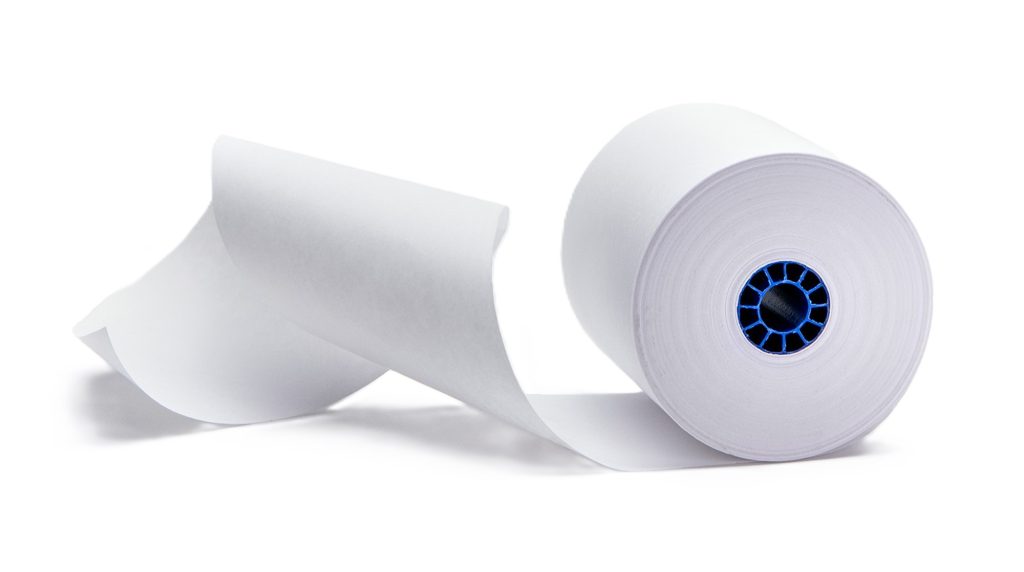
    Star Blue thermal paper rolls by Star Micronics. Receipt, linerless, sticky, traditional, permanent, thermal, bond, label.
    Linerless labels have no backing, giving more labels per roll with less waste.

    Restaurants Need Flexible Print Capabilities

    Printing repositionable linerless sticky labels for reusable cups is just one of the print jobs required at cafes and restaurants. They also need to print receipts and may need to print permanent labels for prepared foods or shelf labels for inventory control. 

    Brands that partner with third-party delivery services may want to generate tamper-proof labels to assure customers of quality and safety. The restaurant or café may also want to create custom QR codes or branded labels on demand to enhance customer engagement. 

    The best investment is in a printer capable of handling a variety of linerless label sizes to meet all of the business’s needs. This printer will also allow a restaurant or café to keep up with emerging restaurant trends, like “bring your own cup” (BYOC) or other labeling use cases on the horizon. 

    Recommended Linerless Label Printers

    TSP143IV SK Sticky Label Printer

    The TSP143IV SK by Star Micronics sets a new standard for compact, eco-friendly thermal linerless label printing, offering advanced connectivity options like Wi-Fi and AOA, and efficient, residue-free labels for diverse business needs.

    Find out more >

    mC-Label3 Multimedia Printer

    The Star Micronics mC-Label3 is a versatile multimedia printer that prints a wide range of labels and receipts, including both permanent and repositionable sticky linerless. It features cloud connectivity and innovative technologies like SteadyLAN and TetherLAN for enhanced printing convenience.
    Discover the mC-Label3 >

    The restaurant industry’s evolution will continue as consumer behaviors and regulations change, technology advances, and new challenges arise. The best strategy is to stay agile, open to adapting to what lies ahead, and informed about solutions that make new processes practical and cost-effective.

    Beyond the Label: Elevating Brand Connection and Loyalty

    Discover how strategic labeling can redefine customer engagement and boost brand loyalty in this digital age.

    Get the Best for Your Business:

  • 8 Essential Must-Haves in a Linerless Label Printer

    8 Essential Must-Haves in a Linerless Label Printer

    Operational efficiency and sustainability are more critical than ever in today’s fast-paced business world. A linerless label printer can transform your operations, reducing waste and boosting productivity. To make the most of this technology, you must know what features to look for. This guide will help you identify the key elements that make a linerless label printer stand out and meet your business needs.

    1. Media Compatibility & Printing Quality

    A high-quality, linerless label printer should be able to handle diverse media sizes and widths. Optimally, it should handle all linerless media types, both permanent linerless and removable sticky linerless, but one type will suffice if it meets your business requirements.

    Ensuring crisp, high-resolution prints is vital whether you’re printing barcodes, product tags, or delivery labels. This guarantees that essential information like barcodes, pricing, and product details are easily readable and professionally presented.

    Additionally, check that the printer supports different media widths and types to accommodate various applications and operational needs, as not all linerless label printers can take different types of label paper or widths.

    2. Cutting Mechanism

    An efficient cutting mechanism significantly impacts the speed and consistency of your label production. For linerless labels, a reliable auto-cutter can enhance productivity by delivering precise cuts that optimize material use. The cutter should also handle various media types without frequent maintenance or jamming issues.


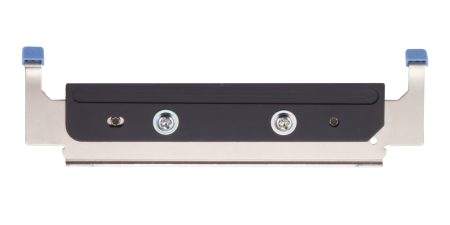
    The cutter for the mC-Label3 multimedia linerless label printer is easy to replace.
    The cutter for the mC-Label3 multimedia linerless label printer handles most media types.

    3. Durability & Reliability

    Linerless label printers often function in demanding environments like retail, warehouses, logistics, and healthcare. The printer’s components must be rugged and resistant to wear and tear from constant use. Consider models with a sturdy frame and high-quality internal parts to minimize downtime and maintenance.

    If you’re operating in challenging conditions, look for a printer with dust and moisture resistance, which ensures dependable performance day in and day out. Additionally, consider the warranty provided to ensure long-term reliability and that the brand stands behind its product.

    4. Connectivity

    With businesses relying on diverse systems and devices, seamless connectivity is essential. A versatile linerless label printer should offer multiple connectivity options, including USB, Ethernet, Bluetooth, and Wi-Fi, to integrate effortlessly with your existing infrastructure.

    Ensure compatibility with your software systems, whether you’re using legacy systems or modern cloud-based solutions. Direct connectivity to mobile devices and tablets can further streamline printing operations.

    Advanced connectivity features like SteadyLAN, TetherLAN, and CloudPRNT can expand business operations into new areas, like mobile and outdoor vending, enhancing your overall point-of-sale (POS), so look into printing technologies like these.


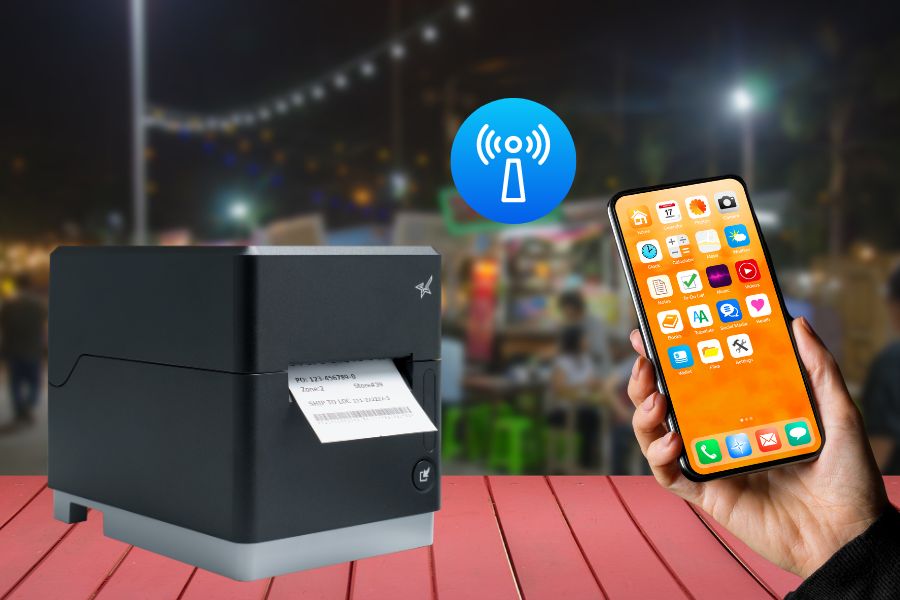
    TetherLAN technology in the mC-Label3 allows the tablet or device to share internet service with the printer.
    The mC-Label3 multimedia and linerless label printer uses TetherLAN technology.

    5. Integration

    For independent software vendors (ISVs) looking for linerless label printing solutions, proper integration is crucial. Look for printers that come with comprehensive SDKs to facilitate seamless integration with your software and other existing systems.

    Additionally, having access to a knowledgeable support team can help guide the integration process and troubleshoot any issues that arise.

    6. Cost-Effectiveness

    While investing in a high-quality printer is crucial, ensure it’s also cost-effective. Consider not just the initial price but the overall cost of ownership. This includes consumable expenses like label rolls, replacement parts, and maintenance requirements.

    Linerless label printers already reduce material waste by eliminating label liners, and a cost-effective model will amplify your ROI through efficient media use, high-speed printing, and minimized downtime. Look for a printer that will offer high ROI and significant value for your investment.

    7. User-Friendly Operation

    A linerless label printer’s interface and operational workflow should be intuitive, reducing training time and minimizing operational errors. Features like user-friendly maintenance, accessible loading mechanisms, and intuitive controls make it easy to train staff quickly.

    Some printers also offer maintenance alerts and cloud-management features for updating firmware, reducing downtime and ensuring maintenance is handled proactively.


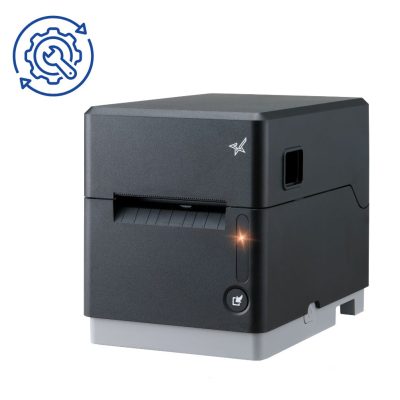
    The mC-Label3 multifunction label printer has convenient maintenance alerts.
    The mC-Label3 multimedia linerless label printer has convenient maintenance alerts.

    8. Brand Support

    Choosing a trusted brand can significantly improve your long-term satisfaction with your linerless label printer. Strong customer support, robust warranties, and accessible technical resources ensure you can rely on prompt assistance if any issues arise.

    Additionally, readily available replacement parts and supplies ensure your printer continues to function optimally over its lifespan. A brand with a reputation for excellence and extensive experience can provide the reliability and trust you need.

    Top Star Micronics Linerless Label Printers to Consider

    Star Micronics offers a range of linerless label printers designed to meet various business needs. Here are a couple of standout models that deliver exceptional performance and reliability:

    TSP143IV SK Sticky Label Printer

    The TSP143IV SK by Star Micronics sets a new standard for compact, eco-friendly thermal linerless label printing, offering advanced connectivity options like Wi-Fi and AOA, and efficient, residue-free labels for diverse business needs.

    Find out more >

    mC-Label3 Multimedia Printer

    The Star Micronics mC-Label3 is a versatile multimedia printer that prints a wide range of labels and receipts, including both permanent and repositionable sticky linerless. It features cloud connectivity and innovative technologies like SteadyLAN and TetherLAN for enhanced printing convenience.

    Discover the mC-Label3 >

    Final Considerations for Linerless Label Printers

    Investing in the right linerless label printer can streamline your labeling operations and align with your business’s sustainability goals. By focusing on crucial features like print quality, durability, connectivity, and user-friendliness, you can select a printer that meets your specific business needs. Choose a printer that enhances your operational capabilities and supports your long-term business objectives by helping you achieve more efficiency, profitability, and customer satisfaction.

    Mastering Label Compliance in the U.S.

    Grasp the essentials of U.S. label compliance with this insightful guide, designed to navigate the complexities of label regulations across multiple industries.

    Ready to find your linerless label printer?

  • Why Food Packaging Labels Are Essential to Online Order Fulfillment

    Why Food Packaging Labels Are Essential to Online Order Fulfillment

    Consumers are sold on the convenience of food delivery. Statista reports that online food delivery orders worldwide are projected to reach $1.22 trillion in 2024 and will continue to grow at a 10.06% CAGR through 2028 to reach $1.79 trillion

    Both restaurant and grocery food delivery will see greater demand. Statista analysts estimate that 27.4% of the world’s population, about 2 billion people, takes advantage of meal delivery, and they expect the market to grow to 2.5 billion users by 2028. Analysts also expect the grocery delivery market, now about $257.5 billion, to grow to $422.9 billion by 2028.

    Due to this growing demand, restaurants and grocery stores have had to adapt their processes. Restaurants must fulfill orders placed online through their websites or apps and third-party delivery services in addition to orders at the table, counter, drive-thru, or self-service kiosks. Grocers have repurposed space and reallocated labor to manage online orders. However, expanding operations has created challenges to efficiency and controlling waste and losses.

    Labeling solutions have become essential to streamlined, accurate order fulfillment. Labels help teams organize food and order prep, and food packaging labels ensure customers receive the correct orders securely and on time.

    The Labels Necessary for Efficient Food Delivery

    Why Food Packaging Labels Are Essential to Online Order Fulfillment

    Communication is crucial throughout fulfillment processes, and labels are the most efficient way to bring digital information from online ordering to employees tasked with food prep and packaging.

    For example, follow an online order placed with a quick-service restaurant until it reaches the customer:

    Repositionable linerless labels:

    The online ordering platform communicates the order to the QSR’s point-of-sale (POS) system and generates repositionable labels. These labels, applied to trays in food prep areas, communicate the customers’ menu choices and modifiers to the kitchen staff. Employees can reapply the labels to packaging down the line to ensure precision, eliminate errors, and decrease waste.

    Die-cut labels:

    When the order is complete, the restaurant can print die-cut labels on demand, adding its brand logo or a thank you message. Labels, whether traditional liner-backed or linerless, can also include promotional messaging or QR codes that customers can scan to join the loyalty program, check their rewards balance, or save a coupon code for future orders. These food packaging labels can contribute to a positive customer experience.

    Permanent linerless labels:

    Permanent labels direct the order to curbside or in-store pickup, in-house delivery drivers, or third-party delivery. These labels ensure orders go to the proper place, enhancing operational efficiency. Food packaging labels with delivery information can also include barcodes that allow the restaurant to track the order and confirm the correct delivery.

    Permanent labels that close containers or bags ensure the order is tamper-proof. If the label is intact, it signals to the customers that their orders are in the same condition when they receive them as when the restaurant packed them.

    Learn the importance of permanent linerless labeling in today’s businesses >

    How Labeling Solutions Overcome Food Delivery Challenges


    The mC-Label3 Multifunction Printer by Star Micronics great for delivery take out online ordering and QSRs.
    The mC-Label3 Multimedia Printer by Star Micronics is great for online ordering, takeout, and delivery.

    Adding food prep and food packaging labels to online order fulfillment processes results in a range of benefits for restaurants and grocery stores, even beyond ensuring accurate delivery. The return on investment (ROI) of labeling solutions includes:

    • Cost control: Clearly labeled containers and bags allow the kitchen staff or grocery pickers to see exactly what to pack. Therefore, businesses generate less waste and expense from inaccurate orders.
    • Greater productivity: With labels communicating what each online order fulfillment team member must do, employees will have fewer questions that slow processes. Employees will work more quickly and can complete more orders per shift.
    • Increased customer satisfaction: Consumers expect accurate, on-time orders that are neatly and securely packaged. Labels help restaurants and grocery stores deliver what their customers want and help build loyalty.

    Key Features of Food Delivery Labeling Solutions

    To achieve greater accuracy, productivity, and customer satisfaction, restaurants and grocery stores need printers capable of producing the types of labels they need as they require. Star Micronics has developed printers with features that benefit online food order fulfillment, including the mC-Label3 Multifunction Printer and the TSP143IV SK Sticky Linerless Label Printer.

    Both have CloudPRNT connectivity for cloud-based printing and are Cloud Ready for Star Cloud Services. They allow restaurant and grocery store managers to build labels on Star’s Label Builder. The mC-Label3 enables users to store up to three images on the printer so that employees can print them on demand with the One Touch button–no internet required.

    Linerless Labels

    Linerless labels are an increasingly popular choice among restaurants and grocery stores because they decrease paper waste, require fewer roll changes, and streamline workflows by allowing employees to print and apply labels with one hand.

    The best printers for online order fulfillment and food packaging labels will also be easy for employees to use and maintain. Downtime isn’t an option when preparing orders accurately and on time. Both the mC-Label3 and TSP143IV SK are designed with user-friendly features. The mC-Label3 even sends maintenance alerts and QR codes with easy-to-follow instructions to keep it operating in top condition.

    Exceed Expectations with Labeling

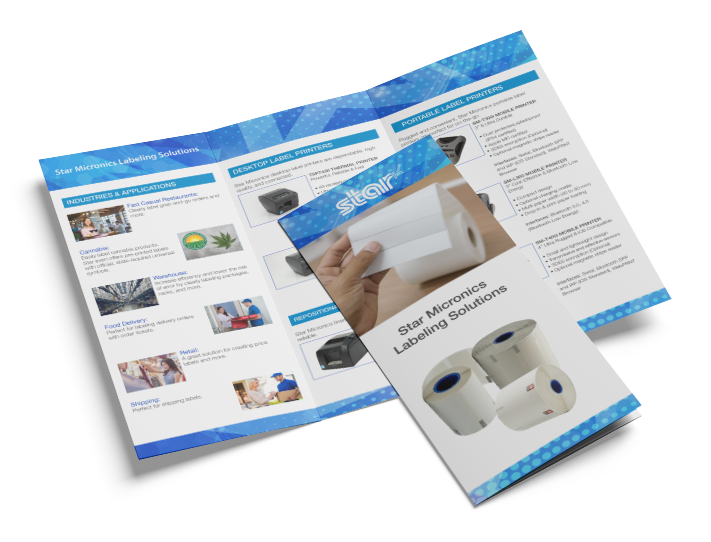
    Star Micronics Labeling Solutions Brochure

    Star’s advanced labeling solutions cater to a variety of unique needs and applications, ensuring seamless and efficient operations in any industry.

    Online food ordering is a relatively new part of many consumers’ routines; however, when they engage with restaurants or grocery stores, they expect accuracy, fast fulfillment, and excellent service. Labeling enables online order fulfillment teams to meet those expectations while keeping operational costs low. 

    Furthermore, innovative restaurants and grocery stores can use labeling creatively to elevate their brand image, keep their businesses at the top of consumers’ minds, and increase customer loyalty.

    A printing solution with features developed for online order fulfillment and food packaging labels makes it possible.

    Explore the range of solutions offered by Star Micronics.

  • Linerless Label Paper vs. Traditional Label Paper: Which Is Right for Your Business?

    Linerless Label Paper vs. Traditional Label Paper: Which Is Right for Your Business?

    Navigating the world of label paper can be more of a complex task than most would assume. The choice is no longer as simple as picking between small and large label paper. Now, businesses have an array of options to choose from, including traditional label paper, linerless, permanent linerless, and more. Each type comes with unique applications and benefits, so it would be wise to know enough about each to identify the right fit for your business.

    This article offers a comprehensive guide, demystifying the various types of label paper and their respective applications and advantages to empower you to make an informed decision. So, let’s explore the fascinating world of label paper!

    Traditional Label Paper

    Traditional label paper is perhaps the most commonly used type in the market. It comes in a simple geometric shape (square, circle, etc.) with a paper, polyester, or polypropylene facestock, an adhesive layer, and a liner. The liner protects the adhesive until the label is ready to be used.

    Traditional label paper, often referred to as direct thermal labels, is a classic choice that has stood the test of time in various industries. It’s used extensively across various industries, such as retail, logistics, and manufacturing.

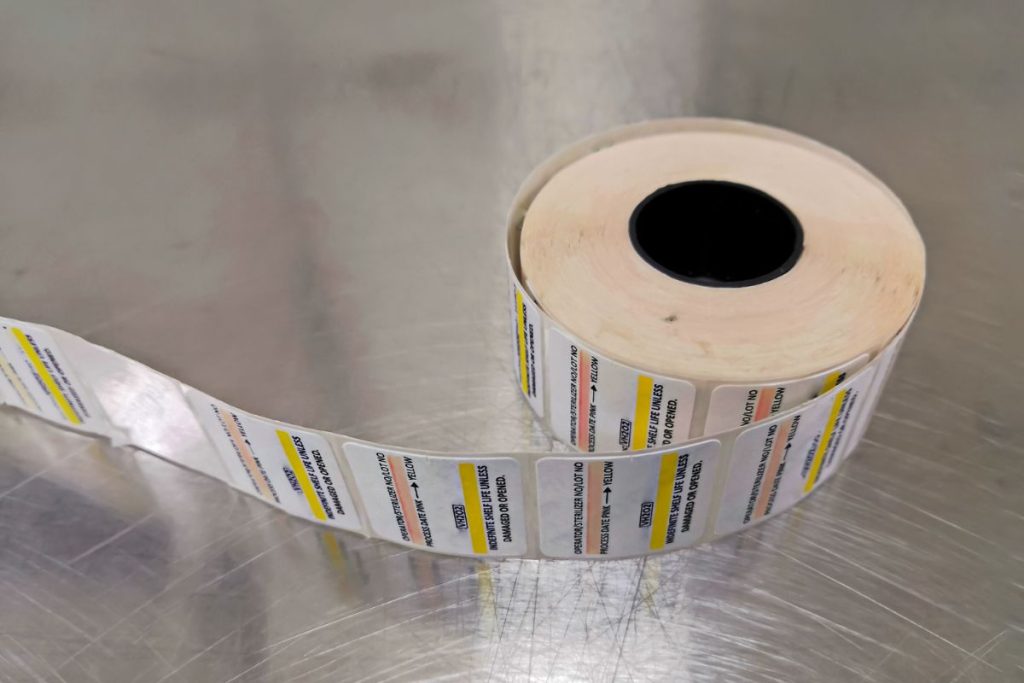
    A roll of labels.

    Key attributes of traditional label paper include:

    • Versatility: Traditional label paper is adaptable to a wide array of applications, including shipping, barcoding, inventory tracking, and more. This versatility makes it a strong contender in many business contexts.
    • Dependability: With a proven track record of performance, traditional label paper is reliable and trusted by many businesses. It offers consistent quality and performance, providing clear and durable prints.
    • Printer Compatibility: Traditional label paper can be used with various types of printers, including direct thermal and thermal transfer printers. This makes it a flexible option compatible with various printing technologies.

    However, traditional label paper is not without its limitations. Traditional label paper may not have the look or shape you desire. Labels also incur waste generation. Each label comes with a liner that is discarded after the label is used, contributing to waste. This can be a concern for environmentally conscious businesses.

    Moreover, these labels are sensitive to heat and light, which may cause the ink to fade over time or the labels to darken if exposed to extreme conditions.

    Die-Cut Label Rolls

    Die-cut labels differ from traditional labels because they are specifically cut around the label designs. They come pre-cut, allowing for a clean and professional finish in various applications. This makes die-cut labels a popular option among businesses for their precision, customization, high quality, and ease of use.

    Key features of die-cut label paper include:

    • Precision: Each label is pre-cut with precision, ensuring consistent and accurate dimensions across the entire roll.
    • Customization: Die-cut labels are available in a wide range of shapes, sizes, and materials to suit various branding needs. This allows businesses to find the perfect fit for their specific labeling requirements.
    • Ease of Use: Since die-cut labels are pre-cut and separated from each other, they can be easily peeled off from the liner and applied to the desired surface. This feature can save time, especially when dealing with a large volume of labels.
    • Compatibility: Die-cut labels can be used with various types of printers, including thermal, inkjet, and laser printers. This broad compatibility makes them a versatile option for many businesses.

    However, there are some reasons not to use die-cut label paper. The pre-cut designs limit flexibility, as the size and shape of the labels are fixed. Businesses may need to buy several different customized labels to use for various applications. Also, the presence of a liner contributes to a lot of waste generation, which can be a concern for some businesses.

    The Value of Receipts: Printed and Digital

    There’s no getting away from it: receipts hold great value and are an irrefutable part of everyday life. Learn how to use them to your business’s advantage!

    Linerless Label Paper

    Linerless label paper, or sticky paper, presents a unique solution for businesses looking to enhance efficiency and sustainability. As the name suggests, linerless labels don’t have backing paper, which is unlike traditional label rolls. This leads to a significant reduction in waste, making linerless labels a more environmentally friendly choice.

    Many industries are now using linerless labels. They’re ideal for takeout orders, food packaging, retail price marking, and logistics.

    Linerless label paper offers the following advantages:

    • Less Waste: As there is no liner, there’s significantly less waste produced, making this option better for the environment.
    • Increased Efficiency: Without a liner, the roll can hold more labels. This means fewer roll changes and increased productivity in high-volume environments.
    • Versatility: The length of the label can be customized on the spot without changing the roll, making it versatile for varying product sizes and shapes.
    • Cost-Effective: Less material is used in the production of linerless labels, and they take up less storage space. This can lead to cost savings in the long run.

    However, like any other type of label paper, linerless label paper might not be the perfect fit for all businesses. These labels require special printers designed to handle them and may not be suitable for some applications where a long-term label is required. They also might not be the best choice if you need pre-printed labels, as the print can wear off over time.

    mC-Label thermal printer by Star Micronics using linerless label paper.

    Permanent Linerless Label Paper

    Permanent linerless label paper has emerged as an innovative addition to the lineup of label solutions. It offers the same environmental and efficiency benefits as standard linerless labels but with an added level of adhesion.

    Permanent linerless labels are suitable where a more robust label is required, such as outdoor use, chemical containers, and high-traffic areas. If your business needs labels in challenging environments, these labels would be your go-to choice.

    Features of permanent linerless label paper include:

    • Strong Adhesion: As suggested by the name, permanent linerless labels are designed to stick and stay put. This makes them an ideal solution for applications where long-lasting labeling is necessary, such as product identification, shipping labels, or asset tracking.
    • Environmental Benefits: Like their linerless counterparts, permanent linerless labels eliminate the waste associated with liners. This contributes to an eco-friendlier labeling solution.
    • Maximized Efficiency: With more labels per roll due to the absence of a liner, businesses experience fewer roll changes, increasing productivity in fast-paced environments.
    • Customizable Lengths: The lack of a pre-cut shape allows the label length to be adjusted as per the requirement, providing flexibility for different product sizes.

    Of course, permanent linerless labels are not without their considerations. The increased adhesion means they stick firmly, and removing them can be difficult without leaving a residue. Therefore, they may not be suitable for applications where labels need to be removed cleanly. Also, like standard linerless labels, they require specific printers designed to handle repeatedly cutting the adhesive.

    Wrapping Up: Picking the Right Label Paper for Your Business Success

    In conclusion, the label paper you choose will significantly influence your business operations, affecting everything from efficiency to sustainability. Whether it’s the precision of die-cut labels, the eco-friendly appeal of linerless labels, the reliability of traditional labels, or the versatility of permanent linerless labels, each type brings unique merits to the table. Understanding these differences is crucial in making an informed decision that aligns with your business’s unique needs and goals.

    Remember, the right label paper is not just about meeting your current needs; it’s about anticipating your future demands and staying ahead in the ever-evolving marketplace.

    Labels on products.

    Want to know more about what Star can offer your business?