Tag: Keep the Receipt

  • Can Printed Receipts Help Brick-and-Mortar Merchants Avoid Chargebacks?

    Can Printed Receipts Help Brick-and-Mortar Merchants Avoid Chargebacks?

    During the Covid lockdown, a lot of retail spending moved online. This was good for both merchants and consumers, but it ultimately led to a surge in chargebacks and friendly fraud.

    As things slowly return to normal, buyers are making their way back into physical stores. Unfortunately, chargebacks are coming with them.

    Merchants have the right to contest invalid chargebacks, but proving a claim is bogus requires evidence. Brick-and-mortar merchants may have an advantage when it comes to collecting compelling transaction proof: printed receipts.

    How a Consumer Protection Became Friendly Fraud

    First, let’s examine how this problem developed in the first place.

    A chargeback occurs when a customer requests their bank to reverse a transaction. An important safeguard for cardholders, chargebacks were only intended for cases involving criminal fraud or merchant abuse, such as deliberate overcharging.

    Chargebacks give cardholders a last resort in situations where the merchant cannot—or will not—provide a refund. The system works well enough under those conditions, but these days, the process is more commonly used to commit friendly fraud.

    Friendly fraud occurs when customers leverage the chargeback system to obtain an undeserved refund. This may be unintentional; when a cardholder sees an unrecognized charge on their statement, the automatic reaction is often to call the bank, not the merchant.

    On the other hand, the cardholder could be deliberately trying to obtain free merchandise. This is a practice called “cyber shoplifting.” The scam works like this: a cardholder makes a purchase at a brick-and-mortar store, then calls the bank. They’ll say they cannot resolve the issue with the merchant and ask to have the charge reversed. The buyer then keeps the merchandise, but gets their money back.

    Ironically, what began as a consumer protection mechanism has become a tool consumers use to steal from merchants.

    “Friendly Fraud Doesn’t Happen in Physical Stores!”

    Historically, friendly fraud has been more of an issue for eCommerce; most of the claims still happen in the card-not-present space. That doesn’t mean, however, that brick-and-mortar merchants can ignore the threat.

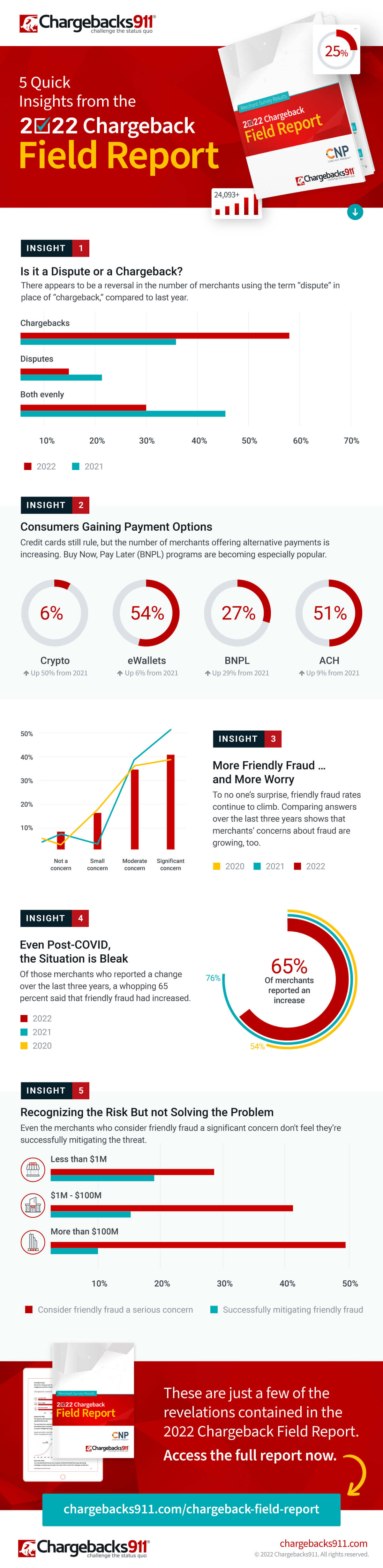
    The reality is that friendly fraud has become a growing menace to merchants as a whole, according to findings from the recently published 2022 Chargeback Field Report.

    The study, a joint endeavor between Chargebacks911 and Card Not Present, is based on survey results drawn from over 300 retail merchants across all verticals. Of the respondents, nearly two-thirds said that chargeback abuse—friendly fraud—had increased over the last three years.
    As mentioned earlier, merchants have the right to contest unwarranted chargebacks. To have an illegitimate chargeback overturned, however, the retailer must demonstrate that the customer’s claim is false. For in-store sales, this is where printed receipts come into play.

    How Receipts Work in the Merchant’s Favor

    To understand the role receipts can play in fighting friendly fraud, it’s important to know how the process is supposed to work.

    When a cardholder calls their bank to dispute a charge, the bank will usually tell the cardholder to try resolving the issue directly with the merchant. If the customer says they have already tried, the dispute will likely advance to a chargeback. Transaction funds are removed from the merchant’s account and returned to the cardholder. The merchant may not be informed about this until days later.

    This may seem unfair, but again, merchants can contest the claim through the process of representment, which involves providing the bank with compelling evidence showing the transaction was valid.

    Sometimes, a copy of the transaction details will be all that’s needed. Some point-of-sale solutions at physical stores will record and store copies of receipts, and can send them in response to the bank’s request.

    That sounds convenient, but it may not be the best choice. While digital files work in the majority of cases, electronic files are more susceptible to manipulation. That means the bank may require more evidence.

    Online retailers don’t really have another option, but for in-person sales, a scanned copy of a printed paper receipt can be more efficient and cost-effective. It’s hard to argue against a printed receipt. The specifics are literally all there in black and white.

    If the bank sees that the customer’s claim is unwarranted, it may overturn the chargeback. Not representing the chargeback, however, means the fraudster may end up with both the product and a refund.

    Physical Receipts Can Also Boost Prevention Efforts

    Unfortunately, the merchant will get hit with a non-refundable chargeback fee whether the chargeback is reversed or not. That means preventing chargebacks is usually more efficient than challenging them.

    There are numerous steps merchants can take to prevent chargebacks stemming from errors or criminal activity. However, the friendly fraud we’ve been talking about is post-transactional; it’s hard to prevent something you won’t even see until days or weeks after the fact. Fraudsters know this and have learned how to play the system.

    It’s possible that the merchant will be able to produce an electronic receipt that contains enough information to invalidate the cardholder’s claim. The fraudster is betting against it, though.

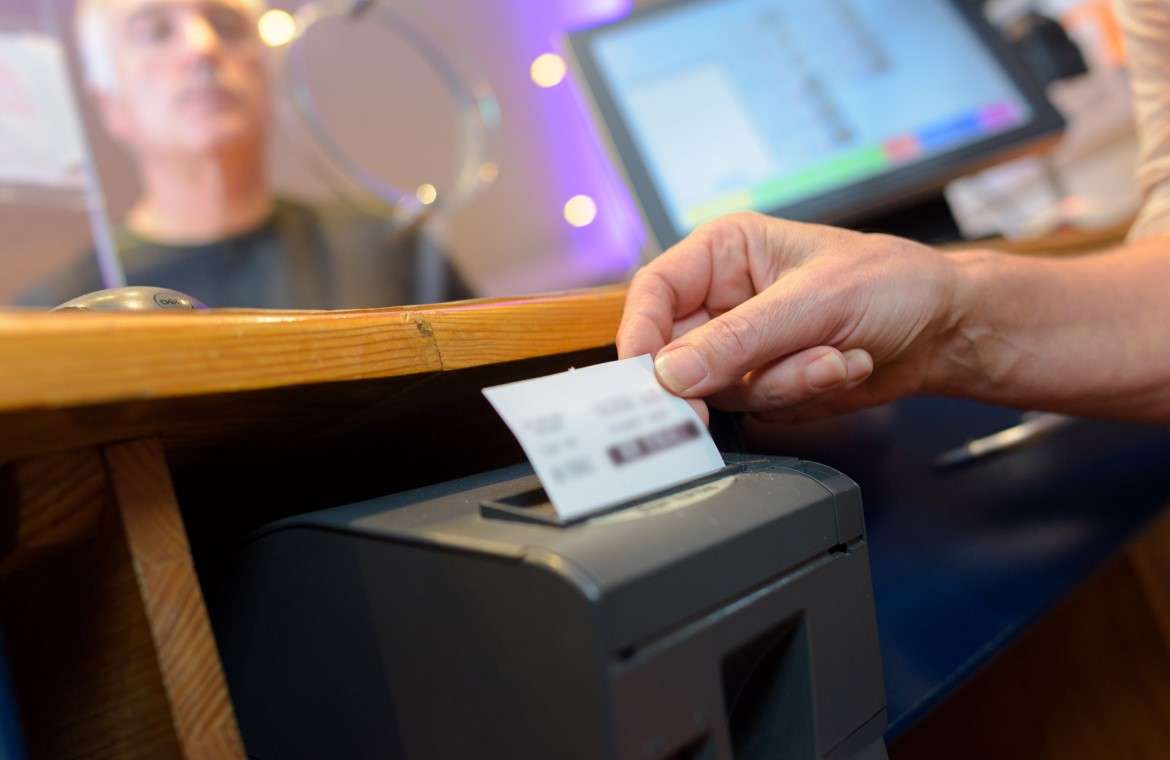
    A printed receipt is a different story. For a cyber shoplifter, a receipt printed with names, dates, prices, and truncated card data is like seeing a record of the crime before it’s even committed. One look makes it obvious that the merchant has too much evidence for the scam to work. The receipt signals that it’s time to move on to an easier target.
    The Value of Receipts: Printed and Digital

    There’s no getting away from it: receipts hold great value and are an irrefutable part of everyday life. 

    The Bottom Line

    Electronic transaction receipts are useful, but technology can be exploited, and systems can be hacked. Printed receipts can benefit merchants in many ways, including chargeback management and prevention.

    Having a hard record of transactions can simplify representment and increase the odds of success. At the same time, a printed receipt may encourage would-be friendly fraudsters to take their scams elsewhere. For brick-and-mortar merchants, it’s a win-win.

    Guest Post Written by Monica Eaton-Cardone, COO and Co-Founder of Chargebacks911

  • Your Guide to Choosing Eco-Friendly Receipts

    Your Guide to Choosing Eco-Friendly Receipts

    This is the fifth and final part of “Keep the Receipt,” a five-part blog series about the various advantages paper receipts offer to businesses and consumers, and why you should elect to choose to offer – and accept – paper receipts.

    Sustainability is more than just a buzzword. It’s more important than ever to do your part to help preserve the environment. While some people’s first impression of receipts may be that they are not environmentally friendly, there are some steps you can take to ensure you are choosing eco-friendly receipts.

    Choosing receipts – and a receipt printer supplier – that practice environmentally friendly measures is an easy and important way to do your part while still providing printed receipts that many customers still prefer and business operations require.

    Discover The Value of Receipts: Printed and Digital.

    Here are three tips to help you choose eco-friendly receipts:

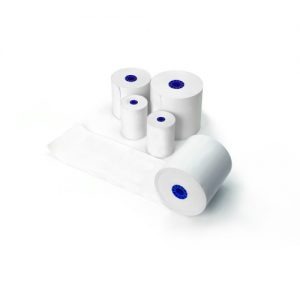
    Star Micronics Receipt Paper
    Star is proud to provide BPA-free, recyclable premium grade printer paper rolls. Authentic Star paper rolls are easily recognized by the Blue Core.

    1. Choose BPA-Free Receipt Paper

    Studies have shown that 90% of receipts contain the chemical BPA (Bisphenol A). While there is conflicting evidence about whether or not the level of BPA found on a receipt is dangerous to human health, why not skip the worry and choose BPA-free receipt paper?

    When you choose the right high quality, BPA-free receipt paper – like Star’s – you can also rest assured that your paper is working efficiently with your printer to extend the life of the print head, provide longer paper lengths for fewer paper changes, and prevent jams and clogs. These paper rolls also support Star’s warranty compliance and are offered in convenient pack sizes.

    2. Opt for Recyclable Receipt Paper

    Tying into the above point about choosing receipt paper that is free of BPA, it’s also important to choose receipt paper that is recyclable. There are forms of thermal receipt paper that should not be recycled, but guess what. You can recycle BPA-free receipt paper like Star’s!

    According to the American Forest & Paper Association, over 68% of paper was recycled in 2018, and the organization hopes to hit 70% in 2020. Why not contribute to that effort by choosing recyclable, eco-friendly receipts?

    3. Choose an Environmentally Friendly Supplier

    While choosing BPA-free and recyclable receipts is important, it’s just as crucial to choose a receipt printer (and paper) provider that prioritizes the environment.

    Some examples of environment friendly initiatives to look for in a receipt paper and printer manufacturer are:

    • Paper reduction tactics: Paper usage is a receipt printer’s largest negative burden on the environment. Choose a manufacturer that takes that fact into consideration and designs ways to reduce the severity of receipt paper’s ecological impact while maintaining user comfort and familiarity. Some examples of these tactics include options for reduced top margin, receipt length and width compression, digital receipts, and more.
    • Energy efficiency: Although the cost to power a receipt printer is minimal, business owners can still benefit from energy efficient solutions. Be sure to choose an ENERGY STAR-qualified manufacturer. The ENERGY STAR qualification is a highly respected achievement, and in order for a product to obtain the qualification, it must meet strict energy requirements set by the government.
    • Sustainable packaging: Every little step helps, so choose a printer manufacturer that uses recyclable packaging and provides electronic manuals.
    • Environmentally friendly manufacturing: Look for a supplier that monitors and conforms to international laws and standards, obtains certifications, and investigates new ways to make products safe for people and the environment. Some examples of these environmental initiatives include:

      Star is proud to offer all of these eco-friendly features – and more! Click here to read more about our environmentally friendly practices.

    Ready to make the switch to an eco-friendly printer manufacturer?

  • Do You Really Need a Receipt?

    Do You Really Need a Receipt?

    This is the fourth part of “Keep the Receipt,” a five-part blog series about the various advantages paper receipts offer to businesses and consumers, and why you should elect to choose to offer – and accept – paper receipts.

    The world has become digital – very quickly. In 1990, only 0.25% of the world population had a cell phone, and as of February 2019, it was estimated that more than 5 billion people have them. In today’s technologically advanced society, you might wonder if you still need a receipt. And guess what. You do!

    In today’s blog post, we’re going to explore why you still need a receipt, whether it’s for a traditional reason like confirming a tip amount, or if it’s part of an omnichannel retail experience, like to be used with cashback apps. Without further ado, let’s explore why shoppers do indeed need a receipt.

    While receipts are important, Star Micronics provides retailers with much more than just receipt printers – explore our full suite of Retail POS Solutions.

    In the hospitality business? Check out our Restaurant and Kitchen Solutions and QSR Solutions!

    7 Reasons Why You Need a Receipt

    1. Immediate Itemized Information

    Simply put, receipts are great at providing information. Many times, digital receipts provide basic transaction information, like a grand total, transaction date, and payment method. But with paper receipts, it’s a given that you’ll receive full itemized, line-by-line details – within seconds of payment.

    Besides basic transparency into what you paid for, this line item information can be useful to confirm you received the correct discount/promotion, and can even come in handy if you accidentally set off the alarm at the store and need to quickly provide proof of purchase for a specific item (we’ve all been there).

    2. Tip Amount Confirmation

    It’s not unheard of to be charged the wrong amount for the tip you leave on the bill at a restaurant, bar, or other establishment. While most of the time the information was simply entered incorrectly by mistake and it is easy enough to correct the issue directly with the business, that’s a hassle that not many people have time for. By keeping your paper receipt and filling out the tip amount on your personal copy, it becomes easy to double-check the amount on your credit card statement and correct any issues that may arise.

    3. Warranty/Return/Exchange Policies

    When you want to check if your product is still under warranty or able to be returned/exchanged, you want that information to be easily (and quickly) accessible. A surefire way to promise that is by keeping a paper receipt for the purchase in question. While some systems allow for that information to be stored automatically, that process is tied to the credit card used for the original transaction. This can present problems if you no longer have the card, lost the card, or didn’t use a card for the original purchase. Keep reimbursement, return/exchange, and warranty issues simple by keeping the paper receipt for those important items!

    4. Cashback Apps

    Who doesn’t want a little extra cash? Luckily, there are a variety of easy-to-use cashback apps on the market today, like Ibotta, Fetch Rewards, Shopkick, and more. How do these apps work? It’s easy: you simply make purchases normally, and then scan your receipt to receive rewards. It’s a pretty great reason to keep the receipt, if you ask us.

    And speaking of savings, if a business prints on-receipt promotions, those can be a great way to save money on future purchases and can be easily kept in your wallet so you don’t forget them during your next shopping trip.

    5. Instant Account Information

    You might see a pattern emerging: paper receipts are simply the best at providing fully detailed transaction information – instantly. That pattern also applies to providing account information instantly.

    Take, for example, a bank ATM. You need to take some cash out, and you want to check your account balance. An easy and private way to do that is to retrieve a receipt from the kiosk printer, which lists your current account information. When you do that, there’s no need to engage in a second step (like opening an app or logging on to a website) to get that account information, and it’s easy to quickly look back on that information at any time.

    6. Recordkeeping

    Paper receipts are simply the best for recordkeeping! First, and arguably most crucial, it’s important to keep proper records for tax purposes. According to Investopedia, it’s important to hold on to receipts, “so you have a record of even the smallest expenses you incur for business, charity and your health. As those expenses add up, they can start to lower your tax bill.” On a business owner-level, the IRS has further details regarding what kind of records you should keep.

    Receipts come in handy for other kinds of recordkeeping, too, like expense tracking for business trips, and personal budgeting. It’s also important to get a paper copy of gift receipts to make returns and exchanges easier/possible for your friends and family.

    7. Private and Personal

    The information provided on a receipt is personal, and in an ideal world, it is private. However, in a world filled with cybersecurity concerns (there is a hacker attack every 39 seconds!), it comes as no surprise that some consumers may feel hesitant about that information being stored in their email inbox.

    A paper receipt stays right where it should – in your wallet! With a hard copy receipt, there’s no need to worry about your sensitive information getting into the wrong hands.

    So – what do you think? When do you need a receipt? What other ways can they be useful? Let us know in the comments!

    Be sure to tune into our fifth Keep the Receipt blogs, which will take a deep dive into the sustainable features of Star receipts.

  • Receipt Marketing: How to Unleash the Power of Your Receipt

    Receipt Marketing: How to Unleash the Power of Your Receipt

    This is the third part of “Keep the Receipt,” a five-part blog series about the various advantages paper receipts offer to businesses and consumers, and why you should elect to choose to offer – and accept – paper receipts.

    Ah, the receipt. Billions of transactions are made each day, and countless receipts are printed. But receipts can do so much more than provide transaction information – they can also be used for marketing, and today on the blog we’re going to share with you why receipt marketing is relevant, what benefits it can offer to retailers, and how to get started with your very own receipt marketing. Read on!

    Paper Promotions are (Still) King

    If you’re looking to communicate promotion messaging to your shoppers, look no further than the paper receipt. Yes, it’s true: even in the digital age, paper promotions are (still) king!

    Did you know:

    • 88% of all consumers use paper coupons
    • 48% of consumers look for print coupons on a weekly basis
    • 2/3 of milliennials look to paper coupons for offers to save money
    • 90% of affluent shoppers use coupons
    • 85% of consumers look for coupons prior to visiting a retailer
    • 71% of consumers said they would use a featured coupon code from a print advertisement to buy online

    …and the list goes on and on! Check out our coupon infographic to learn more.

    And guess what? Coupons are just the tip of the iceberg when it comes to things you can promote via receipt. Keep reading to learn about other ways to leverage receipt marketing.

    Receipt Marketing Enables Retailers to:

    Provide Promotions to 100% of (High Quality) Customers

    Ensuring your marketing communications reach the correct recipients is very important, and receipt marketing can help you do just that.

    As we mentioned in our previous Keep the Receipt blog post, according to Pew Research, 19% of Americans don’t own a smartphone. By delivering printed promotions, you avoid inadvertently bypassing a large demographic of potential customers.

    Another benefit of providing printed promotions is that your messaging is sure to reach high-quality customers. Unlike other marketing channels where you’re lucky to reach valuable leads, by presenting printed promotions to your customers at the point of purchase, you’re not just nurturing a lead, but boosting customer retention. This is of utmost importance in a world where most items can be found in multiple stores, and shoppers can be tempted to spend their dollars elsewhere.

    Download for Free! The Value of Receipts: Physical and Digital.

    Experience Higher Return on Investment (ROI)

    Marketing can get expensive – really expensive. Direct mail can cost between 30 cents to over $10 per person, while social media ads can cost several dollars per ad click! It’s easy to see how the cost of advertising can get out of hand, even for a small business.

    On the other hand, when you leverage receipt marketing with Star printers/paper, it costs only $1.50 … per thousand receipts/promotions! And let’s not forget, those printed promotions are ending up in the hands of shoppers already in your store, who are likely more liable to return to the store than a brand-new prospect from a direct mail campaign.

    Onboard Customers to Other Marketing InitiativesLoyalty-Program-PromoPRNT-e1574805918143

    So maybe at this point you’re still not on board with receipt marketing. You want to direct traffic to digital platforms like your social media account, loyalty program, or online review website. Well, receipt marketing can help with that, too.

    Take, for example, loyalty programs: they’re great for retaining customers by offering special, personalized rewards. But how do you get your shoppers to sign up for your program in the first place? Sending an email about it will likely end up unopened in their junk/promotions email folder. Posting on social media about it might get you a few likes, but chances are it’ll largely go unnoticed.

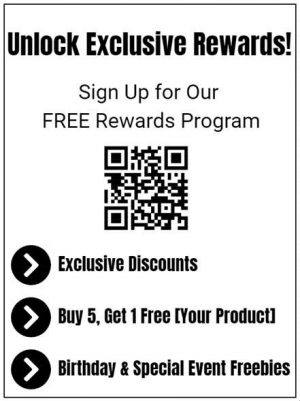
    By placing a QR code on your receipt promotions, you can have your cashier inform the shopper face-to-face about your loyalty program, and let them know all they need to do is simply scan the code on the receipt to sign up – no extra clicks or navigation necessary. Receipt marketing can act as a great bridge between a brick-and-mortar environment and the added digital benefits consumers want.

    Directly Request Feedback from CustomersOnline-Review-PromoPRNT-e1574805955994

    Customer feedback is worth its weight in gold. But unfortunately, many times consumers aren’t motivated to leave a review unless they are feeling disgruntled. Change that with receipt marketing! By using tools like Star’s Customer Survey, you can provide “instant” customer satisfaction surveys in conjunction with AllReceiptsTM digital receipts.

    Similar to what we discussed earlier in this blog post, you can also use your receipt and a simple, easy-to-use QR code to guide customers to an online review website.

    How to Get Started with Receipt Marketing

    Okay, so everything above sounds great, but how do you get started? It’s very simple if you are using a Star printer!

    With PromoPRNT, Star’s value-added receipt marketing tool, you can customize promotions from templates that print directly on the bottom of your receipts. And because the tool is cloud-based, you can create, schedule, and manage promotions from anywhere.

    Click here to learn more about PromoPRNT and register today.

  • How a Paper Receipt Benefits ROI and the Customer Experience

    How a Paper Receipt Benefits ROI and the Customer Experience

    This is the second part of “Keep the Receipt,” a five-part blog series about the various advantages paper receipts offer to businesses and consumers, and why you should elect to choose to offer – and accept – paper receipts.

    Welcome to the next part of our Keep the Receipt blog series, where we’ll explore the ways that a paper receipt benefits a business’s return on investment (ROI), as well as its customer experience. During a time when options abound for consumers when it comes to retailers and restaurants, it’s important to not only boost cost efficiency, but also optimize the experience customers have from the moment they enter the door, up until the transaction is completed. Read on to discover how paper receipts can help you achieve all of that – and more.

    Paper Receipt Benefits | Return on Investment

    At the end of the day, businesses need to communicate with shoppers to inform them of transaction details, promotionsreturn policies, and more. That need is not going away, so the question becomes, what’s the most effective and cost-efficient way to share that necessary information?

    Email services can cost hundreds or thousands of dollars a year, while direct mail can cost nearly $1.00 per piece! Receipts, on the other hand, are extremely cost-effective. Printing 1,000 receipts costs only approximately $1.50 – that’s just $0.0015 per receipt!

    With a laundry list of expenses including rent, utilities, wages, POS hardware, commerce software, payment processing, and more, saving on regular expenses like receipts and marketing communications can make a big difference for businesses of all sizes.

    The receipt is also a very cost-efficient and effective marketing medium. Don’t miss our next Keep the Receipt blog post, where we’ll explore marketing advantages of paper receipts.

    Another less obvious way that receipts boost ROI is by increasing the efficiency of the checkout process. When a business chooses to offer paper receipts, no customer contact information needs to be collected at the point of purchase, meaning the transaction can completed in mere seconds. Speeding up long lines and serving more customers, faster? Sounds like a win to us!

    Paper Receipt Benefits | A Smoother Customer Experience

    Simply put, if you don’t provide your customers with a positive experience, chances are they will begin to spend their money elsewhere. While building an optimal customer experience is a multifaceted endeavor, offering paper receipts is an easy way to help create a more reliable, comfortable experience for shoppers. Here are three major reasons why:

    • No Need for a Digital Device: Smartphones are great, but putting all your eggs in one basket and only offering digital POS services can be problematic. For starters, according to Pew Research, 19% of Americans don’t own a smartphone. Offering paper receipts is a surefire way to navigate that digital divide and avoid leaving out a significant portion of the population.
    • Fewer Junk Emails: A whopping 281 billion emails were sent and received worldwide per day in 2018. And while 99% of consumers check their mail every day, that doesn’t mean they open every single one of the emails they receive, especially when it comes to retail emails. That being said, it’s becoming increasingly easy for consumers to misplace their digital receipts, which can cause a headache when going to return or exchange an item, budget the purchase, and more.
    • A Consistent, Reliable Format: Having a smartphone doesn’t necessarily mean a smooth digital experience: retail stores are built of concrete, brick, and steel, which can block signals and create wireless dead zones. For customers, this poor wireless service can mean difficulty retrieving promotions, proof of purchase, return policies, and more. And even in the midst of a digital transformation, consumers are used to receiving a paper receipt. There’s no question of where to find transaction, promotion, and return policy information when it’s all on a printed receipt safely tucked away in a wallet, not lost in an email inbox. Avoid all of the digital risk by choosing paper receipts (which can include promotions)!

    Are you a business owner? Do you find paper receipts valuable, even in a digital age? Let us know in the comments!

    Be sure to tune into our future Keep the Receipt blogs, which will take a deep dive into even more topics like marketing advantages, bookkeeping/informational benefits, and sustainable features of Star receipts.

  • 4 Reasons Why You Should Keep Your Receipt

    4 Reasons Why You Should Keep Your Receipt

    This is the first part of “Keep the Receipt,” a five-part blog series about the various advantages paper receipts offer to businesses and consumers, and why you should elect to choose to offer – and accept – paper receipts.

    There’s no denying it. The world is going digital. But does it make sense to digitize everything?

    In our latest blog series, “Keep the Receipt,” we will discuss the myriad of advantages a paper receipt can offer over an emailed one. These benefits range from higher return on investment (ROI) for a business, to bookkeeping benefits for consumers, and everything in between. Don’t just take it from us; in a recent survey, 68% of US consumers said they would rather receive a physical receipt.

    While this blog post will give you a brief overview of the different reasons why to keep the receipt, check back for future blog posts that will dive deeper into each benefit.

    So, without further ado, here are the four reasons why you should keep your receipt:

    1. Return on Investment and User Experience

    The ROI when it comes to a paper receipt versus an email receipt is irrefutable. In the next post of our series, we will explore the different ways paper receipts can save businesses a real chunk of change – let’s just say the numbers are eye-opening. Did you know the cost to print a receipt is just fractions of a penny? When compared to direct mail, which can cost between 30 cents to over $10 per person, you can see how easily the savings can stack up.

    Our second blog post will also explore how paper receipts offer a smoother, more reliable user experience for shoppers. When you choose to provide paper receipts, you’re helping your shoppers receive fewer junk emails, as well as making it easier to retrieve promotions.

    2. Marketing Advantages

    One of the great advantages of a paper receipt is that it’s a valuable marketing opportunity for businesses. Our third blog post will discuss the various marketing features a paper receipt can provide, including its ability to successfully deliver messaging to nearly every single shopper, as well as its potential to onboard customers to loyalty programs and grow a retailer’s social media following.

    We’ll also discuss the value of printed promotions. For example, did you know that consumers still prefer print over digital coupons?

    3. Informational Benefits

    At the end of the day, a receipt communicates information from a business to a shopper. While the above blog post dives into the marketing side of this, our fourth blog will explore the informational benefits paper receipts have. Receipts can help business owners and shoppers alike keep track of:

    • Itemized purchase information,
    • Return policy details,
    • Correct tip amounts,
    • And much more.
    4. Sustainability

    We understand that one of the biggest selling points of an emailed receipt is that it can be more environmentally friendly. That may be true when comparing an emailed receipt to a traditional paper receipt that is coated with BPA (Bisphenol A), a controversial chemical. However, in our fifth and final blog post, we’ll explore the reasons Star receipts are eco-friendlier than others on the market, including:

    • Being BPA-free,
    • Featuring recyclable packaging,
    • Including paper reduction technologies,
    • And more!

    Be sure to tune into our future Keep the Receipt blogs, which will take a deeper dive into these topics.

    Don’t miss out on our upcoming Keep the Receipt blogs, subscribe to the Star blog! On desktop, you will find a subscription form on the right side of this page; on mobile, you will find it in the footer of this page.