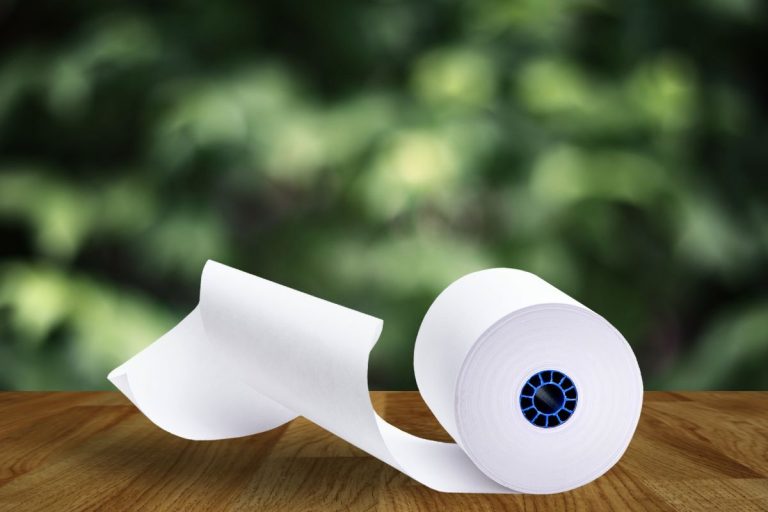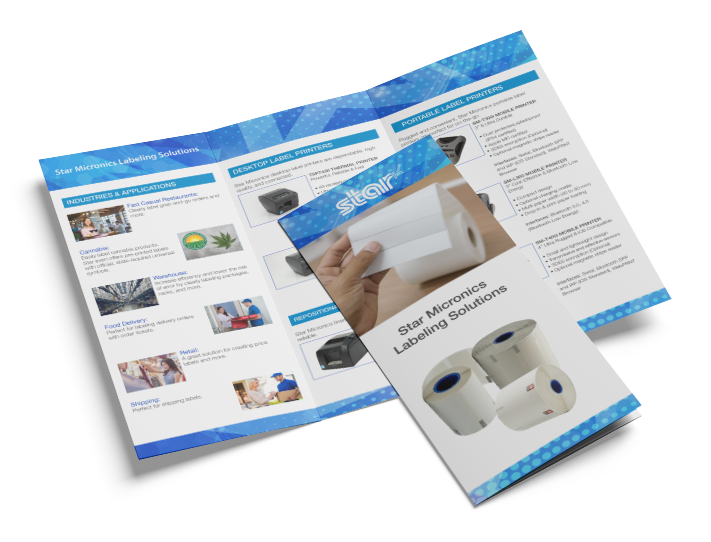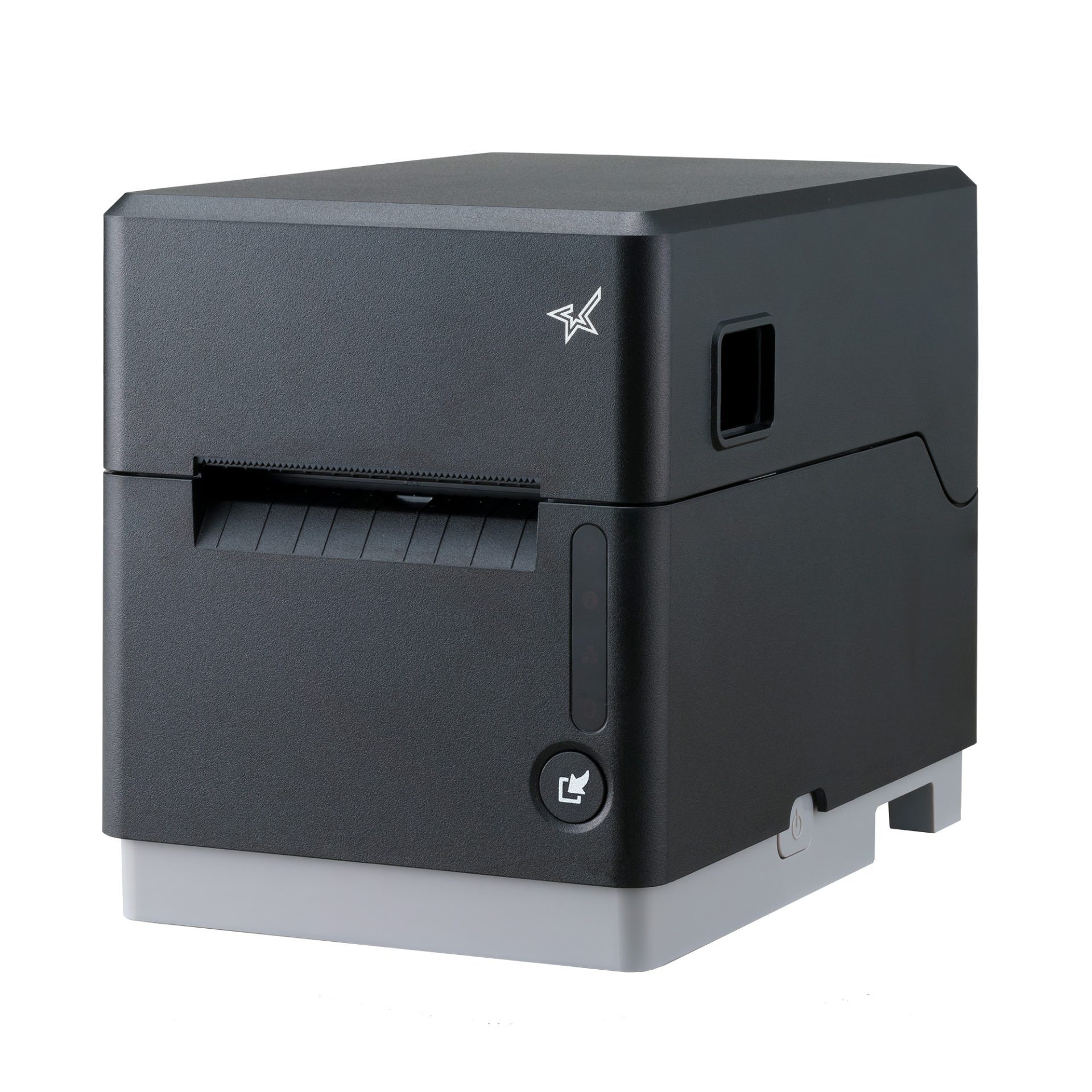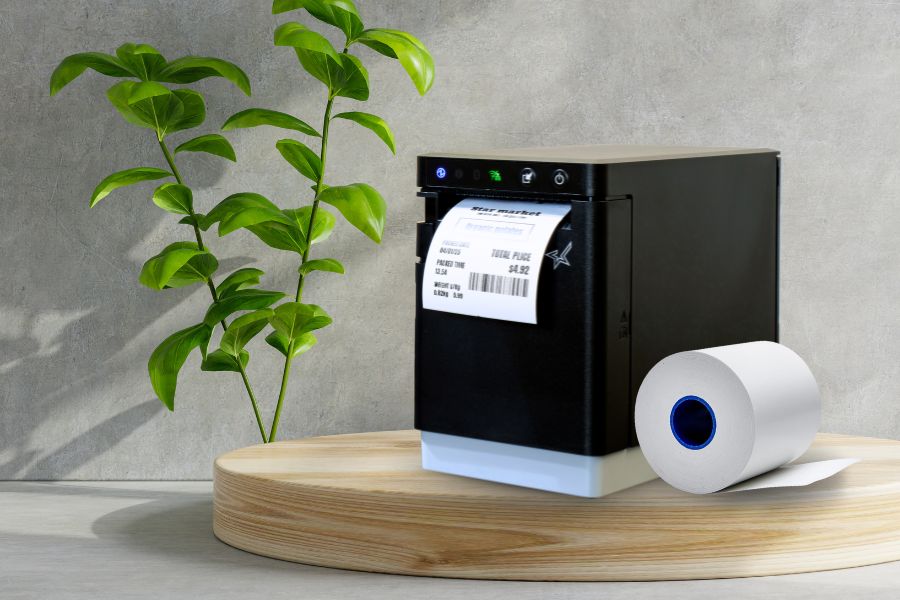
Thermal paper has long been a staple in point-of-sale printing, but the conversation around receipt paper and thermal media is evolving quickly. As more businesses evaluate sustainability initiatives, regulatory requirements, and operational standards, many are reassessing the materials used for receipts, labels, tickets, and foodservice workflows.
For businesses that rely on thermal printing, understanding the differences between BPA-free, BPS-free, and bisphenol-free thermal paper has become increasingly important. From retail and restaurants to healthcare and logistics, operators are looking for thermal media that supports reliable printing performance while aligning with broader compliance and sustainability goals.
Whether your business prints receipts, barcode labels, linerless labels, or tickets, now is the time to understand how thermal media is changing and what to consider when evaluating paper suppliers and printing solutions.
Table of Contents
What Is Bisphenol-Free Thermal Paper?
Traditional thermal paper uses heat-sensitive coatings that react with the thermal print head to produce printed text and images. For many years, BPA (bisphenol A) was commonly used in thermal paper formulations. As concerns around BPA increased, many manufacturers transitioned to BPS (bisphenol S) or other alternative chemistries.
Today, many businesses are specifically looking for:
- BPA-free receipt paper
- BPS-free receipt paper
- Bisphenol-free thermal paper
- Eco-friendly thermal media
- Prop 65 compliant paper
Modern thermal media options may use alternative developers and materials designed to support evolving sustainability and compliance initiatives while maintaining the print quality and reliability businesses expect from thermal printing systems.
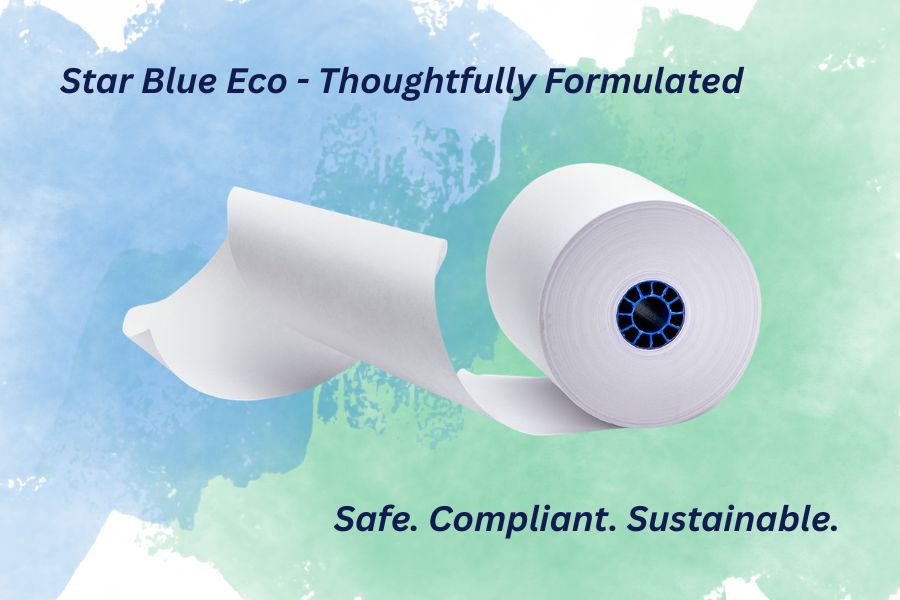
Star Eco and Star Blue Eco media are produced using materials with no intentionally added BPA or BPS, supporting more mindful material selection across retail, hospitality, and foodservice operations.
Why High-Contact Industries Are Paying Attention
Thermal paper and labels are handled constantly throughout the day in many business environments, especially in industries where receipts, tickets, food labels, and packaging workflows are central to daily operations.
As conversations around thermal media have evolved, many businesses have started evaluating whether receipt paper and labels contain added bisphenols such as BPA or BPS, particularly in workplaces where employees frequently handle thermal media throughout their shifts.
This is especially relevant in industries such as:
- Retail
- Restaurants and QSRs
- Grocery stores
- Hospitality
- Healthcare
- Logistics and warehousing
In response, many manufacturers now offer thermal paper and label media made without intentionally added BPA or BPS. In thermal media manufacturing, this generally means bisphenol-based developers are not intentionally used in the paper formulation itself, although trace amounts may still be possible due to raw material sourcing, manufacturing processes, or supply chain variables.
Some media lines also include additional sustainability-focused features such as FSC-certified materials, recyclable paper options, and select products made without added Pergafast.
Why Businesses Are Reevaluating Thermal Media
The shift toward more sustainable thermal media is being driven by several factors, including:
- Evolving state and regional regulations
- Sustainability initiatives
- Food safety and traceability programs
- Procurement standardization
- Consumer expectations around environmental responsibility
- Operational consistency across multi-location businesses
Several states have introduced or discussed restrictions related to thermal paper materials, including BPA and other chemicals commonly associated with receipt paper. Requirements vary by region, and businesses operating nationally are increasingly looking for media options that can support broader compliance readiness.
For many operators, updating thermal paper and labeling supplies is also part of a larger operational strategy tied to:
- Sustainable restaurant operations
- Eco-friendly printing supplies
- Order accuracy initiatives
- Food labeling compliance
- Waste reduction programs
- Scalable POS hardware and labeling workflows
Understanding Prop 65 and Thermal Paper Compliance
California’s Proposition 65, formally known as the Safe Drinking Water and Toxic Enforcement Act, has become one of the most recognized compliance frameworks related to product material disclosures in the United States. Businesses that distribute products in California often evaluate whether materials align with Prop 65 requirements as part of their procurement process.
For thermal paper and labels, operators may specifically look for:
- Prop 65 compliant paper
- No added BPA or BPS
- Sustainable thermal receipt paper
- FSC-certified media
- Recyclable thermal paper options
Star Eco and Star Blue Eco paper lines are produced using materials with no added BPA or BPS and are designed to support Prop 65 compliant operations.
Because regulations and material standards continue evolving, many businesses are proactively standardizing compliant thermal media across locations to simplify purchasing and support long-term operational consistency.
How Modern Thermal Paper Works
Modern thermal paper continues to deliver the fast, reliable printing performance businesses expect while supporting updated material standards and sustainability goals.
Today’s thermal media can provide:
- Clear, high-contrast printing
- Reliable image retention
- Compatibility with existing thermal receipt printers
- Support for high-volume POS environments
- Reduced material concerns compared to legacy thermal media
Importantly, businesses do not typically need to replace existing thermal printers when transitioning to updated thermal paper or label media. Modern thermal receipt paper and labels are designed to work with standard thermal printing systems, including Star Micronics receipt and label printers.
Some premium thermal media options also help:
- Reduce paper dust
- Maintain print head performance
- Improve long-term printer reliability
- Support warranty-compliant printer operation
Star Blue Eco media is specifically engineered to optimize printer performance and support long-term reliability across demanding POS environments.
Industries Transitioning to More Sustainable Thermal Media
Retail & Hospitality
Retailers and hospitality businesses continue evaluating eco-friendly receipt paper and sustainable labeling solutions as part of broader operational and customer experience initiatives.
Restaurants & QSRs
Restaurants increasingly rely on thermal labels for:
- Grab-and-go labels
- Catering labels
- Food rotation labels
- Order confirmation labels
- Allergen label information
- Traceability labels
- Off-premise dining workflows
Many QSR operators are also adopting linerless labels to support waste reduction and operational efficiency.
Healthcare & Pharmacies
Healthcare organizations often require reliable thermal printing for:
- Prescription labeling
- Patient-facing receipts
- Barcode labels
- Traceability workflows
Grocery & Foodservice
Grocery stores and foodservice operations use thermal labels for:
- Nutritional information labels
- Inventory labels
- Expiration date labels
- Weight and serving size labels
- Food identification labels
What to Look for in Thermal Receipt Paper and Labels
When evaluating thermal paper suppliers and labeling solutions, businesses should consider:
Material Standards: Look for media produced using materials with no intentionally added BPA or BPS.
Print Performance: Consistent thermal imaging and durable print quality help support reliable operations.
Printer Compatibility: Thermal media should work seamlessly with existing POS printers and label printers.
Sustainability Features: Some thermal media products offer:
- FSC-certified materials
- Recyclable thermal paper
- Reduced packaging waste
- No added Pergafast
- Linerless labeling options
Operational Reliability: Higher-quality thermal media can help reduce dust buildup and support long-term print head performance.
Linerless Labels and Sustainable Labeling Workflows
Linerless labels are becoming increasingly popular across restaurant, retail, and logistics environments because they help reduce liner waste while supporting flexible labeling workflows.
Common linerless label applications include:
- Order accuracy labels
- Delivery bag labels
- Product rotation labels
- Barcode labels
- Shelf labels
- Grab-and-go labels
- Catering workflows
Star supports both linerless and linered label workflows across its media portfolio, including:
- Repositionable linerless labels
- Permanent linerless labels
- Die-cut labels
- Continuous linered labels
These labeling solutions support modern restaurant workflows, cloud printing environments, and foodservice traceability initiatives.
The Star Blue Eco Advantage
Star Blue Eco is Star’s premium paper and thermal media line, designed to support reliable printing performance while aligning with evolving sustainability and operational standards.
Key advantages include:
- Produced using materials with no added BPA or BPS
- Prop 65 compliant
- Premium-grade thermal coating for consistent print quality
- Designed to optimize printer performance
- Helps support long-term print head reliability
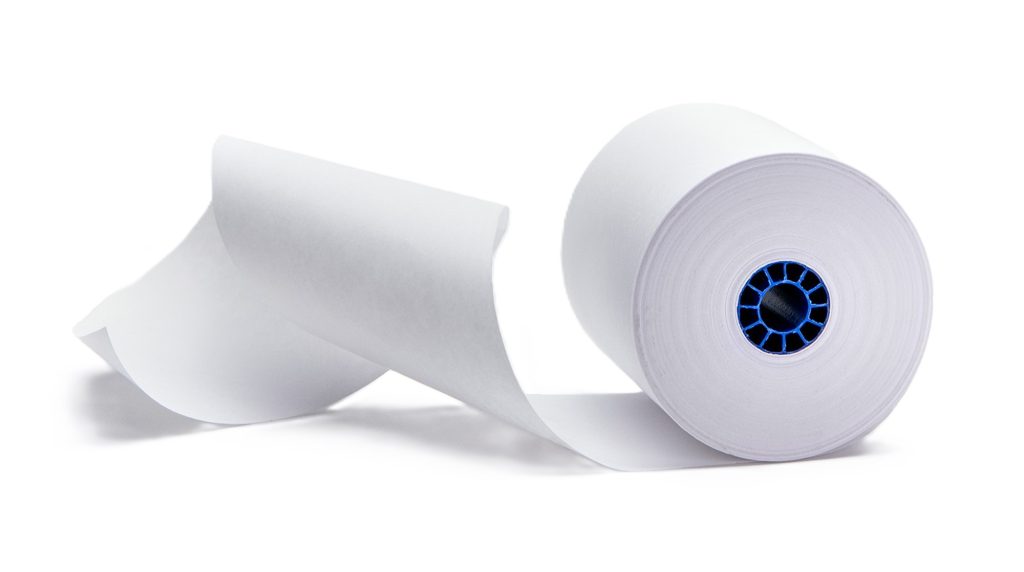
- Signature blue core for fast identification
- Select options include FSC-certified materials
- Select options include recyclable thermal paper
- No added Pergafast on select SKUs
Star Blue Eco media is designed for receipt printers, label printers, linerless labeling applications, and scalable POS environments across retail, hospitality, and foodservice industries.
Perfecting QSR Delivery with POS Scales & Advanced Labeling
Learn how QSR operators are transforming delivery with weight-based verification and advanced labeling solutions.
Frequently Asked Questions About Bisphenol-Free Thermal Paper
What is bisphenol-free thermal paper?
“Bisphenol-free thermal paper” generally refers to thermal paper formulated without bisphenol-based developers such as BPA or BPS. However, terminology, testing methods, and formulation standards can vary across manufacturers and suppliers.
In some cases, manufacturers may use phrases such as “no intentionally added BPA or BPS” to describe thermal media formulations. This reflects the fact that trace amounts may still be possible due to manufacturing, raw material, or supply chain variables, even when bisphenols are not intentionally used in the formulation itself.
Is BPA-free thermal paper the same as BPS-free paper?
Not necessarily. BPA-free thermal paper simply means BPA was not intentionally used in the formulation, but some products may still use BPS or other alternative developers.
Because terminology and material standards can vary across suppliers, many businesses now evaluate broader claims around added bisphenols and overall material composition rather than focusing on a single chemical term alone.
What is Prop 65 compliant thermal paper?
Prop 65 compliant thermal paper refers to receipt paper or labels designed to align with California Proposition 65 requirements related to listed chemicals and exposure warnings. Many businesses use Prop 65 compliant thermal media to support purchasing consistency across multiple states and locations.
Can thermal paper be recyclable?
Some thermal paper products are designed to support recyclability initiatives, though recyclability can depend on the specific paper formulation and local recycling capabilities. Some manufacturers also offer FSC-certified paper and sustainability-focused media options designed to support broader environmental initiatives.
Star Micronics offers select SKUs of Star Blue Eco thermal receipt paper that are 100% recyclable.
What is Pergafast in thermal paper?
Pergafast is a chemical developer that has been used in some thermal paper formulations as an alternative to BPA or BPS. As thermal media standards continue evolving, some manufacturers now offer paper products made without added Pergafast as part of broader sustainability and material selection initiatives.
Businesses evaluating thermal paper may review whether products contain added BPA, BPS, Pergafast, or other developers depending on their internal standards, sustainability goals, or regulatory considerations.
What does FSC-certified paper mean?
FSC-certified paper refers to paper products certified by the Forest Stewardship Council (FSC), an organization that promotes responsible forest management practices.
FSC-certified thermal paper and labels are sourced from forests and supply chains that meet specific environmental, social, and sustainability standards. Many businesses look for FSC-certified media as part of broader sustainability, sourcing, and ESG initiatives.
Do eco-friendly thermal paper rolls work with existing POS printers?
Yes. Most modern thermal paper and label products are designed to work with standard thermal receipt printers and POS systems without requiring hardware changes. Businesses can typically transition to updated thermal media while continuing to use their existing printing equipment.
What are linerless labels?
Linerless labels are adhesive labels that do not use a traditional backing liner. They help reduce liner waste, allow for more labels per roll, and support flexible custom-length printing across restaurant, retail, and logistics workflows.
Why are restaurants using more thermal labels?
Restaurants increasingly use thermal labels to support:
- Order accuracy
- Food traceability
- Off-premise dining workflows
- Grab-and-go operations
- Catering workflows
- Food rotation and expiration labeling
- Allergen and compliance labeling
As delivery and mobile ordering continue growing, labeling has become a more important part of restaurant operations and packaging workflows.
What should businesses look for in sustainable thermal media?
Businesses evaluating thermal paper and labels often consider:
- Material composition and formulation claims
- Printer compatibility
- Print quality and durability
- Prop 65 compliance
- FSC-certified materials
- Recyclable paper options
- Linerless labeling capabilities
- Long-term media consistency and reliability
Many businesses are also looking for suppliers that clearly explain how sustainability and material claims are defined across their product lines.
Originally published on October 17, 2025, by the author.