Tag: CloudPRNT Next

  • The Answers You Need to Make an Informed Decision About Cloud POS Services

    The Answers You Need to Make an Informed Decision About Cloud POS Services

    With the rise of the Internet of Things (IoT), artificial intelligence (AI), and other advanced technologies, cloud services adoption is becoming increasingly common. Gartner reports that public cloud services spending will grow to $723.4 billion in 2025, up from $595.7 billion last year. 

    Cloud services benefit different industries in various ways, particularly for cloud point of sale (POS) services. For retailers and restaurateurs, cloud POS services enable managing POS devices and peripherals remotely. Managers can monitor devices to ensure they’re online and operating properly. They may also be able to run diagnostics remotely to address maintenance issues that might be brewing. A cloud POS enables a proactive approach that maximizes uptime rather than reacting when a printer or other device stops working.

    Cloud POS services can also make data and tools available to employees across an organization, saving time and ensuring brand consistency.

    So, What’s Holding You Back from Using Cloud POS Services?

    Even though cloud solutions offer retailers and restaurateurs numerous benefits, it’s common for business leaders to have some concerns. Getting the facts will help you understand how cloud solutions work and the safeguards that are in place so you can move forward confidently. Some of the most important facts you need to know about cloud POS services are: 

    Cloud POS Services Are Secure

    While news of cyberattacks has become common, using cloud POS services doesn’t necessarily increase your risk. Cloud service providers invest heavily in securing their offerings and keeping up with changes in the threat landscape.

    In most cases, the security measures the vendor has in place far exceed anything a single retailer or restaurateur could establish. By partnering with a trusted vendor, you can be confident that your data and your business are safeguarded by robust security measures. 

    Your Data Is Private

    Cloud POS services providers are careful to keep each customer’s data private. No other customers have access to your data; they can’t see the label templates you have built or access digital receipts you store to make returns more convenient for your customers. The only people who can access your data are your employees who use the right login credentials. 

    You Can Work Offline

    While accessing your data in the cloud requires a network connection, this doesn’t mean you can’t work when you’re offline. Cloud POS services often provide a way to establish a “hybrid” system where information is stored locally. This allows your employees to access it during network outages and sync when the connection is restored. Cloud service providers ensure that your workflows remain uninterrupted. 
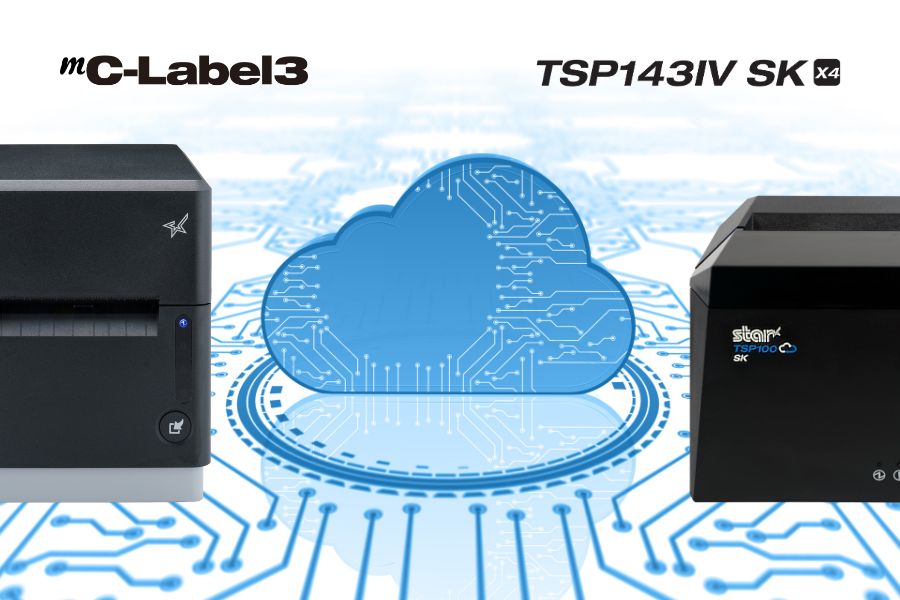
    Star Micronics CloudPRNT Next Cloud Services
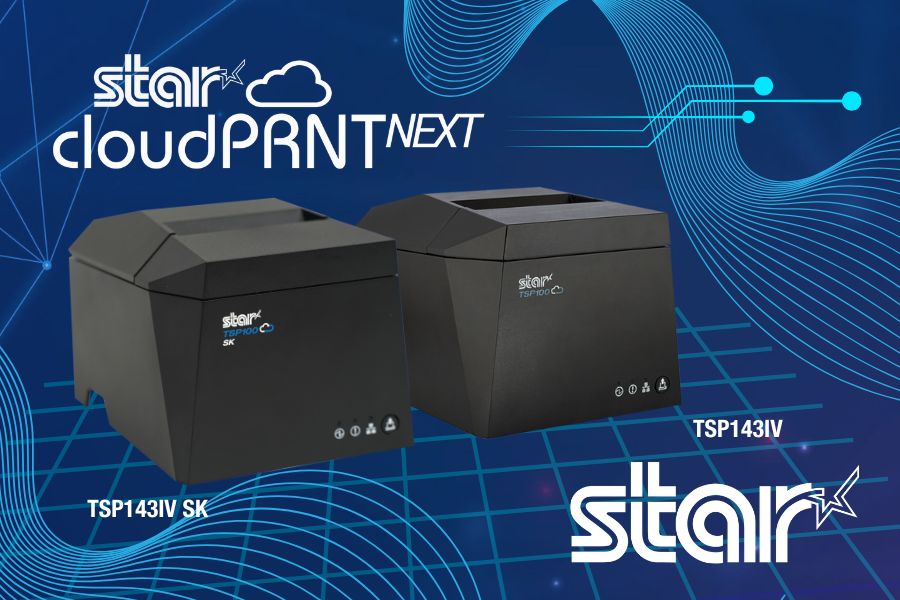
    Star Micronics mC-Label3 and TSP143IV SK label printers support CloudPRNT Next for fast cloud printing.

    You Can Afford Them

    Cost is always a consideration, but with cloud POS services, it’s important to think in terms of total cost of ownership (TCO). You don’t need the same amount of infrastructure on-site to do the same things that a cloud solution does. You use the provider’s resources, not your own servers, for things like data storage, backup, and data security.  

    When you consider all costs and all cost savings, including gains in operational efficiency, cloud services are generally more cost-effective than on-premises solutions. Furthermore, when it comes to Star Micronics Cloud Services, they’re included at no additional cost with our cloud-ready printers. 

    They’re Easy to Use

    A major concern among business leaders is that cloud POS services may be too challenging for their employees to use. However, a quick demo will demonstrate how easy using cloud services can be. For instance, Star’s PromoPRNT allows you to add promotions to receipts, providing you with a new—and effective—customer engagement tool. You can easily create promotions from templates and manage them from any connected device. For your employees, adding marketing messages to receipts is effortless. 

    What Is CloudPRNT Next?

    If you’re exploring cloud POS options, it’s worth getting familiar with CloudPRNT Next—Star Micronics’ next-generation remote printing technology.

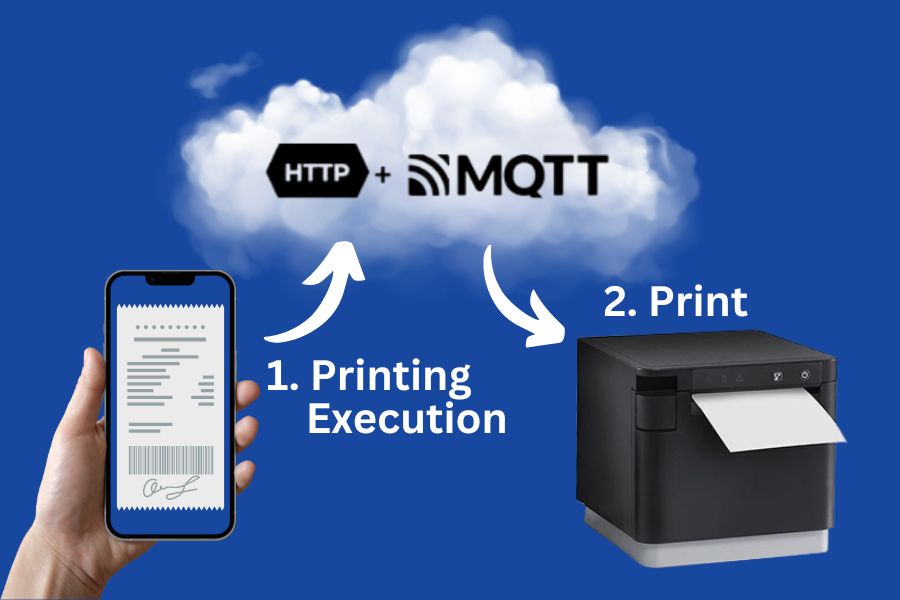
    Built on the MQTT protocol, CloudPRNT Next offers faster, more secure, and more scalable communication between cloud applications and printers. Whether you’re printing receipts, orders, labels, or tickets, CloudPRNT Next gives developers and operators the power to:

    • Print directly from web apps—no middleware or local server required

    • Receive real-time feedback from the printer (status, errors, confirmations)

    • Scale easily across locations and devices

    • Support complex workflows like multi-item labeling or off-premise fulfillment

    It’s the ideal solution for ISVs, enterprise foodservice operators, and QSRs looking to streamline remote order fulfillment without sacrificing control or reliability.

    What’s Your Next Move?

    Once you have a clear understanding of the pros and cons of cloud POS services, you can make an informed decision about their value for your organization. You likely have more questions about how a cloud POS will operate within your organization and the benefits it will provide. The Star Micronics team is here to answer your questions and assist you in selecting the best cloud-ready solution for your company. Contact us today. 
    Conquering Omnichannel Order Management with Cloud-Based Technology Solutions

    Consumers have spoken! The future of retail and hospitality is omnichannel, cloud-based, and connected. Is your business prepared?

    Ready to boost your cloud printing capabilities?

  • Why Businesses Are Moving to Cloud-Based POS – And Why You Should Too

    Why Businesses Are Moving to Cloud-Based POS – And Why You Should Too

    In this episode of the Rising Stars Podcast, “Why Businesses Are Moving to Cloud-Based POS – And Why You Should Too,” host Kate Orara explores the growing shift toward cloud-based POS solutions and why businesses are making the transition. Drawing from her expertise as Star Micronics’ Partner Development Manager, Kate highlights how VARs, ISVs, and business owners can leverage cloud POS technology to drive efficiency, lower costs, and keep their operations competitive.

    This episode provides valuable insights into the benefits of cloud POS, including real-time data access, scalability, security enhancements, and lower total cost of ownership (TCO)—helping businesses stay competitive in an evolving digital landscape.

    Future-Proofing with Cloud POS

    The transition to cloud-based POS is reshaping the way businesses manage operations, customer interactions, and multi-location growth. Kate discusses key advantages such as automatic software updates, reduced IT maintenance, and enhanced data security. She also addresses common concerns, including offline functionality, PCI compliance, and data ownership, ensuring businesses understand how to navigate the shift with confidence.

    This episode is a must-listen for anyone looking to optimize their POS strategy. Whether you’re a QSR, retail chain, or enterprise business, embracing cloud technology can unlock new efficiencies and set the stage for continued success.

    Have you heard of Star’s CloudPRNT Next? Find out more about the next level of cloud printing here >

    Loving the podcast? Subscribe now, and let us know what you think by leaving a review!

    Stay up-to-date on all things Star, don’t forget to follow us on X, LinkedIn, Facebook, Instagram, and YouTube.

    The Rising Stars Podcast

    Immerse yourself in the world of point-of-sale (POS) with the Rising Stars Podcast by Star Micronics, hosted by industry pro, Kate Orara. Twice a month, we explore the fascinating journeys of innovators and businesses navigating the challenges of POS technology’s rapid pace.

    In every episode, Kate Orara, Star Micronics’ Partner Development Manager, discusses emerging retail technology trends and strategies with global industry giants. She’s spent her entire career meeting all the right people, and now listeners everywhere can benefit from this vast network of channel gurus.

    Always leading and always innovating, Star Micronics, a pioneer in POS and customer experience technology for over 60 years, welcomes you to join us in shaping a brighter future in the retail, hospitality, and cannabis industries.

    Want more industry news?

    Episode Transcript

    [Music]

    Kate Orara: Hey there, retail tech enthusiasts! Welcome to the Rising Stars Podcast, your go-to for all things retail tech and point of sale. I’m Kate Orara, Partner Development Manager at Star Micronics, and I’m excited to guide you through this journey. Here, we dive into the latest innovations shaping the retail, hospitality, and cannabis industries. So whether you’re a techie or a business owner, this is your backstage pass to insider knowledge. Join me and the Star Micronics team as we innovate and rise together.

    Today, we’re diving into an exciting topic that’s all about modernizing the way we do business—the move to cloud-based point-of-sale (POS) systems. Whether you’re a reseller or an independent software vendor (ISV), helping your end users understand the value of moving their POS to the cloud can be a game-changer, not just for their business but for yours too. So, let’s unpack this topic with an upbeat, practical lens.

    Accessibility and Flexibility

    Here’s the deal: cloud-based POS systems act like the ultimate remote control for business operations. With just an internet connection, business owners can manage sales, track inventory, and even oversee employee performance—no matter where they are.

    Think about it: a business owner could be at the beach (lucky them!) or visiting another store location, and they can still pull up real-time sales data on their smartphone or tablet. It’s like having their entire business in their back pocket. That level of flexibility isn’t just a perk—it’s a necessity in today’s fast-paced retail world.

    For resellers and ISVs, this is a golden selling point. You’re not just pitching software; you’re offering freedom and control.

    Operational Efficiency

    Cloud-based systems simplify many day-to-day processes, making them incredibly efficient for end users. Here’s an example: instead of manually updating inventory across multiple stores or platforms, a cloud system updates everything in real time. One click, and boom—inventory is synced. No spreadsheets, no guesswork, no headaches.

    What about software updates? Traditional POS systems often require manual updates, leading to downtime. With the cloud, updates happen automatically behind the scenes, ensuring no disruption to business operations. It’s seamless.

    As a reseller or ISV, you can confidently position cloud-based systems as tools that make life easier for end users. When businesses operate more efficiently, they grow faster, and that success reflects back on you as a trusted advisor.

    Packaging the Benefits for Customers

    So, how do you package these benefits into a compelling message for your customers? Here’s the win-win scenario you can paint for the business owner: Moving to a cloud-based POS means they gain freedom, speed, and peace of mind. For you, the reseller or ISV, it’s an opportunity to build deeper relationships, drive recurring revenue through subscriptions, and help your customers stay ahead of the curve.

    This isn’t just about selling technology; it’s about being a partner in growth.

    When Cloud-Based POS Might Not Be Ideal

    Now, before we wrap up, let’s address a common question: Are there businesses where a cloud-based POS might not be the ideal solution? The short answer: yes. While cloud-based systems offer significant benefits, they’re not a one-size-fits-all solution.

    Here are a few scenarios where they may not be the best fit:

    • Businesses in areas with unreliable internet: While many systems offer offline modes, consistent connectivity is essential to fully leverage the benefits of the cloud. In such cases, a hybrid system or a traditional locally hosted POS might be a better choice.
    • Specialized software or hardware requirements: Certain manufacturing businesses or highly specialized retail environments may use equipment or workflows that require older, on-premise systems.
    • Small businesses with minimal transactions: While cloud-based POS systems often have a lower total cost of ownership, very small businesses with extremely low transaction volumes may find subscription costs unnecessary compared to basic cash registers or standalone systems.

    As resellers and ISVs, your role is to guide end users toward the best solution for their unique situation. Ask thoughtful questions about their infrastructure, location, and operational needs. If a cloud-based system isn’t right for them, they’ll appreciate your honesty, and that trust can lead to future opportunities.

    Final Thoughts

    To wrap things up, remember: cloud-based POS systems bring tremendous value, but they’re not the answer for every business. Knowing when and why to recommend or not recommend them is what will set you apart as a trusted advisor.

    Thank you for tuning in to this episode of the Rising Stars Podcast! If you found today’s discussion valuable, share it with a colleague or post it on your socials. Let’s keep these conversations going! And if you’ve got more questions about cloud-based POS, reach out to me or the team at Star. I’d love to hear from you.

    Until next time, stay inspired, stay innovative, and keep reaching for the stars.

    And that is a wrap for this episode of the Rising Stars Podcast! A huge thanks to our incredible listeners for tuning in. Don’t forget to subscribe, rate, and leave a review. Your feedback fuels our journey to bring you the best in retail tech. Stay connected with us on social media for updates and behind-the-scenes content.

    As you sign off, remember: the future of retail technology is in our hands, and together, we are shaping it. Keep innovating, keep rising, and until next time, this is Kate Orara signing off. Together, we rise.

    [Music]

  • Star Software Update: CloudPRNT Next Now Compatible with TSP143IV and TSP143IV SK Models

    Star Software Update: CloudPRNT Next Now Compatible with TSP143IV and TSP143IV SK Models

    Star Micronics’ CloudPRNT Next technology, initially introduced on the mC-Print3 models, is now also available for the latest TSP143IV thermal receipt printers, including the TSP143IV SK sticky linerless label printer models. By updating the firmware to version 2.2 or later, users of these TSP143IV models can now take advantage of CloudPRNT Next’s benefits, improving cloud printing operations in environments needing higher efficiency, dependability, and scalability.

    Read more about CloudPRNT Next technology here >

    CloudPRNT Next supports streamlined remote printing through the MQTT protocol, providing more reliable, real-time communication between cloud systems and connected devices. This results in lower latency and bandwidth consumption, particularly advantageous for businesses with high-demand or multi-location setups. Additionally, CloudPRNT Next’s scalable infrastructure accommodates an increased number of connected devices, helping businesses grow without compromising performance.

    To enable CloudPRNT Next on the TSP143IV and TSP143IV SK printers, update to firmware version 2.2 or later. This update allows businesses and developers to leverage the full capacity of CloudPRNT Next’s advanced printing capabilities, optimizing order management and workflow efficiency across the board.

    Need more information?

  • Essential Airport Restaurant Solutions for Modern Hospitality

    Essential Airport Restaurant Solutions for Modern Hospitality

    Restaurants and food service companies with airport locations have an immense opportunity to provide the meals and snacks travelers count on to sustain them before or after flights. However, filling orders and optimizing customer experiences can be a challenge without the right airport restaurant solutions. 

    Airport restaurant and concessions staff have to deal with demand from thousands of people, particularly when large flights land or at traditional mealtimes. Furthermore, travelers are looking for a variety of experiences. Some want quick service before catching a connecting flight and will not be patient if forced to waste time standing in line. Others want to relax in a restaurant during a long day of travel. 

    Regardless of how they engage, travelers want efficient service and food made to order. The complexity of managing multiple restaurants can make meeting those demands even more challenging. Operators may have numerous locations throughout an airport or have locations with different branding and menus. Ensuring smooth operations at each restaurant, counter, and concession stand requires real-time visibility and centralized control.

    Must-Have Airport Restaurant Solutions

    Technology tailored specifically for airport restaurants helps meet high customer expectations for quick, efficient service, even during peak times. Modern airport restaurant and food service operations leverage the following technologies: 

    1. Online Ordering and Cloud-Ready Hardware

    With more travelers opting to order food and beverages from their mobile devices, online ordering has become an essential service for airport restaurants. Allowing customers to browse menus, place orders, and pay directly from their phones not only enhances convenience but also helps reduce wait times at busy counters. Customers can complete an order with a few taps as they move through the terminal, allowing staff to prepare the food before they even approach the restaurant.

    To support this level of convenience, having cloud-ready hardware is ideal. Cloud-print-enabled printers receive orders directly from online ordering platforms, whether from mobile apps or websites, minimizing the need for extra devices or manual input. This technology helps staff stay updated with orders in real time, reducing delays and making sure that all orders—no matter where they come from—are accurately printed and efficiently managed.

    Star Micronics’ CloudPRNT technology makes this process flawless by allowing printers to communicate directly with web-based ordering services. With Star’s CloudPRNT Next, enhanced by the MQTT protocol, airport restaurants benefit from faster, more reliable cloud communication, ensuring orders are printed promptly, even in high-demand environments.

    2. Self-Service Kiosks

    Deploying kiosks is one of the best ways to keep lines short and minimize errors and waste. Instead of waiting for assistance from an employee, travelers place their orders at a kiosk, using a touchscreen to choose precisely what they want. 

    Self-service “kiosks” can take many forms, from large interactive digital signage to touchscreens embedded in cabinets. However, a tablet in a secure enclosure supported by a tablet stand or display gives airport restaurants a space-saving way to provide self-service options. 

    With self-service kiosks, travelers are free to quickly browse their options and potentially even place orders with different restaurants or vendors near them from the same screen. Kiosk software can make nutrition and allergen information readily available and upsell customers with offers to expand an order into a combo or add a side. 

    After making their selections, travelers can pay at the kiosk using cash, a payment card, or a mobile wallet. A receipt or ticket with an order number is then printed for easy tracking. The receipt can also include an estimated time when the order will be ready so travelers can purchase items for their flights or run other errands before picking up their food.

    Airport Restaurant Solutions Kiosk

    3. Kitchen Printers

    Once travelers place their orders, it’s essential for airport kitchens to receive them quickly and accurately. Kitchen printers ensure each order reaches the back of house promptly, helping staff prepare and serve food efficiently, even during busy times. By improving the order process, these printers contribute to faster service, ultimately creating a smoother experience and happier customers.

    Impact printers are known for their durability and can handle the demands of busy kitchen environments. They reliably produce clear, legible orders, performing well despite the heat and humidity often found in kitchen spaces. These printers also offer fast output, simple paper loading, and a compact design to optimize space.

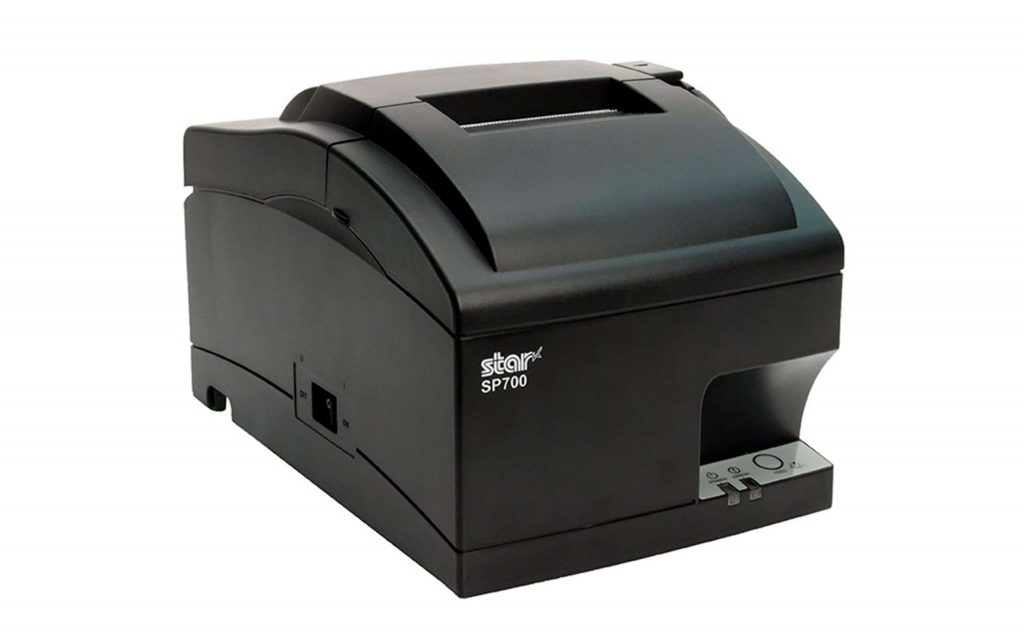
    The SP700 series by Star Micronics supports CloudPRNT technology, which allows kitchen printers to receive online orders directly from cloud-based platforms without additional hardware. This capability makes it easier for staff to keep up with orders and reduces delays, providing a positive experience for both in-house and online customers.

    SP700 Impact Printer

    With its robust design and consistent print quality, the SP700 impact printer enhances both operational efficiency and customer satisfaction by streamlining order management.

    Explore the SP700 >

    As modern kitchens adopt effective heat control, thermal receipt printers are quickly becoming the standard for reliable performance in high-temperature settings. Thermal ticket or chit printers offer faster speeds and enhanced connectivity options, making them ideal for a more streamlined kitchen workflow.

    Learn “Why Thermal Receipt Printers Have a Place in Today’s Modern Kitchens” here >

    4. POS and Receipt Printers

    For airport restaurant operations, POS and receipt printers play a crucial role in ensuring fast and polished customer experiences. High-volume environments require efficient POS systems that can quickly process various payment types, from mobile wallets to contactless cards, meeting the fast-paced demands of airport travelers. Paired with high-speed thermal receipt printers, these systems speed up transactions, minimizing wait times for customers eager to grab a bite before their flights.

    In addition to efficient processing, clear and readable receipts improve order tracking and pickup for customers and staff alike. Thermal receipt printers provide crisp, legible receipts with order numbers and instructions, helping travelers and staff stay organized in the fast-moving airport environment.

    mC-Print3 Receipt Printer

    The Star Micronics mC-Print3 combines high-speed printing with advanced connectivity options like Ultra-C and CloudPRNT Next. Its Ultra-C USB-C port provides seamless power and data transfer with any device, while CloudPRNT Next offers enhanced remote printing using the MQTT protocol, ideal for modern POS environments.

    Discover the mC-Print3 >

    5. Label Printers

    Label printers have become essential in airport restaurants, providing a versatile solution for labeling various items, from grab-and-go meals to fresh ingredients. Clear, easy-to-read labels display product names, nutrition facts, and prices, allowing travelers to make quick purchasing decisions, which is particularly valuable in fast-paced environments. 

    Linerless label printers, in particular, offer substantial benefits for airport restaurants. Unlike traditional labels, linerless labels do not have a silicone backing, which makes them quicker to apply, eliminates unnecessary waste, and keeps workstations cleaner and safer. These printers can use either a repositionable adhesive for temporary labeling or a stronger adhesive for more permanent applications. 

    mC-Label3 Multimedia Printer

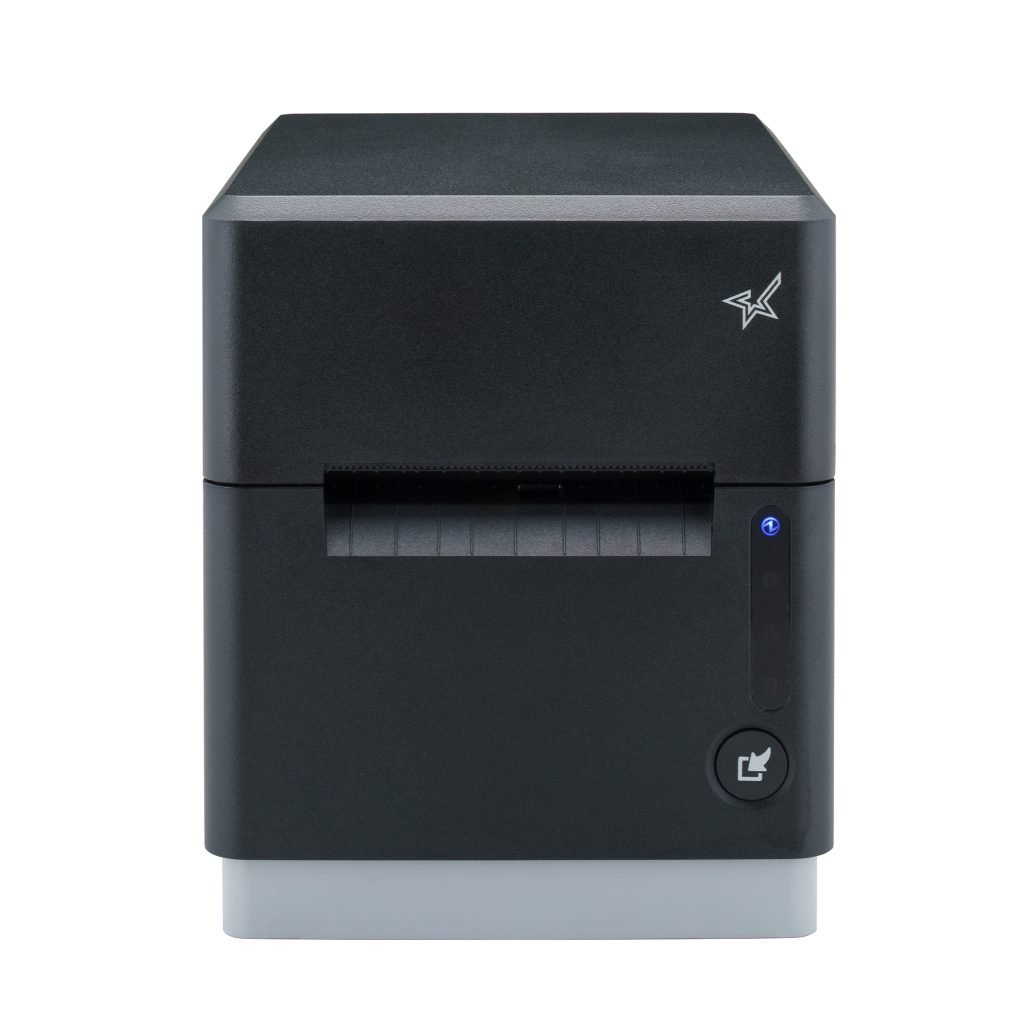
    The Star Micronics mC-Label3 is a versatile multimedia printer that prints a wide range of labels and receipts, including both permanent and repositionable sticky linerless. It features cloud connectivity and innovative technologies like SteadyLAN and TetherLAN for enhanced printing convenience.

    Discover the mC-Label3 >

    6. Barcode Scanners

    For restaurants looking to optimize inventory management and simplify workflows, barcodes or QR codes are an ideal addition to labels. Scanning these codes allows staff to quickly verify product details, check inventory levels, and even monitor sales trends for efficient reordering. Barcodes on receipts or QR codes for mobile app ordering also streamline the customer experience by making it easier to retrieve order details or participate in loyalty programs.

    Additionally, barcode scanners, whether handheld or countertop, are invaluable for smooth and accurate order processing, age verification, and stock tracking. From portable devices for stockroom use to fixed scanners for checkout, barcode scanning equipment enhances operational efficiency and accuracy, giving airport restaurant staff reliable tools to improve customer service and maintain organized, well-stocked inventory.

    Star’s 1D/2D Barcode Scanners

    Star offers a comprehensive range of IP-rated 1D/2D barcode scanners, ideal for diverse business needs. From retail to healthcare, our versatile scanners excel in parsing driver’s license and ID barcodes, ensuring swift and accurate data capture. Choose the perfect fit for your setup—desktophandheld, or wireless Bluetooth options available.

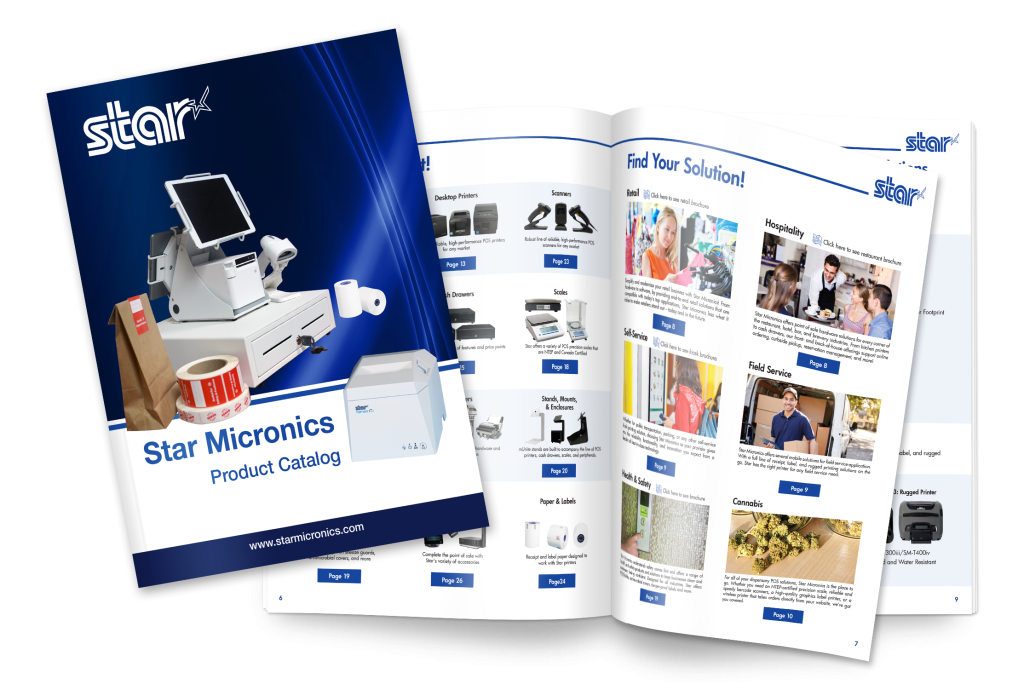
    View the Star Catalog

    Discover the full range of Star Micronics airport restaurant solutions in our product catalog, offering the tools you need for efficient, high-performing airport dining operations.

    Think Omnichannel for Airport Restaurant Solutions

    Travelers come from all walks of life, and their preferences for how they interact with businesses vary widely. For instance, non-native speakers may find it easier to use a kiosk with multilingual support, while travelers with mobility issues may prefer browsing menu options on a screen instead of moving from restaurant to restaurant. Some guests may even want the convenience of ordering from multiple airport eateries at once.

    On the other hand, travelers rushing to catch a connecting flight often seek quick grab-and-go options with fast self-checkout. Leveraging an omnichannel approach with airport restaurant solutions makes all types of engagement possible.

    Additionally, these solutions empower airport restaurants to drive greater operational efficiency, improve order accuracy, and minimize waste. By connecting front- and back-of-house processes, operators can ensure control, consistency, and high-quality customer service. With the right technology, airport restaurants can overcome the unique challenges of airport hospitality, creating a frictionless, low-stress experience that benefits both travelers and staff.

    Find Your Airport Restaurant Solutions Today:

  • How the MQTT Protocol Saves ISVs Time, Money, and Cloud Space

    How the MQTT Protocol Saves ISVs Time, Money, and Cloud Space

    Today, the cloud reigns in the world of point-of-sale technology. Businesses are moving from on-premises systems to cloud-based solutions. This is especially true for the retail and hospitality sectors, which are embracing the benefits of cloud printing technology.

    As a result, these sectors are demanding from their independent software vendors (ISVs) something they never requested in the era of on-premises software: fast, reliable, and scalable cloud solutions. This is where the MQTT protocol offers transformative benefits, helping ISVs save time, cut costs, and optimize cloud resources.

    What is the MQTT Protocol and Why Does It Matter to ISVs?

    MQTT (Message Queuing Telemetry Transport) is a lightweight communication protocol built for efficient, low-bandwidth data transfer, providing ISVs with a solution that boosts system performance while keeping operational demands low. Unlike traditional protocols like HTTP, which rely on constant polling, MQTT uses a publish-subscribe model—where devices (publishers) send data to a central broker, which then forwards the data only to devices that have expressed interest in receiving it (subscribers). This method sends data only when necessary, eliminating the need for constant checks and updates.

    The difference results in faster, more efficient cloud communication that reduces resource burdens and cuts unnecessary costs. For ISVs managing cloud-based printing systems, such as POS printers or remote services, this approach offers a significant advantage in reliability and performance.

    At its core, MQTT facilitates real-time communication between devices and cloud applications, making it especially valuable for ISVs handling systems that require stable connections. The protocol helps ISVs manage cloud-based applications more effectively by reducing network congestion and allowing for faster, real-time data transfer.

    This efficiency is particularly beneficial for companies operating across multiple locations—such as retail chains, hospitality franchises, or food delivery services—where smooth operations across dispersed regions are essential.

    Find Out About Star SDKs

    For ISVs navigating the complexities of printer integration, the path forward is often strewn with challenges. Get to know Star Micronics’ range of software development kits (SDKs), each uniquely crafted to address these challenges and enhance your integration prowess.

    Time-Saving Benefits of MQTT for ISVs

    Implementing MQTT in your systems can greatly optimize print job management and POS communication. Its instantaneous data transfer reduces latency, making operations faster and more efficient. This is especially useful for businesses in retail or hospitality, where speedy data processing is critical.

    Key Benefits:

    • Reduced Latency: Real-time data transfer processes print jobs faster, minimizing delays and downtime.
    • Automated Communication: Automatically maintains server-device connections, removing the need for frequent manual checks.
    • Improved Scalability: Lightweight design supports easy expansion without overloading networks as businesses grow.
    • Faster Transactions: Quicker print jobs result in improved customer service, particularly in fast-moving environments.

    Cost-Saving Advantages of MQTT

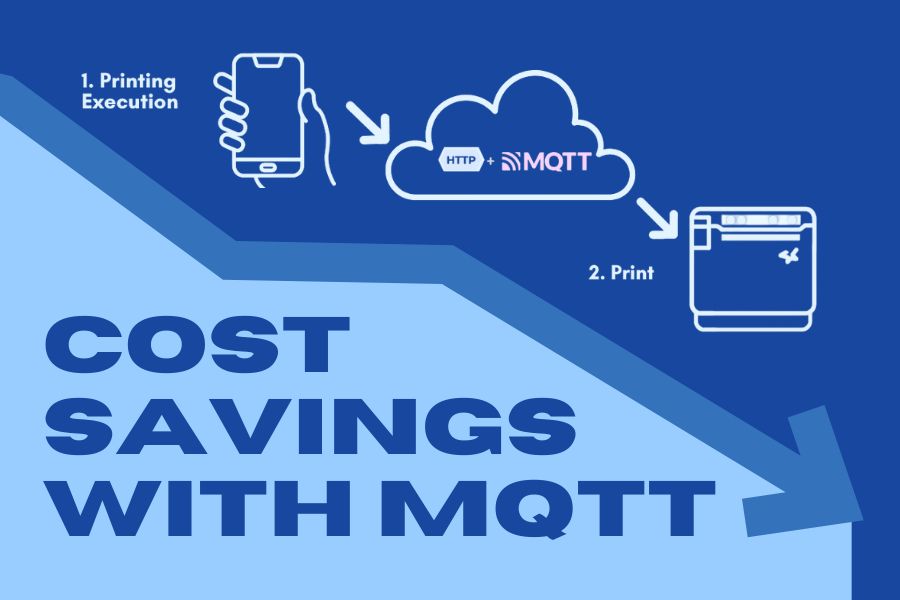
    In addition to time savings, MQTT also provides notable financial savings for ISVs. One of the main ways this is achieved is through minimized bandwidth usage. Unlike HTTP, which consumes bandwidth continuously by polling for updates, MQTT only transmits data when it’s needed. This results in lower data consumption, which directly reduces expenses related to bandwidth and server use.

    For cloud-based printing solutions, the MQTT protocol can also help ISVs reduce their cloud storage needs. By limiting data transmissions to necessary updates, less information is stored in the cloud, meaning ISVs need fewer resources to manage their systems. This leads to lower cloud hosting costs and makes it easier to maintain scalable, cost-efficient operations as business demands increase.

    Additionally, the use of MQTT can lower infrastructure costs by streamlining server needs to handle constant data traffic. ISVs can operate with leaner infrastructure, which translates to reduced investment in hardware and network systems.

    How the MQTT Protocol Saves ISVs Time, Money, and Cloud Space

    How MQTT Optimizes Cloud Space

    Another critical benefit of MQTT for ISVs is its ability to minimize cloud storage usage. The protocol uses a publish-subscribe model, dramatically reducing the amount of cloud space required, which is particularly advantageous for ISVs managing multi-location businesses that rely on cloud-based systems for remote printing, inventory management, and more.

    By refining data transfer practices and reducing the amount of unnecessary information stored in the cloud, MQTT helps ISVs reduce reliance on costly cloud storage solutions. This is particularly useful for businesses experiencing rapid growth or those looking to expand into new locations without increasing their cloud infrastructure costs.

    As cloud storage fees continue to rise, the efficiency provided by MQTT can result in significant long-term savings for ISVs. With MQTT, you’re only using cloud resources when absolutely necessary, which helps you avoid overage fees and ensures that you always have sufficient cloud capacity for the most critical tasks.

    • Reduced Cloud Storage Usage: MQTT sends data only when updates are necessary, which significantly decreases cloud space requirements, especially for businesses managing multiple locations.
    • Optimized Data Transfer: By cutting down on unnecessary data transmissions, MQTT ensures that ISVs need fewer cloud resources, lowering reliance on expensive storage solutions.
    • Long-Term Cost Savings: As cloud storage fees increase, the reduced data transmission of MQTT helps ISVs avoid overage fees, resulting in substantial cost savings over time.
    • Scalability for Growing Businesses: MQTT’s lightweight design allows ISVs to scale their operations efficiently without overwhelming the network, making it ideal for businesses looking to expand.
    • Improved Cloud Resource Management: With MQTT, ISVs can ensure that cloud resources are used only when necessary, maintaining ample capacity for critical tasks without overspending on storage infrastructure.

    Scalability and Efficiency for Multi-Location Businesses

    For businesses operating across multiple locations, adaptability is essential. The MQTT protocol makes it easier for ISVs to manage print jobs and other critical tasks across geographically dispersed locations without overwhelming the system. Whether you’re running a chain of retail stores, restaurants, or even healthcare clinics, MQTT ensures that your cloud-based systems stay responsive, reliable, and easy to manage.

    With the MQTT protocol, ISVs can monitor multiple devices and systems from a centralized hub, simplifying communication and ensuring consistency across all locations. This allows businesses to scale without needing major infrastructure updates, making it an ideal solution for growing companies looking to maintain efficiency while expanding.

    Learn About Star’s Industry-Leading Tech

    Experience the difference with Star Micronics’ advanced POS technology, designed to make your business run smoother. 

    The Future of ISV Solutions with the MQTT Protocol

    The MQTT protocol represents a shift toward more efficient cloud communication, offering ISVs a scalable solution that lowers costs and maximizes performance. By reducing bandwidth consumption, lowering cloud storage needs, and enabling real-time data transfer, MQTT is revolutionizing how cloud-based printing and POS solutions operate.

    For ISVs looking to implement cutting-edge technology, Star Micronics offers CloudPRNT Next, a cloud-based printing solution that harnesses the power of MQTT to deliver fast, efficient, and reliable remote printing. With CloudPRNT Next, ISVs can leverage the full benefits of MQTT, ensuring their systems remain future-proof while providing the best possible service to clients.

    If you’re ready to explore how CloudPRNT Next and the MQTT protocol can transform your cloud operations, reach out to the Star Micronics integrations team today.