Tag: Barcode Scanners

  • The Role of POS Hardware in Compliant Cannabis Retailing

    The Role of POS Hardware in Compliant Cannabis Retailing

    Balancing compliance and efficient operations in the rapidly evolving cannabis retail landscape can feel akin to walking a tightrope. The secret to mastering this balance? A robust point-of-sale (POS) system. With the proper POS hardware, you can effortlessly navigate regulatory requirements and keep your customers happy.

    This article is your roadmap to understanding how POS hardware plays a pivotal role in running a compliant and successful cannabis dispensary. Let’s dive in and discover how the right tech can transform your operations, making compliance a breeze and customer service a pleasure.

    The State of Cannabis Retail Regulations

    Cannabis retailers face unique challenges, one of them being the vast differences in regulations across states and countries. Compliance demands can be overwhelming, from tracking and reporting sales to verifying age and calculating taxes. Choosing the right POS hardware can alleviate these pressures and keep your business running smoothly.

    How online ordering for cannabis dispensaries boosts profits.

    POS Hardware and Compliance

    Key to ensuring regulatory compliance in your cannabis dispensary is leveraging the power of modern POS hardware. Real-time inventory tracking capabilities ensure your records are always up-to-date, which is essential for states where seed-to-sale tracking is mandatory. Secure transaction recording helps prevent discrepancies and ensures traceability.

    Furthermore, POS systems with built-in age verification tools eliminate the risk of non-compliant sales. Finally, robust tax calculation features remove the guesswork from complex and often fluctuating cannabis taxes.

    Essential POS Hardware for Cannabis Retailers

    Your cannabis retail store needs a variety of POS hardware to streamline operations and ensure compliance. Here is a quick rundown of the POS hardware that can help:

    • POS terminal: This is the primary device used to process transactions, whether it’s a desktop system or a mobile device.
    • Cash drawer: An essential component for transactions, a secure and reliable cash drawer is necessary to store cash and give change.
    • Receipt printer: Printers provide customers with physical receipts, which is often a regulatory requirement in the cannabis industry.
    • Barcode scanner: Scanners speed up the transaction process and ensure accuracy in sales and inventory tracking.
    • Label printer: Used to print barcodes for products and shelf labels, essential for inventory management, sales tracking, and compliance.
    • POS scale: For dispensaries selling cannabis by weight, compliant scales are crucial.
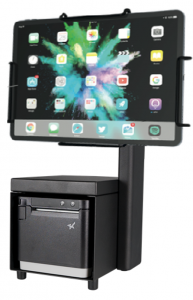
    • POS stand: For tablet-based POS setups, an all-steel tablet display stand or pole mount can help protect your equipment while projecting a modern look to customers.
    • Card reader: A secure and reliable card reader is needed to accept debit and credit card payments.

    All these elements combined make for an efficient, compliant, and customer-friendly retail experience. However, remember that your dispensary’s specific needs may vary based on size, customer volume, and specific state or local regulations.
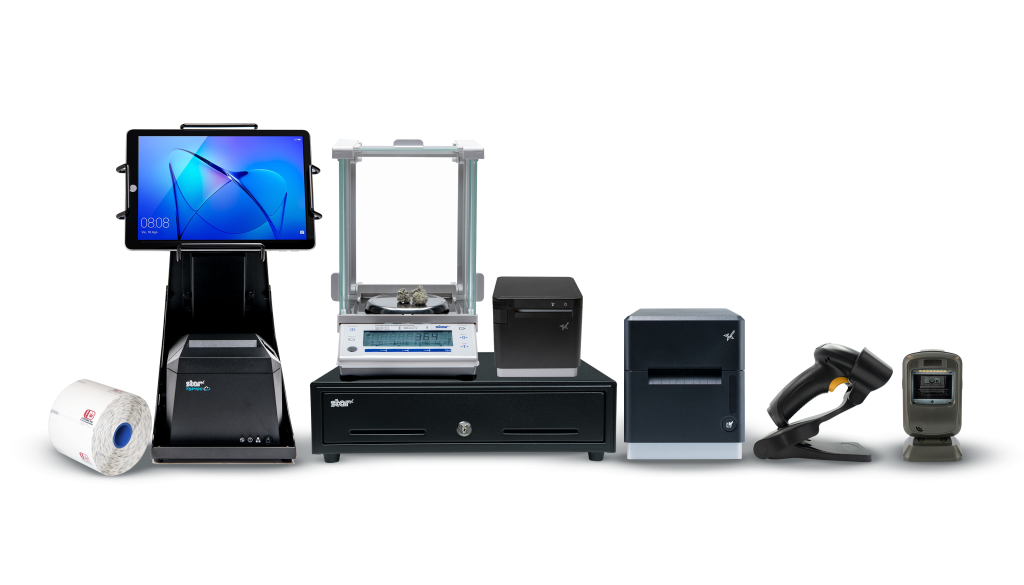

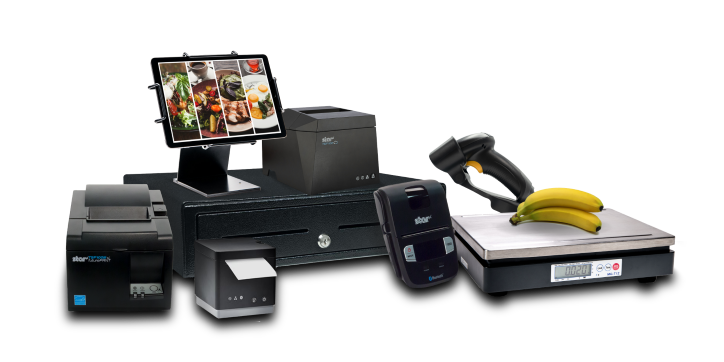
    The complete POS hardware solution for cannabis dispensaries by Star Micronics.
    Star Micronics has the complete POS hardware solution for cannabis dispensaries.

    POS Hardware Can Add to Cannabis Retailing Success

    Many cannabis retailers have already realized the benefits of investing in high-quality POS hardware. Many success stories highlight how comprehensive POS systems can improve operational efficiency and reduce regulatory risk. Numerous dispensaries, for instance, cut their inventory management time in half thanks to their POS system’s real-time tracking feature and the accuracy and speed of their supporting hardware.

    Choosing a POS System for Compliance

    When selecting a POS system for your cannabis dispensary, look for in-depth reporting features that will make regulatory reporting a breeze. It’s also beneficial to opt for a system that integrates easily with other software used in your business, such as customer relationship management or accounting tools. Notably, strong security measures are a must, not only for protecting sensitive customer data but also for ensuring transaction integrity.

    Securing Future Success with POS Hardware

    By now, it should be evident that upgrading your POS hardware isn’t just about streamlining operations or staying compliant—it’s about setting your cannabis dispensary up for long-term success. With the right tools, you can transform compliance from a daunting challenge into a smooth process, allowing you to focus on what really matters—providing an unmatched customer experience.

    Remember, investing in POS hardware is investing in the future of your dispensary. Let the right technology take you a step ahead in the dynamic world of cannabis retail. It’s time to embrace the power of POS hardware and let your dispensary flourish in a world that will only grow greener.
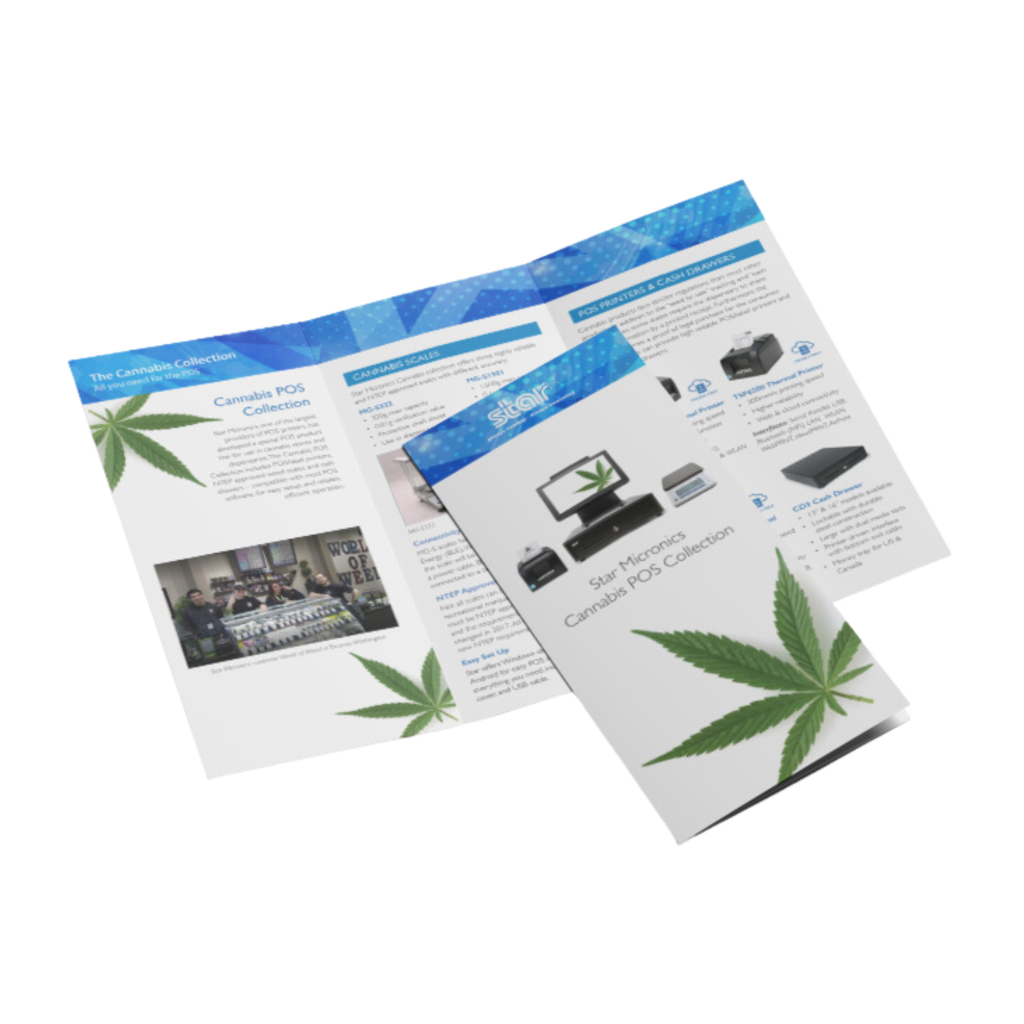
    Star Micronics Cannabis POS Solutions Brochure

    Navigate the evolving cannabis industry with confidence. Star Micronics delivers the complete POS hardware solutions your modern dispensary needs to keep its edge.

    Love industry news? Check out our podcast:

  • Star Micronics Warranties and Product Protection

    Star Micronics Warranties and Product Protection

    In today’s fast-paced business environment, having reliable point-of-sale (POS) technology is crucial to keep operations running smoothly. And when it comes to protecting your POS technology investment, Star Micronics is a trusted provider of top-quality hardware and warranties to ensure your devices are up and running whenever you need them. From printers and scanners to cash drawers and peripherals, Star offers a variety of warranties to protect your investment for up to five years.

    In this article, we’ll explore Star Micronics’ warranties, including the necessary steps to make a warranty claim, applicable warranty periods by product type, and the benefits of their Swap-A-Star® and Extend-A-Star® programs.

    Whether you’re a small business owner or a large retailer, read on to discover how Star Micronics can help you protect your POS technology investment and keep your business running smoothly.

    Star’s Standard Warranties

    Star Micronics understands the importance of having reliable and high-quality point-of-sale technology for businesses. That’s why all their products come with standard manufacturer’s warranties with bumper-to-bumper coverage against defects in materials and quality to help ensure maximum uptime.

    Having a standard warranty for Star Micronics products gives businesses the peace of mind that they are investing in technology that is backed by the manufacturer. This means that in case of any issues, companies can easily make a warranty claim and receive prompt support from the Star Micronics technical support team.

    Additionally, standard warranties provide an added layer of protection for businesses that may face unexpected downtime or lost sales due to malfunctioning equipment. Ultimately, having a standard warranty for Star Micronics products is an excellent way for companies to protect their investment and keep their operations running smoothly.

    Standard Warranty Periods by Product Type

    Star’s Supplemental Warranties and Programs

    Star Micronics offers several programs to provide added protection for your POS technology investment. These programs include:

    Swap-A-Star®

    Swap-A-Star is a product replacement service program by Star Micronics that provides fast and hassle-free replacement of your Star printer or scanner in the event of a malfunction. With Swap-A-Star, you can avoid costly downtime and lost sales by receiving a replacement device as soon as within two business days.

    Some of the benefits of Swap-A-Star include:

    • Quick and easy device replacement: Simply call or chat with a Star Micronics support team member to receive a replacement device as soon as within two business days.
    • Prepaid shipping label: Star Micronics provides a prepaid shipping label for returning the malfunctioning device.
    • Free shipping: Star Micronics covers the cost of shipping for both the replacement and malfunctioning devices.
    • No hidden fees: Swap-A-Star is a flat-rate program with no additional fees or charges.

    Extend-A-Star®

    Extend-A-Star is a supplemental warranty extension program that adds additional coverage beyond the standard warranty period. With Extend-A-Star, you can protect your Star Micronics printer or scanner investment for up to five years.

    Some of the benefits of Extend-A-Star include:

    • Additional coverage: Extend-A-Star extends the warranty period beyond the standard coverage period, providing additional protection for your investment.
    • Peace of mind: With Extend-A-Star, you can have peace of mind knowing that your device is protected against defects and malfunctions for an extended period.
    • Priority support: Extend-A-Star customers receive priority support from the Star Micronics technical support team.
    • Easy enrollment: You can easily enroll in Extend-A-Star at the time of product purchase or within 30 days of purchase.

    Overall, Swap-A-Star and Extend-A-Star are valuable programs offered by Star Micronics to provide added protection and support for their customers’ POS technology investments.

    Supplemental Warranty Lifecycle

    Before making a supplemental warranty claim, it’s important to follow these necessary steps:

    • Purchase Star Micronics product
    • Purchase and register any supplemental warranty within 30 days of purchasing the product
    • Make a warranty claim during the allotted time period

    Upon purchasing a supplemental warranty, Star Micronics will send you an enrollment letter that includes important details regarding your warranty purchase. It is recommended to keep this letter for your records.

    How To Create a Connected Workstation in 5 Easy Steps

    Connected workstations are perfect for modern-day hospitality, retail, and restaurant businesses, offering a unique setup to optimize workflows.

    Invest in the Trusted POS Hardware Provider

    In conclusion, investing in reliable and high-quality point-of-sale technology is essential for businesses of all sizes. And with Star Micronics’ comprehensive warranties and programs, businesses can have peace of mind knowing that their investment is protected against any unexpected defects or malfunctions.

    Whether it’s printers, scanners, cash drawers, or peripherals, Star Micronics offers a range of warranties to suit different product types and needs. By following the necessary steps to make a warranty claim, businesses can receive prompt support from the Star Micronics technical support team and get their operations back up and running with minimal downtime.

    Additionally, their Swap-A-Star and Extend-A-Star programs provide added protection and support for businesses looking to maximize their POS technology investment. Overall, Star Micronics is a trusted provider of warranties and programs that can help businesses protect their investments and stay ahead of the competition.

    Interested in integrating with Star Micronics?

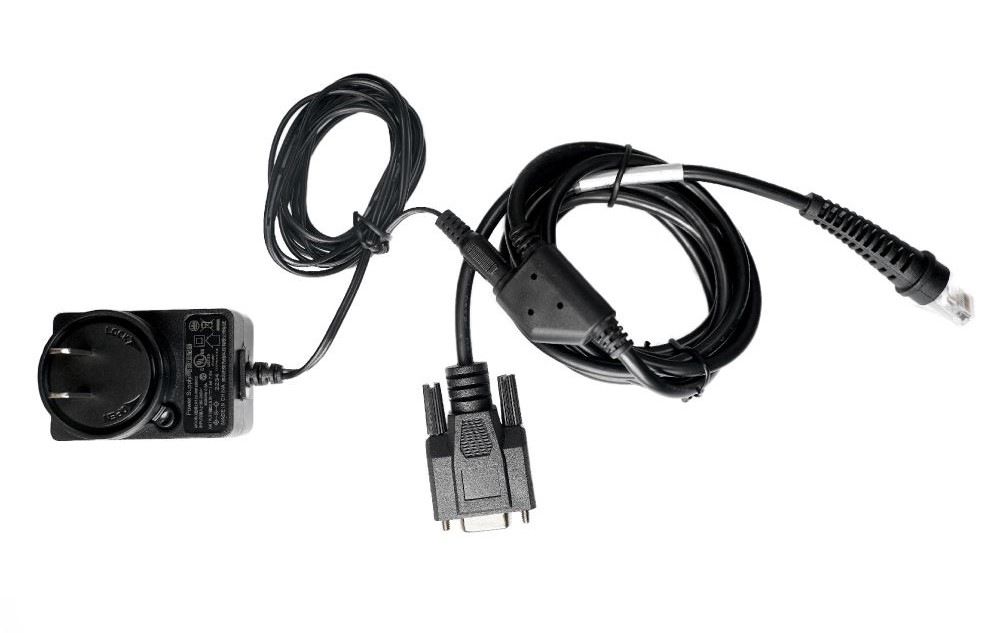
  • Serial Cable Adaptor Connects Star Scanners to PC POS Systems

    Serial Cable Adaptor Connects Star Scanners to PC POS Systems

    This helpful serial cable kit comes with everything needed to attach select Star barcode scanner models to POS systems built with personal computers.

    Somerset, NJ – December 9, 2022 – Star Micronics, a leading manufacturer of mobile, point-of-sale (POS), and customer engagement technologies, is now offering a serial cable adaptor for select models of its 2D barcode scanner line. This cable adaptor allows retailers and business owners using PCs as part of their POS systems to enjoy all the same features and benefits of Star scanners.

    Thanks to its simplicity, the RS-232 standard has been commonly used in computer serial ports and is still widely used in industrial communication devices. With an ear always toward its audience, Star has now made it easy for anyone using a legacy POS system to attach Star’s desktop and handheld wired scanner models.

    With a variety of uses in retail, warehouse, hospitality, shipping, and more, Star’s IP-rated scanner line includes desktop, handheld, and wireless handheld models. They’re built tough and drop-resistant (up to 1.2m) with high-powered CPUs to increase efficiency and productivity. With Star’s cost-effective solutions, users get high-performance 2D barcode scanners for the price of 1D.

    This new serial cable adaptor and kit is currently available for Star’s BSH-HR2081 handheld USB wired scanner and BSD-FR4080 high-resolution desktop scanner.

    Love industry news? Check out our podcast:

    Star Micronics logo, point-of-sale (POS) hardware and technology company.

    Star Micronics, a world leader in point-of-sale (POS), has designated a portfolio of printing, secure cash management, self-service, and customer engagement solutions for any retail or hospitality establishment. Embracing the mPOS wave, Star’s SDKs allow developers to utilize Star printers in tandem with Android™, iOS, iPad®, and iPhone® devices to generate receipts, labels, Chit, and tickets. Star Micronics is always leading and always innovating, creating cloud-based printing solutions, including CloudPRNT and Star Cloud Services, with AOA support and MFi connectivity. Star also has a wealth of peripherals, including 2D barcode scanners, scales, tablet display stands, and more. Visit www.starmicronics.com or follow us on Facebook, Twitter, YouTube, or LinkedIn to learn more.

    Media Contact:

    Christin Dorner
    Star Micronics America, Inc.
    cdorner@starmicronics.com
    848-216-3318

  • The Future of The Hospitality Industry is Connected

    The Future of The Hospitality Industry is Connected

    The future of hospitality is connected, and for many tech-enabled businesses that offer alternative dining and shopping experiences, that future is already here. Companies need new technology to reach customers and give them convenient ways to purchase products and services. As consumers acclimate to mobile and online reservations and ordering, advanced hospitality technologies facilitate a seamless and enjoyable customer experience.

    How SaaS Impacts The Restaurant and Retail Industry

    The hospitality ecosystem supports an array of technology solutions. Single-suite providers can simplify point-of-sale (POS) deployments, from hardware devices to cloud-based tools, through subscription-as-a-service (SaaS) models. SaaS models are increasingly popular in hospitality due to their cost-effectiveness and flexibility. 

    Subscription services enable merchants to pay for hardware and software monthly instead of making an upfront investment. These services include automatic upgrades or enhancements that keep technology up to date. Many of these services provide ongoing IT support. 

    Hospitality leaders, attracted by lower costs and extended lifetime value, choose single-suite SaaS partners with cloud-based tools and connected commerce solutions. In addition to easy installations, remote management, and IT support features, SaaS solutions offer regular software updates, hardware swap-outs, enhanced security, and flexible, customizable software.

    Conquering Omnichannel Order Management with Cloud-Based Technology Solutions

    Consumers have spoken! The future of retail and hospitality is omnichannel, cloud-based, and connected. Is your business prepared?

    Implementing Omnichannel Ordering

    Remote manageability is just one facet of hospitality’s connected future. Restaurateurs and hoteliers have added online and mobile ordering in record numbers to meet consumer demand for touchless experiences. Omnichannel solutions provided these during Covid-19, but their convenience and ease of use have made them permanent fixtures in the hospitality landscape. 

    In the pandemic’s aftermath, omnichannel ordering is an expectation, not an exception, for consumers. However, as many business owners have found, implementing omnichannel ordering adds complexity to business operations and requires staff to be mindful of both online and in-store order flows. To keep operations running smoothly, hospitality businesses need many tools to create a cohesive, connected workspace.

    Cloud-Based Operations

    A cloud technology system will keep your business running smoothly by providing solutions that work well together, such as cloud printing. Used by retail and restaurant owners, cloud printing seamlessly expedites and organizes online ordering. Additionally, these agile systems are easy to integrate and deploy as you scale your business. 

    CloudPRNT technology from Star Micronics sends online orders directly to your kitchen printer and is supported by an array of devices and peripherals, including the TSP143IV, mC-Print2, and mC-Print3 thermal printers. These thermal solutions are compatible with POS scales, scanners, and cash drawers with many connectivity options, such as Lightning and USB connection, Bluetooth, LAN, WLAN, and more. They are also easy to integrate with POS systems.

    Mobile and Online Ordering


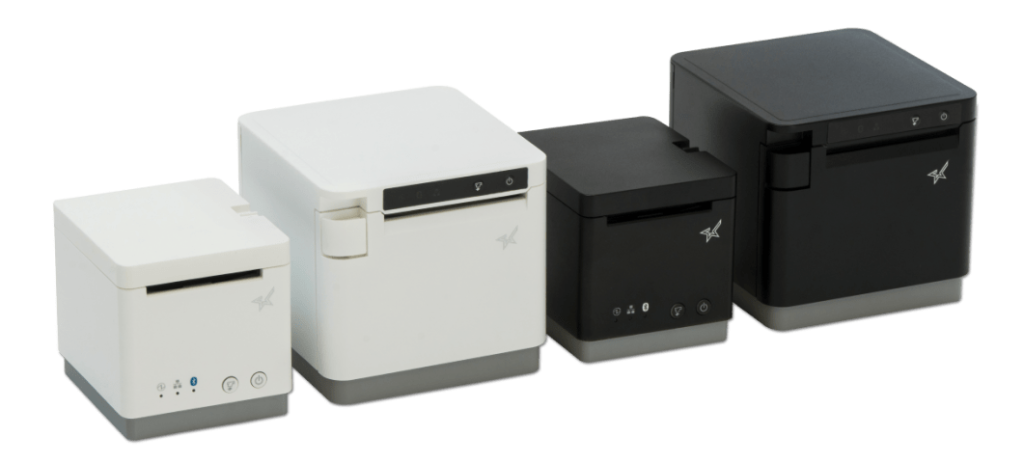
    Black and white mC-Print2 and mC-Print3 thermal receipt printers by Star Micronics.
    The mC-Print2 & mC-Print3

    Currently, online food ordering accounts for about 40% of total restaurant sales in the U.S., and researchers expect these numbers to continue to climb. Restaurants with an online ordering system tend to raise their takeout profits by 30% over those that do not. In 2022, the number of Americans using apps to order food and other groceries is expected to rise from 27.9 million to 30.4 million. In addition, about 92% of all top-performing restaurants offered mobile order-ahead and loyalty rewards programs, or a combination of both. If your restaurant is not giving the consumers what they want, you’re missing out on some serious revenue. With the right technology, it’s easy to add mobile sales and online ordering to your business.

    Let’s take a look at some technologies that help boost efficiency and customer satisfaction:

    Printers

    Embrace cloud-based solutions and online ordering with Star Micronics’ reliable Cloud Ready thermal printers. A receipt printer that connects to your cloud- or web-based point-of-sale software is a must-have. Cloud Ready printers reliably print orders directly to the kitchen as they come in.

    CloudPRNT technology from Star Micronics sends online orders directly to your kitchen printer and is supported by an array of devices and peripherals, including the TSP143IV, mC-Print2, and mC-Print3 thermal printers. These thermal solutions are also compatible with cash drawers, POS scales, and barcode scanners. They’re offered with multiple connectivity options, such as Lightning and USB connection, Bluetooth, LAN, WLAN, and more, and Star makes integration with your POS software a breeze.

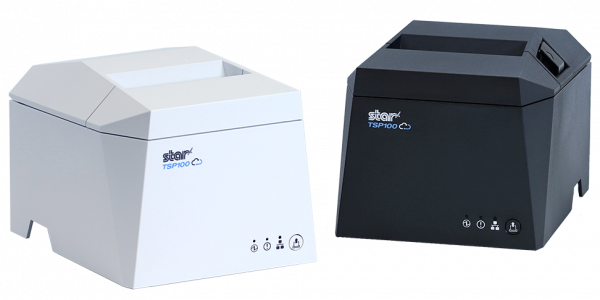
    The TSP143IV thermal receipt printer by Star Micronics comes in black or white.
    The TSP143IV Thermal Receipt Printer is Cloud Ready

    Labels

    While labels may be the last thing on your mind, equipping your cloud technology suite with the proper labeling capabilities is vital when completing your connected workstation. Whether your business requires traditional or linerless labels, ensure you have the appropriate solution. You may need food service and delivery labels, like tamper-proof labels or labels showing nutritional, shipping, or inventory information.

    Traditional label printing solutions like the TSP743II or repositionable linerless label printers like the TSP654IISK are high-speed graphics printers able to connect to supported cloud- or web-based software. Food orders with special dietary requests can automatically be printed on takeout or delivery labels. Linerless labels are sticky but can be removed and re-applied following an online order from start to finish. These methods can help prevent potentially devastating mistakes.

    The TSP654II thermal receipt printer and the Resto for Quebec, and the TSP654IISK Thermal Sticky Label Printer by Star Micronics
    The TSP654IISK Linerless Label Printer

    Payment Solutions

    Connected hospitality businesses also need flexible, cloud-based payment software that supports many traditional and mobile POS systems and payment schemes. When linked to omnichannel ordering, these software applications enable customers to pay in-store, online, and via mobile apps using credit cards and mobile wallets. 

    Contactless POS systems support mobile wallets, wearables, and contactless cards, meeting consumer demand for touchless payment methods. Mobile payment applications that support pay-at-table solutions are popular fixtures in stores and restaurants. 

    As you search for the right payment solution, look for technology compatible with leading operating systems and interfaces and consider Star Micronics. From contactless payments to paper checks – and everything in between – Star solutions support various payment software applications. Star also has a high-quality selection of portable printers, which may be precisely what your business needs.


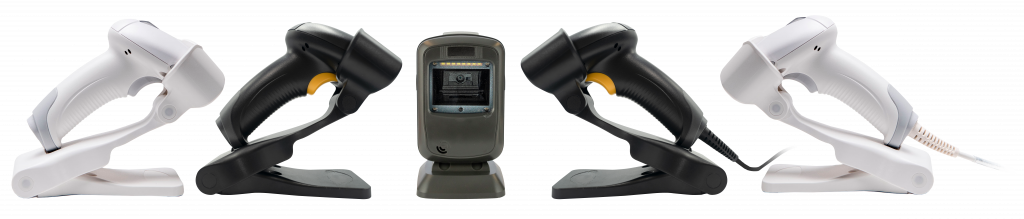
    All five 2D barcode scanners by Star Micronics - white and black wireless, one desktop, and a white and black wired handheld.
    Star’s Line of 2D Precision Barcode Scanners

    Barcode Scanners

    Star’s 1D/2D barcode scanners perfectly fit omnichannel hospitality environments. These drop-resistant scanners are accurate when scanning barcodes or QR codes on paper, screens, or uneven media. The wireless handheld model has up to 12-hour battery power, and the white models are made with antimicrobial agents, helping to reduce the spread of germs and bacteria.

    These highly reliable scanners can also be used in a warehouse setting to scan items on the floor for inventory purposes or to locate orders, product details, and stock availability. Scanner technology also helps businesses streamline everyday necessities. Check out this article for more information.

    Get Advanced Omnichannel Solutions Today!

    If you want to be part of hospitality’s connected future, partnering with a single-suite technology provider will help your business scale. Advanced omnichannel solutions, coupled with front- and back-of-house systems, will securely and efficiently manage orders across multiple channels, driving efficiency and growth. 

    Your single-suite provider will simplify integrations, keep your systems running optimally and meet all your technology needs. Contact your Star Micronics representative today if you’re ready to take your business into the future.

  • How QR Codes Can Benefit Your Business

    How QR Codes Can Benefit Your Business

    In the Information Age, technological advancements are changing every aspect of life as we know it, especially due to the global COVID-19 pandemic. QR codes have become more widespread than ever, making the hectic information-sharing process easier for us. It might not come as a surprise, but more and more businesses are adopting this technology to make shopping easier for their customers.

    QR codes, also known as quick response codes, are two-dimensional images that can provide a function or store large amounts of data. QR codes can show whoever scans them all about a business or they can be used to facilitate payment transactions. To read the details of a QR code, all you’ll need is a smartphone.

    QR codes are a huge technological advancement in the field of retail and have made product details and other information easily accessible for both customers and employees. They have enhanced the customer experience.

    This is why QR codes aren’t going anywhere.

    QR Codes are the Future of the Customer Experience

    shutterstock_607588487

    QR codes are becoming increasingly essential tools in today’s society, which is why you’ll see them everywhere. The QR code was developed for business needs but was slow to catch on. The booming cannabis industry has been using them for a specific purpose by law, but it wasn’t until the pandemic that QR codes became widely utilized in the retail and hospitality industries. Here are some of their uses:

    Advertising A Product

    A QR code can be used to run advertisements for products. Consumers can now open a website faster by simply scanning a QR code rather than inputting the URL into their browser. The unique codes can also be used to transport the scanner to a landing page displaying products for sale. This makes the purchase decision easier and quicker for the customer, helping save time.

    Informative

    QR codes are made up of hyperlinks and can be found on business cards, product labels, magazines, websites, email newsletters, and any other items where words and images can be displayed. Users can scan QR codes to acquire information on a specific subject with ease.

    Payment

    QR codes can securely hold information about bank accounts, credit/debit cards, and other credentials. By connecting the store’s website to an account or card, the customer can pay simply by scanning the QR code with their smartphones.

    Various payment options can even be incorporated into a QR code, enabling customers to select the most convenient payment option for them. Customers can even show stores their own unique QR code, which the cashier or attendant then scans, taking payment that way.

    Many companies, like PayPal, use QR codes all the time but anyone can use them.

    Check out Star’s QR code scanners: desktop, handheld, and wireless handheld

    The Advantages of QR Codes

    There are seemingly an unlimited number of advantages that QR codes can have for any business. From marketing to inventory control, below are just a handful of examples:

    Ideal For Marketing

    QR codes are often used as marketing tools that can direct customers to a company’s Facebook, Twitter, Instagram, and other social media sites. Getting your customers to interact with you on social media means increased engagement, promoting brand recognition and driving sales.

    Increased Chances Of Sales

    QR codes make it easy for customers to explore more of what your company has to offer. All they have to do is point their smartphone camera and they’re instantly taken to wherever you as the business owner want to take them. Everyone knows that the more traffic a store has, the more opportunities they have of making a sale. Making it easier for the customer to see and buy your product is just smart business practice.

    Improves Customer Experience

    QR codes are popular with customers for a variety of reasons. To begin with, they are simple to use. The customers only have to scan the QR code to be directed to your company’s webpage or email. They don’t have to memorize anything.

    Moreover, only a tiny percentage of consumers remember to return to your website afterward. QR codes make it much easier for your clients to visit your website by enabling them to scan the code. Again, there’s a significant possibility your customers will buy if you make it easier for them to access the latest offerings and engage with your business.

    shutterstock_1867131817

    Versatility

    One of the advantages of QR codes is that they may be used in a variety of ways. Social media marketing, online purchases, landing pages, special announcements–the possibilities are nearly endless. This is why they are so useful and, dare I say, fun? People like the excitement of seeing where a QR code will take them, so make it memorable!

    To add to this, companies can make their QR codes different shapes, having uniquely-designed codes that set them apart from their competitors, potentially attracting a larger audience.

    Digitalize Your Business

    Businesses can save time and money on traditional advertising campaigns by going digital, and that includes using QR codes. These days, going digital is a necessity. You don’t have to buy banners, flyers, or other printed materials to market your business anymore. A QR code is a one-time investment that can potentially provide a lifetime of marketing efforts.

    Check out Star’s QR code scanners: desktop, handheld, and wireless handheld

    QR Codes in the Cannabis Industry

    In many states where cannabis retail is legal, it is the law that dispensaries use QR codes on their products linking to verified licenses and testing results. This way, customers can immediately determine whether or not their cannabis purchase has passed state-mandated regulatory testing.

    Not only that but these QR codes can also be integrated with point-of-sale systems to keep track of inventory. 

    QR codes can display all the relevant information about the cannabis product for sale, both for customer satisfaction and for dispensary needs. This can be done in any industry.

    How to Get QR Codes for Your Business

    Getting QR codes for your business is easy. Simply find a website that offers a code generator, fill in the required information, click to generate your code, and then stylize it. After downloading the image, you can display it on whatever you want.

    Since their creation, QR codes have gained widespread use, but their popularity is just beginning. Get in on the action before it’s too late and start using this wonderful technology today!

    Love industry news? Explore our podcast:

  • Star Micronics Debuts New Line of 1D/2D Barcode Scanners

    Star Micronics Debuts New Line of 1D/2D Barcode Scanners

    The line includes a desktop scanner, as well as handheld and wireless handheld scanners.

    Somerset, NJ – September 7, 2021 – Star Micronics, a leading manufacturer of mobile, point of sale (POS), and customer engagement technologies, is excited to debut its new line of 1D/2D barcode scanners, including a desktop barcode scanner, a handheld scanner, and a wireless handheld scanner.

    All three of the new scanners feature a high-powered CPU capable of capturing high-density, high-volume, and distorted barcodes printed on paper or displayed on screen with ease. Additionally, they all feature a durable IP-rated design and a 4-foot drop-resistant housing. Designed with compatibility in mind, the desktop barcode scanner and handheld barcode scanner seamlessly connect to Star Micronics mCollection printers.

    Ideal for cashiers, ticket validation, and customer service desks, the desktop barcode scanner easily toggles between normal and high-motion-tolerance mode, in which the scanner has a 2.5m/s motion tolerance and large field of view (horizontal 51°, vertical 32°).

    The wireless handheld barcode scanner features a 2200mAh battery, allowing it to run for up to 12 hours of continuous use, and its included USB cable allows for convenient charging. With the latest Bluetooth 5.0 technology, the wireless handheld scanner effortlessly maintains a reliable wireless connection to transmit data, with communication distances up to 150 feet.

    The handheld scanner offers the same features as its wireless counterpart plus you can plug the scanner directly into a Star Micronics printer or any USB host device. As an additional bonus, the two handheld scanners also come with a smart stand which activates the automatic scanning function on the scanner.

    “We are excited to release this new line of barcode scanners into the market,” said Jon Levin, Director of Product Management at Star Micronics. “With a variety of use cases, these scanners are ideal for retail checkout counters, inventory management, ticket management, office automation, and more. Better yet, they provide 2D scanning capabilities for the price of 1D scanning.”

  • POS Trends to Expect in the Second Half of 2021

    POS Trends to Expect in the Second Half of 2021

    As we reach the midway point of 2021, one thing is certain: this year is monumental to the point of sale (POS) industry as the economy rushes into recovery. Read on to explore some of the top POS trends to expect in the second half of the year and beyond.

    POS Trend #1: Ongoing Online Ordering Boom

    In the return to normalcy, and in many regions, restaurants are reopening, and brick-and-mortar retailers are trying to resume their activities as close as possible to their pre-pandemic levels. But no matter where businesses are on their recovery journey, online ordering is here to stay, and not just because of it being the primary method available to consumers during the pandemic. In fact, consumers worldwide have discovered the convenience and benefits of online ordering and have decided to stick with that method of purchasing, even as physical businesses reopen.

    Interestingly, businesses have also found additional benefits in using online ordering platforms. Advantages include an additional revenue stream flowing into their businesses, as well as the opportunity to utilize more robust loyalty programs in a less intrusive, nearly seamless way. This improved loyalty strategy can improve the customer experience and in turn create sticky customers.

    Most of the initial challenges many online ordering systems and digital transactions faced have been mitigated, making them an even more appealing option for businesses everywhere. For example, new security measures like multi-factor authentication are becoming standard, allowing a business to offer promotions, discounts, and payments that are less susceptible to fraud.

    POS Trend #2: Faster Technology Adoption

    Complete solutions and intuitive user experiences (UX) have become essential, and although price will most definitely always be an important consideration in any technological deployment, now value and having the right solution have risen to the top of the priority list.

    In a rapidly changing market, solution integrators have no time to spare to try new things that they are not sure will work or test products from uncertain vendors. Instead, they are opting to go directly to what is already working in the market and are selecting the brands with the technologies that are being adopted massively by market leaders.

    POS Trend #3: An Emphasis on Health and Safety

    Even after the COVID-19 pandemic passes, health and safety will remain a priority to people worldwide. To put employees and customers at ease, a new POS trend has accelerated and retail and hospitality businesses that are reopening must offer a tangible sense of safety to their customers.

    Popular health and safety POS products include sneeze guards placed at the point of sale, antimicrobial covers which reduce germ transfer on high-touch surfaces, and tamper-proof labels to securely seal delivery and takeout orders.

    Health & Safety Solutions Brochure

    Discover which solutions can keep your business squeaky clean and help customers feel confident at your brick-and-mortar location.

    POS Trend #4: Affordable and Simplified Development

    The development side of the industry is also experiencing changing POS trends. Development phases are accelerating, and software providers are developing using cross-platform tools (like the StarXpand™ SDK) on the React Native platform, cutting development time and cost in half.

    As most digital interactions and virtual communications are happening in the cloud, POS transactions, especially for online ordering, are not an exception. Technologies, like CloudPRNT, are allowing the seamless connection of thermal printers to the cloud. These technologies are not only cost-effective but also shorten integration and development times and are becoming the go-to solution in the market.

    POS Trend #5: The Continued Rise of Self-Service Kiosks

    Did you know that more than 65% of customers said they would be more willing to visit a restaurant if self-service kiosks were offered?

    Clearly, self-service kiosks are a rising POS trend and as they are more widely used, consumers will hold them to a higher standard and expect them to be reliable, intuitive, and safe to use. Because of this, self-service kiosks are particularly sensitive to the quality of the components they are integrated with, so it is essential that those components are selected carefully.

    Some POS hardware manufacturers, like Star, offer a vast portfolio of kiosk printers with receipt and labeling capabilities with features that can help ensure customer satisfaction. For example, a kiosk printer with a bezel allows for jam-free kiosk operations, and large-capacity paper rolls allow for extended paper autonomy.

    mC-Print3-Kiosk-193x300For businesses and integrators with tight budgetary constraints, there are still options for assembling a highly sophisticated self-service kiosk solution. For example, businesses can pair a desktop printer, with the right technology built-in, with a universal tablet enclosure, a tablet, and a tablet stand. This is when finding the right one-stop shop POS manufacturer to work with that can provide all of those components becomes key.


    Recommended Solution

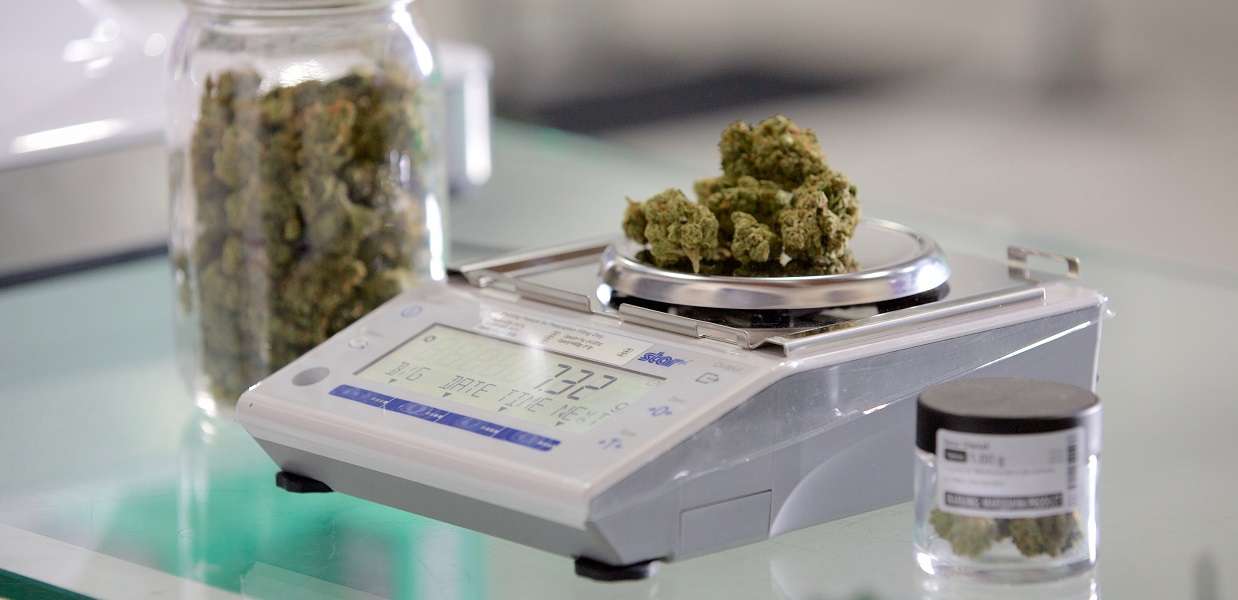
    For an affordable yet high-quality kiosk, connect the Star Micronics mCP31L multi-interface thermal printer to an iPad via the Lightning port. Next, place the iPad in a Universal mEnclosure (which locks for security purposes), attached firmly to an mUnite stand. Pairing these Star products together can turn a potentially complicated and costly kiosk project into a functional, cost-effective, and simple one.

    As a one-stop shop, Star is proud to provide a complete range of POS hardware solutions for retailers, restaurants, and more.


  • 5 Reasons You Need a Cannabis Dispensary POS System

    5 Reasons You Need a Cannabis Dispensary POS System

    The cannabis industry is flourishing. With recent legalizations, including New York, it is without a doubt that the market will see countless new dispensaries opening their doors in the near future. Whether you already operate a dispensary or are looking to open one, read on to learn what to look for a in a dispensary point of sale (POS) system and why they’re so important.

    What to Look for in a Dispensary POS System

    First, let’s dive into a quick list of must-have dispensary POS system technologies. POS systems have several components, but they don’t need to be complicated. One way to make it easy? Choose a POS supplier (like Star Micronics) that can provide all necessary hardware and has integrations with industry-leading dispensary POS software companies. Essential dispensary POS system components include:

    • Receipt printer: Receipt printers are of utmost importance to dispensaries. Proof of legal purchase is essential – and there’s no better way to provide it than with a receipt. Additionally, it’s important to note that depending on your region, receipts must also contain other information, like store name and address, product category/name, and appropriate tax codes/identifiers.
    • Label printer: Another printer that’s important to have on hand is a label printer. Labels are integral for seed-to-sale tracking, a key requirement in cannabis regulatory models. This process tracks plants and their byproducts from planting all the way through to the plant’s sale.
    • Cash drawer: Currently, the majority of dispensary transactions are cash. Why? According to FindLaw.com, “Even though dispensaries supplying recreational or medical marijuana may be perfectly licensed and legal under state law, federal law still classifies marijuana as a Schedule 1 drug and considers marijuana businesses illegal. The banking system is regulated by federal law, so banks risk charges of aiding and abetting a federal crime or money laundering if they choose to do business with marijuana-related ventures.” That being said, a durable and high-volume cash drawer is key.
    • Scale: One of the most critical elements of a dispensary POS system is the scale. When it comes to scales, there are a few things to keep in mind. First, the scale must be legal to use in your state and NTEP-certified. This certification ensures that the scales are charging the correct amount for the product being weighed. Another great feature to look for is a scale that is integrated directly into the POS as direct integration can reduce the risk of human error in data entry.
    • Accessories: There is a plethora of dispensary POS system accessories that can take your business to the next level, including: scanners to increase the speed of transactions and convenience of scanning, an LED customer display so shoppers can easily see item prices and the transaction total, and a tablet stand and enclosure that features hidden cable management and matches the rest of the dispensary POS system aesthetic.
    • Software: At the heart of a successful dispensary POS system is the right software. Like we discussed earlier, it’s key to make sure that your software is integrated with all of your POS hardware. Additionally, some software features to look for are built-in ID scanning and age verification, loyalty programs, on-demand product information, alternative payment acceptance, offline mode, inventory management, analytics and reporting, and more.

    How Resellers Can Cash in on Cannabis Point of Sale

    The cannabis industry has become one of the fastest growing markets. Here’s how resellers can take advantage.

    5 Benefits of a Dispensary POS System

    So now that you know what needs to be included in your dispensary POS setup, why exactly is all of this important? Here are 5 major benefits of a dispensary POS system:

    1. Compliance: Compliance is, of course, absolutely critical for dispensaries. POS systems can help not only provide necessary proof of purchase, but can manage inventory and age and ID verification as well. Common compliance violations include failing to report inventory, patient purchase limits, sales to minors, and inadequate delivery documentation. These violations are severe and can result in notice to comply, citation for violation, interim suspension, or revocation of license.
    2. Accuracy: Keeping product secure from seed to sale, and ensuring you’re selling the exact amount you think you are, is important. POS label printing solutions can aid in accurate seed-to-sale tracking, and an NTEP-certified scale complete with a windshield means you’re charging exactly the right amount for the product you’re selling.
    3. Online Ordering: Did you know that cannabis delivery soared during the pandemic, and that change is likely here to stay? The right POS software will be capable of ecommerce and delivery, and will be integrated with a complete line of POS hardware. With the right POS system, staying up-to-date on digital trends is a piece of cake.
    4. Future-Proof Integration: Speaking of being future-proof, choosing the right dispensary POS software and hardware means no matter where the market goes in terms of ecommerce or payments – as national banking eventually opens its doors to the industry – your POS system will already be prepared to handle it all.
    5. Marketing: As the market explodes and competition becomes fiercer, marketing is key – and your dispensary POS system can help. Opt for a POS software that includes loyalty programs, gift cards, and marketing tools like email campaigns and social media integration. Your POS hardware can help too – with PromoPRNT, you can print custom promotions on the bottom of your Star Micronics receipts and labels for free.

    The Proper Dispensary POS System is Important – Now and in the Future

    In summary, while an ideal dispensary POS system has many parts, including software and hardware like receipt and label printers, cash drawers, scales, and more, deploying the best solution doesn’t need to be complicated. By choosing the right POS dispensary system suppliers you can start taking advantage of the many benefits a proper system offers, like compliance, accuracy, future-proofed technology and integrations, and built-in marketing benefits.

    Star Micronics has the POS technology your dispensary needs to thrive today and in the future.

  • 7 Easy Tips on Selling Merchant Services

    7 Easy Tips on Selling Merchant Services

    When it comes to selling merchant services, the landscape can be quite competitive. With many options on the market for your customers, it’s critical to take the time to focus on how you can differentiate yourself as a solution provider. While it might sound intimidating, in today’s blog post we will share seven tips on selling merchant services, designed to make your journey simple – and successful.

    7 Easy Tips on Selling Merchant Services:

    1. Provide a Total Solution

    One of the best ways to differentiate as a merchant services provider is to not just offer one piece of the payment puzzle, but to provide a total solution. Customers want a one-stop shop, and offering a complete solution that provides value, including credit card processing through a merchant account and a full portfolio of necessary point of sale (POS) hardware, is a great way to create happy, sticky customers.

    2. Be a Trusted Advisor

    Although this blog post contains tips on selling merchant services, one of the most important things you can do sometimes is to not sell. What does this mean? Simply put, strive to be your customer’s trusted advisor, rather than just a salesperson. The foundation of being a trusted advisor is built on listening: listening to your customer’s needs and acting as a consultant to offer ideas and solutions, rather than just pushing products. Some other traits of trusted advisors include:

    • Putting your customer’s needs first, not your own; always think of their challenges and priorities before your own
    • Always asking questions to understand more about your customer’s specific situation – “tell me more!”
    • Providing a variety of solution options, so that they can decide on the best choice for themselves
    • Embracing the fact that you don’t always know the answer and build the confidence to admit that – doing so will demonstrate honesty and trustworthiness
    3. Be Available

    This next tip may sound obvious, but it still deserves to be said: be available for your customer! Often times, many businesses will sign up with ISO agents and then find themselves never hearing from the agent again after the contract has been signed. Don’t fall into this pattern! Make a conscious effort to touch base with your customers and be that trusted advisor who is always looking out for their best interests.

    4. Offer Affordable Options

    Besides offering a total solution, acting as a trusted advisor, and being available on a regular basis, another thing that your customers are sure to value is affordable pricing. A low cost is always a priority, especially during uncertain times. Reduce the cost of entry into your solution by offering a SaaS (Solution as a Service) model which features low monthly payments. This operating expense (OPEX) model versus a capital expense (CAPEX) model means that rather than a business needing to spend a larger lump sum for a solution, it can instead spend a lower amount as needed each month. This model helps businesses receive the best possible solution in an affordable way.

    5. Be Transparent

    Who doesn’t value transparency? It’s important to feel like you are dealing with an honest and ethical provider. Your customers also value transparency, so be sure to be understandable in every way possible. It’s especially important to make your transaction fees crystal clear and remember to be competitive with your revenue share. Being honest and laying these numbers out on the table will earn you trust as you sell merchant services.

    6. Provide a Straightforward Timeline

    Time is money, and to a business, money is a top priority. Be sure to prioritize your customer’s time by providing a straightforward go-to-market timeline. When providing this timeline, also remember to include the expected ease and speedy of any integrations that will be required.

    7. Offer Omnichannel Capabilities

    Today’s businesses require today’s payment options. Gone are the days when simple, piecemeal merchant services could suffice. If possible, be sure to offer an omnichannel solution, meaning a variety of card acceptance methods, along with a fully integrated solution. Acting as a one-stop shop and offering an omnichannel solution can lead to creating a sticky customer that is less likely to be tempted away by a competitor.

    Worldnet-Omnichannel-Payments-Image

    What can Worldnet’s Omnichannel Integrated Payments do for you?

    Worldnet is proud to offer a simple omnichannel integration that brings your eCommerce, Back Office and Cardholder Present payment solutions together, and presents all that data directly into your software solution, ERP, or CRM system.

    Successfully Selling Merchant Services can be Simple

    To wrap things up, keep in mind that selling merchant services doesn’t need to be complicated. In fact, focusing on simplicity is key. Prioritize offering total solutions to your customers, as well as genuine consulting with an emphasis on the customer’s needs instead of your own product. Being seen as a trusted advisor that can also act as a go-to, one-stop shop for modern payment solutions is sure to help you successfully sell merchant services.

    mPOP™: Perfect for Today’s Payments

    Have you met the Star Micronics mPOP? This sleek all-in-one POS hub, built for modern small businesses, accommodates high-volume credit card and cash transactions and features:

    • Printer, cash drawer, scanner, and device stand
    • Compatibility with iOS, Android, and Windows
    • Cash drawer with 4 bill and 6 or 8 adjustable coin slots
    • Print Flat Technology

    Star Micronics is proud to offer POS hardware with the features merchants need and the connectivity to bring together applications and payment processing.

  • Technology for the New World of Retail: Ultimate Checklist

    Technology for the New World of Retail: Ultimate Checklist

    The COVID-19 pandemic has drastically changed the way people shop, forcing retailers to reevaluate their processes and their technology. While there are uncertainties, we know stores just aren’t going to reopen and go back to normal.What will retailers do differently? What will shoppers expect? What new technology do retailers need?

    Across the country, consumers are choosing to shop with retailers that offer cleaner stores, shorter checkout lines, curbside pickup, “Buy Online, Pickup In Store” (BOPIS), touchless payments, and more. As consumers adapt, they will become accustomed to these new conveniences, and eventually expect it. Retailers that start using newer technology to adapt and offer all these options will succeed.

    Whether they want to or not, retailers have to change – not to just get through the pandemic, but to be successful in the new world of retail. There have been important lessons learned from COVID-19 for retailers, all of which should be taken into consideration moving forward.

    10 Retail Technology Solutions for Today’s New World

    Whether you are an essential retailer, or reopening your brick-and-mortar, here are 10 technology solutions to help retail businesses reopen and adopt to the new world of retail:

    1. Online Shopping

    If there’s one thing we’ve learned over the past few months, having an online storefront is vital. If you have a physical store, offer BOPIS and add curbside pickup as a delivery option on your site. Consider selling on third-party sites such as Amazon, Walmart, eBay, and Facebook to expand your market reach and increase online sales.

    2. Curbside Pickup

    While many retailers offer curbside delivery, it’s not always easy to manage, especially with lots of orders and/or limited staff. Develop a well-thought-out process to manage your orders and use text messages/emails to communicate the status of each order with customers.


    3. Mobile Point of Sale

    With current restrictions, it’s important to keep traffic flowing. With a mobile POS solution, you can process payments anywhere in your store to keep lines as short as possible (line-busting), as well as outside your store for curbside pickup.

    4. Touchless Payments

    As more brick-and-mortar businesses reopen and consumers return to shopping in stores, touchless solutions become more and more important. Consider offering Smart Wallet payment processing solutions, such as Google Pay and Apple Pay. This allows customers to pay for their orders without having to reach into their wallet or touch your credit card device.

    5. Sneeze Guards

    All stores should have a shield for virus protection. Some sneeze guards are designed for specific point of sale monitors, so check with your technology provider before buying a custom solution. They should be easy to install and relocate in case your store setup changes.

    6. Security Labels

    If you offer home delivery or curbside pickup, you can secure packages with tamper-proof labels (or seals). These labels provide visual evidence if a package has been tampered with. Your customers will appreciate it!

    7. Email Marketing Automation

    With fewer customers visiting brick-and-mortar stores, retailers need a way of communicating with customers and getting promotions out. If you aren’t already, use an email marketing solution. If your system allows it, personalize and automate your campaigns/promotions to drive up clicks and sales.

    8. Self-Service Kiosks

    If your store gets busy, add a few kiosks so customers can shop your store’s live inventory without having to walking around. Add kiosks outside your store if shoppers have to wait in a line to enter your store.

    9. Robots in Retail

    Since the pandemic, more retailers are considering robots to reduce human-to-human interaction. They can restock shelves and assist with customer service; at one Best Buy store, a robotic cart was spotted supporting curbside delivery. And they sure look impressive!

    10. Scan-and-Go

    For retailers willing to experiment, scan-and-go looks like a promising technology for mainstream retail, especially in the post-Coronavirus world. Similar to Amazon Go, customers simply grab items off the shelf and walk out, eliminating checkout lines altogether.

    Tips for Purchasing New Technology

    Before purchasing new retail technology, prepare a list of all the hardware and software you own, and what you think you may need. Even if it’s just a short list, it will help you plan a budget and compare solutions. When making your list, consider all mobile point of sale devices, credit card devices, receipt printers, cash drawers, scanners, servers, internet service, retail software, eCommerce technology, and more.

    5 ways to save on new technology purchases:
    1. Tax deductions: Save all receipts and ask your staff to save receipts too. Technology purchases for your business can be deducted on taxes.
    2. Trade-ins: Before disposing of your unneeded hardware (which can cost money), ask your technology provider if they accept trade-ins, or sell/donate it to a store that needs it.
    3. Financial assistance: Research grants and financial assistance offered by organizations to retail businesses impacted by the COVID-19 pandemic.
    4. Volume discounts: While you shouldn’t base new technology purchasing decisions solely on price, ask your technology provider if they offer volume discounts and/or have any current promotions.
    5. Defer payments: Many technology providers are currently assisting retailers and helping them adopt new technology solutions by offering either deferred payments or even buy now, pay later models. For example, at Celerant, we are currently offering your first 3 months free for any new SaaS product to help retailers get started with new technology now, while not having to pay until later.

    Are you Ready for New Retail Technology? 

    Celerant Technology is the #1 provider of innovative retail software.

    To help retailers during this challenging time, Celerant is offering up to 3 months free on new SaaS retail software contracts; from now through June 30th.

    At Star Micronics, our hearts go out to anyone impacted by COVID-19, either directly or indirectly, especially to those who are sick, to whom we extend our heartfelt wishes for a full recovery. To learn more about what we are doing as an organization to reduce the global impact of COVID-19, in terms of health and business, please click here.
    To browse all of our blog posts covering tips for small businesses during COVID-19, please visit our #StarForSmallBiz blog collection.