Tag: Accessories

  • Technology for the New World of Retail: Ultimate Checklist

    Technology for the New World of Retail: Ultimate Checklist

    The COVID-19 pandemic has drastically changed the way people shop, forcing retailers to reevaluate their processes and their technology. While there are uncertainties, we know stores just aren’t going to reopen and go back to normal.What will retailers do differently? What will shoppers expect? What new technology do retailers need?

    Across the country, consumers are choosing to shop with retailers that offer cleaner stores, shorter checkout lines, curbside pickup, “Buy Online, Pickup In Store” (BOPIS), touchless payments, and more. As consumers adapt, they will become accustomed to these new conveniences, and eventually expect it. Retailers that start using newer technology to adapt and offer all these options will succeed.

    Whether they want to or not, retailers have to change – not to just get through the pandemic, but to be successful in the new world of retail. There have been important lessons learned from COVID-19 for retailers, all of which should be taken into consideration moving forward.

    10 Retail Technology Solutions for Today’s New World

    Whether you are an essential retailer, or reopening your brick-and-mortar, here are 10 technology solutions to help retail businesses reopen and adopt to the new world of retail:

    1. Online Shopping

    If there’s one thing we’ve learned over the past few months, having an online storefront is vital. If you have a physical store, offer BOPIS and add curbside pickup as a delivery option on your site. Consider selling on third-party sites such as Amazon, Walmart, eBay, and Facebook to expand your market reach and increase online sales.

    2. Curbside Pickup

    While many retailers offer curbside delivery, it’s not always easy to manage, especially with lots of orders and/or limited staff. Develop a well-thought-out process to manage your orders and use text messages/emails to communicate the status of each order with customers.


    3. Mobile Point of Sale

    With current restrictions, it’s important to keep traffic flowing. With a mobile POS solution, you can process payments anywhere in your store to keep lines as short as possible (line-busting), as well as outside your store for curbside pickup.

    4. Touchless Payments

    As more brick-and-mortar businesses reopen and consumers return to shopping in stores, touchless solutions become more and more important. Consider offering Smart Wallet payment processing solutions, such as Google Pay and Apple Pay. This allows customers to pay for their orders without having to reach into their wallet or touch your credit card device.

    5. Sneeze Guards

    All stores should have a shield for virus protection. Some sneeze guards are designed for specific point of sale monitors, so check with your technology provider before buying a custom solution. They should be easy to install and relocate in case your store setup changes.

    6. Security Labels

    If you offer home delivery or curbside pickup, you can secure packages with tamper-proof labels (or seals). These labels provide visual evidence if a package has been tampered with. Your customers will appreciate it!

    7. Email Marketing Automation

    With fewer customers visiting brick-and-mortar stores, retailers need a way of communicating with customers and getting promotions out. If you aren’t already, use an email marketing solution. If your system allows it, personalize and automate your campaigns/promotions to drive up clicks and sales.

    8. Self-Service Kiosks

    If your store gets busy, add a few kiosks so customers can shop your store’s live inventory without having to walking around. Add kiosks outside your store if shoppers have to wait in a line to enter your store.

    9. Robots in Retail

    Since the pandemic, more retailers are considering robots to reduce human-to-human interaction. They can restock shelves and assist with customer service; at one Best Buy store, a robotic cart was spotted supporting curbside delivery. And they sure look impressive!

    10. Scan-and-Go

    For retailers willing to experiment, scan-and-go looks like a promising technology for mainstream retail, especially in the post-Coronavirus world. Similar to Amazon Go, customers simply grab items off the shelf and walk out, eliminating checkout lines altogether.

    Tips for Purchasing New Technology

    Before purchasing new retail technology, prepare a list of all the hardware and software you own, and what you think you may need. Even if it’s just a short list, it will help you plan a budget and compare solutions. When making your list, consider all mobile point of sale devices, credit card devices, receipt printers, cash drawers, scanners, servers, internet service, retail software, eCommerce technology, and more.

    5 ways to save on new technology purchases:
    1. Tax deductions: Save all receipts and ask your staff to save receipts too. Technology purchases for your business can be deducted on taxes.
    2. Trade-ins: Before disposing of your unneeded hardware (which can cost money), ask your technology provider if they accept trade-ins, or sell/donate it to a store that needs it.
    3. Financial assistance: Research grants and financial assistance offered by organizations to retail businesses impacted by the COVID-19 pandemic.
    4. Volume discounts: While you shouldn’t base new technology purchasing decisions solely on price, ask your technology provider if they offer volume discounts and/or have any current promotions.
    5. Defer payments: Many technology providers are currently assisting retailers and helping them adopt new technology solutions by offering either deferred payments or even buy now, pay later models. For example, at Celerant, we are currently offering your first 3 months free for any new SaaS product to help retailers get started with new technology now, while not having to pay until later.

    Are you Ready for New Retail Technology? 

    Celerant Technology is the #1 provider of innovative retail software.

    To help retailers during this challenging time, Celerant is offering up to 3 months free on new SaaS retail software contracts; from now through June 30th.

    At Star Micronics, our hearts go out to anyone impacted by COVID-19, either directly or indirectly, especially to those who are sick, to whom we extend our heartfelt wishes for a full recovery. To learn more about what we are doing as an organization to reduce the global impact of COVID-19, in terms of health and business, please click here.
    To browse all of our blog posts covering tips for small businesses during COVID-19, please visit our #StarForSmallBiz blog collection.

  • How to Select the Best POS Hardware System for SMB Customers

    How to Select the Best POS Hardware System for SMB Customers

    As a reseller, your SMB customers rely on you to introduce them to affordable, yet high quality point of sale (POS) hardware systems that meet their exact needs and are built for the future. With so many options available on the market, it is wise to have a set of guiding principles to help you in your search for the ideal solution. Read on to discover five key considerations to keep in mind while helping your customers select the best POS hardware system.

    Key Considerations: How to Select the Best POS Hardware System

    1. A Full Solution Provider

    These days, there are many moving parts involved in the POS and your customers don’t want a piecemeal solution from multiple vendors; they want a one-stop shop. With tablet-based POS growing in popularity, connectivity options between the POS terminal, receipt printer, and all peripherals is imperative. And depending on the industry, your customer may have more specific needs. For example, a café may have a need for not only a stationary POS, but a separate station for to-go orders that can accommodate online ordering and linerless labeling.

    To best meet these wants and needs, choose a hardware manufacturer that offers everything from receipt printers and label printers, to all-in-ones and tablet POS stands. An added bonus is a manufacturer that can also provide a steady supply of authentic consumables like receipt paper, a variety of labels, and ink ribbons.

    2. The Right Technology

    Like we mentioned above, in the age of mobile POS (mPOS), technology really matters. It’s important to make sure that the hardware system you propose to your customer has the proper connectivity and interfaces to ensure every piece of the puzzle – from the tablet and the receipt printer to the cash drawer and barcode scanner – work together seamlessly.

    Technology extends beyond hardware, though. It’s important to choose a hardware manufacturer that has software on their radar, as well. What does this look like? One thing to look for is a hardware provider that has an easy-to-integrate SDK for their product line, and it’s also important to look at what software integrations the provider has available. You’ll want to be sure to propose a solution to your customers that is already integrated with their POS software company, and choosing a hardware manufacturer with industry-leading integrations is a sure-fire way to do so.

    Value-added technology can also provide great benefit to your customers. Some hardware manufacturers offer free marketing tools, like easy-to-use, cloud-based customizable receipt marketing, which can set the solution apart from competition.

    3. Quality Counts

    A wide product portfolio and robust technology features are great, but to be truly worthwhile they need to be reliable. Be sure to choose a reputable POS hardware supplier that thoroughly tests products and offers high quality options like fast and dependable printers, durable cash drawers with reinforced strength, and more. Make sure that the high-quality hardware is also backed by a strong included warranty, and the ability to purchase extended warranties for a hassle-free future.

    4. Ready for Today and Tomorrow

    Another important consideration is the lifecycle of the POS hardware solution you will be proposing. Will this solution work for a year or two, or is it designed to be compatible with POS trends years down the road? A good rule of thumb is to work with POS hardware manufacturers that offer a future-proof solution that will work for years to come no matter what POS trends come our way.

    Some future-proof features to look for are:

    • Flexible and modern connectivity options that mean the POS hardware can work with multiple operating systems and device types.
    • Related to the first point, choosing hardware that can physically accommodate a wide range of POS options is a smart idea. For example, a tablet POS stand that allows tablets to be VESA mounted means even if the customer changes their tablet of choice down the road, their other hardware will still work.
    • A sleek, modern, and functional style that will match the customer’s store aesthetic for a long period of time. An example of this is a tablet POS stand that features clean cable management, the ability to tilt to capture customer signatures, and space to be custom branded for marketing purposes.

    5. The Price is Right

    Last but not least, affordability is no doubt an important consideration when it comes to helping your customer choose the best POS hardware system. A good rule of thumb is to choose a hardware supplier that offers a variety of hardware in a range of prices. Keep in mind the hardware options with the lowest price tags may not be the most affordable in the long run. To ensure your customer is getting the most bang for their buck, be sure to deeply research quality, warranty options, and the ability to seamlessly work with the POS technology trends that will emerge in the years to come.

    We hope that these tips help you identify the best POS hardware system for your SMB customers that feature the style, technology, and quality required – at an affordable price tag.

    mUnite: A POS Stand Built for the Future

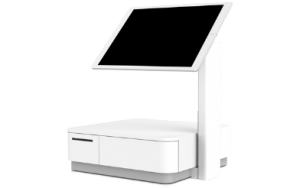
    The Star Micronics mUnite tablet POS stand is a great example of a piece of dependable, stylish POS hardware that is designed to work well into the future. The mUnite – which is compatible with the Star Micronics mC-Print3, mPOP™, TSP143III, and TSP654II –  features:

    • Universal VESA mounting
      mUnite POP tablet POS stand
      mUnite Stand
    • Hidden cable management
    • Compatibility with any iOS, Android, and Windows tablet or touchscreen computer (device, enclosure, and printer not included)
    • Easy-to-tilt functionality for customer interactions
    • The ability to support a second screen to display price, marketing messaging, and more

    Click here to learn more about the mUnite.

    Star Micronics is proud to offer a full line of POS hardware for today’s businesses.

  • How Back of the House Restaurant Technology is Evolving

    How Back of the House Restaurant Technology is Evolving

    There’s no doubt about it: people love to dine out. In fact, there are over 1 million restaurants in the United States alone, and it’s estimated that those restaurants produced $863 billion of sales in 2019. At the same time, the hospitality industry is undergoing the same digital transformation as nearly every other industry: for example, online ordering is growing 300% faster than in-dining spend!

    To accommodate these advancements, back of the house restaurant technology is evolving to keep up. Read on to learn more about the transformation taking place in kitchens around the world – and how it’s not as complicated as you think to keep up with modern hospitality trends if you choose the proper back of the house restaurant technology.

    Restaurants across the world are being prompted to streamline their operations to meet the demands of today’s latest hospitality trends. These new technologies include online ordering, self-service kiosks, and other updated kitchen technology. Let’s explore each trend and how your restaurant (or your customer’s restaurants) can adapt to take advantage of these opportunities.

    Online Ordering

    One of the most prevalent technological changes to the restaurant industry is online ordering. Did you know:

    • 31% of consumers say they use third-party delivery apps at least twice a week.
    • 67% of customers who have placed an order online will visit the restaurant more frequently versus those who have not.
    • Restaurants that utilizes an online-ordering system are able to grow their delivery revenue 30% more than those who do not.
    • Millennials order takeout via an app or website more than any other age group, with 79% of Millennials doing so in the last year.
    • Two-thirds of consumers say that they are more likely to visit a restaurant if they have previously ordered from them online.
    • Partnering with an online ordering service is a great way to reach new customers – one service has claimed that 92% of its orders come from entirely new customers.

    So, what does a restaurant need to do to accommodate online orders? The first step is to choose a third-party online ordering service. Some popular options include DoorDashGrubhubUber Eats, and more (Star is partnered with all three of those – and is proud to partner with nearly every other online ordering service provider, as well).

    Partnering with an online ordering service can be very straightforward. Most simply ask that the restaurant provides information about itself and uploads its menu, and then the service provider will send out the necessary equipment to get started.

    Many services allow the restaurant to either use its own drivers or leverage on-demand drivers, and some may even include special perks like professional photoshoots, marketing opportunities, website tools, and more.

    Considering back of the house restaurant technology when choosing your service provider is of utmost importance. Be sure to choose a service which provides a feature-packed printer that is:

    • Full of Connectivity Options: Star’s printers include multiple connectivity options including:
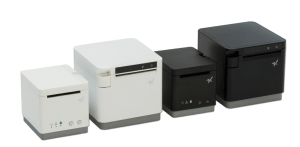
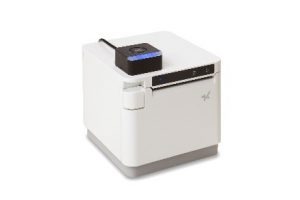
      mC-Print2-and-mC-Print3
       Star’s mC-Print2-and-mC-Print3
      • CloudPRNTCloudPRNT allows the printer to communicate directly with the online ordering service’s server, which means no need for an additional tablet, software, or SSL certificate at the local level. Enjoy all the benefits of online ordering without additional hassle and clutter!
      • SteadyLANTM: Star’s mC-Print series features SteadyLAN, which allows for direct data transfer between Apple iOS devices and the printer via the Lightning cable. For the first time ever, enjoy direct ethernet connectivity to iOS devices from the wired ethernet port of the printer.
      • USB Hub: Star’s mC-Print series also features a USB hub which allows for connectivity of up to three peripherals, like 1D and 2D scanners, cash drawers, line displays, kitchen buzzers, and more.
    • Durable: The kitchen can be a messy place. A good rule of thumb is to choose a printer that is IPX2-rated, meaning it is splash-proof and insect-proof.
    • High Performance: Choosing a high-quality and high-performance printer will serve you well in the long run. Look for a printer with a high print speed (like 250mm/s), a high print resolution (203dpi), and a simple user experience.

    Self-Service Kiosk Orders

    Arguably, the second most popular trend emerging in the hospitality market is self-service kiosks (it’s estimated that 41% of the industry is now using kiosks) – and for good reason. There are many benefits for both the customer and the restaurant when it comes to self-service kiosks:

    • More Sales: Customers spend more money when they order from a kiosk, thanks to kiosks prompting them with options such as additional toppings, which can add up over time. In fact, McDonald’s has seen a 20% increase in drink orders alone since implementing kiosks!
    • A Better Customer Experience: Implementing kiosks means shorter lines and enhanced order customization and accuracy for your customers. Additionally, your employees can spend more time giving customers a high-quality experience since they won’t have as much pressure to quickly process all of the orders.
    • Cost-Efficient: On top of making more money, you’ll avoid the time and money that is wasted when orders need to be re-made due to inaccurate manual order-taking.

    It may surprise you, but you can implement self-service kiosk technology without making big changes to your current restaurant operations! If your staff is trained on processing printed kitchen tickets, it’s possible to keep your back of the house operations the same –you can keep them by choosing a connected kitchen printer that can retrieve digital orders. Save time, money, and keep your workers happy by keeping your back-of-house processes the same.

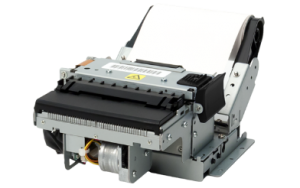
    SK1-311 Kiosk Printer   Star’s SK1-311 Kiosk Printer[/caption]

    Star is proud to partner and integrate with many of the industry’s leading kiosk manufacturers. With a large variety of kiosk printers designed to meet different kiosk styles and requirements, there’s a good chance we have the right kiosk solution for you. Please contact our sales team to learn more, whether you’re a kiosk manufacturer searching for the right printer, a reseller or ISV looking for the right solution to offer your customers, or a restaurant on the hunt for a kiosk solution to meet your specific needs.


    Other Updated Kitchen Technology

    There are even more modern advancements happening in restaurant kitchens besides online ordering and kiosks. One example? The kitchen buzzer.

    Star mC-Sound Kitchen Buzzer
       Star’s mC-Sound Kitchen Buzzer

    Modern kitchen buzzers – like the Star mC-Sound – include many new features like:

    • High quality sound (89dB)
    • Easy-to-use, pre-recorded melodies
    • The ability to record custom user speech
    • Compatibility with Windows, iOS, and Android SDKs
    • The ability for the sound converter tool to be integrated
    • And more!

    Back of the house restaurant technology is evolving – but you may be surprised how easy it can be to update your existing technology and take advantage of today’s trends, which can add more money to your bottom line and create a better customer experience.

    Whether you want to offer online ordering, deploy self-service kiosk technology, or more, be sure your new processes are backed by high-quality hardware featuring future-proof connectivity options and integrations with your favorite service providers. Always leading, and always innovating, Star is proud to offer a portfolio of back of the house restaurant technology designed to meet today’s needs.