Blog

  • Why Shoppers Prefer Brick-and-Mortar Stores

    Why Shoppers Prefer Brick-and-Mortar Stores

    While in parts of Asia e-commerce is really catching on, in North America especially, brick-and-mortar shopping experiences still dominate. However consumers have new expectations regarding convenience, discounts, personalization in retail, and in particular, the interactions at the POS like mobile payments and offers on receipts.

    As stores are learning the kinds of experiences their audience enjoys, physical retailers are getting better at adapting and boosting store traffic and engaging with their customers in contemporary and complementary ways. Enabling a better experience is key by marrying the human with the technology.

    1. Cater to experiences.
    2. Create human-interaction that’s educational and fun.
    3. Do seasonal campaigns better, promote community, and leverage unique product, lifestyle and cultural niches.

    We live in an era where online sales are booming and a lot of retail growth occurs online, however, the majority of shoppers still prefer visiting stores in person. Why is that?

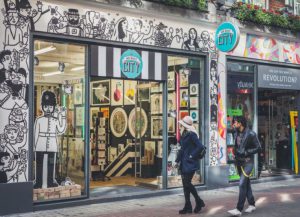
    Why-Shoppers-Prefer-Brick-and-Mortar-StoresMS-e1574798979670Local retailers provide a grass-roots way to connect with the community, culture, and vibe of a neighborhood, culture, and social life of a district. Retail and the marketplace is about connecting with our roots.

    It’s Not Just About Convenience

    While online shopping has never been easier, in a mobile-addicted world, younger consumers are showing a preference to experiences over the acquisition of stuff, goods, and material products.

    Many younger consumers live in an era of discount shopping, price-wars, and comparative shopping impacted by the likes of mobile search, causing them to make different kinds of choices that retailers are still discovering in efforts to keep up with.

    Smart small businesses and independent and local retailers are leveraging this to create a whole new retail culture around their products, staff, and locations. At Star Micronics, we’re creating products that reflect this. Sleek POS hardware at the cutting-edge of reliability and innovation.
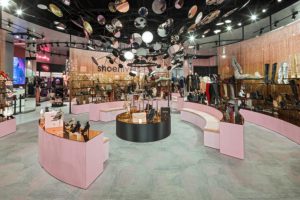
    Why-Shoppers-Prefer-Brick-and-Mortar-StoresMS2-e1574798997462We Are a Species of Touchers and Feelers

    The more mobile is starting to impact every aspect of our lives, the more, as consumers, we crave tactile, human, intimate, empowering, and genuine interactions with local retailers. Human beings thrive not just with good customer service, but with customer experiences tailored to them in-person.

    Small Businesses Are Learning to “Hack” The Experience Economy

    Fostering the “experience economy” that has been related to Millennials (shoppers under 40) means how small business retailers engage with their audience through education, classes, in-person local influencers, events, and creating social relevance of their locations in the community, is a huge deal!

    If the modern shopper associates the big-box retailers with price, speed, and fulfillment, what then are the equivalent characteristics of their favorite SMB local retailers? Small business-love and shopping local as trends, it can be argued, are at all-time highs. Consumers want to support family-owned businesses and retailers they consider more like them and in sync with their own values.
    Why-Shoppers-Prefer-Brick-and-Mortar-StoresMS3-e1574799019310Men and Women Shop Differently — Why it Matters

    According to Retail Dive, the way men and women approach shopping experiences might be different.

    In particular, female shoppers overwhelmingly want to see, touch and feel products before buying them. Males, on the other hand, skew more toward the immediate satisfaction of taking items home with them.

    If this is true, in-store enhancements that are design-orientated are catering to Millennials, including digital influence that is good for the planet such as Star’s Micro Receipt that saves paper on receipts. In fact, when stores show they care about sustainability and corporate social responsibility, their female customers gravitate more to them, showing how valuable from a loyalty and marketing perspective CSR and sustainability is for stores to embed in customer journeys.
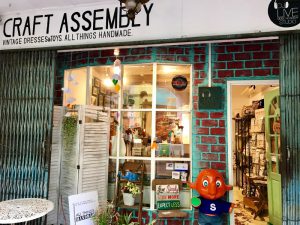
    Why-Shoppers-Prefer-Brick-and-Mortar-StoresMS4-e1574799038198How we Do Customer Experience is Changing

    The way we do customer experience is shifting to the preferences of the new consumer. Retail tech must shift to being customer-centric, giving more choice and augmenting a store’s ability to connect with their customers on the most human basic emotional level.

    With more than a third of consumers shopping online at least once a week, physical retailers and small business owners need to find ways to be more personable, unique, and offer better customer service than ever before. For these are the true differentiators that will build a loyalty customer base that generates revenue and improves margins.

    Brick-and-mortar stores are beginning to incorporate mobile technology that humanizes their retail brands, such as Instagram stories, mobile coupons, digital receipts, and QR code-based technology. This technology marries the human with the resonating digital influence that is starting to permeate our society that can no longer be seen as separate from the emotional experience of our love of shopping in stores.

    Physical stores are going through a wonderful transformation and a retail renaissance, and are still at the core, the center of our urban commercial experiences. This is even more true for small towns and local communities. Shoppers prefer trips to stores since they deliver experiences and not just stuff.

  • 10 Ways to Increase Foot Traffic for Small Businesses

    10 Ways to Increase Foot Traffic for Small Businesses

    Getting customers in the door is a challenge for most brick and mortar retailers. Customers aren’t going to leave their homes to visit a physical store unless the company is offering them something they can’t get online. And that something needs to be relevant to the customer’s lifestyle and shopping patterns. In fact, relevance is the most overlooked component to success in retailer efforts to increase foot traffic. The following 10 tips will help your store increase foot traffic by catering offerings to customer demand.

    1. Add a Personal Touch

    Why do you think fine dining chefs walk around and introduce themselves to everyone at the restaurant? People want to connect with the person behind the scenes. Connecting to your customers will humanize your brand, but it needn’t always be done in person. Respond to Instagram photos and customer posts on social media to connect with your customers in a time efficient way. Also, regularly post photos of your offerings that portray the lifestyle marketed by your brand, and offer prizes for the best customer photos of your product.

    2. Get That Local Flavor

    Make products relevant to customer locales is pivotal to boosting foot traffic in your store. Make a calendar of major music, culture, and sporting events near your store and narrow the list down by which local events cater to your customer base. In other words, a sporting goods store probably shouldn’t throw an event based on a ballet production, but could definitely increase visibility by sponsoring the local 5K. From there, pick a few events to use as focal points for your store’s philanthropy, store events, or promotions.

    3. Seasonal Marketing

    Seasonal marketing is an easy way to personalize your offerings for your customer base. Whether your store is exposed to all four seasons or the temperature only drops 10 degrees during the cold months, there’s opportunity to connect with your customers through shared experience via signage and promotions. Offer fun seasonal discounts, such as, “10 percent off if you come wearing earmuffs,” or “free coffee to anyone who shows us their umbrella!”

    4. Keep ’em Coming Back

    Customers expect to be rewarded for their loyalty. No matter the size of your store, some sort of loyalty reward program is imperative to show your customers that you value their business. Customer relationship management software (CRM), similar to the loyalty program builder and communications automation technology offered by Thirdshelf, can help to track and identify the results of your loyalty programs to maximize the traction of your marketing spend. This shows you areas that are working and areas where you can to improve.

    5. Throw in Freebies

    If you feed them they will come and if you give them something for free they will spend. Time Magazine lists 5 reasons why customers spend more when you give stuff away. The list includes when customers get something for free they’ll pay more for it later, and that people talk about freebies more than anything else. Whether you’re offering samples of your newest hand lotion or free appetizers at a store event, giveaways immediately increase foot traffic and make a lasting impact on your customers.

    6. Create an Experience

    Since millennials value experiences over things, it follows that to sell things to millennials, retailers need to tap into experience. In 2015, more than 3 out of 4 millennials said they would rather spend money on an experience than accruing more things. With that said, even the most frugal shopper will make a purchase as a reminder of a one-of-a-kind in-store experience.

    7. Be Disruptive

    You can only create foot traffic in a market of breakneck retail evolution by adopting a business model that’s as disruptive as the market itself. Fashion trucks and pop-up shops generate enthusiasm due to their transient nature. The “get it before it’s gone” mentality generates the excitement that most customers find lacking in traditional department stores. Social media marketing is huge for mobile retail, so customers know where to find you and a bit about your offerings. And if you think big companies can’t pull off a disruptive retail model, check out what Zappos is doing with their “Friends With Benefits” roadshow.

    8. Build a Community

    Most retailers cater to consumers with a shared interest, whether you are a home goods store with customers who love to cook, or you sell apparel to Instagram-obsessed teens, there’s an opportunity to bring your customers together over a shared interest. By offering your customers relaxing social spaces and online forums to voice share their experiences, you can create a community in which a love for your brand is the unifying thread.

    9. Teach Your Customers

    Shared interest can also be utilized to create foot traffic by offering your customers classes or seminars on topics related to your products. For instance, outdoor retailer REI is famous for the hiking and camping events they facilitate for their customers. Once you realize what lifestyle you’re selling with your inventory, you’ll have a better understanding of what type of education you can offer customers to get them in the door.


    10. It Comes Down to People

    Of course, the most thoughtful marketing initiatives don’t count for anything if your customers are greeted by a rude or poorly-trained staff. Know your employees’ strengths and weakness. If you aren’t able to spend much time at your store’s physical locations, invest in a staff augmentation platform like the insights you can get from Dor for hour by hour data that will help you make informed staffing decisions.

    The US Census Bureau reported that e-commerce counted for only 8.3% of total retail sales in the fourth quarter of 2016. Since most purchases still take place in brick and mortar stores, it’s imperative that retailers cater promotions and marketing to individual customers to boost foot traffic and maximize marketing spend.

    Coupons are still the top-performing marketing and promotional tools for business. Yes, really. Learn more about Why You Shouldn’t Underestimate Coupons as a Promotional tool when it comes to building foot traffic for your small business.

  • How Back to School is Bigger than Ever for Retail

    How Back to School is Bigger than Ever for Retail

    This year it seems like Amazon’s Prime Day sent parents and kids back to school with early special back-to-school deals. According to Deloitte, parents are set to spend $510 per household during back-to-school shopping and most will be in stores, reports CNBC.

    How big is the retail season now? Bigger than you might think. The back-to-school season now runs between July and September, during which time American households are projected to spend $27.6 billion. This means it ranks second only to holiday shopping.

    According to Daphne Howland of Retail Dive, it turns out most parents and kids dread this kind of shopping. Most American parents (75%) and teens (73%) say back-to-school shopping causes tension, including which brands to buy. Predictably, fully half of parents find shopping for clothing and shoes a particular problem, while 30% of teens most dread shopping for school supplies.

    Here is where brick-and-mortar shopping really shines, where over 50% of the money will be spent at malls and traditional brick-and-mortar retailers, more than double the amount parents expect to spend online. In on the fun are many local SMB retailers as well.

    Back to School Marketing Tips for SMBs

    As for marketing tips for small businesses, the likes of POS leader Vend and Shopify have some great suggestions. The bulk of this will be spent on clothing, electronics, shoes and school supplies in that order.

    The National Retail Federation was bull in their analysis of this seasonal sale, where total back-to-school spending has grown 55% over the past 10 years. For GenZ college students, the amount spent moves up to an average of $942.17 each.

    So what can SMBs do to compete in this incredible opportunity to increase retail sales? Clothing and apparel, as well as footwear, are good verticals that could show growth here.

    Weirdly, the fastest growing retail chain in America is actually an Irish discount retailer you’ve never heard of, called Primemark. The low-cost European apparel chain is making its mark on American soil and plans to quickly expand. It took first overall as the fastest-growing retailer in the United States, according to a report from the National Retail Federation’s Stores magazine, which used sales data from Kantar Consulting.

    According to Francesca Nicasio, Vend’s content marketing lead writer, here are some ways retailers can keep up:

    1. Make Marketing Promotion Sync with the Hottest Trends

    • Hone in on GenZ trends to build opt-in and increase demand.
    • Start with the right products that are most likely to sell during this season.
    • Showcase merchandise in school scenarios to increase the first impression

    2. Make Campaigns More Kids & College Student Friendly

    • Base promotions on surveys of kids and teens in your local area.
    • Get kids and GenZ to be as involved as possible with UGC campaigns and contests.
    • Create promotions that are made by GenZ for GenZ. Target even got kids to write and produce promos and it turned out well for them.

    Shopify also identifies apparel as the key vertical SMBs can get in on. According to the NRF survey, back-to-school shoppers heading to elementary and high school plan to spend the most on clothing ($236.90). That’s a good range of clothing items.

    3. Leverage Social Media Differently to Target GenZ as Compared to Millennials

    Retail brands and marketers must understand GenZ are more video native and have a lower attention span as compared to Millennials. Shopify, therefore, recommends the following strategies:

    • Generate buzz through giveaways
    • Partner with GenZ influencers
    • Retailers need to leverage mobile to better reach GenZ
    • Focus on trending verticals of apparel such as Athletic Wear & footwear

    4. Leverage Niche Items to Can’t-Miss Products

    With consumer sentiment high, SMBs can also leverage niche items that GenZ might not need but instead want. Shopify suggests for college-age GenZ, these could be:

    • Multifunctional pieces for dorm rooms
    • Personal care and grooming items
    • The “Marble Theme” on dorm furnishings like pillows and throw blankets.
    • Fancy water bottles and pencil case supplies

    Whatever your strategy has been since June, you have just a few days left to make sure 2018 is your best back-to-school season ever. It’s a big year for retail sales in this segment.

    With the economy doing well, this year back to school means back to shopping and that “old school” trend coincides with the reputation of GenZ as loving physical shopping. There are more GenZ than there are Millennials and their impact on family spending is considerable. As more of them enter their 20s, the apparel sector is a good opportunity in good hands.


  • The Future of Blockchain in Retail

    The Future of Blockchain in Retail

    According to leading retail news publication, Retail Dive, blockchain will drive $164 billion in efficiencies for retail by 2030. The press release by IHS Markit defines business value as the cost savings and efficiencies resulting from incorporating blockchain into business strategies.

    According to a Spring 2018 report by Deloitte, blockchain’s adoption in retail will also be at a tipping-point in the next five years. Deloitte sees this occurring especially in three main pillars of adoption:

    • Consumer — Improving and protecting the consumer experience
    • Supply chain — Improving process efficiencies across the supply chain
    • Payments and contracts — Improving transaction processes and ensuring the validity and implementation of contracts

    While this provides a nice overview of mainstream adoption, it doesn’t take into consideration all the specialized blockchain startups that are seeking to impact a particular niche.

    Recently, a corporate startup called Bakkt was announced where the likes of even Starbucks is a major partner. This has the retail and crypto community buzzing over if we’ll be able to pay for a Starbucks drink with cryptocurrencies such as ETH (Ethereum), XLM (Stellar), XRP (Ripple) or another crypto.

    What makes this news noteworthy is since Bakkt is being formed by Intercontinental Exchange — the trading colossus that owns the New York Stock Exchange and other global marketplaces, namely Jeffrey Sprecher and his partner Kelly Loeffler. With the likes of Microsoft and Boston Consulting Group involved, the retail applications here could be enormous.

    This could be a “Bakkt to the future” story for crypto in retail, where Starbucks on ICE (Intercontinental Exchange) combine forces. However, for blockchain in retail, the patents are where the real action is occurring, where the likes of Alibaba (the e-commerce giant) is a leader for blockchain patents with long-term implications in retail.

    Deloitte’s report suggests that for blockchain’s future in retail, before 2020 many large retailers and businesses are quickly determining what value blockchain might hold for them, and have —or will begin—testing it soon, to benefit greatly while others will surely miss out and fall behind. Major retail chains now need not only to think about e-commerce, but the next layer of the internet, blockchain.

    According to the forecast by IHS Markit, in the worst “downside” case scenario for the future of blockchain in retail, still sees this value increasing to $49 billion by 2030. To put this figure in perspective, the business value of blockchain in 2017 for retail and e-commerce was only $38 million.

    Bakkt’s CEO describes it as the following:

    “Bakkt is designed to serve as a scalable on-ramp for institutional, merchant, and consumer participation in digital assets by promoting greater efficiency, security, and utility.”

    Merchant and consumer participation definitely sounds like retail. Many analysts believe Bakkt is an example of—and which the ICE can offer— something the crypto world currently lacks and that many crypto enthusiasts steadfastly reject: a trusted third party. How cryptocurrencies might integrate into retail will require these trusted and centralized businesses to get involved to help spur innovation in the space.

    This signals Wall St. and larger investors that are starting to enter the cryptocurrency and blockchain landscape and while retail has been slow to follow; in the 2020s this movement could accelerate considerably as more use cases come into being including IBM’s private blockchain consortium. In 2018 a rapid rise of crypto funds and Wall St.’s more active involvement means it will spur on the retail sector to integrate with blockchain solutions that ultimately won’t just decrease costs and improve efficiencies, but improve customer experiences.

  • How to Use PromoPRNT Technology and Receipt Printers for In-Store Communications

    How to Use PromoPRNT Technology and Receipt Printers for In-Store Communications

    At Star Micronics, we’re always pushing the limit of our POS-tech designs. We’ve been a leading global manufacturer of mobile, point of sale (POS), and customer engagement technologies and this year we wanted to offer an add-on that has usefulness for a wide range of small businesses and local retailers.

    PromoPRNT is the easiest way to reach your customers offline and in-store. It can be used for any kind of messages a retailer or small business needs to share with their customers.

    An In-Store Customer Engagement Suite

    • Hiring notices
    • Event reminders
    • Discount promotions
    • Driving traffic online
    • Customer feedback surveys
    • Seasonal campaign sale (e.g. Back to School deals)
    • A funny message for brand awareness
    • Mention of a charity or community initiative
    • A point of purchase message designed for customer retention
    • Thank you and seasons greetings messages

    With Promotion Builder and Promotion Scheduler, small businesses can easily customize and schedule their messages on receipts of Star printers.

    A receipt printer is, therefore, more than just a printer, but one part of the Star Micronics Cloud suite of retailer tools. PromoPRNT also comes with inbuilt templates to get you started on the right foot.

    Reaching customers offline has many distinct advantages over digital communications, such as:

    • Higher read rates than email (“open rate” is also considerably higher)
    • Much less costly, resulting in higher overall ROI
    • Easy to create original memories for local repeat customers
    • Simple implementation of an offline to online strategy
    • More intimate communications that go “straight to customer’s wallet”

    PromoPRNT is Creating an IoT Approach to Retail

    Since PromoPRNT is managed on the Cloud and has an O2O (offline to online) aspect, this represents an evolution of Star’s ability to contribute an IoT aspect to all of the different kinds of businesses who use our products including retail stores, restaurants, gift shops, hospitality locations, seasonal kiosks, and retail chains.

    Essentially:

    • Promotion Builder is a simple way to create and design receipt promotions.
    • Promotion Scheduler is a detailed way retailers can schedule their on-receipt POS ad campaigns.
    • Promotion Builder has an inbuilt library of templates to help SMBs get started.
    • Reaching your customers was never this easy! Since access to PromoPRNT tools is free in 2018, retailers are trying it out to deliver incentives directly to their shoppers’ hands.

    To sign-up, simply register your business here with the Star Micronics Cloud.

    To understand more about how PromoPRNT works, watch this short video:

    Discover More Information About the Value of Printed and Digital Receipts

  • RetailNOW 2018 Recap

    RetailNOW 2018 Recap

    This year, RetailNOW 2018 ran from August 5th to 8th at the Gaylord Opryland Resort & Convention center in Nashville, Tennessee. In this post, we’ll do a short recap of some of the trends and our own experience of it at Star Micronics and our growing ecosystem of partners.

    RetailNOW was buzzing this year on Twitter under the hashtag #RetailNOW2018. It’s held by RSPA, a trade association comprised of resellers, ISVs, manufacturers, payment processors, distributors, and other POS and tech ecosystem participants.


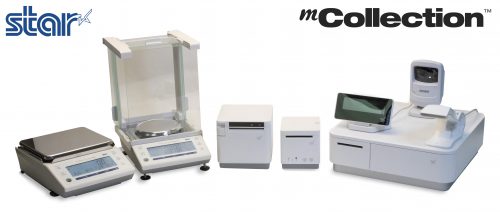
    Star Micronics had some exciting new products to showcase such as our mCollection including new printers and scales, which got a fair amount of attention at RSPA.

    RetailNOW is an important event for POS tech since it combines resellers with both hardware and software ecosystems. The point of sale industry is being challenged right now with channel sustainability and thus the role RSPA plays is crucial.

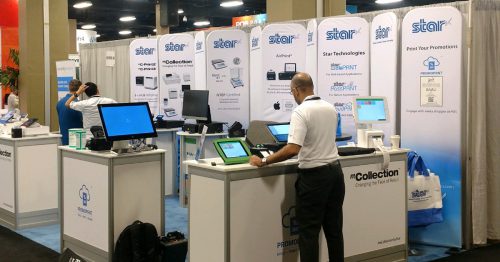
    Star Micronics’ booth was #803 and our set-up looked like this:

    RetailNow-2018-Booth-e1574798655138


    We held a contest where those who entered could win an Amazon Echo Spot. Our new mCollection series was well received, especially our scales.

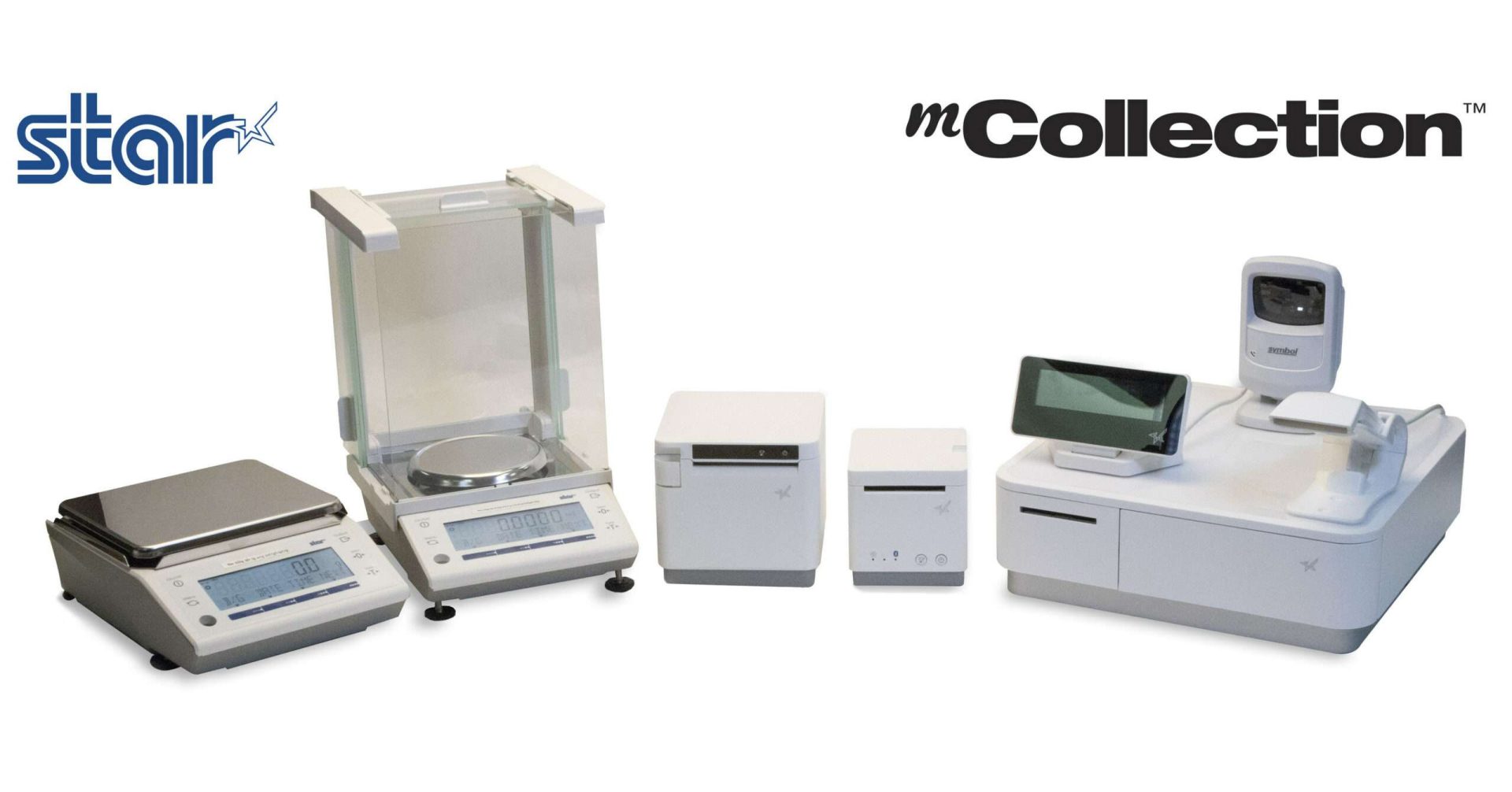
    m-collection_with-logo02-e1574798680532

    With over 160 exhibitors and a packed agenda, RetailNOW 2018 was the ideal event for us to showcase our mCollection series that has been designed with the latest tech to deliver products that are especially compact in size, sleek, and offer the easiest setup in the industry with a reliable and remarkable user experience. Where our mCollection truly shines is in connectivity–each printer has multiple connectivity options including Bluetooth, CloudPRNT, Ethernet, and of course, lightning USB and traditional USB options.

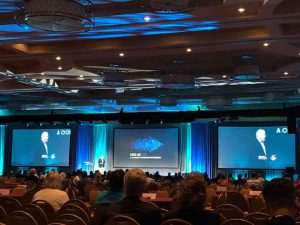
    RSPA speakers had warm reception that looked like this:

    DkAy4R9V4AE48MM-e1574798703265

                              Image credit: RSPA Twitter

    The inaugural RSPA women of the year in 2018 was Abby Sorensen. On the ISV insights panel, the importance of finding partners who need your software but who also have the same DNA was mentioned. The RetailNOW 2018 event also included golf, free head-shots at the photo booth on the show floor, and many other perks. Many speakers added value around the best practices for ISVs, VARs, and Vendors.

    Tips for Value Added Resellers (VARs)

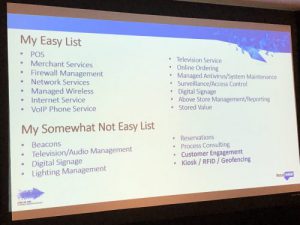
    POS VARs are evolving how they see the emerging ecosystem:

    Jim-Roddy-Presentation-Image-e1574798741922

                           Image credit: Jim Roddy on Twitter

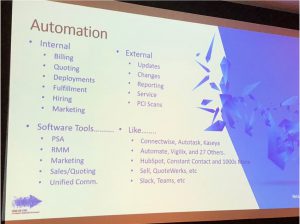
    RSPA is really committed to providing year-round education on topics relevant to its community with everything from tech boot camps to regional events and global expansion. VARs are also increasingly relying on automation tools to streamline their business.

    Capture-e1574798762533

                      Image credit: Jim Roddy on Twitter

    VARs know what works for them in terms of the top lead generation tools. For many of them, product catalogs, software overview videos and educational content such as buyers guides, e-books, lists, and live chats work really nicely. RetailNOW 2018 was full of educational content for VARs, Vendors, and those in related POS tech industries.

  • Finding the Right Mobile Application and Printer for Your Restaurant

    Finding the Right Mobile Application and Printer for Your Restaurant

    When owning and operating a restaurant or food service business, it’s important that your customers are always left satisfied, whether that be by the food, wait service, or speed. What many restaurateurs do not realize is that this often goes beyond serving a good plate of food and having an attentive staff, but it all connects to your backend operations. Food service and restaurant businesses need to make sure that they have a solid point of sale system that keeps everything running smoothly and efficiently.

    fourleaf-drawing-e1574798579744

    Fourleaf and Star Micronics offer restaurant solutions for businesses of all sizes with top performance. Fourleaf is a restaurant point of sale (POS) application that allows management and staff to manage orders from start to finish using an iPad. Restaurant and food service business choose Fourleaf and Star for its mobility, always-on functionality, and outstanding user and customer experience.

    Mobility

    Smaller restaurants, cafes, and food trucks need mobility options that will allow them to take an order and accept payment from anywhere, at any time. With mobile ordering and payment becoming more popular options when it comes to food service, it is important for business owners to accommodate to the new generation of consumers by offering more mobile options. Fourleaf allows restaurants to seamlessly accept mobile orders and payments. Operating on iPads, Fourleaf’s POS solution enables food service businesses to go completely mobile using one of Star’s mPOS hardware options including the SM-L200 portable printer, mPOP, or mC-Print3.

    Always-On Connectivity

    With Fourleaf and Star Micronics, restaurateurs never have to worry about devices being disconnected, or losing payment or transaction information. The benefit of Fourleaf’s real-time sales and inventory updates is that business owners and managers are always connected and able to see updates whether they are in the restaurant or relaxing at home. And with Star Micronics’ new mC-Print3, they never have to worry about losing connectivity with the printer’s HUB interface with Bluetooth, USB, lightning USB, and Ethernet options. Not only does the mC-Print3 offer multiple connectivity options, but it also allows restaurants to connect multiple devices to be used all at the same time while boasting both spill- and insect-proof technology, making it ideal for kitchen and restaurant environments. For mid-size and large-scale restaurants, always-on and always-connected functionality is a must.

    User and Customer Experience

    The most important aspect of running a successful restaurant business is providing an exceptional customer experience. In order to do this, staff must be knowledgeable of the menu and the back-of-house operations including how food is prepared, wait times in the kitchen, and most importantly, the point of sale. Providing your staff with a user-friendly POS system helps set-up them—and your business—up for success, especially in a large-scale and busy restaurant environment. Fourleaf POS offers an easy-to-use and intuitive system that makes it easy for staff to take orders, print receipts, and track loyalty. This is also great for the customer experience because they receive excellent service and rewards for frequenting your business. Star’s TSP143III printer helps staff to quickly print receipts and credit card slips and offers an aesthetically pleasing printing solution for your business.

    The bottom line is that no matter what size or type of restaurant or food service business you run, it is important to have modern and functional technology to help your staff get the job done and provide your customers with a 5-star experience every time. Whether you own a food truck or a steakhouse, Fourleaf and Star Micronics have the solutions to help you succeed.

  • Star Micronics Reveals New Service: PromoPRNT

    Star Micronics Reveals New Service: PromoPRNT

    Effortlessly create promotions right on paper receipts!

    Somerset, NJ – August 3, 2018Star Micronics, a leading global manufacturer of mobile, point of sale (POS) and customer engagement technologies, is proud to announce PromoPRNT, a brand-new service added to the famous Star Micronics Cloud Service platform.

    PromoPRNT will allow retailers to automatically create printed promotions in addition to receipts. These incentives and bonuses will be delivered directly to shoppers’ hands, boosting customer retention and notifying customers of new deals and promotions.

    PromoPRNT is provided through two services on the Star Micronics Cloud Services dashboard: Promotion Builder and Promotion Scheduler. Promotion Builder is a seamless and simple way to create and design the promotions that will appear on the receipts from templates available in the Promotion Builder library. Promotion Builder makes it simple to add logos, text, and icons.

    Promotion Scheduler will empower retailers to schedule the duration of a coupon campaign by selecting a time, date, and printer for each coupon/promotion. With Promotion Scheduler, retailers will also have access to analytics that provides insight into each promotional campaign.

    For more information about PromoPRNT and other Star Micronics point of sale solutions, visit www.starmicronics.com.


  • How PromoPRNT Empowers Retail Stores with Receipt Messaging

    How PromoPRNT Empowers Retail Stores with Receipt Messaging

    In an era of mobile advertising and discount shopping, retailers need to find new ways to reach their customers. New ways to create meaningful customer experiences. With new technologies coming and fading, for many retailers ‘going back to basics’ takes on a whole new meaning. Online advertising is expensive and the ROI has diminished in recent times.

    As consumers have fundamentally changed how they shop and how they buy, retailers need to rethink how they use their existing hardware and software to augment their paths to purchase. This can be achieved also at the POS and with existing technologies. For local retailers, it’s not all about customer data, but also about providing memorable experiences that foster a deep human connection.

    Nothing quite beats the charm of customer service and little personal touches on purchases and the intimacy of shopping at a local store or a favorite small business. So what then are the high-value potential channels that many retailers are neglecting? It turns out it’s offline and in-store marketing opportunities.

    What if there was a simple way to drive customers important messages that they nearly always see? Email marketing open rates are declining, so retailers need to think about an easier way.

    Consumers want to be recognized, and they want non-invasive messages that resonate with them. According to the 2017 DMA factbook, consumers with personalized experiences spend more and become repeat customers:

    Post-Purchase Messaging

    • Product-specific feedback requests in an appropriate post-purchase timeframe (not too soon, but don’t wait too long either)

    Event Reminders and Seasonal Campaigns

    • Invitations to special events at nearby locations

    New Products Launch

    • New product releases in areas of interest

    What if there was an offline tool at the POS itself that could deliver salient messages? Now there is.

    What is PromoPRNT?

    NewPromoPRNTLogoTM

    PromoPRNT is an in-store advertising tool that allows retailers, small businesses and any business with a physical location to leverage the full power of receipts.

    Any POS with a Star Micronics printer can be using PromoPRNT to drive customer experience, build loyalty and engage its shoppers.

    While retailers try to implement personalization and drive traffic online, this is a bit expensive for your local retailer or independent retail store. They need tools that humanize their brand, that are low-cost but yield long-term benefits.

    Benefits of Using PromoPRNT

    Customer-centric receipt messaging at the store or physical location can augment a retailer’s business in many ways:

    Convert Offline to Online Traffic

    • Convert offline eyeballs to online website and social traffic

    Drive Seasonal Deals and Advertise In-Store Events

    • Seamlessly increase “buzz” about seasonal campaigns and promote in-store discount events

    Communicate Important Updates to All Customers

    • Communicate general purpose messages that have a wide reach and a nearly 100% “read-rate”

    Conduct Retailtainment Campaigns that Charm Shoppers

    • Use wit, humor, and charm to create a memorable point-of-purchase experience that has long-term customer loyalty benefits.

    Improve Authenticity of Brand Impressions that Build Trust

    • Create authentic moments for shoppers that will get them to return to your location.

    Drive Repeat Sales

    • Drive repeat sales with loyalty program messages, discounts, coupons and time-limited offers.

    Want to be among the hundreds of retailers and small businesses trying out PromoPRNT?  It’s free and easy!

  • Star Micronics Introduces the mCollection

    Star Micronics Introduces the mCollection

    Somerset, NJ – August 1, 2018 – Star Micronics, a leading global manufacturer of mobile, point of sale (POS), and customer engagement technologies, is happy to announce the release of their latest line of products: the mCollection.  The mCollection was designed with the latest technology to deliver products that are compact in size, sleek in design, and provide an easy setup and wonderful user experience.

    The central pieces of the mCollection are the printers: the mC-Prints.

    The mC-Print2 and mC-Print3 are the collection’s 2- and 3-inch front-exit thermal printers designed for easy loading and low maintenance.  Each printer provides multiple connectivity options, including Ethernet, traditional USB, Lightning USB, Bluetooth, and CloudPRNT, which allow for versatile use throughout retail locations. These printers can also be cloud-connected allowing any retailer to use Star’s latest printed promotion tool, PromoPRNT. The printer’s stylish, compact design compliments any brand and works with any modern retail environment, even when counter space is limited. Both of these printers have an integrated hub and provide the ability to connect peripherals.

    The additional peripherals include the sleek and compact 1D scanners and 2D imagers. These products can communicate directly with the host or through the Star printer hub.

    Also available in the mCollection is the customer display.  The customer display is offered in the two mCollection colors, black and white, and can fit perfectly on the mPOP or on the latest mC-Print printers.

    Finally, Star is adding three digital NTEP certified scales to the mCollection. Two of these MG-scales (MG-S322 and MG-1501) are perfect for the cannabis industry, while the third one is designed for generic retail (MG-8200).

    Another big benefit of the mCollection is that all products are controlled through Star’s common SDK software providing a quick, easy, and simple tool for integration by software developers.

    “The mCollection is creating a lot of interest because it meets today and tomorrow’s retailer needs for flexibility and mobility with a future-proof design,” said Christophe Naasz, Director of Business Development at Star Micronics.