Blog

  • Why E-Commerce Brands are Moving to Brick-and-Mortar

    Why E-Commerce Brands are Moving to Brick-and-Mortar

    We’ve all heard of the term “retail apocalypse.” When you hear that phrase, you probably imagine brick-and-mortar stores shutting their doors. But guess what? That’s simply not happening (if brands innovate!). In fact, the opposite is occurring: e-commerce brands are opening physical stores, and fast. There are approximately 600 stores across the United States that belong to former online-only brands! Let’s explore why.

    Online Saturation – and Expense

    We probably don’t need to tell you that the online market is saturated … really saturated. Approximately 77% of marketers use at least one social media channel to market their business, and the overall organic reach you’re able to obtain on social media apps is falling as the platforms change newsfeed algorithms so users see more from their friends, and less from brands.

    On top of the fierce competition in the world of online advertising, placing ads in the digital realm is also very expensive. In recent years, the cost for online ads on search engines and social media platforms has skyrocketed – it can be 10 times more expensive to acquire a new customer online than it is in a physical store!

    Experiential Opportunities

    No matter which way you cut it, an online shopping trip can only be so interactive. On the contrary, physical stores offer the added benefit of allowing shoppers to engage with products, interact with employees, and soak in the brand’s culture.

    Brick-and-mortar stores are home to immersive experiences that will create a lasting memory for shoppers. For example, Casper, an online mattress store, is opening 200 physical stores so that customers can book naps and test out mattresses before buying. A creative, unforgettable in-person experience is priceless (especially when it includes naps).

    Other examples of physical experiential retail include:

    • Nike Live Concept Store: The athletic brand offers personalized advice, in person, to align customers with the best possible products to meet their fitness goals.
    • Wayfair: The online furniture retailer is opening its first physical location in fall 2019, which will allow customers to meet face-to-face with design experts, try out furniture in person, and more.
    • Warby Parker: The eyewear brand saw huge success when it opened its first pop-up in 2013, and it now operates dozens of physical stores and claims it gathers the most valuable data in person, and realized retail isn’t dead, it just needed a “creative makeover.”

    A Fruitful Fusion

    Sometimes the perfect place for an online brand is in a physical store. Take Glamsquad, for example.
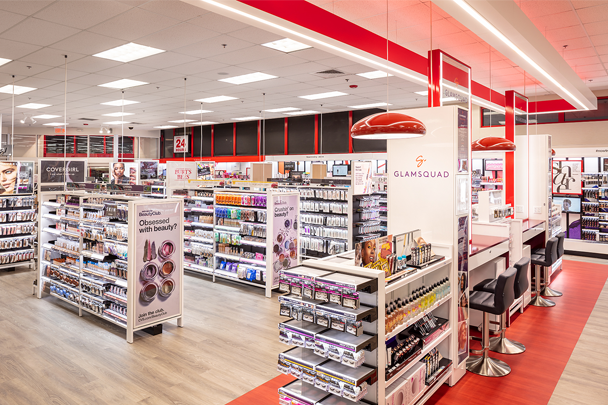
    CVS-Glamsquad
    Glamsquad in CVS

    Glamsquad, an on-demand, in-home beauty service, recently partnered with CVS to offer express versions of its services. This is a great way for the brand to meet new customers in person, especially those who may not yet be aware of the online brand’s services (why not fill your prescription and get a manicure?).

    Another benefits for e-brands taking up physical shop has to do with returns. Instead of simply mailing back a returned item, customers may opt to return the merchandise in person at the physical store, which presents a valuable opportunity: the opportunity to make another sale.

    Make the most of your brick-and-mortar store with Star! Click here to learn how Star and Cohub streamlined one candy shop’s inventory management processes.

  • Star Micronics and KitchenHub to Offer a Simple Online Order Management Service for Restaurants

    Star Micronics and KitchenHub to Offer a Simple Online Order Management Service for Restaurants

    KitchenHub helps restaurants to consolidate online orders from all major services with Star Micronics hardware

    KitchenHub and Star Micronics eliminate the need to have a separate tablet, device, or printer for each online ordering service being used, while helping to increase the diversity of online ordering services accepted. The app offers a single, streamlined dashboard with all your online orders, with the smart interface making the management of these orders simple and efficient.

    Currently, restaurants manage every online ordering channel separately, and many do not even offer online ordering. However, online sales channels help restaurants sell more food and grow their profits. It is critical for virtual restaurants—or “ghost kitchens”—as they exclusively sell online. KitchenHub helps to streamline this by offering one tablet and one app for all online orders from multiple channels, as well as helping restaurants to create their own online ordering platform on their own website.

    Star’s mC-Print3, SP742, and TP654II printers are all offered with CloudPRNT technology, providing an easier way for restaurants to accept and print online orders. CloudPRNT will work with the online ordering service to store and create print jobs, and communicate status with the printer. The Star CloudPRNT printer will then pull these orders on a defined interval.

    “Managing separate online ordering platforms is a true management nightmare,” says Jonathan Romero, KitchenHub customer and owner of four restaurants and two virtual concepts. “Now, with new partnership with Star Micronics, printing orders from KitchenHub app is easier than ever.”

  • 3 Ways to Grow Your Restaurant Business

    3 Ways to Grow Your Restaurant Business

    In the world of restaurants, there’s immense pressure to not just maintain business, but to grow it. There are over 1 million restaurants in the U.S. alone, and their projected sales in 2018 topped $825 billion. In a world that becomes a little more digital and connected each and every year, it’s important to stay ahead of the competition and stay in the foremind of your customers. Here are three ways to grow your restaurant business – in the modern world.

    1. Use an Online Ordering Service

    Nowadays, online ordering services are thriving. There are both local and nationwide services, and the industry is estimated to be worth nearly $19.5 billion and is expected to grow 5.9% annually through 2023. In other words, there’s never been a better time to jump into the online ordering game if you haven’t already.

    Benefits of Online Ordering Services:

    • New Business: Online ordering services are a great way to appeal to a new market and draw in new customers outside of your restaurant.
    • Reduce Human Error: Another huge benefit of using an online ordering service is clearer communications. Online ordering services can eliminate the confusion that sometimes occurs when orders are placed over the phone. Simply put, online services increase order accuracy and make the process easier for both the customer and the employee.
    • Transparent Cash Flow: Last but certainly not least, online ordering services give transparent cash flow information, making it easy to keep a close eye on your profits. Online services can make it possible to keep track of costs of preparing an order and compare it to the price you’re giving the customer.

    Examples of Services:

    GrubHub-Logo-e1574803285121Grubhub Inc. is a web commerce platform for ordering and delivering take-out food. Based in Chicago, as of Q1 2018 the company has 14.5 million active users and 80,000 associated restaurants across 1,700 cities in the United States.

    UberEats-Logo-e1574803302708Uber Eats is an American online food ordering and delivery platform launched by Uber in 2014 and based in San Francisco, California. Users can order food from participating restaurants on their website or with a smartphone/tablet application.

    DoorDash-Logo-e1574803319728DoorDash Inc. is an on-demand food delivery service founded in 2013 by Stanford students Andy Fang, Stanley Tang, Tony Xu and Evan Moore. A Y Combinator-backed company, DoorDash is one of several technology companies that uses logistics services to offer food delivery from restaurants on-demand.

    And many more!

    2. Adopt a Loyalty Program and/or Branded App

    Looking to establish your brand and gain more fans? Of course, you are! Did you know a loyalty program can help you do just that? And trust us, today’s consumers want the perks that loyalty programs can offer: 86% of shoppers say they’ve joined a loyalty program to collect points for rewards.

    Tying into our first tip, select online ordering services also offer loyalty programs and branded apps to restaurants. Uber Eats offers Uber Rewards, which allows customers to accrue points for every dollar spent on Uber car rides and Uber Eats purchases. Users can also achieve different membership levels, unlocking things like priority pickups, complimentary upgrades, and more.

    In a similar vein, ChowNow offers branded mobile apps to restaurants. The apps, available for both iOS and Android, not only allow customers to purchase food, but also allows restaurants to display logos, food photos, and more. And according to ChowNow, app-wielding restaurants see a 10% increase in order frequency per diner. Can’t beat that!

    3. Integrate Star Micronics Restaurant Solutions

    Whether it’s a fine dining restaurant or a fast-casual restaurant – or anything in between – Star has what it takes to optimize restaurants of all kinds. Here are two ways how:

    mC-Print-e1574800926275

    • mC-Print3: Specially designed for restaurants, the 3-inch thermal mC-Print3 is not only splash-proof and insect-proof, but sleek, compact, and connected. Built for the modern world, the mC-Print3 offers Bluetooth, USB, Lightning, LAN and CloudPRNT connectivity, and is easy to integrate through common SDK. Click here to learn more about the mC-Print3.NewPromoPRNTLogoTM
    • PromoPRNT: While digital is king these days, there’s one valuable marketing medium that isn’t going away anytime soon, and that provides an even more direct communication with the customer: a receipt! With Star’s PromoPRNT software (compatible with mC-Print3), you can create custom promotions from templates that are delivered directly into customers’ hands, boosting customer retention and engagement rates. Operate multiple locations? No problem – with PromoPRNT, you can manage promotions for multiple stores, all from one central location. Click here to learn more about PromoPRNT.

    With just a little bit of effort and a few new tools (or maybe just your existing printer), you can take your restaurant to the next level. Click here to learn more about how Star can help take you there.

  • Infographic: The Rise of Online Ordering

    Infographic: The Rise of Online Ordering

    Here’s something you probably already know: the online ordering industry is booming. Here are some things you may not have known, though: 86% of consumers use off-premise services at least monthly, and food delivery in particular is expected to grow 12% year-over-year in the next five years. And last but not least, digital ordering and delivery has grown 300% faster than dine-in traffic!

    If you’re looking to learn more about the online ordering industry as a whole, you’re at the right place. The below online ordering infographic explores the history of online ordering, industry key players and revenues, customer demographics, and more – including what point of sale features restaurants looking to jump into the growing industry should look for. Enjoy!

    Free Online Ordering Resources

    Social distancing has deeply affected our customers in the restaurant industry. That’s why Star Micronics is offering free online ordering resources for VARs and ISVs helping restaurants navigate the implementation of online ordering.

    Online Ordering Infographic:

    Is Your Restaurant Ready for the Growing Online Ordering Trend?

  • How to Create an Amazing Return Policy

    How to Create an Amazing Return Policy

    No matter what kind of business you operate, having a rock-solid return policy is of utmost importance. Whether you operate an online business or a brick-and-mortar – or both – having a strong return policy can save you a lot of headache (and money). Did you know that:

    • At least 30% of products ordered online are returned,
    • Nearly 9% of products purchased in a brick-and-mortar are returned,
    • And in one year alone, Americans returned $260 billion worth of merchandise to retailers!

    The product is damaged. The wrong item was purchased. The merchandise is no longer wanted. The reasons customers request a return can be endless – but you can develop a return policy to handle it all. Here are some tips and guidelines to help you create an amazing return policy for your business:

    What to Define in Your Policy

    • Receipt: You must define whether or not customers need a receipt in order to make a return. While this is optional, it is beneficial to require a receipt for myriad reasons: they enable you to verify the purchase came from your business, they help you accurately record the return in your books, and much more. Some different variations to include receipts in your policy include no returns without receipts, no exchanges without receipts, no-receipt returns will result in store credit, and more.
    • Identification: Next, decide whether you want to require customers to present ID upon returning products. Variations of identification policy could include ID is required with receipts, ID is required without a receipt, or ID is not required.
    • Payment type: When customers return an item, how will you refund them? Some choices include an exchange (return an item for a new item), cash refund, credit/debit card refund, or store credit.
    • Timing: Next up, it’s time to decide the required timing of the return. Can customers return items 14, 30, 60, or 90 days out? The choice is yours. Some businesses choose to vary the time range depending on product type (for example, clothing may be returned within 90 days, but makeup must be returned within 30 days).
    • Restrictions: Last but not least, what is the fine print of your policy? What items are not allowed to be returned, or “all sales final”? For example, sometimes businesses restrict returns on heavily discounted items and customized products.

    Why Paper Receipts are Key

    • Easy for customers to retain: A digital receipt has its advantages, but when it comes to returns, nothing beats a good, old-fashioned paper receipt. Paper receipts can easily be kept in customers’ wallets, and avoids the frustrating, time-consuming process of sifting through emails looking for a receipt.
    • Can include more than just return information: Did you know you can include more on your receipt than just transaction and return information? With Star’s value-add PromoPRNT tool, you can easily include custom promotions directly on the bottom of receipts – and all from one central location!
    • Cut down on fraud: Here’s a shocking statistic for you: according to the National Retail Federation, a whopping 5% of returns are cases of return fraud (which costs U.S. retailers $9-17 billion per year)! Printing paper receipts – and requiring them for a return – is a sure-fire way to cut down on instances of return fraud in your store.

    How to Manage Your Return Policy

    • Be consistent: To establish your policy, be sure to apply it to each and every customer. Also, to avoid surprises, it can be helpful to inform customers about your policy at the time of purchase.
    • Train your staff: Properly training your staff to handle different return scenarios can make the entire process smoother for both your business and your customers.
    • Display the policy: Be sure to prominently display your return policy near your register and on your receipts so that it’s constantly visible to both customers and employees.
    • E-commerce tips: If you operate an e-commerce store, check out these tips for an online return policy.

    Star can help with more than just return policies – learn more now about how we provide simple mobile point of sale (mPOS) management.

  • Star Micronics Releases the Fast, Wide Format TSP847II AirPrint Thermal Printer

    Star Micronics Releases the Fast, Wide Format TSP847II AirPrint Thermal Printer

    The release comes one year after Star Micronics unveiled the first-ever AirPrint certified receipt printer

    Somerset, NJ – March 14, 2019 – Always leading—always innovating, Star Micronics, a leading manufacturer of mobile, point of sale (POS), and customer engagement technologies, is excited to announce the addition of the TSP847II AirPrint to its printer lineup.

    The TSP847II AirPrint is the second Apple AirPrint certified Star Micronics printer, following the release of the TSP654II AirPrint last year – the industry’s first AirPrint certified receipt printer.

    AirPrint allows POS systems to easily integrate with any iOS device. Eliminating driver installation, AirPrint users simply follow the familiar iOS print routine, printing from the label printer just as they would from a standard inkjet or laser printer. AirPrint also enables mobile control of Star Micronics’ cash drawer and ticket alarm.

    With the ability to print up to 37 labels per minute, the TSP847II AirPrint is ultra-fast and capable of printing labels, tickets, forms, barcodes, and graphics on 3” to 4.4” wide paper. In addition to indoor use, the TSP847II AirPrint can be used inside vehicles for food delivery, field service, law enforcement, and more.

    “We look forward simplifying to our customers’ businesses with the TSP847II AirPrint,” said Christophe Naasz, Director of Business Development at Star Micronics. “This ‘plug and play’ printer is the perfect solution for applications that generally do not support direct printing.”

    For questions regarding product availability and pricing, please call Customer Service at 800-782-7636.

  • The Bang Candy Store Gets a Sweet Deal from Cohub and Star Micronics

    The Bang Candy Store Gets a Sweet Deal from Cohub and Star Micronics

    When Sarah Souther experienced a handmade marshmallow for the first time, it sparked a curiosity for the confectionary arts, and a desire to experiment with flavors. Soon after, she discovered an affinity for candy creation, and launched The Bang Candy Company, an artisan marshmallow company specializing in high-end sweets.

    Bang-Candy-1-e1574803177118

    Now a popular and successful business, the shop prides itself in its ability to create decadent candies, syrups, and other treats, without the use of preservatives, stabilizers, and artificial ingredients. It now serves as both a confectionery production space and a café where customers can enjoy house-made goods while watching the candy creation process.

    The Challenge

    The Bang Candy Company has continuously experimented with flavors and creations, and has added a wide variety of new items to its inventory. With the growth the shop has experienced, it needed a way to streamline its inventory management.

    The store is located in an area frequented by busy tourists, so inventory lookup and checkout processes both needed to be sped up. The Bang Candy Company has also been looking to implement pop-up shops around the holidays, which required additional registers, but the expense presented an obstacle.

    Bang-Candy-2-e1574803194253

    The Solution

    The Bang Candy Company chose to use an iPad-based POS system that allows for portability in order to
    accommodate the flagship store, as well as any future pop-up shops. The iPad runs Cohub software, which features detailed, real-time inventory tracking and management, and provides an easy way to search for items and filter results. Cohub was also able to create an app for The Bang Candy Company, which enabled them to integrate the Star Micronics TSP100IIIBi receipt printer with their POS software.

    The installation at the flagship store only required one system in order to suit The Bang Candy Company’s needs without exceeding the budget. In just a couple of hours, the system was installed and ready to use. Cohub trained the shop’s team on how to use the Cohub software and Star Micronics hardware. Because of the technology’s ease-of-use, training was fast and simple, and Cohub remained on-site the first day the software was rolled out.

    Click here to download the full success story.

  • Why You Need a Cannabis Dispensary Printer

    Why You Need a Cannabis Dispensary Printer

    The legality of cannabis is on the rise – but just because medical and even recreational cannabis use may be legal in some areas, there are still laws that must be followed, such as consumers proving their cannabis was legally obtained, and dispensaries staying in compliance with advertising.

    So, what’s the solution to staying legal during this ever-changing era of cannabis? Printers! Simply put, printers are critical for every cannabis dispensary – they help businesses and consumers alike stay safe. Here are two major reasons printers are a necessary component of cannabis dispensaries:

    1. Printers Provide Proof of Legal Purchase

    When it comes to cannabis, proof of legal purchase is key. For example, it is illegal in Canada to possess cannabis deemed illicit (or illegally produced, sold, or distributed) by the law, and guess what? All cannabis without a proof of purchase is assumed to be illicit! Furthermore, if you are found to be travelling with cannabis without a proof of purchase, you can face up to a $5,000 fine or a five-year prison sentence. In the United States, laws vary greatly by state and must also be carefully obeyed.

    Simply put, proof of purchase is necessary – and there’s no better way for dispensaries to provide it than with a receipt printer. Receipts offer a quick, easy-to-carry way to show law enforcement proof of purchase. So, what should be included on a cannabis receipt? It varies by region, but common items to include are store name and address, product category/name, and the appropriate tax code/identifier. And when you choose a sleek, modern printer, lawfulness and elegance coexist to strengthen your brand.

    2. Printers Can Deliver Cannabis Advertisements – Legally and Effectively

    Speaking of what to include on a cannabis receipt, another valuable piece of information you can provide with your cannabis dispensary printer is an advertisement – directly on your receipts!

    Everyone within a dispensary must be an adult, so when you print promotions from your dispensary printer, you’re automatically advertising legally and to the right people. Did you know that:

    • In California, at least 71.6% of cannabis advertisement audiences must be 21 years or older,
    • In Colorado, at least 70% of the audience must be over 21,
    • And in Oregon, each advertisement must include the statement, “For use only be adults age twenty-one years of age and older.”

    On top of offering advertising capabilities that help you avoid the headache, expense and reputation damage caused by a lawsuit, your cannabis dispensary printer can also automatically deliver ads to an ideal (and legal) target audience.

    Think about it: by printing promotions on a sales receipt, you’re delivering your ads directly into the hands of someone who is already shopping in your store and interested in your product. Marketing delivered on a slip of paper that, legally, consumers must keep close to them – what better way to create sticky customers?

    If you’re looking for ideas on what to promote on your cannabis receipt, here are some ideas:

    • Featured strains/strain of the week
    • Strains that are coming soon
    • Discounts/sales
    • Links to your social media accounts
    • Store hours
    • Store merchandise
    • Now hiring messaging
    • Customer testimonials
    • Featured FAQ

    Remaining in compliance and effectively advertising go hand-in-hand when you implement the right cannabis point of sale (POS) solution and printer.

    Looking to build out a cannabis dispensary POS solution?

  • 5 Futuristic Ways to Order Online

    5 Futuristic Ways to Order Online

    Ah, online ordering. Who doesn’t love it? Online ordering makes the ordering process easier, improves order accuracy, keeps costs transparent, and more. And the public agrees: a whopping 86% of consumers report using online ordering services at least monthly, and a third are using it more than they did a year ago.

    One of the biggest segments of online ordering is food delivery, which is expected to grow 12% each year, for the next five years (and beyond, we’re sure). In such a booming industry (online food delivery alone is expected to be a $137 billion market by 2023), it comes as no surprise that new ways to order on the web are popping up left and right. Let’s explore five futuristic ways to order online – that are already happening.

    Free Online Ordering Resources

    Social distancing has deeply affected our customers in the restaurant industry. That’s why Star Micronics is offering free online ordering resources for VARs and ISVs helping restaurants navigate the implementation of online ordering.

    1. Order by Tweet

    Did you know that on top of catching up on your daily news and memes, you can also order a pizza on Twitter? Domino’s Pizza allows customers to make a “pizza profile” on its online delivery service, create an “Easy Order” (which is like a pizza speed dial), link the pizza profile to their Twitter account, and order simply by tweeting a pizza emoji to Dominos’ Twitter account. Dominos also allows customers to order via Google Home, Alexa, Slack, Facebook Messenger, and more. Ordering via social networks is an interesting thing, and there is certainly already a market for social media-driven online ordering.

    2. Order Through Virtual Assistant

    You can ask Alexa for the forecast, to play your favorite song … or to order your lunch. Companies such as Just Eat, which has 24 million customers across the globe, are using virtual assistant technology to further modernize and personalize the food ordering process.

    Per Storm Fagan, head of product at Just Eat, “It’s as simple as having a conversation with your partner and you’re talking about what takeaway to order of an evening and, as natural as that conversation is, a voice assistant like Amazon Alexa will join in with your conversation. It will know how many people are in your home and what sort of food you like, and they can start recommending food options to you. Rather than us having to go to a website, it’s almost as if Just Eat will exist in your home with you.”

    3. Order via Smartwatch

    Smartwatches are no longer just for early adopters: in 2018 alone, 141 million of them were sold. With such a big adoption comes another wave of innovation and new features. One example of this is OrderUp/GrubHub, which allows a customer to place an order, track delivery status, and check estimated time of arrival, all through their watch. Expect to hear more about smartwatch functionality in the near future – the market is expected to grow to $73 billion by 2022.

    4. Order from Car

    Cars aren’t just for driving you to places where you can buy things – now you can buy things directly through your car! Take General Motors, for example. The automaker has launched GM Marketplace in millions of its cars, providing car owners the option to order food and beverages from Starbucks, Dunkin’ Donuts, Wingstop and more – all through the press of a button. Because the vehicles that feature GM Marketplace also have Wi-Fi connectivity, when drivers place an order through their car, it automatically will locate the nearest store and direct the driver how to get there. Although the service is predominantly foodservice-based, GM says there’s a huge potential for retailers to cash in on orders placed through cars.

    5. Order with Eyes

    Perhaps the most far fetched-sounding method of them all, believe it or not, you can order with your eyeballs. In conjunction with Tobii Technology, Pizza Hut developed Subconscious Menu, which tracks customer eye movement, and suggests pizza ingredients based on what a customer’s eyes focused on. Creepy? A little bit. Efficient? You betcha: the menu can suggest just the right pie for you, out of nearly 5,000 combinations, in 2.5 seconds.

    Is Your Restaurant Ready for the Online Ordering Trend?

  • Delivery Robots: Coming Soon to a Sidewalk Near You

    Delivery Robots: Coming Soon to a Sidewalk Near You

    As futuristic as they might sound, delivery robots are here and they are flourishing. Since more than 60% of a merchant’s customers live within three miles of one of their stores, delivery robots are a great way for restaurants, retailers, pharmacies, and more to complete deliveries.

    In 2018, the U.S. delivery robot market was worth $11.9 billion, and it’s predicted that it’ll be worth a whopping $34 billion by 2024. A big reason for that is online shopping: between 2016 and 2017, U.S. online retail sales jumped 16%. And we can’t forget robotic food and beverage delivery, which has already been adopted at university and corporate campuses across the world.

    So, are delivery robots really that beneficial? And who’s using them? Let’s take a look at some of today’s top delivery robots and the impact they’re having.

    Who is Using Delivery Robots?

    • FedEx: FedEx recently announced that its autonomous home delivery robot, the FedEx SameDay Bot, is under development. The FedEx SameDay Bot is designed to operate all by itself, using sensors and artificial intelligence to make same-day and last-mile deliveries via optimal routes. Recently on “The Tonight Show Starring Jimmy Fallon,” the bot even successfully navigated sand, rocks, and water. The bot is being tested this summer in Memphis, and will make deliveries for AutoZone, Lowe’s, Pizza Hut, Target, Walgreens, and Walmart.
    • Amazon: It probably comes as no surprise that this January, Amazon, one of the world’s most innovative companies, unveiled its own tiny autonomic delivery device, Scout. The size of a small cooler and featuring six wheels, Scout currently delivers Amazon packages to a neighborhood in Washington. Amazon also recently patented a retrieval robot that would remain inside a consumer’s home and autonomously fetch deliveries from a nearby delivery truck.
    • Postmates: Postmates delivers orders from more than 350,000 restaurants, retail shops, grocers, and more, and recently rolled out Serve, arguably the world’s most adorable delivery robot. Serve can carry up to 50 pounds of product and can deliver items within a 30-mile radius, all on a single charge. The cute bot even features dynamic light-up eyes, which communicate when Serve is changing direction or performing specific tasks. Serve will first launch in the Los Angeles area, and is slated to hit other U.S. cities this year.

    Benefits of Delivery Robots

    • Fast: In this day and age, there is a true need for speed. More and more of today’s consumers expect deliveries to reach their front door (or office desk) within the same day, or even hour. Traditionally, the last leg of the delivery is incredibly inefficient; as Henry Harris-Burland, an executive at delivery robot company Starship, said: “Think about vans stopping and starting 150 times outside of 150 houses in one neighborhood. It’s an incredibly large waste of time.” Delivery robots help speed up deliveries by increasing efficiency in the last couple of miles from a store to the delivery location – cruising at about 4 miles-per-hour, bots can deliver within 15 to 30 minutes.
    • Space Efficient: Trucks, bicycles, and scooters typically complete the final leg of the delivery process, dangerously crowding city streets. In fact, a Mobility Lab and George Mason University study found that 73% of freight and delivery vehicles in Arlington, VA were parked in unauthorized areas, blocking things like bike lanes, fire hydrants, and crosswalks. By sticking to sidewalks, delivery robots help combat congestion and keep emergency paths clear.
    • Money-Saving: On top of speeding up the store-to-home process, delivery robots can also save companies money – lots of it. According to a 2018 McKinsey & Company report, delivery robots could help reduce last-mile delivery costs by as much as 40%! Although delivery robots can cost a lot to manufacture, in the long run they could save companies billions.

    Now on to the fun stuff … let’s see some delivery robots in action:

    We’re excited to see what the future has in store for delivery robots!

    Looking to enhance your home delivery services? Discover why BLE thermal printers are ideal for direct story delivery (DSD) applications.