Blog

  • Exploring the Future of Retail Technology with CDW on the Rising Stars Podcast

    Exploring the Future of Retail Technology with CDW on the Rising Stars Podcast

    The commerce landscape is evolving rapidly, with retail technology constantly shaping customer experiences and operational strategies. For businesses eager to navigate this transformation successfully, insight into the effective use of the latest technology is essential.

    In this captivating episode of the Rising Stars Podcast, “Retail Reimagined: How Tech is Transforming In-Store Customer Experiences,” host Kate Orara engages in a fascinating conversation with Andy Szanger, Director of Strategic Industries at CDW.

    With over 28 years of experience and a wealth of knowledge, Szanger offers an insider’s view into the retail industry’s adaptation to the latest technological advancements and the critical challenges it faces today.

    Revolutionizing Retail with Technology

    The discussion unfolds around the top issues confronting retailers and how technology solutions can offer a lifeline. Szanger highlights the many ways technology has been and will remain a game-changer, from enhancing economic efficiency to redefining in-store consumer interactions through innovative solutions.

    Listeners Will Discover:

    • Insights into the current challenges within the retail sector and technological solutions.
    • The significant role of partnership in augmenting retail efficiency.
    • Techniques employed by leading retailers to upgrade in-store experiences using cutting-edge technology.
    • Predictions about the future direction of the retail industry influenced by current tech trends and obstacles.

    Essential Listening for Retail Innovators

    “Retail Reimagined: How Tech is Transforming In-Store Customer Experiences” is an invaluable resource for anyone interested in the intersection of retail and technology. Whether you’re a retailer looking to elevate your customer experience or a technology enthusiast curious about retail industry trends, this episode offers comprehensive insights into leveraging technology for retail success.

    Join us for this episode of the Rising Stars Podcast to better understand how technology is not only reshaping but fundamentally enhancing how retailers operate and connect with their customers. Discover the strategies that could define the next era of retail, making it more interactive, efficient, and customer-focused than ever before.

    Loving the podcast? Subscribe now, and let us know what you think by leaving a review!

    Stay up-to-date on all things Star, don’t forget to follow us on X, LinkedIn, Facebook, Instagram, and YouTube.

    The Rising Stars Podcast

    Immerse yourself in the ever-evolving world of point-of-sale (POS) with the Rising Stars Podcast by Star Micronics, hosted by industry pro, Kate Orara. Twice a month, we dive into the fascinating journeys of innovators and businesses navigating the challenges of technology’s rapid pace.

    In every episode, Kate Orara, Star Micronics’ Partner Development Manager, takes listeners on an exploration of emerging retail technology trends and strategies with global industry giants. She’s spent her entire career meeting all the right people, and now listeners everywhere can benefit from this vast network of channel gurus.

    Always leading and always innovating, Star Micronics, a pioneer in POS and customer experience technology for over 60 years, welcomes you to join us in shaping a brighter future in the retail, hospitality, and cannabis industries.

    Want more industry news?

  • What is Barcode Technology, and How Does It Impact Retailers?

    What is Barcode Technology, and How Does It Impact Retailers?

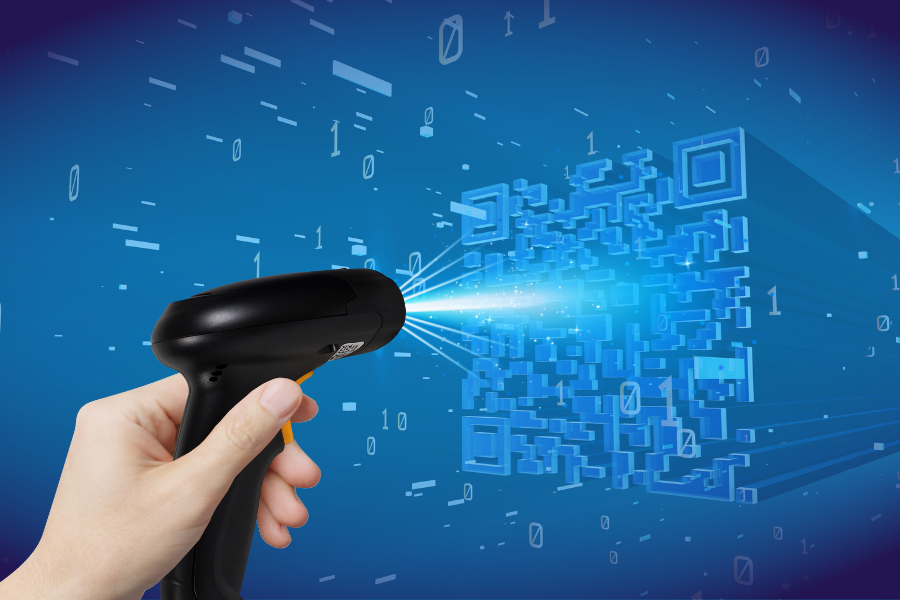
    Barcode technology, a cornerstone of modern retail, offers a systematic approach to tracking a wide array of inventory items through unique numerical values represented by parallel bars. This innovative method has facilitated the rapid processing and easy readability of product information by both computers and humans. Its simplicity and efficiency have made barcode technology a staple in inventory management across diverse sectors, including grocery, retail, hospitality, and cannabis.

    The Evolution and Accessibility of Barcode Technology

    Initially adopted by large enterprises, barcode technology has significantly evolved, becoming more sophisticated and accessible to companies of all sizes. The reduction in the cost of handheld barcode scanners has democratized advanced inventory management systems, allowing small and midsize businesses to reap the benefits as well.

    These devices can now feature more compact designs, portability, and increased storage capabilities, expanding their utility beyond traditional settings to encompass a wide range of retail applications.

    Beyond Point of Sale: The Expanding Role of Barcode Scanners

    Today’s barcode scanners have transcended their original use as mere checkout tools. These versatile devices now serve as essential components in enhancing customer engagement, offering features like displaying customer reviews, providing virtual product demos, and verifying item pricing and availability. Furthermore, they have become indispensable in inventory management, helping to identify sales trends and tracking items throughout the supply chain.

    QR-code-barcode-hero-warehouse-scaled

    mPOS: A New Frontier for Barcode Technology

    Combining mobile point-of-sale (mPOS) systems and cloud-based technologies has transformed barcode scanners into powerful tools for real-time information access. Armed with mPOS-enabled scanners, warehouse workers and sales associates can now address customer inquiries, locate inventory, and access product details instantly, improving service quality and operational efficiency.

    Creating Connected Environments With Cloud Technology

    Cloud technology continues to enhance the capabilities of barcode systems. By connecting barcode scanners to cloud-based POS and inventory management systems, retailers can achieve real-time visibility into stock levels, sales data, and customer preferences. Their ability to scan and track items mitigates potential losses by reducing errors and improving cash flow, margins, and response times.

    This connectivity enables more accurate forecasting, streamlined operations, and more personalized customer experiences.

    Find out more about Star’s CloudPRNT technology >

    Improving Customer Experience

    Commercial-grade barcode technology can improve the customer experience in numerous ways. Omnichannel retailers use barcodes to locate in-stock items and “buy online, pick up in-store” (BOPIS) orders quickly. Customers can present a barcode on their smartphone at a counter or kiosk for fast order fulfillment.

    In addition to increasing efficiency and order accuracy, these tools drive employee satisfaction, customer retention, and positive reviews. By automating manual tasks such as inventory tracking and order processing, barcode technology can free up employees’ time for more value-added activities, like attending to customer needs.

    Hardware Innovation: Improving Barcode Scanners for Retailers

    As barcode technology continues to advance, the development of smart barcode scanners has introduced new functionalities to meet the complex demands of the retail environment. These devices, equipped with wireless connectivity and capable of integrating seamlessly with POS systems, offer retailers a comprehensive solution for inventory management and customer service.


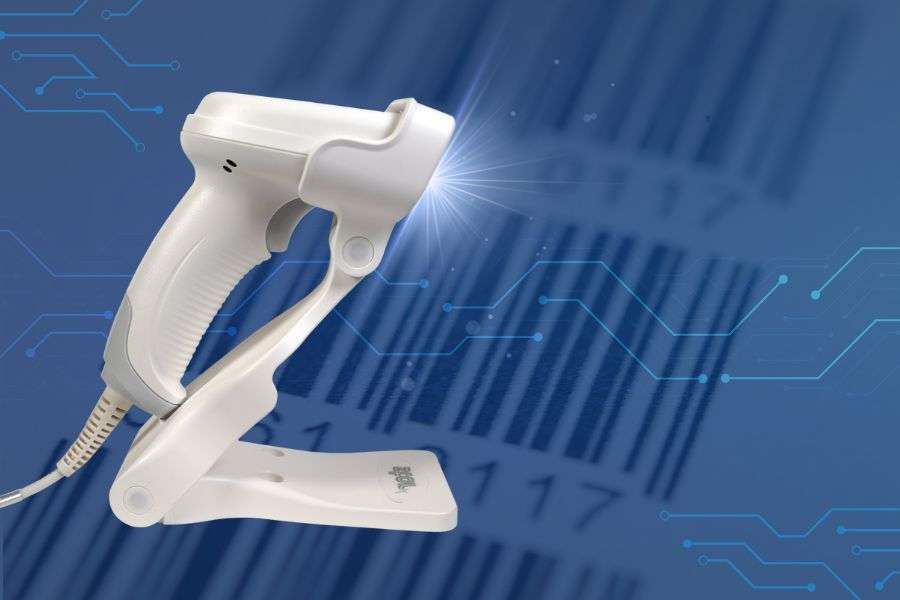
    Star Micronics has the latest in retail barcode technology solutions with a range of desktop, USB handheld, and wireless handheld scanners.
    Star Micronics offers a wide range of desktop, USB handheld, and wireless handheld barcode scanners.

    Smart Scanners for Advanced Applications

    The leap from basic to smart scanners marks a significant milestone in barcode technology, with new models offering enhanced scanning capabilities, ID verification, and wireless operations. These features support a broad spectrum of retail activities, from checkout efficiency to dynamic inventory control.

    Durable and User-Friendly Designs

    Recognizing the demanding nature of retail settings, manufacturers have prioritized durability and ease of use in scanner design. Many models now feature rugged construction to withstand drops and spills, ergonomic designs for comfortable all-day use, and intuitive interfaces that require minimal training.

    Multifunctional Capabilities

    Contemporary barcode scanners are multifunctional tools supporting a wide range of barcode types, including 1D and 2D barcodes. Advanced imaging technology allows them to scan codes from various surfaces, including screens, essential for mobile couponing and digital loyalty programs.

    2D scanners are equipped with cameras and high-performance CPUs, enabling applications such as QR code scanning, ID verification, data parsing, and price checking.

    Star Micronics has the latest in retail barcode technology solutions with a range of desktop, USB handheld, and wireless handheld scanners.

    QR Codes and the Expansion of Barcode Applications

    Barcode technology innovations in the 1980s led to QR codes, a derivation of 2D barcodes with enhanced storage capacity that represent data horizontally and vertically. Patented by Denso Wave, QR codes were initially designed to automate inventory management but found their way into mainstream usage, giving customers and businesses new ways to connect and transact. Here are some examples:

    • Loyalty Solutions: Scan a QR code directly from a customer’s phone to connect a purchase to their loyalty account. Starbucks, an early QR code adopter, championed this approach by enabling customers to display unique codes to receive discounts and free drinks.
    • Payment Solutions: Scan a QR code from a customer’s phone to facilitate payment from a digital wallet or mobile app. Stores like Walmart use QR codes to reduce checkout line bottlenecking. In addition, consumers can scan QR codes for cashless payments that speed up checkout queues.
    • Confirmation Tracking: QR codes provided to shoppers can be scanned at the store for online order pickups and proof of purchase/delivery. Concert halls, sporting events, and festival venues have used QR codes to speed check-ins by scanning customer tickets directly from their phones.  
    • Omnichannel Ordering: QR codes provided to shoppers can facilitate out-of-stock item orders by directing customers to ecommerce websites. In addition, QR codes on posters and merchandise displays can bridge in-store and digital commerce with offers and discounts.  
    • In-Store Navigation: QR codes can also be placed around the store to provide a platform for customer reviews and engagement.

    These are examples of how barcode technology can help you grow and scale. Advanced scanners seamlessly communicate with smartphones, using barcodes and QR codes as a common language. Basic 1D laser scanners were sufficient for scanning paper coupons, but you will need 2D commercial-grade imagers to scan QR codes.

    Emerging Scanning Technologies

    The future of barcode scanning hardware lies in merging with newer technologies like RFID, NFC, and artificial intelligence (AI). These unions promise to unlock new capabilities, such as near-instantaneous scanning of multiple items and the ability to glean deeper insights from the encoded data.

    Enhancing Retail with AI and Machine Learning

    Incorporating AI and machine learning into barcode scanners can significantly enhance the retail experience. AI algorithms can analyze purchasing patterns, optimize inventory management, and even predict future trends based on the data captured through barcode scanning.

    RFID and NFC: Beyond Traditional Barcodes

    RFID (Radio Frequency Identification) and NFC (Near Field Communication) are wireless communication technologies for tracking and identifying objects. RFID utilizes electromagnetic fields to automatically identify and track tags attached to objects. At the same time, NFC enables close-range communication between compatible devices, allowing for secure data exchange with a simple tap.

    RFID and NFC technologies complement traditional barcode scanning by enabling touchless transactions and more dynamic customer interactions. These technologies can streamline checkout processes, enhance security measures, and provide customers with richer product information, all contributing to a more engaging and efficient shopping experience.

    Selecting the Right Barcode Scanner for Retail Success


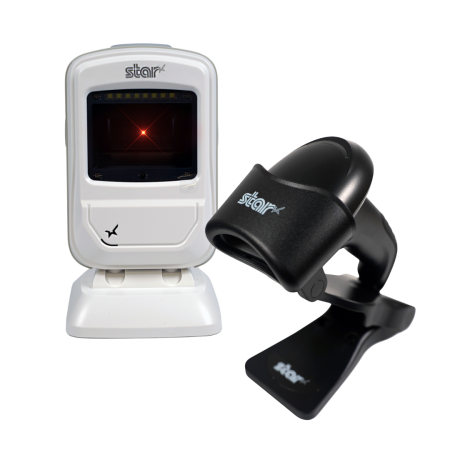
    Star Micronics offers a wide range of 1D/2D barcode scanners in desktop, USB handheld, and wireless Bluetooth handheld models.
    Star Micronics offers 1D/2D precision scanners – desktop, USB handheld, & wireless handheld.

    With so many benefits of QR and barcode technology, you’ll want futureproof scanners that seamlessly adapt to your needs. As you reflect on your business, consider what you want from a scanner, including how it will serve your employees and customers.

    Today’s high-performing scanners accurately process high-density, high-volume, and distorted barcodes printed on paper or screens. Models built for high-traffic environments have an IP42-rated design or higher and at least 1.2m drop resistance. As you assess available models, here are a few questions to help you find the suitable scanner for your business:

    • What will my scanner empower me to do?
    • Will this scanner help with inventory management, and is it safe to take mobile?
    • Does it connect with my POS to create a connected workspace?
    • Does this scanner fit into my budget?

    Embracing the Future of Barcode Technology in Retail

    As we look toward the future, barcode technology remains at the forefront of retail innovation, offering scalable solutions for inventory management, customer engagement, and operational efficiency. With ongoing advancements and the adoption of AI and machine learning, barcode scanners are set to redefine retail as we know it.

    Investing in the latest scanning solutions will be vital to achieving operational excellence and delivering superior customer service.

    For more information about the future of barcode technology and about barcode scanners in general, please explore our guide:

    The Ultimate Guide to Barcode Scanner Types and Applications

    This guide has everything you need to know about barcode scanners in one place. Discover the different types of barcode scanners and a brief history, as well as applications and evaluations required to consider when purchasing a barcode scanner.

    Proven Technology

    Are you looking for barcode scanners to create a connected store and cover all your scanning needs? Check out Star Micronics 1D/2D Scanners, or talk to a member of our friendly Sales Team to find out where you can purchase Star’s scanners today!

    Article originally written by author published on July 13, 2022.

  • Embracing AI in Retail with Celerant Technology on the Rising Stars Podcast

    Embracing AI in Retail with Celerant Technology on the Rising Stars Podcast

    The retail landscape is experiencing a seismic shift. Artificial intelligence (AI)—everyone’s favorite—paired with the increasing demands of tech-savvy consumers and economic ups and downs continue to drive innovation. For retailers and Independent Software Vendors (ISVs) alike, embracing AI in retail is no longer a futuristic vision but a critical strategy for staying competitive.

    In the Rising Stars Podcast episode, “Leading Retail into the AI Era with Celerant Technology,” host Kate Orara meets with Michele Salerno and Zeke Hamdani of Celerant Technology to discuss their latest software evolution. Celerant is capitalizing on AI in retail solutions, using the technology to transform the way businesses engage with customers, manage operations, and optimize their online prese

    AI in Retail: A True Revolution

    Celerant Technology, renowned for its versatile retail software for small and enterprise-level businesses, is at the forefront of incorporating AI into its software application to offer its clients unmatched efficiency and customer insights.

    This episode peels back the layers of Celerant’s approach to AI, including creating tailor-made solutions for its clients, further illustrating the company’s commitment to innovation and customer-centric solutions.

    What Listeners Will Discover

    • Insights into Celerant’s cutting-edge AI features and their real-world impact on client retail operations.
    • How their software goes beyond generative AI, content creation, and SEO.
    • The significance of machine learning in POS systems for predictive analytics, inventory management, and personalized shopping experiences.
    • Strategies for adopting new technologies and the competitive advantage they bring.

    A Must-Listen for POS Tech Enthusiasts and Retail Innovators

    “Leading Retail into the AI Era with Celerant Technology” is an essential listen for anyone involved in the retail technology industry, particularly ISVs looking to leverage AI to enhance their own solutions. Michele and Zeke shed light on how AI technology improves business processes and redefines customer engagement in the digital age.

    Whether you’re navigating the early stages of developing with AI or looking to deepen your existing strategy, Celerant Technology’s journey offers valuable lessons on creating what your clients actually want, fostering greater loyalty, and securing a competitive edge in the rapidly evolving retail sector.

    Tune in to be inspired by the possibilities AI holds for the future of retail that you may not be aware of and how embracing this technology can propel your business to new heights.

    Loving the podcast? Subscribe now, and let us know what you think by leaving a review!

    Stay up-to-date on all things Star, don’t forget to follow us on Twitter, LinkedIn, Facebook, Instagram, and YouTube.

    The Rising Stars Podcast

    Immerse yourself in the ever-evolving world of point-of-sale (POS) with the Rising Stars Podcast by Star Micronics, hosted by industry pro, Kate Orara. Twice a month, we dive into the fascinating journeys of innovators and businesses navigating the challenges of technology’s rapid pace.

    In every episode, Kate Orara, Star Micronics’ Partner Development Manager, takes listeners on an exploration of emerging retail technology trends and strategies with global industry giants. She’s spent her entire career meeting all the right people, and now listeners everywhere can benefit from this vast network of channel gurus.

    Always leading and always innovating, Star Micronics, a pioneer in POS and customer experience technology for over 60 years, welcomes you to join us in shaping a brighter future in the retail, hospitality, and cannabis industries.
    Want more industry news?

  • Why Food Packaging Labels Are Essential to Online Order Fulfillment

    Why Food Packaging Labels Are Essential to Online Order Fulfillment

    Consumers are sold on the convenience of food delivery. Statista reports that online food delivery orders worldwide are projected to reach $1.22 trillion in 2024 and will continue to grow at a 10.06% CAGR through 2028 to reach $1.79 trillion

    Both restaurant and grocery food delivery will see greater demand. Statista analysts estimate that 27.4% of the world’s population, about 2 billion people, takes advantage of meal delivery, and they expect the market to grow to 2.5 billion users by 2028. Analysts also expect the grocery delivery market, now about $257.5 billion, to grow to $422.9 billion by 2028.

    Due to this growing demand, restaurants and grocery stores have had to adapt their processes. Restaurants must fulfill orders placed online through their websites or apps and third-party delivery services in addition to orders at the table, counter, drive-thru, or self-service kiosks. Grocers have repurposed space and reallocated labor to manage online orders. However, expanding operations has created challenges to efficiency and controlling waste and losses.

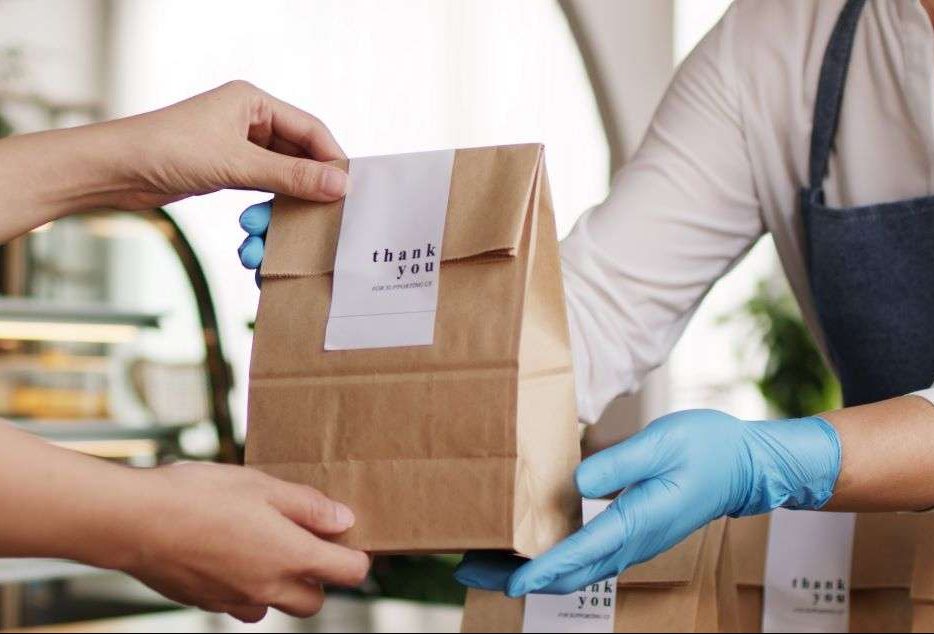
    Labeling solutions have become essential to streamlined, accurate order fulfillment. Labels help teams organize food and order prep, and food packaging labels ensure customers receive the correct orders securely and on time.

    The Labels Necessary for Efficient Food Delivery

    Why Food Packaging Labels Are Essential to Online Order Fulfillment

    Communication is crucial throughout fulfillment processes, and labels are the most efficient way to bring digital information from online ordering to employees tasked with food prep and packaging.

    For example, follow an online order placed with a quick-service restaurant until it reaches the customer:

    Repositionable linerless labels:

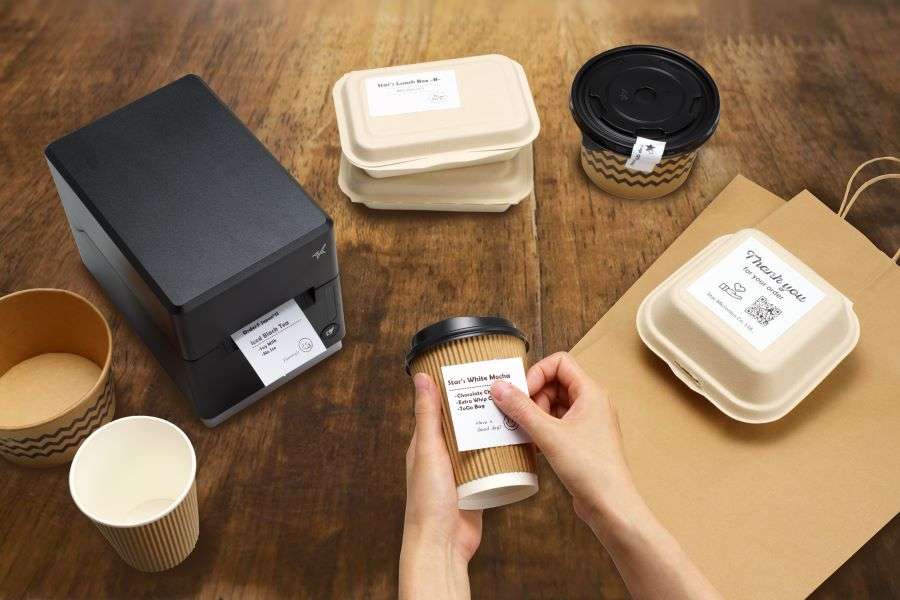
    The online ordering platform communicates the order to the QSR’s point-of-sale (POS) system and generates repositionable labels. These labels, applied to trays in food prep areas, communicate the customers’ menu choices and modifiers to the kitchen staff. Employees can reapply the labels to packaging down the line to ensure precision, eliminate errors, and decrease waste.

    Die-cut labels:

    When the order is complete, the restaurant can print die-cut labels on demand, adding its brand logo or a thank you message. Labels, whether traditional liner-backed or linerless, can also include promotional messaging or QR codes that customers can scan to join the loyalty program, check their rewards balance, or save a coupon code for future orders. These food packaging labels can contribute to a positive customer experience.

    Permanent linerless labels:

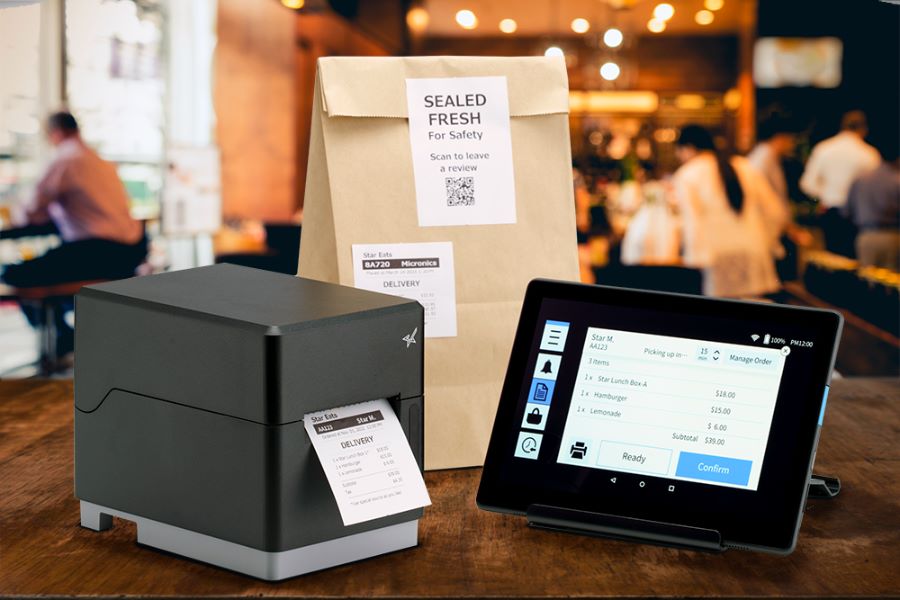
    Permanent labels direct the order to curbside or in-store pickup, in-house delivery drivers, or third-party delivery. These labels ensure orders go to the proper place, enhancing operational efficiency. Food packaging labels with delivery information can also include barcodes that allow the restaurant to track the order and confirm the correct delivery.

    Permanent labels that close containers or bags ensure the order is tamper-proof. If the label is intact, it signals to the customers that their orders are in the same condition when they receive them as when the restaurant packed them.

    Learn the importance of permanent linerless labeling in today’s businesses >

    How Labeling Solutions Overcome Food Delivery Challenges


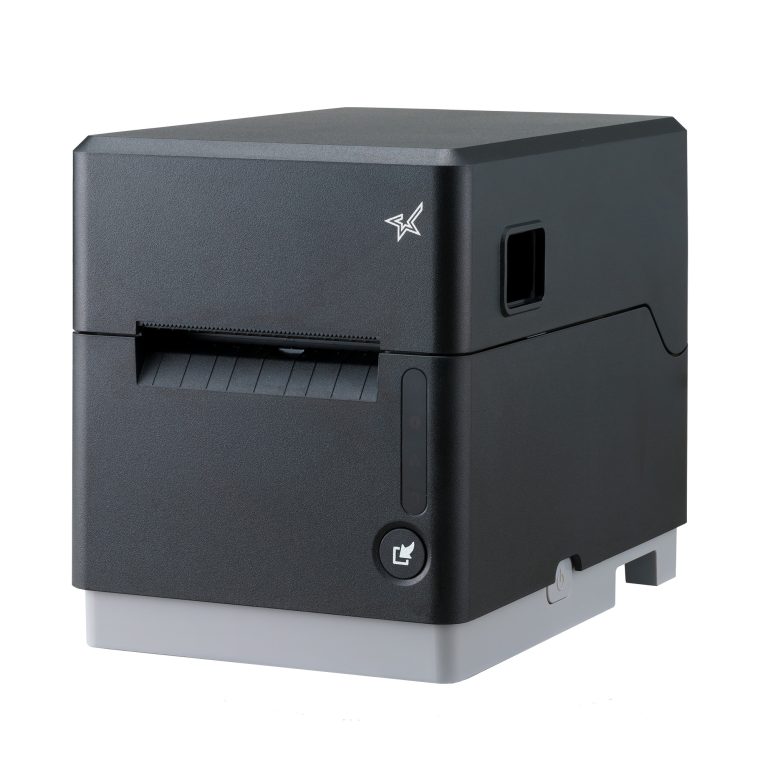
    The mC-Label3 Multifunction Printer by Star Micronics great for delivery take out online ordering and QSRs.
    The mC-Label3 Multimedia Printer by Star Micronics is great for online ordering, takeout, and delivery.

    Adding food prep and food packaging labels to online order fulfillment processes results in a range of benefits for restaurants and grocery stores, even beyond ensuring accurate delivery. The return on investment (ROI) of labeling solutions includes:

    • Cost control: Clearly labeled containers and bags allow the kitchen staff or grocery pickers to see exactly what to pack. Therefore, businesses generate less waste and expense from inaccurate orders.
    • Greater productivity: With labels communicating what each online order fulfillment team member must do, employees will have fewer questions that slow processes. Employees will work more quickly and can complete more orders per shift.
    • Increased customer satisfaction: Consumers expect accurate, on-time orders that are neatly and securely packaged. Labels help restaurants and grocery stores deliver what their customers want and help build loyalty.

    Key Features of Food Delivery Labeling Solutions

    To achieve greater accuracy, productivity, and customer satisfaction, restaurants and grocery stores need printers capable of producing the types of labels they need as they require. Star Micronics has developed printers with features that benefit online food order fulfillment, including the mC-Label3 Multifunction Printer and the TSP143IV SK Sticky Linerless Label Printer.

    Both have CloudPRNT connectivity for cloud-based printing and are Cloud Ready for Star Cloud Services. They allow restaurant and grocery store managers to build labels on Star’s Label Builder. The mC-Label3 enables users to store up to three images on the printer so that employees can print them on demand with the One Touch button–no internet required.

    Linerless Labels

    Linerless labels are an increasingly popular choice among restaurants and grocery stores because they decrease paper waste, require fewer roll changes, and streamline workflows by allowing employees to print and apply labels with one hand.

    The best printers for online order fulfillment and food packaging labels will also be easy for employees to use and maintain. Downtime isn’t an option when preparing orders accurately and on time. Both the mC-Label3 and TSP143IV SK are designed with user-friendly features. The mC-Label3 even sends maintenance alerts and QR codes with easy-to-follow instructions to keep it operating in top condition.

    Exceed Expectations with Labeling

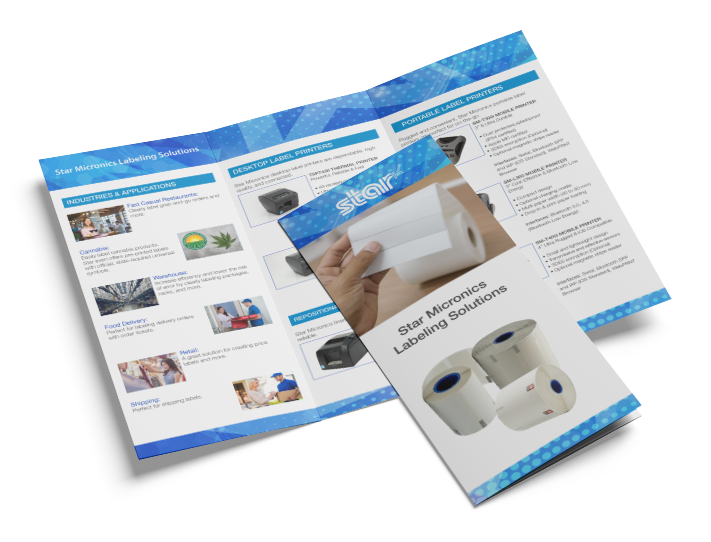
    Star Micronics Labeling Solutions Brochure

    Star’s advanced labeling solutions cater to a variety of unique needs and applications, ensuring seamless and efficient operations in any industry.

    Online food ordering is a relatively new part of many consumers’ routines; however, when they engage with restaurants or grocery stores, they expect accuracy, fast fulfillment, and excellent service. Labeling enables online order fulfillment teams to meet those expectations while keeping operational costs low. 

    Furthermore, innovative restaurants and grocery stores can use labeling creatively to elevate their brand image, keep their businesses at the top of consumers’ minds, and increase customer loyalty.

    A printing solution with features developed for online order fulfillment and food packaging labels makes it possible.

    Explore the range of solutions offered by Star Micronics.

  • Grocery Store Technology with Rod Plus Solutions on the Rising Stars Podcast

    Grocery Store Technology with Rod Plus Solutions on the Rising Stars Podcast

    The grocery industry is undergoing rapid transformation, fueled by digital innovation and evolving consumer expectations. For grocery retailers and technology solutions providers, staying ahead in this dynamic landscape requires a deep understanding of the intersection between technology and customer service.

    In the latest episode of the Rising Stars Podcast, “The Impact of Technology on Modern Grocery Stores,” host Kate Orara welcomes Kevin Spencer, President and CEO of Rod Plus Solutions and host of the podcast Retail Checks and Balances. Together, they explore Rod Plus’s pivotal role in reshaping the grocery sector through innovative technology solutions that cater to the digital retail landscape and changing consumer behaviors.


    Listen to the New Episode Now

    Innovations in Grocery Store Technology

    Kevin Spencer shares insights into Rod Plus’s contributions to the grocery technology sector, focusing on how the company’s solutions have revolutionized inventory management, e-commerce platforms, and customer engagement. This episode offers a unique glimpse into Rod Plus Solutions’ innovative strategies to help grocery retailers adapt to the digital era, enhancing both operational efficiency and customer satisfaction.

    What Listeners Will Discover

    By listening to this episode, audiences will discover:

    • The strategic innovations Rod Plus brings to the grocery industry.
    • How Rod Plus Solutions addresses common challenges in the sector.
    • The role of AI and IoT in advancing grocery services while maintaining a human touch.
    • Kevin Spencer’s perspectives on managing digital transformation in grocery retail.

    A Must-Listen for Industry Stakeholders

    “The Impact of Technology on Modern Grocery Stores” is essential listening for anyone involved in the grocery industry—from technology providers to retail managers and business leaders. As Kevin Spencer and Kate Orara explore Rod Plus Solutions’ approach to leveraging technology for grocery retail, they highlight the importance of balancing digital advancements with the intrinsic value of human connections in creating memorable customer experiences.

    As Rod Plus Solutions and Star Micronics prepare for their appearance at the upcoming National Grocers Association (NGA) show, this episode is a timely resource for retailers looking to navigate the complexities of grocery technology and digital transformation.

    Tune in to gain actionable insights into the future of grocery retail, driven by technology solutions that prioritize efficiency, customer engagement, and adaptability in a quickly changing market landscape.


    Explore All Episodes

    Loving the podcast? Subscribe now, and let us know what you think by leaving a review!

    Stay up-to-date on all things Star, don’t forget to follow us on Twitter, LinkedIn, Facebook, Instagram, and YouTube.


    Podcast Playlist on YouTube

    The Rising Stars Podcast

    Immerse yourself in the ever-evolving world of point-of-sale (POS) with the Rising Stars Podcast by Star Micronics, hosted by industry pro, Kate Orara. Twice a month, we dive into the fascinating journeys of innovators and businesses navigating the challenges of technology’s rapid pace.

    In every episode, Kate Orara, Star Micronics’ Partner Development Manager, takes listeners on an exploration of emerging retail technology trends and strategies with global industry giants. She’s spent her entire career meeting all the right people, and now listeners everywhere can benefit from this vast network of channel gurus.

    Always leading and always innovating, Star Micronics, a pioneer in POS and customer experience technology for over 60 years, welcomes you to join us in shaping a brighter future in the retail, hospitality, and cannabis industries.
    Want more industry news?


    Explore the Star Blog

  • Restaurant Printer Solutions: Back-of-House vs. Front-of-House Essentials

    Restaurant Printer Solutions: Back-of-House vs. Front-of-House Essentials

    In today’s rapid-paced dining environment, coupled with high employee turnover, the efficiency and reliability of restaurant operations are more critical than ever. Leveraging the right printer technology can significantly streamline workflows, from the kitchen to the counter, enhancing both the staff and customer experience.

    This guide explores the essential types of restaurant printers, covering back-of-house, front-of-house, and label printers to ensure seamless service and operation.

    Kitchen Printers for Efficient Back-of-House Operations

    In the heart of any bustling restaurant, the kitchen demands resilient and adaptable tools to match its vigorous pace. While impact printers have long been the stalwarts of back-of-house operations, modern advancements have made thermal printers equally indispensable. Engineered to endure the challenging kitchen environment, both types of printers ensure clear, quick order communication.

    Thermal printers, with their specific features like splash resistance and insect-proof design, alongside traditional impact printers, which use bond paper known for its durability under heat and humidity, collectively offer comprehensive solutions that cater to the diverse needs of professional kitchens, enhancing efficiency and reducing order preparation errors.

    Impact Printers: The Backbone of Kitchen Printing

    Impact printers stand as the traditional choice for kitchens, where the physical impact of a printhead against an ink ribbon ensures orders are printed in a durable, dual-color format. Using bond paper, these printers produce orders that can withstand the harsh heat and humidity conditions in busy kitchens. Also, bond paper is typically multi-ply, a favorite in the industry, providing a practical solution for orders shared across multiple stations.

    The distinct advantage of using two colors—black for the main order and red for modifiers—alongside the audible printout delivery on 2-ply bond paper makes impact printers invaluable for maintaining clear communication with kitchen staff. It all helps to minimize preparation errors, ensuring coordinated efforts and flawless dish preparation.

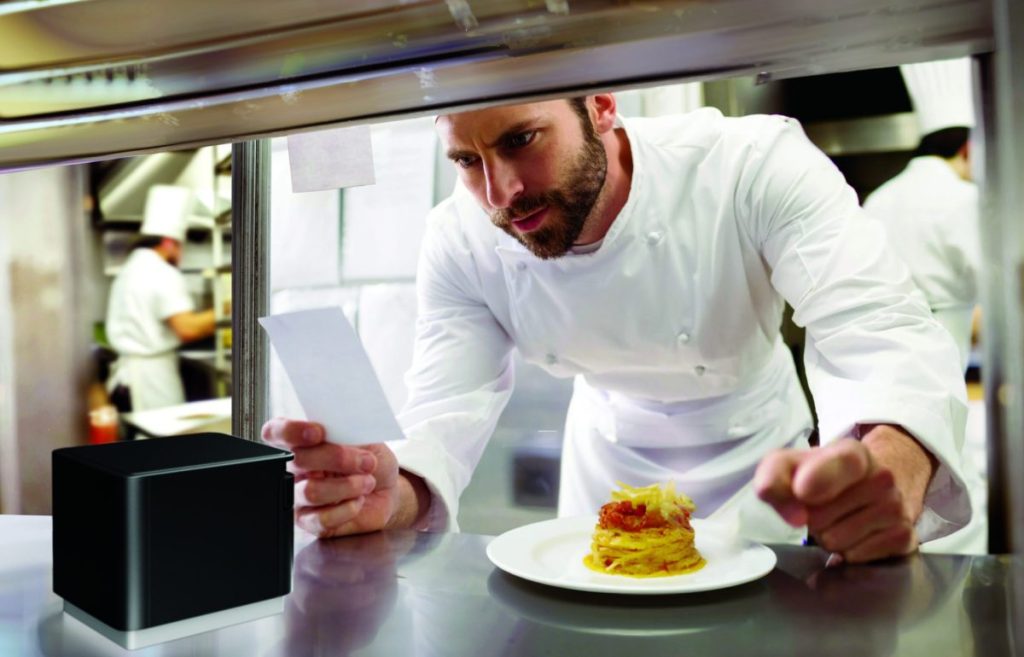
    Chef in modern, professional kitchen looking at ticket from mC-Print3 thermal receipt and restaurant printer by Star Micronics.

    Thermal Printers: Embrace the Modern Kitchen

    Thermal printers, with their advanced features tailored for modern professional kitchens, offer a compelling alternative to impact printers. These printers thrive in environments where direct heat and grease are minimized, providing high-quality printouts without the need for ink or ribbons. Attributes such as splash resistance, warning buzzers for incoming orders, and an insect-proof design make thermal printers irreplaceable in today’s kitchen setups.

    As for having multiple tickets for the same order, thermal printers can print back-to-back copies of the same order at a rapid pace. This guarantees that every workstation receives its required orders for timely food preparation. In fact, many modern kitchens equip each station with a thermal printer, streamlining the entire process to ensure appetizers precede entrees and orders are sent out just as guests expect.

    Coupled with electronic kitchen display systems (KDS), thermal printers integrate seamlessly into digital workflows, offering a cleaner, more efficient alternative to traditional printing methods and supporting the dynamic nature of back-of-house operations.

    Here are Star’s recommendations for kitchen and back-of-house printers:

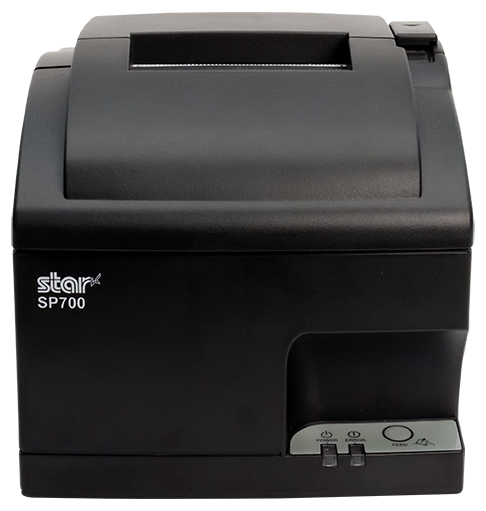
    SP742 Impact Printer

    The SP742 Impact Printer from Star Micronics offers a durable, efficient solution for kitchens, combining high-speed, two-color printing with seamless CloudPRNT and Bluetooth integration for streamlined online order processing.

    Explore the SP742 >

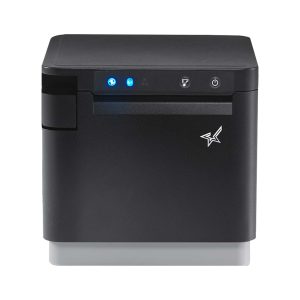
    mC-Print3 Thermal Printer

    The mC-Print3 stands out as a versatile and sleek POS receipt printer, ideal for both front- and back-of-house environments that are heat controlled. Thanks to its compact size, splash-proof design, and robust connectivity options, like CloudPRNT Next and enhanced Bluetooth, this future-proof printer is adaptable to any POS system changes.

    Learn more >

    POS Receipt Printers for Front-of-House Excellence

    In the front-of-house areas of restaurants, the selection of a POS receipt printer is crucial to creating lasting impressions and facilitating quick transactions. Thermal printers stand out as the preferred choice, offering rapid, high-quality printouts essential for fast-paced service environments. Equipped with features like wireless connectivity and cloud-based printing, these printers integrate seamlessly with various POS systems, catering to the evolving demands of restaurant operations.

    The design of front-of-house printers plays a significant role in maintaining the aesthetic and functional harmony of restaurant settings. Thermal printers boast a sleek, compact design that minimizes space usage and operates quietly, preventing disruption in bustling dining areas.

    Furthermore, these printers deliver exceptional resolution, enabling the production of detailed receipts, branded coupons, and promotional materials. This capability not only meets the essential requirement for clarity in customer receipts but also contributes to enhancing the dining experience and building customer loyalty through personalized touches.

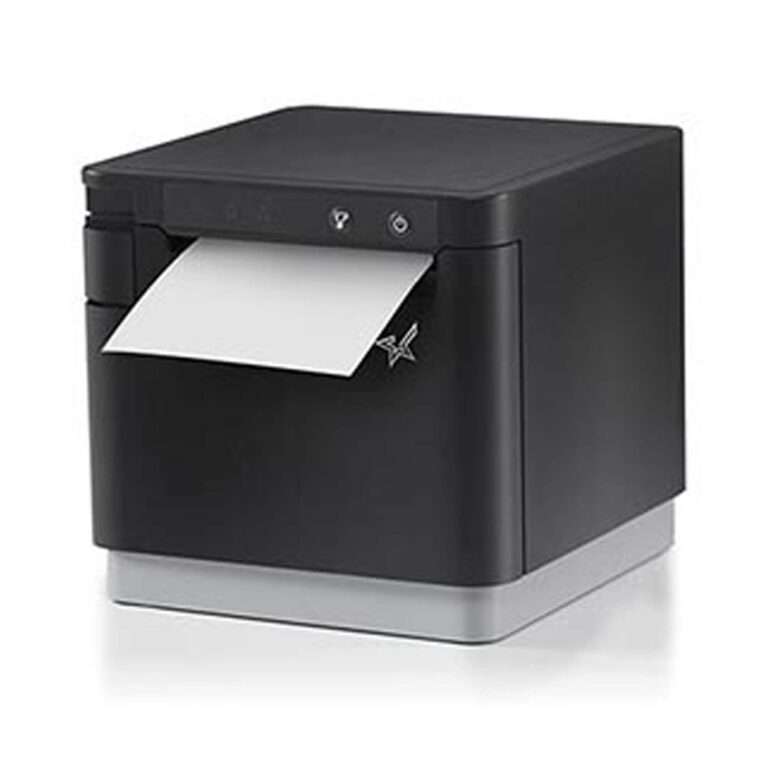
    mC-Print3 Thermal Printer

    The Star Micronics mC-Print3 wins again. This compact and versatile 3-inch thermal printer excels in both front- and back-of-house settings. Its splash-proof design and multiple connectivity options, including CloudPRNT Next, make it an adaptable choice for any restaurant environment.

    Find out about the mC-Print3 >

    TSP143IV Thermal Printer

    The TSP143IV series thermal printer offers a compact, future-proof solution with enhanced connectivity options like Android Open Accessory (AOA). It’s Cloud Ready for Star Cloud Services and has easy installation, ideal for modern mPOS or POS systems.

    Discover more >

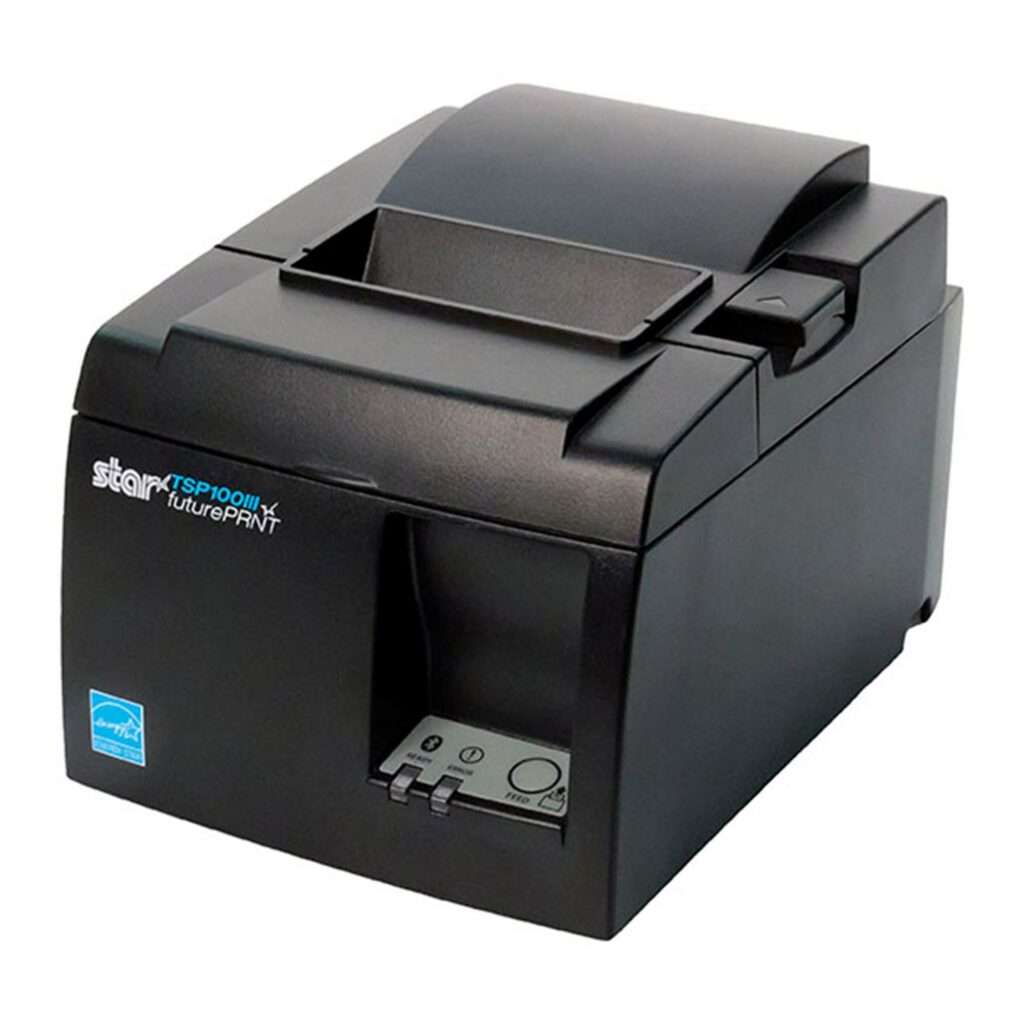
    TSP143III Thermal Printer

    The TSP143III sets the standard for thermal receipt printing, offering versatile connectivity options, easy setup, and customization capabilities, making it an all-in-one solution for retail, hospitality, and cannabis sectors.

    Learn about the TSP143III >

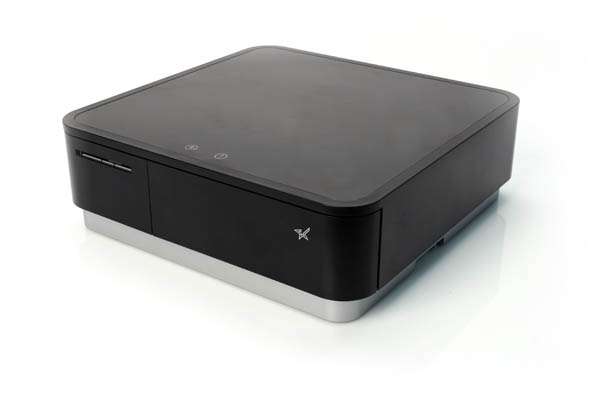
    mPOP® Multifunction System

    The Star Micronics mPOP combines a cash drawer and printer into a sleek, hybrid POS solution. Now with direct iOS connectivity, supporting Windows and Android, it’s an ideal choice for versatile mPOS systems.

    Explore the mPOP >

    Label Printers for Streamlined Order and Inventory Management

    Accuracy and organization are paramount in a restaurant’s service, making label printing solutions invaluable. These printers facilitate the production of custom labels for food items, identifying special orders, allergy information, or takeout packages, thus ensuring correct order fulfillment.

    Versatile label printers can handle a range of media types, from sticky labels for food packaging to die-cut labels for shelf labeling, enhancing the efficiency and accuracy of both kitchen and front-of-house operations.

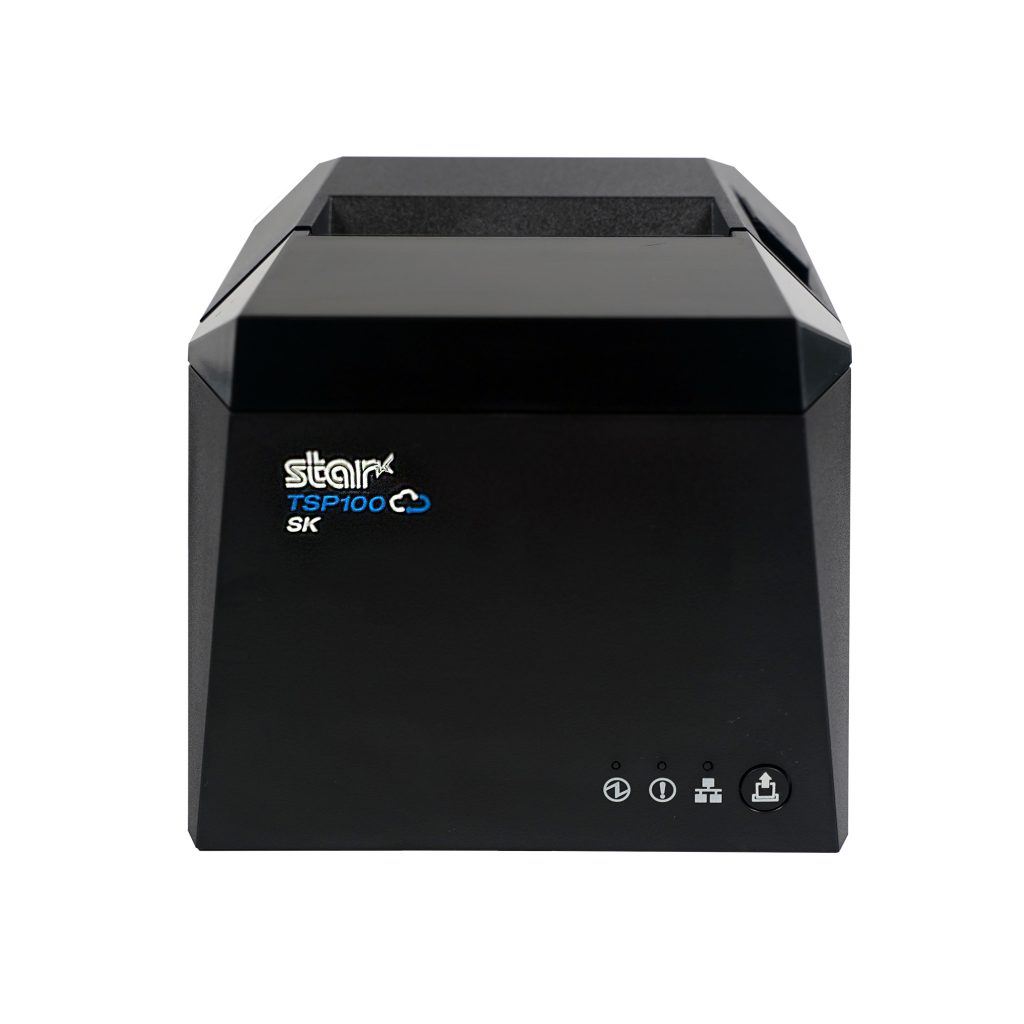
    TSP143IV SK Sticky Label Printer

    The TSP143IV SK by Star Micronics sets a new standard for compact, eco-friendly thermal linerless label printing, offering advanced connectivity options like Wi-Fi and AOA, and efficient, residue-free labels for diverse business needs.

    Find out more >

    mC-Label3 Multimedia Label Printer

    The Star Micronics mC-Label3 is a versatile multimedia label printer that prints a wide range of labels and receipts, including both permanent and repositionable sticky linerless. It features cloud connectivity and innovative technologies like SteadyLAN and TetherLAN for enhanced printing convenience.

    Discover the mC-Label3 >

    mC-Label2 Multimedia Label Printer

    The mC-Label2 packs powerful features into a compact, front-loading design, including 300 dpi resolution, support for linerless, die-cut, receipt, and continuous media, and connectivity options like USB-C, LAN, WLAN, Bluetooth, and Apple MFi-certified pairing (X4 models only).

    Explore the mC-Label2 >

    POS Printers for Restaurant Success

    The choice of printing solutions within a restaurant significantly influences operational efficiency, accuracy, and customer satisfaction. Integrating the right mix of back-of-house, front-of-house, and label printers into your restaurant’s operations can lead to smoother service, better food management, and an overall enhanced dining experience.

    As technology evolves, staying informed about the latest printing solutions and how they can benefit your restaurant is essential for staying competitive and meeting the high expectations of today’s diners.

    4 Restaurant Technology Challenges for the Next Decade

    The wants and needs of the consumer are constantly evolving and changing. SMB restaurant owners can prepare for the shifts in the restaurant industry by deploying the right technology.

    Find Your Restaurant Printer Solution Today:

    Original article written by Brianna Moriarty and published September 6, 2018.

  • Insights From NRF 2024 and Retail’s Inflection Point on the Rising Stars Podcast

    Insights From NRF 2024 and Retail’s Inflection Point on the Rising Stars Podcast

    The retail industry stands at a pivotal crossroads, with digital innovation and customer expectations evolving faster than ever before. For retailers aiming to excel in this dynamic environment, understanding and leveraging the latest trends and technologies is essential.

    In this compelling episode of the Rising Stars Podcast titled “NRF 2024 Insights: Retail’s Digital Inflection Point,” host Kate Orara engages in a thought-provoking discussion with two of Star’s brightest: Jon Levin, Director of Product Management, and Christophe Naasz, Global Director of Business Development. Together, they explore insights gleaned from NRF 2024: Retail’s Big Show, offering a comprehensive look at what they learned about the future of retail in the digital age.

    Embracing Technological Synergy

    This episode holds a wealth of industry experience and expert analysis on how cutting-edge technologies like AI are used in retail strategies to meet and exceed market demands. Levin and Naasz share their unique perspectives on the importance of finding the right balance between innovative tech solutions and the genuine needs of the market, a balance crucial for the retail industry’s sustained growth and relevance.

    Listeners are treated to an in-depth exploration of the rise of labeling in e-commerce and omnichannel retailing, underscoring the episode’s focus on practical, technology-driven solutions for enhancing operational efficiency and customer satisfaction.

    What Listeners Will Discover

    By tuning into this episode, listeners will gain invaluable insights into:

    • The ongoing adoption of AI and other emerging technologies in retail.
    • The critical role of labeling in e-commerce and omnichannel strategies.
    • Practical advice on aligning technological investments with real market needs.
    • The art of listening to customers to shape future-proof retail solutions.
    • Collaborative approaches to innovation that benefit all stakeholders in the retail ecosystem.

    Essential Listening for Forward-Thinking Retail Professionals

    “NRF 2024 Insights: Retail’s Digital Inflection Point” is a must-listen for anyone invested in the retail industry’s future, from business leaders and innovators to frontline managers and tech enthusiasts. Through engaging discussions and expert analysis, Orara, Levin, and Naasz offer a unique roadmap for navigating the complexities of digital transformation in retail, highlighting the opportunities that lie ahead for those ready to embrace change.

    Don’t miss this opportunity to arm yourself with the knowledge and insights needed to be a leader in the industry. Subscribe and listen now!

    Loving the podcast? Subscribe now, and let us know what you think by leaving a review!

    Stay up-to-date on all things Star, don’t forget to follow us on Twitter, LinkedIn, Facebook, Instagram, and YouTube.

    The Rising Stars Podcast

    Immerse yourself in the ever-evolving world of point-of-sale (POS) with the Rising Stars Podcast by Star Micronics, hosted by industry pro, Kate Orara. Twice a month, we dive into the fascinating journeys of innovators and businesses navigating the challenges of technology’s rapid pace.

    In every episode, Kate Orara, Star Micronics’ Partner Development Manager, takes listeners on an exploration of emerging retail technology trends and strategies with global industry giants. She’s spent her entire career meeting all the right people, and now listeners everywhere can benefit from this vast network of channel gurus.

    Always leading and always innovating, Star Micronics, a pioneer in POS and customer experience technology for over 60 years, welcomes you to join us in shaping a brighter future in the retail, hospitality, and cannabis industries.

    Want more industry news?

  • The Rise of Social Commerce: How Retailers Can Leverage Social Media

    The Rise of Social Commerce: How Retailers Can Leverage Social Media

    Something I find particularly exciting about the start of each new year is getting to look through the growing retail and e-commerce trends, and 2024 did not disappoint. At a time when digital storefronts and spaces are just as crucial as physical ones, the retail landscape is undergoing yet another epic transformation.

    Part of this shift is the emergence of social commerce, a trend that’s setting the stage for this next retail revolution. Combining mobile shopping and social media, two of the most popular contemporary pastimes, retailers are finding more creative ways to engage consumers, drive sales, and enhance the shopping experience. It’s never been easier to meet your customers where they already are.

    This blog post explores the rise of social commerce and how retailers can leverage this trend to their advantage. I will also show how Star Micronics is leading innovation in mobile point-of-sale (mPOS) hardware for businesses entering and thriving in the online ordering space.

    Understanding Social Commerce

    Social commerce, the process of selling products and services directly through social media platforms, is not just an extension of ecommerce; it’s a new frontier in retail, and still a relatively new one. Social commerce combines the interactive and social aspects of social media with the modern convenience of online shopping, creating a powerful tool for retailers.

    Compelling statistics support growth in this sector: According to Statista, sales through social commerce in the United States hit an estimated $64.8 billion and are expected to surge to around $150 billion by 2028, more than doubling. It would be a mistake for retailers not to pursue this market.

    The Rise of Social Commerce: How Retailers Can Leverage Social Media

    The Convergence of Mobile Ecommerce and Social Media

    The explosion of mobile ecommerce has been a critical driver for social commerce. Innovations in mobile technology have made smartphones the primary device for internet access, social interaction, and online shopping. Retailers leveraging mobile commerce hardware and technologies are uniquely positioned to capitalize on social commerce growth.

    Platforms like Facebook, Instagram, Pinterest, and TikTok have native shopping features, allowing users to purchase without leaving the app. This harmony of social media and ecommerce is transforming how consumers discover and buy products.

    Benefits of Social Commerce for Retailers

    The advantages of social commerce extend beyond just increased sales. Here are a few benefits that highlight its importance for retailers:

    • Enhanced Customer Engagement: Social commerce turns shopping into a social experience, encouraging users to share, like, and comment on products. This engagement builds a community around a brand, fostering loyalty and repeat business.
    • Direct Sales Channel: By selling directly on social media, retailers can reduce the steps in the buying process, making it easier for consumers and the potential for higher conversion rates.
    • Rich Customer Insights: Social commerce platforms offer detailed analytics about customer preferences and behavior. Retailers can use this data to modify their marketing strategies, product offerings, and even product development.
    • Credibility via Social Proof: Social commerce boosts brand visibility and trust by leveraging user reviews and recommendations as powerful forms of social proof.
    • Cost-Effective Marketing: Marketing on social media platforms is extremely cost-effective for merchants, allowing small businesses the chance to be competitive in the market.

    Implementing Social Commerce: Strategies for Retailers

    A successful social commerce initiative requires more than just setting up a shop on a social platform. Here are effective strategies retailers should consider:

    1. Cultivate a Robust Social Media Presence

    The foundation of successful social commerce lies in maintaining an active, engaging presence on social media. Retailers should craft content that resonates with their audience, prompts engagement, and showcases their products attractively.

    The Rise of Social Commerce: How Retailers Can Leverage Social Media

    2. Create and Nurture Online Communities

    Beyond posting content, use your social channels to foster vibrant online communities. Engage with your audience through interactive content, Q&A sessions, live footage, and community discussions to build a loyal customer base.

    3. Embrace Influencer Partnerships

    Influencers can significantly amplify your reach and credibility. But don’t pick just anyone! Work with influencers who align with your brand values and appeal to your target audience, leveraging their reach to introduce your products to real potential customers.

    4. Maximize Platform Shopping Features

    Leverage the built-in shopping functionalities of social platforms to facilitate easy purchases. Utilize features like Instagram’s Shopping tags and Facebook Marketplace to integrate seamless shopping experiences within your social profiles. Make sure your store is easily seen on your business profile.

    5. Offer Exclusive Social Media Discounts

    Encourage purchases directly through social platforms by offering special discounts and promotions exclusive to your followers. This not only rewards engagement but boosts followers and incentivizes direct sales through these channels. This activity can signal to platform algorithms that your store deserves to be seen by more people.

    6. Add User-Generated Content

    Encourage and share user-generated content (UGC) to enhance credibility and trust among potential customers. UGC, such as customer reviews, unboxing videos, and product photos, serves as authentic social proof that can influence buying decisions.

    7. Optimize for Mobile Shopping

    With most social media browsing done on mobile devices, ensure your social commerce experience is optimized for mobile users. This includes easy navigation, quick loading times, and a streamlined checkout.

    The Rise of Social Commerce: How Retailers Can Leverage Social Media

    8. Implement Targeted Social Media Advertising

    Utilize social media ads to get your message out to a broader audience with precision targeting. By running ads on platforms where your audience is most active, you can increase brand visibility, drive traffic to your social commerce channels, and boost conversions.

    Preparing for the Surge

    With social commerce set to continue its rapid growth, retailers must be prepared to adapt and refine. This means investing in mobile-friendly platforms, exploring new social media features, and finding creative ways to engage with your audience.

    Building a solid social media presence takes time and consistency, so start as soon as you can and keep going. Retailers that can effectively leverage social commerce will find themselves well-positioned to capitalize on it and drive significant business growth.

    Omnichannel Ordering with Social Commerce

    As retailers strive to provide the easiest shopping experience across all platforms, incorporating social commerce into an omnichannel strategy becomes essential. Omnichannel retail solutions ensure that whether a customer shops online from a mobile device, a laptop, their television, or in a brick-and-mortar store, the experience is consistent and complementary.

    For instance, a customer might see a product on a brand’s social media, purchase it through their mobile app, and choose to pick it up in-store. This streamlined process enhances customer satisfaction and loyalty, driving further growth in social commerce.

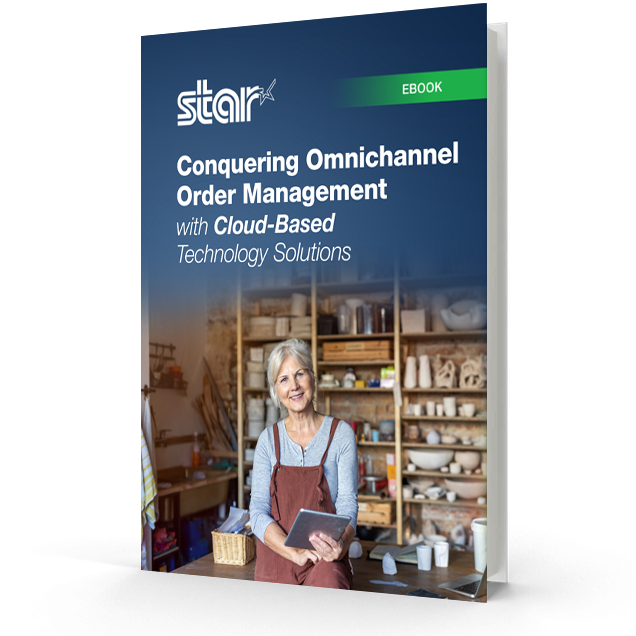
    Conquering Omnichannel Order Management with Cloud-Based Technology Solutions

    Consumers have spoken! The future of retail and hospitality is omnichannel, cloud-based, and connected. Is your business prepared?

    Navigating the Challenges of Social Commerce

    While the benefits of social commerce are clear, retailers must also be prepared for its challenges. Privacy concerns, the complexity of managing different social media platforms, and the need to craft engaging content require thoughtful strategy and execution.

    Consumer skepticism about data privacy on social platforms remains a barrier, especially for smaller businesses. Shoppers often show a preference for dealing with well-established retailers. Instances of counterfeit products and unsatisfactory delivery experiences reported by social commerce consumers could exacerbate this mistrust.

    Retailers must ensure they can handle these challenges by investing in technology with robust security, training their teams, and staying informed about changes in social media platform policies and consumer behavior.

    Equipping for Online Orders with Smart Hardware Solutions

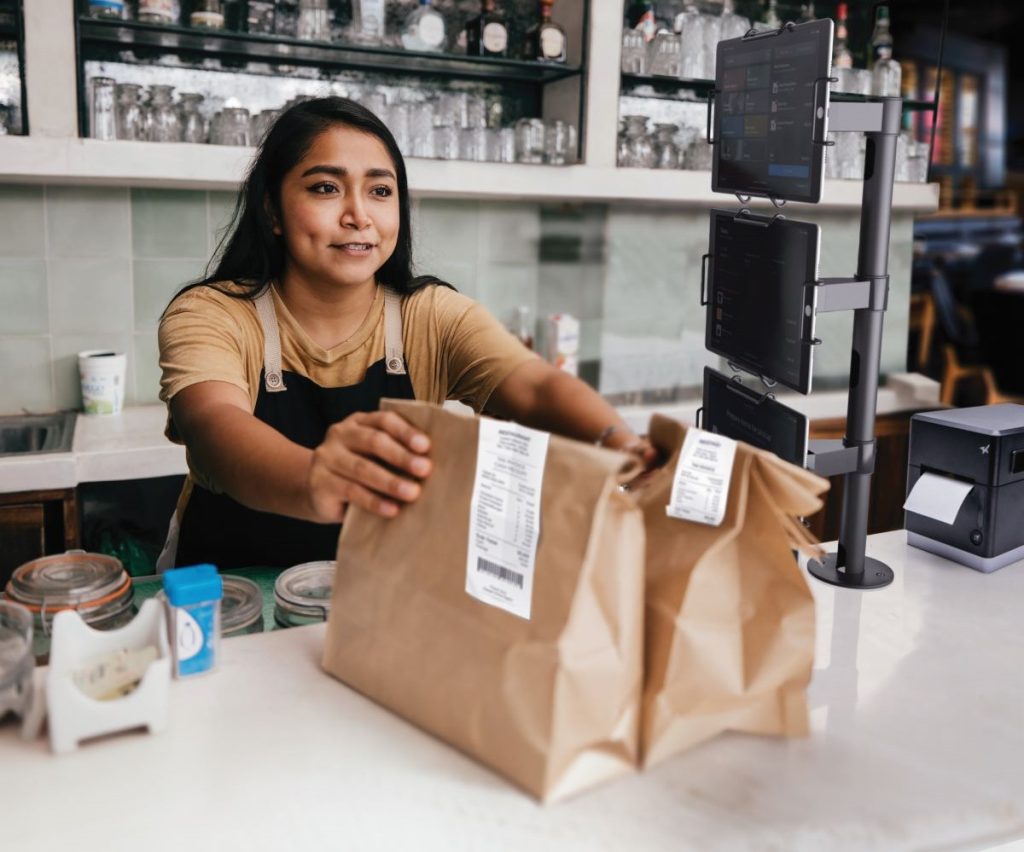
    As social commerce amplifies online order volumes, having the proper hardware becomes crucial for managing this influx. Printers equipped with innovative technologies like CloudPRNT from Star Micronics offer seamless integration with cloud-based and mobile ordering systems, ensuring orders are processed swiftly and accurately.

    Strategic labeling, facilitated by advanced printers such as the mC-Label3 multimedia printer, becomes indispensable for sorting and fulfilling online orders, enhancing operational efficiency. Additionally, organizing workstations with versatile solutions like the Tri-Mount from Star, which can secure three tablets simultaneously, allows for streamlined handling of orders from multiple online platforms.

    This suite of smart hardware solutions not only supports the rise in online orders but also helps maintain organized, efficient operations in the fast-paced world of social commerce.

    Takeout Restaurant Lifestyle 2 Small
    The mUnite Tri-Mount and mC-Label3 multimedia printer are perfect for online orders.

    Seizing the Social Commerce Wave with Star Micronics

    It’s clear that embracing social commerce is essential for retailers aiming to thrive in today’s digital-first marketplace. This digital revolution, powered by the fusion of social media and ecommerce, offers a platform for brands of any size to enhance engagement, drive sales, and solidify their market presence.

    Star Micronics offers innovative hardware solutions for every industry, including CloudPRNT technology and the versatile mC-Label3 multimedia printer. These solutions are designed to streamline online orders and enhance operational efficiency. By incorporating these tools into your omnichannel strategy, you can ensure a seamless, engaging shopping experience that aligns with the rising demands of mobile commerce and social media shopping.

    Retail is going places – get there first with the support of Star Micronics.

    Harness the Power of Social Commerce Today:

  • Optimize Senior Care with Assisted Living Technology

    Optimize Senior Care with Assisted Living Technology

    The senior living landscape is rapidly evolving as technology takes center stage, transforming elder care facilities. This blog post explores the impactful role of innovative point-of-sale (POS) technology in optimizing facility management. We will show how the proper assisted living technology reduces costs and enhances resident care.

    Moreover, we will highlight how Star Micronics healthcare solutions meet the unique needs of the senior care industry.

    Embracing Technology in the Senior Care Industry

    Like many industries, nursing homes and assisted living facilities are embracing technology. Advanced tools are no longer just a convenience – they help to provide senior residents with more efficient and high-quality care.

    As the demand for senior care increases, implementing effective, time-saving technologies becomes crucial. These advancements streamline facility operations and significantly improve the experience of residents.

    According to federal data, the number of people living in the United States who are 65+ represented 17.3% of the population in 2022 and is projected to reach 22% by 2040. An estimated 3,152 new senior care facilities will be required to accommodate the growing demand. Consequently, the urgency for advanced technology to enhance resident care is more critical than ever. 

    Ideally, the POS solutions in senior care facilities should go far beyond payment transactions. They should be pivotal in helping to manage daily operations like visitor check-ins, cafeteria services, and in-house pharmacy applications.

    Assisted Living Technology Makes an Impact

    Technology is used extensively in nursing homes and long-term care facilities. It helps to modernize operations, enhancing resident and visitor experience, while also improving overall workflow. Plus, technology empowers staff to focus on what matters most: providing care to residents.

    Here’s how assisted living technology contributes to cost savings and enriches the caregiving experience:

    1. Self Check-In Operations

    Firstly, assisted living technology is revolutionizing visitor check-in processes, traditionally a task requiring multiple staff members. Now, facilities can implement an automated system using kiosks equipped to print linerless or die-cut labels.

    Alternatively, self-service workstations can be set up with tablets, display stands, mounts, and label printers. This setup offers a versatile and cost-effective approach. 

    In both setups, visitors enter their details at the kiosk or scan their driver’s licenses or IDs, and a name tag is instantly printed for them. This automation not only eases the workload for staff but also enhances visitor monitoring capabilities.

    Notably, white desktop and handheld scanner models by Star Micronics feature antimicrobial housing, which is particularly important in environments with vulnerable residents, enhancing safety and hygiene standards.

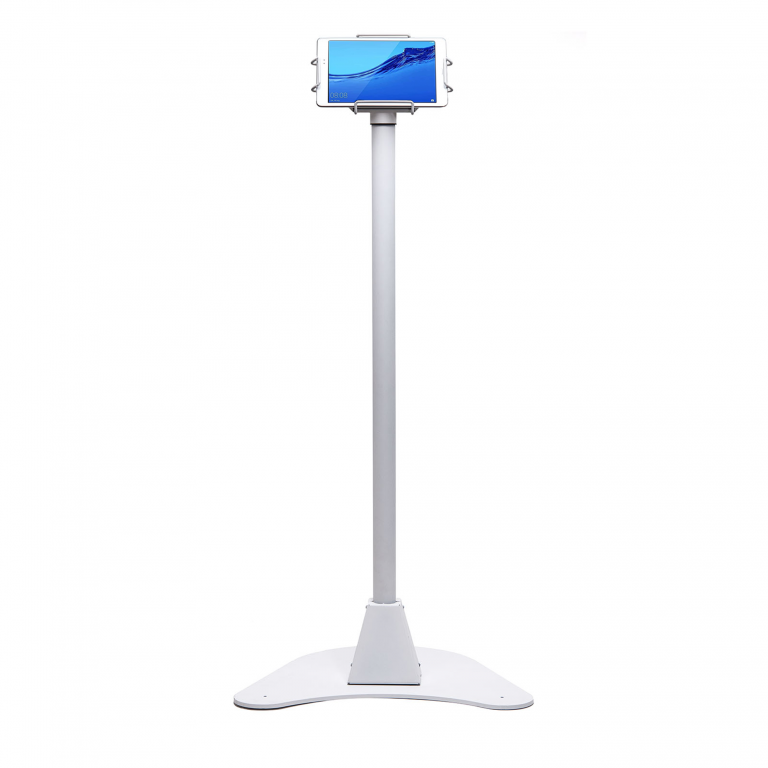
    Simplify Guest Check-ins with the mUnite Kiosk Stand

    Star Micronics’ mUnite Kiosk Floor Stand makes self-check-in easy for nursing homes and assisted living facilities. Its stable yet mobile and clean design is also perfect for displaying essential information and welcome messages to guests.

    2. Streamlined Cafeteria Services

    Optimize Senior Care with Advanced Assisted Living Technology

    Now, we all know that cafeterias in senior care facilities are essential for offering nutritious and delicious meals to residents. However, they often are there to serve visitors as well. To streamline the purchasing and checkout processes here, modern POS technology is indispensable.

    Star Micronics provides a comprehensive suite of POS hardware and technology ideally suited for both large and small nursing home cafeterias:

    Innovative Solutions for Small and Large Facilities

    Our range includes high-efficiency receipt printers, robust cash drawers, and versatile tablet POS stands. Each piece of equipment is designed to enhance operational efficiency, ensuring smooth transactions and a better dining experience. With Star Micronics, senior care facilities can equip their cafeterias with the latest in POS technology, ensuring every mealtime is as enjoyable as it is efficient.

    The Star Micronics mPOP® is an all-in-one healthcare technology solution that streamlines transactions and perfectly fits smaller facilities that don’t work with high amounts of cash. It includes an optional 2D handheld barcode scanner with antimicrobial housing in white models, adding extra peace of mind in assisted living facilities.

    Advanced Labeling for Diverse Requirements

    The mC-Label3 multimedia printer is an ideal solution for diverse cafeteria labeling requirements in nursing homes. These range from detailing ingredient lists and item descriptions to preparing labels for food delivered to residents’ rooms. This printer features a convenient One Touch function, enabling users to effortlessly print up to three preset label images with the press of a single button. 

    These labels, which can include important information like allergens and dietary restrictions, are preloaded onto the mC-Label3 through Star Micronics Cloud Services and can be printed without an internet connection.

    Additionally, Star Cloud Services offers a range of free receipt and label image templates tailored to specific dietary needs, ensuring clear and accurate communication of crucial information. This is especially critical in nursing home facilities.

    Multimedia Label Printer for Senior Care Facilities

    The mC-Label3 multimedia printer prints on most media types, including permanent and removable linerless sticky labels, die-cut labels, and receipt paper. This multifunctionality allows for one product for diverse applications.

    Self-Service Solutions for Visitor Convenience

    Furthermore, incorporating self-service kiosks or workstations in the cafeteria offers a cost-effective and versatile approach for visitors. These assisted living technology solutions especially cater to the needs of kitchens offering made-to-order food or self-checkout options. Self-checkout adds efficiency to the entire dining process, particularly helpful in senior care facilities.

    3. In-House Pharmacy Optimization

    In-house pharmacies in assisted living facilities are well-positioned to benefit from the reduced long-term costs due to technology. Multifunctional label printers like the mC-Label3 help with medication labels, resident record folders, and more.

    Star’s TSP847IIRx secure prescription printer is ideal for pharmacies in senior care facilities, with fast print speeds, built-in security features, and modern connectivity options.

    In addition, Bluetooth scanners enhance mobility for employees working at the customer counter and handling inventory.

    Enhanced Software Integration and Compatibility

    The ease of integrating Star Micronics solutions with existing nursing home software and healthcare POS systems is a significant advantage for developers and technology providers. Star also offers a wide range of software development kits (SDKs) that help developers get the most out of our POS hardware and technology. In turn, this aids in allowing their software to function the way it was intended. 

    Compatibility with popular software applications used in healthcare facilities ensures a seamless and interconnected ecosystem that works for everyone.

    Healthcare Goes High-Tech: How Technology is Solving Healthcare’s Operational Challenges

    The proper technology can help businesses in the healthcare industry streamline workflow and make up for employment shortages, helping to prevent costly errors.

    Stay Ahead of the Curve With Assisted Living Technology

    As we progress into the coming decade, the demand for senior care services is set to experience a remarkable rise. Star Micronics is at the forefront of this transformation, providing innovative technology solutions to address the unique challenges of senior living facilities.

    For administrators and caregivers, adopting these technological advancements represents not just a step toward the future but a commitment to elevating the standard of care for our aging population.

    Discover how Star Micronics can help your facility embrace this new era of senior care with innovative, efficient solutions.

    Modernize Your Senior Care Facility Today:

  • How to Choose Between SteadyLAN & TetherLAN for Your POS Printer

    How to Choose Between SteadyLAN & TetherLAN for Your POS Printer

    Staying connected and maintaining efficiency is essential for doing business, regardless of industry. Whether you run a retail store, restaurant, or mobile food truck, you need reliable and seamless printing technology for smooth operations. However, choosing the most suitable solution for your needs can be challenging.

    Star Micronics, a leader in point-of-sale (POS) printers and hardware, provides TetherLAN and SteadyLAN® technology in select POS receipt and label printer models, like the mC-Label3 multimedia printer, ensuring reliable tethered tablet network connections. But how do you know which technology you need?

    In this guide, we’ll take a deep dive into these products. We’re here to help you understand the defining features, advantages, and essential considerations when choosing between these options.

    SteadyLAN vs. TetherLAN: What’s the Difference?

    What POS printer technology is right for your business? Here are the details so that you can make an informed decision:

    Understanding SteadyLAN

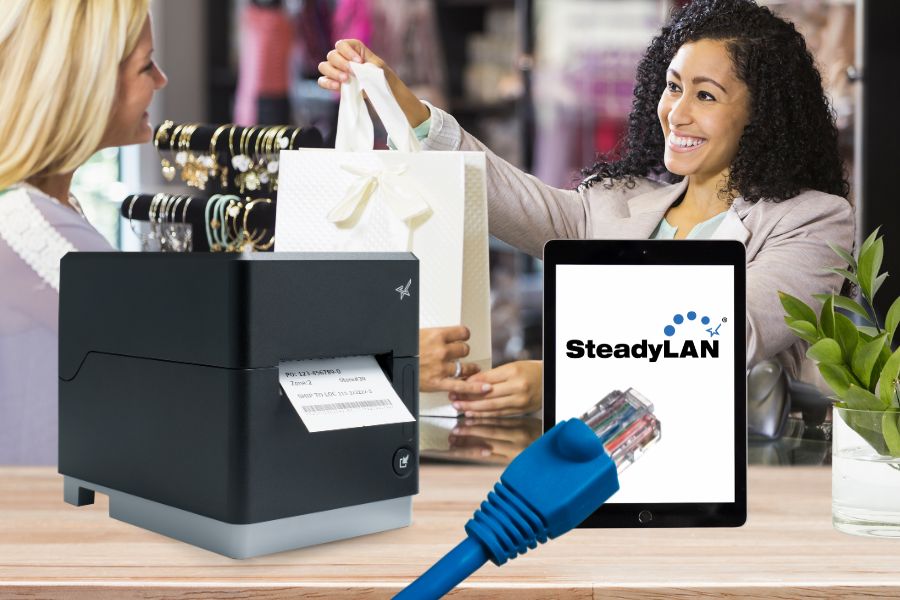
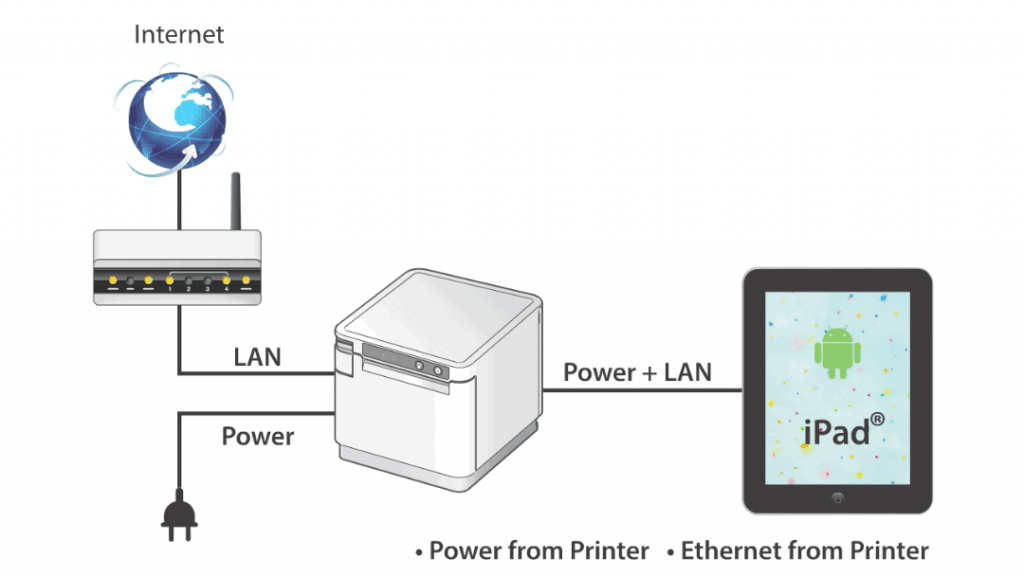
    Are you ready to leave unstable Wi-Fi behind and embrace consistent, high-speed connectivity? SteadyLAN, designed primarily for iOS devices, revolutionizes POS printing with its direct power and internet connection from a supported Star printer to your tablet or device. Through a Lightning or USB-C® cable, the mobile device secures a network connection from the Star POS printer, even if Wi-Fi signals are too unstable.

    This innovation translates to reliable and uninterrupted network connectivity with the added convenience of charging your connected tablet or device directly from the printer. SteadyLAN technology keeps your device powered up, even during the busiest hours.

    SteadyLAN’s direct connection from your POS printer provides a seamless link to your tablet and peripherals, significantly minimizing downtime and enhancing overall system performance.

    SteadyLAN by Star Micronics allows a networked printer to share internet service with your tablet or device.

    Key Benefits of SteadyLAN

    • Reliable Connectivity: A steady network link for iPad & Android POS systems ensures continuous operations without Wi-Fi dependency.
    • Constant Device Charging: The tablet is kept fully charged, eliminating the worry of battery drain during peak business hours.
    • Streamlined POS System: SteadyLAN creates a cohesive POS environment where all activities are centrally managed and cabled to the printer for increased efficiency and control.

    Understanding TetherLAN

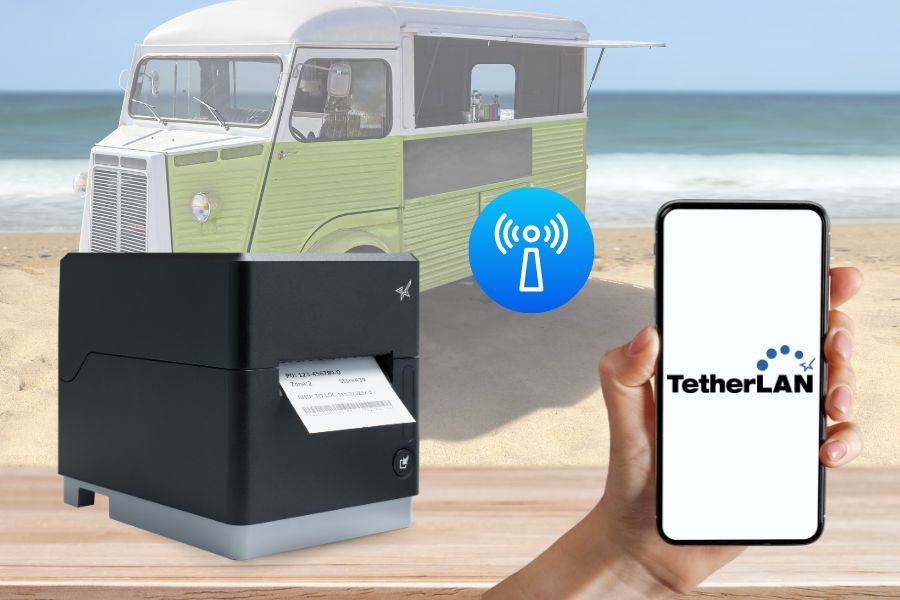
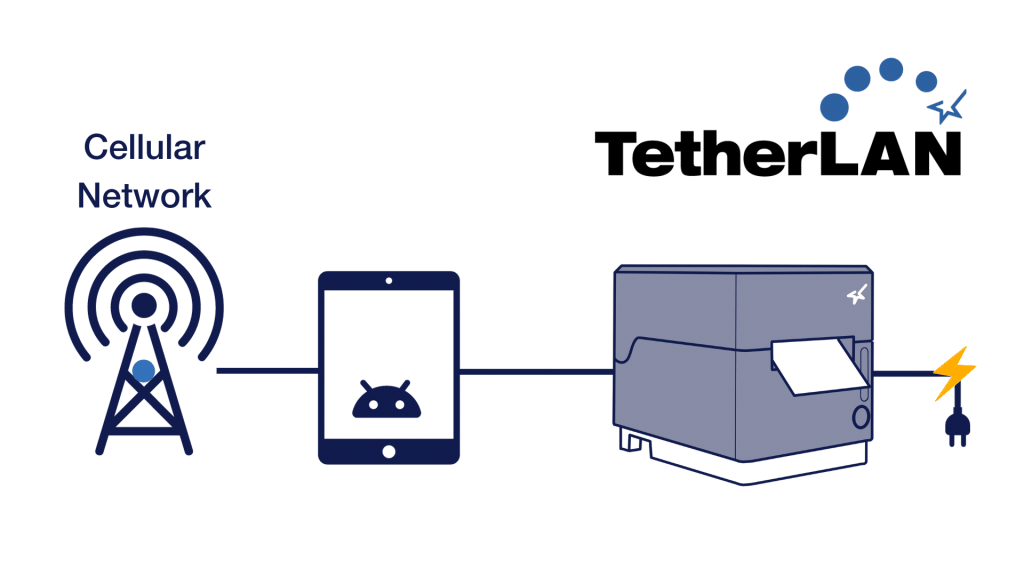
    TetherLAN is designed for mobile devices with cellular connections, such as 4G or 5G tablets, smartphones, and hotspots. The technology allows these devices to share their Wi-Fi service with select Star Micronics printers via USB. This ensures a seamless and high-quality printing experience without needing LAN cables. Compatible with Android and Windows devices, TetherLAN is currently featured in the mC-Label3 multimedia printer by Star Micronics.

    By establishing a cloud-based printing environment, this technology shines in scenarios where conventional internet setups are challenging. In addition to sharing a tablet’s cellular connection, TetherLAN also provides USB-powered connectivity, keeping devices charged for continuous operation. Moreover, it provides access to the Star Micronics Cloud Services platform, allowing users to monitor their devices in real-time and create customized receipts and labels.

    TetherLAN mC Label3 Technology GIF

    Key Benefits of TetherLAN

    • Cloud-Based Printing Environment: Facilitates cloud-based printing using active cellular connections, ideal for places lacking standard internet services.
    • No LAN Cables Needed: Get efficient and reliable printing without requiring any LAN cables.
    • Continuous Device Charging: With the mC-Label3, Android and Windows devices stay charged for extended use, enhancing usability in various settings.
    • Ideal for Outdoor and Mobile Settings: Excellently suited for outdoor events or mobile operations where cabled internet access is scarce, offering versatility and ease of use.

    Choosing Between SteadyLAN and TetherLAN

    As the global printer market continues to evolve, with projections to surpass $43 billion by 2028 (Mordor Intelligence), staying informed about the latest features is crucial for making an educated decision. When it comes to selecting between SteadyLAN and TetherLAN for your POS printer, consider these key factors:

    1. Business Needs and Objectives

    Evaluate your business’s specific needs and objectives. If your environment lacks stable Wi-Fi and requires consistent internet connectivity, SteadyLAN is ideal. It ensures a reliable Ethernet connection directly from the tethered printer to your device.

    Conversely, if your business operates in dynamic settings with limited access to traditional internet setups, TetherLAN is more suitable. It leverages the cellular network on your device to maintain connectivity, making it perfect for mobile or outdoor operations.

    2. Existing Infrastructure

    Consider the existing technological infrastructure of your business. SteadyLAN is an excellent fit for setups already equipped with Ethernet infrastructure and is particularly beneficial in environments with weak Wi-Fi signals. TetherLAN, on the other hand, is ideal for businesses with no access to Ethernet ports that can rely on cellular networks to connect to their POS systems instead.

    TetherLAN technology in the mC-Label3 allows the tablet or device to share internet service with the printer.

    3. Budget Constraints

    When considering budget, it’s essential to recognize that different Star Micronics printer models have varying technologies, impacting their costs. Some models are equipped with both TetherLAN and SteadyLAN, which can influence their price. It’s important to note that not all Star printers currently have TetherLAN capability, though more models are expected to include this technology in the future.

    This variation in features means a range in pricing, allowing you to choose a printer that fits both your technological needs and budget. Evaluating the cost-effectiveness of each printer model, its capabilities, and your business requirements is crucial. For instance, investing in a printer with TetherLAN might be more cost-effective for a mobile or outdoor business environment where having the technology could enable more sales.

    Also, consider other long-term operational costs, including potential data usage fees with TetherLAN and the costs of infrastructure upkeep with SteadyLAN.

    4. Future Growth

    When planning for future growth and scalability, the choice between SteadyLAN and TetherLAN hinges on your business’s anticipated trajectory. SteadyLAN is an ideal solution for companies aiming for growth within a stable, fixed location, particularly those not planning to engage in outdoor or mobile events. Its reliable wired connection suits environments where the business infrastructure is stationary and consistent.

    On the other hand, TetherLAN offers flexibility and mobility, making it a strategic choice for businesses that foresee expansion into new areas, including outdoor events or pop-up shops. Its reliance on mobile networks makes it adaptable for scenarios where traditional, wired internet connectivity is not feasible.

    Moreover, for businesses that transition from mobile or temporary setups to permanent locations, TetherLAN presents a versatile option. It supports operations in both contexts, provided the devices used with the POS systems are compatible with cellular networks. This adaptability makes TetherLAN a future-proof investment for businesses evolving from outdoor events to fixed retail or hospitality settings.

    Real-World Use Cases

    We’ve discussed the key features, benefits, and considerations related to SteadyLAN and TetherLAN. Here are some ways that businesses use them in the real world:

    SteadyLAN

    SteadyLAN technology has become a game-changer for businesses grappling with connectivity issues. In scenarios like a café with weak Wi-Fi or a small business owner without a data plan, SteadyLAN offers a reliable solution.

    SteadyLAN by Star Micronics allows a networked printer to share internet service with your tablet or device.

    For instance, connecting an iPad POS system to a tethered Star printer with SteadyLAN allows the business owner to access a steady internet connection through the printer’s Ethernet port, circumventing the need for additional data services.

    Similarly, in environments like cafes or restaurants where Wi-Fi strength is inconsistent or physical limitations prevent network expansion, SteadyLAN-equipped printers serve as stable network hubs, ensuring uninterrupted operations and enhancing customer service without needing complex infrastructure changes.

    TetherLAN

    TetherLAN technology is revolutionizing operations in dynamic and mobile environments like outdoor events. At a music festival, where traditional internet setups are impractical, TetherLAN enables vendors to share a tablet’s cellular connection with a Star printer, thus facilitating efficient and automated order processing.

    This innovation allows for streamlined ‘order ahead’ options, reducing wait times and enhancing customer experiences. The technology’s operational flexibility and integration with CloudPRNT make it an ideal solution for vendors in mobile settings, ensuring they can manage online orders and payments seamlessly without the constraints of traditional connectivity methods.

    These real-world applications demonstrate the transformative impact of SteadyLAN and TetherLAN technologies in various business contexts, offering practical and innovative solutions to connectivity challenges.

    An Independent Software Vendor’s (ISV’s) Guide to Star Printer SDKs

    For ISVs navigating the complexities of printer integration, the path forward is often strewn with challenges. Get to know Star Micronics’ range of software development kits (SDKs), each uniquely crafted to address these challenges and enhance your integration prowess.

    All The POS Printer Options You Need for Success

    Choosing a POS printer with the right technology can significantly impact your business. SteadyLAN and TetherLAN provide innovative connectivity options for businesses of all shapes and sizes. By evaluating your business requirements, existing infrastructure, budget constraints, and future growth plans, you can make an informed decision that enhances your operations and ensures efficient printing in a sometimes inefficient world.

    Are you ready to harness flexible, durable printing solutions? Touch base with one of our experts to see how modern POS printer technology can move your business forward.